Northern milkcap
Lactarius trivialissyn. Agaricus trivialis Fr., Lactarius griseus (Batsch) P.Kumm.
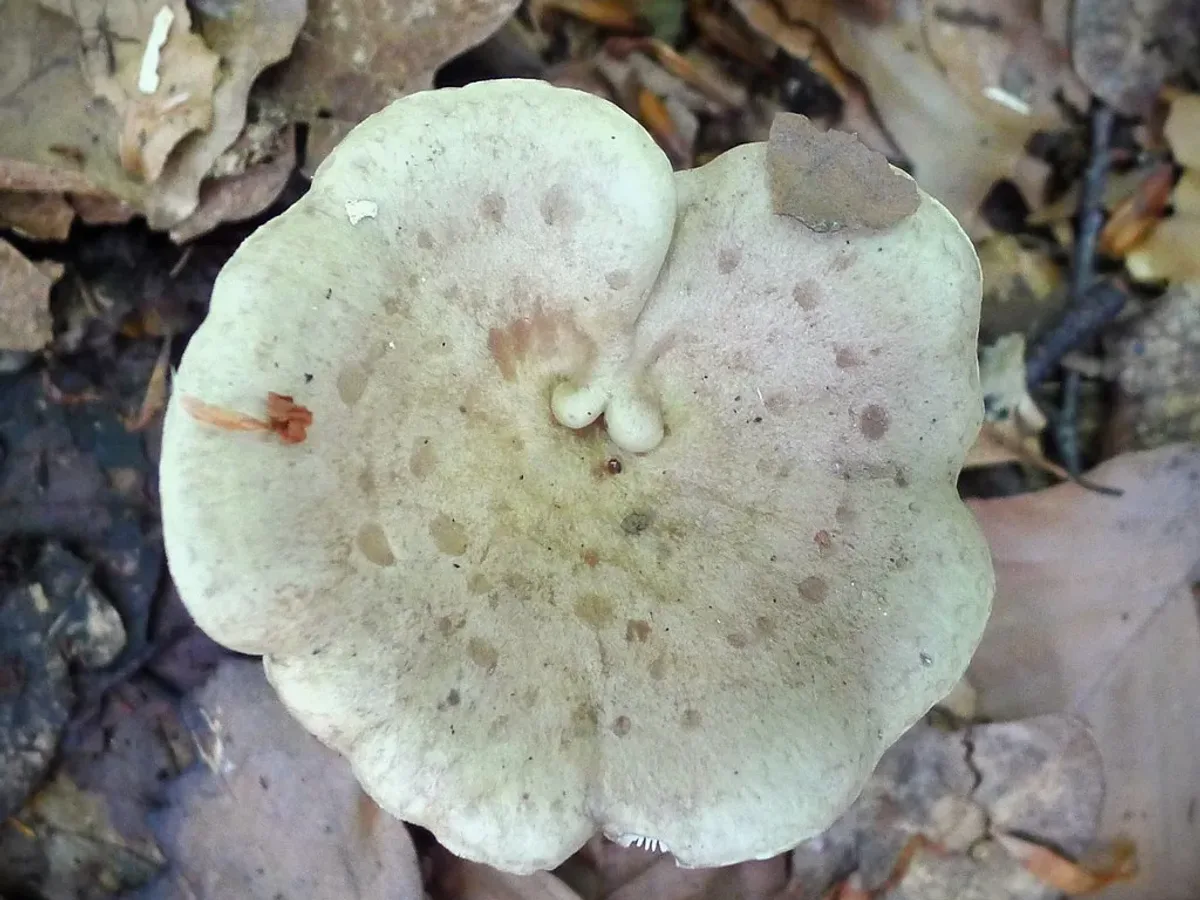 © gailhampshire (CC BY 2.0)
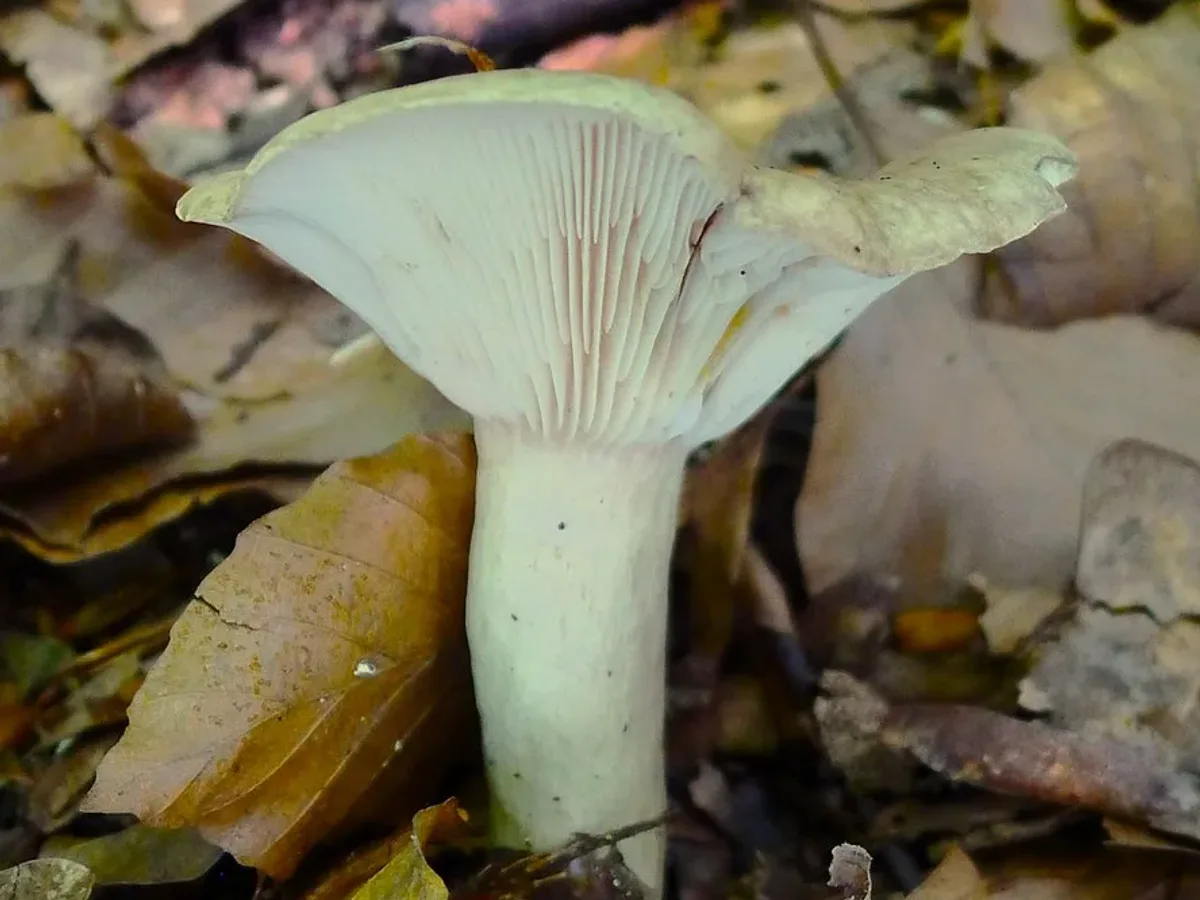 © gailhampshire (CC BY 2.0)
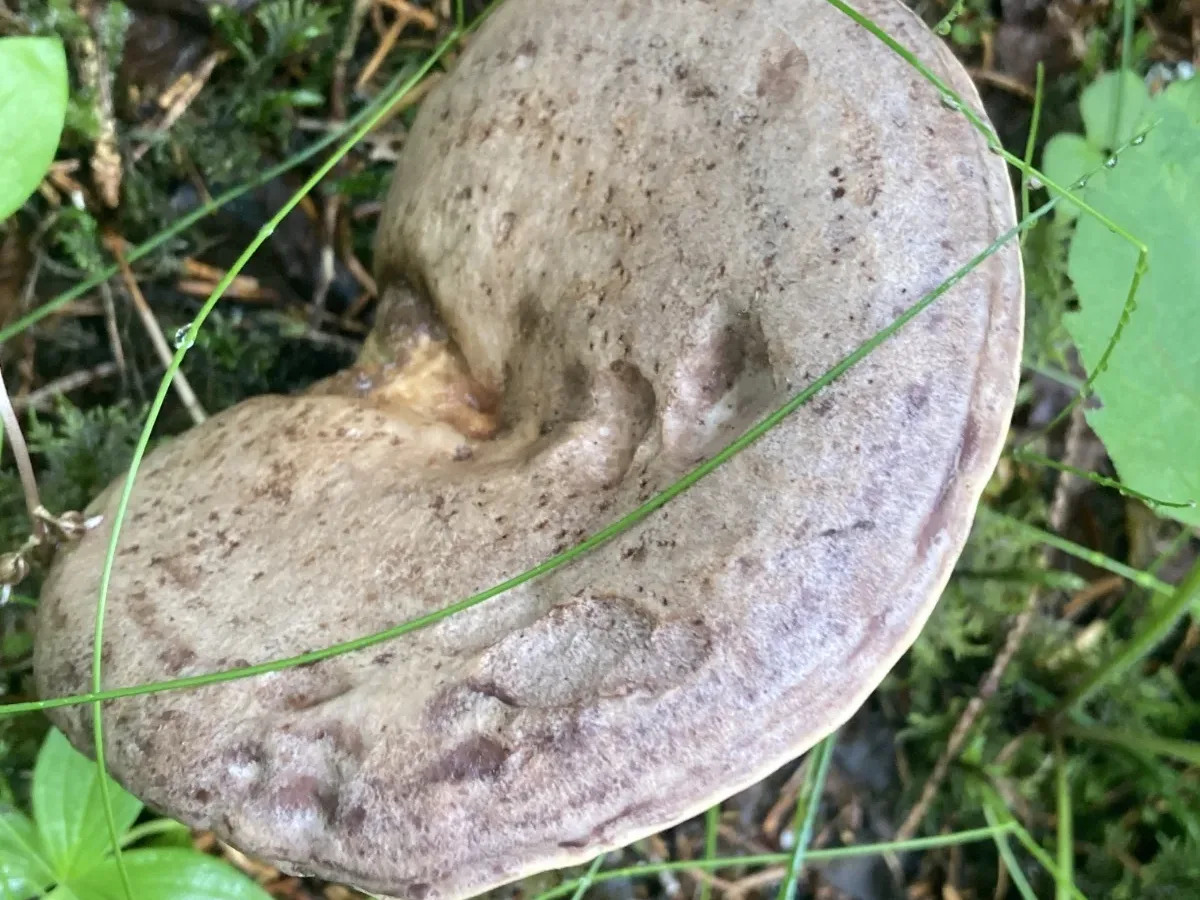 © Cecilie Ness (CC BY)
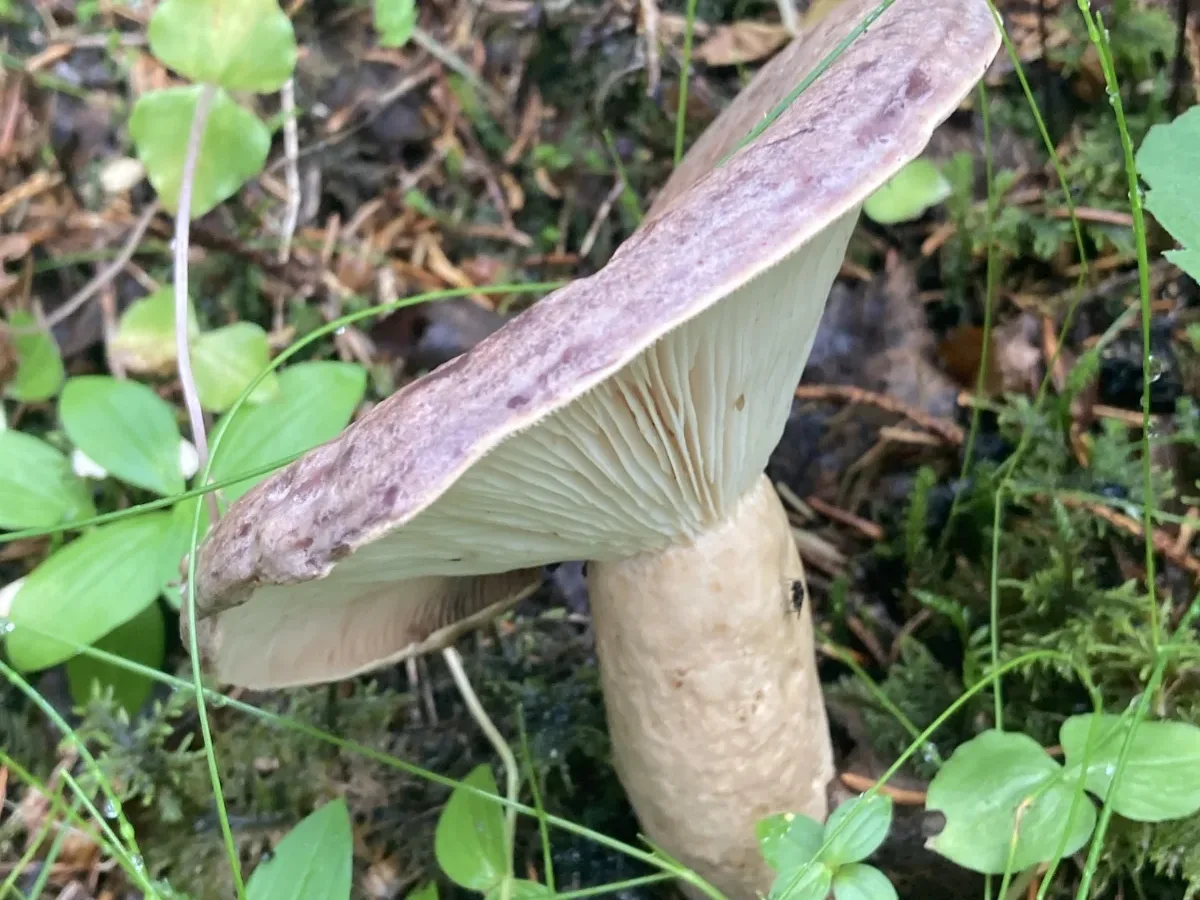 © Cecilie Ness (CC BY)
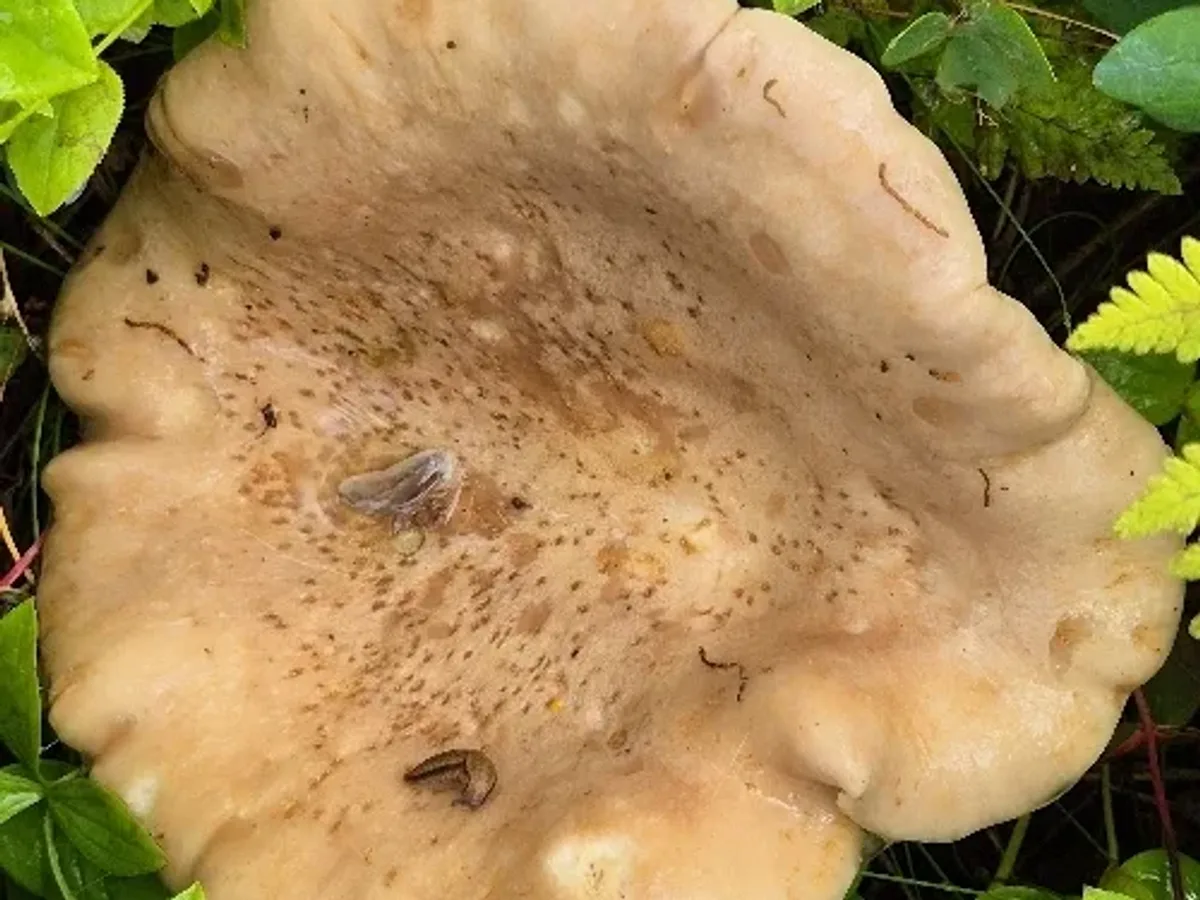 © Per Gerhard Ihlen (CC BY)
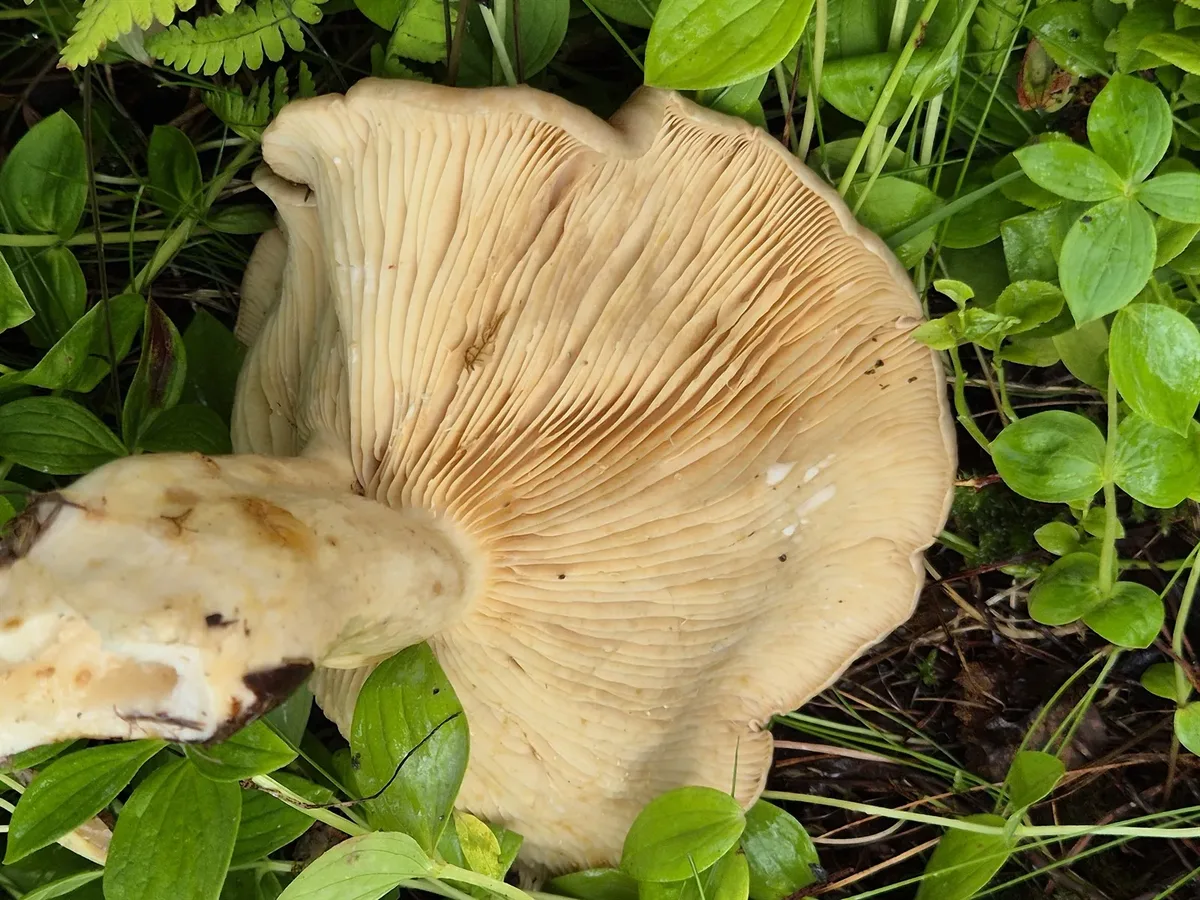 © Per Gerhard Ihlen (CC BY)
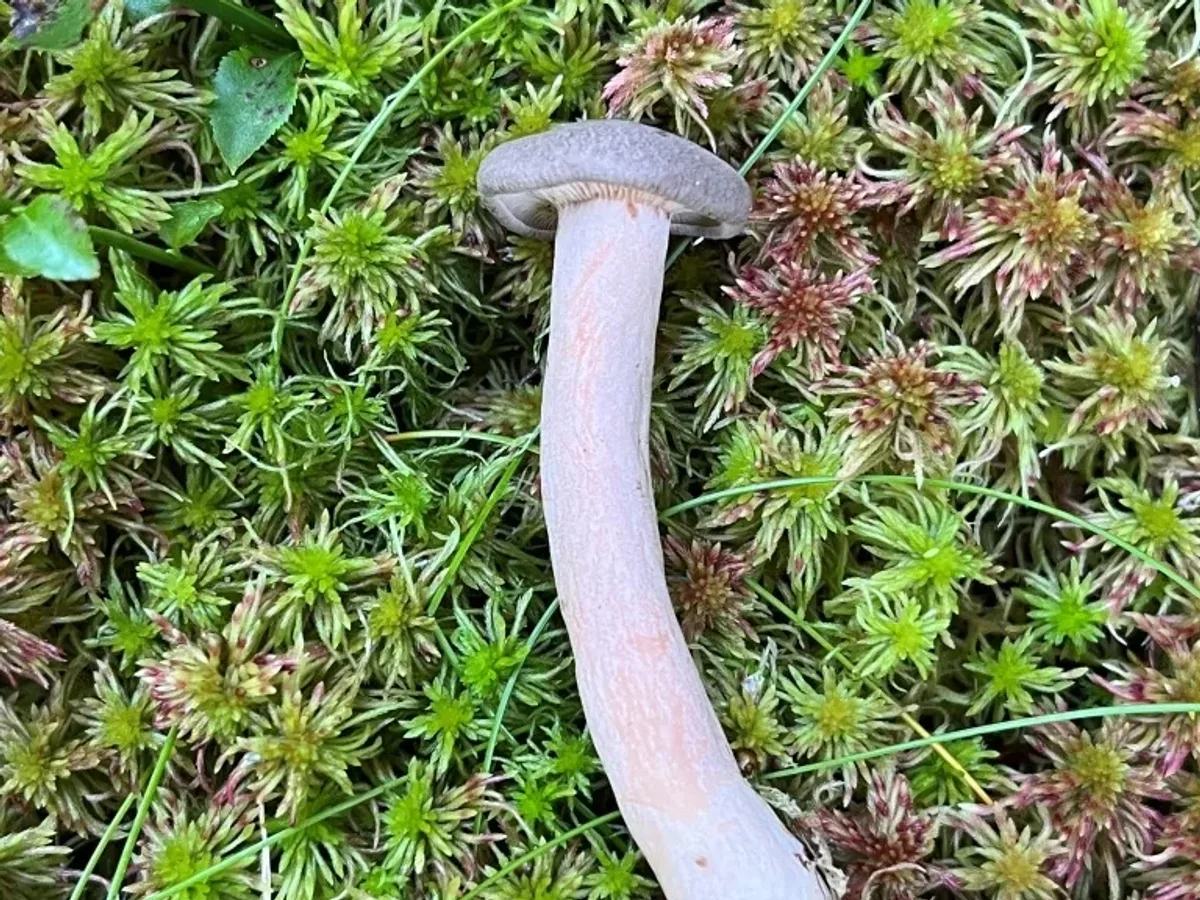 © Siv Moen (CC BY)
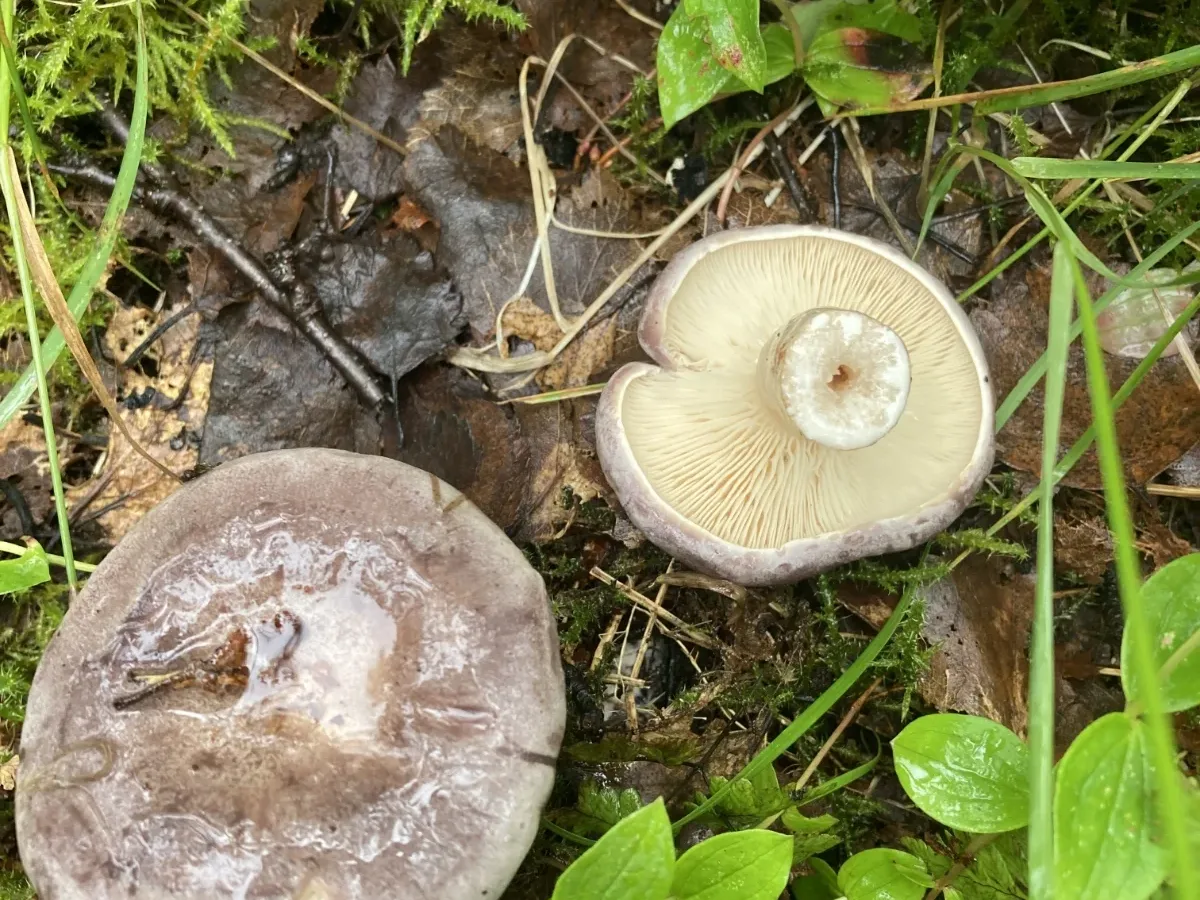 © Cecilie Ness (CC BY)
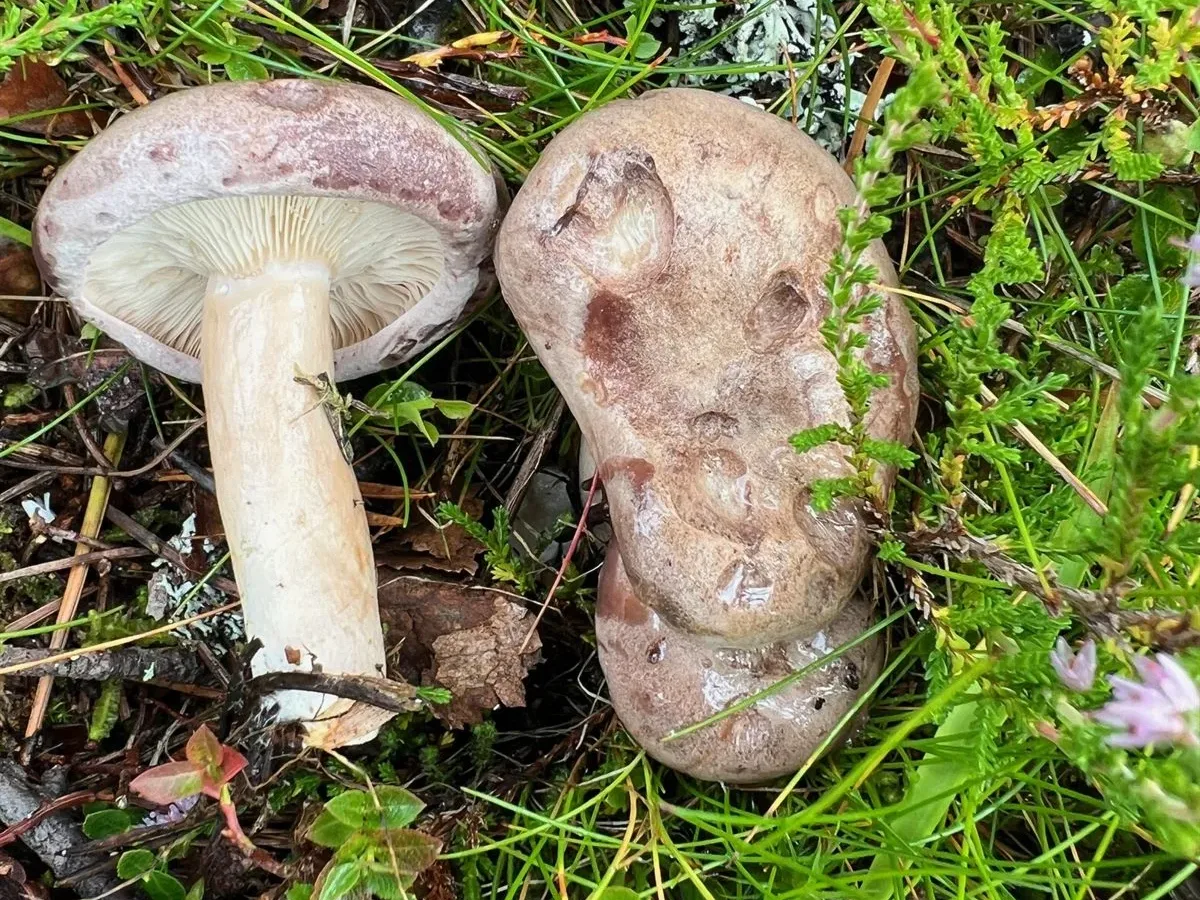 © Kirsti Anne Mandal (CC BY)
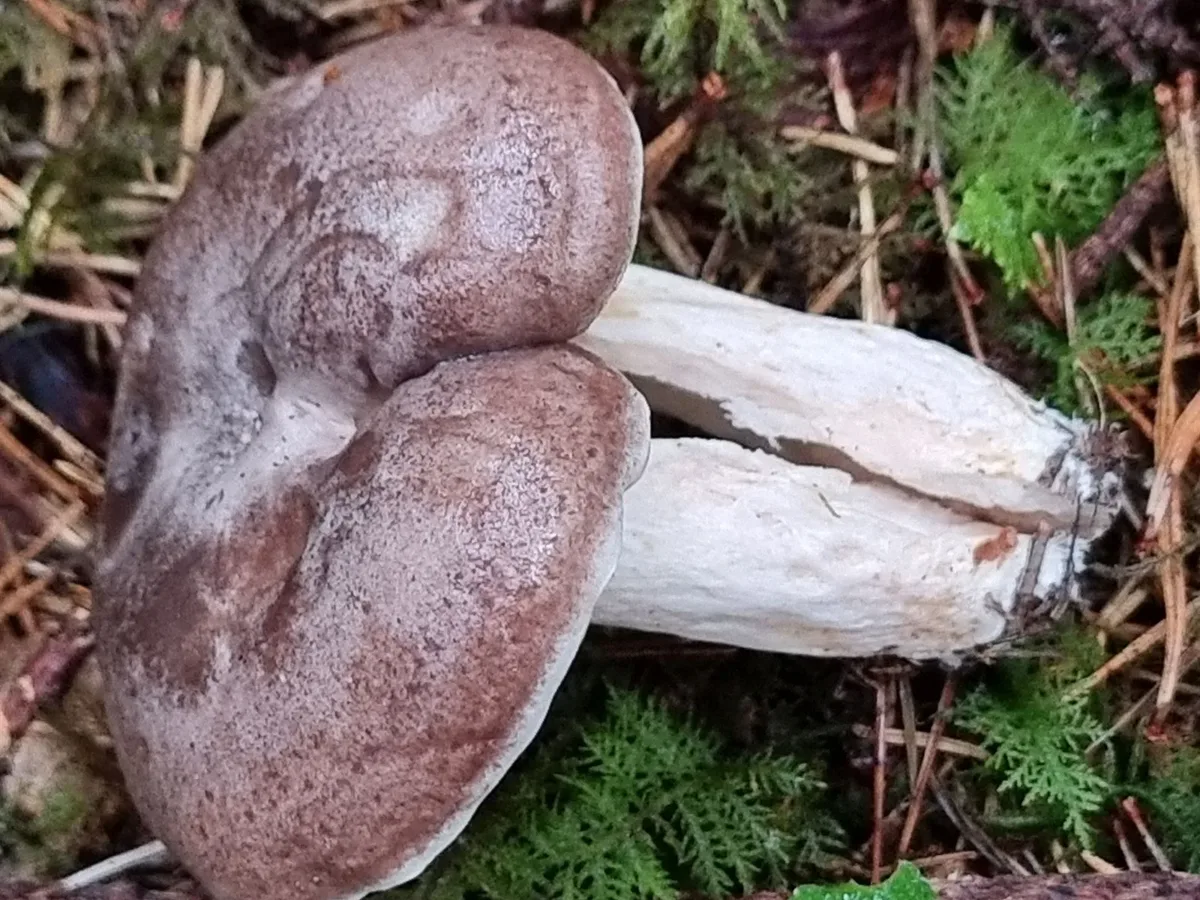 © Andrea Bender (CC BY)
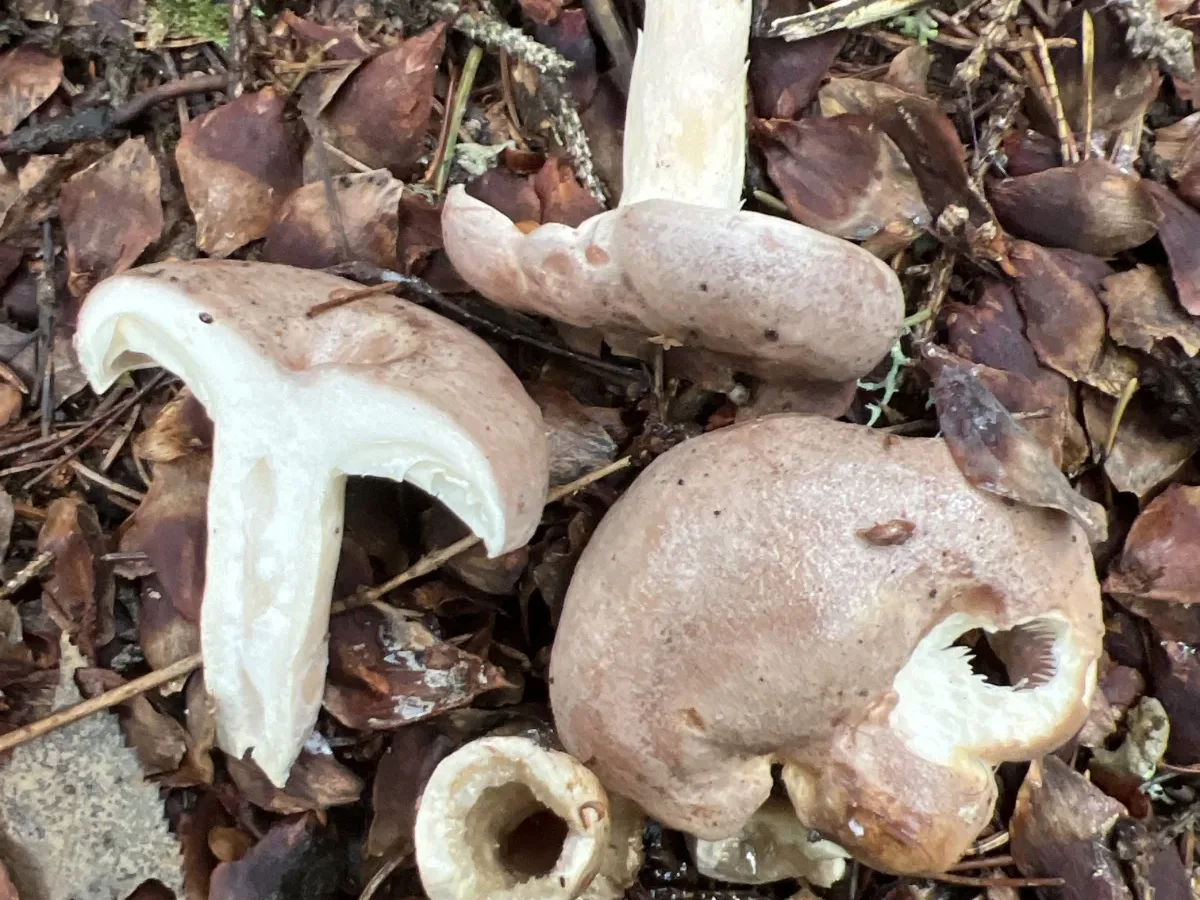 © Ulrik Andreassen (CC BY)
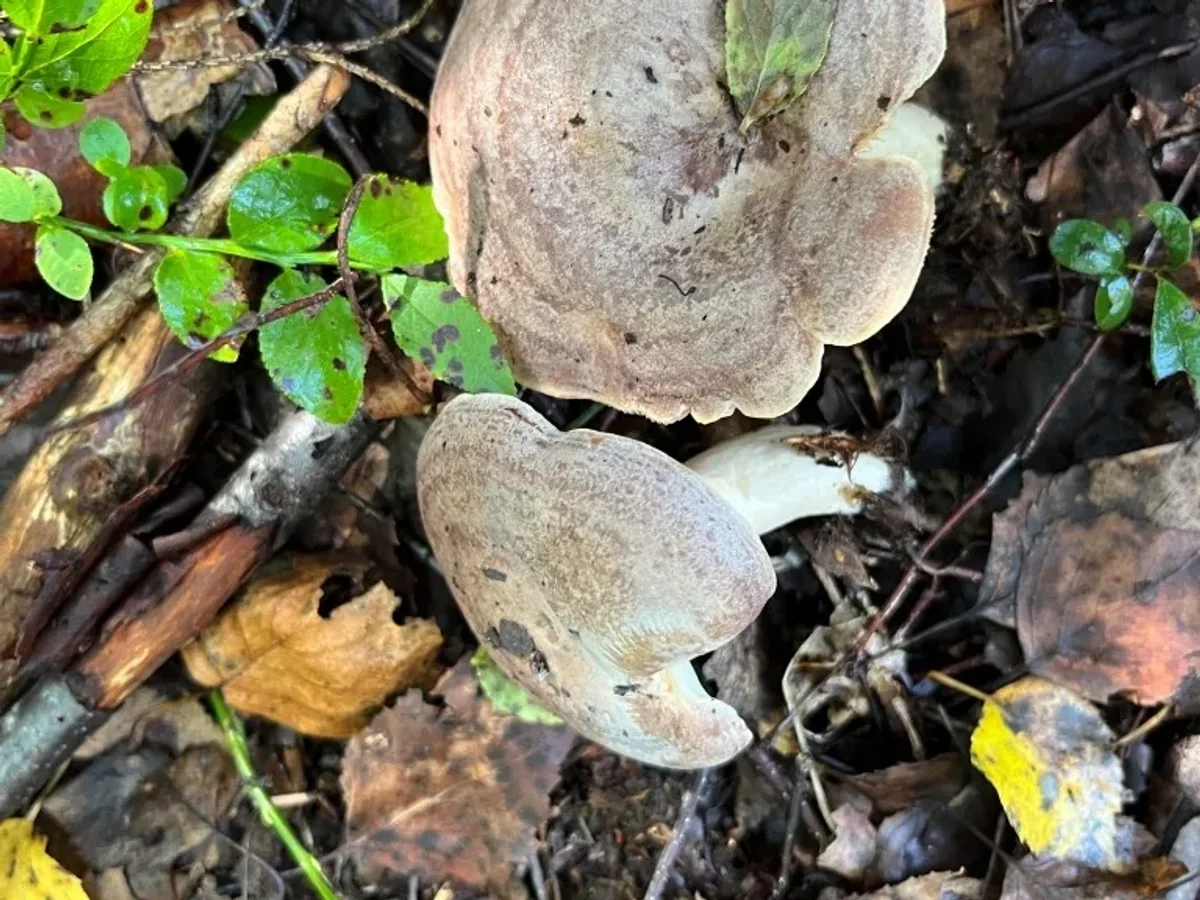 © Siv Moen (CC BY)© gailhampshire (CC BY 2.0)© gailhampshire (CC BY 2.0)
Edible only with the right preparation - or safe for some people but not others. Learn the caveats first.
Never eat a mushroom you are not 100% sure of - check the look-alikes below, and always cook wild mushrooms.
How to recognise it
Lactarius trivialis is one of the largest and most slimy milkcaps of the northern boreal forest. Its most immediately striking feature is the extraordinarily viscid cap surface, which in wet weather becomes thickly coated in gluten and is extremely slippery to the touch.
The cap spans 6-14 cm and progresses from convex through plane to broadly funnel-shaped. The colour is a characteristic lead-grey to grey-lilac, sometimes with a brownish or ochraceous cast, and frequently shows indistinct, darker concentric zones.
The stem is also slimy and may show shallow scrobiculate pitting similar to, but less pronounced than, Lactarius scrobiculatus.
When any part of the flesh is broken, abundant white latex flows immediately. The critical diagnostic: leave the latex on a white tissue or your thumbnail and wait 5-15 minutes - it will slowly but unmistakably turn sulphur-yellow.
This yellow colour-change of the milk is the single most reliable identification character for this species and instantly separates it from many confusable milkcaps.
The taste of the raw latex is intensely acrid and burning - do not ingest. Spore print is white to cream.
Why it's dangerous
MODERATE - raw consumption causes significant GI distress but is not life-threatening.
The greater danger is habitat confusion: Cortinarius rubellus (deadly webcap, orellanine nephrotoxin) grows in the same boreal spruce and pine forests and is lethal.
Always confirm white latex flows immediately from broken flesh before collecting - absence of milk absolutely disqualifies a specimen as a milkcap.
Toxin
Acrid sesquiterpene lactones, primarily illudane-type compounds concentrated in the white latex and flesh.
This is the identical compound class to those found in Lactarius rufus and L. torminosus.
Heat-labile and water-soluble; destroyed by thorough blanching.
Symptoms
Raw or undercooked consumption causes immediate intense burning and irritation of the mouth, lips, and throat, followed by nausea, abdominal cramping, vomiting, and diarrhoea within 30-120 minutes.
Symptoms are self-limiting and not life-threatening; recovery is typically complete within 12-24 hours.
Severity is proportional to the amount consumed. No systemic organ damage is expected.
Staying safe
Lactarius trivialis contains acrid sesquiterpene lactones in its latex that cause burning oral and gastrointestinal irritation if the mushroom is consumed raw or insufficiently cooked.
Symptoms include immediate burning of the mouth and throat, nausea, vomiting, and diarrhoea. These are not life-threatening but can be very unpleasant and distressing.
The toxins are water-soluble and heat-labile, and are reliably removed by the traditional blanching method (boiling in repeated changes of water). Do not consume without thorough preparation.
The most serious safety issue is habitat-shared confusion with Cortinarius rubellus (deadly webcap), which causes orellanine nephrotoxicity - irreversible kidney failure that can appear 2-3 weeks after ingestion, making the link to a mushroom meal non-obvious.
The absolute confirmation test for a milkcap is immediate flow of white latex from broken flesh - if no milk appears, discard immediately. Always verify this before placing any mushroom in the basket.
Where & when it grows
Habitat
This is pre-eminently a boreal spruce forest mushroom. Across Fennoscandia it ranks among the most abundant milkcaps, appearing reliably each year in moist, mature spruce stands on humus-rich, slightly acidic soils.
Look for it on the mossy, needle-littered floors of Norway spruce forest, especially where the canopy is dense and moisture is retained. It also grows under Scots pine and in mixed spruce-birch forest, but pure dense spruce is its preferred environment.
In Sweden and Finland it is one of the most harvested wild mushrooms after chanterelles and porcini, precisely because of its abundance and predictability. In central Europe it ascends into montane spruce forest zones in the Alps and Carpathians.
It never grows in open fields or on dead wood - always ectomycorrhizal with living conifers.
When
Fruiting is centred on late summer and early autumn, from approximately late July through September and into October.
In Fennoscandia the main flush runs from the first week of August to the end of September; early emergence in July is possible after warm, wet early summers.
Fruiting is triggered by significant rainfall (usually 20+ mm over a fortnight) following a warm soil phase, with the first caps appearing 5-10 days after adequate rain.
The species tolerates moderate cold but numbers drop rapidly after the first hard ground frosts. In favourable years it produces enormous quantities - entire forest glades carpeted with large, grey, slimy caps.
How it grows
Grows scattered to gregarious or in loose troops under conifers, occasionally carpeting a small area after a good flush.
Individual fruitbodies develop quickly - a button can reach full cap size within 4-6 days - but are relatively short-lived. The glutinous surface picks up fallen needles and debris readily, so older specimens look untidy.
Like all ectomycorrhizal fungi, this species lives in close partnership with its host trees, its mycelium woven into living spruce and pine roots, exchanging water and minerals for the tree's sugars. It never grows on dead wood.
Fruiting conditions
Requires sustained late-summer rainfall on moist, humus-rich conifer-forest soils; the glutinous cap surface suggests adaptation to high-humidity forest microclimates; flush begins 5-10 days after adequate rainfall with soil temperatures above 8°C; productivity declines markedly below 6°C soil temperature.
Look-alikes
Several other grey or lilac milkcaps grow in overlapping boreal habitats:
- Lactarius flexuosus (lilac milkcap) is similar in cap colour but typically grows under deciduous trees (alder, lime, hazel) rather than conifers, has a less viscid cap, and its milk does not turn yellow.
- Lactarius utilis is extremely close to L. trivialis and was long treated as a synonym or variety; it tends to be slightly paler (more ochraceous-grey) and less viscid but is not reliably separated in the field - some authorities still regard them as conspecific.
- Lactarius blennius (beech slippery Jack milkcap) has a very similar slimy grey-green cap but grows strictly under beech and has acrid white milk that does not change colour.
- Lactarius vietus (grey milkcap) is smaller, grows under birch, and its milk slowly turns grey-lilac, not yellow.
- Lactarius pallidus grows under beech and has pale cream-buff colouring rather than grey.
None of these are deadly.
CRITICAL SAFETY: Cortinarius rubellus (deadly webcap) occurs in the same boreal spruce and pine forests. Though its cap is typically reddish-brown rather than grey, in the same habitat and age-range there is potential for distraction or confusion during bulk harvesting. It is DEADLY POISONOUS (orellanine causes irreversible kidney failure).
The definitive test: break the flesh - if no white latex flows immediately, it is not a milkcap. Cortinarius also has rusty-brown spores (deposited on the stem), a cobweb-like cortina veil when young, and gills that age to rusty-brown.
Always confirm latex flow before collecting any milkcap.
Inhabits the same boreal spruce and pine forests. DEADLY POISONOUS - orellanine causes irreversible kidney failure with delayed onset (2-3 weeks). Has NO latex at all; always break the flesh and confirm white milk flows before collecting. Cortinarius rubellus is reddish-brown (not grey), has rusty-brown spores deposited on the stem, a cobweb-like cortina veil when young, and gills that mature to rusty-brown. Absence of latex is the absolute disqualifier.
Very similar slimy grey-green cap but grows strictly under beech (Fagus); cap often has distinctive darker olivaceous spots or blotches; white milk does not change colour on exposure.
Smaller cap (3-7 cm), grows under birch rather than spruce, and its white milk slowly turns grey-lilac (not yellow) on exposure to air - the colour change direction is a reliable separation.
Similar grey-lilac colouring but primarily found under deciduous trees (alder, hazel, lime) rather than spruce and pine; cap less viscid; milk white and does not turn yellow on exposure to air.
Extremely close relative - some authors treat it as a synonym of L. trivialis. Tends to be paler (more ochraceous or buff-grey) and slightly less viscid; not reliably distinguished in the field; treated identically for edibility purposes.
A reference guide - never an edibility guarantee. When in doubt, leave it out.