Zoned milkcap
Lactarius subzonarius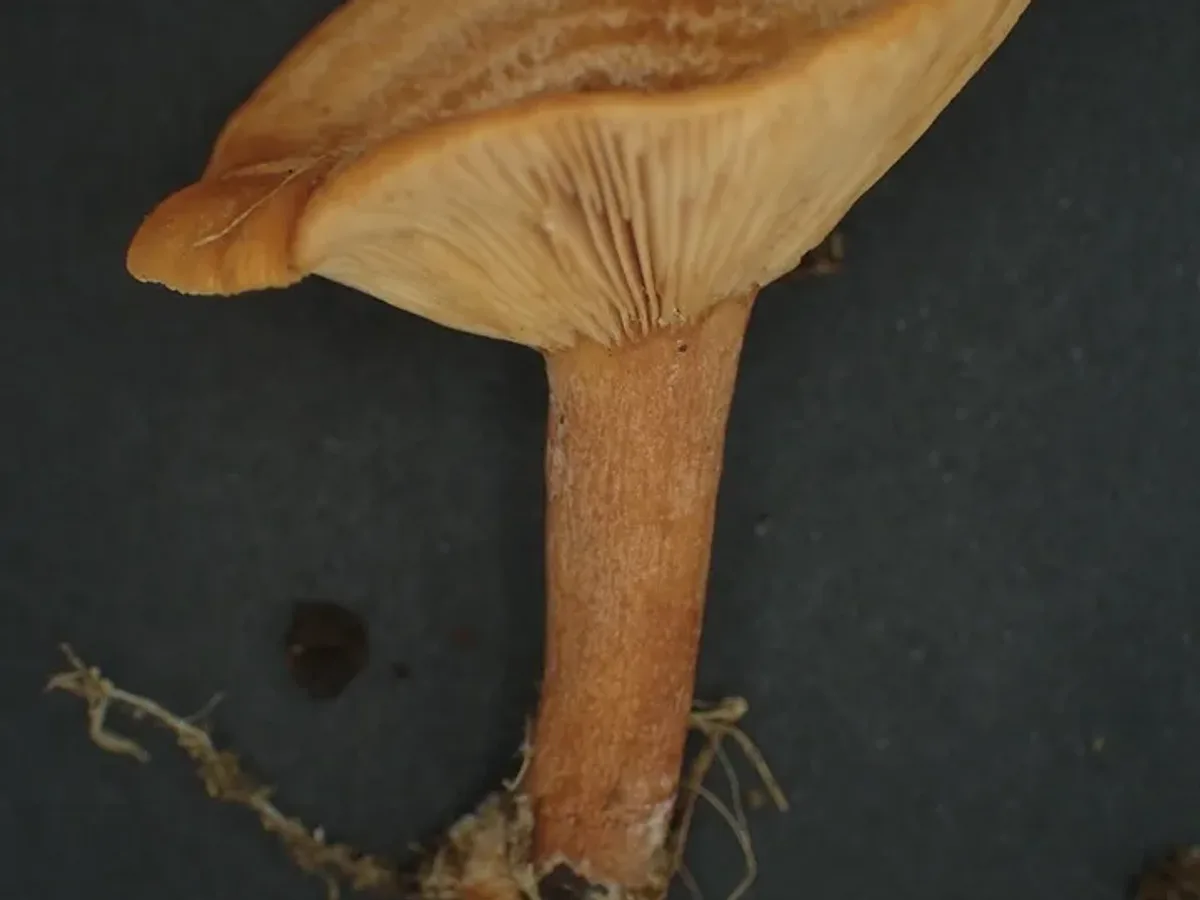 © lxjfx (CC BY-SA)
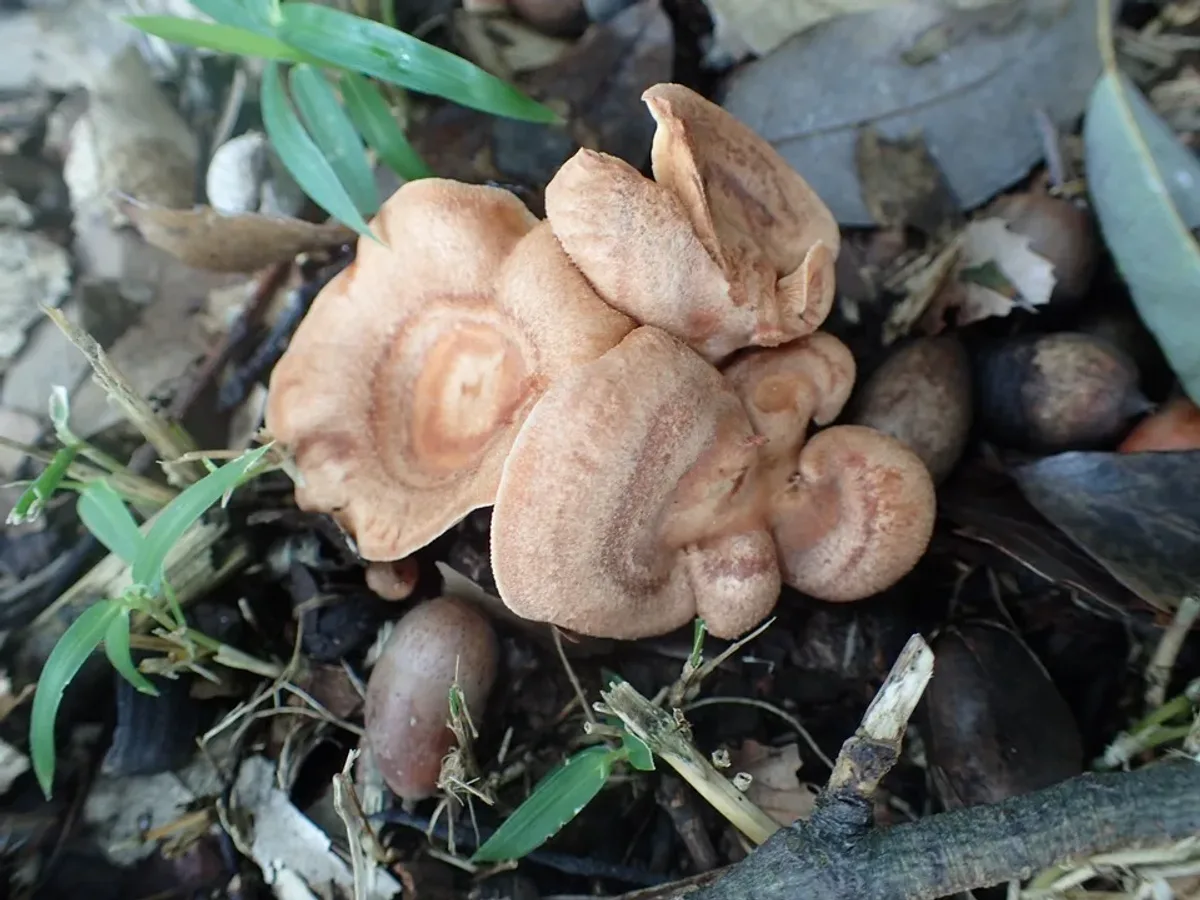 © lxjfx (CC BY-SA)
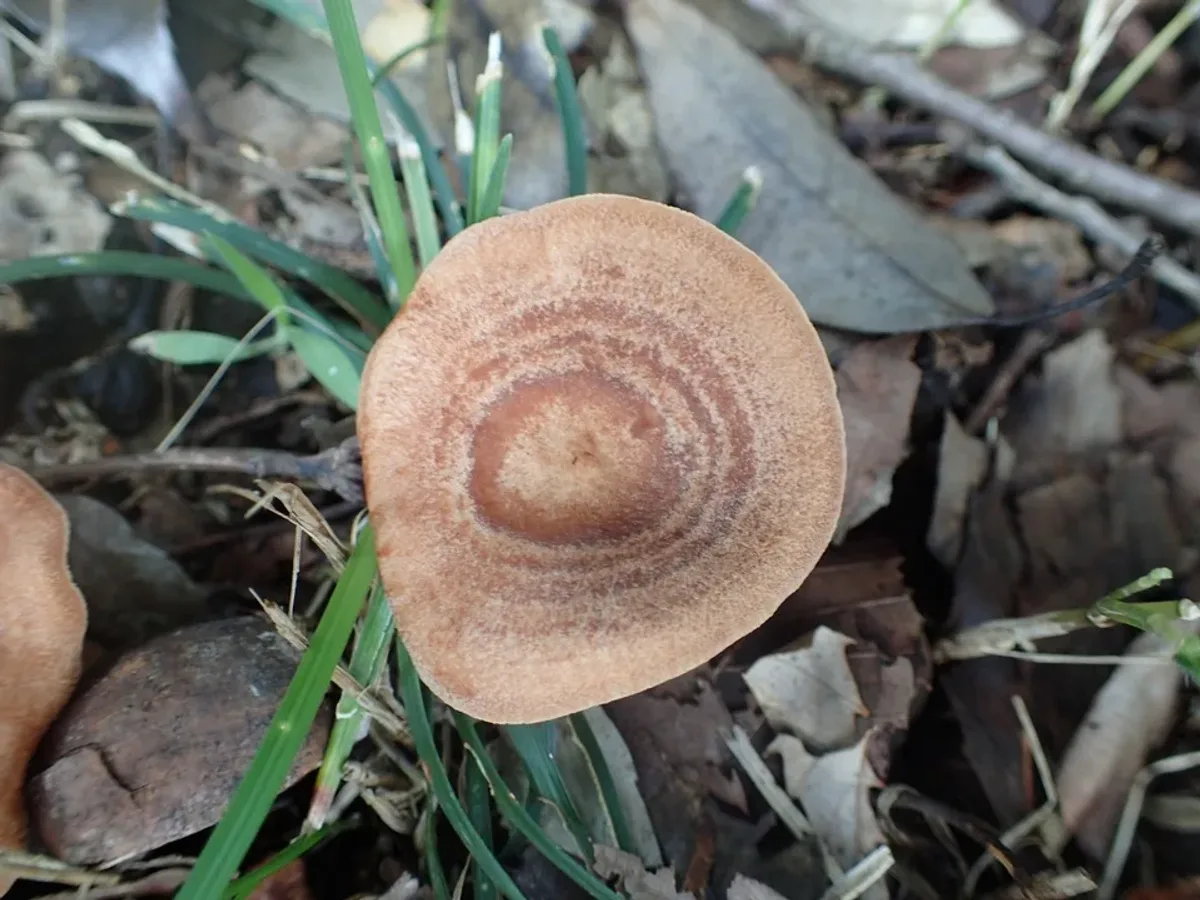 © lxjfx (CC BY-SA)
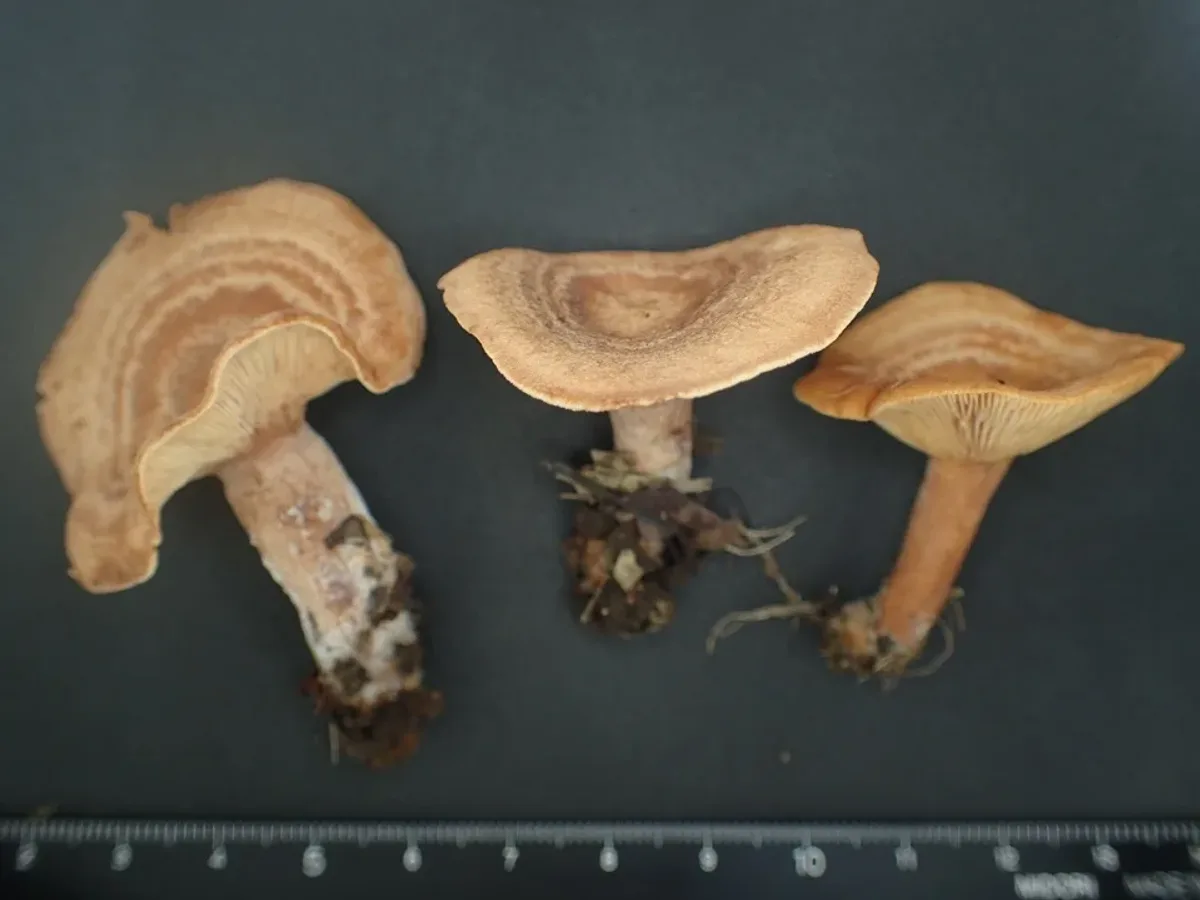 © lxjfx (CC BY-SA)© lxjfx (CC BY-SA)© lxjfx (CC BY-SA)
Edible only with the right preparation - or safe for some people but not others. Learn the caveats first.
Never eat a mushroom you are not 100% sure of - check the look-alikes below, and always cook wild mushrooms.
How to recognise it
Lactarius subzonarius is a medium-sized milkcap of East Asian hardwood forests, recognised primarily by its ochre-yellow to honey-tan cap bearing faint but characteristic concentric zonation - the feature that gives it its name.
Cap
The cap begins convex with an inrolled margin before flattening and then developing a shallow central depression. In wet conditions the surface acquires a slight viscidity that disappears as it dries.
Gills
The gills are pale cream, closely spaced, and run slightly down the stem, browning where cut or bruised.
Stem
The stem is fairly stout and solid in young specimens but becomes hollow with age.
Latex
Most distinctively, breaking any part of the cap, gills, or stem releases white latex that stays white on exposure to air and does not stain the flesh - it does not yellow, turn blue, or produce any dramatic colour change. This unchanging white milk is one of the key field characters.
Smell & taste
The taste of the raw latex is mild or only faintly acrid to slightly bitter, quite unlike the intensely burning milk of species such as Lactarius rufus or L. torminosus.
Where & when it grows
Habitat
This species is an ectomycorrhizal partner of deciduous oaks, chestnuts, and related Fagaceae in the warm-temperate forests of East Asia.
It is characteristic of the oak zone that sweeps from northern China through Korea and into Japan - oak-dominated woodland on well-drained hillsides and valley slopes, often with a mossy or leafy duff layer.
Look for it on slightly acidic soils where old oaks of Quercus mongolica, Q. variabilis, or Q. acutissima are the dominant canopy trees, or in mixed woodland where these species grow alongside conifers such as Pinus densiflora. It does not occur in pure conifer plantations.
Forest edges, old logging roads, and areas where the organic layer is thick are productive spots.
Given its geographical range, it is most likely encountered by foragers in temperate Japan (Honshu and Kyushu), Korea, and northeastern to central China.
When
The fruiting season runs from July through October, corresponding to the warm-moist phase following the East Asian summer monsoon (baiu in Japan, changma in Korea, and the mei-yu / summer rains in China).
The main flush occurs in August and September, when soils remain warm from summer heat but have been recharged with moisture after the monsoon trough passes.
In Japan and Korea, the peak overlaps closely with other late-summer edible milkcaps such as Lactarius hatsudake.
Fruiting tails off sharply once nighttime temperatures fall below 10-12 °C in October.
How it grows
Grows singly or in loose groups of two to five, scattered across the forest floor under host trees - never in tight clusters.
What you see above ground is only the briefest glimpse of the organism. The mycelium lives unseen for years in the soil, woven around the fine lateral roots of host oaks and chestnuts in a sheath-like embrace.
Through this ectomycorrhizal partnership, the fungus trades mineral nutrients and water for sugars the tree produces - a relationship that may persist for decades between a single mycelium and its tree.
The fruiting bodies develop over four to seven days after adequate rainfall, buttons pushing up with caps tightly inrolled and expanding within a few days of emergence.
Because this partnership is obligate on both sides, Lactarius subzonarius cannot be cultivated away from its host; every specimen you find comes directly from a living forest.
Fruiting conditions
Tied to the post-monsoon warm-moist period in East Asia; fruiting requires warm soil temperatures combined with significant rainfall recharge; flushes appear 5-10 days after adequate soaking rains when soil is still warm from summer heat.
Look-alikes
Several other milkcaps in East Asian oak and mixed forests overlap in habitat, season, and general appearance and could be confused with Lactarius subzonarius:
- Lactarius hatsudake (commonly eaten in Japan and China) has a more distinctly zoned, orange-brown to brick-coloured cap and exudes orange or pinkish-orange latex - a reliable colour difference from the white milk of L. subzonarius.
- Lactarius vividus (recorded from China) is similarly coloured but has a more viscid cap surface and a bitter taste.
- Lactarius subpurpureus (recorded from North America but related East Asian taxa exist) produces distinctly spotted or zoned caps with wine-red zones and pink-stained milk.
- Lactarius chrysorrheus has a pale salmon or pinkish-buff cap and produces white milk that rapidly turns bright sulphur-yellow within a minute or two of exposure to air - a definitive distinction.
None of the realistic lookalikes in this region are known to be deadly poisonous, but some Lactarius species with similar appearance can cause gastrointestinal distress if eaten raw or insufficiently cooked.
More importantly, foragers should remain alert to Cortinarius species in the same habitat, which produce no latex whatsoever; always confirm latex flows from any broken tissue before collecting.
Cortinarius species in oak and mixed forests can show similar brown or ochre tones on cap and stem but produce NO latex at all. Always break the flesh to confirm white milk flows; if no latex is present the specimen is not a milkcap and should not be consumed.
Cap more distinctly zoned in brick-orange to reddish-orange tones rather than ochre-tan; exudes orange or pinkish-orange latex rather than white milk - the single most reliable distinction.
Pale pinkish-buff or salmon cap; milk is initially white but turns rapidly and distinctly sulphur-yellow within one to two minutes of exposure to air - an easy confirmatory test that L. subzonarius fails.
More viscid cap surface and somewhat more intensely bitter latex; recorded from similar deciduous woodland habitats in China; overlap is close but the stronger bitterness and viscid cap help separate it.
In the kitchen
Picking & cleaning
Lactarius subzonarius is collected and eaten locally in China, Japan, and Korea, though it is not among the most prized edible milkcaps in any of these countries.
Collect young to mid-aged specimens with caps still firm and not yet fully flattened; older specimens tend to be tough and may harbour insects.
The mild to slightly bitter taste means it can be used with less preparation than strongly acrid species like L. rufus or L. torminosus, but it is still advisable to blanch briefly before cooking to remove any residual bitterness. Do not eat raw.
Check for the characteristic white unchanging latex at the point of collection to confirm identity. Avoid specimens growing in polluted or heavily disturbed areas.
Cooking
Always blanch first: simmer for 5-10 minutes in lightly salted water and discard the liquid. This drives off any residual bitterness and is standard practice for milkcaps across East Asia.
After blanching, the caps are firm and hold their texture well, making them a solid addition to a stir-fry with garlic and ginger, a broth-based tofu soup, or a simple mixed mushroom dish.
In rural China and Japan this species tends to be treated like the other local milkcaps that share its season - honest everyday cooking rather than anything precious.
It is not traditionally dried. Never eat raw.
Good to know
Lactarius subzonarius has no documented amatoxin, orellanine, gyromitrin, or muscarine content.
Its mild-tasting latex means it is not among the highly acrid species that reliably cause raw-consumption poisoning. But the safety profile of all milkcaps when eaten raw or undercooked is uncertain; blanching before use is the standard precaution.
The primary safety concern is correct identification:
- Confirm white unchanging latex at collection.
- Note the deciduous hardwood habitat.
- Observe the faint cap zonation.
Avoid any brown or rusty-brown gilled mushroom in the same forest that produces no latex - such specimens could be Cortinarius.
This species is rated as edible in Chinese and Japanese ethnomycological literature, but classified here as caution because it is a less-studied species with mildly acrid latex and because best practice for any milkcap is to blanch before eating.
A reference guide - never an edibility guarantee. When in doubt, leave it out.