Purple-staining milkcap
Lactarius subpurpureus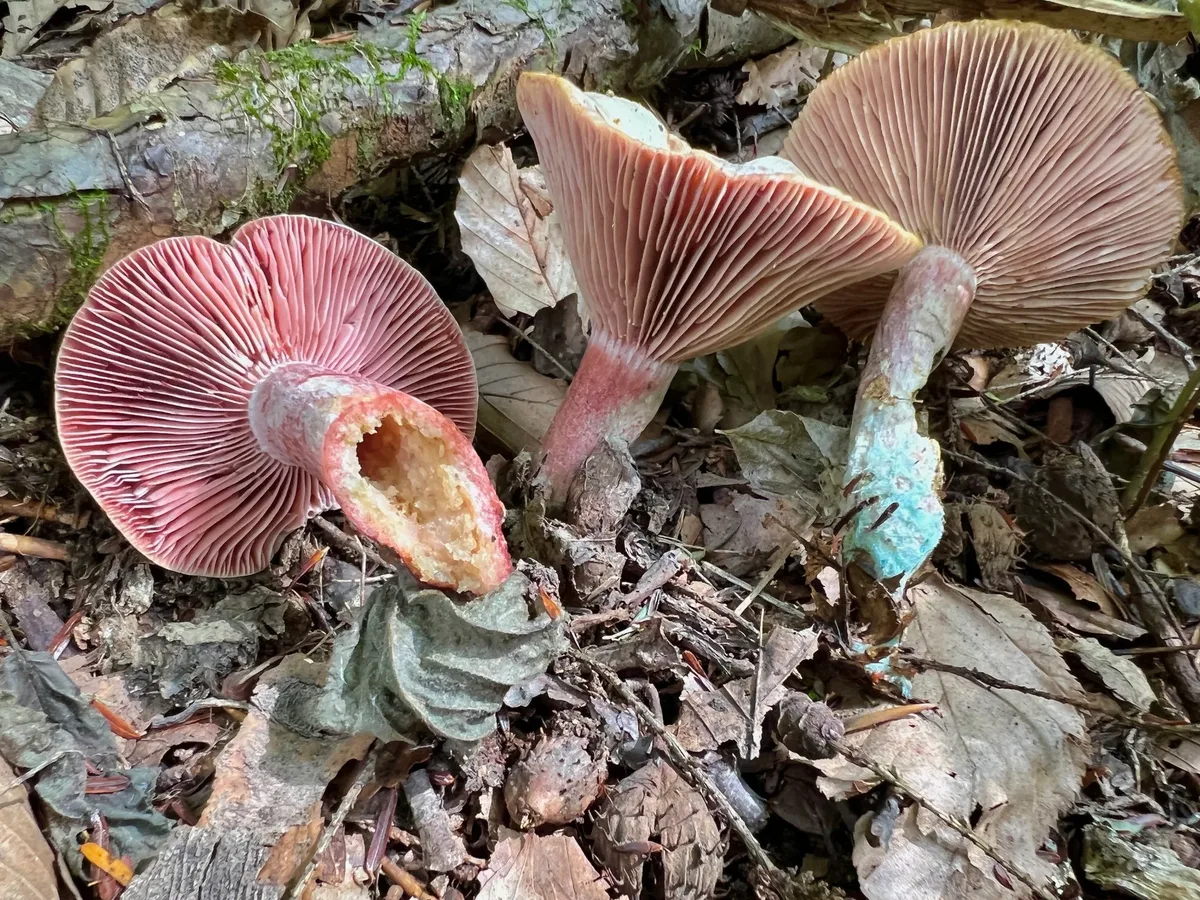 © Fluff Berger (CC BY-SA 4.0)
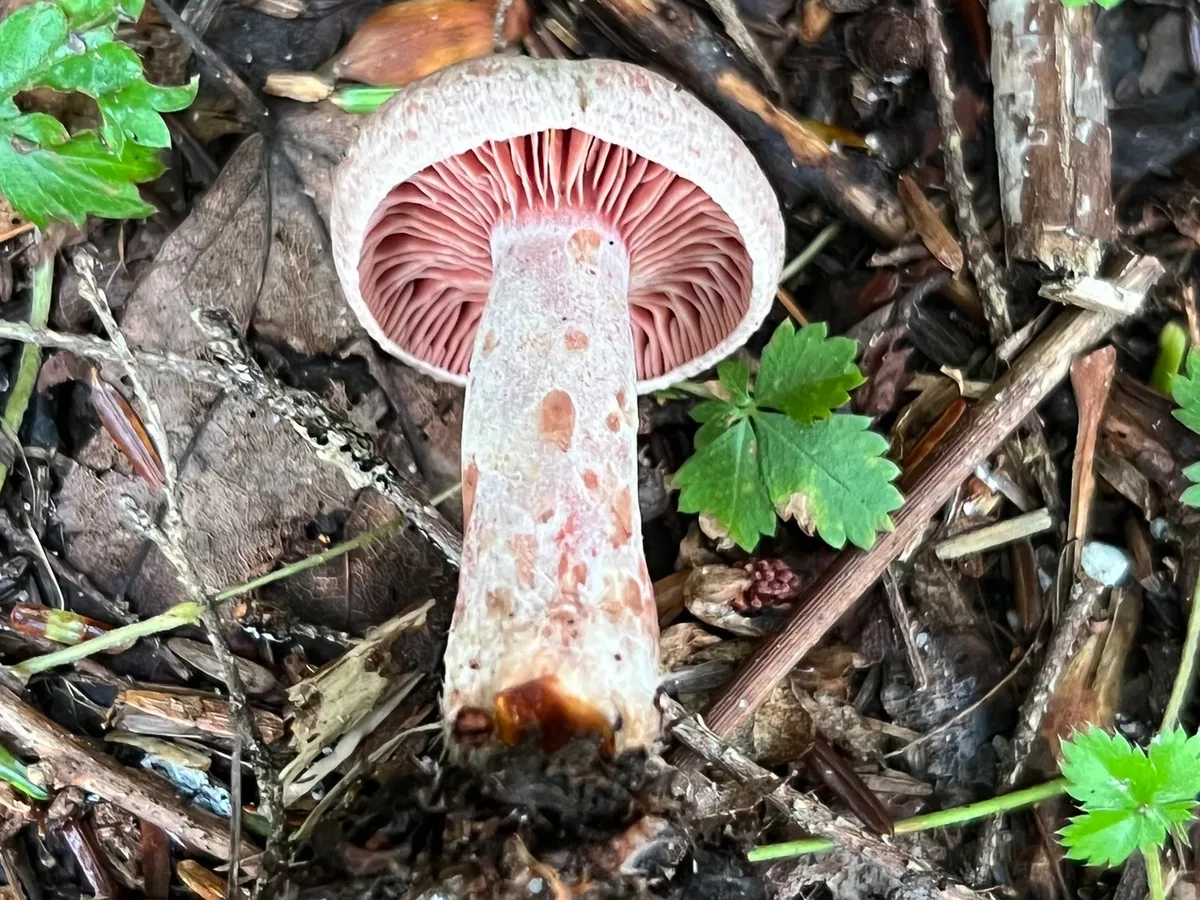 © Annie Weissman (CC BY 4.0)
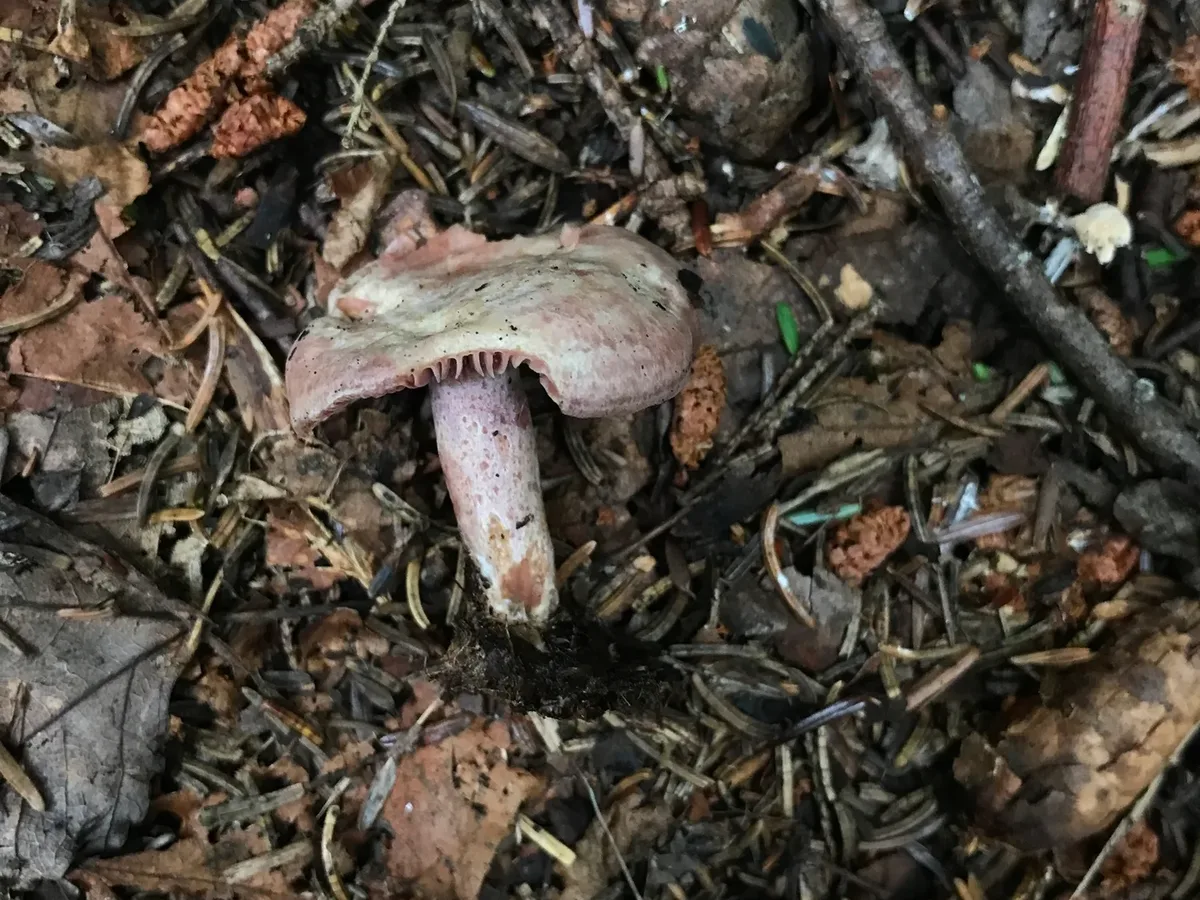 © Matthew Rozanoff (CC BY)
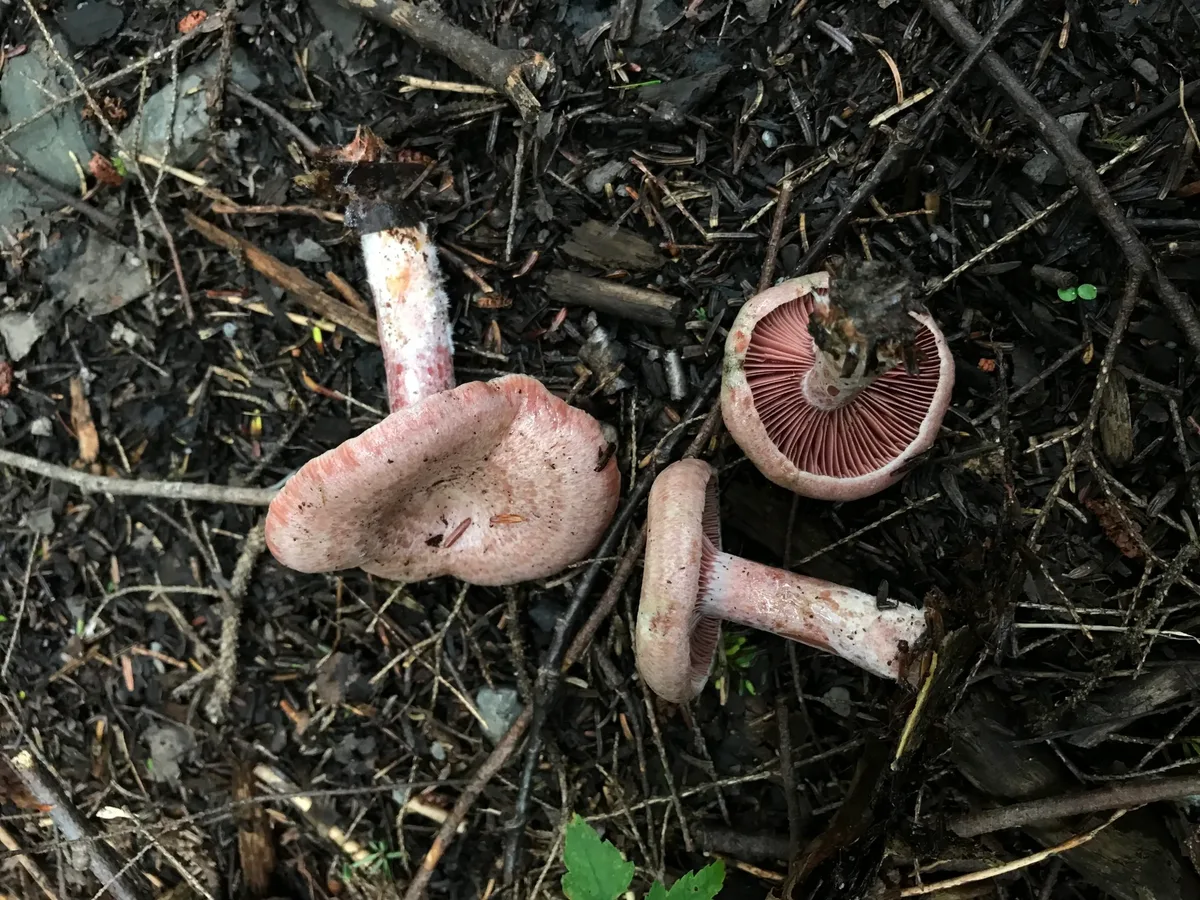 © Matthew Rozanoff (CC BY)
 © Richard Jacob (CC BY)
 © Richard Jacob (CC BY)
 Garrett Taylor (CC0)
 Garrett Taylor (CC0)
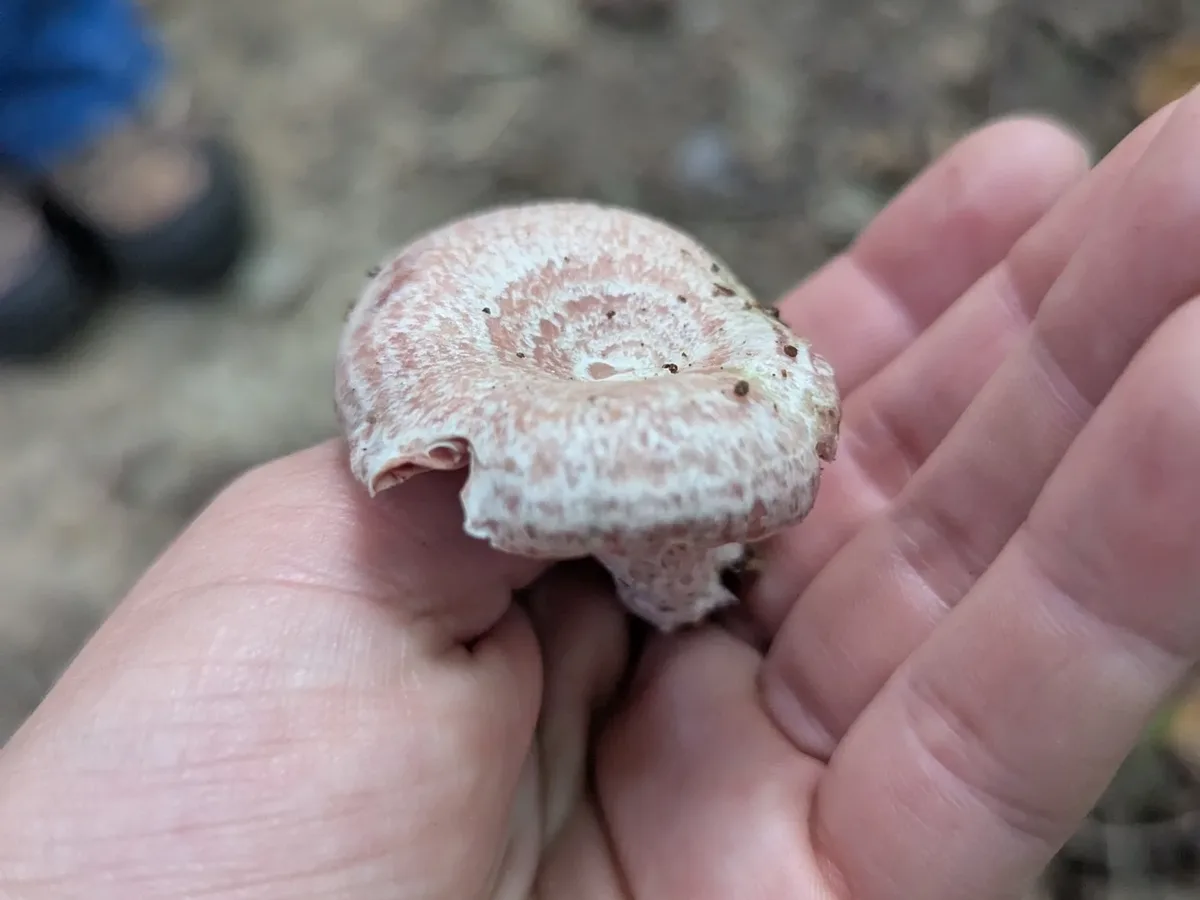 © Alina Martin (CC BY)
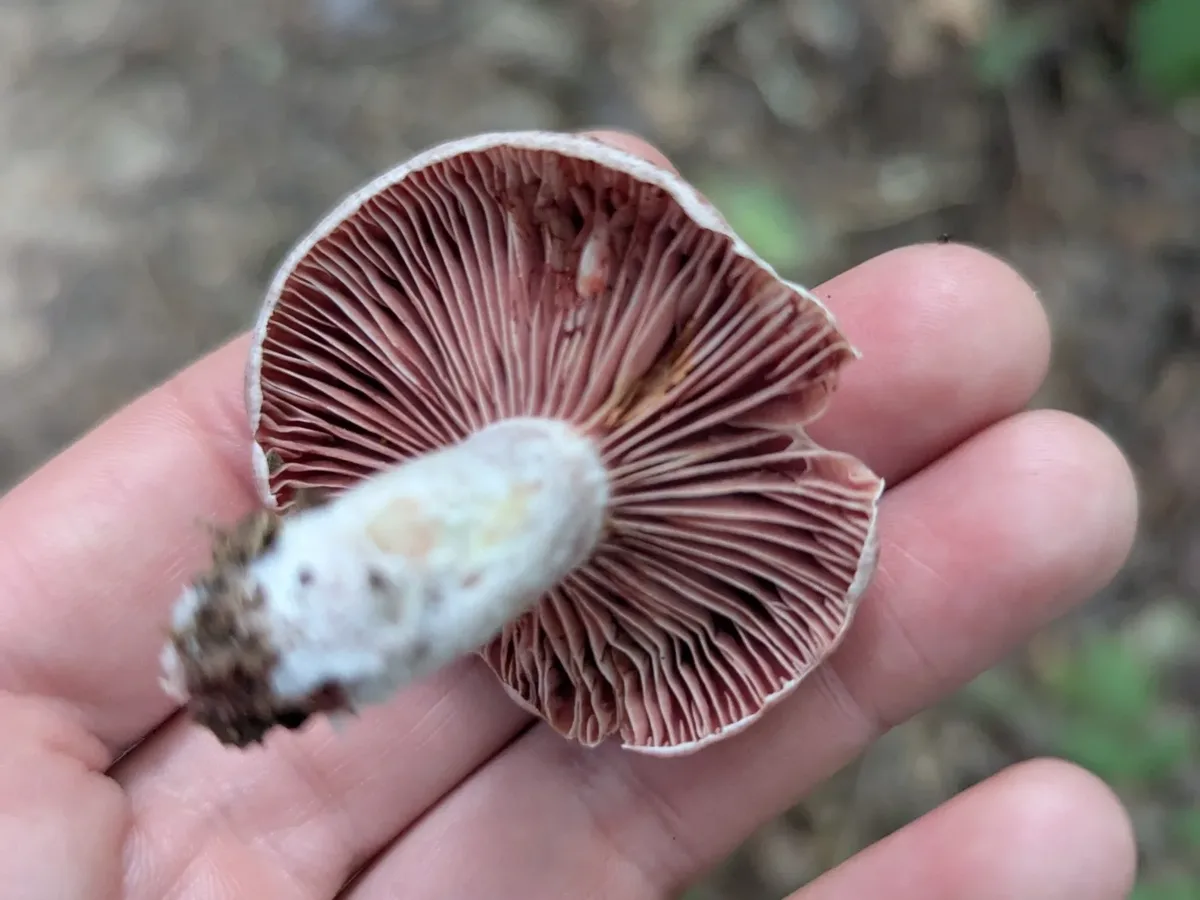 © Alina Martin (CC BY)
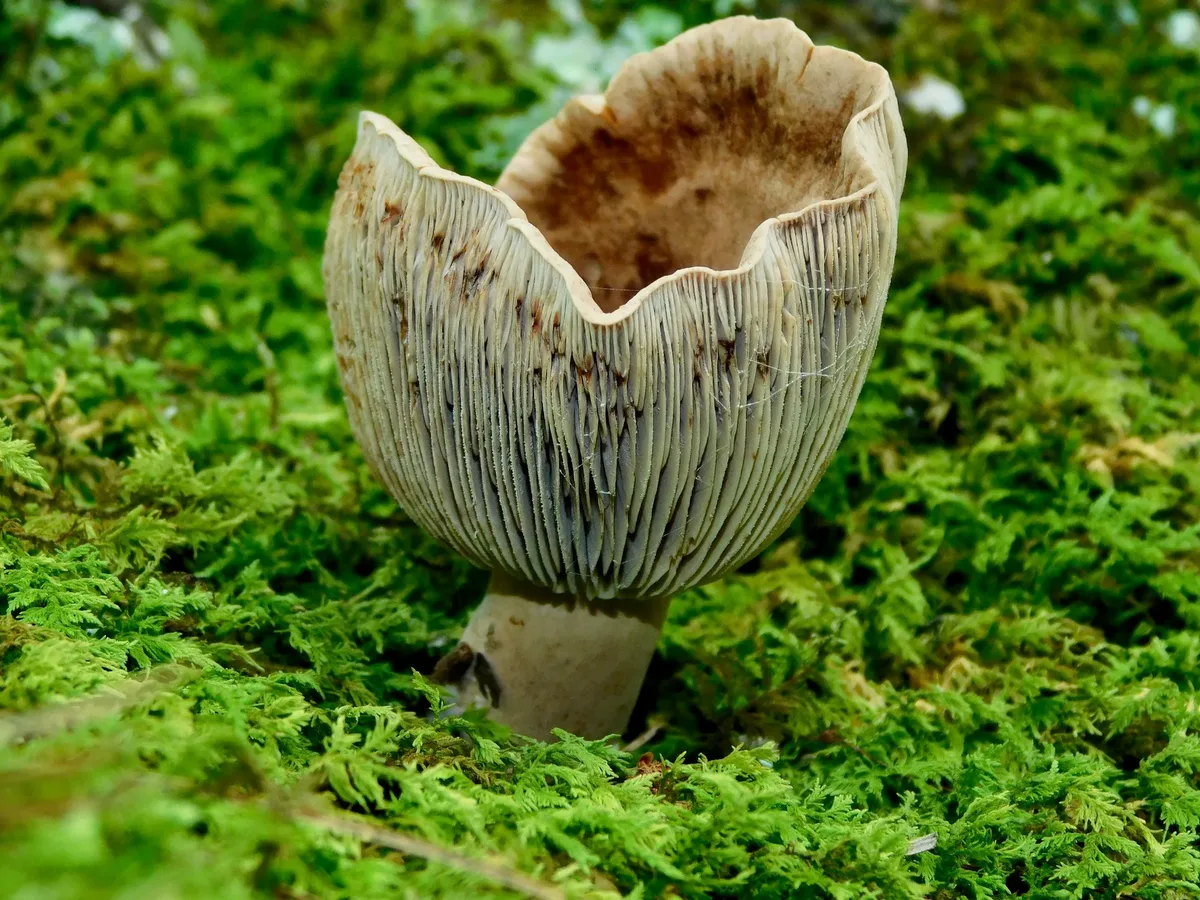 © Michael J. Papay (CC BY)
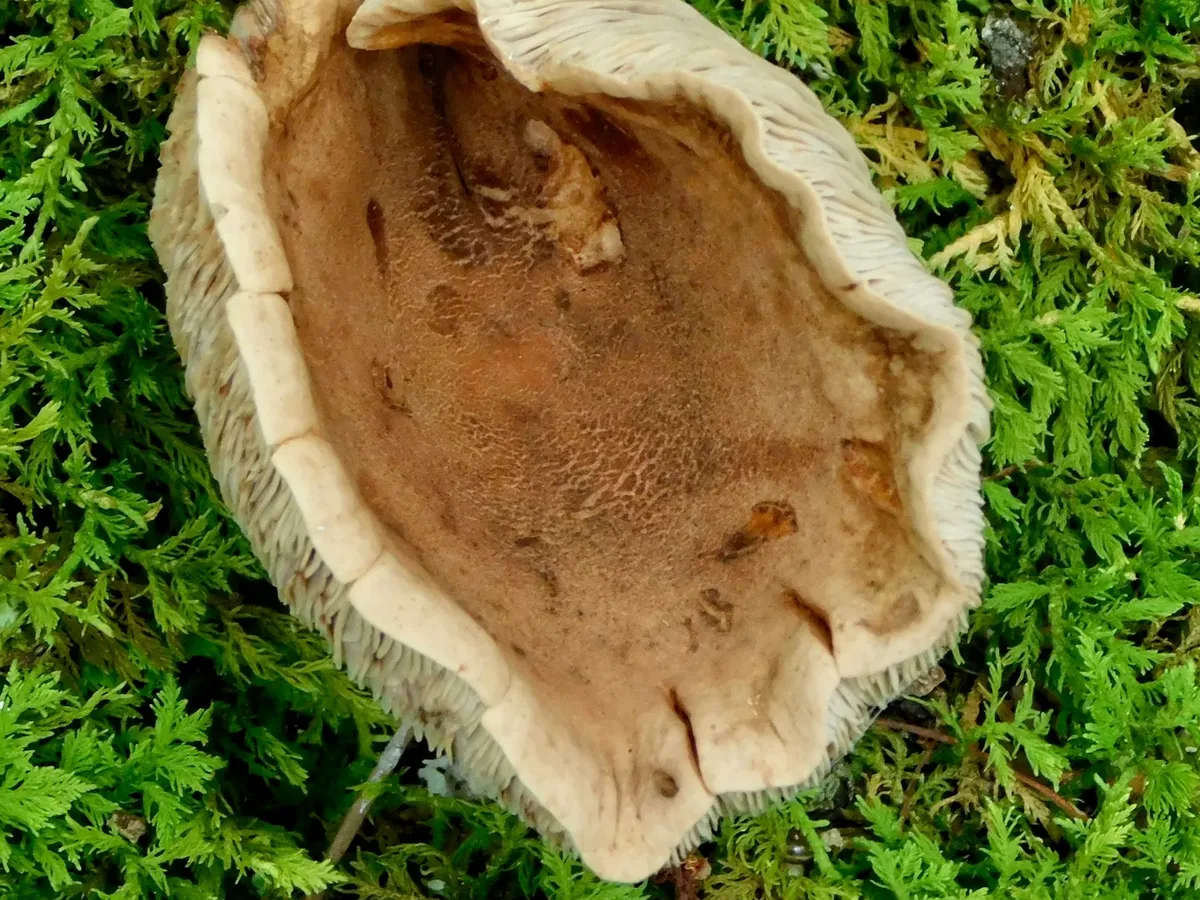 © Michael J. Papay (CC BY)
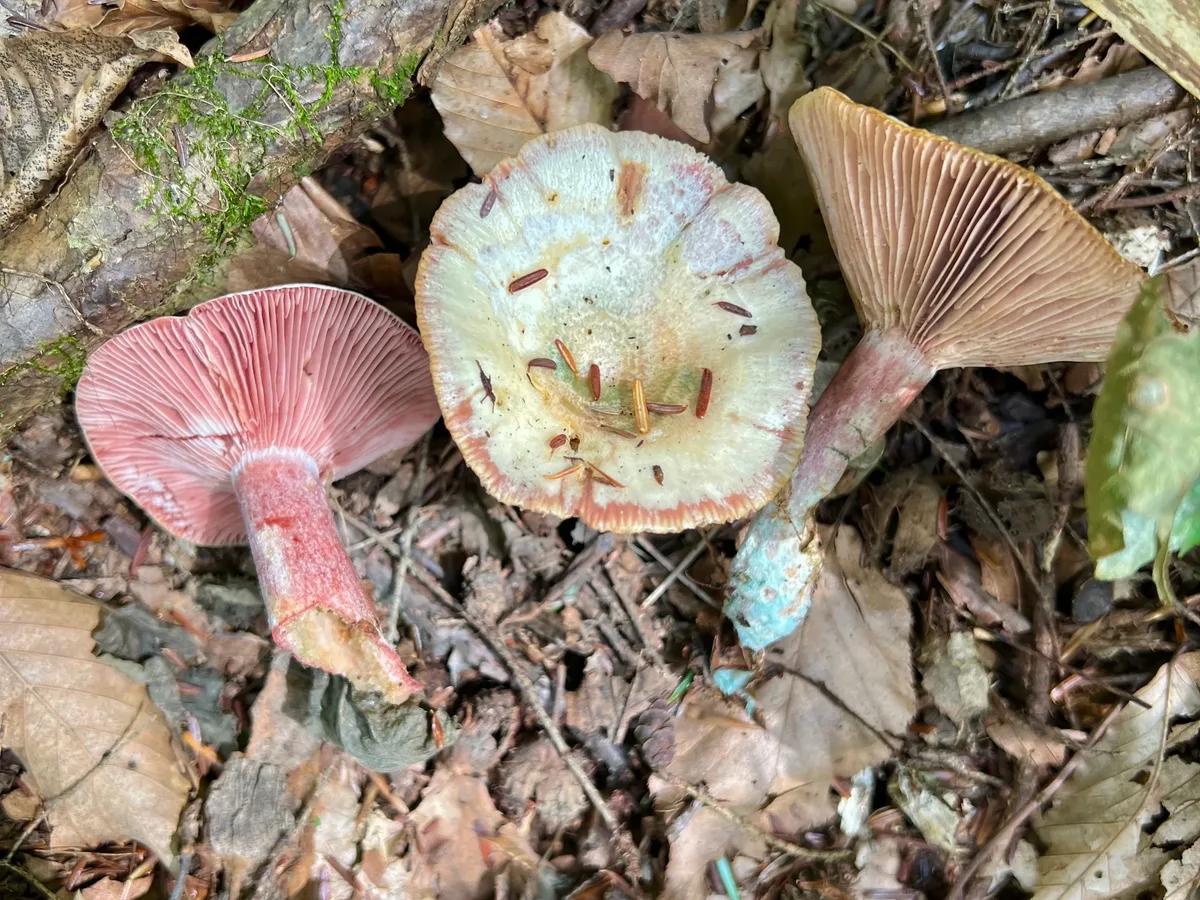 © Fluff Berger (CC BY-SA 4.0)© Fluff Berger (CC BY-SA 4.0)© Annie Weissman (CC BY 4.0)
Good to eat, once you have identified it with certainty and cooked it through.
How to recognise it
Cap
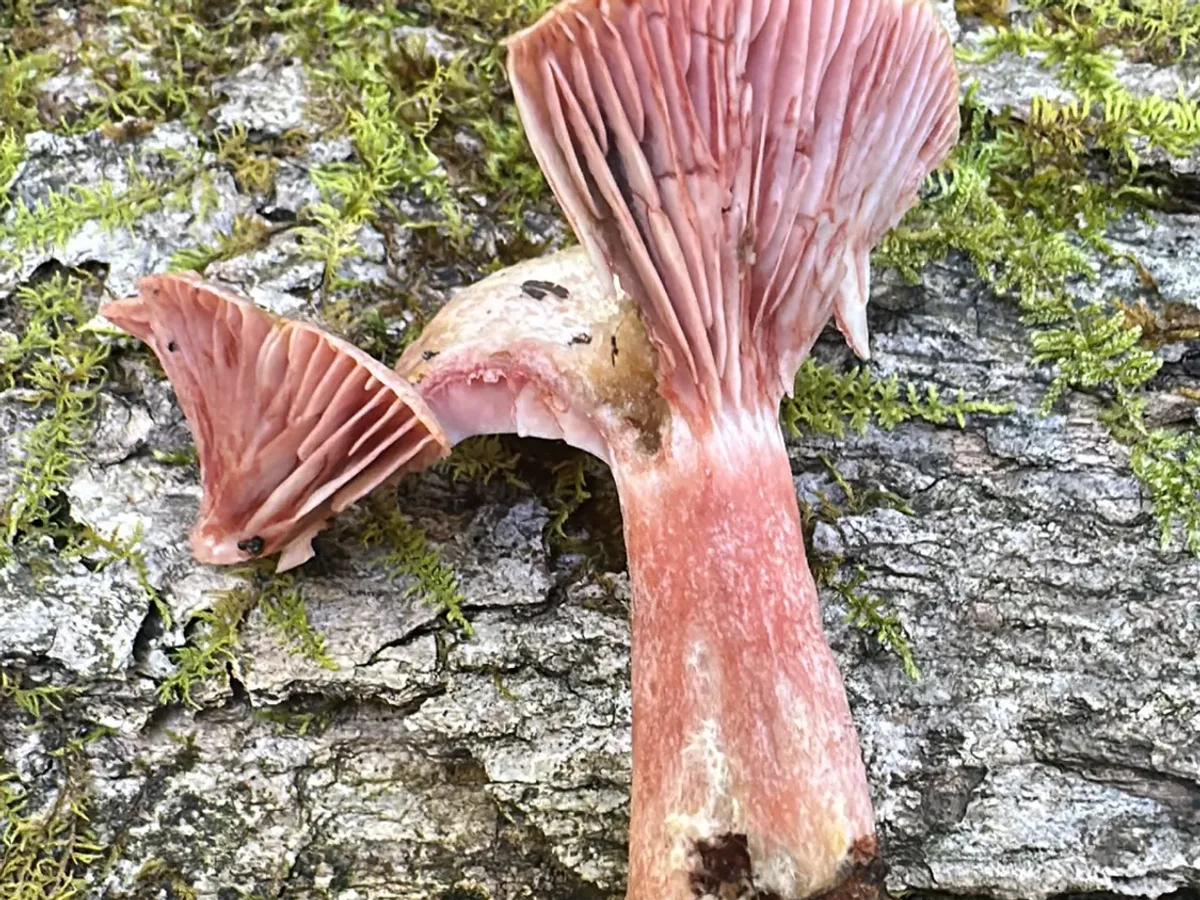
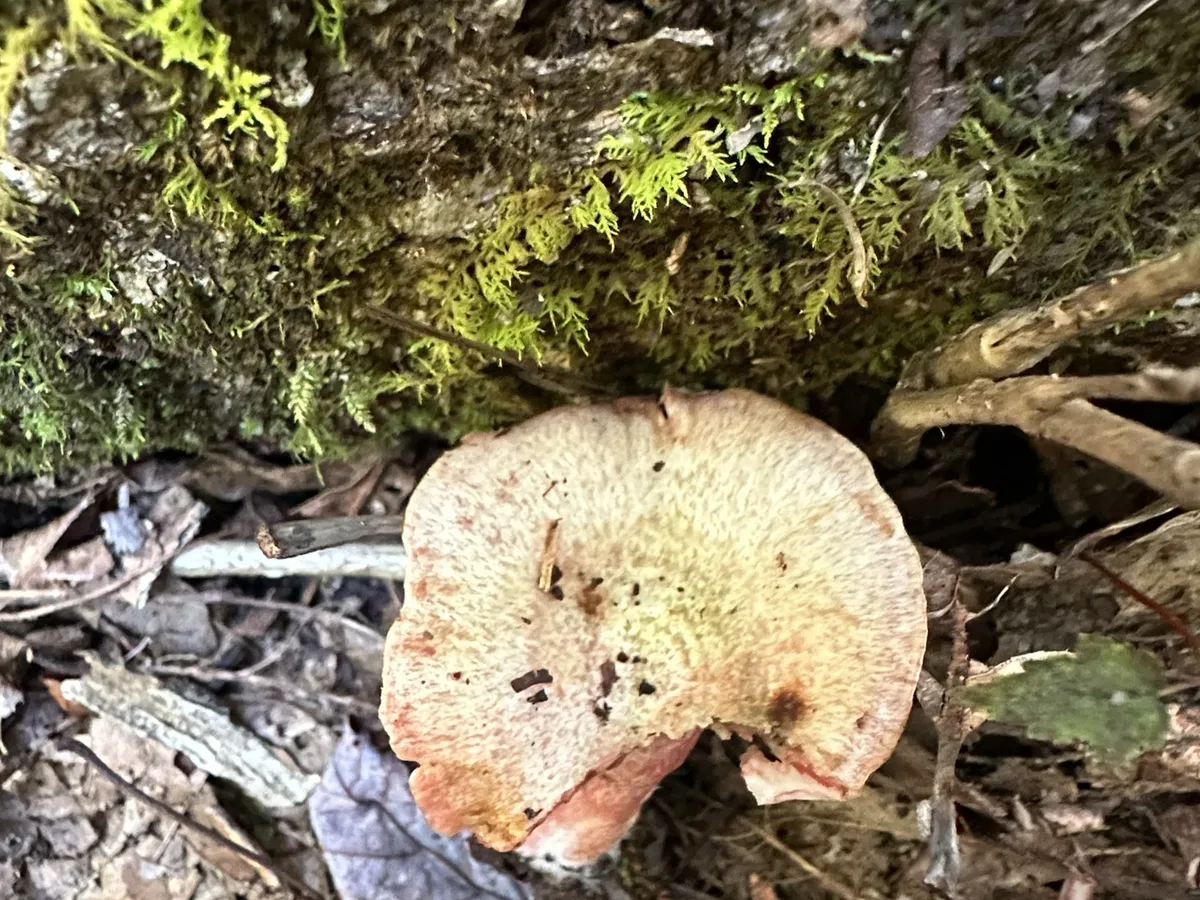
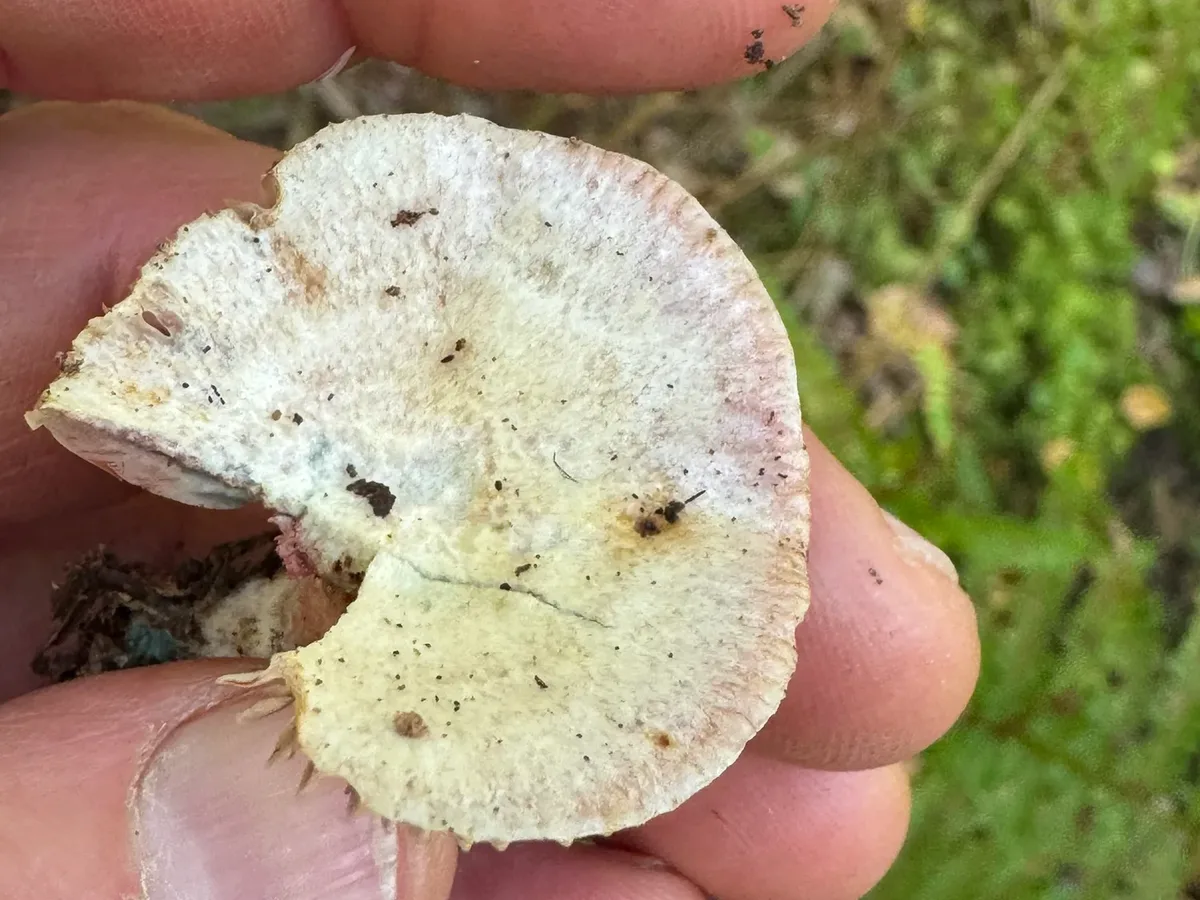
Cap 4-10 cm, initially convex with an inrolled margin, eventually broadly depressed or shallowly funnel-shaped. The surface is dry to slightly viscid, dull reddish-purple to vinaceous-wine, often showing faint concentric zones and acquiring greenish stains in age from latex drips and bruising.
Gills
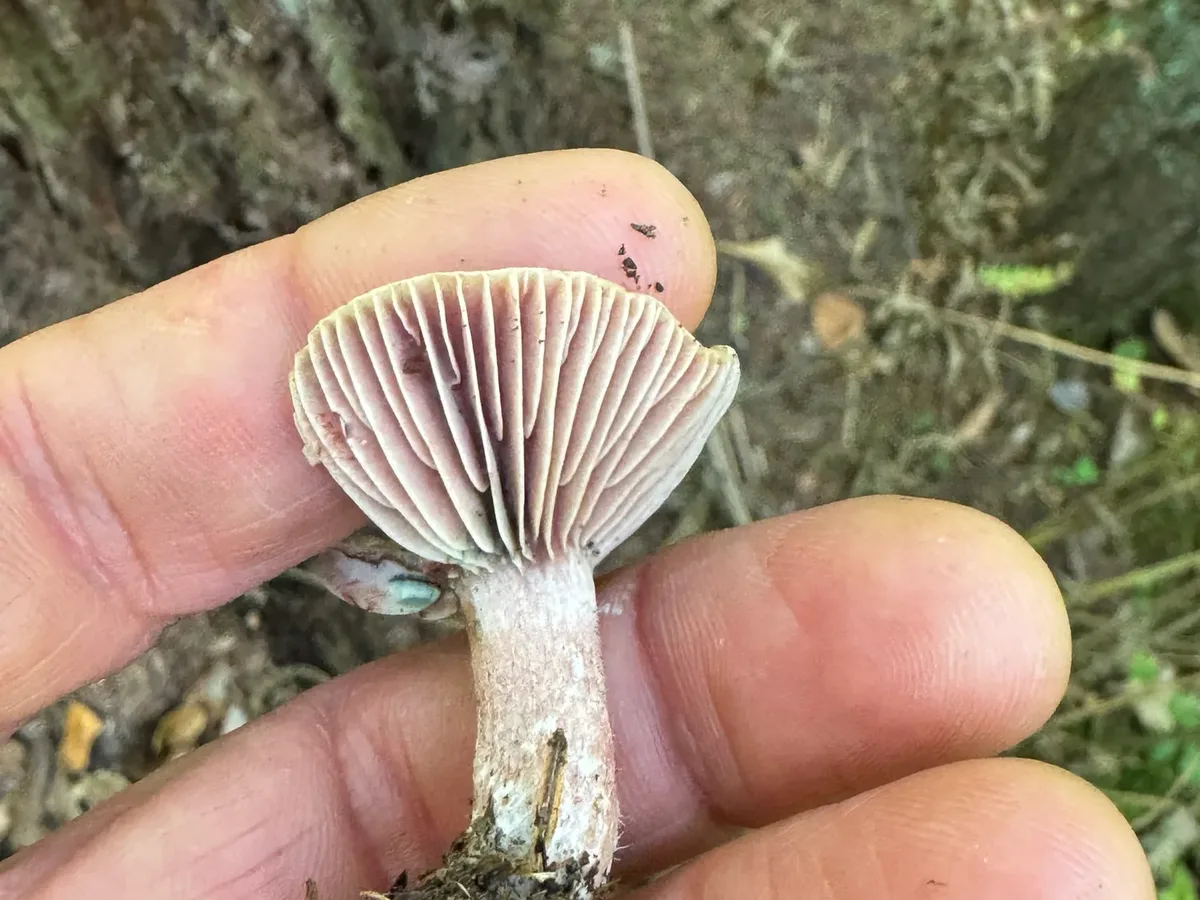
Crowded, pale flesh-pink to pale reddish-buff, turning greenish wherever they are damaged - a reliable field mark that sets this species apart at a glance.
Stem
Dry, 3-6 cm tall, reddish-purple, staining green in the same way.
What makes this milkcap genuinely remarkable is its latex: sparse, dark wine-red to blood-red when fresh, it undergoes a slow oxidation over several minutes, shifting the white tissue of cut gills and flesh to a dull green. Slice through the cap to confirm it - then wait and watch the transformation happen.
Spore print pale cream.
Where & when it grows
Habitat
Strongly associated with eastern hemlock (Tsuga canadensis) throughout its range, from the Appalachians to the upper Midwest and Maritime Canada.
Found on acidic humus in moist ravines, hillside hemlock groves, and mixed hemlock-hardwood forest.
Also fruits, less frequently, under white pine or red pine where hemlock is absent. Rarely ventures far from the Tsuga zone.
When
Midsummer to mid-autumn, July through October, peaking in late August and September.
Fruiting is triggered by warm-season rainfall followed by a brief warm period. Because it favours cool, moist hemlock ravines, it may fruit slightly later than surrounding open-forest species.
How it grows
Strictly mycorrhizal, appearing singly or loosely scattered rather than in dense clusters.
Not known to form large flushes; more often found in ones and twos near the same hemlock roots year after year.
Mycelium persists perennially; revisiting a productive site across seasons is rewarding.
Fruiting conditions
Warm-season ectomycorrhizal Lactarius of cool, moist hemlock ravines; fruits after sustained summer or early-autumn rain once soil temperatures are in the 10-20 °C range. Conservative standard-mycology estimate.
Look-alikes
The combination of dark wine-red latex that turns green, a reddish-purple cap, and habitat under eastern hemlock makes Lactarius subpurpureus nearly unmistakable in the field.
- Lactarius vinaceorufescens - the most realistic confusion; it also has reddish latex, but the latex turns yellow rather than green, a straightforward distinction at the cut surface.
- Lactarius subvellereus and other white-latex milkcaps - lack the coloured latex entirely.
- Lactarius chelidonium - yellowish to bluish-green latex, growing primarily under pine without the same deep vinaceous cap colour.
No deadly species shares this particular combination of characters.
Has yellowish to bluish-green latex and a less intensely reddish-purple cap with more ochre tones. Found primarily under pine. The latex of L. chelidonium does not start red before turning green - it is already yellowish from the outset.
Much larger, white to cream, with white latex and a velvet-textured cap. Acrid. Shares mixed deciduous woods but lacks any red colouration or green-staining latex.
Very similar reddish cap and coloured latex, but the latex of L. vinaceorufescens turns yellow (not green) on white tissue. Grows primarily under white pine rather than hemlock. Check the oxidation colour of the latex on a white surface within 5 minutes.
In the kitchen
Picking & cleaning
Collect fresh, firm specimens; old ones develop green staining throughout and tend to soften.
Before bagging anything, slice through the cap in the field:
- 1Look for the dark red latex at the cut surface.
- 2Check back in 3-5 minutes to see it shift toward green.
This two-stage reaction - red latex oxidising to green - is the definitive test, and watching it play out is one of the more striking moments in mushroom identification.
Brush clean rather than washing; the latex can be sticky.
Cooking
The flavour is mild, slightly nutty, and pleasant after cooking.
Best suited to sautéing in butter or olive oil until moisture evaporates and the flesh browns lightly. Works well in omelettes, pasta, or as a component in mixed mushroom dishes.
The green staining that develops during preparation disappears largely on cooking, leaving a pale greyish-brown flesh.
Avoid long wet-cooking methods that dilute flavour.
Good to know
Considered edible and collected by experienced foragers in the eastern USA and Canada, though it is not widely popular due to its relatively sparse fruiting and mild flavour.
The latex is slightly acrid raw, but the acridity disappears completely with cooking.
Always cook before eating - do not consume raw milkcaps, as mild gastric irritation is possible with raw consumption across the Lactarius genus.
The dramatic colour changes (red latex, green staining) alarm novices but are not signs of toxicity; they are simply oxidation pigments. There are no confirmed poisoning reports attributable to this species.
A reference guide - never an edibility guarantee. When in doubt, leave it out.