Intermediate milkcap
Lactarius semisanguifluussyn. Lactarius semisanguifluus R. Heim & Leclair, Lactifluus semisanguifluus
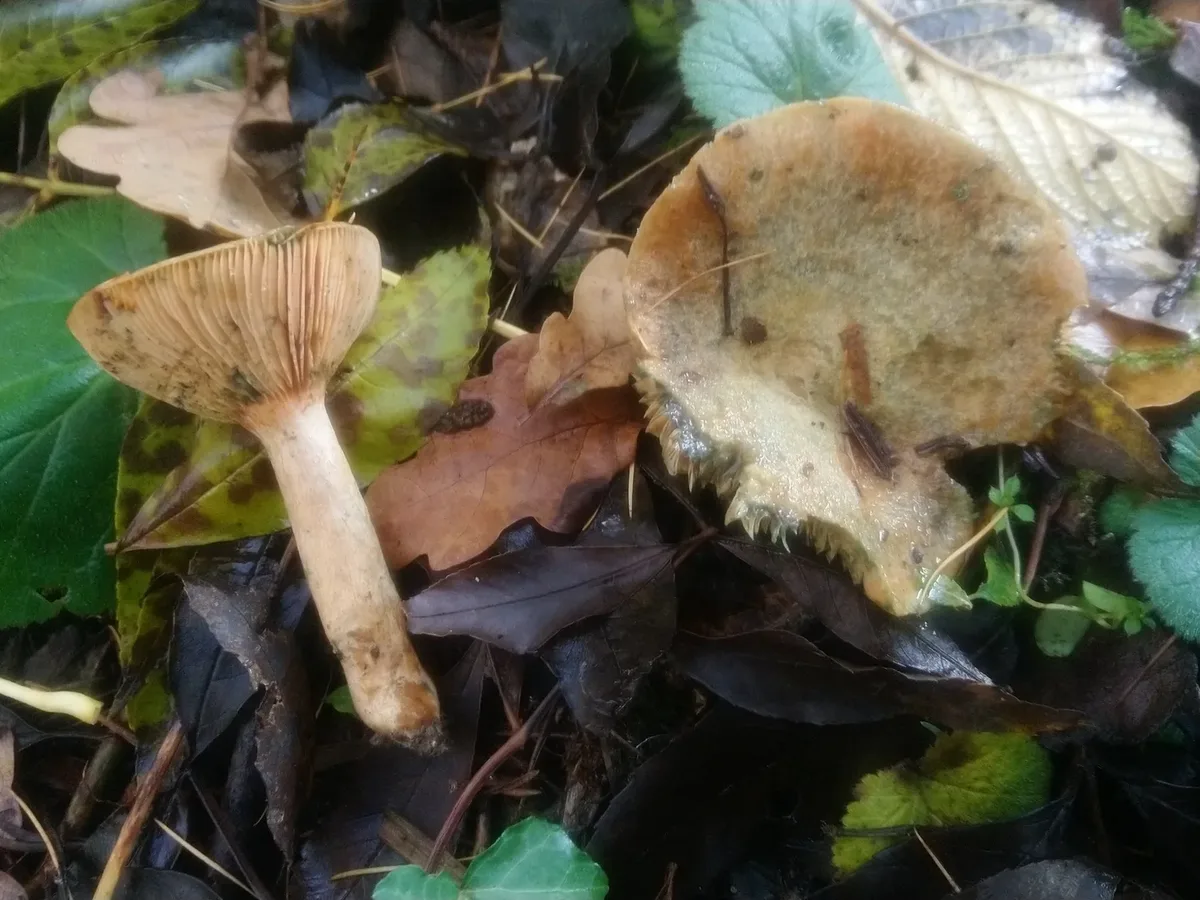 goldfjnch (CC0)
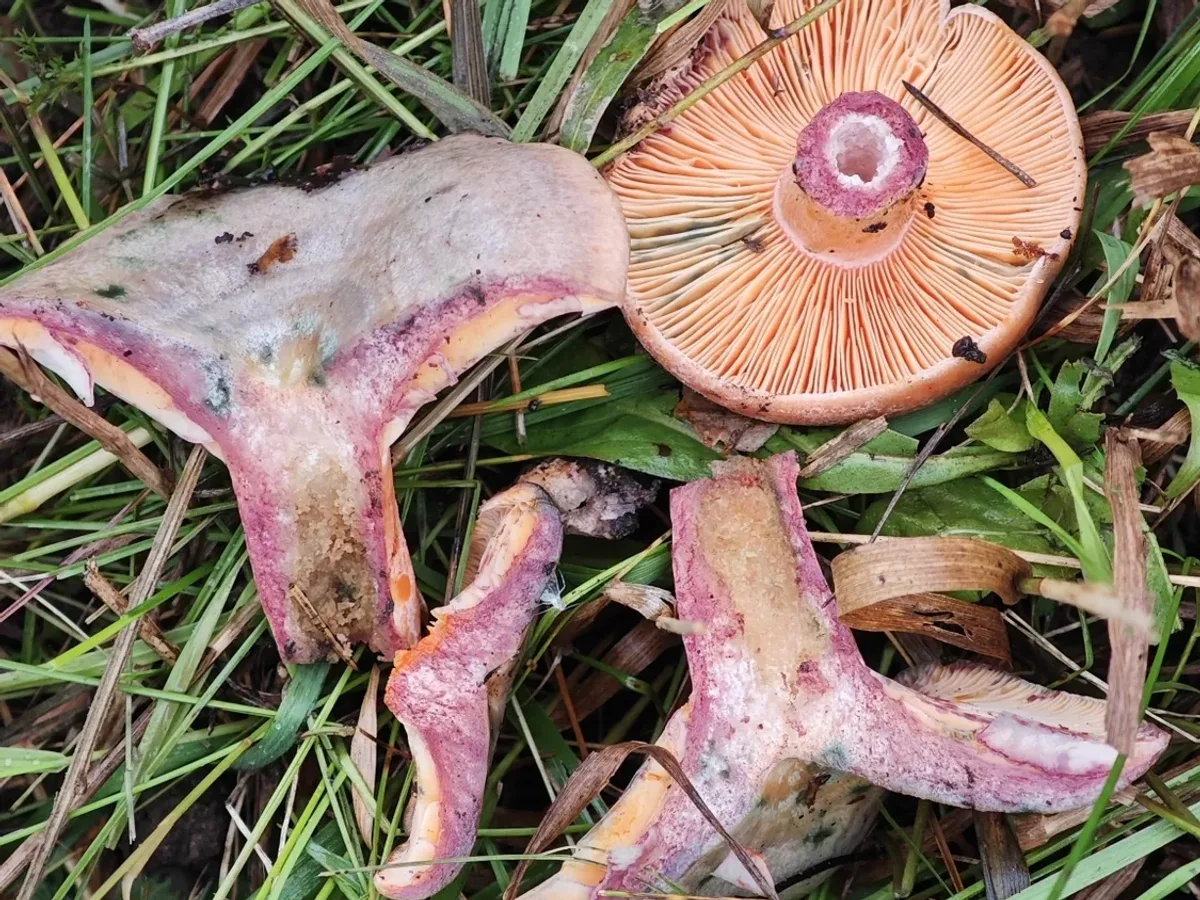 © relew (CC BY)
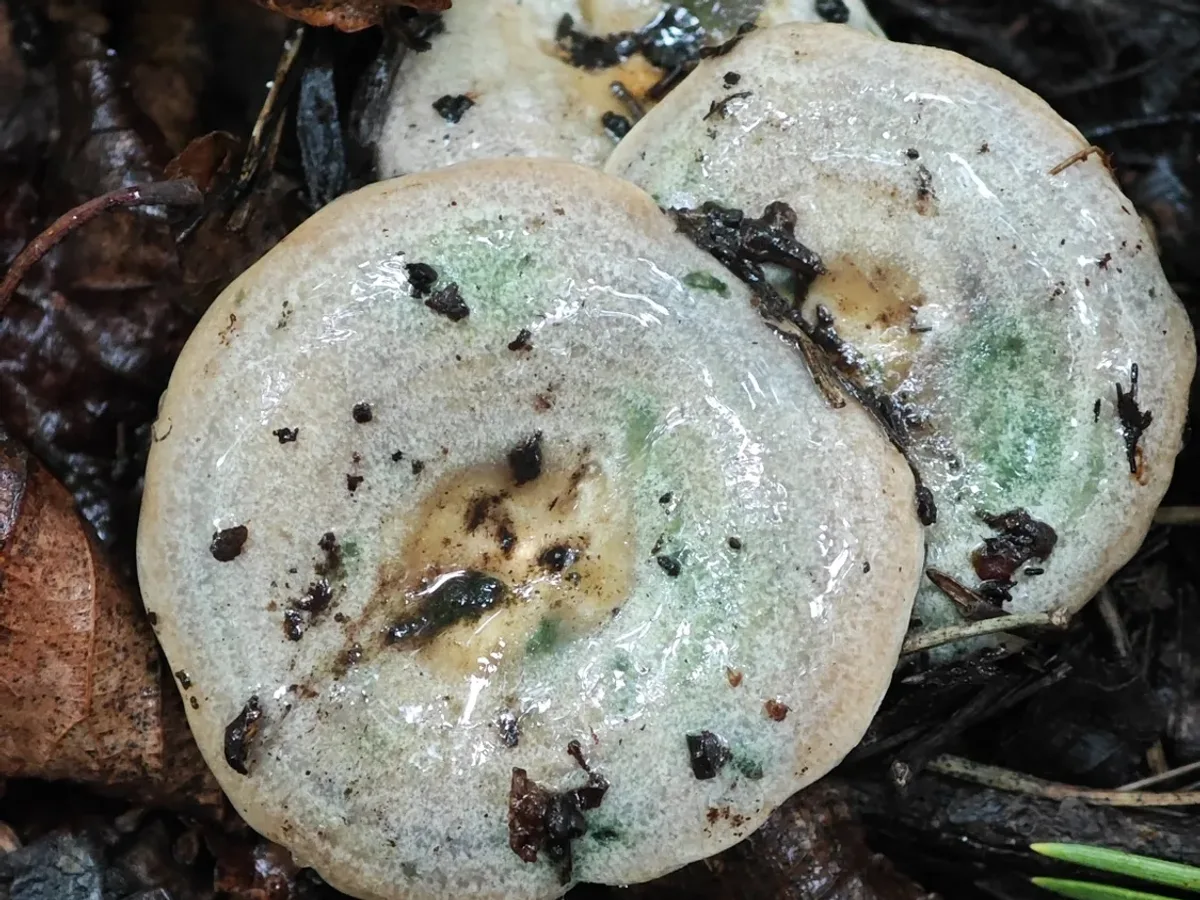 © relew (CC BY)
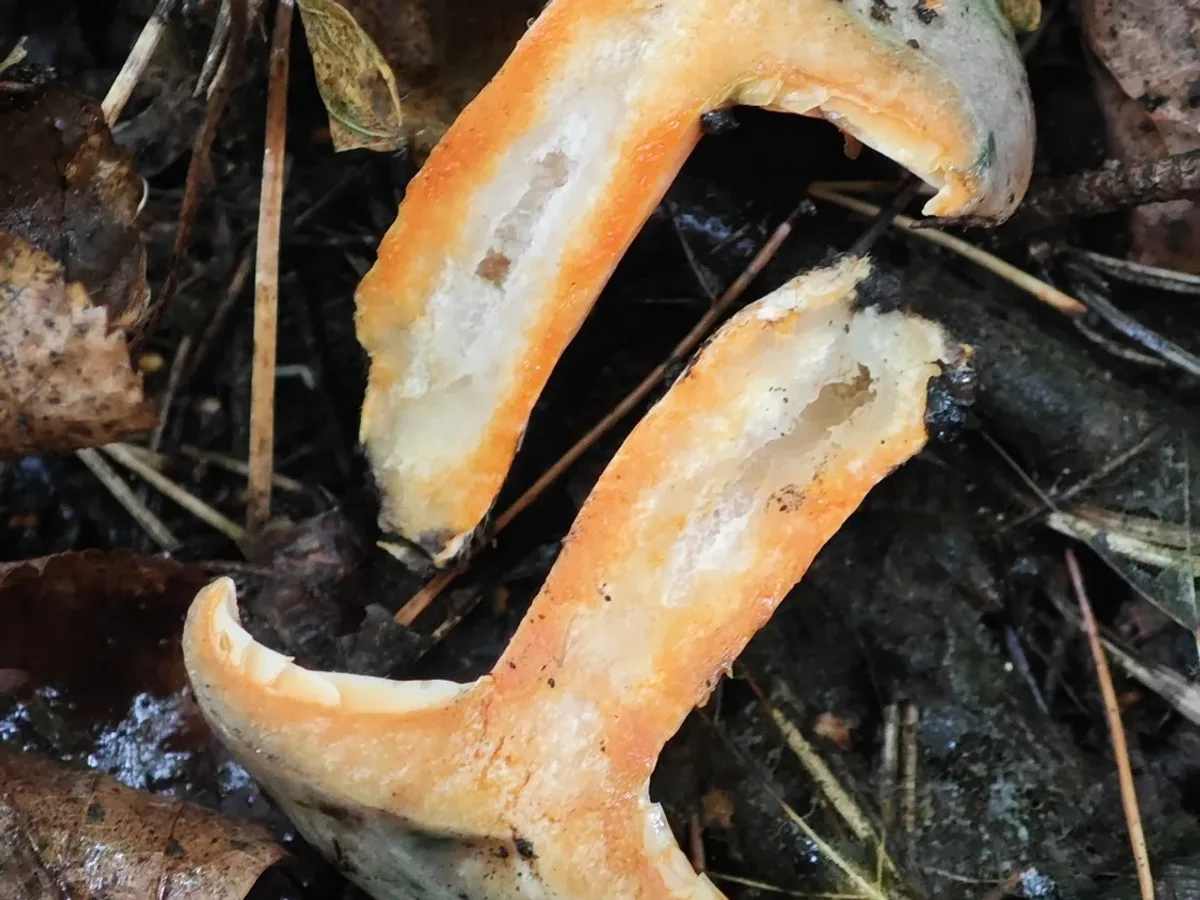 © relew (CC BY)
 © relew (CC BY)
 © Cara Ennis (CC BY)
 © Cara Ennis (CC BY)
 © Cara Ennis (CC BY)
 © Cara Ennis (CC BY)
 © Virn Stothers (CC BY)
 goldfjnch (CC0)goldfjnch (CC0)© relew (CC BY)
Good to eat, once you have identified it with certainty and cooked it through.
How to recognise it
Lactarius semisanguifluus is a robust, medium to large milkcap that sits right in the middle of a family of closely related orange-capped relatives.
Cap
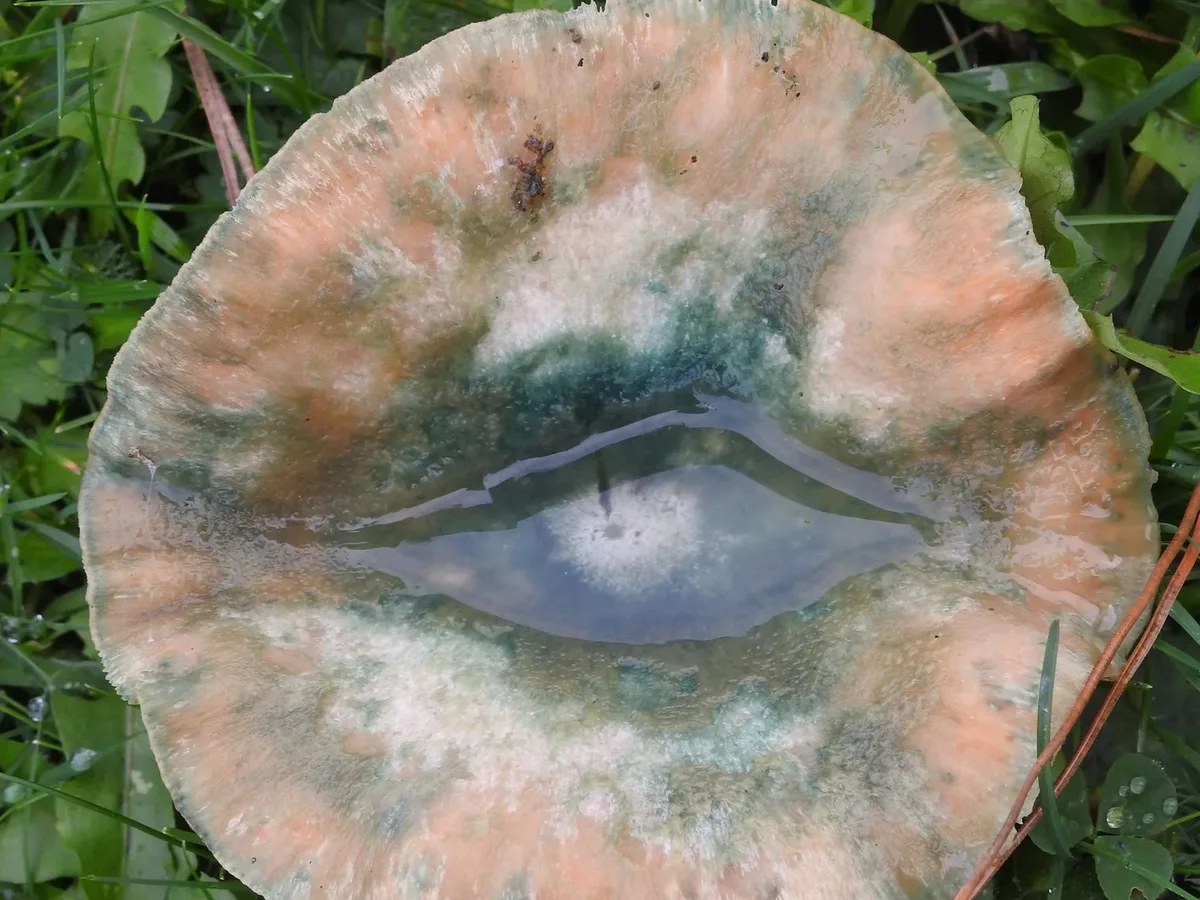
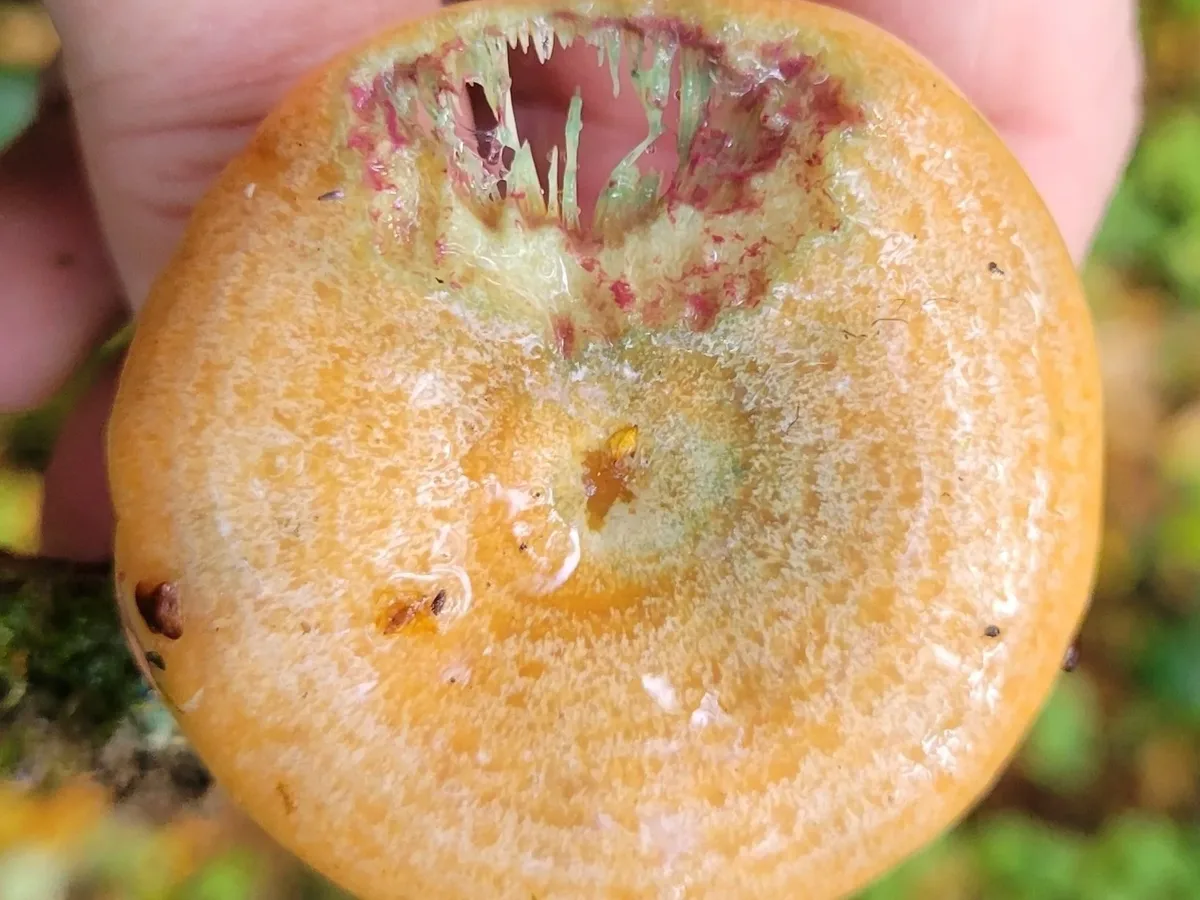
Its cap opens convex with a strongly inrolled margin - tight and firm in youth - and gradually broadens to plane or shallowly funnel-shaped.
The colour is a warm salmon-orange to brick-orange, often fading to dull ochre-buff at the centre in older specimens while the margin holds its warmer tone. Concentric banding is present but usually less defined than in L. deliciosus.
Gills
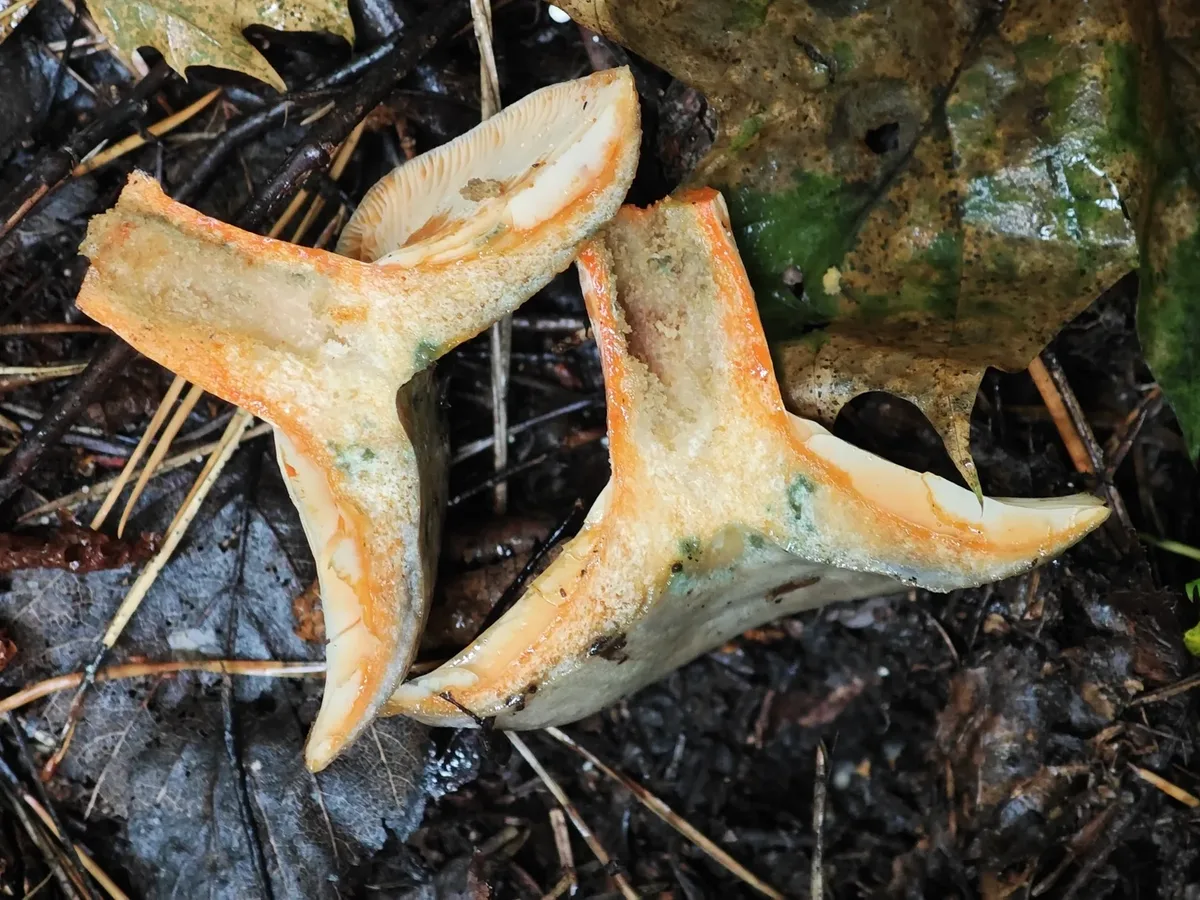
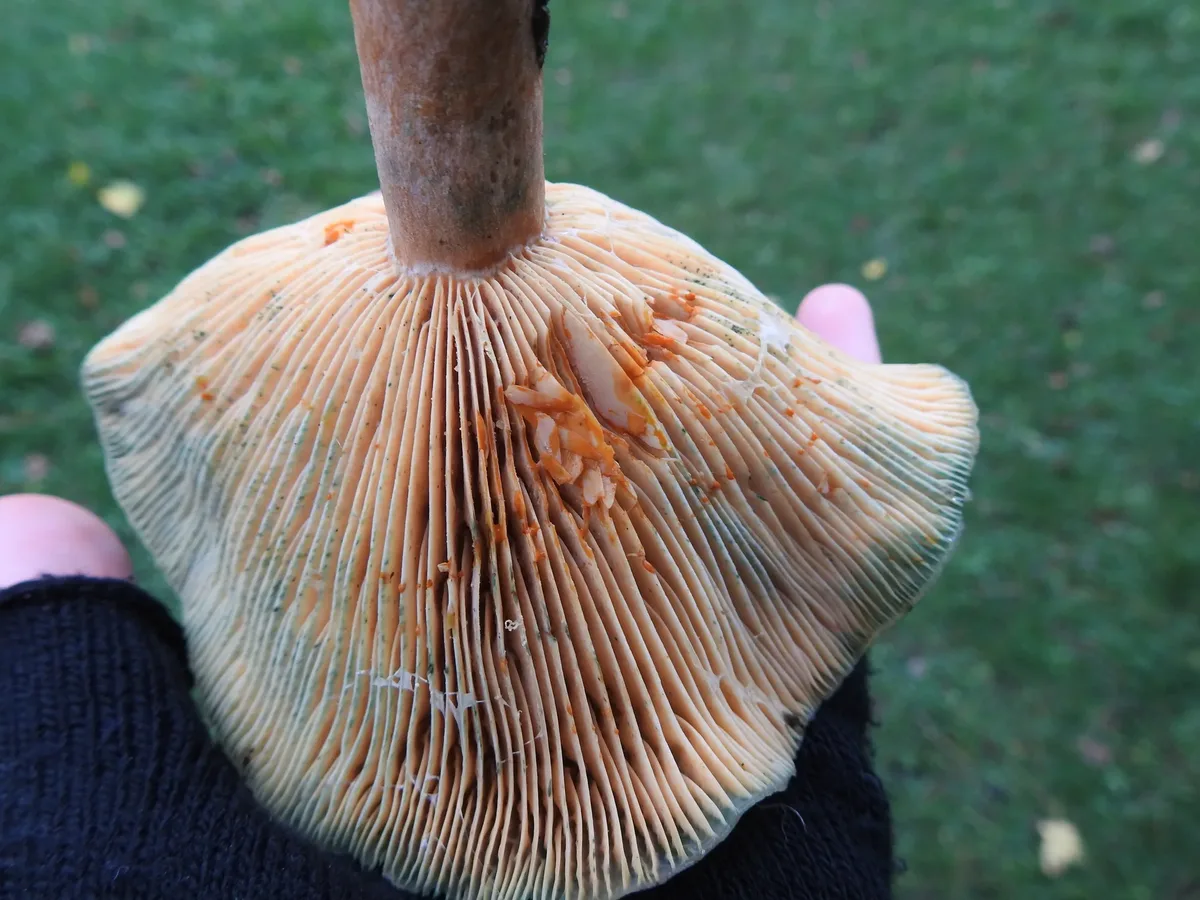
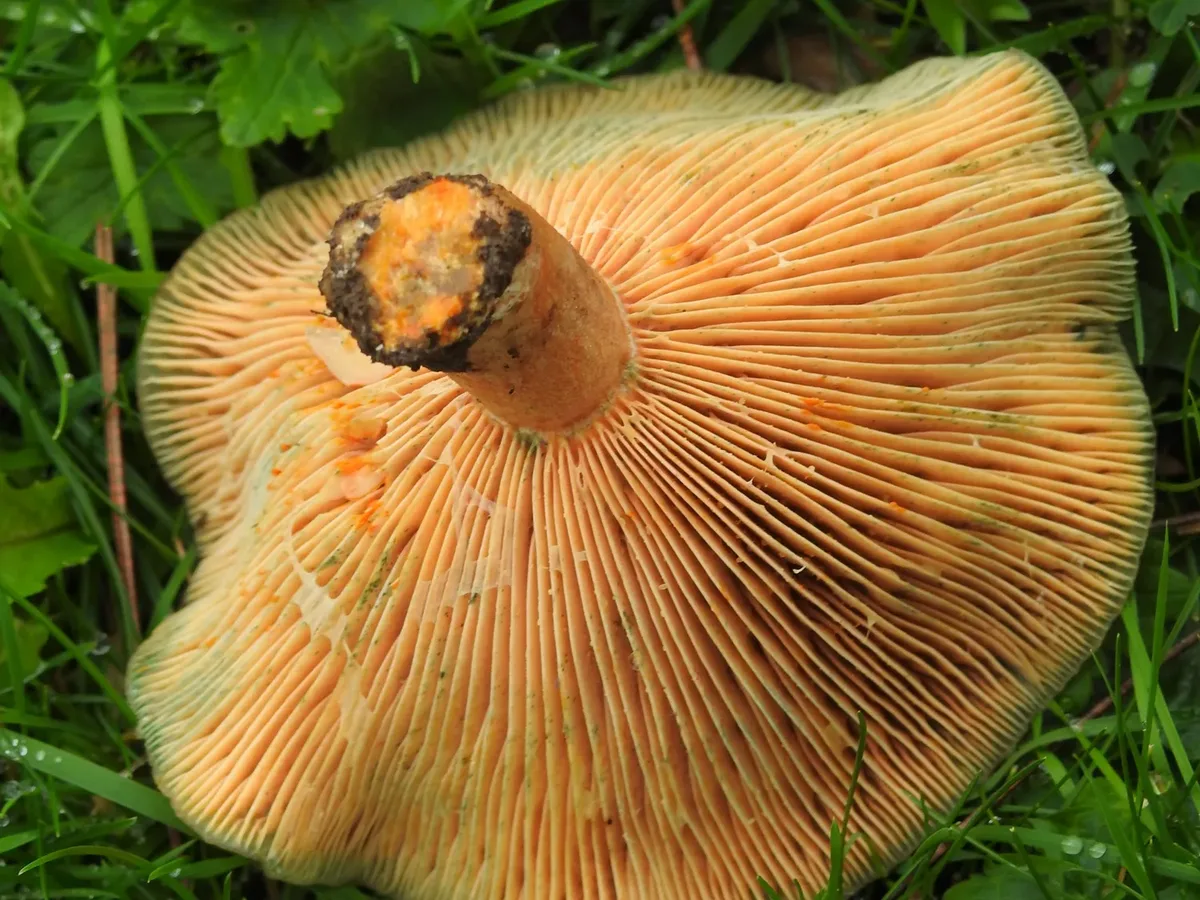
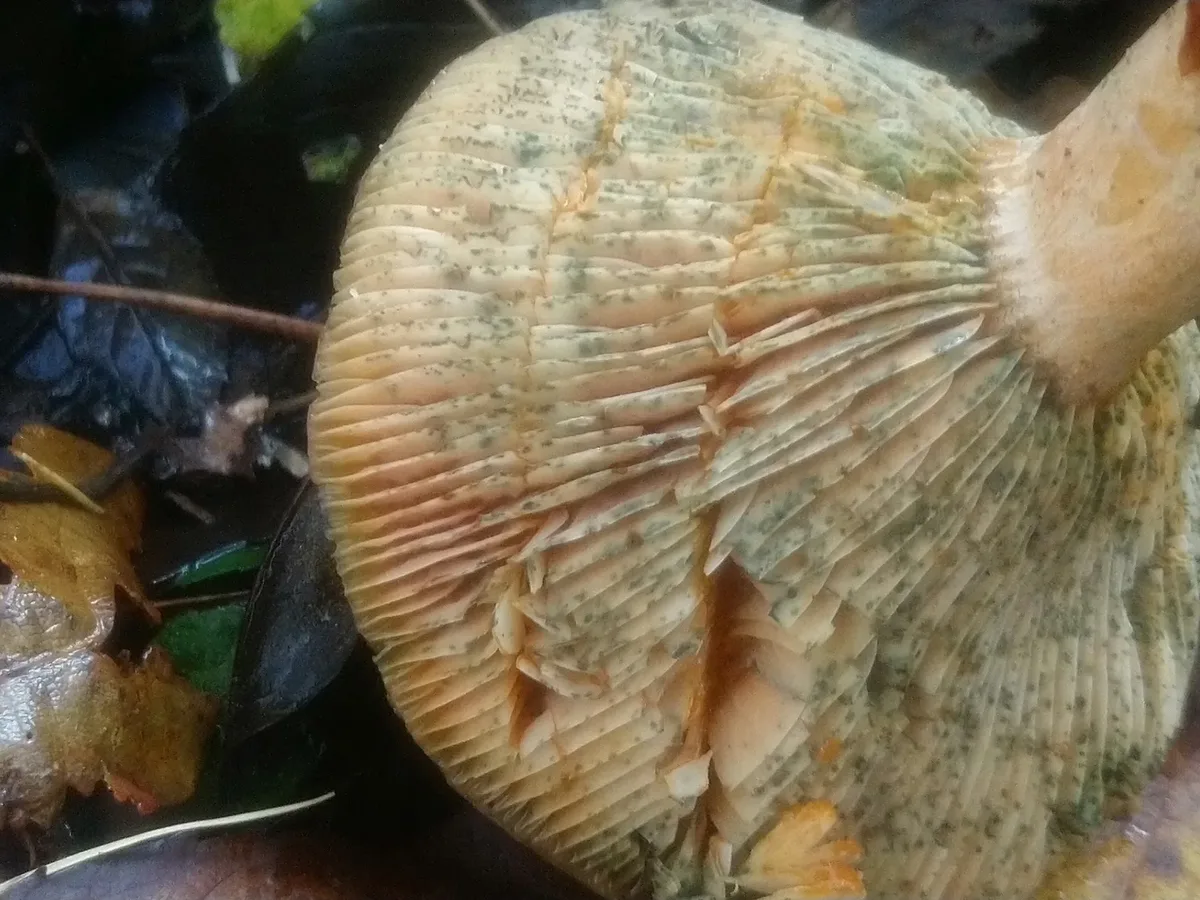
The crowded, pale salmon-orange gills tell an unhurried story when broken: they darken first to orange-red, then spend five to fifteen minutes slowly shifting to wine-red or carmine.
This gradual latex colour change - starting pale orange and finishing wine-red, on its own quiet schedule - is the defining character of the species. It is not the instant blood-red of L. sanguifluus, nor the purely orange (or slowly greening) response of L. deliciosus.
To read it clearly, cut a fresh cap or snap a gill and watch for a full ten to fifteen minutes.
Stem
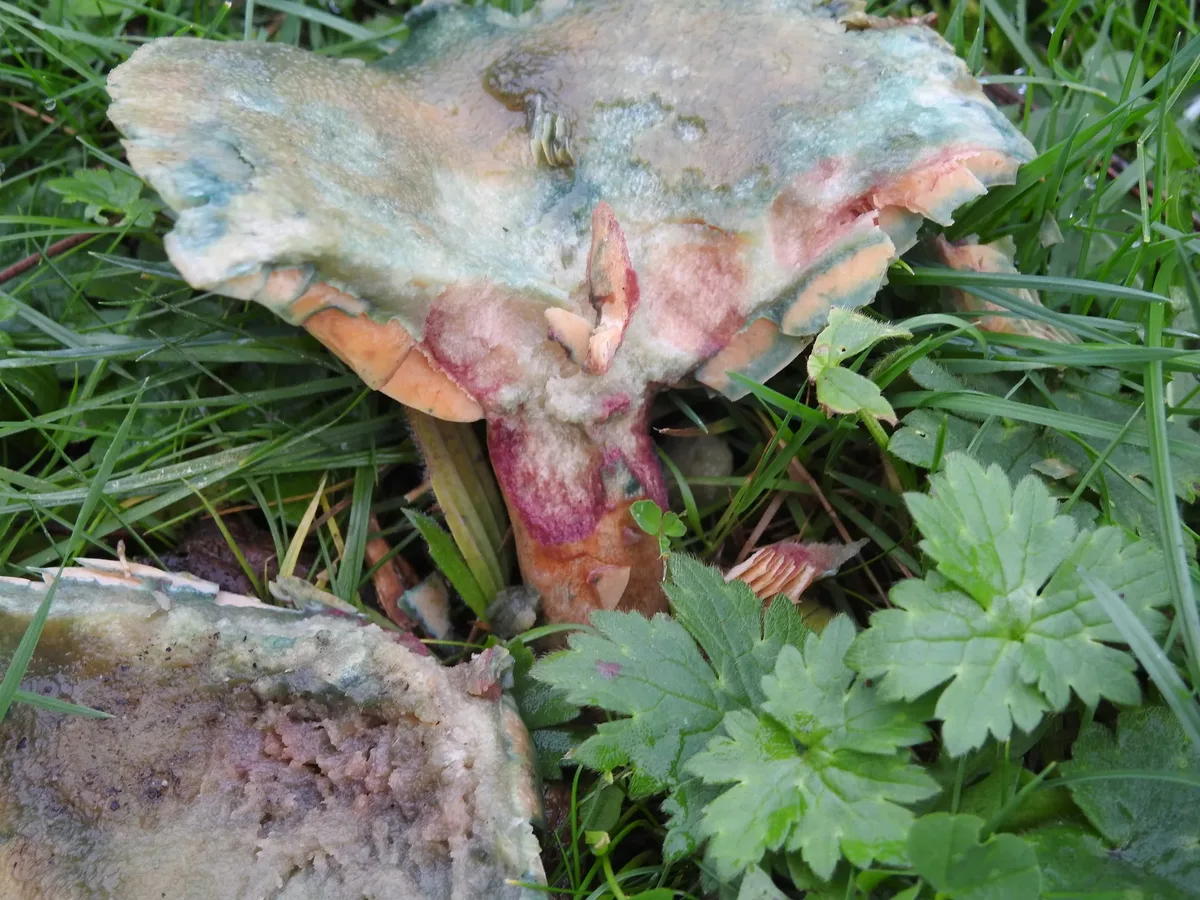
The stem is solid and stout when young, often with shallow orange-red pits (a scrobiculate pattern).
Flesh
The flesh throughout is pale, firm, and free of bitterness.
Where & when it grows
Habitat
This is a fungus of the Mediterranean mountains, shaped by its long partnership with silver fir (Abies alba).
It is most at home in the dense montane fir forests of the Apennines, Pyrenees, Corsica, and the southern Alps - places where the tree forms close stands at 800-1800 m on calcareous or neutral, well-drained soils with a deep layer of conifer-needle humus.
What makes L. semisanguifluus slightly different from its close relative L. salmonicolor is a tolerance for less tidy edges: it ventures into transitional zones where fir gives way to Mediterranean pines at lower elevations, partnering with Pinus halepensis and P. pinaster where it finds them.
This ecological flexibility partly explains why it is the more frequently encountered of the two in the broader Mediterranean region.
When
The season follows the rhythm of Mediterranean mountain weather: a long, dry summer during which the mycelium waits underground, then the relief of the first real autumn rain.
A meaningful rain event - roughly 20 mm or more over two weeks - that cools the soil below about 15 °C is the usual trigger, and fruitbodies typically appear one to two and a half weeks later.
Throughout most of the range, this means September into October. At higher elevations or in cooler situations fruiting may start in late August; in milder coastal montane zones it can carry on into November.
When the autumn rains fail, the species may not fruit at all.
How it grows
Solitary to scattered across the forest floor, never in dense clusters.
Young fruitbodies emerge as tight, convex buttons with strongly inrolled margins, often half-buried in needle litter and easy to miss until the cap lifts clear. Once conditions are right, full expansion takes roughly five to eight days.
The mycelium forms long-lived ectomycorrhizal associations with its host trees. The same productive spots, where the underground partnership has been running for years, can yield fruitbodies reliably season after season as long as the trees remain healthy.
The species does not form fairy rings.
Fruiting conditions
Fruiting is triggered by the first significant autumn rainfall (minimum ~20 mm over 14 days) breaking the Mediterranean summer drought, combined with soil temperatures cooling into the 8-16 °C range. The typical lag from rain event to visible fruitbodies is 1-2.5 weeks. In dry autumns fruiting is suppressed or absent entirely. In montane Mediterranean fir forest this translates to a September-October peak season.
Look-alikes
Lactarius semisanguifluus sits within a tightly knit cluster of closely related, all-edible milkcaps in section Dapetes, and precise field identification requires careful attention to latex colour and its rate of change.
- Lactarius sanguifluus (blood milkcap) is the most important comparison. It has immediately and intensely blood-red to wine-red latex - the colour change is instantaneous on cutting - and grows primarily under Mediterranean pines rather than fir. Both species are edible and the confusion is harmless, but accurate identification is good practice.
- Lactarius deliciosus (saffron milkcap) has carrot-orange latex that does not darken to wine-red but may slowly turn greenish, and the flesh and gills develop conspicuous blue-green staining - absent in L. semisanguifluus. It grows mainly under pines.
- Lactarius salmonicolor is the fir-associated relative with white latex that does not change colour at all - clearly different from the colour-changing latex of L. semisanguifluus.
- Lactarius deterrimus (false saffron milkcap), associated primarily with Norway spruce, has orange latex that turns wine-red and then develops rapid, strong blue-green staining of the flesh - stronger than anything seen in L. semisanguifluus.
No species in this group is deadly. There are no toxic lookalikes with similar latex chemistry; white-latexed or acrid-latexed milkcaps (such as L. torminosus, L. piperatus) are entirely distinct in both appearance and taste.
L. sanguifluus has immediately and intensely blood-red to wine-red latex - the colour change is instantaneous on cutting. In L. semisanguifluus the latex starts pale orange and takes 5-15 minutes to turn wine-red. L. sanguifluus also grows primarily under Mediterranean pines, not fir. Both are edible; confusion is harmless but worth noting for accurate records.
Associated primarily with Norway spruce rather than fir; its orange latex also darkens to wine-red but then the flesh and latex develop rapid, strong blue-green staining - more pronounced than any staining seen in L. semisanguifluus. Edible but considered inferior.
L. deliciosus has carrot-orange latex that does not darken to wine-red but may turn greenish over time, and the flesh and gills develop conspicuous blue-green staining with handling and age - absent in L. semisanguifluus. Grows chiefly under pines rather than fir. Both are edible.
L. salmonicolor is also fir-associated but has purely white latex that does not change colour at all - a stark contrast to the colour-changing orange-to-wine-red latex of L. semisanguifluus. No blue-green staining in either species.
Grows under birch, not fir or pine. Has a distinctly shaggy-hairy, inrolled cap margin and white to pale pink latex (never orange or red) with a biting, acrid taste. Causes gastro-intestinal upset. Taste and latex colour make confusion essentially impossible.
In the kitchen
Picking & cleaning
Harvest young to mid-maturity specimens with firm caps and inrolled or only partially expanded margins. Fully aged fruitbodies with pale, faded caps and softening flesh are still edible but past their best for flavour and texture.
Cut cleanly at the base with a knife rather than pulling, to leave the mycelium network undisturbed. The latex will colour fingers and equipment orange-red - less dramatically than the immediately blood-red L. sanguifluus, but noticeably.
Always field-check identity on a fresh specimen: cut the cap and watch the latex for a full ten minutes - it should begin pale orange and deepen progressively to wine-red.
- Immediately blood-red latex points to L. sanguifluus (also edible).
- Latex that stays orange or turns green points to L. deliciosus (also edible).
Check the stem base and gills of older specimens for insect infestation. Transport in a ventilated basket or paper bag.
Cooking
The culinary quality of Lactarius semisanguifluus is similar to L. deliciosus and L. sanguifluus - firm, dense flesh with a mild, pleasantly resinous or nutty flavour that holds up well to heat. It is not as widely celebrated in cookbook literature as L. sanguifluus, largely because it is less abundant, but where it occurs it is gathered and used in identical ways.
The classic preparation in Apennine and Catalan mountain cuisine is grilling on a cast iron pan or over charcoal with olive oil, garlic, and salt - the heat drives off moisture and develops a mildly meaty, faintly resinous aroma.
It works well:
- sautéed in olive oil or butter
- added to risotto or pasta
- incorporated into polenta dishes
The firm texture means it does not turn mushy in long-cooked sauces.
Pickling in vinegar or preserving in oil are traditional mountain methods for surplus harvest. Drying is less successful than with many species - the texture becomes leathery - but the dried product still adds flavour to soups and stews.
Pairs well with thyme, rosemary, garlic, aged cheese, and robust mountain reds.
Good to know
Lactarius semisanguifluus is considered a safe, edible species with no documented toxicity. It belongs to the same section (Dapetes) as the well-regarded saffron milkcap L. deliciosus and the blood milkcap L. sanguifluus, and is consumed regularly in Mediterranean mountain communities wherever it occurs.
There are no amatoxins, orellanin, or other serious toxins reported in this group. Mild gastrointestinal discomfort is possible if eaten raw or grossly undercooked - standard advice for the entire genus Lactarius - so always cook thoroughly before eating.
The critical safety practice is to confirm the intermediate latex character: pale orange at first, progressively darkening to wine-red over 5-15 minutes.
Any mushroom with immediately blood-red latex or with strongly acrid, burning taste should be re-evaluated before eating. All realistic confusion species in this context are also edible; there are no deadly lookalikes.
A reference guide - never an edibility guarantee. When in doubt, leave it out.