Spotted milkcap
Lactarius scrobiculatus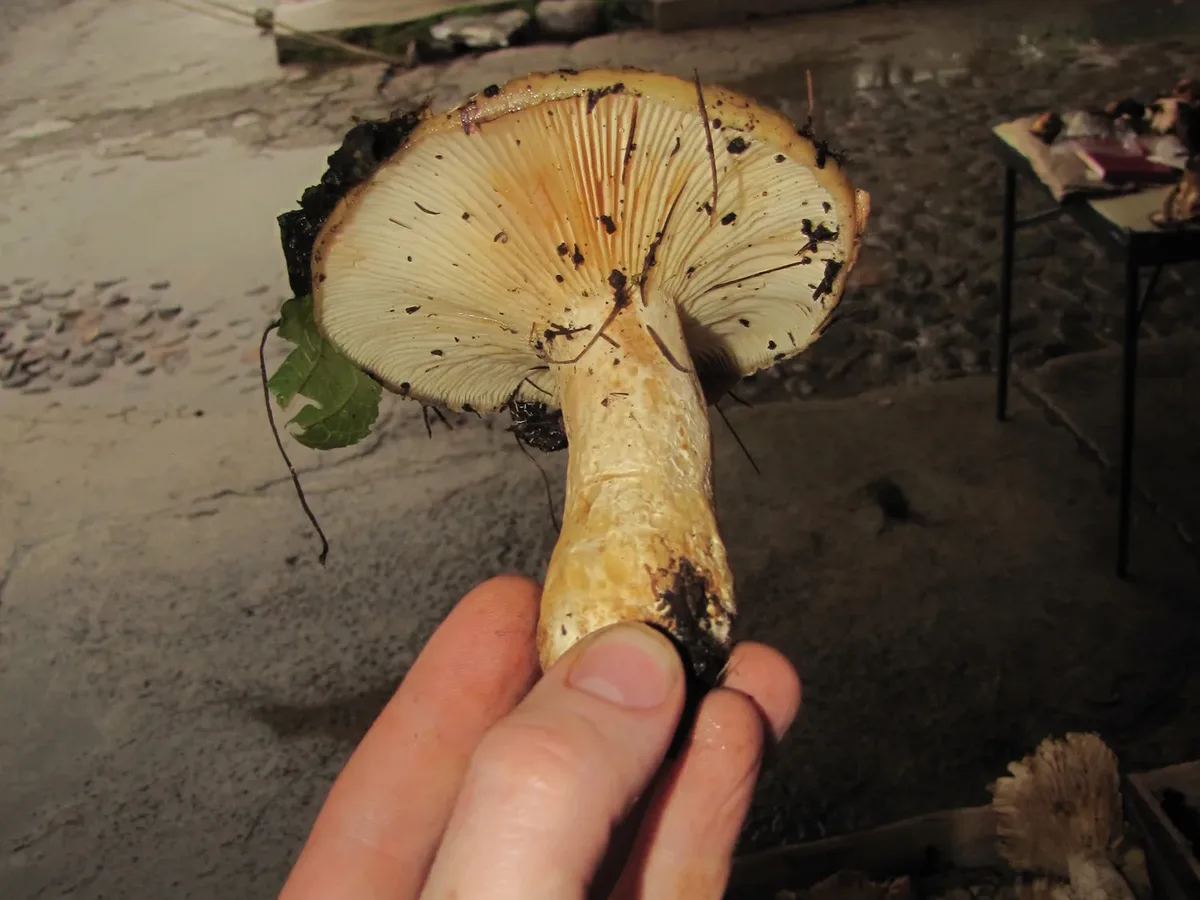 © Alan Rockefeller (CC BY 4.0)
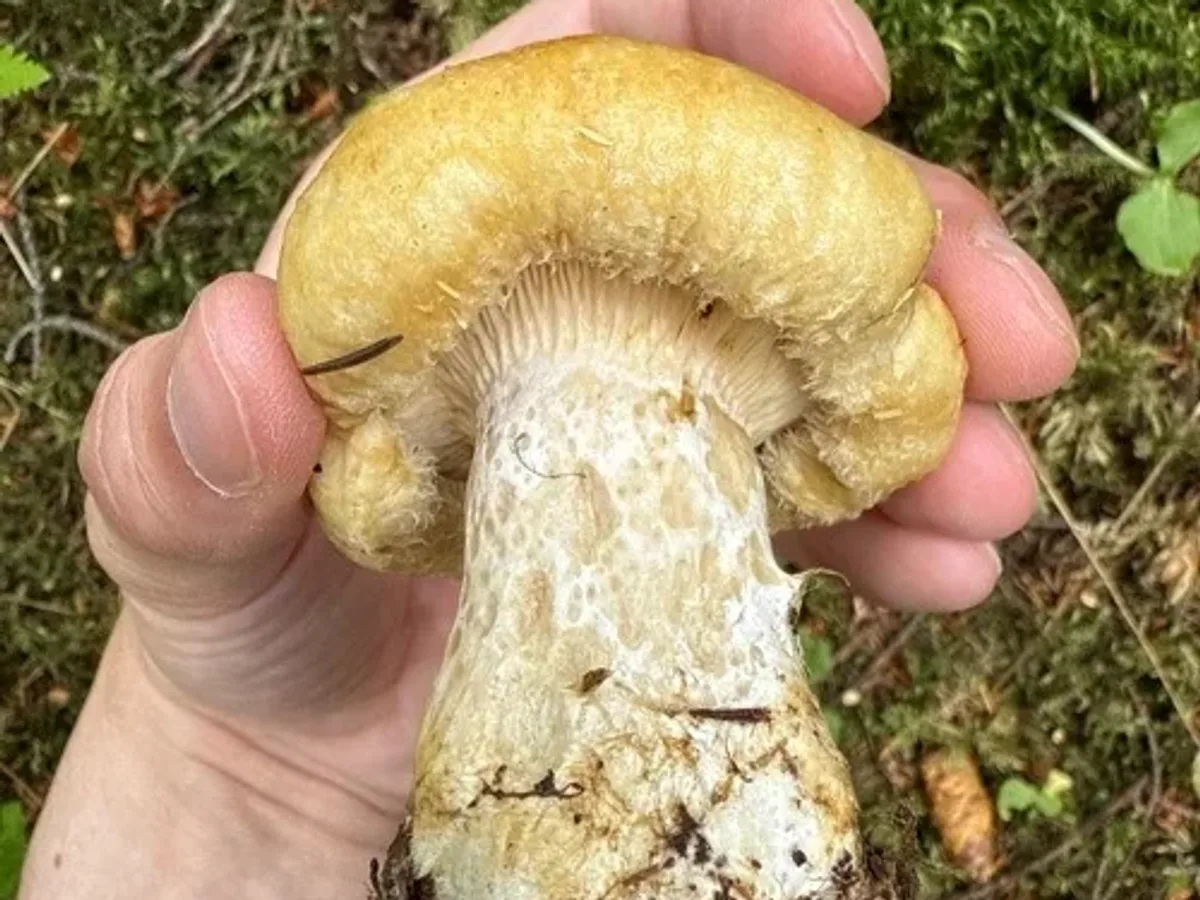 © Magnus Vandbakk (CC BY-SA)
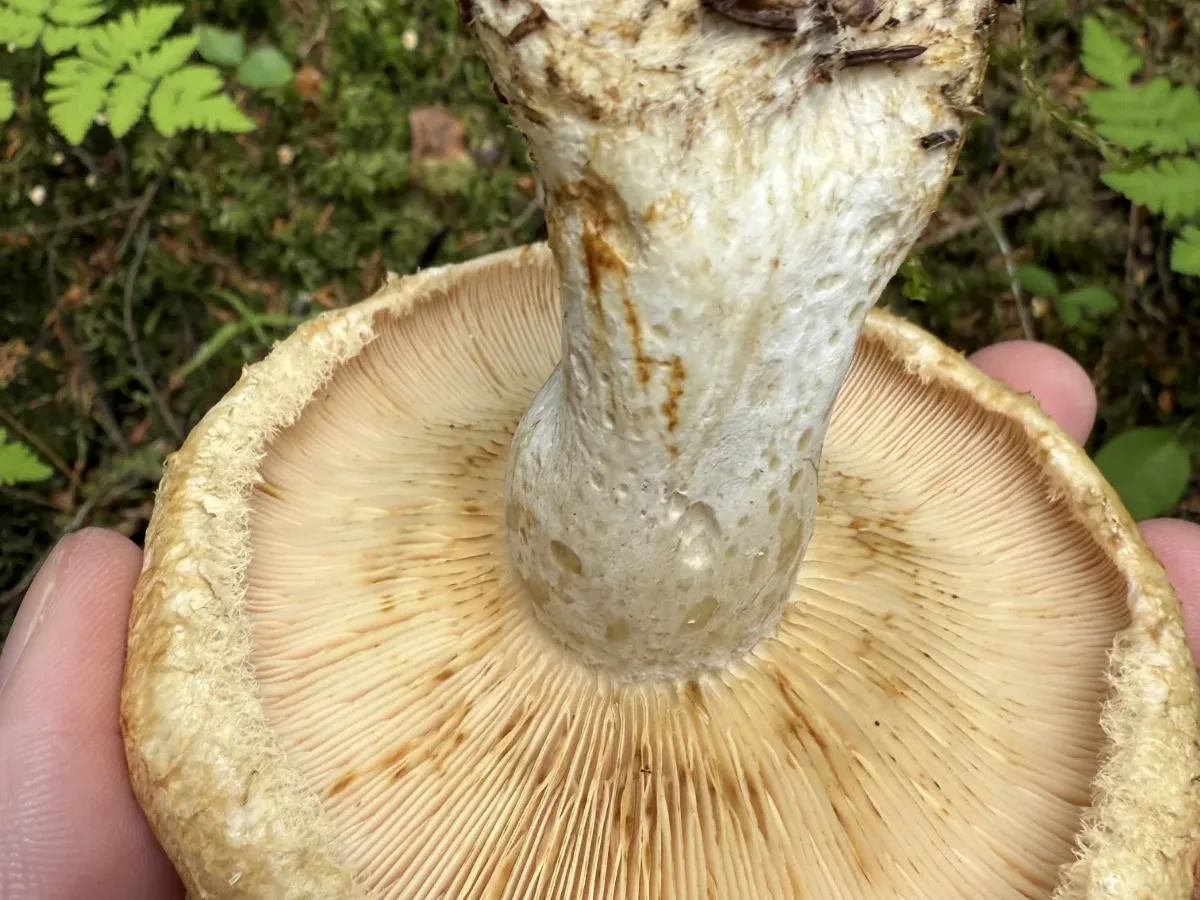 © Magnus Vandbakk (CC BY-SA)
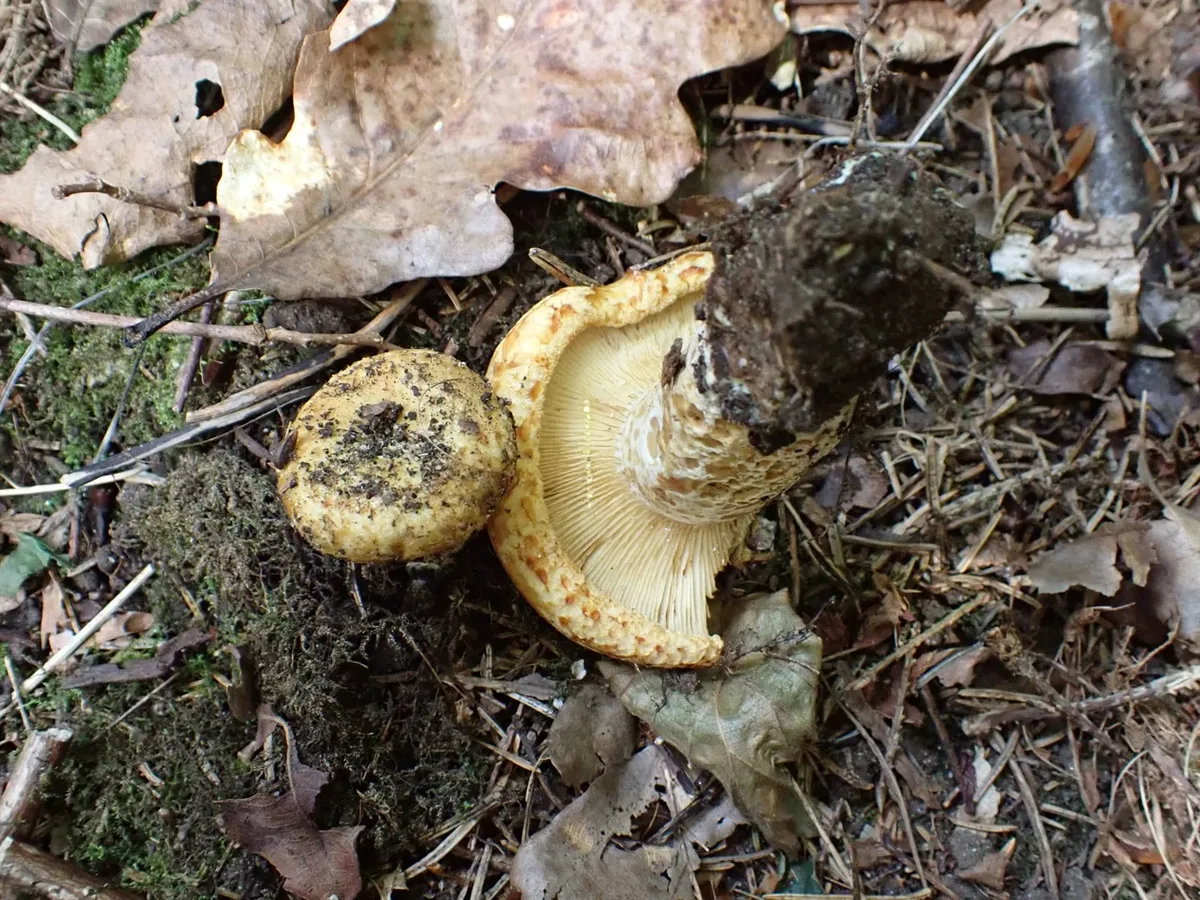 © Inger-Lise Fonneland (CC BY)
 © Gunnar Bureid (CC BY)
 © Nils Edvard Stokke (CC BY)
 © Nils Edvard Stokke (CC BY)
 © Nils Edvard Stokke (CC BY)
 © Jonas Heggedal (CC BY)
 © Jonas Heggedal (CC BY)
 © Jonas Heggedal (CC BY)© Alan Rockefeller (CC BY 4.0)© Magnus Vandbakk (CC BY-SA)
Edible only with the right preparation - or safe for some people but not others. Learn the caveats first.
How to recognise it
Cap
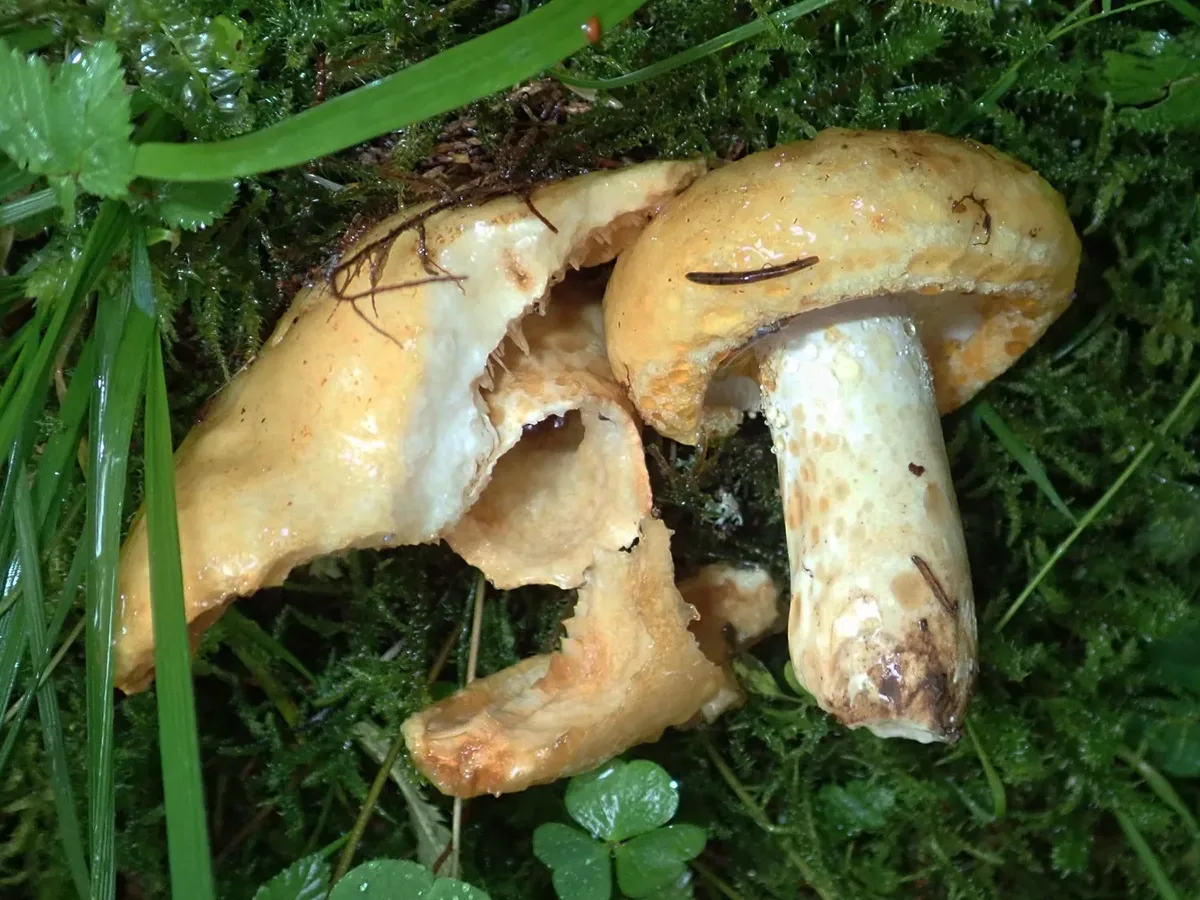
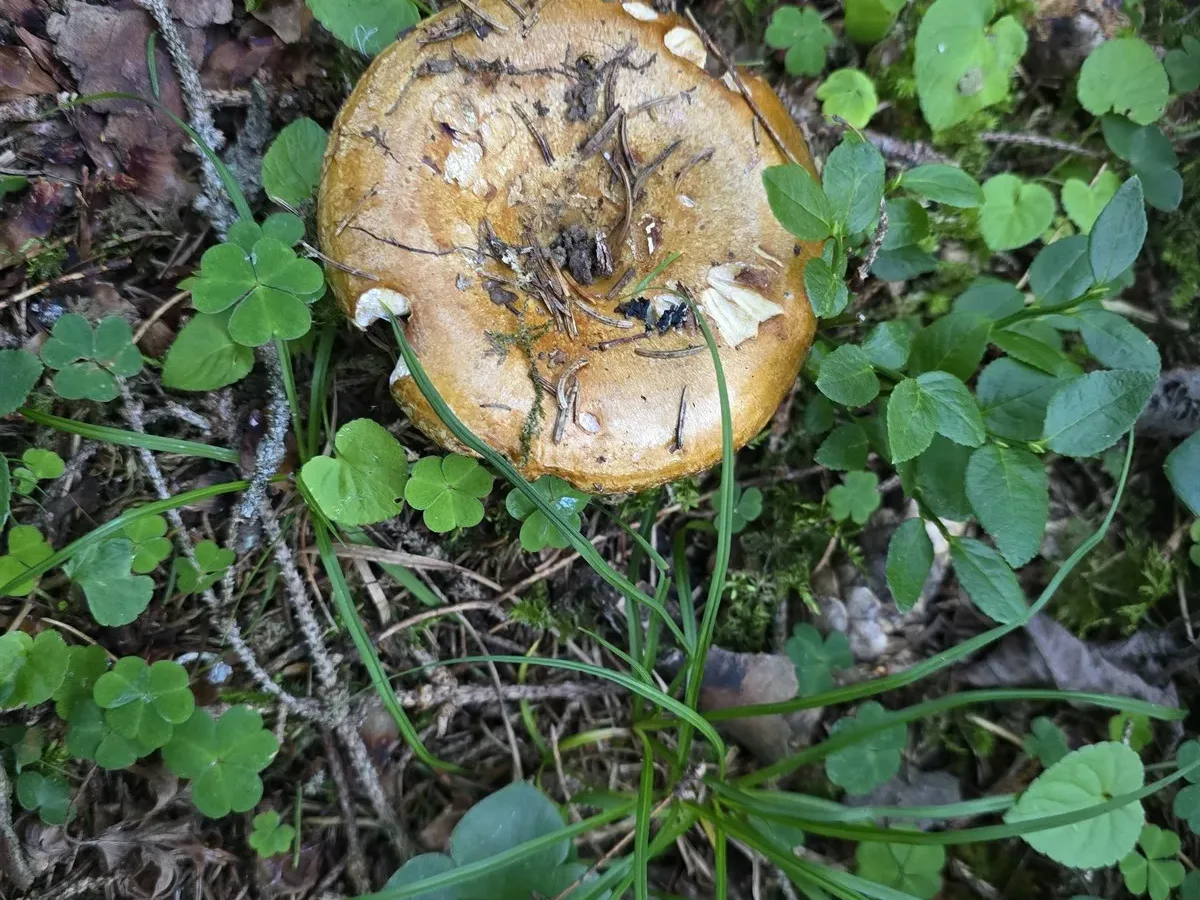
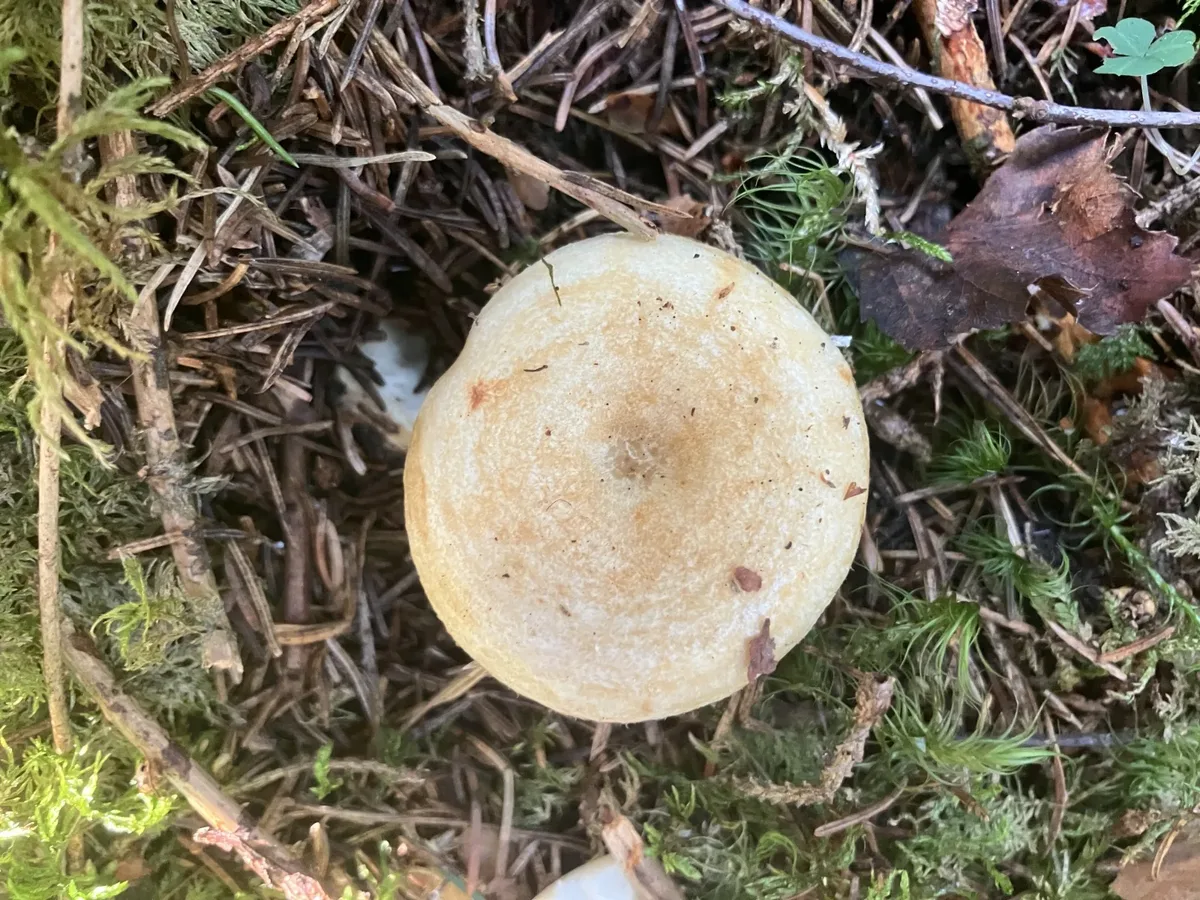
A large, stocky milkcap with a slimy ochre-yellow cap (8-20 cm) showing faint concentric zoning. The inrolled margin may carry traces of a woolly fringe when young.
Gills
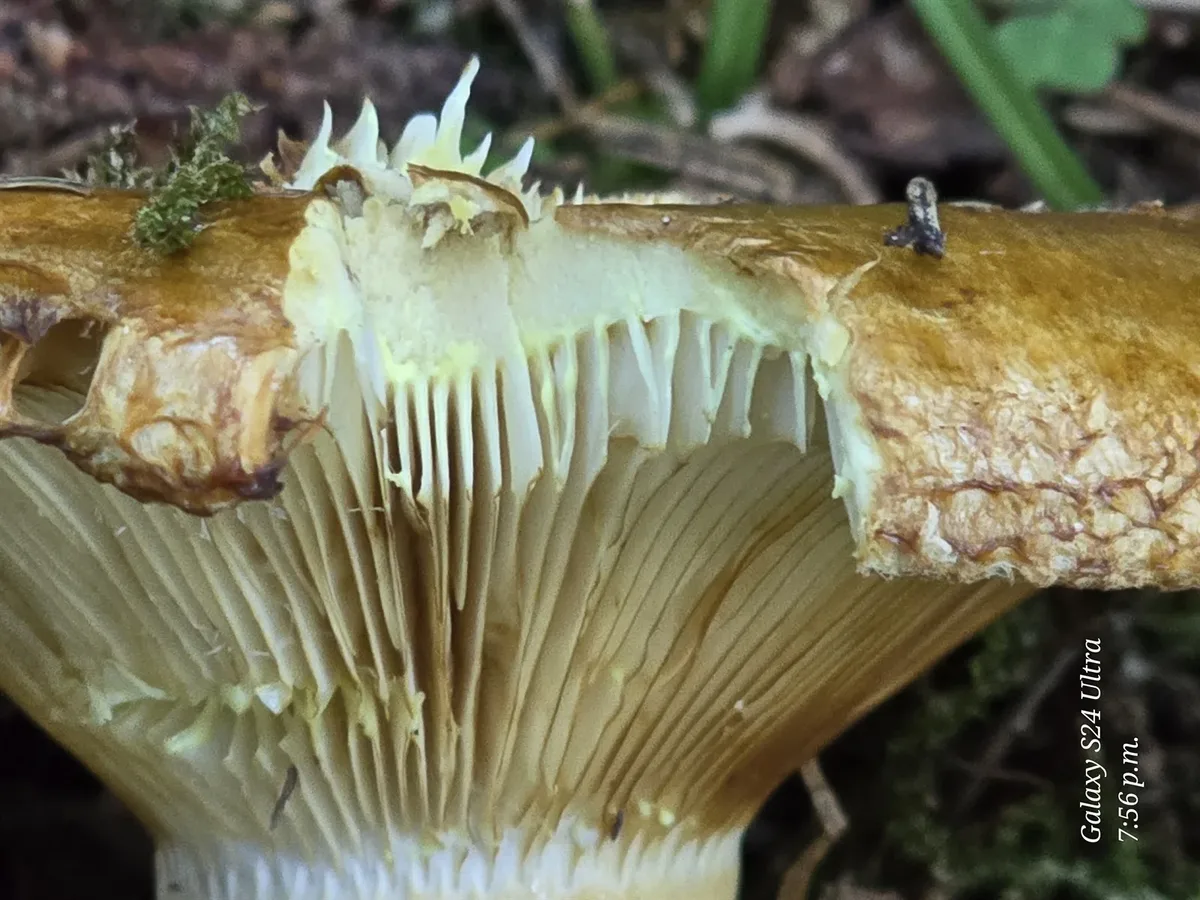
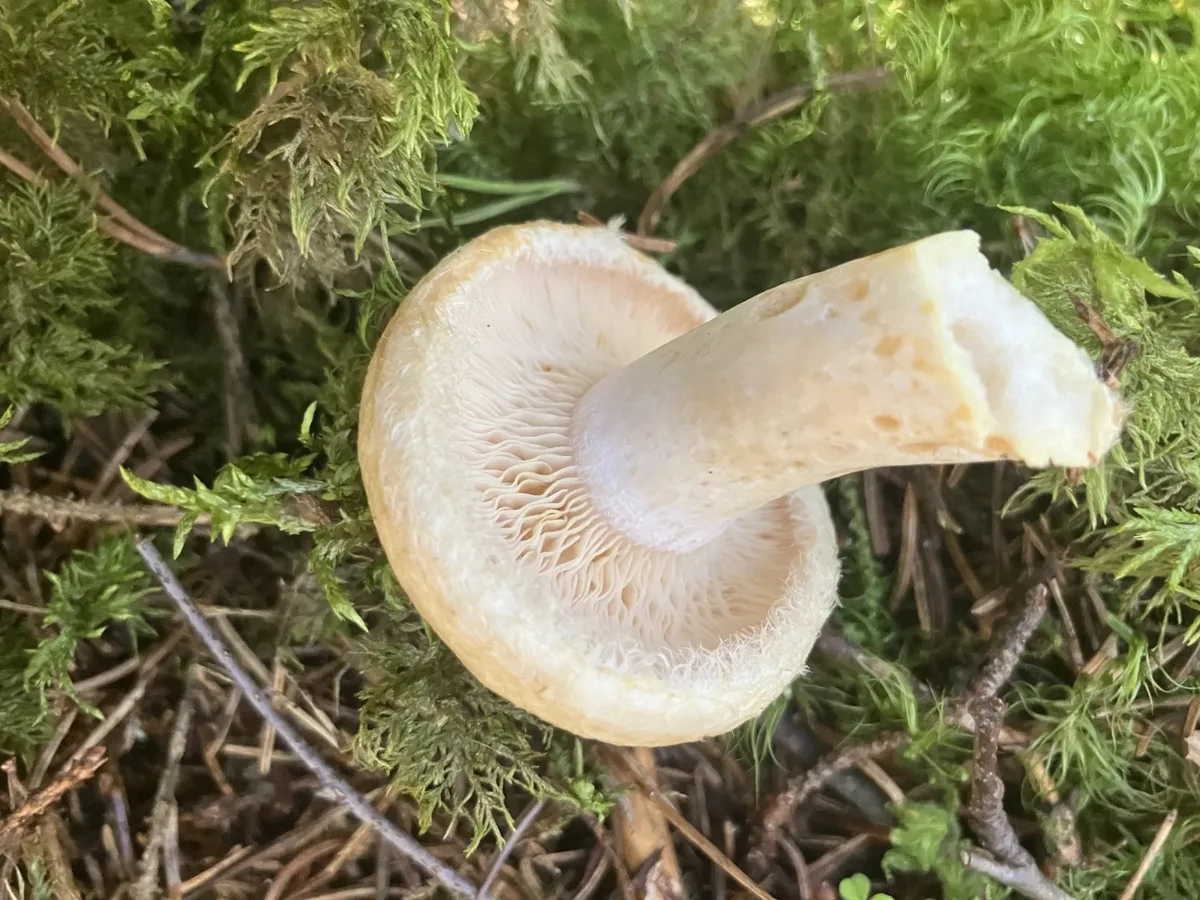
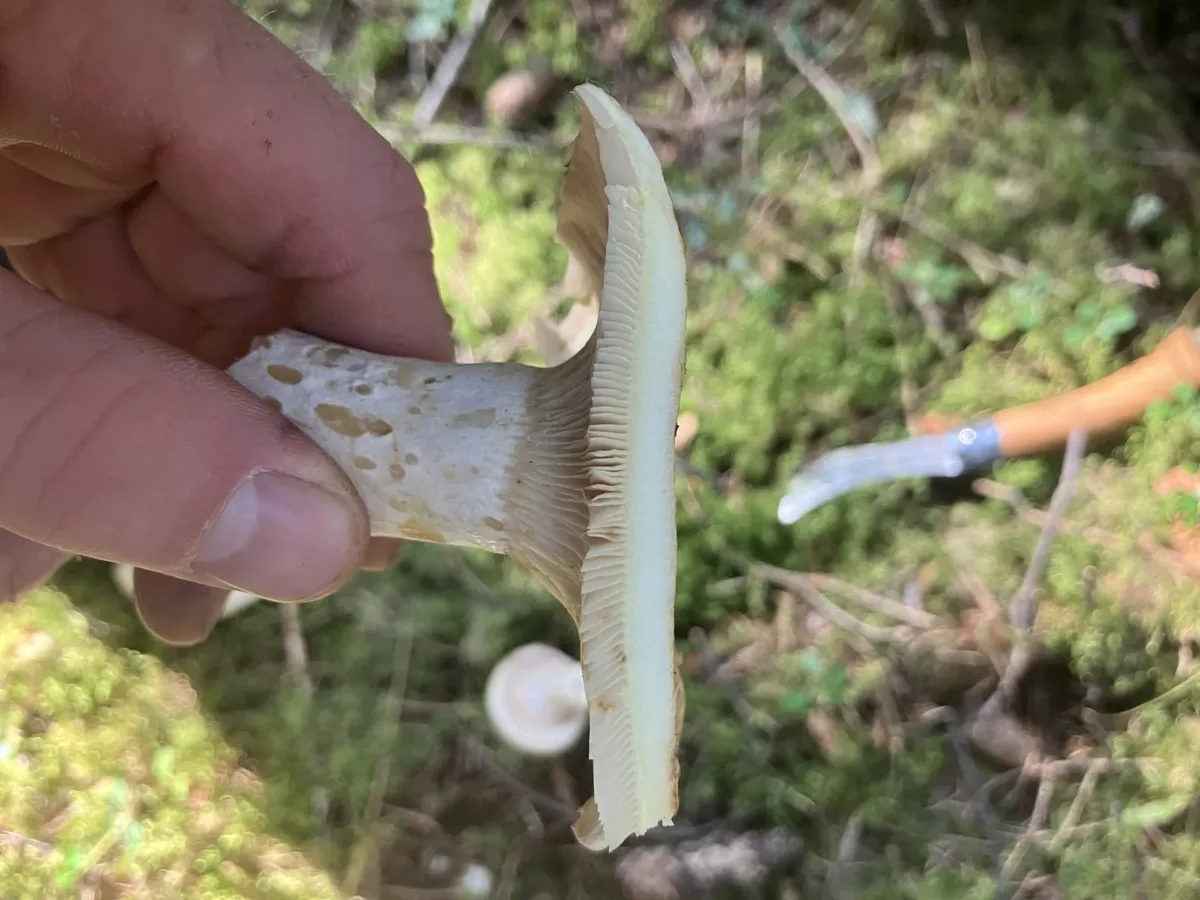
Gills are cream to buff and stain sulfur-yellow when cut.
Stem
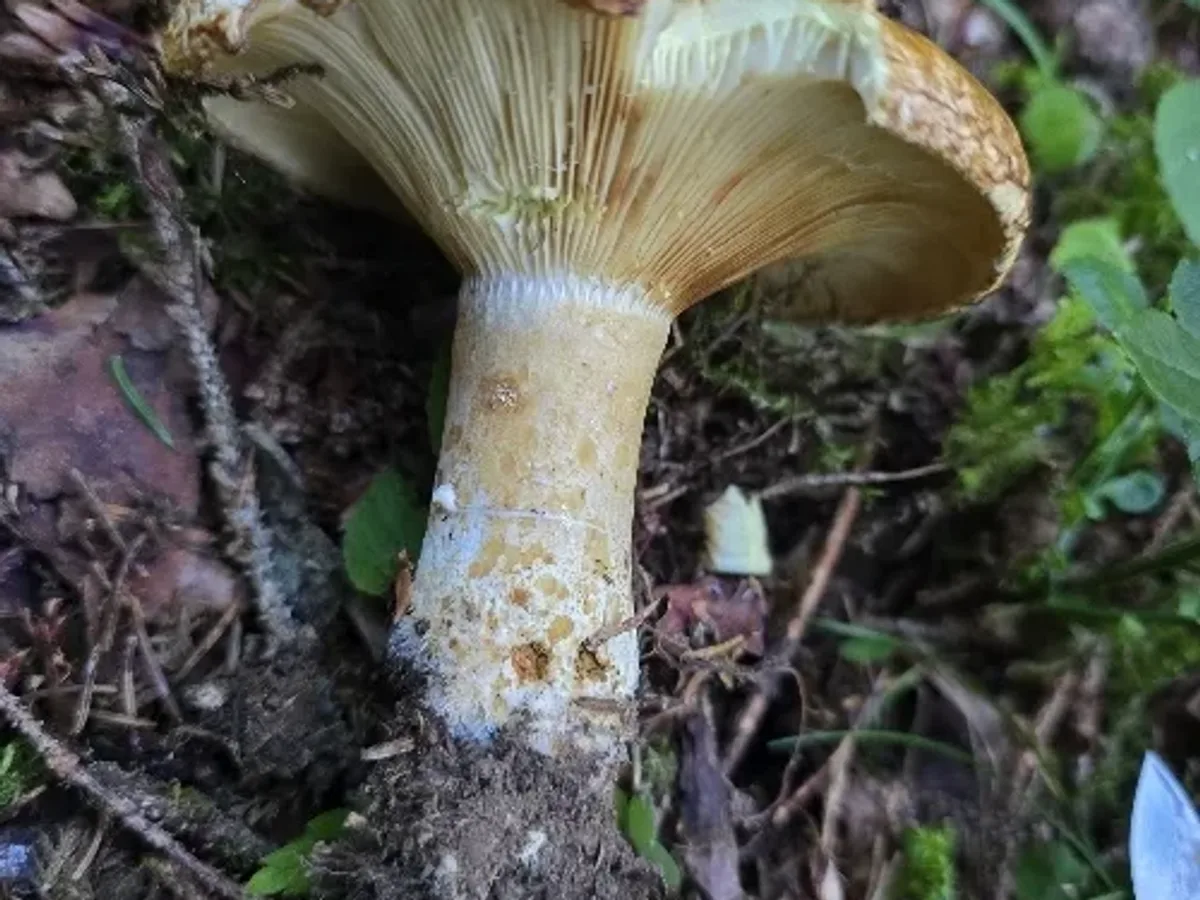
The stem is the first thing to check: its surface is scattered with shallow scrobiculi - small pit marks or hollows - that are characteristic and easy to feel as well as see.
Latex
The most decisive identification step, though, is the latex: milk that bleeds pure white when tissue is cut, then shifts to a bright sulfur-yellow within about 30 seconds of air contact. White latex that turns yellow this quickly, on a pit-marked stem, is a combination that nails the identification.
Smell & taste
Raw taste is intensely acrid - sesquiterpene lactone compounds in the flesh are strongly irritating to mucous membranes.
Why it's dangerous
Not considered a life-threatening species in clinical terms. However, the risk of severe GI illness is real, and the preparation required to make it safe is complex and uncertain in outcome.
Vulnerability is higher in children, elderly individuals, and those with GI sensitivity. Never eat raw.
The traditional preparation methods (multi-day soaking, hot-salting) reduce but may not fully eliminate the irritants.
For anyone without direct traditional knowledge of these preparation techniques, this species is best left uncollected for eating.
Toxin
The principal irritants are sesquiterpene lactone derivatives in the latex and flesh, particularly velleral and related dialdehyde compounds. These act as direct chemical irritants to mucous membranes and the GI tract.
The compounds are heat-labile and substantially degraded by prolonged water-soaking and heat treatment, which is why traditional preparation involves repeated soaking.
The irritant effect is local rather than systemic, explaining why symptoms are primarily GI (burning mouth, vomiting, cramps) rather than neurological or organ-toxic.
Symptoms
Raw or undercooked ingestion causes immediate burning sensation in the mouth and throat, followed by nausea, vomiting, abdominal cramping, and diarrhea. Onset is rapid (15 minutes to 2 hours).
Symptoms are typically self-limiting within 24 hours but can be severe. There is no known lethal dose in humans from this species; the toxicity profile is gastrointestinal irritant rather than systemic poison.
Staying safe
Lactarius scrobiculatus contains sesquiterpene lactone compounds, primarily of the velleral type, which are highly irritating to the gastrointestinal tract and mucous membranes. Raw consumption causes severe burning of the mouth, nausea, vomiting, and intestinal cramps.
In the Nordic and eastern European tradition (particularly Finland and Russia), acrid milkcaps including this species have been traditionally eaten after extensive preparation: prolonged soaking in cold water (changing water repeatedly over 2-3 days) followed by hot-salting or pickling. Even after this preparation, the safety margin is narrow and individual reactions vary.
Western European and North American mycological authorities generally classify this species as toxic and do not recommend it for consumption. The Swedish Food Agency (Livsmedelsverket) no longer recommends acrid milkcaps for general consumption.
Given this genuine toxicity and the difficulty of safe preparation, this species should be treated as a caution-level species:
- Do not eat raw under any circumstances.
- Do not consume without extensive traditional preparation knowledge.
Where & when it grows
Habitat
Strictly mycorrhizal, forming a root partnership primarily with Norway spruce (Picea abies). This is a species of cool, damp boreal and montane conifer forests - not just any spruce stand, but the moist corners of it:
- Stream edges
- Seepage zones
- North-facing valley floors where soil moisture persists long after the surrounding forest has dried out
It often pushes up beneath feather-moss or sphagnum, half-hidden. In mountain spruce forests it can be locally plentiful after a wet summer.
The habitat is a useful first filter: if you are not standing in a cool, moist spruce forest, you are unlikely to be looking at Lactarius scrobiculatus.
When
Fruits from late July through October, peaking in August and September when soils stay moist after summer rains and temperatures begin easing toward autumn.
In Scandinavia it belongs to the main late-summer mushroom flush - the wave of fruiting that follows sustained rainfall once the worst of summer heat has passed.
How it grows
Solitary to loosely gregarious, emerging through moss carpets and needle litter, often with only the cap showing at first. The slimy surface picks up debris readily, so caps are often dirty when found.
Young specimens are firmly button-shaped; they expand into broad, shallow funnels as they mature.
As a mycorrhizal fungus it is connected underground to the root system of its spruce partner, drawing on that long-running relationship each time conditions are right for fruiting.
Fruiting conditions
Boreal spruce-associated milkcap; requires sustained late-summer rainfall and cooling soil temperatures. Fruits best after a wet period of at least 14 days once late-July soil temperatures begin their autumn decline. More moisture-demanding than many milkcaps due to its preference for damp, mossy microsites.
Look-alikes
- Lactarius resimus has white latex that yellows more slowly (yellowing in about 30-60 minutes, not seconds) and a more pronounced woolly, shaggy margin; it associates primarily with birch.
- Lactarius repraesentaneus is large with a hairy, fringed margin and produces white latex that stains tissues violet-lilac rather than sulfur-yellow, an important distinction.
- Lactarius pubescens is smaller (cap 4-10 cm), whitish with a persistently woolly-hairy margin, associated with birch, and has white latex that does not yellow.
- Lactarius controversus has a pinkish-tinged cap and pinkish gills with slow-yellowing or non-yellowing white latex, associated with poplar and willow.
None of these are deadly, but all are acrid and toxic raw. No deadly species is a realistic confusion risk for an experienced forager who checks the latex color change.
Distinctly smaller (4-10 cm cap), whitish to pale pinkish, with a strongly woolly-hairy cap margin at all stages. White latex that does not yellow on exposure. Associated with birch, not spruce. Lacks the scrobiculate stem.
Large milkcap with a prominently fringed, bearded margin (longer than in scrobiculatus); white latex that quickly stains tissues and the gills lilac-violet rather than sulfur-yellow - a distinct color difference easily checked in the field. Also found primarily under spruce and birch in boreal forests.
Also has white latex that slowly yellows, but the yellowing is noticeably slower (minutes, not seconds), the margin is more markedly woolly-shaggy, the cap is paler and less obviously zoned, and it grows primarily with birch rather than spruce. The stem of L. resimus lacks the characteristic pit marks (scrobiculi).
Pink to salmon-orange cap with strong concentric zonation and a conspicuously shaggy, woolly margin. White latex that does not yellow. Associated with birch. Distinct pink coloration easily separates it from the pale ochre-yellow of L. scrobiculatus.
A reference guide - never an edibility guarantee. When in doubt, leave it out.