Bloody milkcap
Lactarius sanguifluussyn. Agaricus sanguifluus Paulet, Lactarius sanguifluus var. vinosus, Lactifluus sanguifluus
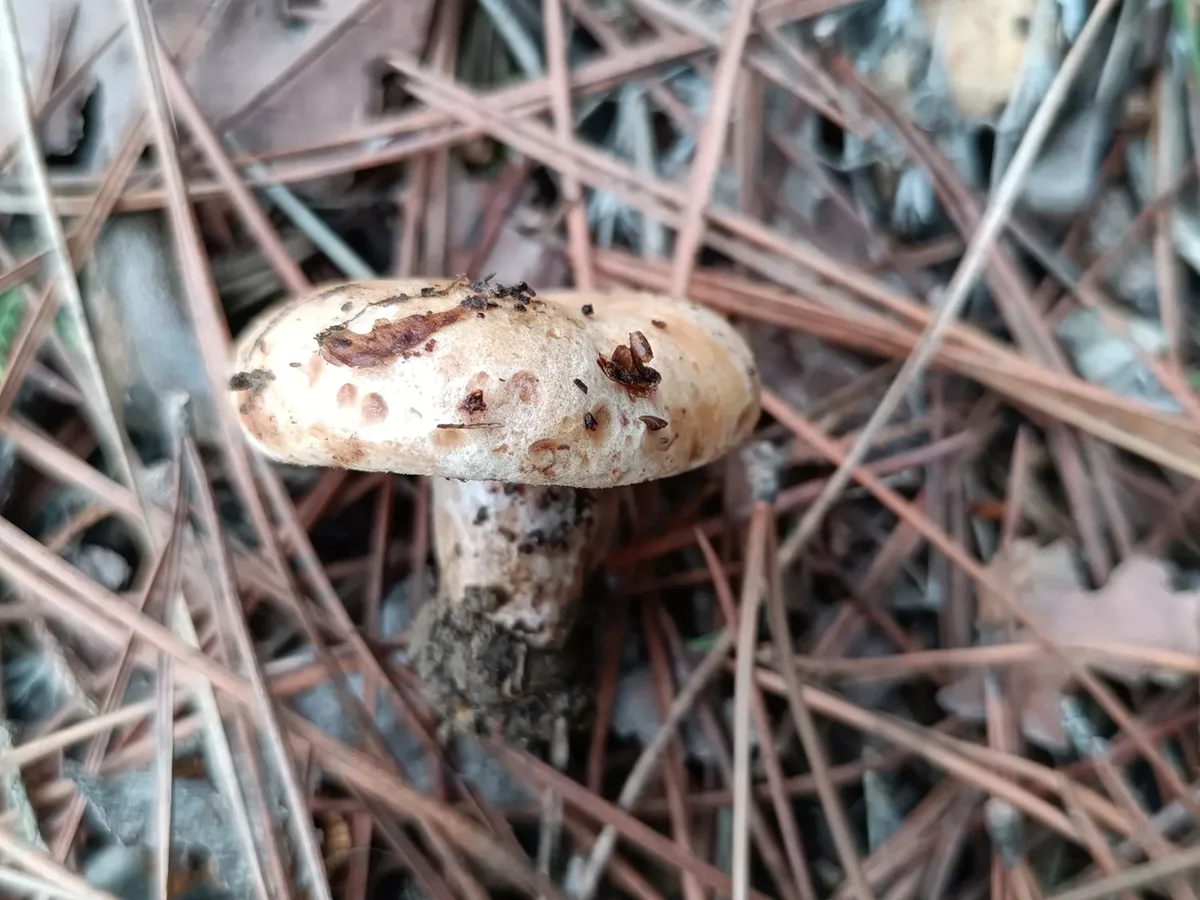 © Giorgio Miliacca (CC BY 4.0)
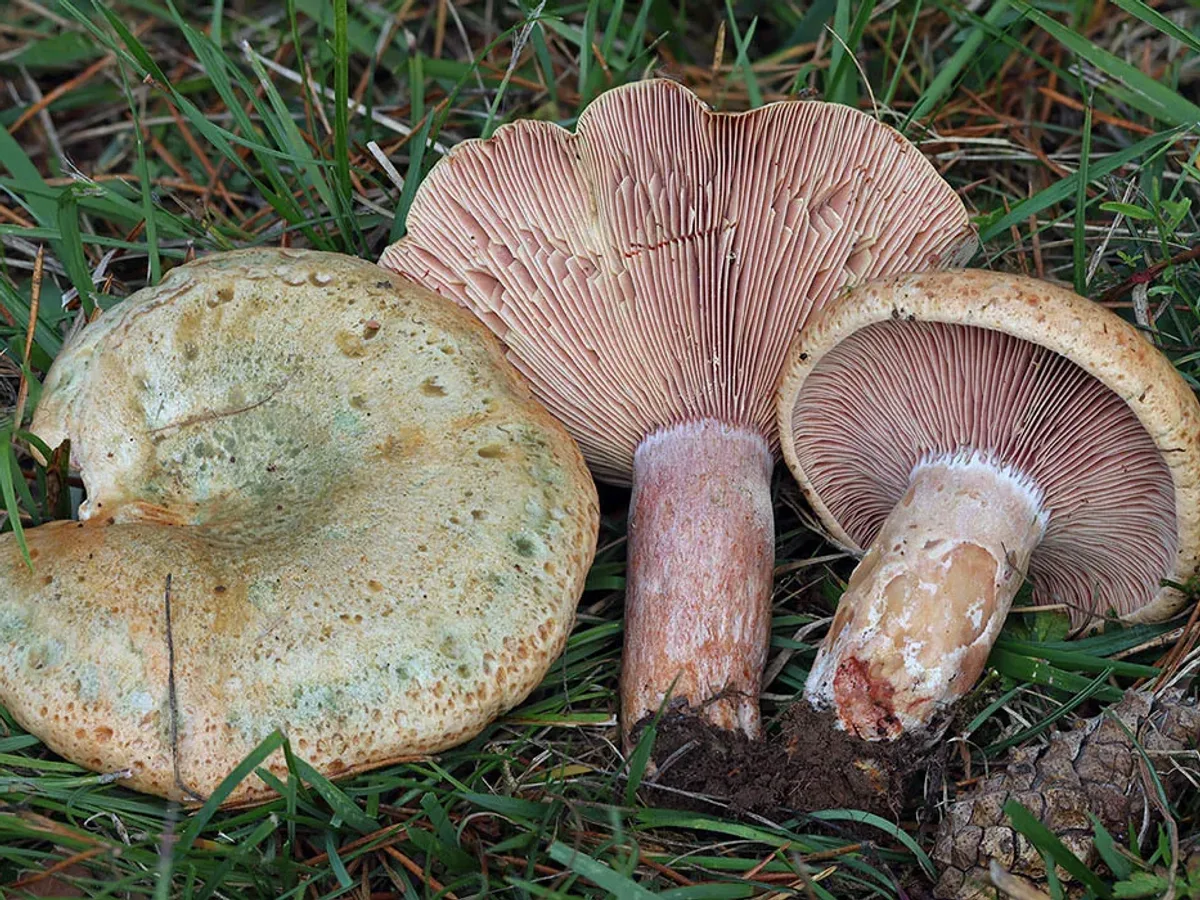 © Daniel Ghyselinck (CC BY)
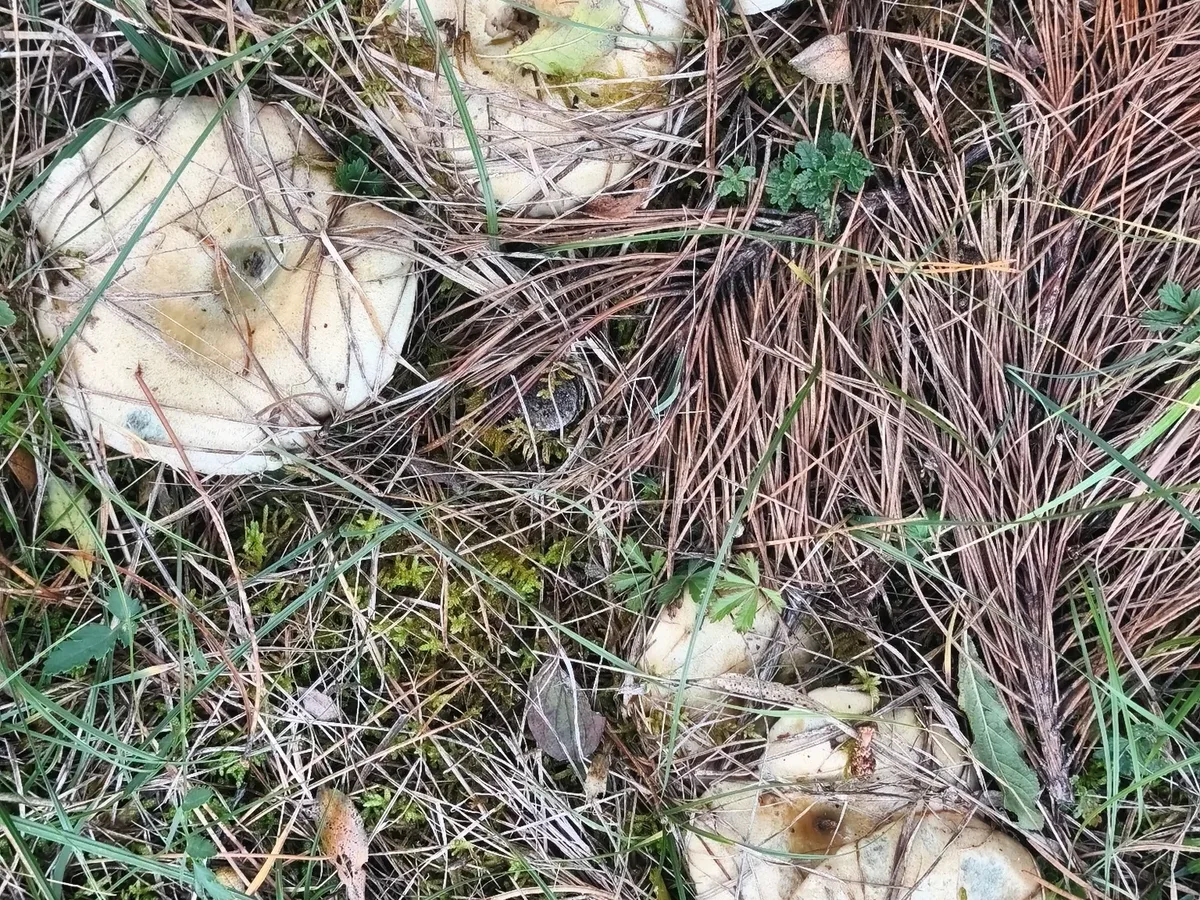 © victor laborde (CC BY)
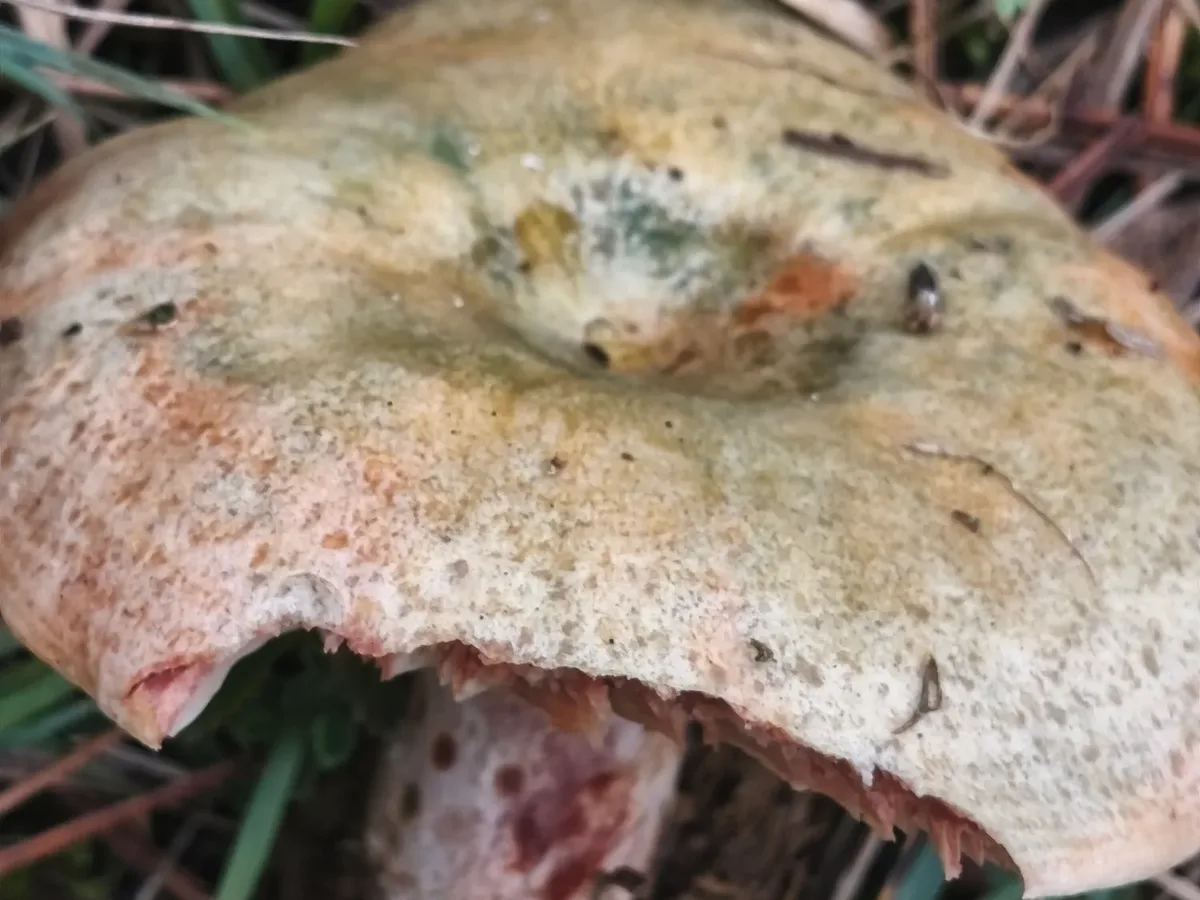 © victor laborde (CC BY)
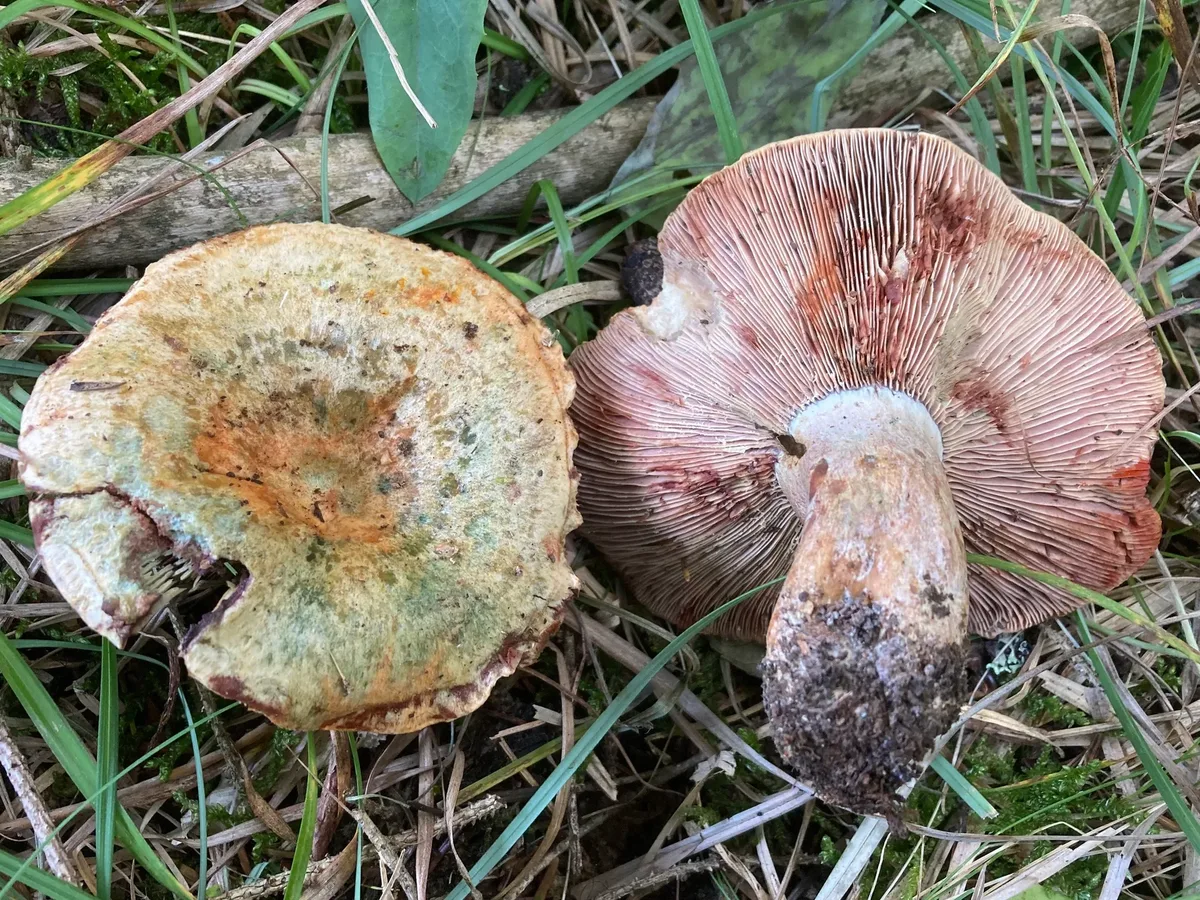 © Lucian Clanet (CC BY)
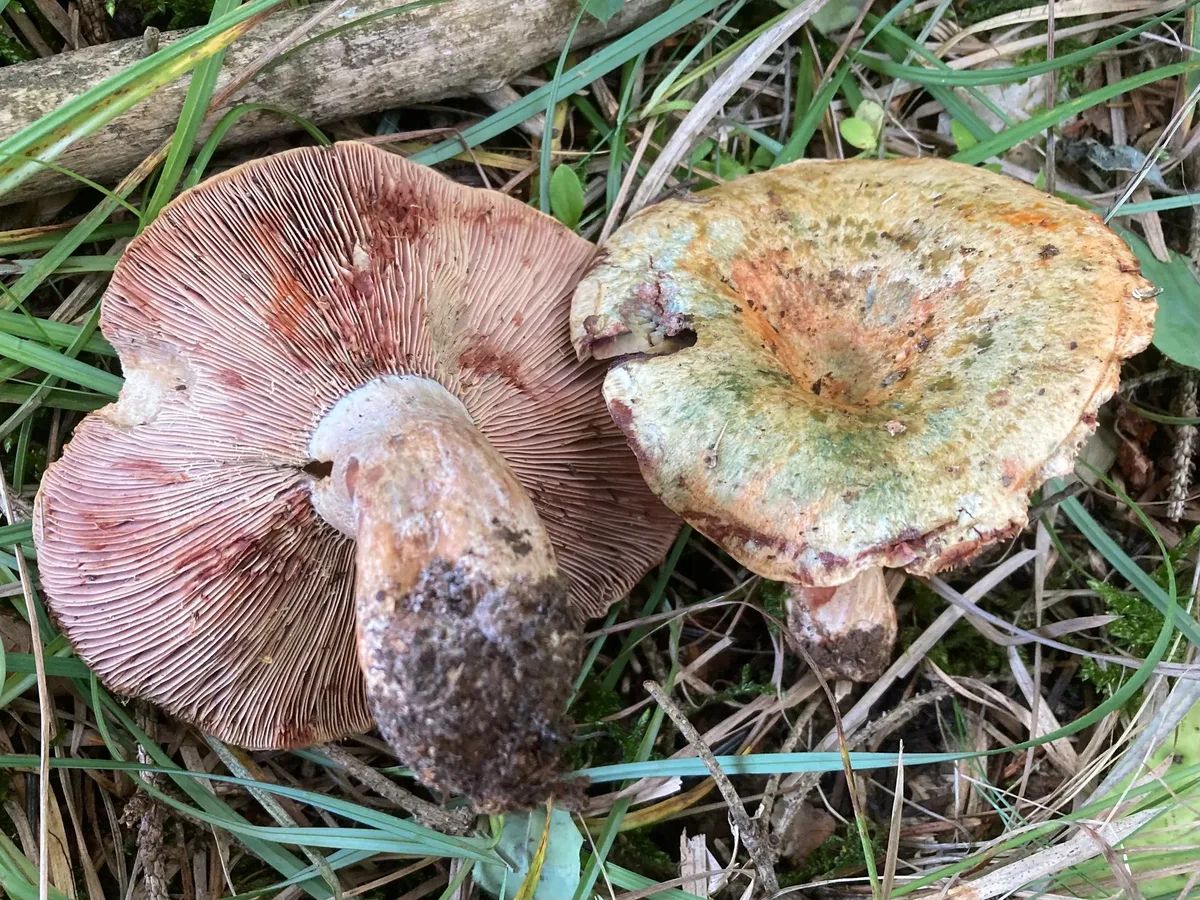 © Lucian Clanet (CC BY)
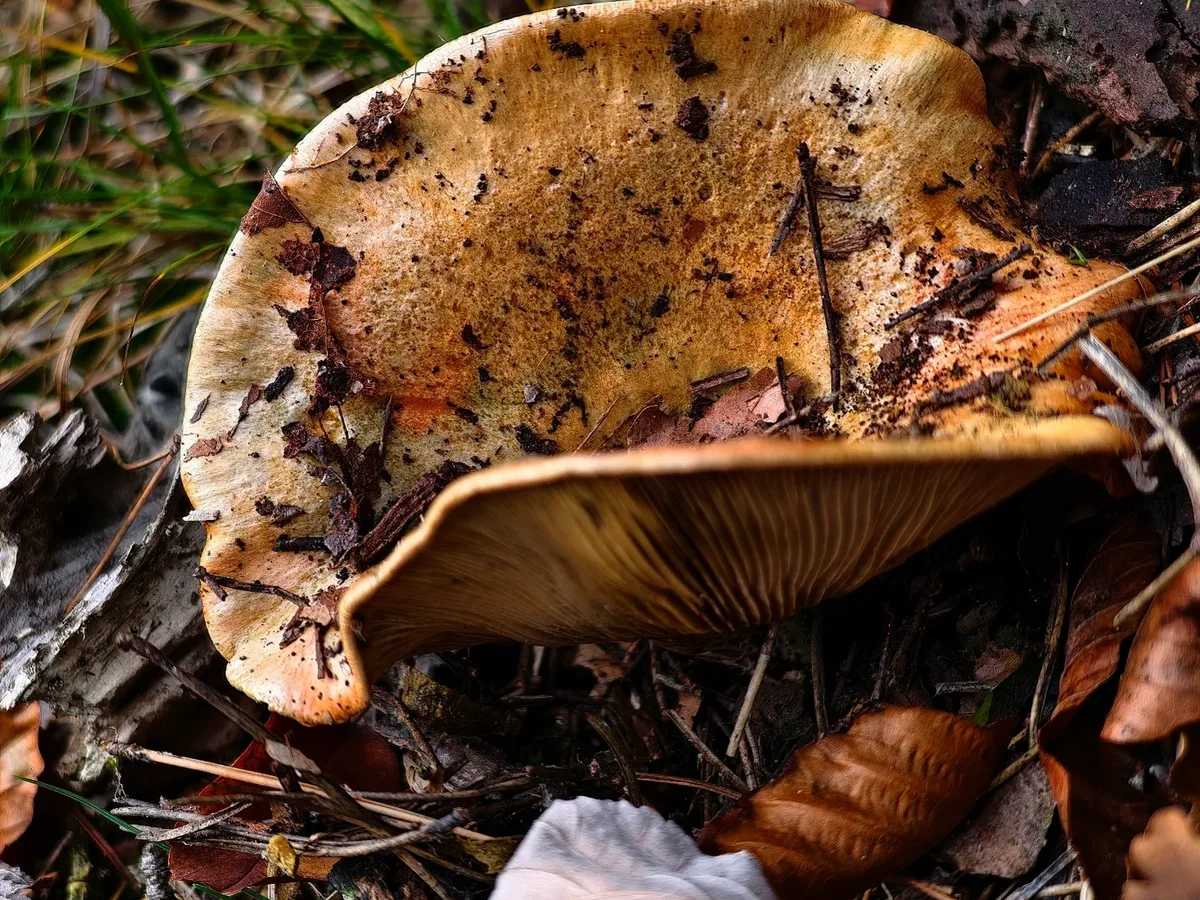 Michael Pongratz (CC0)
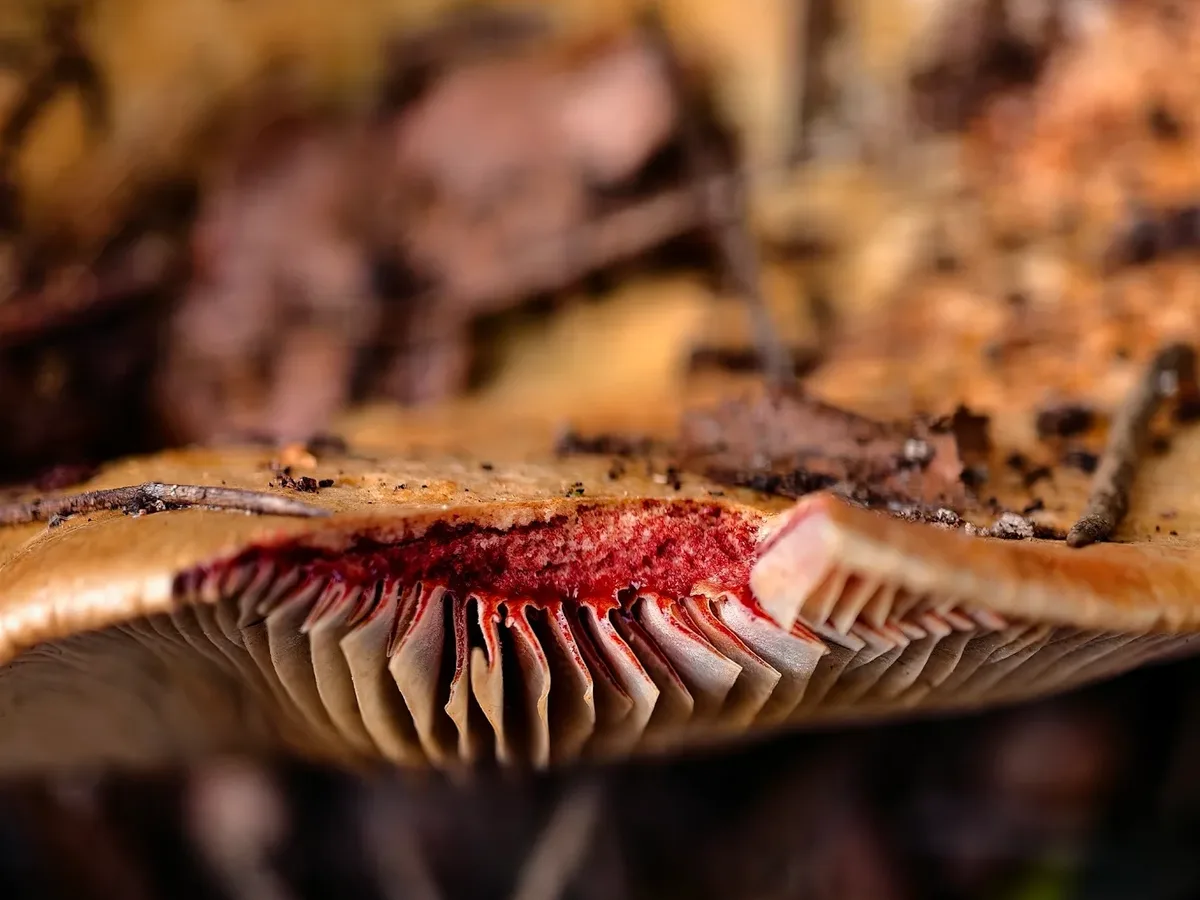 Michael Pongratz (CC0)
 © Lucian Clanet (CC BY)
 © Lucian Clanet (CC BY)
 © Nico Hernandez (CC BY 4.0)© Giorgio Miliacca (CC BY 4.0)© Daniel Ghyselinck (CC BY)
One of the best mushrooms you can bring home - once you are certain of the identification.
How to recognise it
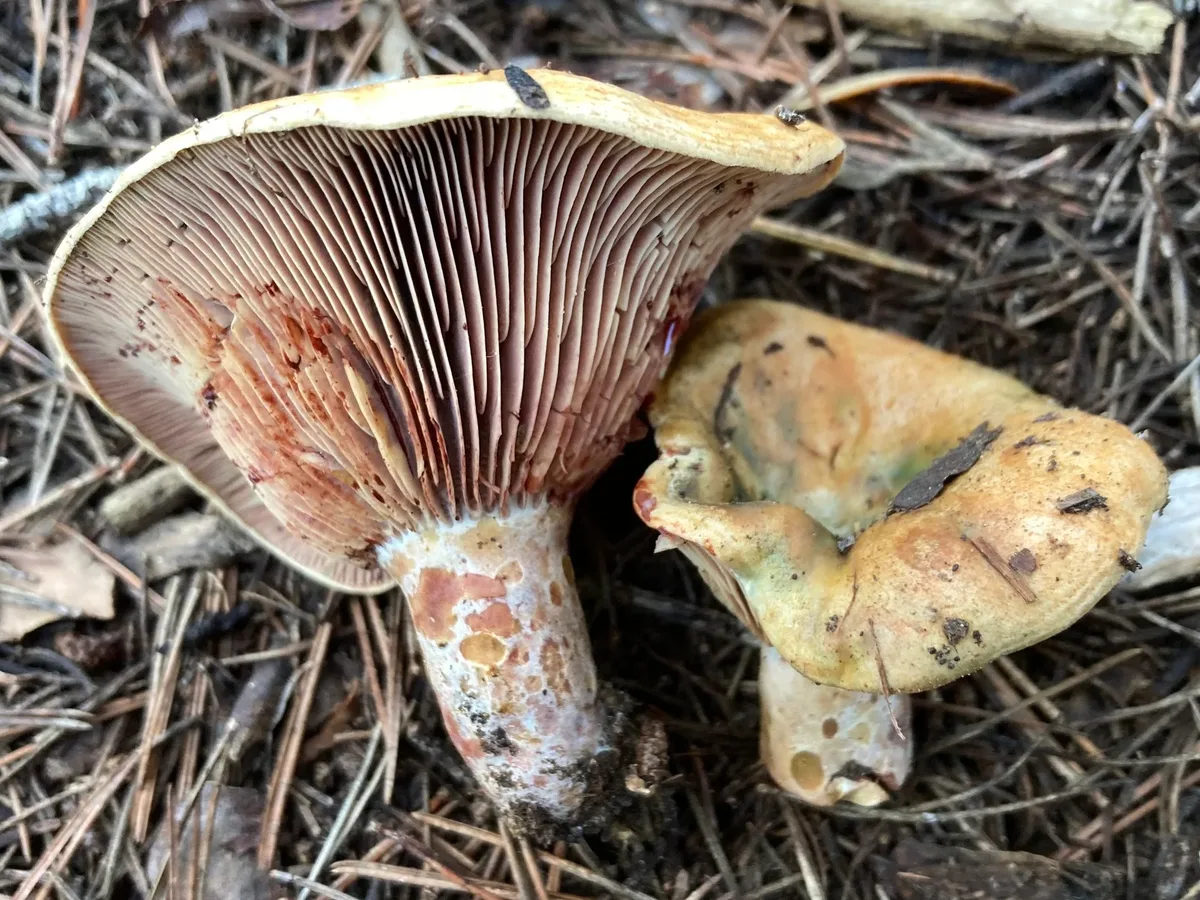
Lactarius sanguifluus is a robust, fleshy milkcap of medium to large stature, immediately distinguished by its blood-red to wine-red latex - one of the most visually dramatic features in European mycology.
Cap
The cap starts convex and firmly inrolled at the margin when young, gradually expanding to plane and finally shallow-funnel-shaped in maturity.
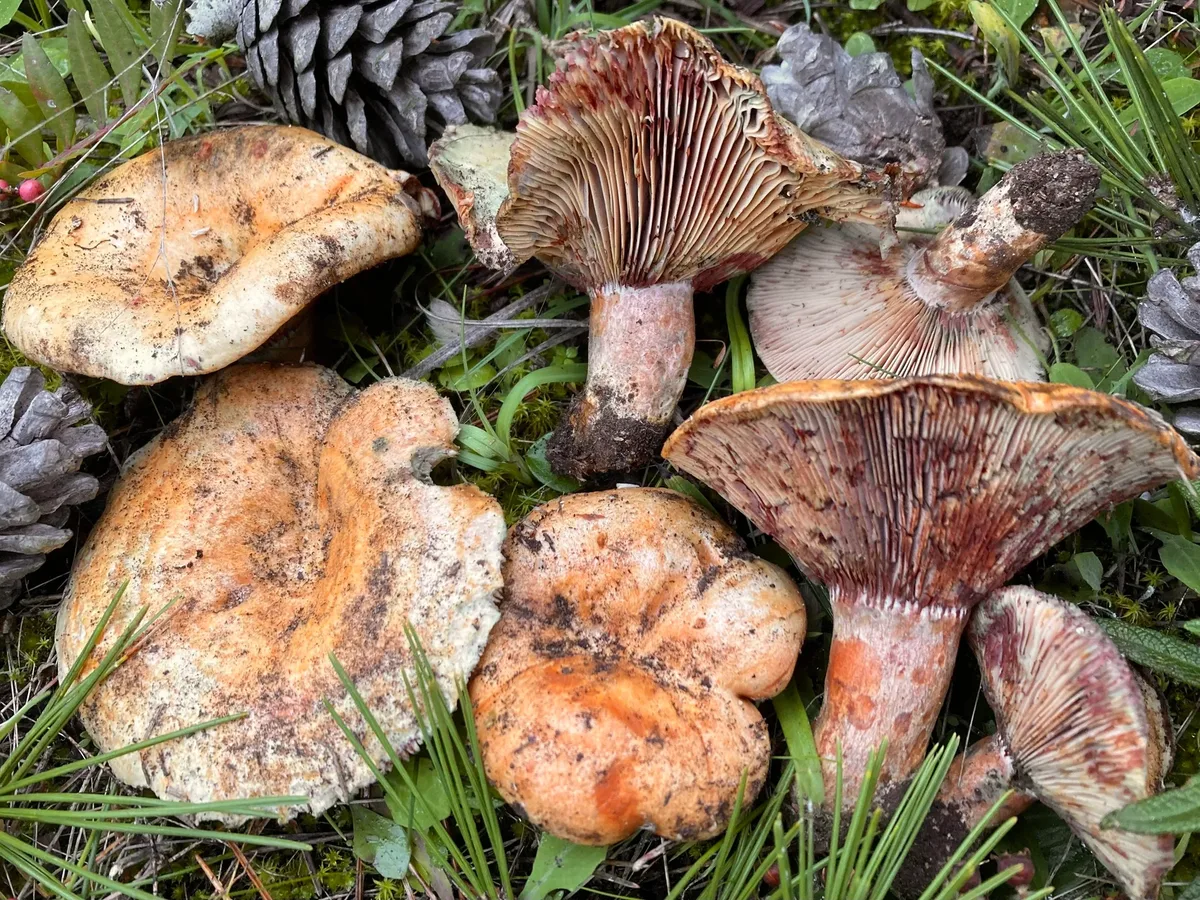
The upper surface is dry and somewhat dull - never truly viscid - coloured a warm salmon-orange to brick or flesh-red, typically showing faint concentric banding. Old caps often fade to pale ochre-buff at the centre while retaining orange tones toward the margin.
Gills / Pores
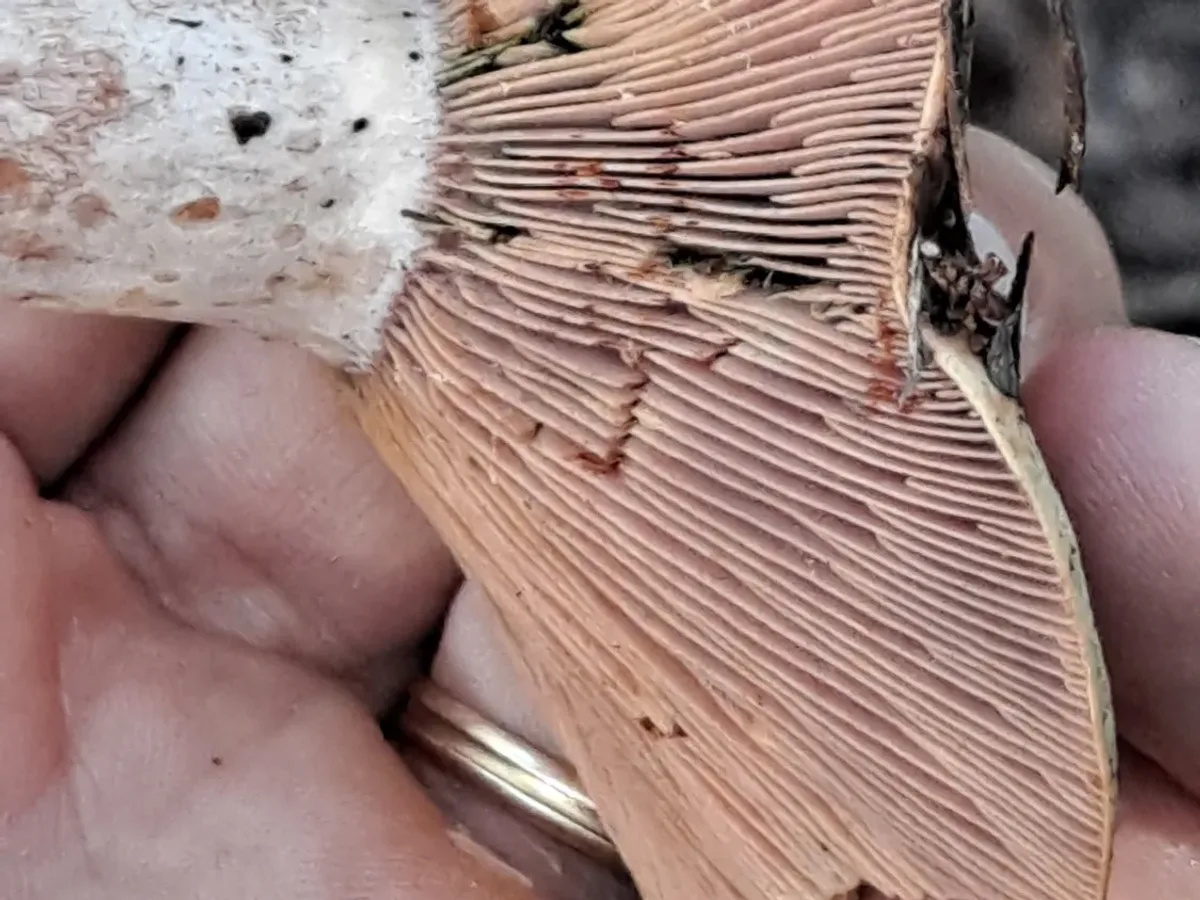
The gills are tight, slightly decurrent, and coloured like fresh salmon or apricot. Even a light brush with the fingernail releases the diagnostic dark-red latex that spreads instantly through the gill tissue and stains any cut surface deep carmine to purple-red. This stain is permanent and highly diagnostic.
Stem
The stem is stout and solid, coloured similarly to the cap, and in well-developed specimens shows the characteristic scrobiculate (pitted) pattern of reddish depressions - a trait shared with the closely related saffron milkcap complex.
Flesh
The flesh is pale, firm, and immediately bleeds copious dark-red latex - not pale orange as in Lactarius deliciosus, but distinctly blood-red or wine-red. The spore print is pale cream-yellow.
Where & when it grows
Habitat
Lactarius sanguifluus is an obligate ectomycorrhizal associate of pines, with a strong affinity for warm, dry Mediterranean pine woodlands. It is essentially a southern species that reaches its northern limit in the mountains of south-central Europe.
It thrives on free-draining, often calcareous soils - limestone rubble, sandy loam, or rocky hillsides - under two-needle pines such as Pinus halepensis, P. pinaster and P. brutia, and occasionally under P. sylvestris at lower, drier elevations.
In Spain, France, Italy, and the Balkans it occupies the same ecological zone as the truffle and is one of the defining fungi of Mediterranean garrigue and pinède. It fruits singly or loosely scattered and does not form dense fairy rings or clusters.
When
The bloody milkcap is strictly an autumn species across its range, its fruiting triggered by the first significant rainfall after the hot, dry Mediterranean summer, typically from late September through November.
In cooler mountain pine forests of Spain and southern France it can appear as early as mid-September. In warm coastal areas of Italy, Greece, or North Africa fruiting may extend into December.
The sweet spot in most regions is mid-October to mid-November, when soil temperatures drop below 15 °C but the ground retains warmth from summer. It is highly sensitive to prolonged drought and will fail entirely in dry autumns.
How it grows
Solitary to loosely scattered on the forest floor among pine needles and leaf litter, never truly gregarious in the sense of tightly clustered groups.
Young buttons emerge as small, rounded, inrolled caps, often mistaken for stones before the cap colour becomes apparent. Growth is relatively rapid once conditions are right: buttons can expand to full size in 5-7 days following sufficient rain.
Like all Lactarius, the mycelium forms ectomycorrhizal associations around pine rootlets and is perennial. The same spot may yield fruitbodies for many years in succession if the host trees remain healthy.
Fruiting conditions
Fruiting is strongly triggered by the first substantial autumn rains (≥25 mm over 14 days) breaking the summer drought, when soil temperatures have dropped into the 8-18 °C range. In typical Mediterranean climates this corresponds to October-November. Prolonged dry autumns suppress fruiting entirely. A lag of 1-2.5 weeks from significant rainfall to visible fruitbodies is typical.
Look-alikes
The closest relative and most important comparison species is Lactarius deliciosus (saffron milkcap), which shares the same pine-forest habitat, similar cap shape, and excellent edibility. L. deliciosus is distinguished by:
- Carrot-orange latex (not blood-red)
- A more intensely banded cap in shades of orange-carrot
- Greenish staining that develops on cut flesh and gills exposed to air - a reaction absent in L. sanguifluus
Other relatives to know:
- Lactarius deterrimus (false saffron milkcap), associated primarily with Norway spruce, also has orange latex that turns wine-red slowly (not immediately) and develops strong green staining.
- Lactarius semisanguifluus is a very close relative with latex that begins pale orange and only slowly darkens to blood-red; it has a more northern distribution and is also edible.
- Lactarius torminosus (woolly milkcap) can share the same pine woodland and should be avoided - it has a distinctly hairy, inrolled cap margin, pink-tinted white latex (never red), and causes gastro-intestinal upset. Its bitter taste and white latex make confusion with L. sanguifluus highly unlikely, but the species is worth knowing.
None of the lookalikes in this group are deadly. The bright colour and copious coloured latex make confusion with toxic white-latexed species essentially impossible in the field.
Associated with spruce rather than pine; latex begins pale orange and only slowly (minutes) darkens to wine-red; strong green staining of flesh develops rapidly. Edible but considered inferior in flavour.
Large, white, velvety-tomentose cap; white acrid latex; no colour resemblance. Inedible (acrid, mildly toxic raw). Distinguished instantly by white colour and strongly peppery-bitter taste.
Very similar; latex starts orange and takes 5-15 minutes to turn wine-red (not immediate). Cap often more orange-toned. Also edible and found in similar habitats; taxonomically close.
White cap, crowded white gills, copious white latex that is intensely acrid-peppery. No orange or red coloration. Easily separated by white colour and burning taste.
L. deliciosus has bright carrot-orange latex (never blood-red), and cut flesh and gills develop conspicuous green staining within minutes - absent in L. sanguifluus. Cap banding is more vivid orange. Both are choice edibles and confusion is harmless.
Found under birch and sometimes mixed with pines; has a distinctly shaggy-hairy, inrolled cap margin and copious white to pale pink latex - never red. Causes gastro-intestinal upset when consumed; bitter taste and white latex make confusion with L. sanguifluus very unlikely.
In the kitchen
Picking & cleaning
Choose young to mid-maturity specimens with firm, inrolled or only slightly flattened caps. Fully aged, flattened, pale-faded caps are past their prime though still edible.
Cut at the base with a knife rather than pulling, to avoid disturbing the mycelium. The flesh is firm enough that specimens transport well.
The dark-red latex will stain fingers, clothing, and wicker baskets permanently - experienced pickers use plastic bags or dark-coloured baskets.
Do not wash until just before cooking; field-wipe with a damp cloth. Insects rarely infest young specimens.
Check the cut surface: fresh latex should be immediately and intensely blood-red. If it is pale orange, you may have a different species.
Cooking
One of the most esteemed edible fungi of Mediterranean cuisine, ranked alongside Lactarius deliciosus but often considered superior in flavour by Spanish and Italian foragers. The flesh is firm, dense, and retains its texture well under heat.
Traditionally grilled over charcoal or wood embers, whole or halved. The Catalan and Valencian preparation a la brasa (grilled with olive oil, garlic, and salt) is the gold standard and brings out a rich, meaty, subtly resinous flavour. The blood-red latex caramelises during grilling and is considered a delicacy.
Other ways to use it:
- Sautéed in olive oil with garlic and parsley
- Added to rice dishes (arròs amb rovellons)
- Used in pasta sauces
- Combined with eggs
- Pickled or preserved in olive oil (the firm flesh makes it suitable for this)
It pairs well with garlic, thyme, rosemary, and robust red wines. Cooking turns the flesh from salmon to a deeper, sometimes grayish-brown colour - perfectly normal.
Does not dry well (texture becomes leathery) but freezes acceptably after blanching.
Good to know
Lactarius sanguifluus has an excellent safety record as a food mushroom and is free of known toxins. No cases of poisoning attributable specifically to this species are documented. The latex and its staining are harmless.
As always, confirm the species identity before eating. The key safety check is immediate, intensely blood-red latex on cutting - not slow, not orange, not white.
Young pickers in Mediterranean regions sometimes confuse pale young specimens with toxic white Lactarius species (e.g. L. piperatus, L. vellereus), but these have white, acrid latex and lack any red colouration. The strongly bitter or acrid taste of toxic white milkcaps would be immediately apparent and deter consumption.
A reference guide - never an edibility guarantee. When in doubt, leave it out.