Rufous milkcap
Lactarius rufussyn. Agaricus rufus Scop., Lactarius rufus var. exumbonatus
 © Kem Luther (CC BY-SA 4.0)
 Bernard Spragg (Public domain)
 © Ray Jackson (CC BY)
 © Ray Jackson (CC BY)
 © Ray Jackson (CC BY)
 © Ray Jackson (CC BY)
 © Ray Jackson (CC BY)
 © Ray Jackson (CC BY)
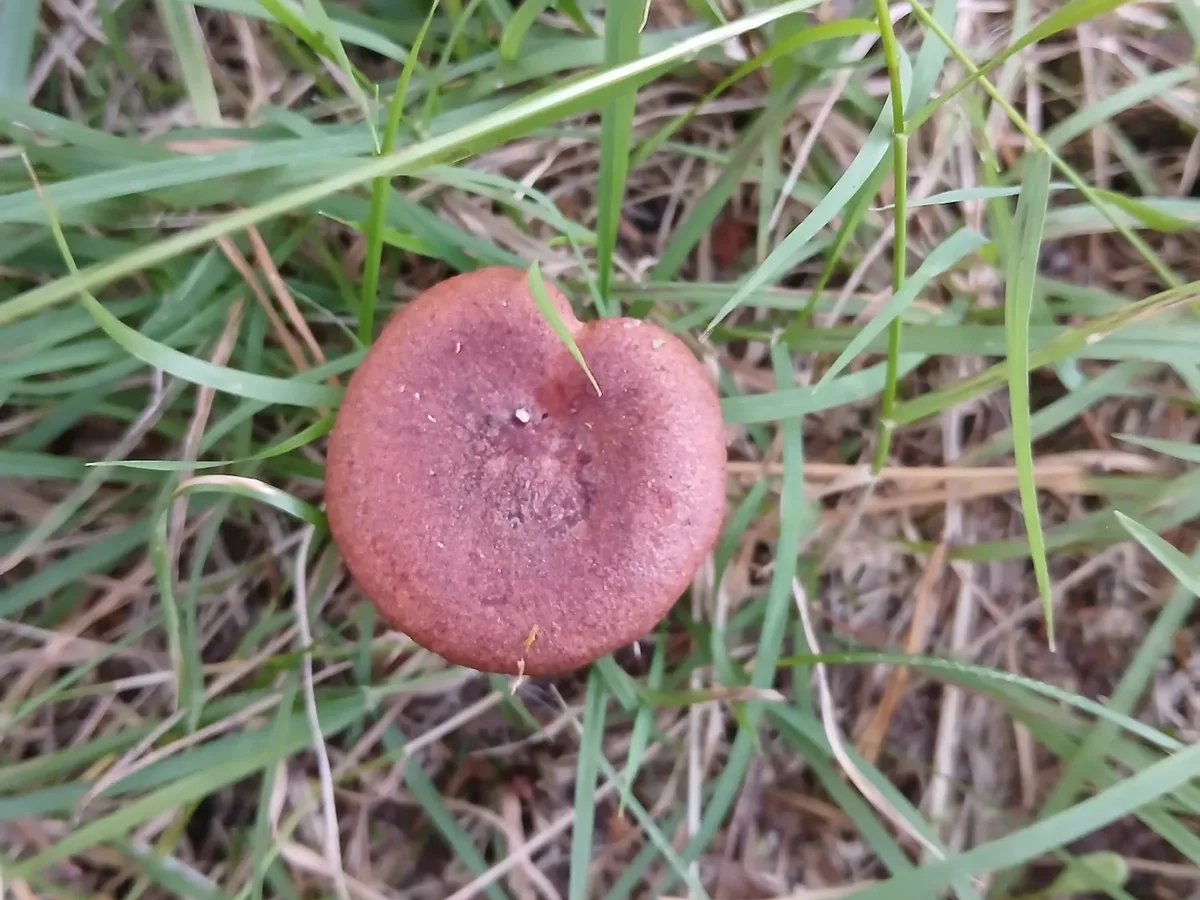 © Thomas Corrigan (CC BY)
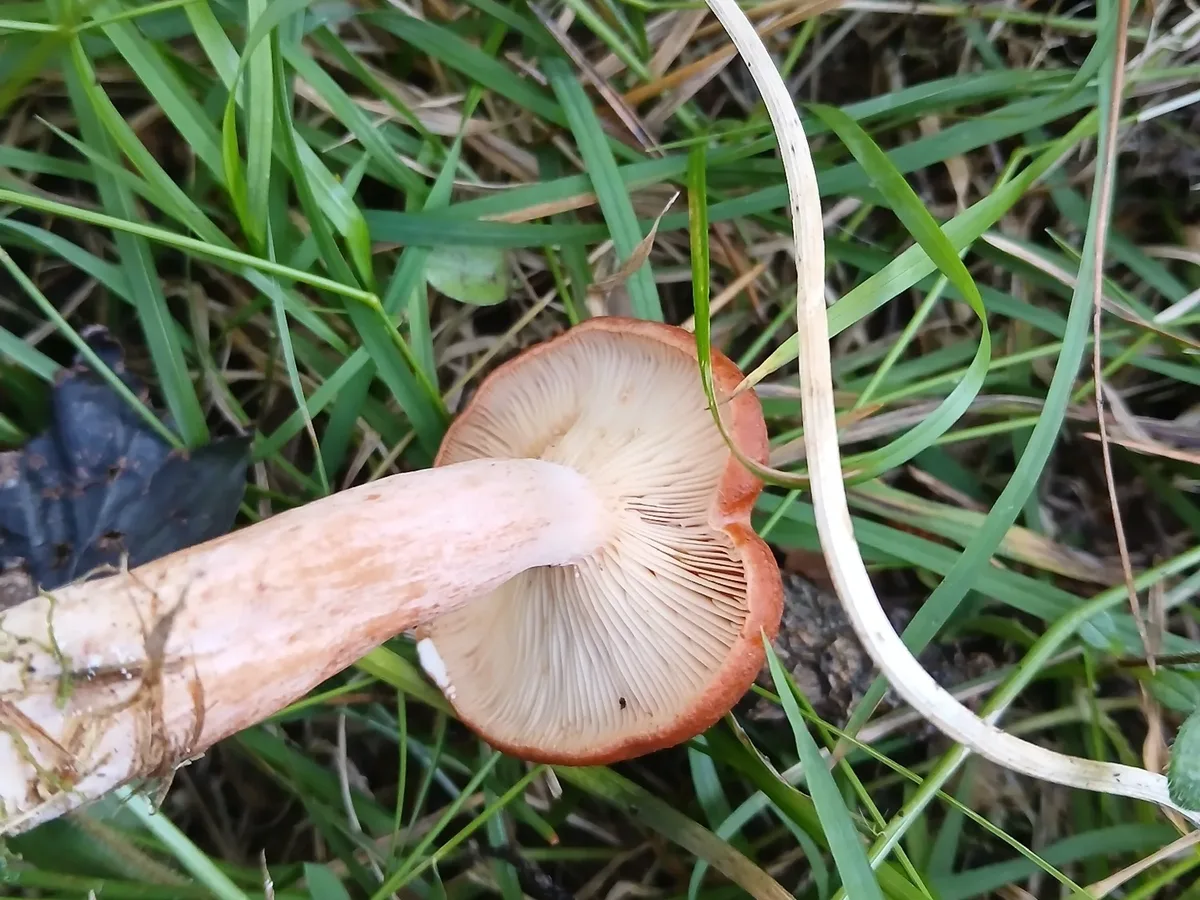 © Thomas Corrigan (CC BY)
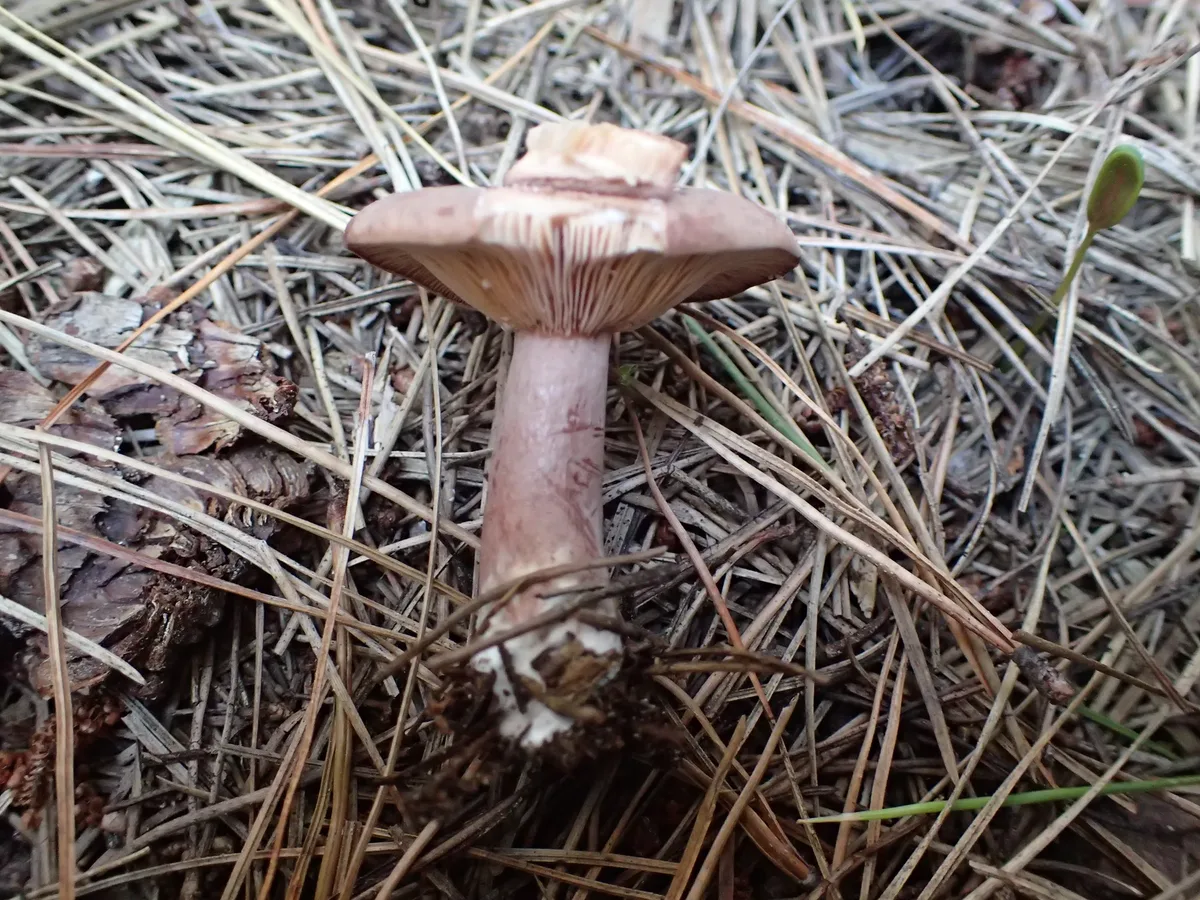 © Liadan Dickie (CC BY)© Kem Luther (CC BY-SA 4.0)Bernard Spragg (Public domain)
Edible only with the right preparation - or safe for some people but not others. Learn the caveats first.
Never eat a mushroom you are not 100% sure of - check the look-alikes below, and always cook wild mushrooms.
How to recognise it
Among northern milkcaps, the rufous milkcap is one of the easier species to recognise once you know it.
Cap
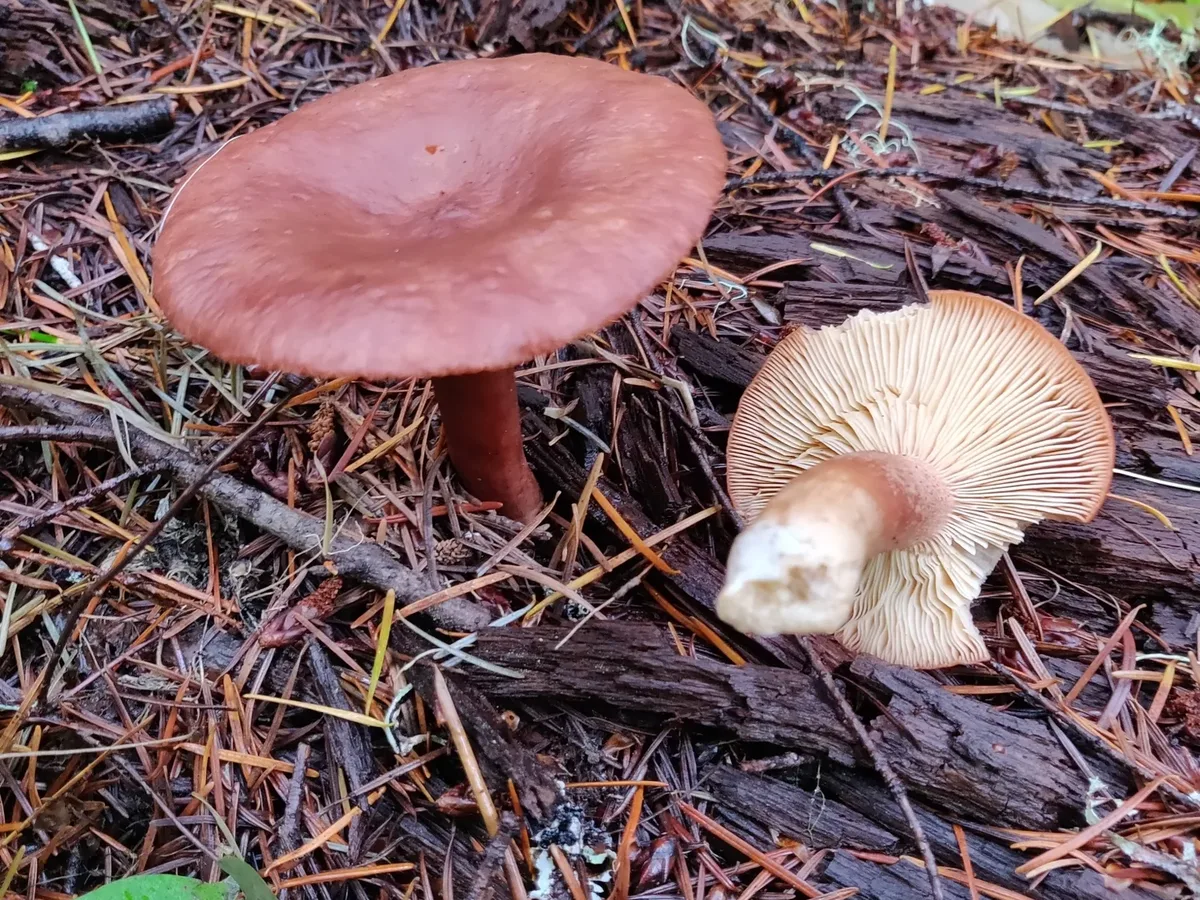
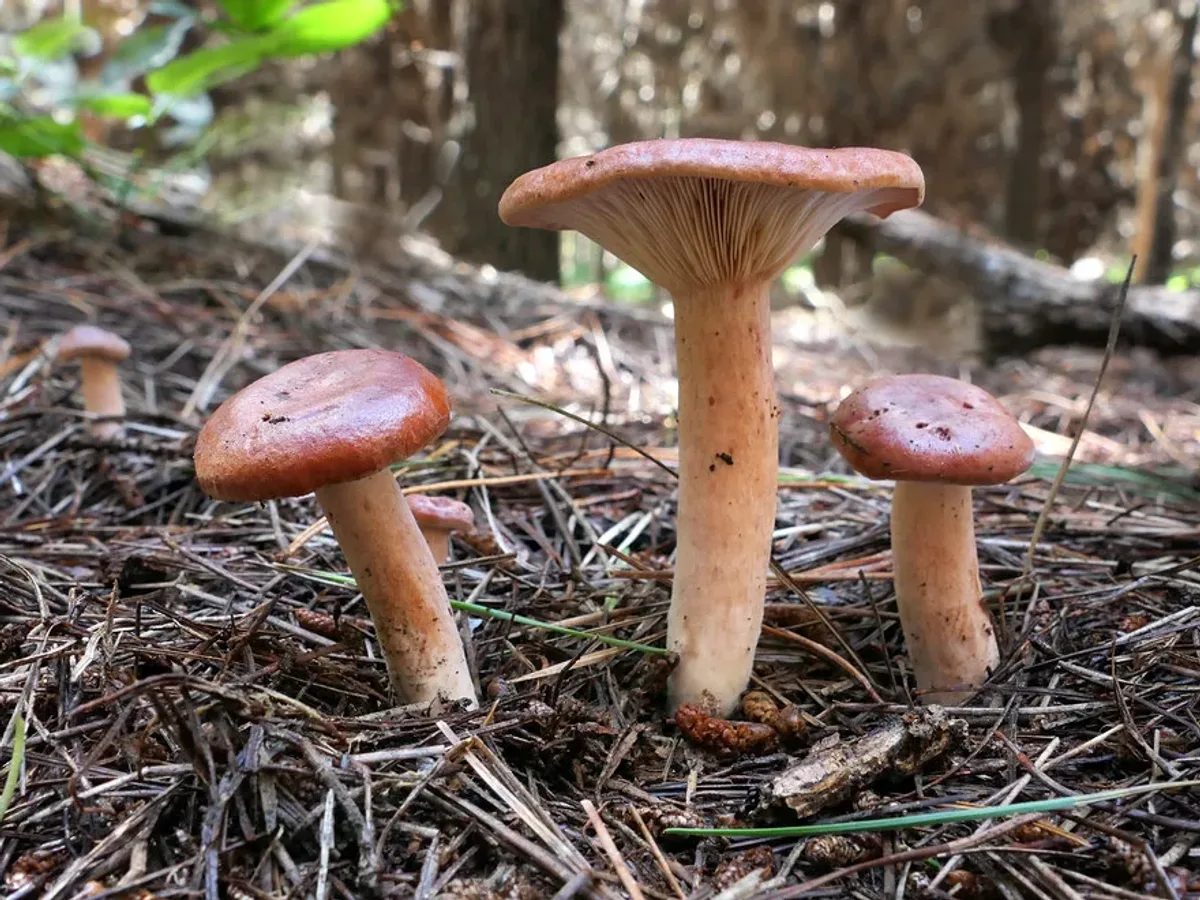
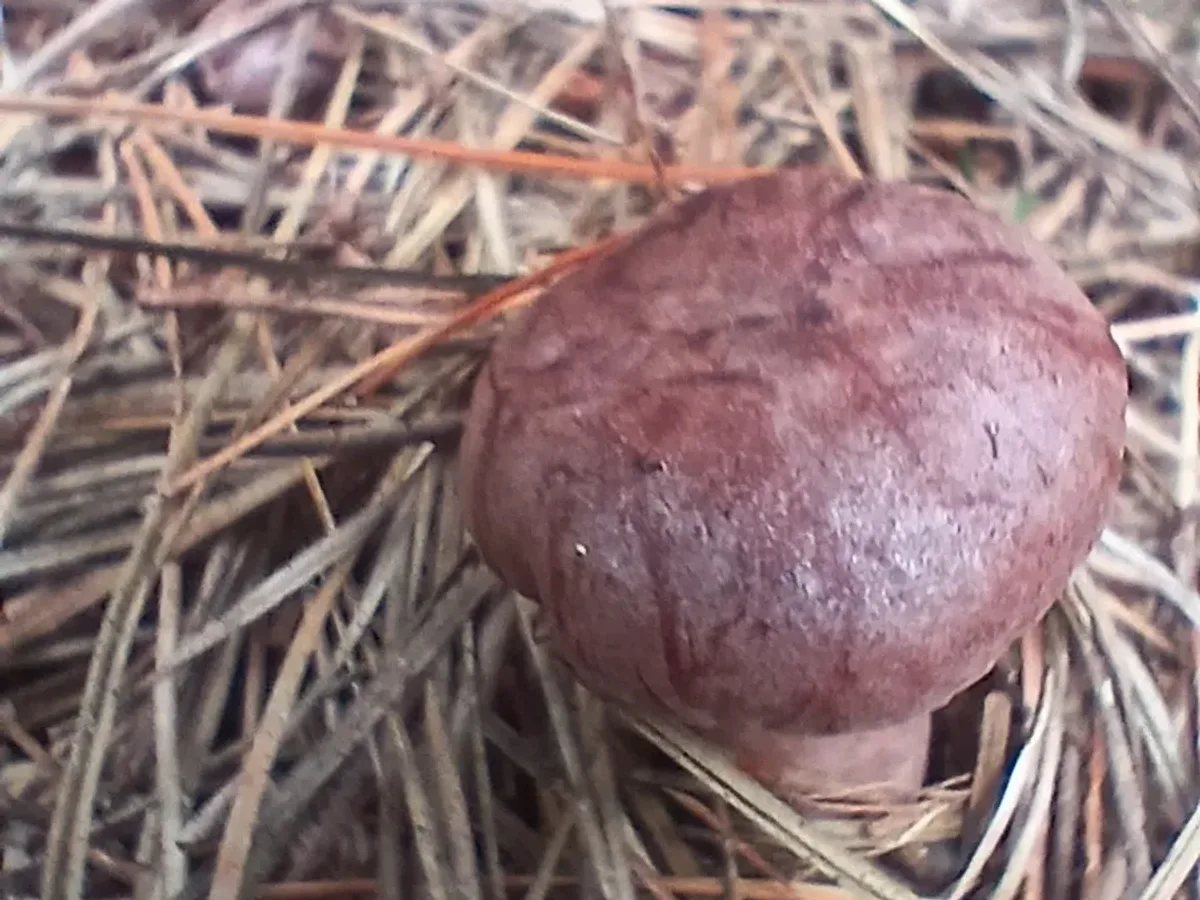
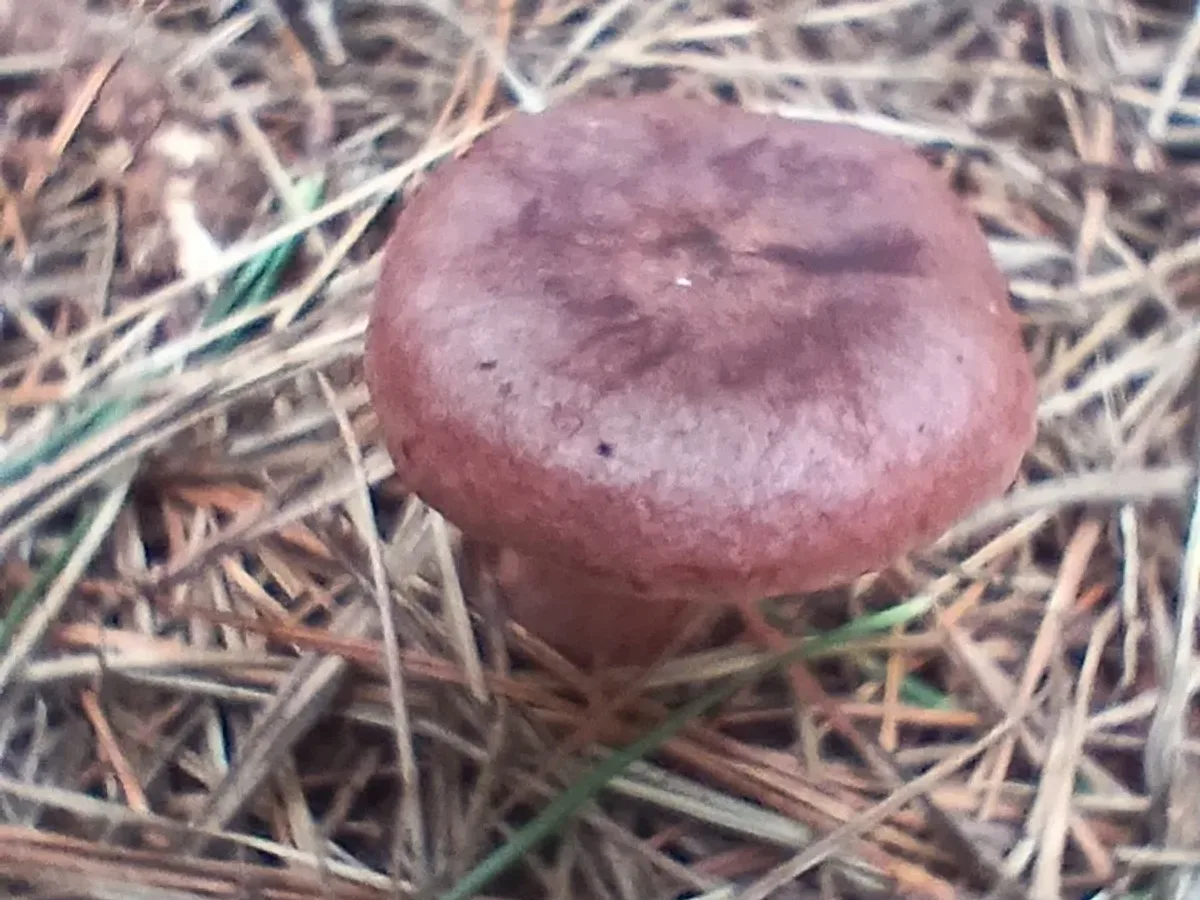
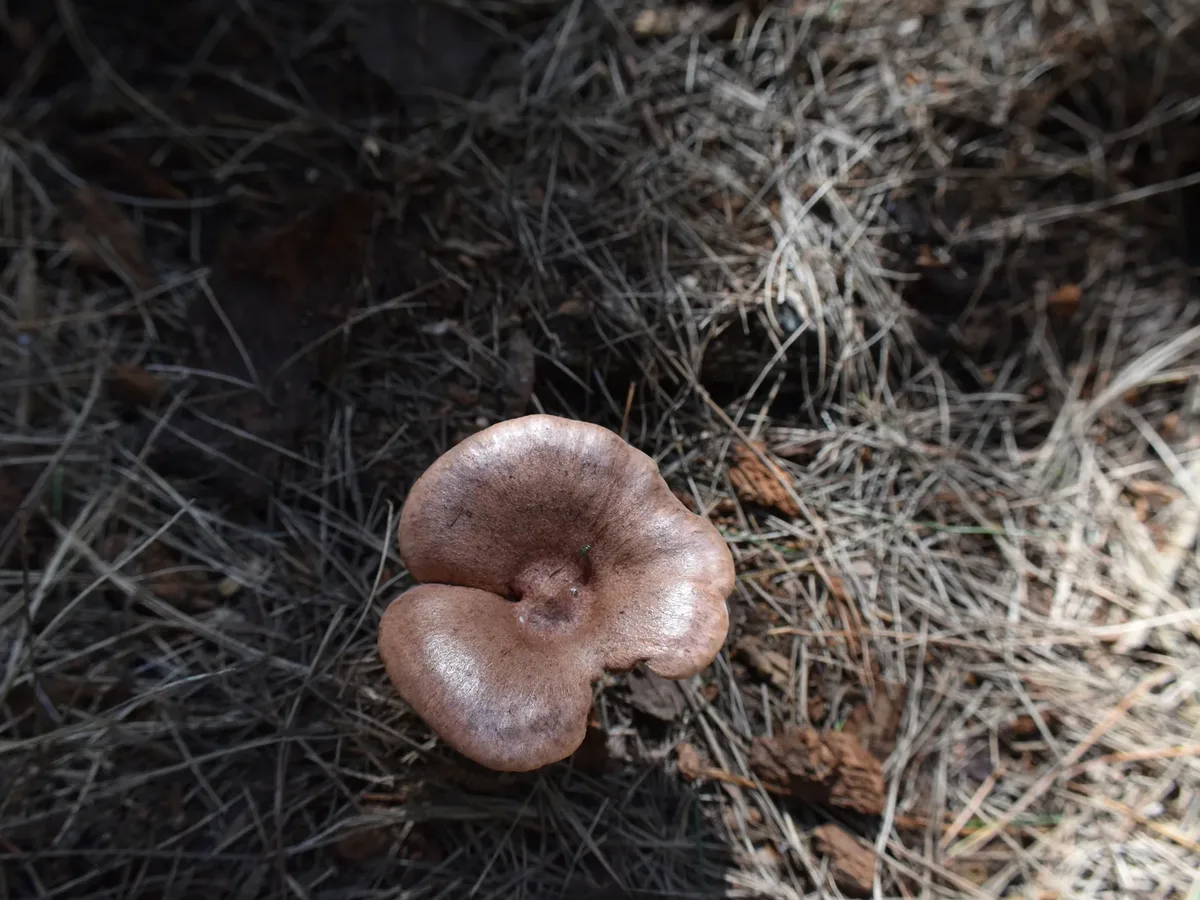
The cap's warm brick-red to rufous-brown colour is uniform and unfading, and it keeps a distinct central umbo - a small but persistent boss at the crown - even as the cap expands from convex to broadly funnel-shaped over its 4-10 cm width.
The surface is dry and slightly silky-matt, never greasy or slimy, and the margin starts tightly inrolled before gradually unfurling with age.
Gills
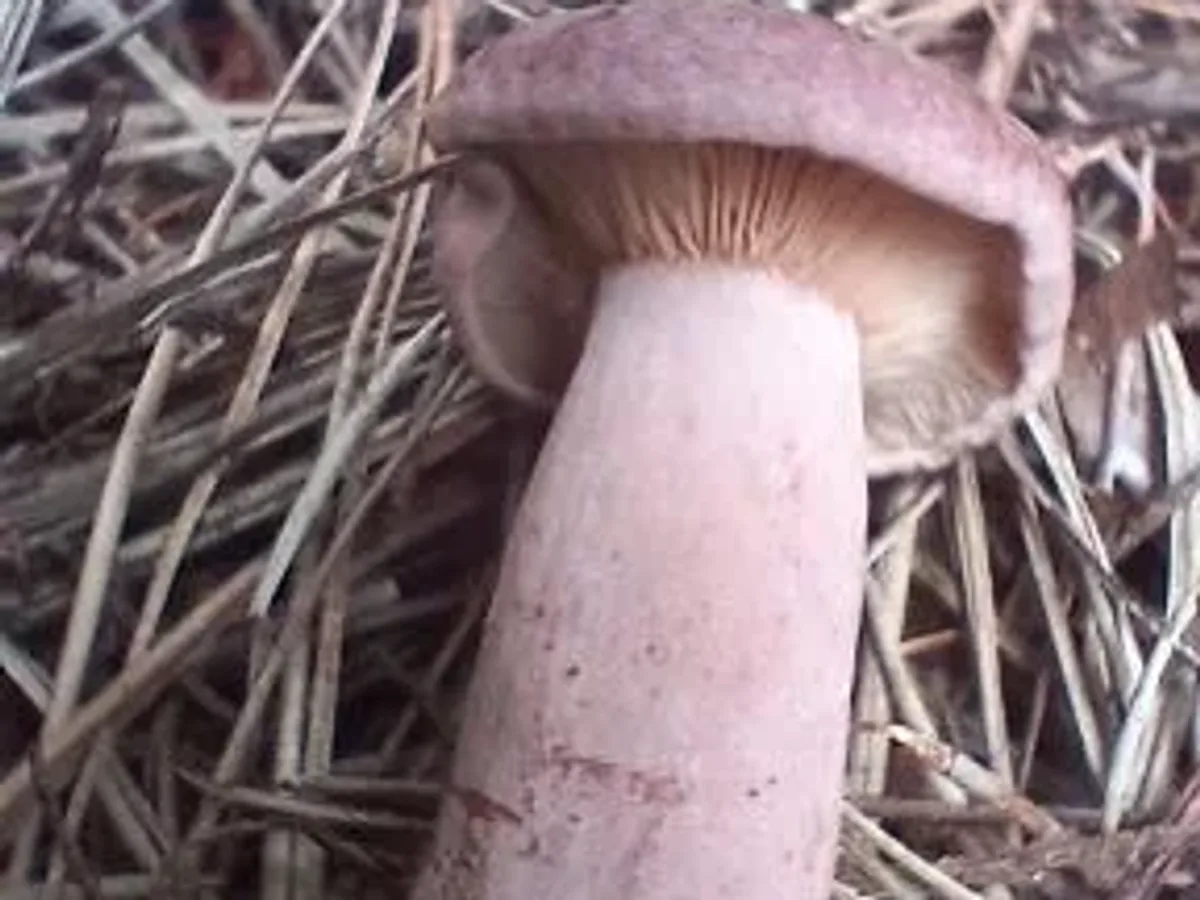
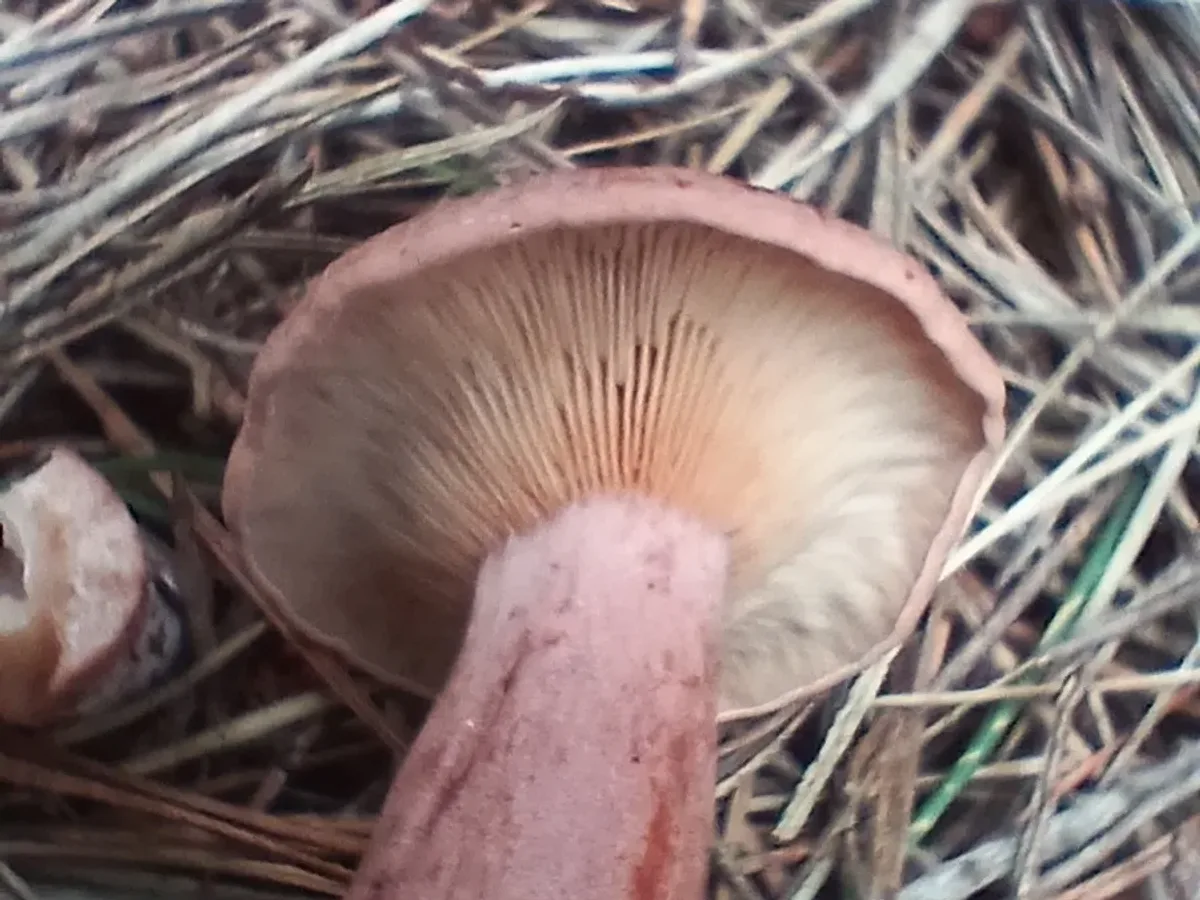
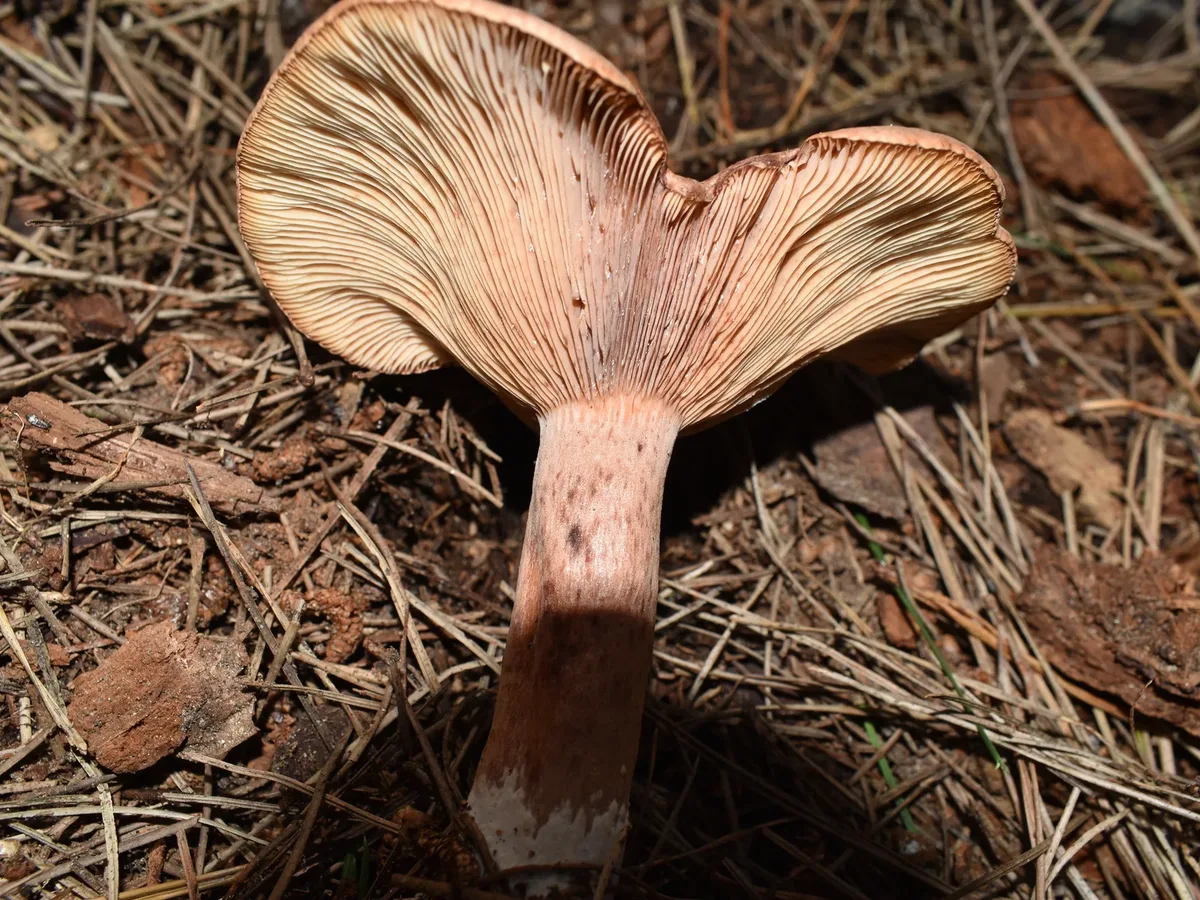
The gills run slightly down the stem, are crowded, and begin pale cream before ageing to a light ochre; they stain ochre where cut or bruised.
Stem
The stem is cylindrical, 4-8 cm tall, firm when young but becoming hollow as the mushroom matures, coloured much like the cap or a shade paler.
Flesh
The most important feature is the latex: break any part of the flesh or gills and the mushroom bleeds copious white, watery milk that stays pure white on exposure to air and tastes intensely, burningly acrid.
That white-and-stays-white latex, combined with the persistent umbo, is the key identification pair for this species.
Flesh is white, firm, and unchanging. Spore print: white to very pale cream.
Where & when it grows
Habitat
Lactarius rufus is a faithful companion of the boreal conifer forest. It forms ectomycorrhizal partnerships almost exclusively with pines and spruces, making it a defining species of Pinus sylvestris and Picea abies woodland across Fennoscandia, the Baltic states, and Russia.
Look for it in native Caledonian pine woods, Scots pine plantations, spruce forests, and mixed boreal stands where it carpets the forest floor among bilberry, heather, Sphagnum cushions, and deep needle duff.
It is equally at home on freely draining podzolic soils and on wetter peaty ground, which sets it apart from many other woodland species.
In years with good summer rainfall it can occur in enormous numbers - entire sections of forest floor can be thickly strewn with rufous caps. In mountain regions of central Europe it shifts upward to montane spruce and pine zones.
When
Fruiting begins as early as July after warm summer rains and continues through October-November. The main flush typically runs from August to October across Scandinavia, the British Isles, and central Europe.
Across the Nordic boreal zone it is often one of the first milkcaps to push up after summer rain, a reliable early sign that the autumn harvest is beginning.
It tolerates mild frosts well and may persist into November, long after more delicate species have gone over.
How it grows
Grows scattered to gregarious, often in clusters or dense troops under conifers. Not strictly caespitose (tufted from a common base), but individuals may be closely packed.
The mycelium is strongly tied to living pine and spruce roots; it does not grow on wood or dung.
Buttons emerge rapidly after soaking rains and can reach full size within four to five days.
Fruiting conditions
Responds strongly to late-summer and early-autumn rains after warm dry periods; requires adequately moist, acidic conifer needle litter or Sphagnum substrate; tolerates cool soil temperatures and can fruit into early frost periods
Look-alikes
The main confusion species are other rufous-brown, acrid milkcaps with white unchanging milk.
- Lactarius hepaticus (liver milkcap): very similar in colour and also associated with Scots pine. Told apart by its slightly smaller stature and the lack of a prominent central umbo; it tends to have a very slightly yellowish tinge to the milk and gill staining, plus a pinkish reaction on the gills with KOH.
- Lactarius theiogalus: grows in similar habitats under conifers and mixed wood; its milk slowly turns sulphur-yellow on exposure to air - a reliable distinction from L. rufus, where the milk stays white.
- Lactarius camphoratus (curry milkcap): similar reddish-brown colouring but clearly smaller (cap rarely exceeding 6 cm), with a distinctive curry or fenugreek smell especially when dried, and also lacks the strong persistent umbo.
- Lactarius subdulcis (beech milkcap): grows under deciduous trees (especially beech) rather than conifers, has a milder, non-burning taste, and a more orange-cinnamon-brown cap colour.
None of these milkcap lookalikes is deadly.
IMPORTANT: Cortinarius rubellus (deadly webcap) grows in the same boreal pine and spruce forests and can have a similar reddish-brown cap colour. It is DEADLY POISONOUS (causes irreversible kidney failure).
It produces NO milk whatsoever. Always snap or scratch the flesh; if no white latex flows immediately, do not eat it.
Cortinarius also has rusty-brown spores (leaving a rusty deposit on the stem), a cobweb-like veil when young, and gills that become rusty-brown with age.
Never collect brown milkcap-like mushrooms without confirming the presence of white latex.
Grows in the same boreal pine and spruce forests and can have a similar reddish-brown cap. DEADLY - causes irreversible kidney failure (orellanine toxin). Produces NO latex at all; always break the flesh and confirm white milk flows before collecting. Cortinarius has rusty-brown spores (deposited on stem ring zone), a cobweb-like (cortinate) veil when young, and gills that age rusty-brown. No milk = not a milkcap.
Grows under deciduous trees (beech, oak) rather than conifers; cap slightly more orange-cinnamon; latex mild, not acrid or only faintly so; taste not burning
Smaller (cap 2-5 cm), lacks the strong umbo, and has a very distinctive warm curry or fenugreek smell (especially on drying); habitat overlaps but flavour and size differ clearly
Very similar rufous-brown colouring and also associated with Scots pine; lacks the prominent persistent central umbo of L. rufus; milk may show a faint yellowish tinge and gills develop a slight pinkish reaction with KOH; also predominantly associated with Scots pine
Cap similar rufous-ochre colour but generally paler; milk turns sulphur-yellow within minutes of exposure to air, whereas L. rufus milk stays white permanently - the single most reliable distinction
In the kitchen
Picking & cleaning
Lactarius rufus is edible after thorough preparation, but is not a casual forage and MUST NOT be eaten raw. The raw mushroom tastes intensely and burningly acrid, causing immediate mouth and throat irritation.
Traditional preparation - especially in Finland (where it is marketed commercially and processed for salting) and Russia - involves prolonged blanching in several changes of boiling water to drive off the acrid compounds, followed by salting.
- 1Boil sliced caps in lightly salted water for at least 15-20 minutes.
- 2Discard the water.
- 3Repeat if needed.
The result is a firm-textured, pleasantly flavoured pickle. It is one of the most popular salted mushrooms across Russia and Finland.
Do not attempt raw consumption or minimal cooking. Collect young to medium-aged specimens with caps still firm; avoid very old, soft, or worm-eaten material.
Cooking
After thorough blanching (minimum two boils of 10-15 minutes each with fresh water each time), Lactarius rufus becomes a versatile, firm-textured mushroom best suited to salting and pickling, where it is a traditional staple across Fennoscandia and Russia.
Salted L. rufus (soaked, blanched, layered with salt and dill in crocks) develops a pleasant, slightly tangy, nutty flavour over weeks of curing.
It can also be:
- used in soups after blanching
- fried with butter and seasoned
- incorporated into mushroom pâtés
Its texture holds up well to extended cooking.
Do not use in raw preparations (salads, carpaccio) even after blanching - stick to cooked applications.
Dried whole without pre-blanching is not recommended as the acrid compounds concentrate.
Good to know
Lactarius rufus contains no amatoxins, orellanine, or gyromitrin.
The primary hazard is the intensely acrid latex. If the mushroom is eaten raw or undercooked it causes burning irritation in the mouth, throat, and gastrointestinal tract (nausea, vomiting, diarrhoea).
Traditional water-blanching removes these acrid compounds adequately. Do not eat without proper preparation.
The most serious safety concern is misidentification: Cortinarius rubellus, a deadly poisonous webcap that also grows in boreal conifer forests, can superficially resemble L. rufus. Always confirm white latex flows from broken flesh before collecting.
If collecting in mixed or broadleaf forest, ensure you have correctly identified the species and are not confused with other acrid milkcaps.
As with all wild mushrooms, when in doubt, leave it out.
A reference guide - never an edibility guarantee. When in doubt, leave it out.