Candy cap
Lactarius rubidussyn. Lactarius fragilis var. rubidus, Lactarius fragilis auct. Pacific, Lactarius camphoratus auct. non Bull.
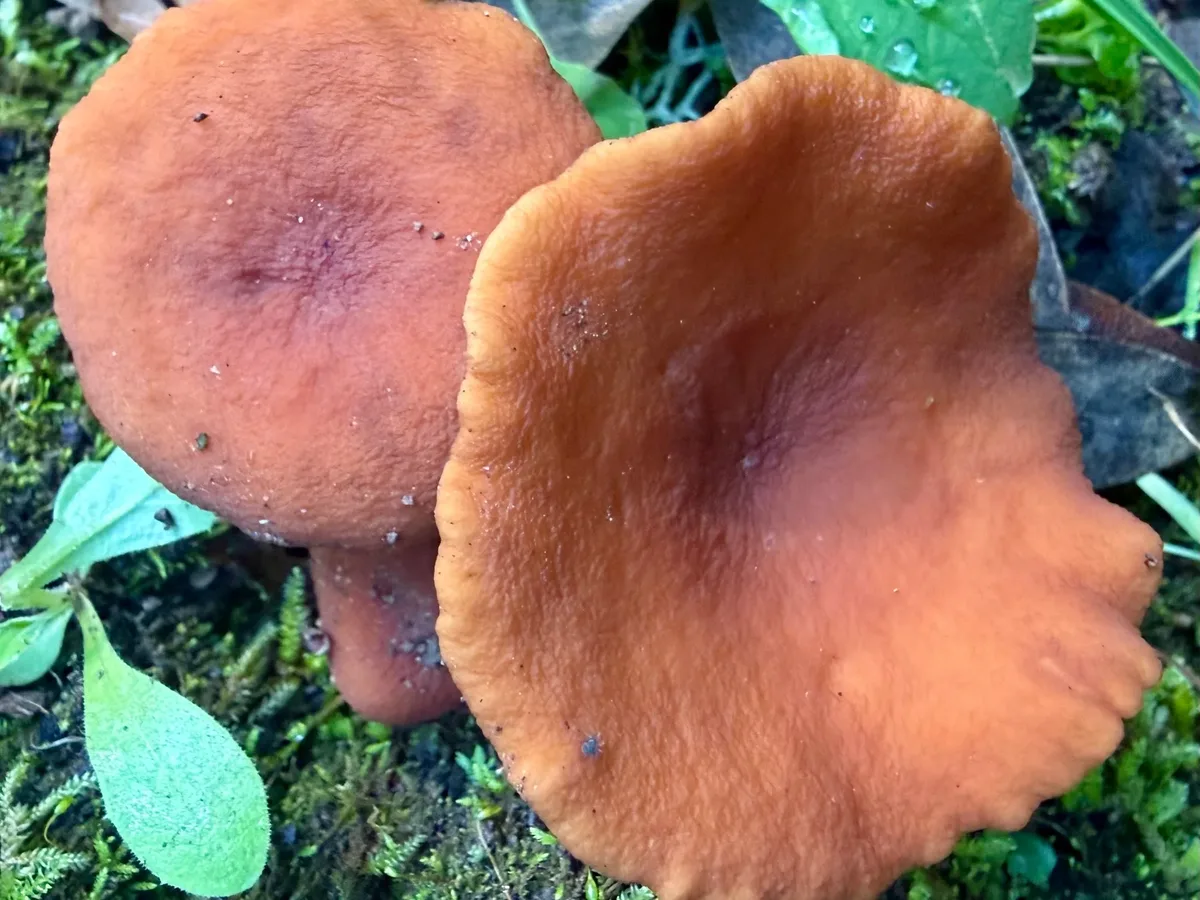 Chuck Wilson (CC0)
 © joqatana (CC BY)
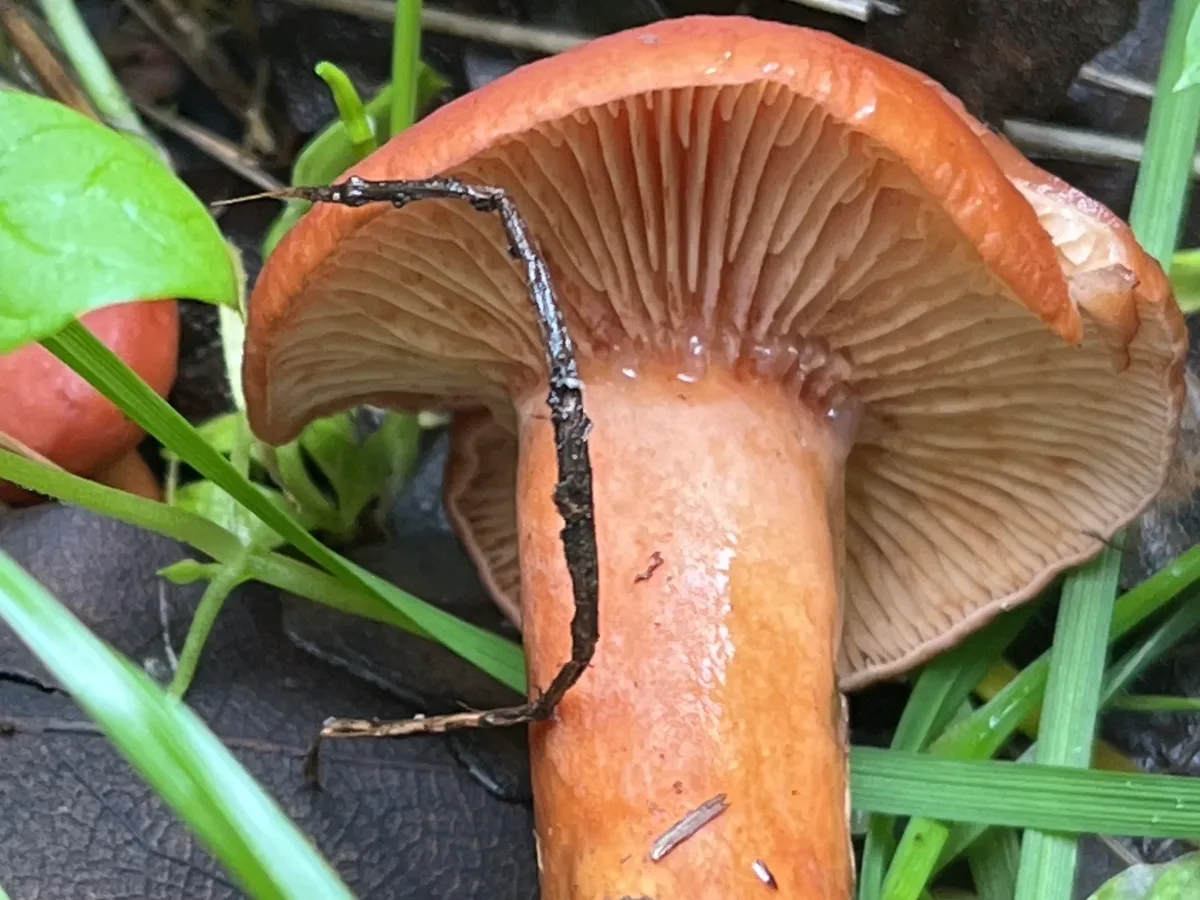 © joqatana (CC BY)
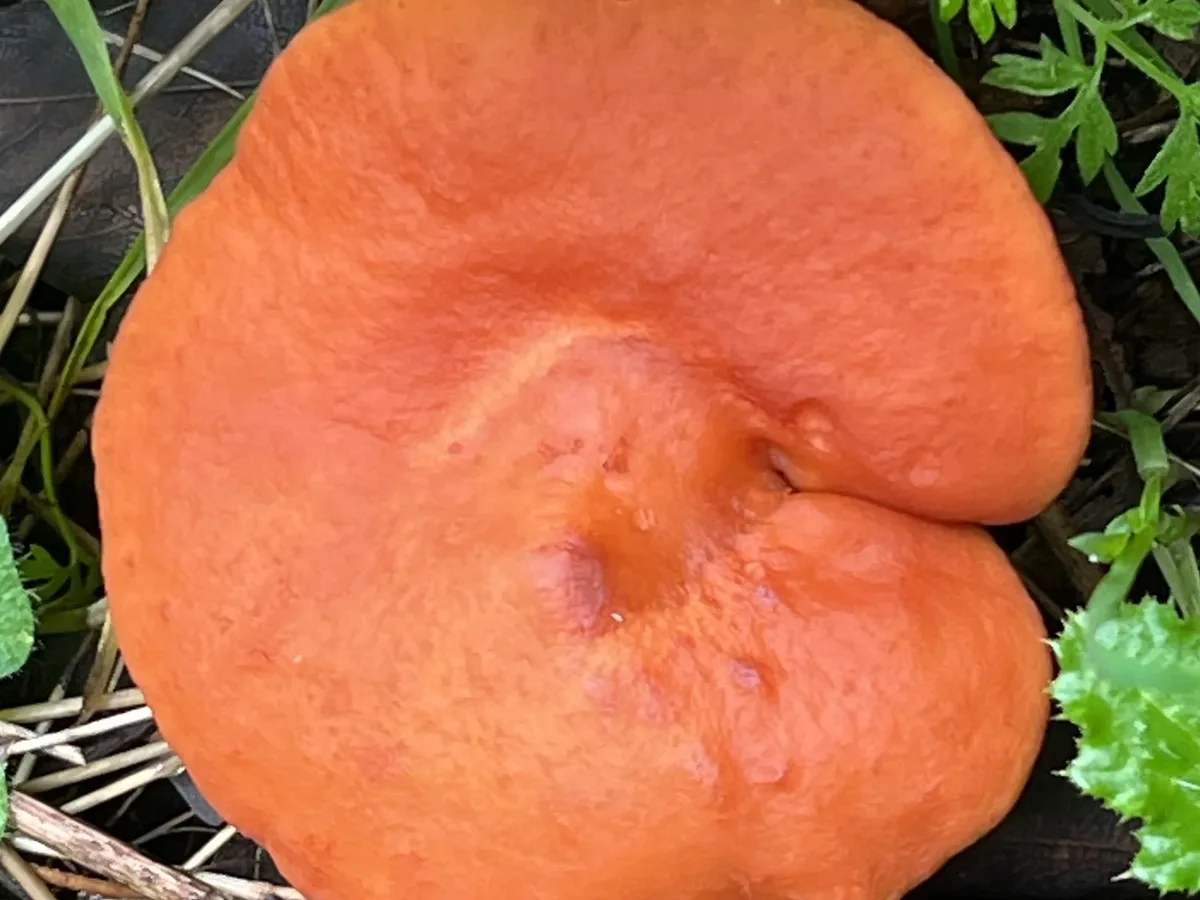 © joqatana (CC BY)
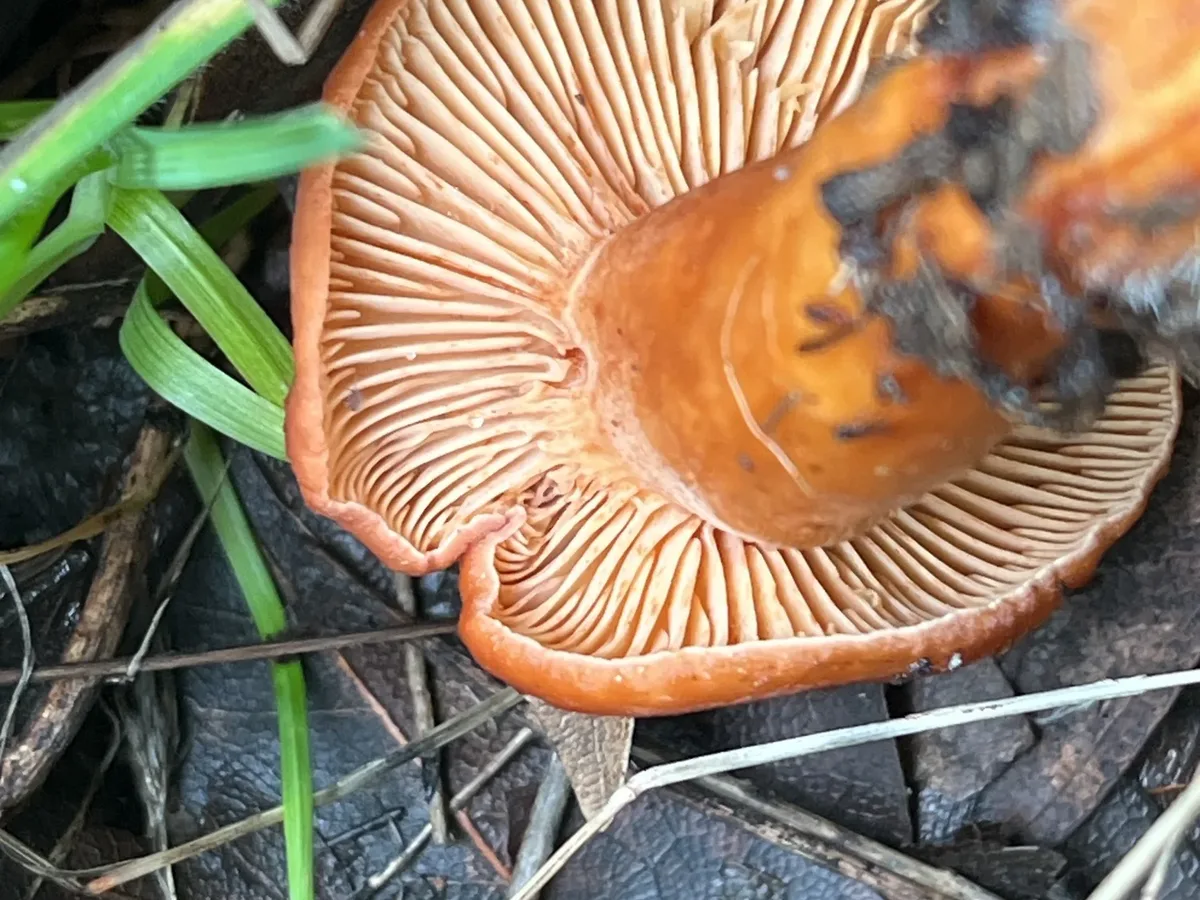 © joqatana (CC BY)
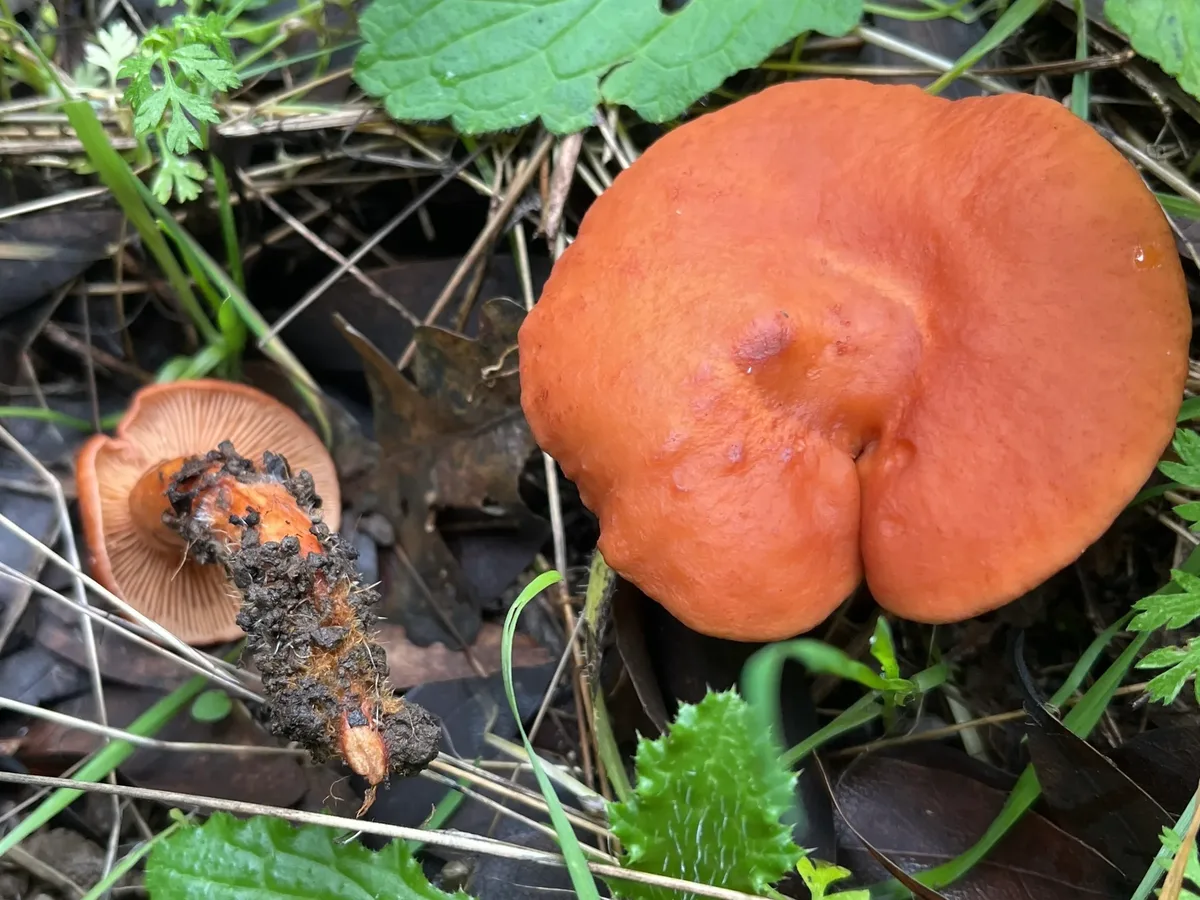 © joqatana (CC BY)
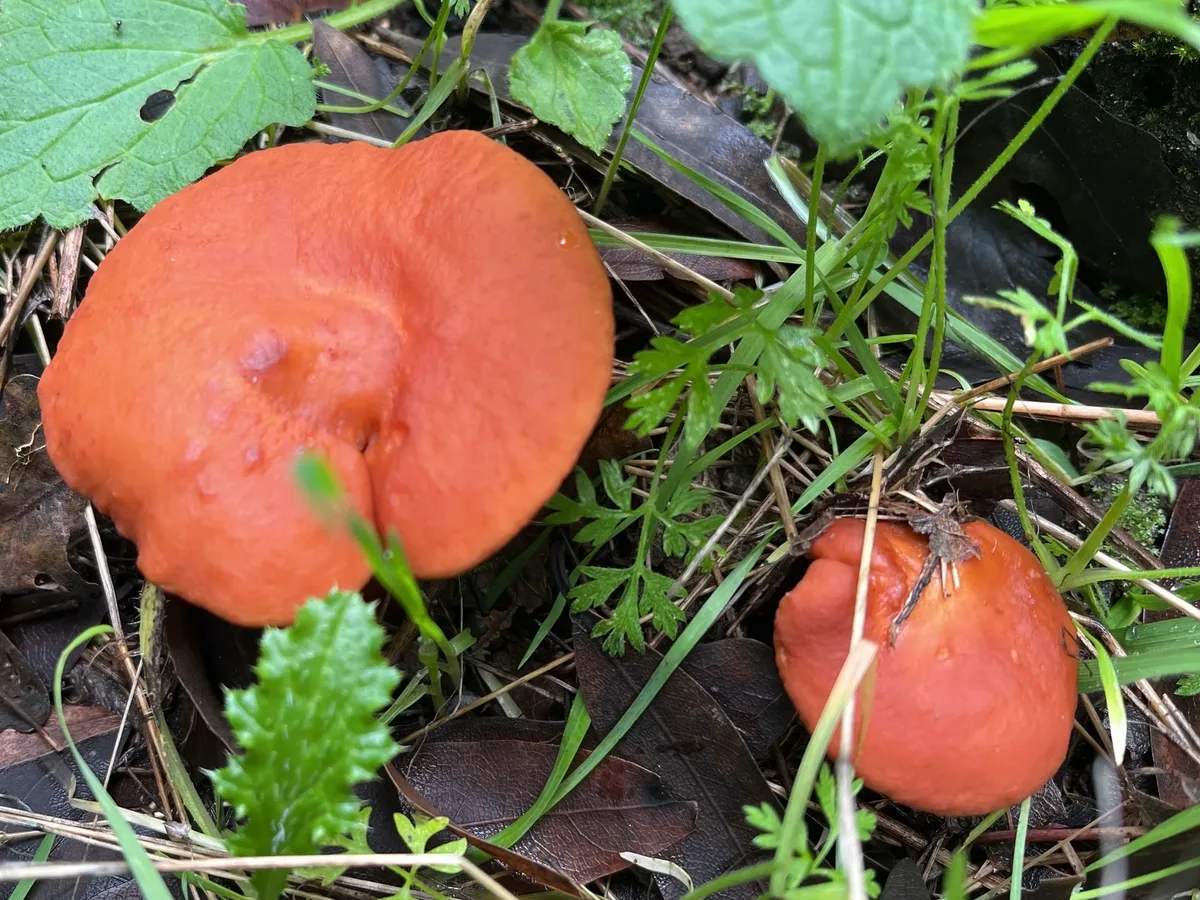 © joqatana (CC BY)
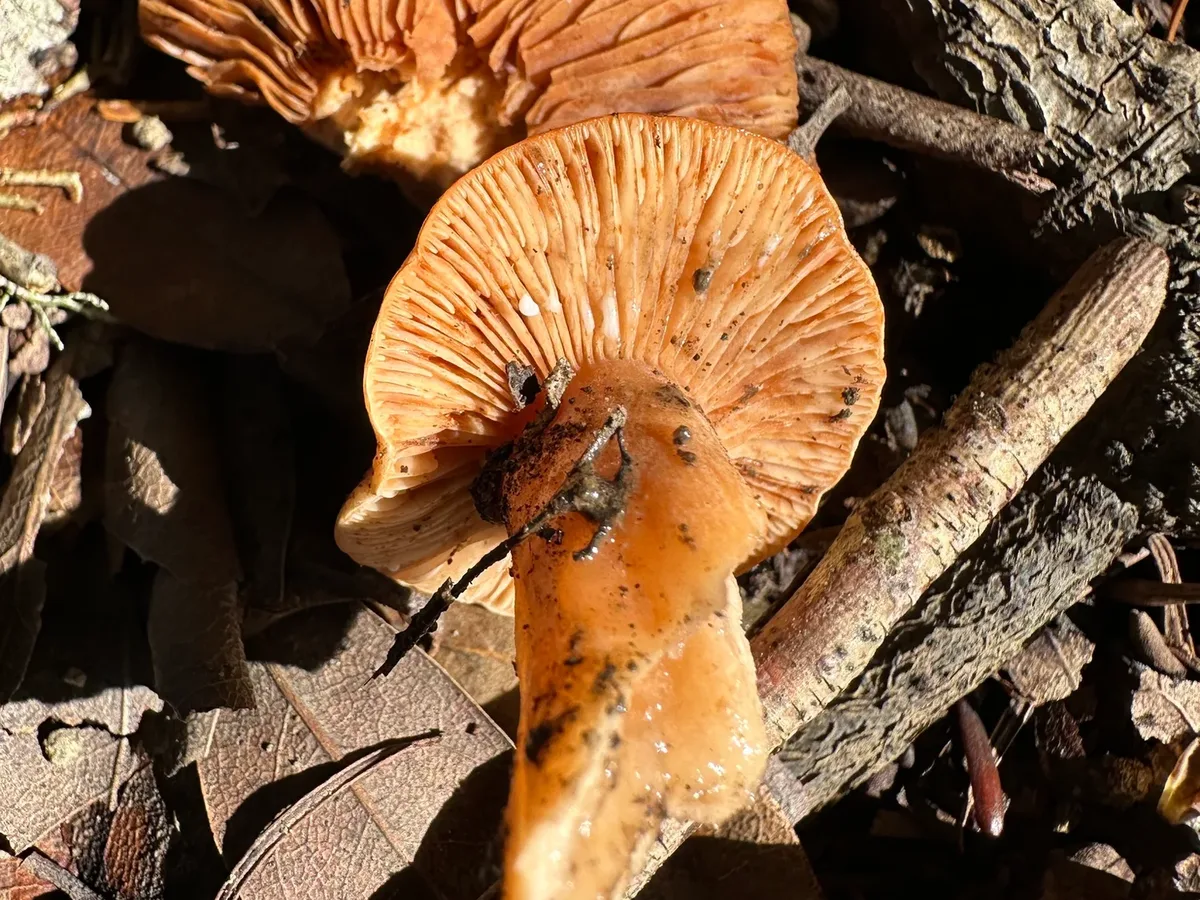 © LJ Moore-McClelland (CC BY)Chuck Wilson (CC0)© joqatana (CC BY)
One of the best mushrooms you can bring home - once you are certain of the identification.
How to recognise it
Lactarius rubidus is a small to medium-sized milkcap whose real identity is revealed not by its appearance but by its nose: lift a specimen and even outdoors you will catch a distinctive warm, sweet aroma somewhere between maple syrup, fenugreek, and spiced caramel.
This scent - produced by sotolon and related furanone compounds - is the most reliable single identifier in the field and becomes one of the most arresting sensory experiences in North American mycology when concentrated by drying.
Visually the mushroom is understated.
Cap
Dry and smooth, 2-7 cm across in warm reddish-brown to tawny-cinnamon, always featuring a persistent central umbo (a rounded central boss) that stays prominent even when the cap expands fully.
Gills
Close-set, pale buff to pale cinnamon, exuding only a small quantity of white to watery-white latex when cut - modest compared to the copious latex of many European milkcaps.
Stem
Slender, matching the cap in colour, firm and solid when young, hollowing with age.
Flesh
Thin, not particularly firm, reddish-brown just under the skin and whitish within.
The spore print is white to very pale cream.
In the field the full feature set - small reddish-brown cap with umbo, close pale gills, scanty white latex, and unmistakable maple-syrup scent in a coastal oak/tanoak forest - together identify this species with confidence.
Where & when it grows
Habitat
Candy cap is one of the most habitat-faithful of Pacific Coast mushrooms: it almost always appears in association with tanoak (Notholithocarpus densiflorus) or coast live oak (Quercus agrifolia) and their associated trees in coastal mixed-evergreen forest.
The combination of Pacific madrone, tanoak, and California bay laurel in the fog-influenced Coast Ranges of northern and central California is the canonical candy cap habitat, and the Sonoma, Mendocino, Marin, and Santa Cruz County forests are particularly productive.
The species extends north into Oregon (Rogue Valley margins, coastal Coos and Curry counties) but is far less frequent north of the California-Oregon border and essentially absent from the interior Pacific Northwest's conifer-dominated forests. It is a species of mild, humid, winter-rain climates rather than the cool, montane conifer forests associated with many other Pacific Northwest fungi.
The forest floor litter is typically deep, dark, and moist - a mix of tanoak leaf duff, decomposing logs, and mineral-rich organic humus - and the mushrooms often emerge from this layer apparently unconnected to any visible root, though the mycorrhizal network threads invisibly to the nearest host root some distance away.
When
The candy cap season is intimately tied to the return of Pacific Coast winter rains. After the long summer drought - which can extend from May through October in California - the first sustained rainfall rehydrates forest soils and, after a lag of one to three weeks, triggers a flush of candy cap fruitbodies.
In central and northern California this typically means October through December is the prime window, with November being the most reliably productive month across the range.
In mild coastal locations fruit bodies can persist well into January and occasionally February; a hard frost or extended dry spell will end the season abruptly.
At higher coastal elevations the season opens earlier (late September in some years) and closes sooner; in sheltered, low-elevation fog-belt sites fruiting is often most prolific in December and January.
The same patch of forest, visited annually for decades, will produce candy caps in the same spots whenever conditions align - the underlying mycorrhizal network is perennial and highly productive when triggered.
How it grows
Candy caps grow singly or scattered in loose groups, emerging from deep organic duff rather than directly on mineral soil or woody debris.
They are not caespitose - each fruit body has its own stem and emerges independently, though several may appear in the same area because they share an underlying mycelial network.
Growth is relatively slow and deliberate. After sufficient rain soaks the duff layer, buttons develop over several days and expand to full maturity in seven to fourteen days under typical cool, moist autumn conditions.
The fruitbodies are lightweight and thin-fleshed for their size and degrade relatively quickly once fully expanded, so prime picking is at the convex-to-plane stage before the cap margins begin to upturn.
The same site will produce multiple flushes across a season in response to successive rain events. Perennial mycelial colonies at productive sites can be extremely long-lived and return reliably for decades.
Fruiting conditions
Fruiting is triggered by the first sustained autumn rains breaking the long summer drought, requiring at least 30 mm over 14 days and soil temperatures dropping into the 7-16 °C range. The flush lag of 1-3 weeks reflects the time needed to rehydrate the mycelium and push primordia through the deep duff layer. Persistent coastal fog and mild temperatures allow extended fruiting into January. Single rain events without sustained follow-up moisture suppress fruiting.
Look-alikes
Several reddish-brown milkcaps occur in the same or adjacent habitats, and the scent check is the fastest and most reliable way to separate candy cap from all of them.
Lactarius helvus (fenugreek milkcap) is the most important comparison. It is a larger species (cap 5-15 cm), grows primarily in sphagnum bogs and mossy spruce-fir forests (habitats very different from tanoak woodland), and produces a similar fenugreek-curry scent - but its latex can be more watery and it is considered mildly toxic (causing gastrointestinal upset in some people, particularly when raw). L. helvus is not found in Pacific Coast tanoak-oak woodland, so habitat context is a strong separator before any other features are needed.
Lactarius camphoratus (curry milkcap) of eastern North America and Europe shares the curry/camphor scent and very similar reddish-brown coloration but is associated with conifers (spruce, pine, fir), not tanoak or live oak; it is essentially absent from the Pacific Coast tanoak forest.
These two aromatic lookalikes are edible in small quantities but not choice-grade culinary species in the candy cap sense.
Within the same Pacific Coast habitat, several small brown Lactarius species lack the diagnostic scent entirely - Lactarius subplinthogalus and various undescribed taxa - and are generally avoided as nondescript small milkcaps.
None of the realistic lookalikes of Lactarius rubidus are deadly. The absence of the maple-syrup scent is a reliable negative indicator: if the mushroom does not smell right, treat it as a different and lesser species.
L. fragilis sensu stricto is the eastern North American counterpart - smaller, thinner, and associated with eastern hardwoods. Some authorities treat L. rubidus as a Pacific variety of L. fragilis. If encountered on the Pacific Coast, it is effectively the same culinary species; the key identity check is still the maple-syrup scent.
European and eastern North American species; associated with conifers (spruce, pine, fir) rather than tanoak or live oak. Has a similar warm curry/camphor/fenugreek scent but the cap is often darker mahogany-brown. Essentially absent from Pacific Coast tanoak forest. Edible in small quantities as a spice but not a choice culinary mushroom.
Much larger (cap 5-15 cm), found in sphagnum bogs and mossy boreal spruce/fir forests - not tanoak or live-oak woodland. Shares a fenugreek/maple scent but is mildly toxic (causes GI distress in quantity); watery latex. Habitat separation is the primary distinguishing factor in the Pacific Northwest context.
Reddish-brown milkcap primarily associated with conifers (pine, spruce). Produces copious, intensely acrid white latex - far more than candy cap - and has no sweet or maple scent; the burning, acrid taste is immediate and pronounced. The latex abundance and absence of sweet scent are reliable separators.
In the kitchen
Picking & cleaning
Young to mid-maturity specimens - cap convex to plane, margin still somewhat inrolled or just spreading, umbo firm - are the best choice for culinary use. Avoid fully aged specimens with upturned caps and faded colour, which are past their peak.
Because the culinary value is overwhelmingly in the dried mushroom's concentrated aroma, both perfect fresh buttons and slightly older but firm specimens are worth collecting: the drying process equalises differences in texture.
Cut or pull at the base; the thin flesh can be fragile. Candy caps are lightweight and can be transported loosely in a breathable bag or basket - their dry surface and thin flesh mean they shed moisture and hold their shape adequately, but they should be processed promptly as they do not keep well fresh.
A fundamental important note for the kitchen: always smell every specimen before collecting. The maple/fenugreek scent should be clearly detectable even on fresh material; if a reddish-brown milkcap in the same habitat lacks this scent, do not assume it is a candy cap - it may be a different, less palatable species.
Drying is the transformative step: a dehydrator set at 40-50 °C, or a low oven with the door cracked, concentrates the sotolon aromatics dramatically, converting a mildly scented fresh mushroom into a powerfully fragrant spice that can perfume an entire kitchen.
Cooking
The candy cap's culinary reputation is built almost entirely on dried material. Fresh specimens are only mildly flavoured and have modest texture, but drying concentrates the sotolon-driven aroma into a powerfully sweet, maple-caramel fragrance that is unique among edible fungi and opens culinary possibilities found nowhere else in the mushroom world.
Dry your harvest thoroughly - a food dehydrator at 40-50 °C for 4-8 hours, or a low oven at 60 °C with the door slightly ajar - until the caps are bone-dry and brittle. Fully dried candy caps grind easily in a spice grinder or clean coffee grinder into a fine reddish-brown powder. This powder is the base ingredient for Pacific Coast candy cap cuisine.
Classic applications include:
- Candy cap butter cookies, shortbread, and biscotti - a tablespoon of candy cap powder per batch of cookies gives a warm, complex maple-caramel depth without any sweetener.
- Candy cap ice cream (steep dried caps in warm cream, strain, churn), a celebrated Pacific Coast dessert served at upscale restaurants in San Francisco and Portland.
- Panna cotta, crème brûlée, cheesecake, and flan, which all work on the same principle: dried caps steeped in cream or milk transfer their aromatics into dairy fat beautifully.
Savoury applications are equally compelling:
- Candy cap powder added to spice rubs for duck, pork, or venison contributes a subtle sweet-umami dimension.
- Stirred into brown butter or beurre blanc, it pairs remarkably with scallops and Pacific salmon.
- Rehydrated dried caps, used whole or sliced in risotto, pasta, or rice pilaf where a warm, slightly sweet depth is welcome.
Fresh caps, while less aromatic, can be sautéed in butter and served on toast or eggs, though foragers who have tasted the dried powder rarely bother with fresh material except for texture.
Store dried candy caps airtight, away from heat and light; they retain their potency for one to two years.
Good to know
Lactarius rubidus is a safe and well-documented culinary species with no known toxins and no serious poisoning reports in the scientific or foraging literature.
The latex is white, mild, and non-irritating; the flesh causes no known adverse reactions when properly prepared.
The main safety consideration is correct identification. The combination of habitat (tanoak/live oak coastal forest), season (autumn-winter rains), and the unmistakable maple-syrup scent makes candy cap one of the more confidently identifiable Pacific Coast species once you have encountered it.
Several practical points deserve attention:
- 1Consume cooked rather than raw. While no serious toxicity from raw candy cap is documented, all milkcap latex contains sesquiterpenoid compounds that may cause mild irritation in sensitive individuals, and cooking is standard practice.
- 2The intensified scent of dried material is the defining culinary property, but be aware that sotolon is biologically active. The compound is excreted via urine and sweat and can impart a characteristic maple-syrup odour to bodily excretions for up to 24 hours after consuming dried candy caps in quantity. This is harmless but worth knowing.
- 3Most critically from an identification standpoint: always confirm the scent. A reddish-brown milkcap of similar size in the same habitat that lacks the maple-syrup or fenugreek note should not be assumed to be a candy cap - it should be treated as an unknown species and not consumed.
The scent confirmation is not a courtesy; it is the primary field diagnostic and the most direct safety verification.
A reference guide - never an edibility guarantee. When in doubt, leave it out.