True milk-cap
Lactarius resimus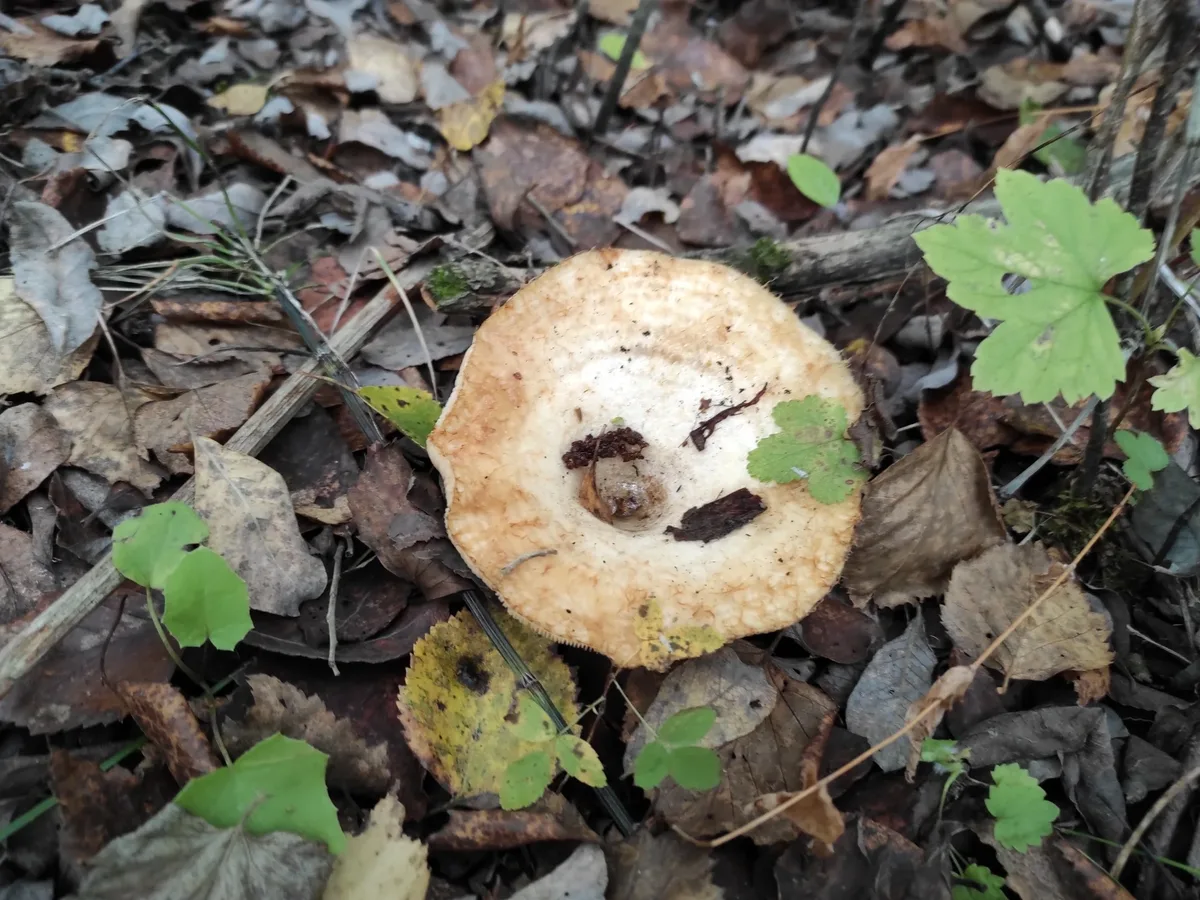 © Valentin Kosterin (CC BY 4.0)
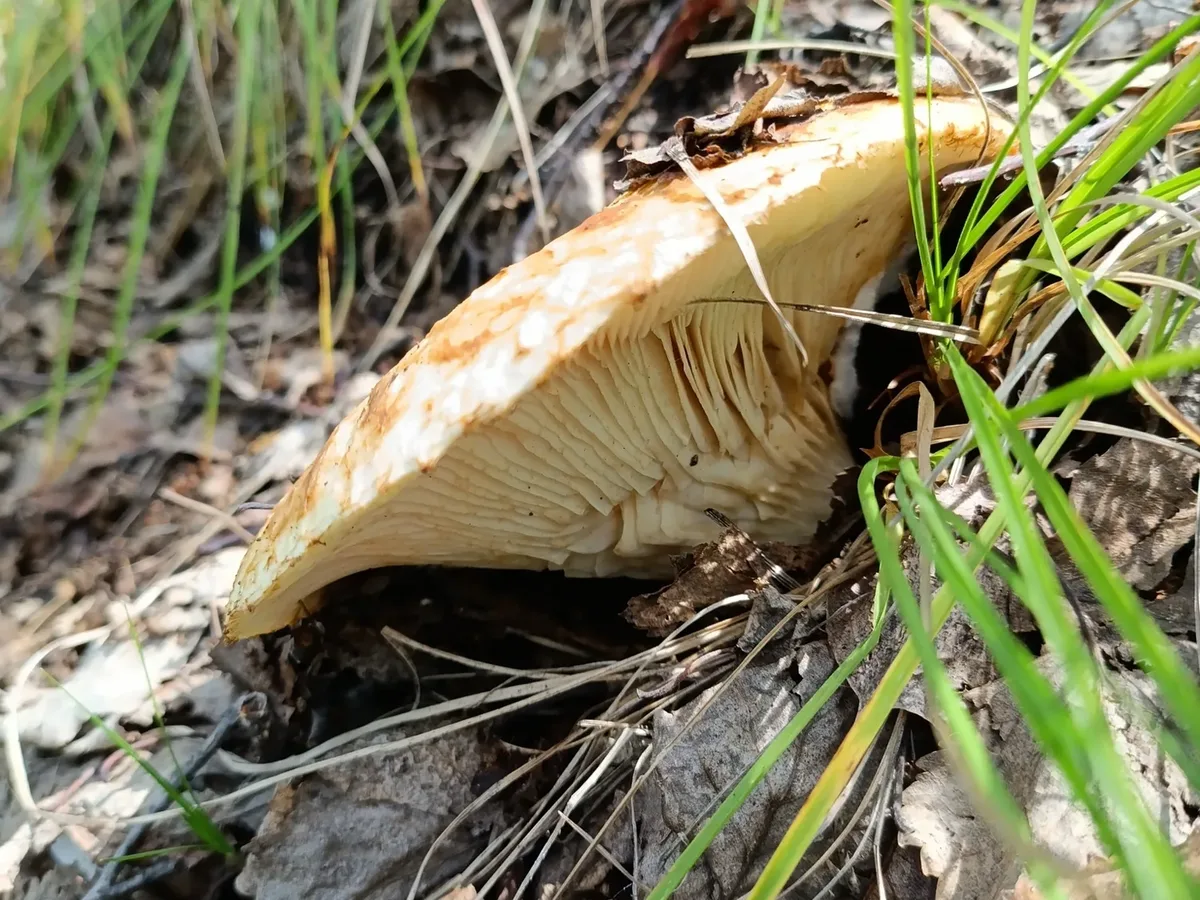 © Святослав Власенко (CC BY)
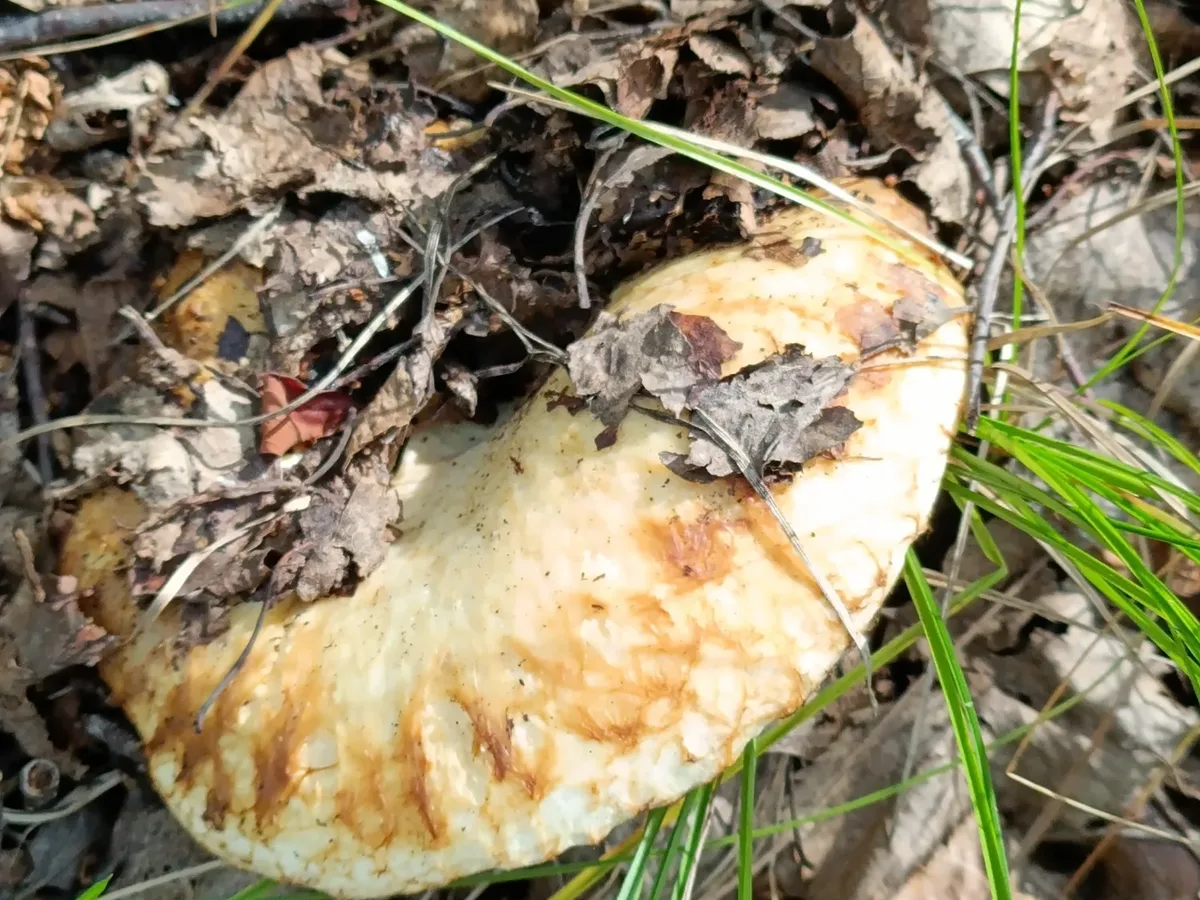 © Святослав Власенко (CC BY)
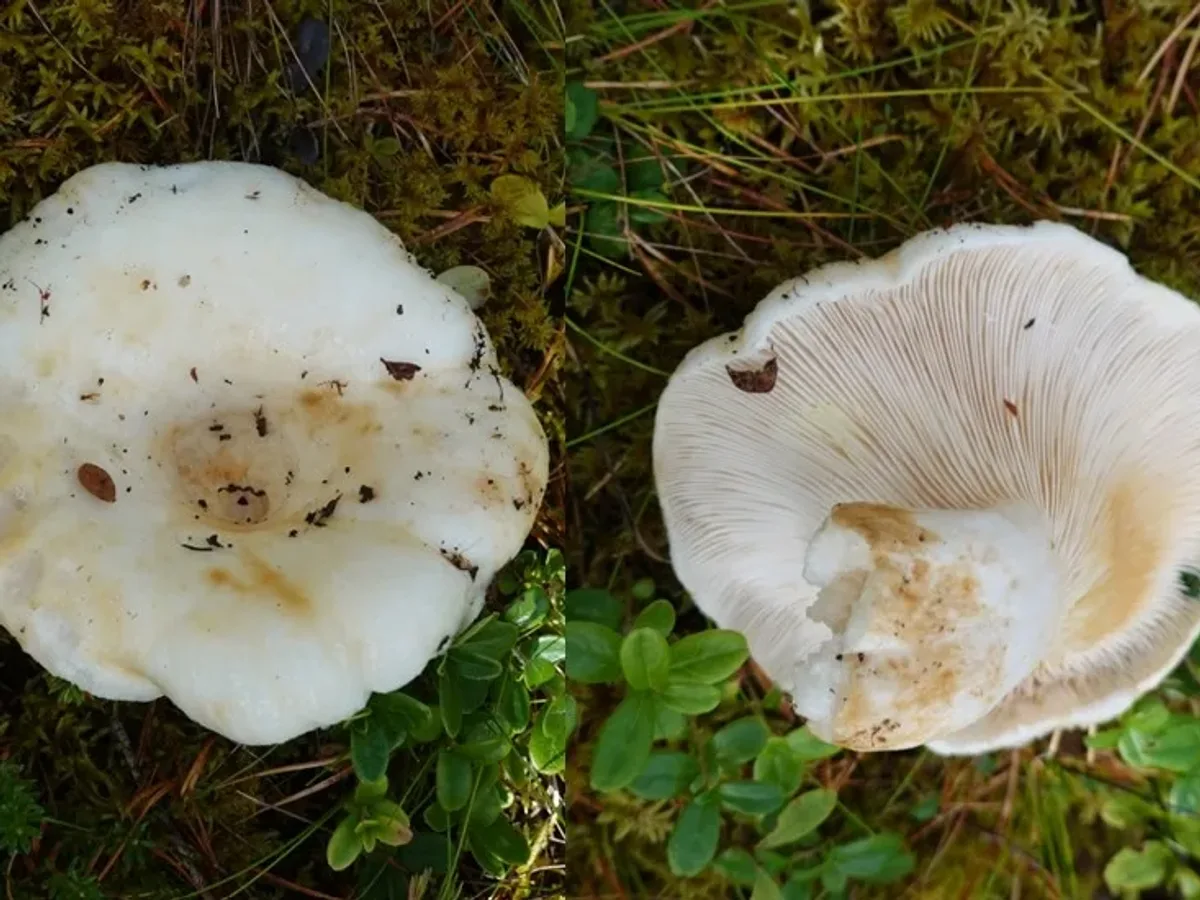 © Perry Gunnar Larsen (CC BY)
 © MHB_9may (CC BY)
 © Алексей Логинов (CC BY)
 © Dmitriy Bochkov (CC BY)
 © naokitakebayashi (CC BY-SA 4.0)
 © Ирина Хохрякова (CC BY 4.0)© Valentin Kosterin (CC BY 4.0)© Святослав Власенко (CC BY)
Good to eat, once you have identified it with certainty and cooked it through.
How to recognise it
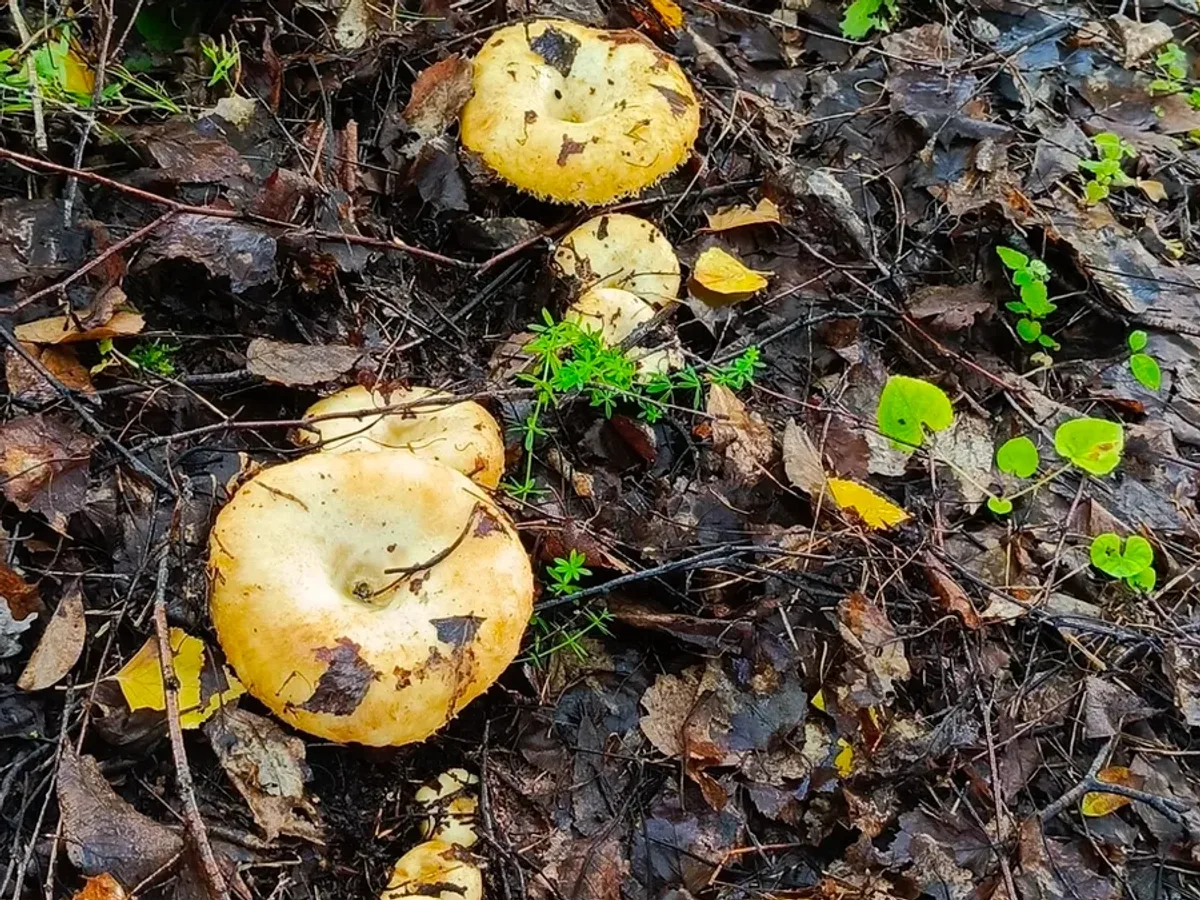
Lactarius resimus is a substantial mushroom - the cap commonly reaches 8-20 cm across and feels weighty in the hand.
Cap
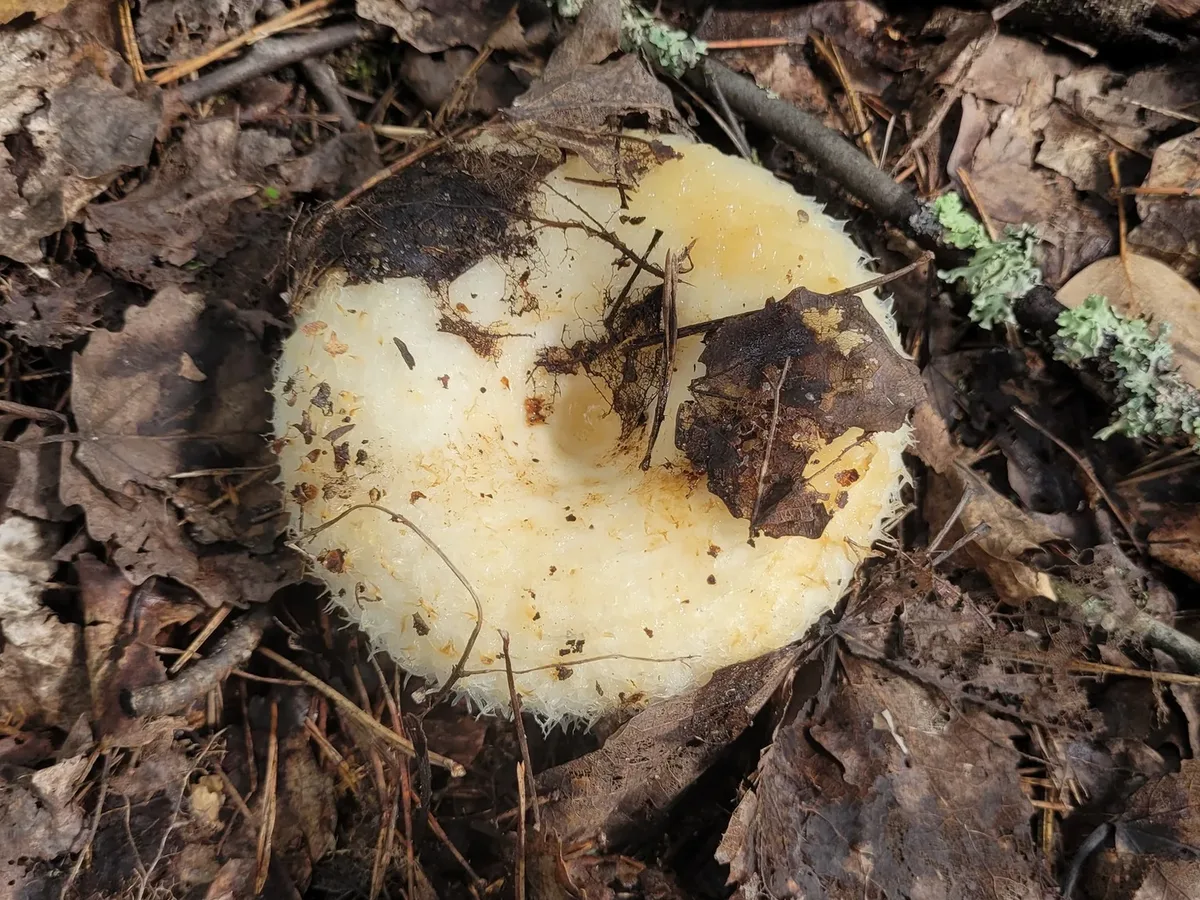
In youth the cap is convex and deeply inrolled at the margin, almost like a closed bowl. With age it flattens, then develops a shallow central depression, occasionally becoming funnel-shaped in older specimens.
The surface colour is white to pale cream or ivory, sometimes developing faint concentric zones of slightly deeper cream that can be almost invisible in fresh material but grow more distinct as the cap dries slightly.
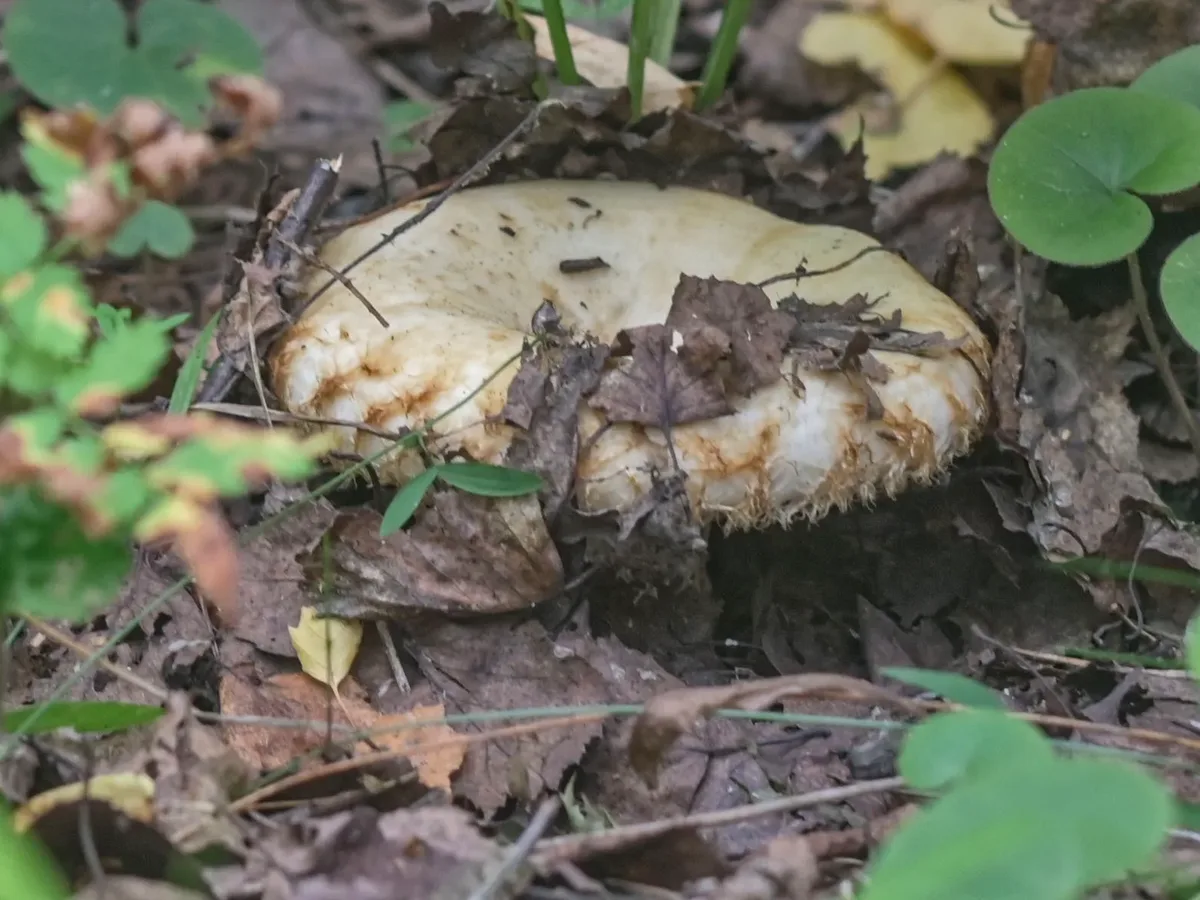
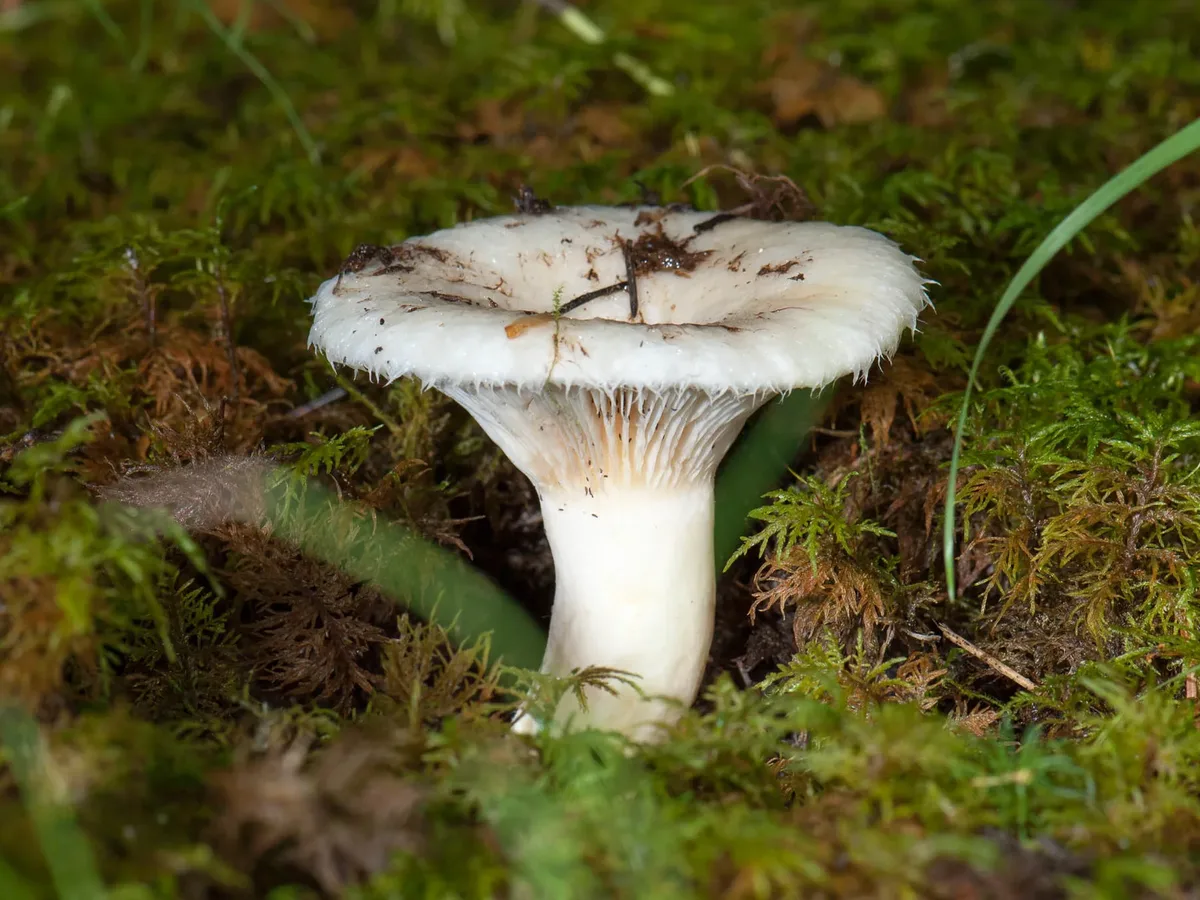
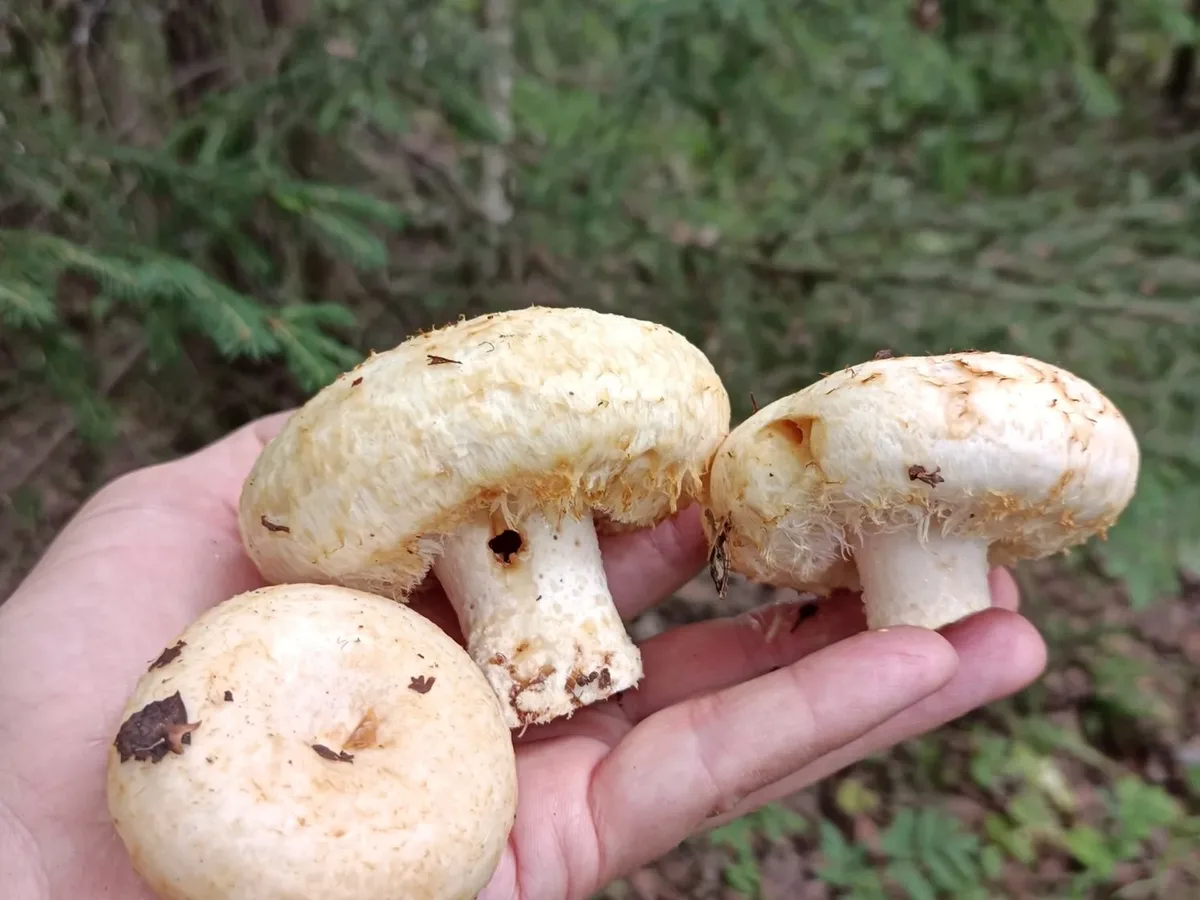
The most diagnostic surface feature is the cap margin: it is rolled firmly inward and fringed with a conspicuous mat of woolly, hair-like fibrils - denser and more persistent than in most other milk-caps, and visible to the naked eye even at a glance.
Gills
The gills are narrow, crowded, decurrent to shortly running down the stem, and white to pale cream. They do not stain on their own but will yellow where latex pools.
Stem
The stem is 3-7 cm tall and 2-4 cm thick, cylindrical, solid when young, becoming hollow or lacunose in age, and the same white to cream colour as the cap. It may show shallow pits or scrobiculate patches.
Flesh
When any part of the flesh is cut or bruised, a copious white latex exudes immediately.
Left exposed to air for a minute or two, that latex shifts from white to distinctly sulphur-yellow - a reaction that is a key field character separating L. resimus from many similar white milk-caps.
The flesh itself remains white throughout and does not discolour significantly. Spore print cream-white.
Smell & taste
A taste of raw flesh delivers an immediate fierce, peppery burn that lingers; this is caused by sesquiterpene lactones and related compounds in the latex, and it disappears entirely after the traditional soaking-and-salting preparation.
Where & when it grows
Habitat
Lactarius resimus is a strict mycorrhizal partner of birch and - to a lesser degree - pine, forming one of the most ecologically specific of the northern milk-cap relationships.
Its mycelium threads between and around the fine roots of its host tree, exchanging mineral nutrients (particularly phosphorus and nitrogen scavenged from soil) for photosynthetic carbon.
This partnership is thought to persist for years. The mycelium overwinters underground, connected to the same root network, which is why experienced foragers find gruzdi returning year after year in precisely the same hollows and mossy pockets.
The preferred habitat is north-temperate and boreal mixed forest - open birch stands, birch-pine woodland, and the forest edge where stands thin out and grasses or low shrubs mix with the tree canopy.
It thrives where the soil is moist and slightly acidic, often on gentle north-facing slopes or in low points in the terrain where cool air and leaf moisture accumulate.
Thick moss or deep leaf litter is characteristic of good patches; the fruitbodies push up through this organic layer and may be half-buried, with only the cap margin protruding.
The ecological range extends across northern and central Russia, eastern Europe (particularly Poland, the Baltic states, and Belarus), Scandinavia, and reaches into Siberia, with scattered records in northern montane forests further south.
When
The fruiting season spans early June through October across most of its range, with the exact timing pulled earlier by altitude and pushed later by warm autumns.
In continental Russia and the Baltic states the main flush arrives in July and August, typically igniting 7-14 days after a sustained rain event (at least 20 mm over 14 days) once soil temperatures have dropped to the 8-18 °C band that this species favours.
A second, often smaller flush can occur in September if conditions repeat.
Cool nights, high humidity, and light overcast conditions are ideal for fruitbody development. Prolonged dry heat suppresses fruiting entirely, even where mycelium is present.
In high-latitude or montane sites the window may compress to July-September. The fruitbodies can tolerate mild frosts and continue developing into October, though cold-damaged specimens bruise dark and deteriorate quickly.
Foragers in Russia traditionally mark the first gruzdi appearance as a seasonal milestone - they come later than boletus and earlier than the autumn wave of chanterelles, occupying a distinctive slot in the season calendar.
How it grows
Like all mycorrhizal fungi, L. resimus cannot be cultivated - it will only produce fruitbodies in the presence of its living host tree, making it entirely dependent on intact forest habitat.
The mycelium may maintain its root partnership for a decade or more, with fruitbodies appearing only in seasons when moisture and temperature align correctly.
After a qualifying rain, primordial pins form within the organic horizon and grow relatively slowly over 7-14 days before caps expand fully - much slower than the overnight growth of many saprotrophic mushrooms.
Fruitbodies emerge singly or in loose clustered groups. Because the caps develop under moss and leaf litter, they frequently appear as small humps or distortions in the ground surface before the cap pushes fully clear.
The inrolled margin of a young specimen traps leaf debris and soil as it pushes upward, which is why found caps often carry a characteristic ring of duff at their rim.
In good habitat, fruiting patches can be dense - dozens of individuals over a few square metres - but the same patch may be entirely absent the following year if summer rainfall falls short. The mycelium itself shows no visible sign above ground between fruiting seasons.
Fruiting conditions
Conservative standard mycology estimate for a north-temperate birch-associated milk-cap fruiting from summer into autumn; the guide gives no quantitative triggers.
Look-alikes
The principal lookalikes are other white or pale milk-caps in the same northern birch-pine habitat.
Lactarius torminosus (woolly milkcap, volnushka) is the most frequently confused species. It shares the inrolled, woolly-fringed margin and the peppery latex, but its cap is distinctly pinkish to salmon-buff, often with clearly zoned concentric rings of deeper pink, and its latex remains white and does not yellow on air exposure.
L. pubescens (bearded milkcap) is similar in structure but smaller, with a paler cap tending more strongly to white or pale buff, and its latex also stays white. Both are encountered in the same habitat and season.
The yellowing latex reaction is the most reliable single test:
- 1Squeeze a small piece of the gill or flesh.
- 2Place the expressed drop on white tissue.
- 3Wait 1-2 minutes; yellowing confirms L. resimus.
No other common white milk-cap of northern birch forest shares this latex colour change.
Lactarius controversus is another large white milk-cap, but it associates with poplar and willow rather than birch or pine, and its cap surface lacks the dense woolly hairs.
None of the lookalikes in this group is deadly, but all raw milk-caps are gastric irritants and must be fully prepared before eating - a rule without exception.
Another milk-cap; like all milk-caps it must not be eaten raw or unprepared.
Another milk-cap; like all milk-caps it must not be eaten raw or unprepared.
In the kitchen
Picking & cleaning
Select young, firm specimens with caps still clearly inrolled at the margin - these have the tightest flesh and will hold up best through the long soaking and salting process. Older, open-capped fruitbodies become spongy and absorb too much water, yielding a mushy final product.
- Cut the stem cleanly at ground level with a knife rather than pulling, to leave the mycelium and root mat undisturbed.
- Check under the cap for signs of maggot infestation (small tunnels in the stem or gill surface); maggot-heavy specimens are not worth carrying home.
- Wipe off loose debris with a soft cloth or brush in the field - do not wash at this stage.
- Transport in a rigid basket or container to prevent the caps from being crushed; the latex will stain clothing and skin yellow.
Because L. resimus must be soaked before it is safe to eat, aim to begin preparation the same day you pick, as the soaking window is long (typically 3-5 days) and fresh mushrooms deteriorate if left to sit.
In Russia it is traditional to collect only gruzdi at one session - the species is so highly prized that foragers specifically target it, and a full basket represents a serious productive expedition.
Cooking
In Russian culinary tradition, gruzdi are prepared almost exclusively as soljonyje gruzdi - cold-salted mushrooms - and this remains one of the most celebrated wild-food preparations in eastern European cuisine.
- 1After the mandatory soaking, layer the mushrooms cap-down in a ceramic crock or wooden barrel, each layer dusted generously with coarse non-iodised salt (roughly 40-50 g per kilogram of mushrooms), interspersed with dill fronds, garlic cloves, and optionally horseradish leaves, black currant leaves, and allspice berries.
- 2Press the mushrooms below the surface brine with a weighted plate; the brine forms as the salt draws moisture from the tissue.
- 3Cure for 30-40 days at cool cellar temperatures (4-8 °C) until ready; during this time a mild lactic fermentation occurs, developing the characteristic sour-saline tang.
- 4Rinse the finished mushrooms lightly, drizzle with cold-pressed sunflower oil, scatter with raw onion rings, and serve as a cold zakuska alongside rye bread, sour cream, or a glass of vodka.
The texture is firm and slightly crunchy - nothing like a cooked mushroom - with a clean saline-sour flavour and none of the original pepper.
Hot salting (briefly blanching then brining) is also practised and shortens the wait to about a week, though many foragers consider the flavour less complex.
Gruzdi are not typically sautéed or used in soups, as the salting process is considered integral to the species' culinary identity.
Good to know
Lactarius resimus is safe to eat only after correct preparation.
Raw or insufficiently prepared fruitbodies contain sesquiterpene lactones and related acrid compounds in the latex that are sharply irritating to the gastric and intestinal mucosa. Consumption of inadequately prepared mushrooms causes:
- burning in the mouth and throat
- nausea
- vomiting
- abdominal pain
These symptoms resolve without medical treatment but are unpleasant.
The preparation method - extended soaking in cold water with repeated water changes, followed by salting - hydrolyses and leaches these compounds out entirely. The traditional regime is 3-5 days of soaking, changing the cold water at least twice daily, until a tasted piece of raw flesh shows no pepper or burn.
After this treatment and salting, the mushrooms are biochemically stable and safe. No cases of serious poisoning are associated with correctly prepared gruzdi in the literature.
The lookalikes (L. torminosus, L. pubescens) carry the same requirement: all white milk-caps of this group must be soaked.
The yellowing-latex test is the reliable species confirmation. Where latex does not yellow, do not use the soaking-and-salting method and assume an unknown species until confirmed by an expert.
A reference guide - never an edibility guarantee. When in doubt, leave it out.