Northern bearded milkcap
Lactarius repraesentaneussyn. Lactarius repraesentaneus var. repraesentaneus
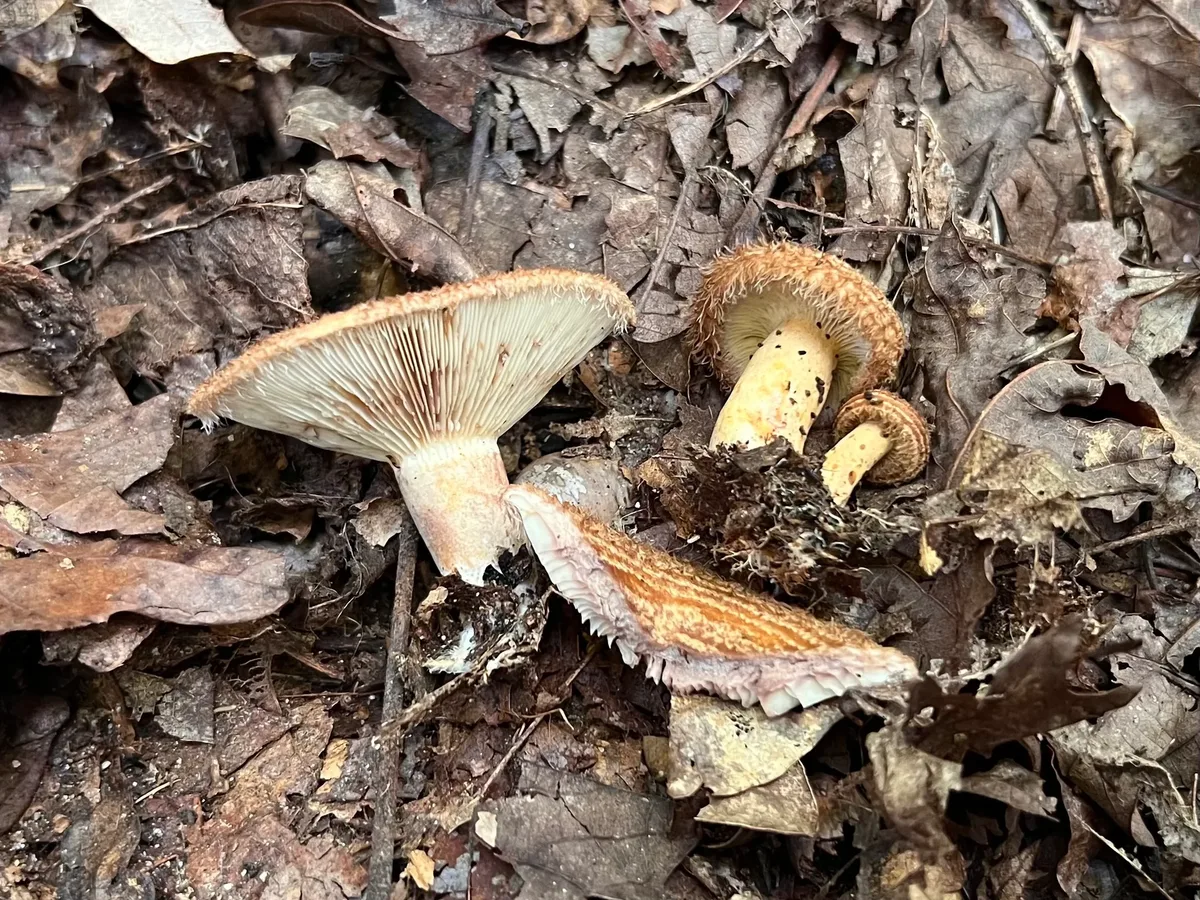 © Annie Weissman (CC BY 4.0)
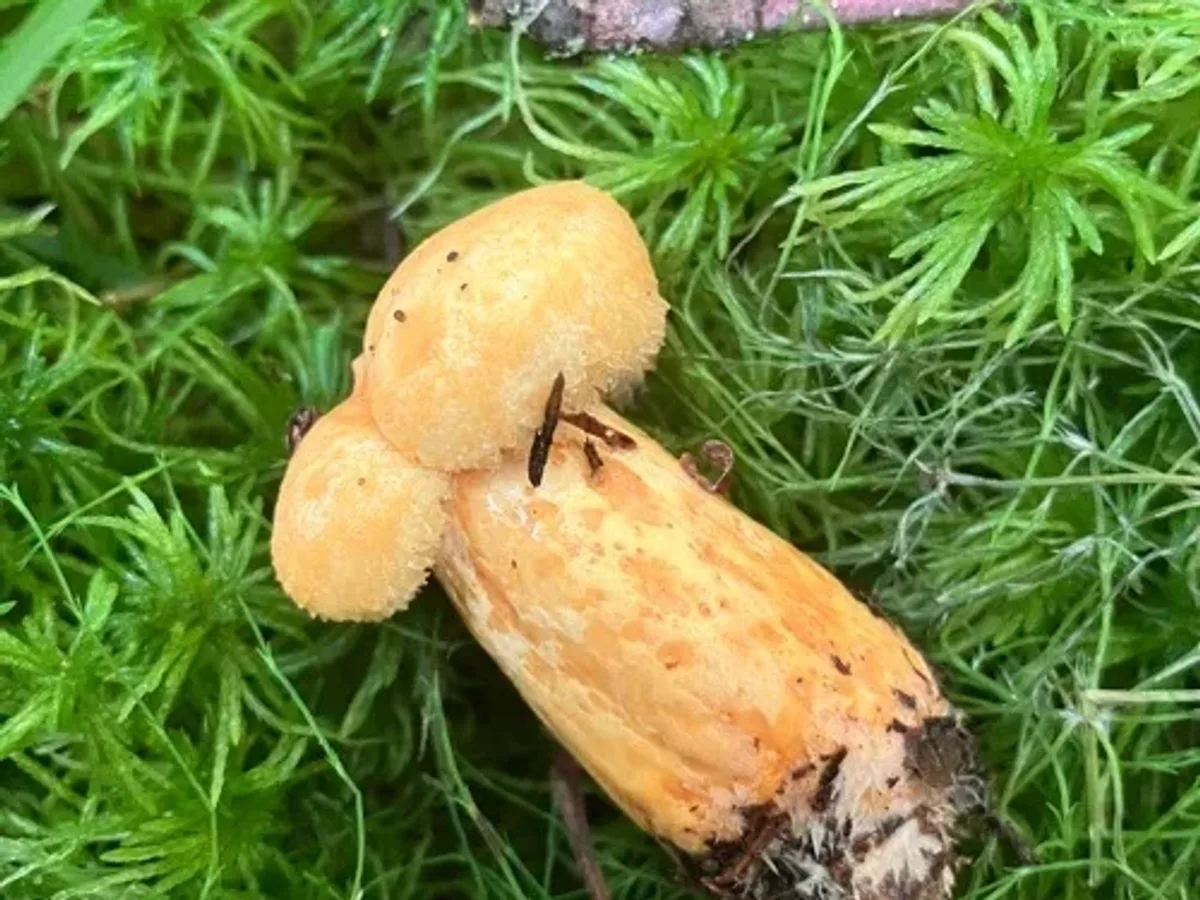 © Jonas Heggedal (CC BY)
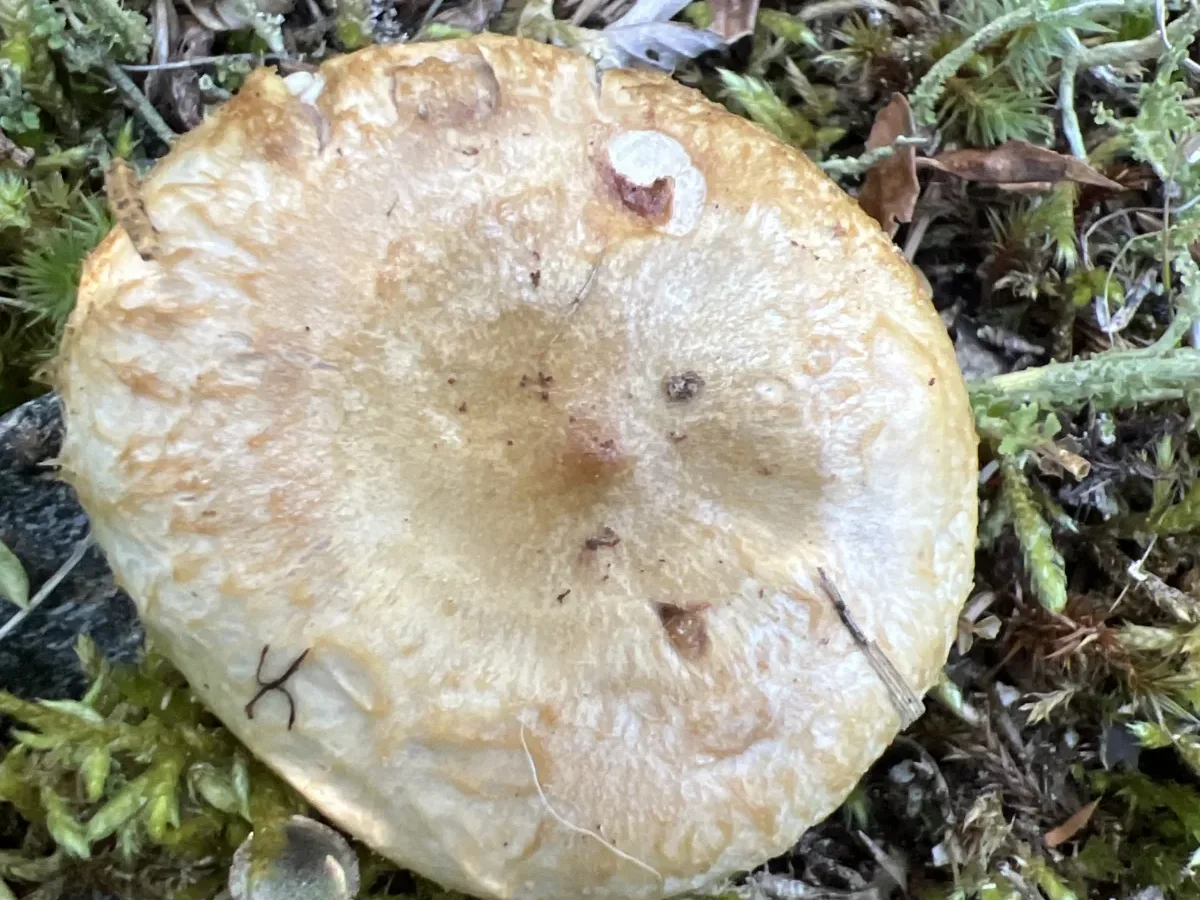 © Ulrik Andreassen (CC BY)
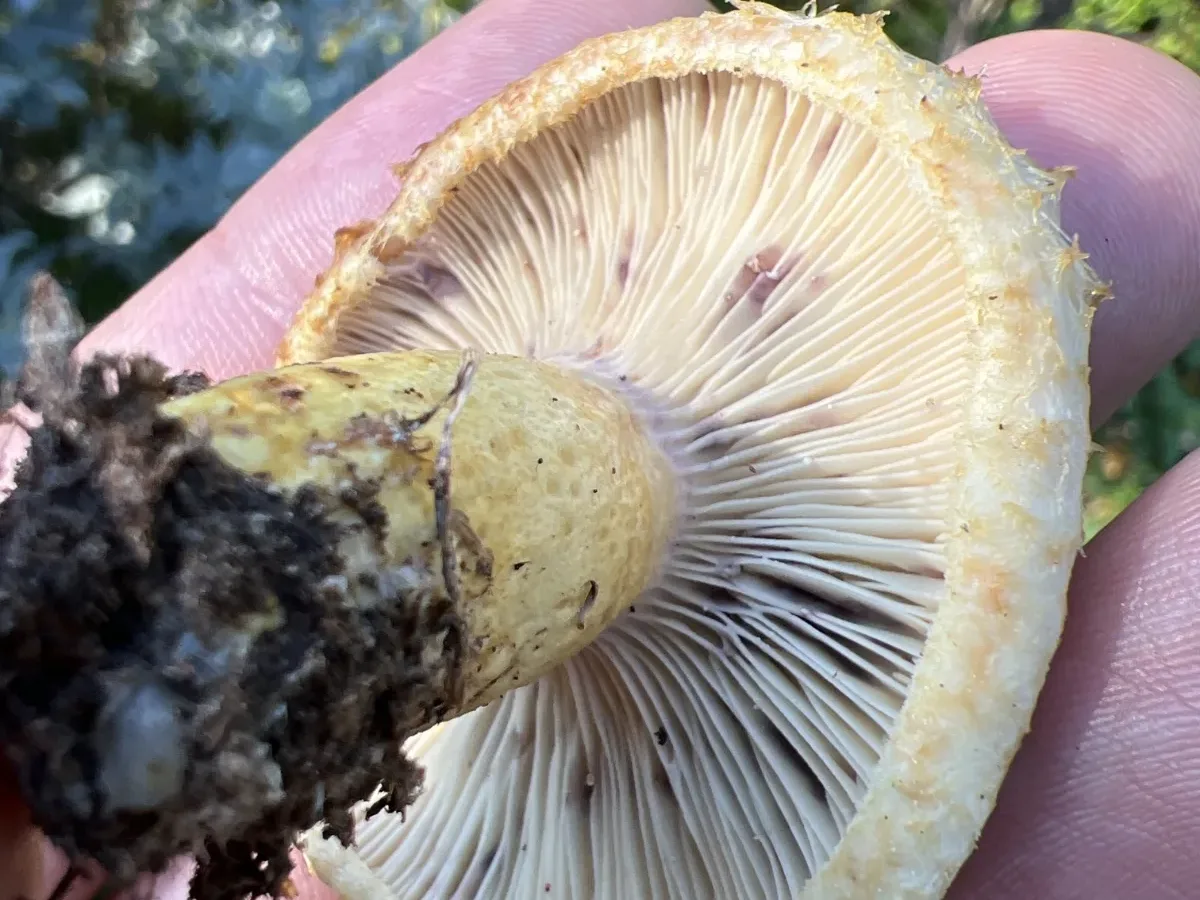 © Ulrik Andreassen (CC BY)
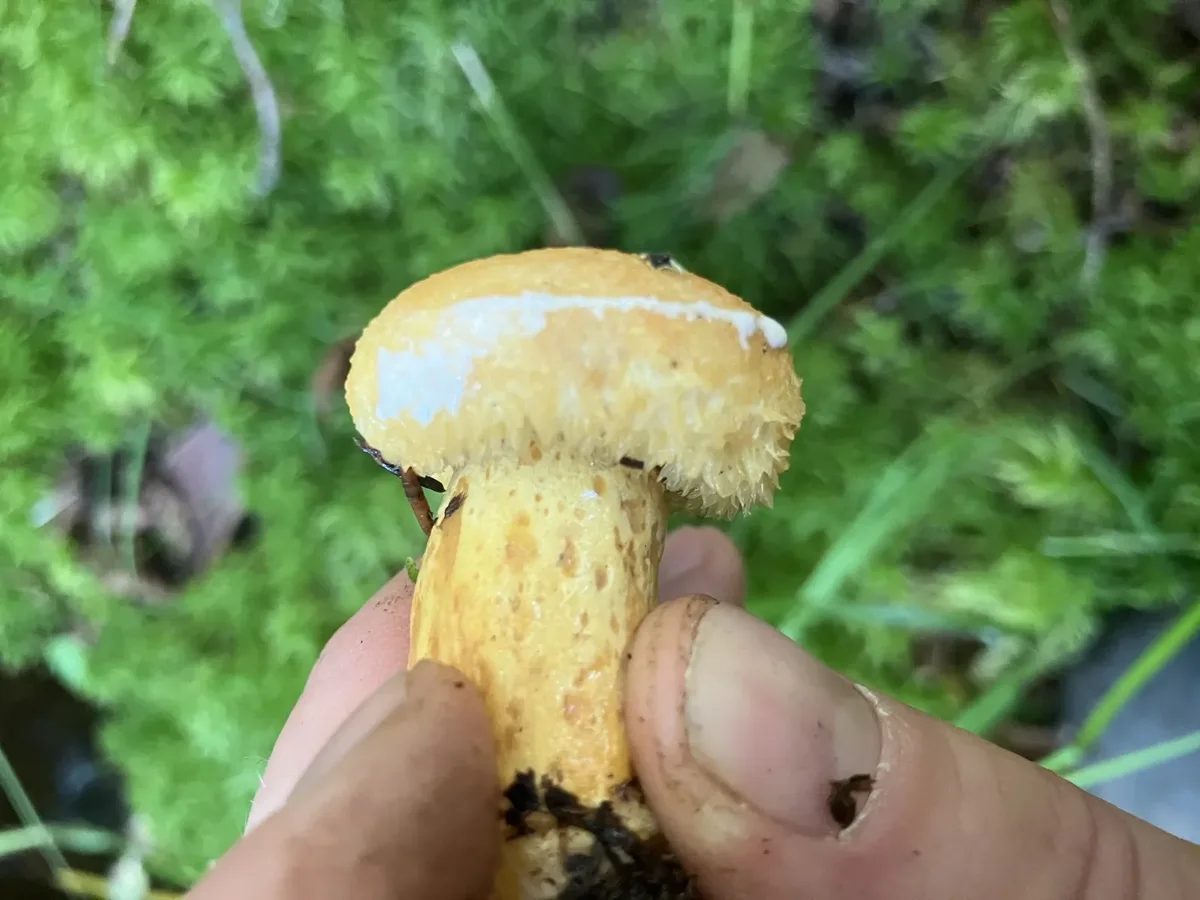 © Jonas Heggedal (CC BY)
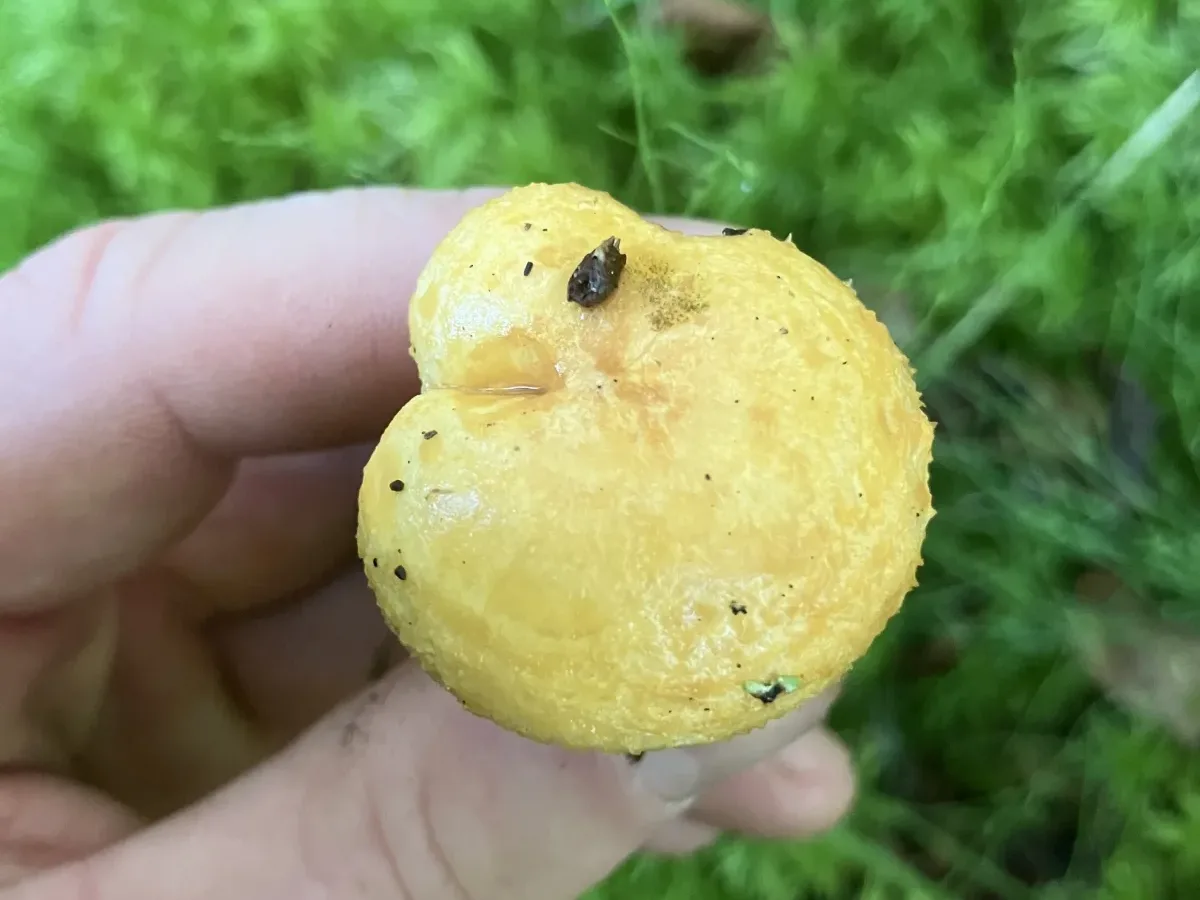 © Jonas Heggedal (CC BY)
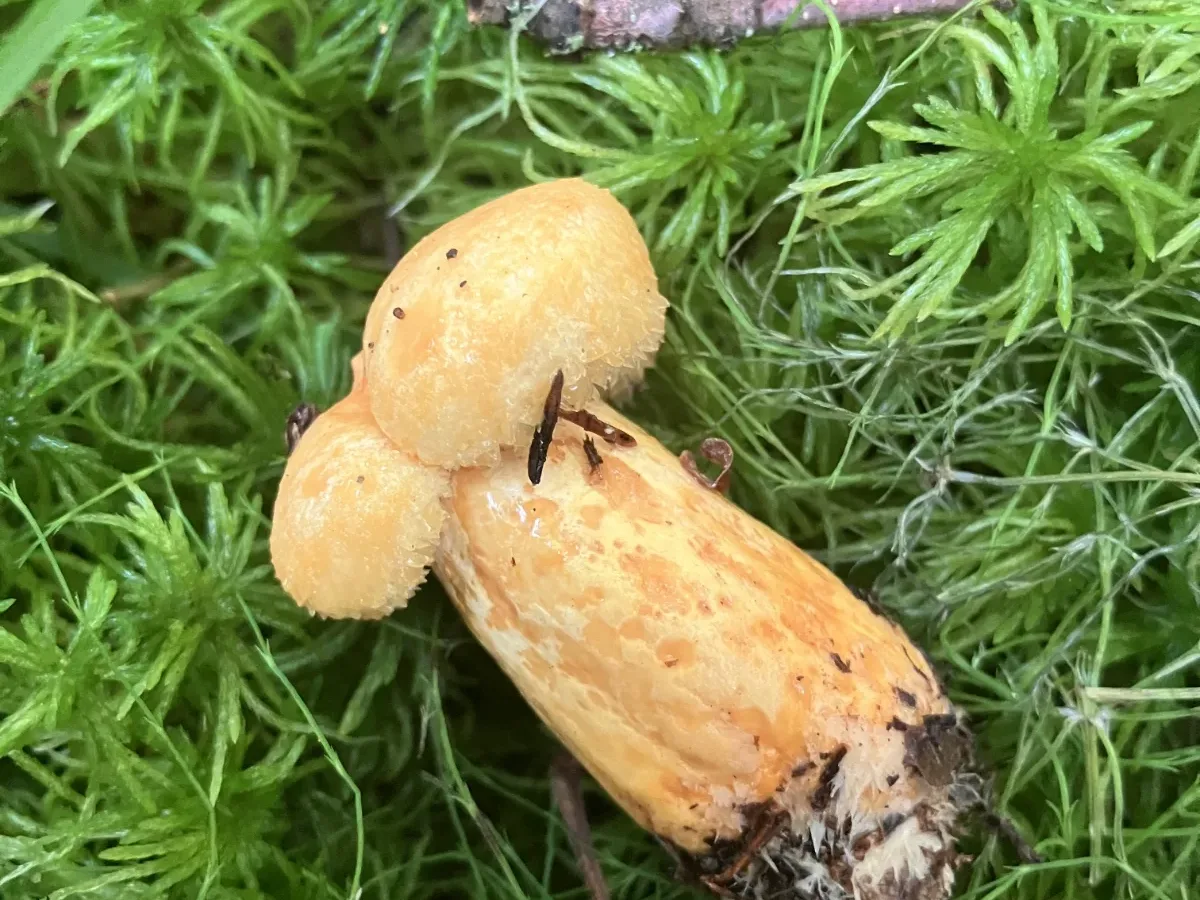 © Jonas Heggedal (CC BY)
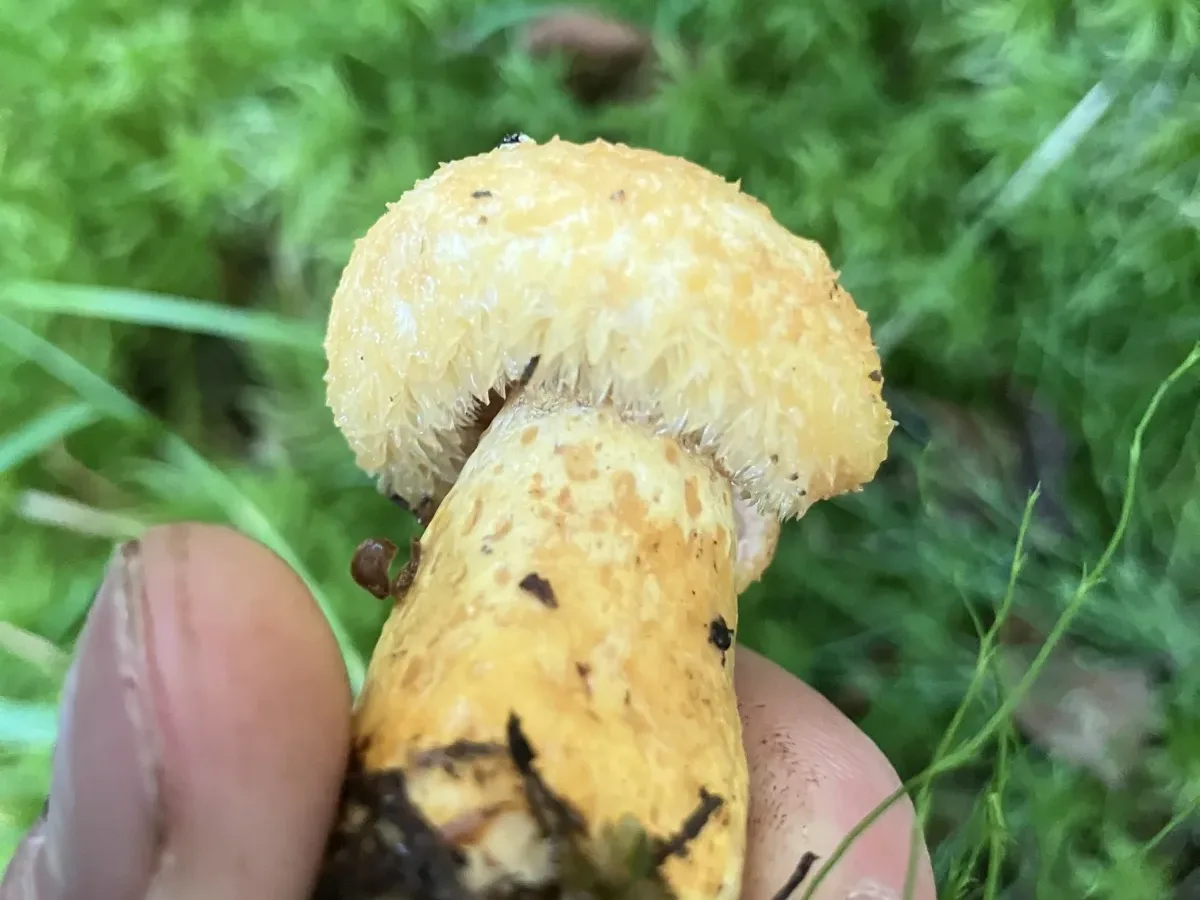 © Jonas Heggedal (CC BY)
 © Jonas Heggedal (CC BY)
 © Ole Christian Hagestad (CC BY)
 © Jason Grant (CC BY)
 © Annie Weissman (CC BY 4.0)© Annie Weissman (CC BY 4.0)© Jonas Heggedal (CC BY)
Edible only with the right preparation - or safe for some people but not others. Learn the caveats first.
How to recognise it
Cap
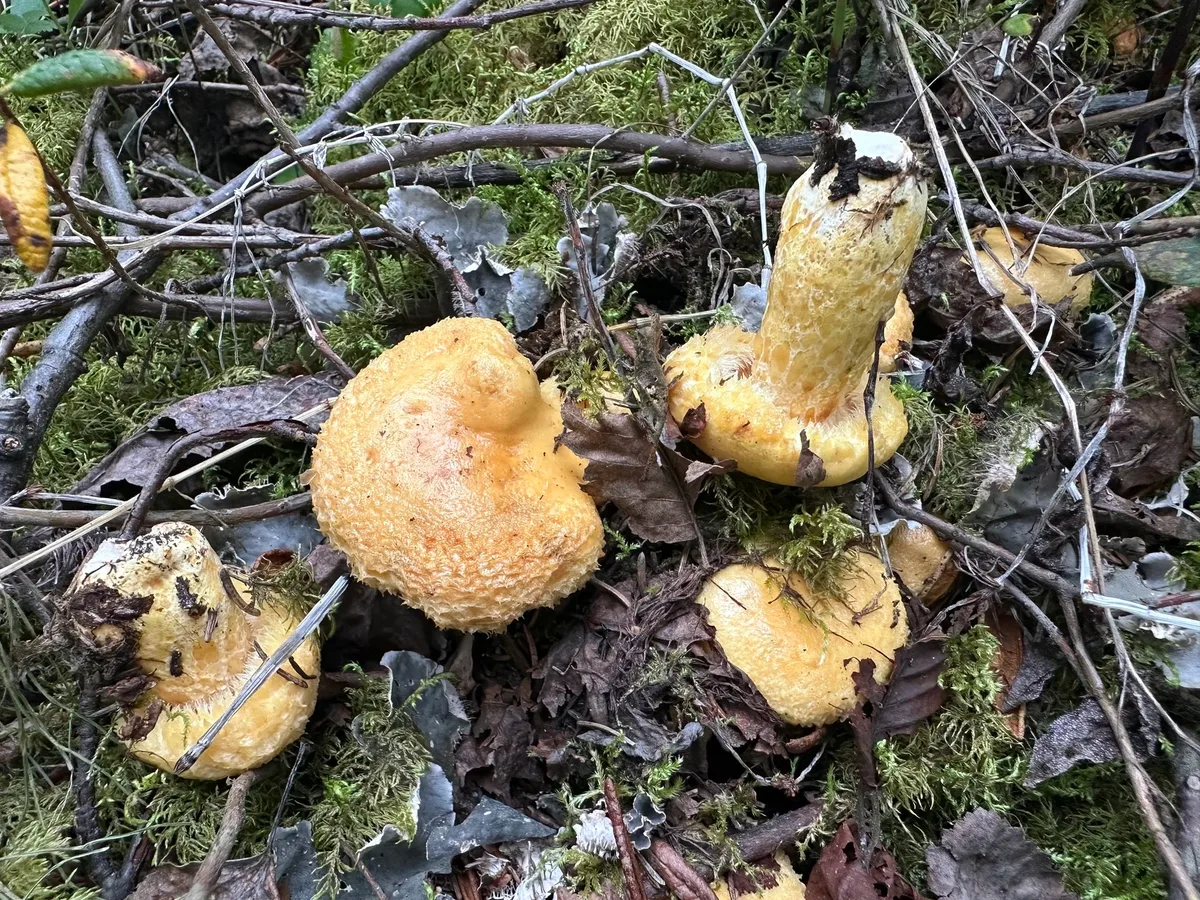
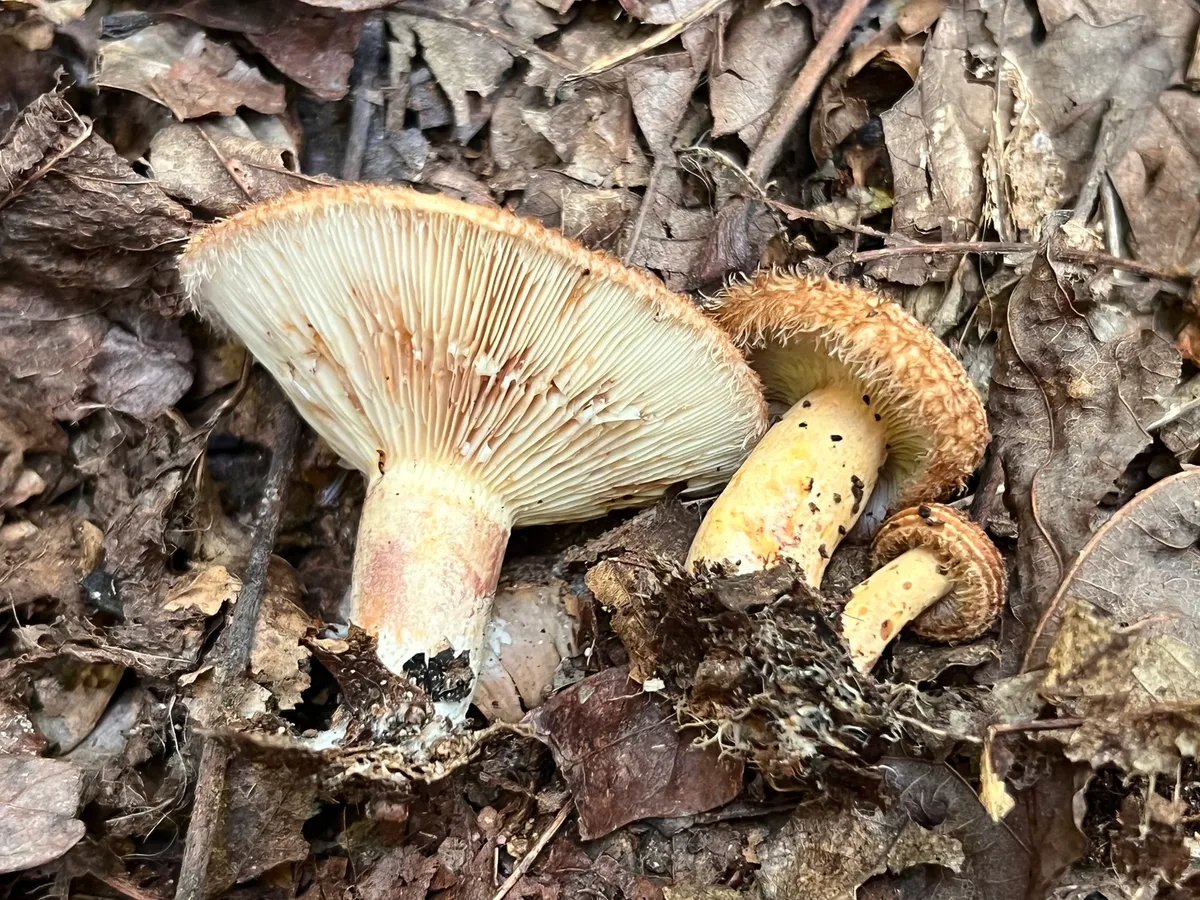
Cap 6-18 cm across, convex at first then broadly funnel-shaped, pale yellow to ochre-yellow with a viscid surface. The margin is heavily fringed with coarse yellowish hairs, giving the species its 'bearded' name.
Gills
Cream to pale yellow, staining violet-lilac where cut or bruised by latex.
Stem
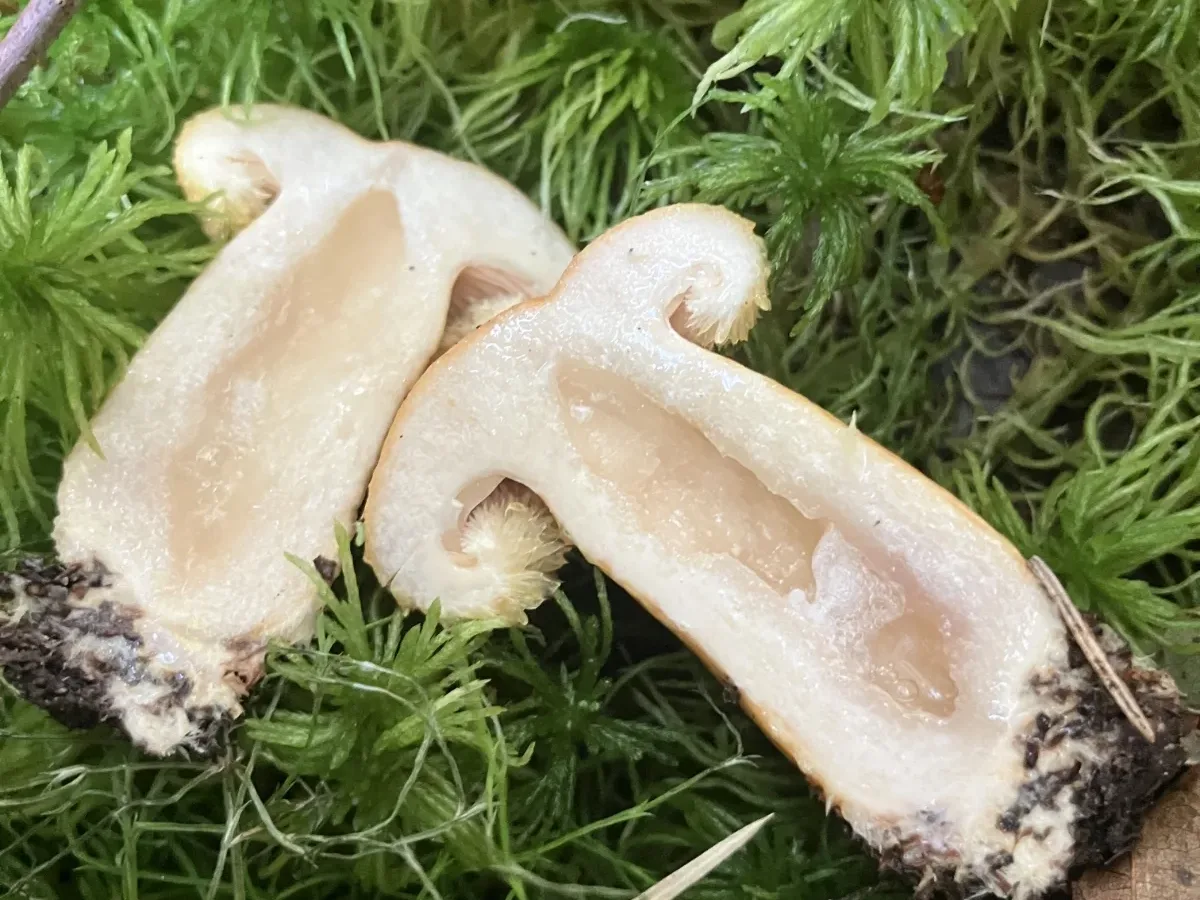
Stout, pale, often pitted (scrobiculate), becoming hollow.
Flesh
Firm, whitish, turning violet when cut.
The white latex immediately turns violet-lilac on air contact - this violet reaction is the defining field character and must be confirmed before any identification is accepted.
Why it's dangerous
The primary danger is casual confusion with edible milkcaps, leading to consumption without parboiling.
The violet latex reaction is unique and highly reliable, but the species must never be eaten raw.
It is classified as a conditional edible (safe only when properly prepared) throughout its Nordic range.
Toxin
The acrid latex contains sesquiterpene lactones (primarily velleral-type compounds) that irritate mucous membranes and the gastrointestinal tract.
These compounds are heat-labile and water-soluble, so parboiling with water changes effectively removes them. Raw or undercooked consumption, however, causes the same syndrome as other acrid Lactarius species.
Symptoms
Raw or undercooked, within 30 minutes to 3 hours of ingestion:
- Nausea
- Vomiting
- Abdominal cramps
- Diarrhoea
Symptoms are self-limiting and resolve within 12-24 hours in healthy adults.
Not life-threatening in normal amounts, but medical attention is appropriate for severe or prolonged symptoms.
Staying safe
Do not eat raw under any circumstances - the acrid latex is a potent gastrointestinal irritant.
Must be parboiled in plenty of water for at least 10 minutes; drain and discard the water.
After thorough parboiling, the species has a long history of use as a pickled or salted mushroom in Finnish, Russian, and Scandinavian tradition. But it is not a first-choice edible in western European countries, where it is generally considered an 'edible only with caution' species.
Anyone sensitive to acrid milkcaps should avoid it entirely. Do not serve to children, pregnant women, or people with GI conditions.
Where & when it grows
Habitat
Moist, old-growth boreal spruce forest; strongly associated with Norway spruce (Picea abies), usually growing in moss-rich, humid sites with acidic humus.
Often found near the bases of mature trees or along stream-side spruce corridors.
The presence of this species indicates relatively undisturbed habitat.
When
Mid-July to October, peaking in late August through September.
This is a species of cooling soils and soaking rains - it emerges in flushes after sustained rainfall, as the warmth of summer begins to drain from the forest floor.
In the Nordic region the main flush typically falls in ISO weeks 33-38.
How it grows
Mycorrhizal with Norway spruce, this species lives for years as invisible mycelium threaded through the roots of its host tree. The fruit bodies you find are just the brief, visible moment of a partnership that may have persisted for decades beneath the moss.
It is obligately ectomycorrhizal, meaning it cannot complete its lifecycle without a living conifer host.
Fruit bodies are large, appearing singly or in small scattered groups rather than dense clusters.
Young caps are sticky in wet weather. Older caps dry out and the margin becomes less hairy with age, which can complicate identification of weathered specimens.
Fruiting conditions
Typical of cool, moist boreal spruce forest fruiting: requires sustained rainfall (>25 mm over 14 days) and cooling soils; flush lag of 7-14 days after sufficient rain. The relatively low soil temperature optimum reflects the species' preference for cool, northern habitats.
Look-alikes
The violet-staining latex makes this species nearly unmistakable among European milkcaps if the colour change is properly checked.
- Lactarius scrobiculatus (spotted milkcap): similarly large with a pitted (scrobiculate) stem, but its latex is white and turns sulphur-yellow on air contact, not violet.
- Lactarius citriolens: a similarly shaggy margin but paler, lacking the violet latex reaction, with a more yellowish milk.
- Lactarius torminosus (woolly milkcap): a deeply woolly, inrolled margin on a pale pink to salmon cap; its milk stays white and extremely acrid without any colour change.
None of the common lookalikes are deadly, but Lactarius scrobiculatus in particular causes significant GI upset when eaten raw or undercooked.
Very similar shaggy-margined, pale yellow milkcap of spruce forests, but the latex is white and turns distinctly yellowish (not violet) on contact with air. Generally paler yellow overall. Considered equally acrid and not recommended for eating.
Has a deeply pitted (scrobiculate) stem like L. repraesentaneus and a similarly fringed cap margin, but the latex is white and turns sulphur-yellow (not violet) on air contact; cap colour tends more pale straw to ivory rather than ochre-yellow. Also a GI irritant when raw.
Has a deeply woolly, inrolled cap margin on a pale salmon-pink to rose-pink cap; latex stays pure white and does not change colour. Gills do not stain violet. Habitat overlaps (birch and spruce), but the pink cap colour and white non-staining latex are definitive.
A reference guide - never an edibility guarantee. When in doubt, leave it out.