Oakbug milkcap
Lactarius quietussyn. Agaricus quietus Fr., Lactarius subdulcis var. quietus (Fr.) Rea
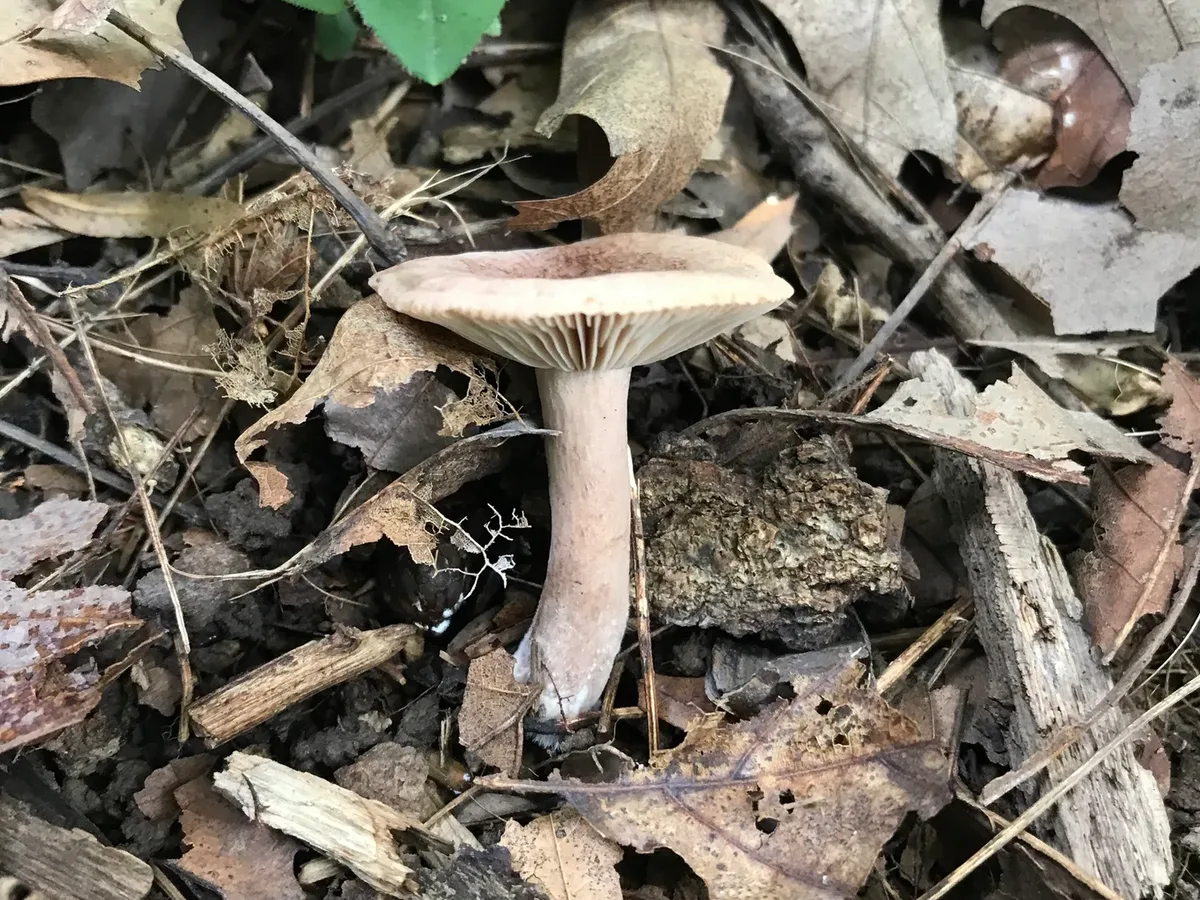 © Brian Hunt (CC BY 4.0)
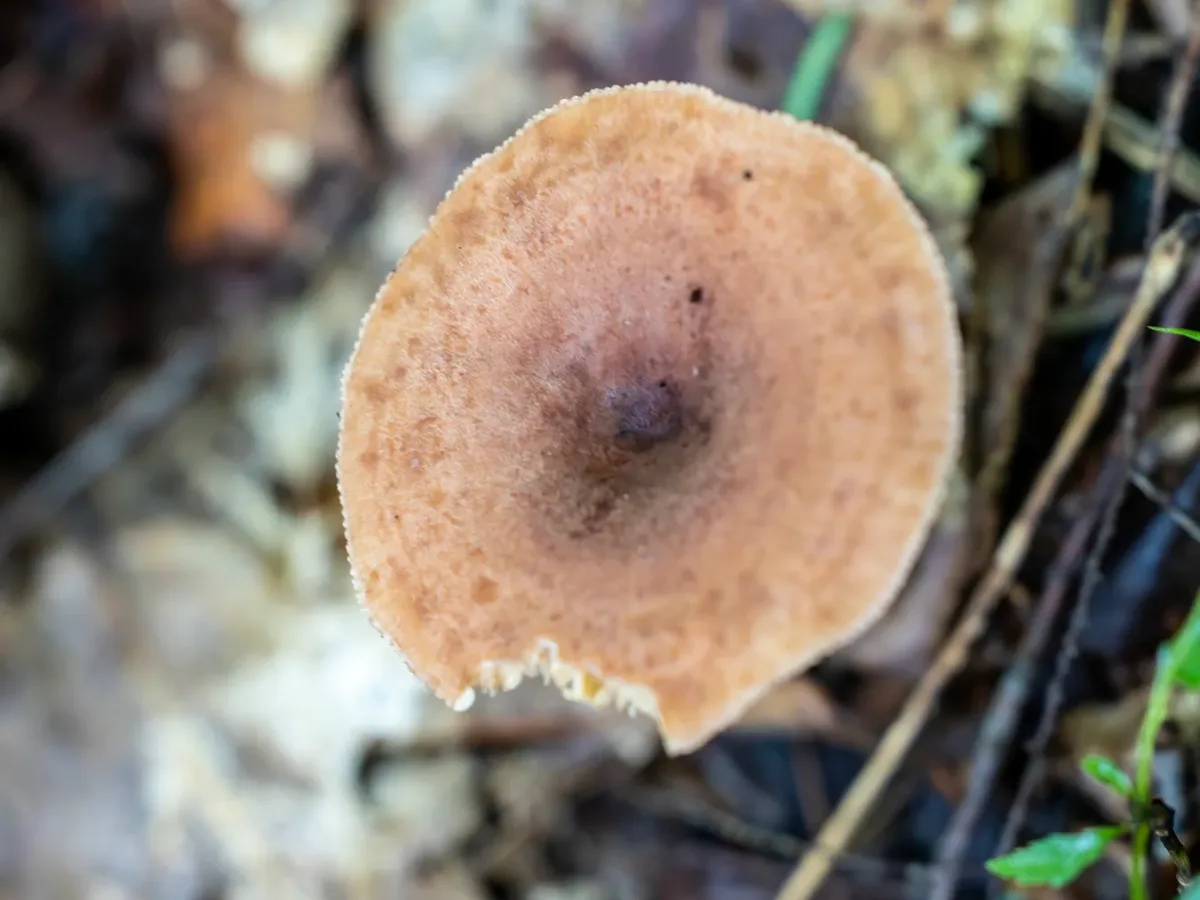 © Richard Jacob (CC BY)
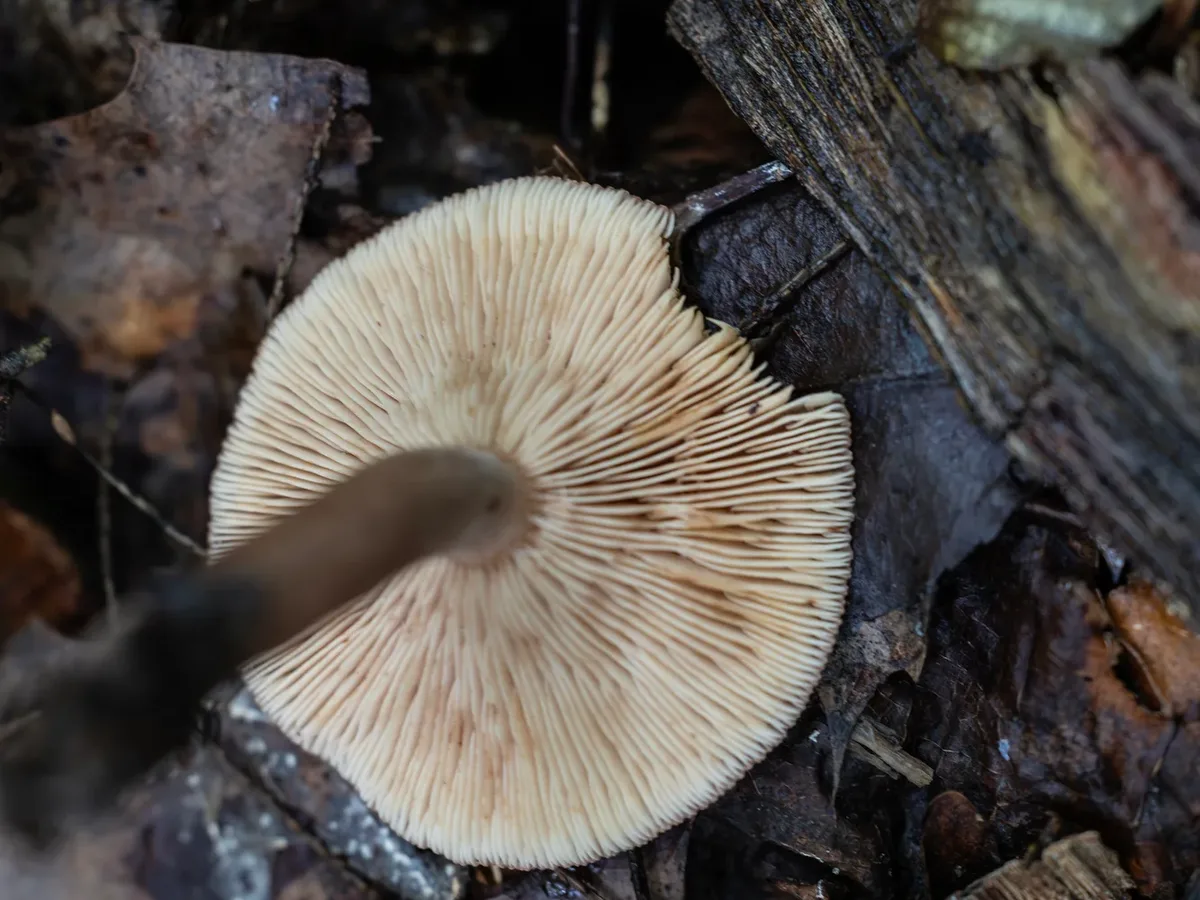 © Richard Jacob (CC BY)
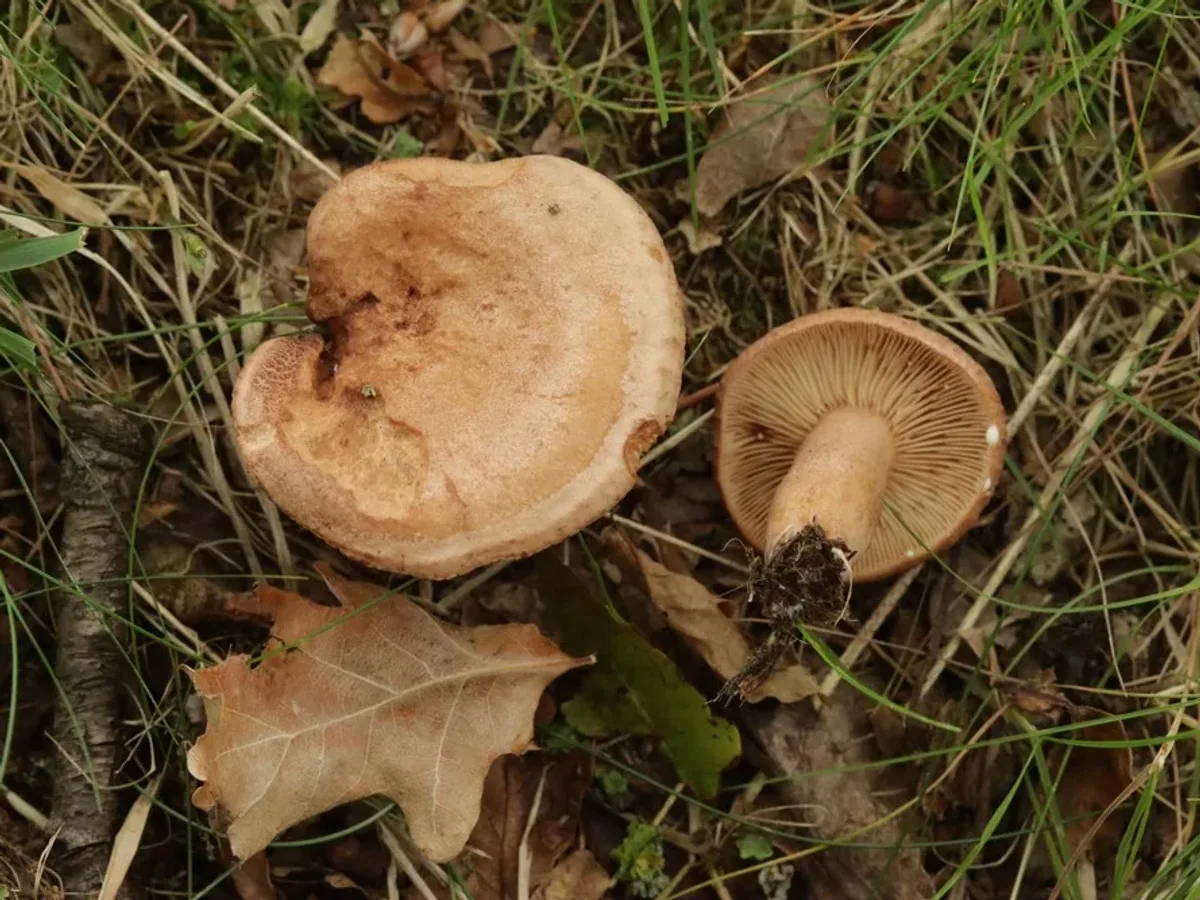 © Björn Sothmann (CC BY-SA)
 Капрал Натурал (CC0)
 Капрал Натурал (CC0)
 Капрал Натурал (CC0)
 © Michel Langeveld (CC BY)
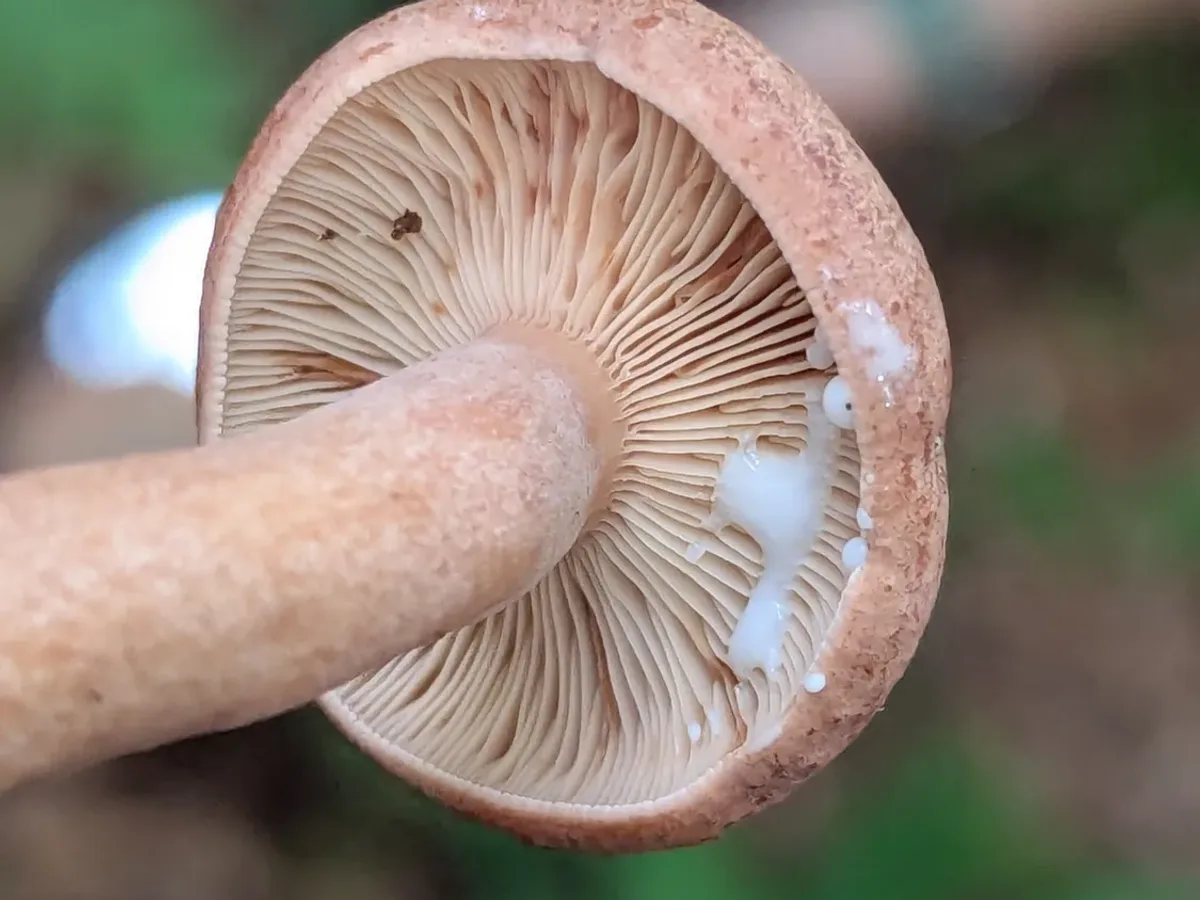 © Michel Langeveld (CC BY)
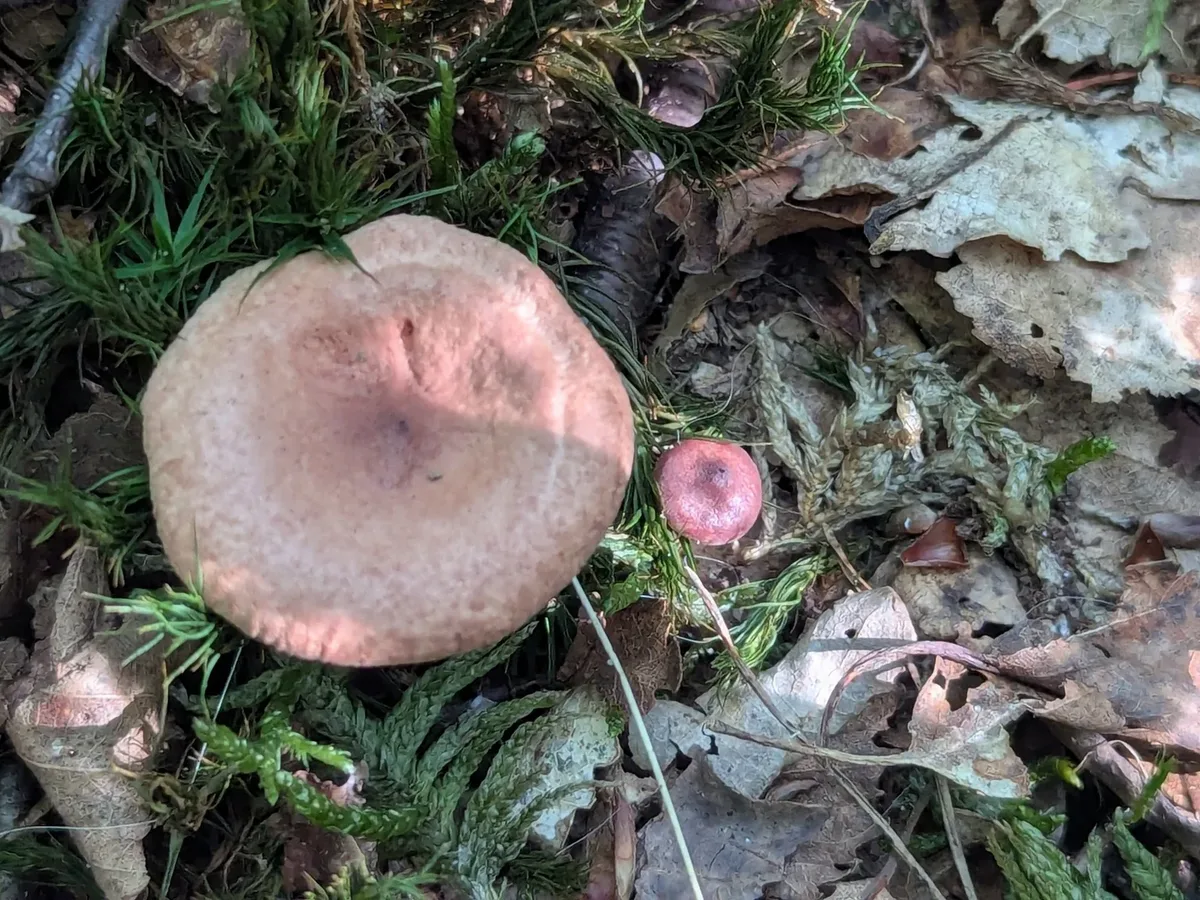 © Michel Langeveld (CC BY)
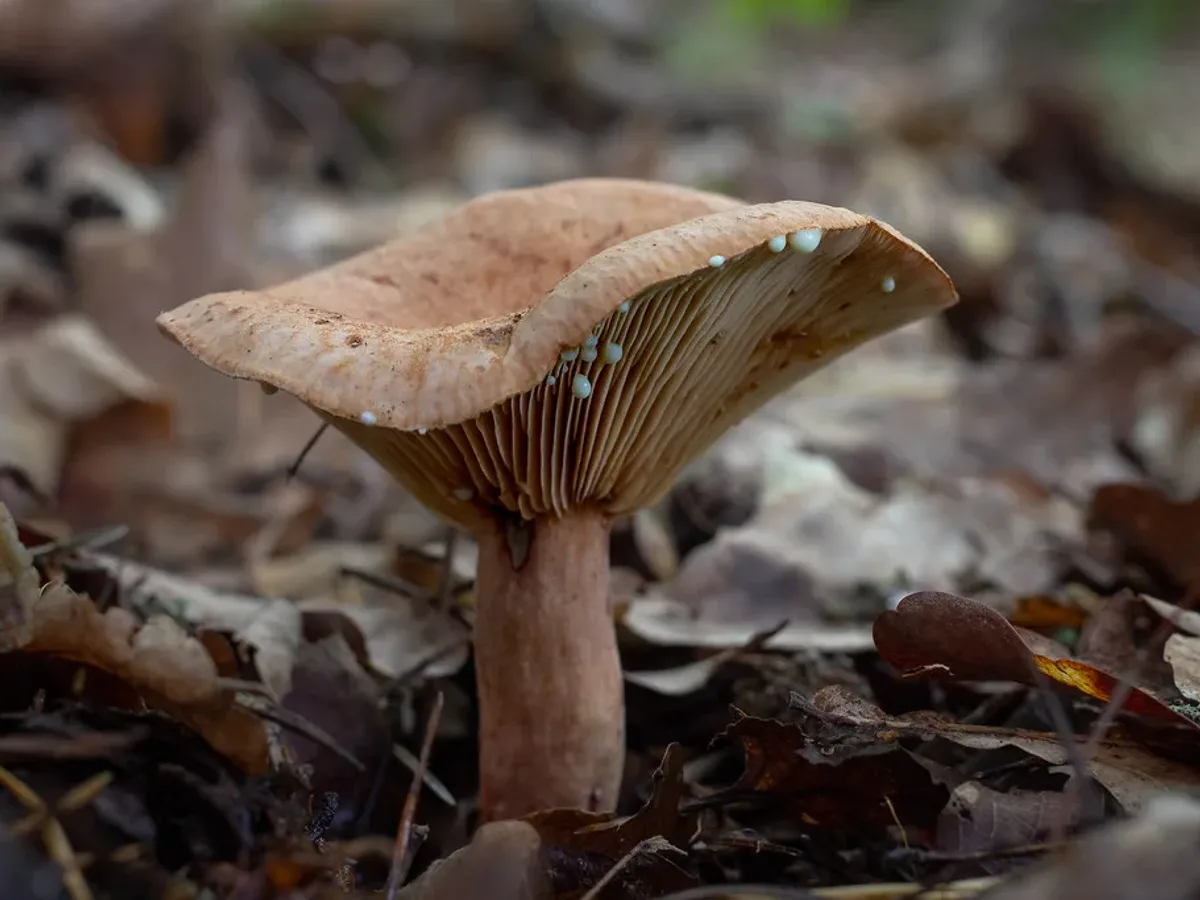 © Wolfgang Wollschweber (CC BY 2.0)© Brian Hunt (CC BY 4.0)© Richard Jacob (CC BY)
Edible only with the right preparation - or safe for some people but not others. Learn the caveats first.
Never eat a mushroom you are not 100% sure of - check the look-alikes below, and always cook wild mushrooms.
How to recognise it
Cap
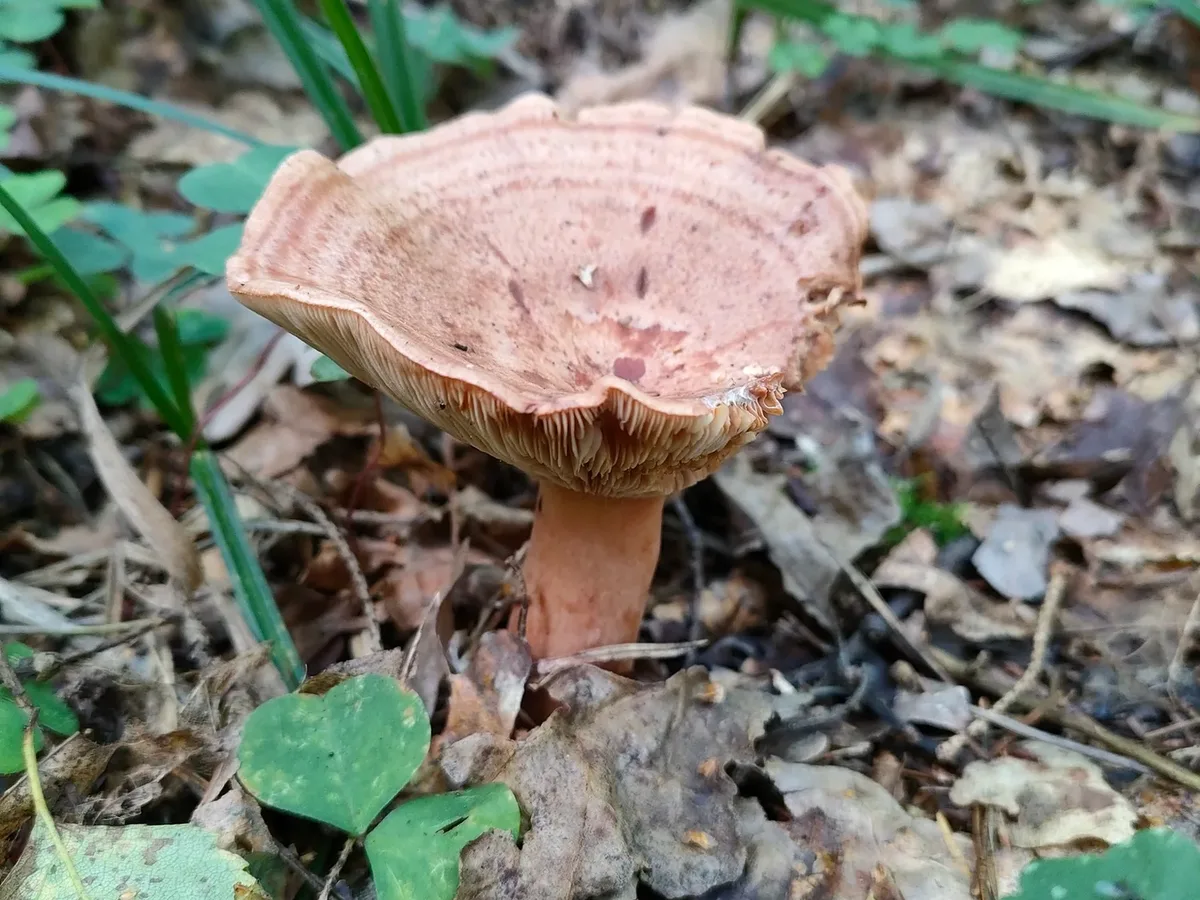
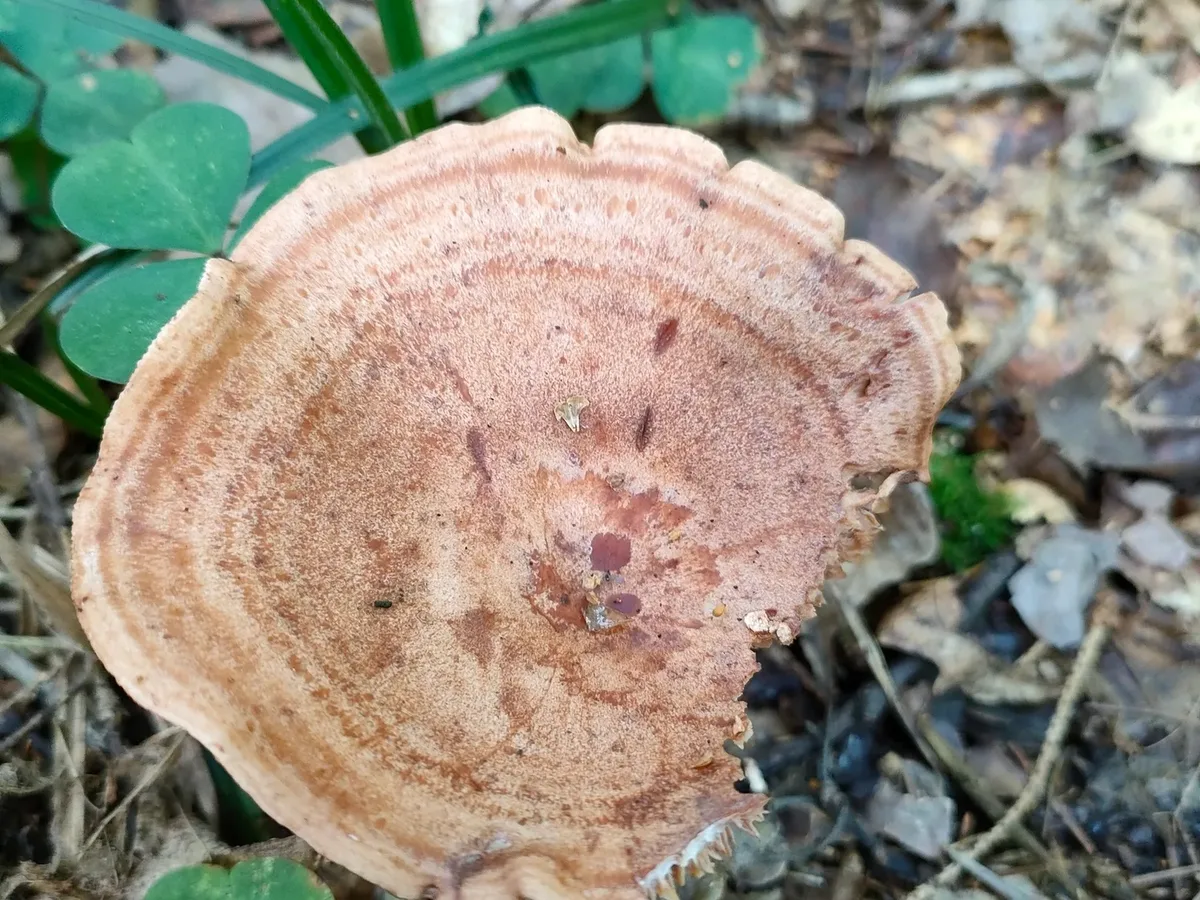
The Oakbug milkcap is a medium-sized, solidly built milkcap with a distinctive dull, liver-brown to reddish-ochraceous cap that typically shows faint concentric watery zones, especially when young or wet.
The cap begins convex with an inrolled margin, gradually flattening and developing a central boss or shallow depression, reaching 3-8 cm in diameter. The surface is matt and dry to the touch, unlike the more viscid Lactarius blennius or L. glyciosmus.
Gills
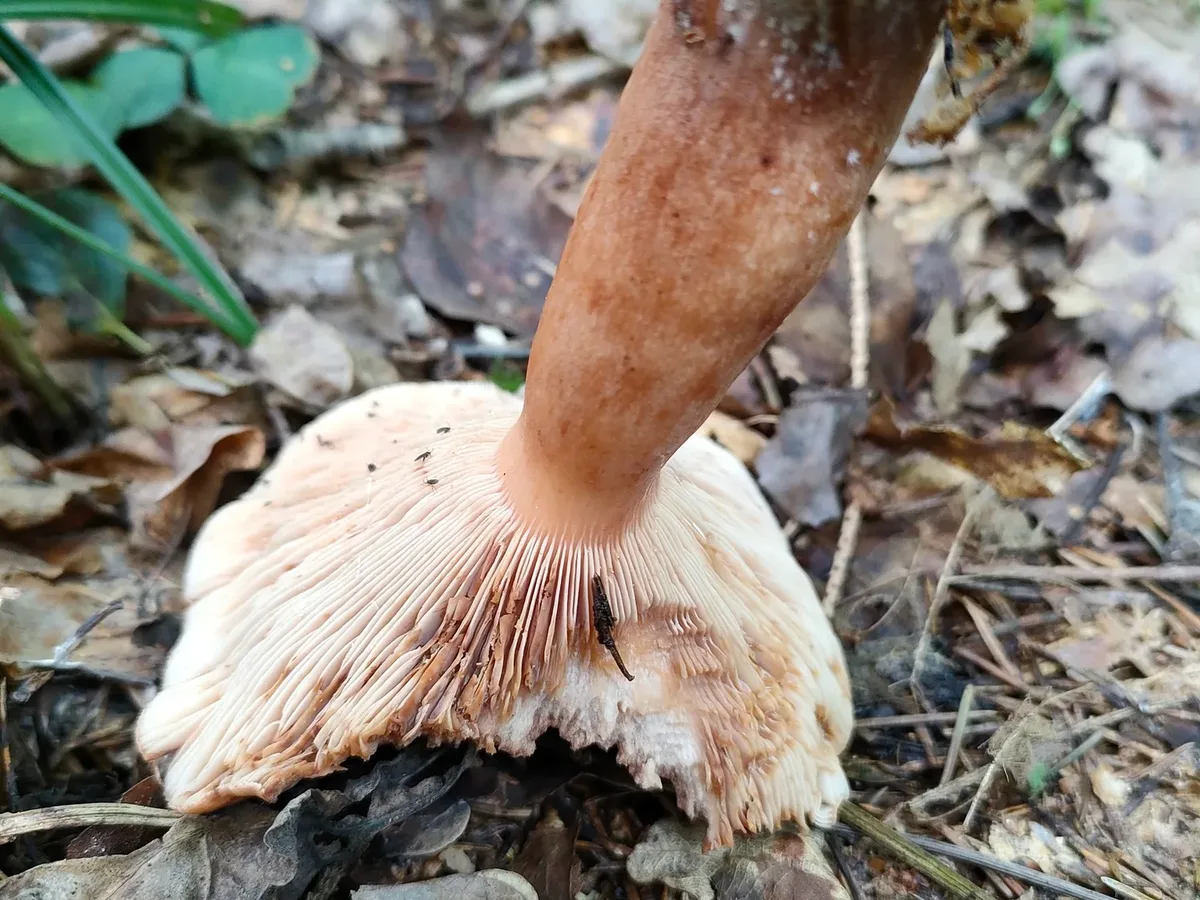
The gills start pale cream and slowly develop a characteristic pinkish-salmon to rusty-buff hue with age, and bleed white, unchanging latex copiously when cut or damaged.
Spore print pale cream to ochraceous-cream.
Stem
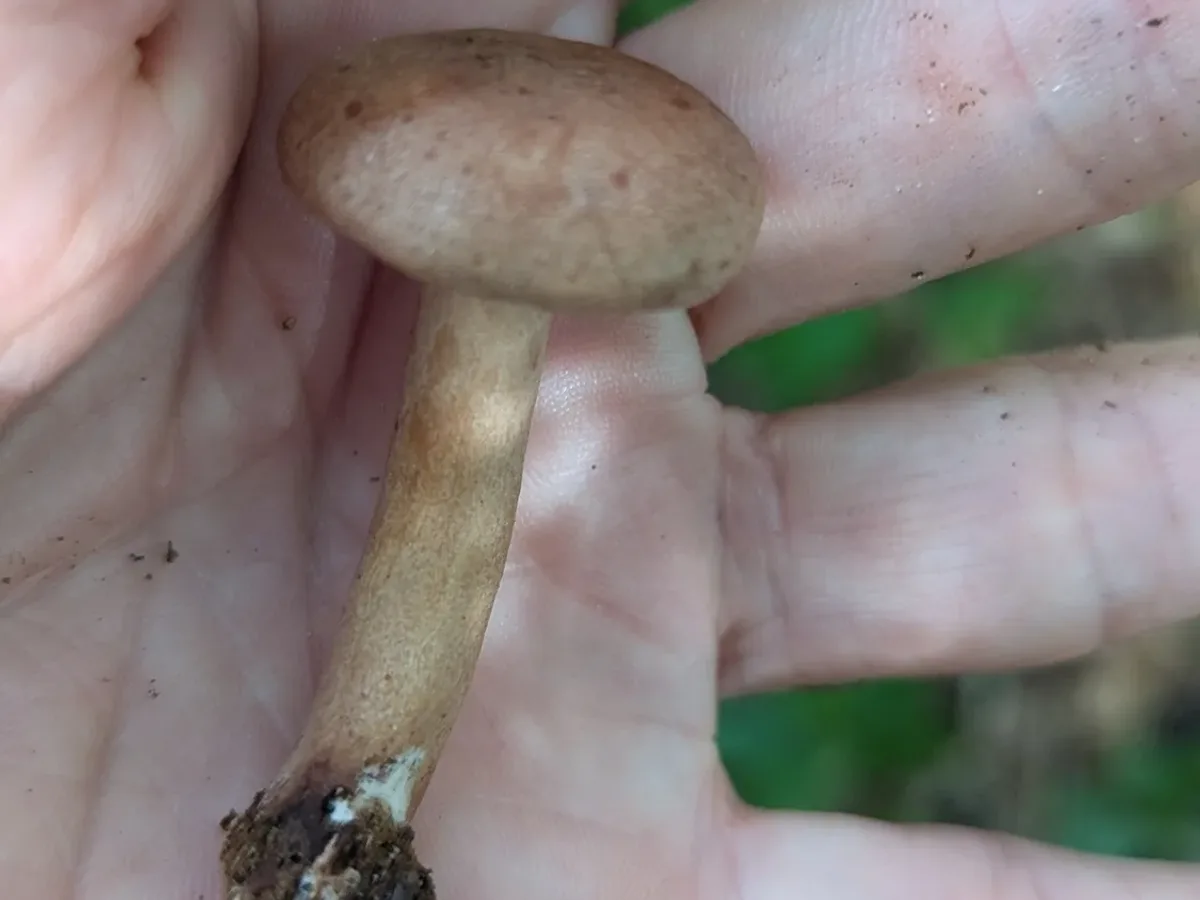
The stem is firm, cylindrical, concolorous with the cap or slightly paler, and often develops a hollow or stuffed interior.
Smell & taste
The single most important field character is the odour: a distinctive oily-rancid, bug-like or oil-cloth smell produced by the flesh and latex, often described as reminiscent of bed-bugs (Cimex/Pentatoma), giving rise to the common name 'oakbug.'
This smell is not unpleasant to all noses - some find it mildly fishy or sweetish-oily - but it is highly characteristic and essentially unique among European milkcaps in oak woodland.
Where & when it grows
Habitat
A strict mycorrhizal associate of oak, L. quietus is one of the most reliable indicators of mature oak woodland in temperate Europe. It grows among fallen oak leaves, often in dappled light at the edges of rides, woodland paths, or open glades where oaks are established.
The species tolerates a wide range of soil types from sandy acidic podzols to heavier clay loams, provided the stand is oak-dominated. It does not occur under conifers and is rarely found under beech unless oaks are also present.
In Britain it is one of the commonest milkcaps of English oak woodland. Continent-wide it ranges from Iberia and the Mediterranean north to southern Scandinavia, and east through central Europe to the Carpathians and the Balkans.
When
Fruiting season runs from late July (occasional early specimens) through to November, with the main flush in late August through October in temperate Atlantic and continental Europe.
In warmer Mediterranean situations it may fruit as early as June or persist into December.
A reliable species that appears year after year in the same stands when summer rainfall is adequate.
How it grows
Grows solitary, scattered, or in loose troops among oak leaf litter, occasionally in small clusters. Does not form fairy rings.
Individual fruitbodies develop at a measured pace and hold up well in dry spells - a fresh specimen can persist for two weeks or more before fading. That durability is part of why this species is so reliably findable through the autumn season.
Fruiting conditions
Reliable fruiting follows summer and early autumn rainfall of 20 mm or more over 14 days when soil temperatures are 8-18 °C; flush appears 7-18 days after adequate rain. Drought-sensitive; sparse in dry years.
Look-alikes
The oily bug-like smell in combination with an oak habitat and white unchanging latex is essentially diagnostic. Nevertheless several milkcaps may cause brief confusion.
- Lactarius subdulcis (mild milkcap) grows in beech woodland, is smaller, duller ochre-brown, lacks the bug-like smell, and has very sparse white, mild latex.
- Lactarius camphoratus (curry milkcap) has a distinctly curried / fenugreek odour rather than the oily-bug smell, darker brick-red cap with a prominent central papilla, and grows mainly under conifers or mixed woodland rather than pure oak.
- Lactarius hepaticus (liver milkcap) grows under pines, has a bitter taste and no bug odour.
- Lactarius serifluus is smaller, with a more desiccated, thin-fleshed cap and a strong oily-fishy scent, but is much rarer and again tends toward pine.
None of the milkcaps likely to be confused with L. quietus are toxic in the conventional sense, but several related species with bitter or acrid taste are unpalatable.
IMPORTANT: Inocybe species (fibrecaps) - particularly Inocybe erubescens (deadly brick-red fibrecap) - also fruit in oak woodland and may superficially resemble small-to-medium brown gilled mushrooms at a distance. Inocybe species produce NO latex whatsoever and some are seriously poisonous.
Always break or cut the stem near the base: if no white milk flows immediately, the mushroom is not a milkcap and should not be eaten.
A seriously poisonous brown-capped gilled mushroom that also fruits in oak and mixed deciduous woodland. Critical difference: Inocybe species produce NO latex at all - break the stem and no white milk will flow. Also has a silky-fibrous cap surface, radially splitting margin, spores brown (spore print pale brown, not cream), and a mealy odour rather than oily-rancid. Never eat any brown gilled mushroom found near oak without first confirming abundant white latex flows from a cut.
Smaller and brick-red with a pronounced central papilla; smells strongly of dried fenugreek or curry, not oily-rancid; grows mainly under conifers and mixed woodland rather than pure oak.
Associated with spruce, not oak; latex turns orange-red rather than remaining white; cap develops greenish stains with age.
Grows under pine, not oak; has a bitter taste; no bug-like odour; cap duller and more date-brown.
L. subdulcis grows strictly under beech, is smaller and duller ochre, and lacks the characteristic oily stink-bug odour; its latex is white and mild with no rancid smell.
Very similar oily-fishy smell but cap is thinner and more desiccated-looking, and the species is scarce; also associated with oaks but typically smaller and more papillate; essentially the same edibility status.
In the kitchen
Picking & cleaning
Easy to identify once the oak-association and the characteristic stink-bug odour are noted together. The latex is white and unchanging - a quick cut across the gills and a sniff of the exuding drops confirms identity.
- Handle with care to avoid bruising; the flesh is moderately firm but gills stain easily.
- Cut at the base with a knife, leaving mycelium intact.
- Place in a paper bag rather than a basket, as the smell becomes more pronounced in sealed containers.
Cooking
Best left in the woods. The flesh is not toxic, but that oily stink-bug odour only grows stronger with heat - there is no cooking method that tames it into something you would want to eat.
Older eastern European sources mention salting or pickling as a way to mask the flavour, but the result is generally considered inferior to the many other edible milkcaps available, and there is no good culinary reason to pursue it.
Leave the fruitbodies for the slugs, squirrels, and insects that happily consume them, and enjoy L. quietus for what it actually is: a faithful indicator of ancient, established oak woodland.
Good to know
Lactarius quietus is not toxic, but its strong oily-rancid smell makes it unappealing to most foragers.
Some older European literature lists it as edible after cooking, but it is widely regarded today as of poor flavour quality and not recommended for the table. The unpleasant odour intensifies on cooking.
The critical safety rule: always confirm the presence of white latex. Break or nick the gills or stem - white milk must flow copiously from a fresh specimen.
If no milk exudes, the fungus is not a milkcap and could belong to a dangerous genus (e.g. Inocybe, Cortinarius).
In oak woodland no deadly species closely resemble L. quietus when oak-habitat, the stink-bug odour, and white unchanging latex are all checked together.
A reference guide - never an edibility guarantee. When in doubt, leave it out.