Bearded milkcap
Lactarius pubescenssyn. Agaricus pubescens Fr., Lactarius torminosus var. pubescens (Fr.) Rea, Lactarius pubescens var. betulae A.H. Sm.
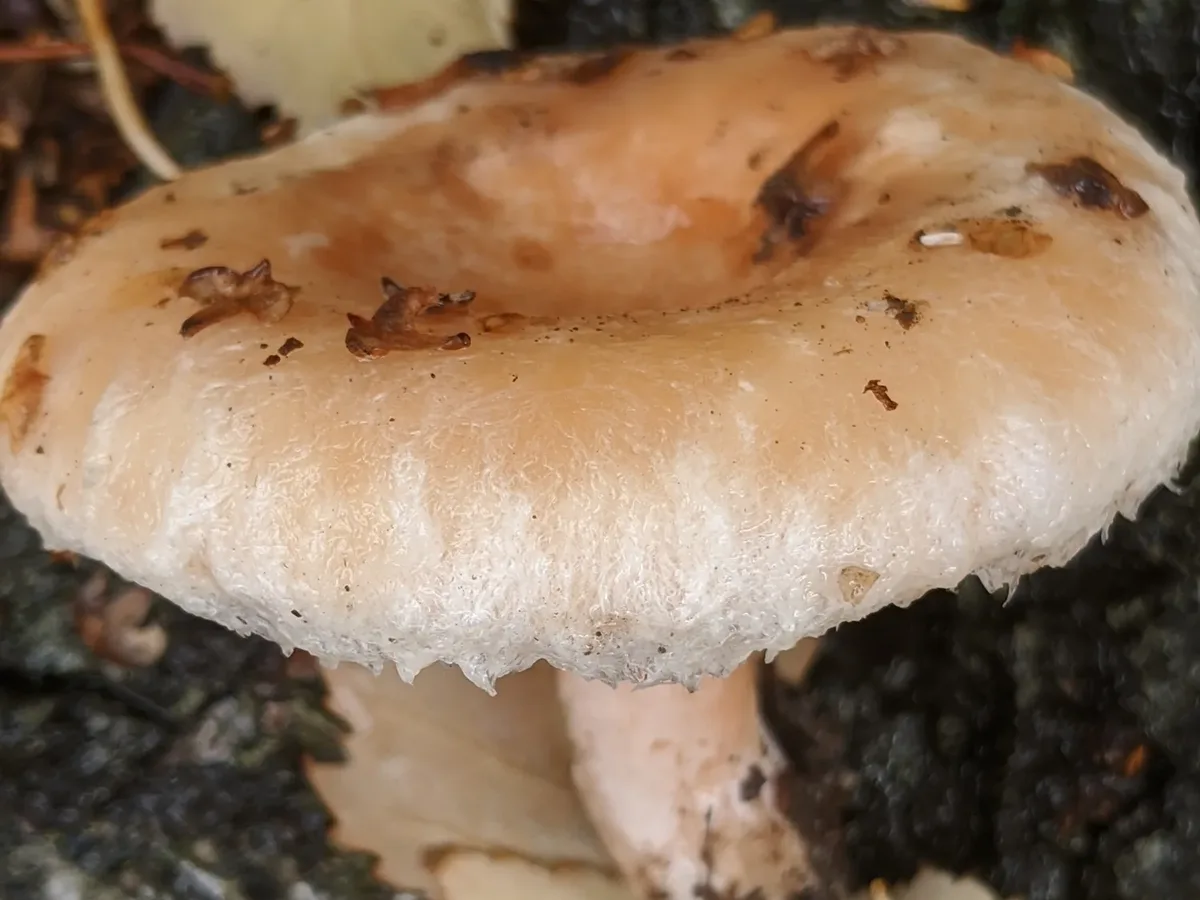 Alex Heyman (CC0)
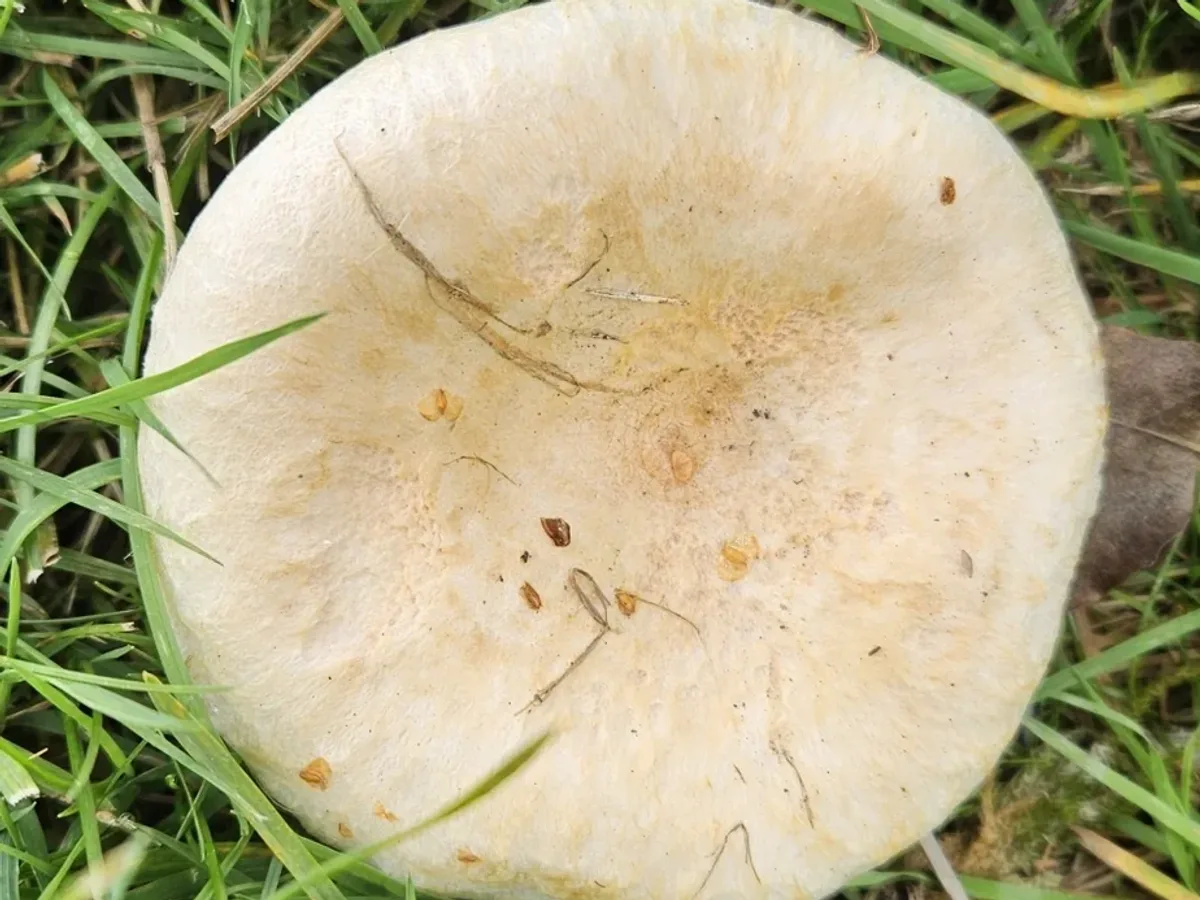 Shane O' Rahilly (CC0)
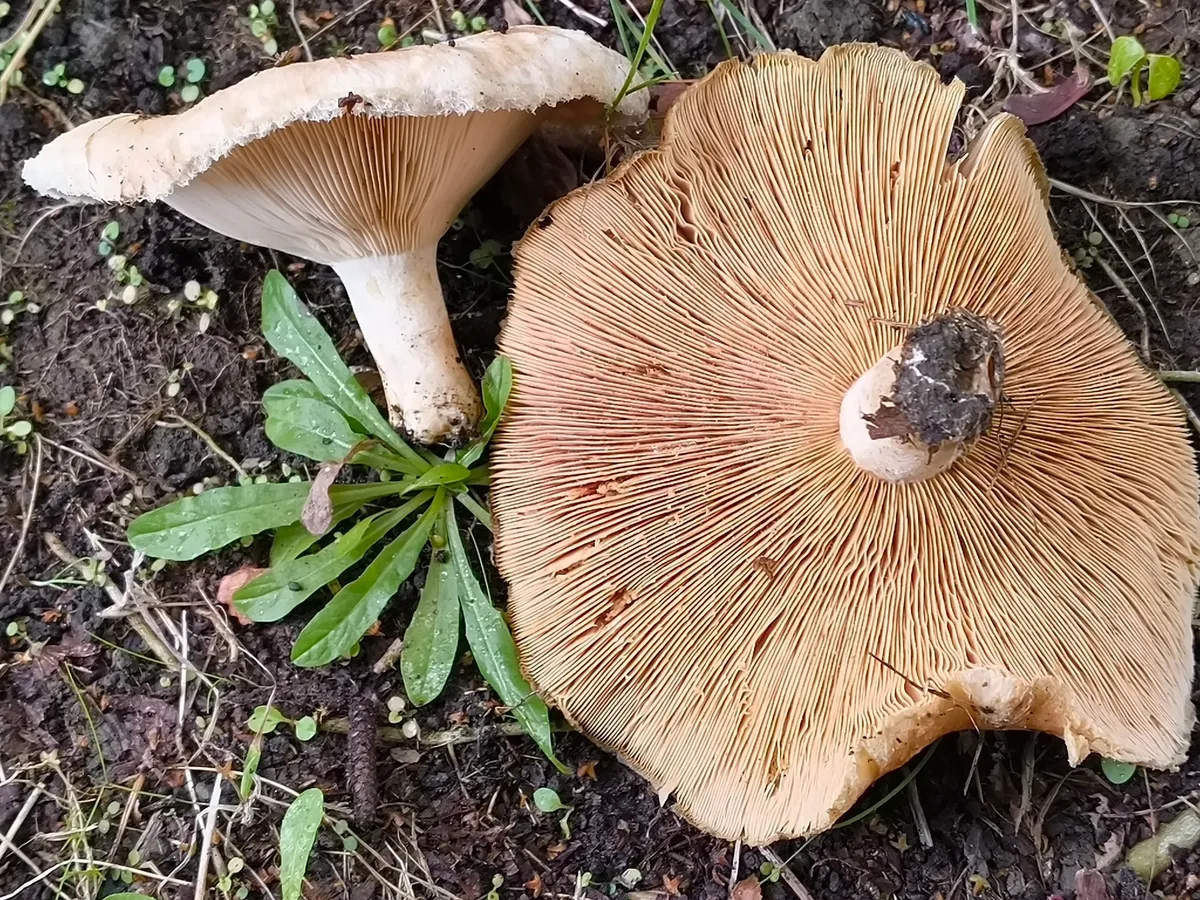 © Zac (CC BY)
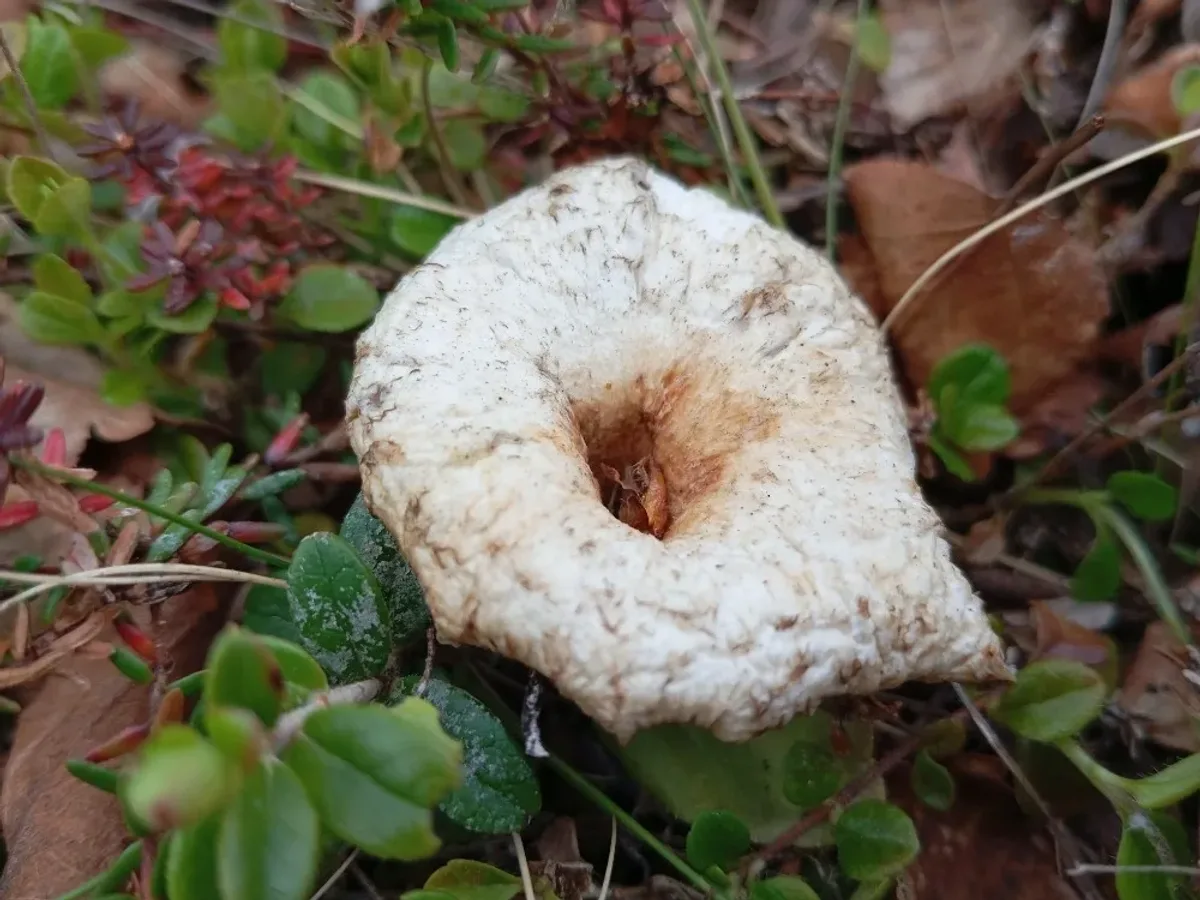 © Bastiaan Maarse (CC BY)
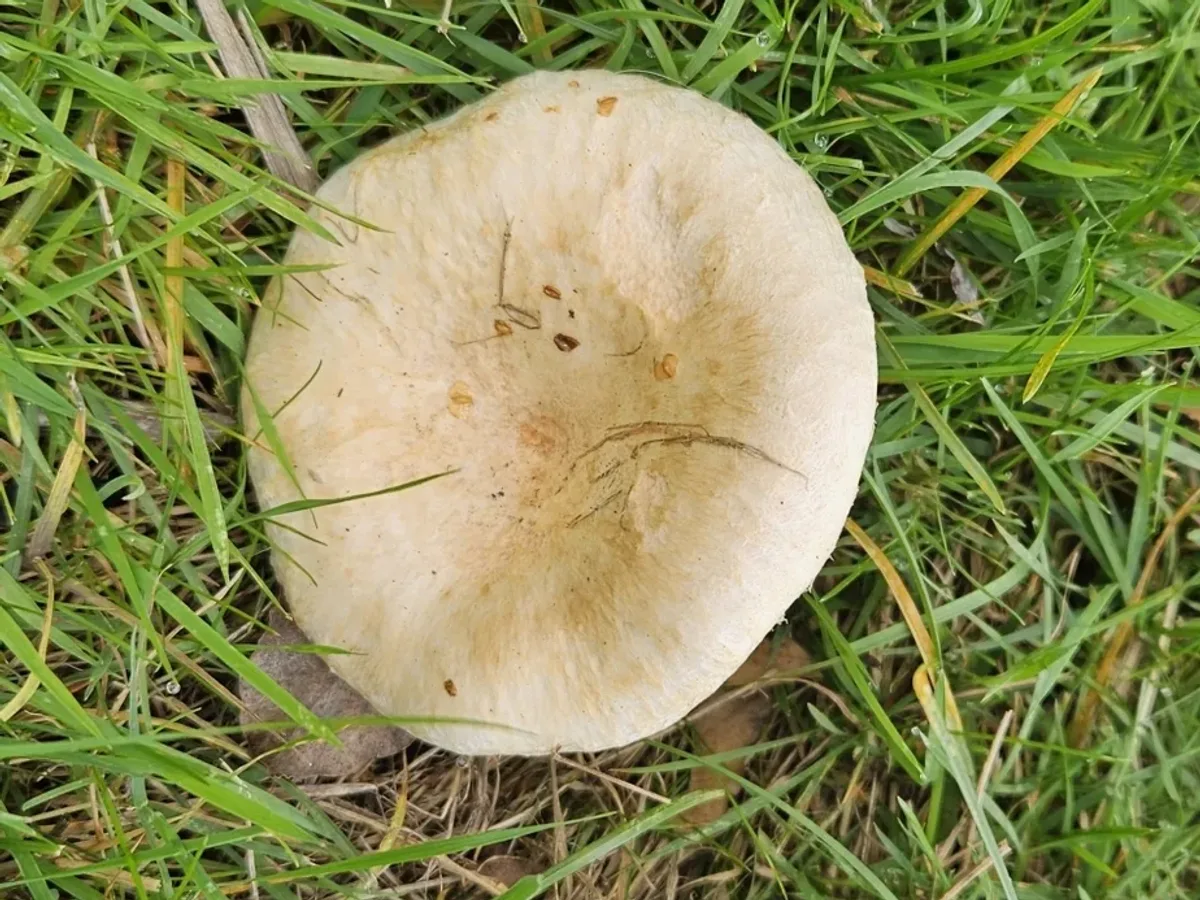 Shane O' Rahilly (CC0)
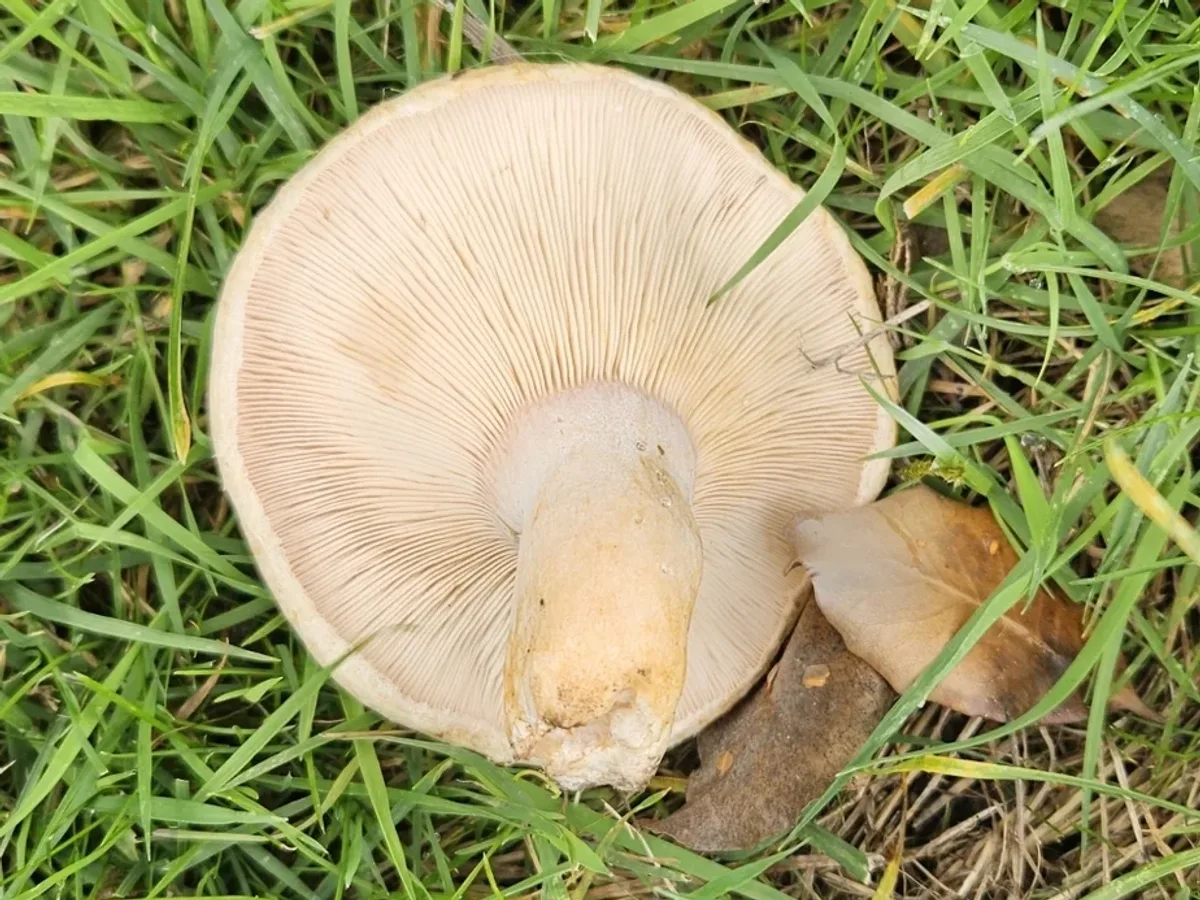 Shane O' Rahilly (CC0)
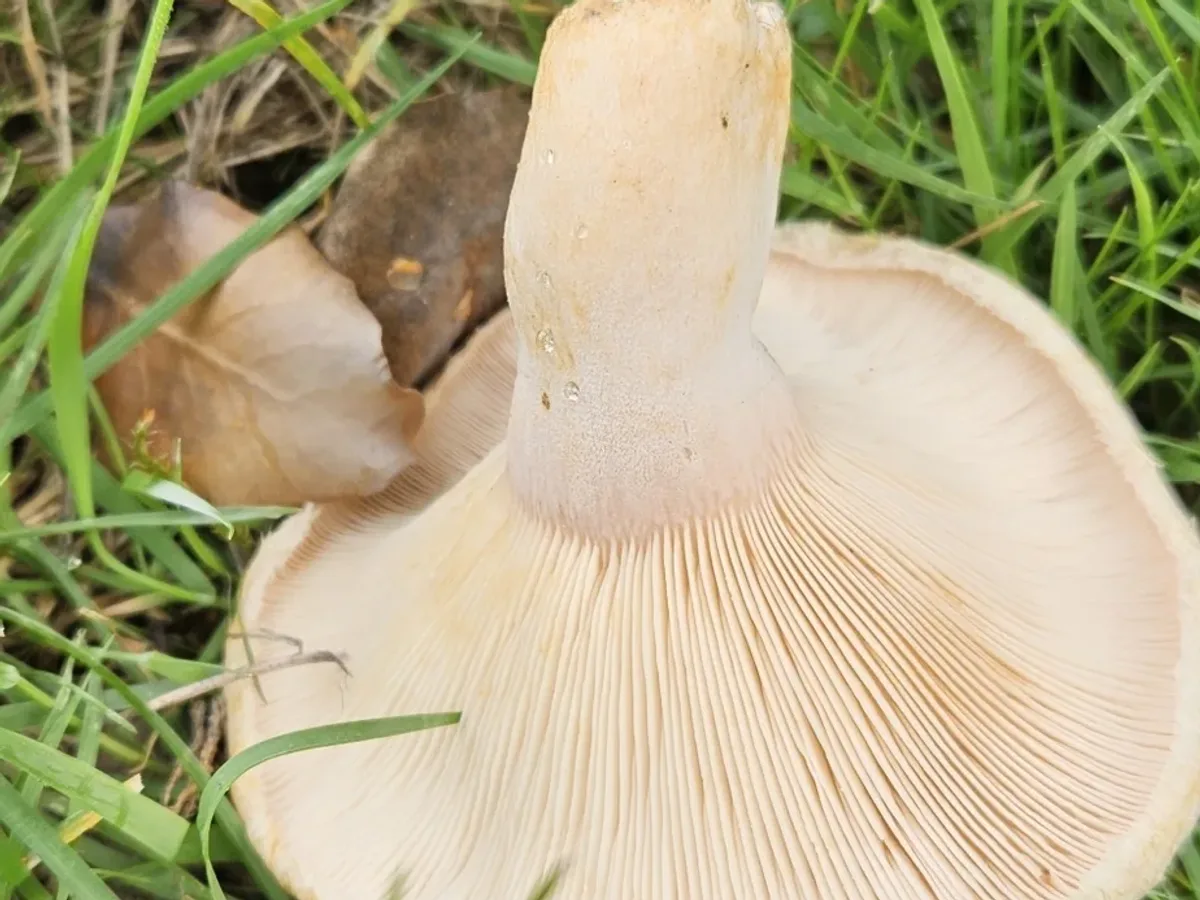 Shane O' Rahilly (CC0)
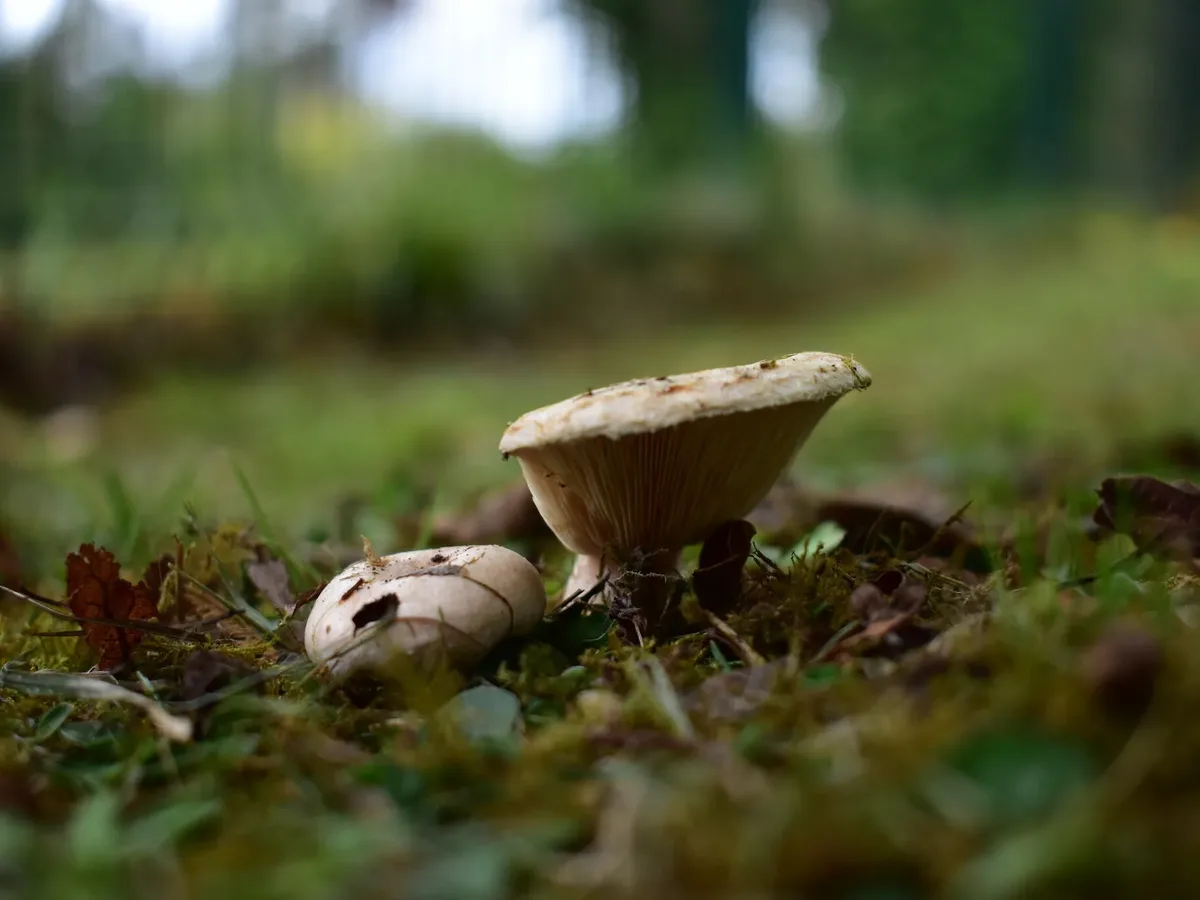 © Rafael Ancatrio (CC BY)
 © Rafael Ancatrio (CC BY)
 janetgraham84new (CC0)Alex Heyman (CC0)Shane O' Rahilly (CC0)
Edible only with the right preparation - or safe for some people but not others. Learn the caveats first.
Never eat a mushroom you are not 100% sure of - check the look-alikes below, and always cook wild mushrooms.
How to recognise it
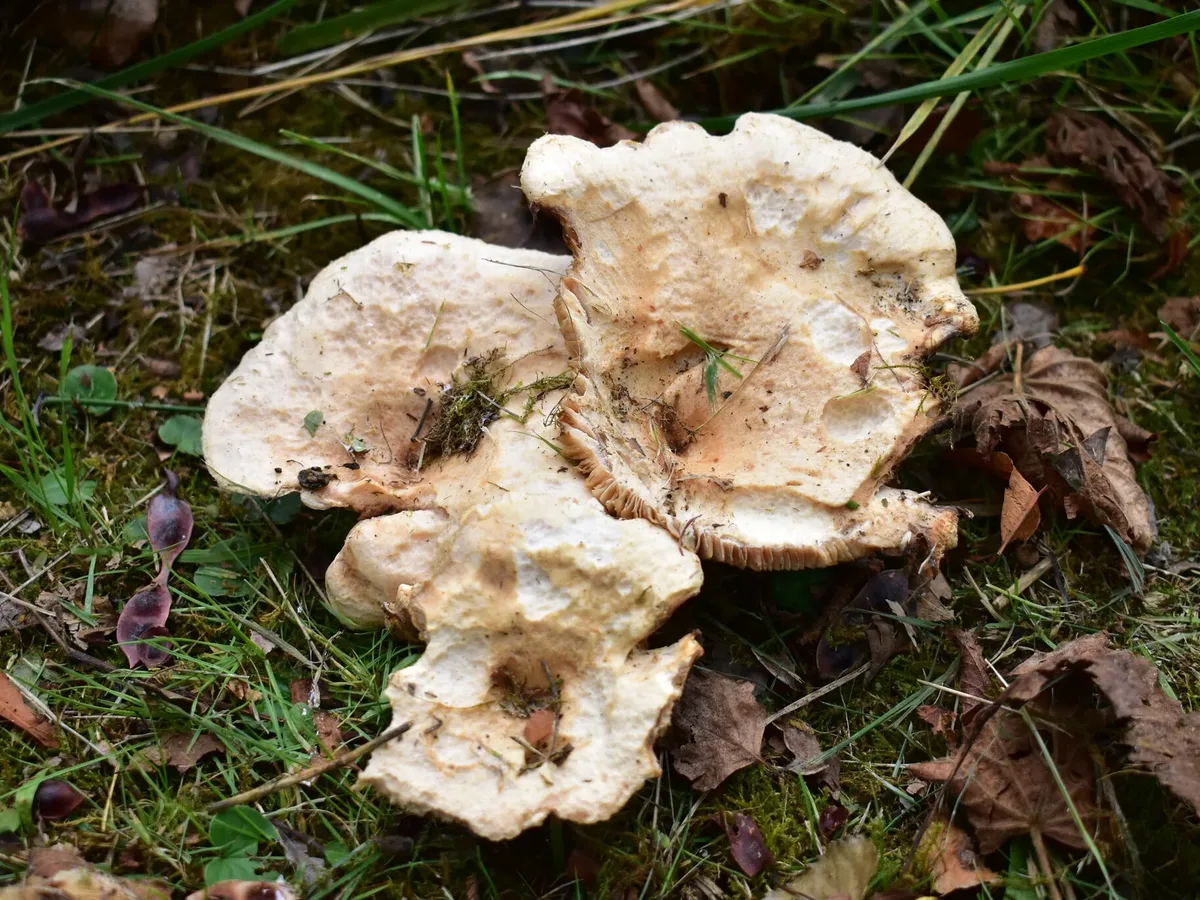
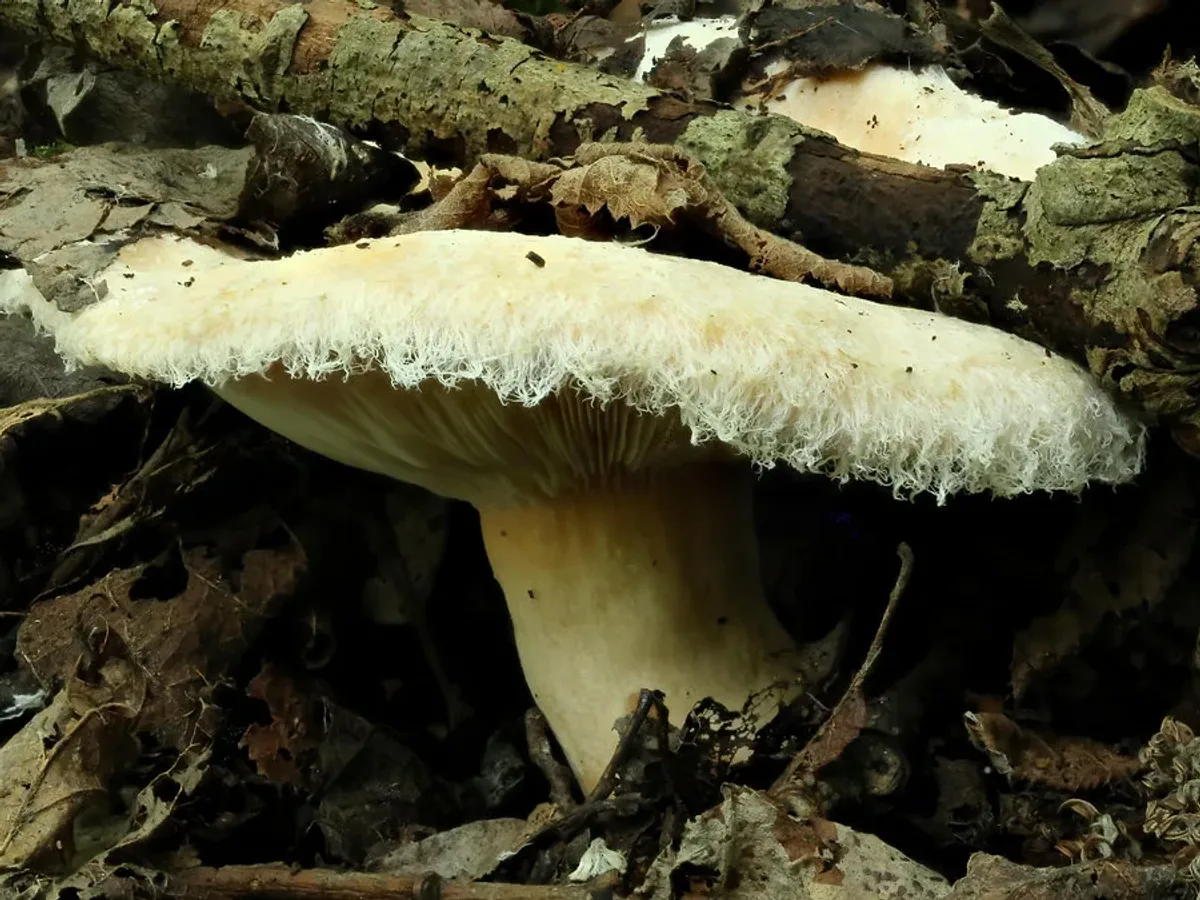
Lactarius pubescens is a pale, densely hairy milkcap most reliably identified by two features used together: its creamy-white to very faintly pinkish cap blanketed in a dense, velvety pubescence that thickens to a shaggy woolly fringe toward the inrolled margin, and its copious white milk that does not change colour and burns the mouth within seconds.
Pick it up and it feels almost felted in the hand - softer and woolier than most milkcaps, more like something grown in damp northern moss than in a classic woodland.
The pallor is striking: it is substantially whiter than Lactarius torminosus, which runs salmon-pink to rosy, and the woolly fringe persists across the whole cap surface rather than just at the margin.
In cross-section the flesh is purely white and does not colour or blue on cutting.
The latex flows freely from any cut surface, is pearly white, and immediately causes a sharp burning sensation - test a small drop on the tongue tip and spit it out quickly; never swallow. That burn confirms this species and rules out many superficially similar pale mushrooms.
Cap zoning, when present, is very subtle and visible mainly in dry conditions. Mature specimens lose some of their initial woolly sheen as hairs wear, but the margin fringe persists.
Why it's dangerous
Not life-threatening for healthy adults; classed as a GI irritant mushroom.
The danger is primarily from misidentification - collecting a pale mushroom in birch woodland without confirming latex could lead to picking a deadly Amanita instead. Always apply the latex test.
If eating after traditional preparation, incomplete preparation is the main hazard:
- boil thoroughly
- change water
- do not shortcut the process
Avoid feeding prepared L. pubescens to children, pregnant women, or immunocompromised individuals given the residual uncertainty about complete toxin removal.
Toxin
The acrid compounds in L. pubescens are sesquiterpene lactones, chiefly velleral (dialdehyde sesquiterpene) and related structural analogues. These are direct mucosal and gastrointestinal irritants. They are not neurotoxic, nephrotoxic, or hepatotoxic.
They are soluble in water and largely destroyed by sustained heat (boiling), which is why traditional preparation relies on repeated parboiling with water changes rather than dry heat methods.
The concentration of these compounds in L. pubescens is similar to or slightly lower than in L. torminosus, but both species require the same thorough preparation if used at all.
Symptoms
Ingestion of raw or insufficiently cooked Lactarius pubescens causes a rapid-onset burning sensation in the mouth, lips, and throat (within seconds of tasting raw latex).
If eaten, symptoms progress to nausea, abdominal cramps, vomiting, and diarrhoea within 30 minutes to 2 hours.
Symptoms are self-limiting and resolve within 24 hours in most adults with supportive care (fluids, rest). Severe reactions are uncommon but possible in children or those who consume large quantities.
No kidney, liver, or nervous system involvement is expected.
Staying safe
Lactarius pubescens contains acrid sesquiterpene lactone compounds (principally velleral and related lactones) in the latex and flesh. These are strong mucosal irritants.
Eating the raw or insufficiently prepared mushroom causes oral burning, nausea, vomiting, and gastrointestinal cramps.
The toxins are heat-labile and water-soluble, so thorough repeated parboiling reduces them substantially, which is why traditional preparation involves multiple water changes.
This species is classed as a GI irritant (gastrointestinal-irritant toxin group); it does not cause kidney failure, liver damage, or neurological effects. It is not life-threatening in adults, but may cause more serious distress in children or vulnerable individuals.
The primary identification safety discipline is the latex test: every time you collect a pale cap in birch woodland, snap a gill or nick the flesh and confirm white milk flows immediately. If no latex appears, you may be handling a potentially deadly species (Amanita).
Never eat white or pale mushrooms from birch woodland without confirming latex.
Where & when it grows
Habitat
Unlike most milkcaps, which associate with conifers or mixed woodland, Lactarius pubescens is strictly tied to birch trees (Betula spp.) and will not be found away from them. This makes habitat reading a powerful exclusion tool: under pine or spruce with no birch, it cannot occur.
It thrives in the open, often windswept birch scrub of northern Scandinavia and the sub-alpine zone, where Betula pubescens is the dominant tree, and in lowland birch carr, young birch regeneration on cleared ground, and forest edges where birch colonises first.
The substrate is typically moist and mossy, often Sphagnum-dominated, on acidic soils.
In the Nordic region it frequently co-occurs with Lactarius torminosus, which shares the same birch host, and with Cortinarius species and Russula species in the same mycorrhizal community.
Pay close attention to which tree is directly above: if it is not birch, look again.
When
Lactarius pubescens is a summer-leaning milkcap relative to most of its relatives. In the boreal zone and Scandinavian fell it appears from late July, making it one of the earliest autumn mushrooms of the mountain birch forest.
It peaks through August and can persist into early October in lowland stands, but in exposed northern sites it is largely finished by mid-September.
It responds to summer rains on warm soil; a rain event of 15-25 mm over warm July-August weather typically triggers emergence within 5-10 days. On sub-alpine fells it fruits opportunistically whenever conditions permit through the brief warm season.
How it grows
Grows scattered to gregarious under birch, sometimes forming loose arcs or irregular clusters that follow birch root systems just below the surface - the mycelium has been quietly threading through the soil long before the fruitbodies appear. Never truly caespitose (sharing a common base).
Buttons push up through duff or moss and expand rapidly in warm wet weather. Individual fruitbodies may persist one to two weeks before becoming slimy or insect-damaged.
Often found alongside other birch-associated milkcaps and russulas.
Fruiting conditions
Summer-leaning fruiting pattern; responds to warm summer rain events on acidic, mossy birch forest soils; appears earlier in the season than many autumn milkcaps; in sub-alpine zones can fruit at soil temperatures as low as 6°C following July rains; tolerates cool nights and maritime conditions
Look-alikes
Several species can be confused with Lactarius pubescens, but the white non-changing acrid latex combined with the birch habitat excludes most dangerous fungi. The most important confusion species are within genus Lactarius itself.
- Lactarius torminosus (woolly milkcap / bleeding milkcap) is the most frequently confused species; it is closely related, also grows under birch, and also bears a hairy, fringed cap. It is distinguished by its distinctly salmon-pink to rosy-pinkish cap colouration - never the pure creamy-white of L. pubescens - and by a cap surface that tends to be more prominently zoned in orange-pink concentric bands. The latex of L. torminosus is also white and unchanging with an acrid taste. Both species are GI toxic raw; neither is deadly.
- Lactarius controversus grows under poplars and willows rather than birch and has a larger, whiter cap, but its habitat separates it reliably.
- Lactarius evosmus (syn. L. musteus in some usage) is associated with spruce or pine and lacks the distinctive woolly margin fringe.
Amanita virosa (destroying angel) and other white Amanita species grow in the same birch forests and are deadly. However, they never produce latex: break any gilled mushroom suspected of being a milkcap - if no white milk flows immediately, it is NOT a Lactarius.
Amanita also has a volva (cup) at the base, a ring (annulus) on the stem, and free gills.
Always confirm latex before collecting pale woodland mushrooms under birch.
Pure white, deadly poisonous Amanita growing in the same birch forests; contains amatoxins causing fatal liver failure. CRITICAL DISTINCTION: Amanita virosa produces NO latex whatsoever - snap a gill or cut the flesh; if no white milk flows, it is not a Lactarius. Amanita virosa also has a skirt-like ring (annulus) on the stem, a cup-shaped volva (sac) at the base often buried in soil, and free gills. Never collect white gilled mushrooms under birch without confirming white latex.
A large, pale milkcap with a white to pinkish-tinged cap and woolly or slightly pubescent margin, but grows strictly under poplar (Populus) and willow (Salix), not birch; also tends to be larger (cap to 20 cm) with pinkish zone blushes; white non-changing acrid latex also present; habitat is the safest separation.
A pale, whitish funnel-shaped mushroom that grows in deciduous and mixed woodland leaf litter; produces NO latex; gills decurrent and crowded; cap surface smooth or slightly silky, not hairy or fringed; toxic (muscarine). Latex test immediately distinguishes L. pubescens.
The closest relative and most frequent confusion species; also grows under birch and has a hairy, fringed cap with white acrid latex. Distinguished by its distinctly salmon-pink to rosy-orange cap colour (never the creamy-white of L. pubescens) and more prominently concentric zoning in warm pinkish-orange bands. Both are toxic raw; neither is deadly. L. torminosus is marginally more commonly used in traditional preparation.
A reference guide - never an edibility guarantee. When in doubt, leave it out.