Ugly milk cap
Lactarius necatorsyn. Lactarius turpis (Weinm.) Fr., Agaricus necator Bulliard, Lactarius plumbeus (Bull.) Fr., Lactarius olivaceoniger P.Karst.
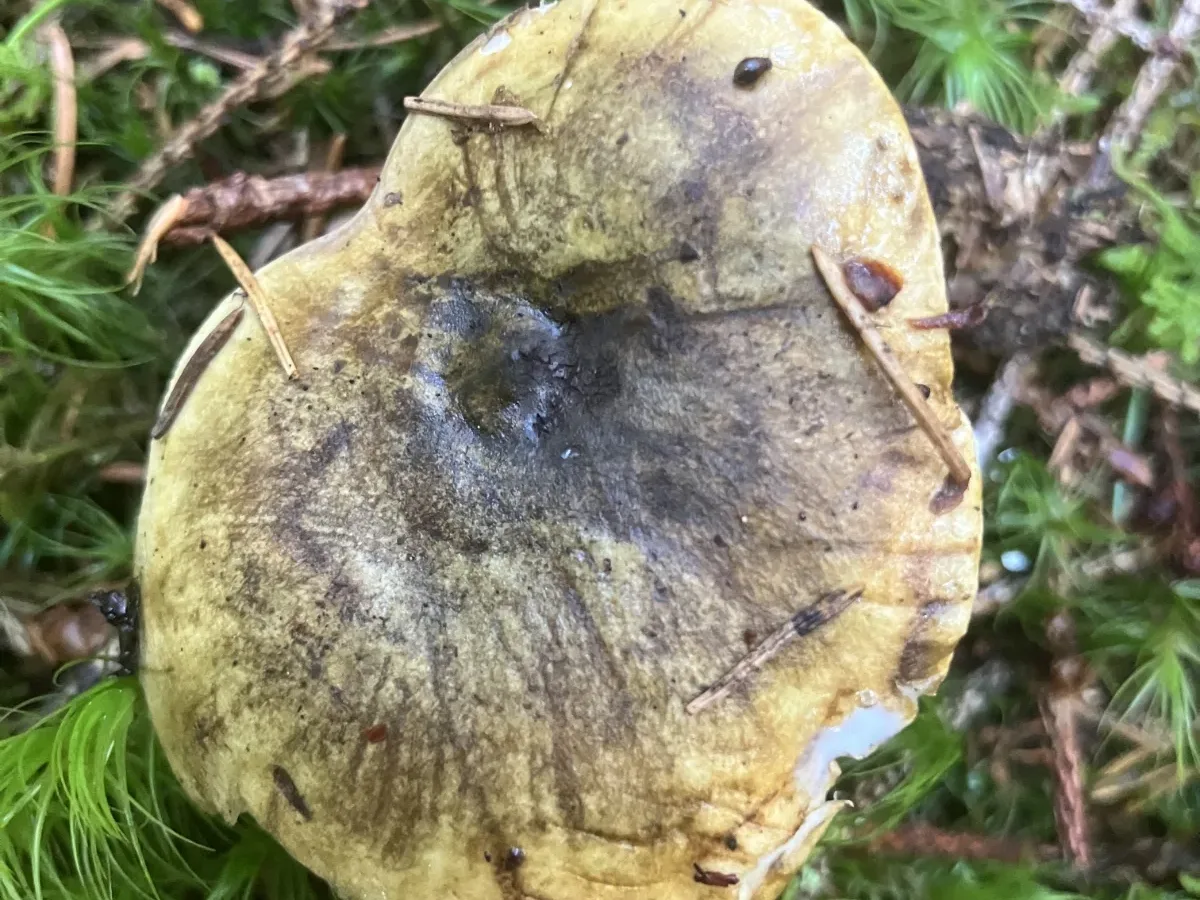 © Jonas Heggedal (CC BY)
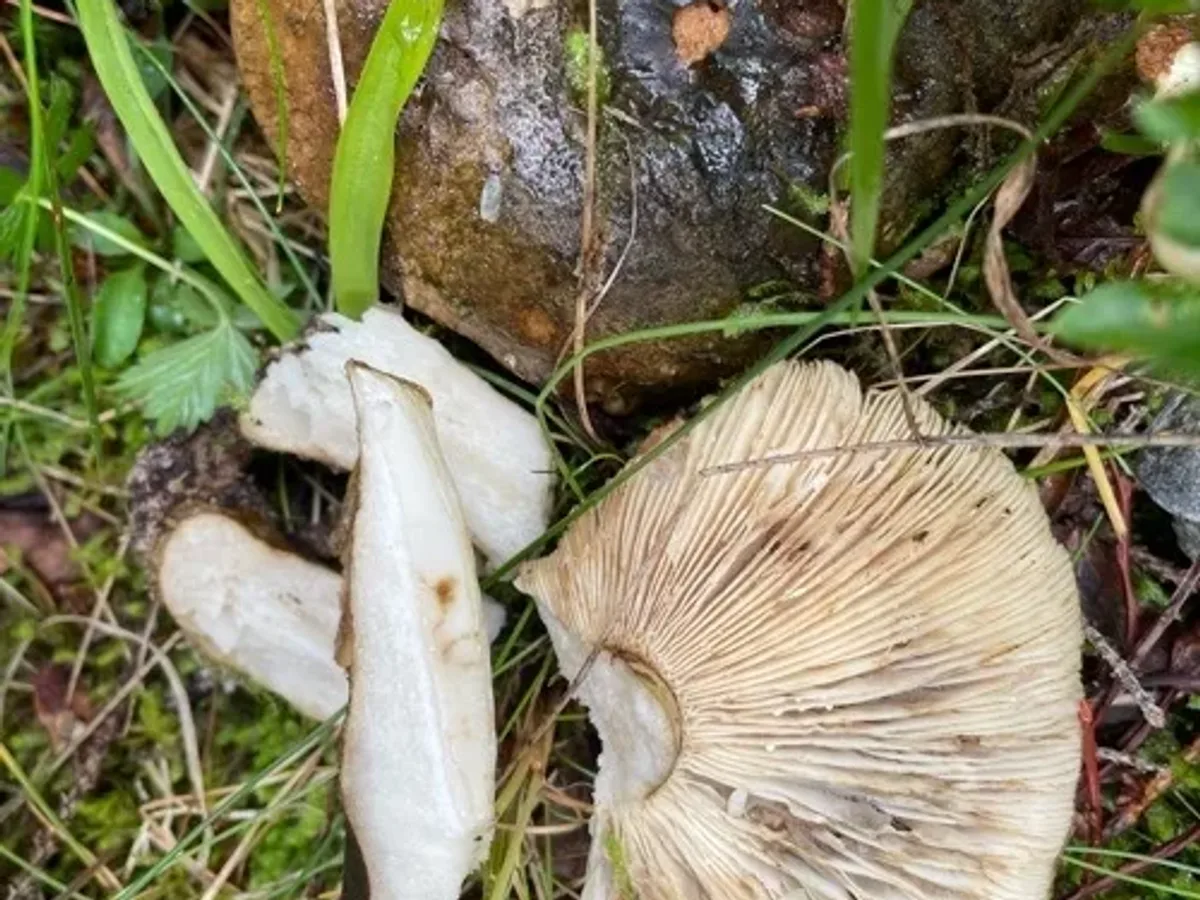 © Bjørn Eidhammer (CC BY)
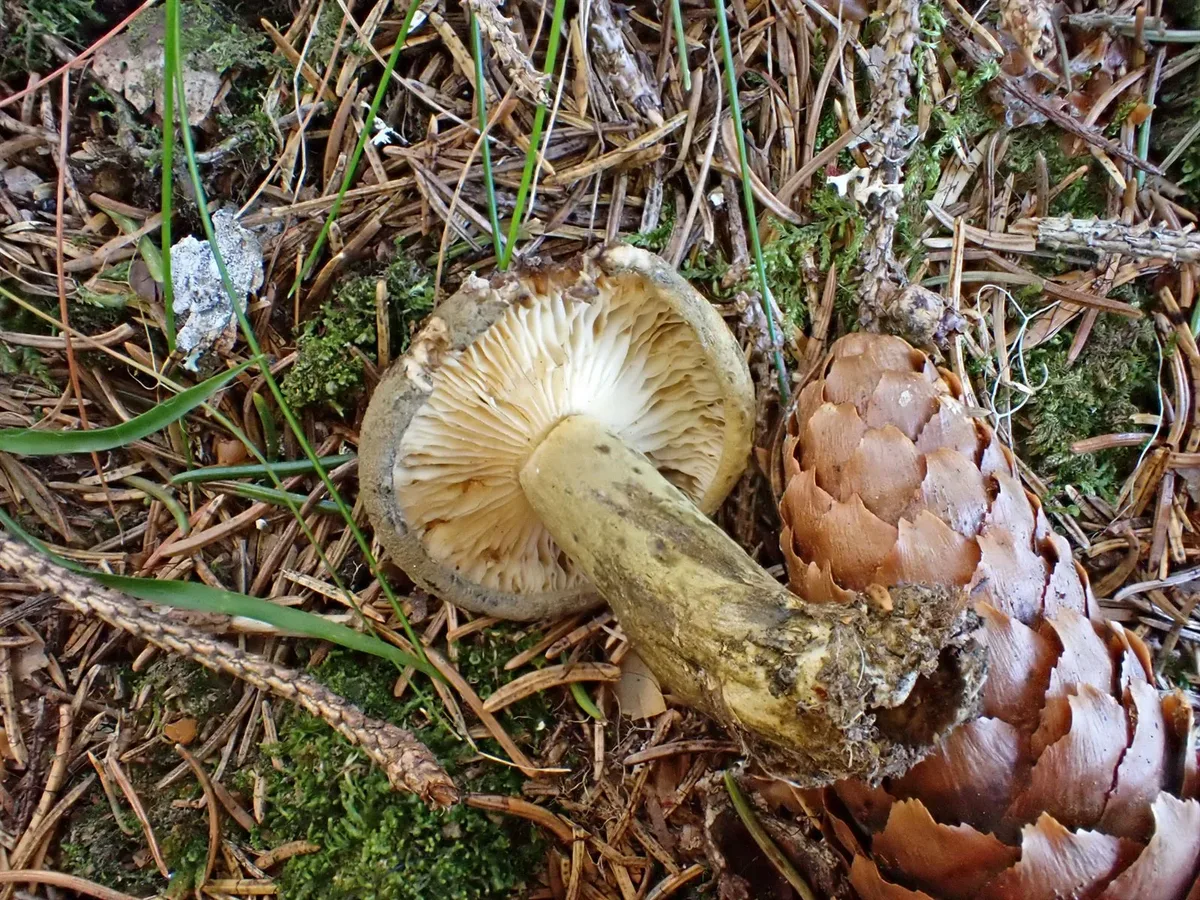 © Inger-Lise Fonneland (CC BY)
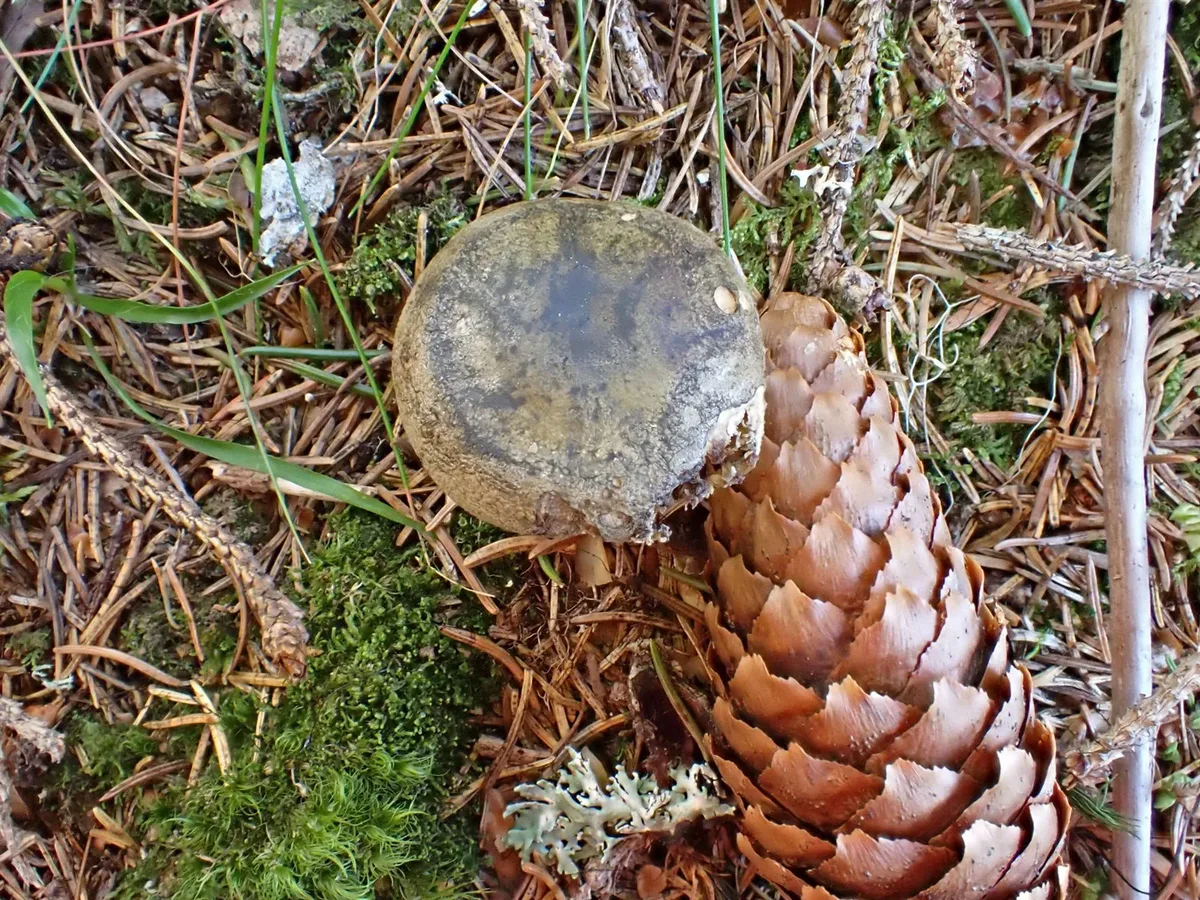 © Inger-Lise Fonneland (CC BY)
 © Siv Moen (CC BY)
 © Ulrik Andreassen (CC BY)
 © Jonas Heggedal (CC BY)
 © Jonas Heggedal (CC BY)© Jonas Heggedal (CC BY)© Bjørn Eidhammer (CC BY)
Edible only with the right preparation - or safe for some people but not others. Learn the caveats first.
Never eat a mushroom you are not 100% sure of - check the look-alikes below, and always cook wild mushrooms.
How to recognise it
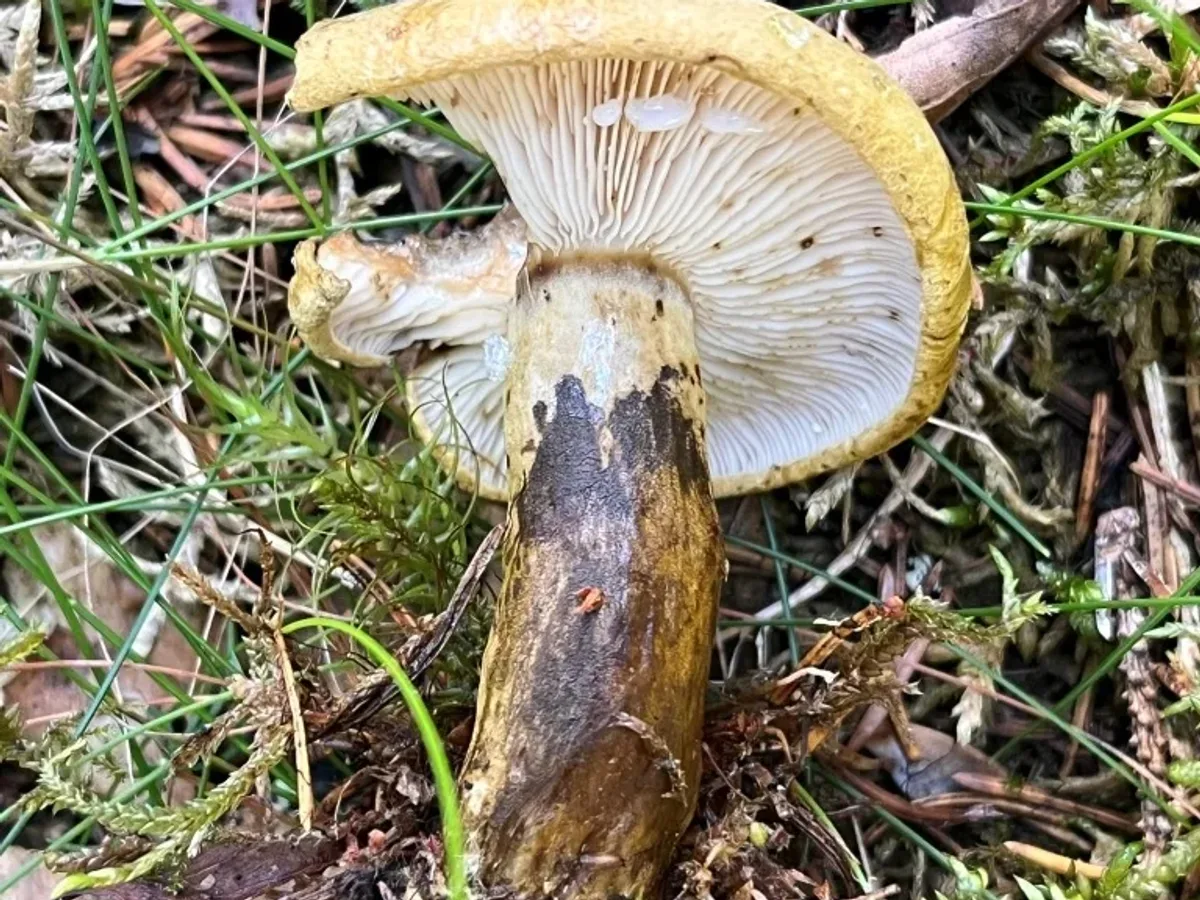
Lactarius necator is one of the darker-coloured and more visually distinctive milkcaps, though its palette of olive-brown, olive-black, and smoky greenish-grey can make it look unappetising - explaining both its common name and its Latin epithet (necator means 'killer').
Cap
The cap's most immediately recognisable feature when fresh is its strongly viscid, glue-like surface in humid conditions: in damp weather the cap appears greasy to glossy, collecting debris and pine needles that stick firmly. As the cap dries, the surface becomes matt and somewhat leathery.
The colour is consistently in the olive-brown to dark umber spectrum, often nearly blackish at the disc, never reddish or orange.
Young caps are firmly convex and domed with the margin tightly inrolled; older specimens flatten and develop a central depression, retaining the incurved margin for longer than many other milkcaps.
Gills
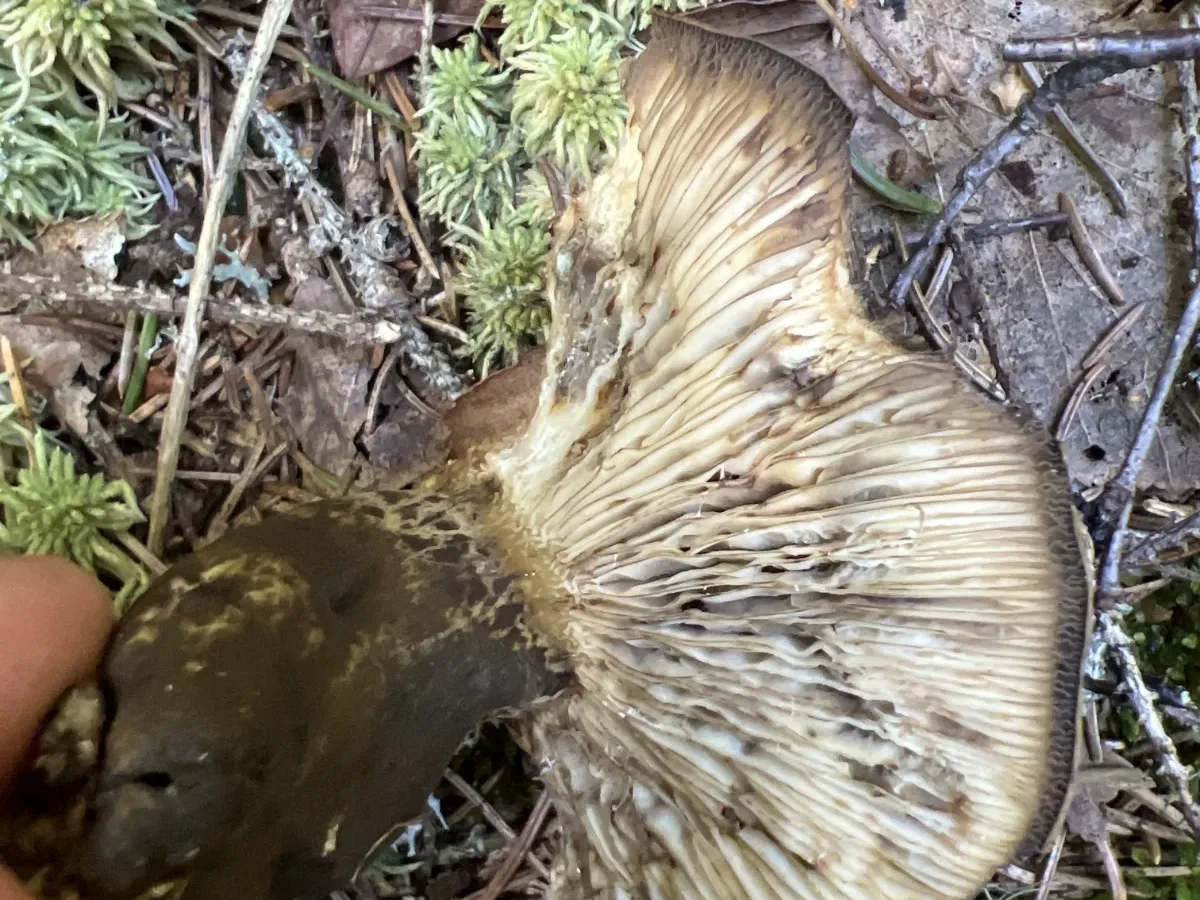
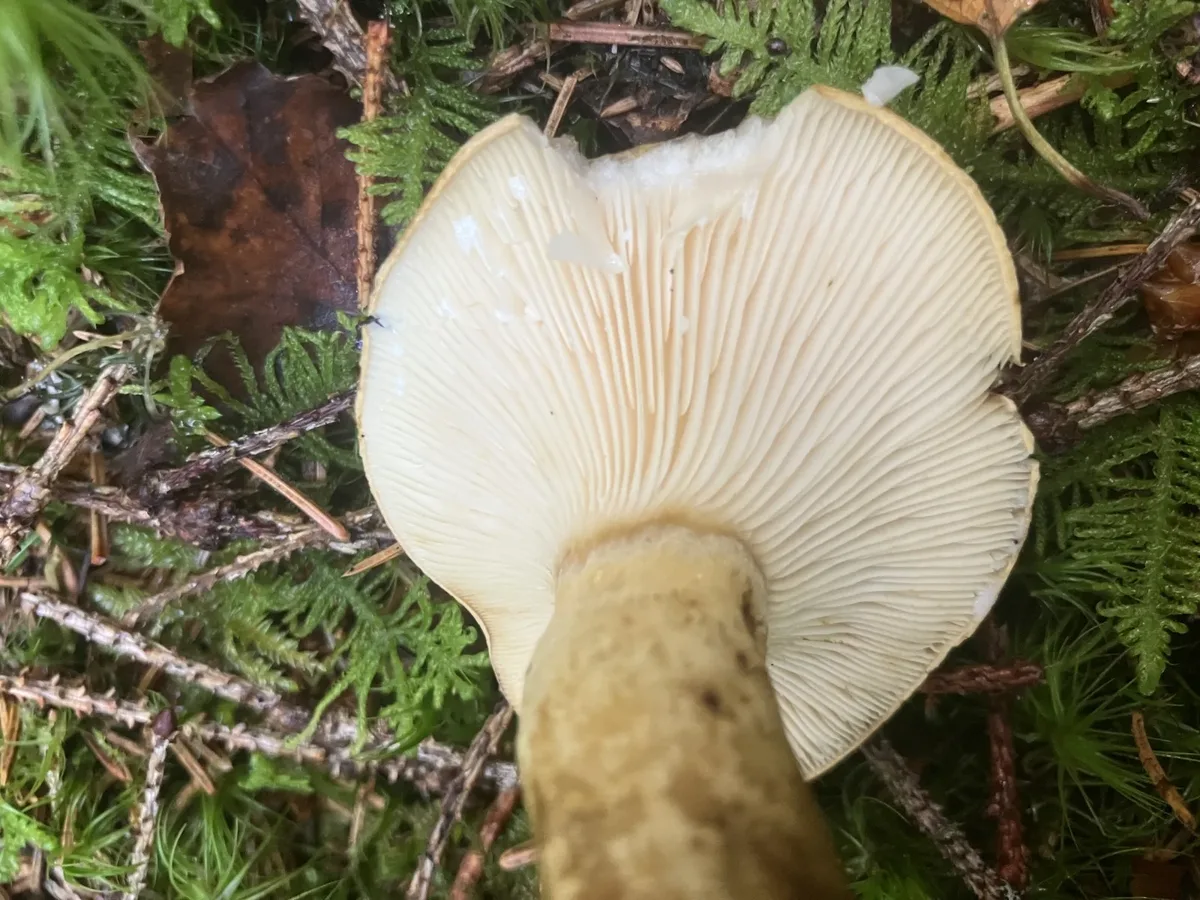
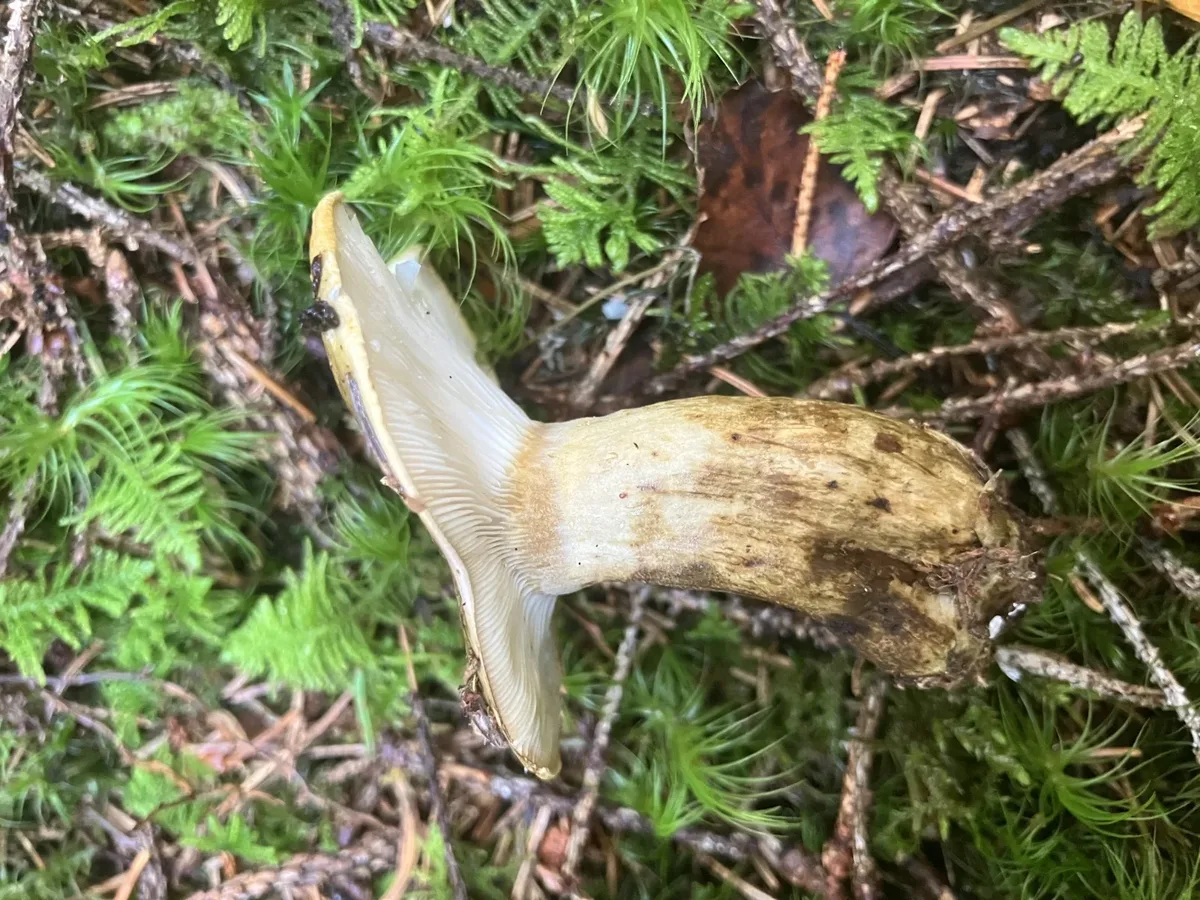
The gills are pale cream at first, but the moment latex contacts them - from rough handling, slug feeding, or cutting - they develop persistent olivaceous to brownish staining that deepens with time.
Stem
The stem matches the cap in general tone, often with scattered paler or darker spots.
Flesh
Crucially, any part of the flesh cut or broken releases abundant white latex that remains white and does not change colour in air; this differentiates it from species with coloured or colour-changing milk.
Smell & taste
Taste a small drop: the acrid, burning quality is immediate, intense, and absolutely diagnostic - do not swallow.
This combination of dark olive glutinous cap, white unchanging acrid latex, and conifer habitat identifies the species with confidence.
Why it's dangerous
Moderate acute danger from gastrointestinal irritation if eaten raw or insufficiently prepared, with additional theoretical concern from the mutagenic compound necatorin detected in this species.
Not considered deadly in the acute clinical sense, but the combination of reliable gastrointestinal toxicity and potential mutagenicity means this species should not be eaten by casual foragers.
The most serious practical danger in the field is misidentifying a deadly species - particularly Paxillus involutus or toxic Cortinarius species - due to superficial similarity in cap colour. Confirming white latex flows from cut flesh is the essential first safety check.
Toxin
The primary toxins are acrid sesquiterpene lactones concentrated in the latex and flesh. These compounds are direct gastrointestinal irritants.
Of particular note, necatorin - a dihydroazulene sesquiterpene first isolated from this species - has been found to be mutagenic in laboratory assays (Ames test). This distinguishes Lactarius necator from other acrid milkcaps, where the concern is limited to gastrointestinal irritation.
The sesquiterpene lactones are partly heat-labile and water-soluble, but the mutagenic necatorin fraction may not be fully eliminated by standard blanching and salting procedures used in eastern European traditional preparation.
Symptoms
Gastrointestinal syndrome from raw or inadequately prepared material:
- Immediate burning and tingling in the mouth and throat on contact.
- Nausea, vomiting, and abdominal cramping beginning within 30 minutes to 2 hours of ingestion.
- Diarrhoea.
Severity is dose-dependent and recovery is generally complete within 24 hours.
No cases of liver failure, kidney failure, or irreversible neurological damage are attributed to Lactarius necator specifically. The mutagenic risk is theoretical at typical dietary exposure levels rather than acutely expressed.
Staying safe
Lactarius necator is genuinely poisonous and should not be eaten without specific knowledge of controlled traditional preparation.
Consumption of raw or inadequately prepared material causes gastrointestinal irritation - burning in the mouth and throat, nausea, vomiting, and diarrhoea - typical of the acrid sesquiterpene lactone syndrome.
More significantly, the compound necatorin (a dihydroazulene derivative) isolated from this species has demonstrated mutagenic activity in the Ames test. While its clinical significance in human diets has not been fully characterised, this finding places it in a category of additional concern beyond simple gastrointestinal irritants.
Standard food-safety guidance in Japan, China, and most of Europe does not consider this species acceptable for consumption even after cooking.
In case of accidental ingestion of raw or poorly prepared material, symptoms typically begin within 30 minutes to 2 hours. Gastrointestinal symptoms are generally self-limiting, but medical advice should be sought if symptoms are severe, prolonged, or if there is any uncertainty about the species consumed.
Where & when it grows
Habitat
In East and Southeast Asia, Lactarius necator inhabits montane and subalpine coniferous forests dominated by spruce and fir. Its range runs from northeast China (Heilongjiang, Jilin, Liaoning) and the Korean peninsula through Japan's cooler island interiors (Hokkaido, the Japanese Alps) and south into Yunnan, Sichuan, and Tibet at higher elevations.
It is fundamentally a cool-climate, moisture-dependent species: it thrives in deep forest where canopy is closed, soils stay moist through summer, and there is a substantial organic horizon.
In boreal Eurasia - across Russia, Scandinavia, and the Baltic states - it is often the most conspicuous large dark milkcap in spruce forest and can fruit abundantly.
It has a preference for slightly acidic, humus-rich soils and avoids calcareous substrates.
Within its habitat it is a faithful mycorrhizal partner of spruce. Following clear-felling or severe disturbance it disappears and is slow to return, making it a useful (though informal) indicator of established forest continuity.
When
Fruiting occurs primarily in midsummer through early autumn, a season shaped by the biology of its host trees and the moisture regime of cool temperate and boreal forests.
- In northeastern China and Korea, the main season runs from August through September, often triggered by summer monsoon rainfall in combination with forest shade that keeps soil temperatures from rising too high.
- In Japan and at higher elevations in Yunnan or Sichuan, it can appear from July at altitude.
- In European boreal zones, the peak is similarly August-September.
The species tolerates cooler temperatures than many woodland fungi and can persist into October in mild autumns, but it rarely fruits after the first hard frosts.
A reliable pattern is that fruitbodies appear one to two weeks after sustained summer rainfall, when the soil temperature at 5 cm depth is in the range of 10-18 °C.
How it grows
Grows singly or in small scattered groups on the forest floor among conifer needles, decaying wood debris, and forest humus.
The dark caps can be surprisingly hard to spot in shadowed spruce forest - the olive colour blends well with decomposing needle litter - but the viscid surface catches light at certain angles.
Young buttons are small, rounded, and firmly textured with the margin tightly incurved; they expand slowly over 5-10 days. Older specimens develop a central depression and the cap margin eventually flattens and becomes wavy.
Fruitbodies are relatively resistant to insect damage at first, but older caps can become heavily tunnelled.
The species is perennial in its mycelial network, and the same forest patch may produce fruitbodies reliably over many years if the host spruce trees are undisturbed.
Fruiting conditions
Fruiting is triggered by sustained summer rainfall (≥20 mm over 14 days) in cool conifer forest when soil temperatures are in the 8-18 °C range. In East Asia the summer monsoon rains from July-August are the primary trigger. The thick-fleshed fruitbodies develop over 7-14 days after sufficient soil moisture is established. Optimal conditions are shaded forest floor with consistent moisture; fruitbodies can persist for 1-2 weeks in cool, humid conditions.
Look-alikes
Within its East and Southeast Asian range, the most important comparisons are other dark-capped Lactarius species and potentially misleading lookalikes.
- Lactarius quietus (oakbug milkcap) is smaller and browner, with an oily or slightly rancid smell and a preference for oak rather than spruce; its latex is also white and acrid but it lacks the extreme olive-black viscid cap tone of necator.
- Lactarius turpis is now considered a synonym of L. necator in current taxonomy (Index Fungorum and Species Fungorum both treat them as the same species), so field guides using either name refer to this species.
- Lactarius lignyotus (sooty milkcap) is darker - sooty-black to umbrinous - with a distinctly velvety (not viscid) cap surface, a more slender stature, and white latex with mild to slightly acrid taste; it grows under conifers in similar habitats but is reliably distinguished by the dry, velvety cap texture versus the glutinous cap of necator.
- Paxillus involutus (roll-rim) has a similar inrolled-margin silhouette and a brownish cap and occurs in the same spruce-birch forests; it is deadly (causes an immune-mediated haemolytic syndrome), lacks any latex, has decurrent gills that stain brown, and has a distinctive mushroom-earthy smell - the complete absence of white milk from cut flesh is the critical differentiating test.
- Cortinarius species with olivaceous or brownish caps can superficially resemble immature Lactarius necator; many Cortinarius species are nephrotoxic or otherwise toxic. Cortinarius lacks latex entirely, has rusty-brown spores, and young specimens retain a cobweb-like cortina veil across the gills.
Always confirm the presence of white latex flowing from cut flesh before identifying any specimen as Lactarius.
Shares a similar inrolled-margin cap silhouette and brownish colour in overlapping spruce-birch habitats, and both are found on the forest floor in midsummer to autumn. Paxillus involutus is DEADLY - it causes an immune-mediated haemolytic syndrome that can be fatal, and even repeated consumption builds rather than eliminates risk. Critical differences: Paxillus involutus produces absolutely NO latex when cut or broken (never any milk); its gills are distinctly decurrent and turn yellowish-brown then dark brown when bruised or pressed; its cap is more tawny-brown (not olive-black) and dry to only slightly greasy (not markedly glutinous); its spore print is ochraceous-brown. Confirm white latex flows from cut flesh of any Lactarius before proceeding - if no latex flows, do not eat.
Immature Cortinarius with brownish or olivaceous caps in similar conifer forest can superficially resemble young L. necator buttons. Cortinarius species are some of the most dangerous fungi known - several cause fatal or irreversible kidney failure (orellanine nephrotoxicity) with delayed symptoms appearing weeks after ingestion. Cortinarius NEVER produces latex: break any piece of fresh flesh firmly - if no white milk flows, the specimen is not Lactarius and must not be eaten. Young Cortinarius also retain a cobweb-like cortina veil across the gills visible in fresh specimens, and mature specimens have rusty-brown to cinnamon-brown spore deposits on gills and stem.
Smaller and more tawny-brown than L. necator, with a distinctive oily or rancid bedbugs-and-chicory smell that is essentially absent in necator. Associates strongly with oak rather than spruce or pine. Latex white and very mildly acrid. Not recommended for eating but not the same level of toxicity concern.
A closely related East Asian species sometimes confused with L. necator; distinguished by a slightly more olivaceous (less blackish) cap with a less markedly viscid surface, and white latex of somewhat less extreme acridity. Taxonomic boundaries between the two are still being refined in the East Asian literature; treat both as caution/inedible.
Similarly dark-capped and growing under conifers in the same boreal and montane forests. Distinguished by its velvety, dry, sooty-black to deep umber cap surface (never viscid or glutinous), slender and more delicate stature, and white latex with a milder taste. The cap texture is the quickest diagnostic: touch the surface - velvet-dry in L. lignyotus versus distinctly sticky-glutinous in L. necator when moist.
A reference guide - never an edibility guarantee. When in doubt, leave it out.