Pine milkcap
Lactarius musteussyn. Agaricus musteus Fr., Lactarius musteus var. muscarius
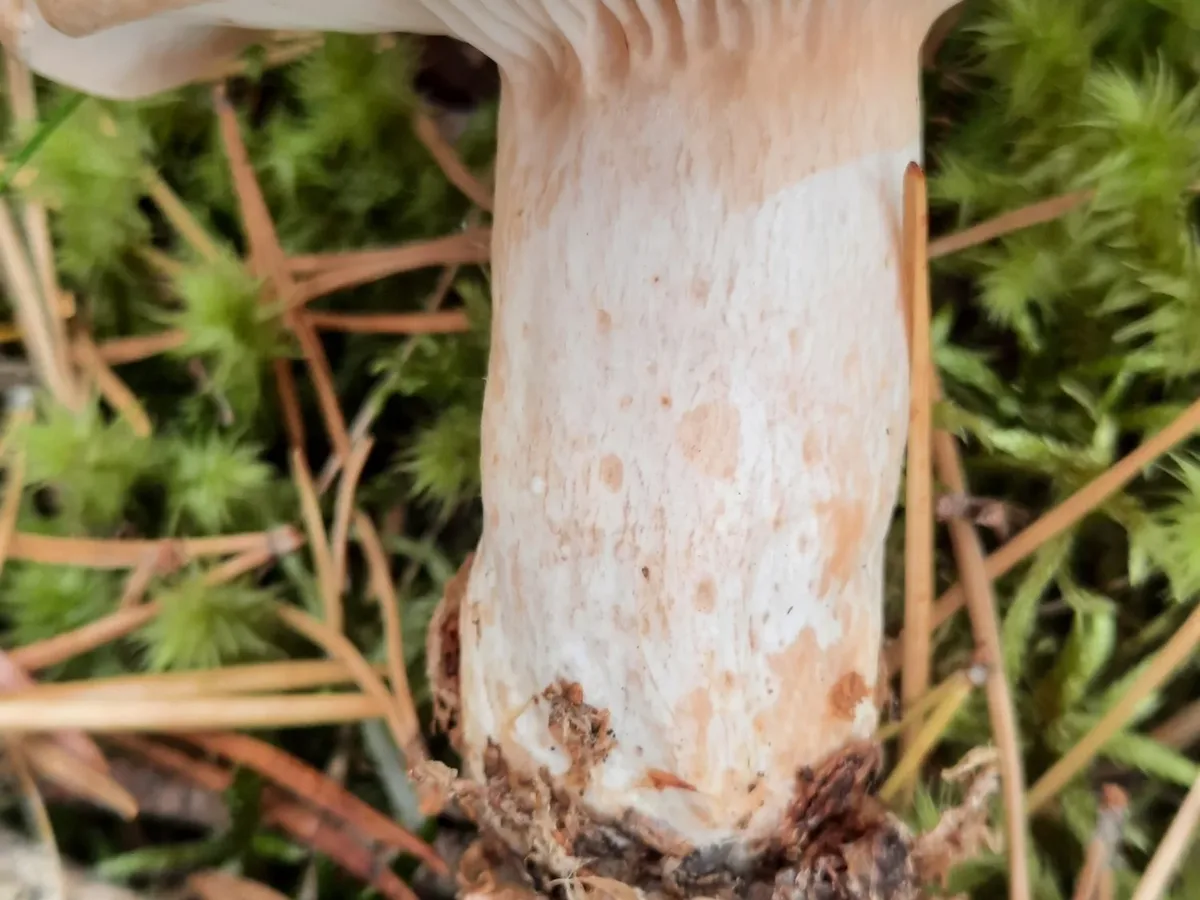 judybaxter (CC0)
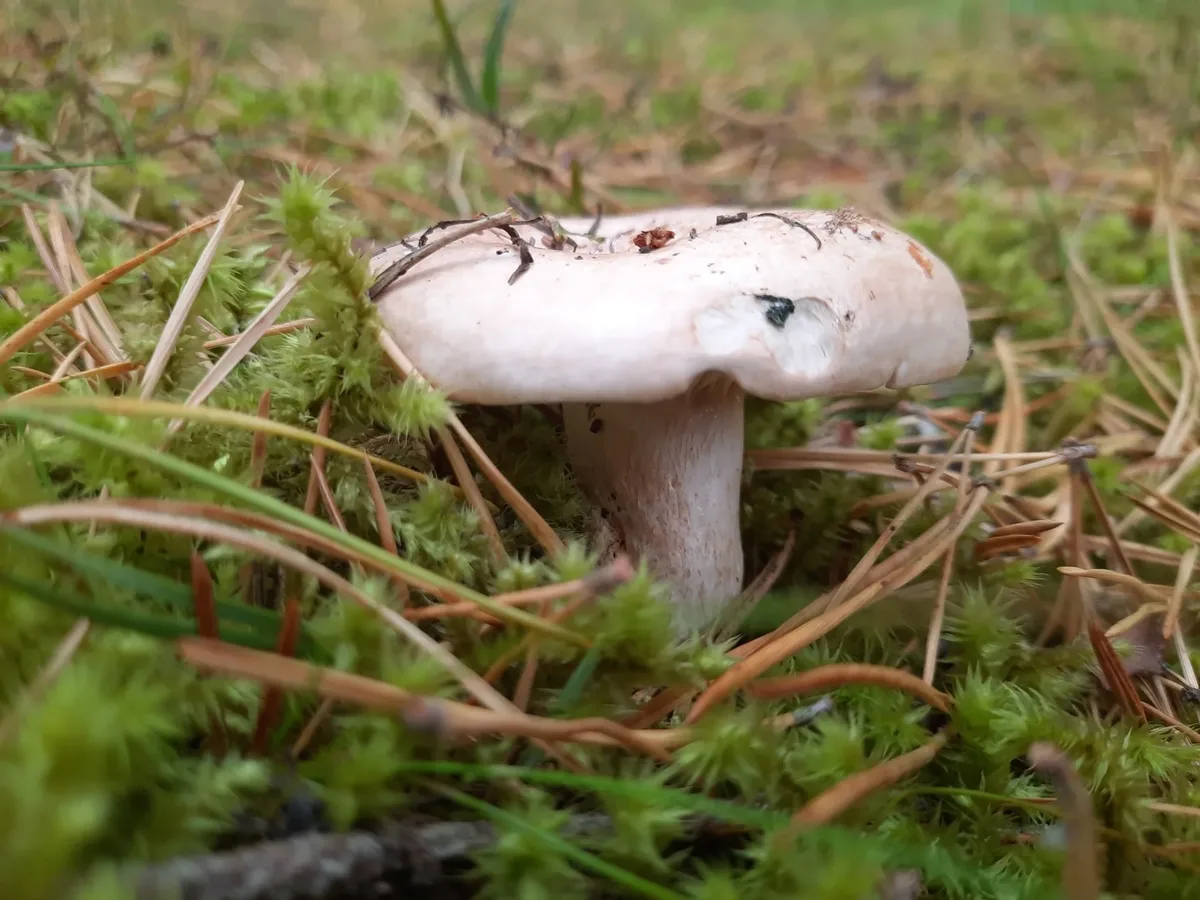 judybaxter (CC0)
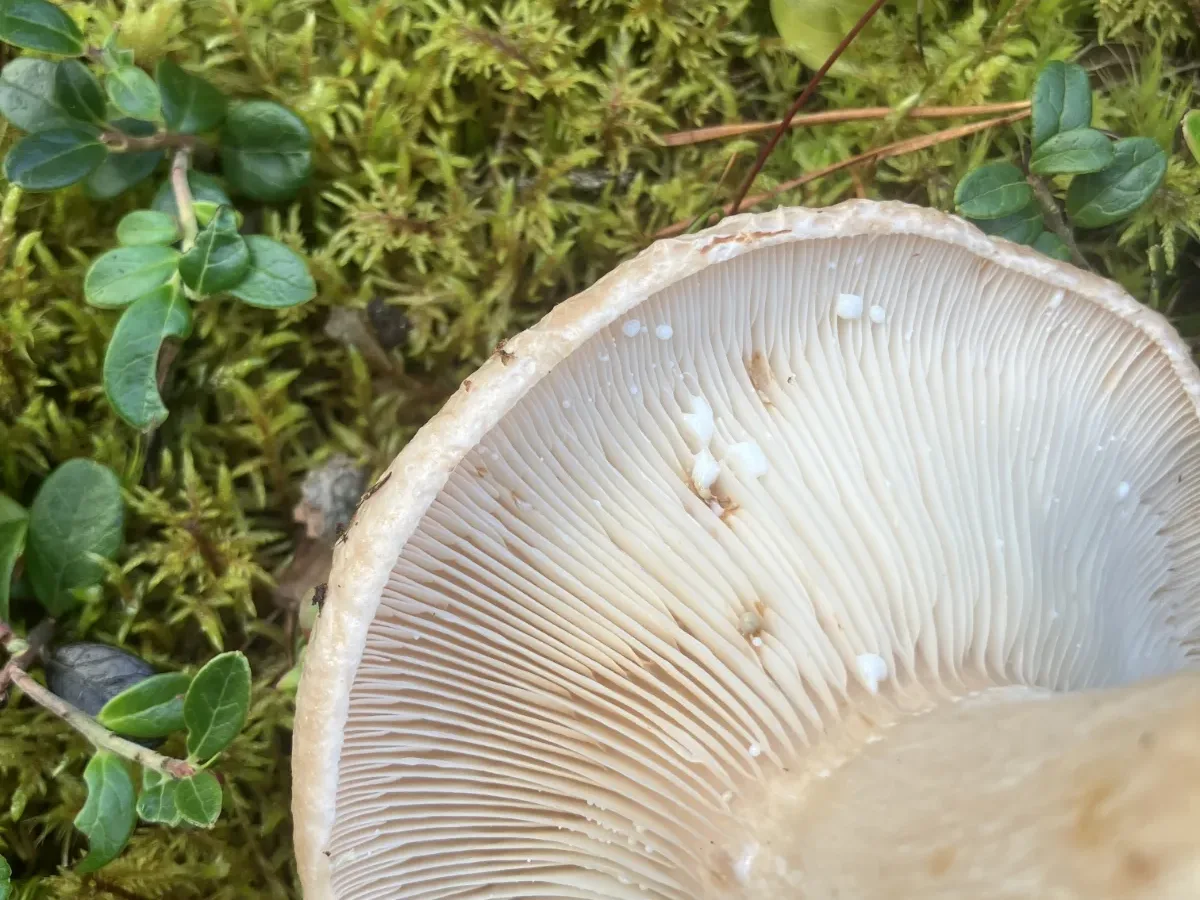 © Jonas Heggedal (CC BY)
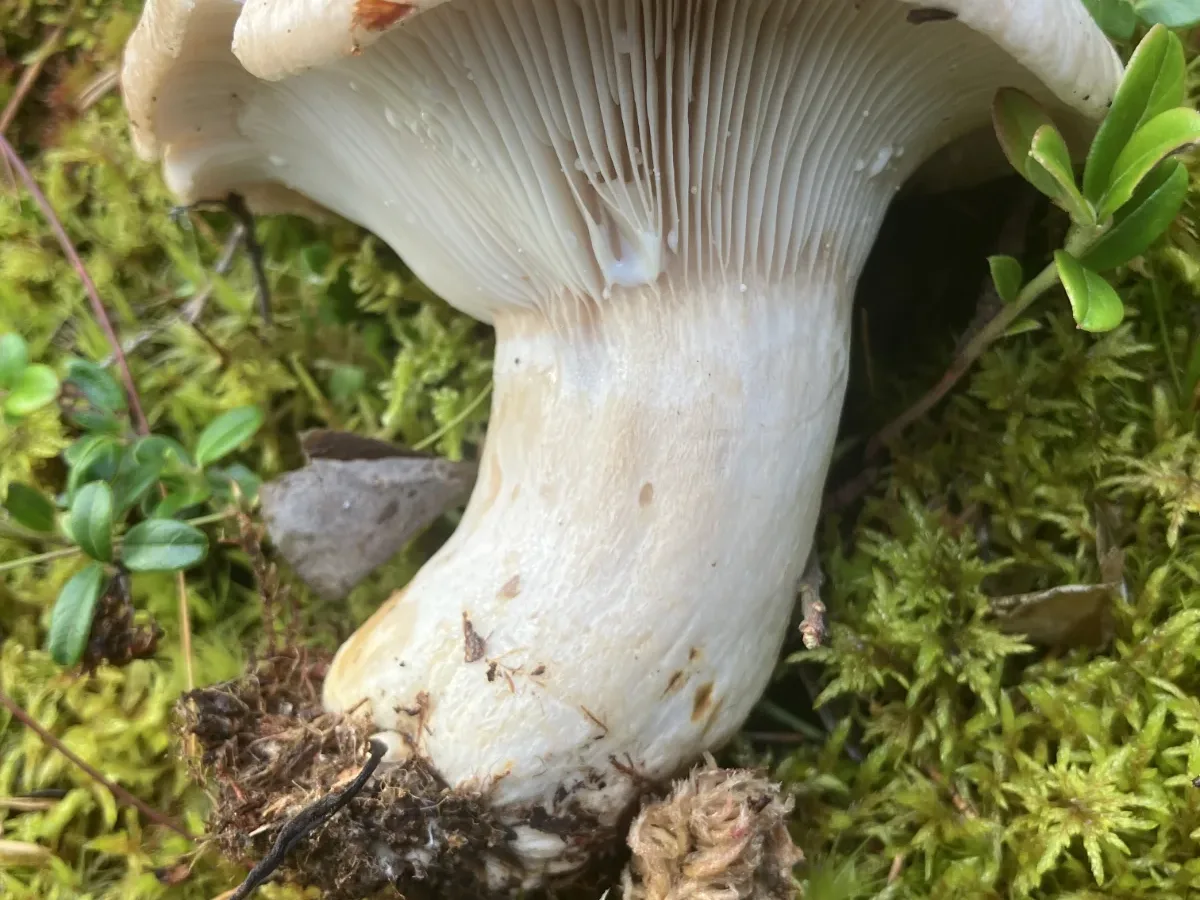 © Jonas Heggedal (CC BY)
 © Jonas Heggedal (CC BY)
 © Jonas Heggedal (CC BY)
 © Perry Gunnar Larsen (CC BY)
 © Perry Gunnar Larsen (CC BY)
 © Gunvor Bollingmo (CC BY)
 © Gunvor Bollingmo (CC BY)
 © Kari Undrum (CC BY)
 © Per Marstad (CC BY)judybaxter (CC0)judybaxter (CC0)
Good to eat, once you have identified it with certainty and cooked it through.
How to recognise it
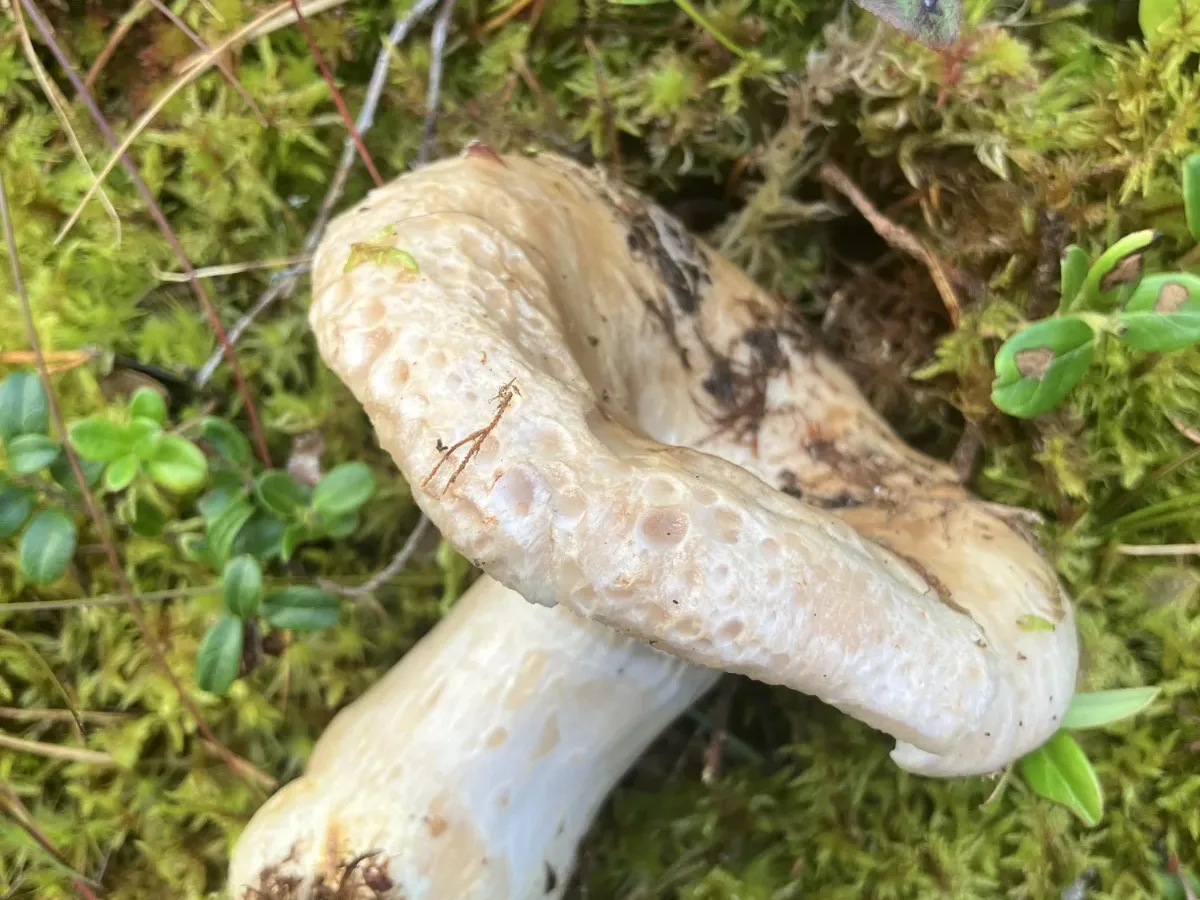
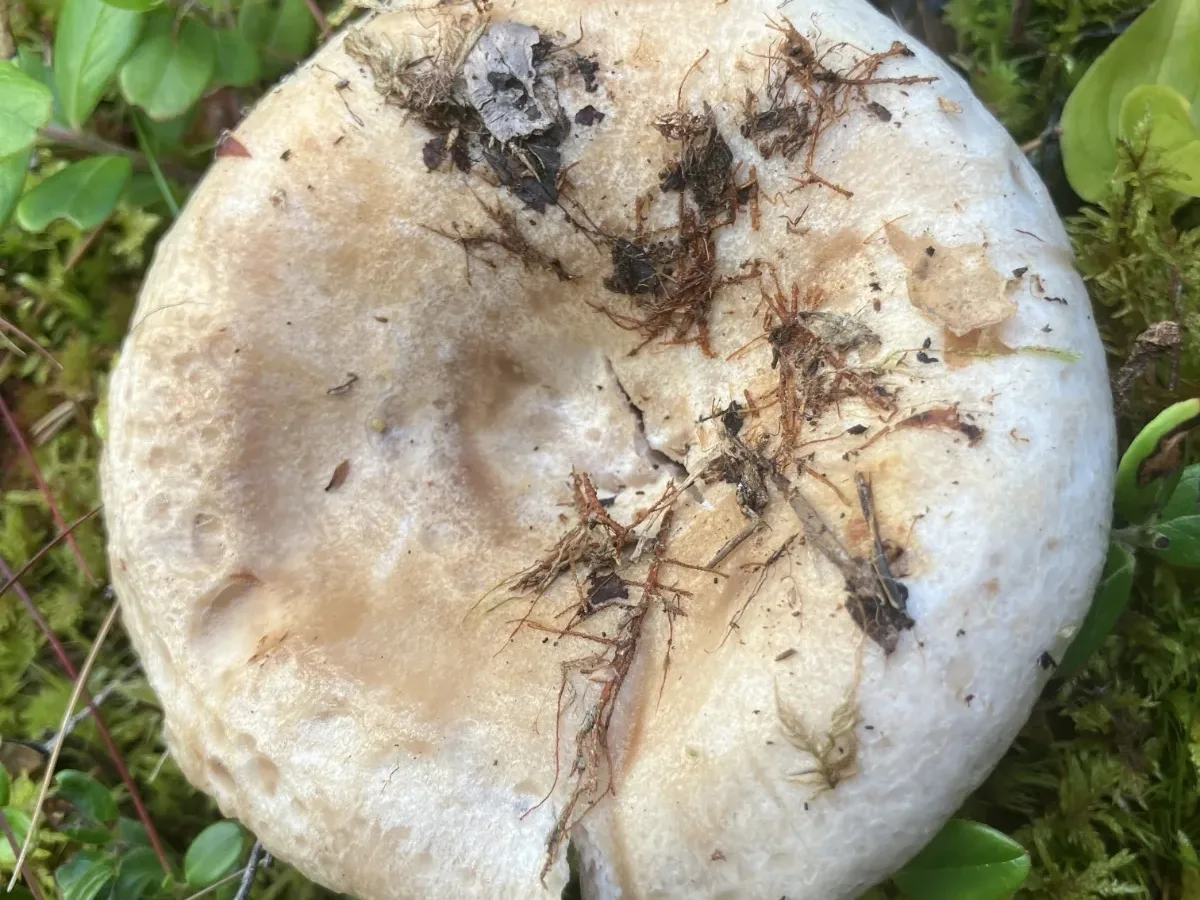
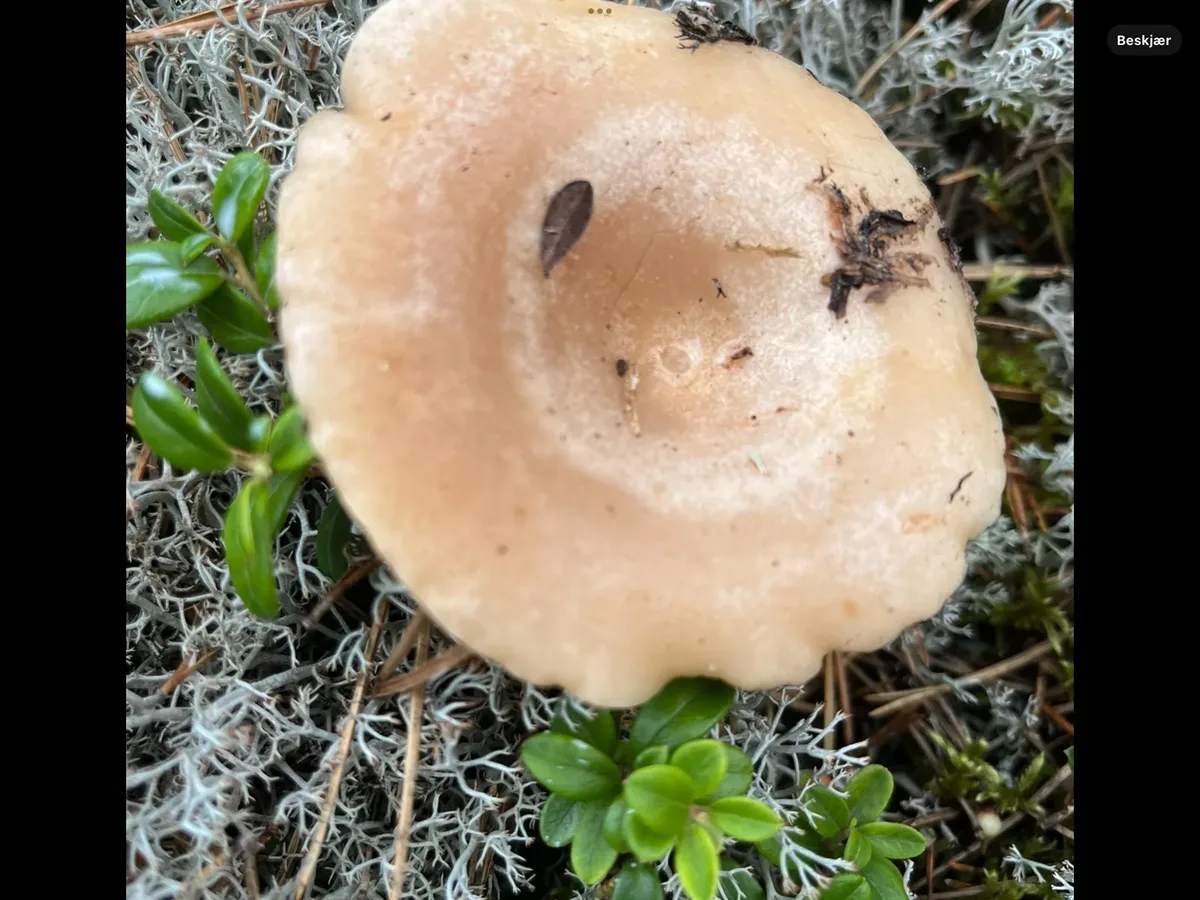
Lactarius musteus is a medium to large milkcap with a distinctly pale, washed-out appearance that distinguishes it immediately from the orange saffron milkcaps or the deep rufous-brown of L. rufus.
Cap
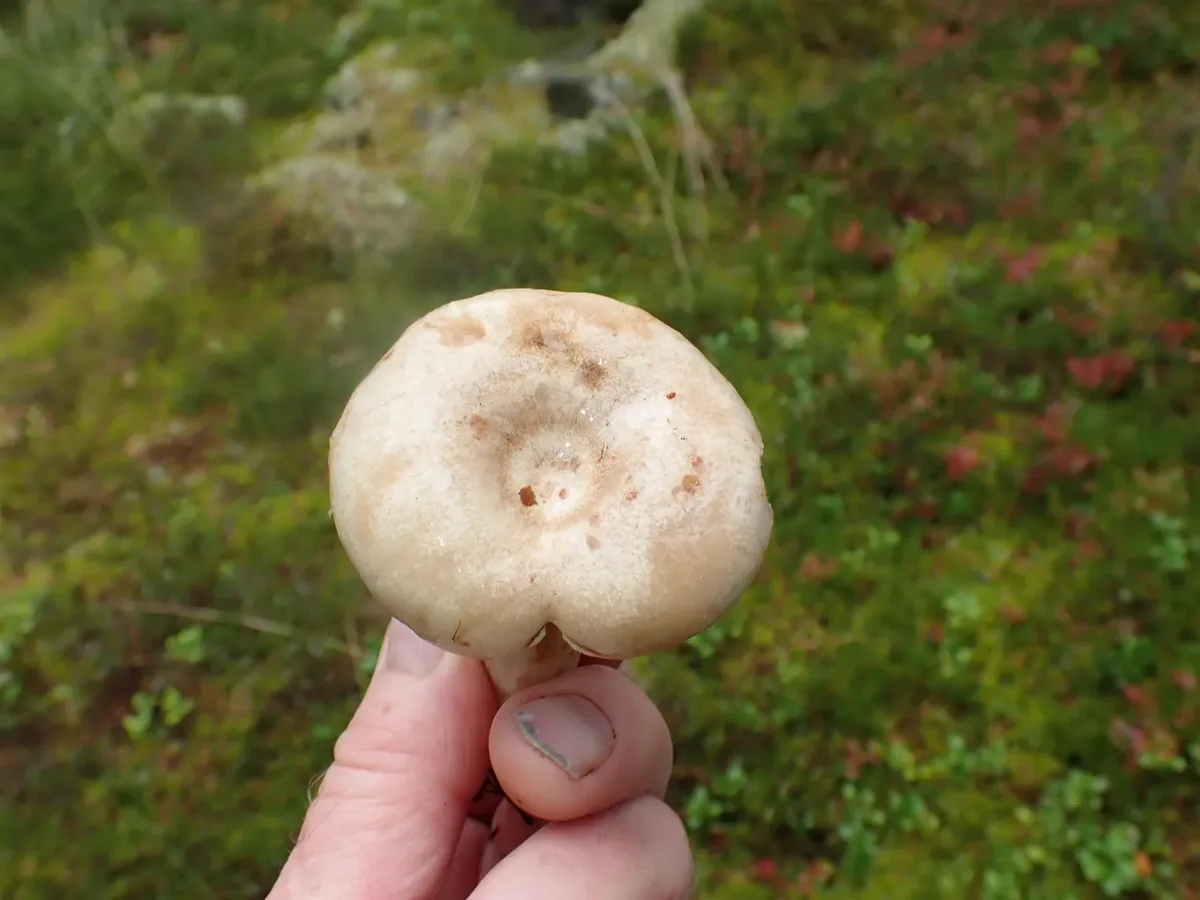
Begins convex with a firmly inrolled margin and expands to broadly funnel-shaped, reaching 5-12 cm across.
The surface is notable for being slightly viscid (sticky to the touch in damp weather) while remaining essentially smooth - the viscidity separates it from the dry-capped L. rufus and from the woolly-margined L. torminosus.
The colour is uniformly pale: buff, cream-ochre, or pale greyish-fawn, occasionally with very faint concentric zoning. In dry conditions the cap surface can appear almost white.
Gills
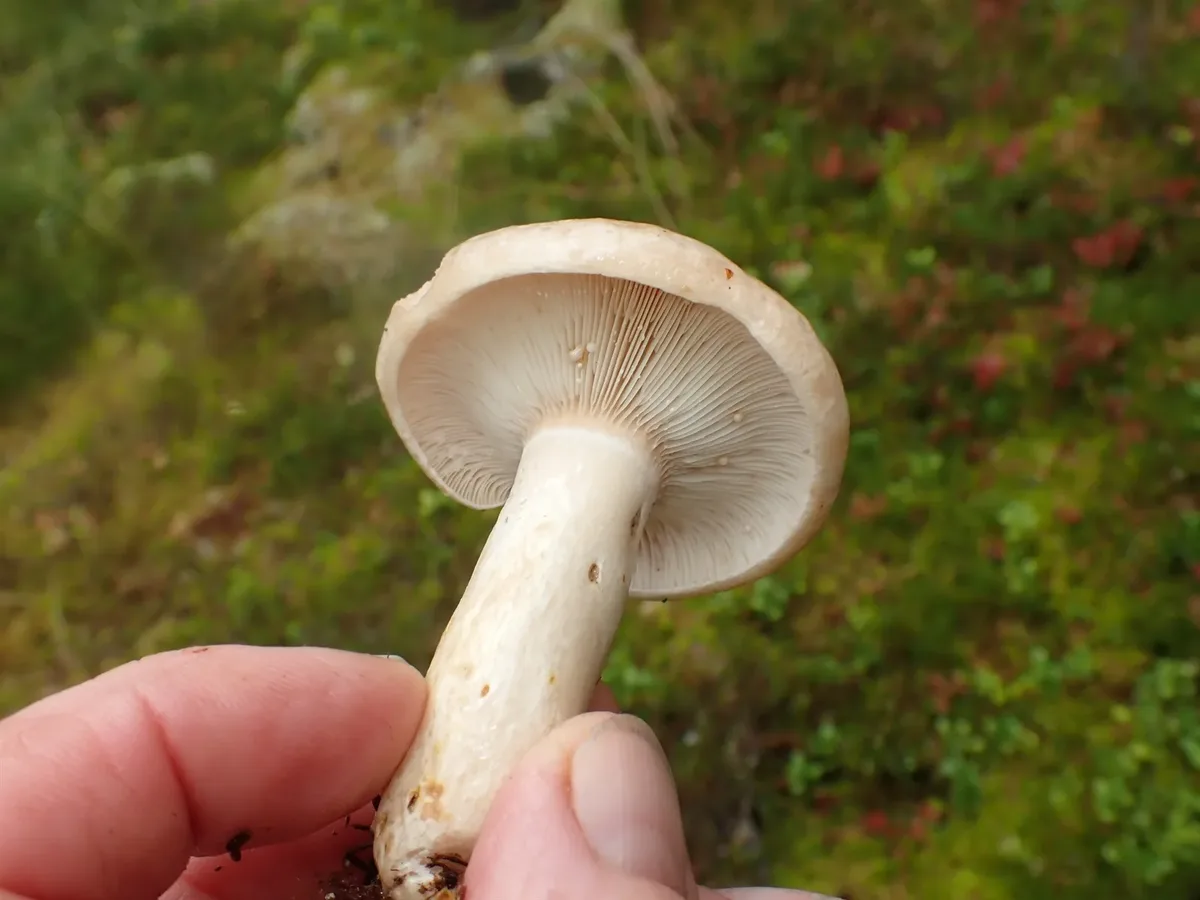
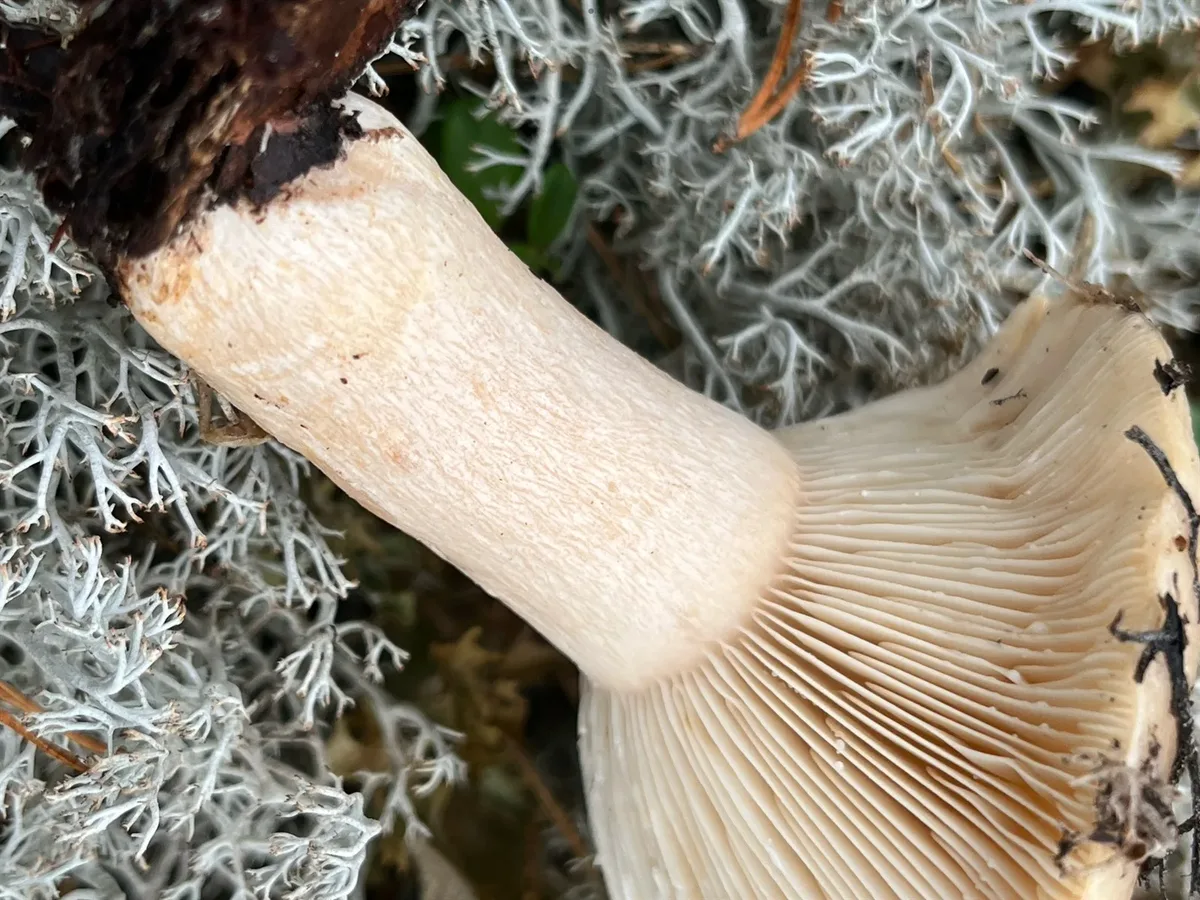
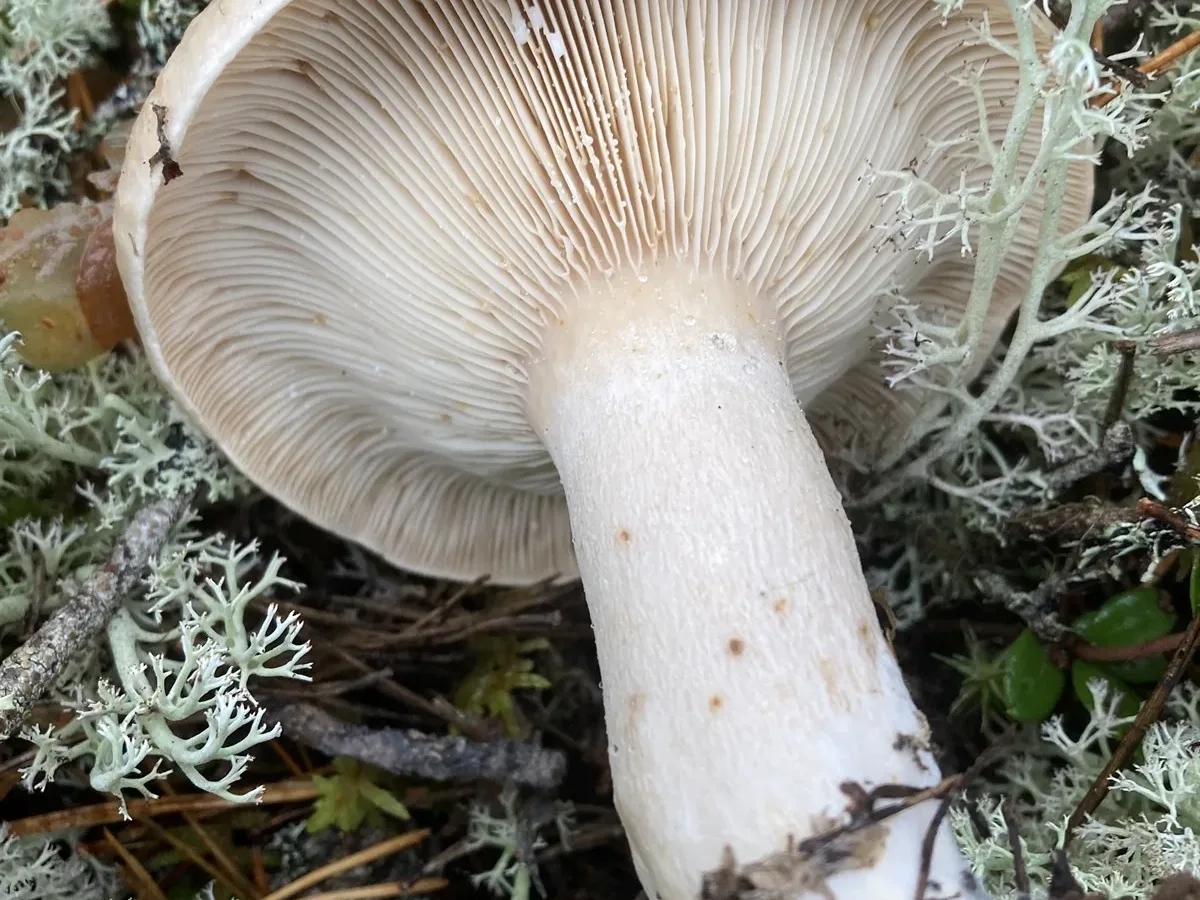
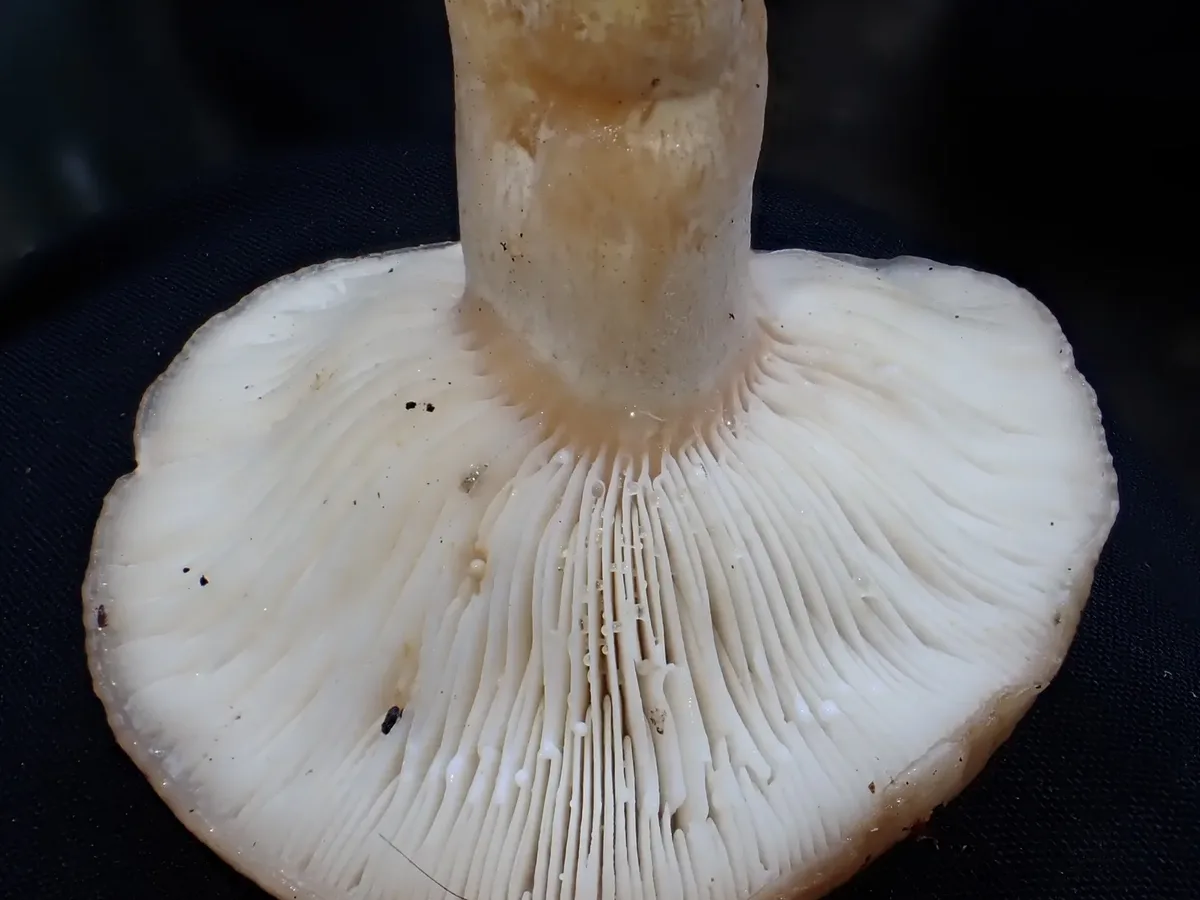
Crowded and pale cream, not staining appreciably when damaged.
Stem
Matches the cap in pallor - white to pale buff, firm, cylindrical, and eventually hollow.
Latex
The most important diagnostic feature is the latex: when you break the flesh or gills, copious white milk flows immediately.
Unlike the acrid and burning white latex of L. torminosus or L. rufus, this milk is mild or only very faintly bitter - you can taste a drop on the tip of your tongue without the sharp burning sensation of dangerous milkcaps.
The milk does not change colour, does not stain the flesh yellow or lilac, and dries white. Always confirm the latex is present and observe its reaction before collecting any milkcap.
Where & when it grows
Habitat
This species is a strict associate of Scots pine (Pinus sylvestris) and is reliably found only where that tree grows.
It is a species of the boreal belt: think of the characteristic dry Scandinavian pine heath - sandy or gravelly acidic soil, sparse ground cover of bilberry, heather, lingonberry, and grey reindeer lichen, with the orange-barked upper trunks of old Scots pines overhead.
In such habitats L. musteus can be abundant, sometimes carpeting sections of forest floor. It also fruits in younger pine plantations on sandy soils. In coastal areas of northern Europe, it occasionally occurs in dune-slack pine woods.
Because the species is so closely tied to Scots pine, habitat is one of the strongest identification aids: finding a pale, mild-latexed milkcap directly under Scots pine in a classic pine heath strongly supports L. musteus.
When
In the Nordic region, fruiting begins in mid-July after warm summer rains and continues through September and into October, with the main flush in August and September.
Like most mycorrhizal fungi, L. musteus waits for the right combination of rain and warmth: a dry spell broken by two weeks of intermittent rain, while soil temperatures are still above roughly 10 C, is usually enough to bring up a flush.
In mild autumns the season stretches well into October, but prolonged frost ends it - by the time hard frosts set in, the season is over.
How it grows
Grows scattered to gregarious, sometimes in loose troops, on the forest floor under Scots pine. Not growing from wood or dung; entirely tied to living pine roots via ectomycorrhiza.
The mycelium threads through the sandy soil and needle litter in an invisible network that supports the tree's mineral uptake in exchange for carbohydrates.
Fruiting bodies appear quickly after rain and can reach full size in four to six days. In good years an individual pine stand may produce dozens of caps.
Fruiting conditions
Mycorrhizal with Scots pine on sandy acidic soils; responds to sustained late-summer rain when soil has warmed sufficiently; tolerates cooler temperatures toward the end of the season; typical flush 6-14 days after significant rain in August-September
Look-alikes
Several other pale or buff milkcaps can be confused with L. musteus, and careful attention to the latex reaction and habitat is essential.
- Lactarius trivialis (trivial milkcap) is one of the closest lookalikes: larger, more greyish-lilac to greyish-brown rather than buff, occurs mainly under spruce rather than pine, and its white milk dries yellowish on the gills - taste and habitat together separate them cleanly.
- Lactarius pallidus (pale milkcap) is very similar in colour, with mild white non-changing milk, but grows under beech and other broadleaf trees in more southerly regions; it is not a species of Scots pine heath.
- Lactarius vietus (grey milkcap) occurs under birch in wetter habitats and has milk that turns grey-lilac to grey on exposure to air - an immediately visible colour change that is absent in L. musteus.
- Lactarius uvidus occurs under birch and willow in wet habitats; its milk turns lilac, a clear distinction.
- Lactarius pubescens (downy milkcap) could superficially resemble a pale milkcap, but has a distinctly hairy-shaggy cap margin and strongly acrid burning milk.
None of the realistic lookalikes in Scots pine habitats is deadly.
The critical safety rule: always confirm white non-changing latex flows from the flesh; this eliminates all Cortinarius (which never produce any milk) and Hebeloma species at a stroke.
Pale pinkish-buff to white cap with a distinctly shaggy, downy or woolly cap margin (especially when young); milk intensely and immediately acrid-burning, unlike the mild milk of L. musteus; associated with birch rather than pine
Similar pale buff to grey colouring but strongly associated with birch in wetter habitats (carr, bog edge); milk turns grey or grey-lilac within a minute or two of exposure to air - the colour change is a definitive distinction from L. musteus whose milk stays white permanently
Pale greyish-cream cap in wet habitats under birch and willow; milk turns lilac-violet on exposure to air and stains the flesh lilac - immediately separable from L. musteus whose white milk does not change colour
Very similar pale buff colour and mild white non-changing milk, but grows strictly under beech and broadleaf trees in more southerly, richer soils - never in Scots pine heath; also slightly larger and less viscid
Larger and more greyish or greyish-lilac in cap colour; grows primarily under spruce rather than Scots pine; white milk dries yellowish on gills, which L. musteus milk does not; overall more greyish-violaceous tone
In the kitchen
Picking & cleaning
Collect young to medium-aged specimens; older, very large caps can become soft or maggoty. The pale colour can make them easy to overlook against sandy soil and pale lichen, so search carefully among bilberry and heather.
Always snap or break a fresh specimen and confirm that white milk flows readily - this single test rules out non-milkcap look-alikes.
Taste a drop of the milk: it should be mild or only very faintly bitter, confirming L. musteus rather than a strongly acrid species.
Cut cleanly at the base, shake off soil and pine needles, and transport in a breathable basket. The caps are firm enough to stack carefully.
Clean the remaining debris at home; the slightly viscid cap surface picks up leaf litter in dry conditions.
Cooking
Lactarius musteus has a mild, pleasant flavour after cooking - not as intensely flavoured as the saffron milkcaps, but valued in Scandinavian and Finnish home cooking for its firm texture and its willingness to absorb surrounding flavours.
It is used for:
- Frying in butter with onions and cream
- A filling in pies and pasties
- Mushroom soups
- Pickling or salting
A brief parboil (5-10 minutes in salted water with the water discarded) before frying is recommended as good practice, particularly for larger, older caps.
The firm texture holds up well to longer cooking times and reheating. It dries reasonably well on a low-temperature rack and can be reconstituted in soups and stews.
Good to know
Lactarius musteus is a safe edible species when properly cooked. It contains no amatoxins, orellanine, or gyromitrin.
The mild latex does not cause significant gastrointestinal irritation after cooking, unlike the strongly acrid milkcaps (L. torminosus, L. rufus) that require repeated blanching.
The primary safety discipline is accurate identification:
- Confirm white non-changing mild latex flows from fresh flesh before collecting.
- Confirm strict association with Scots pine.
- Note the pale buff cap colour.
Eat well-cooked specimens only - raw mushrooms of any species carry risk, and L. musteus should not be consumed raw.
As always with wild mushroom identification, if you have any doubt, do not collect the specimen.
A reference guide - never an edibility guarantee. When in doubt, leave it out.