Orange milkcap
Lactarius mitissimussyn. Agaricus mitissimus Fr., Lactarius aurantius var. mitissimus (Fr.) Rea
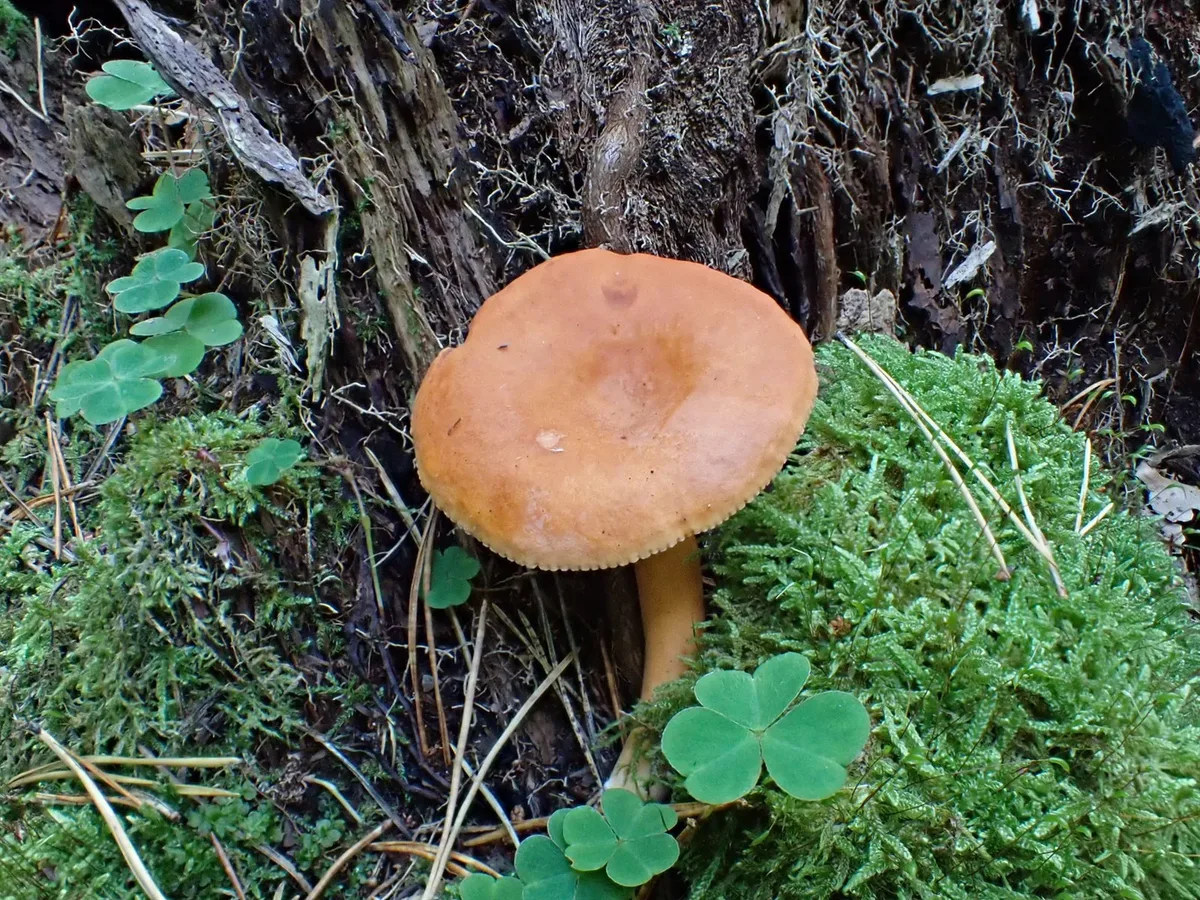 © Inger-Lise Fonneland (CC BY)
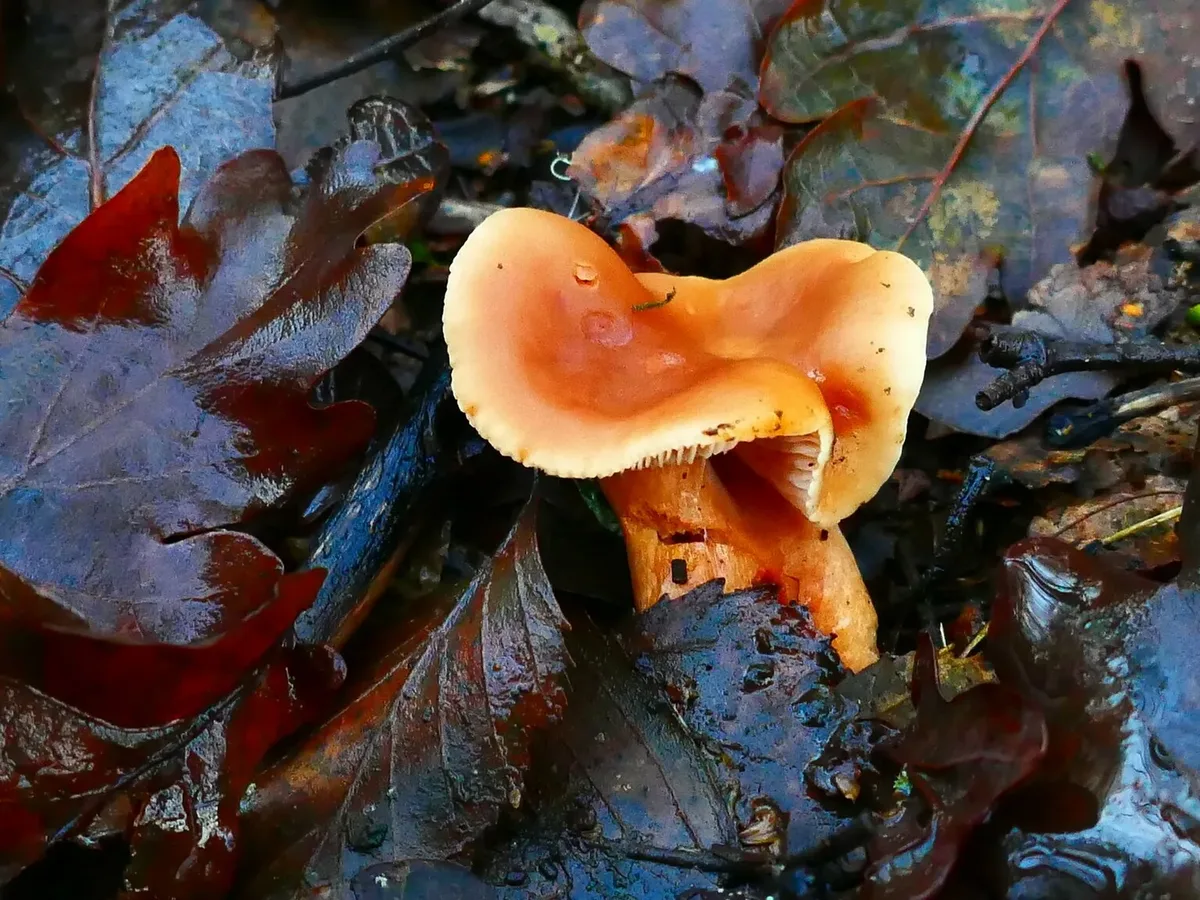 Patrick Le Mao (CC0)
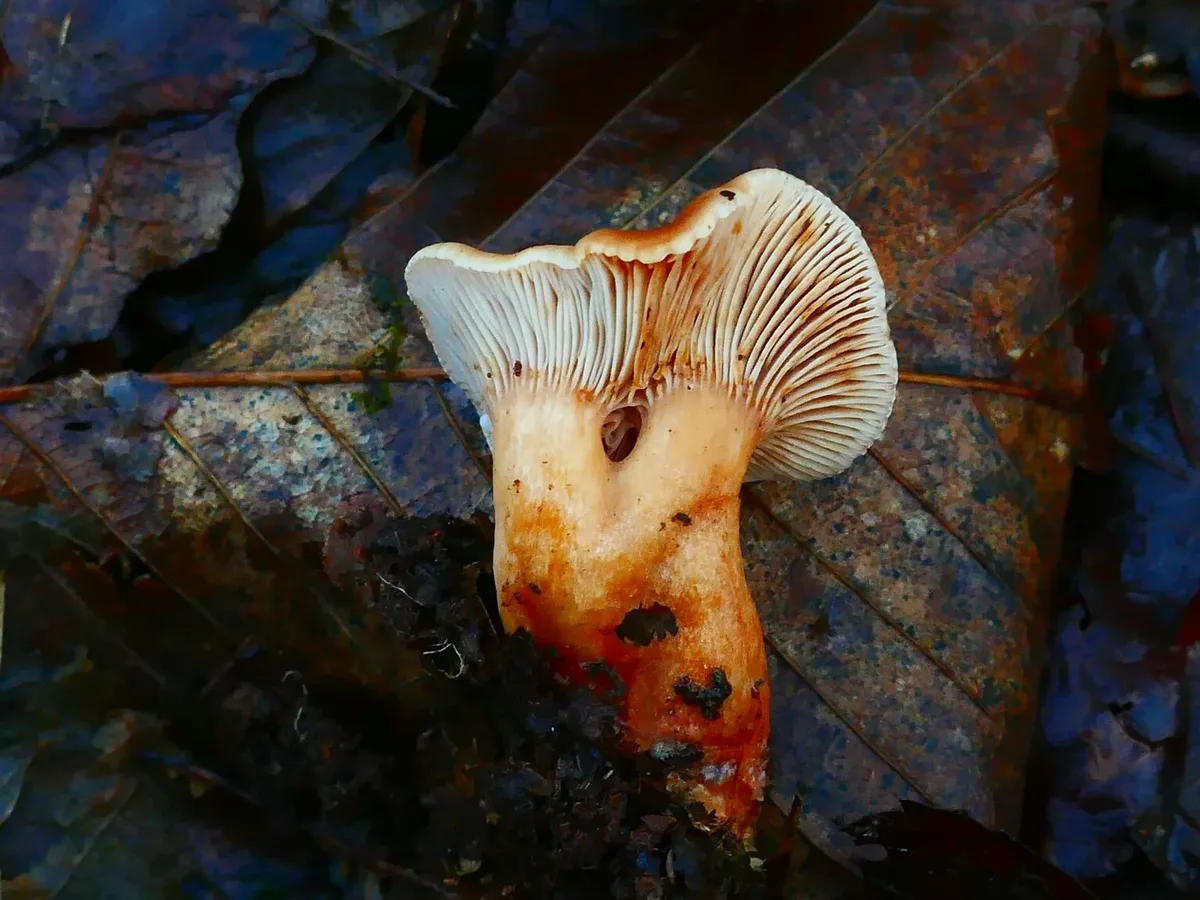 Patrick Le Mao (CC0)
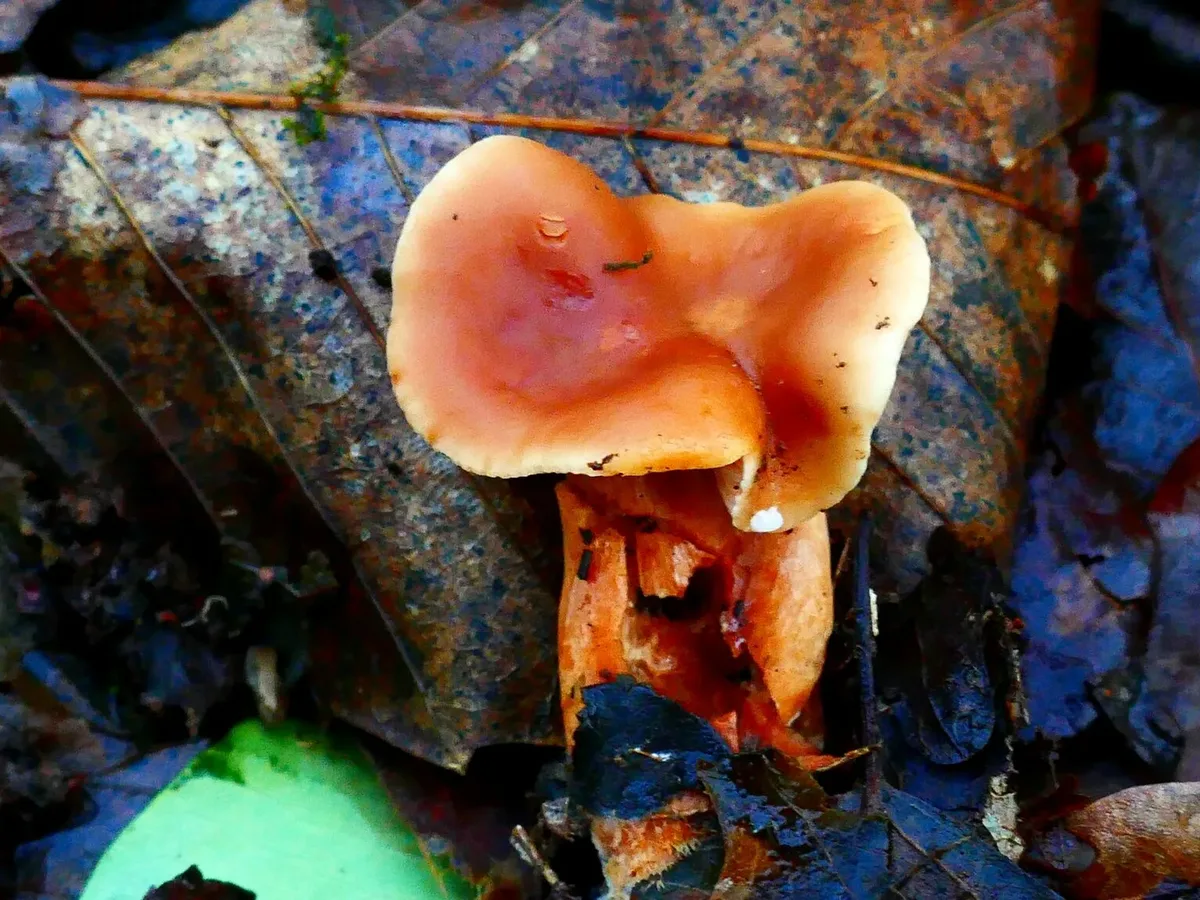 Patrick Le Mao (CC0)
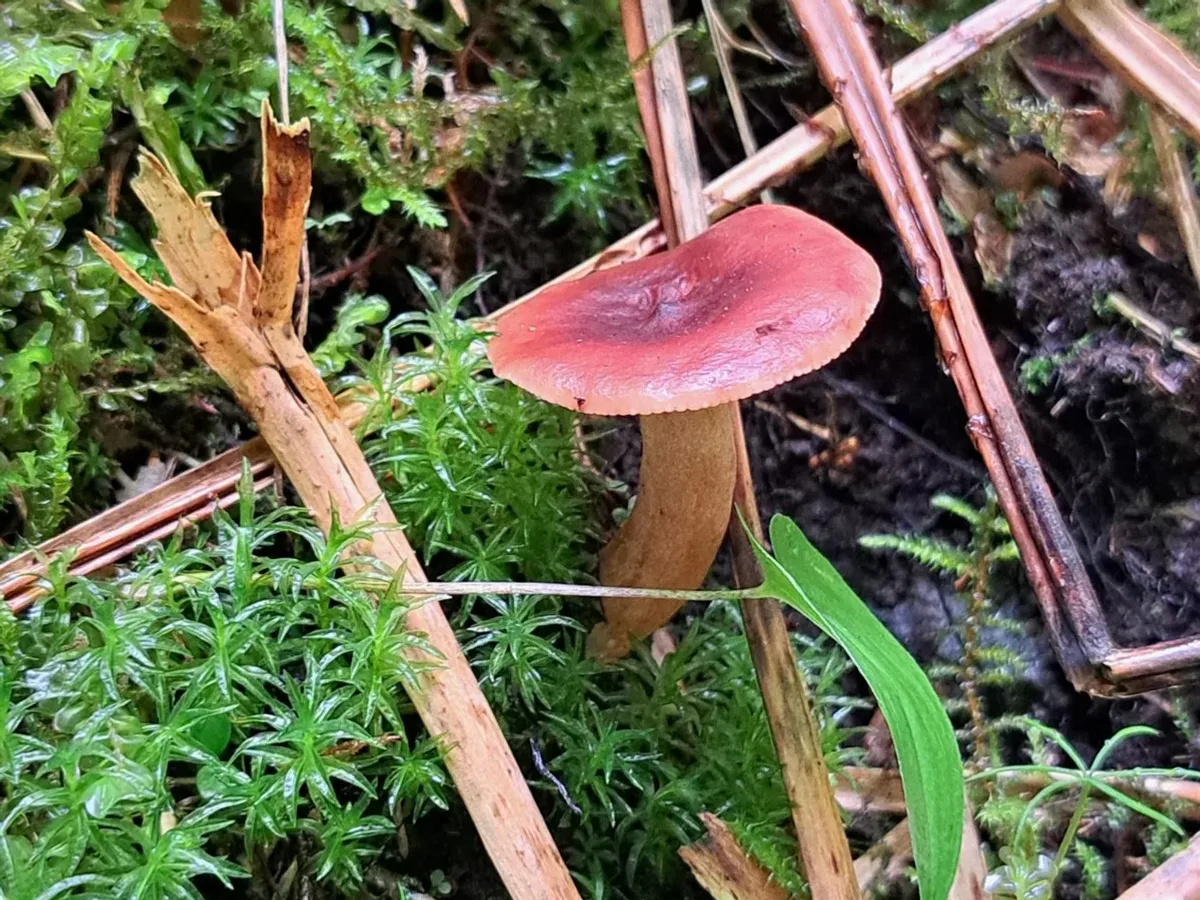 © Rob van Kruining (CC BY)
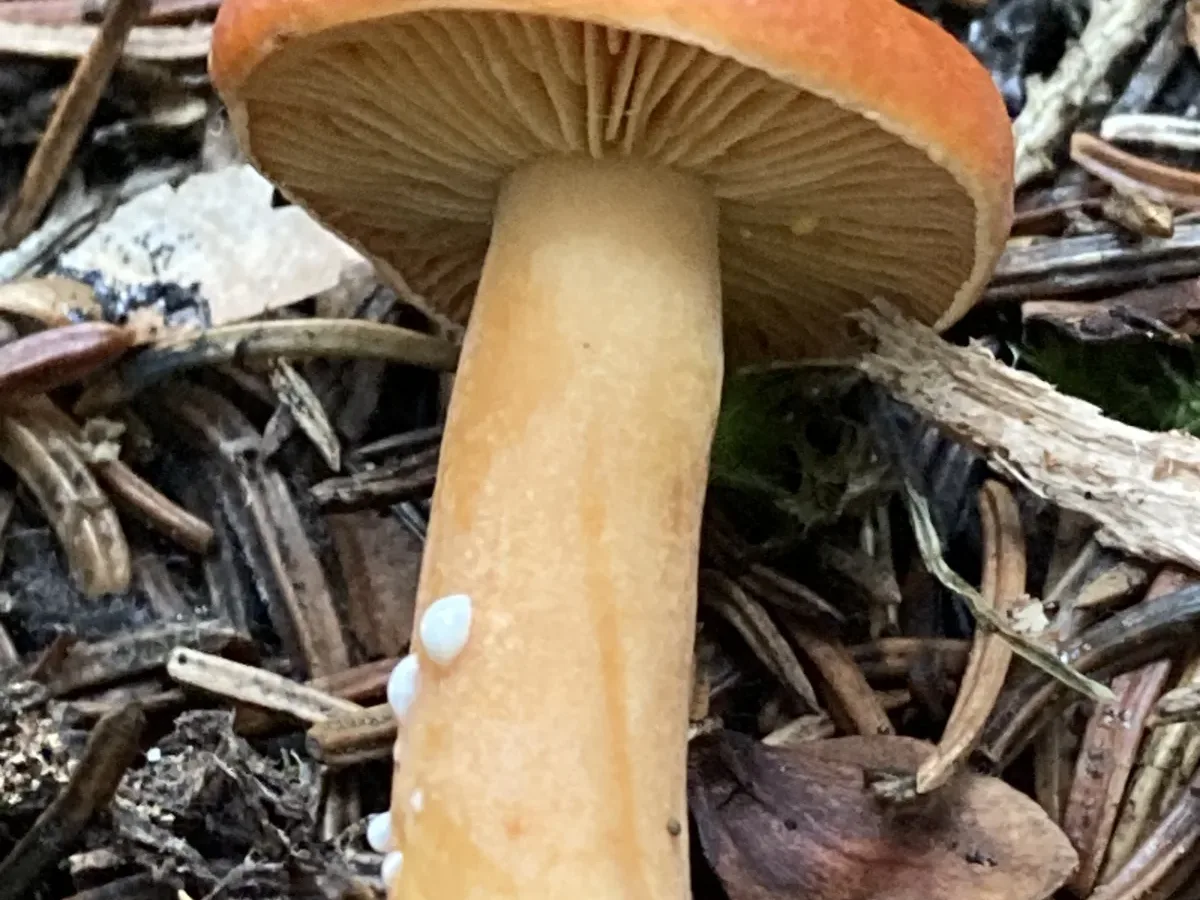 © Cecilie Ness (CC BY)
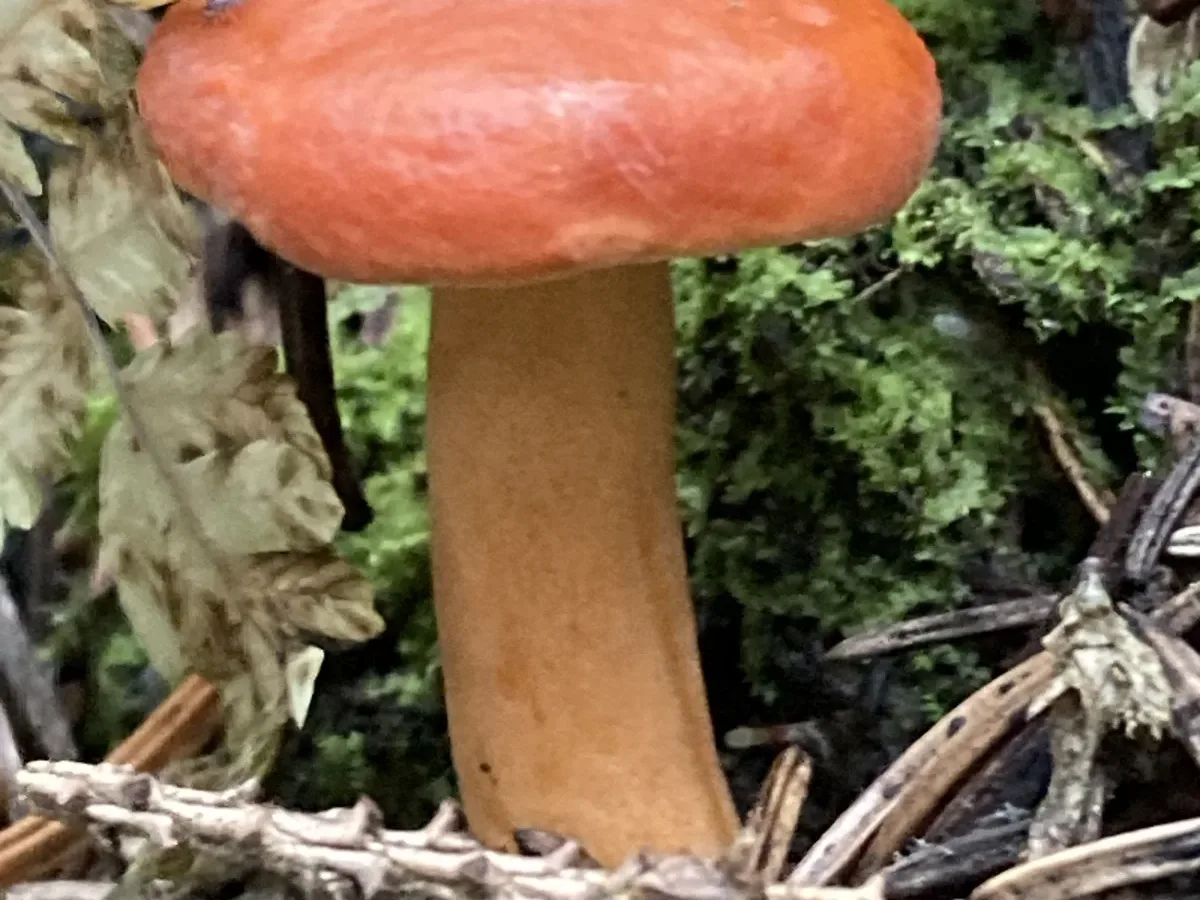 © Cecilie Ness (CC BY)
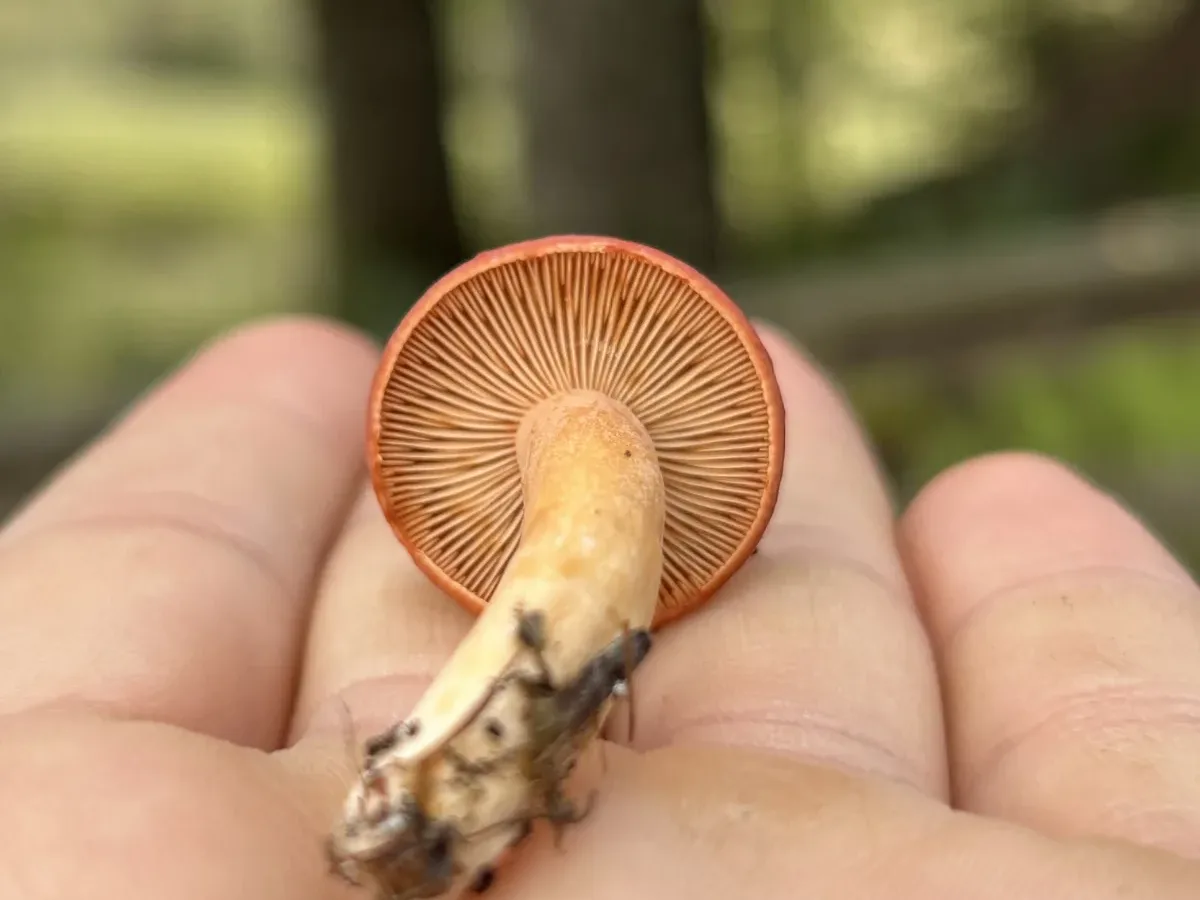 © Tina helene Kristensen (CC BY)
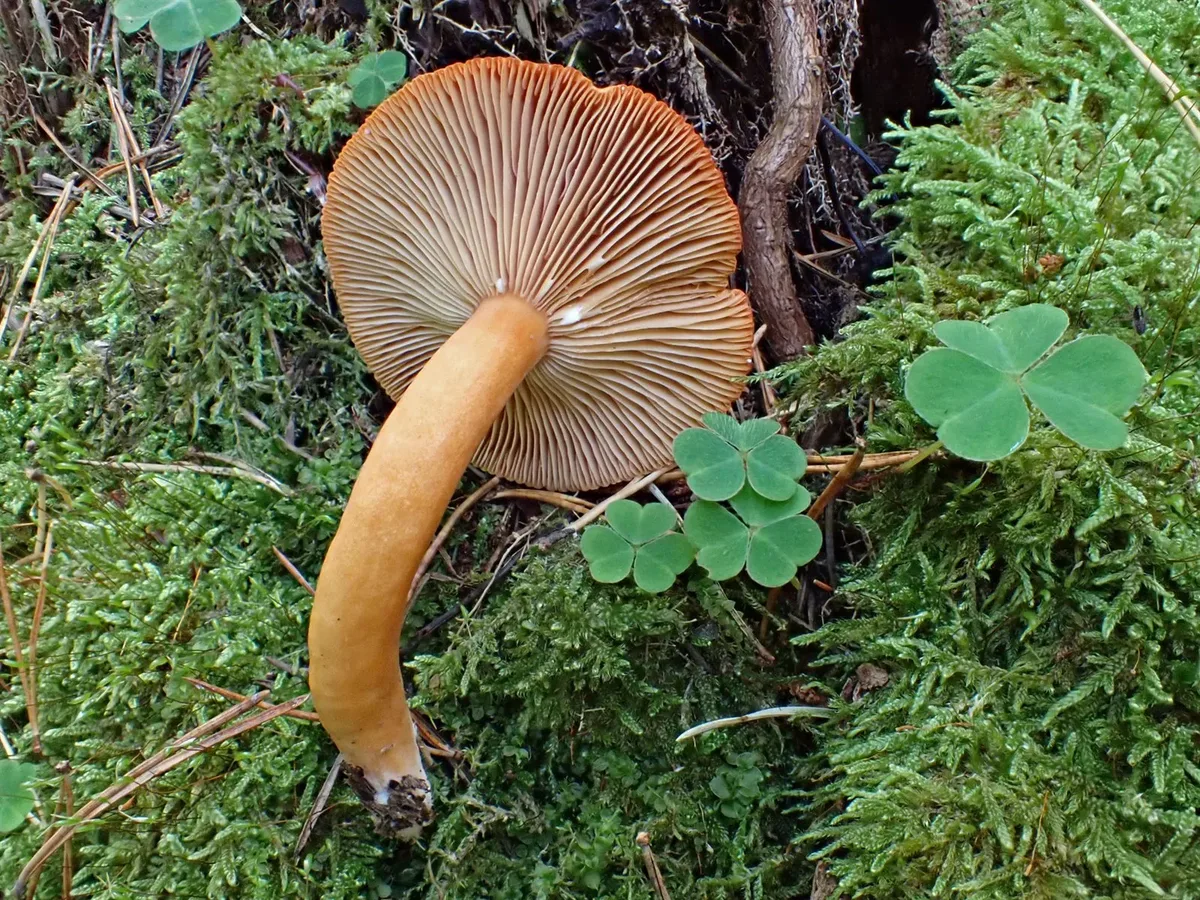 © Inger-Lise Fonneland (CC BY)© Inger-Lise Fonneland (CC BY)Patrick Le Mao (CC0)
Good to eat, once you have identified it with certainty and cooked it through.
How to recognise it
Lactarius mitissimus is a medium-sized, clean-looking milkcap of deciduous woodland, distinguished by its uniform orange to pale orange-tan cap and, above all, by its white latex that is completely mild - the epithet mitissimus ('very mild') is the key sensory clue.
Cap
The cap ranges from 3 to 7 cm and passes through a convex-with-central-depression stage to broadly funnel-shaped as the mushroom matures.
The surface is dry and smooth rather than viscid or zonate; there are no concentric dark bands, which separates it immediately from Lactarius deliciosus and its allies (which have orange, ring-banded caps).
Gills
The gills run slightly down the stem, are pale cream when young and age to pale ochre-buff.
Flesh
Break any part of the flesh or a gill: abundant white milk flows immediately.
Smell & taste
Crucially, taste a tiny drop - it is water-mild, pleasant, non-burning, and non-bitter.
This mild latex, combined with the orange colour and deciduous habitat, is the identification package for this species.
The spore print is white to very pale cream.
Where & when it grows
Habitat
Lactarius mitissimus is a faithful partner of oak trees throughout western and central Europe, forming ectomycorrhizal associations with Quercus robur, Q. petraea, and related oaks. It also associates with beech and hazel in mixed woodland.
Look for it in:
- mature deciduous forest with good canopy cover
- along woodland rides
- old coppiced hazel stands
- parkland with veteran oaks
It favours moderately acid to near-neutral soils and is commonly found among deep leaf litter, moss cushions, or grassy woodland glades.
It is not a species of pure conifer forest, which is a useful habitat filter when comparing it to conifer-associated orange-milkcap lookalikes.
Scattered individuals to loose groups are the typical growth pattern.
When
Fruits from late summer through autumn, typically August to November across central and western Europe, with September and October being the most productive weeks.
The first real flush usually follows the autumn's initial soaking rains after the drier summer months - that shift from warm-dry to cool-damp is the trigger the mycelium has been waiting for.
As an oak-and-beech associate rather than a pine species, it tends to emerge a little later in the year than many conifer-linked milkcaps.
A mild, wet October can keep fruiting bodies coming well into November. Rare before late August.
How it grows
Appears scattered or in small, loose groups of two to five - you rarely find a dense troop of them.
Beneath the soil, its mycelium is woven tightly around living oak and beech roots. The two organisms have struck a trade that neither can replicate alone, and the fungus cannot fruit without that living partnership.
Once cool autumn temperatures and adequate rainfall arrive, buttons push up within about five to eight days - slower to develop than many of the pine-associated milkcaps, which suits its deciduous, leaf-littered woodland home.
Fruiting conditions
Flushes follow soaking autumn rains once soil temperatures drop below roughly 16 °C; typical trigger is a sustained wet period in September after summer drought; oak-litter substrate retains moisture well, supporting fruiting for several weeks after rain
Look-alikes
The most likely confusion within the genus Lactarius is with Lactarius aurantiacus (syn. L. mitissimus auct. in part), which is also orange-capped and grows in similar deciduous and mixed woodland, but produces acrid or at least slightly burning latex. The primary way to separate the two is to taste a tiny drop of the latex: if it burns or is peppery, it is not L. mitissimus.
Lactarius fulvissimus is similarly coloured but tends to be darker (more reddish-orange) with a faint mushroom-like to slightly fruity smell, and grows mainly under deciduous trees in calcareous conditions; its latex is mild or very slightly acrid.
Lactarius subdulcis (beech milkcap) is associated with beech in similar woodland and is also mild, but its cap is more orange-cinnamon to reddish-brown rather than clean orange, and the cap surface develops a slightly wrinkled or uneven texture.
Lactarius quietus (oak milkcap) shares the oak habitat and has a similar size, but its cap is distinctly darker brownish-tan with faint concentric zonation, and it has a characteristic oily or slightly bug-like smell that makes identification straightforward.
Among non-milkcap species, the false chanterelle Hygrophoropsis aurantiaca (orange false chanterelle) has a bright orange cap but is a gill fungus without any latex whatsoever; it has forked, crowded, orange gills, a felty cap surface, and a funnel shape that persists from early on. Always verify that white milk flows from broken flesh.
None of the realistic lookalikes for Lactarius mitissimus is known to be deadly.
Very similar orange cap and deciduous habitat; distinguished by latex taste - L. aurantiacus has distinctly acrid to peppery latex whereas L. mitissimus latex is completely mild; always taste a tiny drop of the milk
More orange-cinnamon to reddish-brown rather than clean orange; beech-associated; latex mild; the cap develops a slightly wrinkled uneven surface with age; no practical food-safety difference as both edible
Bright orange throughout with forked, crowded orange gills and a felty cap surface; produces NO latex whatsoever when flesh is broken - the absence of white milk immediately rules out any Lactarius; causes gastrointestinal upset
Darker brownish-tan cap with faint concentric zonation; characteristic oily or slightly sweetish bug-like smell distinguishes it readily; same oak habitat but easy to separate by colour and odour
Darker reddish-orange cap, tends toward calcareous soils under deciduous trees; latex mild or slightly acrid; distinguished by darker, more reddish colour and habitat preference
In the kitchen
Picking & cleaning
A solid, safe edible - not the most prized milkcap in the basket, but reliable and easy to prepare. Its mild flavour is more subtle than powerhouses like Lactarius volemus, but it fills out an autumn mushroom mix well.
Pick young to medium-aged specimens and leave behind anything very old, waterlogged, or heavily larva-tunnelled.
Because the latex is completely mild there is no need for the blanching or leaching required for acrid milkcaps - standard cooking (sautéing, soups, stews) is all it needs.
Before harvesting, always confirm that breaking the flesh releases white, non-burning, non-peppery milk; that single check is the most important safety step when collecting any orange-capped milkcap.
Cooking
Lactarius mitissimus does not require the prolonged blanching or leaching needed for acrid milkcaps. Cleaned caps can go directly into the pan.
Its flavour is mild and slightly nutty; texture is firm and does not collapse on cooking, making it suitable for:
- sautéing in butter with garlic and herbs
- adding to autumn mushroom medleys
- incorporating into soups and risottos
- using as a pizza topping
Avoid overcooking, which can make the texture somewhat rubbery.
Drying concentrates its modest flavour and produces a useful dried mushroom for stocks and sauces.
It is best used alongside more flavourful fungi rather than alone, as its own flavour contribution is subtle.
Good to know
Lactarius mitissimus contains no known amatoxins, orellanine, gyromitrin, or other serious mycotoxins. It is classed as edible in the major European field guides (Bon, Courtecuisse & Breitenbach, Moser).
The mild latex means there is no risk of the mouth-burning irritation associated with acrid milkcaps.
The most important safety rule is confirmation of white, mild, non-burning latex from broken flesh before eating - this single test eliminates the vast majority of dangerous lookalike scenarios.
As with all milkcaps, verify habitat (deciduous trees, particularly oak) and the orange, non-zonate cap. When in doubt about which orange Lactarius you have, err on the side of caution and do not eat it.
A reference guide - never an edibility guarantee. When in doubt, leave it out.