Velvet milkcap
Lactarius lignyotussyn. Agaricus lignyotus Fr., Lactarius lignyotus var. marginatus J.E. Lange
 © Ulrik Andreassen (CC BY)
 © Alan Rockefeller (CC BY 4.0)
 © River Ahlquist (CC BY)
 © River Ahlquist (CC BY)
 © Drew Palmer (CC BY)
 © Nina Lundberg (CC BY)
 © Jonas Heggedal (CC BY)
 © Jonas Heggedal (CC BY)
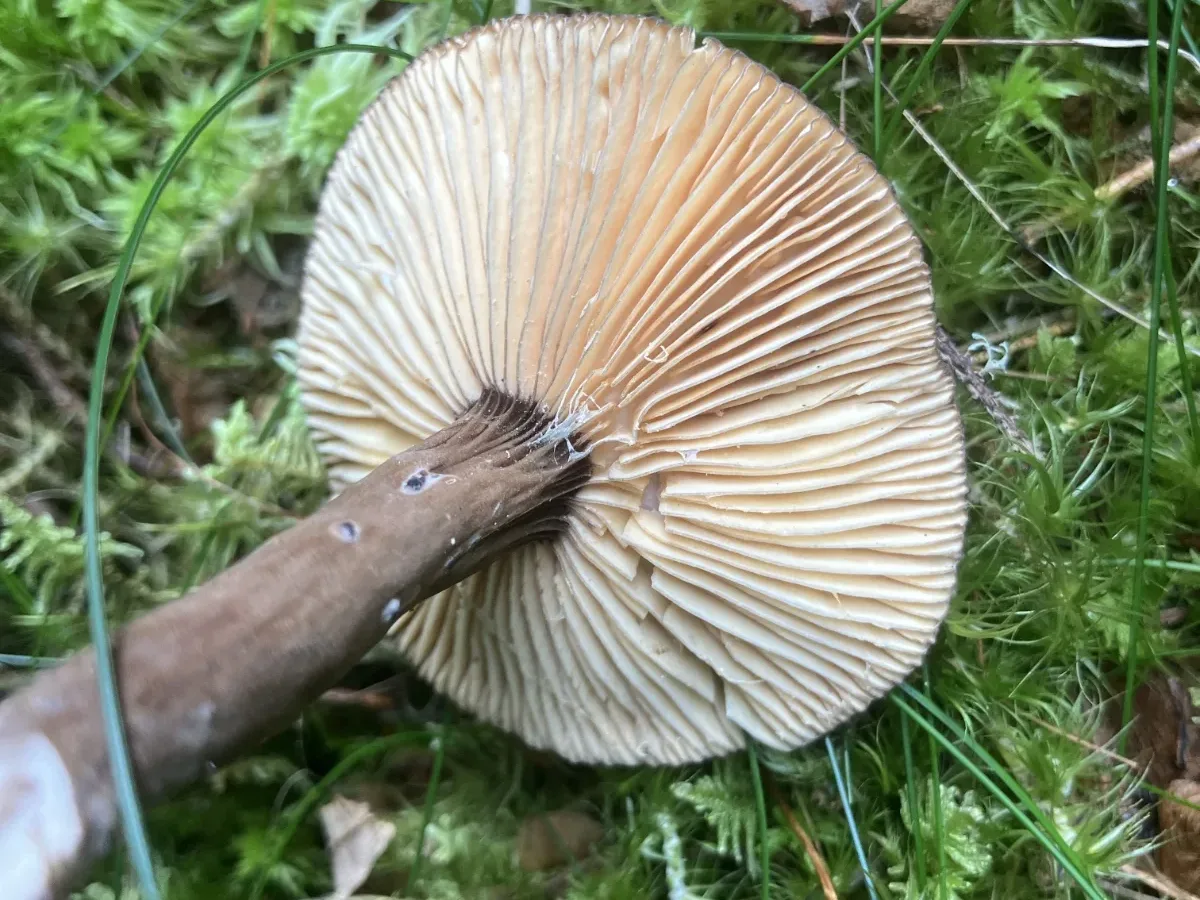 © Jonas Heggedal (CC BY)© Ulrik Andreassen (CC BY)© Alan Rockefeller (CC BY 4.0)
Edible only with the right preparation - or safe for some people but not others. Learn the caveats first.
How to recognise it
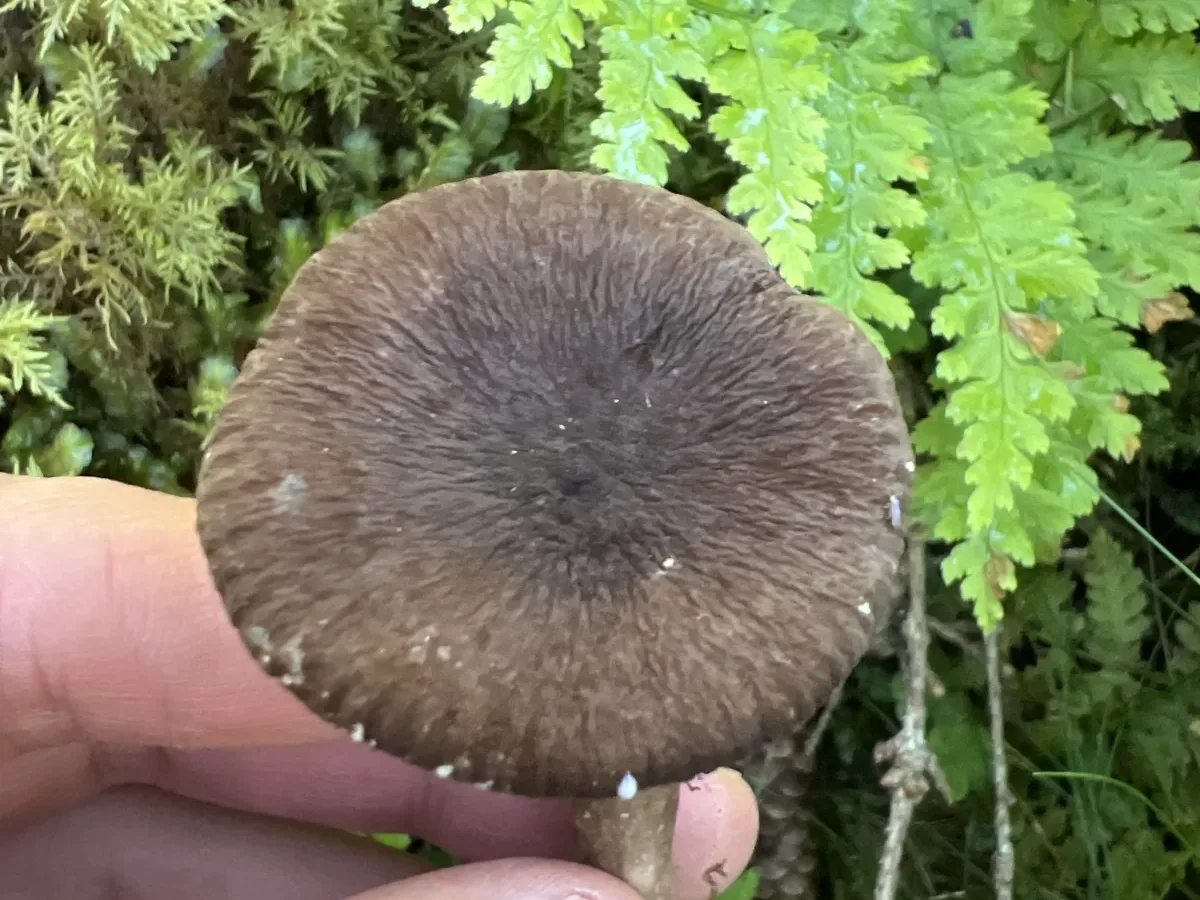
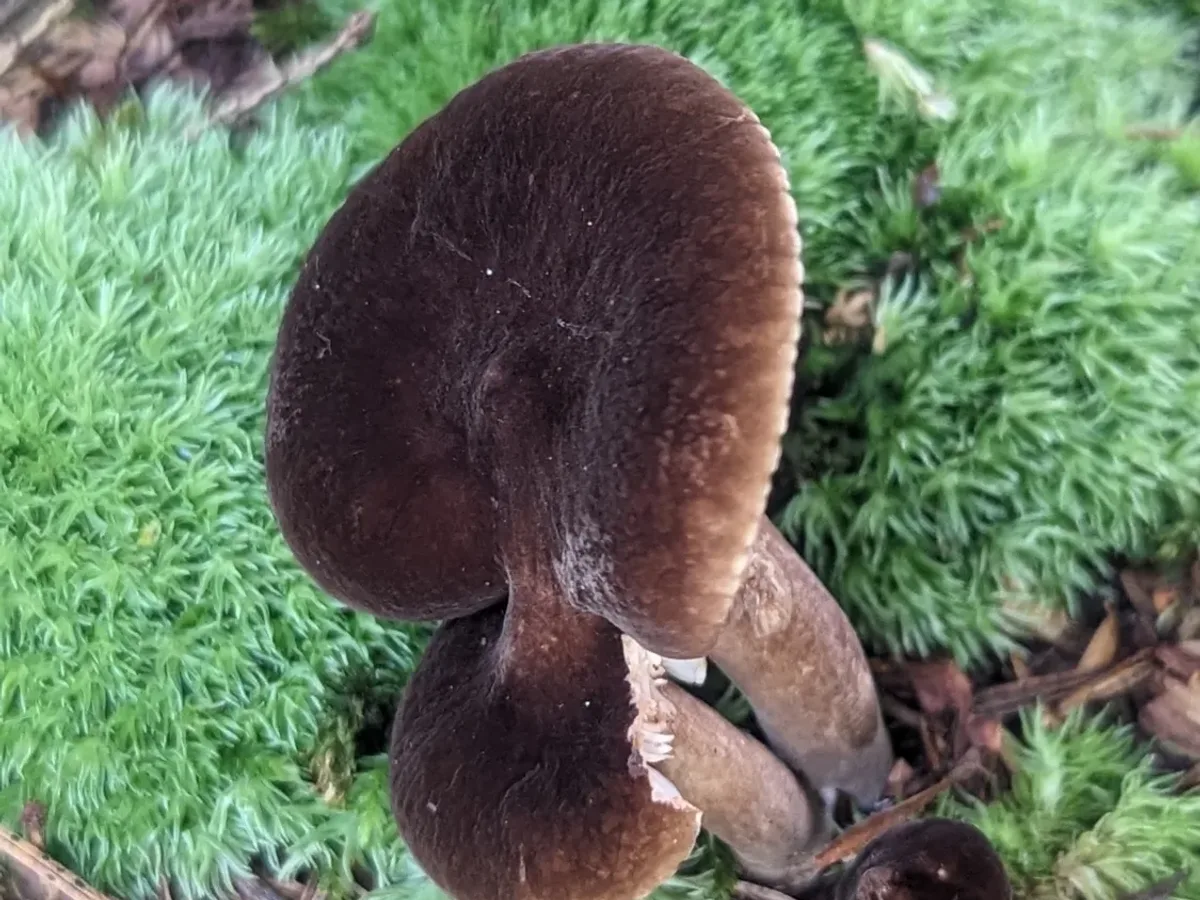
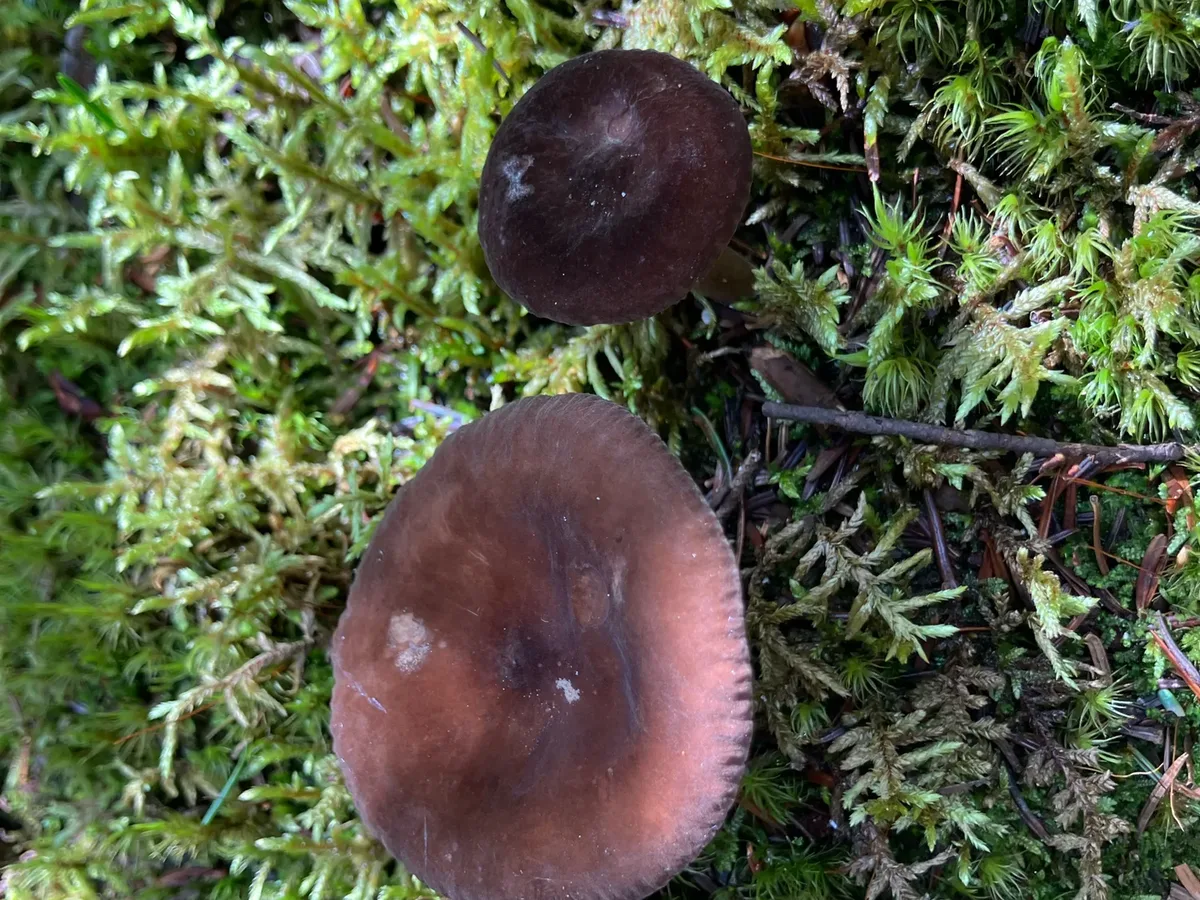
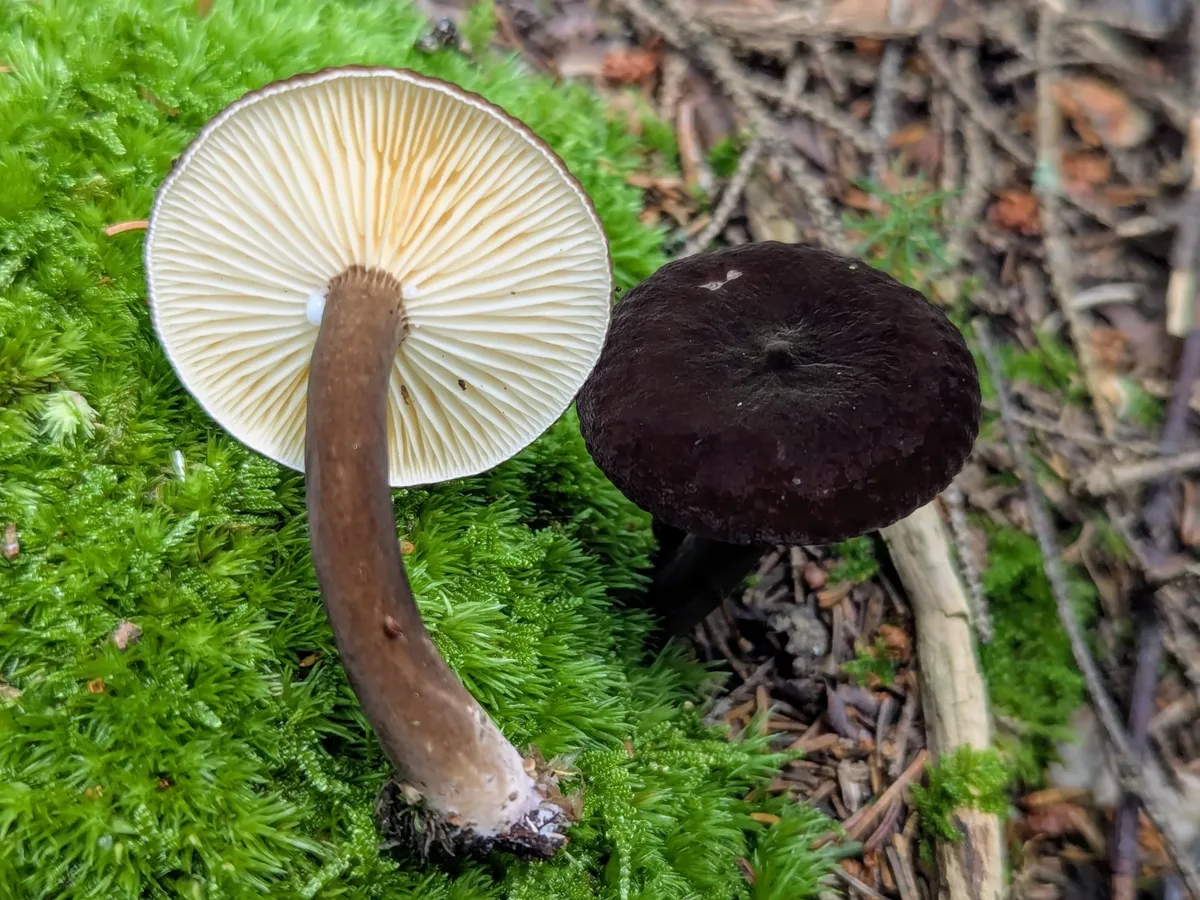
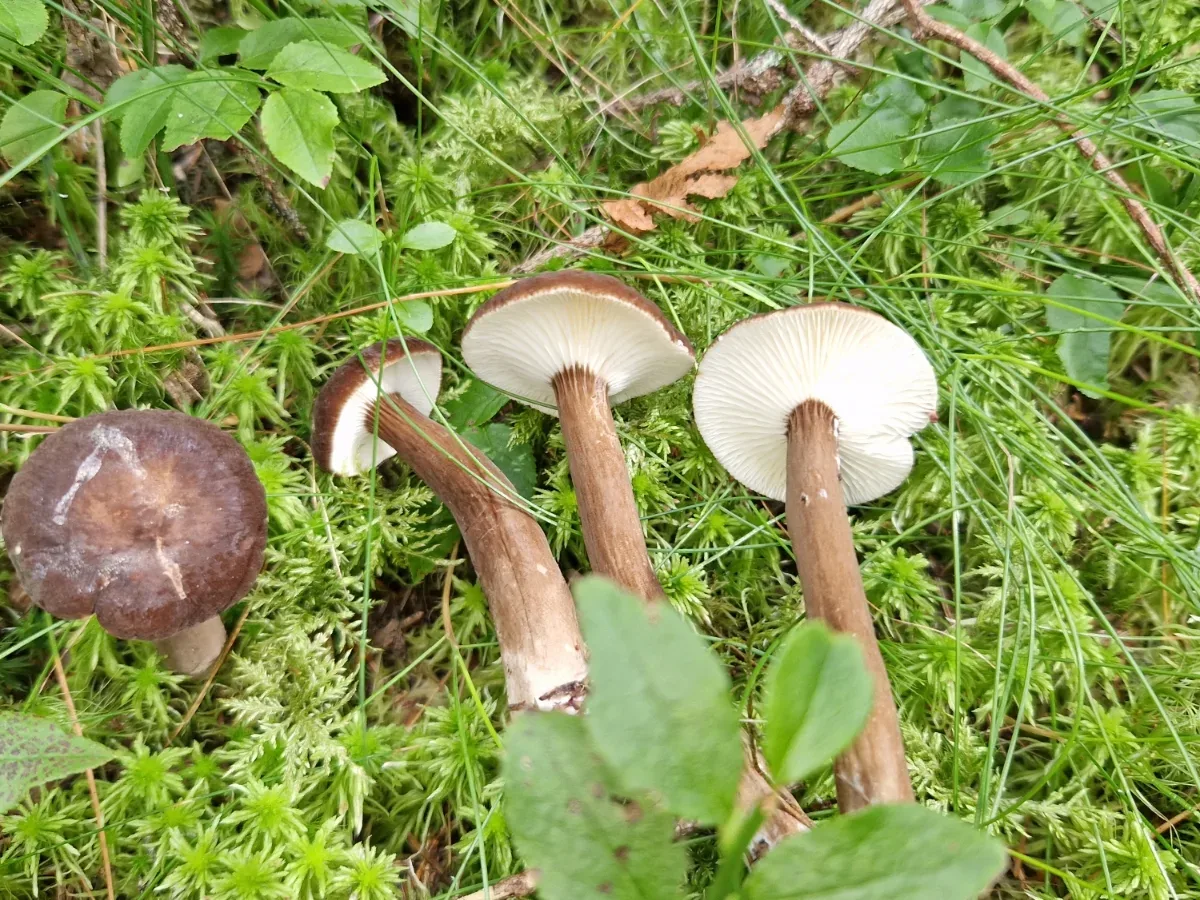
Lactarius lignyotus is one of the most visually distinctive milkcaps in the northern forest, immediately recognisable by the combination of its very dark sooty- to blackish-brown cap and an equally dark, velvety stem.
When any part of the flesh or gills is broken, the mushroom immediately exudes abundant white latex that does not change colour on exposure to air. This white, unchanging, burning-acrid latex is the critical safety character: it confirms you have a true milkcap rather than a webcap (Cortinarius) or any other dark woodland mushroom.
Cap
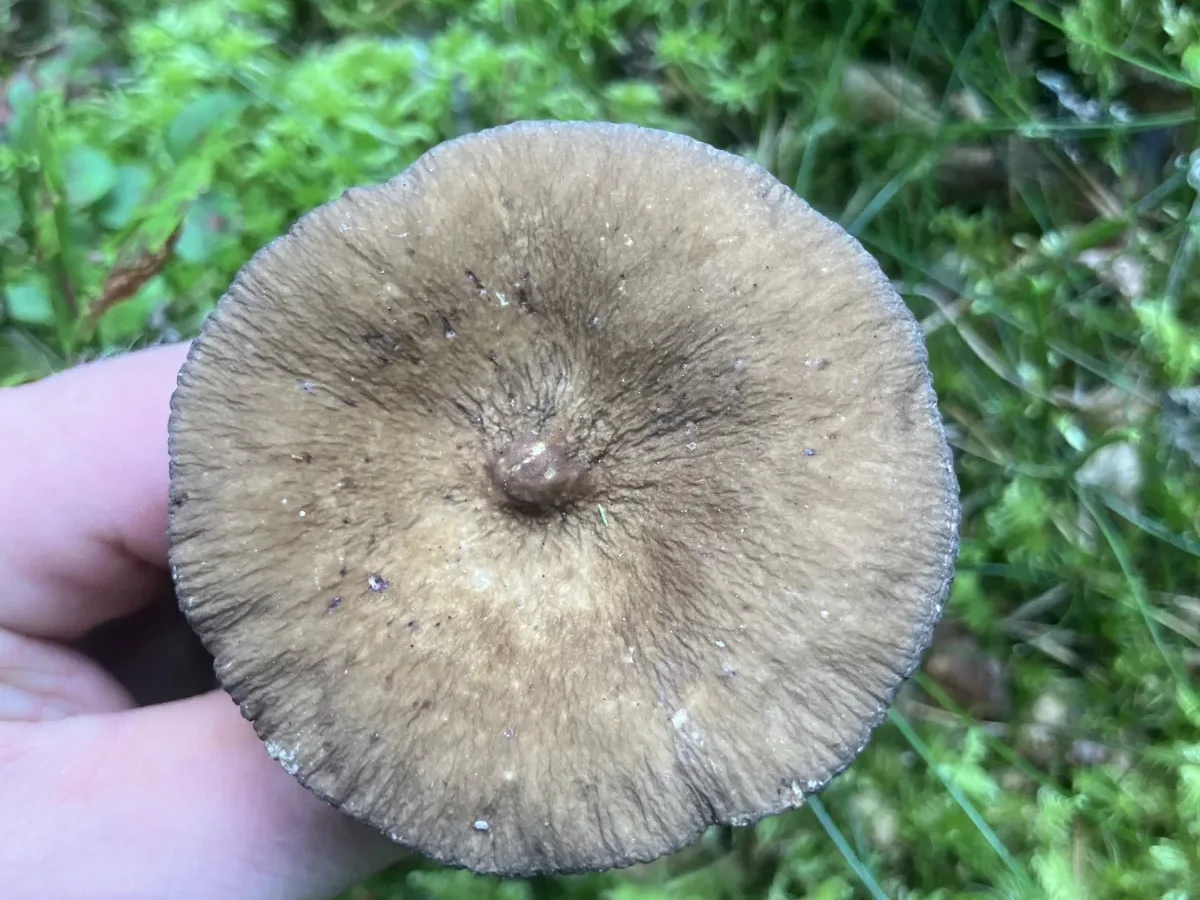
The cap surface has a characteristic dry, suede-like or felt-like texture - sometimes described as charcoal-dusted or sooty - which remains dry even in damp weather.
This velvety surface, combined with the dark colour and a prominent, persistent central umbo (a sharp boss that remains even as the cap flattens with age), identifies the species at a glance.
Gills
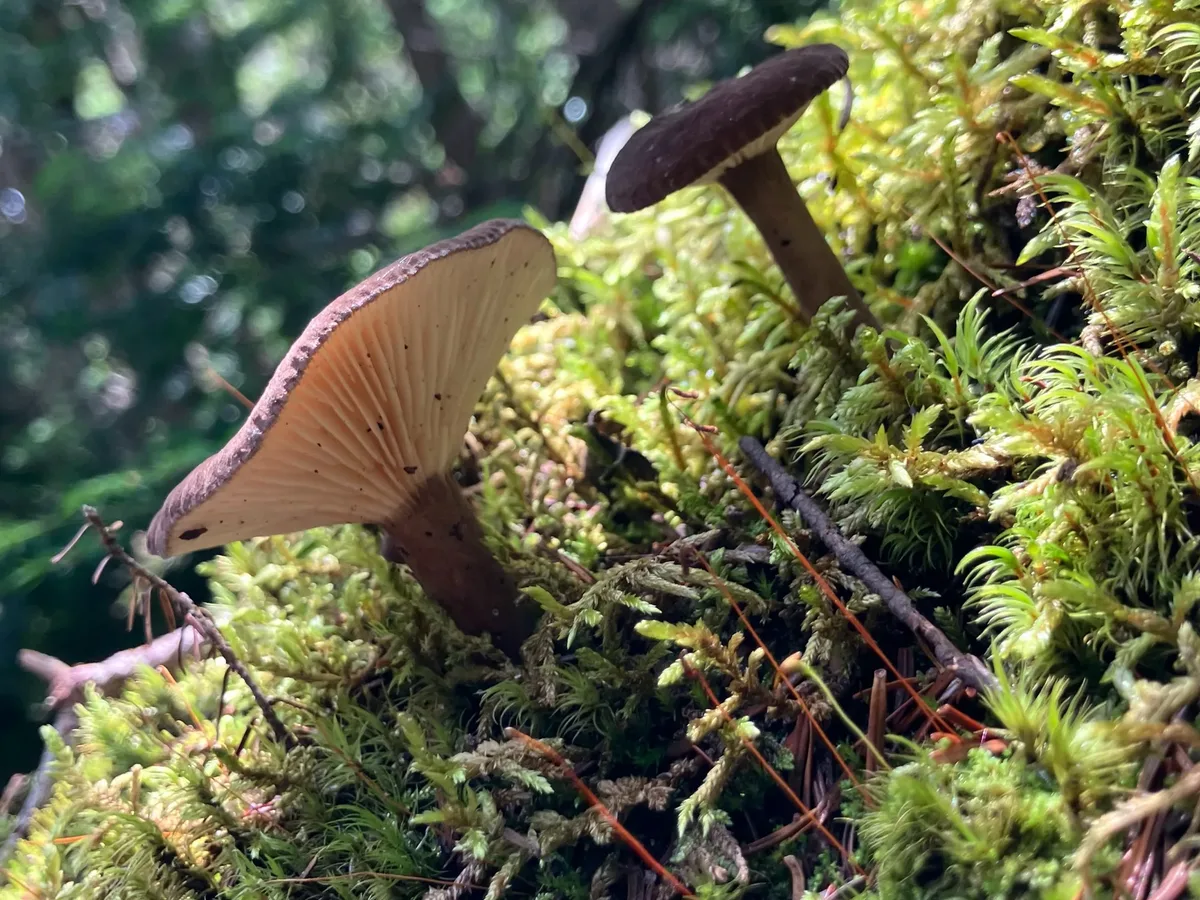
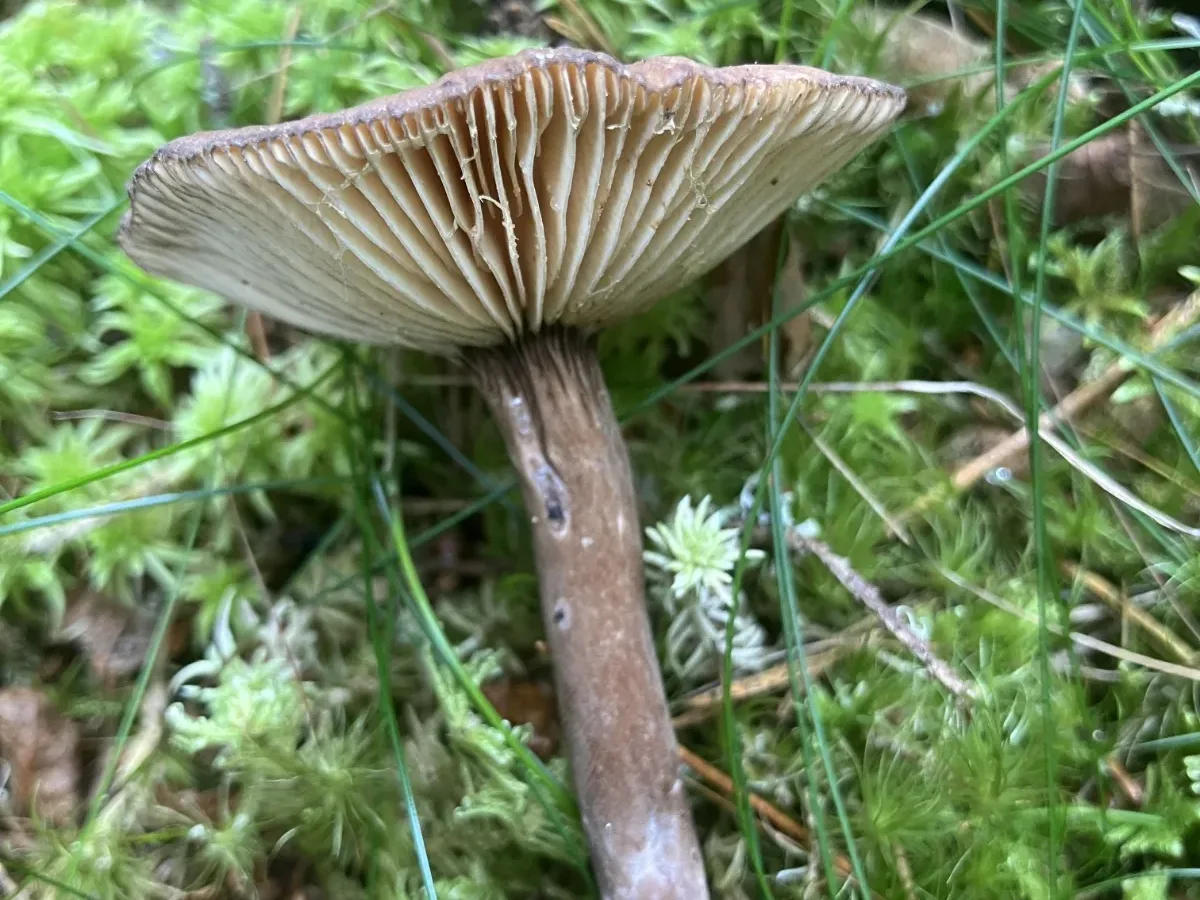
The contrasting pale whitish-cream gills stand out sharply against the dark cap, providing an additional field mark.
Stem
The stem is covered in the same sooty velvet as the cap. In many species the stem is paler than the cap, but here they match.
Flesh
The flesh is white, firm, and also unchanging.
Why it's dangerous
Low when properly prepared (parboiled). The chief risk is raw or insufficiently cooked consumption, or misidentification.
Always cook thoroughly after blanching.
Toxin
No true toxin identified. The acrid burning taste is caused by sesquiterpene compounds (similar to other acrid milkcaps), which are volatile and water-soluble and are eliminated by thorough parboiling.
Symptoms
If eaten raw or undercooked:
- immediate burning sensation in the mouth and throat
- followed by gastrointestinal irritation - nausea, abdominal cramping, vomiting, diarrhoea
Symptoms are self-limiting and not life-threatening, resolving once the irritant material is cleared. No organ toxicity is known.
Staying safe
Lactarius lignyotus contains no known lethal toxins. The hazard is the intensely acrid raw latex, which causes burning irritation of the mouth and gastrointestinal tract if the mushroom is eaten raw or undercooked (nausea, vomiting, diarrhoea may result).
These compounds are removed by thorough parboiling with discarded water. The species is not in the same danger category as the deadly Amanita or Cortinarius species.
The primary safety concern is accurate identification. Always confirm the combination of:
- dry sooty-velvety cap surface
- persistent central umbo
- immediate white latex from broken flesh
The latex check is non-negotiable - dark mushrooms growing in spruce forest without latex could be Cortinarius species, some of which are deadly.
Collect only what you can positively identify, and apply thorough preparation before eating.
Where & when it grows
Habitat
Lactarius lignyotus is one of those fungi that genuinely cannot exist without its tree partner.
It is ectomycorrhizal with spruce, threading its mycelium through the soil to meet Picea roots in a mutual exchange - the fungus feeds on sugars the tree photosynthesises; the tree draws on the wider mineral and water network the fungus builds. That relationship can persist in the same patch of forest for decades.
Its principal hosts vary by region:
- Eastern North America: red spruce (Picea rubens) in the Appalachians and the northern boreal transition zone, and white spruce (Picea glauca) further north.
- Europe: Norway spruce (Picea abies) dominates.
The species favours cool, undisturbed forest with deep, well-developed humus, and feels most at home where mosses - especially Sphagnum, feathermoss, and wood sorrel - hold moisture through summer. It is largely absent from pine-dominated or deciduous woodland.
Where to seek it:
- Eastern North America: from Nova Scotia and Quebec west through Ontario and Minnesota, and in the high-elevation red spruce forests of the southern Appalachians.
- Europe: the Alps, Carpathians, Sudetes, and Fennoscandia are its strongholds.
When
The main fruiting season is late July through September, peaking in August and early September across most of the range.
This timing coincides with the period when summer rains replenish soil moisture after the driest part of summer, and soil temperatures in the humus layer are still warm (10-16 °C).
In montane or subalpine spruce forest, the season may shift a few weeks later (August to early October). The species does not typically produce spring flushes. In warm, wet years it can persist into October.
Collect when buttons are firm and fully formed, as specimens become soft and insipid with age.
How it grows
Grows singly or scattered among spruce litter and moss, rarely in dense clusters.
Being strictly ectomycorrhizal, it is closely tied to the root system of mature spruce trees; it does not occur far from viable hosts.
Fruit bodies push up rapidly after sustained summer rain, reaching full size in four to six days.
The mycelium extends in typical milkcap fashion through the soil organic layer, forming diffuse connections with host roots rather than forming discrete mats.
Fruiting conditions
Boreal-montane ectomycorrhizal Lactarius fruiting after adequate summer rainfall when soil temperatures in the organic horizon drop toward the 10-16 °C optimum; responds reliably to late-summer rains in spruce forest; tolerates cooler soils than many autumn mushrooms
Look-alikes
Within the milkcaps, the most likely confusion is with other dark-capped species.
- Lactarius necator (ugly milkcap): dark olive-brown to blackish, but its cap surface is slimy and viscid when moist (never dry-velvety), the margin is strongly inrolled for a long time, and it lacks the sharp umbo. Its latex is also white and acrid, but it is considered more toxic and is classed as suspect.
- Lactarius plumbeus: similar, but also has a viscid or tacky cap, is generally larger, and lacks the strong umbo.
- Lactarius fuliginosus: a close European relative that can look very similar, but tends to have a more brownish (less sooty-black) cap and grows in deciduous woodland (beech, oak) rather than exclusively with spruce. Its latex can leave lilac-pink stains on the flesh, which L. lignyotus does not show.
Any confusion with dark Cortinarius species (webcaps) is easily eliminated by checking for latex: all milkcaps (Lactarius) exude milk from broken flesh; Cortinarius never produce any latex.
This is the critical safety check - if no milk appears from broken flesh, it is not a milkcap and should not be collected.
Also dark-capped in conifer and mixed forest but produces NO latex whatsoever; flesh turns grey then black on cutting (rather than staying white). Brittlegills have a characteristically granular (snapping) texture in the stem. Not toxic but inedible and easily separated.
Large dark milkcap with viscid to tacky cap surface when damp; lacks the crisp dry velvety texture; generally larger (cap up to 15 cm); also associated with birch as well as spruce. White acrid latex likewise.
Very similar dry-velvety dark brownish cap with umbo, but grows under deciduous trees (beech, hornbeam, oak) rather than spruce; the latex is white but may leave distinct lilac-pink staining on the white flesh within a few minutes of exposure - L. lignyotus flesh does not stain. Habitat is the easiest separator.
Dark olive-brown to blackish cap but surface is slimy-viscid when moist (never dry-velvety), margin strongly and persistently inrolled, no sharp central umbo. Often considered more toxic than L. lignyotus and should not be eaten without expert verification. Also grows with spruce but cap texture is the key separator.
A reference guide - never an edibility guarantee. When in doubt, leave it out.