Fenugreek milkcap
Lactarius helvussyn. Agaricus helvus Fr., Lactarius helvus var. helvus, Lactifluus helvus (Fr.) Kuntze
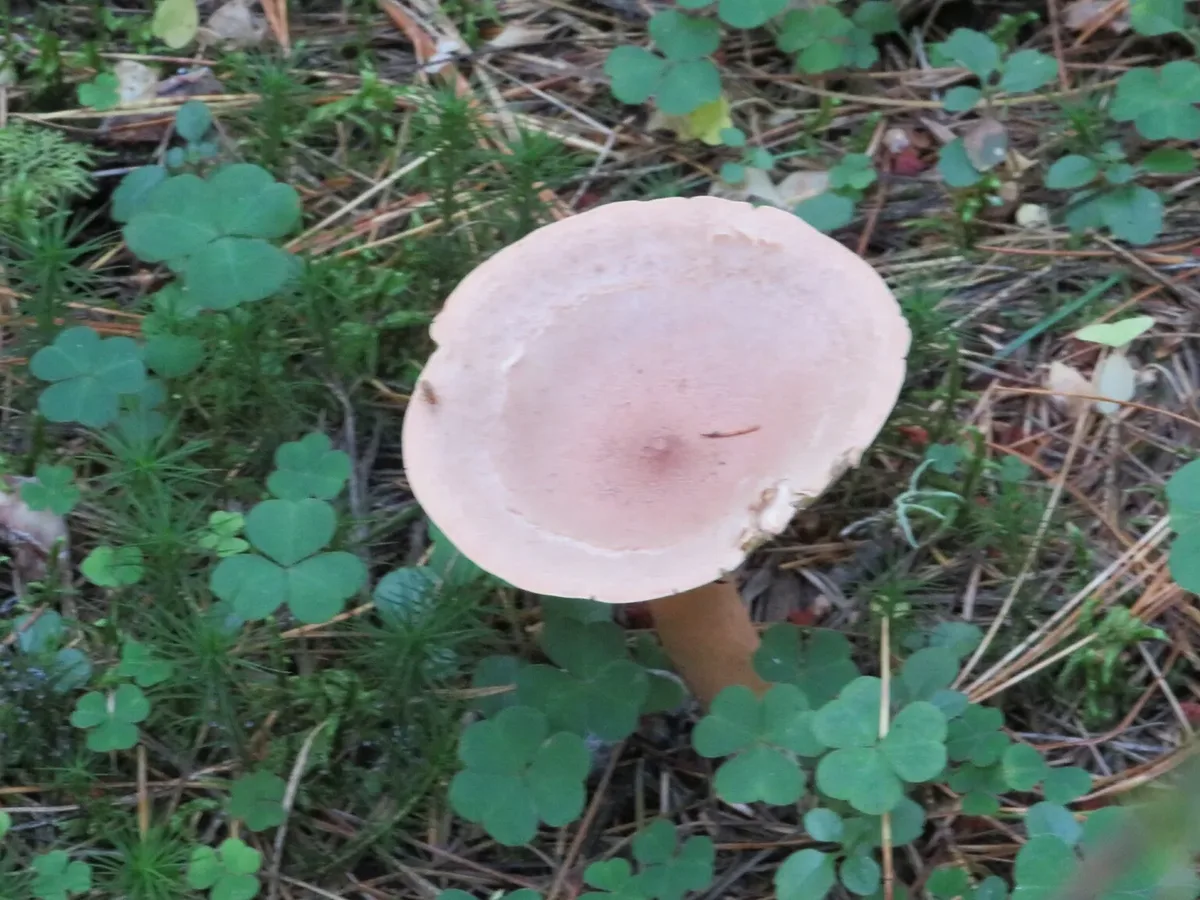 Светлана Царахова (CC0)
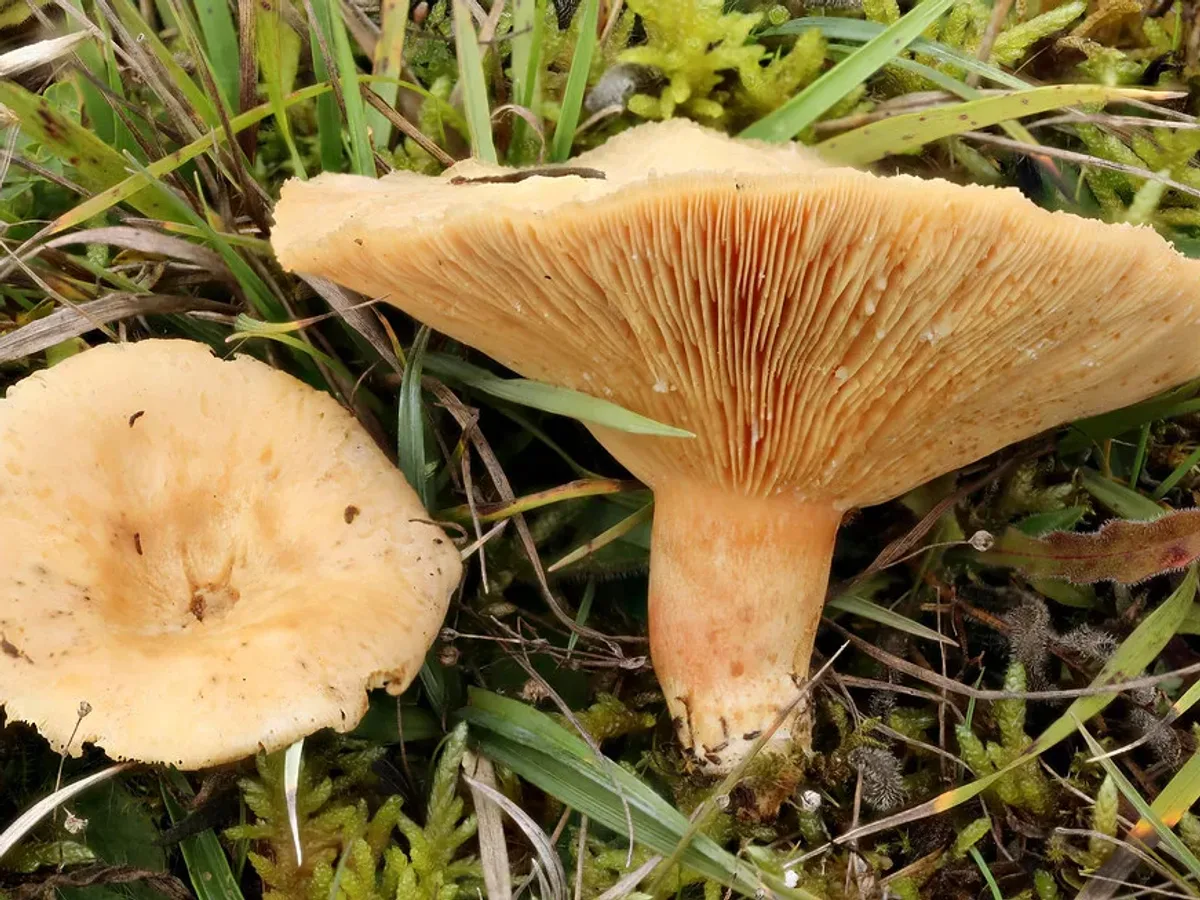 janetgraham84new (CC0)
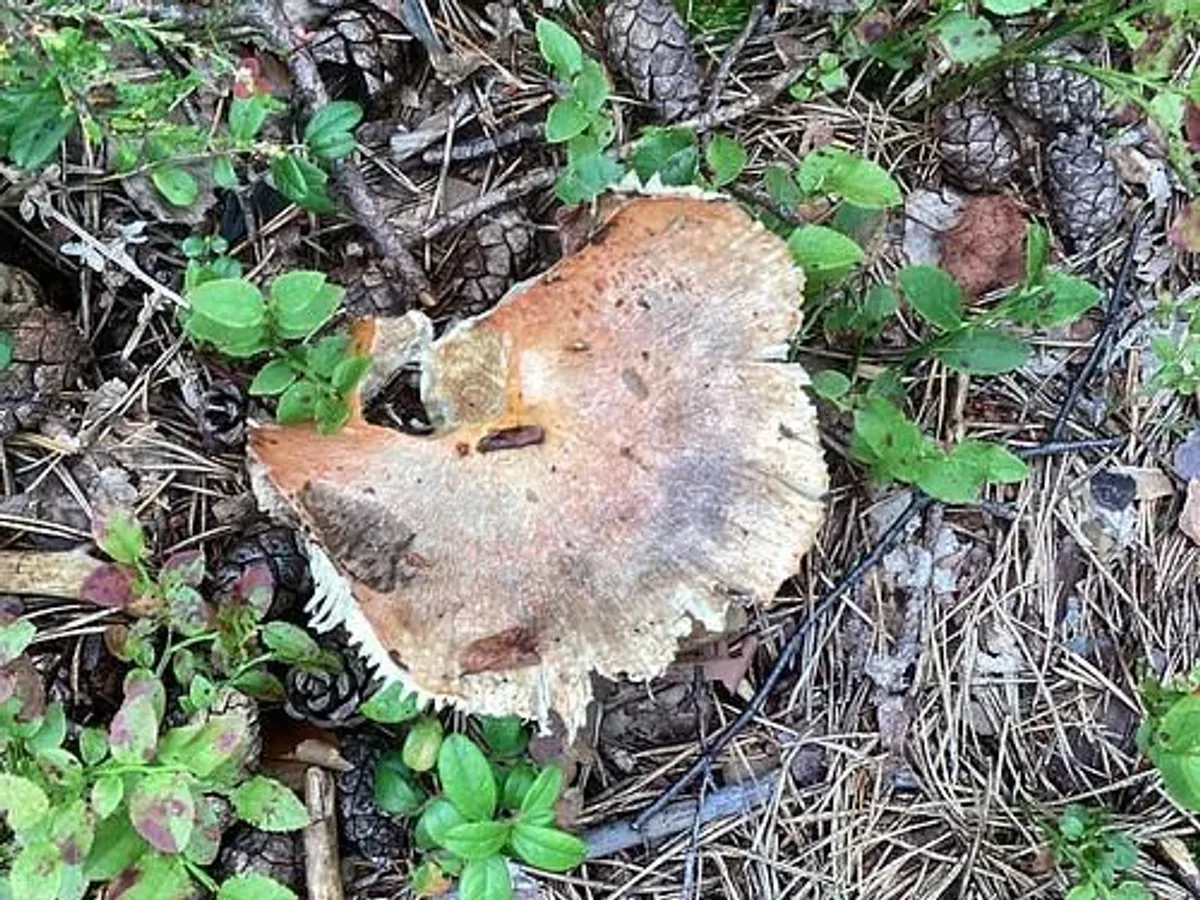 © Finden (CC BY)
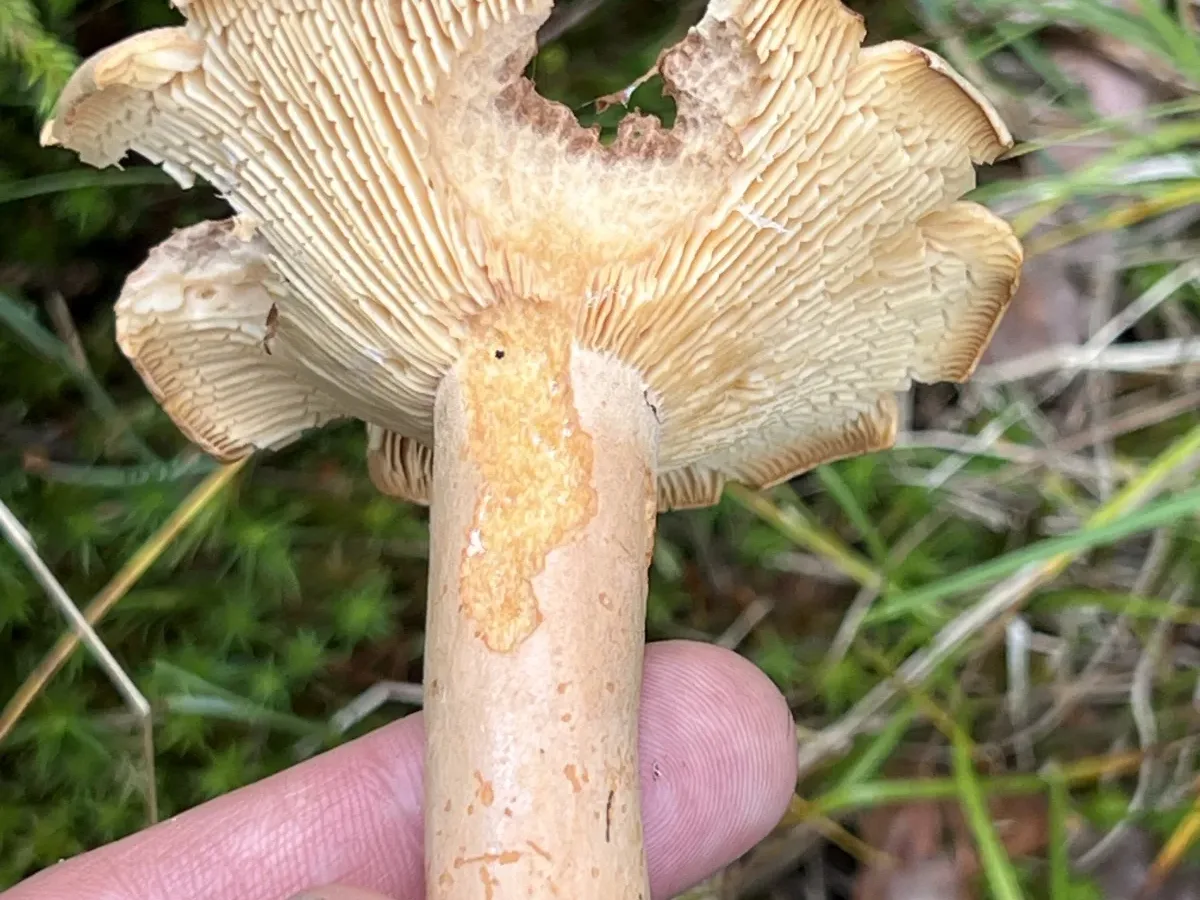 © Ulrik Andreassen (CC BY)
 © Ulrik Andreassen (CC BY)
 © Morten Pettersen (CC BY)
 © Jonas Heggedal (CC BY)
 © Jonas Heggedal (CC BY)
 © Jonas Heggedal (CC BY)
 © Theodor Korsgaard (CC BY)
 © Theodor Korsgaard (CC BY)
 © Mark Richman (CC BY 4.0)Светлана Царахова (CC0)janetgraham84new (CC0)
Edible only with the right preparation - or safe for some people but not others. Learn the caveats first.
Never eat a mushroom you are not 100% sure of - check the look-alikes below, and always cook wild mushrooms.
How to recognise it
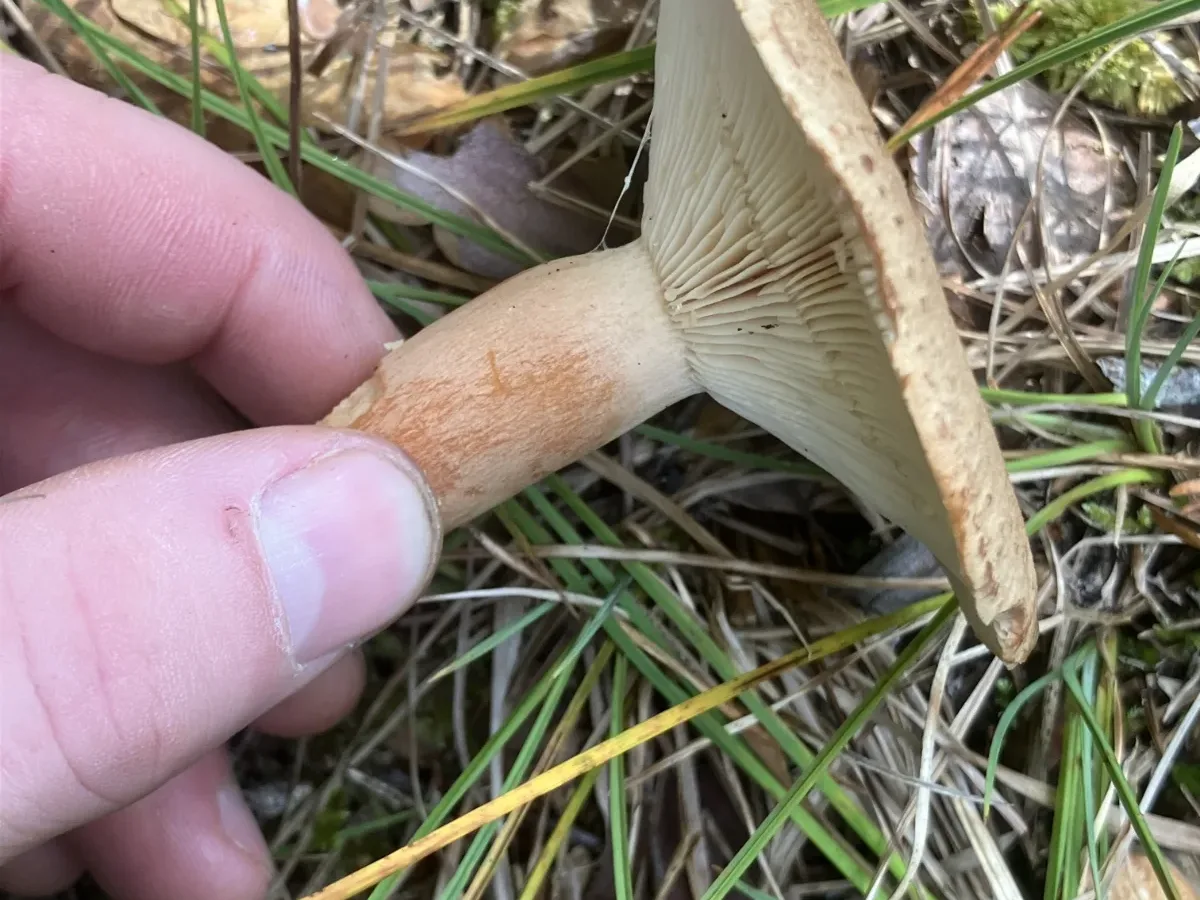
Lactarius helvus is a medium to large milkcap that lacks the bold colouring of many relatives, presenting instead in understated tones of pale tawny-buff to sandy-greyish-ochre.
Cap
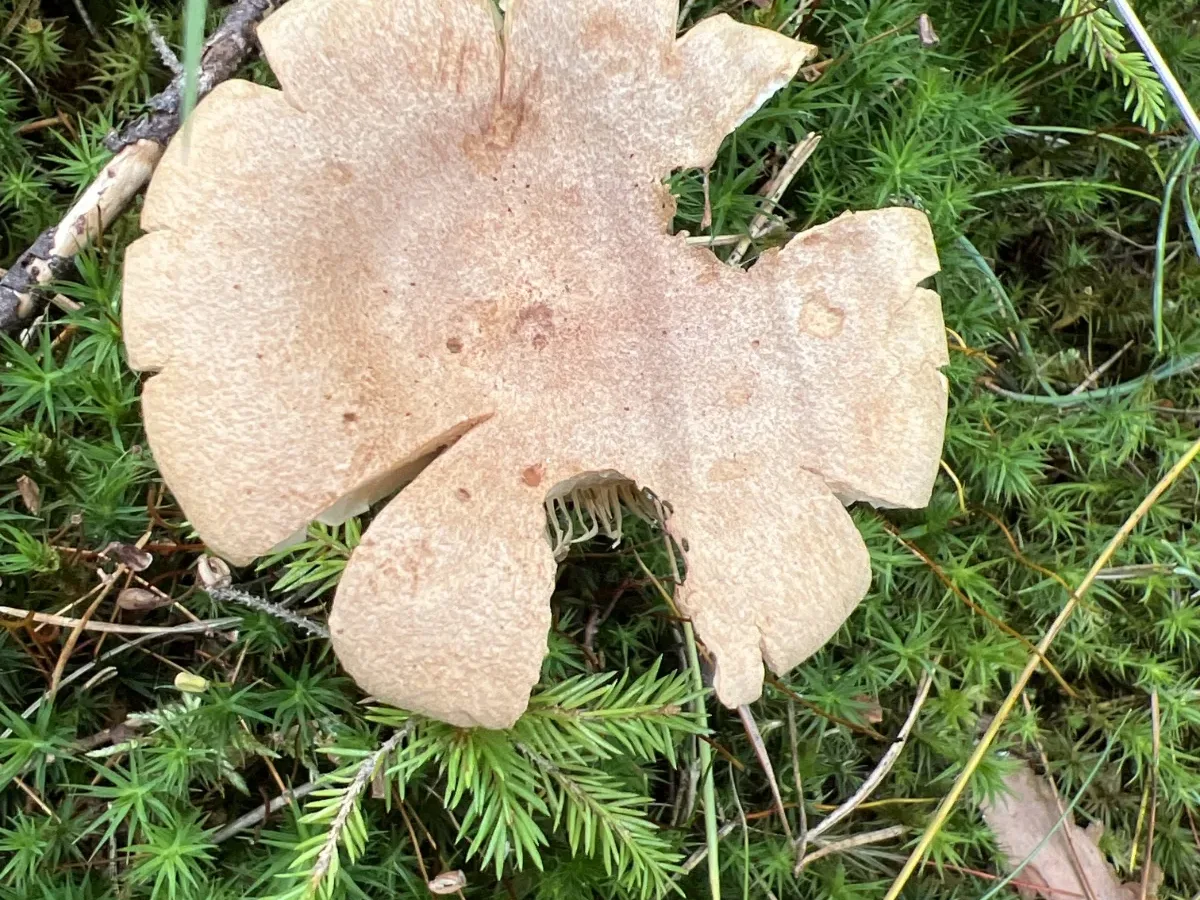
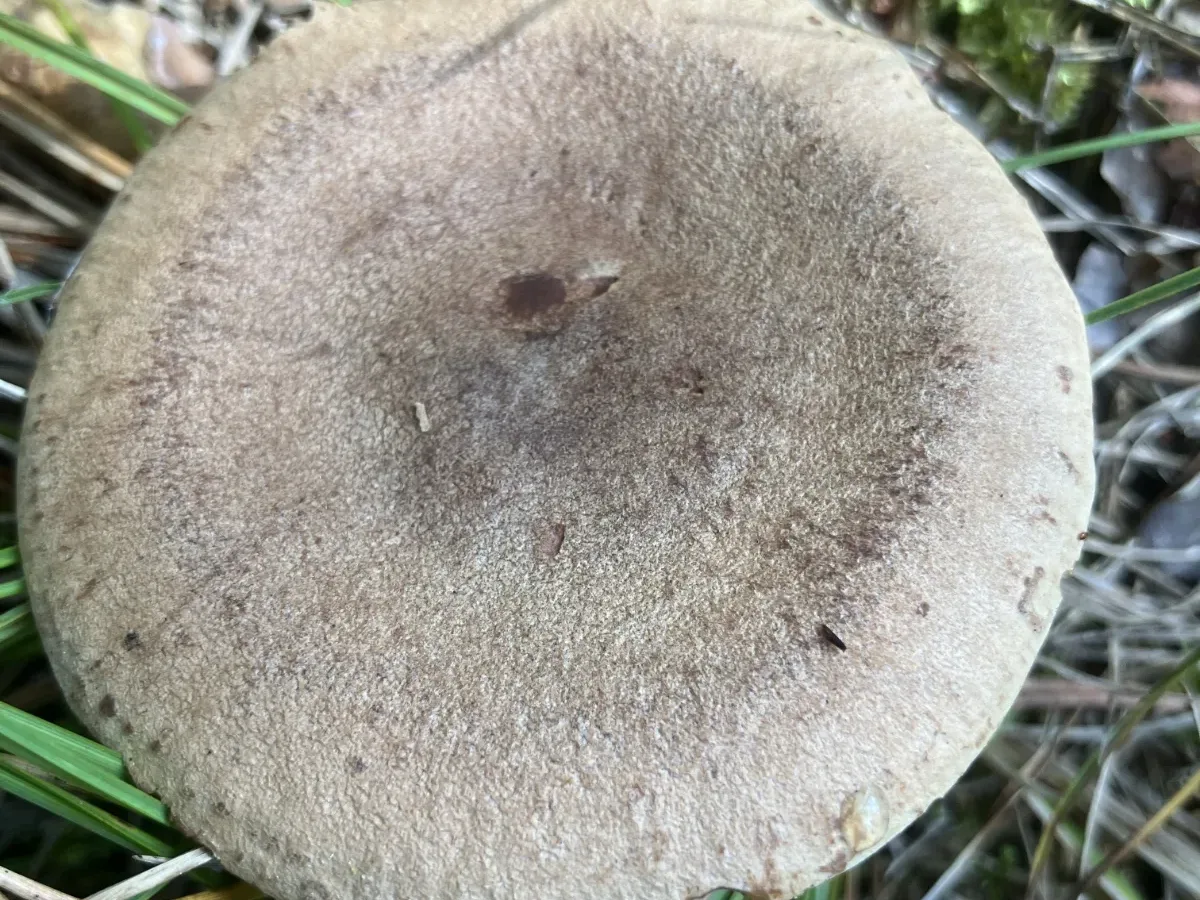
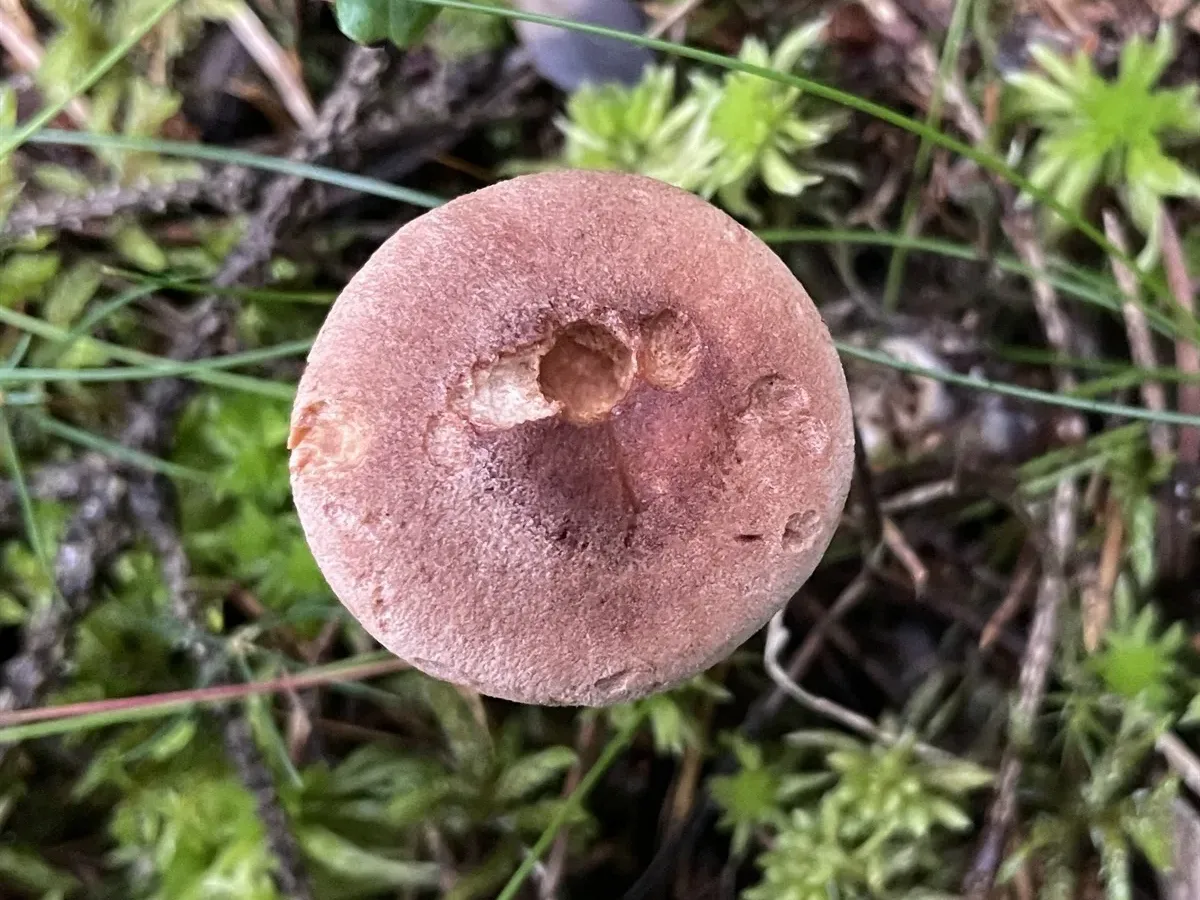
The cap (5-12 cm) moves through convex, broadly plane, and then shallowly funnel-shaped stages. The surface is dry and slightly felty - never slimy or greasy - which immediately separates it from viscid milkcap species.
Young caps may carry a faint bluish-grey or pinkish-lilac wash that fades to a plainer buff as the mushroom matures.
Gills
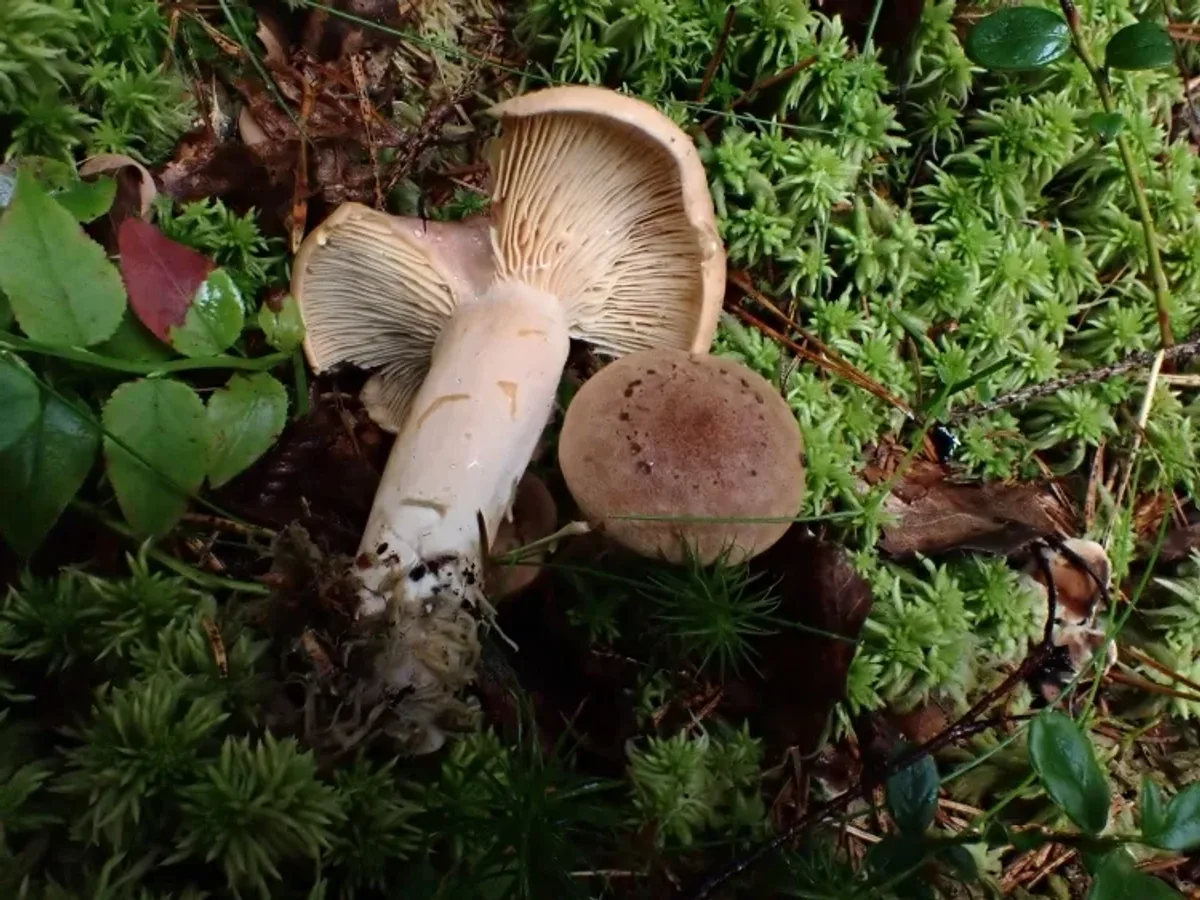
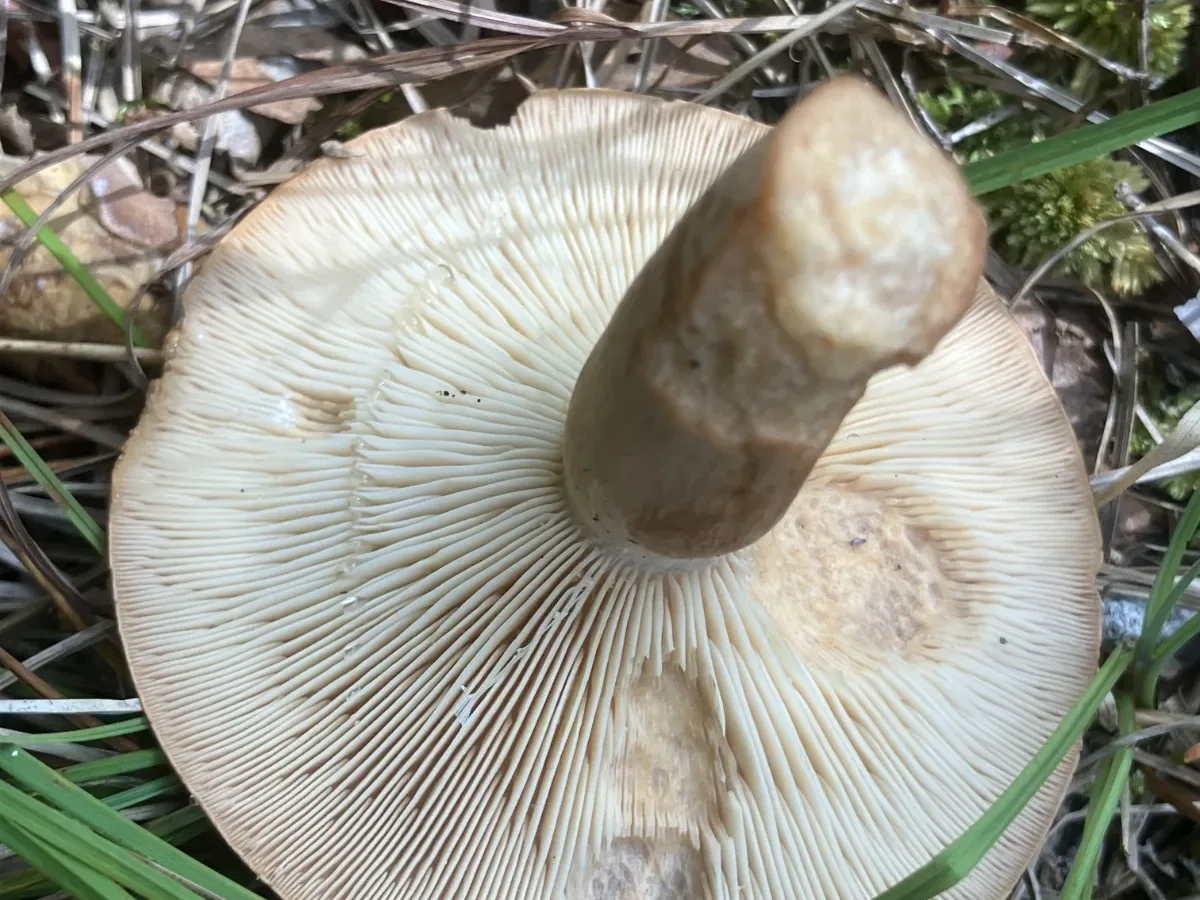
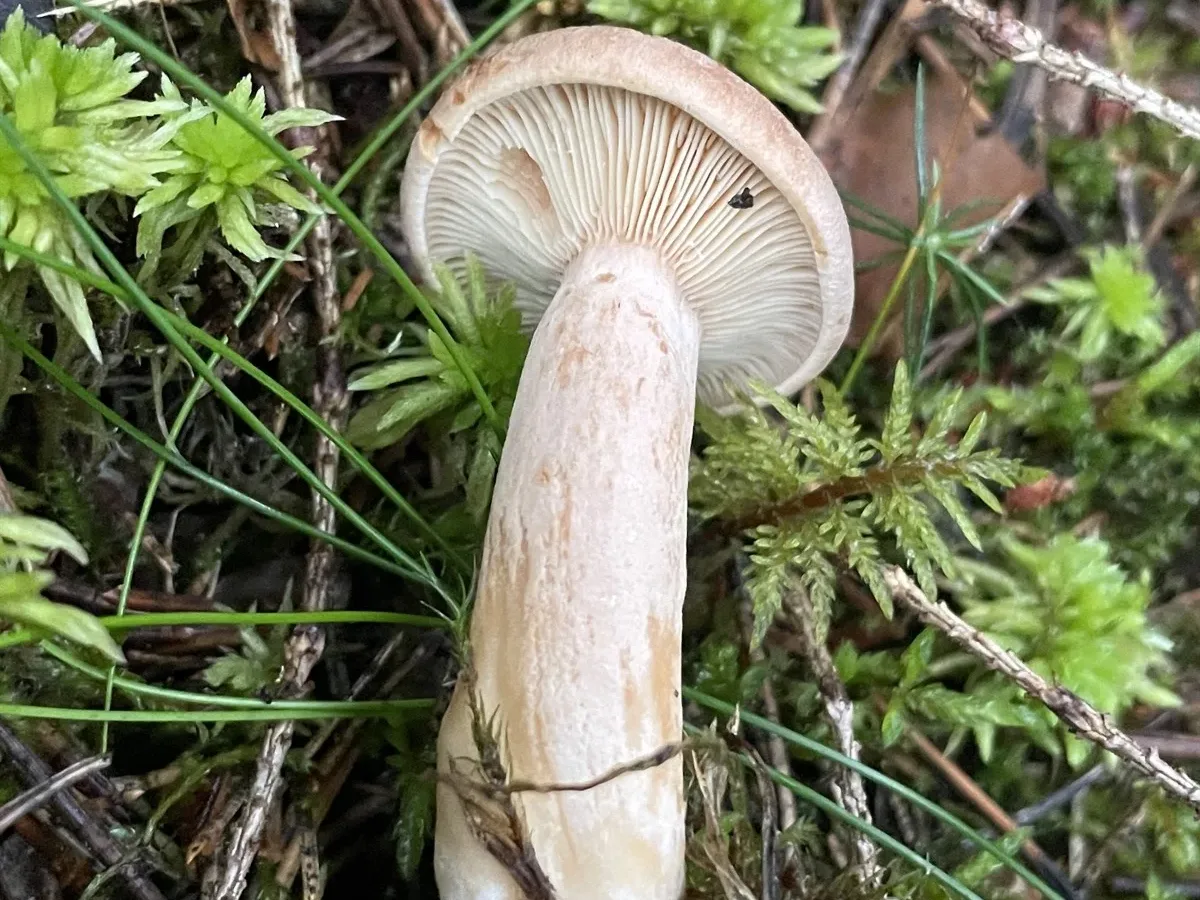
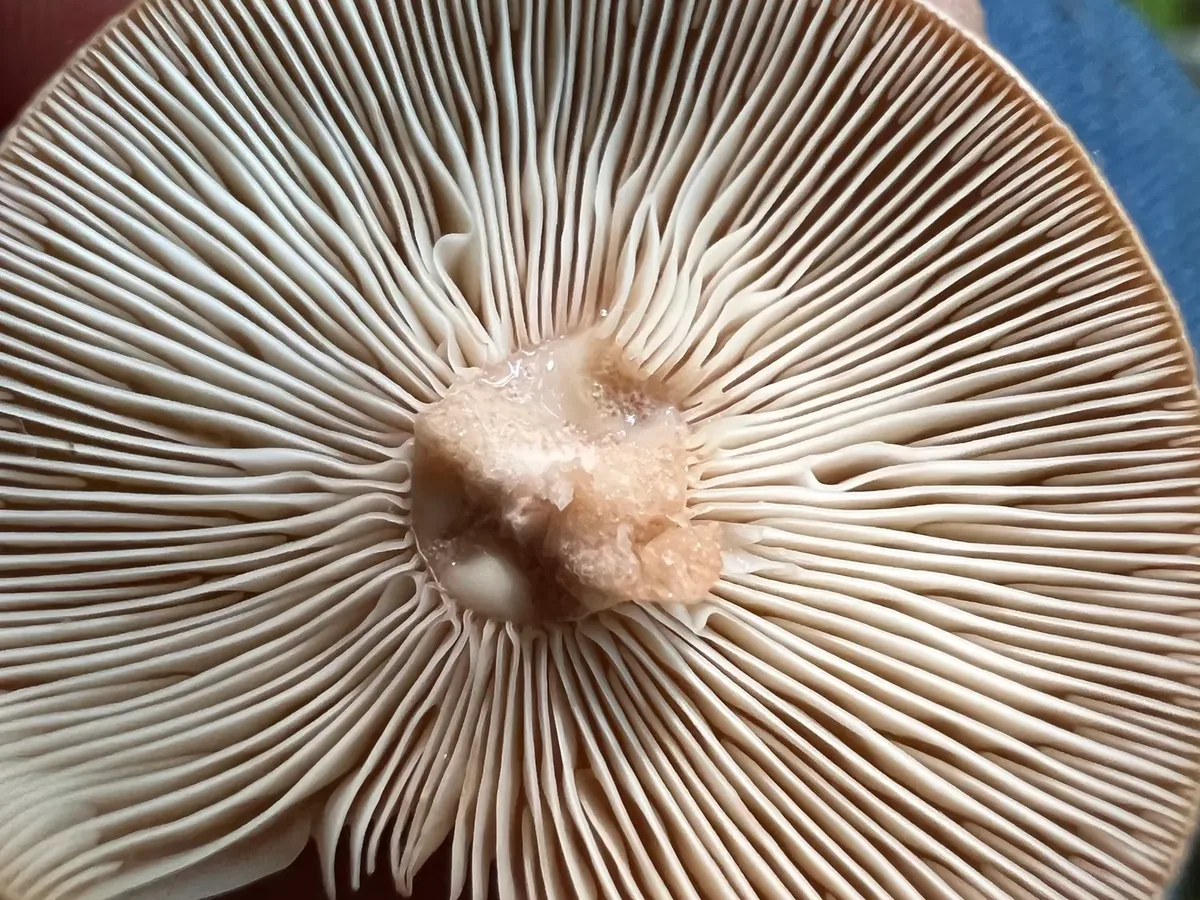
The gills are pale cream to pale ochre and run slightly down the stem.
Stem
The stem is stout, cylindrical, and coloured like the cap.
Flesh
The latex is scanty and watery - nothing like the copious white milk of L. resimus or the acrid cascade of L. torminosus.
Smell & taste
Its taste is mild, only slightly acrid. None of these features alone are definitive.
The single most reliable character is smell: Lactarius helvus has an overwhelming, warm, spicy fragrance - the scent of fenugreek seeds, Maggi seasoning, or curry powder - that becomes even stronger as the mushroom dries.
In the field this smell can often be detected before the mushroom is even picked up. Dried specimens retain this aroma for months. No other common milkcap shares this exact scent profile at this intensity.
Why it's dangerous
The danger of Lactarius helvus is twofold:
- 1The mushroom itself is toxic - its sesquiterpene lactones cause GI poisoning and potential hepatotoxicity.
- 2More gravely, its habitat in boggy boreal forests overlaps closely with the deadly Cortinarius rubellus and C. orellanus, both of which cause fatal kidney failure.
The 2-3 week delay between ingestion and first symptoms of Cortinarius poisoning means victims feel initially well and do not seek medical help until irreversible renal damage has occurred.
Any pale-buff to tawny mushroom collected in wet spruce or pine bog that does not clearly exude latex from broken flesh must be treated as potentially deadly.
Toxin
The principal toxic compounds in Lactarius helvus are volatile sesquiterpene lactones, with dihydronepetalactone identified as the dominant aromatic component responsible for the fenugreek scent. These sesquiterpenes are the same class of compounds that give related species their bitterness and acridity.
In L. helvus they cause gastrointestinal irritation and, in animal studies, hepatotoxic (liver-damaging) effects at higher doses.
Cooking reduces but does not fully eliminate these compounds. The volatile fractions responsible for the aroma dissipate on prolonged heating, but non-volatile sesquiterpene fractions remain.
Symptoms
Ingestion of Lactarius helvus typically causes gastrointestinal symptoms within 30 minutes to 4 hours:
- nausea
- vomiting
- abdominal cramps
- diarrhoea
Symptoms are generally self-limiting and resolve within 24-48 hours with supportive care.
More severe reactions with liver-function disturbance have been reported in animal toxicology studies at high doses.
There are no reports of fatalities from L. helvus poisoning in the medical literature, and it does not cause the delayed kidney failure characteristic of Cortinarius intoxication.
However, individual sensitivity varies and the risk of serious harm in vulnerable individuals (children, those with pre-existing liver or kidney conditions) cannot be excluded.
Staying safe
Do not eat Lactarius helvus. Its appealing spicy aroma and the fact that some older guides listed it as conditionally edible make it a deceptive species. The current mycological consensus treats it as poisonous.
The most urgent safety rule when foraging in its habitat is the latex check: always snap or scratch the cap or gills - a genuine milkcap will immediately release visible white or watery milk. If no liquid appears, do not collect.
Always confirm your collection does not include any Cortinarius species, which are morphologically distinct but occupy the same wet boreal forest microhabitats.
When in doubt, leave it out.
Where & when it grows
Habitat
Lactarius helvus is a wet-forest specialist. It does not grow on the well-drained sandy soils favoured by L. rufus or in the typical Scots pine heathland of many other milkcaps.
Instead, look for it in the soggiest corners of the conifer belt:
- boggy spruce-birch carr
- Sphagnum-floored mires at the edge of forest
- waterlogged sections of pine bog
- alder-birch fen woodland
Its preferred microsites are where cold, acidic, poorly drained peat or deep raw humus accumulate under a canopy of Norway spruce (Picea abies) and downy birch (Betula pubescens).
This moisture preference is a reliable habitat filter: if you are walking on well-drained mineral soil, you are unlikely to find L. helvus.
In Scandinavia and Finland it is closely associated with the transition zone between productive boreal forest and open raised bog.
When
Fruiting begins in July in warm years and continues through October. The peak across Scandinavia, Finland, and northern Russia is August to mid-September, coinciding with the main milkcap season.
Because it grows in permanently moist Sphagnum habitat, it is less dependent on recent rainfall events than drier-ground species - the substrate retains sufficient moisture through summer droughts that might suppress fruiting elsewhere.
It can persist well into October when temperatures remain mild.
How it grows
Grows scattered to loosely gregarious - individual fruitbodies or small groups pushing up through or alongside Sphagnum cushions and sedge litter.
Not tufted; each fruitbody arises independently from the ectomycorrhizal network threading the wet peat below.
The bases of mature specimens are often stained or darkened where they have been in close contact with sphagnum.
Fruiting conditions
Less rainfall-dependent than many species because its Sphagnum and peat substrate retains moisture; soil temperature in the cool range of 8-14 °C is the primary trigger; grows well in boggy microsites that remain cool and damp through summer
Look-alikes
Several other milkcaps and a few unrelated species can be confused with Lactarius helvus.
- Lactarius camphoratus (curry milkcap): the most common confusion because it shares a similar fenugreek or curry-like smell; however, it is clearly smaller (cap 2-5 cm vs. 5-12 cm in L. helvus), has a deeper reddish-brown or date-brown cap, a more prominent central umbo, and copious white unchanging acrid latex.
- Lactarius subdulcis (beech milkcap): grows in similar pale tawny-buff tones but under deciduous trees (especially beech), has only a mild taste, and lacks the strong curry aroma.
- Lactarius quietus (oak milkcap): similarly coloured, grows under oak, and has a distinctive oily-tarry smell rather than the fenugreek character of L. helvus.
- Lactarius theiogalus: has milk that turns sulphur-yellow in air, distinguishing it from L. helvus.
CRITICAL DANGER: Cortinarius rubellus (deadly webcap) and Cortinarius orellanus (fool's webcap) grow in the same boggy boreal habitats - spruce bogs, pine mires, birch-spruce carr - that L. helvus favours.
Both are deadly poisonous, causing irreversible kidney failure (orellanine nephrotoxin) that may not produce symptoms for 2-3 weeks after ingestion, by which time permanent damage has occurred.
These Cortinarius species produce NO latex whatsoever. Always break or scratch the flesh - if no white or watery milk flows immediately, the mushroom is NOT a milkcap and must not be eaten.
Cortinarius also has rusty-brown spores that deposit on the cortina (cobweb-like veil remnants on the stem), and their gills age to rusty-brown.
The overlap of habitat between L. helvus and deadly Cortinarius species in boggy boreal forests makes vigilance essential.
Grows in the same boggy boreal forests (spruce bog, pine mire). DEADLY - causes irreversible kidney failure from orellanine toxin; symptoms delayed 2-3 weeks. Produces NO latex whatsoever - always break the flesh; if no white or watery milk flows, it is not a milkcap. Cortinarius has rusty-brown spores deposited on stem cortina remnants, and gills that age rusty-brown.
Similarly deadly (orellanine nephrotoxin, delayed kidney failure). Tawny-orange to ochre cap, dry surface, no latex. Grows in mixed and deciduous woodland but may co-occur in boreal-edge habitats. Spores rusty-brown, cobweb veil present when young. Zero latex = not a milkcap.
Similar pale tawny-buff colouring but grows under beech and other deciduous trees, not in conifer bogs; mild or only faintly acrid latex; lacks the strong fenugreek smell; smaller cap (3-7 cm).
Shares the fenugreek/curry smell but is much smaller (cap 2-5 cm), has a deeper reddish-brown to date-brown cap with a persistent central umbo, and produces copious white acrid latex. The combination of small size, deep colour, prominent umbo, and abundant acrid milk readily separates it from L. helvus.
Tawny-buff cap with concentric zoning; associated exclusively with oak; has a distinctive oily or tarry smell (sometimes described as petroleum-like) rather than fenugreek; gills often show a pinkish-buff hue; mild white unchanging latex.
A reference guide - never an edibility guarantee. When in doubt, leave it out.