Hatsudake
Lactarius hatsudakesyn. Lactarius akahatsu, Lactarius laeticolor var. hatsudake
 © Atsushi Nakajima (CC BY 4.0)
 © Atsushi Nakajima (CC BY)
 © Atsushi Nakajima (CC BY)
 © Atsushi Nakajima (CC BY)
 © Atsushi Nakajima (CC BY)
 © Atsushi Nakajima (CC BY)
 © Atsushi Nakajima (CC BY)
 © Atsushi Nakajima (CC BY)
 © Atsushi Nakajima (CC BY)
 © Atsushi Nakajima (CC BY 4.0)© Atsushi Nakajima (CC BY 4.0)© Atsushi Nakajima (CC BY)
Good to eat, once you have identified it with certainty and cooked it through.
How to recognise it
Cap
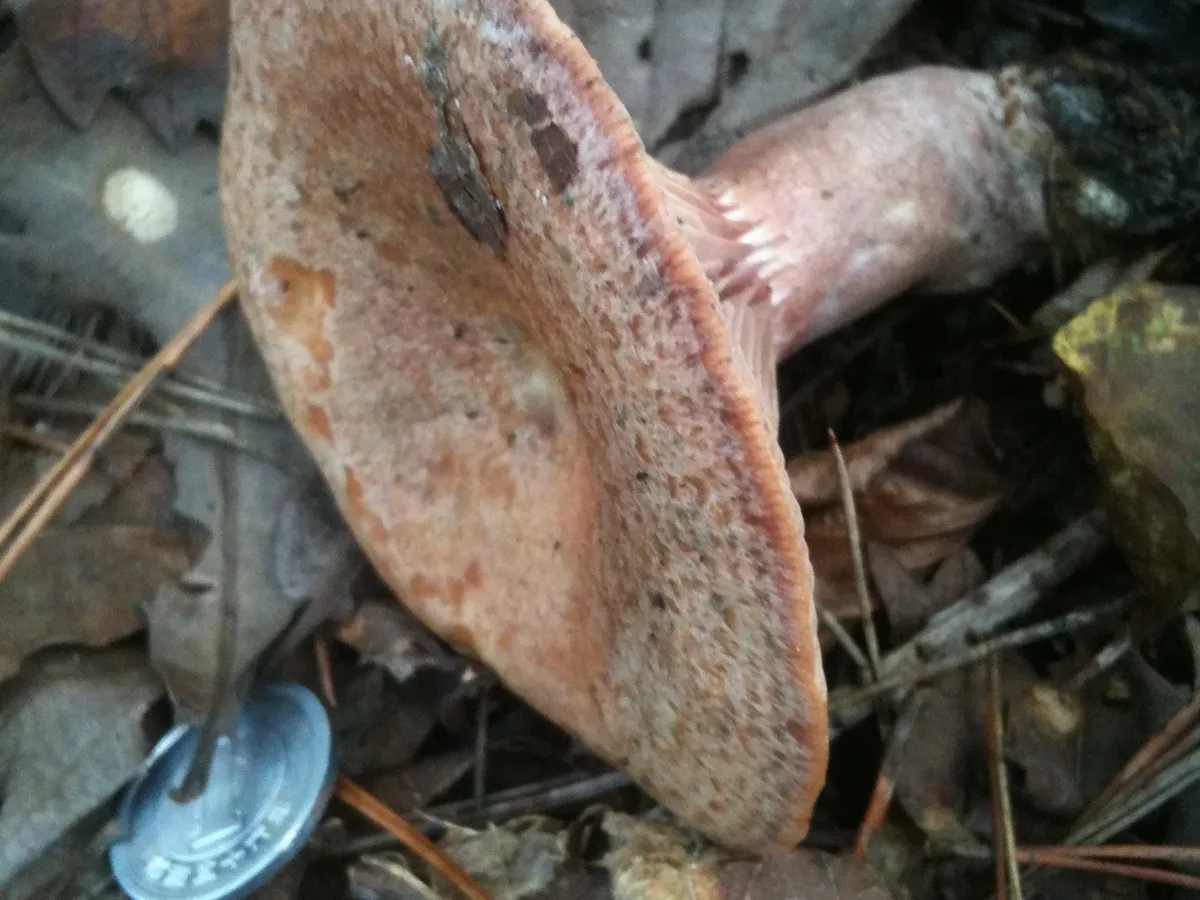
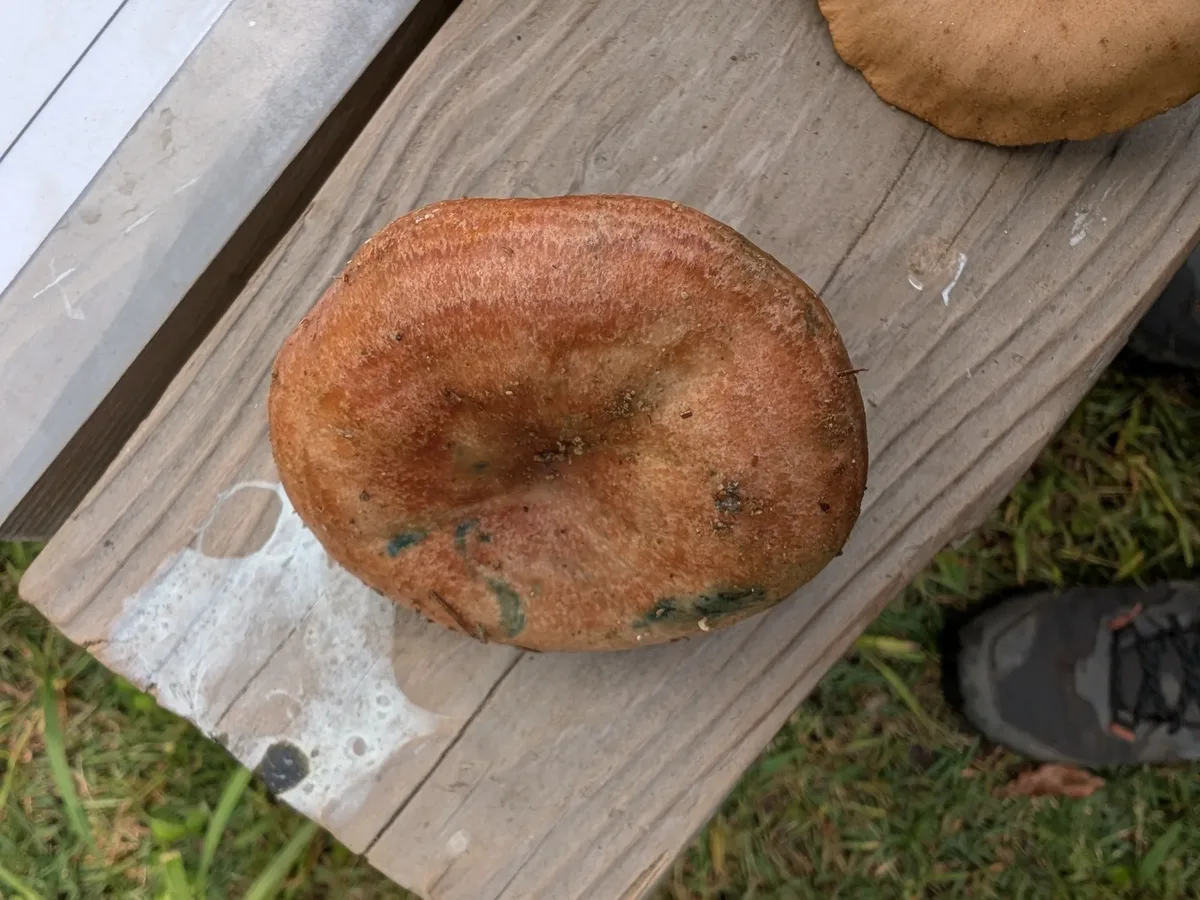
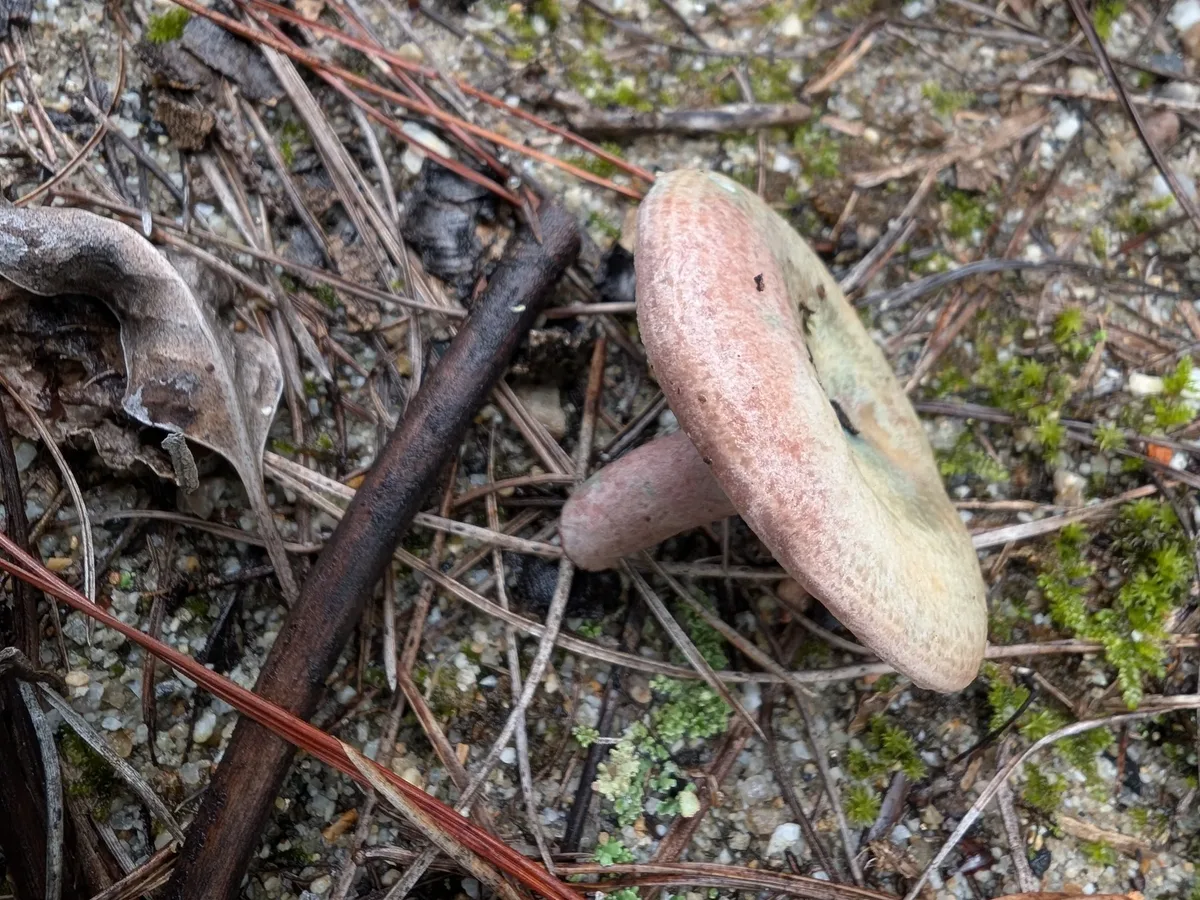
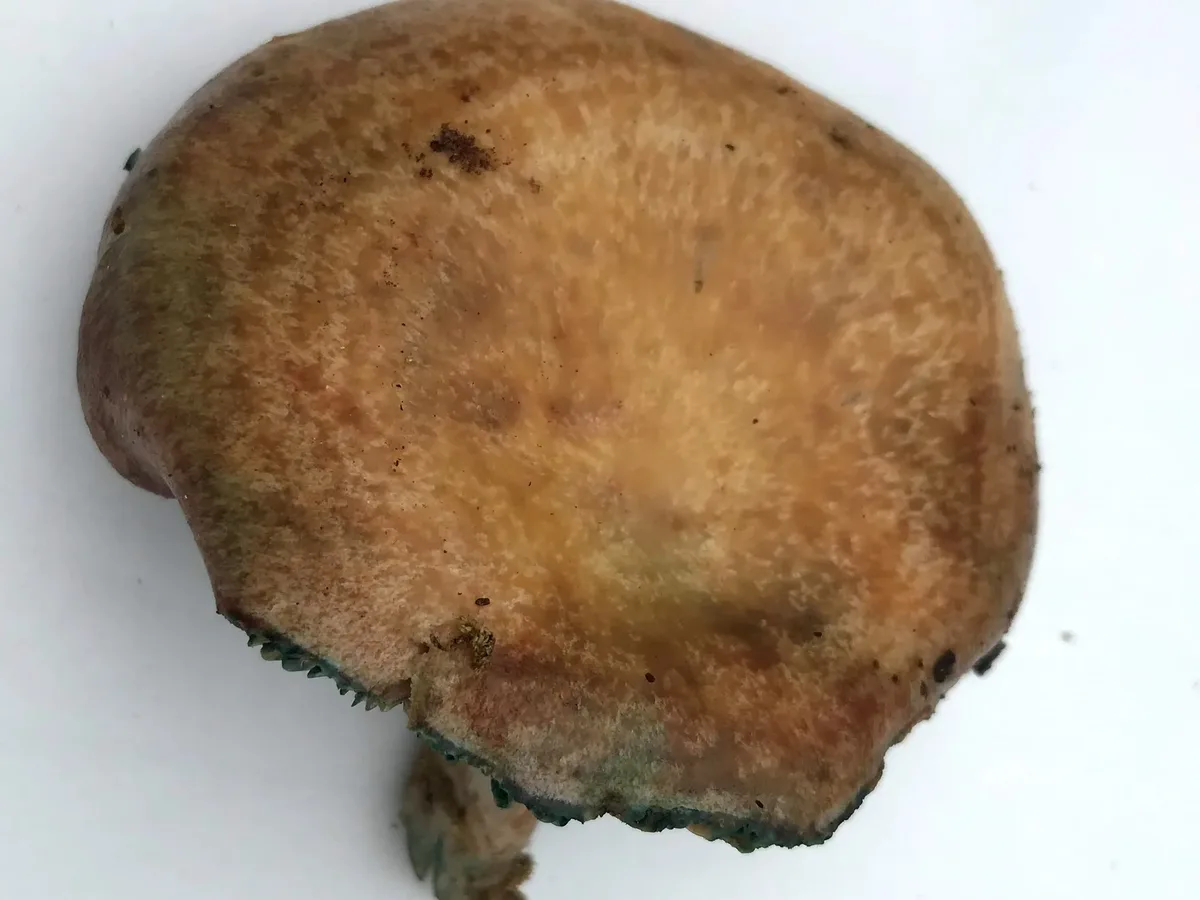
Cap 5-12 cm across, initially convex and slightly umbonate, flattening and then becoming centrally depressed to shallowly funnel-shaped with maturity.
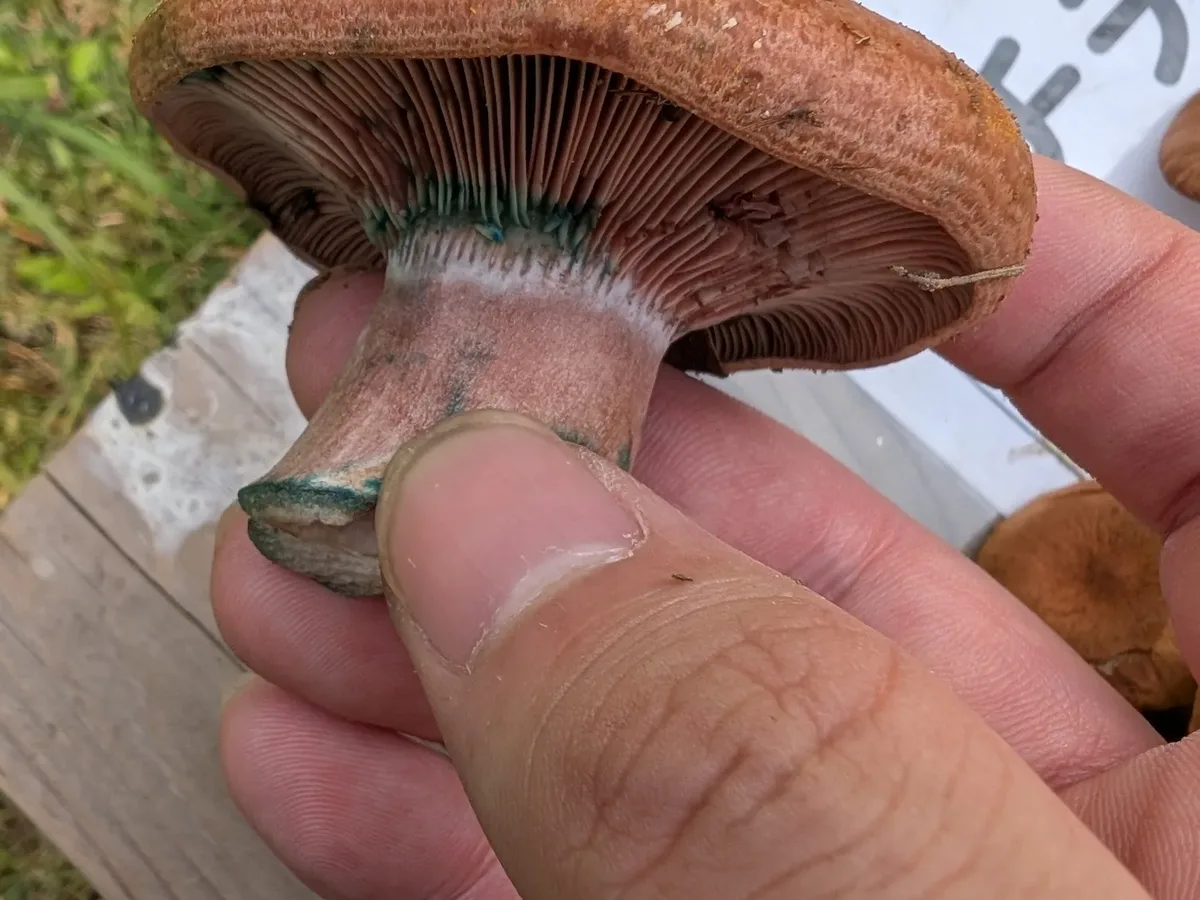
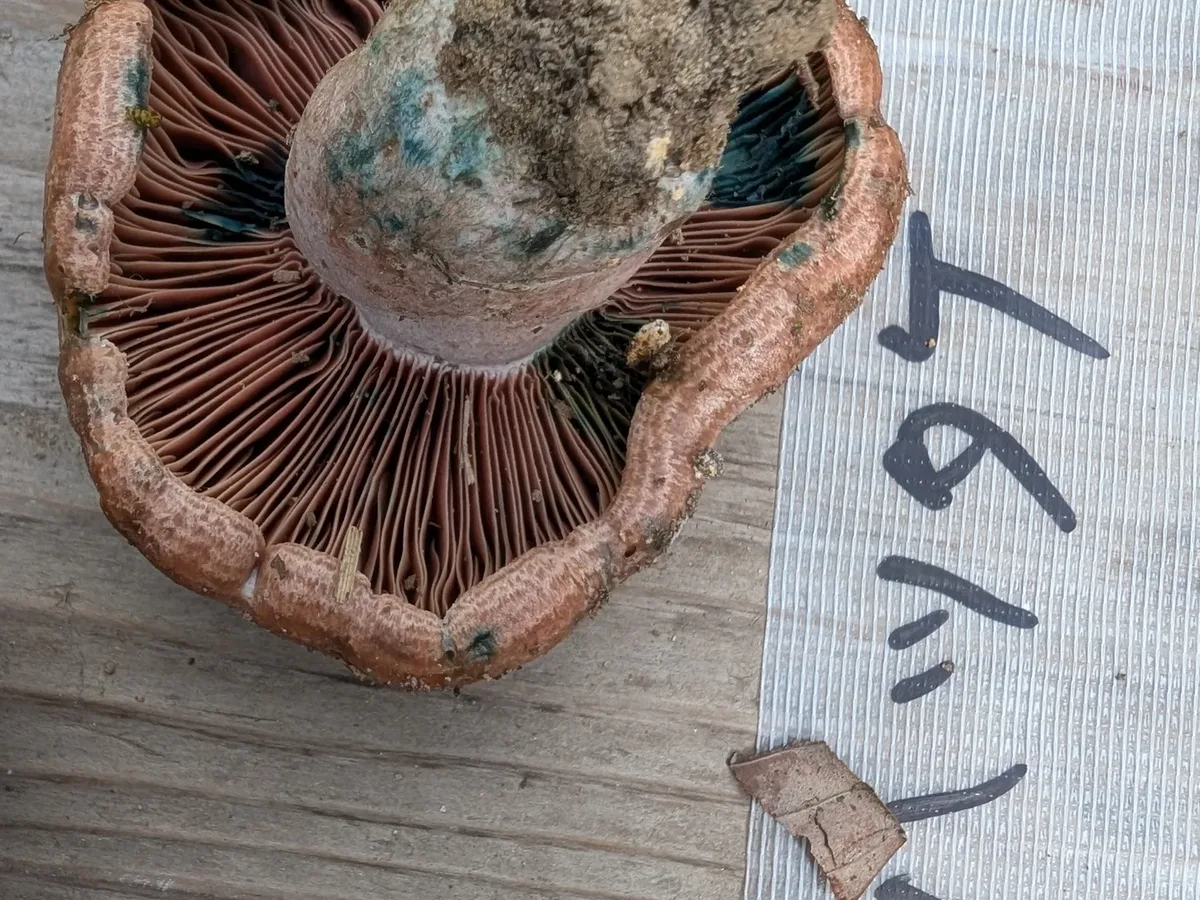
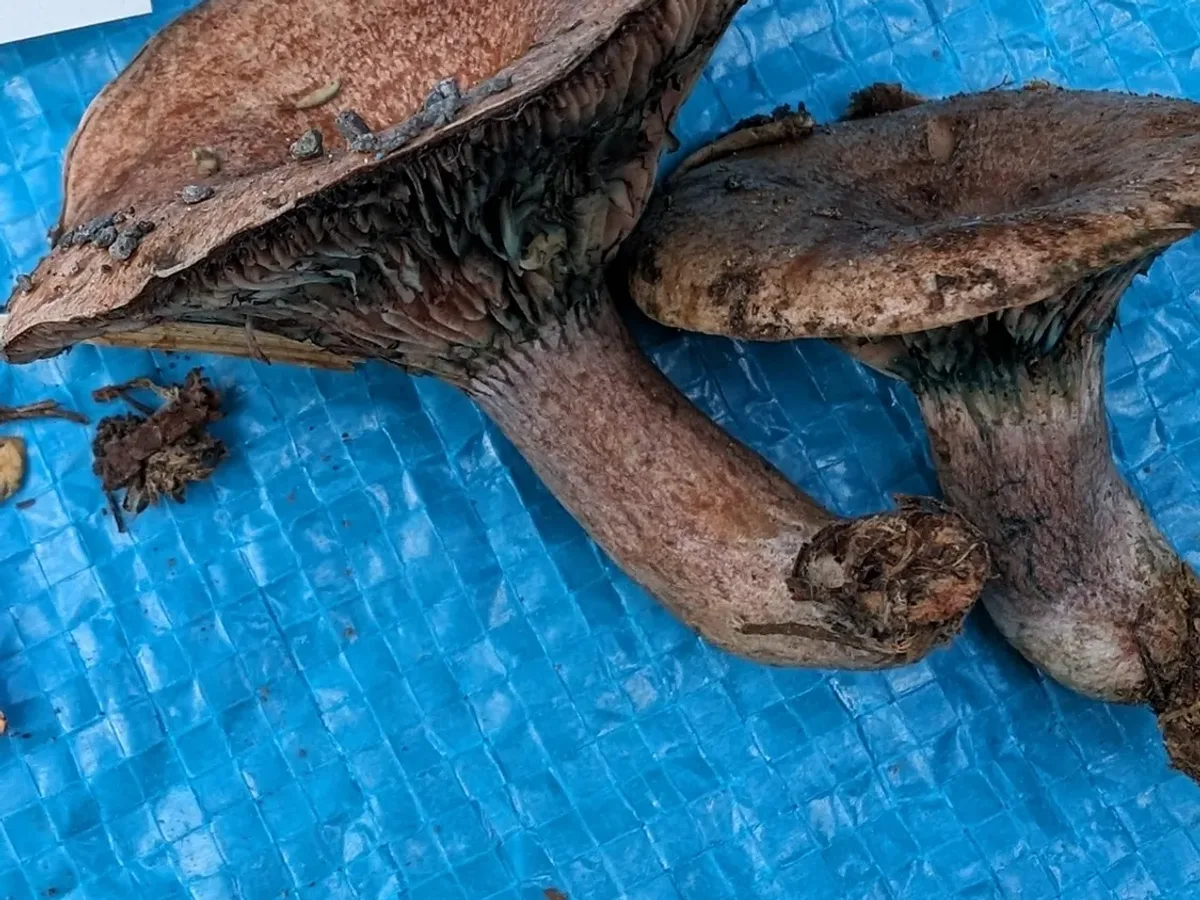
Surface dry to slightly sticky in wet conditions, smooth or faintly zonate, brick-red to brownish-orange or dull tawny, becoming marked with characteristic blue-green patches where old latex has dried or where handling has occurred.
Gills
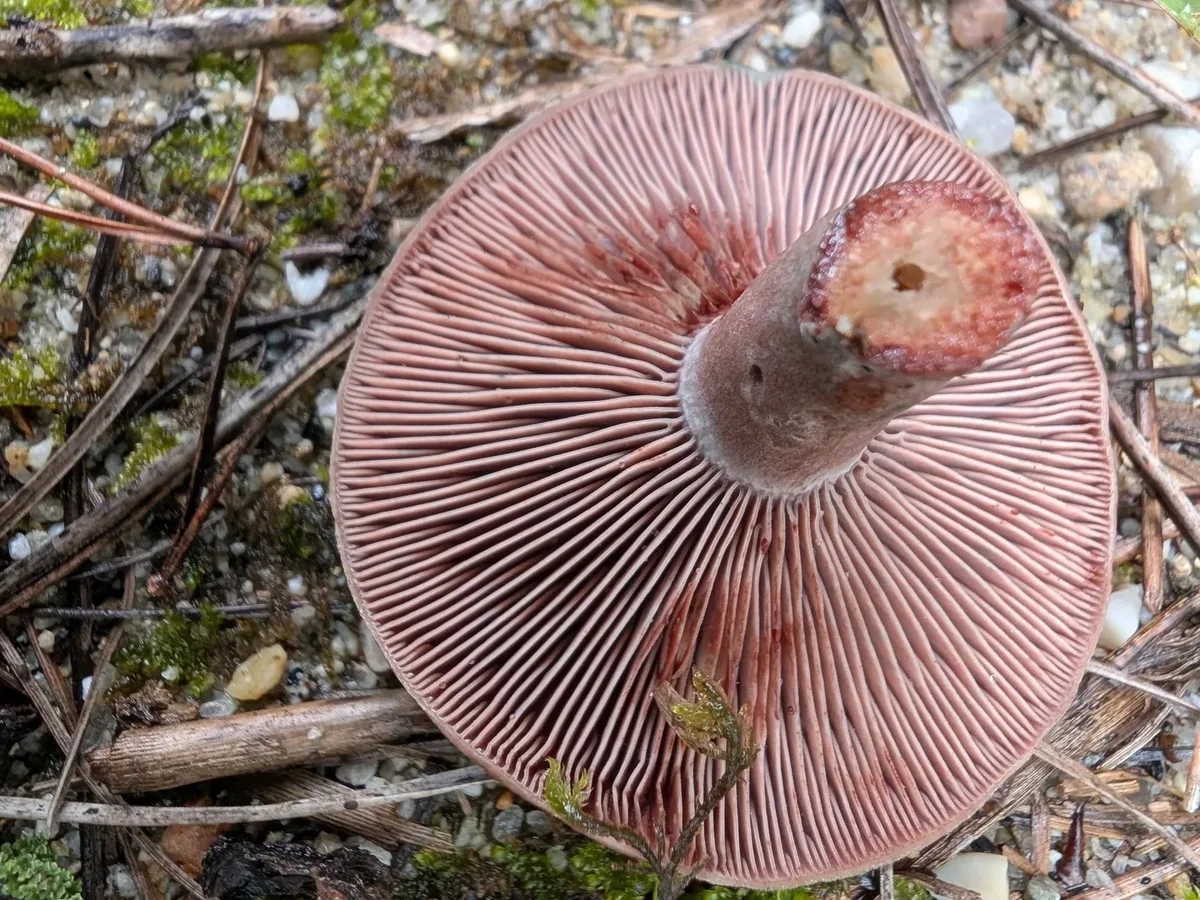
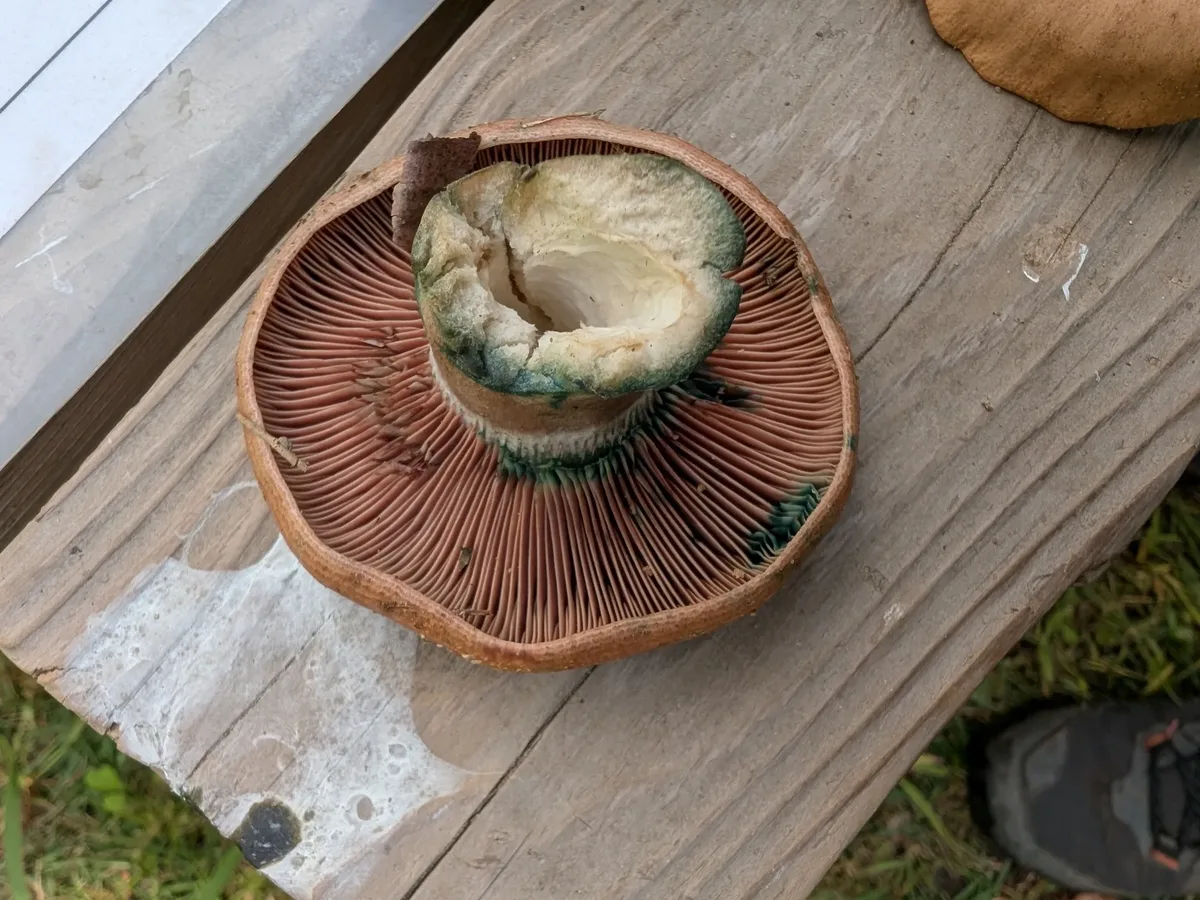
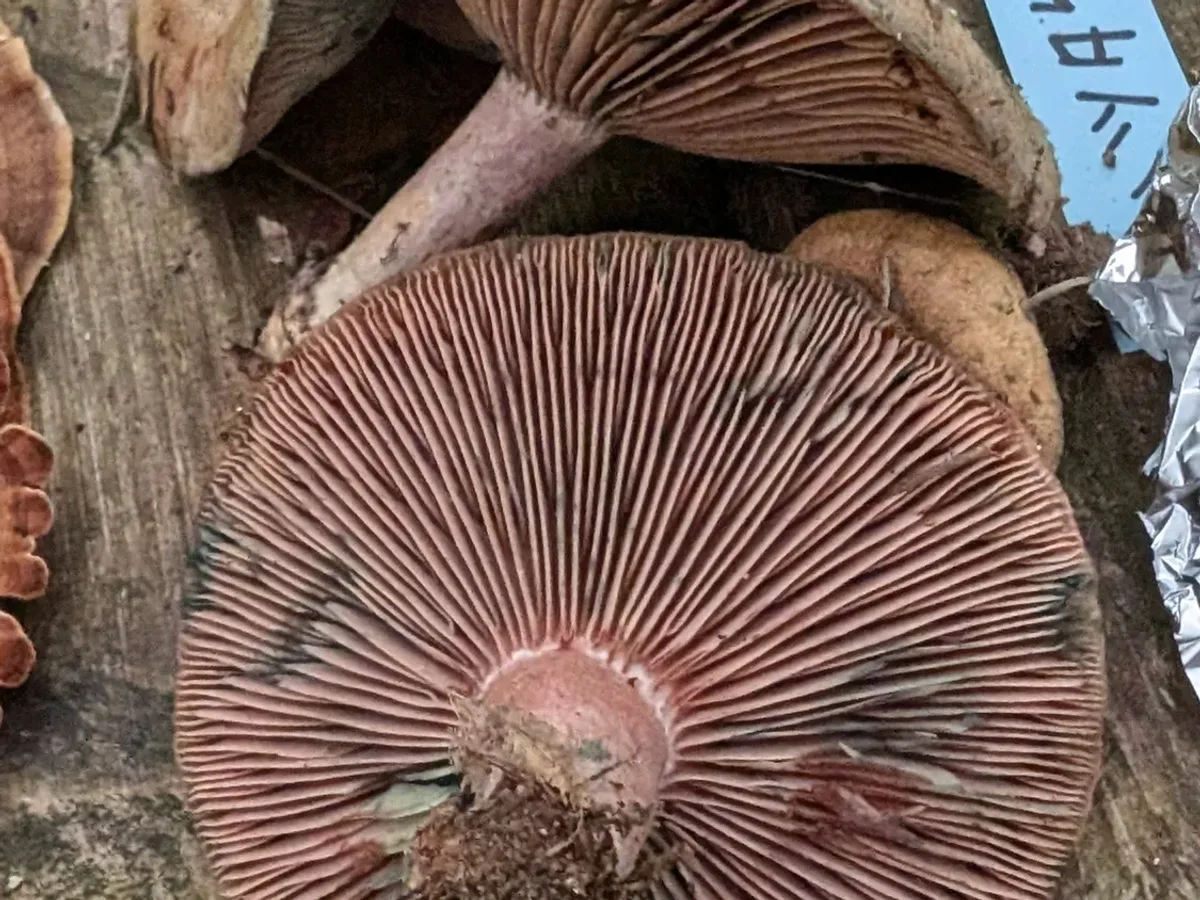
Adnate to slightly decurrent, crowded, initially pale saffron-orange, rapidly developing intense blue-green staining wherever bruised.
Stem
3-6 cm long, 1-2 cm thick, concolorous with cap or slightly paler, often dotted with small irregular shallow pits, becoming blue-green on handling.
Flesh
Firm throughout, pale saffron-orange, becoming vividly blue-green within seconds of being cut - this immediate oxidative colour change is the single most distinctive field character and should be confirmed on every specimen before collecting.
Latex pales from watery-white to blue-green within seconds of air exposure.
Spore print pale cream to pale buff.
Where & when it grows
Habitat
A mycorrhizal species obligately or almost exclusively associated with pine - particularly Japanese red pine (Pinus densiflora). It favours well-drained, acidic, sandy or loamy soils in open pine woodland and mixed pine-oak forest.
Commonly found along forest paths and sunny clearings where the pine canopy opens.
In Japan it is widespread from lowland hills through montane zones across Honshu and Kyushu. In China it is recorded in northeastern provinces and also in Yunnan and Sichuan, where it grows alongside other edible Lactarius species.
Wherever it occurs, look for the combination of pine association and characteristic blue-green staining on the ground litter around the fruiting bodies.
When
Late summer to mid-autumn, August through October, peaking in Japan during early September to early October - a period that overlaps with the general autumn mushroom season.
In warmer parts of its range (parts of southern China) fruiting may begin in July following the monsoon.
The species is among the first milkcaps of the autumn season in Japan, which is why it is named 'hatsutake' (初茸, meaning 'first mushroom').
Fruiting is triggered by cooling night temperatures after summer heat, combined with soaking autumnal rains.
How it grows
Fruits singly or in loose scattered groups. The fruitbodies connect below ground to the mycelial web woven around pine roots - a partnership that can persist for years, invisible until the right combination of cooling temperatures and autumn rain calls it into the open.
Young specimens push up as firm, rounded buttons; over several days the cap flattens and gradually sinks into its characteristic shallow funnel.
Because the fungus is strictly mycorrhizal and depends entirely on living pine roots, it cannot be cultivated - every hatsudake you find was grown by the forest itself.
Fruiting conditions
Autumn fruiting triggered by cooling temperatures and soaking rain on well-drained, acidic pine forest soils. In Japan the season follows the end of summer heat (soil cooling below ~20°C) combined with autumn rainfall. In Yunnan/Sichuan, monsoon-season fruiting may begin earlier (July) under different temperature regimes.
Look-alikes
The vivid blue-green staining of the cut flesh and latex is so rapid and distinct that it is almost impossible to confuse Lactarius hatsudake with any deadly species under a careful examination. The closest relatives are other orange or brick-red milkcaps in the Lactarius section Dapetes.
- Lactarius deliciosus (saffron milk cap): orange-coloured latex that stains more slowly and less intensely green than hatsudake's.
- L. deterrimus (spruce milk cap): greenish-tinged flesh and orange latex. Both of these are edible.
- Lactarius torminosus (woolly milk cap): shaggy, inrolled cap margin, white latex that is acrid and causes gastrointestinal distress - it does not stain blue-green.
- Acrid white-milked Lactarius species (L. rufus and relatives): burning-hot latex that does not stain blue-green, and are not edible.
The general rule: any Lactarius with burning, hot or acrid white latex that does not produce blue-green staining should never be eaten.
Because L. hatsudake grows with pine and is orange-capped, a brief resemblance to immature Suillus species is possible at a glance; Suillus has tubes rather than gills.
Reddish-brown cap without orange tones; white latex that is initially mild but becomes hot and acrid after a moment. No blue-green staining. Mildly toxic raw; requires long boiling and water changes to reduce toxins.
L. deliciosus has orange latex that stains orange-red and then greenish more slowly and less intensely than hatsudake; cap tends to be more clearly zonate and more vividly orange. Both are edible.
Associated with spruce rather than pine; has orange latex that turns greenish, but cap is more greenish-tinged overall. Not found in East Asia. Both are edible.
Has a densely woolly, strongly inrolled cap margin, and white latex that is intensely acrid and burning. Does not stain blue-green. Causes severe gastrointestinal distress; do not eat raw or without careful processing.
In the kitchen
Picking & cleaning
Collect young to medium-aged fruitbodies with the cap still slightly convex or just starting to flatten; overmature funnel-shaped specimens are softer and more prone to insect damage.
Cut cleanly at the base to preserve the mycelium.
The blue-green staining immediately visible on the cut flesh and gills is an important confirmation that you have the right species - do not proceed if the cut flesh does not rapidly turn blue-green.
Brush soil from the cap; do not wash unless immediately before cooking, as moisture damages the texture. Use within 1-2 days of picking.
Cooking
Hatsudake is prized in Japanese cuisine for its rich, slightly resinous pine-forest flavour, similar to but milder than matsutake. The flesh firms up nicely when cooked and holds its shape well.
The blue-green colouration disappears during cooking, leaving a pale, saffron-tinted flesh.
Classic preparations in Japan include:
- Grilling over charcoal or a griddle (suami-yaki)
- Adding sliced pieces to rice to make 'hatsutake gohan'
- Simmering in dashi-based soups and nabe hotpots
- Pickling in salt brine for winter preservation
In China it is commonly stir-fried with garlic, or added to braises and soups.
Avoid boiling in large quantities of water, which dilutes the flavour; dry-heat or gentle sautéing best preserves the aroma. The mushroom pairs naturally with soy, sake, and mirin.
Good to know
Lactarius hatsudake is a well-regarded edible mushroom, traditionally consumed across Japan, Korea, and parts of China. It has no significant toxins and is not reported to cause poisoning.
As with all wild mushrooms, two checks must be performed on every specimen collected:
- 1The latex turns blue-green rapidly on air exposure.
- 2The cut flesh stains blue-green promptly.
Both checks together are highly reliable. Do not harvest any orange-capped milkcap that lacks this blue-green reaction.
A reference guide - never an edibility guarantee. When in doubt, leave it out.