Coconut Milkcap
Lactarius glyciosmussyn. Agaricus glyciosmus Fr., Lactarius glyciosmus var. glyciosmus, Lactarius sphagneti (Fr.) Neuhoff
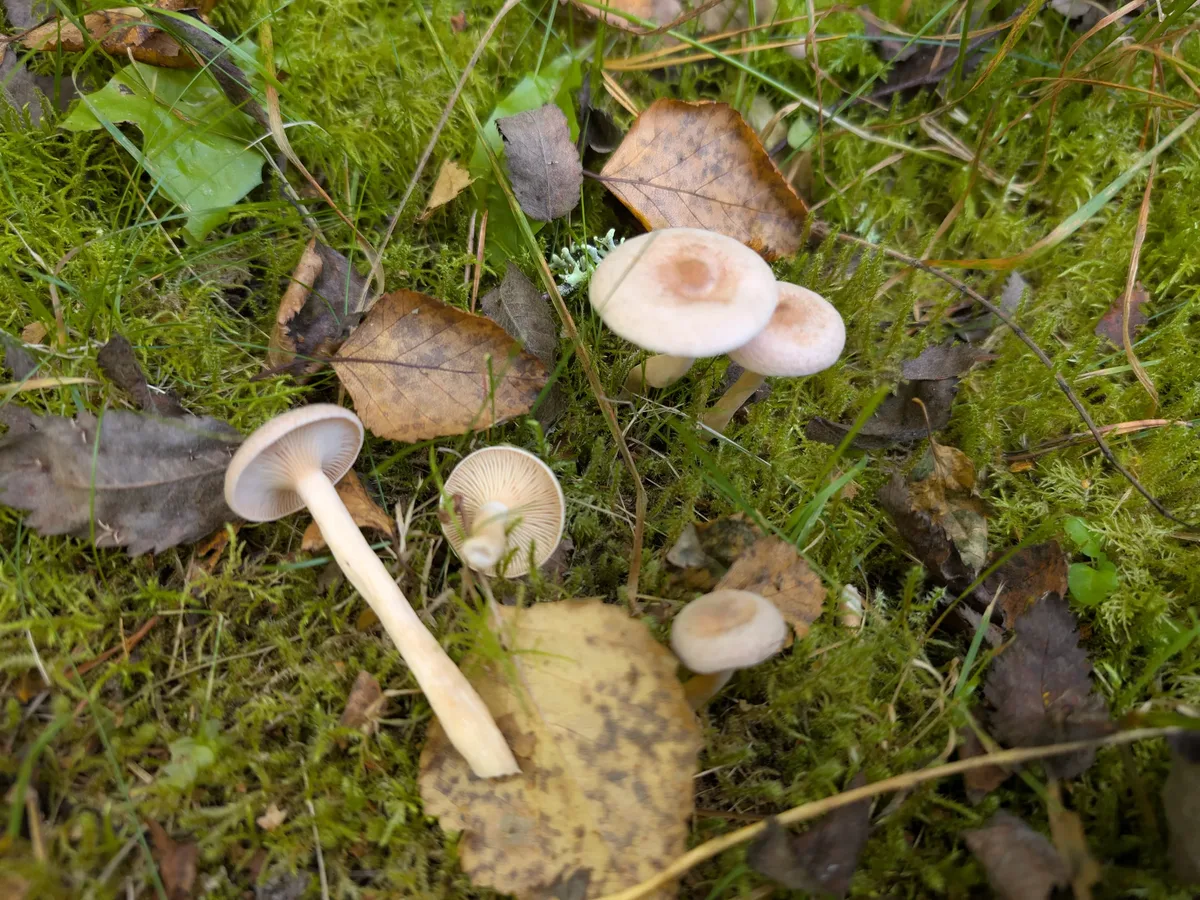 © Petri Roponen (CC BY-SA)
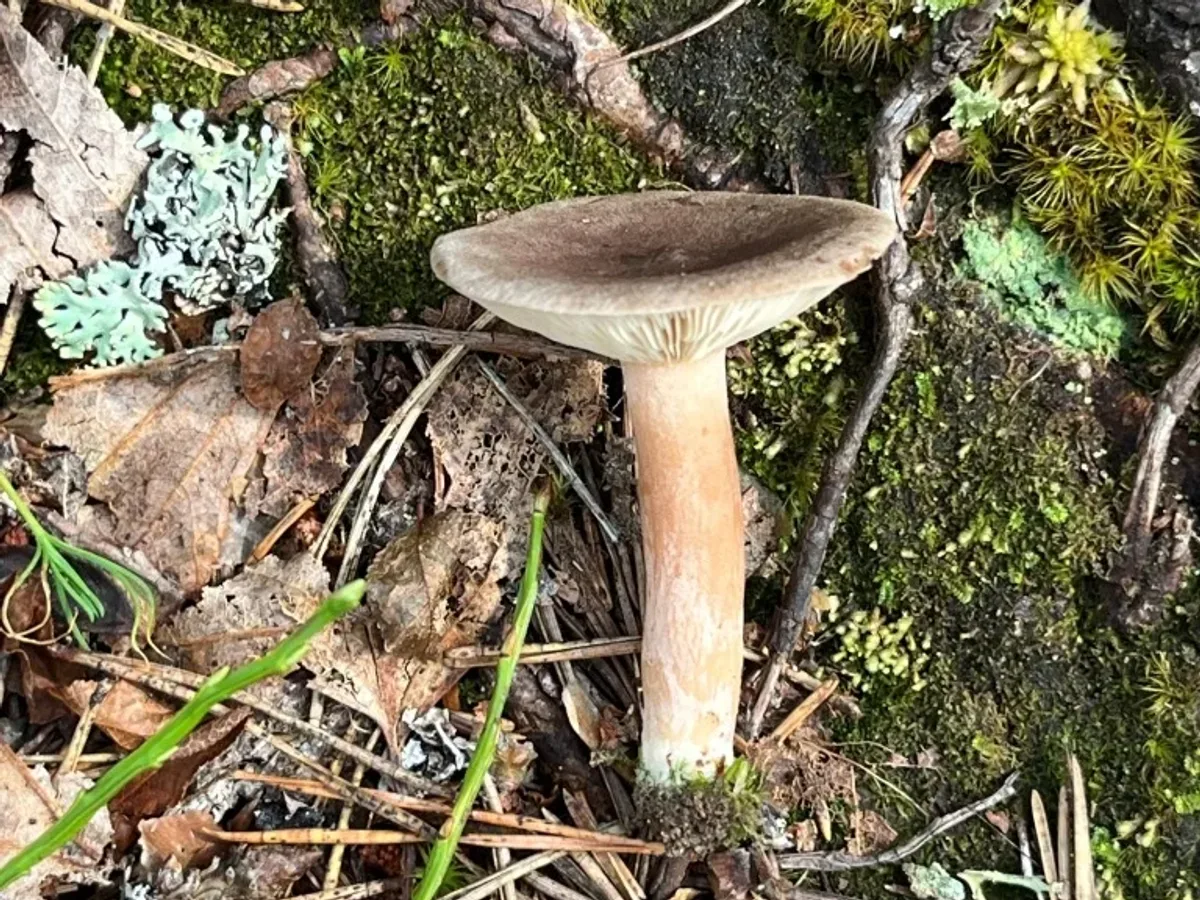 © Siv Moen (CC BY)
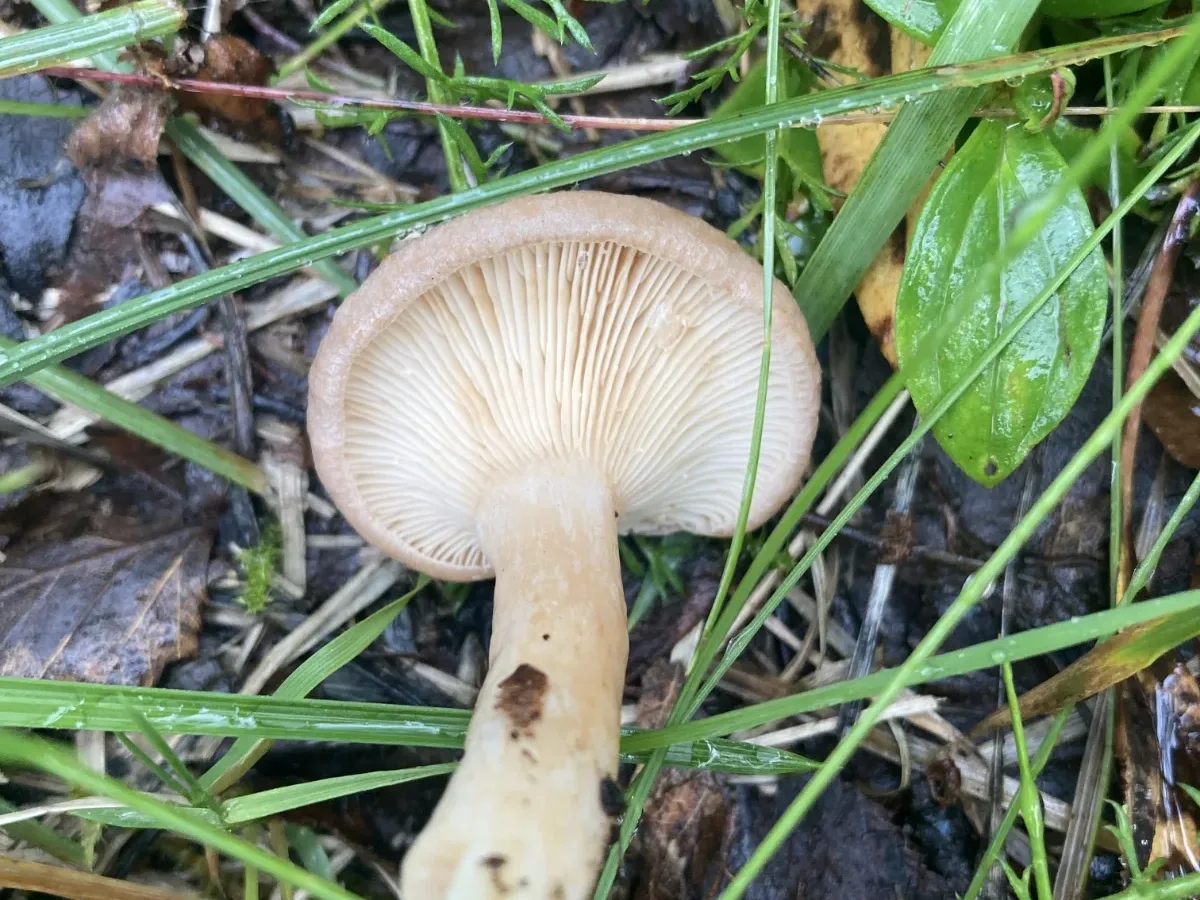 © Cecilie Ness (CC BY)
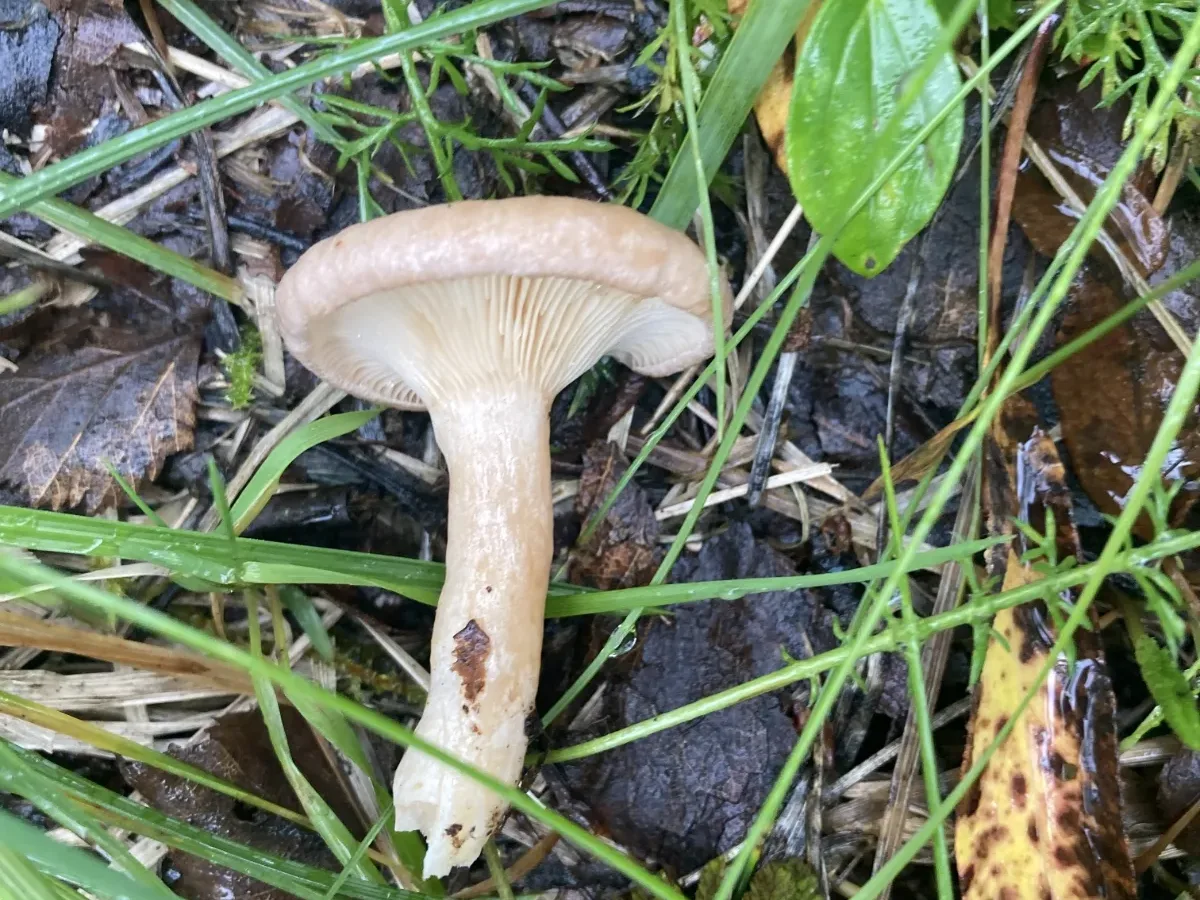 © Cecilie Ness (CC BY)
 © Marte Kristoffersen (CC BY)
 © Marte Kristoffersen (CC BY)
 © Richard Johnsen (CC BY)
 © Ole Christian Hagestad (CC BY)© Petri Roponen (CC BY-SA)© Siv Moen (CC BY)
Edible only with the right preparation - or safe for some people but not others. Learn the caveats first.
How to recognise it
Lactarius glyciosmus is a small to medium milkcap whose most celebrated feature is not visual but olfactory.
Smell & taste
It smells unmistakably of toasted or desiccated coconut, a distinctive and persistent sweetness that intensifies when specimens are dried. This coconut odour is shared by almost no other common mushroom in its range, making the species easy to confirm once the scent is learned.
Cap
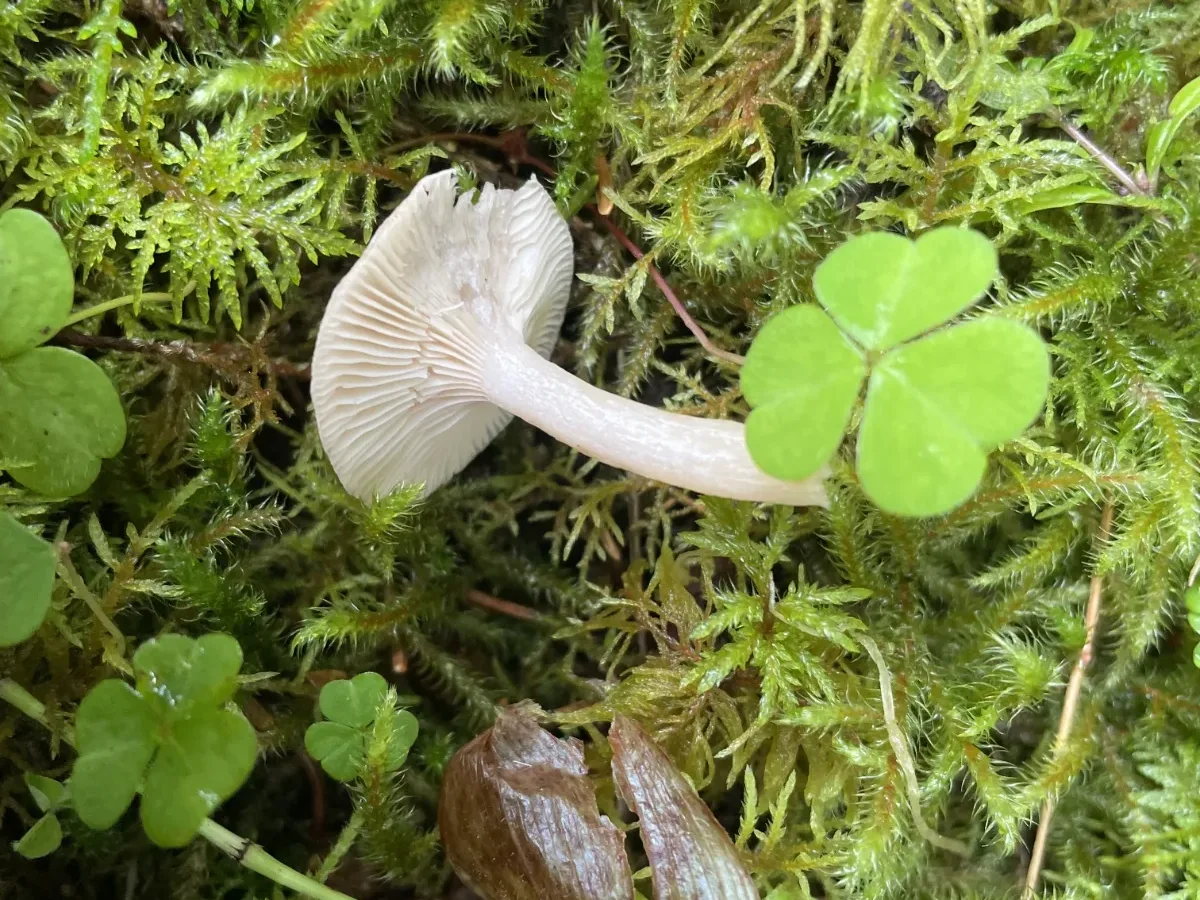
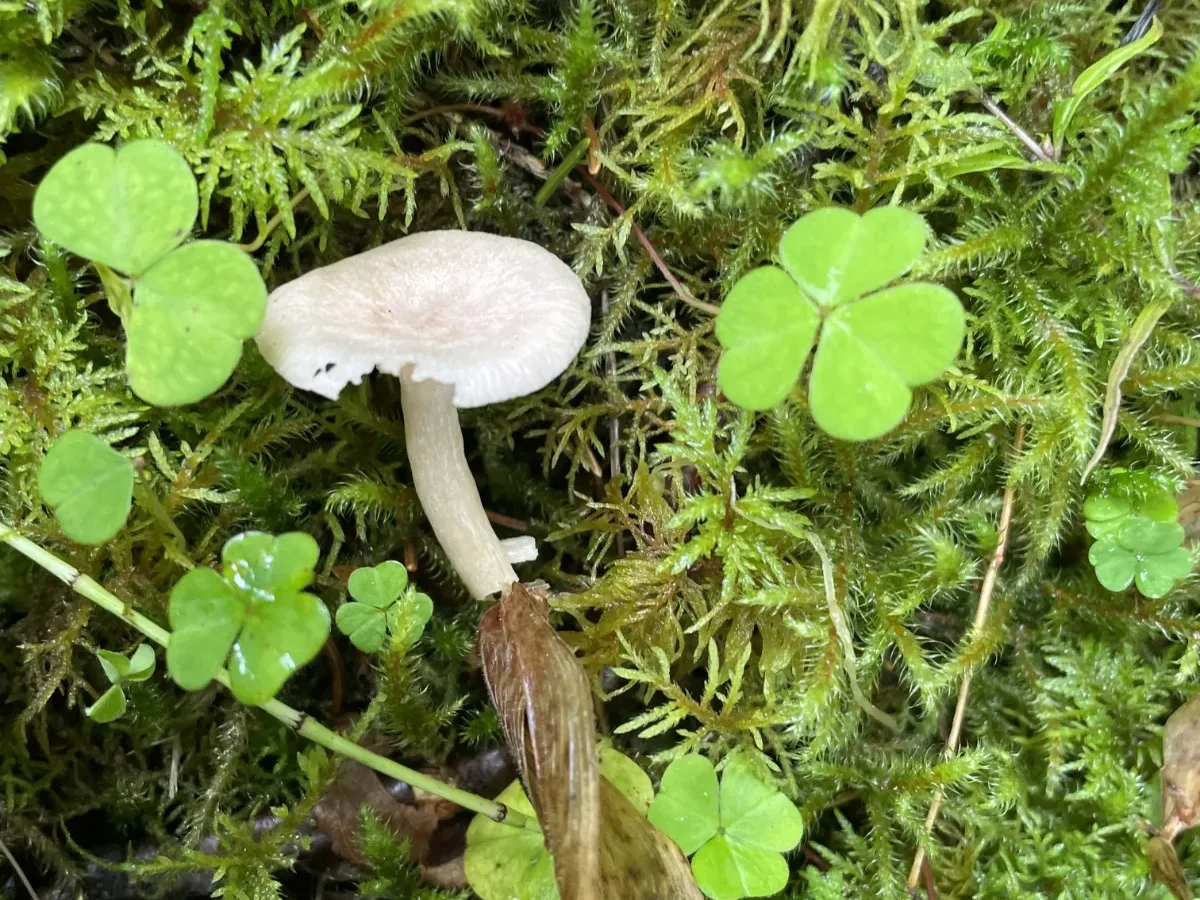
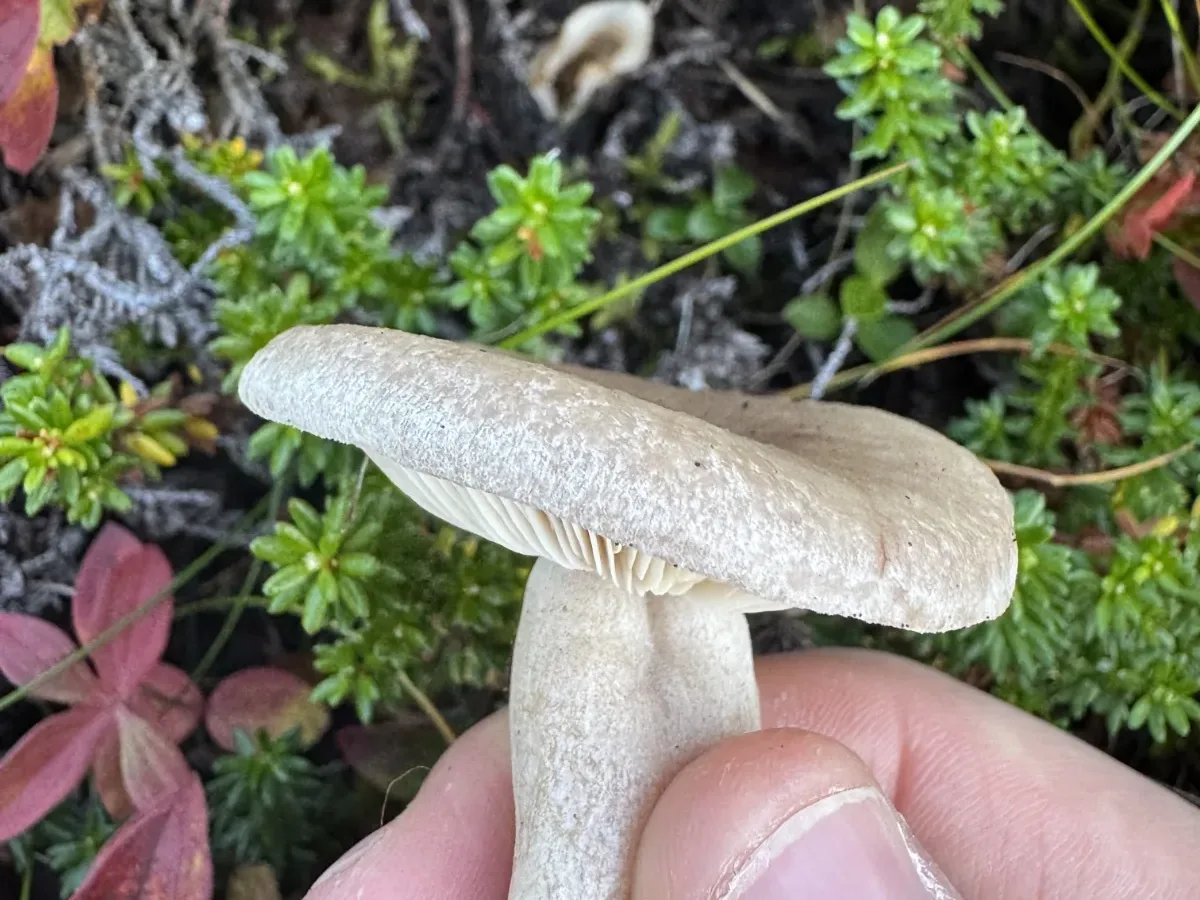
Visually modest - 2-6 cm, starting convex and umbonate, flattening and gently hollowing with age, dry and finely velvety in texture. The colour is a muted, somewhat variable pale greyish-lilac to pinkish-buff or lavender-grey, sometimes with a warmer ochre-buff centre and a cooler lilac-grey margin; it can bleach to near-buff in older or drought-stressed specimens.
Gills
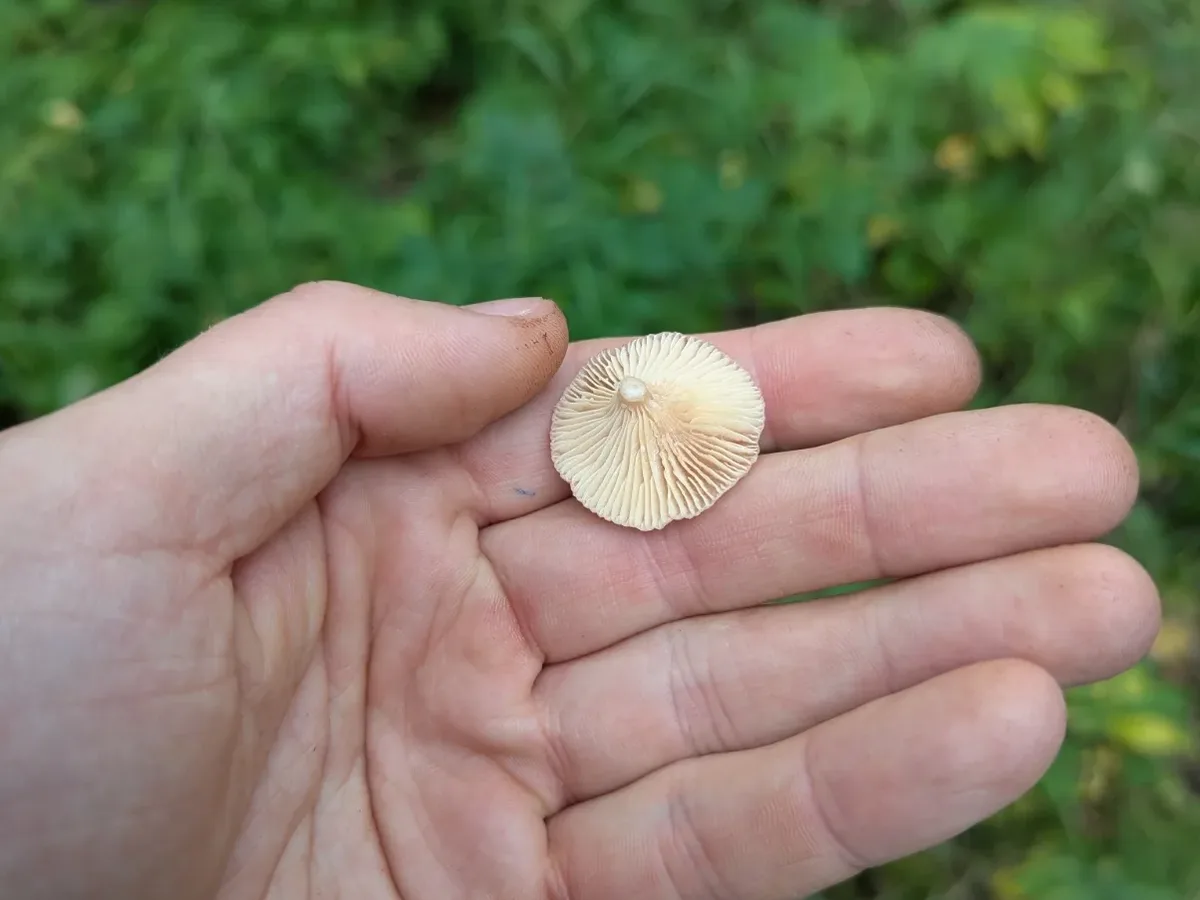
Crowded, narrow, pale whitish to buff-lilac, and do not strongly discolour.
Stem
Proportionately slender, 2-5 cm tall and around 5-10 mm wide, matching the cap in tone.
Flesh
Cut the flesh: it exudes only scanty watery-white milk, mild on the tongue (occasionally faintly acrid), that stains nothing. The flesh itself is thin, white, and unchanging. The spore print is pale cream.
In sum, the coconut scent plus the small lilac-grey cap under birch is a combination that leaves little room for doubt.
Where & when it grows
Habitat
Lactarius glyciosmus is essentially a birch-specialist milkcap, forming mycorrhizal relationships with birch roots across its vast boreal and temperate Eurasian range.
It is most productive in wet to mesic birch woodland with a deep moss layer - the damp birch carr, boggy birch forest, and sphagnum-rich birch-pine transition zones of northern and upland Europe are its classic home. It grows on the mossy floor among sphagnum, hair-grass, and bilberry, often beside or partially embedded in moss clumps.
In parts of Scandinavia and Russia, Lactarius glyciosmus is among the most frequently encountered milkcaps of birch forest, appearing reliably year after year in the same mossy spots.
At the southern margin of its range in Central Europe it retreats to wetter, cooler habitat: alder carr, wet valley-bottom birch, and sphagnum hollows in mixed forest.
In East Asia it occurs under birch and related trees in montane mixed and boreal-type forest across northern Japan (Hokkaido and the northern Honshu mountains), Northeast China (Manchuria), and the Korean peninsula.
When
Across most of the boreal and temperate Eurasian range, the Coconut Milkcap is a summer-to-autumn fruiter, with its peak from early August through September.
Regional timing varies:
- In subarctic Scandinavia and northern Russia it can begin in late July as the soil warms following the brief northern summer.
- In Central and Eastern Europe the season extends comfortably into October during mild autumns.
- In East Asia the season closely mirrors the boreal Eurasian pattern.
The species tolerates cooler conditions than many milkcaps - soil temperatures down to around 8-10 °C do not halt fruiting, making it one of the later-persisting milkcaps of temperate woodland.
Fruiting is triggered by adequate rainfall replenishing soil moisture, particularly after warm dry spells; the lag from rainfall to visible fruitbodies is typically one to two weeks.
How it grows
Fruit bodies appear singly or in small loose groups on the mossy woodland floor, never clustered on wood. The mycelium forms perennial ectomycorrhizal associations on birch rootlets and persists for many years at productive sites.
Buttons are small and initially hemispherical, expanding relatively quickly once conditions are right. The caps can appear partly buried in deep sphagnum and are sometimes overlooked until fully expanded.
Like all ectomycorrhizal milkcaps, Lactarius glyciosmus cannot be cultivated artificially and depends entirely on its host trees; productive birch-moss habitats are worth mapping for return visits.
Fruiting conditions
A relatively cold-tolerant milkcap that begins fruiting once soil temperatures drop to the 8-18 °C range with adequate moisture. Triggered by summer and early-autumn rainfall replenishing a mossy, birch-forest substrate; flush lag of 1-2 weeks from significant rain is typical. Productive in cooler, wetter conditions than most milkcaps; sphagnum-rich birch habitats retain moisture and extend the season.
Look-alikes
Within the milkcap genus, Lactarius glyciosmus occupies a distinctive position because the coconut scent is essentially diagnostic - no widespread dangerous species shares this odour. The closest lookalikes are other small to medium grey-pink milkcaps of birch forest.
- Lactarius mammosus - very similar in appearance (small, grey-lilac cap under birch), but smells of fenugreek or celery (not coconut) and has a more consistently prominent central umbo; it is also edible but uncommon.
- Lactarius vietus (the Grey Milkcap) - another birch associate with similar lilac-grey coloration, but its milk turns grey on exposure to air (a distinctive reaction absent in L. glyciosmus, which has permanently watery-white, non-discolouring milk), and it is considered mildly acrid and of poor edibility.
- Lactarius trivialis - larger, cap viscid/slimy, associated with both conifers and birch, with an acrid, peppery taste and grey-staining milk; inedible due to acridity.
- Lactarius subdulcis - a small, mild milkcap of beech and oak woods with a warm rufous-brown cap and faintly sweet smell (not coconut) and mild white milk; edible but easy to tell apart by habitat and colour.
Among potentially toxic species in its habitat, Inocybe and Clitocybe species (some containing muscarine) can superficially resemble small brownish milkcaps at a distance, but are immediately separated by the milkcap's latex: cut the flesh and if no white milk appears, it is not a Lactarius.
No deadly species is known to be seriously confused with L. glyciosmus, and the coconut scent provides an additional unambiguous field check.
The closest morphological twin: similar small size, grey-lilac cap, birch habitat, and white milk. Distinguished by its smell - fenugreek or celery, never coconut - and by its cap having a more consistently prominent, pointed central umbo. Also edible. Confusion is harmless but the two species are best kept separate.
Various Inocybe species (many muscarine-toxic) grow in similar birch-forest habitats and share a dull brownish or greyish-brown cap colour. They are immediately and conclusively ruled out by the absence of latex: break or cut any Inocybe and no milk exudes. Inocybe also has a fibrous, radially striate cap surface, a brown spore print, and often a mealy or spermatic smell - never coconut.
Very similar in size, habitat (birch), and cap colour (lilac-grey). Separated by the latex: in L. vietus the white milk turns grey-lilac within minutes on exposure to air, whereas in L. glyciosmus the milk remains permanently watery-white. L. vietus also lacks the coconut scent and has an acrid, peppery taste; it is considered inedible due to acridity.
A muscarine-containing Clitocybe of grassy edges and woodland margins that can appear in similar settings. Pale buff to whitish with crowded, decurrent gills - no latex whatsoever. The coconut scent, presence of white milk, and birch-forest microhabitat clearly distinguish L. glyciosmus.
Larger (cap 6-15 cm) and slimy/viscid in wet conditions, with a more strongly acrid-peppery taste and milk that turns grey-lilac on a white handkerchief. Associated with spruce and birch. Size, sliminess, peppery taste, and grey-staining milk separate it clearly. Inedible due to strong acridity.
Small milkcap with a warm rufous-brown to brick-red cap, growing under beech and occasionally oak - not birch. White mild milk, mild flavour, faintly sweet (caramel-like, not coconut) smell. Cap colour (rufous rather than lilac-grey) and hardwood-forest habitat separate it easily.
In the kitchen
Picking & cleaning
The Coconut Milkcap is easy to confirm in the field: smell any cut or broken surface - the coconut fragrance is immediate and unmistakable. Confirm also the small lilac-grey cap, the birch-forest setting, and the watery-white (not orange, not blood-red, not brown-staining) latex.
Collect firm, fresh specimens and cut at the stem base rather than pulling. The flesh is thin and not highly resilient; transport in a broad, open basket to avoid crushing.
This is not a high-volume edible species and is not usually targeted commercially, though it is collected opportunistically across Scandinavia and Central Europe.
Clean with a soft brush; do not soak in water as the thin flesh becomes waterlogged rapidly.
Cooking
Not a prized edible but perfectly acceptable and harmless when cooked. The thin flesh means individual fruit bodies contribute relatively little bulk; it is best used in combination with other fungi in autumn mushroom soups, mixed sautés, or traditional Scandinavian and Russian mushroom pickles (salted or marinated with dill, garlic, and vinegar).
The faint coconut note survives light cooking and can add a subtle aromatic layer to mild mushroom dishes.
Sauté gently in butter over medium heat - avoid high-temperature browning, which can make the thin flesh tough - and add late to soups to preserve the delicate texture.
In Scandinavian tradition it appears in mixed pickled mushrooms (svamp på burk) where its mild flavour and firm-when-pickled texture are assets.
Always cook thoroughly and do not eat raw. Drying intensifies the coconut odour and the dried powder can be used as a flavouring.
Good to know
Lactarius glyciosmus is a mild-flavoured edible species with no known toxins and a good safety record across its broad Eurasian range.
It is not ranked as a choice edible - the thin flesh, mild and somewhat unremarkable flavour, and small size mean it is not a priority collection target - but it is harmless and has been consumed in Scandinavia, Russia, and parts of Central Europe as a component of mixed mushroom pickles and soups.
The key safety check is the confirmation of identity:
- 1Cut the flesh and verify white, non-discolouring, non-acrid latex.
- 2Confirm the coconut scent.
- 3Verify the birch-forest setting and the muted lilac-grey cap.
The combination of these three features leaves essentially no room for confusion with dangerous species.
Do not eat raw; mild acridity in the latex, even when slight, warrants thorough cooking. If foraging in regions where look-alike Inocybe or Clitocybe species are present, apply the latex test rigorously: those genera produce no latex whatsoever.
A reference guide - never an edibility guarantee. When in doubt, leave it out.