Flowing milkcap
Lactarius fluenssyn. Lactarius blennius var. fluens Boudier, Lactarius fluens Boudier
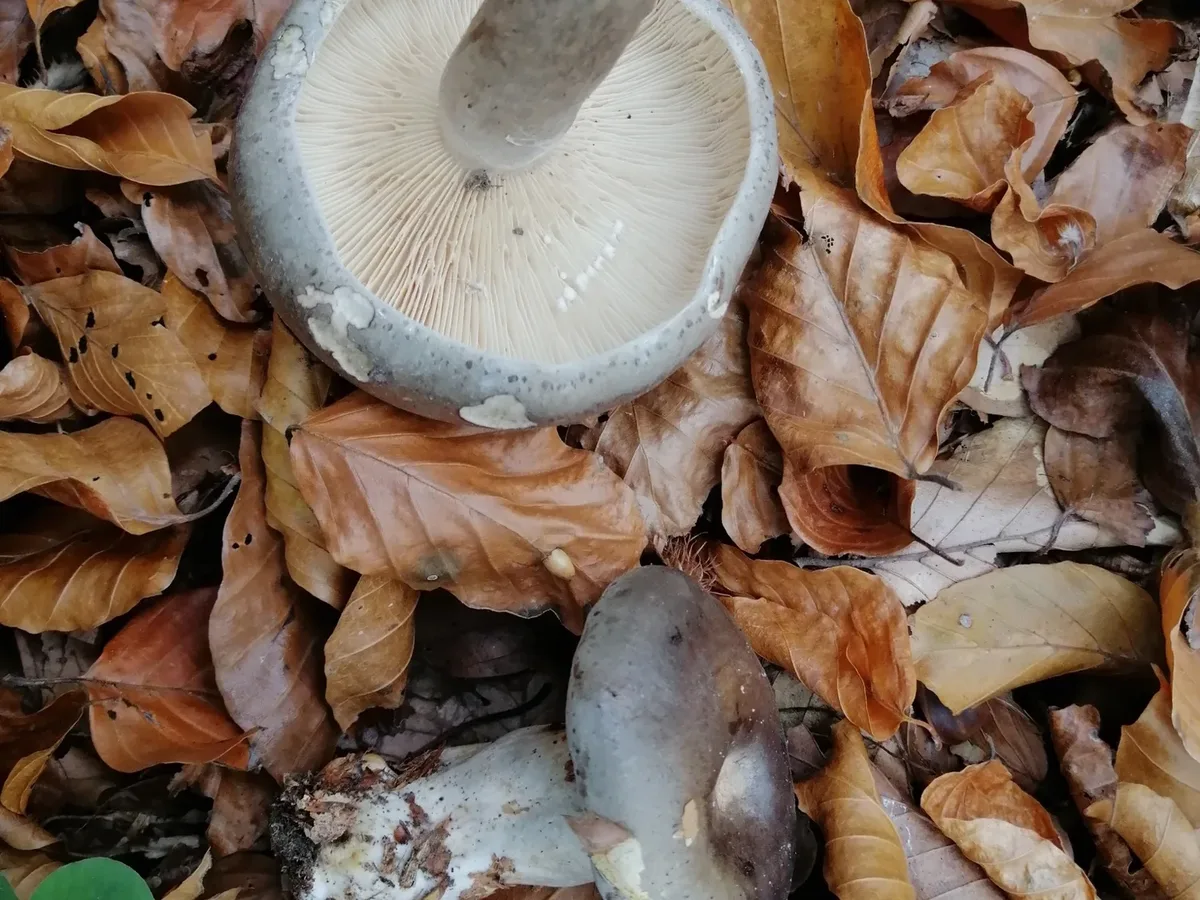 szegedigombasz (CC0)
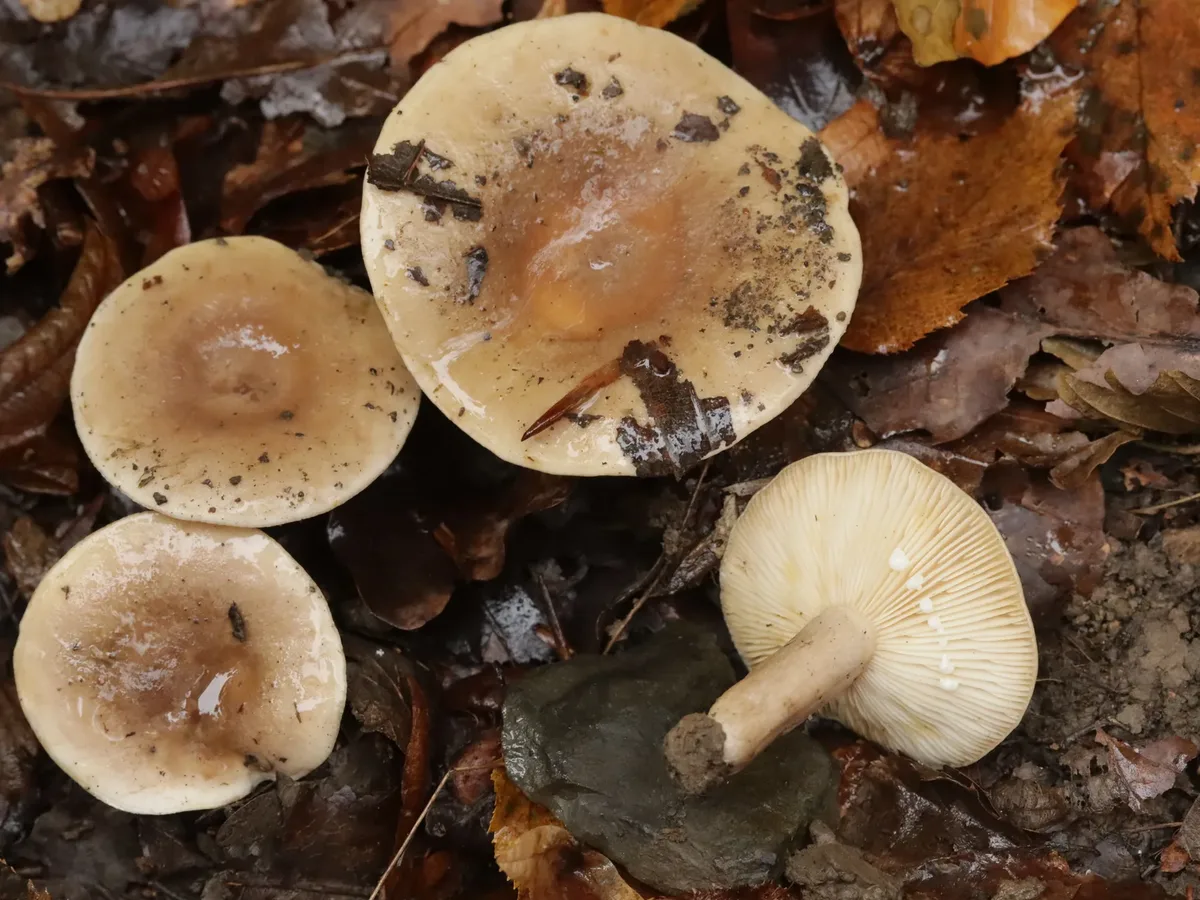 © Björn Sothmann (CC BY-SA)
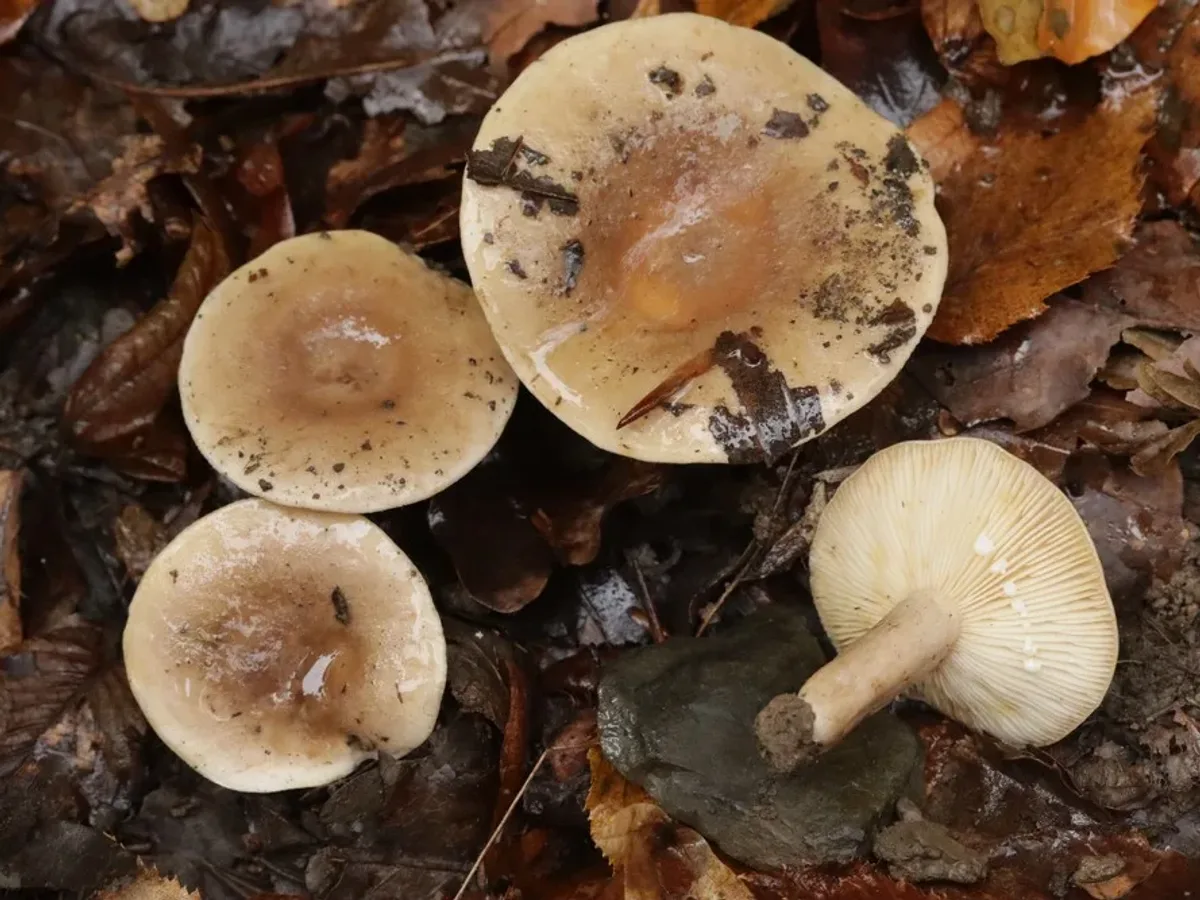 © Björn Sothmann (CC BY-SA)
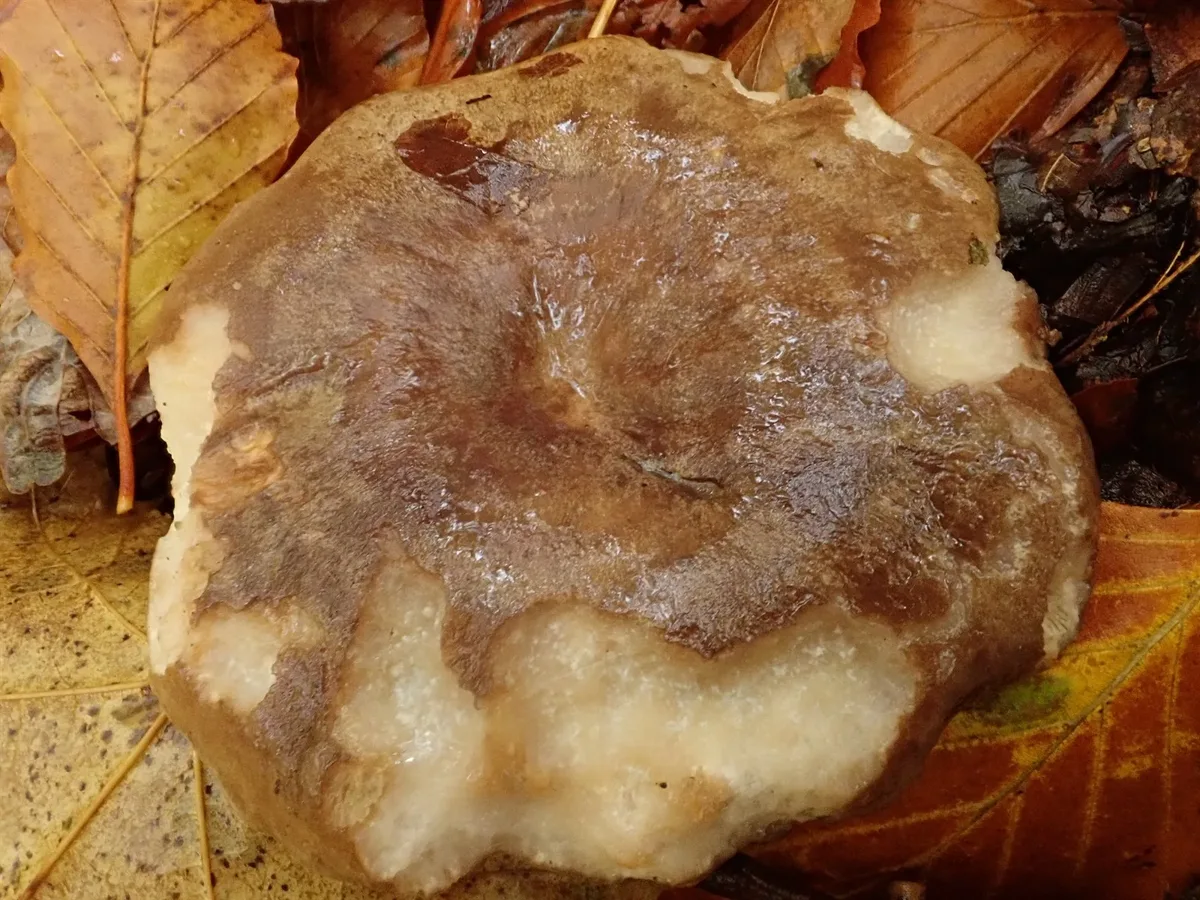 © Bente Rian (CC BY)
 © Bente Rian (CC BY)
 © victor laborde (CC BY)
 © victor laborde (CC BY)
 © Siri Khalsa (CC BY-SA)
 © bjoerns (CC BY-SA 4.0)szegedigombasz (CC0)© Björn Sothmann (CC BY-SA)
Edible only with the right preparation - or safe for some people but not others. Learn the caveats first.
How to recognise it
Cap
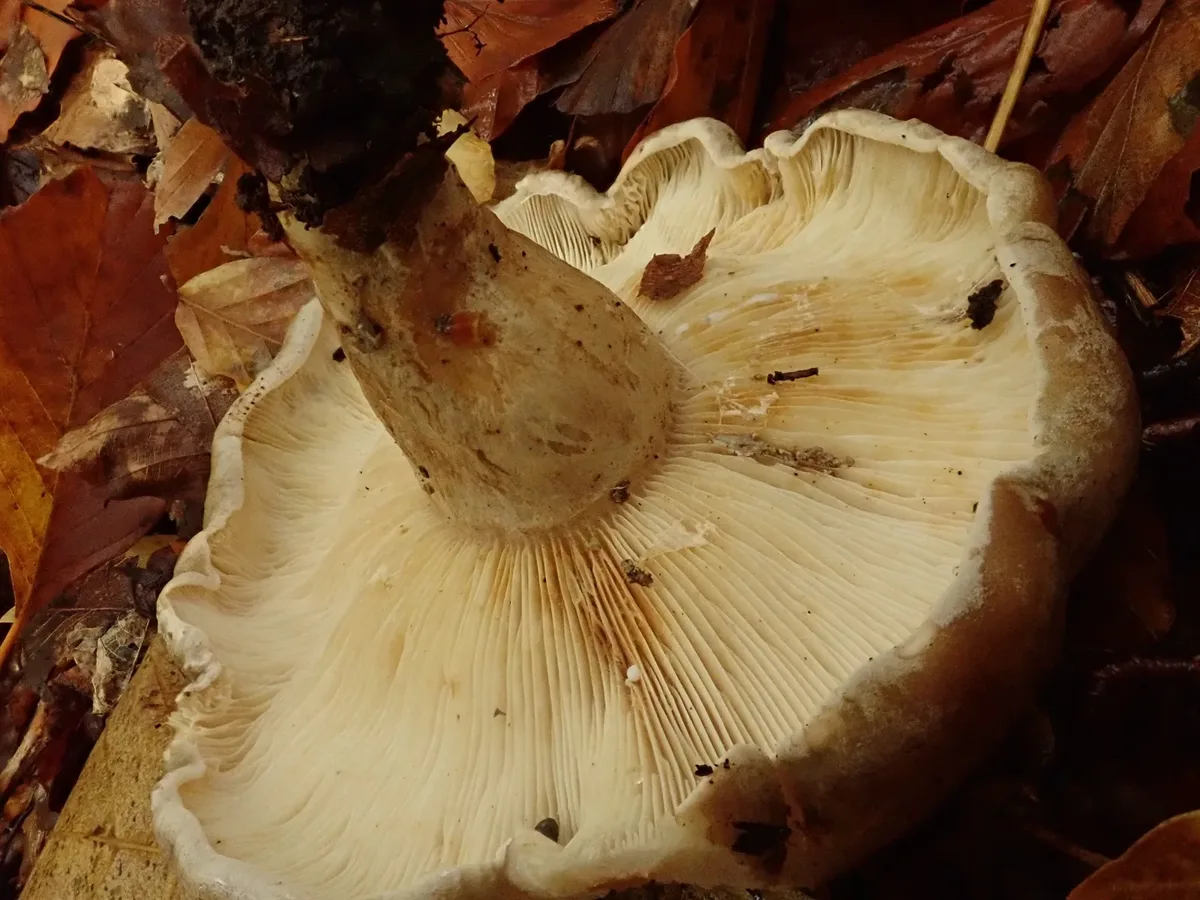
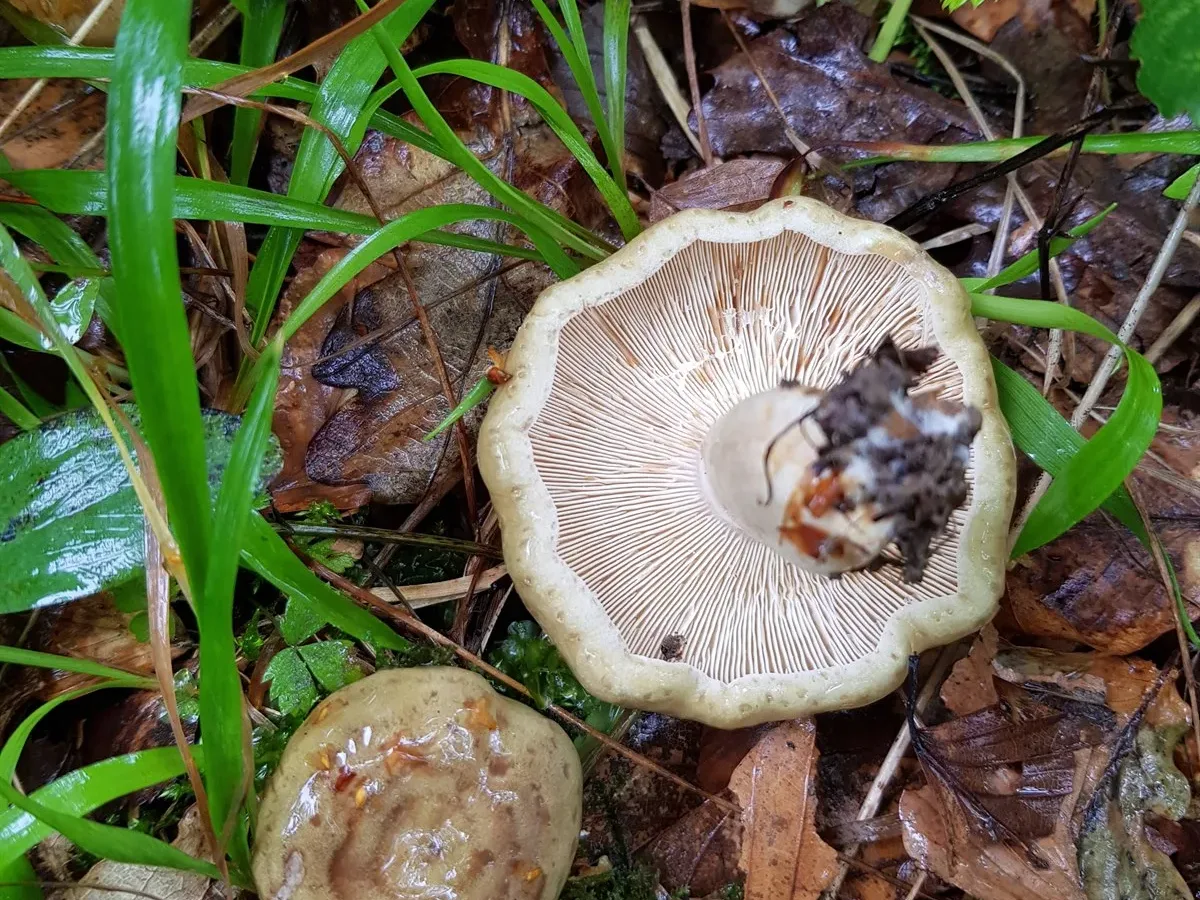
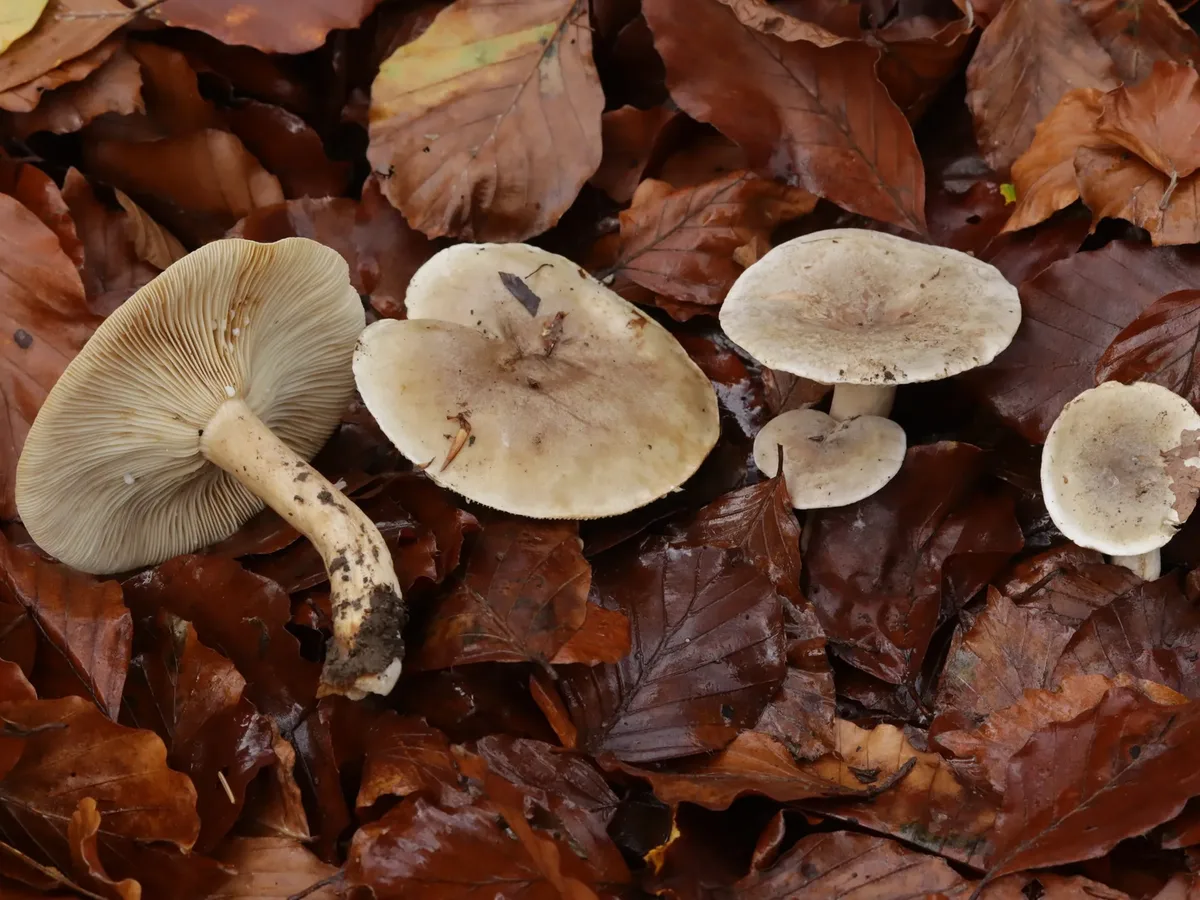
The first thing you notice about Lactarius fluens is its cap margin: even on a fully opened, mature specimen, it keeps a distinct fringe of fine, cottony fibres - a shaggy, woolly edge that immediately sets it apart from most other brownish milkcaps.
The cap opens convex and firm, then flattens and dips gently towards a shallow funnel shape with age. Colour runs from ochre-brown to greyish-hazel, usually a shade darker and sometimes faintly olive at the centre, fading to a paler buff-ochre towards the margin. In damp conditions the surface becomes slightly tacky.
Gills
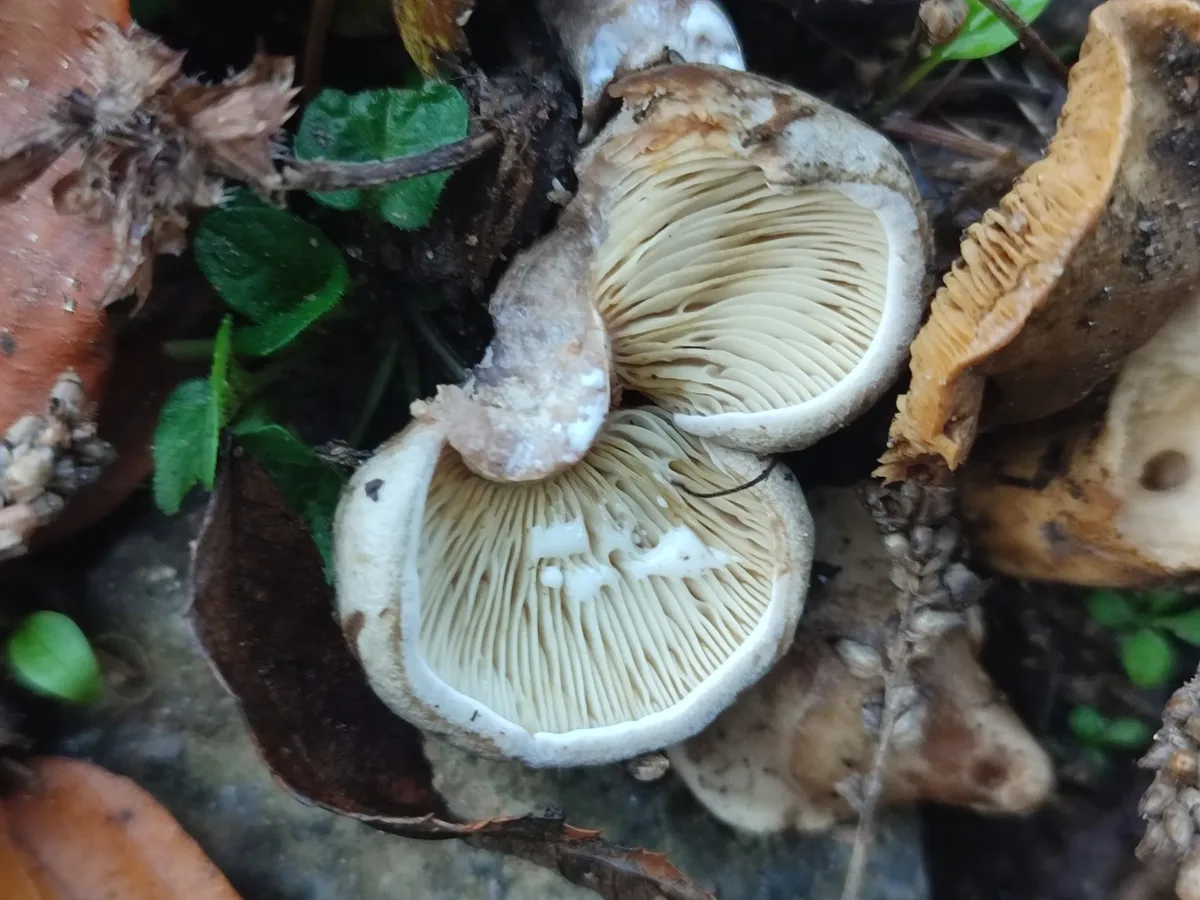
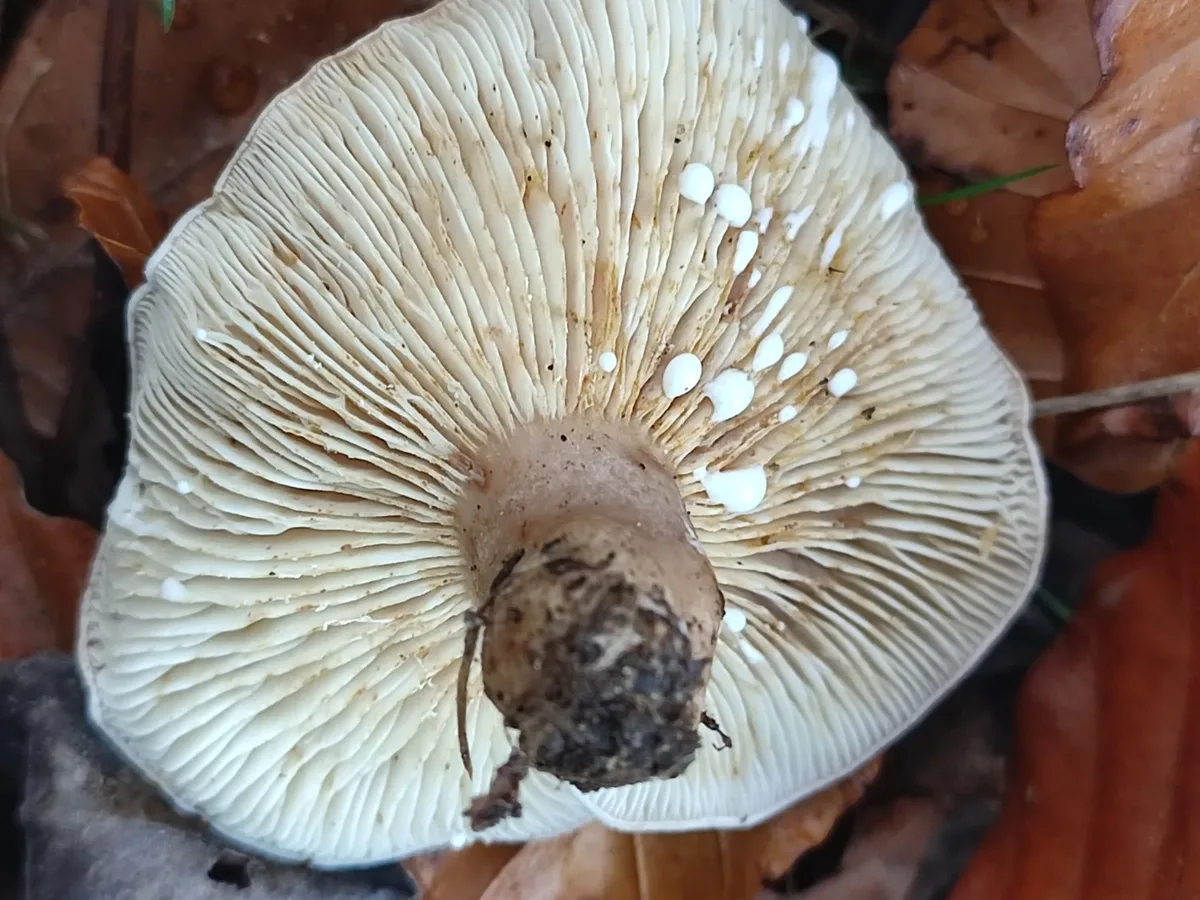
The gills are cream to pale ochre, tightly packed, and bruise or stain dull brownish-ochre where damaged.
Flesh
Break any part of the flesh - cap, gills, stem - and white, watery milk wells up freely and at once. This generosity is precisely what the name 'fluens' (flowing, streaming) describes.
The latex stays white in air, though over time it may slowly stain the gills and flesh a brownish-ochre.
Taste
A single tiny drop on the tongue (spit it out immediately) reveals the species clearly: intensely, persistently burning - a taste that leaves no doubt this is a milkcap requiring proper preparation.
Stem
The stem starts firm and solid, gradually becoming hollow.
Why it's dangerous
Moderate. Raw or under-prepared consumption causes painful GI irritation but is not life-threatening.
Proper preparation (double blanching in boiling salted water, discarding water each time) eliminates the hazard.
The main risk is casual or accidental consumption without preparation, or misidentification of a toxic non-milkcap (e.g. Hebeloma) when confirming latex is skipped.
Toxin
The acridity is caused by isovelleral-type sesquiterpene lactones concentrated in the latex. These compounds are destroyed by thorough boiling.
They are not absorbed systemically in significant quantities, but cause intense irritant effects on mucous membranes and the GI tract.
No amatoxins, orellanine, or gyromitrin are present.
Symptoms
Burning, stinging sensation in the mouth and throat immediately on contact with raw or insufficiently prepared flesh. Nausea, vomiting, abdominal cramps, and diarrhoea if swallowed.
Symptoms are typically self-limiting within a few hours and resolve once the irritant is cleared. No systemic organ damage has been documented.
Staying safe
Lactarius fluens contains no amatoxins, orellanine, or gyromitrin. No systemic toxin has been identified in this species.
The primary hazard is the intensely acrid latex, which if consumed raw causes burning irritation of the mouth and gastrointestinal tract (nausea, vomiting, diarrhoea). Thorough blanching neutralises these compounds, making the mushroom safe to eat when correctly prepared.
Do not eat raw, lightly cooked, or without blanching. This species is rated 'caution' because it requires specific preparation steps that casual foragers may skip.
Misidentification is the key safety concern: always confirm white, copiously flowing latex from broken flesh. If the mushroom you are examining produces no latex at all, do not eat it - this rules out all Lactarius species and raises the possibility of a toxic lookalike.
Where & when it grows
Habitat
Lactarius fluens is an ectomycorrhizal partner of deciduous trees, its underground mycelium quietly woven into the fine roots of beech and oak. It is a species of old, shaded broadleaf woodland - the kind with a deep layer of decomposing leaves underfoot and a closed canopy overhead.
You won't find it in young plantations, open parkland, or pure conifer stands.
In central Europe it is a familiar face in beech forests growing on limestone or loam, and on sheltered slopes and valley floors where moisture lingers. Very acidic, sandy soils suit it less well.
Because the fungus depends on its host rather than on any particular continent, it has followed planted European beech and oak into parts of the Southern Hemisphere, appearing in Chilean and Argentine groves of these introduced trees.
Fruiting is typically scattered to gregarious; look for small loose groups pushing up through the leaf litter.
When
In the Northern Hemisphere, fruiting runs from July through November, with the main flush concentrated from late August to October. Good fruiting follows warm, wet summers and early autumn rains that penetrate the leaf litter.
In the Southern Hemisphere, the season is reversed: look for fruiting from February to May (late summer through autumn) under planted beech and oak.
How it grows
This is a woodland mushroom in the truest sense: it cannot fruit without a living host tree. Its mycelium is threaded invisibly through the leaf litter and upper soil, sustaining a long-running partnership with the fine roots of beech or oak.
It does not grow on wood, dung, or disturbed ground away from its host.
Above ground it appears scattered to gregarious - singly or in small, loose groups that sometimes carpet a favoured patch of forest floor.
Buttons push up relatively quickly once rain has penetrated the litter, expanding to full size within three to five days.
Fruiting conditions
Fruiting follows sustained rainfall once soil temperatures have dropped into the cool-temperate range in late summer and autumn; beech and oak woodland on loam retains moisture well, facilitating flushes; tolerates moderate autumn cooling
Look-alikes
Several other brownish-ochre milkcaps share habitat and broadly similar appearance, making careful identification important.
Lactarius blennius (beech milkcap) is the most similar and grows in the same beech woodland. It is slightly greyer and less woolly at the margin, and its white latex turns greenish-grey on the gills - a key distinction from L. fluens, where the latex stays white. Both are acrid and edible only with preparation.
Lactarius quietus (oakbug milkcap) grows under oak and has a similar brownish colouration but is smaller, has a distinctive oily or bug-like smell, and its latex is white and only faintly acrid (not intensely burning).
Lactarius pyrogalus (fiery milkcap) grows under hazel and has white latex that is extremely acrid, similar to L. fluens, but the cap is more grey-lilac-buff in tone and lacks the distinctive woolly margin.
Lactarius torminosus (woolly milkcap) grows under birch, has a strongly shaggy-woolly cap margin (more pronounced than L. fluens), and a distinctly zonate pinkish-buff cap; also intensely acrid.
None of these milkcap lookalikes are deadly. The general safety principle applies: any unidentified brown gilled mushroom without clearly flowing white latex should never be assumed to be a milkcap - acrid species of Hebeloma and brown Cortinarius can superficially resemble milkcaps but produce no latex and are toxic.
Very similar in size and habitat (beech woodland); cap typically greyer, less woolly at the margin; white latex turns greenish-grey on the gills within minutes - L. fluens latex stays white; both are acrid and edible only with preparation
Brown-capped gilled mushrooms with no latex; toxic; always confirm white latex flows freely from broken flesh - if no latex, the specimen is not a milkcap and should not be eaten
Grows under hazel; similarly intensely acrid white latex; cap is grey-lilac-buff to greyish-ochre in tone and lacks the distinctly woolly margin fringe of L. fluens; habitat under hazel rather than beech or oak
Grows under oak like L. fluens, with similar brownish colouration; distinguished by a distinctive oily or bug-like smell, smaller size, and only faintly acrid or mild-tasting latex; cap lacks woolly margin fringe
Associated with birch (not beech or oak); cap has a more pronounced, almost beard-like woolly margin and a distinctly zonate pinkish-buff to salmon colour, clearly different from the ochre-brown tones of L. fluens; both are intensely acrid
A reference guide - never an edibility guarantee. When in doubt, leave it out.