Eucalyptus milkcap
Lactarius eucalypti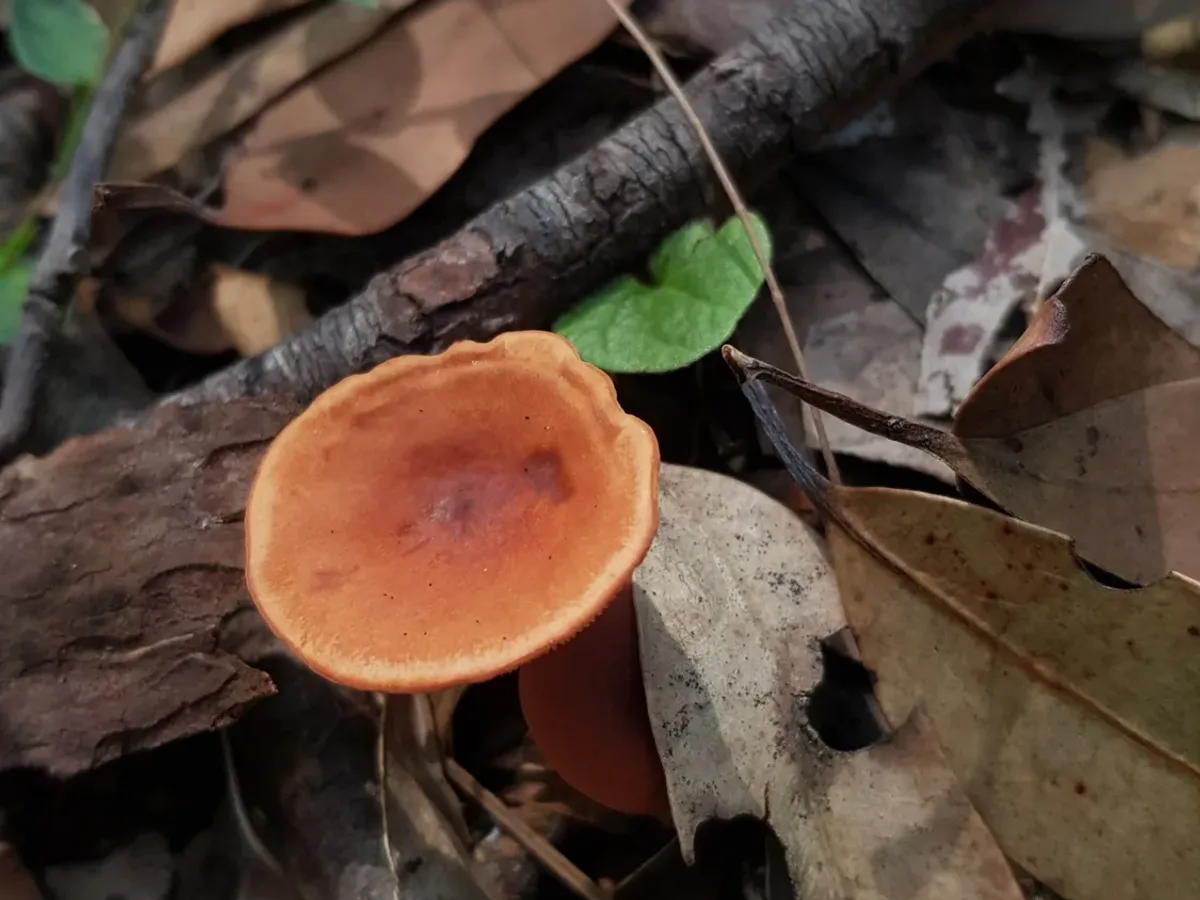 © Sofia Zvolanek (CC BY 4.0)
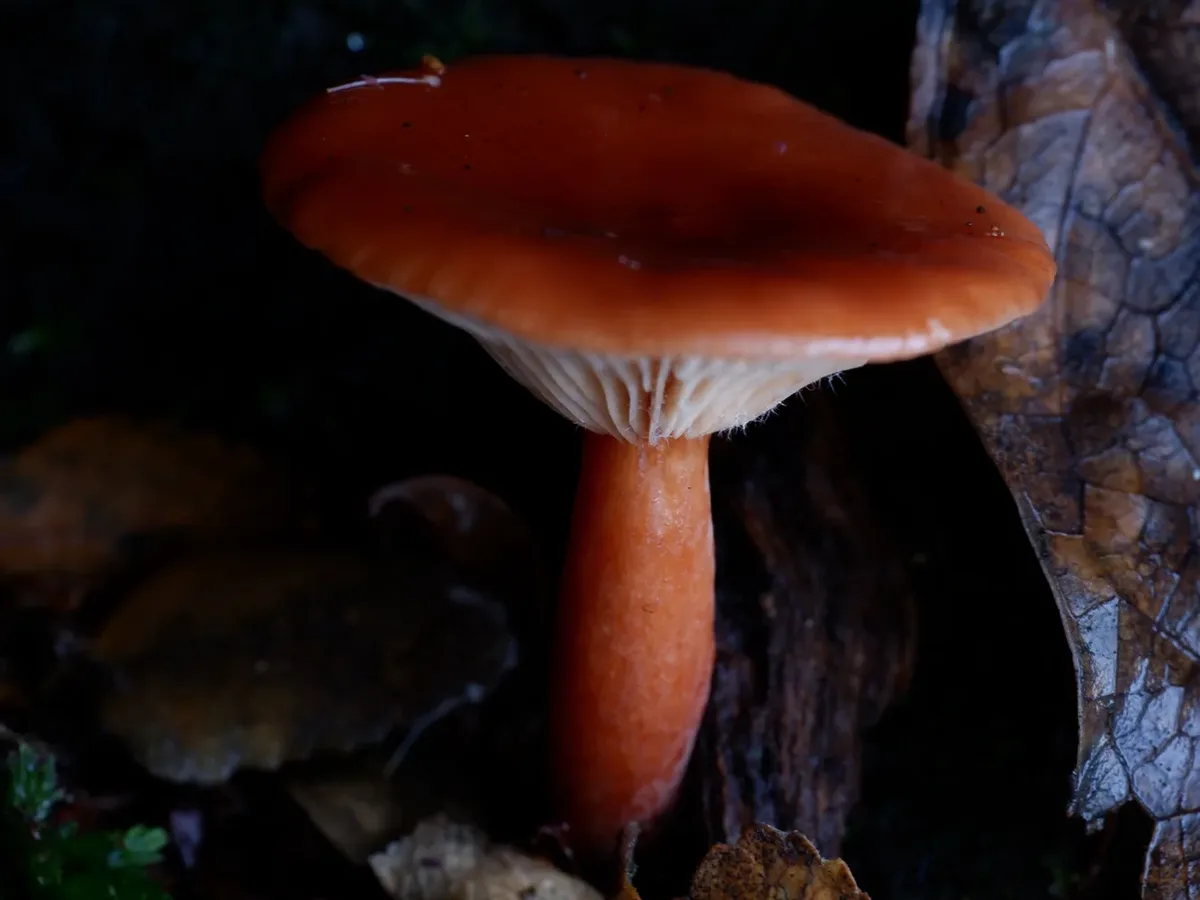 © Heather Merrylees (CC BY)
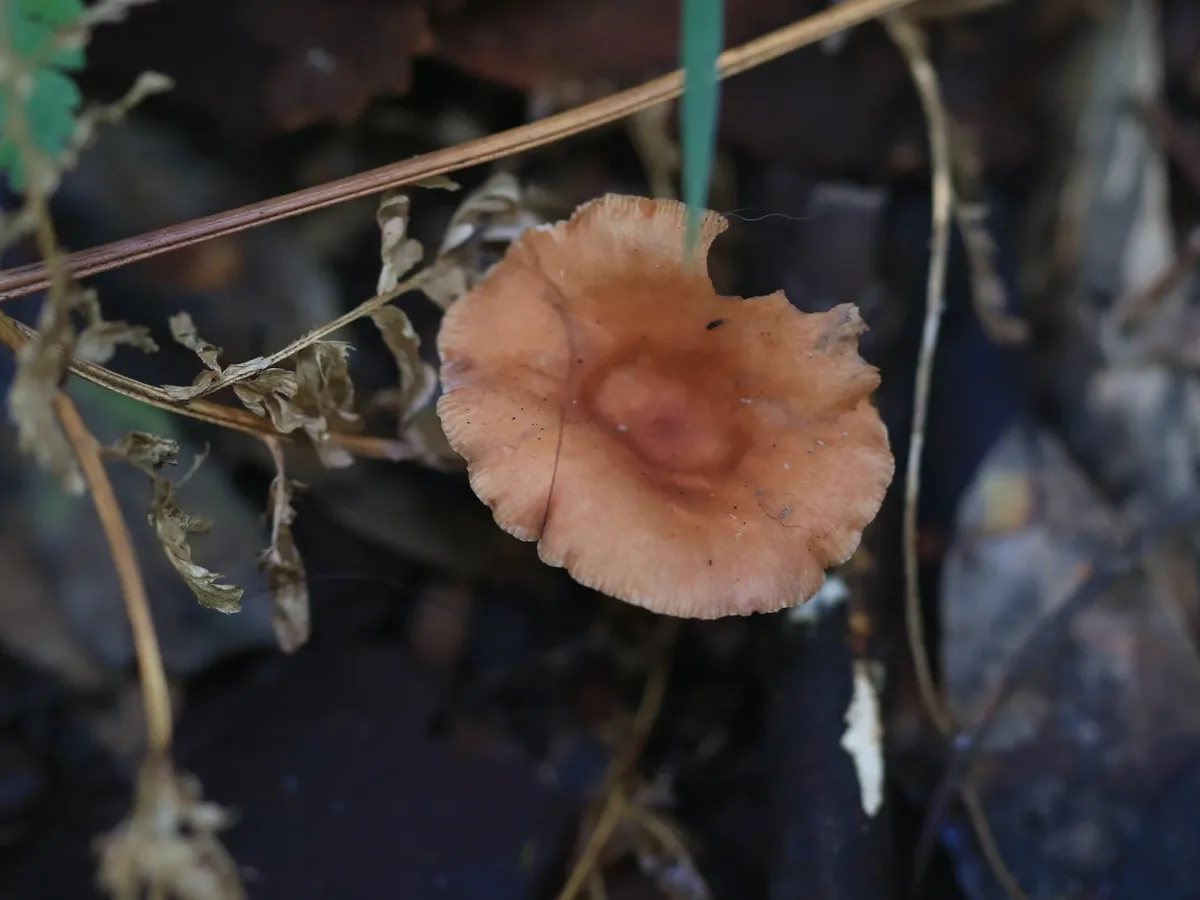 © Sofia Zvolanek (CC BY)
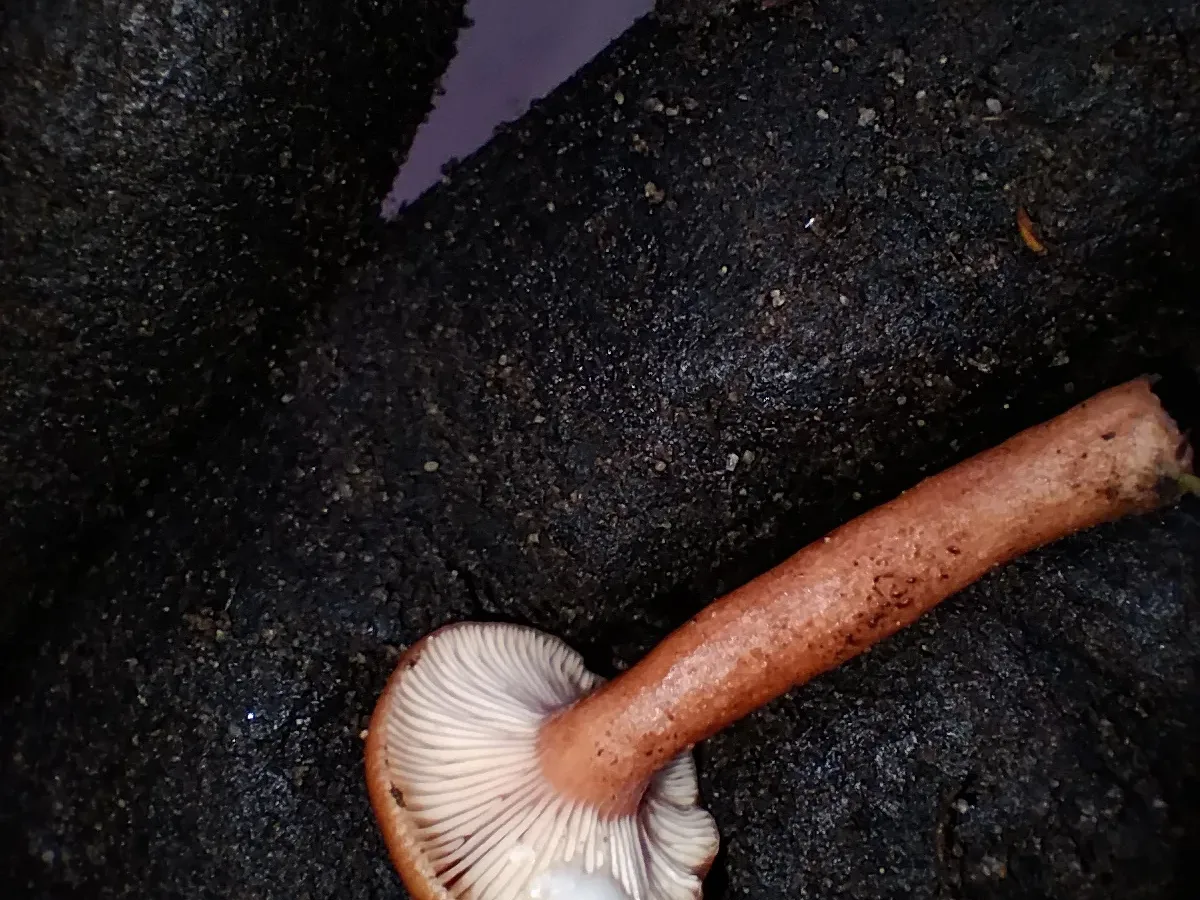 © Sofia Zvolanek (CC BY)
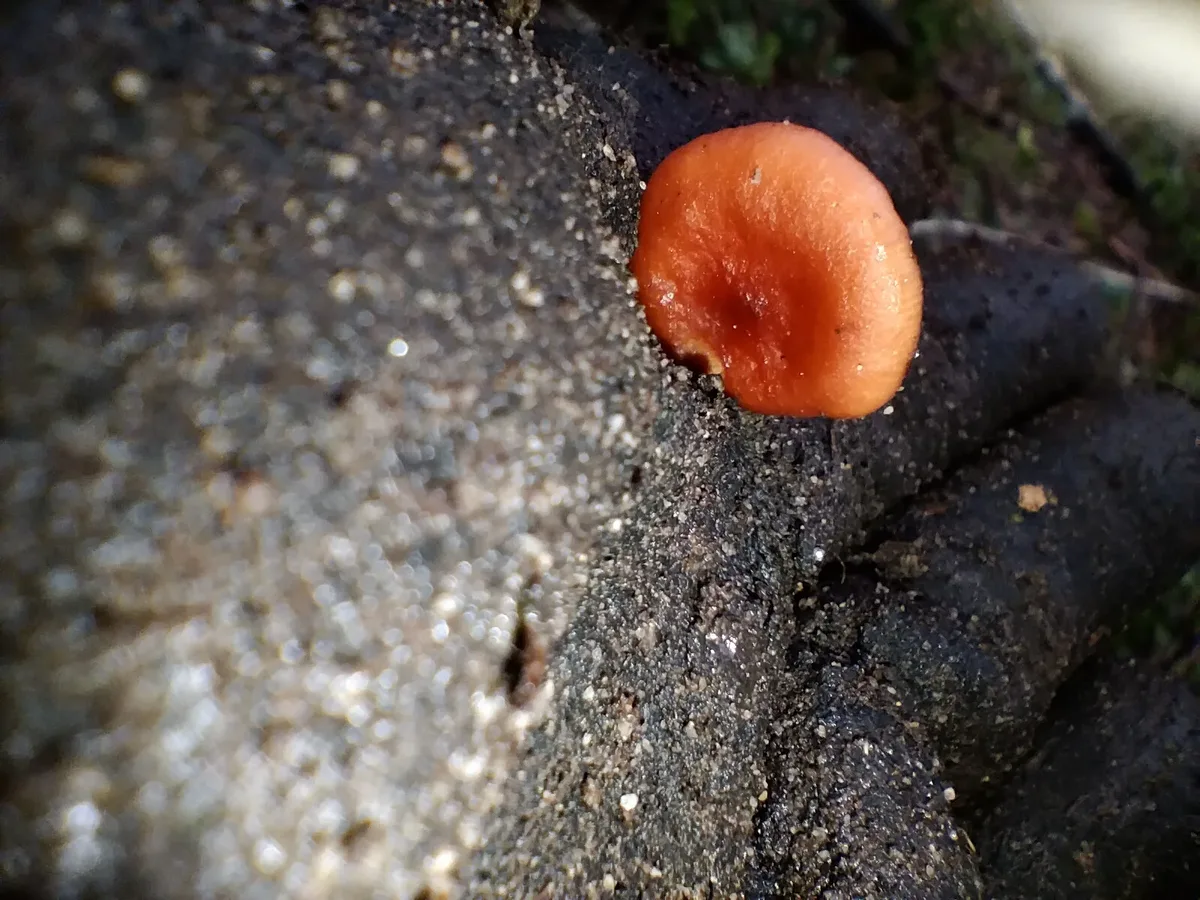 © Sofia Zvolanek (CC BY)
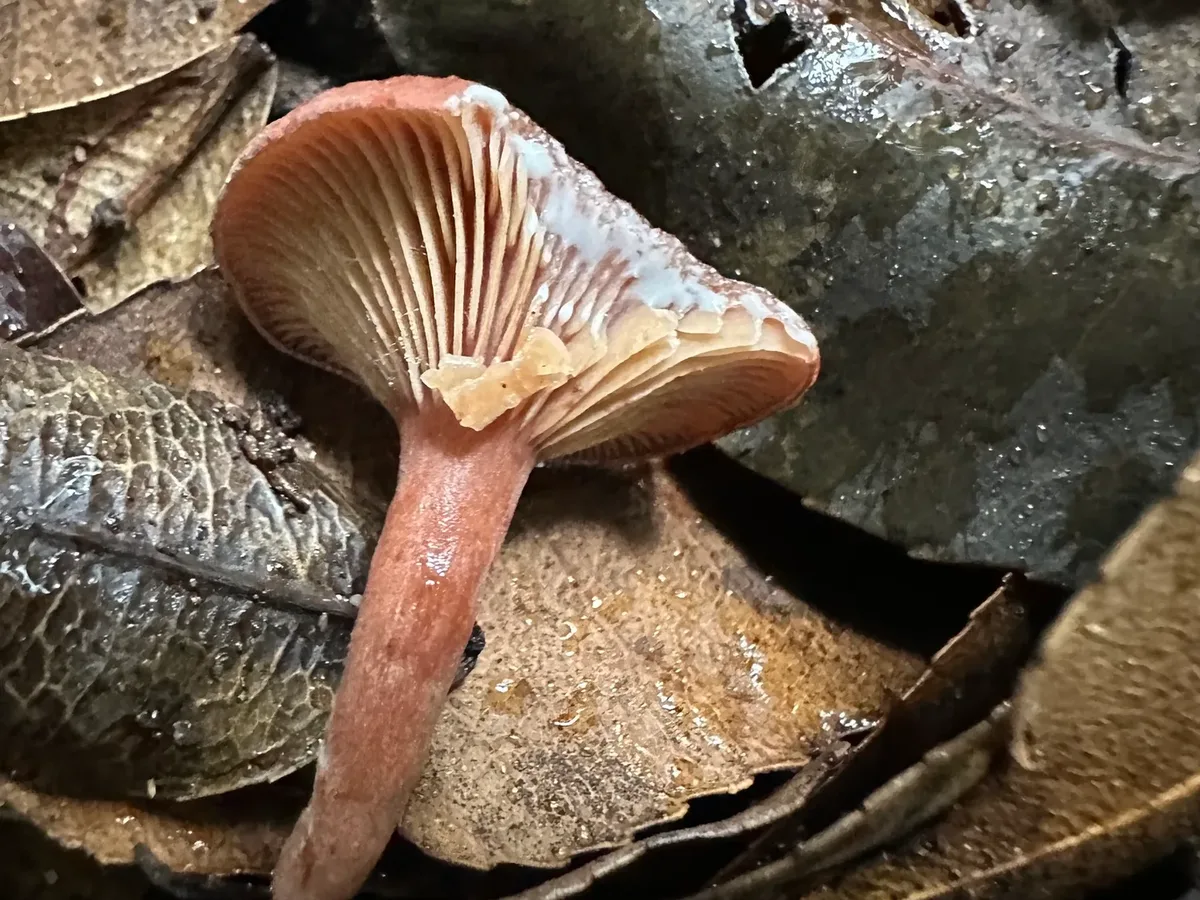 © prossington (CC BY)
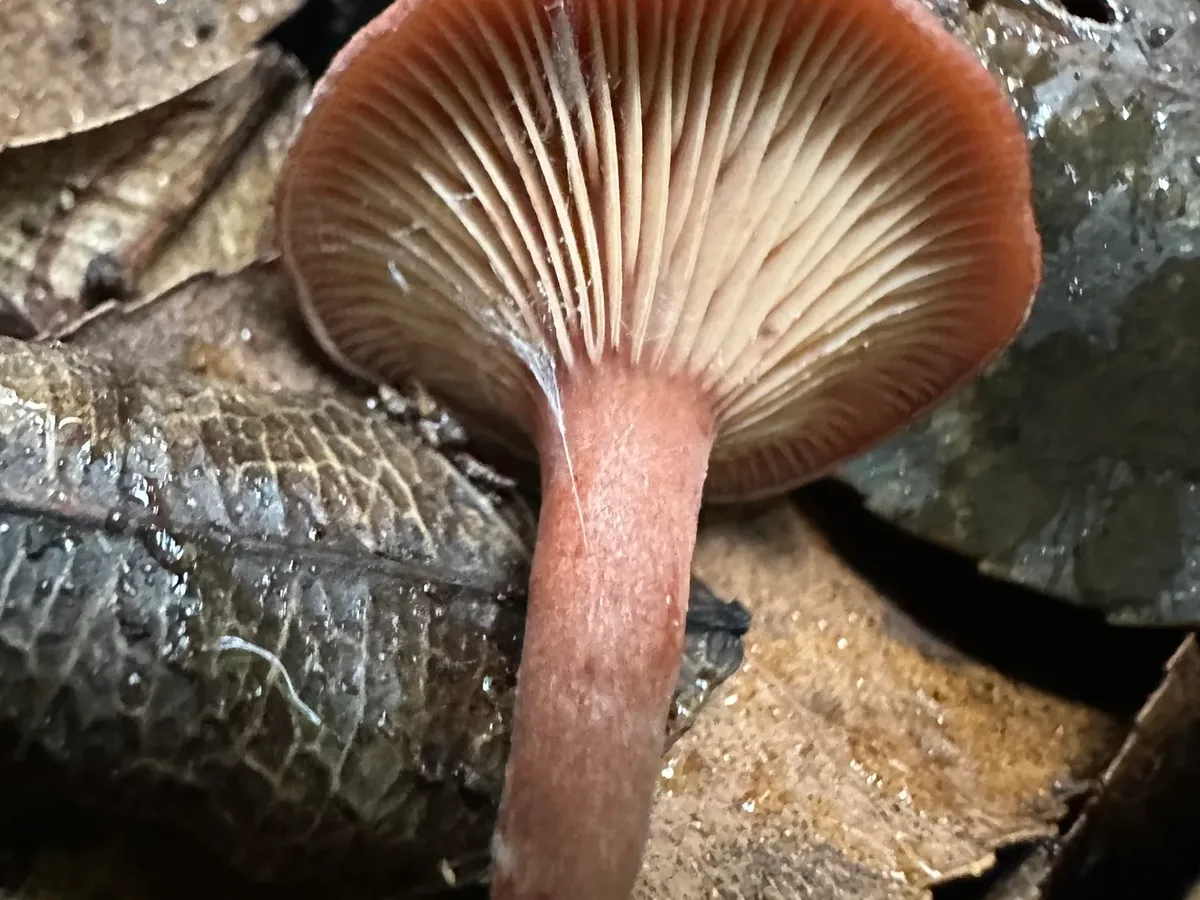 © prossington (CC BY)
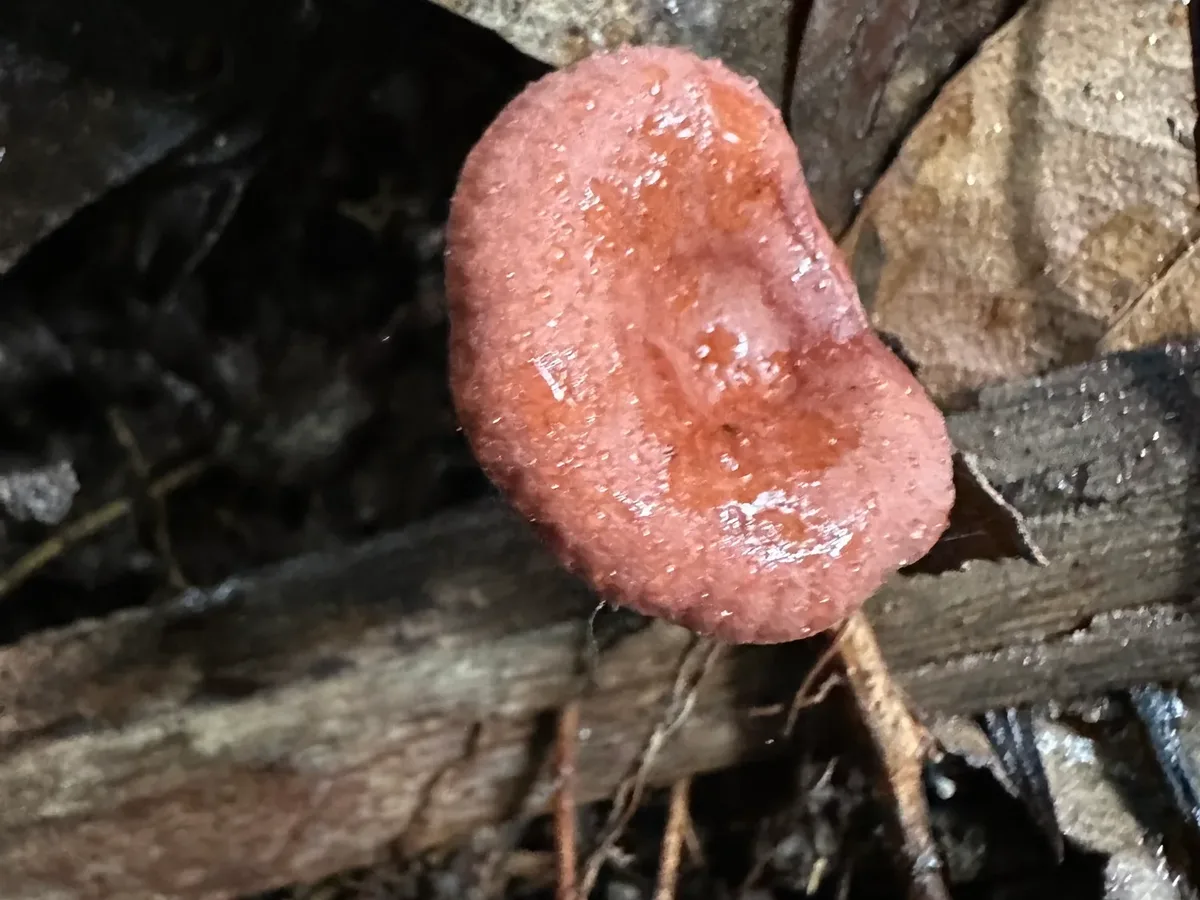 © prossington (CC BY)© Sofia Zvolanek (CC BY 4.0)© Heather Merrylees (CC BY)
Edible only with the right preparation - or safe for some people but not others. Learn the caveats first.
Never eat a mushroom you are not 100% sure of - check the look-alikes below, and always cook wild mushrooms.
How to recognise it
Lactarius eucalypti presents as a solidly built, medium-sized milkcap with a characteristic tawny-orange to pale ochraceous-brown cap.
Cap
Young caps are broadly convex with a slight central boss (umbo) and a tightly inrolled margin; they expand through plane to shallowly funnel-shaped as the mushroom matures.
The surface is dry and smooth or very finely roughened, without any sliminess. The colour is fairly uniform - tawny ochre to orange-brown - and in some specimens faint concentric bands become visible toward the margin as the cap flattens.
Gills
The gills run slightly down the stem (adnate to decurrent), are moderately crowded, and begin a pale cream before ageing to ochre-buff; they bruise or stain brownish-orange when damaged.
Stem
The stem is stout and smooth, roughly the same colour as the cap or slightly paler.
Flesh
When any part of the flesh is cut, broken, or damaged, white to cream-coloured milk (latex) flows freely. This latex is the single most important identification character: it is white, does not change colour in air, and has a mild to faintly acrid taste - the level of acridity varies between specimens and habitats.
The flesh throughout is firm and whitish. Spore print: white to very pale cream.
Why it's dangerous
Low. Lactarius eucalypti is a GI irritant only - the sesquiterpene lactones in its latex irritate the gastrointestinal mucosa but are not absorbed in quantities that cause systemic organ damage.
No amatoxins, orellanine, gyromitrin, or other life-threatening compounds have been detected or are expected in this species.
Symptoms resolve on their own, typically within 24 hours, without specific medical treatment beyond supportive care (fluids, rest). The species does not pose a risk of liver failure, kidney failure, or neurological damage.
Seek medical attention if symptoms are severe, prolonged beyond 24 hours, or if there is any uncertainty about what was actually collected and consumed - the latter scenario is the real danger, since misidentification with orellanine-producing Cortinarius species or amatoxin-containing Amanita species in the same habitat carries life-threatening risk.
Toxin
The irritant compounds in Lactarius eucalypti latex are sesquiterpene lactones - a large and chemically diverse class of secondary metabolites found across the genus Lactarius and many other fungi and plants.
In acrid milkcaps, these molecules are stored in specialised latex-bearing cells (lactifers) distributed through the flesh and concentrated in the latex itself.
When the mushroom is damaged, the lactifers rupture and release the lactone-containing latex. The sharp, burning, or bitter sensation on the tongue is the direct effect of these compounds on taste and mucosal receptors.
Structurally, the sesquiterpene lactones responsible for peppery or acrid tastes in Lactarius species include variants of the stearoyloxy-dihydrolactarazulene and velutinal ester families documented in acrid European and Asian milkcaps. The specific sesquiterpene lactone profile of L. eucalypti has not been published in full detail, but its close taxonomic placement within the genus makes the same chemical class the most parsimonious explanation for its variable acridity.
Heat and leaching in boiling water denature and remove these compounds, which is why parboiling with water discarded reliably renders the mushroom safe for consumption.
Symptoms
If raw or inadequately parboiled specimens of Lactarius eucalypti are eaten, the irritant sesquiterpene lactones in the latex can cause gastrointestinal irritation.
Typical symptoms include:
- nausea
- vomiting
- abdominal cramping
- diarrhoea
Onset is generally rapid, typically within 30 minutes to 2 hours of ingestion, reflecting direct mucosal irritation rather than systemic toxin absorption.
Severity is proportional to the dose of irritant consumed and the acridness of the particular collection; mild-tasting specimens eaten in small quantities after cooking are unlikely to cause symptoms at all. The reaction is self-limiting.
Staying safe
Lactarius eucalypti carries a caution rating because its latex contains sesquiterpene lactone compounds - the same class of irritant chemicals responsible for the peppery heat and acrid bite found in many milkcap species worldwide.
Sesquiterpene lactones are biological deterrents produced in the latex-bearing cells (lactifers) of acrid Lactarius species. In sufficient quantities they irritate mucosal tissues and cause gastrointestinal upset if consumed raw or inadequately cooked.
The acridity of the latex in L. eucalypti is variable: some collections taste nearly bland, while others are distinctly bitter. This variability is a known property of the species and does not indicate different mushrooms.
For acrid specimens, parboiling is a required preparation step, not a suggestion: sliced caps must be boiled in lightly salted water for at least 10-15 minutes and the water discarded to remove the irritant compounds before further cooking.
Raw consumption must be avoided regardless of how mild the latex tastes in the field, because cooking also destroys any residual irritant activity and improves digestibility.
The species is not known to contain amatoxins, orellanine, gyromitrin, or any other life-threatening toxin class.
The primary life-threatening risk remains misidentification:
- Cortinarius species that fruit in the same eucalyptus woodland habitat may produce orellanine (a nephrotoxin causing fatal delayed kidney failure).
- Amanita phalloides (death cap, naturalised in southeastern Australia under introduced oaks and pines) is one of the world's most lethal fungi.
Neither of these dangerous species exudes any latex when cut - confirming white milk flows immediately from cut flesh is the non-negotiable first safety check.
Where & when it grows
Habitat
This species is inseparable from eucalypts - it will only be found where mature Eucalyptus trees are present, because the relationship is an obligate ectomycorrhizal one.
The fungus supplies water and minerals to its host tree in exchange for photosynthetically fixed carbon; neither partner completes its life cycle without the other under natural conditions.
Look for it in:
- open dry sclerophyll eucalyptus forest
- grassy eucalyptus woodland
- roadside reserves with mature gum trees
It fruits on the soil surface among leaf litter (mostly eucalyptus bark strips and leaves), often near the base of trees or along root channels marked by surface moss or bare soil breaks.
It is widespread across southeastern mainland Australia and Tasmania and is one of the commoner native milkcaps in that region.
Expect it on slopes and ridges with well-drained soils as much as in valley floors - soil drainage matters less than tree presence.
When
Fruiting in Australia follows the Southern Hemisphere autumn, beginning in March (late summer) as soils cool after the hot summer and the first substantial autumn rains arrive.
The main fruiting window is April to June, peaking in April and May across Victoria and New South Wales. In Tasmania and at higher elevations in the Alps, the season may extend into July.
Autumn rain events of 15-25 mm or more on soils already cooled below about 15 °C reliably trigger flushes.
Dry summers suppress fruiting almost entirely; a late-February or early-March soaking rain can occasionally trigger isolated early appearances.
How it grows
Grows scattered to gregarious, often in loose troops of several to many individuals under the same tree or group of trees.
Individual mushrooms emerge rapidly after triggering rain events and reach full size within four to six days. The species does not grow in tufts from a common base (not caespitose), but individuals may be spaced closely.
Over successive seasons, the underground mycelial network expands and groups of mushrooms may appear in roughly the same locations year after year, reflecting stable mycorrhizal root associations.
Fruiting conditions
Responds to autumn rains as soils cool through March-May in southeastern Australia; requires soil temperatures to drop below about 16 °C; flushes typically appear 4-10 days after adequate rainfall on moist but not waterlogged soils under eucalypts
Look-alikes
The most important comparison species are other Lactarius milkcaps associated with eucalypts in Australia.
Lactarius wirrabara is another eucalyptus-associated milkcap found in Australia. It tends to have a paler, more cream-buff cap compared to the warmer tawny-orange of L. eucalypti, and the two are best distinguished by microscopy, though both are considered edible.
Other Lactarius species in Australia associated with eucalypts (including undescribed or recently described taxa) may be confused. The key features to confirm are:
- white unchanging latex
- the tawny-orange cap
- the mild to faint-acrid taste
- the eucalyptus habitat
Cortinarius species also commonly fruit under eucalypts in Australia and can superficially resemble milkcaps from a distance. However, Cortinarius species:
- do NOT exude any latex when cut
- have rusty-brown spores
- many possess a cobweb-like veil remnant
Always confirm white milk flows freely from cut flesh before collecting - if no milk appears it is not a milkcap.
Some Australian Cortinarius species produce orellanine, a nephrotoxin that causes delayed, potentially fatal kidney failure - the absence of latex is the critical safety test.
Amanita species also occur in eucalyptus woodland (including the native Amanita marmorata and introduced A. phalloides in planted areas) but these have free gills, a ring (often), a volva at the stem base, and no latex at all - structurally very different from a milkcap.
The death cap is naturalised in southeastern Australia under introduced oaks and exotic pines - it does NOT grow under native eucalypts. Nevertheless, foragers who collect in mixed or disturbed areas must be aware of it. It has free gills, a skirt-like ring on the stem, a sac-like volva at the base, NO latex at all, and a greenish-yellow to pale cap. Any mushroom without white latex flowing from cut flesh is not Lactarius - reject it. Death cap poisoning causes fatal liver failure.
Cortinarius species are common under eucalypts in Australia and can look superficially similar from a distance, but they are fundamentally and dangerously different. They produce NO latex whatsoever when cut or broken - the flesh is dry throughout. They have rusty-brown to cinnamon-brown spore prints that leave a rust-coloured deposit on the stem and surrounding gills, and young specimens show a cobweb-like cortina (partial veil) stretching from cap margin to stem. Critically, the orellanine-producing Cortinarius complex - which includes species in Australian eucalyptus woodland - can cause fatal delayed renal failure. Orellanine poisoning is insidious: symptoms (thirst, nausea, kidney pain) may not appear for 2-3 weeks after ingestion, by which time irreversible kidney damage may have occurred. There is no antidote. Never collect a mushroom from eucalyptus woodland without first confirming that white latex flows freely from cut flesh. No latex means it is not Lactarius - set it down.
Also eucalyptus-associated and from Australia; tends to have a paler, more cream-buff to pale ochre cap rather than the warmer tawny-orange of L. eucalypti; reliably separated only by microscopy; both are considered edible
A reference guide - never an edibility guarantee. When in doubt, leave it out.