False saffron milkcap
Lactarius deterrimussyn. Lactarius deliciosus
 © rainerburkard (CC BY 4.0)
 © Ирина Хохрякова (CC BY)
 © Vitaly Radionov (CC BY)
 © Vitaly Radionov (CC BY)
 © Vitaly Radionov (CC BY)
 © Vitaly Radionov (CC BY)
 © Manuela Fiorini (CC BY)
 © Manuela Fiorini (CC BY)
 © Manuela Fiorini (CC BY)
 © Manuela Fiorini (CC BY)
 © Marilyne Busque-Dubois (CC BY 4.0)
 © Marilyne Busque-Dubois (CC BY 4.0)
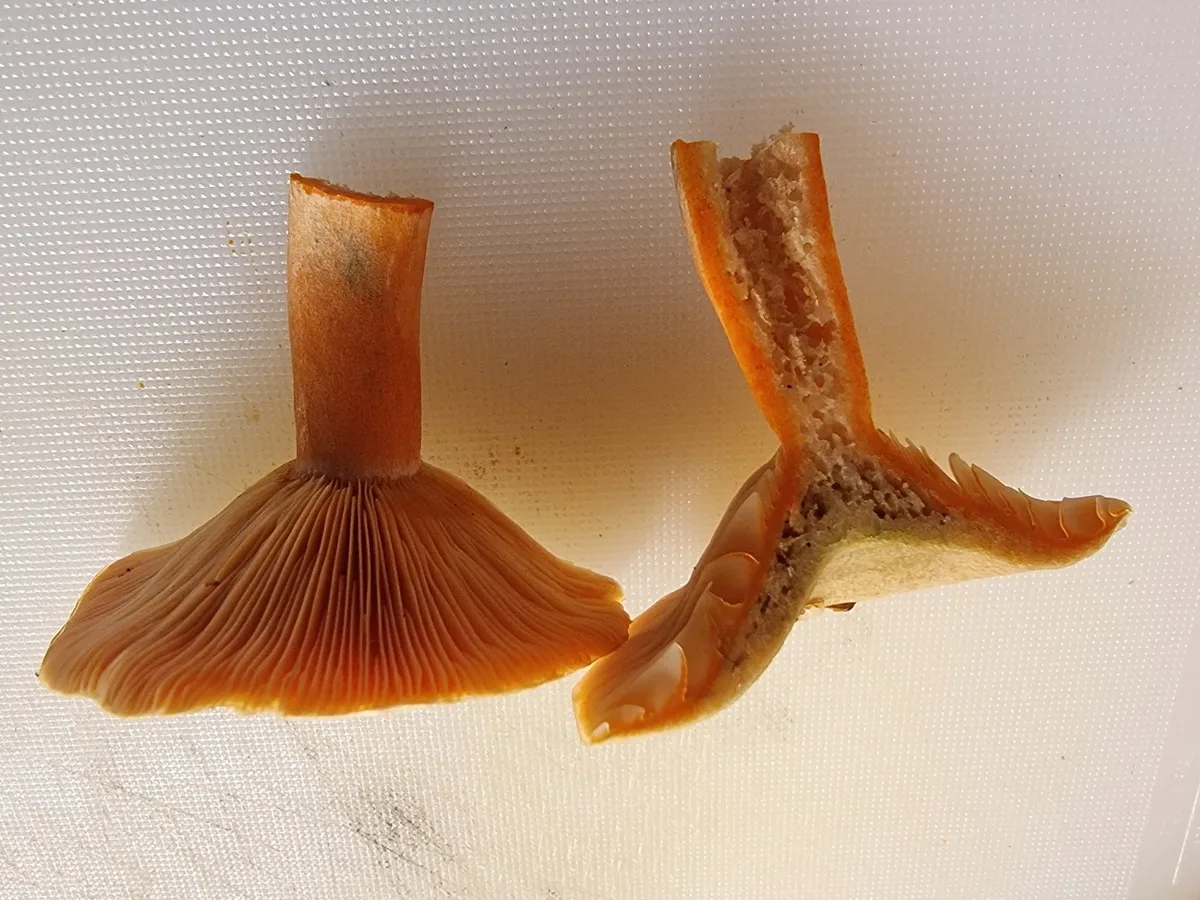 © Ilkka Tuunainen (CC BY-SA 4.0)
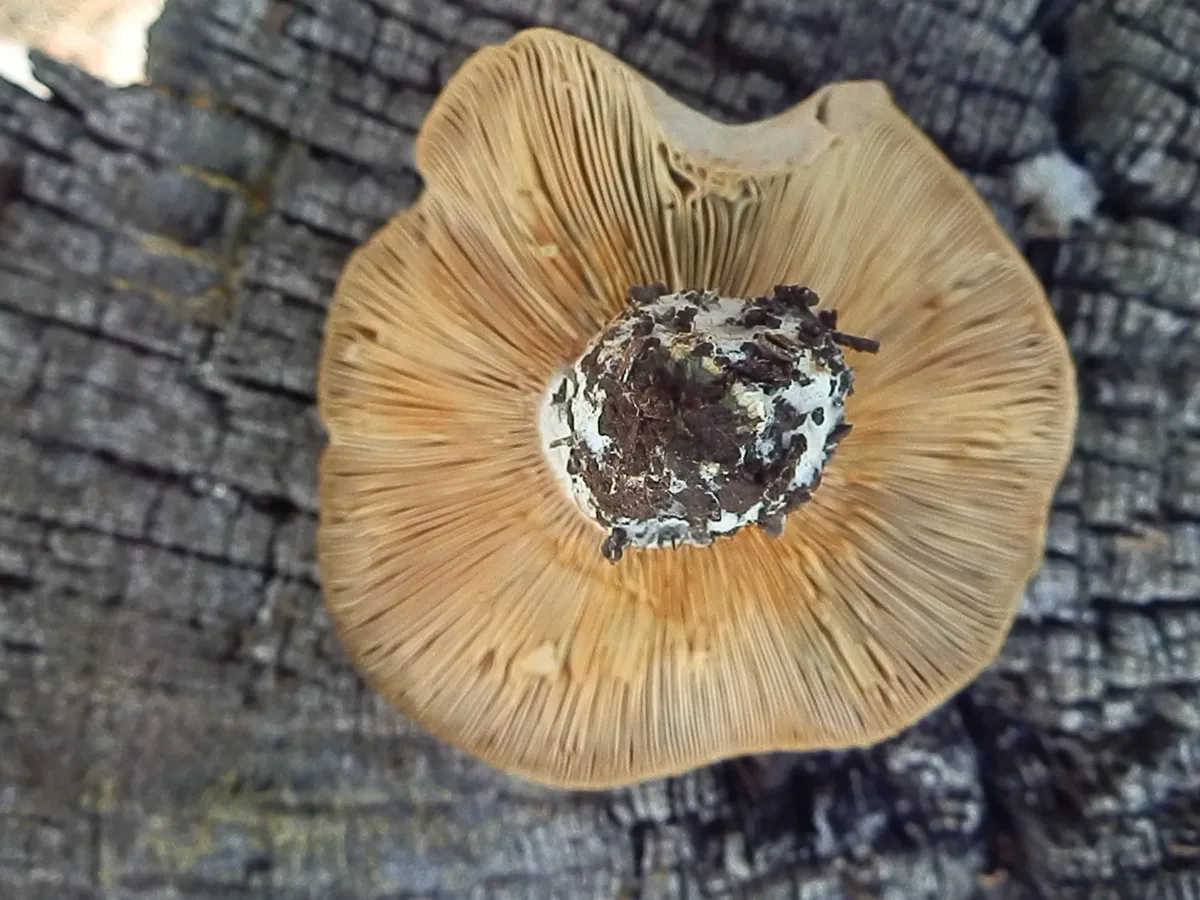 © pinonbistro (CC BY-SA 4.0)
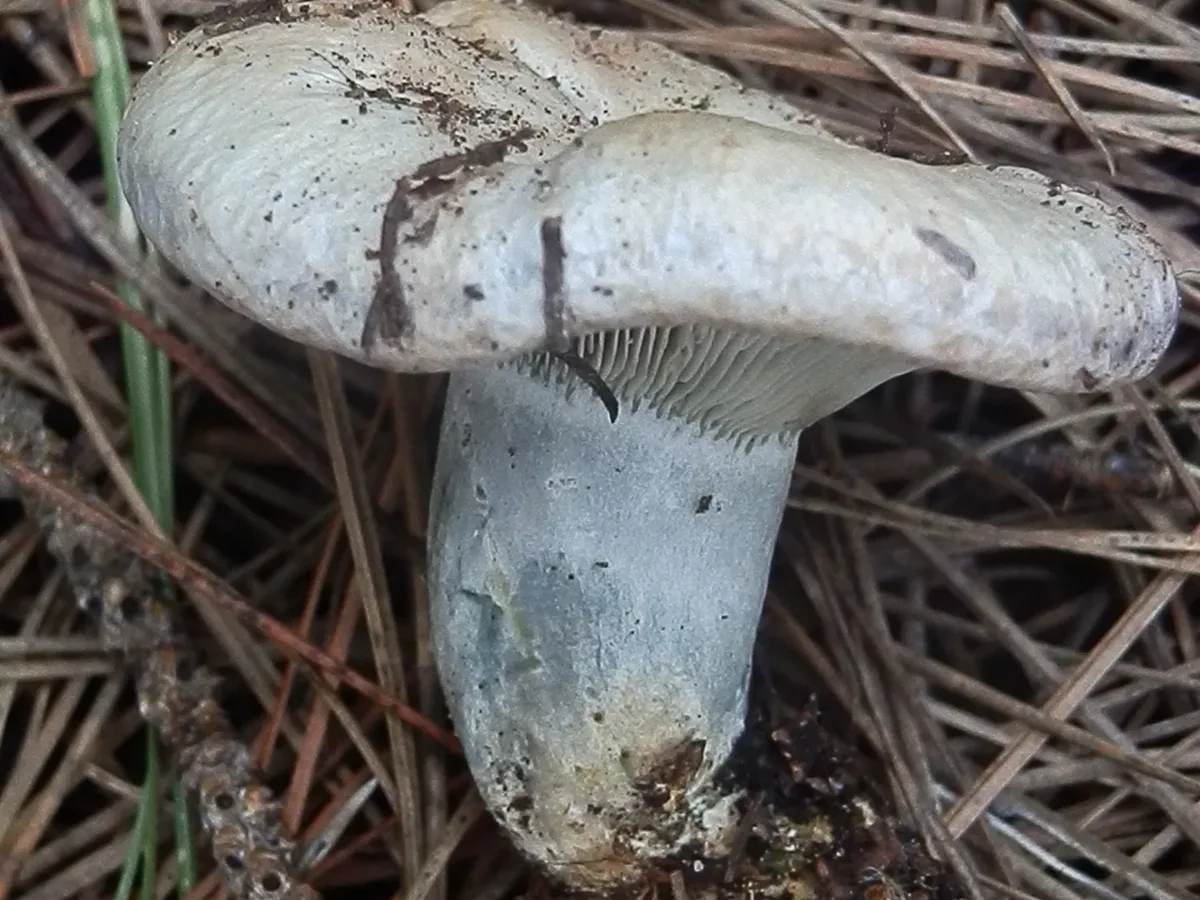 © pinonbistro (CC BY-SA 4.0)© rainerburkard (CC BY 4.0)© Ирина Хохрякова (CC BY)
Good to eat, once you have identified it with certainty and cooked it through.
How to recognise it
Cap
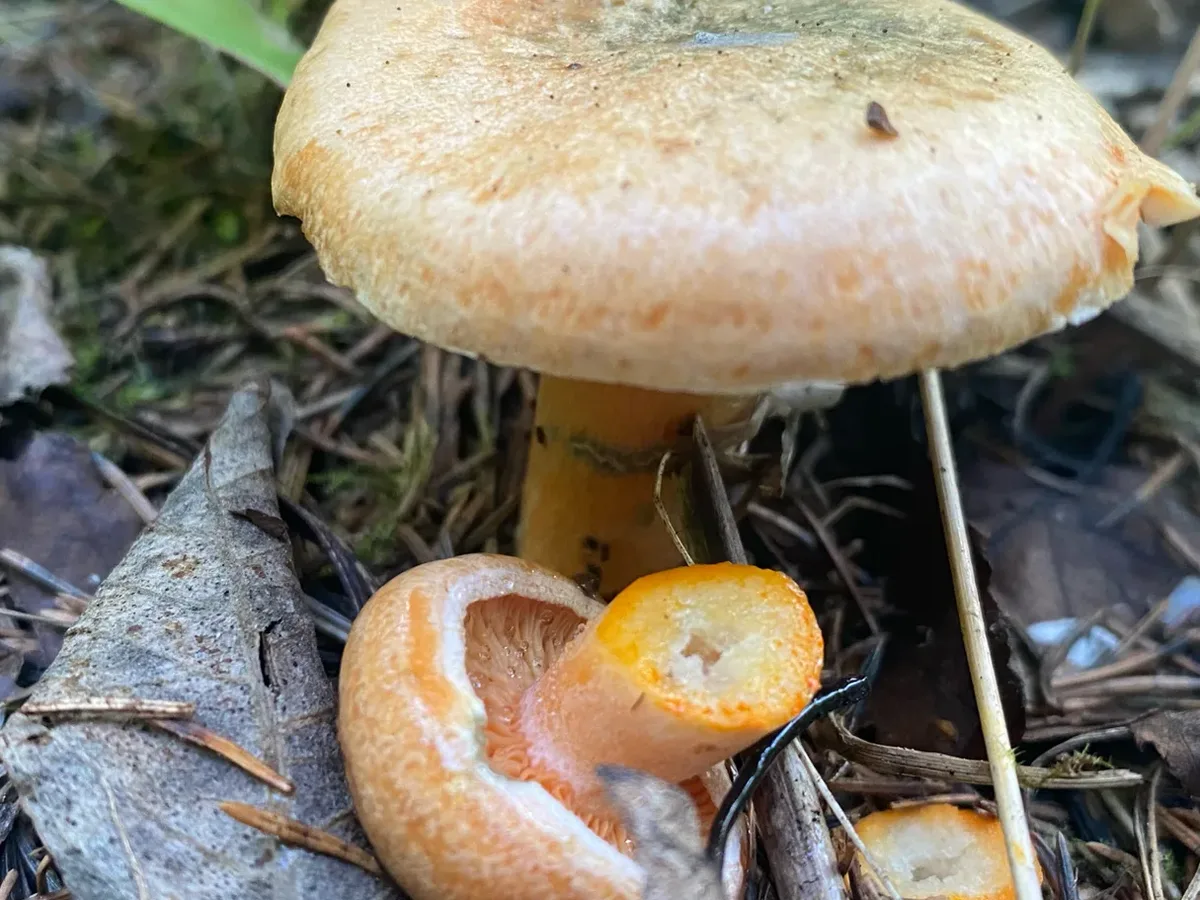
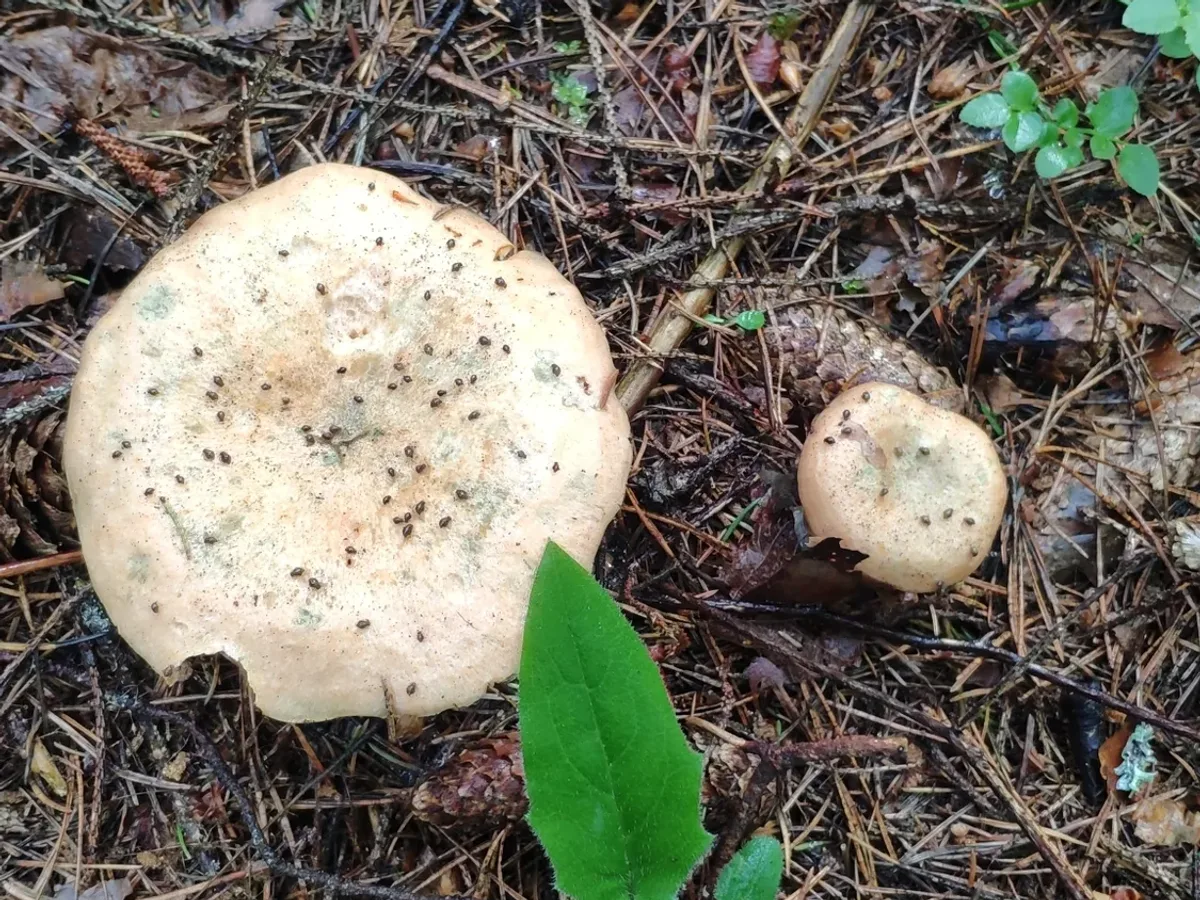
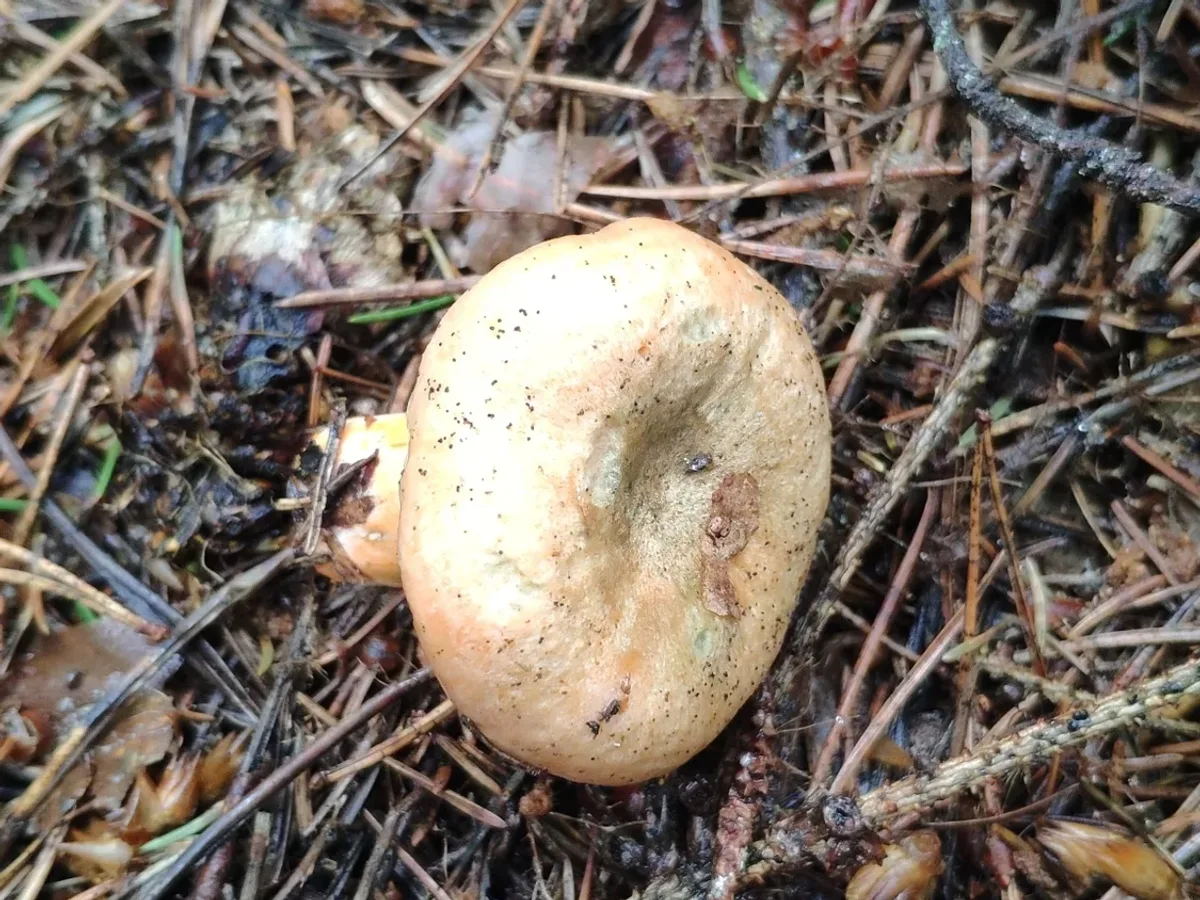
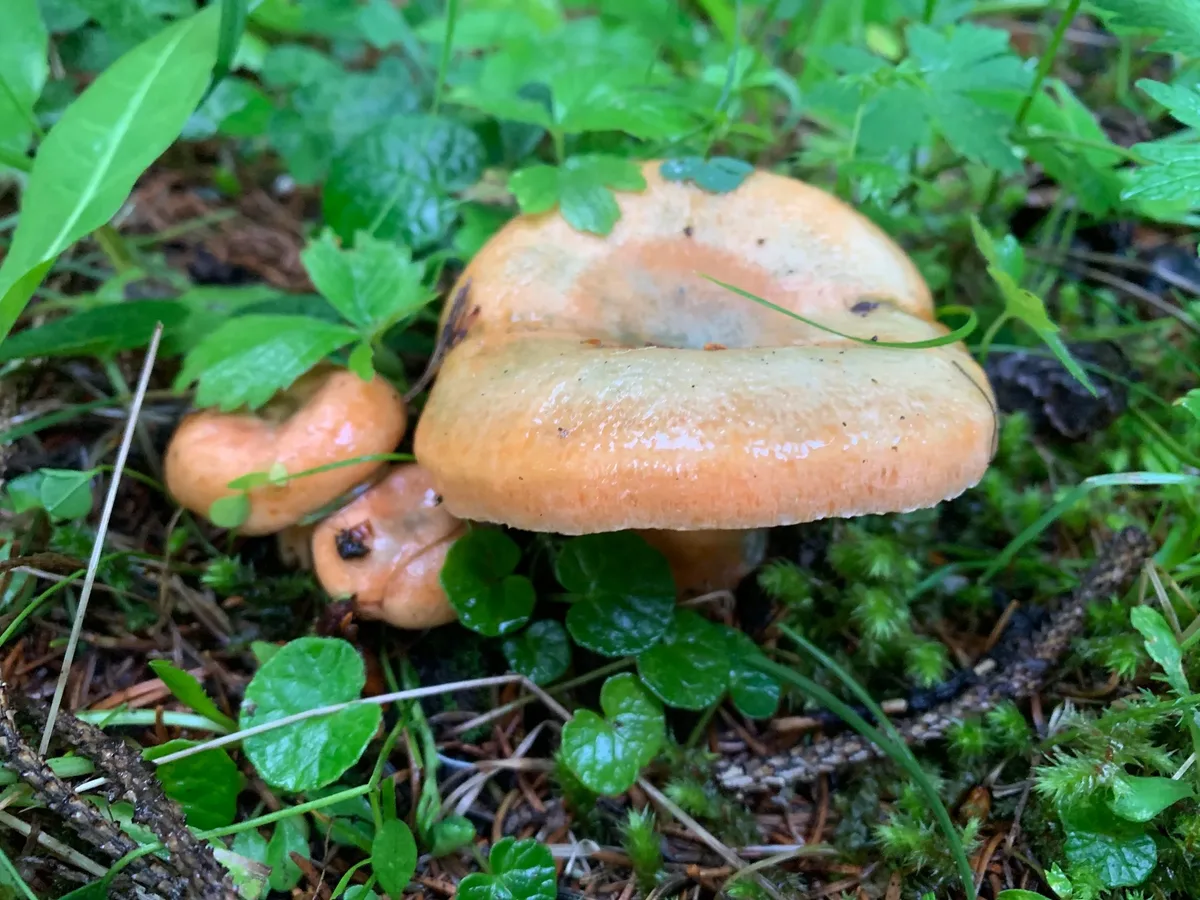
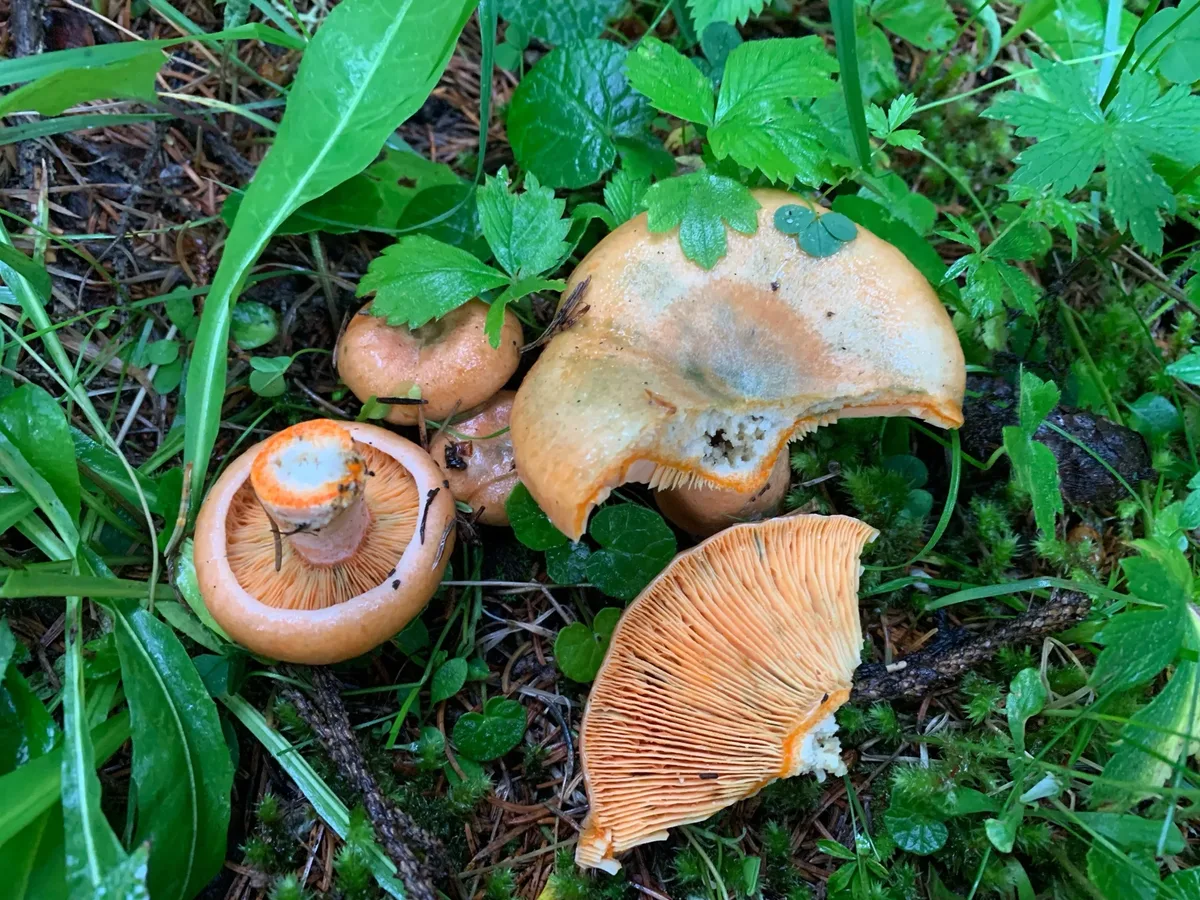
The false saffron milkcap announces itself in colour before anything else: a cap 5-12 cm across, warm carrot-orange fading toward apricot at the margin, painted in faint concentric zones that record the rhythm of each season's growth.
Young caps are convex and slightly inrolled, the surface dry and smooth to the touch. As the fruitbody matures it flattens and then gradually depresses at the centre, eventually forming a shallow funnel that collects rainwater and forest debris.
Gills
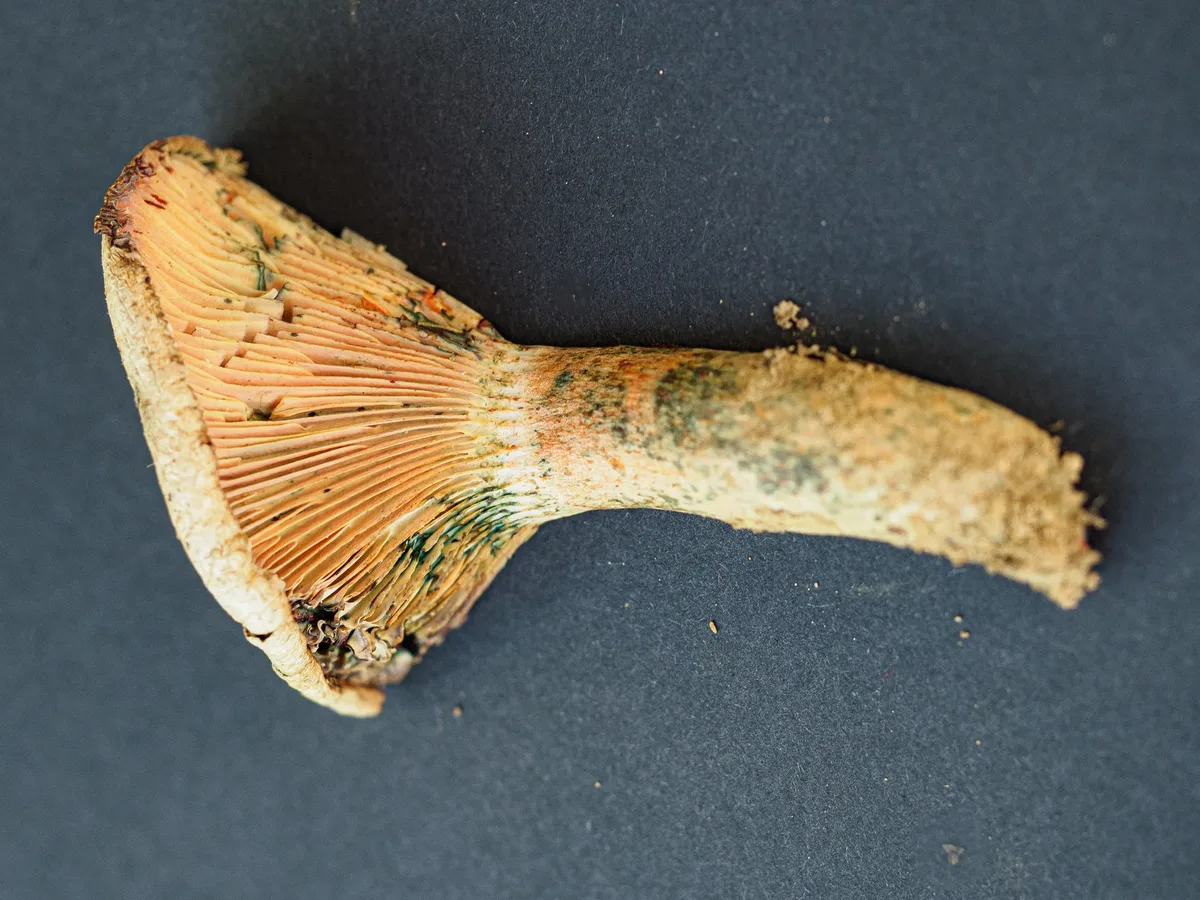
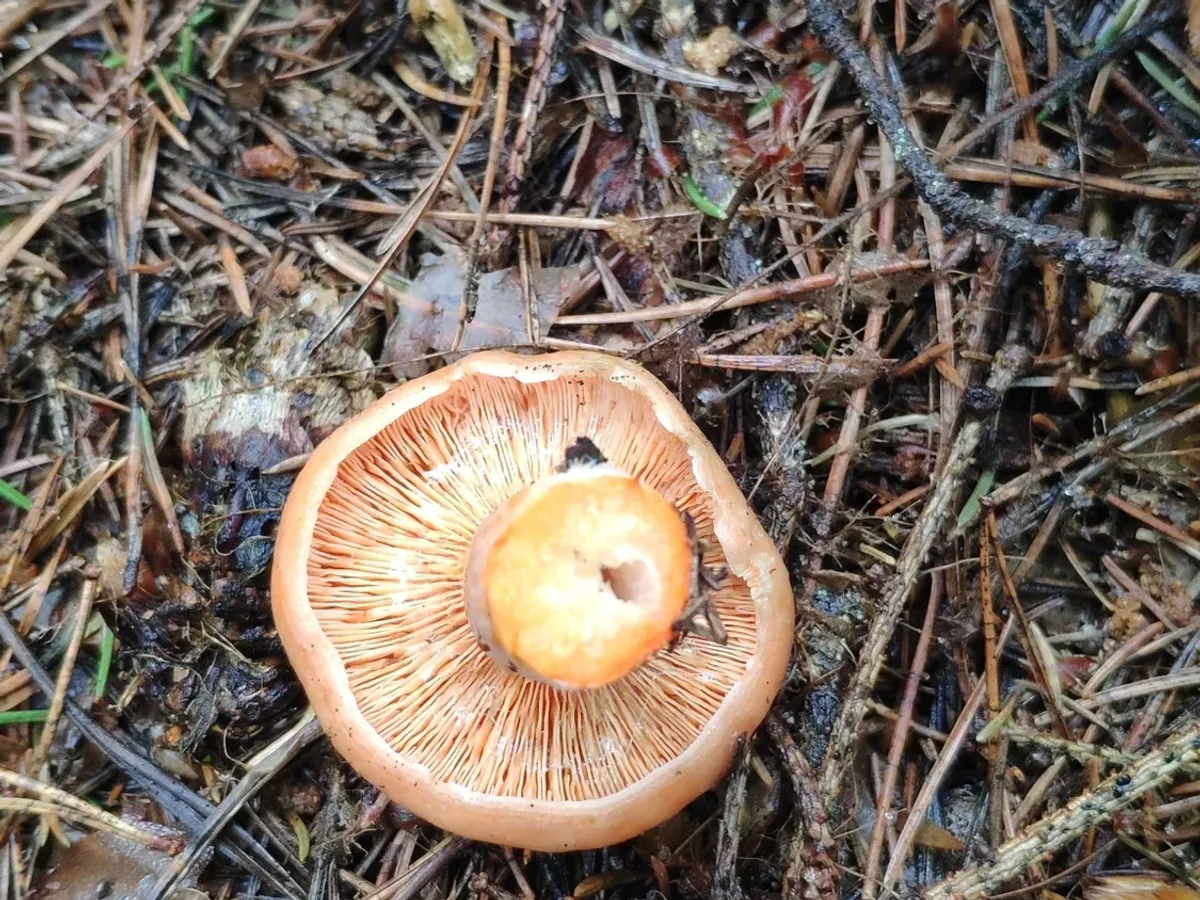
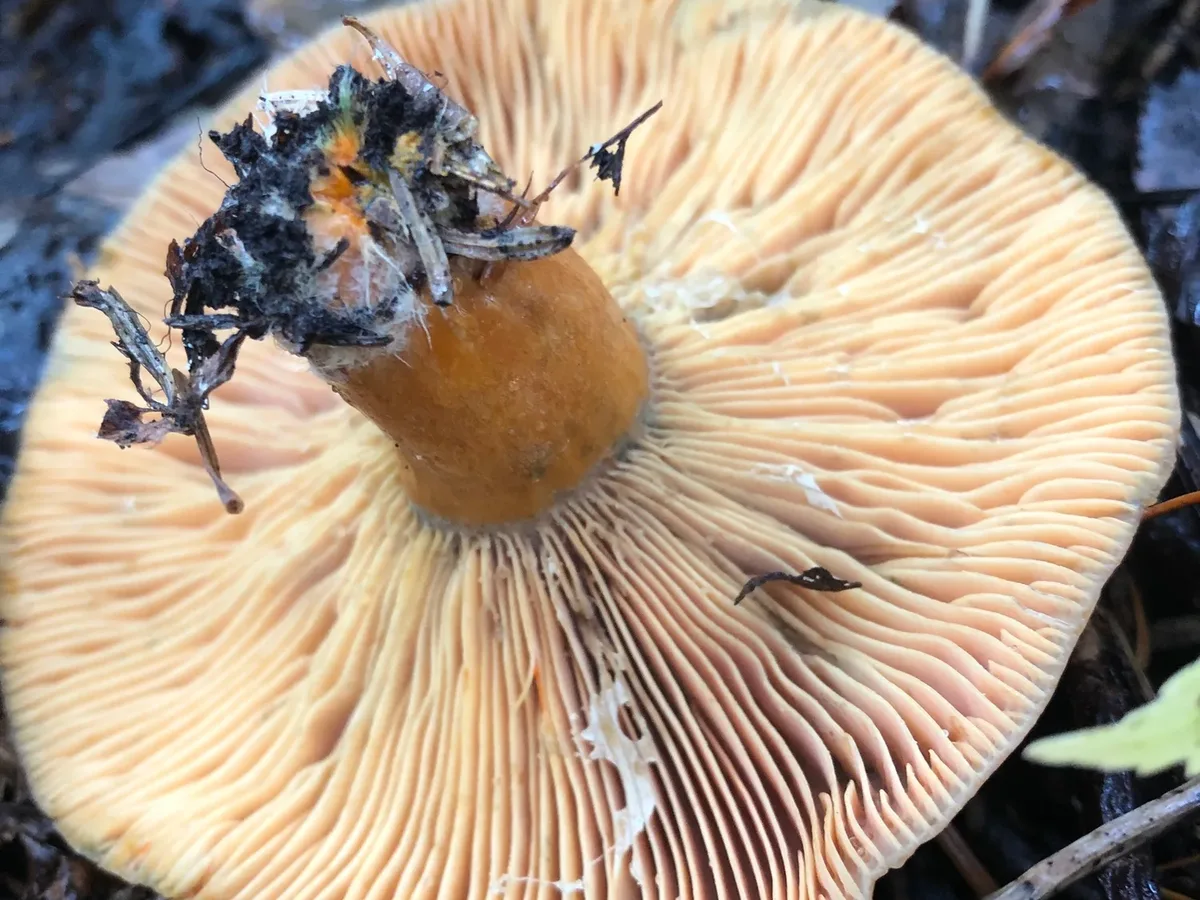
The gills are crowded, narrow, and the same insistent orange as the cap - decurrent, running a short distance down the stem. With age, or wherever a slug has grazed, the orange pigment oxidises to dull grey-green, a colour shift that can make older specimens look bruised and past their best.
Stem
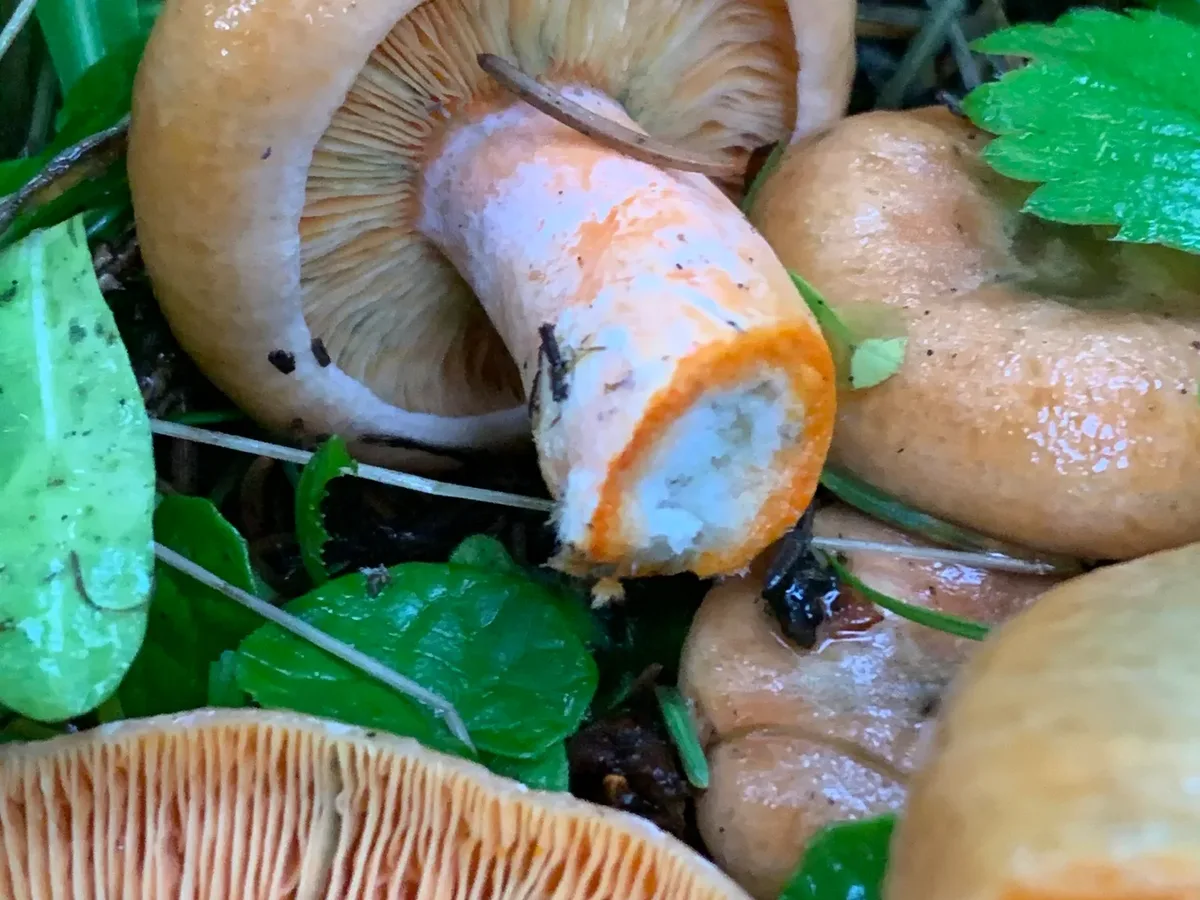
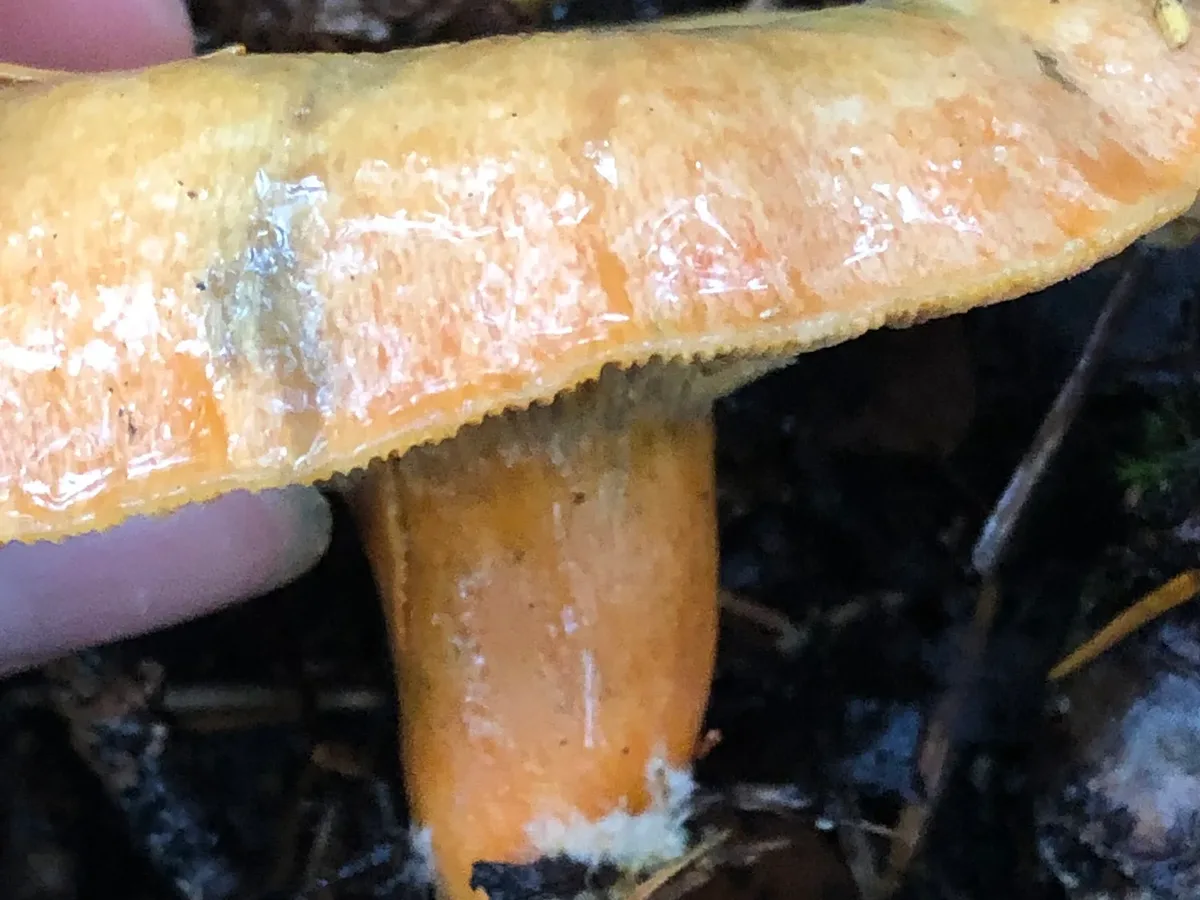
The stem is stout, typically 3-6 cm tall and 1-2 cm across, hollow when cut, coloured like the cap but often pitted with slightly paler shallow scrobiculations - small irregular depressions - that are a useful supplementary identifier.
Flesh
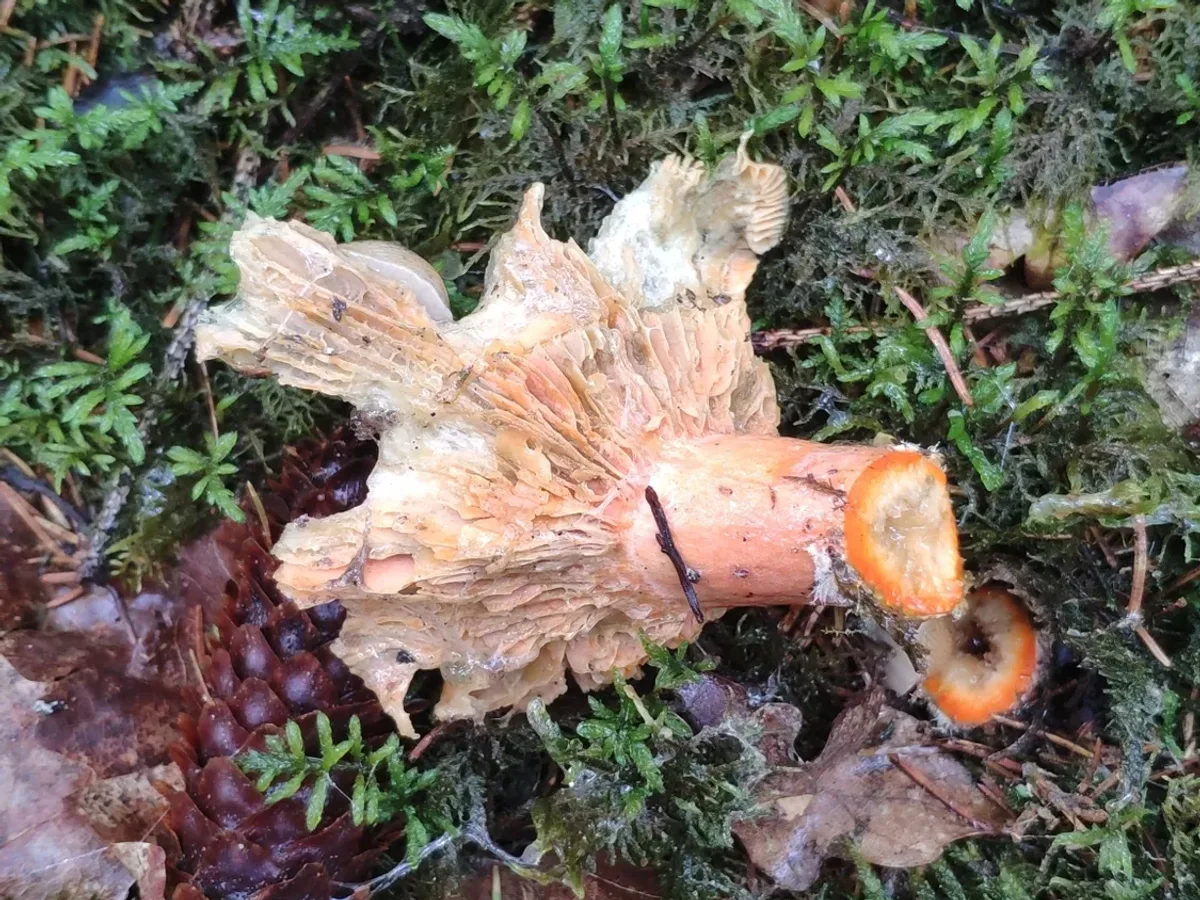
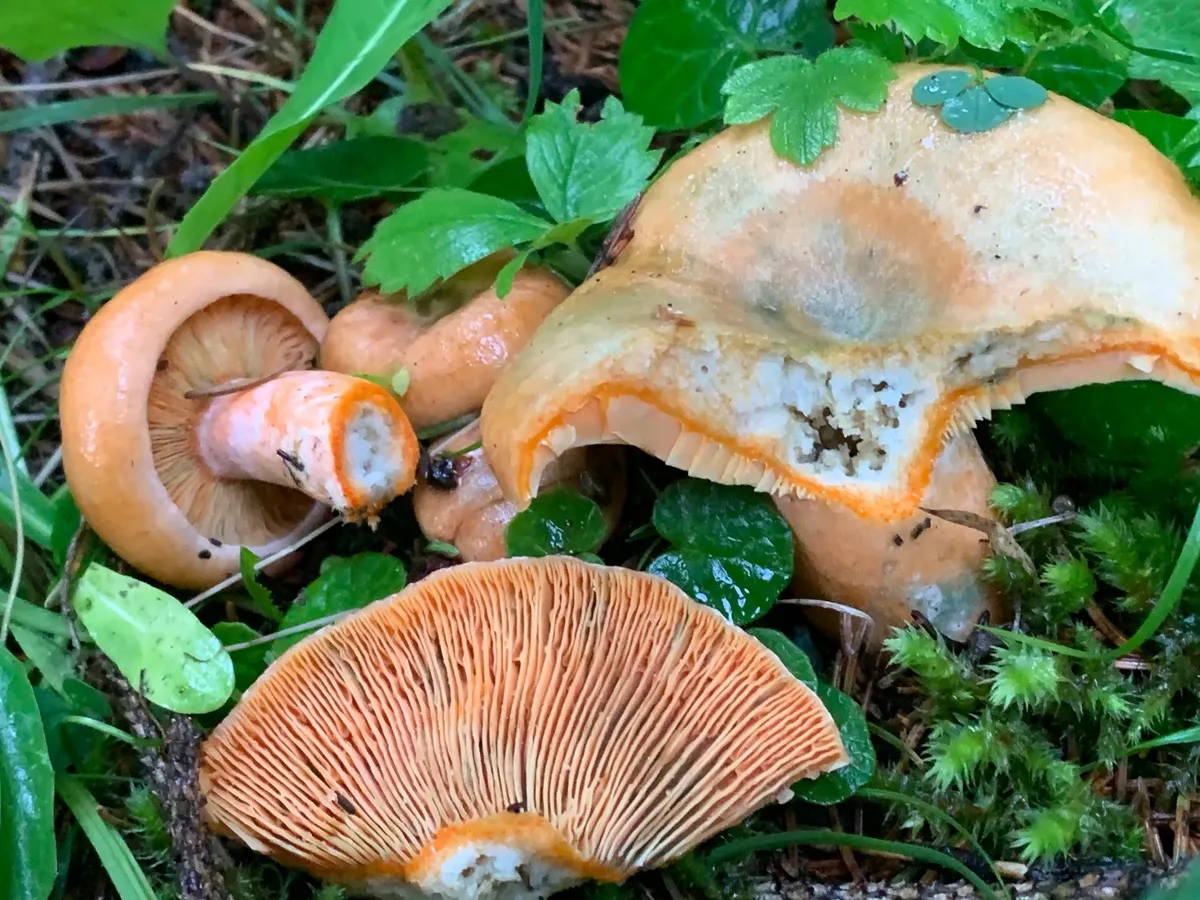
Cut anywhere into the flesh and the milk follows within seconds: carrot-orange latex, vivid and unmistakable. Leave it exposed for two to five minutes and it shifts progressively toward green, a slow oxidation caused by azulene precursors in the pigment.
That colour change is the single most reliable field confirmation available for this species group.
Where & when it grows
Habitat
Lactarius deterrimus is an obligate ectomycorrhizal fungus that forms its entire living in partnership with the roots of Norway spruce (Picea abies).
The relationship is not casual: the mycelium sheathes each fine root tip in a dense hyphal mantle, extending outward as a web that massively increases the tree's effective absorptive surface.
In exchange, the fungus intercepts phosphorus, nitrogen, and trace minerals from mineral soil horizons that spruce roots could never reach unaided; the tree returns around 20-30 % of the photosynthate it fixes as carbon fuel for the fungus.
A single mycelial network can persist for decades, connected to the same spruce clone season after season. The above-ground fruitbodies are only the reproductive stage - a momentary expression of something much larger underground.
In Sweden, the species occurs across the whole country wherever spruce grows, from the southern highlands to Norrland.
The closely related pine saffron milkcap (Lactarius deliciosus) occupies the same niche under Scots pine on calcareous, well-drained soils and is concentrated mainly in southern Sweden. Where the two host trees overlap, the two milkcaps often occur within metres of each other, separated by root zone rather than geography.
When
The fruiting season runs from July through October. The first caps sometimes push through the needle litter in late June if summer rains have arrived early and soil temperatures above 8 °C have established.
The peak varies by latitude: central Sweden typically sees the main flush in August and September, while Norrland flushes later, often well into October before the first hard frosts shut the season down.
Fruiting is tightly linked to moisture. After two weeks of sustained rain totalling at least 20 mm, the mycelium responds by initiating primordia, and fruitbodies emerge 7-14 days later.
During dry summers the mycelium simply waits - it can persist dormant through months of drought, contracting back into the root mantle until conditions are right. Repeated flushes are possible in a single season if autumn brings several distinct rain events.
Old-growth spruce stands with a deep undisturbed litter layer tend to produce more reliably than young plantation forest, partly because the root networks there are older and more extensive.
How it grows
The fruitbody of Lactarius deterrimus develops from a small pinhead primordium buried in the needle layer, usually invisible until it is already the size of a marble.
Development from primordium to full maturity takes roughly five to ten days depending on temperature. Cooler, damp conditions slow the process and produce denser, firmer flesh; warm spells push rapid expansion but the fruitbodies are softer and more prone to larval infestation.
Because the cap expands quickly after rain, larvae from fungus gnats (Mycetophilidae) and other dipterans often colonise early - hollow stems and radiating tunnels in the flesh are common, especially in warm seasons.
The milkcap parasite Hypomyces lateritius sometimes colonises entire fruitbodies, encrusting the gill surface with a pale orange-pink layer of asexual spores and ultimately obliterating the gills and distorting the cap. Infected specimens are unpalatable but not toxic.
Squirrels and deer mice take a significant proportion of the harvest, slicing off caps or caching whole fruitbodies. Their caches and tooth marks are a reliable sign of a productive patch nearby.
Fruiting conditions
Conservative standard mycology estimate for spruce/pine mycorrhizal milkcaps; fruits after sustained late-summer rain once soils have warmed.
Look-alikes
Within the saffron milkcap group the primary distinction is between L. deterrimus (spruce) and L. deliciosus (pine): they are nearly identical in appearance and both are edible, differing mainly in host tree association.
The Swedish Food Agency's practical rule covers both: any milkcap producing carrot-orange to wine-red milk is a safe edible.
The two species worth actively excluding are those with white milk:
- The woolly milkcap (Lactarius torminosus) has a pale salmon-pink cap with a distinctly woolly, inrolled margin and white milk that is immediately and sharply acrid on the tongue - a brief touch of the latex to the tip of the tongue confirms it. It causes gastrointestinal distress if eaten raw or insufficiently cooked.
- The black milkcap (Lactarius turpis) has an olive-black cap and similarly white milk; it should be avoided entirely.
Neither species can be confused with L. deterrimus if the latex colour is checked: no other common milkcap in Swedish spruce forest produces orange latex. The colour change to green is an additional layer of confirmation unavailable in the lookalikes.
Has white milk and an olive-black cap - avoid; not the orange milk and orange cap of the saffron milkcaps.
Has white, acrid milk and a woolly, fringed cap margin, unlike the carrot-orange milk of the saffron milkcaps.
In the kitchen
Picking & cleaning
Identify before you pick: nick the flesh of a candidate - stem or cap edge - and wait. Orange latex that steadily greens over two to five minutes confirms this species group beyond reasonable doubt.
Check the stem by slicing it lengthwise: a clean white or orange interior is fine; brown or cream radiating tunnels signal larvae, and heavily tunnelled specimens are better left.
Cut cleanly at the base rather than twisting out the mycelium. There is no strong evidence that pulling damages the mycelium, but cutting disturbs the surrounding litter less and keeps the patch tidy.
Loose soil and spruce needles can be brushed off in the field. No soaking or peeling is needed - the surface dries naturally and the firm flesh is not fragile.
A flat-bottomed basket is preferable to a bag: overlapping caps in a plastic bag bruise and begin greening rapidly, especially in warm weather.
If you find a productive patch, partial harvesting - taking only caps that have opened fully and leaving small buttons - allows the remaining fruitbodies to complete their spore release before the next visit.
Cooking
The flesh of L. deterrimus is firm and holds its texture well at high heat, making it one of the better wild mushrooms for frying.
A hot dry pan with butter or oil, started over high heat to drive off moisture quickly, produces a golden, slightly chewy result with a pronounced earthy-spicy flavour that some describe as faintly resinous - the spruce partnership seems to leave its signature in the taste.
The flavour is assertive enough to carry a simple preparation: fried with shallots, thyme, and a splash of cream it needs nothing else. Mixed with milder mushrooms such as chanterelles or hedgehog fungi it adds depth without dominating. It works well in pasta, on toast, or as a filling in pastry.
For keeping:
- Drying concentrates the flavour further but must be done slowly - keep the dehydrator below 30 °C or the latex pigments convert to bitter compounds. Dried pieces rehydrate well in warm water and can be powdered for seasoning.
- The species freezes acceptably after light blanching, though the texture softens.
- Pickling in light brine is traditional in parts of northern Europe and produces a firm, tangy result.
Good to know
Lactarius deterrimus requires no special preparation beyond standard cooking. Unlike some other milkcap species it does not need parboiling or salting to remove bitterness; any residual mild astringency disappears with heat.
One well-documented and entirely harmless phenomenon: urine may appear pink or red for one to two days after a meal. This is caused by lactaroviolin, an azulene-related pigment absorbed from the latex, and is physiologically insignificant - no organ damage occurs and no treatment is required.
The species is not implicated in any toxic reaction when properly identified and cooked. Raw or undercooked consumption is not recommended, consistent with general advice for wild mushrooms, but there is no specific toxin active in this species.
A reference guide - never an edibility guarantee. When in doubt, leave it out.