Clarke's milkcap
Lactarius clarkeaesyn. Lactifluus clarkeae (Berk. & Broome) Verbeken 2011, Lactarius clarkeae Berk. & Broome 1871, Galorrheus clarkeae (Berk. & Broome) Kuntze
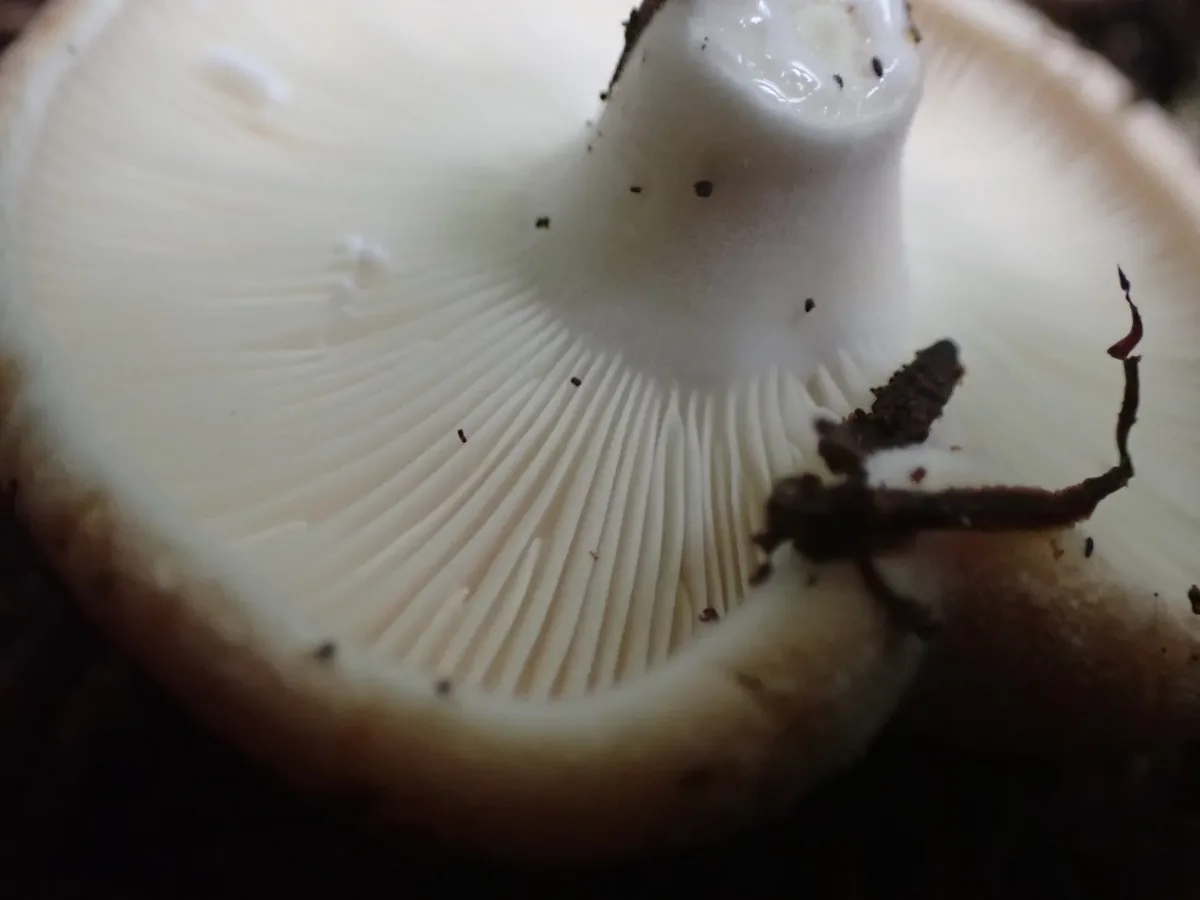 © Michael Berardozzi (CC BY)
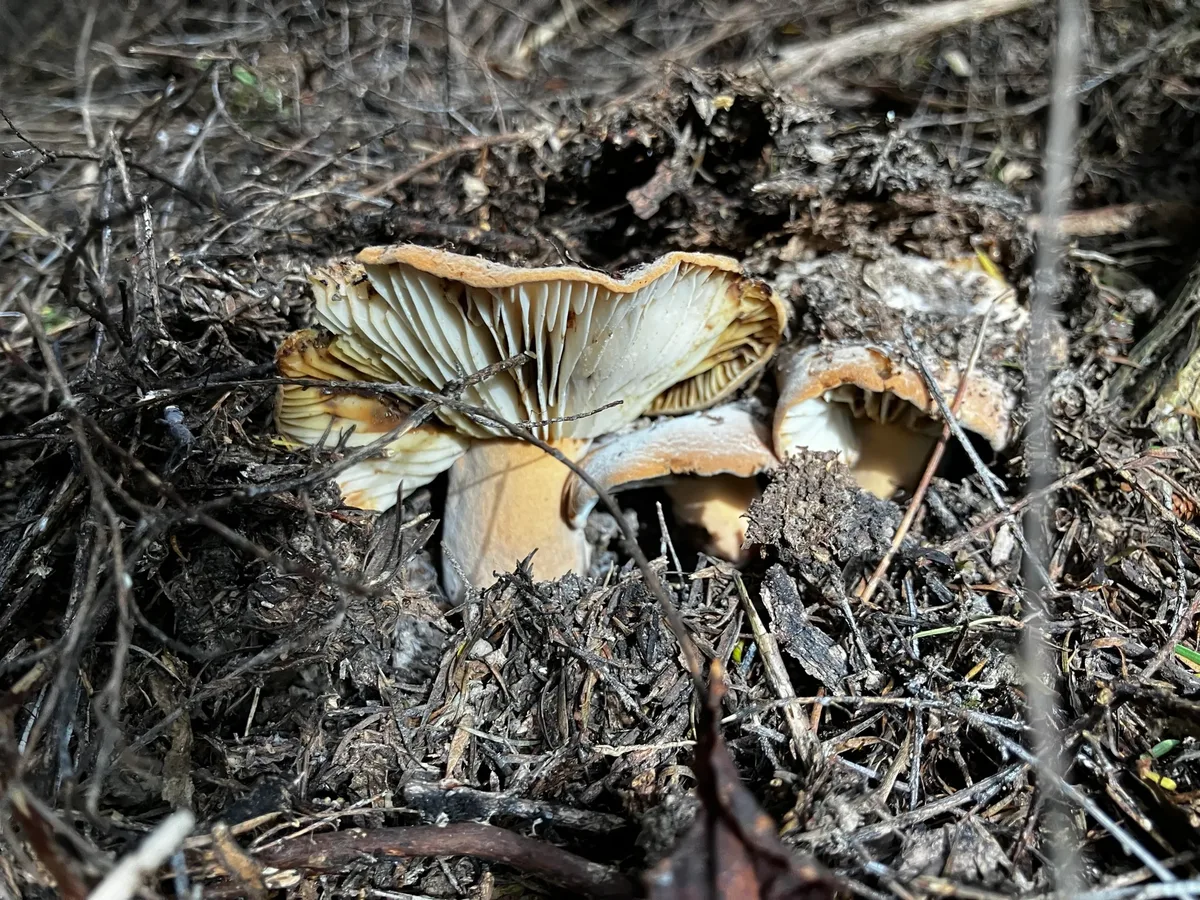 mikoikoi (CC0)
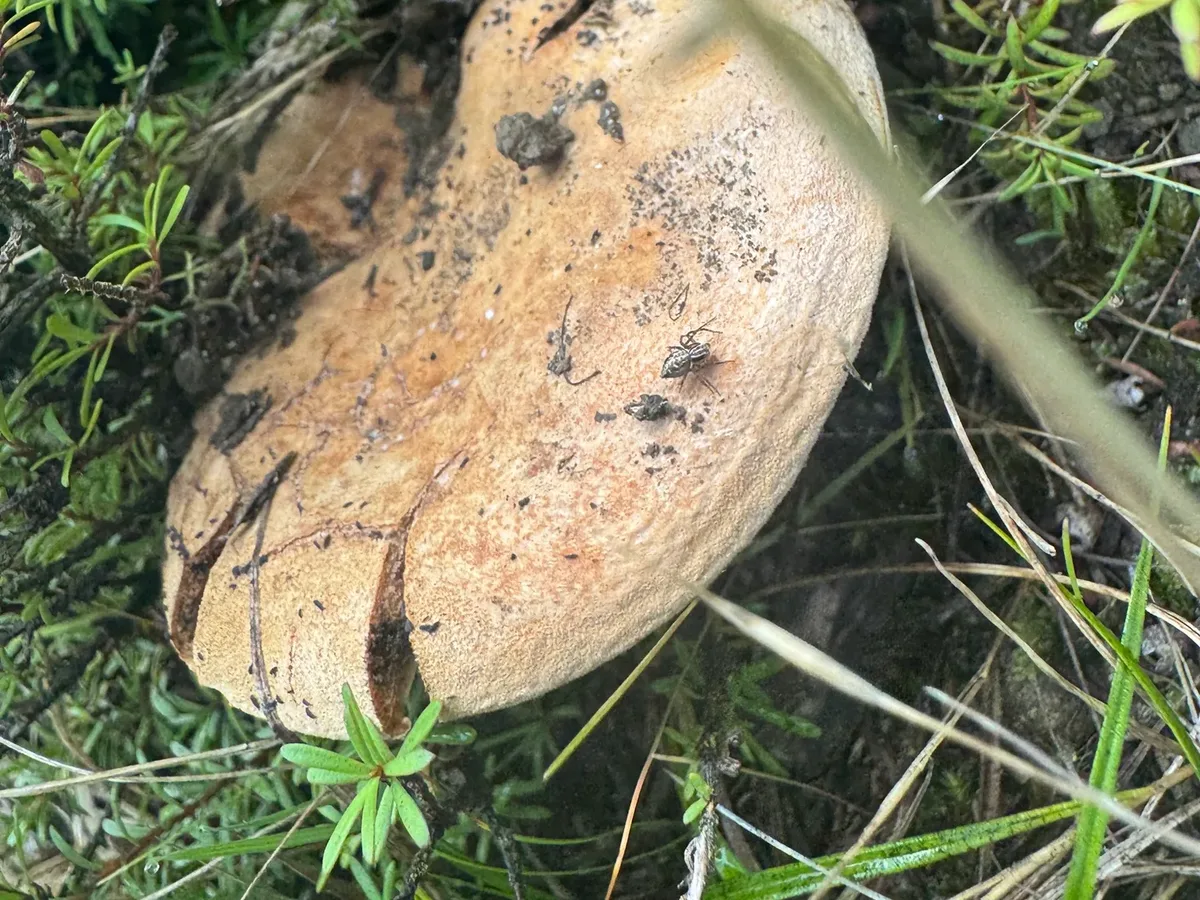 © Ian Dickie (CC BY)
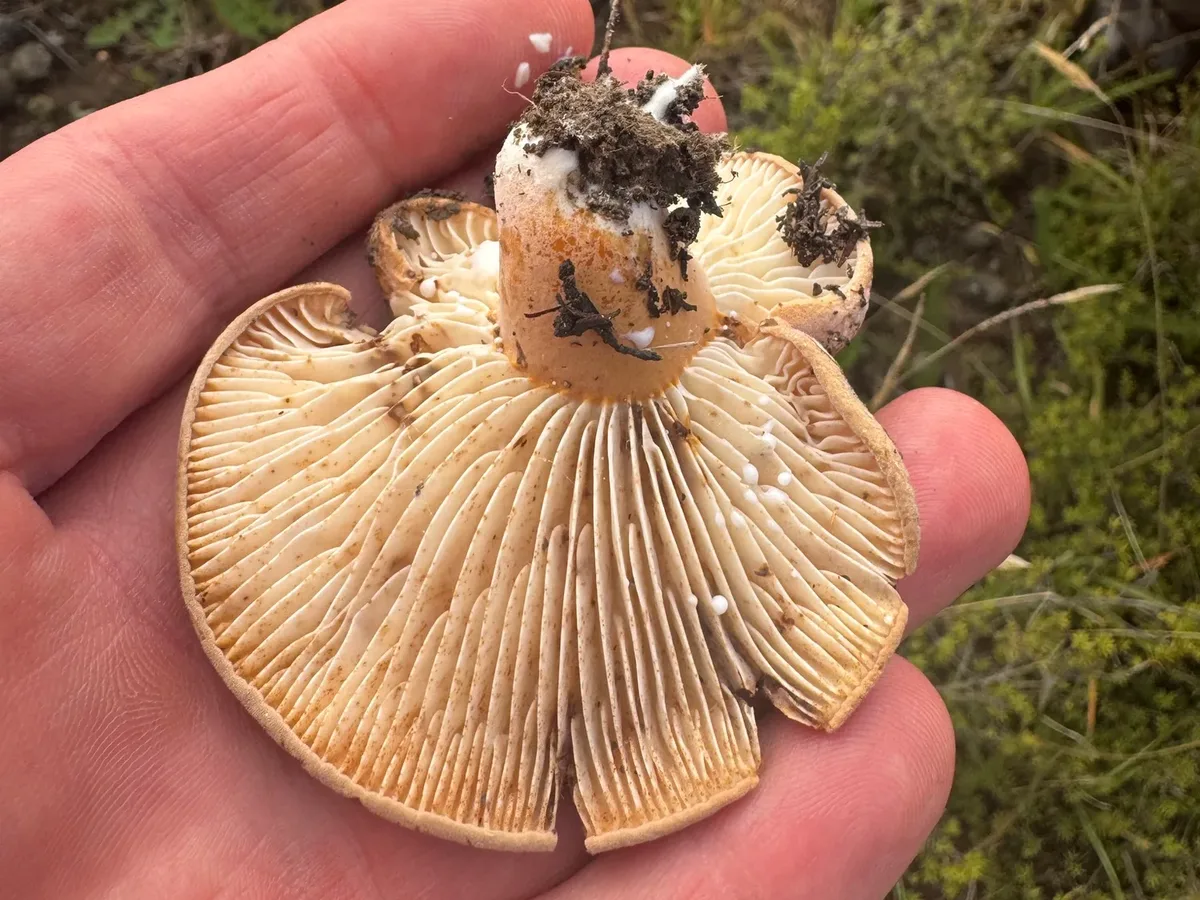 © Ian Dickie (CC BY)
 © rempson (CC BY)
 © Michael Berardozzi (CC BY)© Michael Berardozzi (CC BY)mikoikoi (CC0)
Good to eat, once you have identified it with certainty and cooked it through.
Never eat a mushroom you are not 100% sure of - check the look-alikes below, and always cook wild mushrooms.
How to recognise it
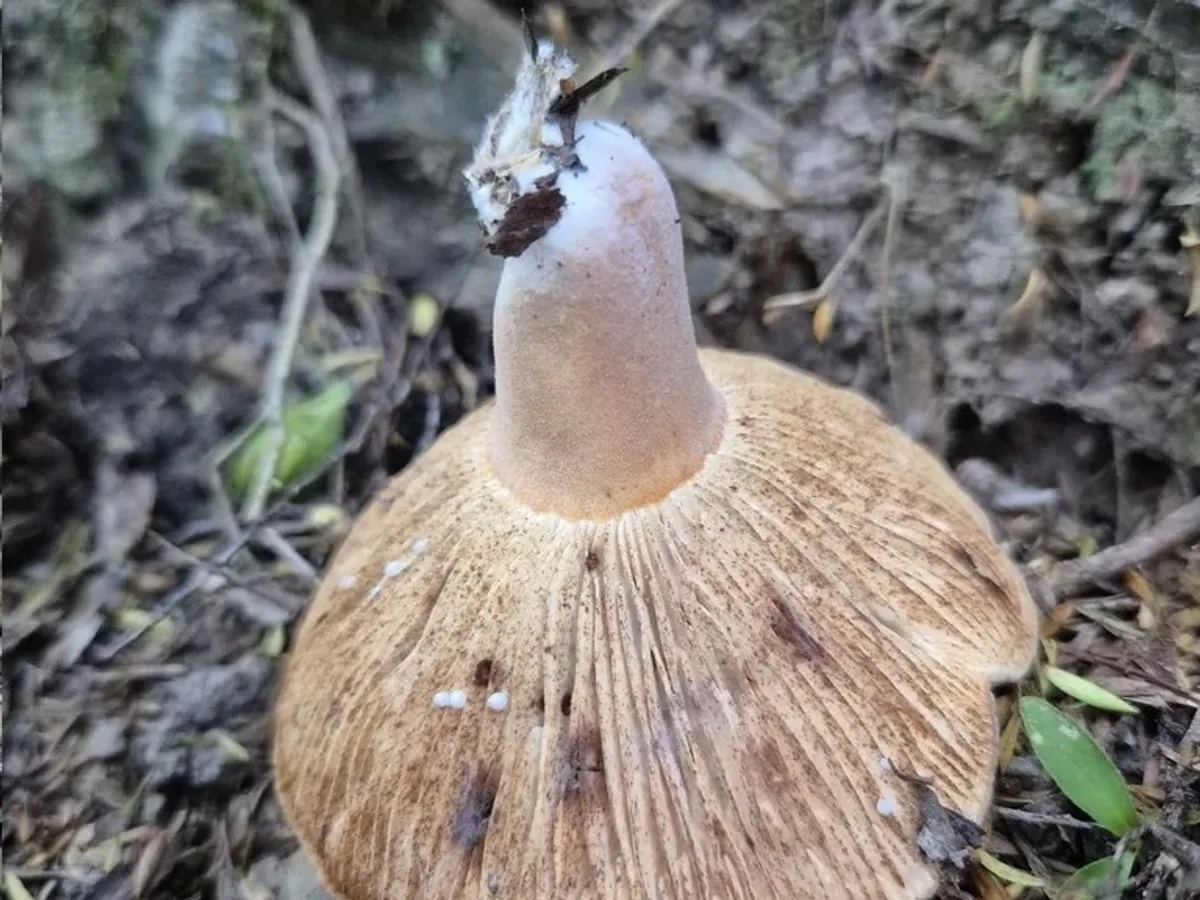
Clarke's milkcap is one of the most visually striking milkcaps in Australia, immediately recognisable by its vivid orange-red to brick-red cap and the copious white milk it bleeds when broken.
Cap
The cap ranges from 4 to 12 cm across. Young buttons are convex with a tightly rolled-in margin; as the mushroom matures the cap flattens and then sinks into a shallow funnel shape in older specimens.
The surface is noticeably sticky when wet - a fresh cap feels slick to the touch - and dries to a shiny or slightly dull finish.
The colour is a reliable field mark: a warm, saturated reddish-orange that holds up well as the mushroom ages, only fading toward orange-buff in very old or dried specimens.
Gills
The gills are pale cream to straw-buff, run slightly down the stem, and are closely spaced.
Stem
The stem is solid and roughly the same colour as the cap, sometimes showing faint orange pitting similar to that seen on European red milkcaps.
Milk & taste
The key diagnostic is the abundant white, watery milk: snap a gill or nick the flesh and white droplets well up within seconds. This latex does not change colour on exposure to air and tastes mild to very faintly acrid.
Spore print
Spore print white to pale cream.
Where & when it grows
Habitat
Clarke's milkcap is a quintessential species of southeastern Australian tall eucalyptus forest, entirely dependent on living eucalyptus as a symbiotic ectomycorrhizal partner.
This is a native fungus that co-evolved with Eucalyptus over millions of years - the partnership runs deep, with mycelium threading through the fine roots of its host tree in an exchange of minerals for sugars that has sustained both partners across geological time.
Look for it in tall open-forest in Victoria, Tasmania, New South Wales, and southern Queensland, dominated by:
- mountain ash (Eucalyptus regnans)
- alpine ash (E. delegatensis)
- messmate (E. obliqua)
- manna gum (E. viminalis)
- blue gum (E. globulus)
It grows scattered to gregarious on the forest floor in leaf litter, often partly buried under eucalyptus bark strips and debris.
It is also found under exotic plantings of eucalyptus in New Zealand, where it has established itself wherever its host trees have been planted at scale.
It is strictly absent from areas without eucalyptus - habitat is the primary field diagnostic.
When
The season follows the southern-hemisphere calendar, opening with the first significant autumn rains as the days cool.
Fruiting typically begins in late February or March, runs through April and May, and tapers into June - the rhythm of autumn cooling and soaking rain is what calls these mushrooms up from the soil.
A sustained period of at least 20-30 mm of rain over two weeks, combined with soil temperatures dropping to roughly 8-16 °C, triggers a flush; the fruiting bodies then appear roughly 7-14 days after that rain arrives.
In the high-rainfall mountain ash forests of the Dandenong Ranges, the Central Highlands of Victoria, and the Otway Ranges, the season can be especially prolific.
In drier or lower-altitude eucalyptus woodland fruiting is sparser and more tied to individual rain events. Mild years may push the season into early winter.
How it grows
Grows scattered to gregarious, occasionally in loose groups, always beneath living eucalyptus. Never grows on wood or dung, and does not form rings or fairy circles.
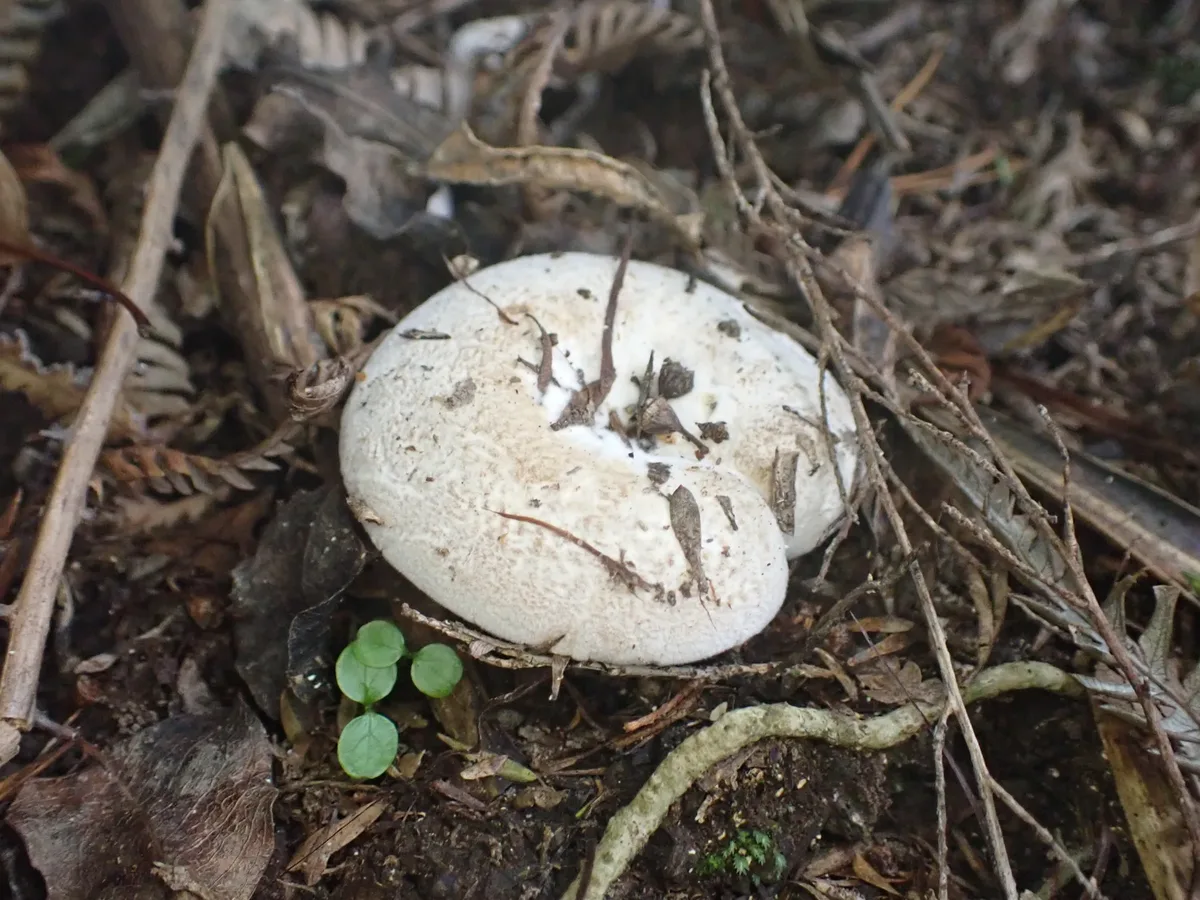
Fruiting bodies push up through the leaf litter from below, and small buttons can be almost entirely buried, showing only the cap surface at first.
The mycelium is closely bound to eucalyptus fine roots; a good site will fruit year after year if the trees remain healthy and the soil is left undisturbed.
Fruiting conditions
Fruits after autumn cooling and adequate rainfall; requires established ectomycorrhizal eucalyptus trees. Flush lag of 7-14 days after soaking rains typical.
Look-alikes
In southeastern Australian eucalyptus forests the orange-red colouring of Clarke's milkcap is shared by relatively few other mushrooms.
The combination of vivid reddish-orange cap, white unchanging latex, decurrent pale-buff gills, and eucalyptus habitat is highly distinctive and makes confident identification straightforward for an experienced forager.
The most important lookalike concern is with Amanita species, some of which in Australia have orange-yellow to reddish coloration (e.g., Amanita muscaria var. guessowii colour forms, or native Amanita species).
Amanita species always lack latex entirely - break the flesh and if no white milk appears, do not eat it. Amanita also differs by:
- free (not decurrent) gills
- a skirt-like ring on the stem
- a volva (cup or sheath) at the base
Lactarius wirrabara is another Australian milkcap in similar eucalyptus habitats; it is typically smaller, paler orange-brown, and less viscid.
No deadly species is known to closely mimic L. clarkeae when the latex is confirmed, but always check for the white milk before eating any milkcap.
Deadly Amanita species introduced to Australia (e.g., A. phalloides under oaks) typically have white or greenish-white caps, not orange-red, so colour mismatch is usually clear. Any orange or reddish Amanita (e.g., native taxa or colour forms) lacks latex entirely - always break the flesh and confirm white milk flows. Amanita has free gills (not decurrent), a ring on the stem, and a volva at the base.
Introduced in Australian pine and birch plantings; distinctive white warts on cap (often washed off by rain), white gills, ring, and volva. No latex. Grows under introduced trees, not eucalyptus. Toxic (ibotenic acid / muscimol) but not typically lethal in adults.
Another eucalyptus-associated milkcap in southeastern Australia; generally smaller (cap 3-7 cm), paler orange-brown to ochre, less viscid, latex also white. Edibility similar. Distinguished by smaller size, paler colour, and less viscid cap surface.
In the kitchen
Picking & cleaning
Clarke's milkcap is a pleasant edible, prized in Victoria and Tasmania among foragers who know it well.
Pick young to medium-aged specimens with caps still firm and not water-logged; very old, mushy, or insect-riddled specimens are best left.
Cut at the base with a knife and brush off litter before placing in a basket. The white milk is harmless on the skin but can discolour fabric. Confirm the white latex before harvesting.
Because this is a native Australian species growing in eucalyptus forest, be aware of any local regulations on picking in state forests or parks and take only what you will use.
Cooking
Clarke's milkcap has a mild, pleasant flavour with a firm, slightly rubbery texture - characteristic of milkcaps in general. The mild latex means it does not require blanching before use, unlike some strongly acrid European milkcaps.
It performs well sliced and fried in butter or olive oil with garlic, salt, and herbs, and is excellent in pasta dishes, risotto, omelettes, soups, and stews. It holds its texture well under prolonged cooking.
Grilling whole young caps over high heat preserves moisture and imparts a pleasant char. It can be dried for use as a powder or reconstituted in soups.
The texture firms up when cooked quickly and softens to a more silky consistency with slow-cooking. Avoid serving undercooked or raw.
Good to know
Clarke's milkcap is considered a safe, edible wild mushroom when properly identified and cooked. The latex is mild and non-toxic. There are no known cases of serious poisoning from correctly identified L. clarkeae.
The main risk is misidentification - most critically with Amanita species, some of which are deadly (containing amatoxins that cause fatal liver failure).
The foolproof check: always break the flesh and confirm abundant white, watery latex flows. No latex = not a milkcap = do not eat.
- Never eat any orange or red mushroom from eucalyptus forest without confirming the latex.
- Cook all specimens thoroughly before eating; do not eat raw.
- If in any doubt about identification, do not consume.
A reference guide - never an edibility guarantee. When in doubt, leave it out.