Yellowdrop milkcap
Lactarius chrysorrheussyn. Lactarius chrysorheus, Agaricus chrysorrheus
 © Zoe McCormick (CC BY 4.0)
 Uilleam Uir (CC0)
 © victor laborde (CC BY)
 © victor laborde (CC BY)
 © victor laborde (CC BY)
 © victor laborde (CC BY)
 © ionafraser (CC BY)
 © ionafraser (CC BY)
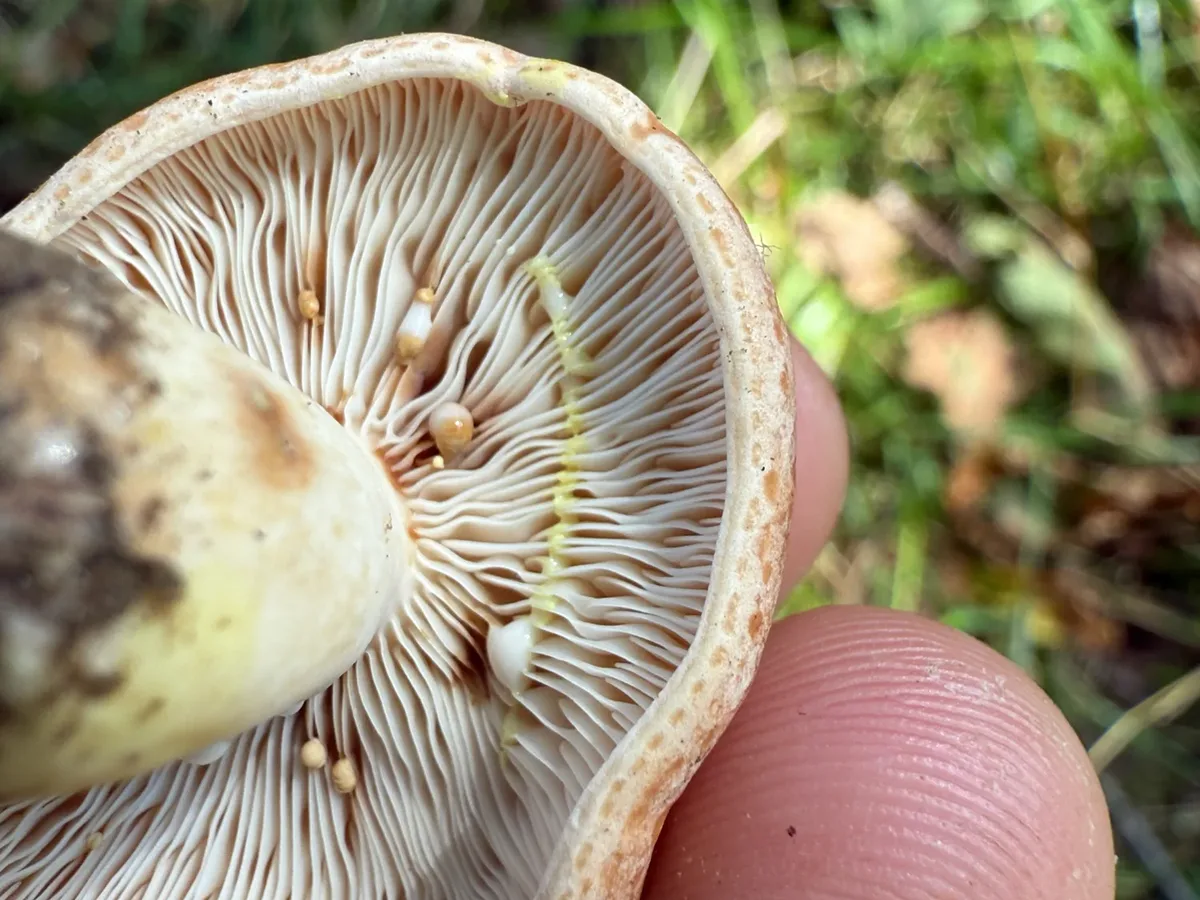 Uilleam Uir (CC0)
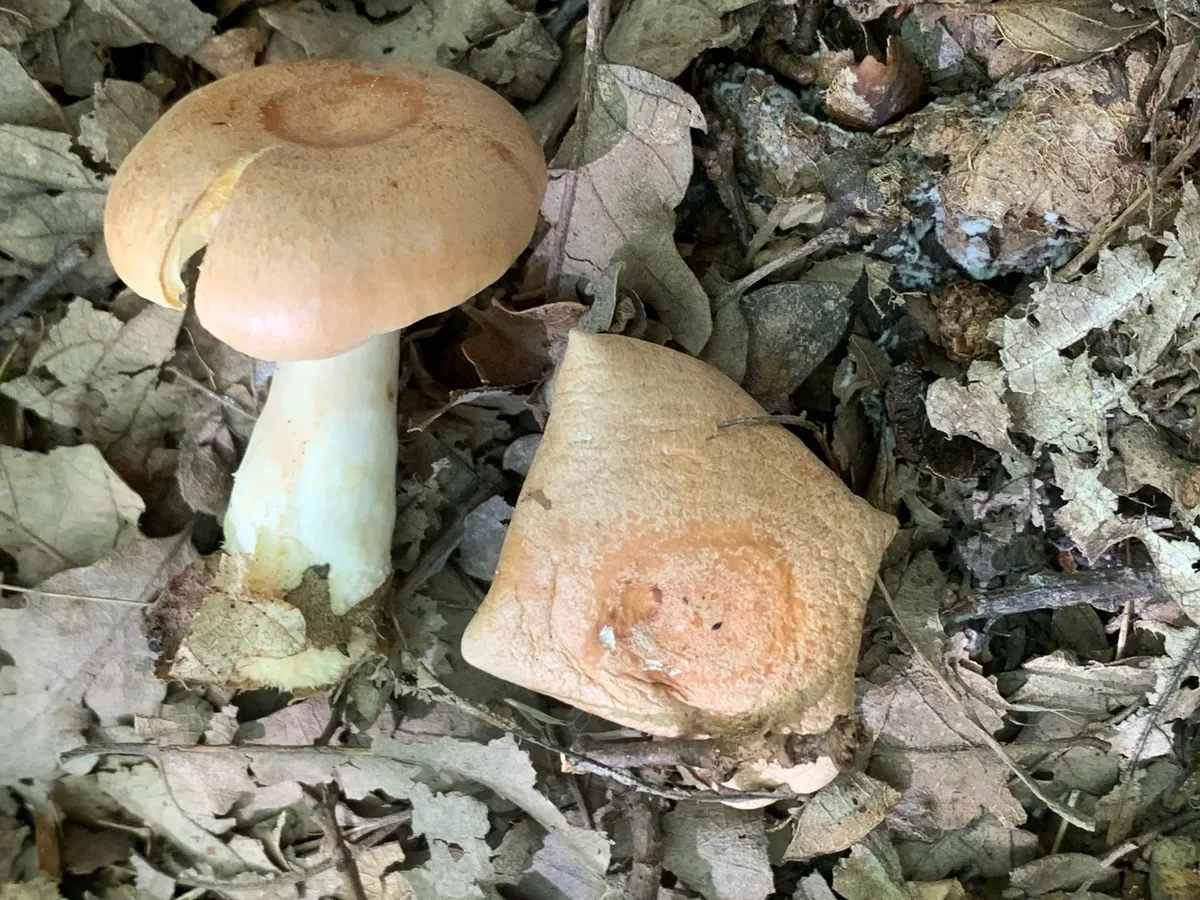 © Manuela Fiorini (CC BY)
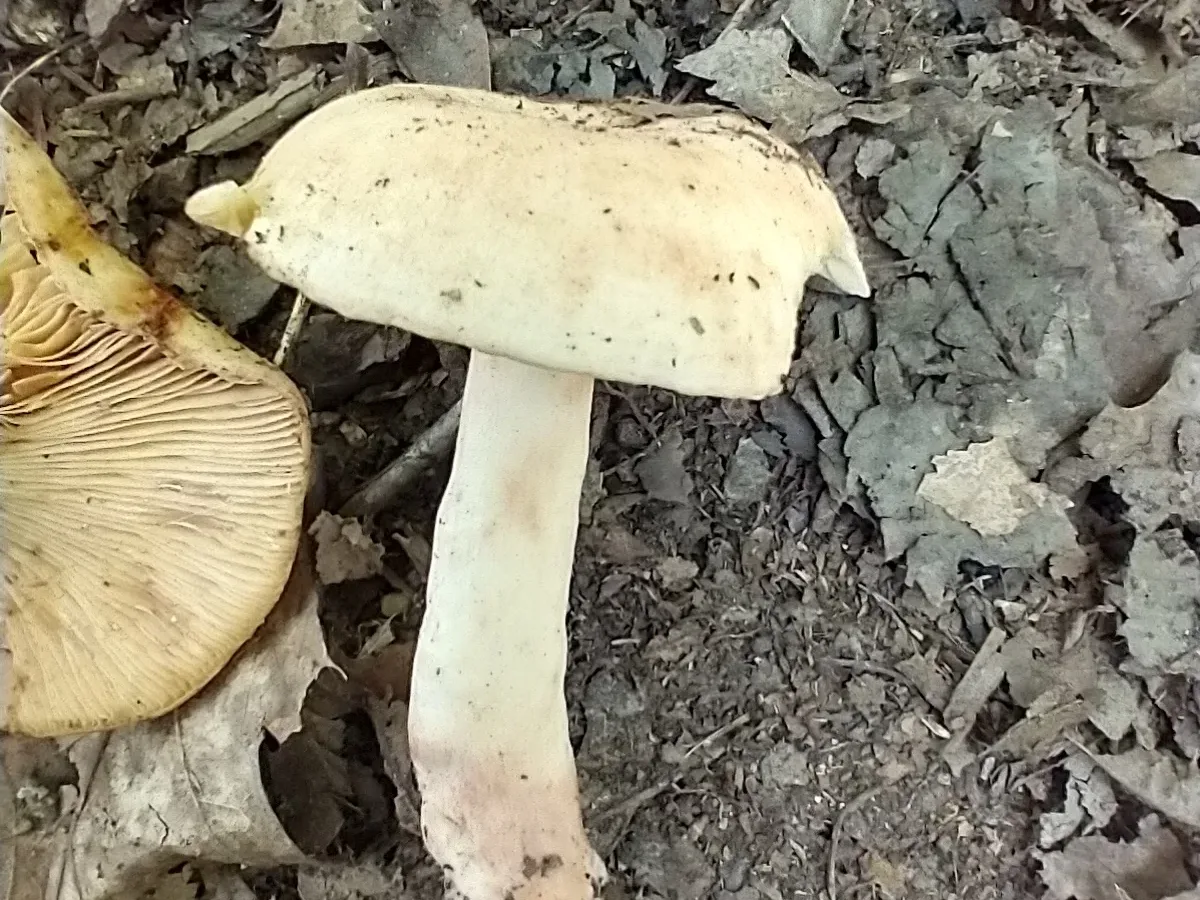 © paganka (CC BY 4.0)
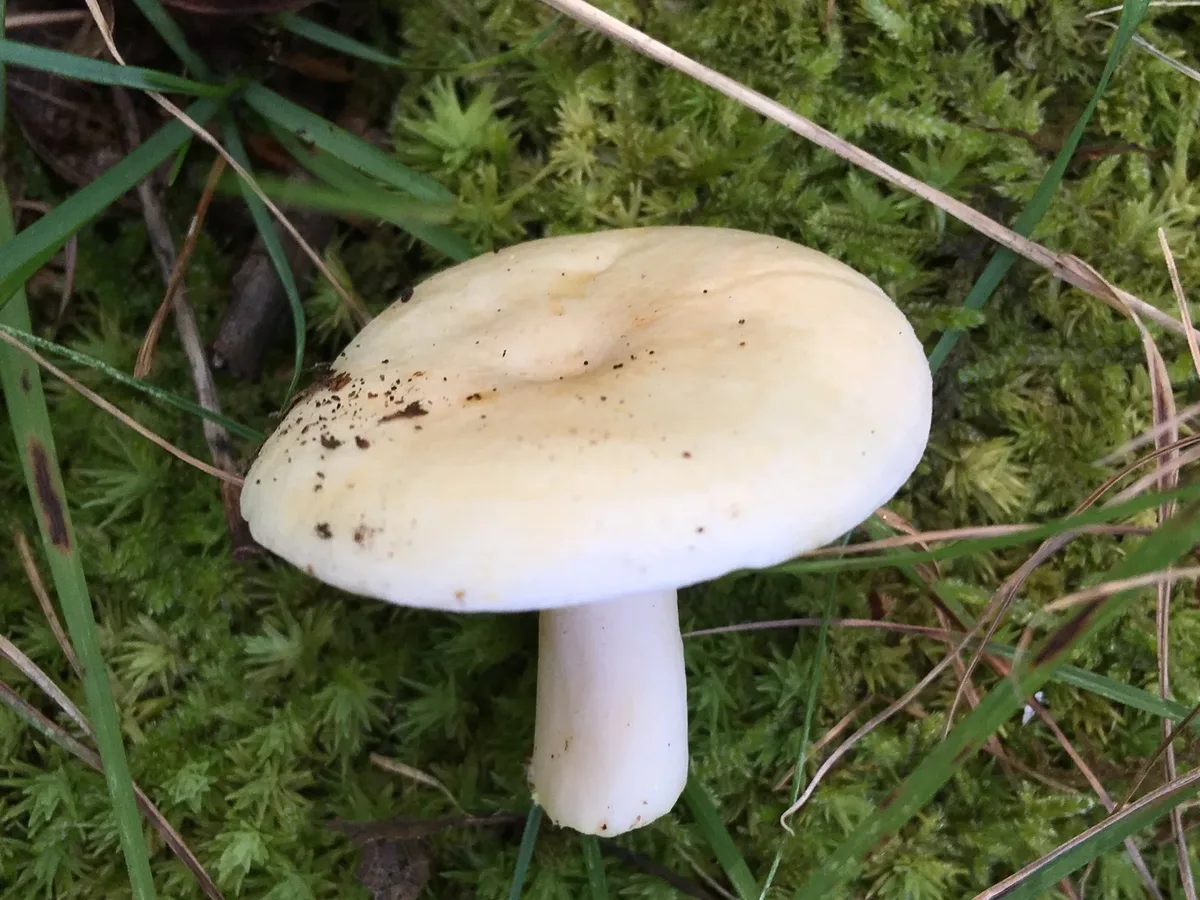 © Sigrid Jakob (CC BY 4.0)© Zoe McCormick (CC BY 4.0)Uilleam Uir (CC0)
Edible only with the right preparation - or safe for some people but not others. Learn the caveats first.
How to recognise it
Cap
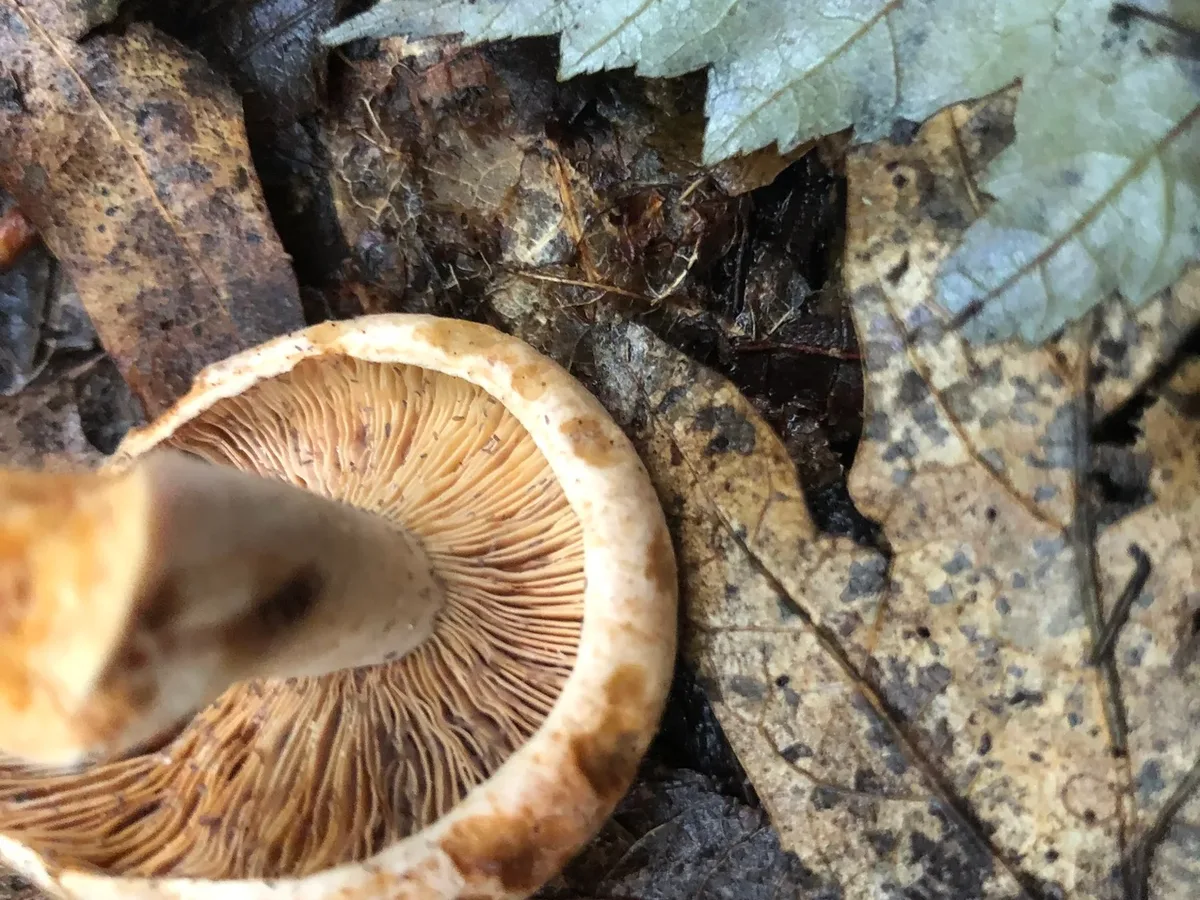
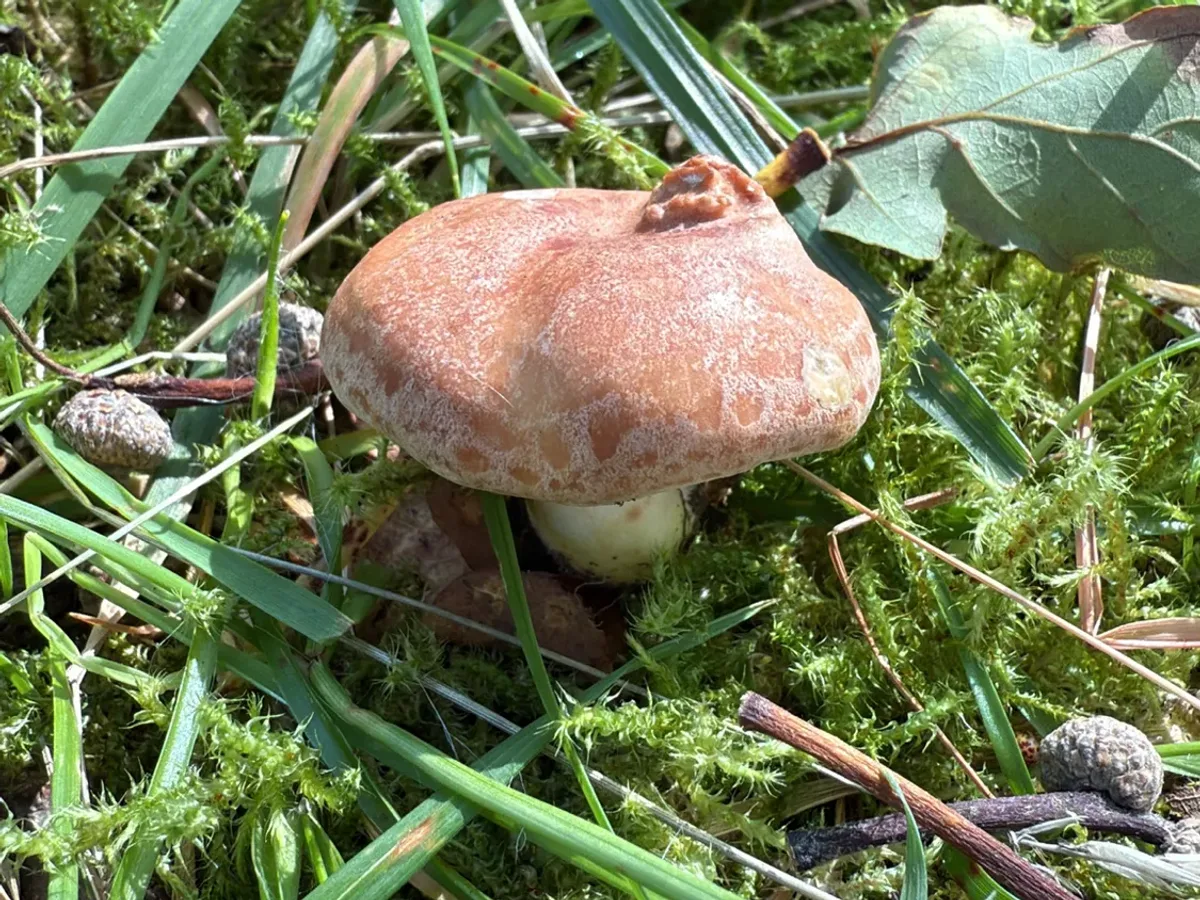
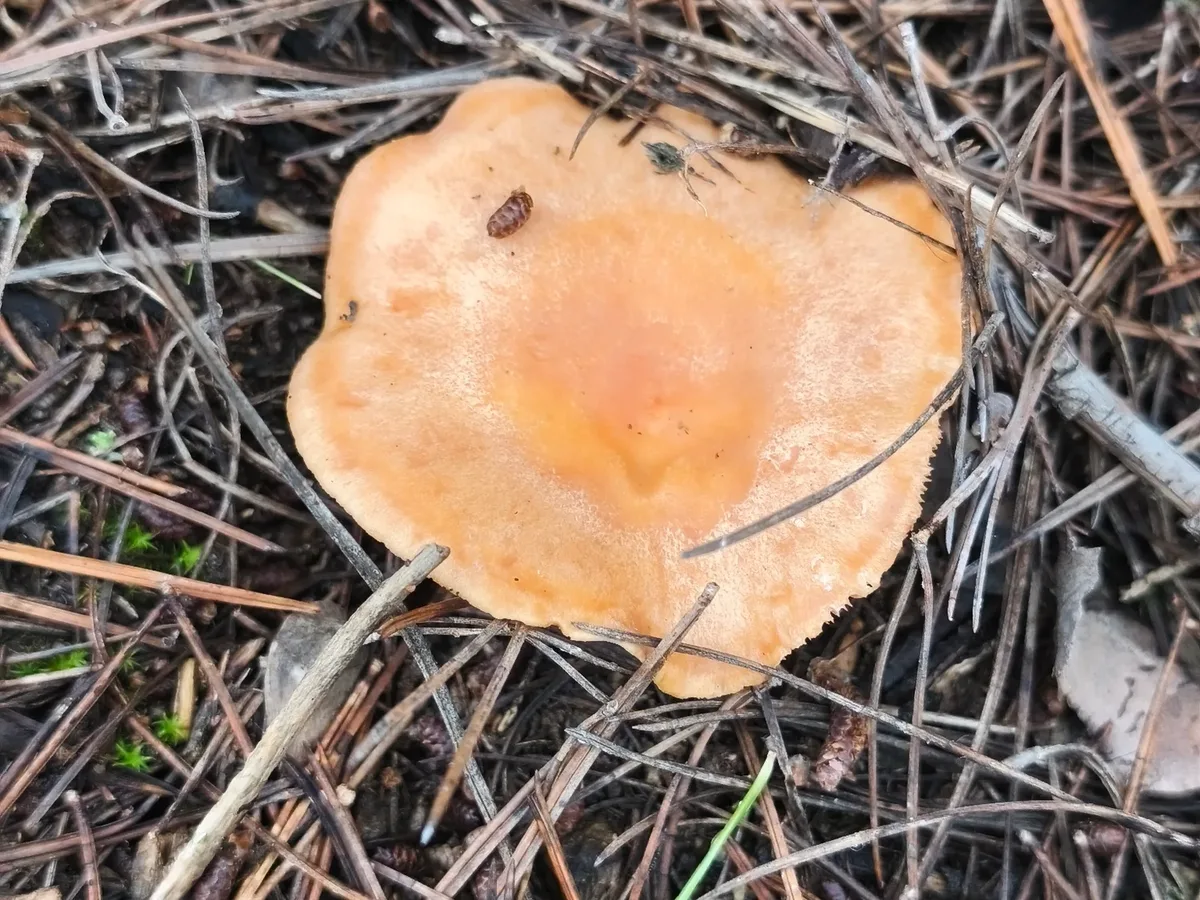
Cap 3-8 cm, convex at first with a slight central boss, later shallowly depressed to funnel-shaped; margin inrolled when young, finally spreading.
Surface dry to slightly viscid, pale ochre-buff to pinkish-salmon, usually bearing faint concentric darker zones that deepen as the cap dries.
Gills / Pores
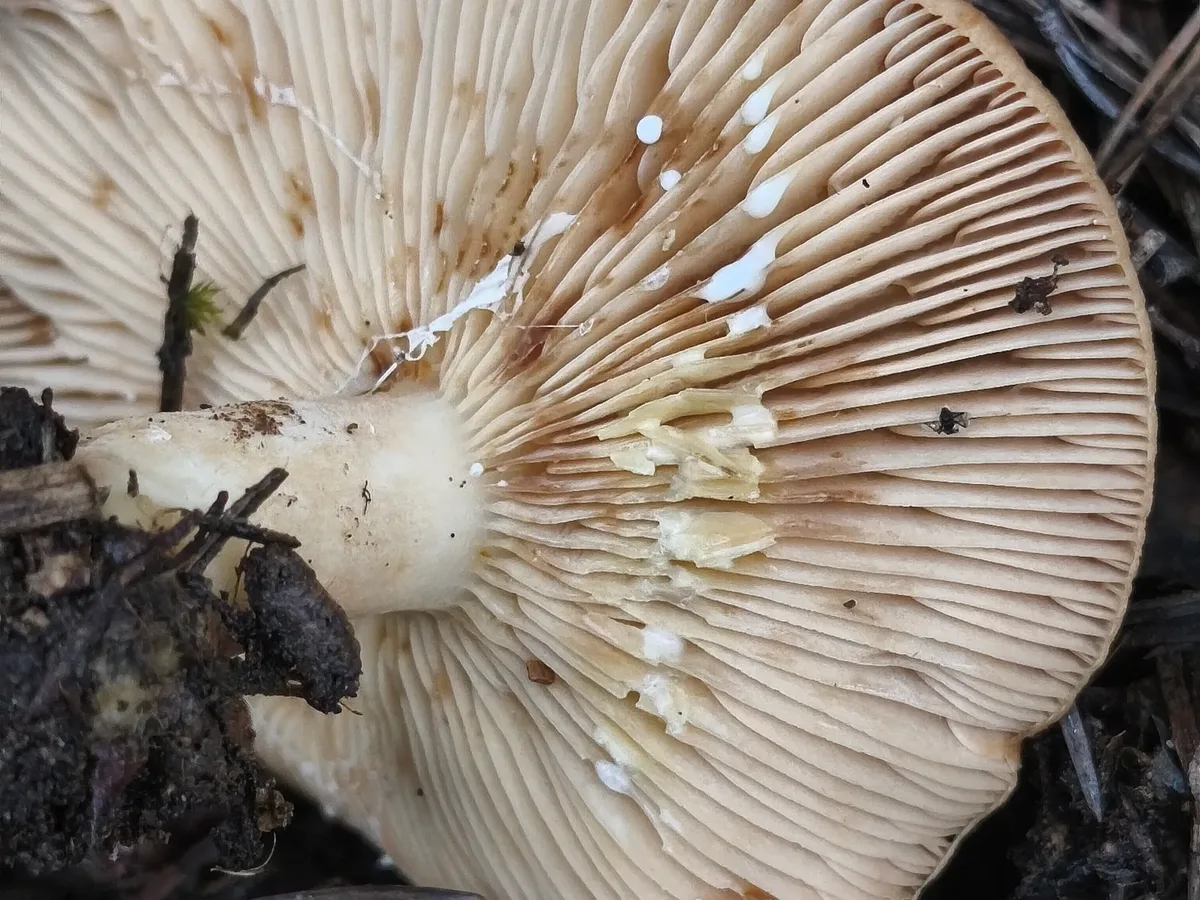
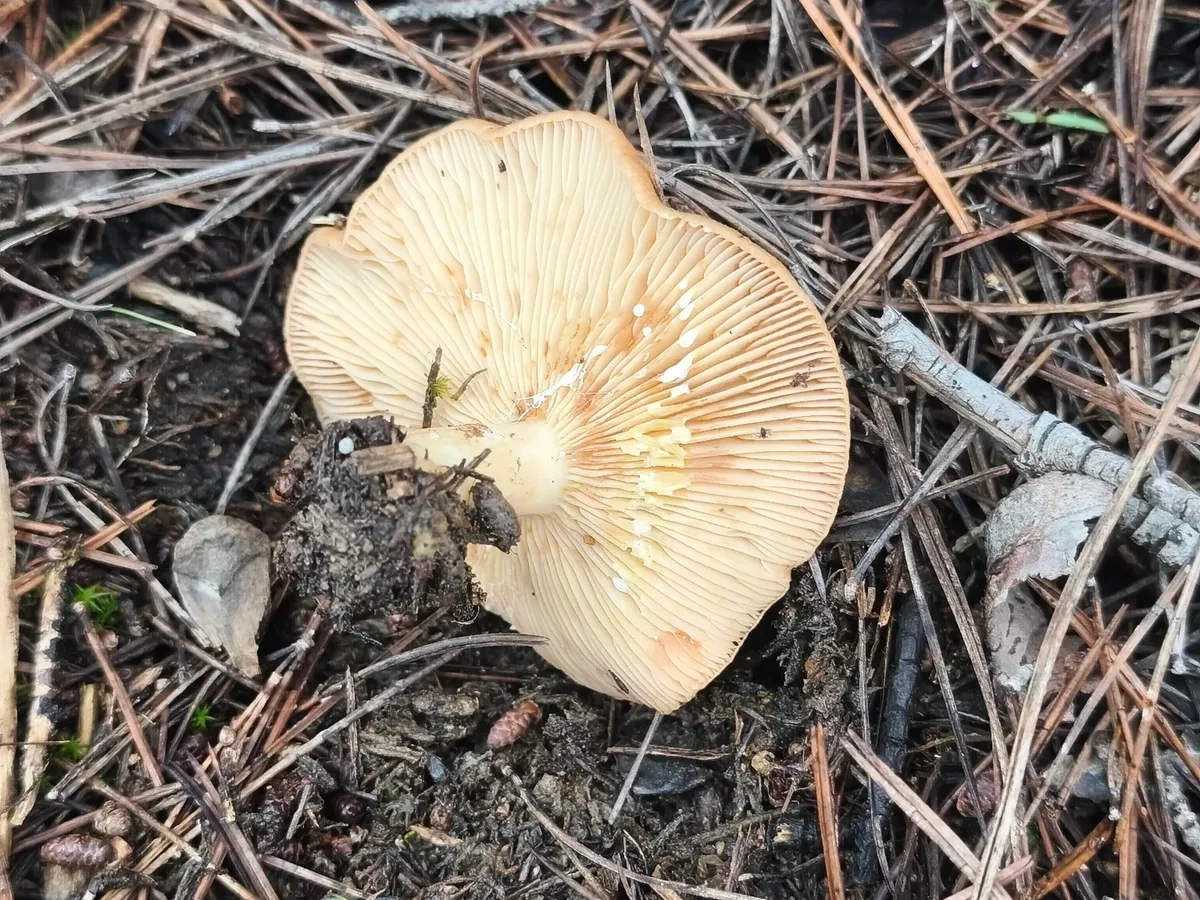
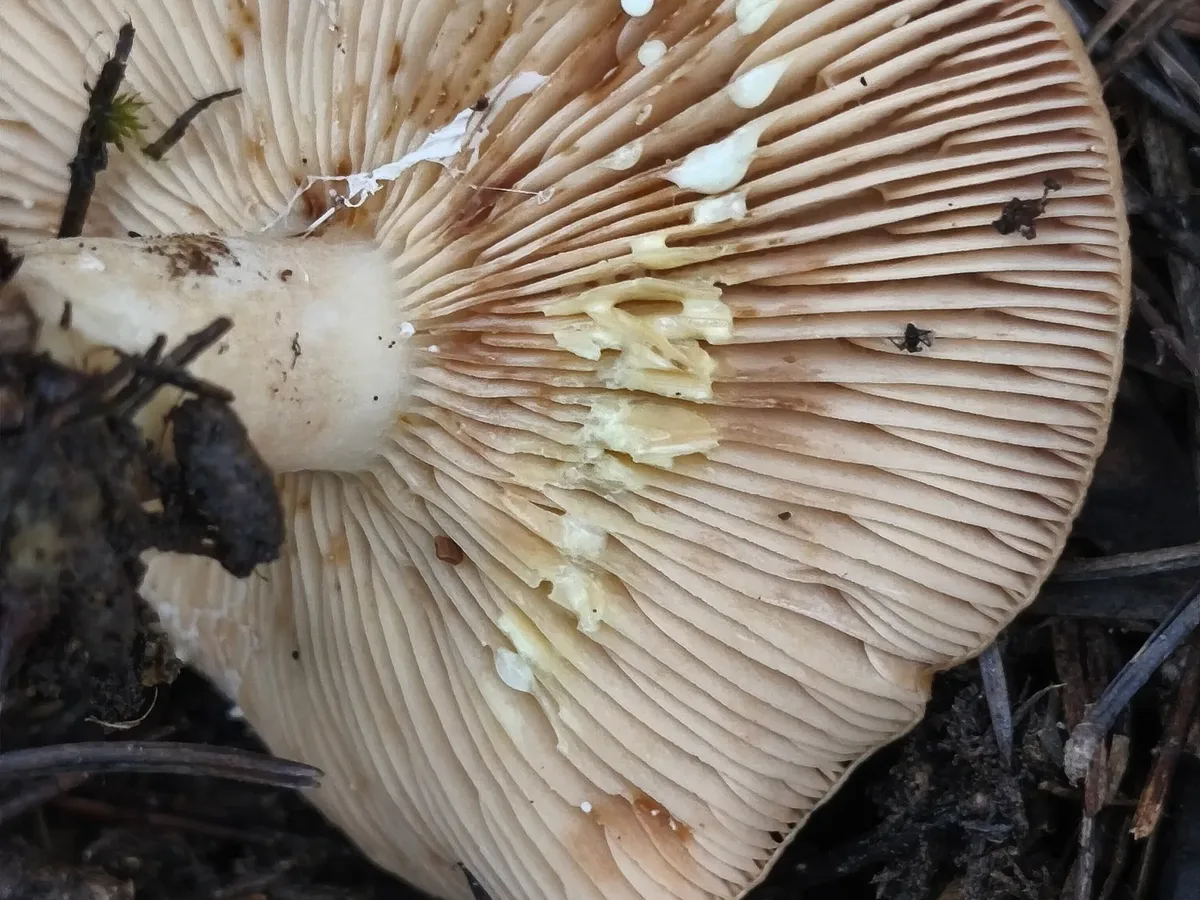
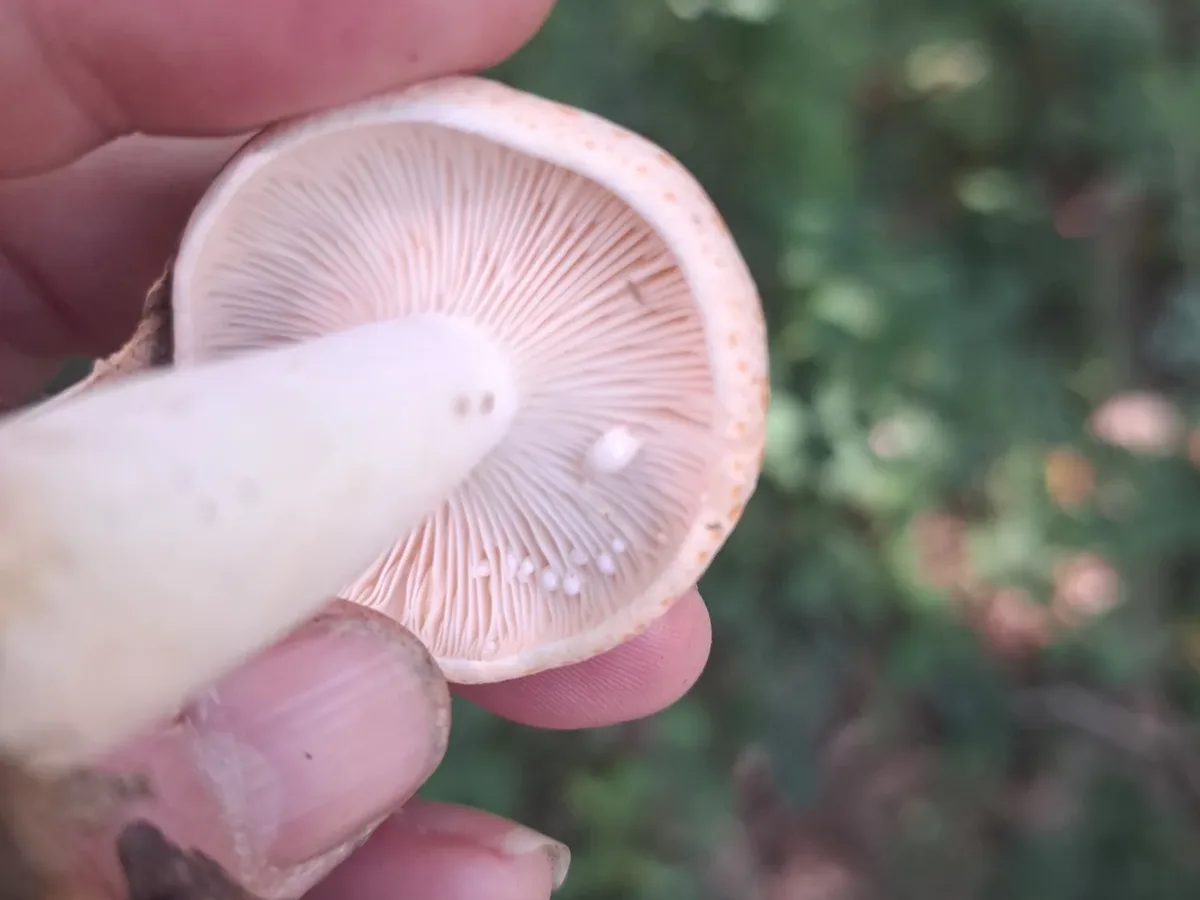
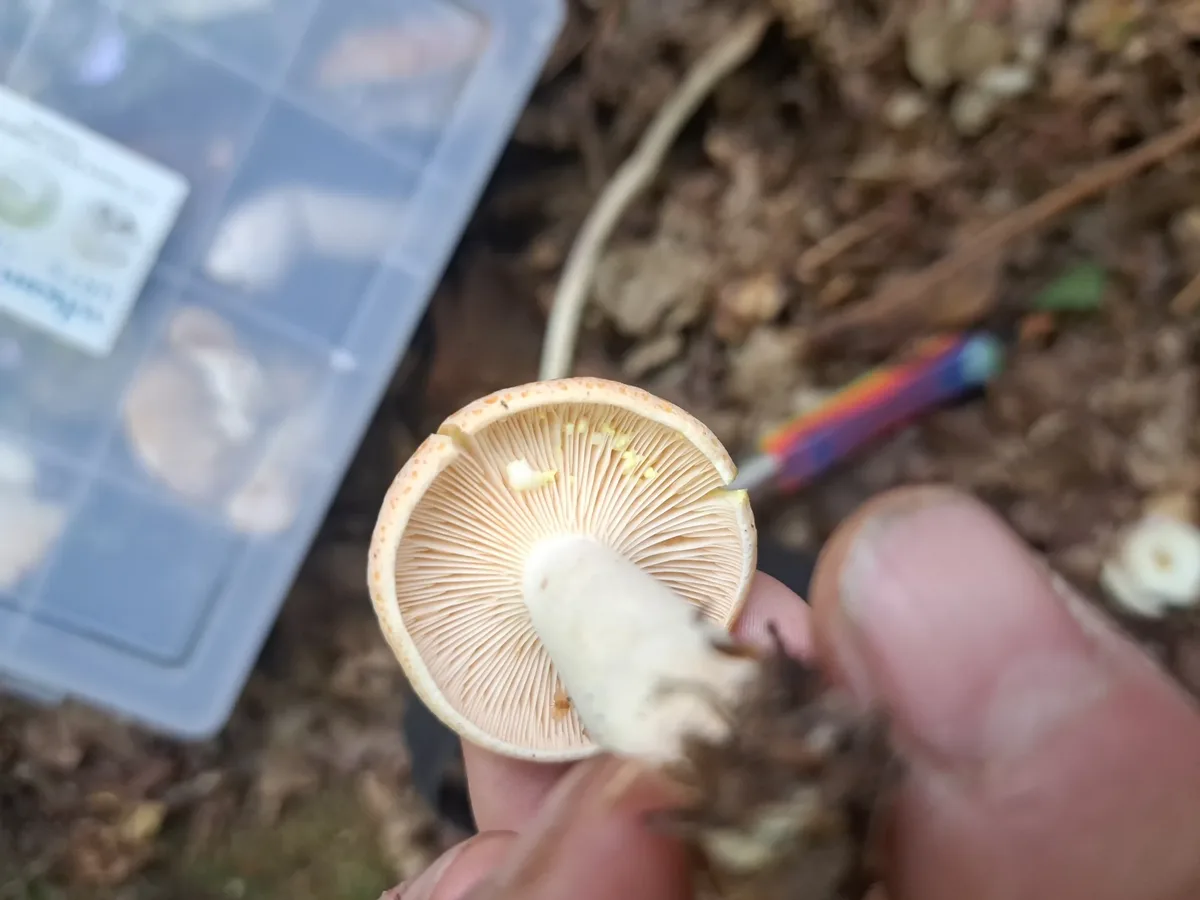
Gills crowded, adnate to slightly decurrent, white then cream, yellowing where bruised.
Stem
Stem 3-6 × 0.8-1.5 cm, cylindrical, smooth, matching the cap in colour, becoming hollow with age.
Flesh
Flesh white, firm, thin. Spore print pale cream.
The single most important field character is the latex: nick the flesh or snap a gill and watch what happens. The milk starts white but within 10-30 seconds it shifts to bright sulphur-yellow - a quick, vivid transformation that, once seen, is impossible to forget.
No other pale milkcap in European oak woodland combines the salmon-ochre cap, crowded pale gills, and this instantly yellowing milk.
Why it's dangerous
The main danger is misidentification as an edible Lactarius species. In Mediterranean oak woodland where L. deliciosus (orange latex) is culturally prized, a forager testing an unfamiliar pale milkcap might overlook or misread the latex.
Always perform the latex colour test:
- Orange/red latex = potentially L. deliciosus group (edible)
- White-turns-yellow latex = L. chrysorrheus (toxic)
- White-stays-white latex = requires further identification
The species is also toxic raw but is not lethal under normal circumstances.
Toxin
The toxins are primarily acrid sesquiterpene lactones, a class of compounds also responsible for the burning taste in Lactarius emetica and allied species. These are structural irritants of the gastrointestinal mucosa.
The exact compound profile of L. chrysorrheus is not fully characterised in the literature, but the toxic mechanism is gastrointestinal irritation rather than systemic toxicity.
There are no amatoxins, orellanin, gyromitrin, or muscarine involved.
Symptoms
Nausea, abdominal cramps, vomiting, and watery diarrhoea beginning 30 minutes to 4 hours after ingestion. Symptoms are usually self-limiting within 12-24 hours.
Dehydration may require medical attention if vomiting is prolonged, especially in children or elderly individuals.
No known fatalities attributable to this species alone.
Staying safe
Lactarius chrysorrheus causes gastrointestinal poisoning in most people, with symptoms typically appearing 30 minutes to 4 hours after ingestion: nausea, abdominal cramps, vomiting, and diarrhoea that may last 6-24 hours.
The responsible compounds are thought to be sesquiterpene lactones (including acrid compounds related to thiogeraniol derivatives) present in the latex.
The toxins appear to be heat-stable to a significant degree, meaning cooking does not reliably render it safe - do not eat this species.
Importantly, the acrid taste of the raw latex is often noted as a deterrent, but some people find the flavour mild enough to be mistaken for an edible milkcap.
The only reliable safeguard is the latex colour-change test: if the milk turns yellow, do not eat it.
Where & when it grows
Habitat
Strictly mycorrhizal with oaks - holm oak (Quercus ilex), downy oak (Q. pubescens), and pedunculate oak (Q. robur) are its preferred partners, though it has been found under beech and sweet chestnut growing near oaks.
Like most mycorrhizal fungi it is tied to living tree roots; the mycelium may have quietly threaded the soil beneath those oaks for years before a fruiting body ever appears.
Favours warm, dryish woodland and scrub on well-drained soils, and is especially at home in Mediterranean maquis and garrigue. South-facing slopes where the soil bakes and dries between rains are a good place to look.
Usually grows singly or scattered, rarely in groups.
When
Fruits from late September to December in the Mediterranean zone, peaking in October and November after the first significant autumn rains break the long summer drought.
The fruiting is closely keyed to soil moisture: the species typically needs at least 15-20 mm of rain over a 10-14 day window and soil temperatures cooling below about 17 °C.
At higher elevations it may fruit earlier; in mild coastal areas it can continue into December.
How it grows
Emerges as small convex buttons pushing through dry oak-leaf litter - easy to overlook because the pinkish-buff cap blends almost perfectly with fallen leaves.
Grows singly or in loose groups of 2-4; large clusters are unusual. In cool, dry autumn weather the fruiting bodies are firm and can persist for one to two weeks.
Fruiting conditions
Autumn fruiter closely tied to breakdown of summer drought. Requires 15-20 mm of rain over 10-14 days and cooling soil temperatures below 17 °C to initiate fruiting. Peak flush typically 1-2 weeks after the first substantial autumn rains.
Look-alikes
The greatest confusion risk is with other pale-capped milkcaps in oak woodland.
- Lactarius quietus (oak milkcap): the commonest bedfellow; white latex that does NOT turn yellow, and a distinctive oily-sweet, furniture-polish-like smell absent in L. chrysorrheus.
- Lactarius volemus (fishy milkcap): abundant white, non-yellowing latex and a strong fishy-herring odour; edible.
- Lactarius ichoratus: a similar latex-yellowing reaction but generally rarer and also considered inedible.
- Lactarius subdulcis: mild or slightly bitter taste, very sparse white non-yellowing latex, and typically smaller, thinner fruitbodies.
None of the realistic lookalikes are deadly, but careful latex observation eliminates all confusion.
Edible species with abundant white latex that does not yellow and a pronounced fishy-herring odour. Cap is typically more orange-brown than the pinkish-salmon of L. chrysorrheus. The copious non-yellowing milk and fishy smell are definitive.
Very similar cap colour and oak habitat but the latex stays white and does not turn yellow. The oak milkcap has a distinctive oily-sweet, furniture-polish (lauric acid) odour that L. chrysorrheus lacks. Considered mildly unpleasant but not seriously toxic; still, differentiation via latex colour is the key test.
Smaller, thinner, with sparse white latex that does not turn yellow. Found under beech. Mild or faintly bitter taste, not acrid. Generally considered edible though of poor quality.
A reference guide - never an edibility guarantee. When in doubt, leave it out.