Curry milkcap
Lactarius camphoratussyn. Agaricus camphoratus Bulliard, Lactarius camphoratus var. terrestris
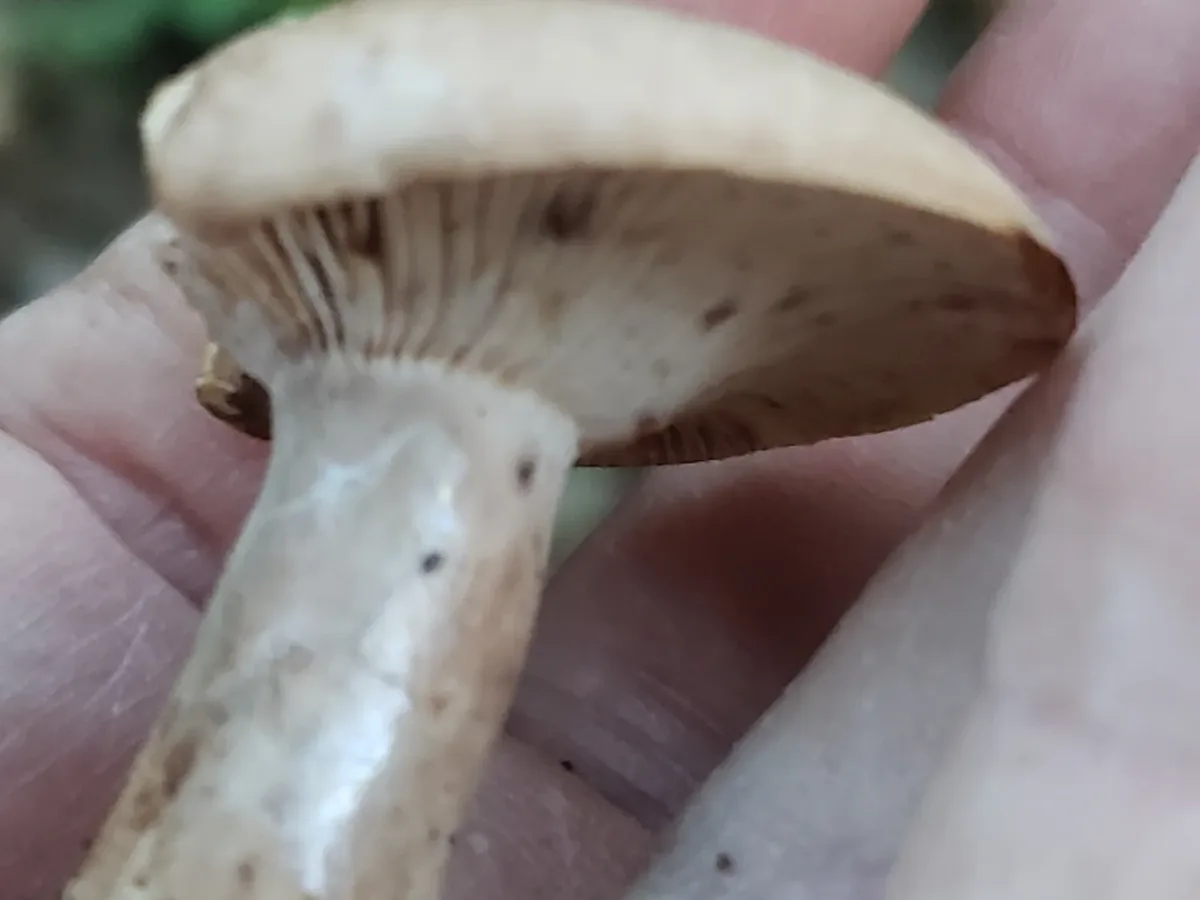 © Mark Richman (CC BY 4.0)
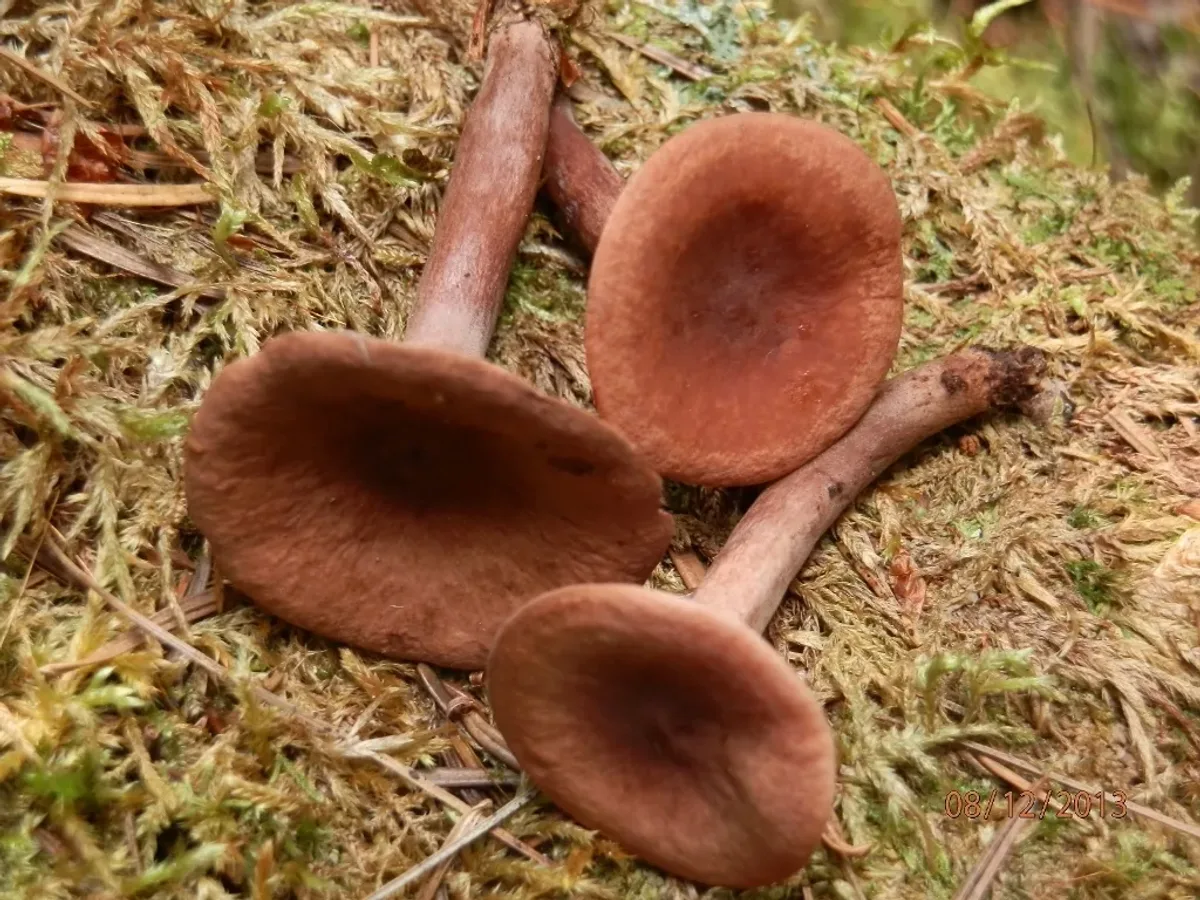 © pinonbistro (CC BY-SA 4.0)
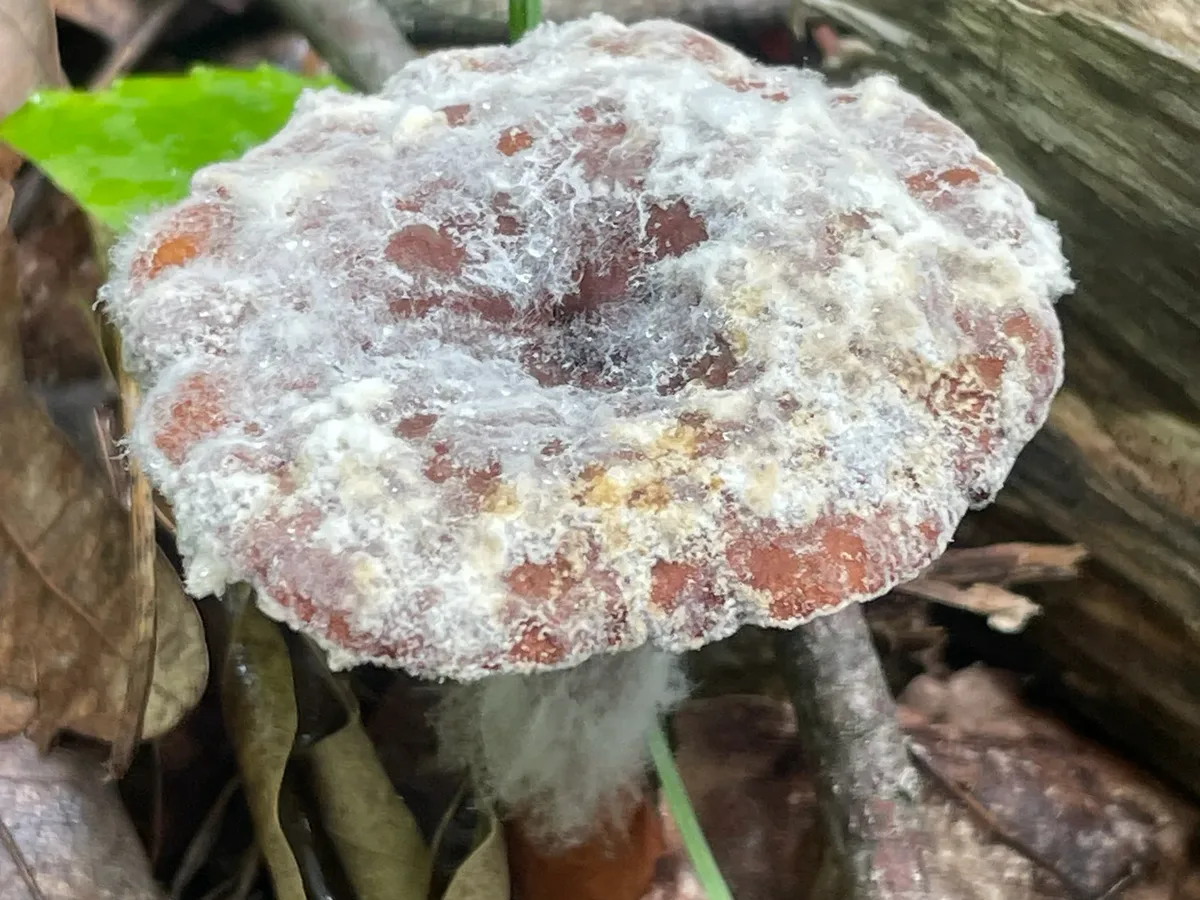 Nathan Cobbett (CC0)
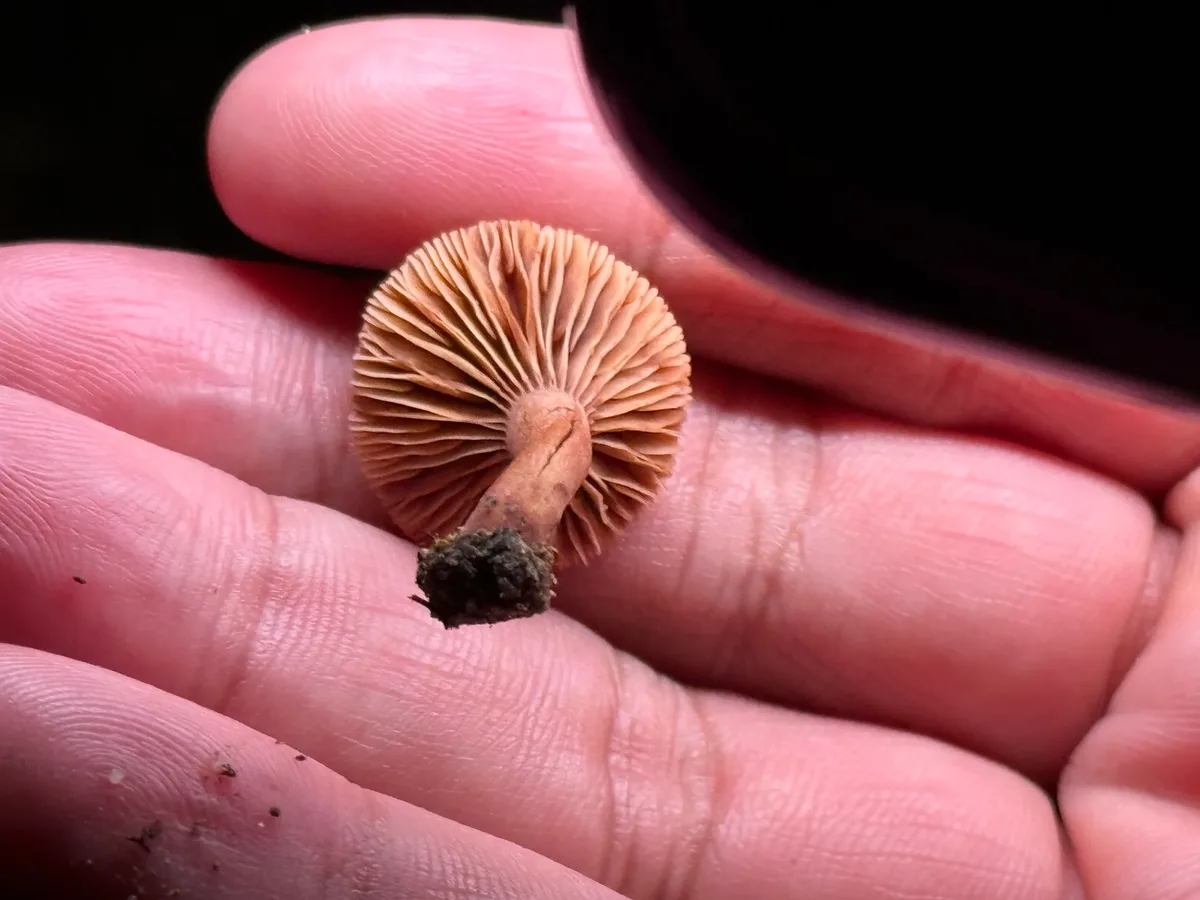 © Matt Felperin (CC BY)
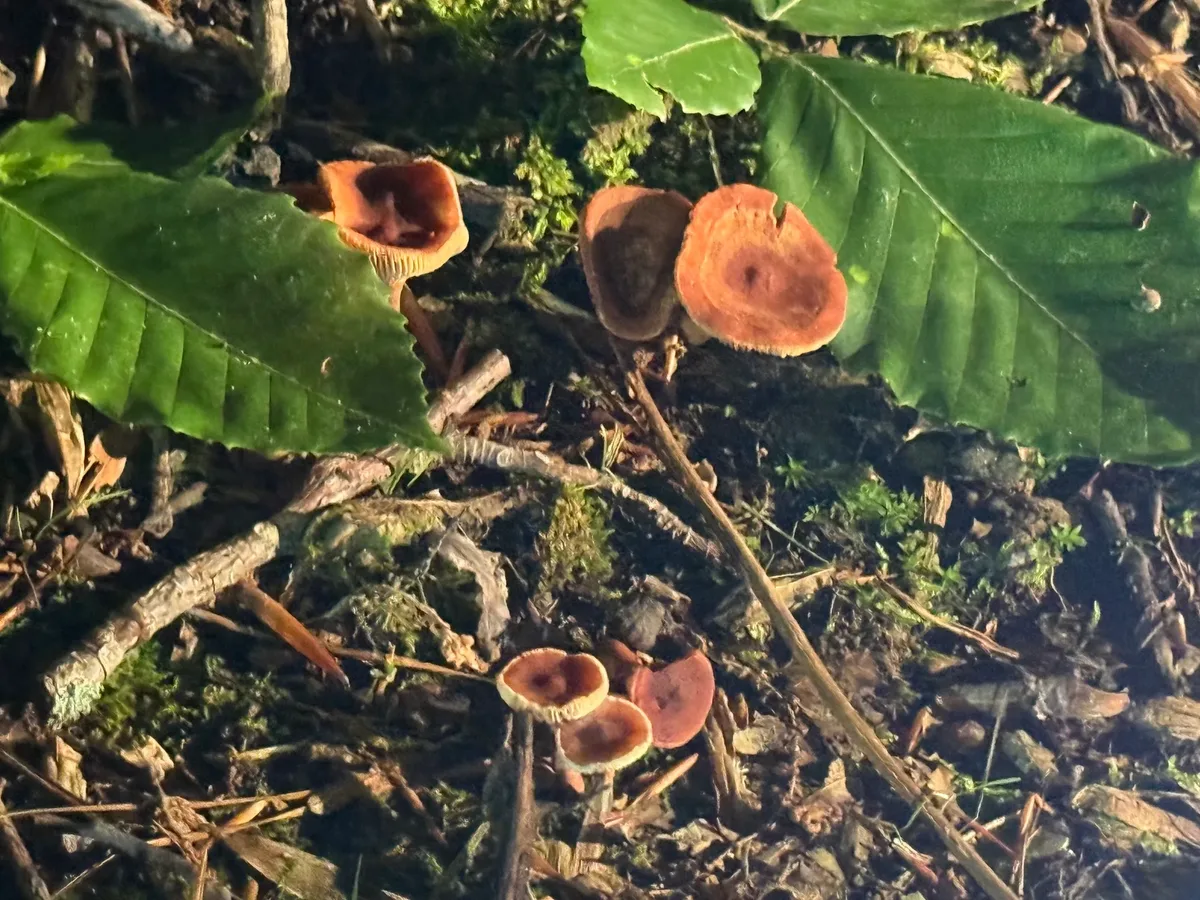 © Matt Felperin (CC BY)
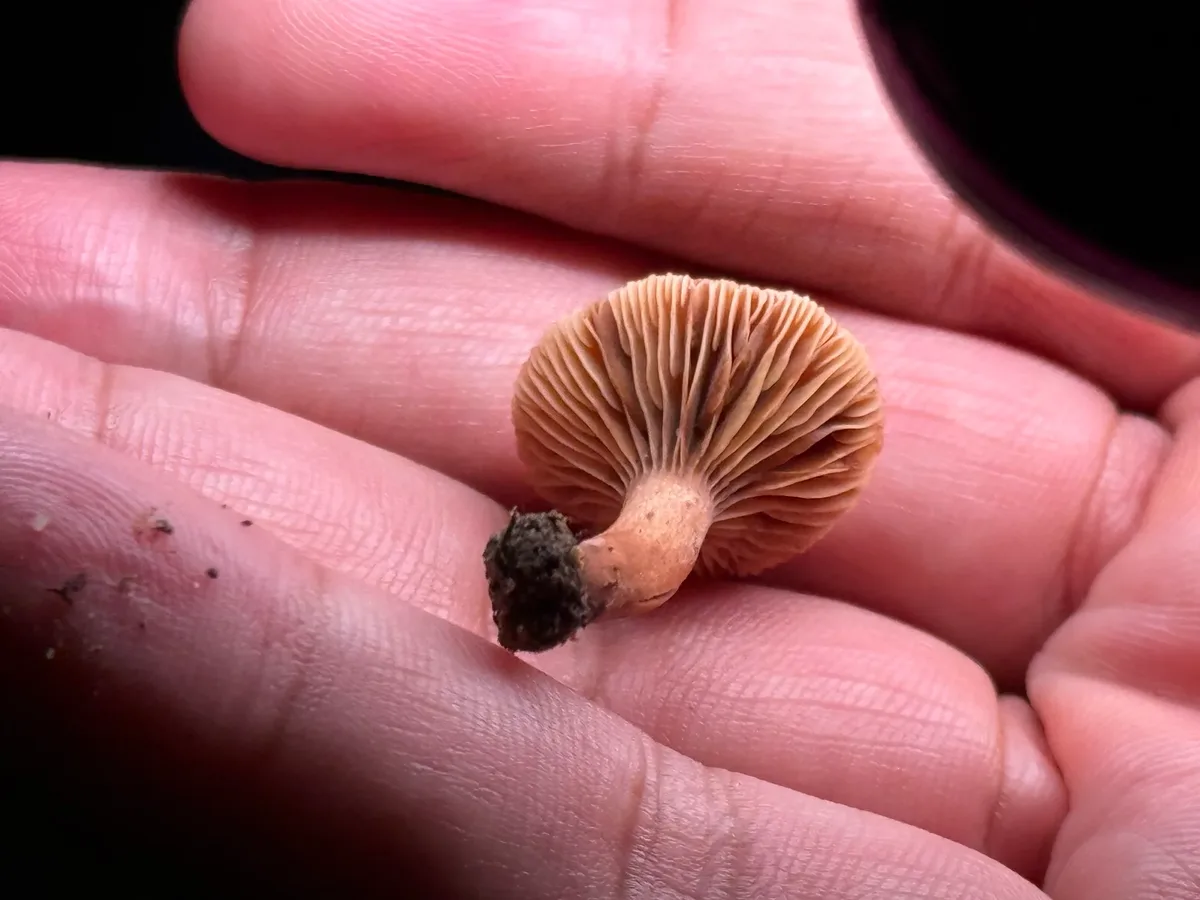 © Matt Felperin (CC BY)
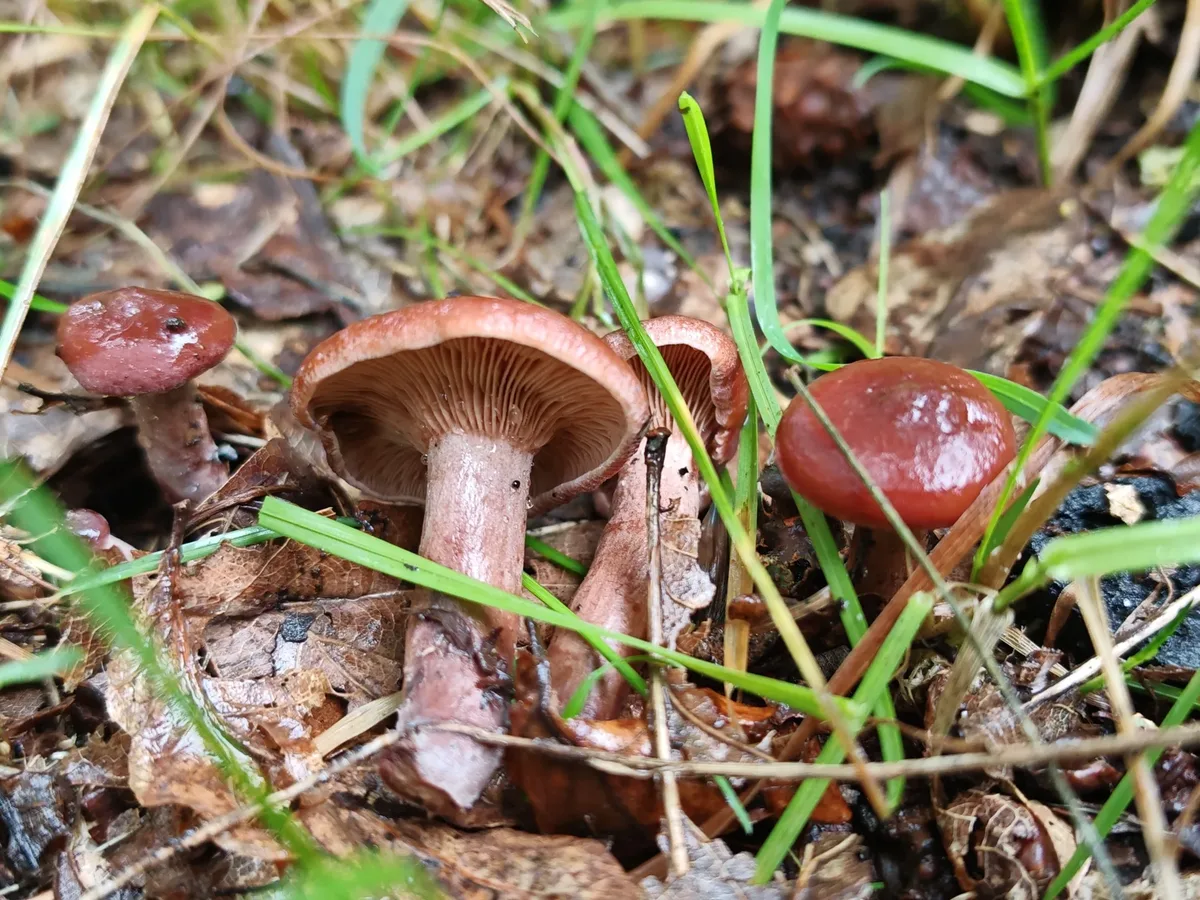 © Bohan Jia (CC BY)© Mark Richman (CC BY 4.0)© pinonbistro (CC BY-SA 4.0)
Edible only with the right preparation - or safe for some people but not others. Learn the caveats first.
Never eat a mushroom you are not 100% sure of - check the look-alikes below, and always cook wild mushrooms.
How to recognise it
Lactarius camphoratus is one of the smaller milkcaps, cap typically 2-6 cm, and its most remarkable quality has nothing to do with how it looks.
Smell
Pick one up and you will immediately notice a warm, complex aroma that foragers variously describe as curry, fenugreek, dried chicory, or spiced hay. This scent intensifies dramatically when the mushroom dries, becoming a sweet coumarin fragrance that lingers long on the fingers.
Cap
Dry and slightly velvety, uniformly dark brick-red to reddish mahogany-brown, with a persistent central umbo - a rounded boss - that stays prominent even in fully opened specimens; the centre never fully flattens.
Gills
Start pale flesh-pink and age to ochre-brown or cinnamon, staining reddish-brown when damaged.
Stem
Slender, 3-6 cm tall, matching the cap in colour.
Flesh
Break the flesh and a scanty to moderate amount of white latex wells up; it stays white on air contact and does not stain the flesh. The flesh itself is reddish-brown just under the cap skin, whitish within.
Spore print is white to very pale cream.
Why it's dangerous
The principal hazard is misidentification. Small, reddish-brown Cortinarius species sharing the same conifer woodland habitat - particularly Cortinarius rubellus - are among the most dangerous mushrooms in European forests.
Orellanine poisoning is insidious: symptoms appear 2-21 days after ingestion, by which time severe, irreversible kidney damage has occurred.
The only reliable safeguard is confirming white latex from broken flesh before accepting any reddish-brown small mushroom as a milkcap. Never collect reddish-brown small mushrooms from conifer forests unless you can demonstrate latex flow.
Toxin
Lactarius camphoratus itself does not contain amatoxins, orellanine, gyromitrin, or other systemically dangerous compounds.
The acrid taste comes from sesquiterpene compounds (including camphor-type sesquiterpenoids) present in the latex, which can irritate the mouth and gastrointestinal tract if eaten raw or in significant quantity. These compounds are partially volatile and diminish with thorough cooking or drying.
Mild GI upset (nausea, stomach irritation) has been reported after consuming poorly prepared L. camphoratus in quantity, but serious or life-threatening poisoning from this species is not documented in the mycological literature.
Symptoms
If consumed raw or in significant fresh quantity, mild to moderate gastrointestinal irritation may result:
- Burning sensation in the mouth and throat
- Nausea
- Possible stomach upset
These are self-limiting and resolve without medical treatment in most cases. Serious poisoning attributable solely to L. camphoratus is not documented.
The primary danger is misidentification - especially confusing it with a deadly Cortinarius species - rather than the species itself.
Staying safe
Lactarius camphoratus carries two distinct safety concerns that must both be understood before any use.
First, the species itself is an irritant: the latex and flesh contain lactarane sesquiterpenoid compounds that cause a burning sensation in the mouth and throat and can produce nausea and gastrointestinal irritation. This is why the mushroom must never be eaten raw.
The irritant compounds are partially volatile and diminish with thorough drying or cooking, but the margin is not zero - even dried material should be used in small quantities as a spice, not consumed in large amounts as a vegetable.
The single most important field check is latex confirmation: break the cap edge or a gill fork cleanly with a fingernail or knife and watch for white milk to well up within a few seconds. This white latex is the defining diagnostic feature of all milkcaps and its presence is what separates Lactarius from every deadly lookalike in the habitat.
If no liquid appears, or if the flesh simply discolours without producing fluid, you do not have a milkcap - stop and discard the specimen.
Second, and far more serious, is the risk of misidentifying this species as Cortinarius rubellus (deadly webcap) or Cortinarius orellanus (fool's webcap). Both webcaps grow in exactly the same conifer and mixed woodland habitats, both can display a warm reddish-brown to rufous-brown cap of comparable size, and both are capable of passing a casual visual check by an inexperienced forager.
The critical difference is that Cortinarius species produce absolutely no latex.
Orellanine, the toxin in these webcaps, is one of the most insidious poisons in European fungi: it is nephrotoxic and acts slowly, with symptoms - fatigue, intense thirst, and eventually kidney failure - typically appearing 2 to 21 days after ingestion. By the time symptoms emerge, severe and often irreversible kidney damage has already occurred.
There is no antidote, and many cases require dialysis or kidney transplant. The delayed onset means victims frequently cannot recall what they ate.
The latex check is therefore not optional formality - it is the only reliable field test that excludes these deadly species.
In summary:
- 1Always confirm white latex flows from broken flesh before accepting any reddish-brown small woodland mushroom as a milkcap - absence of latex is a hard stop.
- 2Do not eat raw - the acrid lactarane sesquiterpenoids cause mouth and throat burning and gastrointestinal irritation.
- 3When using dried caps as a culinary spice, use small quantities as seasoning, not as a bulk ingredient.
- 4The deadly misidentification risk is Cortinarius rubellus and C. orellanus, both of which cause delayed-onset irreversible kidney failure from orellanine - neither produces any latex.
- 5If any doubt about identity remains after the latex test and a complete feature check, do not collect.
Where & when it grows
Habitat
This is a versatile and widely distributed species. It fruits under conifers - Scots pine, Norway spruce, and silver fir are all suitable hosts - and also under beech and oak in mixed woodland.
Its lack of dependence on a single tree partner is part of why it is among the most frequently encountered small milkcaps in Europe.
Look for it in needle-duff and leaf litter on moderately acidic soils: managed pine plantations, mountain spruce forests, and lowland mixed woodland are all productive hunting grounds. It often fruits in loose troops, occasionally in generous numbers along forest paths and in rides.
In Scandinavia and northern Europe it is most associated with pine and spruce; further south it turns up regularly under beech as well.
When
Fruiting begins in July or early August after the first substantial summer rains and continues well into autumn - typically until November in mild years.
The peak across central and western Europe is August through October, placing it squarely in the heart of the main mushroom season.
It is a reliably consistent fruiter: established sites tend to produce annually wherever the soil stays moist.
How it grows
Grows scattered to gregarious, usually in loose troops of several to many individuals, sometimes quite densely in favourable spots.
It is not caespitose - fruitbodies emerge separately from their own mycorrhizal threads rather than from a shared base. Like all milkcaps it is tightly coupled to living tree roots and does not grow on wood or dung.
Once rain soaks warm forest soil, fruitbodies can emerge within four to six days and persist for a week or more if conditions stay humid.
Fruiting conditions
Responds to summer and early-autumn rains with a short flush lag; requires moist but not waterlogged forest floor; tolerates cooler soil temperatures and fruits into early frost periods
Look-alikes
Several reddish-brown milkcaps occur in the same habitats and can be confused with L. camphoratus.
- Lactarius rufus (rufous milkcap) is closely similar in cap colour and habitat, but is noticeably larger (cap 4-10 cm), has a much more persistent and prominent umbo, and produces copious white acrid latex; it lacks the curry/fenugreek smell.
- Lactarius subdulcis (beech milkcap) is similar in size and colour but tends toward a more orange-cinnamon-brown cap, grows almost exclusively under beech, and has a mild, sweet taste with only slightly acrid or non-acrid latex; it also lacks the distinctive curry aroma.
- Lactarius hepaticus (liver milkcap) is virtually confined to Scots pine, is similarly sized, and has a mildly acrid white latex that may stain the gills with a faint pinkish-yellowish tint; it does not have the characteristic camphor/curry scent.
None of these milkcap lookalikes is deadly.
THE CRITICAL SAFETY RISK: Cortinarius rubellus (deadly webcap), and to a lesser extent Cortinarius orellanus, grow in the same boreal and mixed woodland habitats and can have a warm reddish-brown to rufous-brown cap that superficially resembles a small milkcap.
Both are DEADLY POISONOUS, causing irreversible kidney failure from orellanine toxin, with symptoms delayed 2-21 days after ingestion. They produce NO milk whatsoever - when flesh is broken, no liquid flows.
Always break the cap or stem and confirm that white latex oozes out before accepting any reddish-brown small mushroom as a milkcap.
Cortinarius species also have rusty-brown spores that deposit as a rusty-brown powder on the stem's ring zone, a cobweb-like (cortinate) veil when young, and gills that age to rusty-brown. If any of these features are present and no latex flows, do not collect.
Grows in the same boreal pine and spruce forests and has a similar reddish-brown cap at a similar small-to-medium size. DEADLY - orellanine toxin causes irreversible kidney failure, symptoms delayed 2-21 days. Produces NO latex: break the flesh and confirm white milk flows before treating any reddish-brown small woodland mushroom as a milkcap. Cortinarius has rusty-brown spores deposited on the stem, a cobweb-like (cortinate) veil when young, and gills that age rusty-brown. No milk = do not collect.
Another deadly orellanine-containing webcap; tawny-orange to rufous-brown cap, dry surface, found in broadleaf and mixed woods. Again produces NO latex. Gills broadly spaced, ochre-tawny ageing rusty-brown; spore print rusty-brown. The absence of any latex is the definitive exclusion.
Similar size but cap tends more orange-cinnamon-brown; found almost exclusively under beech (Fagus sylvatica); latex mild or only faintly acrid; no curry or fenugreek smell. The beech association and lack of scent are the main distinguishing points.
Very similar reddish-brown cap; confined to Scots pine woodland; latex white, may show a faint yellowish tinge on the gills; no distinctive curry aroma; can be identified with certainty by the pinkish gill reaction with KOH and its strict pine association.
Larger (cap 4-10 cm), copious white acrid latex, very pronounced persistent central umbo, no curry smell. Grows primarily under Scots pine and spruce. The size, abundant latex, and lack of aromatic smell distinguish it reliably.
A reference guide - never an edibility guarantee. When in doubt, leave it out.