Brick-red deceiver
Laccaria lateritiasyn. Agaricus lateritius Berk. & Broome (1883), Clitocybe lateritia (Berk. & Broome) Sacc. (1887)
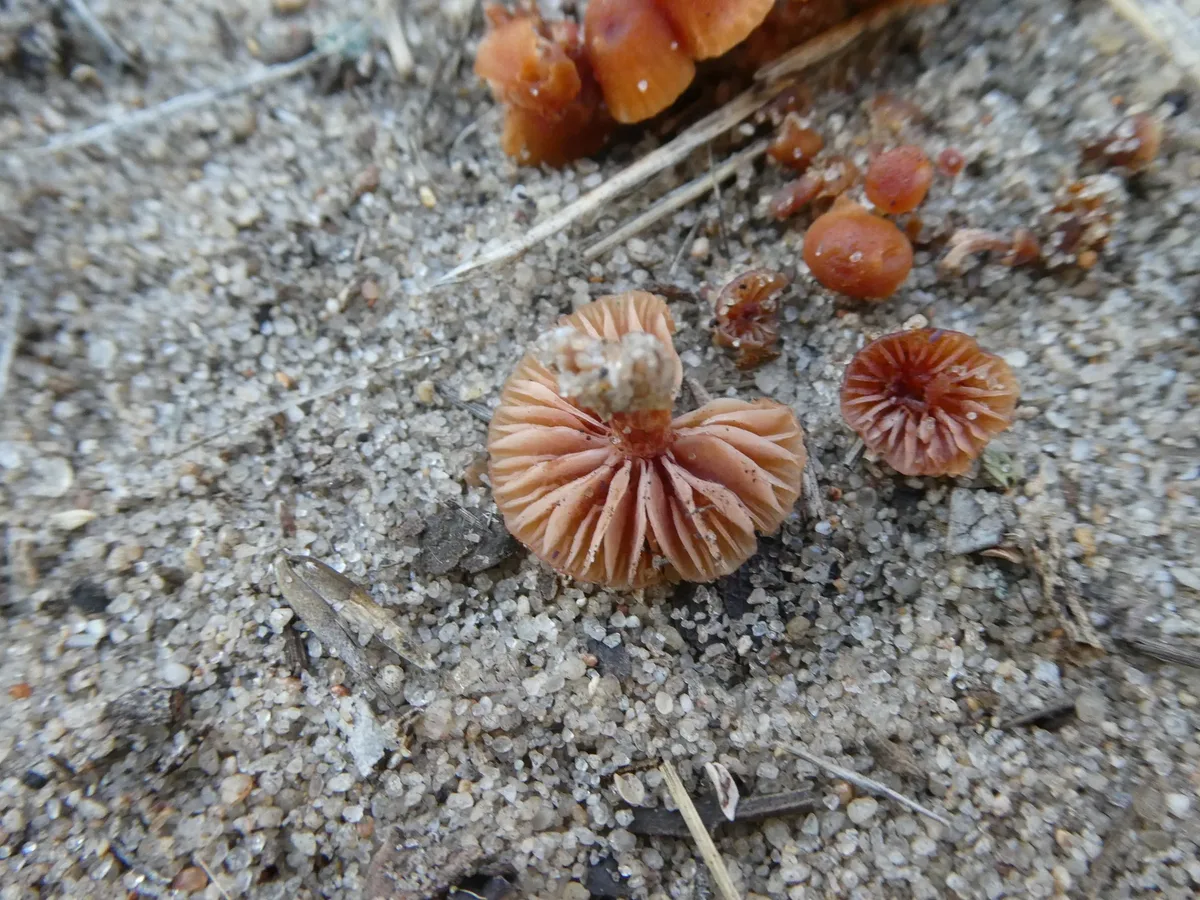 © Shelley James (CC BY 4.0)
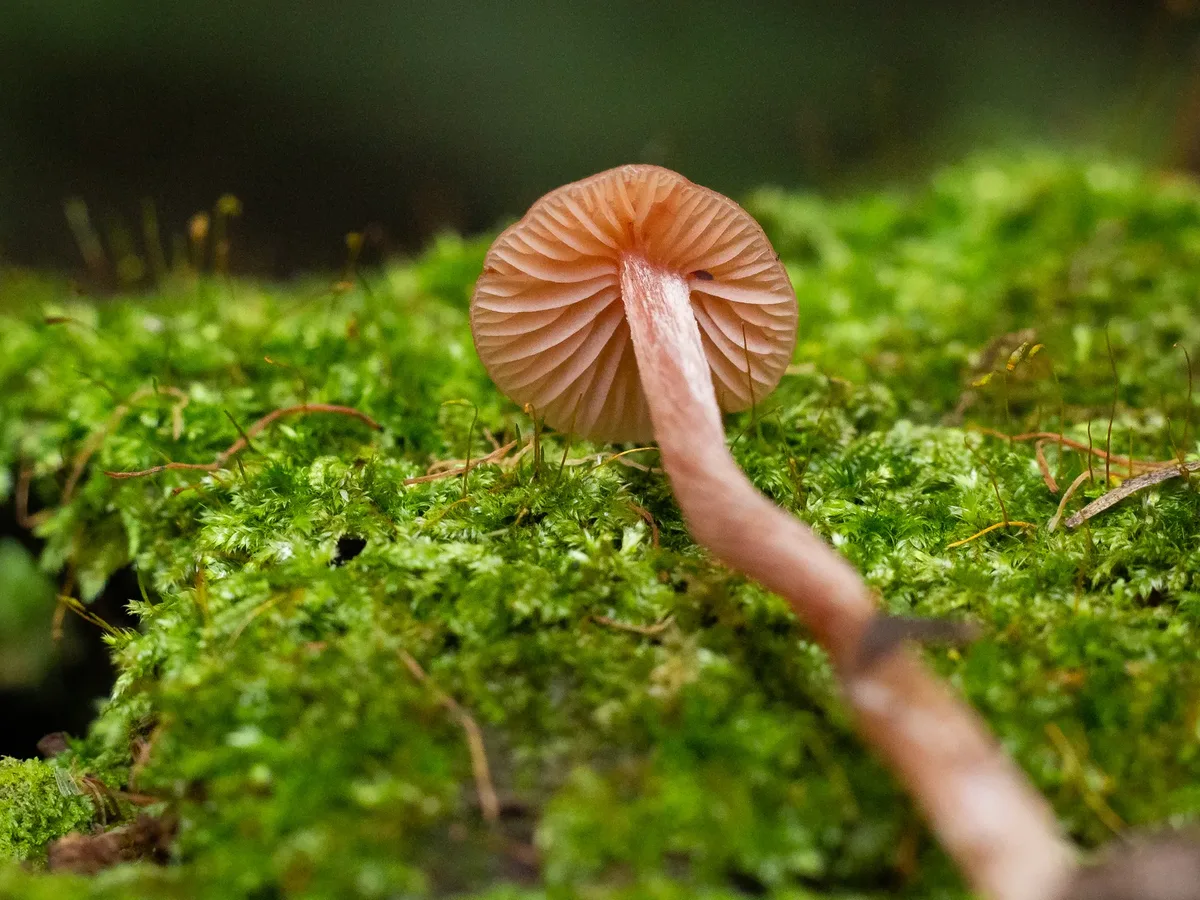 © Denis Zabin (CC BY 4.0)
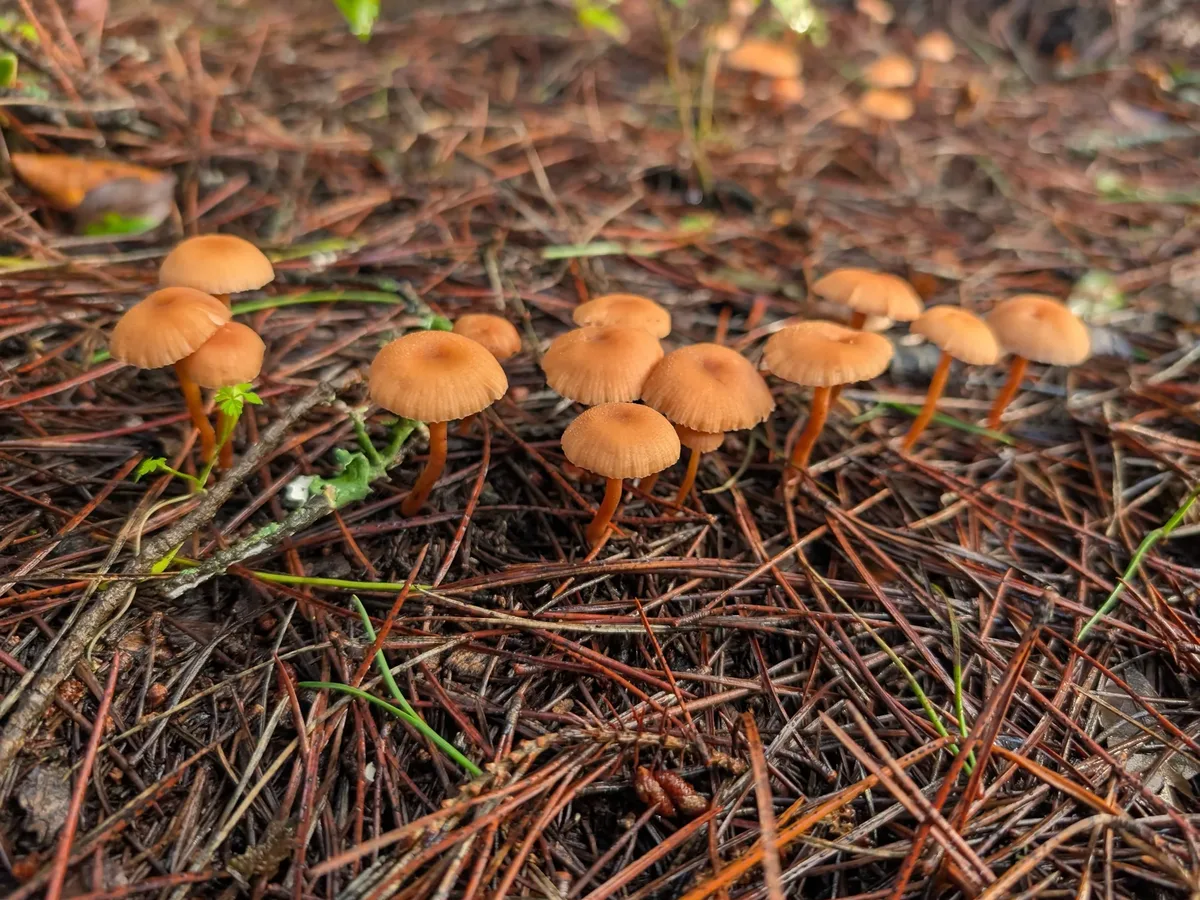 © pmgaspar (CC BY)
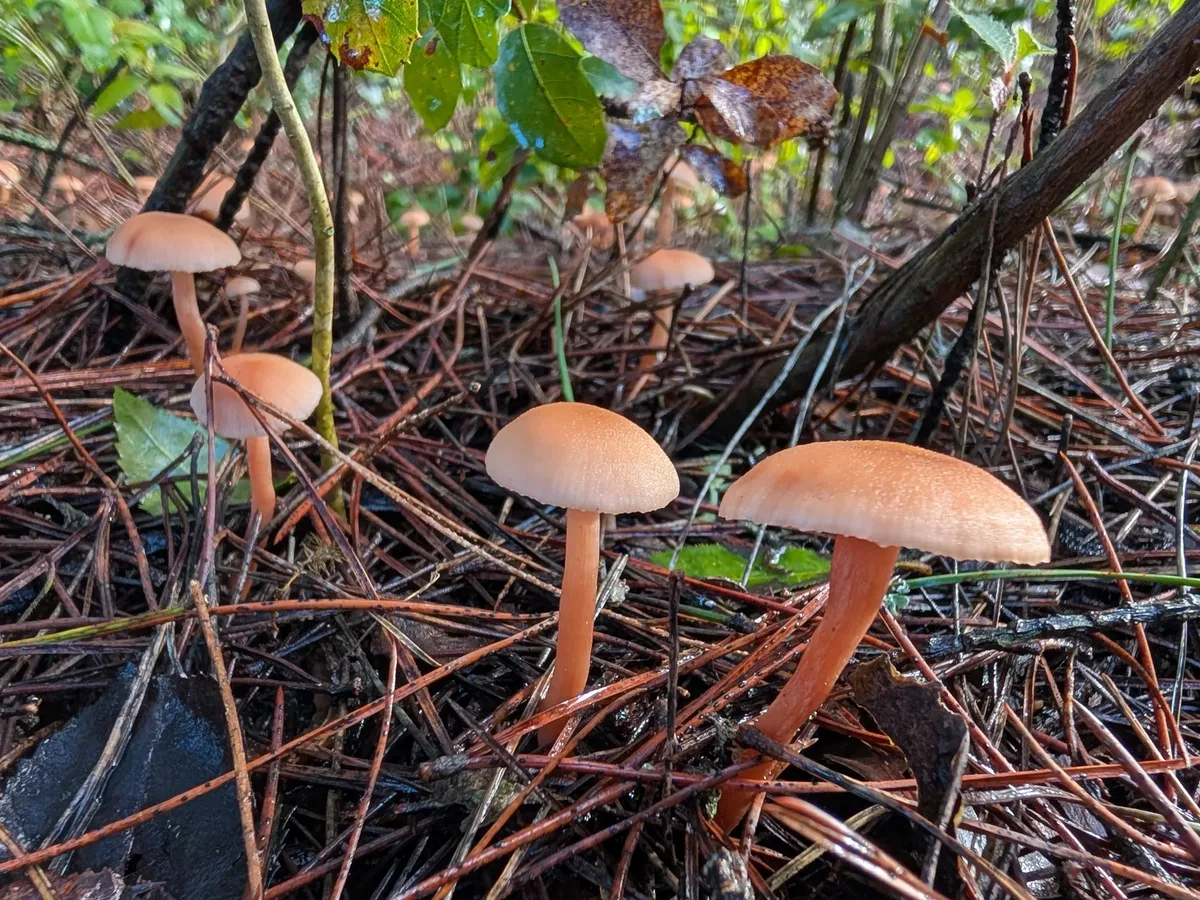 © pmgaspar (CC BY)
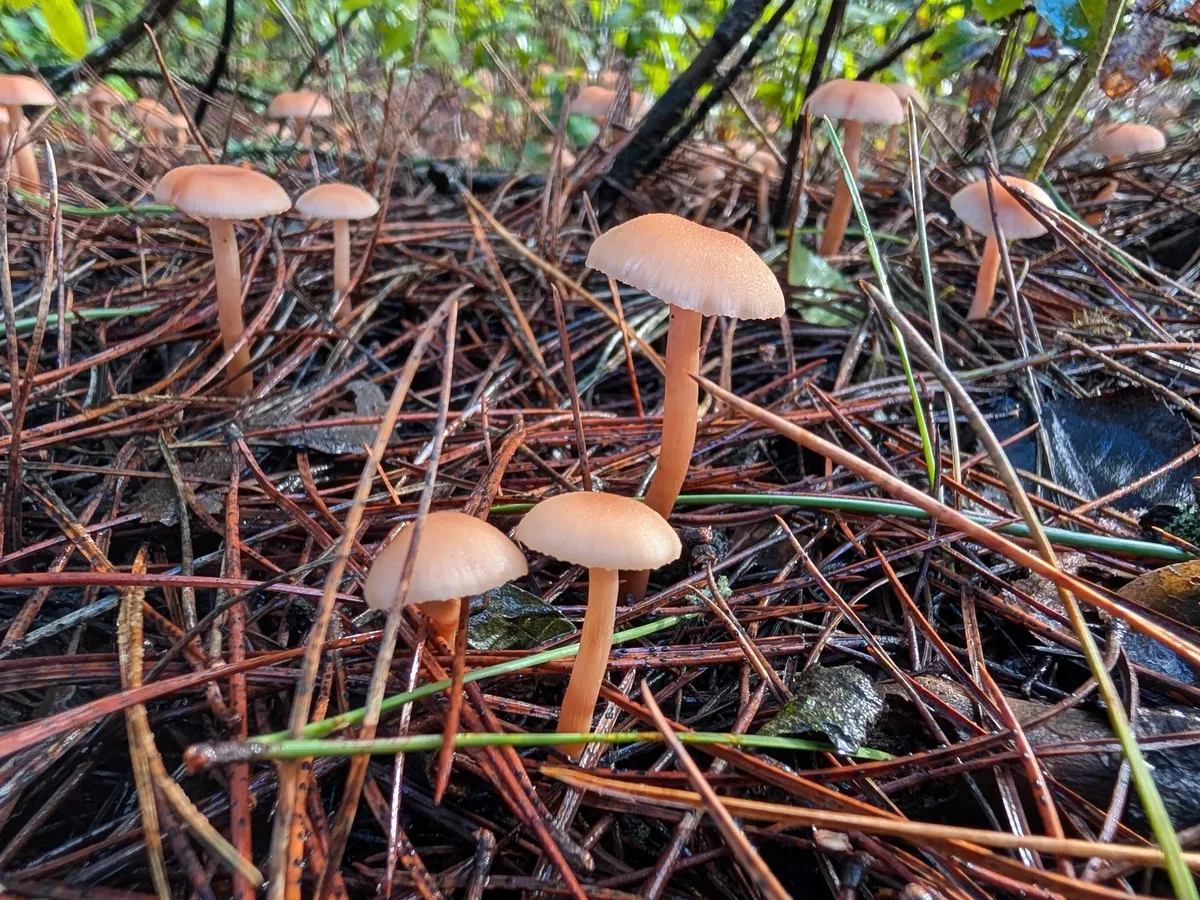 © pmgaspar (CC BY)
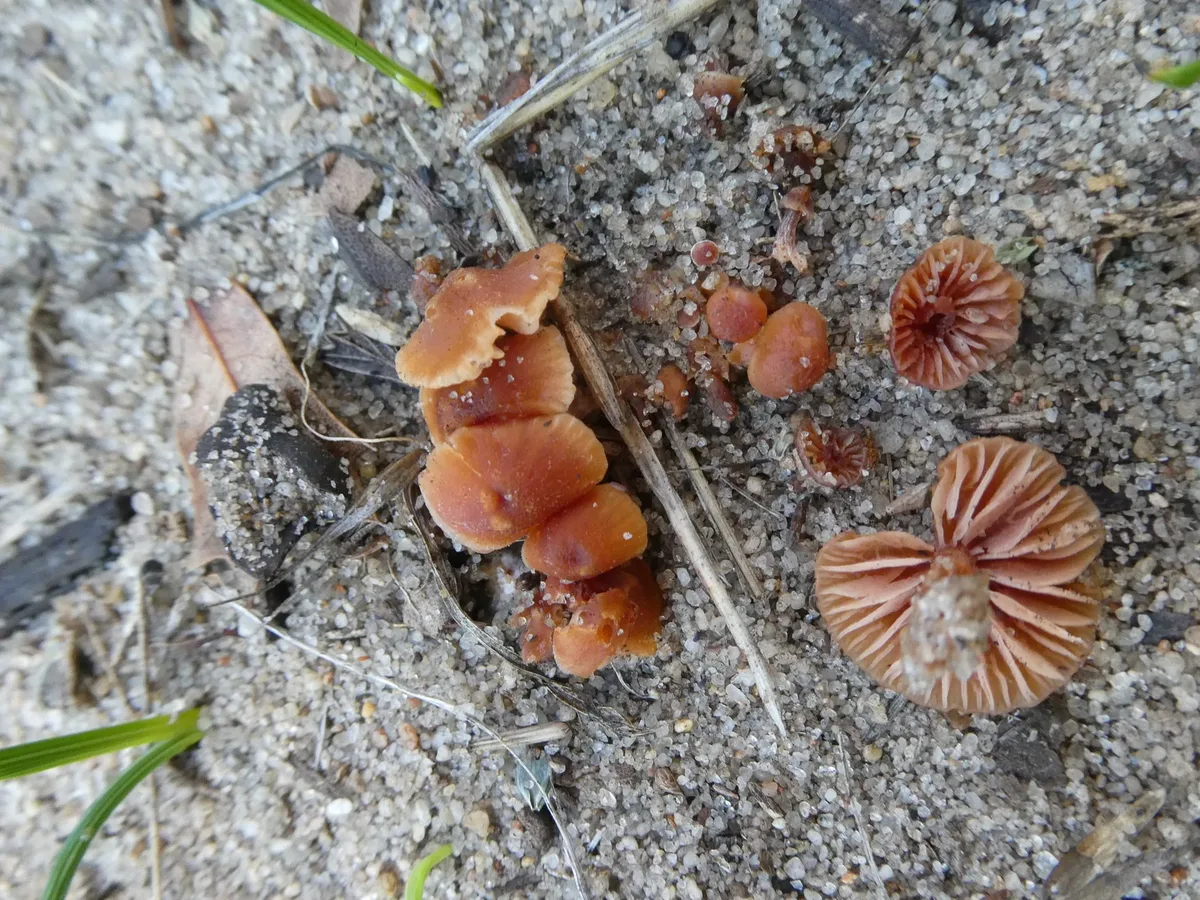 © Shelley James (CC BY)
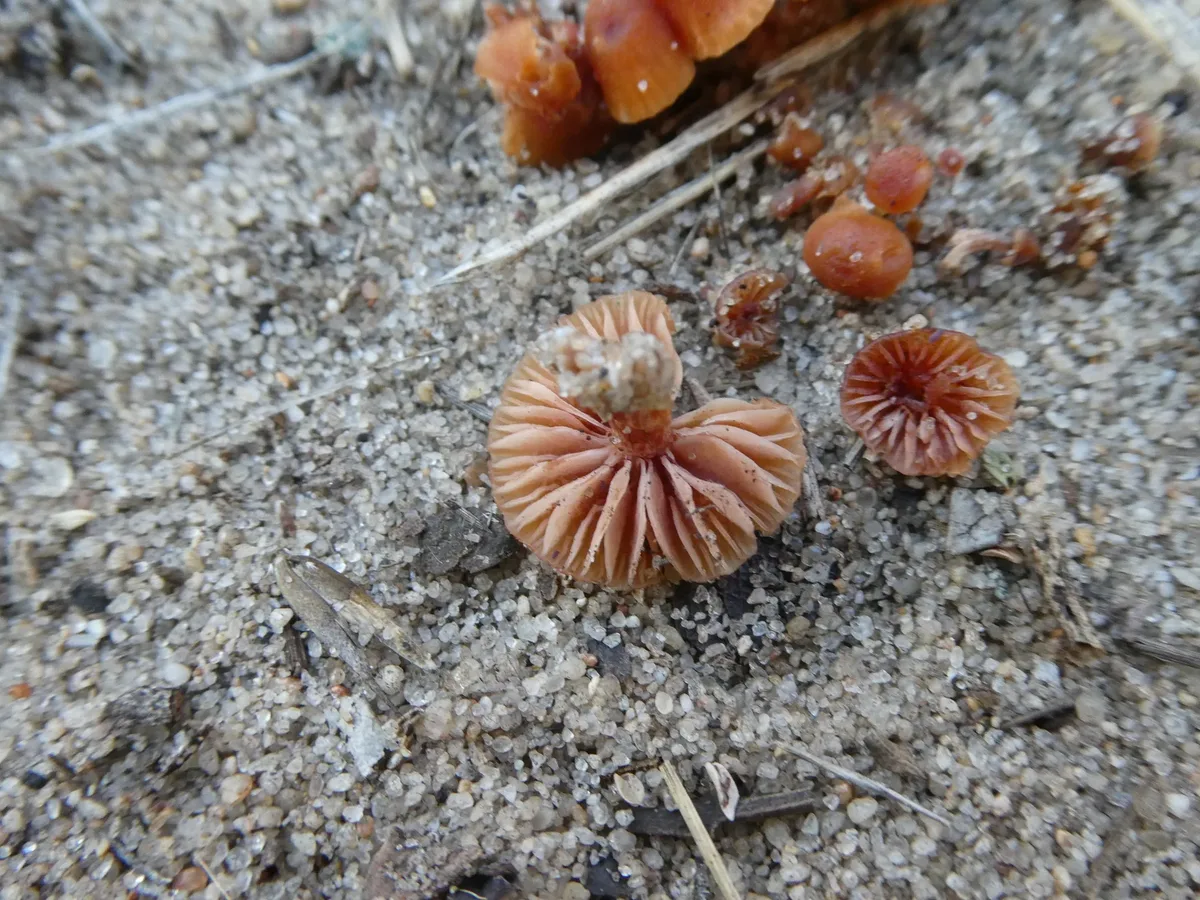 © Shelley James (CC BY)
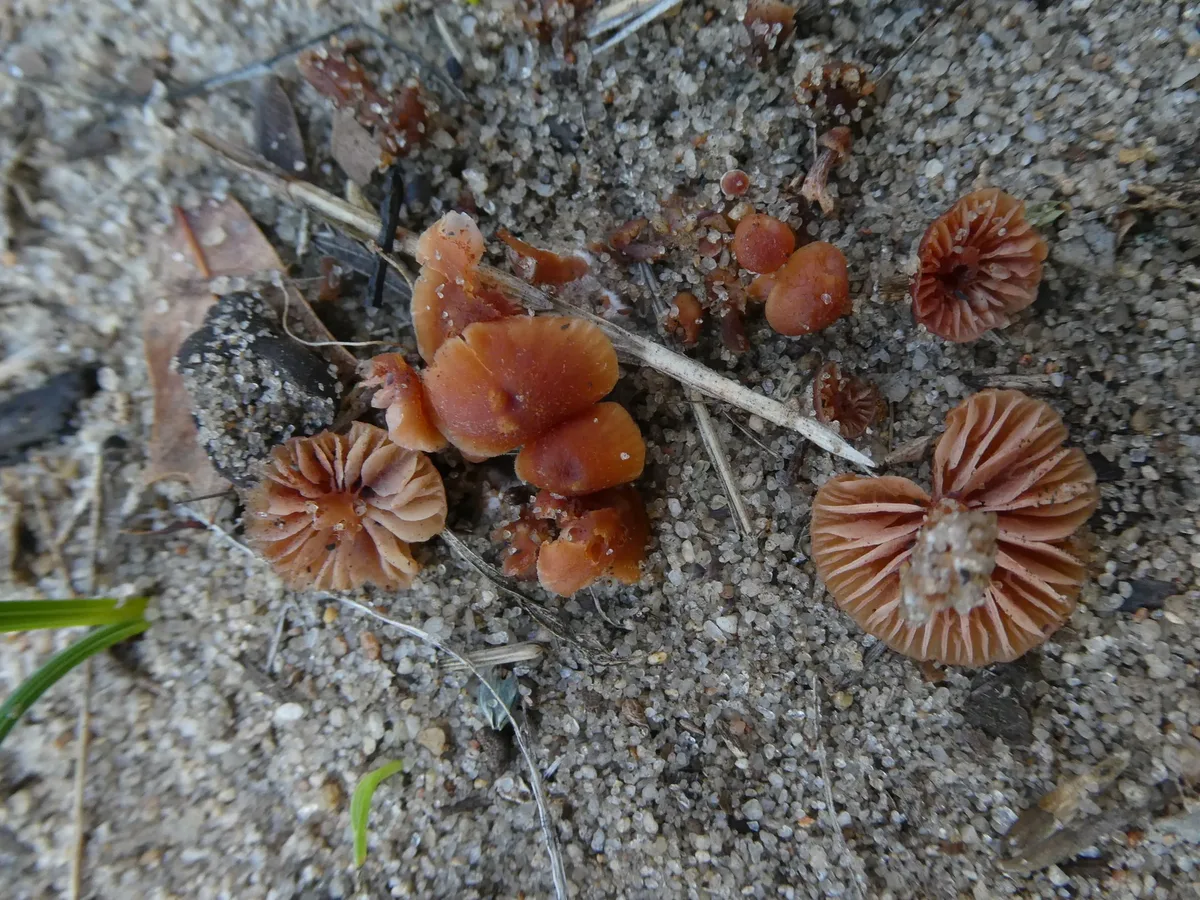 © Shelley James (CC BY)
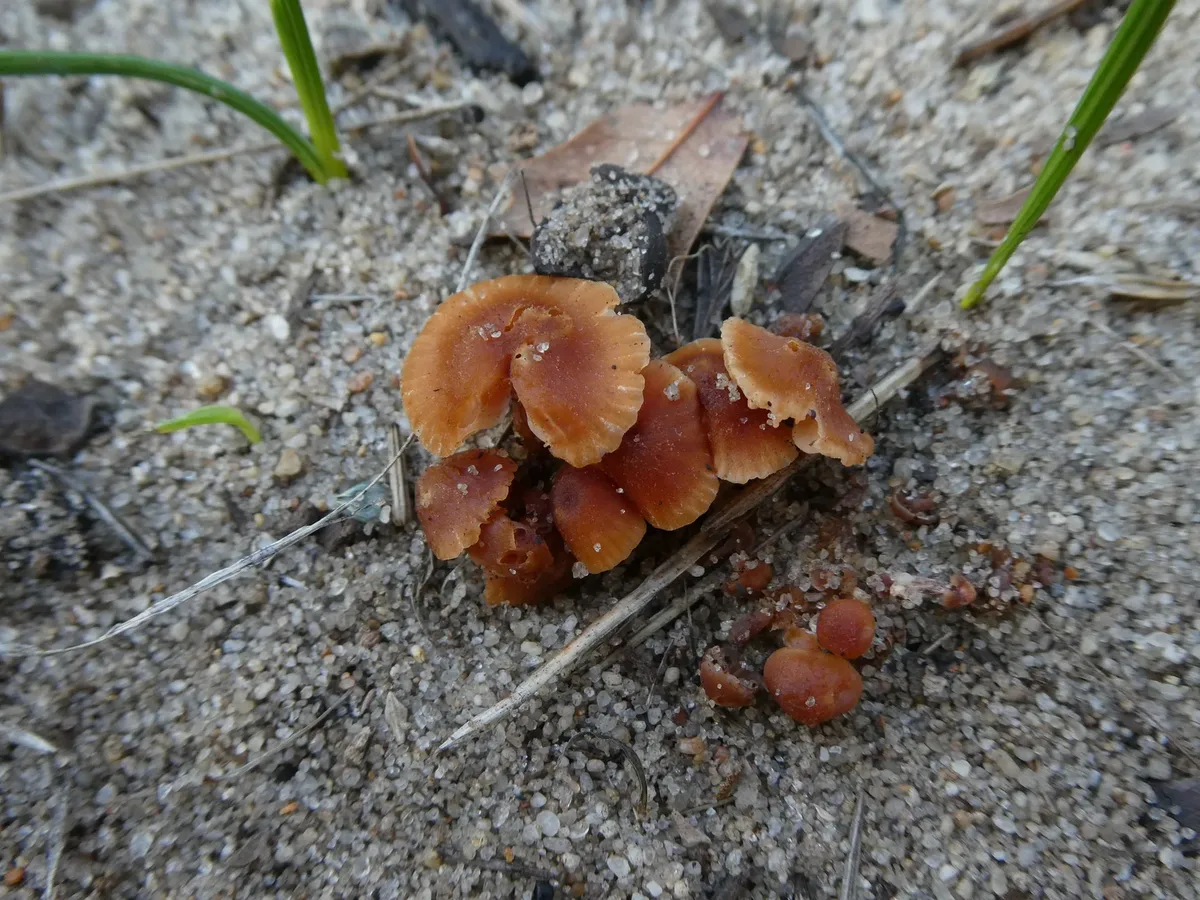 © Shelley James (CC BY)
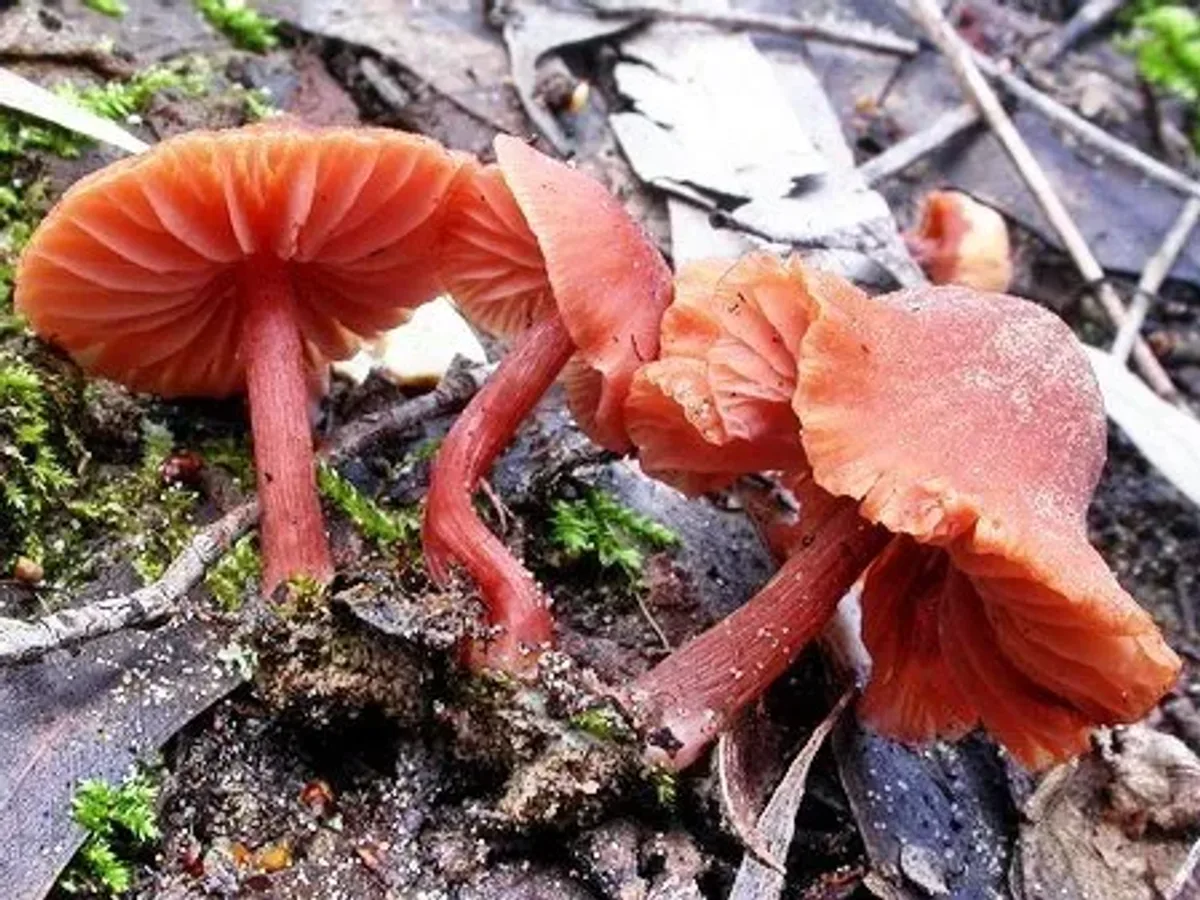 Danny Cicchetti (CC0)
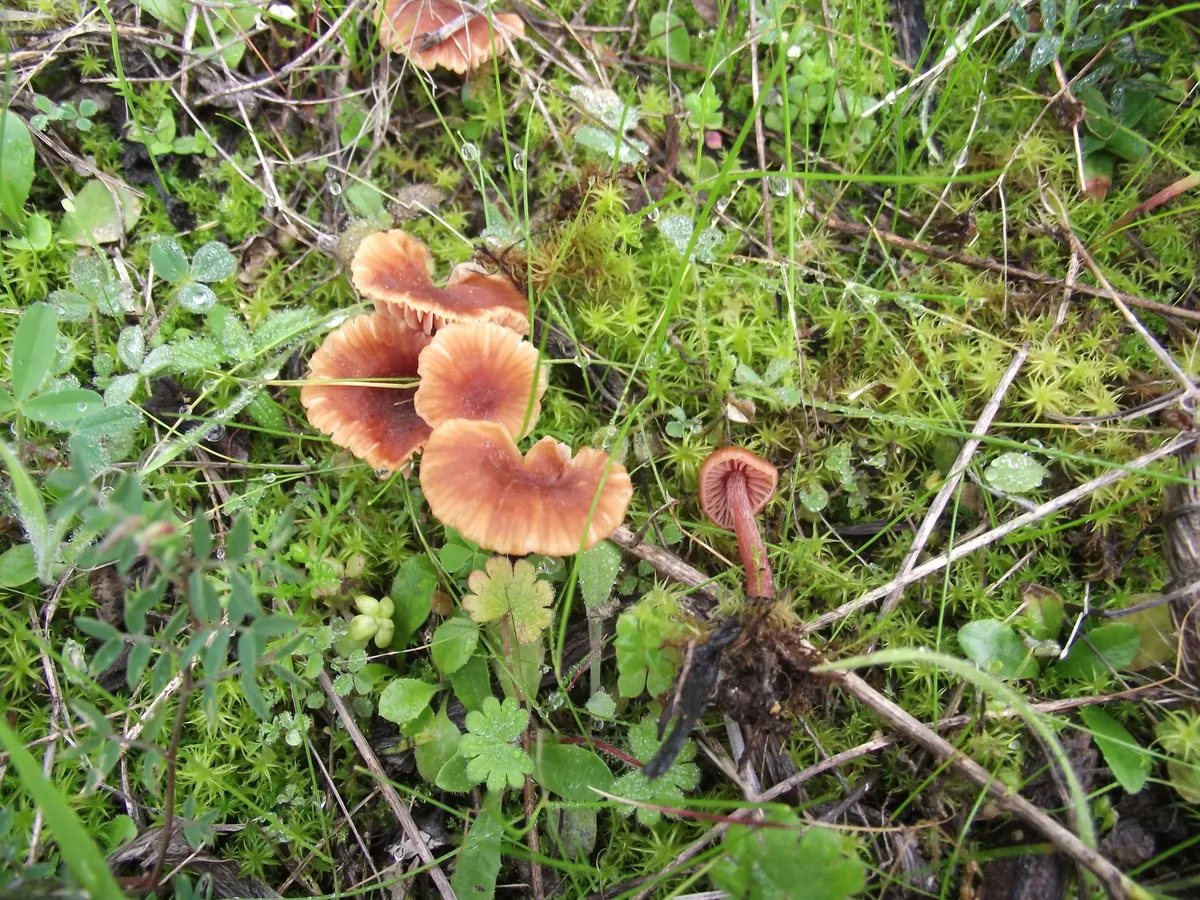 © Davide Puddu (CC BY)
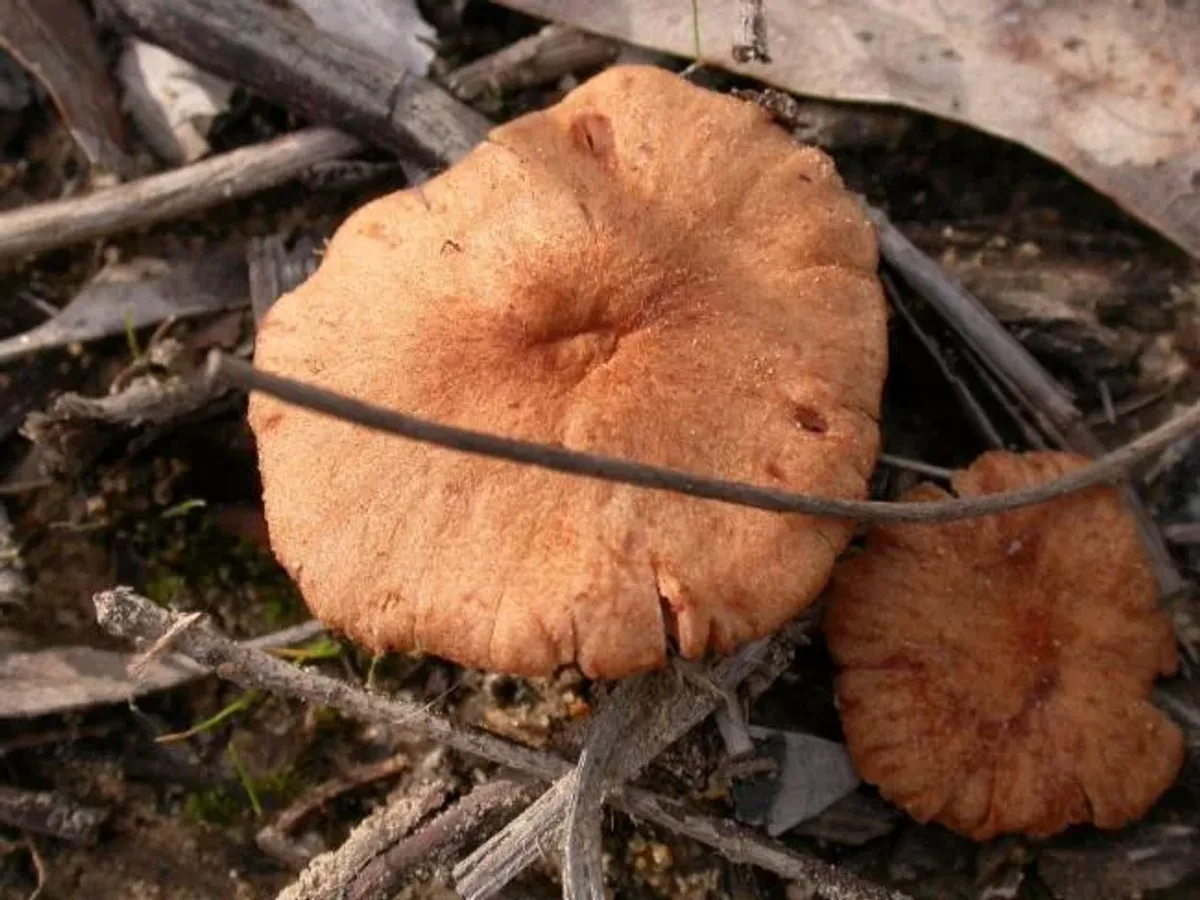 © Richard Hartland (CC BY)© Shelley James (CC BY 4.0)© Denis Zabin (CC BY 4.0)
Good to eat, once you have identified it with certainty and cooked it through.
Never eat a mushroom you are not 100% sure of - check the look-alikes below, and always cook wild mushrooms.
How to recognise it
Laccaria lateritia is a typical member of the 'deceiver' group in the Southern Hemisphere: compact, brick-red to reddish-brown when moist, and liable to bleach to a nondescript pale buff when dry, making it look like an entirely different species depending on weather conditions.
Cap
The cap is 1.5-5 cm and progresses from convex to flat, often developing an irregular, wavy, or slightly depressed centre with age.
Gills
The most immediately diagnostic feature is the gills: they are thick, broadly spaced, and have a distinctly waxy, almost rubbery look and texture, in warm pinkish-brick tones. This waxy, well-spaced gill texture is unlike the crowded, thin gills of most lookalike species.
Stem
The stem is tough, stringy, and striate (finely lengthwise-lined), brick-red to brownish, and anchored at the base by a network of white cottony mycelial threads.
When dry the whole fruitbody lightens considerably, losing the characteristic brick colour, but the thick, well-spaced, waxy-pink gills remain distinctive.
Spore print is always white. Under the microscope the spores are densely echinate (spiny) - this separates Laccaria from all dangerous lookalikes without exception.
Where & when it grows
Habitat
In Australia and New Zealand, Laccaria lateritia is strongly associated with plantations of introduced conifers - particularly Pinus radiata (radiata pine) which is planted extensively in both countries - as well as native Eucalyptus and Nothofagus forest.
It is one of the more frequently encountered small brown agarics in southeastern Australian mountain ash and alpine ash forests (Eucalyptus regnans, E. delegatensis zones) and in New Zealand's mixed podocarp and southern beech forests.
It fruits on forest floors with well-developed organic horizons, growing through moss, decaying leaf litter, or on bare soil in gaps. It often appears in loose groups or small troops, sometimes forming faint arcs following the root zones of its tree partner.
In plantation settings it can occur in large numbers along logging road margins and regenerating clear-fell edges where the soil disturbance brings it into open view.
When
Laccaria lateritia is a creature of the Southern Hemisphere autumn. Its season runs March through July - the mirror image of the European foraging calendar, shifted six months.
The key trigger is the autumn break: that first run of meaningful rain after the dry summer that cools the soil and wakes up mycorrhizal fungi across the forest floor. Once soil temperatures drop below about 16 °C and enough moisture has soaked in, fruitbodies can appear within a week or two.
Peak fruiting is April through June. In Tasmania and New Zealand's South Island, where summers are cooler and moister, the season can open as early as late March; on the warmer coastal stretches of New South Wales it starts later and runs shorter.
Through winter, successive rain events produce successive flushes, each lasting one to three weeks. The most generous seasons follow cool, wet autumns.
How it grows
Like all Laccaria species, L. lateritia is an obligate ectomycorrhizal fungus - it cannot fruit without a living tree partner, and the partnership runs deeper than it might appear.
Underground, the mycelium wraps fine feeder roots in a dense sheath and threads between root cells (the Hartig net), creating a direct exchange interface where the fungus delivers phosphorus and water in return for plant-derived carbon. This relationship can persist for decades, the same mycelial network quietly trading nutrients season after season.
The fruitbodies we see are just the visible tip: above ground they emerge individually or in loose troops, but below they share a common network.
The tough, fibrous stem is built to last - a fruitbody in reasonable condition can stand for one to two weeks - but the species is entirely dependent on its host trees and cannot be cultivated.
Fruiting conditions
Fruiting in the Southern Hemisphere autumn-winter window (March-July). Flush initiation requires the autumn rain break - a sustained rain event delivering at least 20 mm over two weeks - combined with cooling soil temperatures below 16 °C. Soil temperature is the primary trigger: L. lateritia does not fruit during warm summer periods even with irrigation. Individual flushes emerge 7-14 days after significant precipitation and may persist for two to three weeks. In Tasmania and New Zealand's South Island, low winter soil temperatures (approaching 4 °C) can briefly suppress fruiting but the species tolerates light frost.
Look-alikes
Laccaria lateritia shares its habitat with several dangerous lookalikes. The most critical:
- 1Clitocybe dealbata (ivory funnel) - a toxic muscarine-containing species with crowded, thin, white-grey gills that run down the stem; white to pale buff cap that lacks the brick-red tone of fresh Laccaria; mealy smell. It grows in grassy rings and open woodland but can occur at forest margins. The key distinction is gill texture and spacing: Laccaria has thick, widely spaced, pinkish-waxy gills, Clitocybe has thin, crowded, whitish, decurrent gills.
- 2Inocybe spp. (fibrecaps) - multiple species contain muscarine and occur in similar woodland habitats in Australia and NZ; caps are radially fibrous-striate (not smooth), gills are crowded, buff to olive-brown; spore print is dull brown (never white). The brown spore print alone eliminates confusion.
- 3Galerina marginata (deadly skullcap) - contains amatoxins (same as Amanita phalloides) and is lethal; cap is small, tawny-brown, hygrophanous, with a ring on the stem, brown spore print, and closely crowded gills; grows on decaying wood or buried wood debris. Although its brown spore print and ring are distinctive, beginners can overlook these features.
- 4Cortinarius spp. - various small rufous-brown webcaps in Australian and NZ forests; distinguished by the cobwebby cortina veil in youth and a rust-brown to cinnamon spore print. Several species in Australasia contain orellanine (a nephrotoxin causing delayed kidney failure). Spore print colour is the definitive test.
A white spore print, thick waxy well-spaced gills, and smooth (not fibrous) cap surface together confirm Laccaria and rule out all dangerous species.
Contains amatoxins - potentially lethal in small doses, the same toxins as Amanita phalloides. Small tawny-brown hygrophanous cap; gills crowded and adnate, initially buff then rust-brown; a membranous ring (annulus) on the stem; grows on decaying wood or buried woody debris; spore print rust-brown. Key distinctions: Laccaria lacks a ring, has a white spore print, and has thick spaced gills. Always check for a ring when collecting small brown agarics.
Multiple Australian and NZ Inocybe species contain muscarine. Cap is radially fibrous-striate (silky fibres radiating from centre to margin), not smooth; gills crowded, olive-buff to clay-brown; spore print dull brown (angular-nodulose spores under microscope); often musty or spermatic smell. The brown spore print and fibrous cap eliminate all confusion with Laccaria. Do not collect any small brown fibrous-capped agaric as Laccaria.
Contains muscarine - can cause severe cholinergic toxidrome (profuse sweating, salivation, lacrimation, miosis, bradycardia, potentially fatal). Ivory to pale buff cap lacking brick-red tones; gills thin, crowded, and adnate to slightly decurrent (running a short way down the stem), whitish-grey not pinkish-waxy; mealy smell; typically forms rings in grassy or open areas. Key distinction: Laccaria has THICK, WIDELY SPACED, PINKISH-WAXY gills; C. dealbata has THIN, CROWDED, WHITISH, DECURRENT gills.
Several reddish-brown to tawny Cortinarius species occur in Australian and New Zealand forests, some containing orellanine (a nephrotoxin causing delayed kidney failure 2-3 weeks post-ingestion). Distinguished by the cobwebby cortina veil connecting cap margin to stem in young specimens, and by a rust-brown to cinnamon spore print at maturity. Laccaria has no cortina at any stage and always produces a white spore print. Cortina remnants on the stem may appear as a faint reddish-brown band once the veil breaks.
When fresh shows vivid violet-purple cap, gills, and stem. When faded it can approach the buff-pinkish tones of dried L. lateritia. Both are edible, both have white spore prints and echinulate spores. The distinction is primarily colour-based. Not a safety concern.
The northern hemisphere counterpart and closest lookalike; edible and very similar in form, colour, and habitat. L. laccata has a wider global distribution (including New Zealand and Australian plantations via introduction) and is essentially inseparable in the field. Both species have white spore prints, echinulate spores, thick spaced pinkish gills, and tough fibrous stems. Separation requires microscopy of spore dimensions and ecological context. Not a safety concern - both are edible.
In the kitchen
Picking & cleaning
Pick by grasping the stem near the base and giving a firm twist-pull, or use a short knife to cut cleanly at ground level. Select fresh, firm, well-hydrated specimens - faded dry individuals have little food value and create identification uncertainty.
The caps are thin and fragile; lay loosely in an open basket rather than stacking. Due to small size, a worthwhile harvest requires collecting many specimens; look for sites with large troops under established conifers or native forest.
Always make a spore print in the field if any doubt exists: white print confirms Laccaria. Check gill texture (thick, spaced, waxy) and gill colour (pinkish, not grey, not buff) before collecting.
Avoid collecting in contaminated soils - like other Laccaria, this species can accumulate heavy metals including arsenic from soils near mine tailings or industrial sites.
Cooking
Laccaria lateritia is a mild, pleasant edible - not a showpiece mushroom, but a dependable woodland accent. The thin flesh means you need a good handful of caps to make an impression, so look for sites with large troops.
Discard the tough stem or toss it into stock. Sauté the caps over moderate-high heat with butter, letting them give up their moisture and take on a light golden edge; the brick-red colour fades during cooking, leaving a warm buff-brown.
Use them to round out egg dishes, pasta, risotto, or a mixed autumn mushroom pan where their gentle earthiness complements bolder species.
Do not eat raw. Always cook thoroughly.
Good to know
Laccaria lateritia is edible and has no known intrinsic toxins, but the genus 'deceiver' earns its name: the extreme colour variability between moist and dry conditions means a careless forager can encounter specimens that look almost nothing like the classic description.
Never collect a small brownish woodland mushroom as Laccaria without confirming ALL of the following:
- 1White spore print - a brown print means Galerina, Inocybe, or Cortinarius, all of which include deadly species.
- 2Thick, widely spaced, pinkish-waxy gills - not crowded, not grey or white, not brown.
- 3No ring on the stem (rules out deadly Galerina marginata).
- 4No cobwebby cortina in youth (rules out Cortinarius).
- 5Smooth cap surface, not radially fibrous-striate (rules out Inocybe).
In New Zealand and Australia, Galerina marginata is a particularly important concern because it grows in similar habitats (including under conifers and near buried wood) and is superficially similar to small brown Laccaria. Its amatoxin content makes even a partial fruitbody potentially lethal.
Always take a spore print. Do not eat faded, dry, or otherwise ambiguous specimens.
A reference guide - never an edibility guarantee. When in doubt, leave it out.