The deceiver
Laccaria laccatasyn. Agaricus laccatus Scop. (1772), Clitocybe laccata (Scop.) P.Kumm. (1871), Omphalia laccata (Scop.) Quél. (1872), Collybia laccata (Scop.) Sacc. (1887)
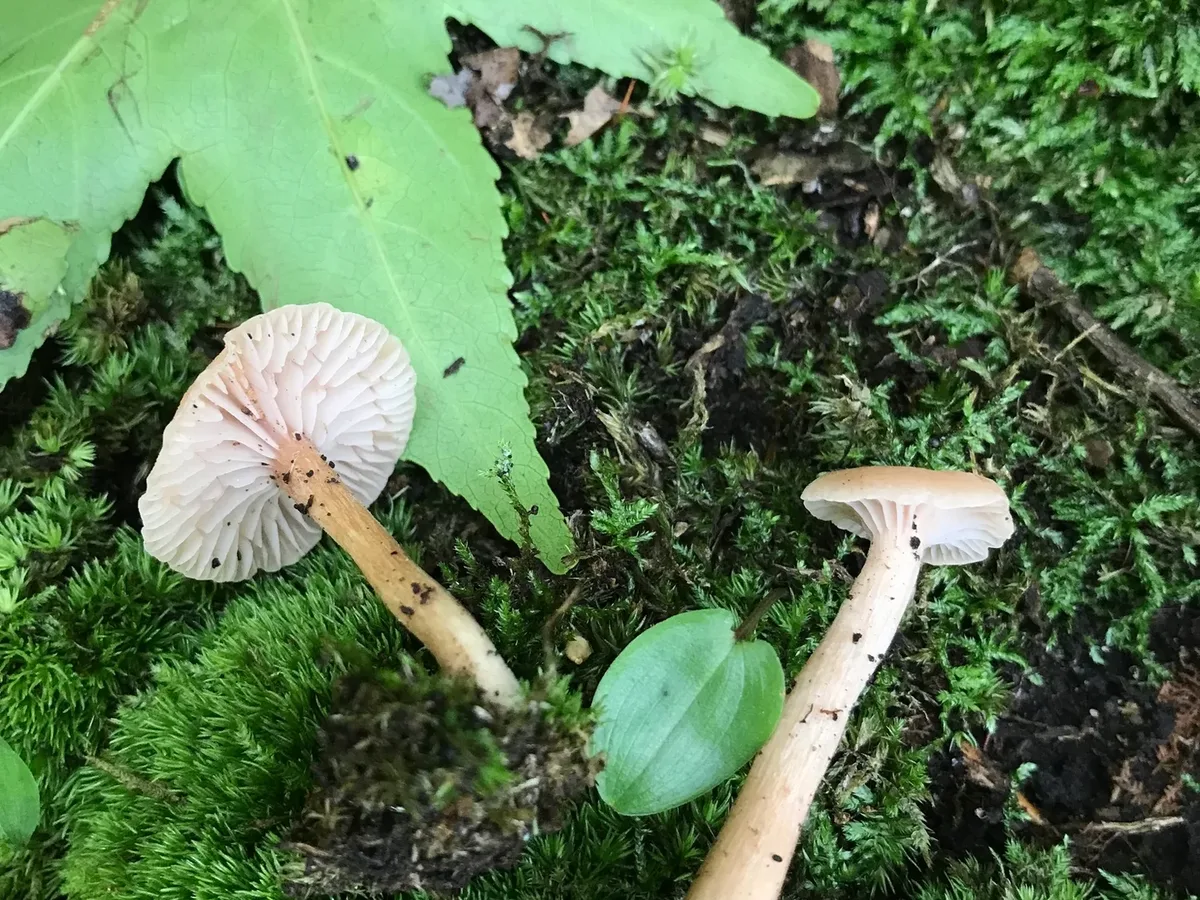 © paganka (CC BY 4.0)
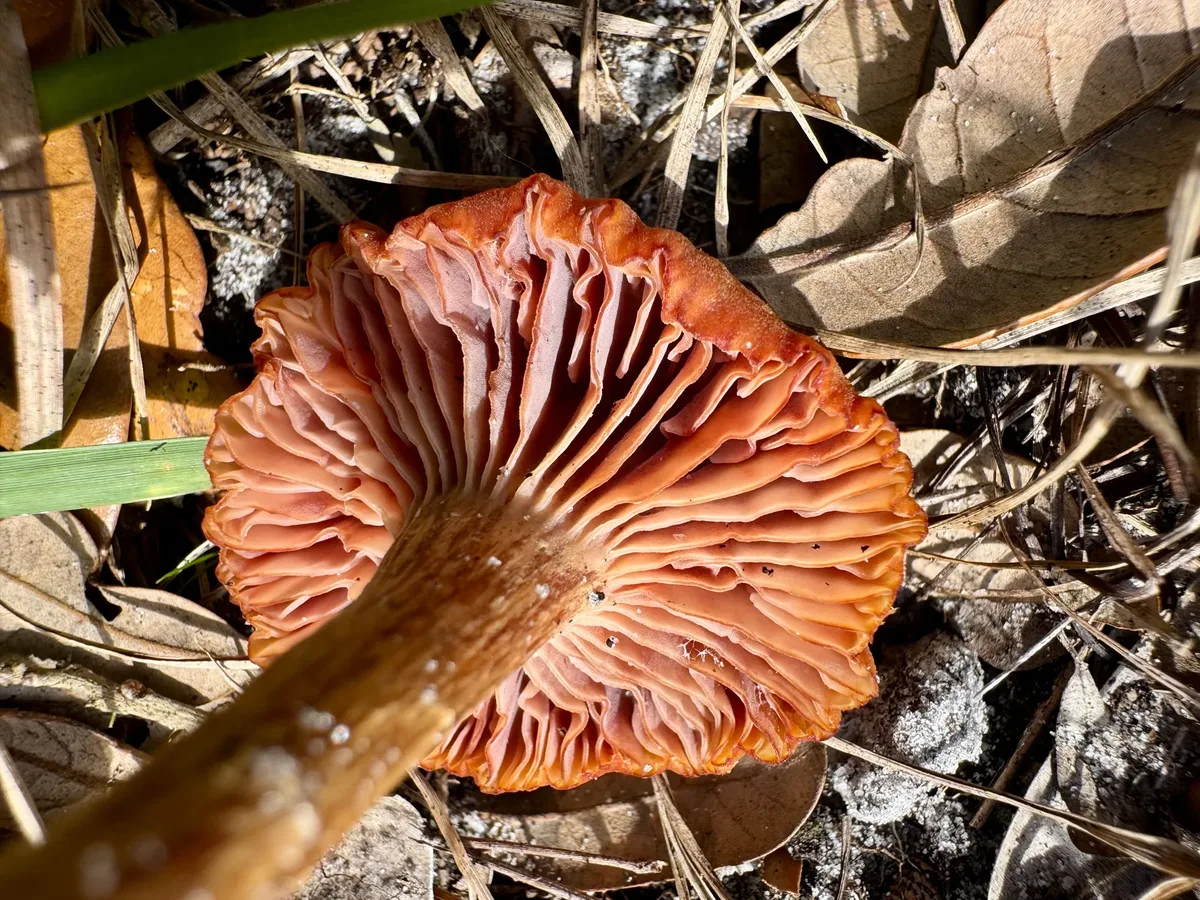 © Karen Guin (CC BY)
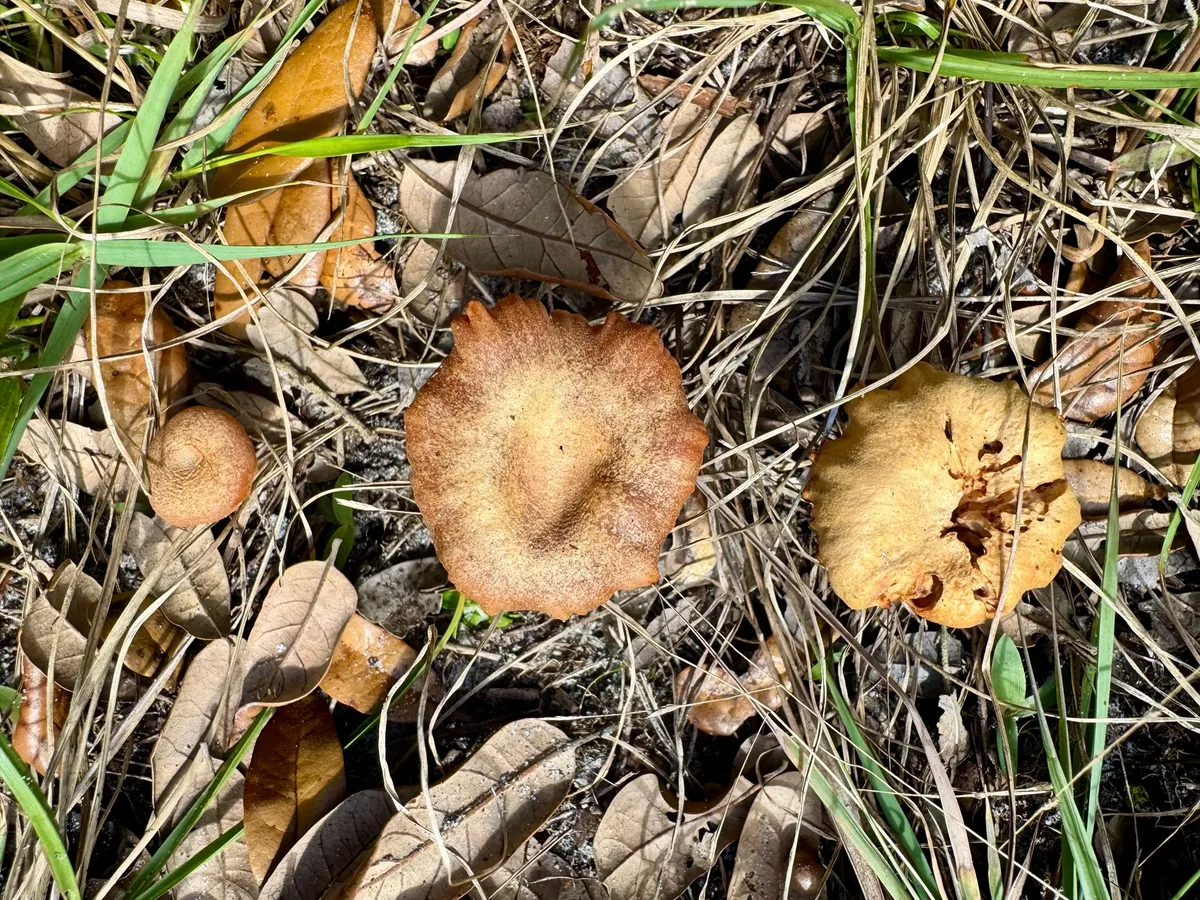 © Karen Guin (CC BY)
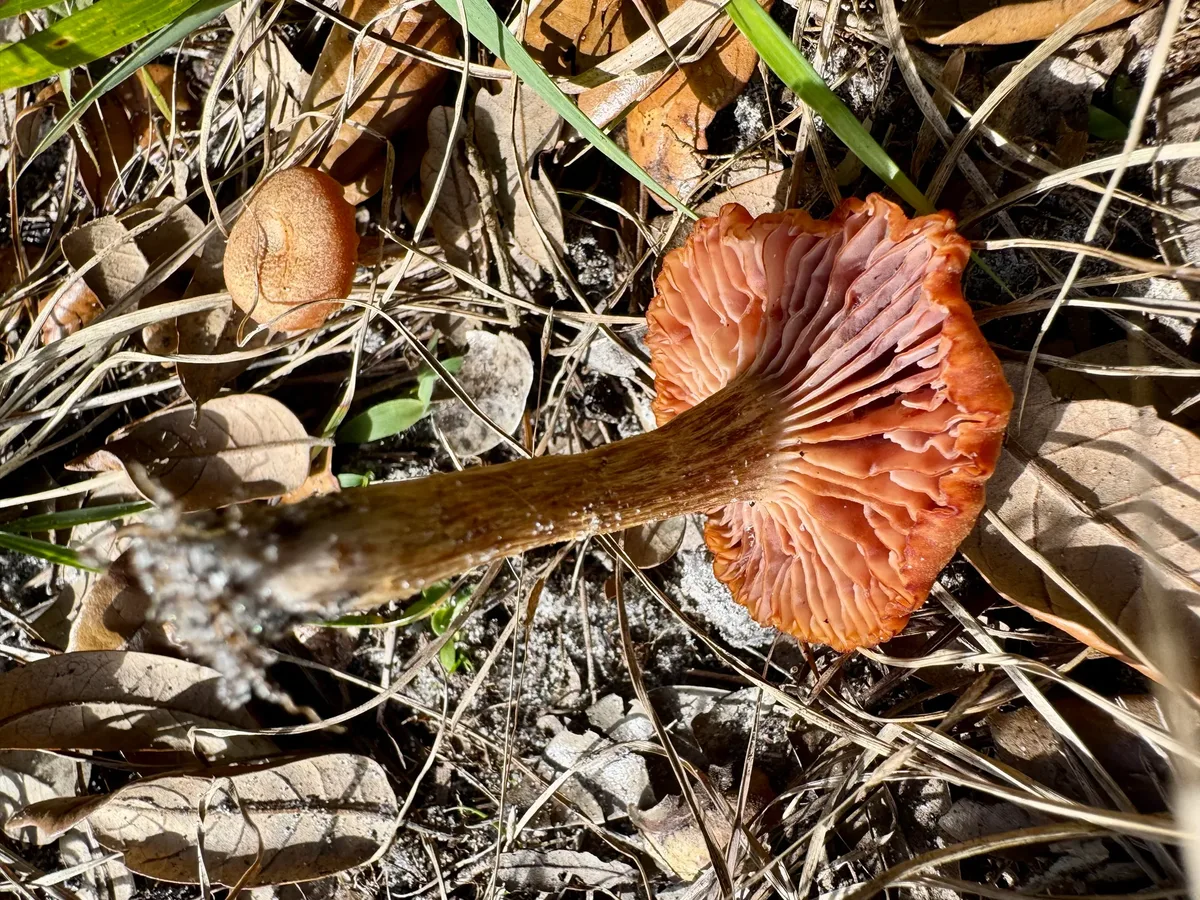 © Karen Guin (CC BY)
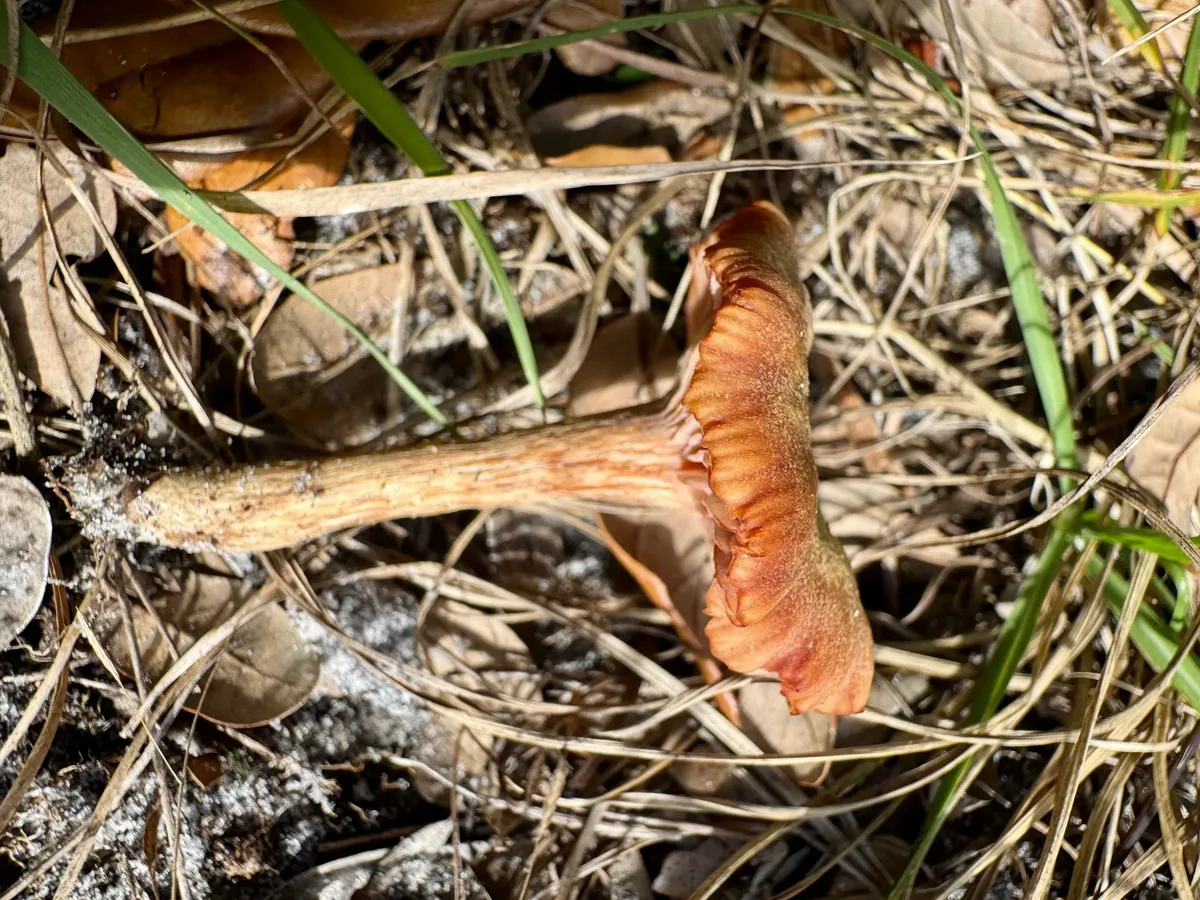 © Karen Guin (CC BY)
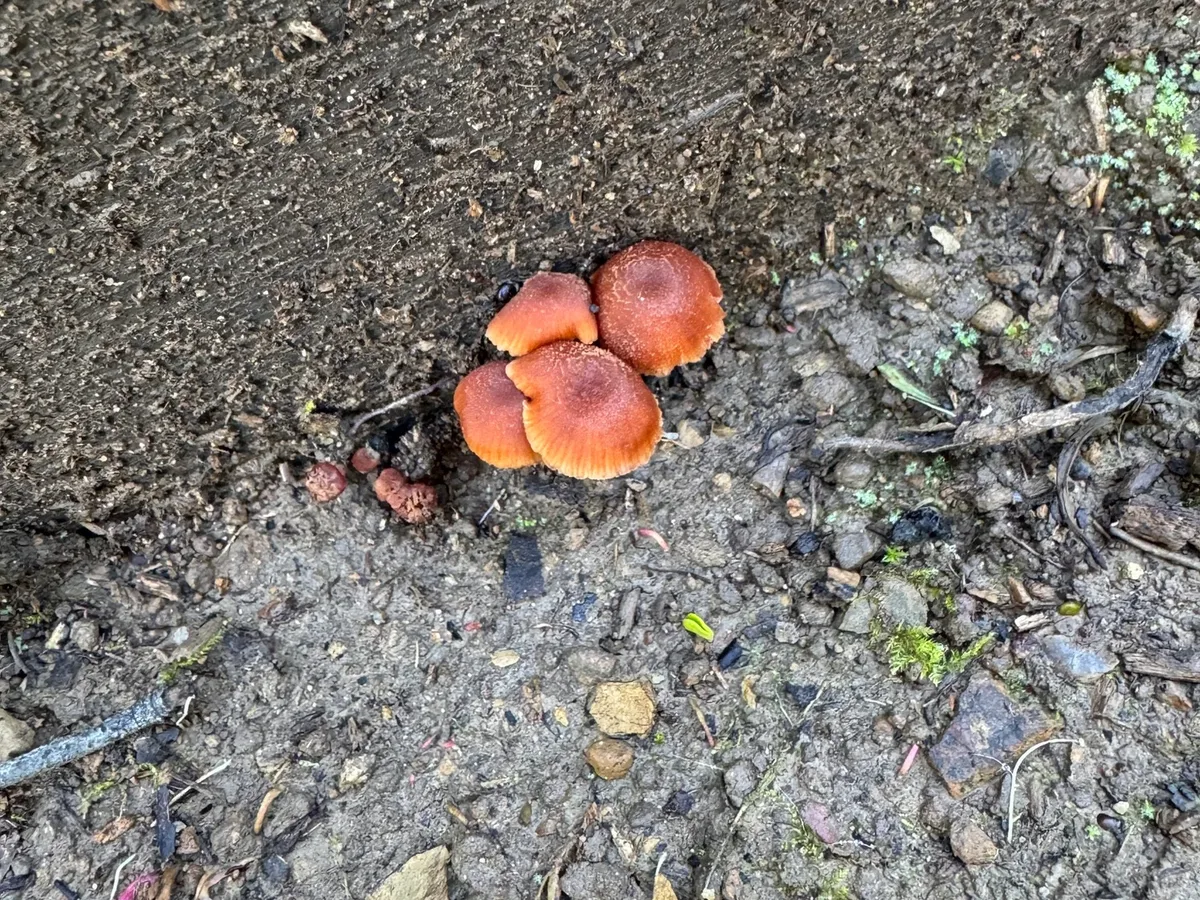 © Karen Offereins (CC BY)
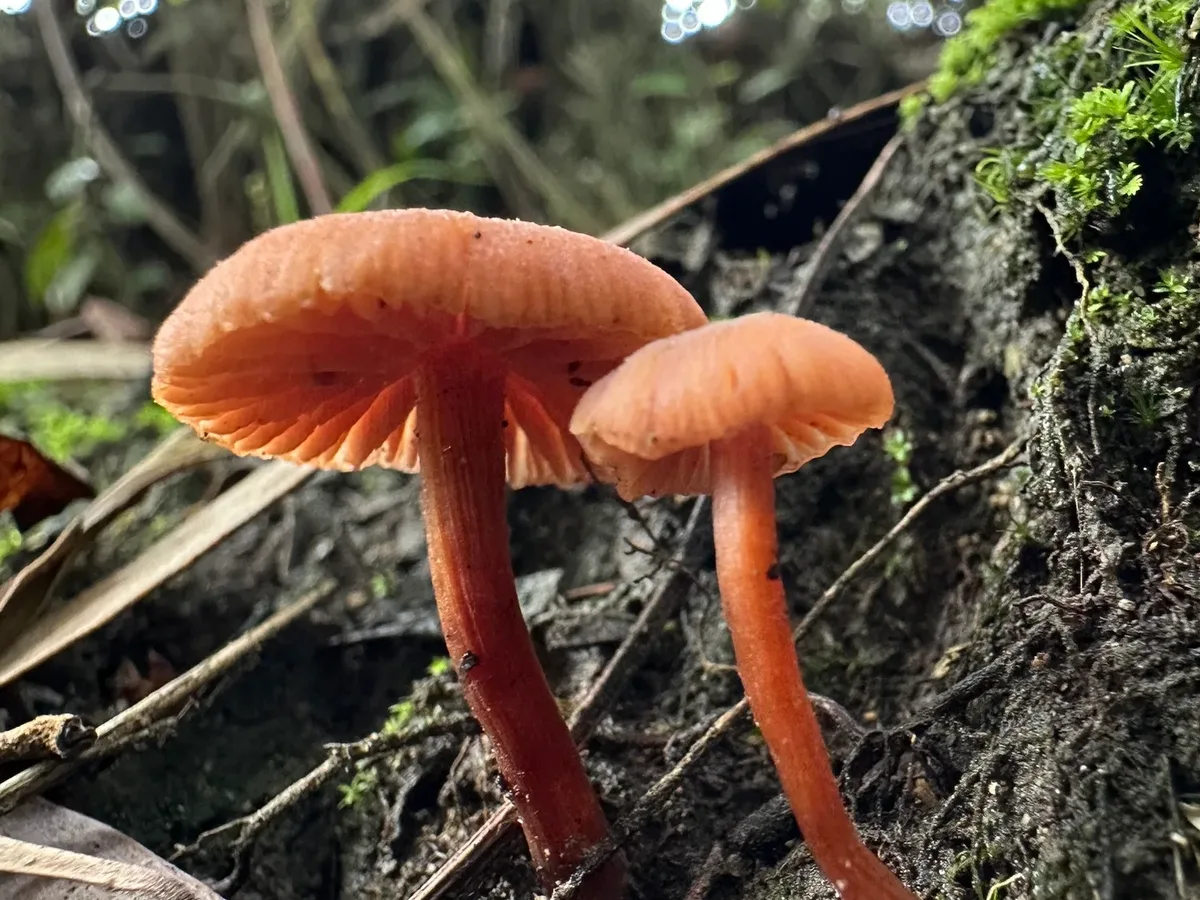 © Nicolás Baresch Uribe (CC BY)
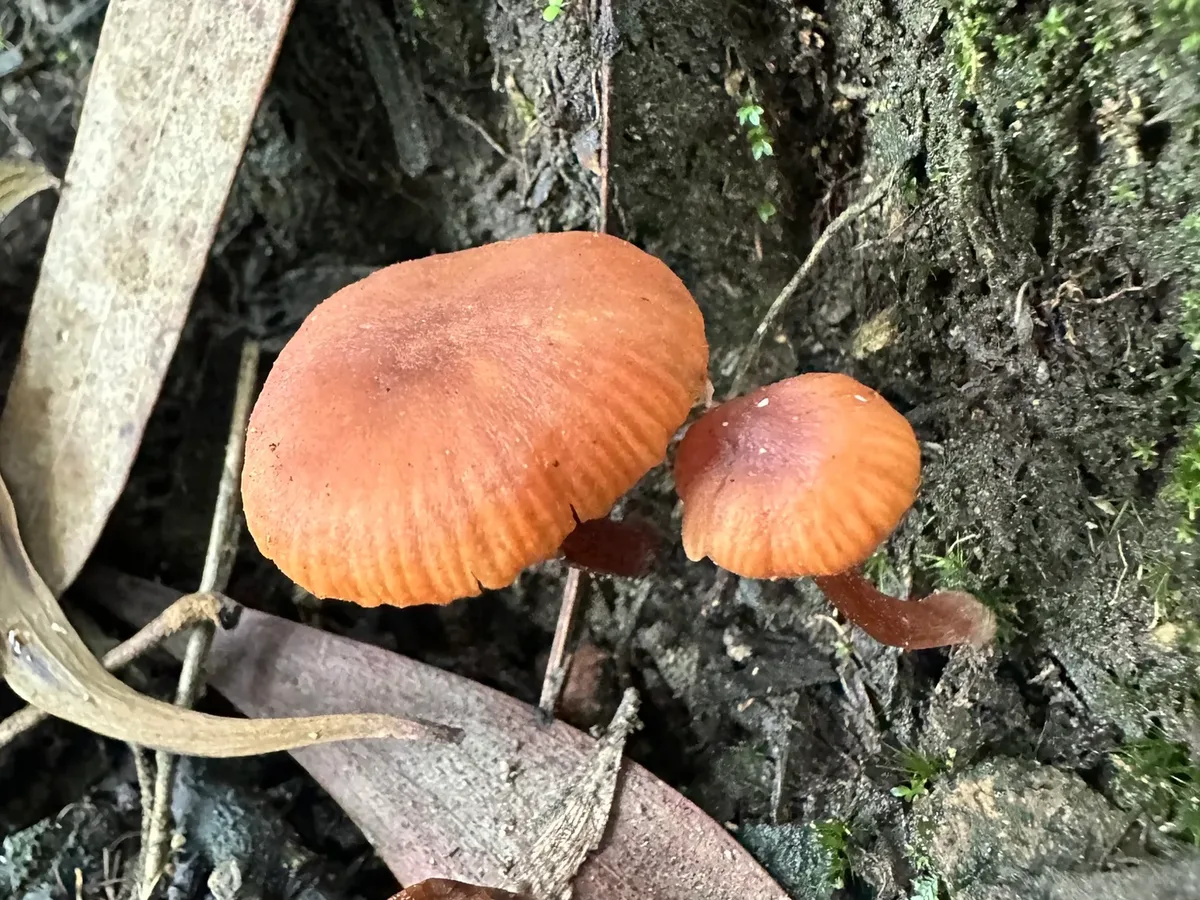 © Nicolás Baresch Uribe (CC BY)
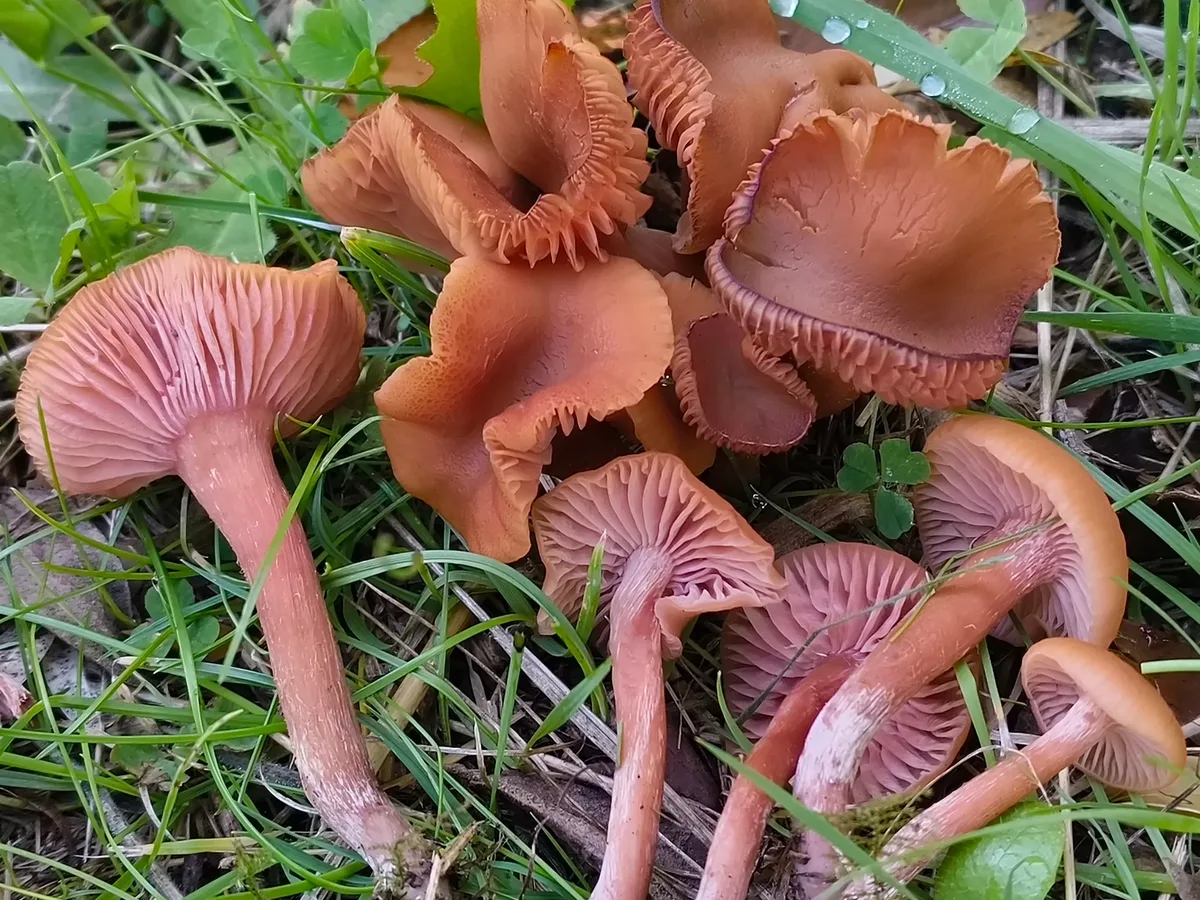 © Zac (CC BY)
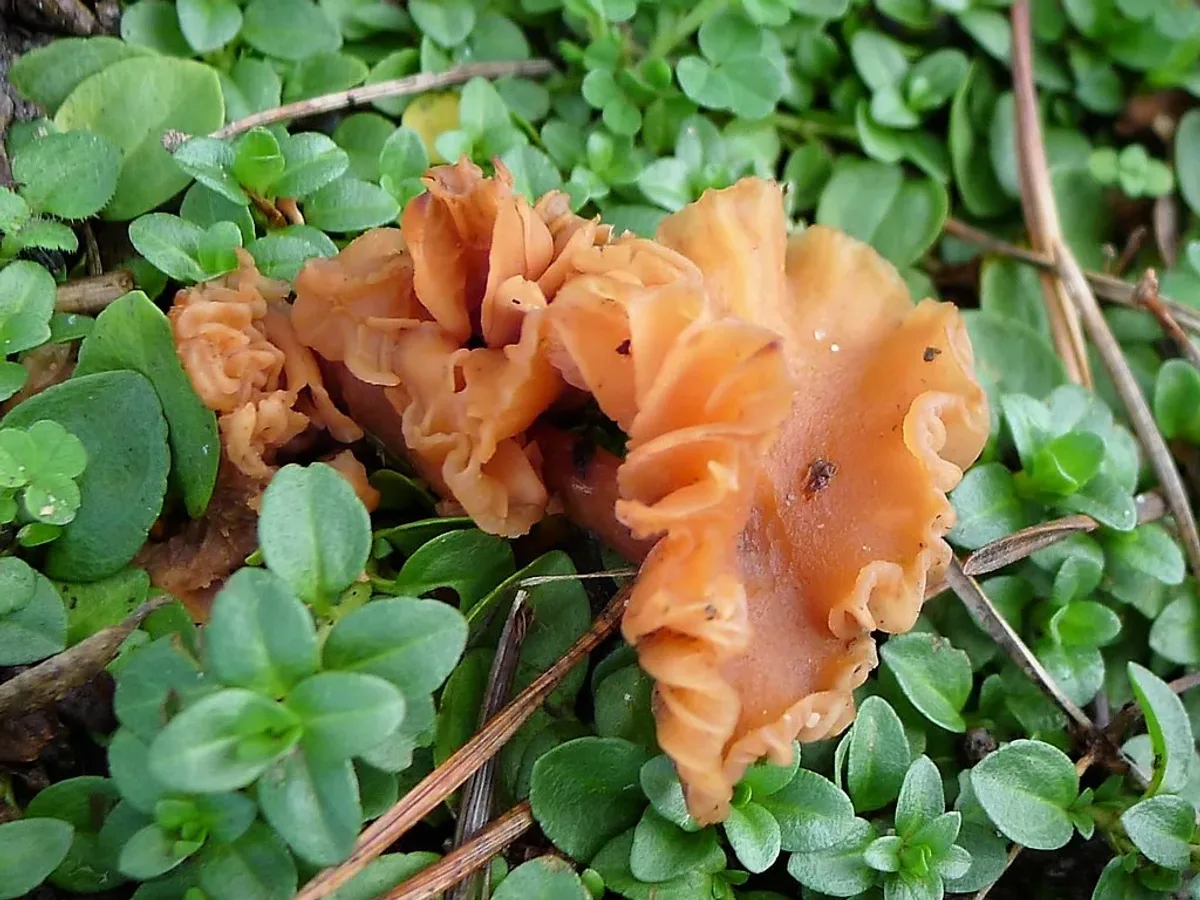 © gailhampshire (CC BY 2.0)
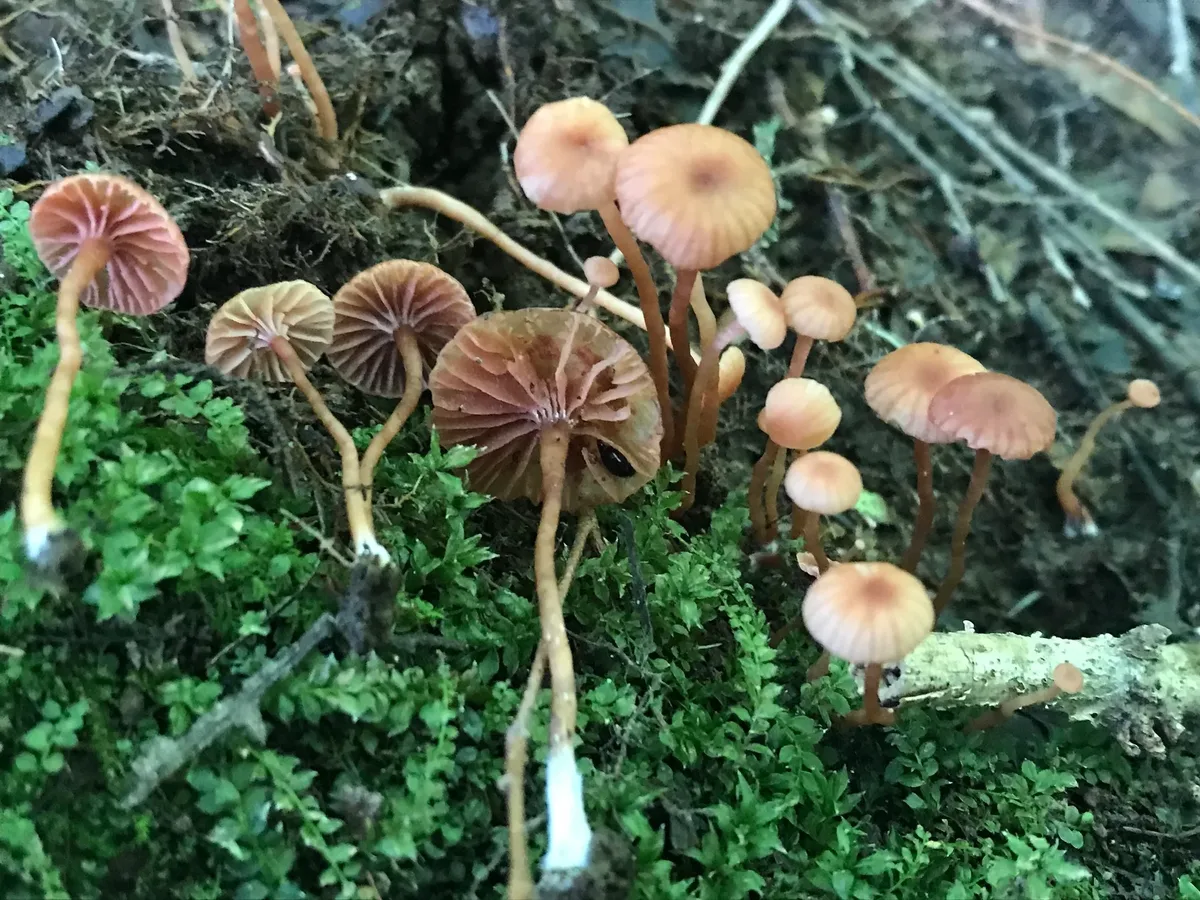 © Brian Hunt (CC BY 4.0)© paganka (CC BY 4.0)© Karen Guin (CC BY)
Good to eat, once you have identified it with certainty and cooked it through.
Never eat a mushroom you are not 100% sure of - check the look-alikes below, and always cook wild mushrooms.
How to recognise it
The common name 'the deceiver' is well earned. Two specimens collected the same hour in the same patch can look like entirely different mushrooms.
Cap
When rain-fresh, the cap is a warm brick-red to tawny rufous-brown; as it dries it bleaches from the centre outward to pale pinkish-buff or biscuit, often leaving a darker zone near the margin.
The cap starts convex, then flattens and develops a shallow central depression or becomes wavy and lobed, sometimes with a weak umbo when young. The surface is smooth and slightly tacky in wet weather.
Gills
The gills are the most reliable diagnostic feature: thick, well-spaced, almost waxy in texture, broadly attached to slightly running down the stem, and distinctly pinkish to flesh-coloured. At full maturity they take on a whitish, faintly powdery look from the deposited spores.
Stem
The tough, fibrous stem is distinctly striate (longitudinally lined), coloured like the cap, and often twisted; its base is reinforced with white cottony mycelium.
Flesh
Flesh is thin and pale.
Spore print
Spore print is white. The spores are globose to broadly ellipsoid and covered in short sharp spines (echinulate) - a key microscopic feature that distinguishes Laccaria from superficially similar genera.
Where & when it grows
Habitat
Laccaria laccata forms ectomycorrhizal associations with a remarkably wide range of tree species, making it one of the most habitat-tolerant woodland mushrooms in the northern hemisphere.
It thrives in:
- conifer plantations (particularly Scots pine and Norway spruce)
- native oak and beech woodland
- birch scrub, alder carr, willow thickets, and larch plantations
It also colonises heathland where pines or birches are present, and dune-slack hollows associated with willow or poplar.
Soil type is secondary to tree partner availability: the fungus tolerates acidic heathland soils, neutral loams, and moist peaty substrates.
In Scandinavia it is especially abundant in boreal conifer-birch forests with a mossy or grassy ground layer. It often emerges from damp, shaded leaf-litter or sphagnum mats and can appear in almost lawn-like masses after rain.
When
The deceiver has one of the longest fruiting seasons of any northern European woodland species. First fruitings can appear in June or July during warm, wet early summers.
Numbers build steadily through August and hit peak abundance from mid-September through October, when every cool rain event triggers a new flush.
Fruiting continues into November in most years and, in mild oceanic climates (western Britain, Atlantic France, coastal Norway), can persist until December.
Unlike many boletes that disappear after a single autumn flush, L. laccata flushes repeatedly throughout the season whenever moisture conditions are met.
How it grows
Laccaria laccata is a mycorrhizal symbiont, living in partnership with the roots of living trees and unable to survive without them. That underground connection - mycelium threading through soil, exchanging nutrients with its host tree - can persist for years before a single fruiting body appears above ground.
Fruitbodies emerge singly, scattered, or in loose groups; dense clusters are unusual. Individual caps expand over several days.
The tough fibrous stem anchors the fruiting body firmly in the substrate and often remains intact long after the cap is weathered. Fruitbodies are relatively resilient to moderate frost and may partially recover after light freezes.
Fruiting conditions
Strongly hygrophanous and responsive to moisture; flushes repeatedly after rainfall events throughout the long season. Tolerates cooler soil temperatures than many agarics and continues fruiting into autumn frosts. In boreal Scandinavia, fruiting is concentrated July-October aligned with the brief warm-wet window after mid-summer.
Look-alikes
The 'deceiver' earns its name from the spectrum of appearances it presents. Key confusions include:
- 1Laccaria amethystina (amethyst deceiver) - very similar structure but entirely violet-purple when fresh; when faded it overlaps with L. laccata, but L. amethystina retains purple tones especially in the gills for longer. Both are edible and the distinction is more academic than safety-critical, though they are separate species.
- 2Clitocybe dealbata (the ivory funnel) - a seriously toxic species containing muscarine. It is paler (whitish to grey-buff), has crowded, decurrent gills running strongly down the stem, a meal-like smell, and grows in grass rings rather than woodland; it lacks the widely-spaced, waxy, pink gills of Laccaria. A positive gill check (thick, spaced, pink-waxy vs crowded white-grey) is essential when collecting in grassy woodland margins.
- 3Inosperma erubescens (the deadly fibrecap) - another muscarine-rich deadly species. It has a silky-fibrous, not smooth, cap surface, crowded olive-buff to brownish gills, a fibrous-striate stem with a slight cortina in youth, and a spore print that is dull brown not white. It tends to grow in parkland and calcareous soils rather than acid boreal forest.
- 4Various small Cortinarius species with rufous coloration - distinguished by rusty-brown spore print (coating gills at maturity), cobweb-like cortina veil remnants on stem, crowded gills, and distinctive smell. Some Cortinarius species contain orellanine (a nephrotoxin causing delayed and potentially fatal kidney failure) and are deadly - spore print colour alone is diagnostic.
- 5Inocybe rimosa (common fibrecap) - muscarine-containing; cap strongly radially fibrous-striate, buff-yellow to straw, different tone from Laccaria's brick-red. Gills crowded, pale olivaceous grey-buff, spore print dull brown. Lacks the pink waxy gills and white spore print of Laccaria.
A careful check of gill spacing and colour, spore print, and substrate resolves all these confusions.
Contains muscarine - potentially fatal in vulnerable individuals. Cap strongly radially fibrous-striate, buff-yellow to straw, different tone from Laccaria's brick-red to buff. Gills crowded, pale olivaceous grey-buff, spore print dull brown. Lacks the pink waxy gills and white spore print of Laccaria. Fibrous cap surface distinguishes it from smooth Laccaria caps.
Deadly - contains muscarine. Cap surface silky-fibrous, not smooth; gills crowded, pale buff to clay, not waxy or pink; spore print dull brown (never white); stem fibrous, cortinate when young. Prefers calcareous soils, parkland, beech woods. Distinguished from Laccaria by spore print colour, gill texture and spacing, and cap surface.
Deadly - contains muscarine. Ivory to pale grey-buff cap, gills crowded and strongly decurrent (running well down stem), greyish-white not pink, mealy smell, grows in grassy rings in open or semi-open habitats. Spore print white but gills crowded not spaced. Laccaria has thick, well-spaced, pinkish-waxy gills. Never collect Laccaria from grassy open areas without confirming gill spacing and colour.
Several rufous-brown Cortinarius species may superficially resemble weathered Laccaria. IMPORTANT: some Cortinarius species (e.g. C. orellanus, C. rubellus) contain orellanine, a nephrotoxin causing delayed and potentially fatal kidney failure - spore print colour is diagnostic. Distinguished from Laccaria by rusty-brown spore print (coating gills orange-brown at maturity), cobweb-like cortina veil remnants on stem, crowded gills, and distinctive smell.
Nearly identical structure but entirely violet-purple (gills, stem, cap) when fresh and moist; retains purple tones in gills longer than cap when fading. Edible. Overlap zone is weathered, faded L. amethystina which may look pinkish-buff like L. laccata - microscopy (both have echinulate white spores) confirms genus but habit and colour history usually distinguish them.
In the kitchen
Picking & cleaning
Pick by twisting and pulling, or cut at the base with a knife. The thin, tough cap makes a clean cut easy.
- Discard heavily weathered or insect-damaged specimens.
- The small cap size means a useful harvest requires collecting many individuals; they are most worthwhile when fruiting in dense massed populations.
- Always collect into a basket with air circulation - the thin flesh deteriorates quickly in plastic bags.
- Confirm the pale waxy-thick gills and white spore print in the field if in doubt.
Cooking
Laccaria laccata is a legitimate edible but must be considered a modest culinary mushroom. The thin flesh and tough stem provide little substance per fruiting body and relatively mild, earthy flavour without the richness of chanterelles or boletes.
The tough stem should always be discarded or used only in stock.
Recommended as a woodland accent ingredient: sauté in butter over moderate-high heat until any water evaporates and the caps take on a light golden colour, then combine with eggs, pasta, rice, or potato dishes. The flavour deepens when mixed with other forest mushrooms.
- Avoid boiling, which renders them tasteless.
- Dry-frying or brief high-heat sauté brings out the best flavour.
Must be cooked - consuming raw is not recommended.
Good to know
Despite its edibility, Laccaria laccata demands careful identification because its variable appearance ('the deceiver') can lead foragers toward toxic lookalikes.
The two most dangerous confusions, both in broadly similar habitats, are:
- Clitocybe dealbata (muscarine poisoning - profuse sweating, salivation, miosis, bradycardia, potentially fatal in vulnerable individuals)
- Inosperma erubescens (also muscarine)
The key safety check: Laccaria laccata has thick, well-spaced, pinkish-waxy gills and a white spore print. Any suspected Laccaria with crowded gills, white or grey-buff gills, or a spore print that is not white must be rejected.
- Collect only fresh, clearly identifiable specimens.
- Beginners should avoid collecting in grassy habitats where Clitocybe species are common.
Note also that Laccaria is a known bioaccumulator of arsenic from soils naturally high in arsenic (e.g., some mining districts); in contaminated soils, regular heavy consumption should be avoided. Otherwise the species has no known intrinsic toxins.
A reference guide - never an edibility guarantee. When in doubt, leave it out.