Amethyst deceiver
Laccaria amethystinasyn. Clitocybe amethystina, Agaricus amethystinus, Laccaria amethystea
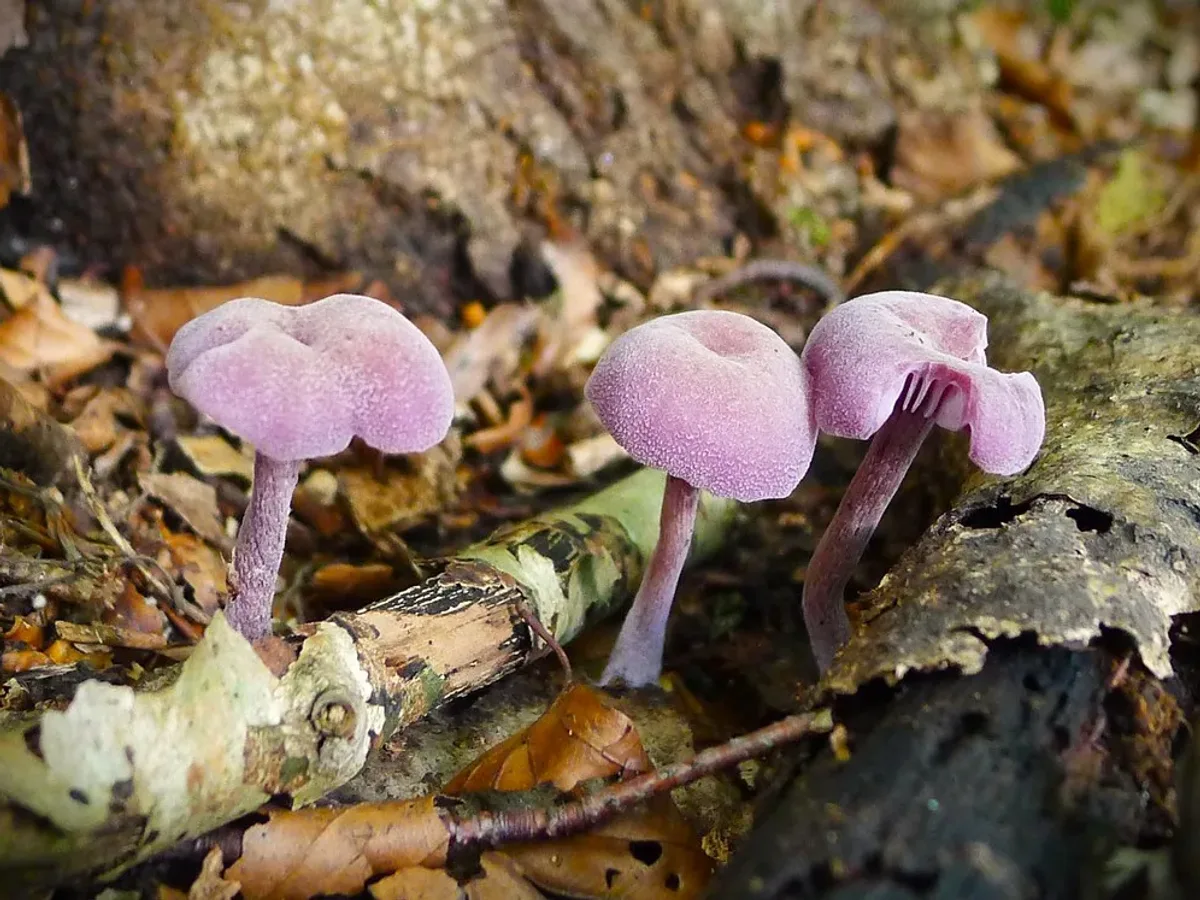 © gailhampshire (CC BY 2.0)
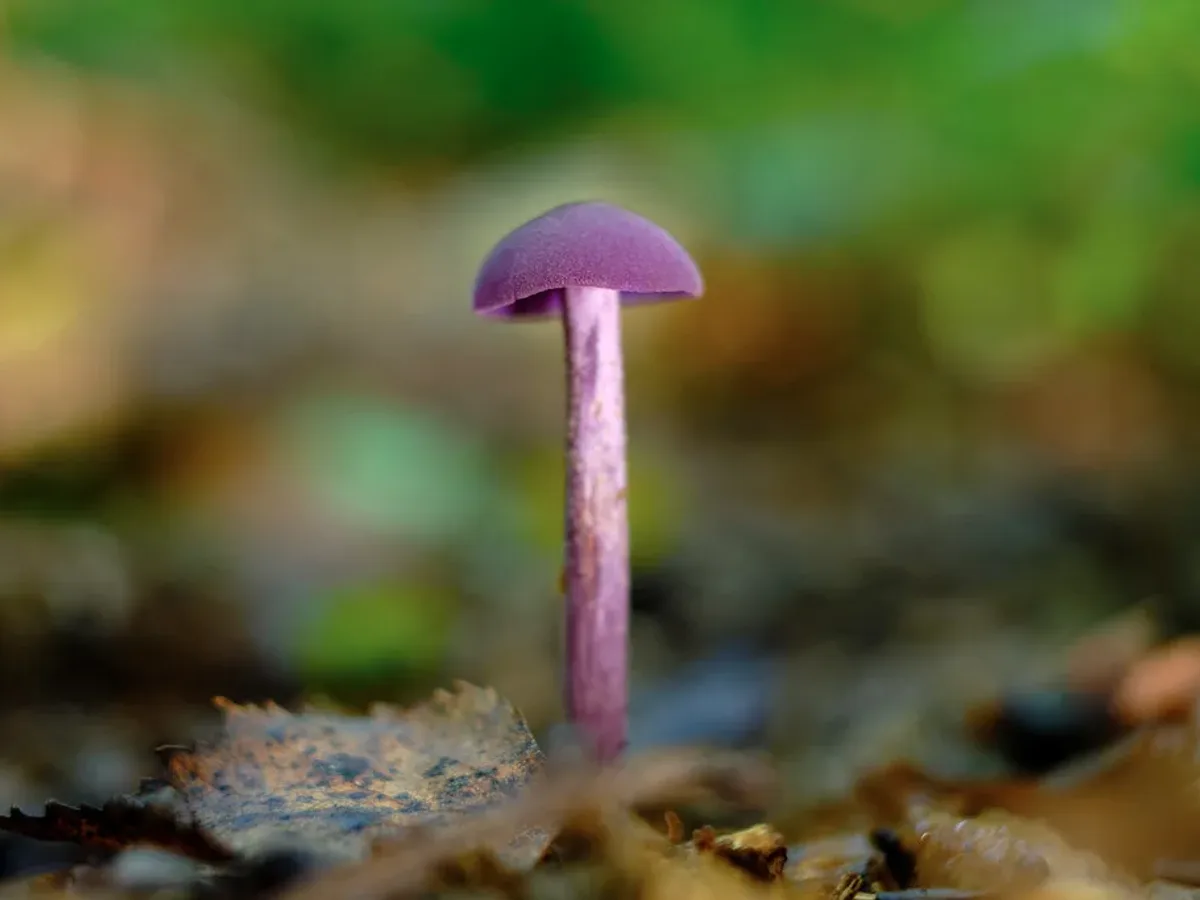 © Lukas Large (CC BY-SA 2.0)
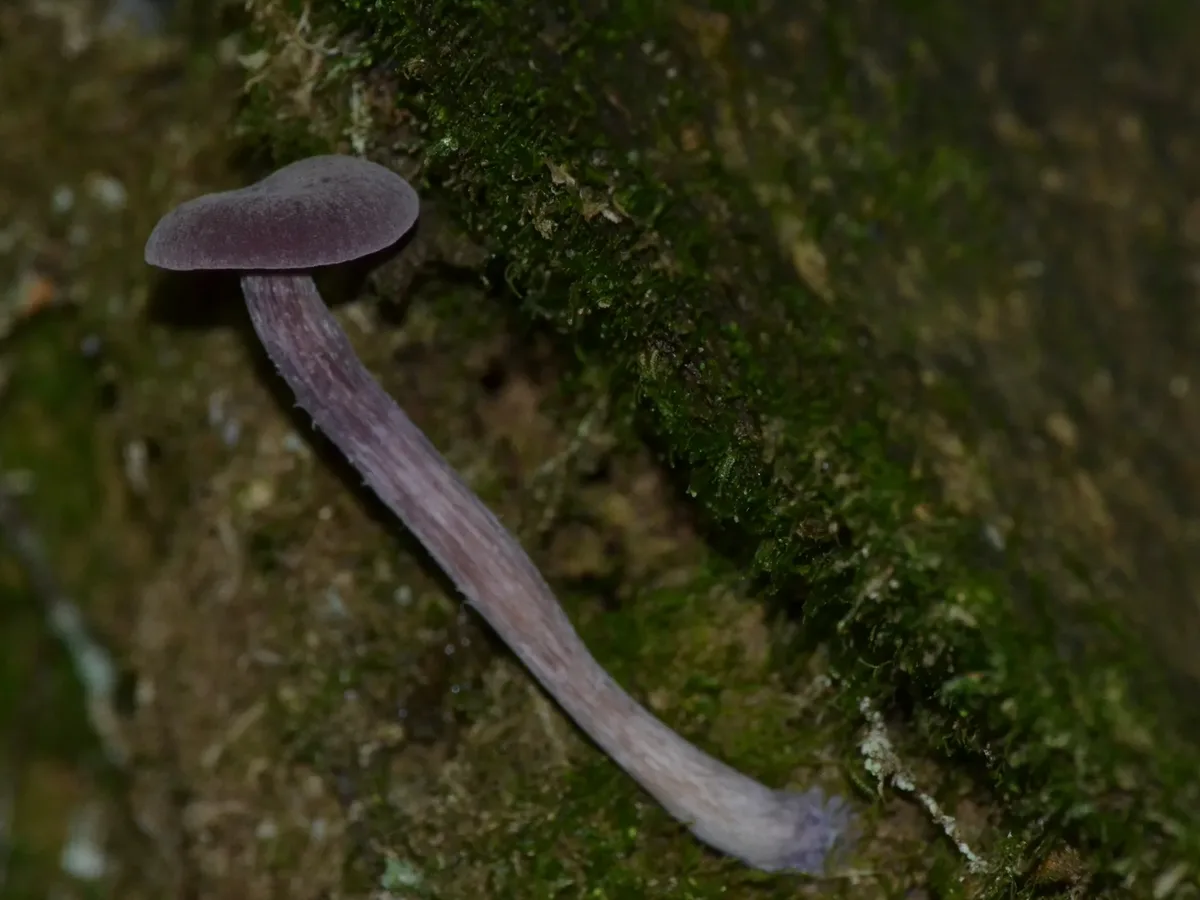 © EstebanMH (CC BY)
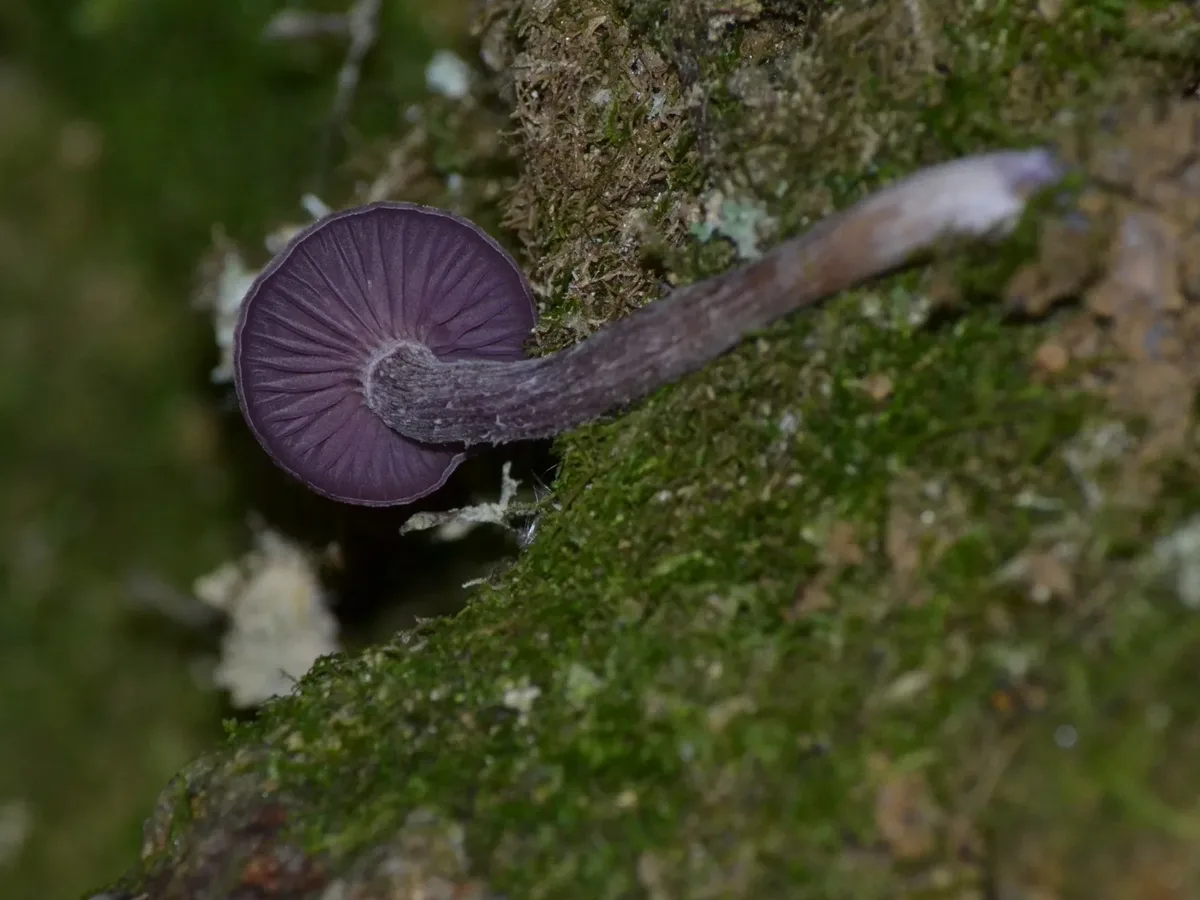 © EstebanMH (CC BY)
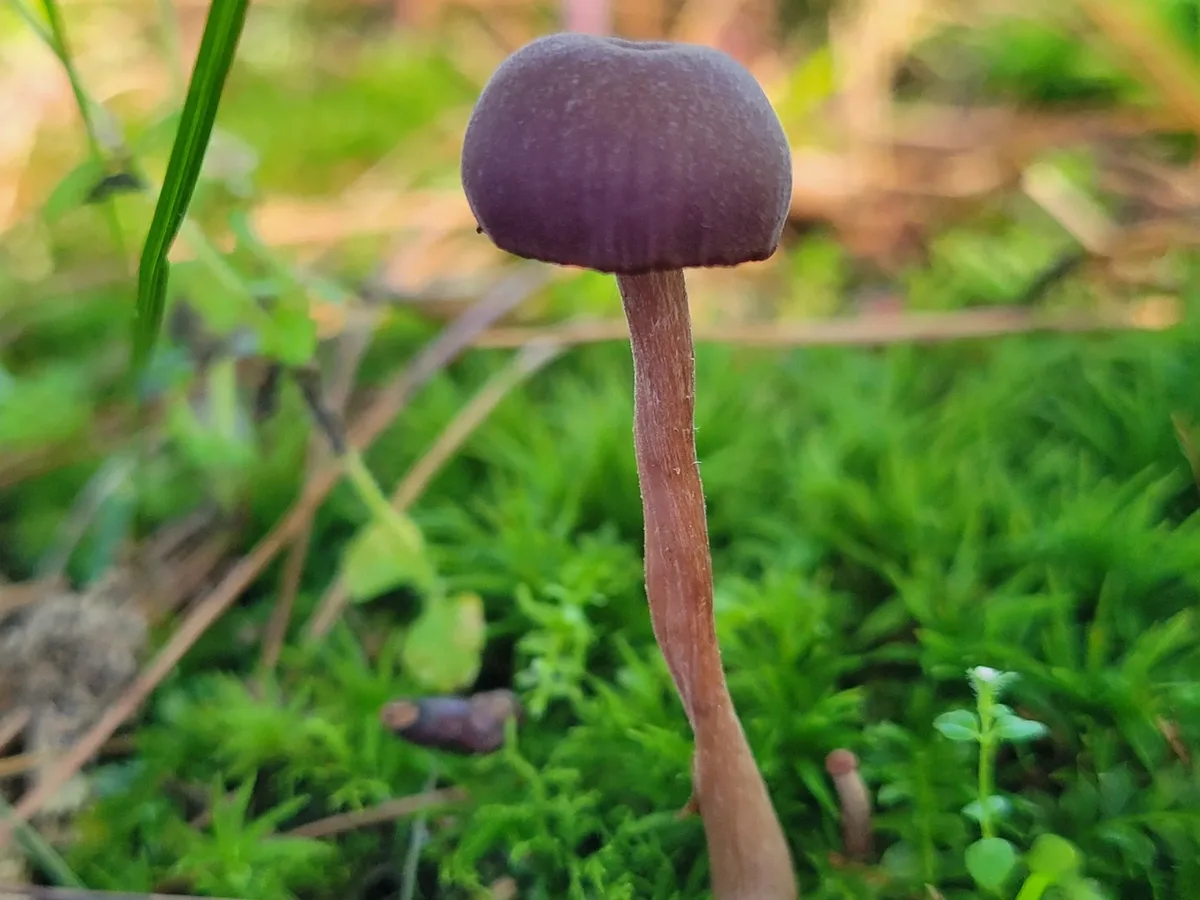 © Leora Fitz (CC BY)
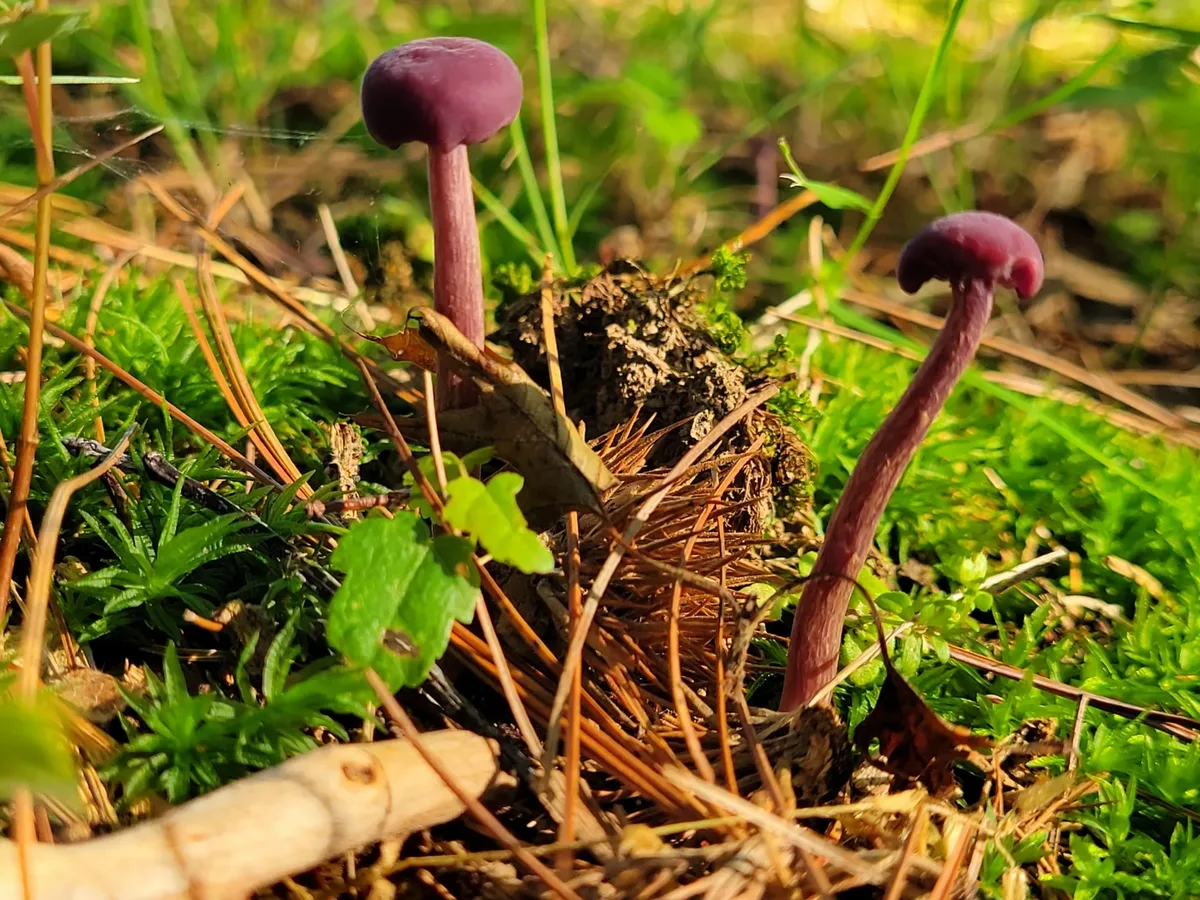 © Leora Fitz (CC BY)
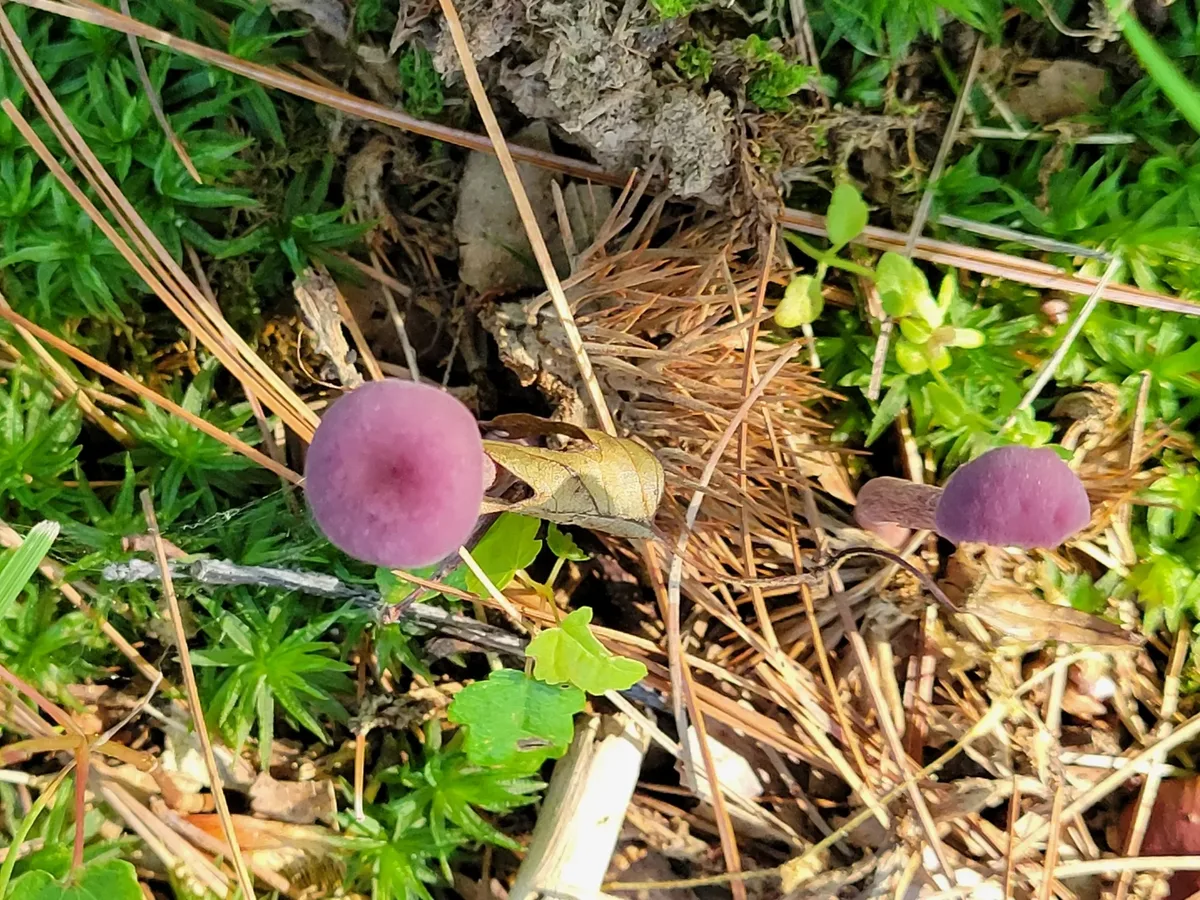 © Leora Fitz (CC BY)
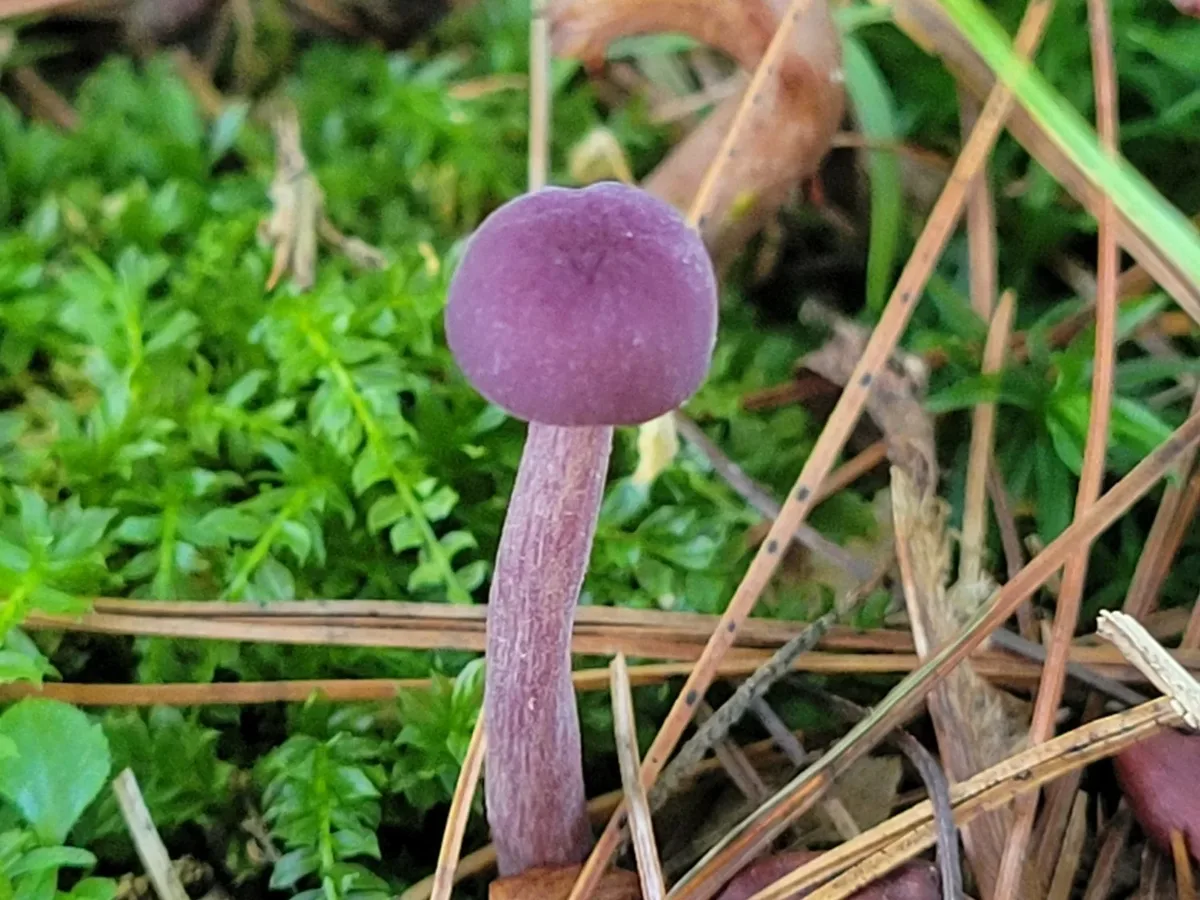 © Leora Fitz (CC BY)
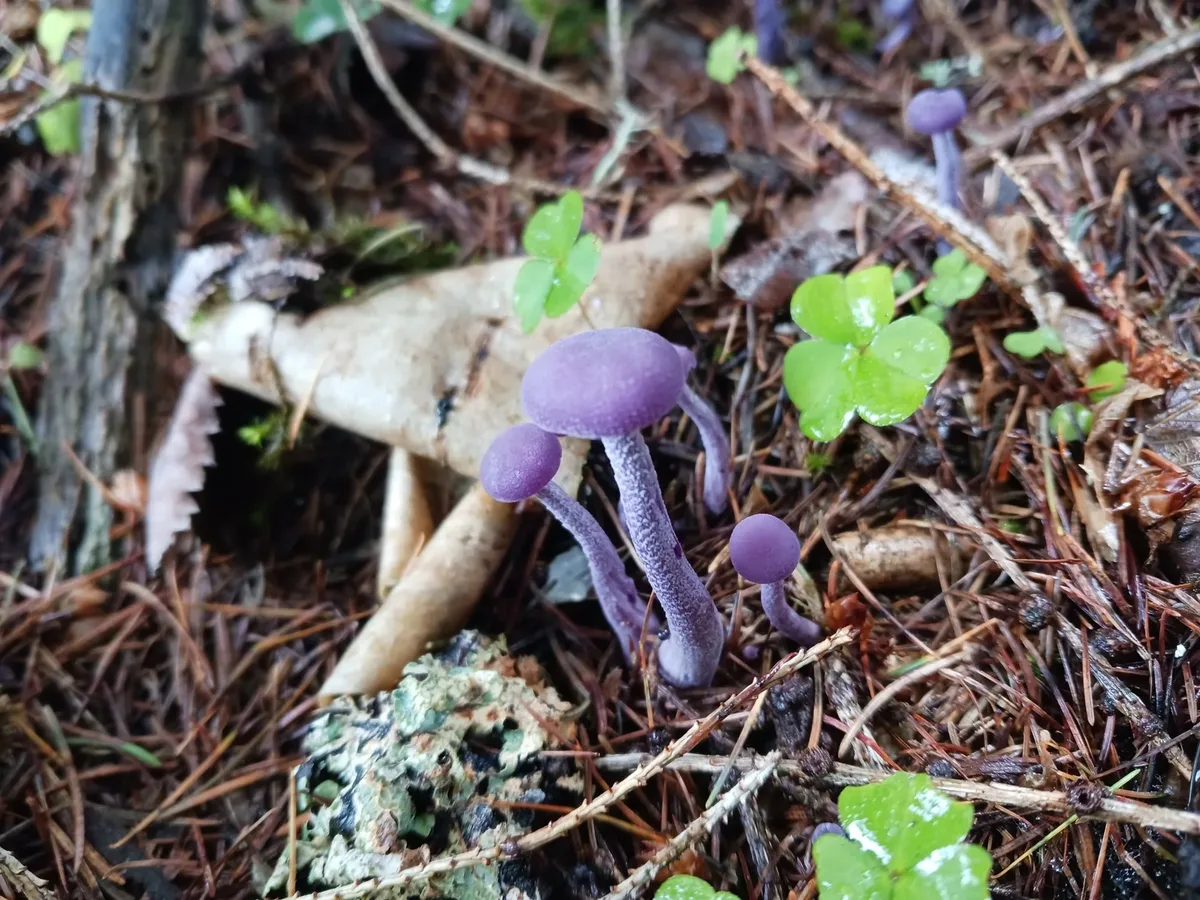 © Ladislav Čoček (CC BY)
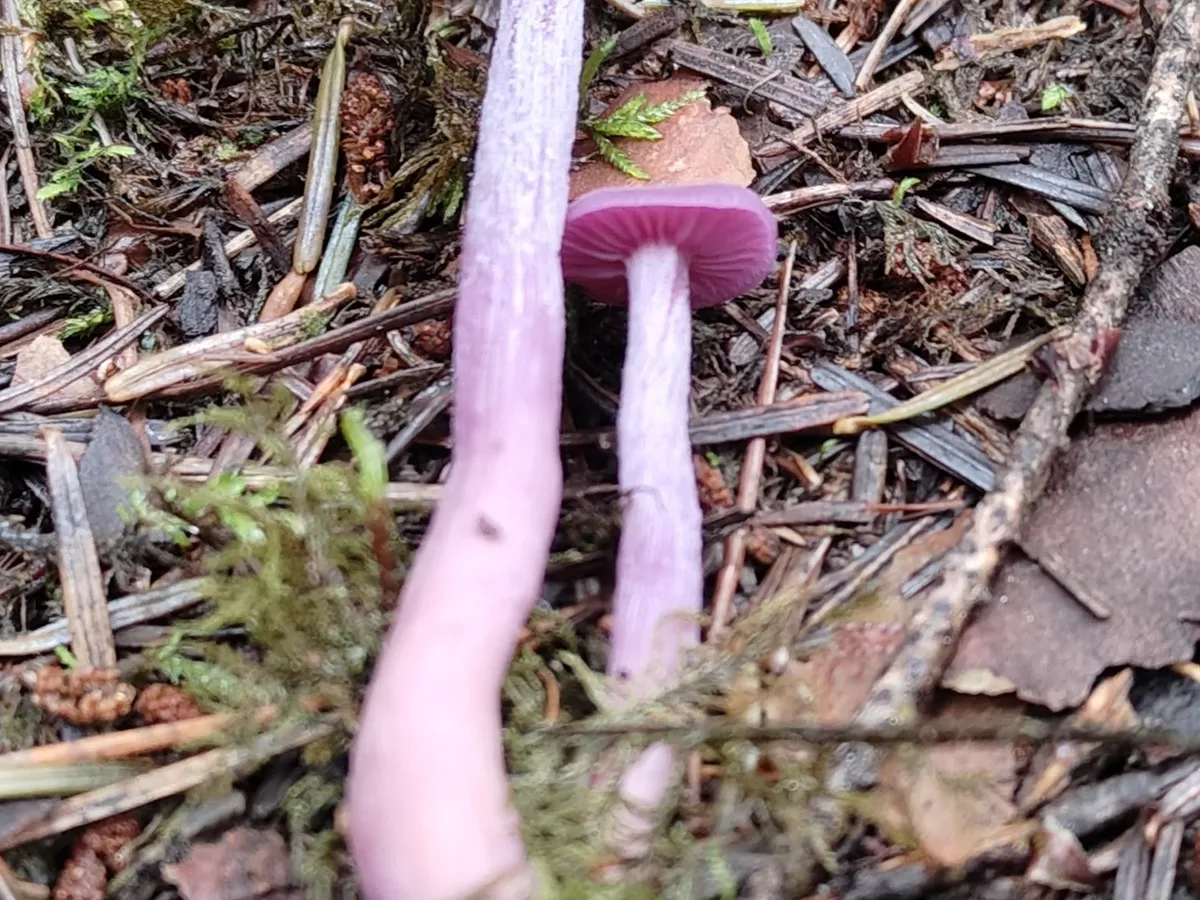 Norrland (CC0)
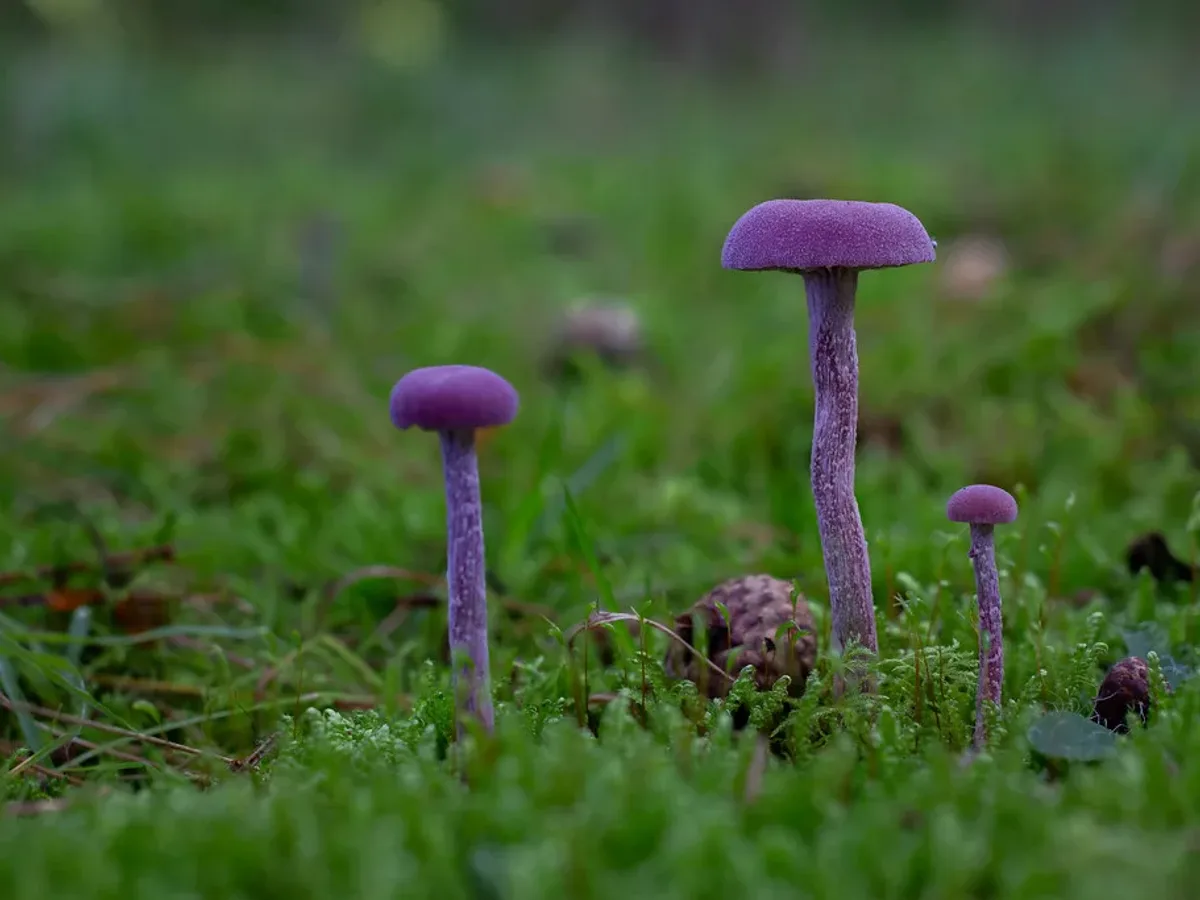 © Wolfgang Wollschweber (CC BY 2.0)© gailhampshire (CC BY 2.0)© Lukas Large (CC BY-SA 2.0)
Good to eat, once you have identified it with certainty and cooked it through.
Never eat a mushroom you are not 100% sure of - check the look-alikes below, and always cook wild mushrooms.
How to recognise it
The amethyst deceiver is one of the most instantly recognisable woodland fungi when fresh, clothed entirely in a rich violet-purple that extends uniformly across cap, gills, and stem.
Cap
The cap measures 1-5 cm and passes through convex, plane, and eventually shallowly funnel-shaped or wavy-edged stages as it matures. The surface is dry and minutely fibrillose rather than viscid.
Gills
The thick, widely spaced gills are adnate to slightly decurrent, and in fresh, well-hydrated specimens appear the same saturated amethyst as the rest of the fruitbody.
Stem
The stem, 4-10 cm tall and only 3-8 mm wide, is slender, tough, fibrous-striate along its length, and coloured like the cap. The base is usually anchored by a tuft of whitish mycelium.
Flesh
The flesh is thin, watery-violet when wet but pallid or even whitish when dry, which causes the whole mushroom to look like an entirely different, nondescript brown species after a dry spell - hence 'deceiver'.
Under the microscope, the echinate (spiny) globose spores are diagnostic and separate Laccaria from all superficially similar genera.
Where & when it grows
Habitat
A faithful companion of broadleaf woodland across temperate Europe and beyond, the amethyst deceiver forms ectomycorrhizal partnerships with a wide range of forest trees, including beech, oak, hornbeam, hazel, alder, birch, and various conifers.
It favours cool, humid conditions on acidic to mildly calcareous mineral soils rich in leaf mould, appearing in thick leaf litter, on bare humus, and occasionally colonising the base of mossy logs.
It is typical of the humid understorey of closed-canopy beech forests and mixed oak-beech woodland but is also recorded from conifer plantations.
It frequently fruits in troops, sometimes forming large loose arcs or diffuse rings, growing in association with its mycorrhizal partner's root zone.
When
In central and western Europe, amethyst deceivers fruit from July through November, peaking in September and October when late-summer warmth gives way to the first proper autumn rains. The season can shift a little later in warmer or more continental climates.
The species is impressively frost-tolerant and often continues producing fruitbodies well into November, dotting the leaf litter with violet long after most other mushrooms have given up.
Prolonged dry spells cause the fruitbodies to shrink and bleach almost beyond recognition - a faded deceiver really does look like an entirely different species - but they can partly revive when rain returns.
At higher elevations in mountainous regions, fruiting can begin as early as June.
How it grows
Laccaria amethystina is an ectomycorrhizal fungus - it does not decompose dead wood but instead weaves its mycelium into a living partnership with tree roots, trading mineral nutrients and water for sugars the tree has fixed from sunlight.
These relationships can persist for years, quietly threading the soil beneath a beech or oak while the aboveground world changes season by season.
When conditions are right - cool soil, adequate moisture - fruitbodies emerge singly, scattered, or in loose troops, often in the same spots year after year as the mycelium network fruits again. Individual mushrooms are relatively short-lived, lasting one to two weeks.
The species is a willing coloniser of newly planted and naturally regenerating forest, establishing its underground partnerships early as young trees put out their first fine roots.
Fruiting conditions
Requires persistent soil moisture; fruitbodies emerge 5-14 days after significant rain events during the cool season. Flush timing is strongly linked to soil temperature dropping below 18 °C in late summer, combined with adequate precipitation. Drought causes premature fading and shrivelling; fruiting resumes if autumn rains restore soil moisture.
Look-alikes
The most dangerous confusion involves violet Cortinarius species (webcaps). Cortinarius violaceus is much larger (cap 5-15 cm), darker violet-purple, and has a cobwebby cortina (veil) when young and a rusty-brown spore print.
Far more hazardous are the deadly webcaps Cortinarius rubellus and Cortinarius orellanus, which contain the kidney-destroying orellanine toxin causing delayed fatal nephrotoxicity - these are typically orange-brown to tawny, not violet. However, certain smaller violet Cortinarius (e.g. C. anomalus, C. camphoratus) can overlap in colour and habitat.
Always check for the cortina (cobwebby veil) in young specimens and a rusty or cinnamon spore print - Laccaria has white spores and no cortina at any stage of development.
- Laccaria laccata (the deceiver) is the closest relative, very similar in form but tawny-orange to pinkish-buff, never violet; when faded L. amethystina approaches this colour and the spore print plus accompanying unfaded specimens are essential.
- Mycena pura has a violet-pink cap but bell-shaped with striate margin, a strong radish-like smell, and a pink spore print; it contains muscarine and should not be eaten.
- Inocybe geophylla var. lilacina is small, pale lilac, has a silky-fibrous cap with a central umbo, brown spore print, musty earthy smell, and contains muscarine - always fatal to confuse.
- Clitocybe glaucocana and similar pale violet Clitocybe are funnel-shaped, larger, grey-lilac (not vivid violet), have decurrent gills, mealy smell, and contain muscarine; toxic.
- The waxcap Gliophorus psittacinus has mixed violet-green tones and a distinctly viscid cap.
None of these confusions should arise with fresh, fully hydrated amethyst deceivers showing vivid violet coloration.
Tawny orange-brown to foxy-red, not violet; cortina (cobwebby veil) present between cap margin and stem in young specimens; rust-brown spore print; gills sparse and orange-cinnamon. Contains orellanine, causing delayed kidney failure with 2-3 week latency - potentially fatal. Fresh, fully hydrated L. amethystina with vivid violet coloration is not realistically confused with C. orellanus; the confusion scenario applies only to severely faded or dried L. amethystina that has lost its violet pigment and approached buff-brown tones. In that case: always take a spore print (L. amethystina: white; C. orellanus: rust-brown) and check for cortina remnants at the stem - L. amethystina has no cortina at any developmental stage.
Orange-brown to tawny, never violet when fresh; cortina (fine cobwebby veil) between cap margin and stem; rust-brown spore print; cap dry and silky-fibrous; causes fatal orellanine nephrotoxicity with delayed onset (2-3 weeks), often requiring dialysis or transplant. Do not confuse with faded L. amethystina - always take a white spore print and check for cortina.
Larger, broadly funnel-shaped cap, more grey-lilac than vivid violet; gills decurrent (running down the stem); white spore print but smooth (not echinate) spores; mealy smell. Contains muscarine - toxic, do not eat.
Blue-lilac cap and gills that fade rapidly to grey-brown; cortina present when young; rust-brown spore print at maturity; grows in broadleaf and mixed woodland, overlapping the habitat of L. amethystina. Not edible. The cobweb cortina and rusty spore print distinguish it immediately.
Much larger (cap 5-15 cm), darker blackish-violet cap with dry, velvety-scaly surface; prominent cobwebby cortina visible on young specimens; rusty-brown spore print; robust, club-shaped stem base. Edible but not recommended due to risk of confusion with deadly webcap relatives.
Young fruitbodies show vivid green with violet tints; cap and stem are distinctly viscid-slimy when wet (L. amethystina is dry); associated with unimproved grassland, not closed woodland; white spore print but non-spiny spores. Inedible but not dangerously toxic.
Small, pale lilac to whitish-lilac; cap silky-fibrous with a distinct central umbo; gills dull greyish-brown at maturity; brown spore print; musty earthy smell. Muscarine-containing and seriously toxic - never consume. The brown spore print and umbonate cap are key distinctions.
Very similar in form but consistently tawny, pinkish-buff, or orange-brown, never violet; faded L. amethystina can approach this colour. Both have white spore prints and spiny spores. Separation is primarily by fresh colour and, when necessary, microscopy. Edible; not a safety concern.
Smaller, bell-shaped cap with striate margin; distinct radish-like smell (unmistakable); pink spore print; gills narrowly adnate, pinkish; stem thinner and more brittle. Contains muscarine (mildly toxic) - do not eat.
In the kitchen
Picking & cleaning
Pick only fully hydrated, richly coloured specimens for the table - faded, pale individuals are stale or water-stressed and have little culinary value.
The thin caps and gills are fragile, so place loosely in a basket lined with paper rather than packing tightly.
Because the fruitbodies are small and thin-fleshed, large quantities are needed for a meal, and they are most efficiently collected in sites with extensive troops.
Check each specimen carefully before bagging: the vivid violet colour is reassuring when fresh, but faded specimens must be examined closely to rule out dangerous lookalikes.
Avoid specimens growing in soil contaminated by road runoff or near industrial sites, as Laccaria spp. are documented arsenic accumulators from contaminated substrates.
Cooking
The amethyst deceiver is a pleasant edible with mild flavour and a texture that holds up well to light cooking. It is best used fresh as a garnish or accent rather than as a main ingredient due to its thin flesh.
Sauté over medium-high heat with butter, garlic, and fresh thyme; the violet colour partially fades to a greyish-mauve on cooking but remains distinctive. It pairs well with scrambled eggs, risotto, pasta, and game.
Larger batches can be dried (the colour lightens but aroma concentrates slightly) and crumbled into soups or sauces.
Do not eat raw in quantity. Avoid mixing with faded specimens of uncertain identity.
Good to know
The amethyst deceiver is an edible species, but the presence of deadly lookalikes - particularly certain violet Cortinarius webcaps and muscarine-containing small agarics - means absolute certainty in identification is required before consuming any specimen.
Never eat any violet mushroom unless ALL of the following are confirmed:
- 1White spore print (take a print on white and black paper).
- 2No cobwebby cortina at any developmental stage.
- 3No bitter, musty, mealy, or radish-like smell.
- 4Thin, pliant, fibrous stem (not club-shaped, bulbous, or umbonate).
- 5Vivid violet coloration extending uniformly through cap, gills, and stem when fresh.
Faded specimens should not be consumed if identification is uncertain - take a spore print and inspect for cortina remnants.
Laccaria amethystina is documented to bioaccumulate inorganic arsenic, particularly when growing on soils with elevated arsenic levels (near old orchards, industrial sites, wood treatment facilities).
In clean woodland soil this is not a concern at typical culinary consumption levels, but do not harvest repeatedly from potentially contaminated ground. Do not eat raw in quantity.
A reference guide - never an edibility guarantee. When in doubt, leave it out.