Sheathed Woodtuft
Kuehneromyces mutabilissyn. Pholiota mutabilis, Agaricus mutabilis, Hypholoma mutabile, Galerina mutabilis, Dryophila mutabilis
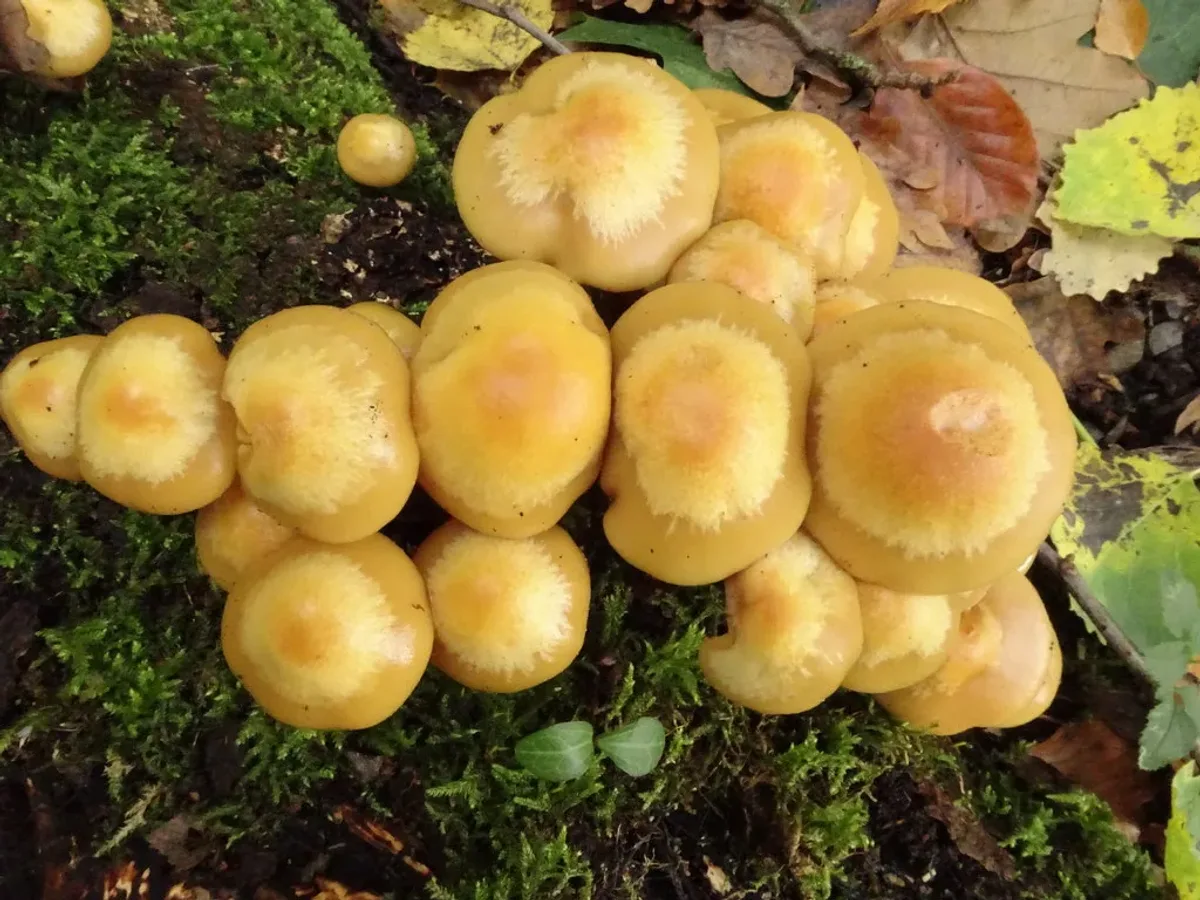 © Ephemeral Impressions (CC BY-SA 2.0)
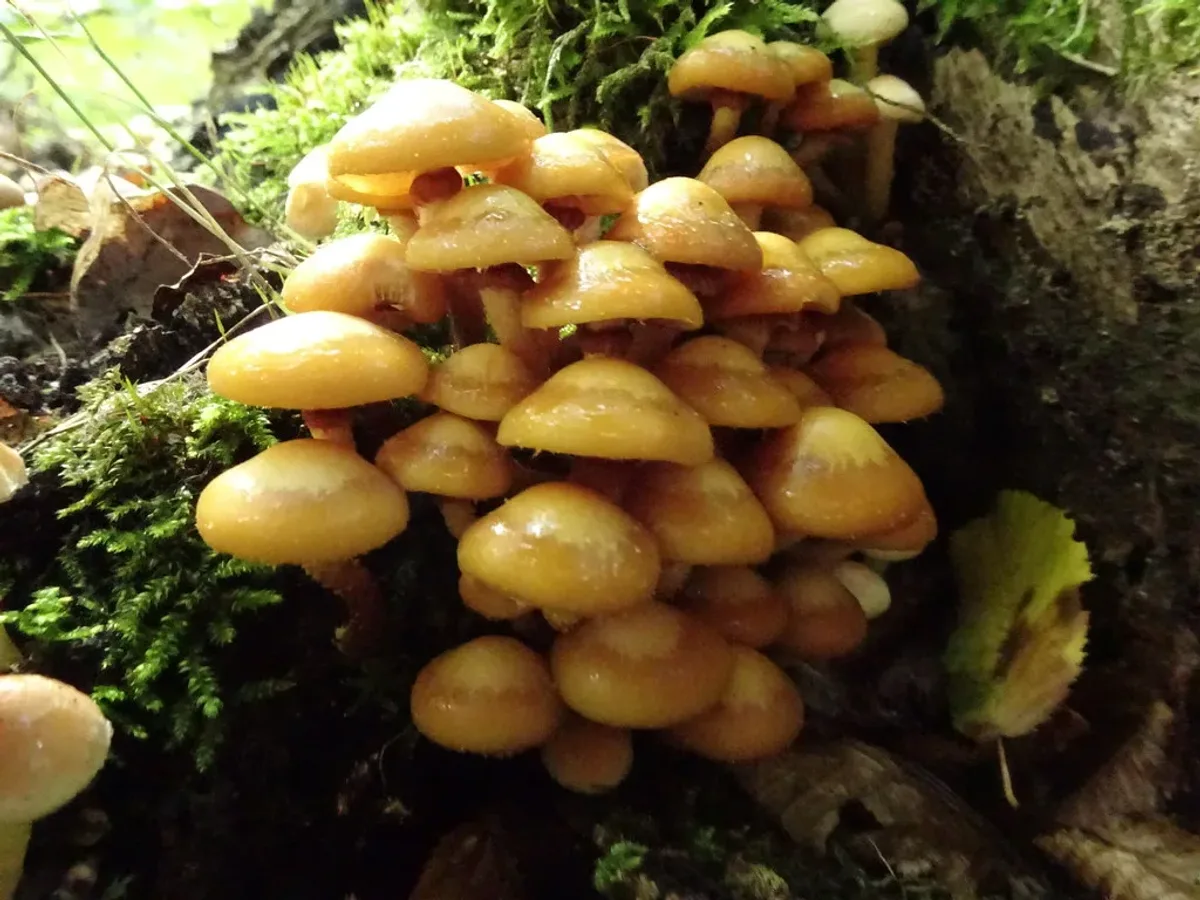 © Ephemeral Impressions (CC BY-SA 2.0)
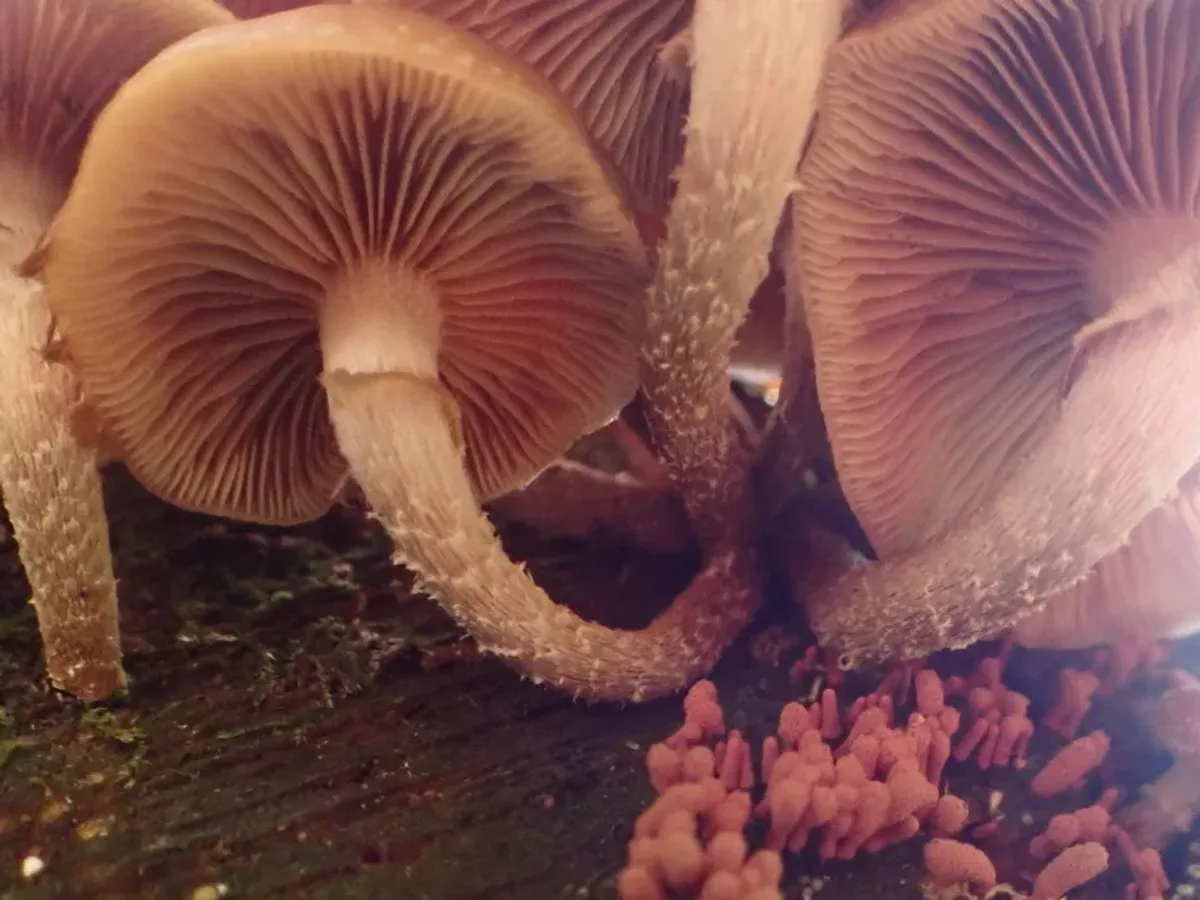 © Nicola van Berkel (CC BY-SA)
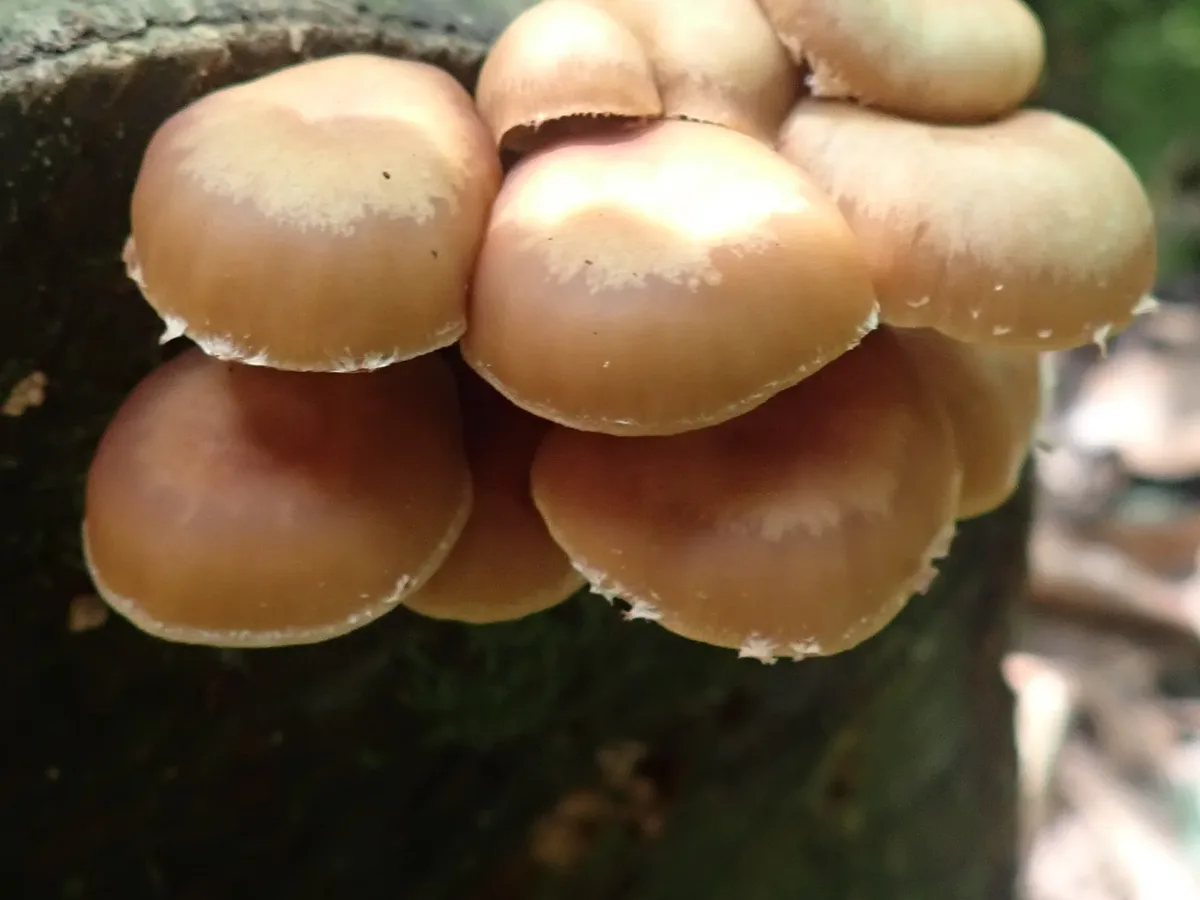 © Nicola van Berkel (CC BY-SA)
 © Nicola van Berkel (CC BY-SA)
 © Nicola van Berkel (CC BY-SA)
 © Jerry Lanfear (CC BY)
 © Jerry Lanfear (CC BY)
 © Jerry Lanfear (CC BY)
 © Jerry Lanfear (CC BY)
 © Ephemeral Impressions (CC BY-SA 2.0)© Ephemeral Impressions (CC BY-SA 2.0)© Ephemeral Impressions (CC BY-SA 2.0)
Edible only with the right preparation - or safe for some people but not others. Learn the caveats first.
Never eat a mushroom you are not 100% sure of - check the look-alikes below, and always cook wild mushrooms.
How to recognise it
The Sheathed Woodtuft is a medium-sized, warm-brown clustering mushroom whose single most useful feature is the strongly two-toned, hygrophanous cap.
Cap
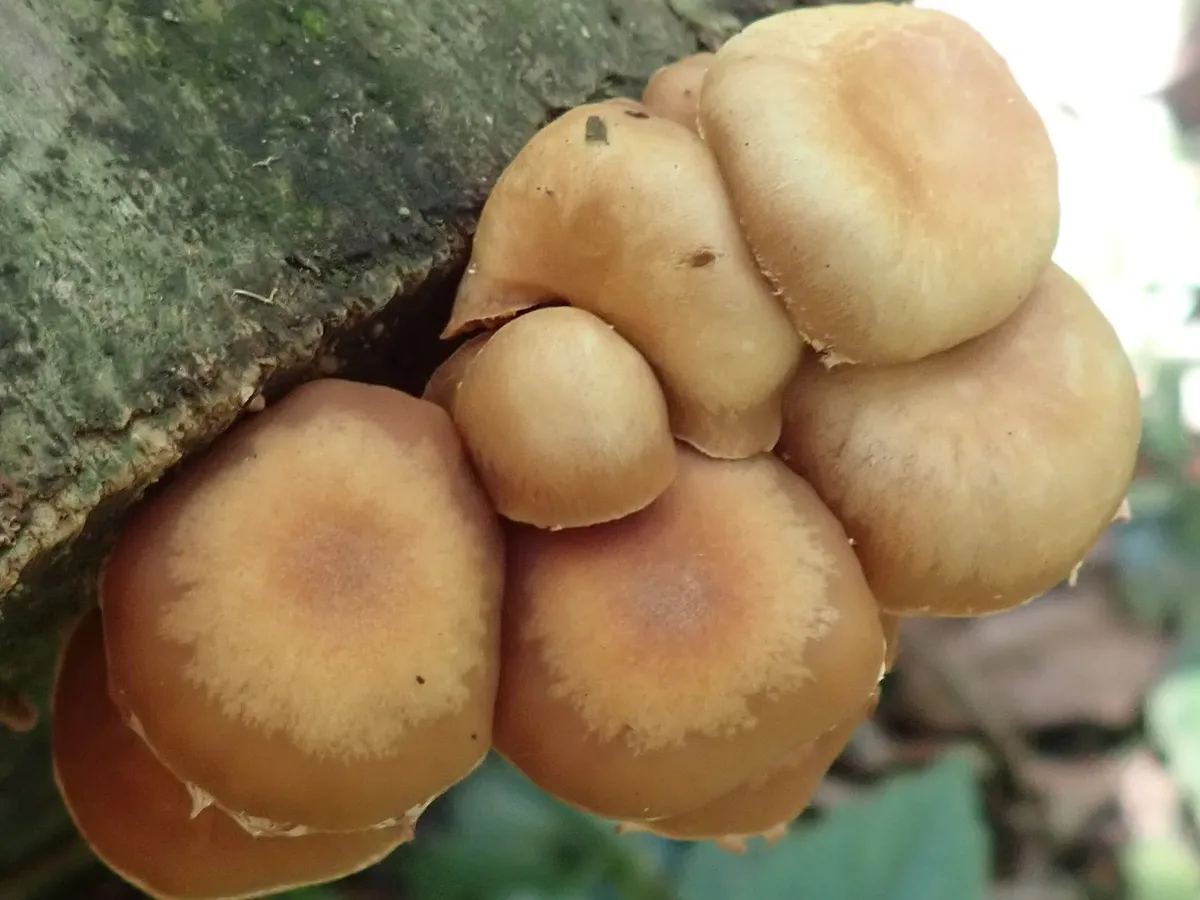
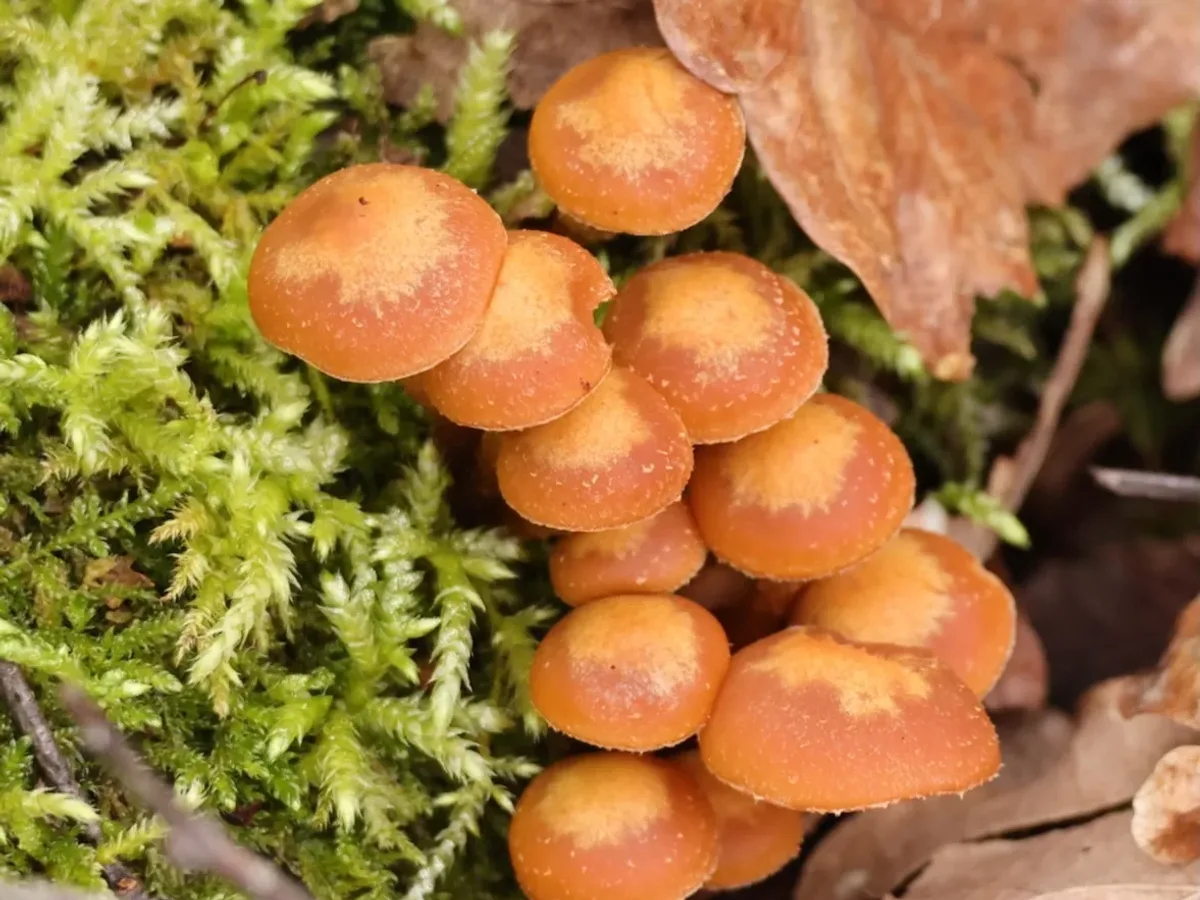
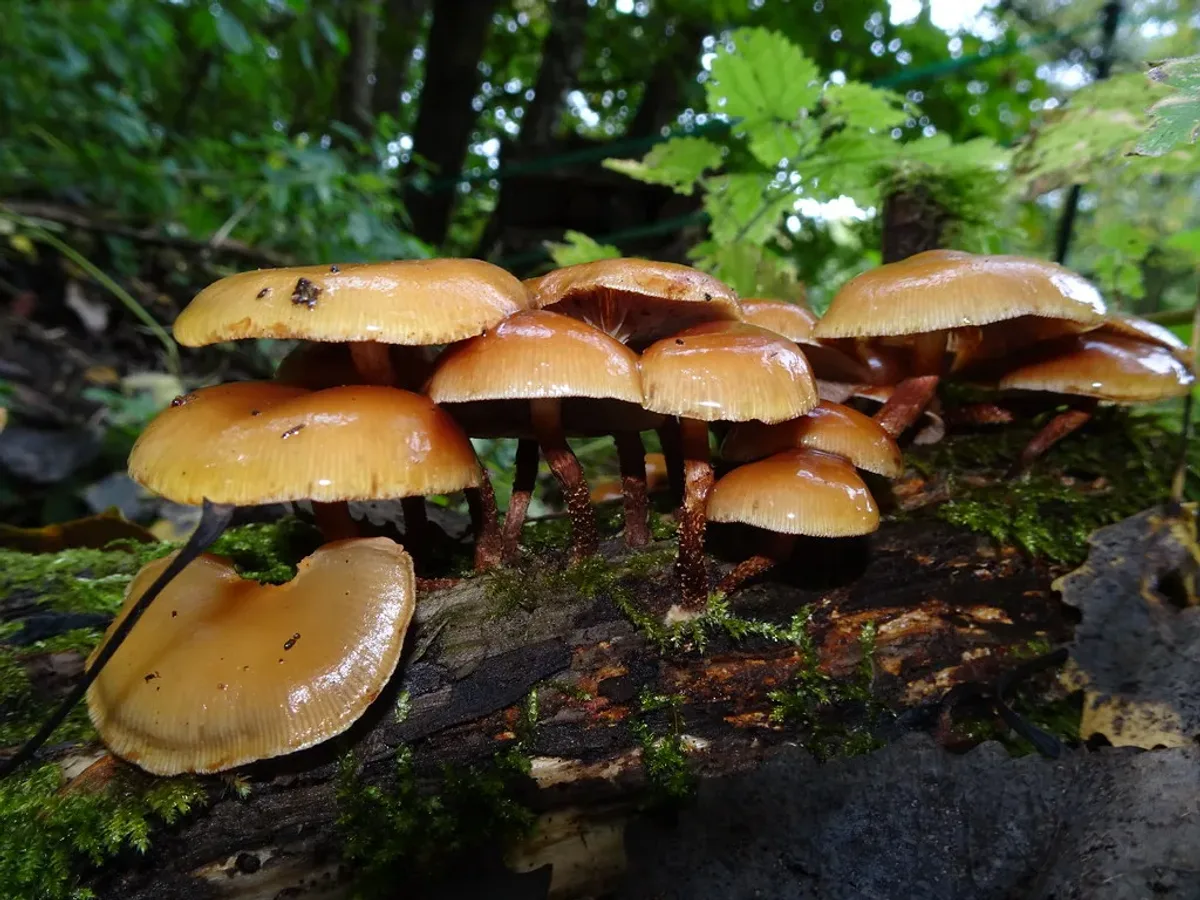
When wet the cap is a rich date-brown to tawny cinnamon, but as it dries it fades from the centre outward to a pale ochre-buff, so a typical cap in the field looks like a dark moist ring around a paler, drying middle.
It is 3-7 cm across, convex with a low broad umbo, smooth and a little greasy when damp, with a margin that can be faintly striate.
Gills
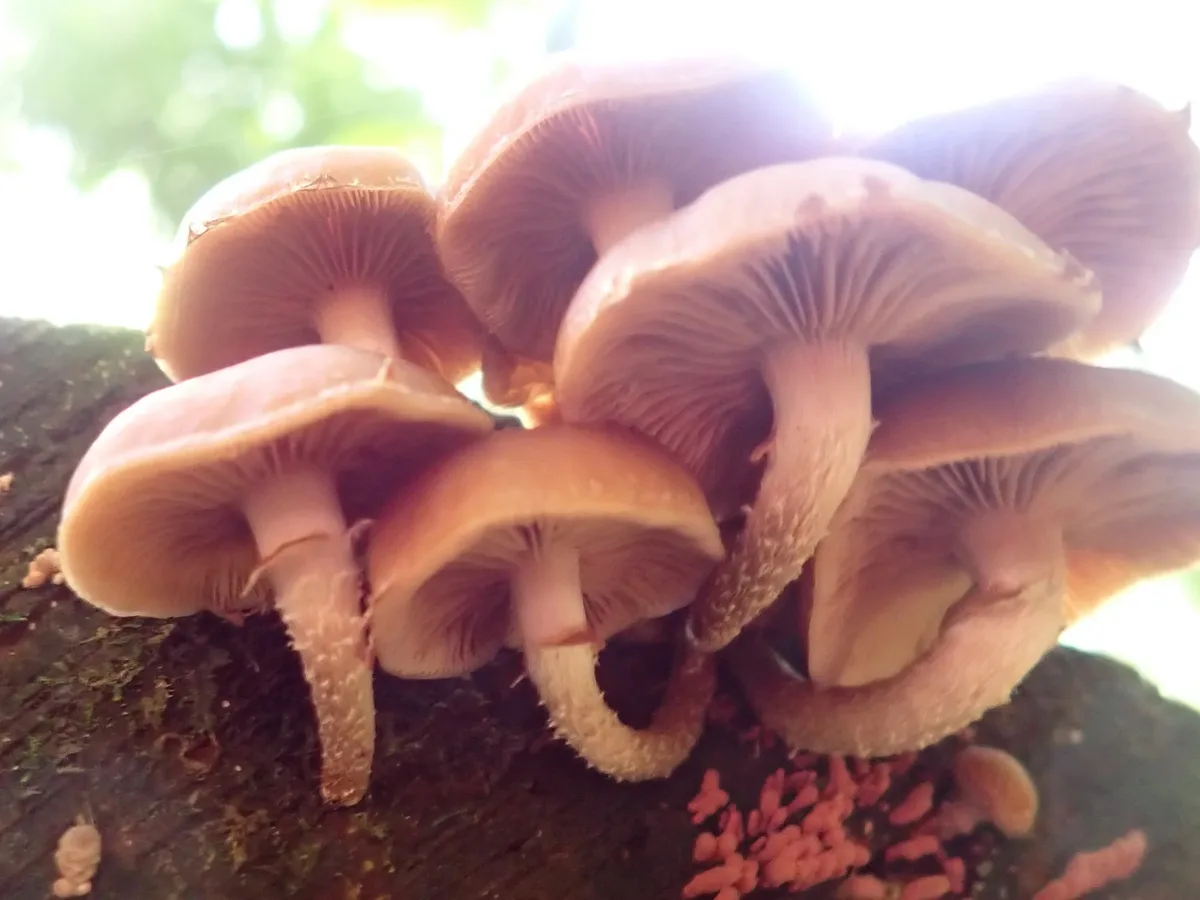
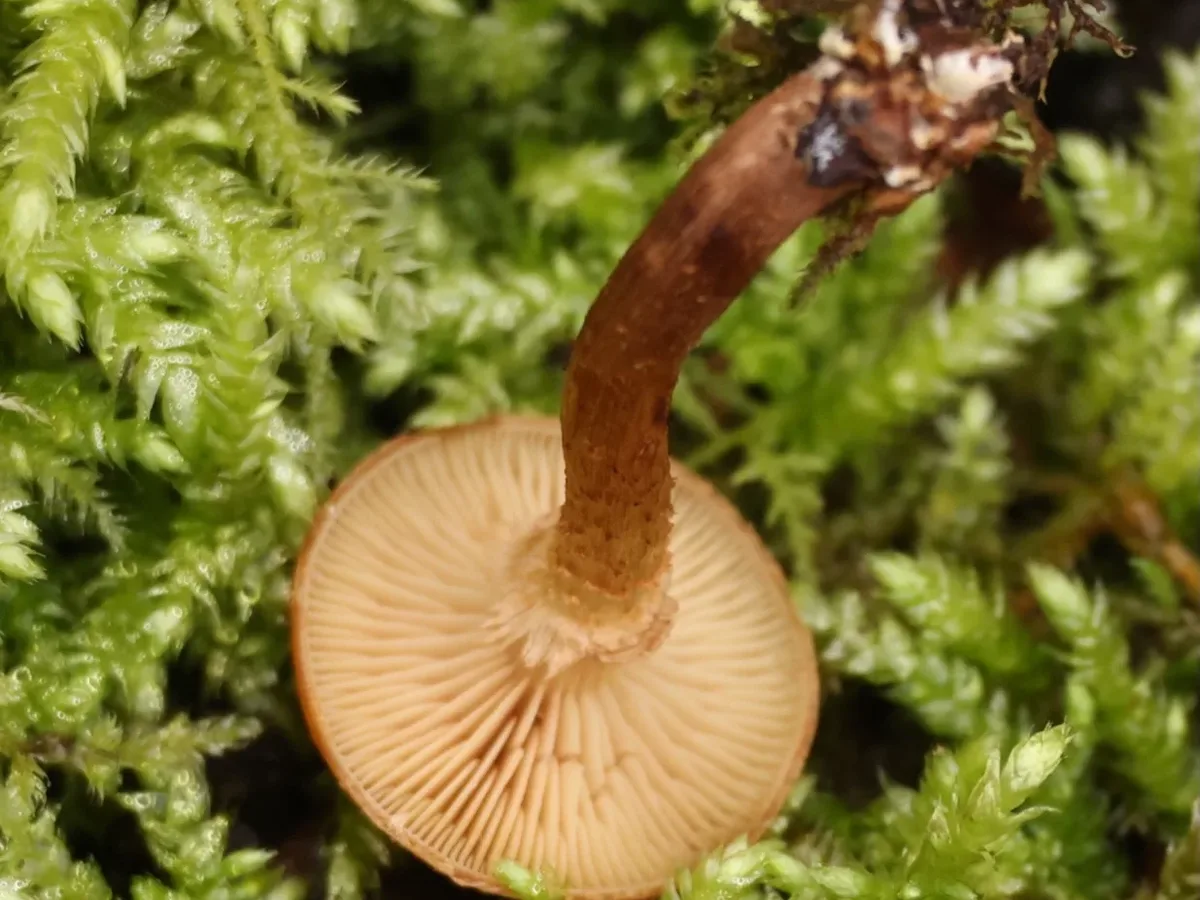
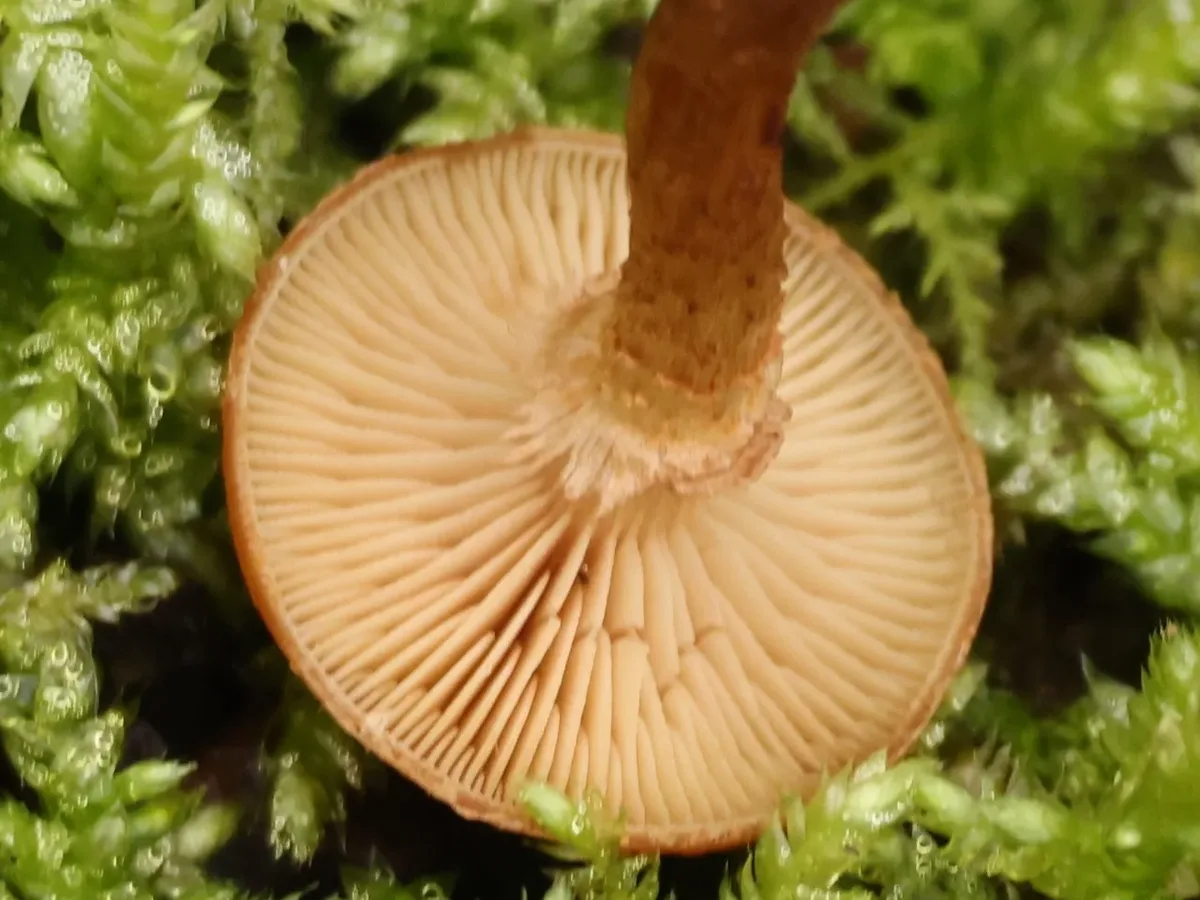
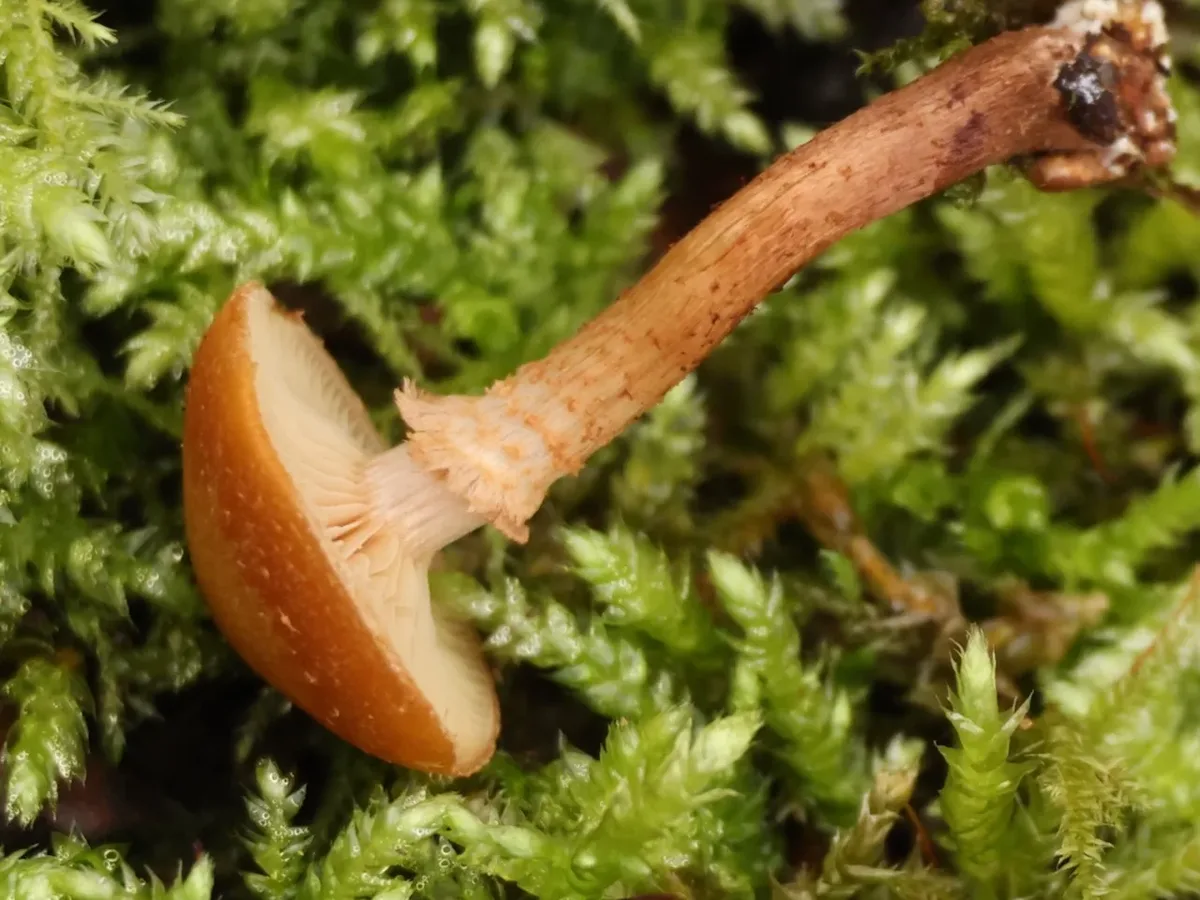
Gills are adnate to slightly decurrent and fairly crowded, ageing from pale cinnamon to rusty cinnamon-brown as the rust-coloured spores ripen.
Stem
The decisive character is the stem. Above a membranous (and often quickly disappearing) ring it is smooth and pale, while below the ring it is conspicuously clothed in dark brown, downward-pointing scales that intensify toward an almost blackish base, giving the lower stem a shaggy, sheathed or 'socked' look that gives the species its English name.
Flesh
The flesh is thin and watery brown.
Smell & taste
The smell is mild and pleasantly fungoid, and the spore print is rusty brown.
Where & when it grows
Habitat
A pure wood-rotter, never growing from soil except where it is feeding on buried wood or roots.
It fruits in tight, often large clusters on dead hardwood: stumps, fallen logs, standing dead trunks and exposed roots, frequently on birch, beech, alder, willow, oak and poplar, and even on old worked timber and fence posts.
It is widespread and common throughout temperate Europe and across the Northern Hemisphere, in deciduous and mixed woodland, parks, gardens and along hedgerows, from the lowlands well up into the mountains.
When
One of the longest-fruiting edible woodland mushrooms, appearing from spring (April-May) right through to late autumn (October-November), typically in a late-spring/early-summer flush and a stronger autumn flush.
In mild, frost-free spells clusters can be found even in winter.
Fruiting follows rain closely, and a well-colonised stump may produce repeated crops over several years.
How it grows
Entirely saprotrophic - it has no mycorrhizal partnership with trees, only a long, quiet relationship with dead wood.
The mycelium works through the heartwood producing a white rot. As long as a stump or log retains enough moisture and nutrients, the same colonised wood will throw up new clusters flush after flush, season after season.
A stump that fruits well one autumn is likely to reward a return visit the following spring and the autumn after that. In favourable years a single well-established log can produce several crops.
Fruiting conditions
Fruits readily after rain on moisture-retaining dead hardwood across a wide temperature range, allowing both spring and autumn flushes; well-colonised stumps re-fruit repeatedly. Values are general saprotrophic guidance, not species-specific measurements.
Look-alikes
THIS SPECIES HAS A DEADLY LOOK-ALIKE. The Funeral Bell, Galerina marginata (= G. autumnalis), is lethally poisonous, contains the same amatoxins as the Death Cap, grows in similar brown clusters on dead wood in the same seasons, and can even share the same log or stump.
Galerina lacks the dark, downward-pointing scaly sheath on the lower stem. Its stem is more or less smooth, silky or only finely fibrillose, often with a faint silvery sheen below the ring, and it tends to have a more uniformly coloured, less sharply two-toned cap.
Crucially, BOTH species give a rusty-brown spore print, so a spore print does NOT separate them - the lower-stem scaling is the key character.
Because beginners cannot reliably separate the two, many experienced foragers advise against ever eating wild Kuehneromyces unless every feature is confirmed.
Other harmless brown clustering wood-fungi that can be confused include:
- various Pholiota species (often more viscid, scaly-capped or yellow-tinged)
- Hypholoma/Psilocybe (sulphur tuft and relatives, with greenish to purplish-grey gills and a purple-brown rather than rusty spore print)
- Tubaria
None of these is deadly, but the overriding danger remains Galerina.
Lethally poisonous (contains amatoxins like the Death Cap) and the single most dangerous confusion. Grows in the same brown clusters on dead wood, same seasons, sometimes the same stump. Galerina has a smooth to silky or only finely fibrillose lower stem WITHOUT the dark, recurved scaly sheath of Kuehneromyces, and a more uniformly coloured, less sharply two-toned cap; its stem is also usually thinner. The spore print is rusty brown in BOTH species, so a spore print does NOT separate them - the dark scaly stem sheath is the key separator. If unsure, do not eat.
Clusters on wood but the cap and stem are densely covered in upturned dry scales over a dry yellowish-tawny ground, the cap is not strongly two-toned/hygrophanous, and it often smells of garlic or radish. Considered inedible/mildly toxic, not deadly.
Also clusters on dead hardwood but is brighter sulphur-yellow to yellow-green, with greenish to purplish-grey gills, a very bitter taste, and a purple-brown (not rusty) spore print. Lacks the scaly stem sheath. Poisonous (causes gastric upset) but not deadly.
Small brown hygrophanous cap on woody debris but much smaller and flimsier, lacking the robust scaly-sheathed stem and persistent clustering habit; of no food value.
Clusters on hardwood, often in winter, but has an orange to tawny SLIMY cap, no ring at all, and a tough dark velvety stem; a white spore print versus rusty-brown. Edible, so confusion here is not dangerous but distinguishes the species.
In the kitchen
Picking & cleaning
Harvest only young to middle-aged caps that are still firm; older specimens become soft, water-soaked and insect-ridden.
Cut or twist whole clusters and inspect every single stem individually, because deadly Galerina can grow intermingled in the very same tuft.
Keep the caps separate from any look-alike collection.
The lower stems are tough and fibrous and are usually discarded, only the caps and tender upper stems being kept for the pan.
Cooking
When correctly identified, the Sheathed Woodtuft is a well-regarded edible with a pleasant aromatic flavour, traditionally valued in central and eastern Europe (the German name Stockschwämmchen reflects its long culinary use).
The tender caps are good in soups, stews and sauces, where they thicken the liquid and lend a deep mushroom flavour, and they take well to drying for later use.
The fibrous lower stems are tough and best discarded.
Always cook thoroughly; it should never be eaten raw.
Good to know
Treat this as an expert-only species. The presence of the deadly Galerina marginata in the very same habitat, season, growth habit and colour range means a careless or hurried collection can be fatal.
Note that a spore print is NOT a safe separator here, because both species are rusty-brown spored.
Confirm these together:
- the conspicuous dark scaly sheath on the lower stem below the ring
- the sharply two-toned hygrophanous cap
- the rusty-brown spore print
Check every individual fruitbody in a cluster, never a representative sample. If there is any doubt at all about a single mushroom, discard the whole collection.
Cook thoroughly before eating; never sample raw.
A reference guide - never an edibility guarantee. When in doubt, leave it out.