Chaga
Inonotus obliquussyn. Poria obliqua, Polyporus obliquus, Fuscoporia obliqua, Boletus obliquus
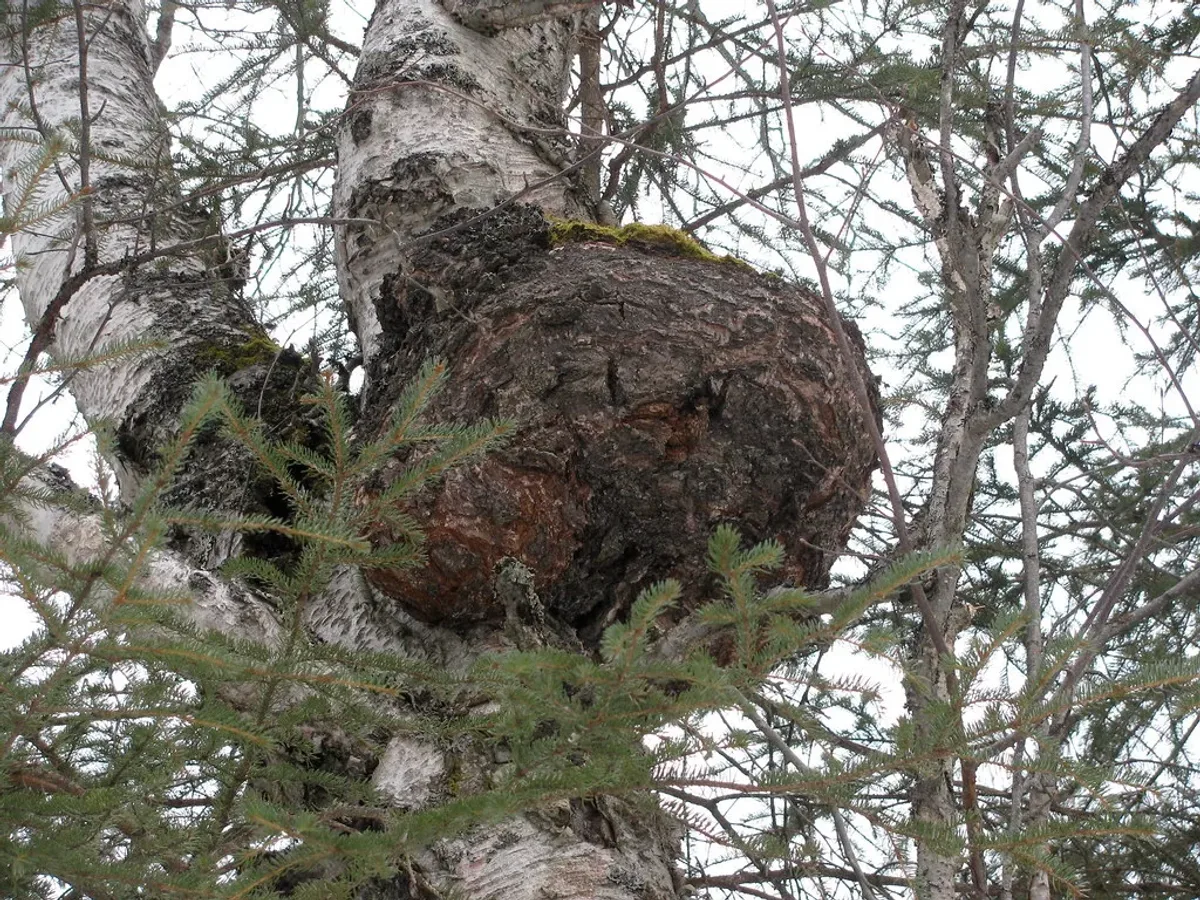 Forest Health Protection, Forest Service, USDA, AK (Public domain)
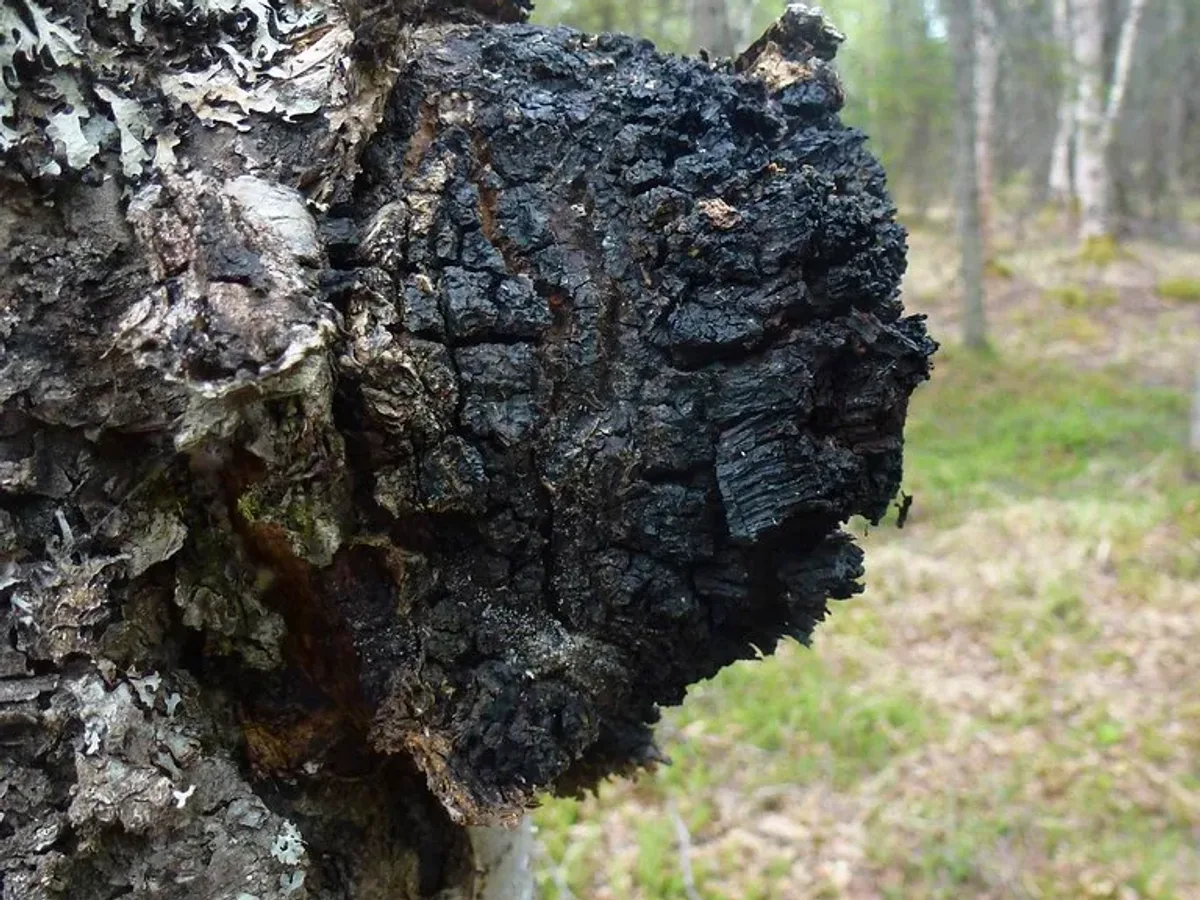 Forest Health Protection, Forest Service, USDA, AK (Public domain)
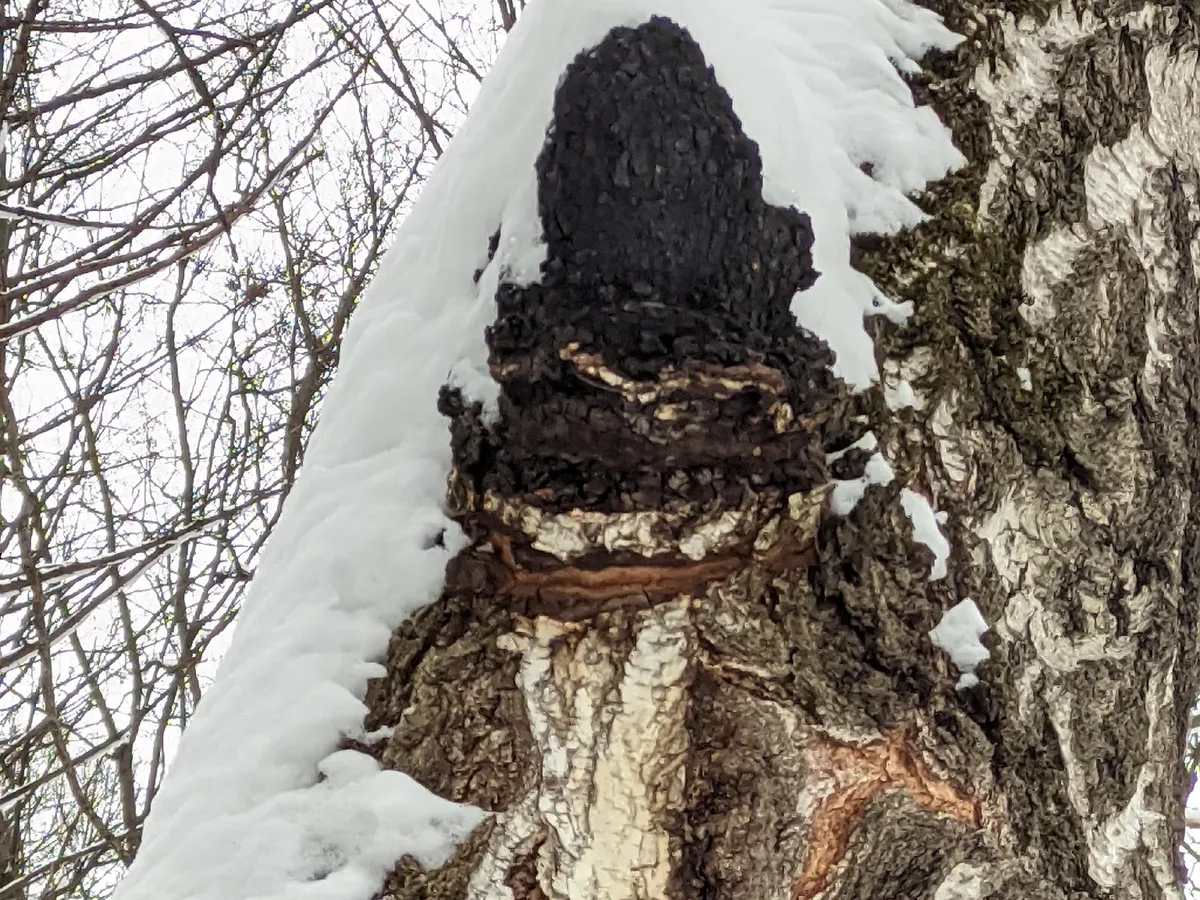 © Марина Давлетшина (CC BY)
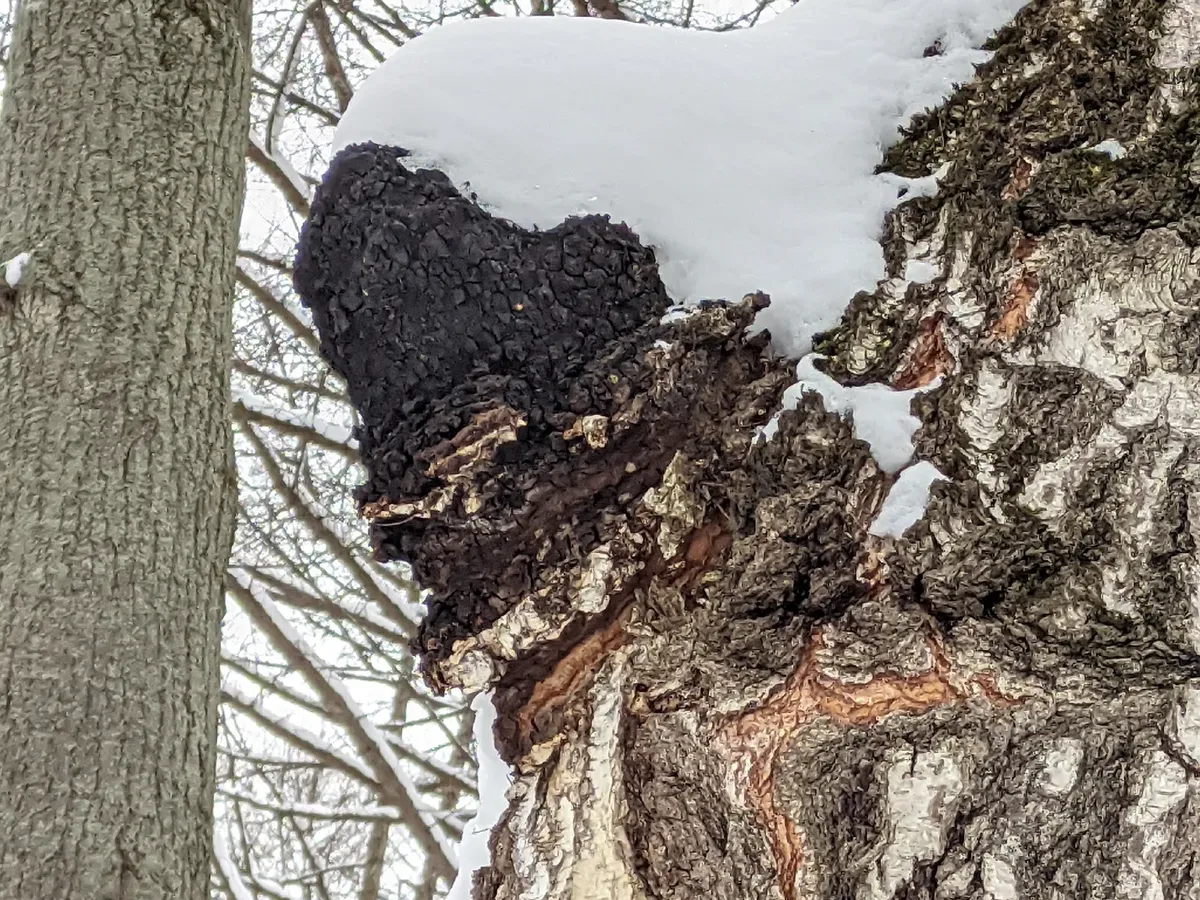 © Марина Давлетшина (CC BY)
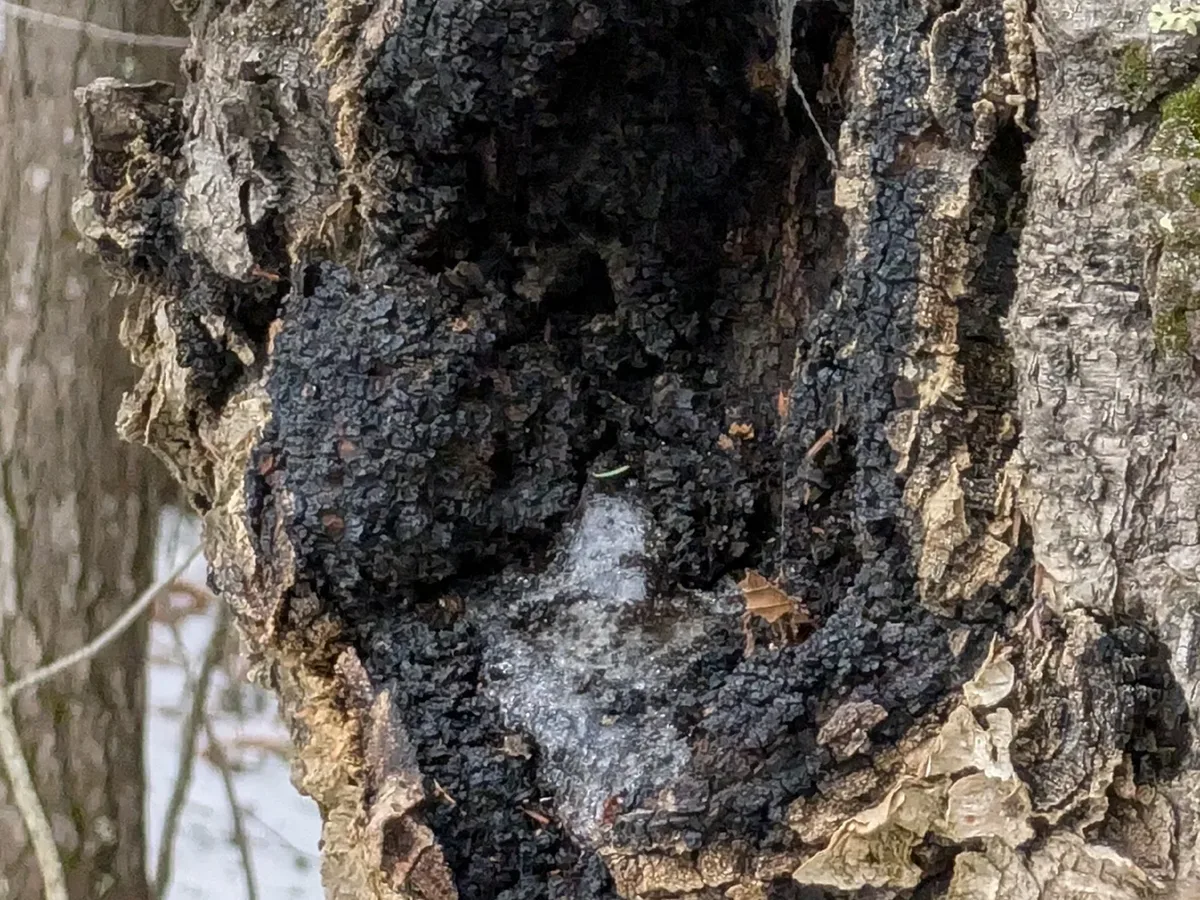 © Nick Kleinschmidt (CC BY)
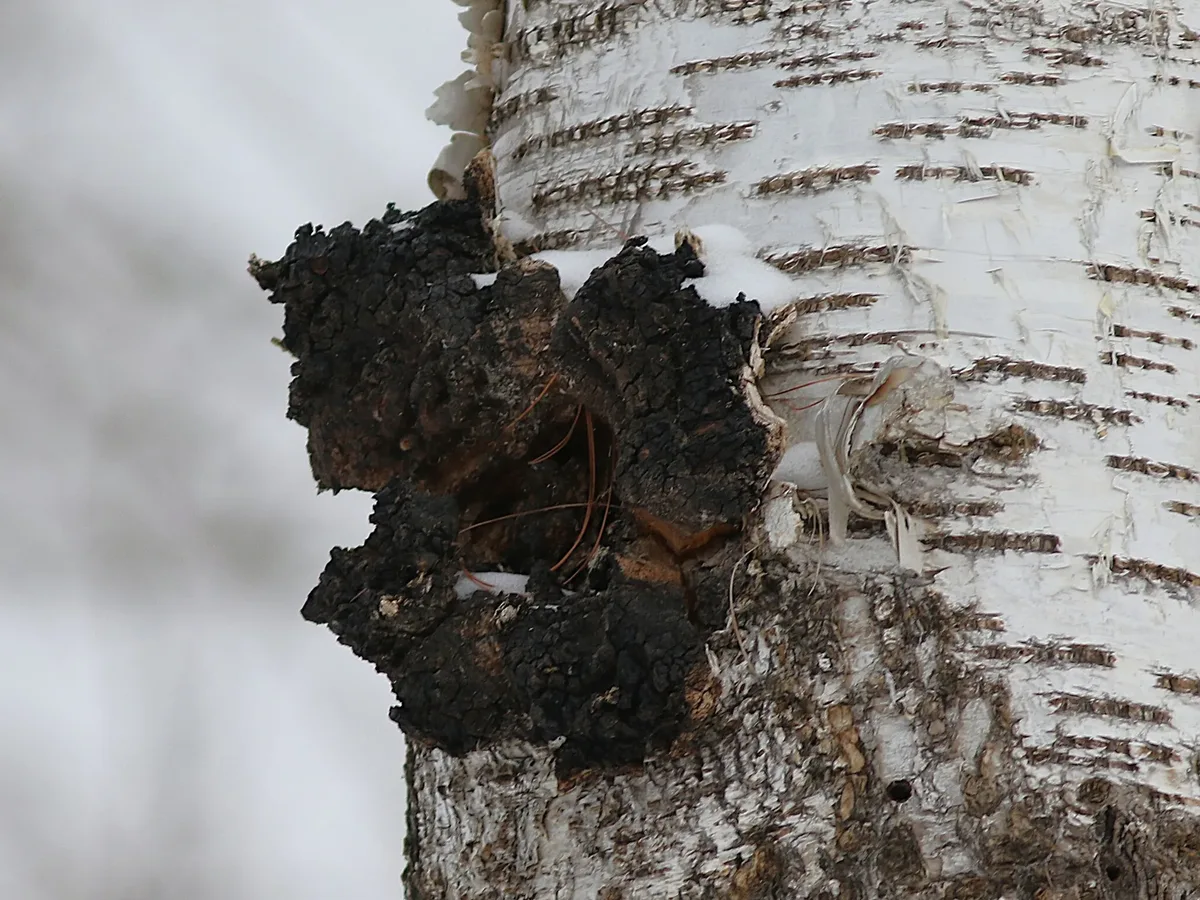 jeffcherry (CC0)
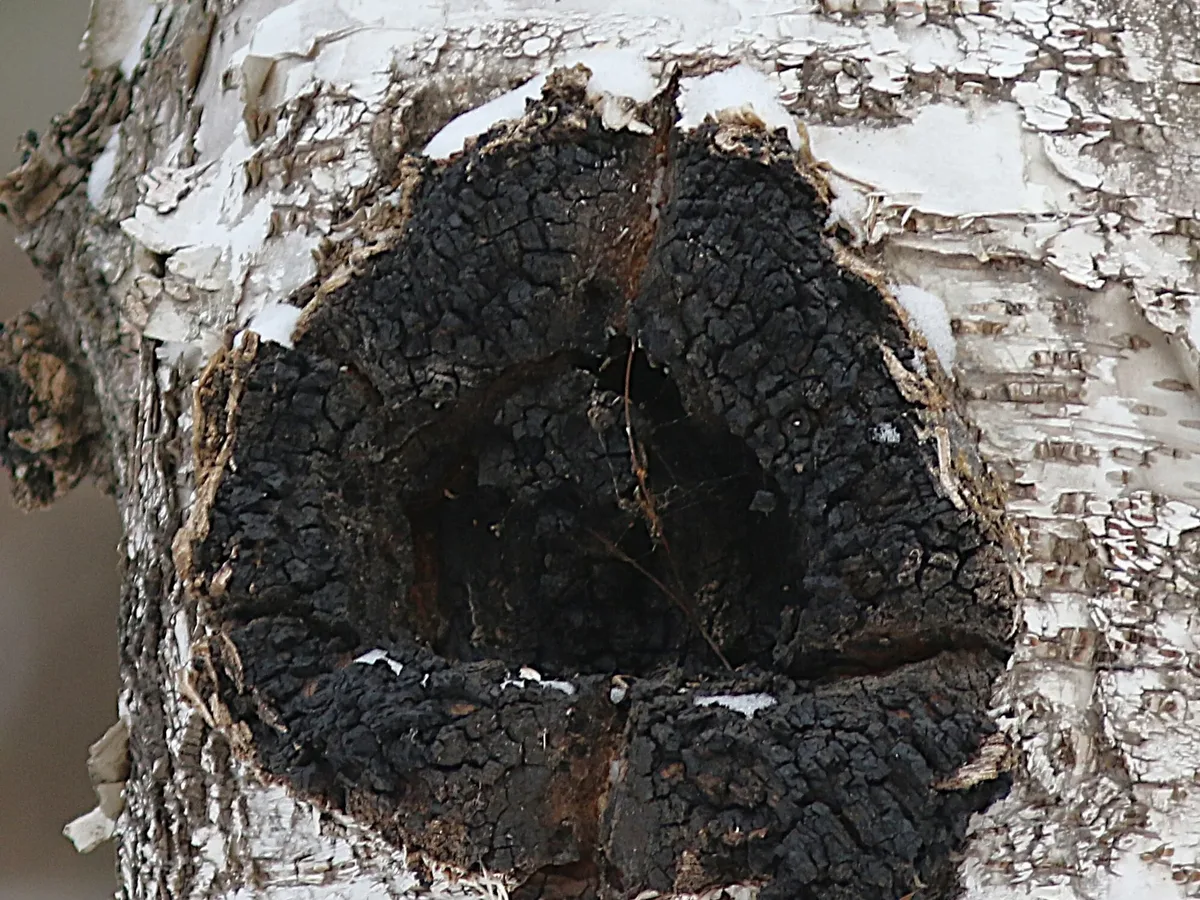 jeffcherry (CC0)
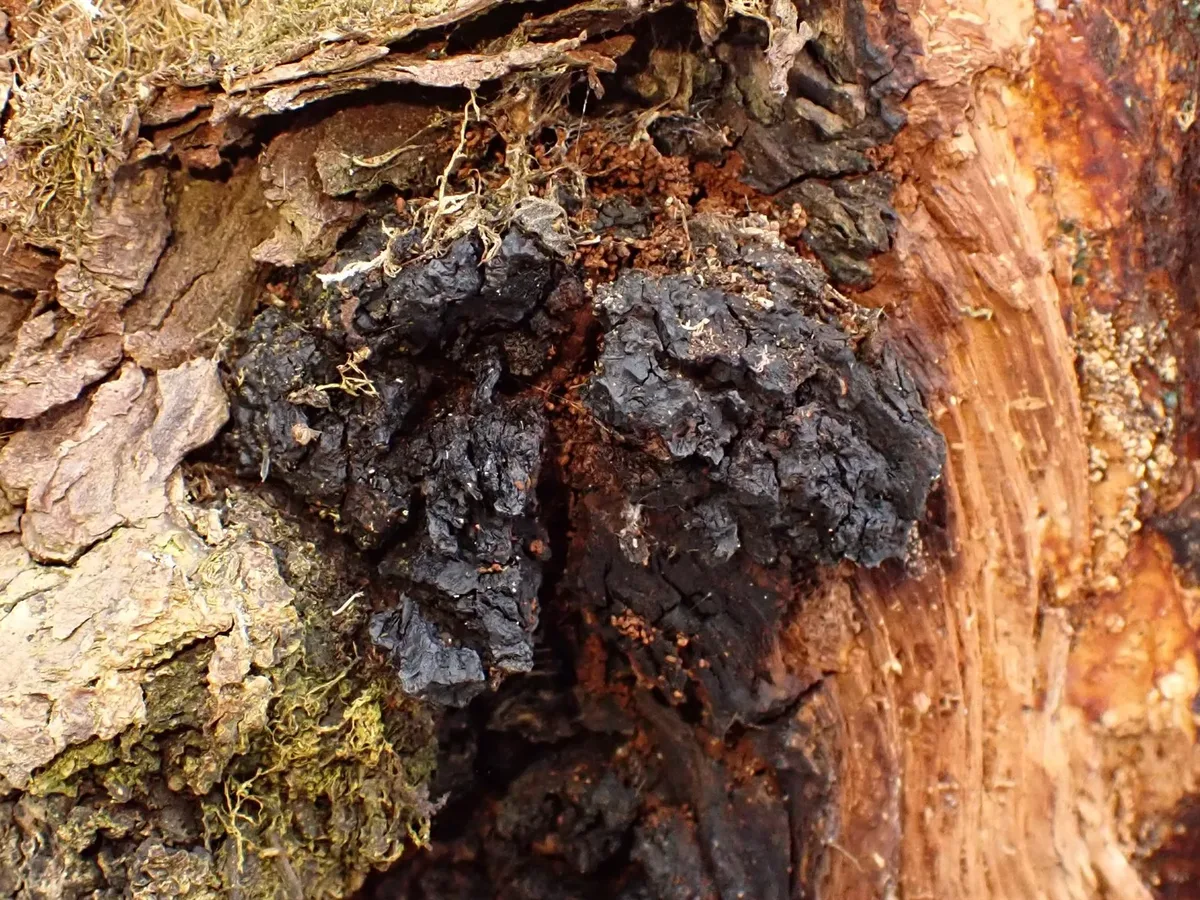 © Perry Gunnar Larsen (CC BY)Forest Health Protection, Forest Service, USDA, AK (Public domain)Forest Health Protection, Forest Service, USDA, AK (Public domain)
Not poisonous, but not worth eating - too tough, bitter, or bland for the pot.
How to recognise it
Chaga presents as a large, irregular, coal-black mass erupting from the bark of birch trees, bearing no resemblance to a typical mushroom cap.
The exterior crust is rock-hard, jet-black to charcoal-grey, deeply furrowed, and extremely brittle - it may ring like stone when struck.
Inside, the tissue is immediately recognisable: a dense, corky matrix coloured burnt orange to rust or golden-amber, often streaked with cream-white mycelial cords. The orange interior is due to high concentrations of melanin-related pigments and triterpenoid compounds.
There are no gills, tubes, or stipe. The mass attaches directly and tightly to the wood, and cutting it free reveals the gradual transition from orange outer tissue to the pale, decayed heartwood of the birch.
A small conk may be 10 cm across; typical harvestable specimens are 20-40 cm.
The true reproductive stage - a thin, flat, cinnamon-coloured pore layer - develops only beneath loosening bark on dead trees and is rarely encountered in the field.
Where & when it grows
Habitat
Chaga is a parasite of birch (Betula spp.) in boreal, hemi-boreal, and cool-temperate forests across the northern hemisphere.
It thrives in old-growth birch stands, riparian birch-alder galleries, and mixed forests where birch co-dominates with spruce, pine, or aspen. The fungus enters via bark wounds - storm damage, woodpecker holes, frost cracks - and colonises the heartwood.
Look for it on trunks of medium to large birch trees (stem diameter typically > 15 cm), at any height from near the base to the crown. Ideal habitat is shaded, humid valley-side woodland with mature birches; it is less common in windswept or coastal birch scrub.
In Siberia and Scandinavia it occurs throughout the boreal zone; in central Europe it retreats to montane or upland birch stands.
When
Chaga is perennial - the conk persists through every season and does not rot off like a typical mushroom. In practical terms this means you can search for it any time of year.
The traditional harvest window runs from late autumn through early spring, roughly October to March. In those months the trees are bare and leafless, conks stand out clearly on pale birch trunks, and the dormant tree is less stressed by the disturbance.
Summer collection is possible but the canopy makes searching harder. Young conks under about 10 cm are generally left to mature. A large specimen may represent 5-15 years of slow, steady growth.
How it grows
Chaga does not grow the way most fungi do. Rather than pushing up a fruiting body after rain, it builds its mass slowly from inside the host - the mycelium threads through the birch heartwood, driving a white rot over years, until enough fungal tissue has accumulated to breach the bark from within.
What emerges is a sterile conk, not yet reproductive. Growth is measured in years: a 20 cm conk may represent a decade of development.
The fungus is parasitic, not saprotrophic - it depends on a living or recently dead host for nutrients.
Reproduction comes only at the end of the tree's life, when a thin fertile pore layer forms beneath the loosening bark and releases white spores before the bark falls away. Those spores need a fresh wound on a new birch to start the cycle again.
Fruiting conditions
Perennial sterile conk; fruiting-trigger model not applicable. The conk is present year-round and its growth is not triggered by rainfall or temperature cycles. The fertile (sporulating) layer under dead bark appears in autumn after host death but is rarely observed by foragers.
Look-alikes
Correctly identified chaga on birch is essentially unmistakable due to the combination of black exterior and orange interior.
The main identification risks are:
- 1Ganoderma applanatum and related bracket fungi - these have a white or cream pore surface on the underside and lack the orange interior.
- 2Dead branch stubs or burl formations on birch - these are wood-coloured throughout, never orange inside.
- 3Wood charring from fire damage - charred wood does not have an orange interior and does not break with the brittle ring of chaga.
- 4Other Inonotus species on non-birch trees - I. hispidus (on ash, apple) is rust-coloured externally when fresh and has visible pores; I. dryadeus (on oak) forms brackets with an amber-dripping surface.
On non-birch trees, any black crusty mass should be treated with extreme suspicion and not used.
Burls are woody outgrowths caused by genetic, injury, or infection responses and are entirely wood in composition - no black crust, no orange tissue. Cutting through a burl reveals normal pale wood grain. Burls are smooth or only slightly textured externally, not deeply cracked and charcoal-black.
Fire-scarred wood can superficially resemble chaga at a distance. Charred wood is flat against the bark, not a protruding mass, and the interior is uniformly black or grey. There is no orange interior tissue. Breaks in straight wood-grain patterns, not in the brittle chunky fashion of chaga.
Tinder polypore is an unmistakably hoof-shaped bracket with clear concentric growth zones on the grey to black-brown upper surface, a cream-coloured pore layer underneath, and a pale tan to brown interior tissue. Does not produce the black crusty irregular mass or orange interior of chaga. Also grows on birch but is a classic bracket.
Artist's bracket has a flat bracket form with a clearly visible cream-white pore surface on the underside that bruises brown when scratched; the interior flesh is cinnamon-brown but uniform, not orange, and it lacks the black charcoal exterior of chaga. Grows on many broadleaf trees, not exclusively birch.
Shaggy bracket forms a spongy, hairy bracket (not a crusty mass) with a rust-orange to dark brown upper surface and a visible pore layer below; typically found on ash, apple, walnut, and other broadleaves rather than birch. Fresh specimens exude amber droplets. Lacks the hard charcoal exterior of chaga.
False tinder conk forms a clearly bracket-shaped or hoof-shaped fruit body with a visible grey-brown to black upper surface and a distinct brown pore layer on the underside with small round pores. The interior is uniformly hard and dark rusty-brown throughout - it does not show the distinctive bright orange-amber interior of chaga. Occurs on willows, apple, and other broadleaves as well as birch.
In the kitchen
Picking & cleaning
- 1Use a hatchet, small axe, or strong knife to cut the conk free. Work carefully - the exterior is extremely hard and tools can slip.
- 2Cut as close to the bark as possible; leave the bark surface intact where feasible to reduce tree injury.
- 3Wear eye protection; fragments are sharp.
- 4Remove the black outer crust (which is often discarded or used separately) and break the orange interior into chunks.
- 5Dry the chunks thoroughly at 40-50 °C or in a well-ventilated space until rock-hard; improperly dried chaga can mould.
- 6Store dried pieces in paper bags in a cool, dark, dry location.
Do not over-harvest from a single stand - the fungus is ecologically important as a birch specialist, and trees killed by over-harvesting cannot regenerate conks. Harvest only from trees where the conk is well-established (> 15 cm).
Never harvest from dead or fallen trees where the black crust has crumbled or the interior has discoloured to grey or black throughout - these are spent.
Cooking
Chaga is not cooked or eaten directly; the woody conk is indigestible.
Traditional use involves breaking dried chaga into small pieces and simmering in water (not boiling vigorously, to preserve heat-sensitive compounds) for 15-30 minutes. This produces a dark, mildly earthy tea with a faintly vanilla-like undertone and a subtle bitterness.
The ratio is approximately 1 part dried chaga to 20 parts water. The chunks can be re-used for 2-3 brews before exhaustion. The tea is traditionally drunk plain or with honey in Finland, Russia, and Poland.
Other preparations:
- Cold-water extraction (overnight steep) is also practiced.
- Chaga tinctures (dual extraction with alcohol and water) are used to extract both water-soluble polysaccharides (beta-glucans) and alcohol-soluble triterpenoids.
- Powder can be added to coffee or smoothies, but the bioavailability of active compounds from raw powder without hot-water extraction is uncertain.
- Black crust portions are sometimes used separately in longer decoctions.
Good to know
Chaga is not eaten as food - it is consumed as a tea, decoction, or extract. It is not acutely poisonous in normal amounts when prepared as a tea from dried, properly identified specimens.
However, several clinically documented cautions apply:
- 1Oxalate content: chaga contains significant amounts of oxalic acid and oxalates. Regular high-dose consumption has been linked to oxalate nephropathy (kidney stone disease) and at least one published case of acute kidney injury. People with kidney disease, a history of kidney stones, or hyperoxaluria should avoid or strictly limit intake.
- 2Drug interactions: chaga has anticoagulant properties and may potentiate warfarin and other anticoagulants - do not use before surgery or alongside blood-thinning medication without medical advice.
- 3Immune modulation: as an immunomodulator, it should be used cautiously in autoimmune conditions and avoided during immunosuppressive therapy (e.g. post-transplant).
- 4Diabetes: may lower blood glucose; monitor carefully if on diabetes medication.
- 5No established safe dose exists. The health claims widely promoted for chaga (anticancer, antiviral, adaptogenic) have very limited clinical evidence; do not use it in place of medical treatment.
- 6Always verify the orange interior - any all-black or greyish mass is not valid chaga.
A reference guide - never an edibility guarantee. When in doubt, leave it out.