Split fibrecap
Inocybe rimosasyn. Agaricus rimosus, Inocybe fastigiata, Inocybe fastigiata var. umbrinella, Inocybe fastigiata f. rimosa
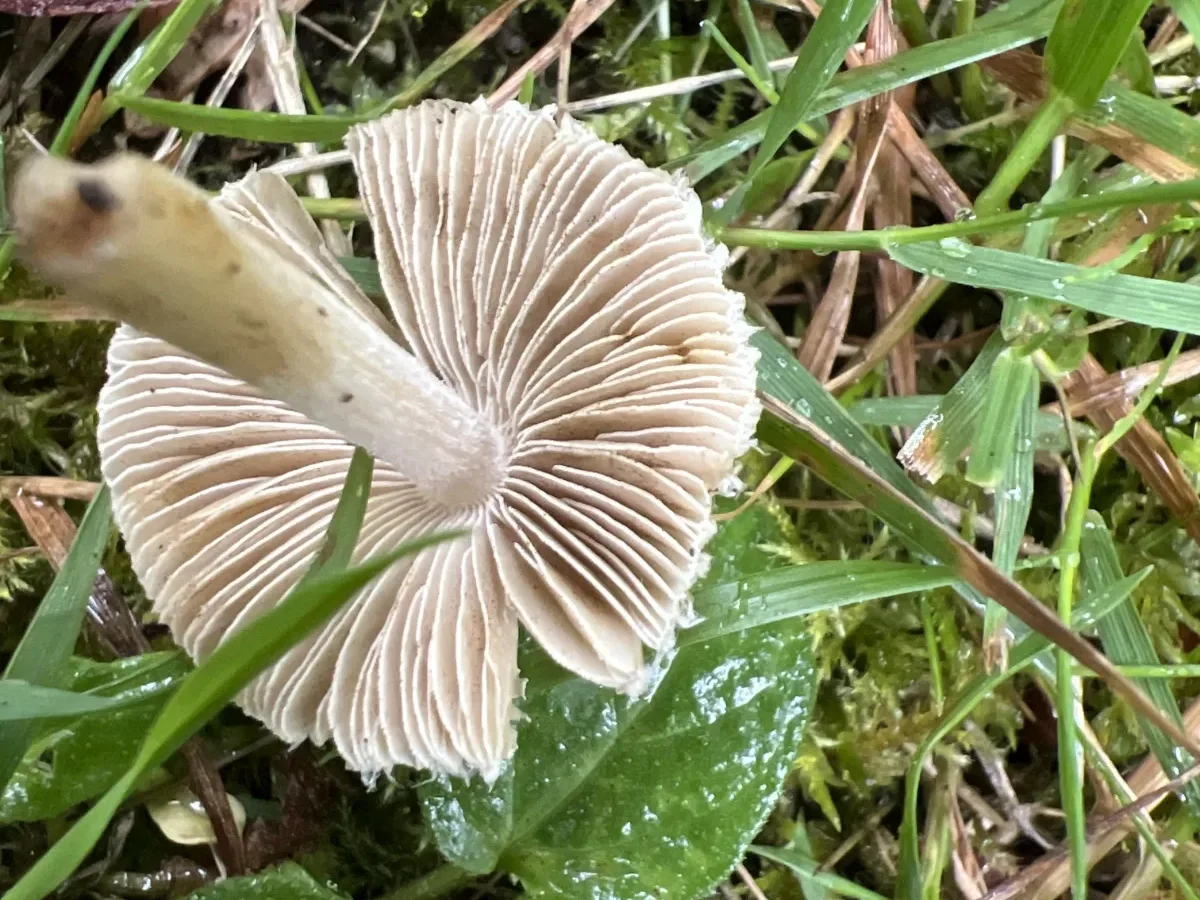 © Ulrik Andreassen (CC BY)
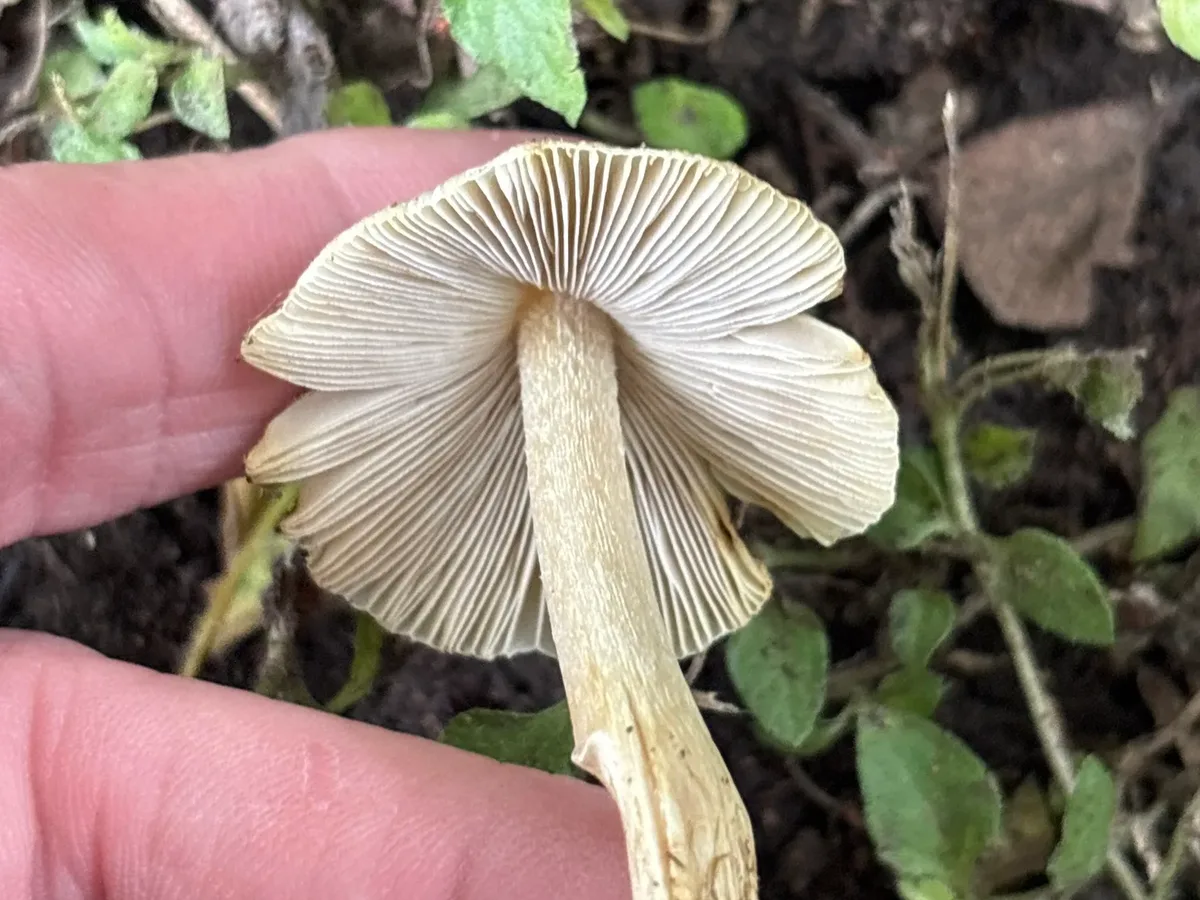 © Sam Kieschnick (CC BY)
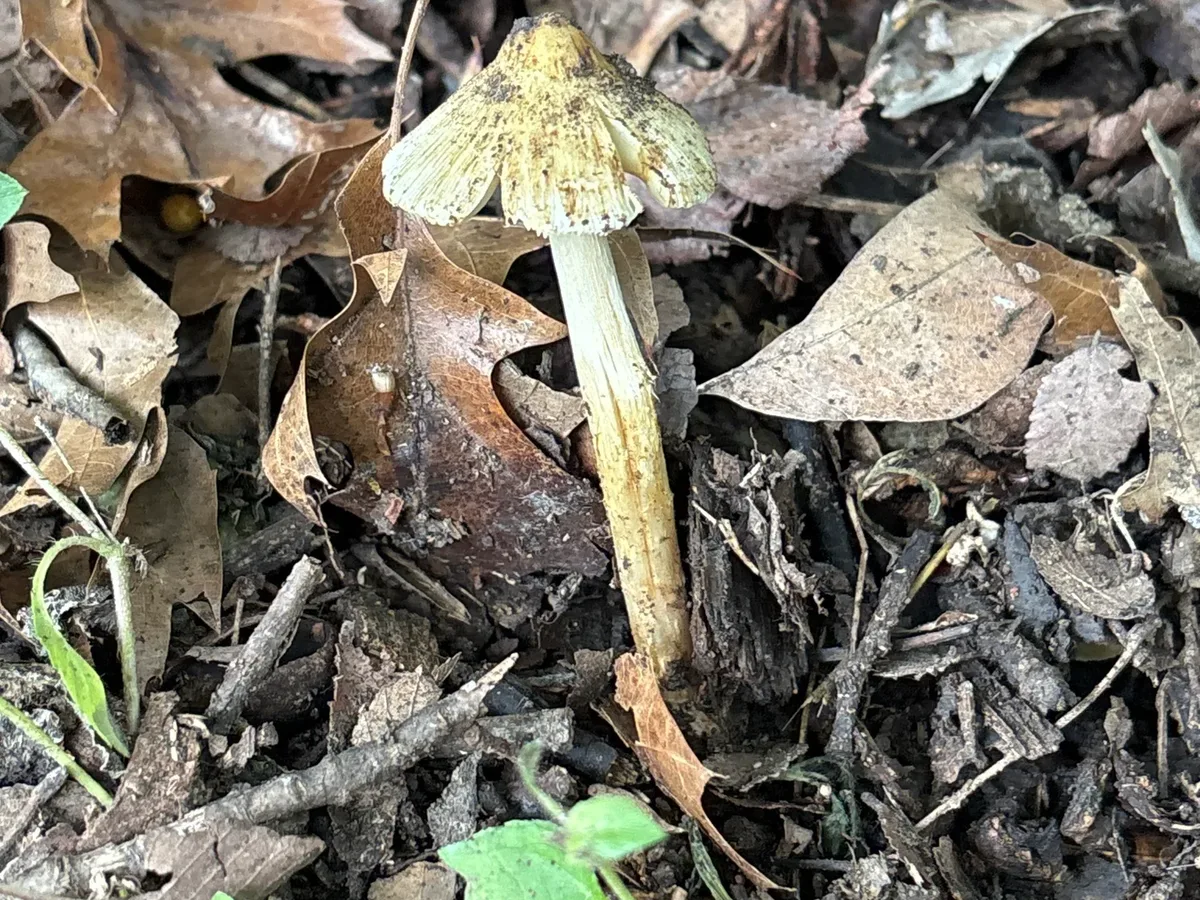 © Sam Kieschnick (CC BY)
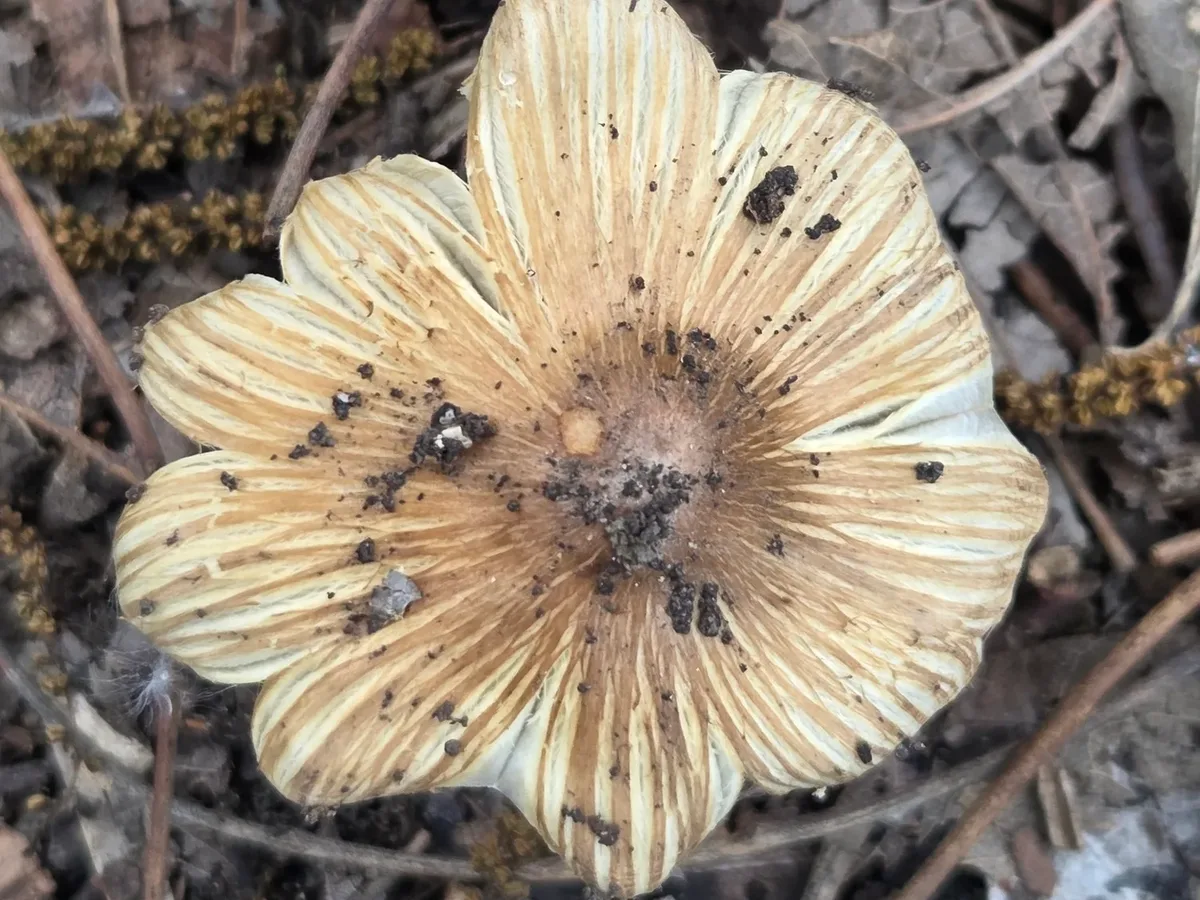 © John Thomlinson (CC BY)
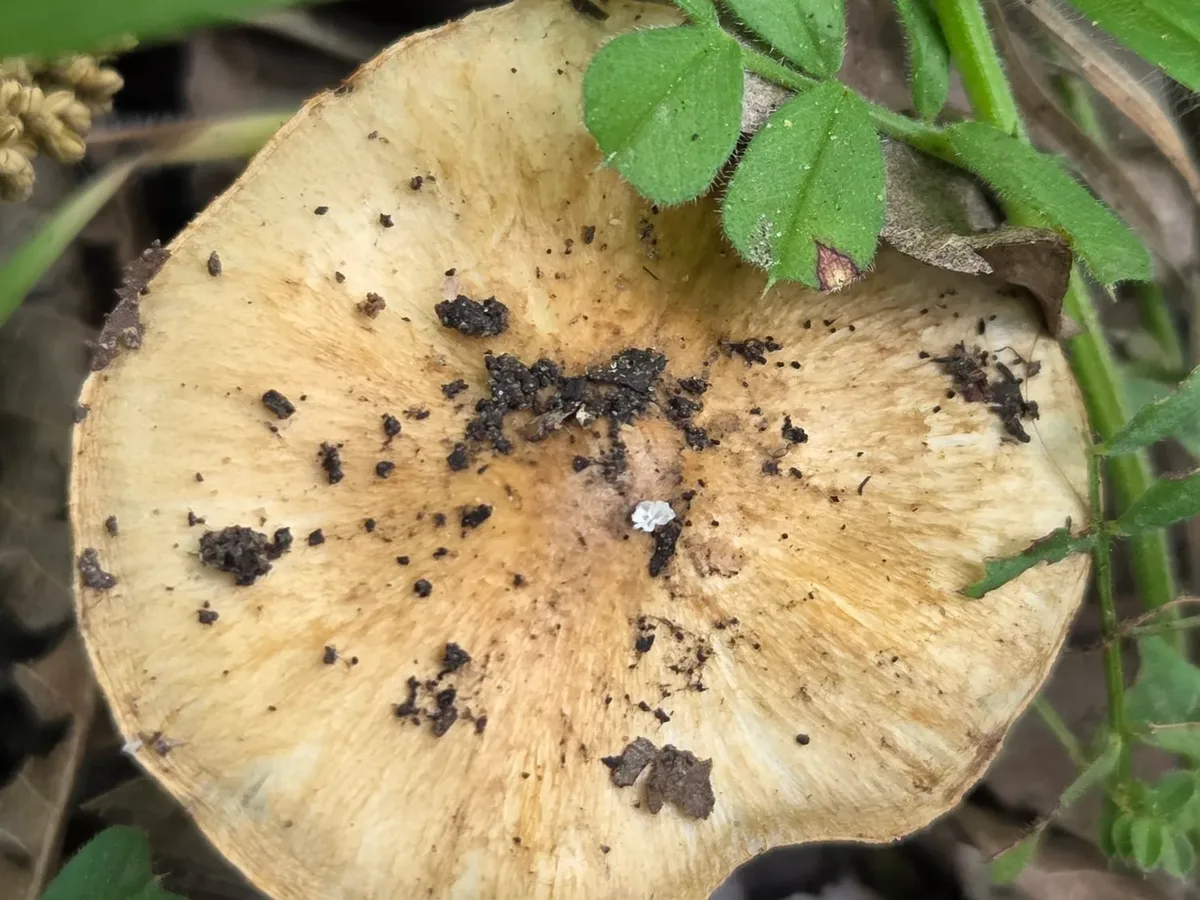 © John Thomlinson (CC BY)
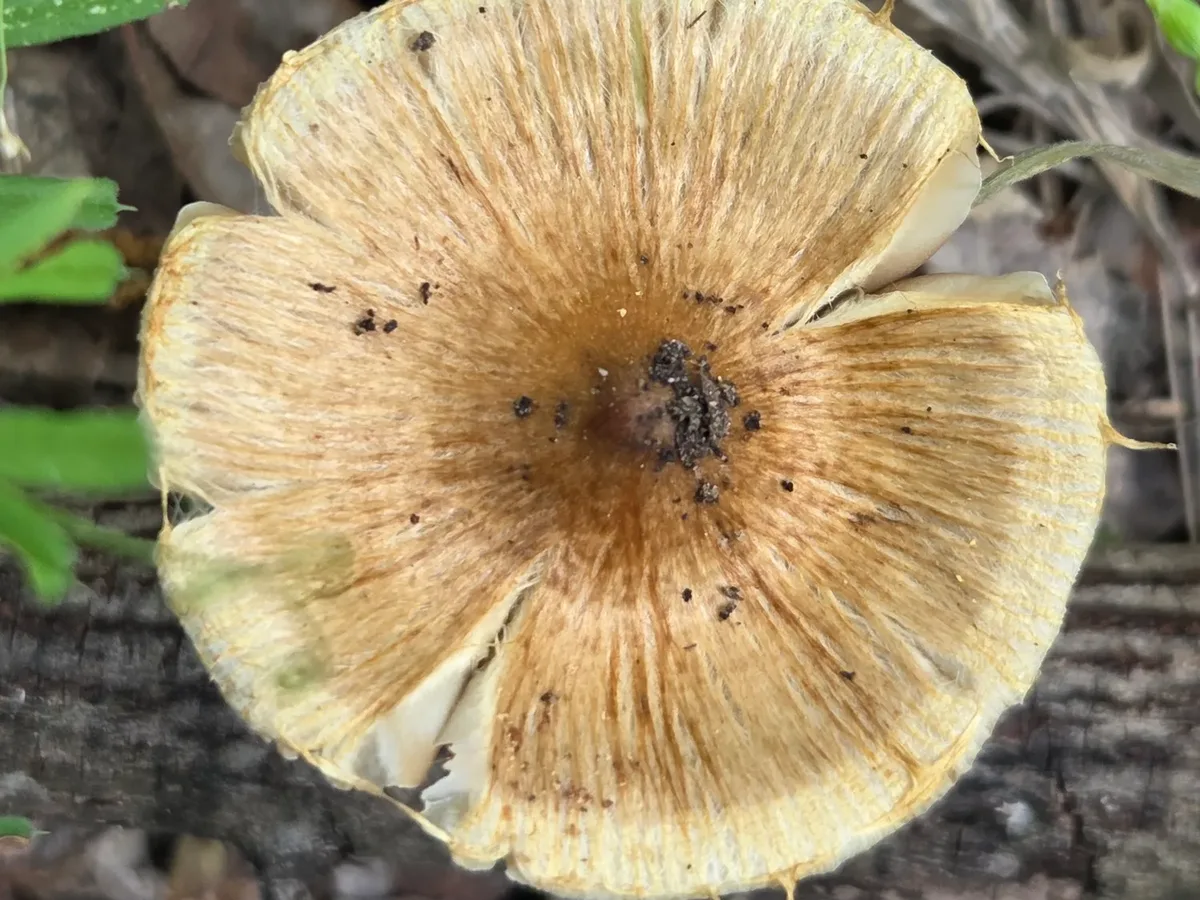 © John Thomlinson (CC BY)
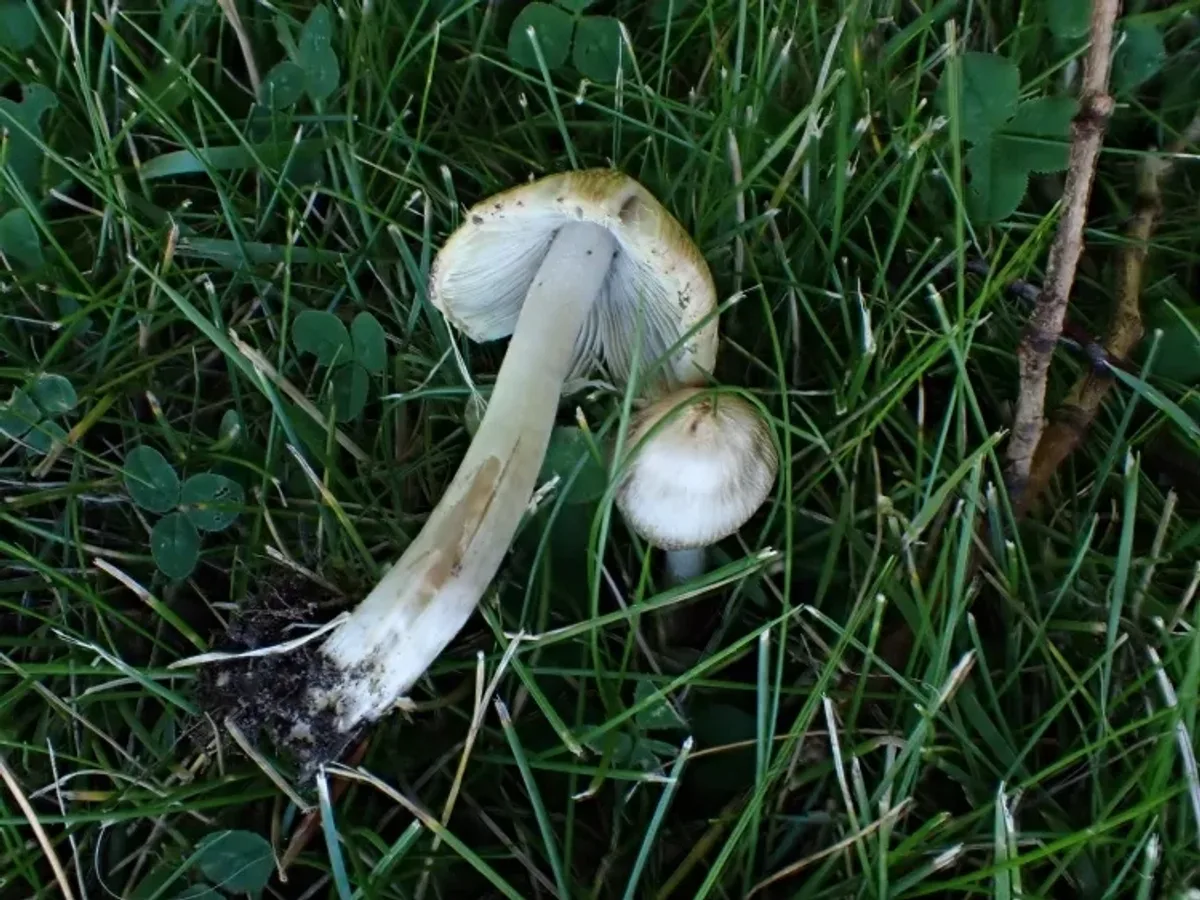 © Morten Pettersen (CC BY)© Ulrik Andreassen (CC BY)© Sam Kieschnick (CC BY)
Edible only with the right preparation - or safe for some people but not others. Learn the caveats first.
Never eat a mushroom you are not 100% sure of - check the look-alikes below, and always cook wild mushrooms.
How to recognise it
The split fibrecap earns its name visibly.
Cap
Its cap - 3-8 cm across - starts out sharply conical or bell-shaped, with a persistent central boss (umbo) that rarely disappears even in old specimens.
The surface is straw-yellow to pale hay, darker around the umbo, and covered in bold radial silky fibres that crack and split outward as the cap expands and dries - the Latin rimosa means 'full of cracks', and on a mature specimen the margin really does look frayed, with pale flesh showing through the fissures.
Gills
The gills age from clay-grey to dull tobacco-brown.
Spore print: dull snuff-brown.
Stem
The stem is pale straw to ochre, cylindrical, with a mealy-powdery (pruinose) apex - worth checking with a hand lens. No ring, no cup (volva).
Smell & taste
The smell is strongly earthy and spermatic, a once-learned, never-forgotten characteristic of the genus.
Why it's dangerous
Muscarine poisoning is a medical emergency, particularly in children, elderly individuals, and those with pre-existing cardiac or respiratory disease.
The specific antidote is atropine, a muscarinic receptor antagonist that reverses the cholinomimetic syndrome rapidly and effectively when given intravenously at adequate dose. Do not self-treat.
Confusion with the deadly fibrecap (Inosperma erubescens) - which is classed as deadly and has caused fatalities - means that any suspected Inocybe ingestion should be treated with urgency:
- Call emergency services.
- Identify the mushroom if possible.
- Report clearly that it was a fibrous-capped brown woodland mushroom with an earthy smell.
Fatalities from muscarine alone (without coingestion of other toxins) are uncommon in otherwise healthy adults who receive prompt atropine treatment, but they do occur.
Toxin
Muscarine is a quaternary ammonium alkaloid that acts as a direct agonist at muscarinic acetylcholine receptors throughout the parasympathetic nervous system and at peripheral cholinergic sites. It is not broken down by cooking heat or gastric acid.
Inocybe species (including I. rimosa) typically contain muscarine at concentrations significantly higher than Amanita muscaria, making Inocybe and Clitocybe the principal genera responsible for muscarine poisoning in Europe.
The toxin mechanism is purely neuronal/autonomic - it does not damage the liver, kidneys, or blood directly - but the physiological effects of uncontrolled parasympathetic activation are severe and can be life-threatening in vulnerable individuals.
Symptoms
Muscarine poisoning follows the classic cholinomimetic SLUDGE/DUMBELLS pattern, with onset 15 minutes to 2 hours after ingestion:
- profuse salivation
- lacrimation (tearing)
- urinary urgency
- diarrhoea and abdominal cramping
- gastrointestinal distress (nausea, vomiting)
- emesis
Additional symptoms include:
- profuse sweating (diaphoresis)
- miosis (pinpoint pupils)
- bradycardia (slowed heart rate)
- bronchospasm (airway narrowing) with excess bronchial secretions
- blurred vision
- low blood pressure
In severe cases, bronchospasm and cardiovascular depression can be dangerous. Symptoms typically resolve within 6-24 hours with appropriate treatment.
The rapid onset distinguishes muscarine poisoning from delayed-onset amatoxin poisoning and should be clearly communicated when contacting emergency services.
Staying safe
Inocybe rimosa is a muscarinic poisonous species and must never be eaten. Like all Inocybe species, it contains muscarine - a quaternary ammonium alkaloid that activates parasympathetic muscarinic acetylcholine receptors.
Inocybe species carry muscarine at concentrations typically far higher than Amanita muscaria, despite the latter's historical association with the toxin.
Onset of symptoms is rapid, typically 15 minutes to 2 hours after ingestion, which is diagnostically helpful (compare with amatoxin poisoning, which is delayed 6-24 hours). Even small amounts are sufficient to cause clinical poisoning.
Critically, I. rimosa shares its general appearance with Inosperma erubescens (deadly fibrecap), a species with documented fatalities. Any uncertainty about a fibrous-capped, ochre-brown, umbonate mushroom from a woodland edge or park must be resolved in favour of not eating it.
Cooking does not destroy muscarine, which is heat-stable and water-soluble; parboiling and discarding the water reduces but does not eliminate the toxin.
If ingestion is suspected, seek emergency medical attention promptly; do not wait for symptoms. Bring the mushroom or a photograph.
Where & when it grows
Habitat
More habitat-flexible than most Inocybe species, I. rimosa grows in a range of tree-lined and open settings:
- roadsides and path margins lined with trees
- open woodland rides
- parkland
- hedgerows
- sand dunes with scrub
- even relatively exposed grassland where trees are nearby
Its association with a wide variety of host trees means it appears wherever established trees stand - urban parks, old avenues, village greens, suburban gardens.
The tendency to fruit in open, sunny, grassy spots makes it more likely to be encountered by casual foragers than a deep-forest species. Look for it along sunny path edges under individual trees, where the soil is warm and well-drained but not bone dry.
When
The split fibrecap is notably early - it can push up from June onward, well ahead of most woodland fungi, and continues through September and into October.
This early start puts it squarely in the same window as chanterelles, young boletes, and field mushrooms growing nearby, which is part of what makes it a real poisoning risk.
The peak is July through September in central and western Europe. Flushes typically follow significant summer rain (15 mm or more) by five to ten days, once soil temperatures are reliably above 12 °C.
How it grows
Like all Inocybe species, the split fibrecap is strictly mycorrhizal - its mycelium threads through the soil around living tree roots, trading minerals for carbon in a partnership that can persist for years unseen. It cannot be cultivated.
Once established under a host tree, the fungal network is perennial: the fruitbodies you see in summer are the visible tip of something much older living beneath. They emerge singly or scattered from mineral soil or thin litter, never in tight clusters.
The unusually wide host-tree range - from oak and beech to birch, lime, and conifers - and the tolerance for disturbed and open ground explain why this is one of the most frequently encountered Inocybe species across Europe.
That same flexibility means it colonises street trees and park plantings readily, bringing a genuinely poisonous species into everyday urban spaces where people may not expect it.
Fruiting conditions
Flushes 5-10 days after significant rain (≥15 mm over 2-3 days) when soil temperature is between 10 °C and 24 °C. The early summer fruiting window (June-July) is characteristic; the species is more heat-tolerant than many woodland agarics and can fruit during warm summer spells that follow rain, even when soil is relatively warm. Peak flushes in August-September coincide with the first significant late-summer rainfall.
Look-alikes
Inocybe rimosa may be confused with several species in similar habitats.
The most dangerous confusion is with Inosperma erubescens (deadly fibrecap), which shares the fibrous, ochre-brown, umbonate cap form and inhabits similar woodland edges. I. erubescens is typically more reddish-brick tinted and has a more prominently silky surface, but field separation is unreliable - and critically, Inosperma erubescens is classed as deadly (fatalities on record), not merely 'caution'.
This makes any uncertainty about a straw-yellow fibrous-capped Inocybe-type mushroom extremely serious.
Other potentially confused species include:
- 1Hebeloma species, which share the brown spore print and earthy smell but generally have a more clay-brown or clay-buff cap without bold radial fibres, no pointed umbo, and typically a ring zone or slimy cap
- 2Cortinarius species in a similar colour range - these retain cobweb-like cortina (veil) fibres between cap margin and stem in young specimens, have rusty-brown (not dull snuff-brown) spore prints, and lack the strongly fibrous cracking cap surface
- 3Agrocybe praecox in grassy habitats - this has a smooth to slightly wrinkled cap, a distinct ring, and flesh that smells mealy-floury but not spermatic
- 4young Tricholoma species in pale ochre forms - lack the fibrous cap and have white spore prints
None of the realistic confusions are edible choice species.
Inosperma erubescens shares the fibrous, umbonate, ochre-brown cap and earthy-spermatic smell of I. rimosa. The deadly fibrecap tends to be more robustly built, the cap often more reddish-brick or tawny-ochre rather than pale straw-yellow, and the cap surface silky rather than boldly splitting. However, field separation between these two species based on macro features alone is unreliable; both are found in similar woodland-edge habitats. Critically, Inosperma erubescens is classed as deadly - fatalities are on record - and has concentrations of muscarine far exceeding a safe threshold. Any uncertainty about a fibrous-capped Inocybe-type mushroom must be resolved by not eating it.
Cortinarius rubellus (deadly webcap) has an orellanin-containing cap that is conical to umbonate and tawny to orange-brown, superficially similar in form to I. rimosa. The key distinction is the presence of cobweb-like cortina fibre remnants between the cap margin and stem in young specimens, a rusty-cinnamon (not snuff-brown) spore print, and an overall more robust, conical orange-brown tone. C. rubellus causes delayed kidney failure - a far more dangerous and insidious poisoning than muscarine - with symptoms appearing days to weeks after ingestion. The two species share open conifer woodland habitats in the north. When in doubt, the cortina (rusty fibres on the stem) and rusty spore print are the quickest exclusions of Cortinarius.
The brown roll-rim is olive-brown with a strongly inrolled, felt-like margin and forking, decurrent, spongy-soft gills that bruise brown when pressed; it grows scattered in woodland as I. rimosa does, but is considerably larger, cap margins are involled not splitting-radially, and there is no pointed umbo. Paxillus involutus causes an immune-mediated haemolytic anaemia, a different and serious toxidrome. Neither species is safe to eat.
Field mushrooms found in adjacent grassy openings share a general brown-and-white aspect but differ fundamentally: the cap is smooth (not fibrous or cracking), gills turn pink then chocolate-brown (never clay-grey), a ring is present on the stem, and the smell is pleasantly mushroomy or faintly aniseed - never earthy-spermatic. Spore print deep chocolate-brown (darker than the snuff-brown of I. rimosa). Any mushroom with pink gills is not an Inocybe.
Cortinarius caperatus (the Gypsy mushroom or Rozites caperata) is a choice edible that can appear similar at first glance: ochre-brown, broadly umbonate, with a fibrous-wrinkled cap surface. Key differences: the cap surface has a distinctive whitish-frosted or pruinose bloom when young (like sugar icing), the stem bears a conspicuous white ring (annulus) - unique in Cortinarius - and the spore print is rusty ochre. The smell is pleasant and not spermatic. I. rimosa has no ring, no frosted cap, and a strongly earthy-spermatic odour.
Hebeloma species (such as the bitter poisonpie, H. sinapizans) share the dull brown spore print and earthy-unpleasant smell, and grow in similar woodland habitats. Hebeloma caps are typically smoother and clay-buff to pale ochraceous brown without pronounced radial fibres or a sharp pointed umbo; many Hebeloma have a slight ring zone or veil remnants on the stem, and the smell in H. sinapizans is more of radish or horseradish. Hebeloma species are gastrointestinally irritating rather than muscarinic - unpleasant but differently dangerous.
A reference guide - never an edibility guarantee. When in doubt, leave it out.