Torn fibrecap
Inocybe lacerasyn. Agaricus laceratus, Agaricus lacera, Inocybe lacera var. lacera, Inocybe lacera var. helobia
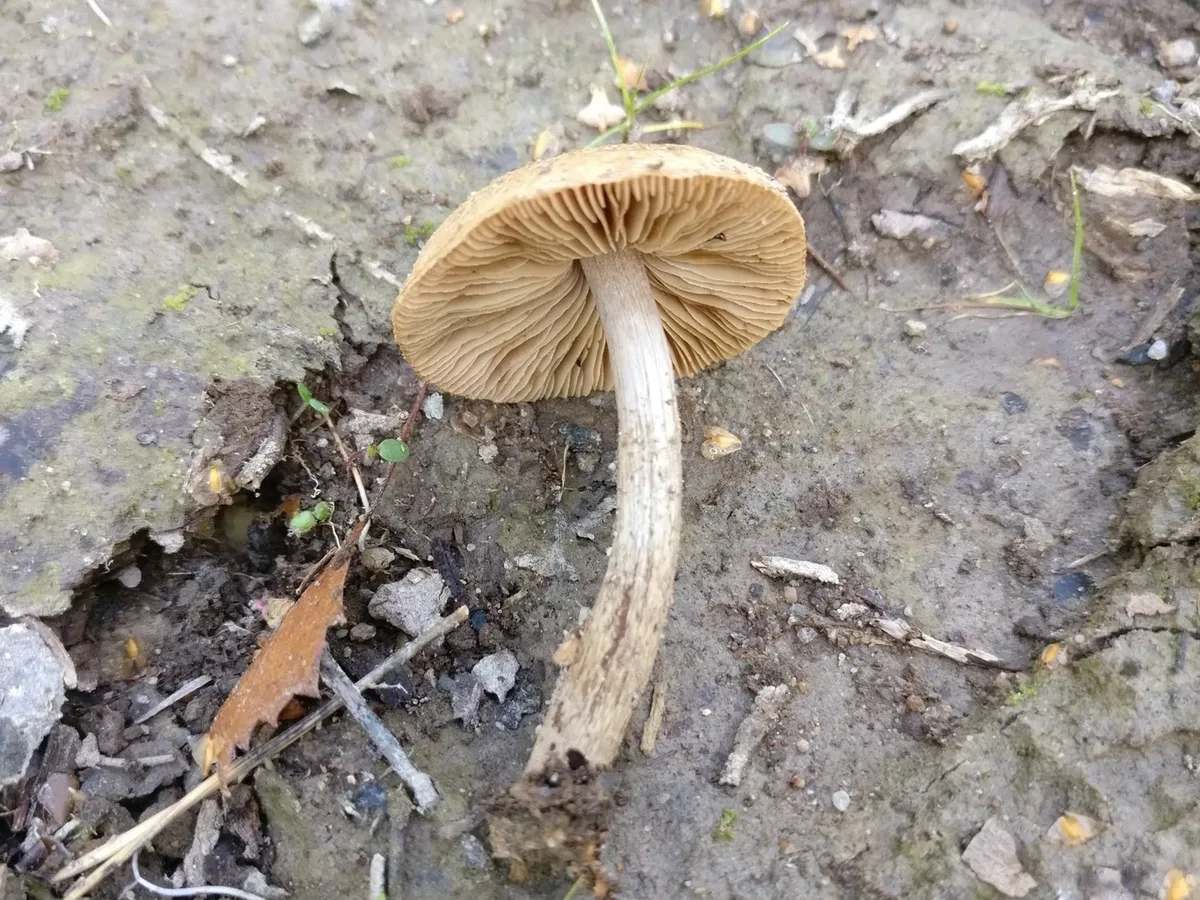 muukalainen (CC0)
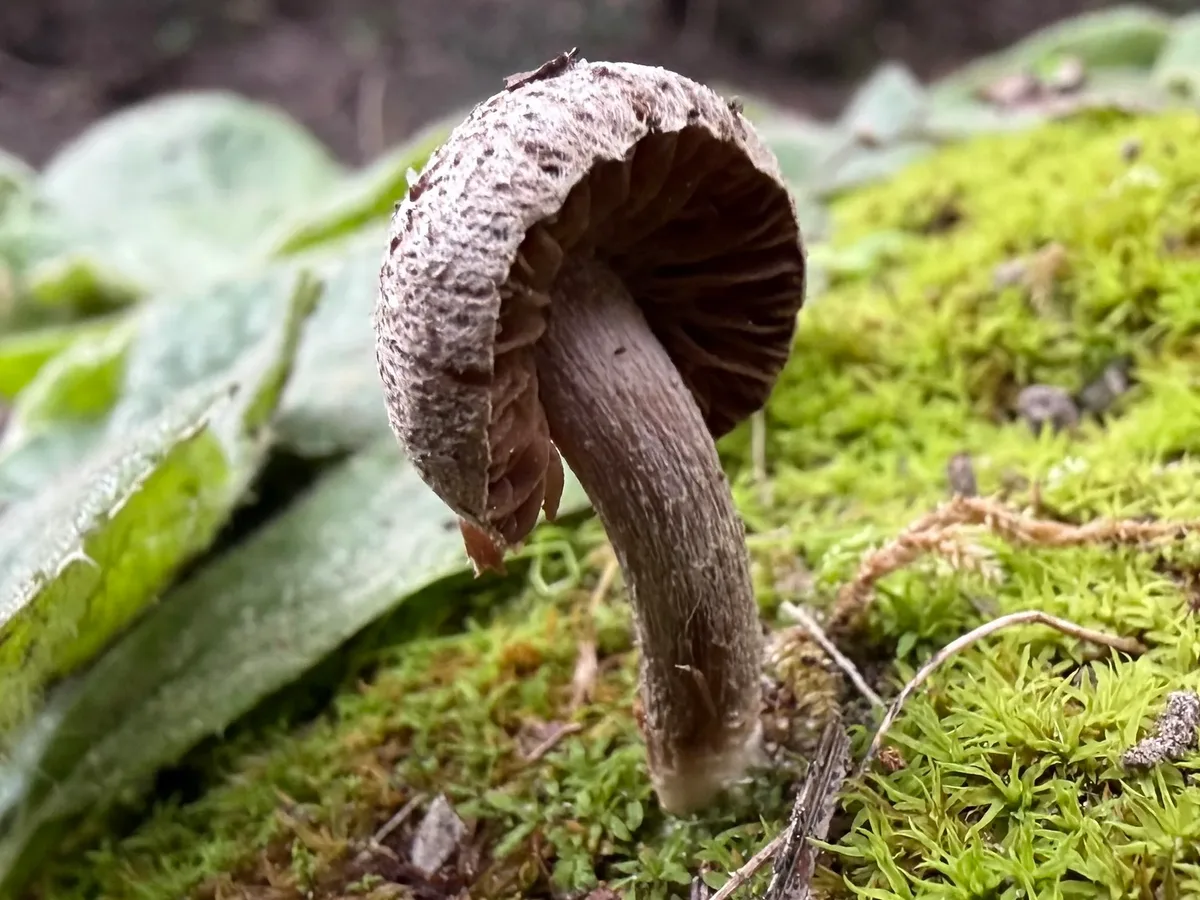 © Lucian Clanet (CC BY)
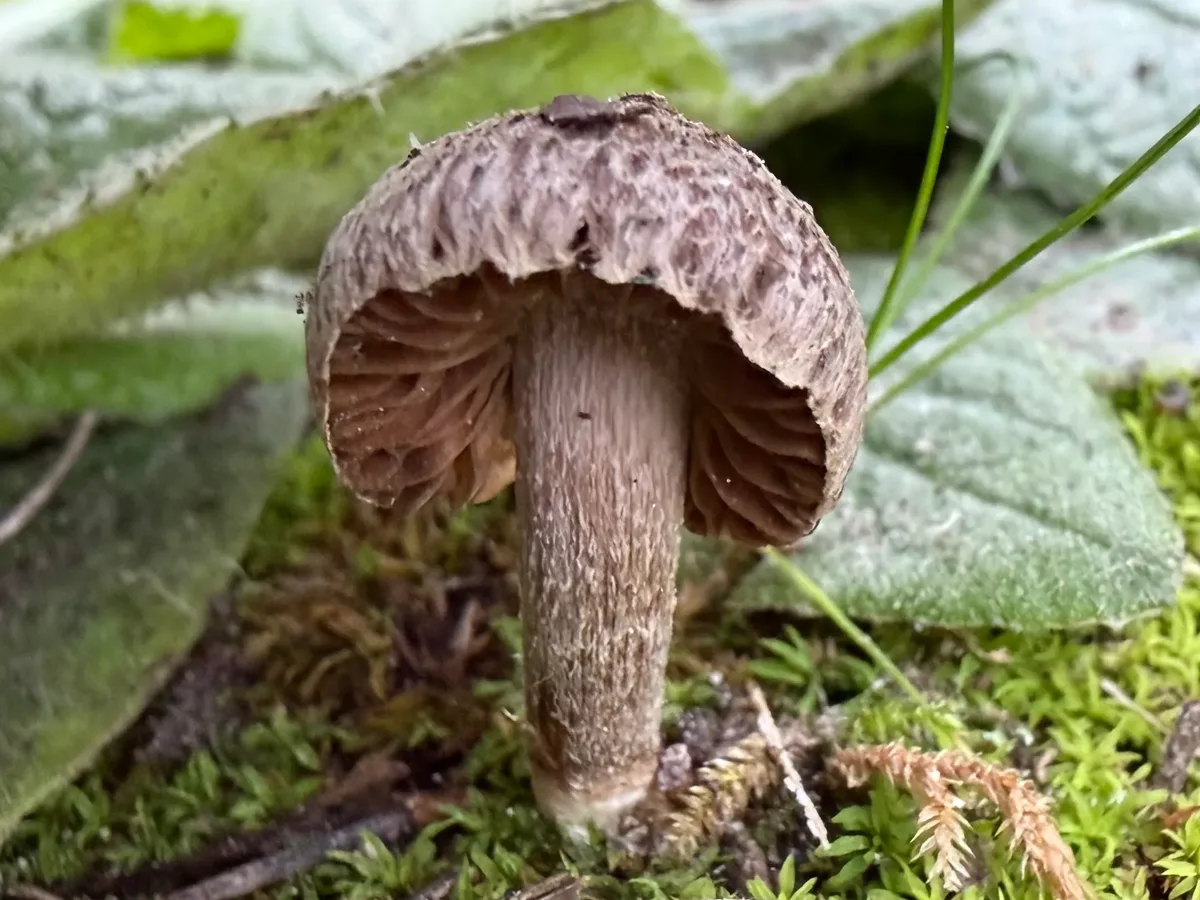 © Lucian Clanet (CC BY)
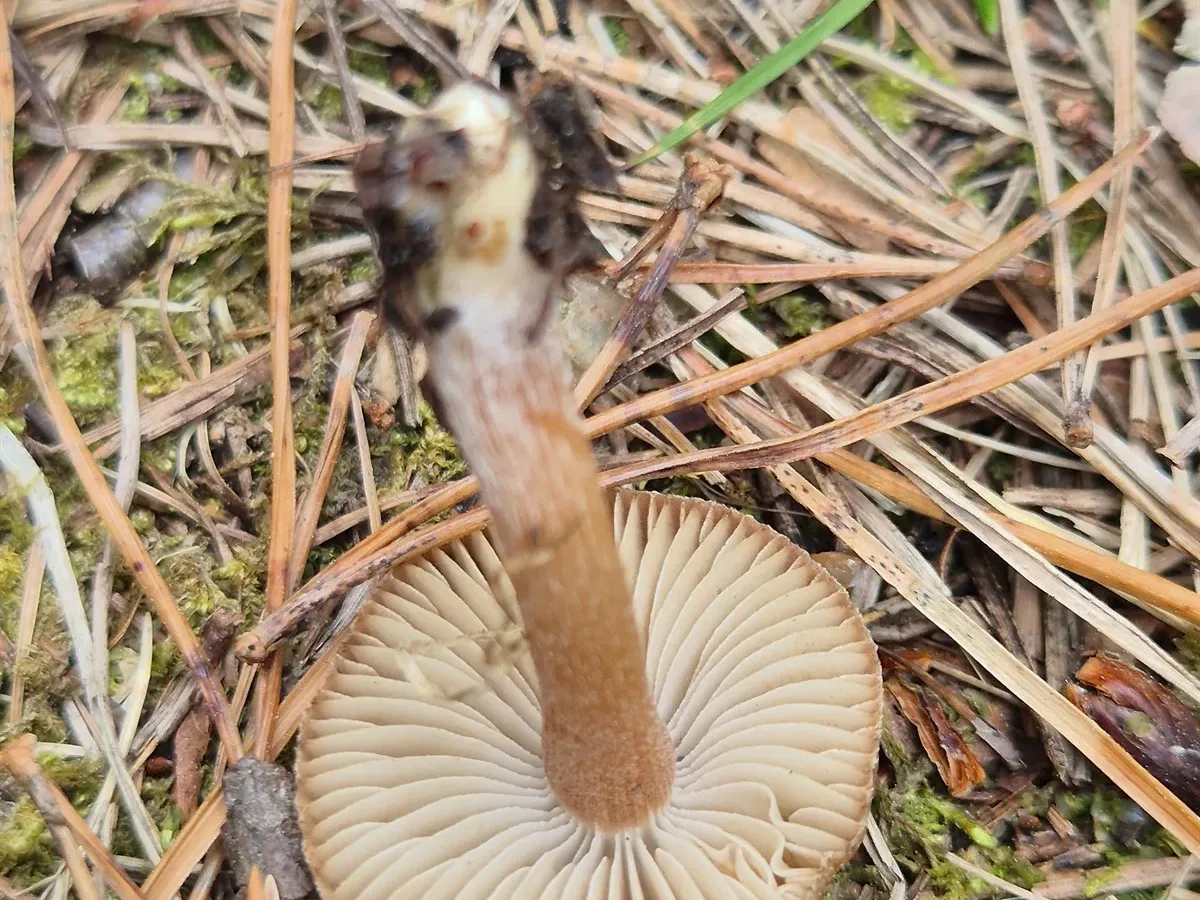 © Per Gerhard Ihlen (CC BY)
 © Per Gerhard Ihlen (CC BY)
 © Morten Pettersen (CC BY)
 © Siv Moen (CC BY)
 © Siv Moen (CC BY)
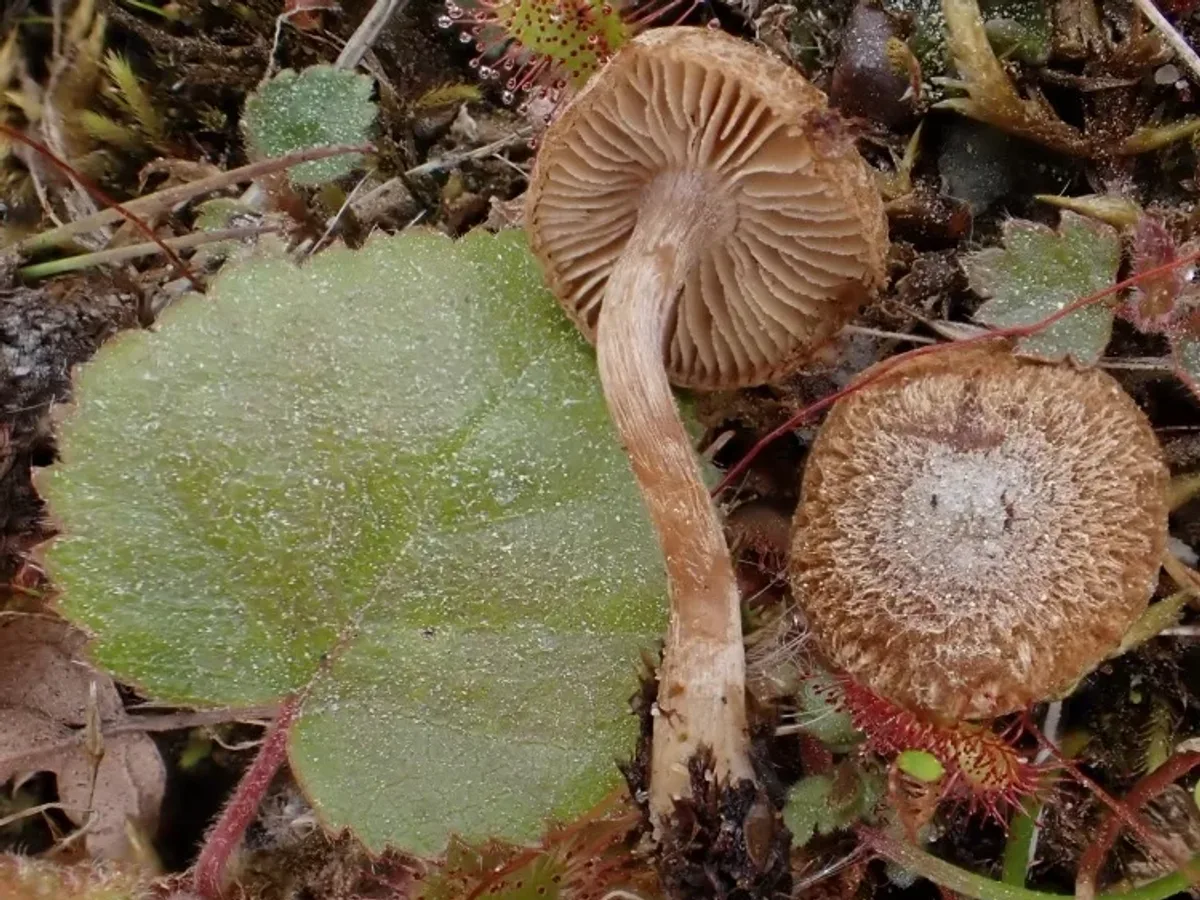 © Morten Pettersen (CC BY)
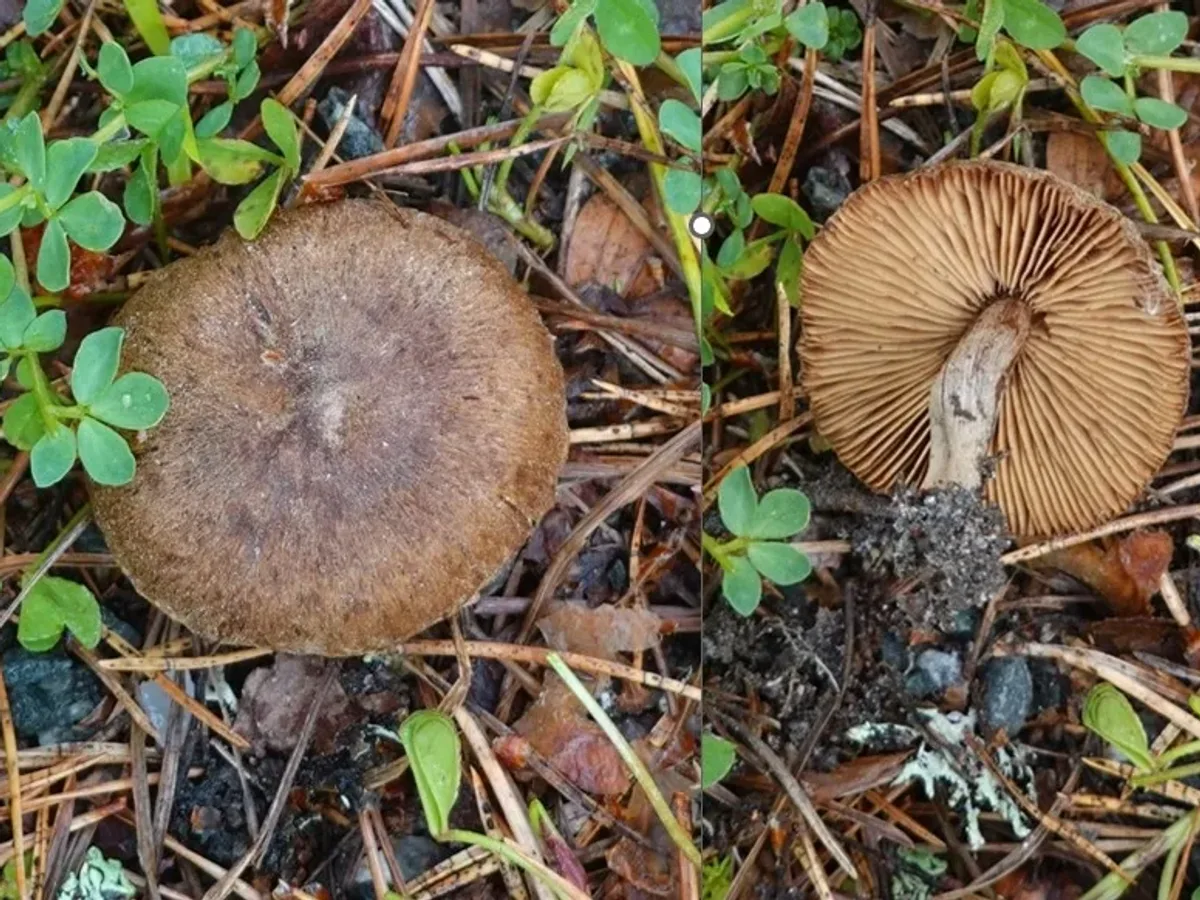 © Perry Gunnar Larsen (CC BY)muukalainen (CC0)© Lucian Clanet (CC BY)
Edible only with the right preparation - or safe for some people but not others. Learn the caveats first.
Never eat a mushroom you are not 100% sure of - check the look-alikes below, and always cook wild mushrooms.
How to recognise it
Inocybe lacera is a small, dark brown, strongly fibrous mushroom that looks distinctly dishevelled or ragged compared to most capped fungi.
Cap
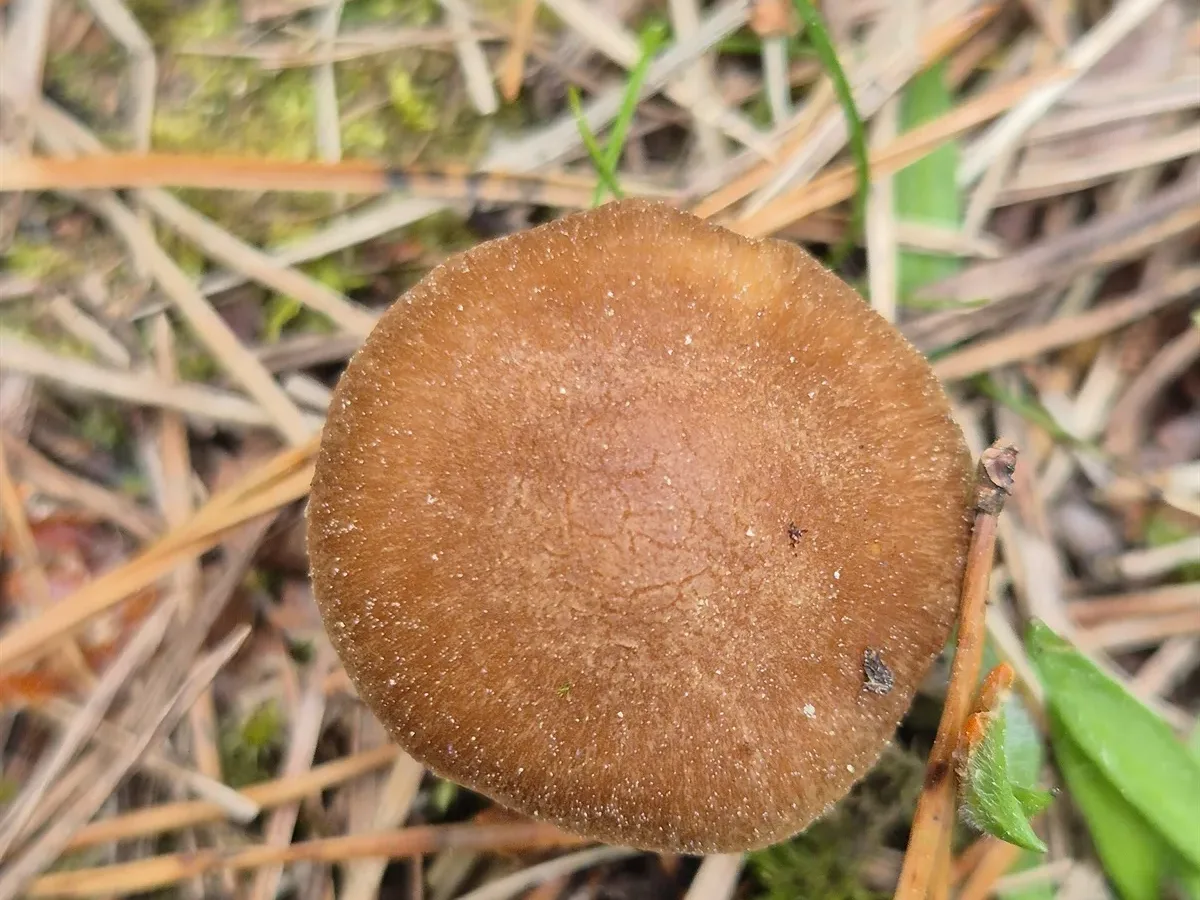
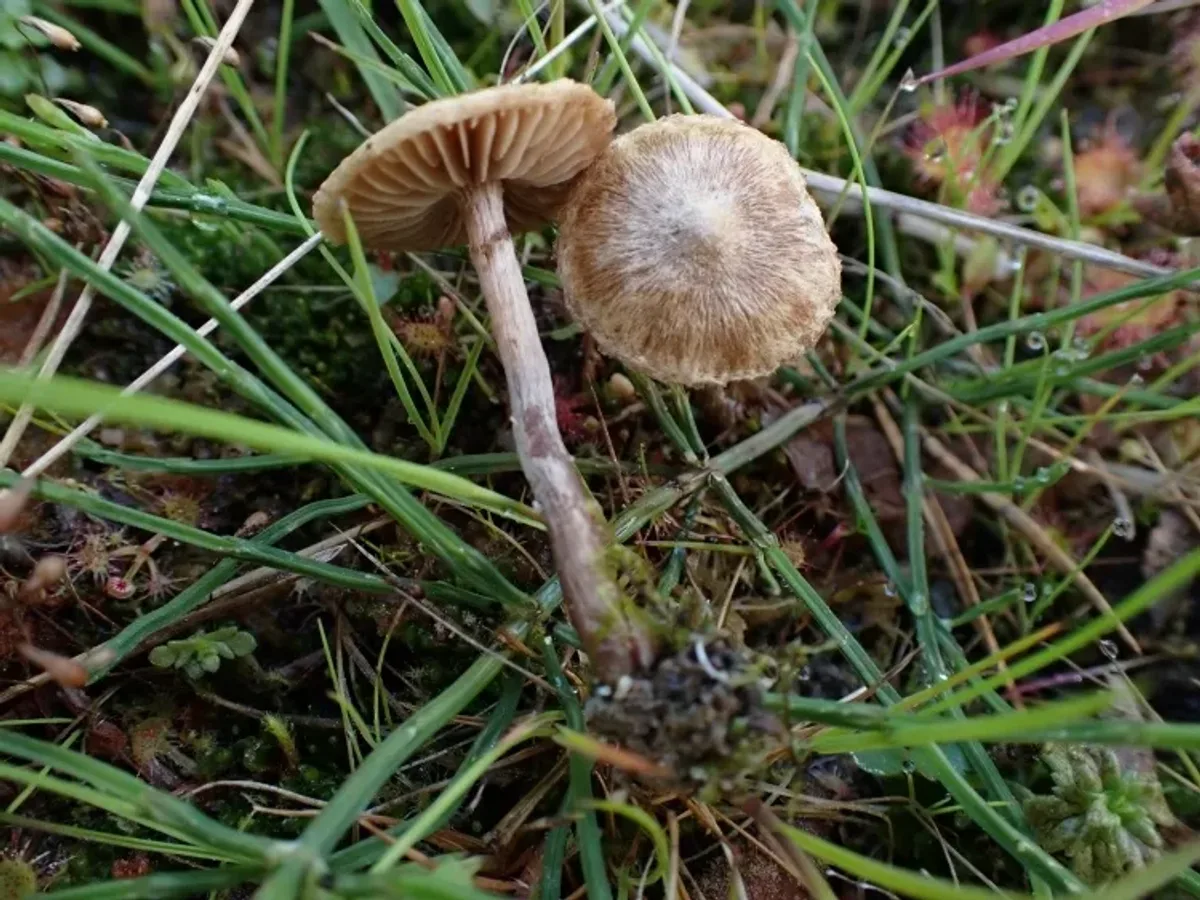
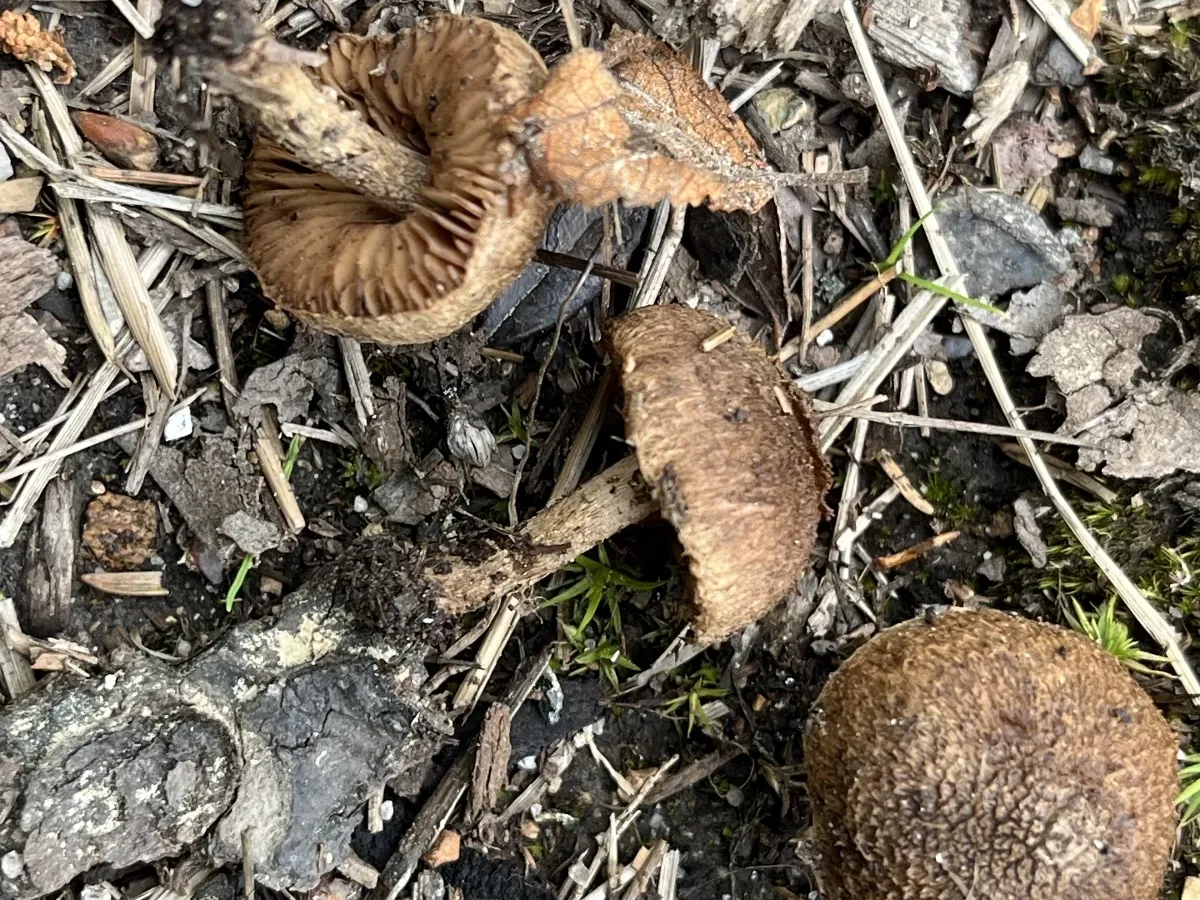
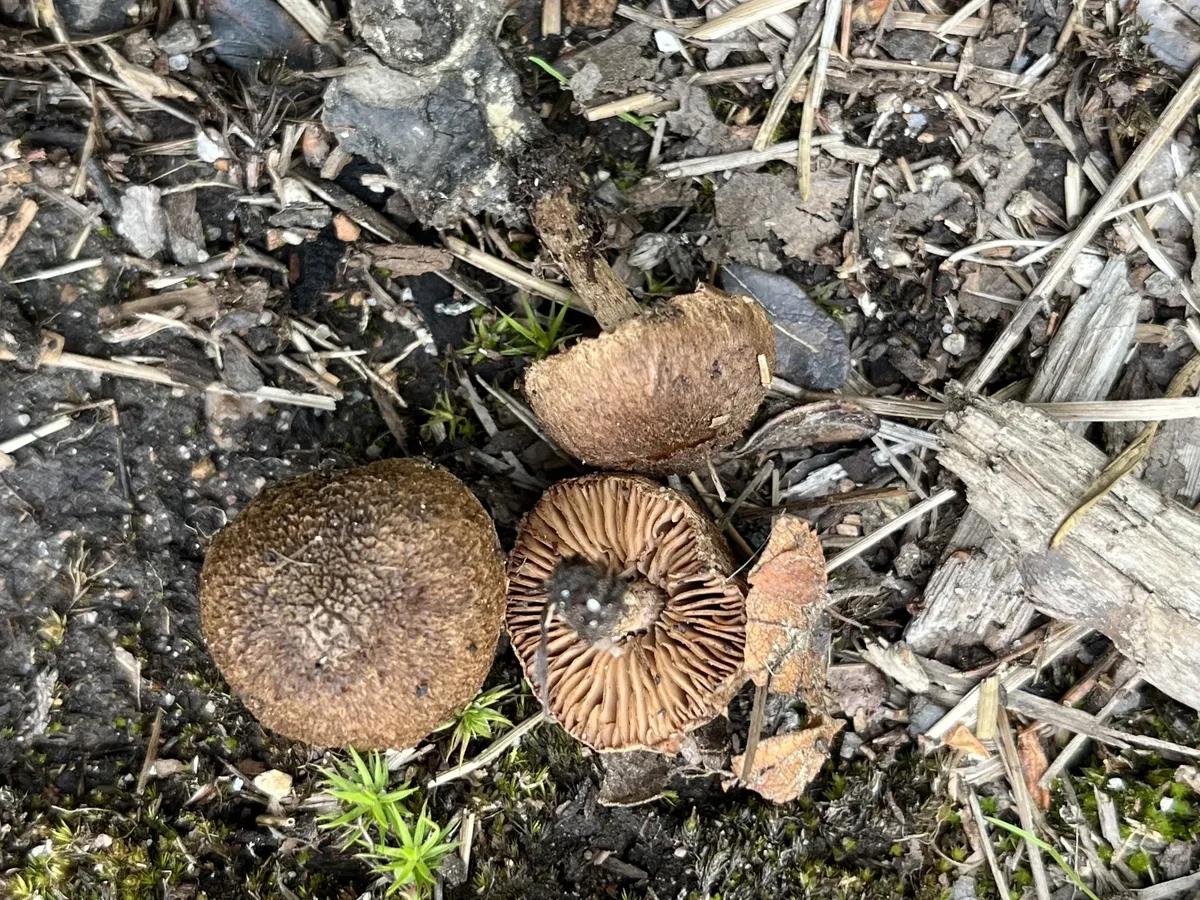
The dense, coarse fibres on the cap tear and fray into irregular upright or collapsed tufts, giving it a shaggy, lacerated texture that is diagnostic within the genus. The cap is 1.5-5 cm, conical to broadly convex with a persistent central umbo. Colouring is dull sooty brown to umber, darker at the disc.
Stem
The stem is whitish to pale grey-brown, 2-7 cm tall, with a finely mealy (pruinose) apex that can be checked with a hand lens. No ring, no volva.
Gills
Gills start pale clay and mature to snuff-brown. The spore print is a dull snuff-brown.
Smell & taste
The smell is the key diagnostic signal for the genus: earthy, spermatic, or musty.
A mushroom that looks like this and smells like this is always an Inocybe; an Inocybe is always poisonous; and that ends the identification task for the forager.
Why it's dangerous
Muscarine poisoning is a medical emergency requiring prompt hospital treatment. The specific antidote is atropine (muscarinic antagonist), administered intravenously at adequate dose by medical personnel. Do not self-treat.
Inocybe lacera is most dangerous through inadvertent co-collection with edible species. A single specimen mixed into a chanterelle basket and not recognised before cooking constitutes a poisoning risk.
The further risk is that other fibrous-capped mushrooms mistaken for Inocybe lacera may actually be the deadly fibrecap Inosperma erubescens, for which high-dose muscarine causes cardiac and respiratory failure.
Call emergency services immediately for any suspected ingestion of a fibrous-capped, umbonate, earthy-smelling woodland mushroom.
Toxin
Muscarine is the principal toxin, a quaternary ammonium alkaloid that acts as a full agonist at muscarinic acetylcholine receptors of the parasympathetic nervous system. Inocybe species contain muscarine at genuinely high concentrations, enough to produce a serious clinical syndrome.
It is not destroyed by cooking heat, drying, or normal gastric acid.
It does not directly damage the liver or kidneys (unlike amatoxins or orellanin), but causes uncontrolled parasympathetic activation throughout the body.
Symptoms
Onset within 15 minutes to 2 hours of ingestion. The clinical picture follows the cholinergic toxidrome:
- Profuse sweating (diaphoresis)
- Hypersalivation
- Lacrimation (excessive tearing)
- Rhinorrhoea
- Miosis (markedly constricted pupils)
- Bradycardia (slow pulse)
- Bronchospasm with excessive mucus secretion
- Nausea, abdominal cramping, vomiting, diarrhoea
- Urinary incontinence
- Low blood pressure
The cardinal triad recognisable in the field is profuse sweating plus salivation plus slow pulse.
Symptoms typically resolve within 6-24 hours with atropine treatment. Severe cases, particularly in children or the elderly, can develop dangerous bronchospasm or cardiovascular compromise.
Staying safe
Inocybe lacera is poisonous and must never be eaten. Like all Inocybe species, it contains muscarine at concentrations considerably higher than in Amanita muscaria, despite the historical name association.
Muscarine poisoning produces the cholinergic toxidrome, beginning within 15 minutes to 2 hours of ingestion:
- Profuse sweating
- Salivation
- Lacrimation
- Miosis (pinpoint pupils)
- Bradycardia
- Gastrointestinal cramping
The antidote is atropine, which must be administered intravenously by medical personnel. While muscarine poisoning in healthy adults is rarely fatal with prompt treatment, it is a medical emergency, particularly in children and the elderly.
The critical danger is not I. lacera itself in isolation, but the risk of confusing it or other Inocybe species with the deadly fibrecap Inosperma erubescens, which can be lethal, or collecting a single poisonous specimen inadvertently alongside edible species.
Cooking does not destroy muscarine. If ingestion of any fibrous-capped, umbonate, earthy-smelling mushroom is suspected, call emergency services immediately.
Where & when it grows
Habitat
Inocybe lacera has an unusually broad ecological tolerance for its genus, growing on sandy, gravelly, or disturbed soils across several settings:
- Both conifer and mixed woodland
- Heathland-forest margins
- Path and track edges
- Dune-slack vegetation
- Riverside sandy banks
- Boggy woodland edges where birch and willow grow
The preference for open, disturbed, light soils on path verges makes it one of the Inocybe species most likely to be encountered by walkers, cyclists, or foragers moving through woodland tracks.
In contrast to more shade-tolerant Inocybe species such as I. asterospora under beech, I. lacera thrives in the sunny, open fringe between forest and path.
When
Inocybe lacera is one of the earliest Inocybe species to emerge, fruiting from late May or June through October in central and western Europe, with peak activity in July through September.
The early-summer timing overlaps with the chanterelle (Cantharellus cibarius) season in sandy pine-birch woodland, exactly the habitat and substrate where I. lacera thrives.
Flushes tend to occur 5-10 days after summer rainfall events when the soil is warm (10-20 degrees C). The relatively long season and habitat generalism give it a wide window of potential encounter.
How it grows
Obligately mycorrhizal, forming underground nutrient-exchange partnerships with the roots of living pines, spruces, birches, and willows. The fungus cannot grow independently of a living host and cannot be cultivated.
The mycelium forms perennial networks that return year after year at established locations. Productive patches on sandy path edges or heathland rides can be reliably revisited annually.
Fruiting bodies emerge singly or in scattered groups from bare or mossy soil, often pushing up through pine-needle duff or short grass on path edges.
Fruiting conditions
Flushes 5-10 days after rainfall of at least 15 mm over the preceding two weeks, when soil temperatures are between about 10 and 22 degrees C. The relatively high upper soil-temperature tolerance reflects the summer-biased season on sunny sandy path edges, where soils warm quickly. Peak activity is July through September in central and western Europe. In the Nordic region, peak moves slightly later to August through September. The species is one of the first Inocybe to appear in early summer and one of the most consistently producing on favoured sandy substrates.
Look-alikes
The main lookalike concern with Inocybe lacera is not that it looks edible, but that it occurs in the same habitats and at the same season as choice edible mushrooms, and could be picked alongside them by inattentive foragers. In chanterelle and summer bolete habitats on sandy soil, I. lacera appears on path edges and disturbed margins.
The dangerous lookalikes are:
- 1Inosperma erubescens (deadly fibrecap) shares the fibrous-capped, umbonate, medium-brown appearance. It tends to show reddish or brick tones and may redden when handled, but this is unreliable; fatalities are documented. Any uncertainty about a fibrous-brown umbonate mushroom must be treated as potentially deadly.
- 2Cortinarius rubellus (deadly webcap) appears on similar sandy acid soils in mixed pine-birch woodland. Young specimens show cobweb-like cortina and the spore print is rusty-cinnamon; it causes delayed kidney failure from orellanin.
- 3Other Inocybe species (I. rimosa, I. geophylla, I. asterospora) are all toxic, all broadly similar in appearance; all should be treated as dangerous.
- 4Tubaria furfuracea (scurfy twiglet) is a small brown species on similar disturbed ground, but with rusty-brown tones, a more convex less umbonate cap, growing on plant debris, and lacking the fibrous-torn surface and spermatic odour.
- 5Small Hebeloma species on sandy soil have a radish-like smell, a smoother cap without shaggy fibres, and often a ring zone on the stem.
Inosperma erubescens shares the fibrous, umbonate, brown cap, earthy-spermatic smell, and woodland-edge habitat with Inocybe lacera. The deadly fibrecap often shows reddish or brick-red tones and may redden markedly when handled or cut, whereas I. lacera is duller sooty brown without reddening, but this distinction is not reliable enough for safe field separation. Inosperma erubescens contains muscarine at lethal concentrations; fatalities in adults are documented. Any fibrous-capped, umbonate, brown mushroom with an earthy-spermatic smell in European woodland should be left untouched.
Cortinarius rubellus grows on similar sandy acid soils in pine-birch woodland and has a broadly conical to umbonate cap in tawny orange-brown tones. Key distinctions from I. lacera: young specimens retain cobweb-like cortina fibres stretched between the cap edge and the upper stem (the most reliable separation character); the cap surface fibres are finer and less aggressively torn; the spore print is rusty-cinnamon rather than snuff-brown; the overall colour is more orange-tawny than sooty brown. Cortinarius rubellus causes delayed (3-21 days) kidney failure from orellanin, making it particularly treacherous because victims feel recovered before renal damage becomes apparent.
Small Hebeloma species occur on similar sandy disturbed soils. Hebeloma mesophaeum has a pale clay to greyish-buff cap that is smooth to slightly silky rather than coarsely fibrous-torn; the smell is of radish or horseradish rather than the spermatic odour of Inocybe; fresh gills often show characteristic beaded water-droplets along their edges. Hebeloma species are gastrointestinal irritants rather than muscarinic, a different toxidrome but equally inedible.
Inocybe geophylla is typically white to ivory or pale mauve-lilac, dramatically paler than the dark sooty brown of I. lacera, but both share the earthy-spermatic odour, pruinose stem apex, and snuff-brown spore print. The lilac variety of I. geophylla could cause confusion for a beginner. Both are muscarinic and toxic.
Tubaria furfuracea is a small rusty-cinnamon to ochre-brown species found on soil and plant debris in disturbed areas, path edges, and gardens. It lacks the shaggy torn fibrous cap surface of I. lacera, has a more plane to depressed cap without a sharp umbo, and smells earthy but not spermatic. Its spore print is rusty-brown to cinnamon. Separation from I. lacera relies on the cap shape (no sharp umbo in Tubaria), the surface texture (scurfy-mealy rather than torn-fibrous), and the absence of a spermatic odour.
Inocybe rimosa (split fibrecap) has a paler straw-yellow to ochre cap with fibres that split radially towards the margin rather than forming the shaggy, torn, dark brown clusters of I. lacera. I. rimosa also favours more open, sunny disturbed ground (paths, roadside verges, parks) compared to the sandy heathland-forest edge niche of I. lacera. Both are muscarinic and toxic, so confusing one for the other carries the same poisoning risk.
A reference guide - never an edibility guarantee. When in doubt, leave it out.