Lilac leg fibrecap
Inocybe griseolilacinasyn. Inocybe griseolilacina J.E. Lange
 © Sharon Squazzo (CC BY)
 © Mandy Hackney (CC BY)
 szegedigombasz (CC0)
 © Mandy Hackney (CC BY)
 © Sharon Squazzo (CC BY)© Sharon Squazzo (CC BY)© Mandy Hackney (CC BY)
Edible only with the right preparation - or safe for some people but not others. Learn the caveats first.
Never eat a mushroom you are not 100% sure of - check the look-alikes below, and always cook wild mushrooms.
How to recognise it
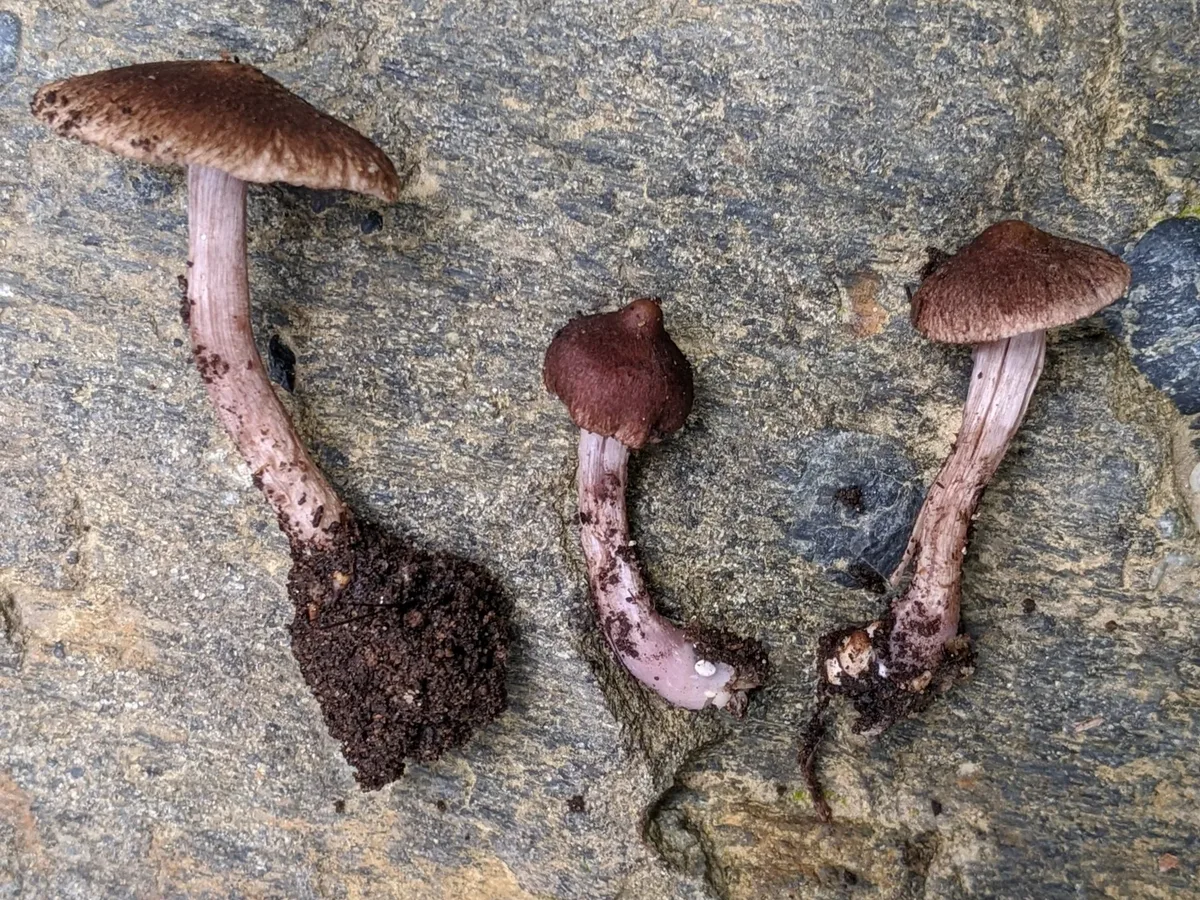
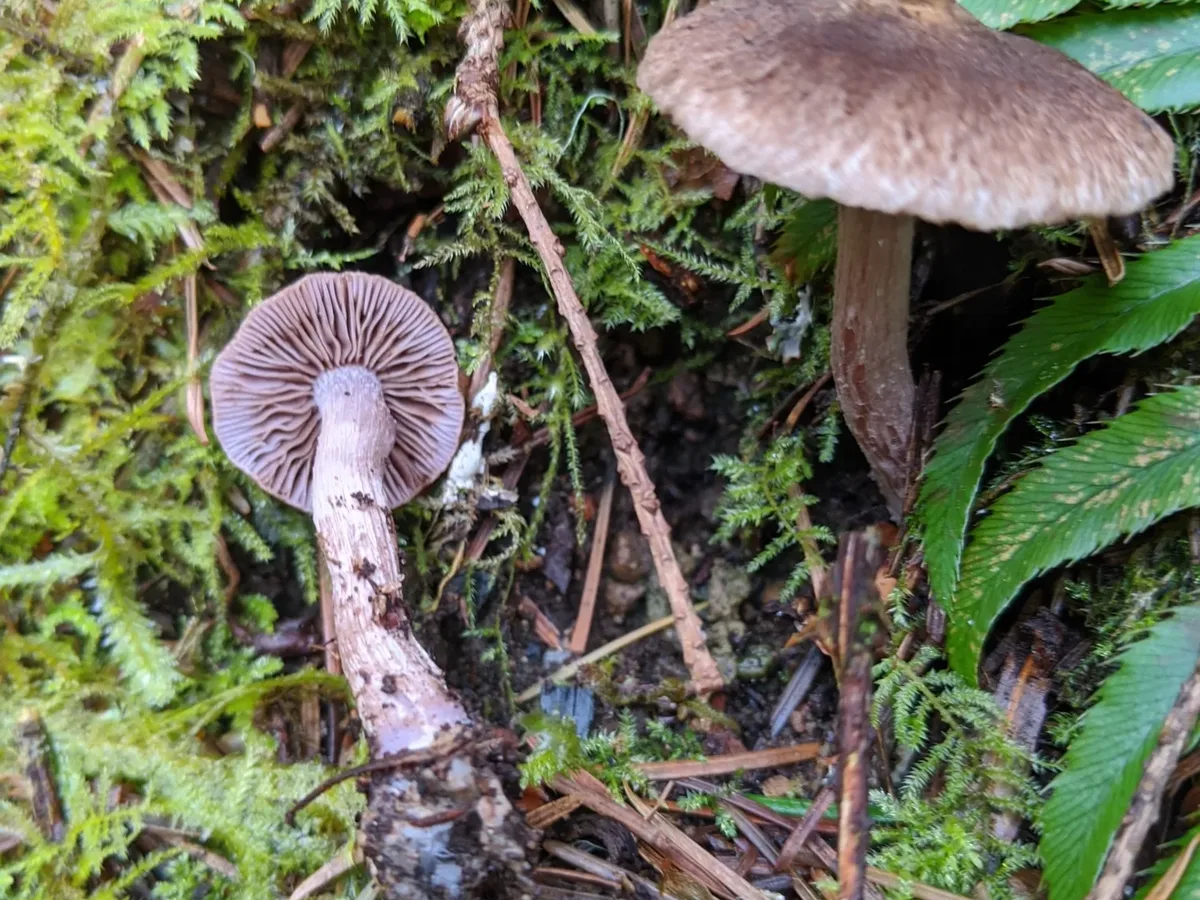
Inocybe griseolilacina is recognised above all by the lilac to greyish-violet colouration of the lower stem - a feature that makes it stand out from most other small brown fibrecaps and is the origin of both its scientific and common names.
Cap
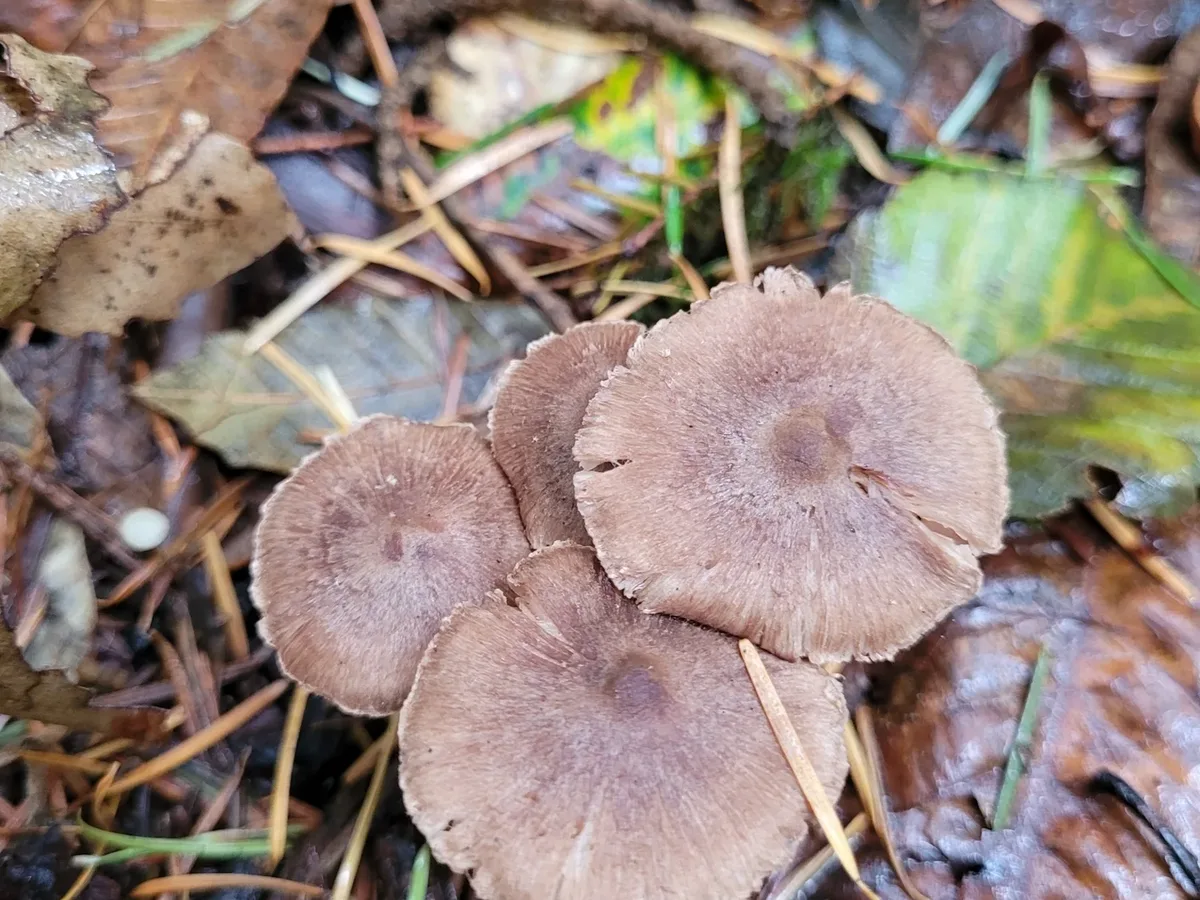
The cap is 2-6 cm, broadly conical to convex with a persistent central umbo, and is covered in silky radial fibres that may fray toward the margin. Colour is greyish-brown to pale ochre-brown with a slightly darker disc.
Gills / Pores
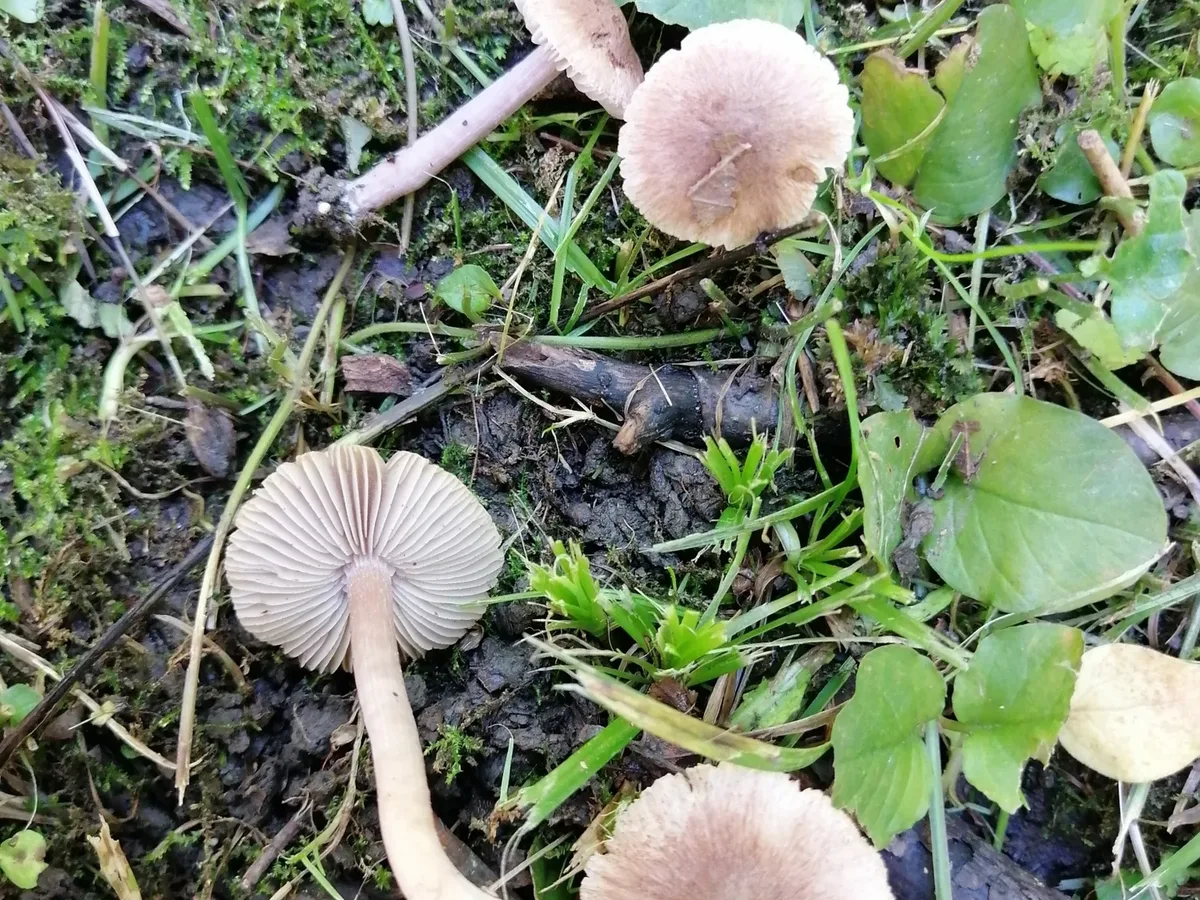
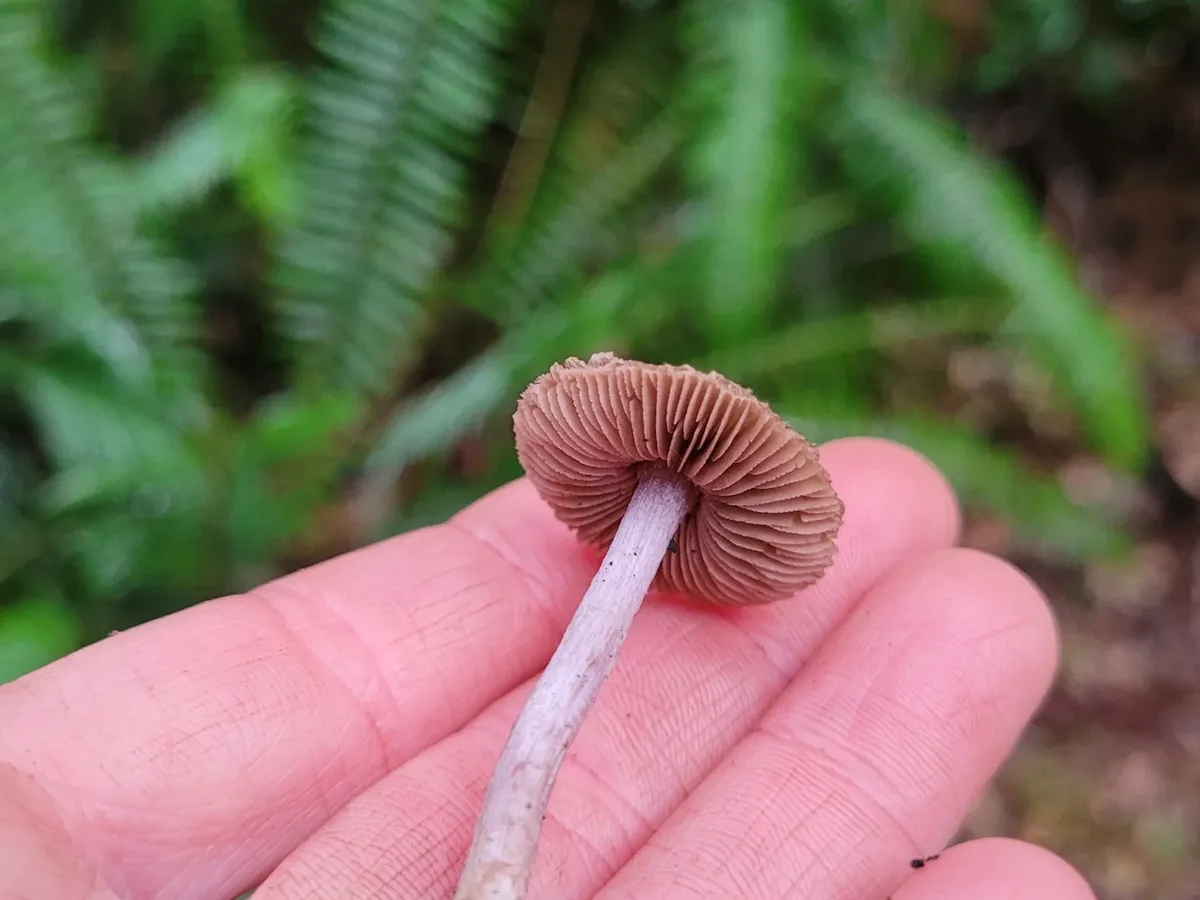
The gills begin pale grey-buff and darken to dull clay-brown with age.
Stem
The stem is the diagnostic feature: its lower half and base are stained lilac, violet-grey, or bluish-violet, while the upper portion is whitish to pale. The stem apex is mealy-powdery (pruinose). There is no ring or volva.
Smell & taste
The odour is strongly mealy-earthy and spermatic - the classic Inocybe smell.
Spore print tobacco-brown.
The combination of brown umbonate cap + lilac stem base + mealy smell + snuff-brown spore print is diagnostic for this species within its habitat.
Why it's dangerous
Muscarine poisoning is a medical emergency. Treatment with atropine is highly effective when given promptly and dramatically reverses the autonomic symptoms.
Children, elderly individuals, and those with pre-existing cardiac or respiratory disease are at greatest risk of serious outcomes.
Do not attempt to manage this at home - call emergency services and bring the mushroom or a photograph.
The similarity between I. griseolilacina's colourful stem and attractive edible species with violet tones (Laccaria amethystina, Lepista nuda) makes it a credible accidental ingestion risk for inexperienced foragers.
Toxin
Muscarine is a quaternary ammonium alkaloid and potent agonist at muscarinic acetylcholine receptors throughout the parasympathetic nervous system and at peripheral cholinergic synapses.
The toxin is not metabolised or degraded by gastric acid or heat, making cooking an ineffective decontamination method.
The Inocybe genus as a whole - along with several Clitocybe species - represents the primary clinical source of muscarine poisoning in Europe, at concentrations far exceeding those found in Amanita muscaria (from which muscarine was first isolated but occurs in trace amounts).
Symptoms
Classic muscarinic (SLUDGE/DUMBELLS) syndrome:
- profuse sweating
- excessive salivation and lacrimation (tearing)
- urinary urgency or incontinence
- diarrhoea
- abdominal cramps
- nausea and vomiting
- miosis (constricted pupils)
- bradycardia (slow heart rate)
- in severe cases, bronchospasm and hypotension
The cardinal triad in the field is the co-occurrence of sweating, salivation, and bradycardia.
Onset is rapid (15 minutes to 2 hours), which clearly distinguishes muscarine poisoning from amatoxin poisoning (which has a 6-24 hour asymptomatic lag).
Resolution is typically within 6-24 hours with appropriate treatment but can be prolonged in cases of large ingestion.
Staying safe
Inocybe griseolilacina is poisonous and must never be eaten.
Like all Inocybe species tested to date, it is presumed to contain muscarine - a cholinergic toxin that stimulates parasympathetic nerve receptors and produces the SLUDGE syndrome (Salivation, Lacrimation, Urination, Defecation, GI distress, Emesis) along with bradycardia, miosis, and bronchospasm.
Onset of symptoms is rapid - typically 15 minutes to 2 hours after ingestion. Muscarine is not destroyed by cooking.
There is no antidote in the pharmacological sense, but atropine is a specific physiological antagonist and is effective when given promptly in hospital. If ingestion is suspected, seek emergency medical care immediately.
The small fruit body size means that a forager can easily eat several fruitbodies without realising, and a few grams of fresh Inocybe tissue can deliver a clinically significant muscarine dose.
Where & when it grows
Habitat
A mycorrhizal species of broadleaf and mixed forest across central and western Europe, most often found under beech, oak, hazel, lime, and hornbeam in moist, shaded conditions.
Good places to look:
- along shaded forest tracks where humus has been lightly disturbed
- in damp hollows under the canopy
- around the base of mature trees in established parks or gardens
It tends to appear in small scattered troops rather than as isolated fruitbodies. The species favours neutral to slightly acidic loam soils with a well-developed humus layer.
When
The main fruiting season in central-western Europe runs from late July through October, peaking in late August to mid-October.
Flushes typically emerge 4-10 days after rainfall of 15 mm or more, when daytime temperatures are still in the 12-20 °C range and soil has cooled from peak summer heat but not yet dropped below 8 °C.
This window coincides with the peak season for many edible species including chanterelles and boletes, so foragers are active in the same habitats during the same period, increasing the chance of accidental collection.
How it grows
Like all fibrecaps, Inocybe griseolilacina lives as a mycorrhizal partner of broadleaf trees and cannot be cultivated away from them.
The mycelium threads unseen through the soil for years, quietly exchanging minerals and sugars with the roots of beech, oak, and hazel.
What you see at the surface - the small brown fruitbodies appearing in scattered troops after autumn rain - is just the annual reproductive moment of a much longer underground life. Established patches return year after year in suitable conditions.
Spores are wind-dispersed and, under the microscope, distinctly nodulose (warty-angular) - a characteristic shared across the whole Inocybe genus.
Fruiting conditions
Flushes 4-10 days after rainfall of 15 mm or more, when soil temperature has dropped from summer peak into the 8-18 °C range; peak activity late August through mid-October in central-western Europe.
Look-alikes
The lilac colouration of the stipe base is distinctive but can cause confusion with several edible or less-dangerous species that show violet or lilac tones.
- 1Laccaria amethystina (Amethyst deceiver) is a desirable edible with all-over deep amethyst-violet colouration, but it has thick, widely spaced, deep-purple gills that retain their colour, a non-umbonate cap, and lacks the mealy-earthy Inocybe smell. The spore print of Laccaria is white, not tobacco-brown.
- 2Lepista nuda (Wood blewit), an edible, is substantially larger (5-15 cm) and more fleshy, with a pale lilac to blue-violet tint across cap, gills, and stem when fresh, and broadly irregular gills that later turn pale clay-pink. It lacks the umbo, the fibrous cap surface, and the fibrecap's mealy odour.
- 3Other Inocybe species with lilac or pale violet tones - such as Inocybe geophylla var. lilacina - occur in the same habitats and are similarly poisonous; the whole genus should be treated as toxic.
- 4Cortinarius species with violet stems may superficially resemble Inocybe in colour but are larger, have a cobweb-like cortinal veil when young leaving fibrous veil zones on the stem, and have rusty orange-brown gills when mature. Some Cortinarius species (e.g. C. rubellus, C. orellanus) are deadly, so any violet-stemmed mushroom in the forest that is not positively identified should never be eaten.
The key separation from these more dangerous Cortinarius species is the absence of a cortinal veil, the mealy-earthy (not sweet or earthy-radish-like) smell, the smaller stature, and the adnate (not emarginate) gills of Inocybe griseolilacina.
Some Cortinarius species have violet-tinted flesh or stems. They are typically larger, have a cobweb-like cortinal veil when young (leaving fibrous zones on the stem), rusty-orange to rust-brown gills at maturity, and often a radish or sweet smell rather than mealy-earthy. Critically, some Cortinarius species (e.g. C. rubellus, C. orellanus) are deadly kidney toxins - any uncertainty between an Inocybe and a Cortinarius in the field should be treated by discarding the specimen. The absence of a cortinal veil and the adnate gills of I. griseolilacina separate it from webcaps.
Laccaria amethystina has all-over deep amethyst-violet colouration including thick, widely spaced, deep-purple gills. Its cap is not umbonate, the surface is not silky-fibrous in the Inocybe manner, and it lacks the mealy-earthy spermatic smell. Spore print white (not tobacco-brown). It is edible; I. griseolilacina is poisonous.
Several Inocybe species show lilac or violet tones (e.g. I. geophylla var. lilacina, I. lilacina). All are similarly muscarinic poisonous. The whole Inocybe genus should be treated as poisonous in the field regardless of the exact species - exact species separation within Inocybe requires microscopy.
Lepista nuda is considerably larger (5-15 cm cap), more fleshy, and has all-over lilac-blue-violet colouration including cap and gills when fresh; gills are broadly adnate to slightly decurrent and initially violet, fading to pale clay-pink with age. The cap is smooth (not fibrous), non-umbonate, and the smell is faintly sweet-fruity rather than mealy-spermatic. Spore print pale pink. Wood blewit is edible (when cooked); I. griseolilacina is poisonous.
A reference guide - never an edibility guarantee. When in doubt, leave it out.