Reddening fibrecap
Inocybe godeyisyn. Inocybe godeyi Gillet, Astrosporina godeyi
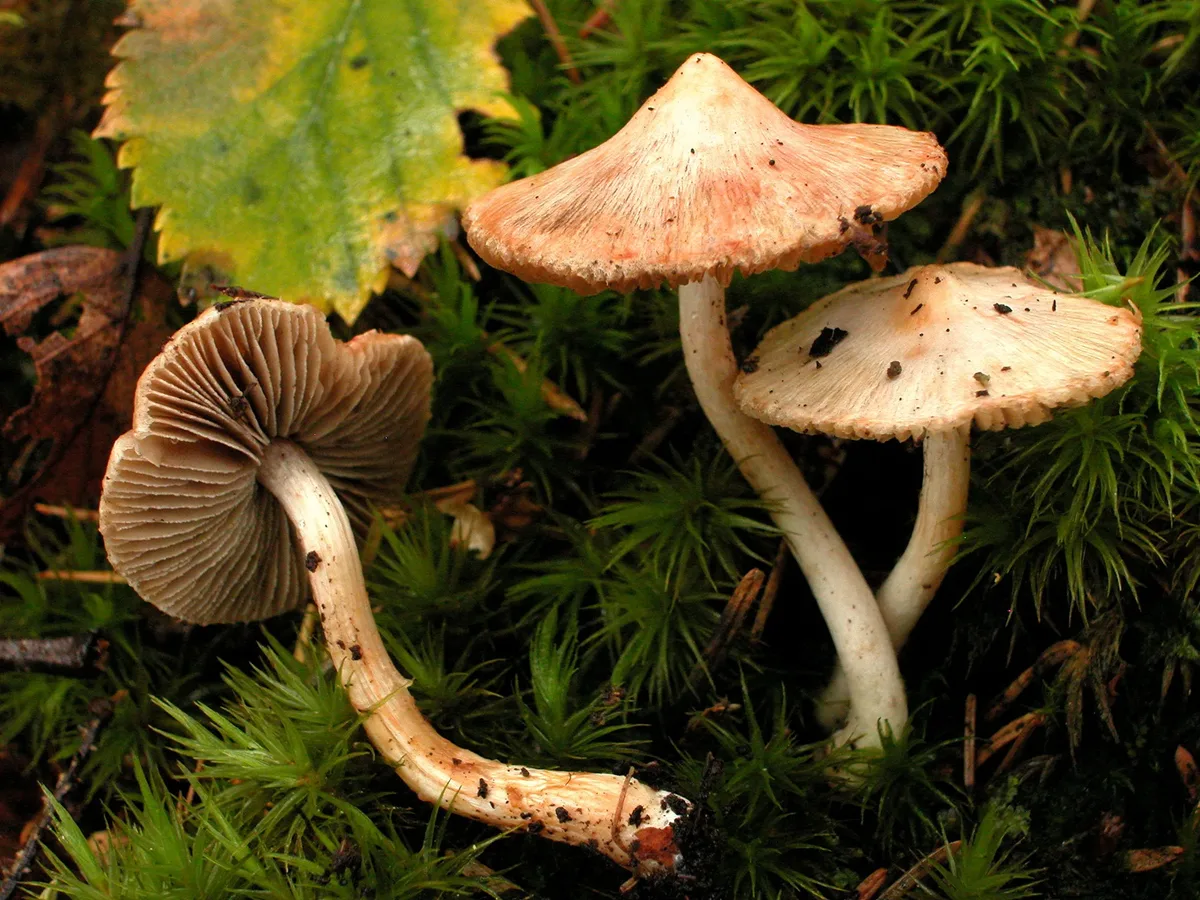 © Santos, Juan (CC BY)
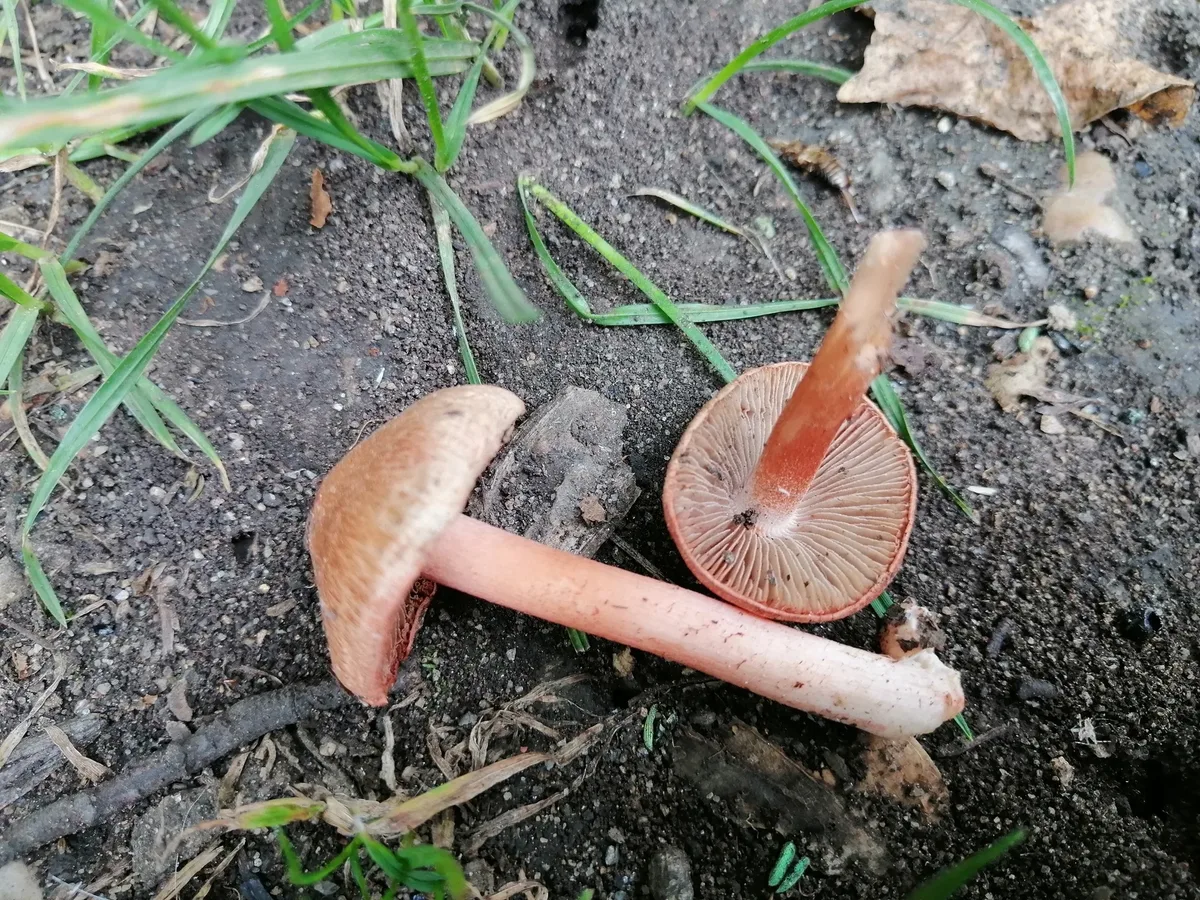 szegedigombasz (CC0)
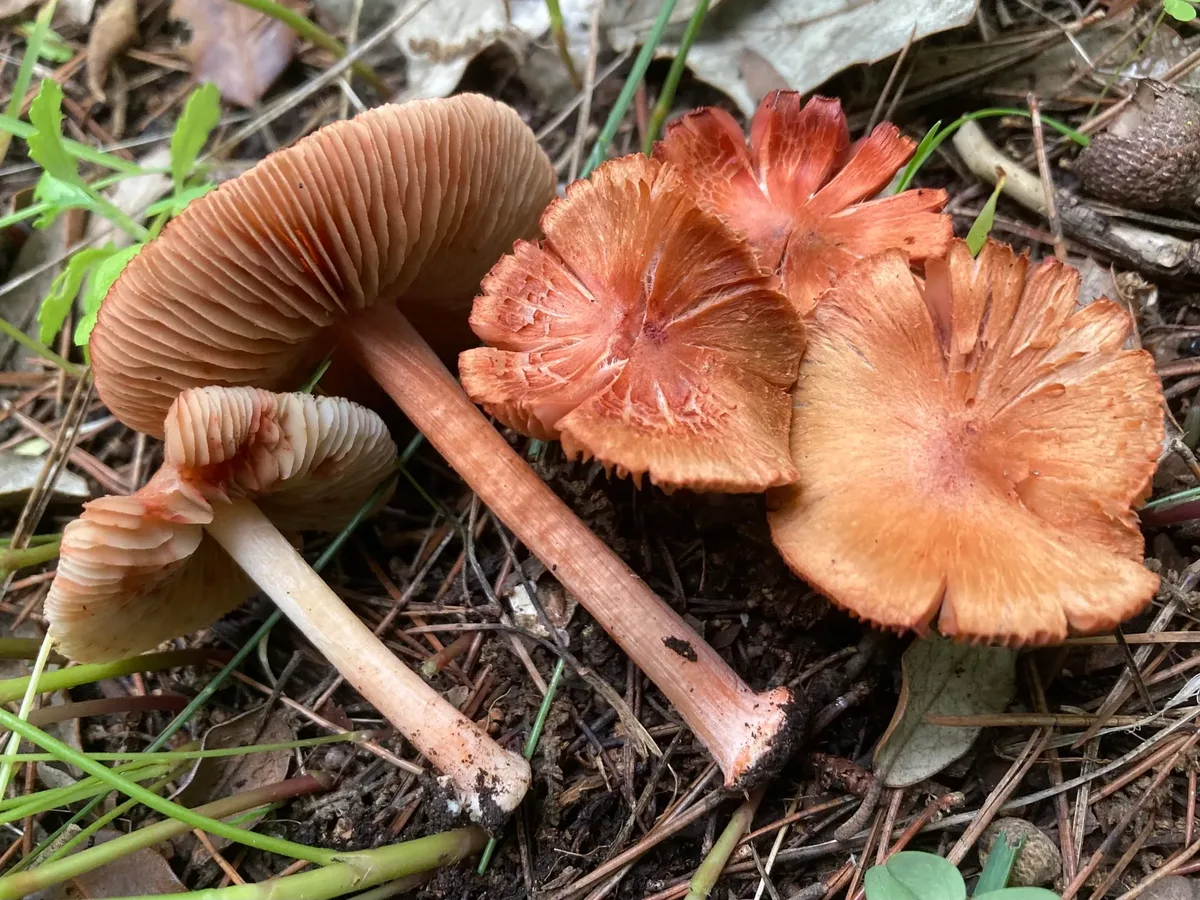 © Lucian Clanet (CC BY)
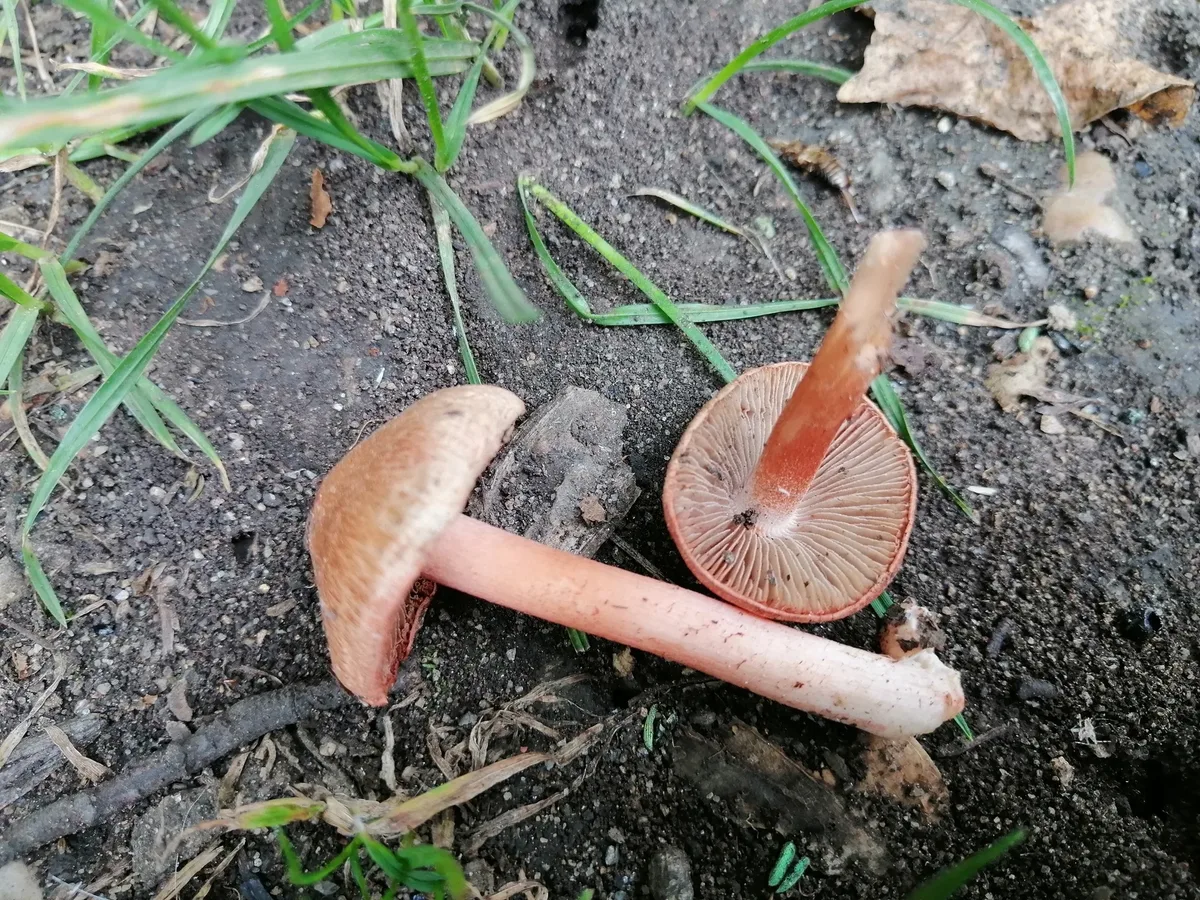 szegedigombasz (CC0)
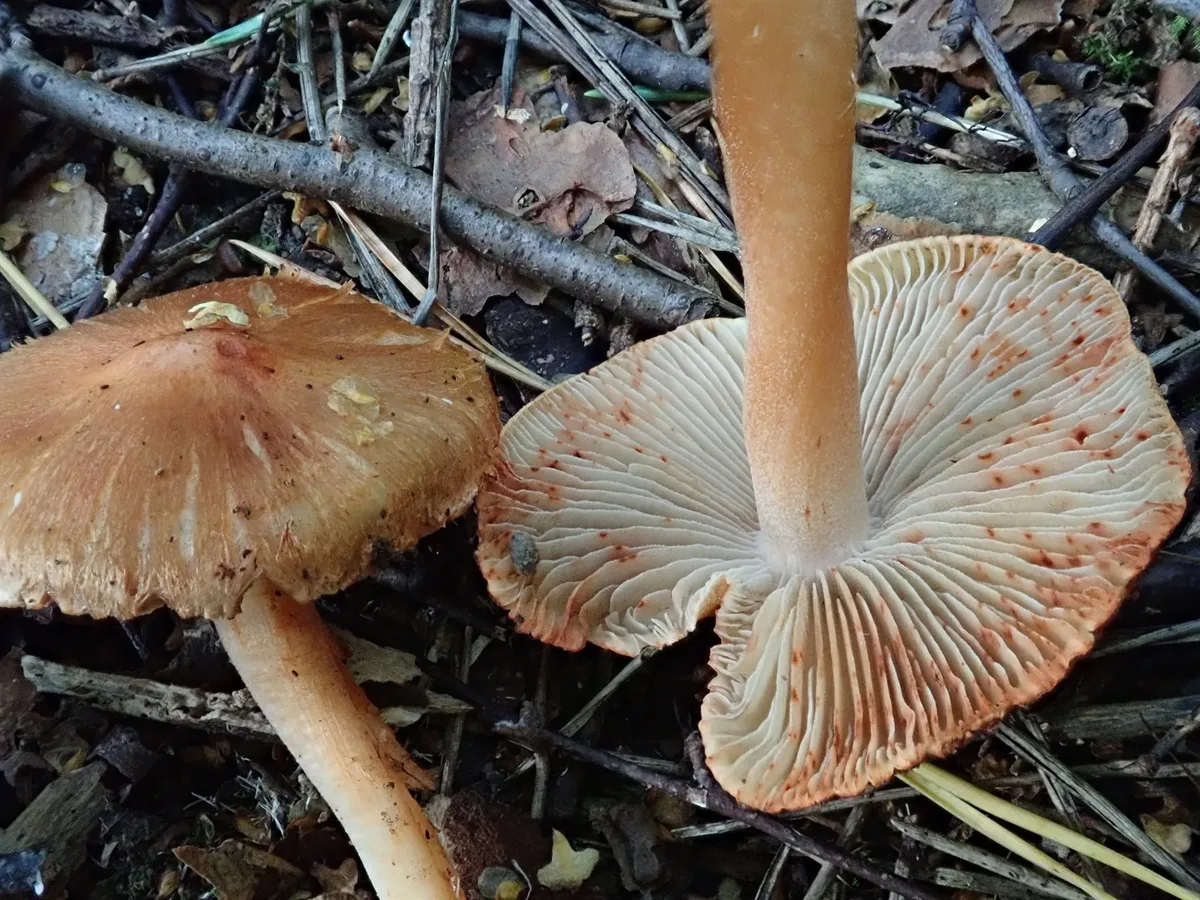 © Bente Rian (CC BY)
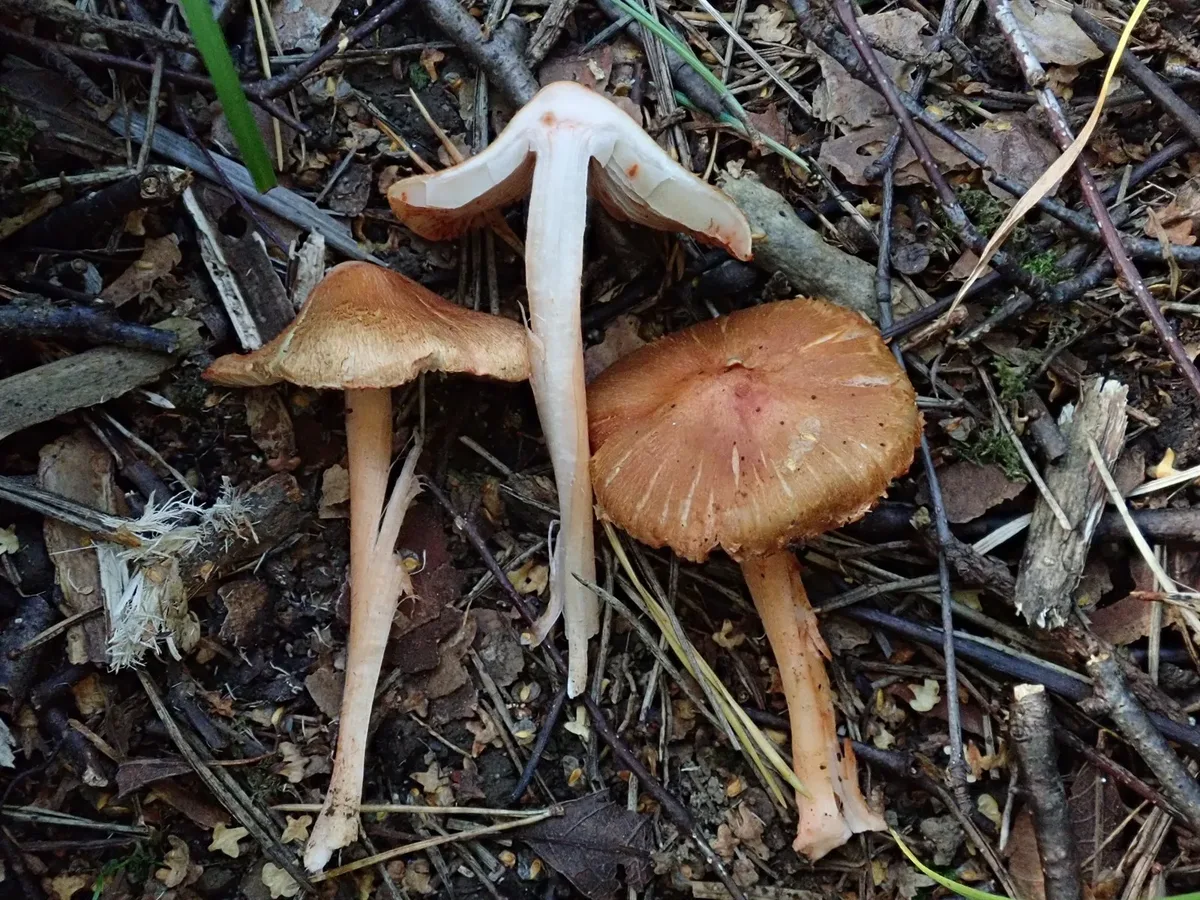 © Bente Rian (CC BY)
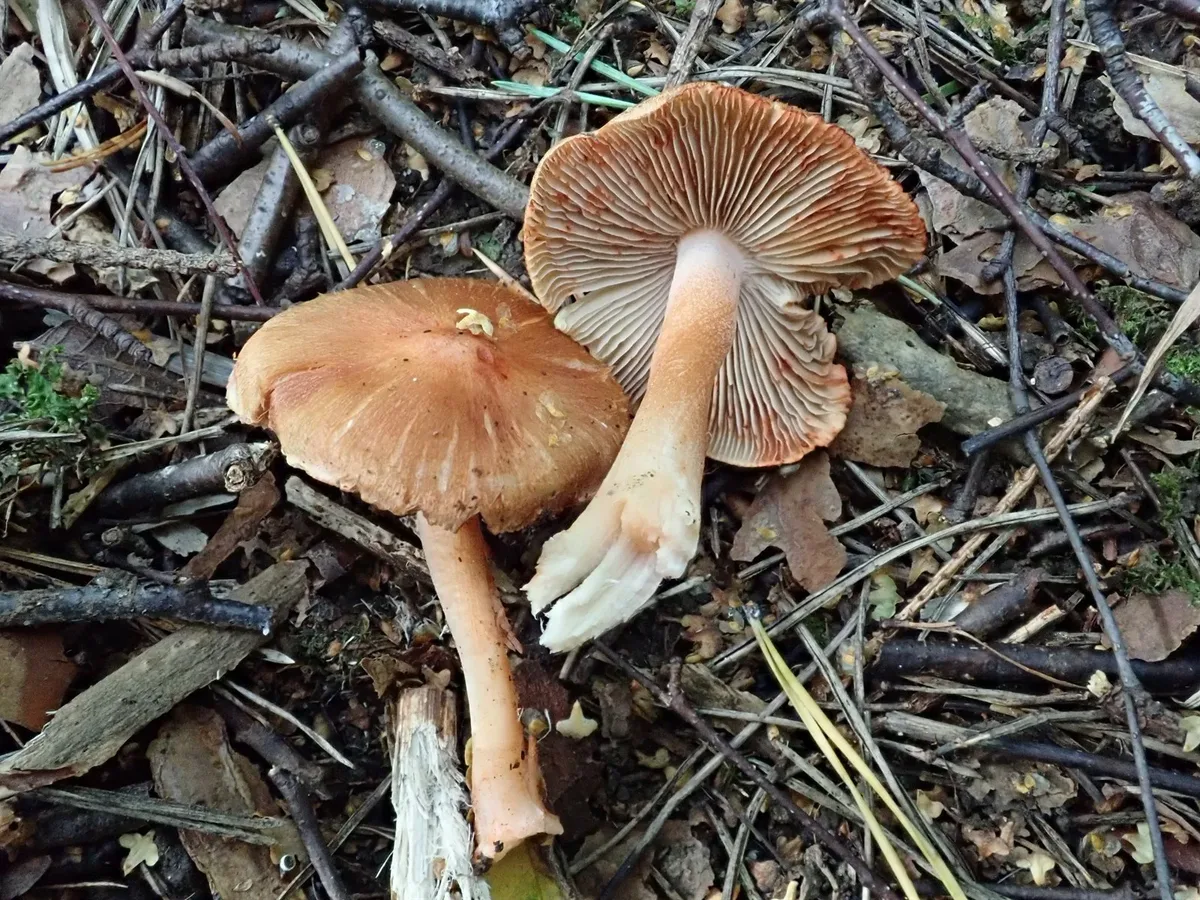 © Bente Rian (CC BY)
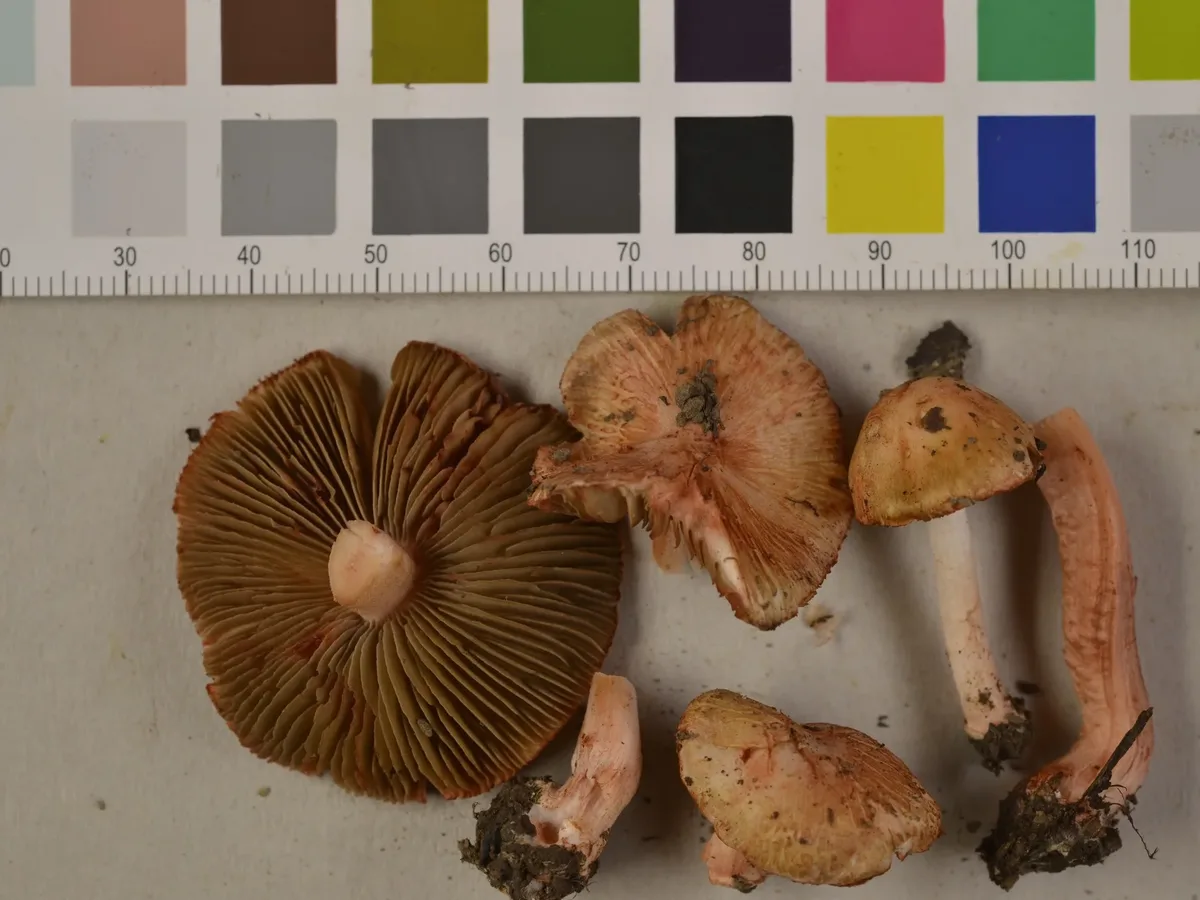 © Unknown (CC BY-SA)
 © Reidun Braathen (CC BY)
 © Per Marstad (CC BY)© Santos, Juan (CC BY)szegedigombasz (CC0)
Edible only with the right preparation - or safe for some people but not others. Learn the caveats first.
Never eat a mushroom you are not 100% sure of - check the look-alikes below, and always cook wild mushrooms.
How to recognise it
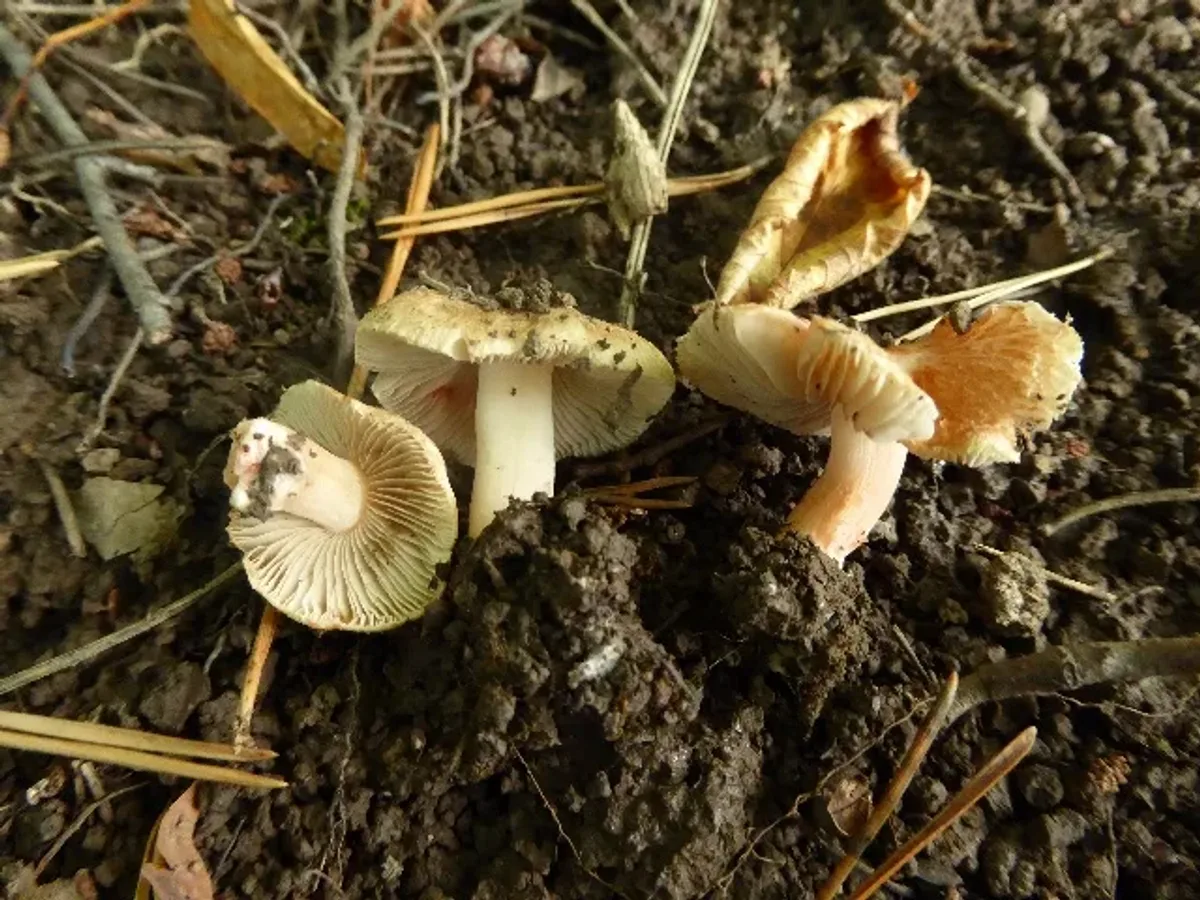
Inocybe godeyi is a smallish fibrecap most easily recognised by the way it reddens.
Cap
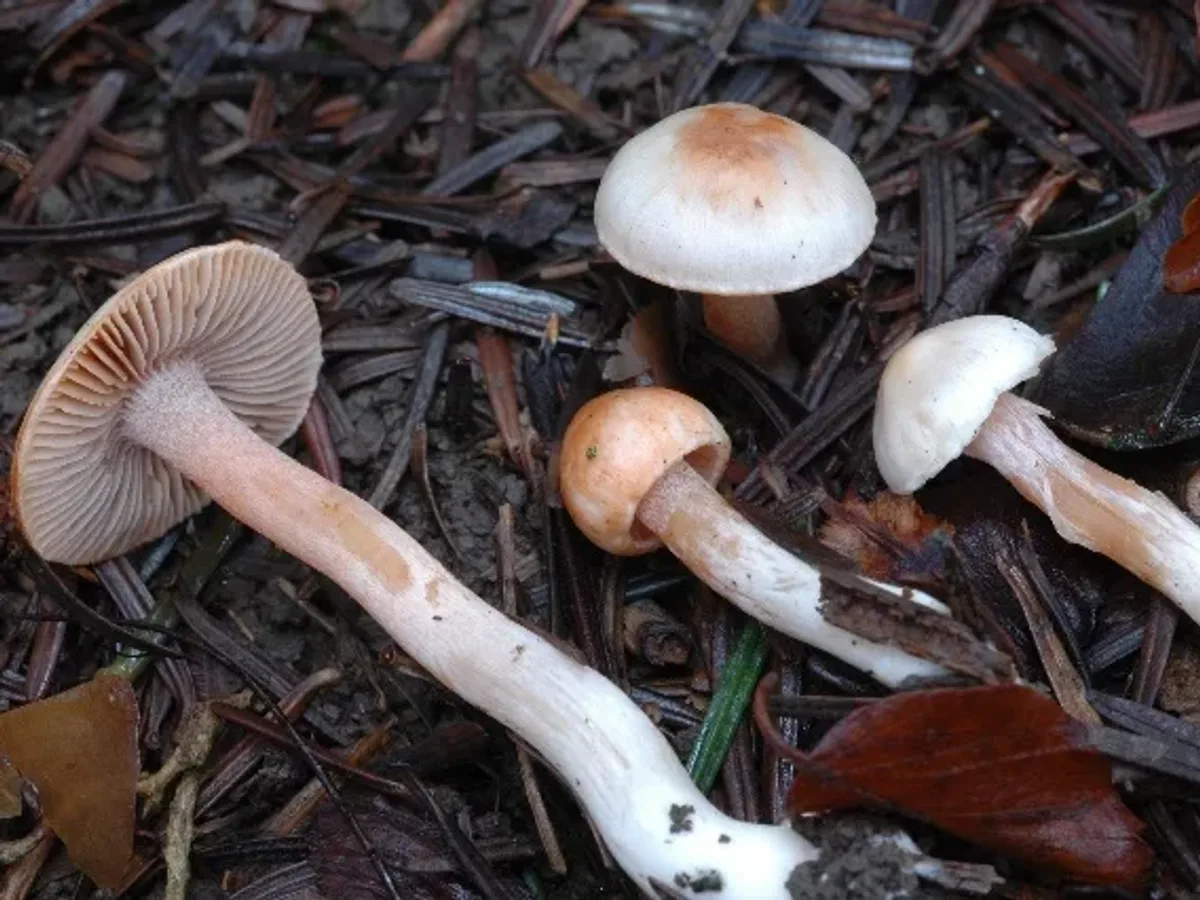
Young caps are conical to bell-shaped with a persistent central boss (umbo) and a pale whitish to straw-cream silky surface. As they expand the surface breaks into fine radial fibres, sometimes with small upturned scales near the margin. The cap rarely exceeds 5 cm in diameter.
Gills
Gills are greyish-cream at first, becoming clay-brown with age.
Stem
The stem is fibrillose to finely powdery-white.
By itself this description matches dozens of other Inocybe species and makes definitive identification difficult.
The reddening reaction is the key: slowly cut the base of the stem and press the gill surfaces - within a few minutes the white flesh and pale surfaces flush distinctly pink to brick-red.
This colour change is both a diagnostic character and an important safety signal: no edible species worth confusing with this one shares this reddening pattern.
The spores are smooth and elongated (not angular or star-shaped), which separates it from star-spored relatives, but spore examination requires a hand lens or microscope and a good spore print on white paper.
Why it's dangerous
Seek medical attention promptly if muscarine poisoning is suspected.
The specific antidote is atropine (an anticholinergic agent), which reverses the muscarinic effects. It is given intravenously in hospital and titrated to effect. Self-treatment is dangerous and ineffective.
In children, the elderly and cardiac patients the bradycardia and bronchospasm can be rapidly dangerous.
Bring a specimen, photograph or description of the mushroom to hospital to aid diagnosis. Because I. godeyi may be confused with the potentially lethal Inosperma erubescens, do not assume a mild clinical course.
Toxin
The primary toxin is muscarine (and related muscarine analogues). It binds irreversibly to muscarinic acetylcholine receptors in the parasympathetic nervous system, mimicking excessive cholinergic stimulation.
Unlike amatoxins, muscarine acts rapidly - symptoms within 15-30 minutes of ingestion. It is also:
- Water-soluble
- Heat-stable, surviving normal cooking temperatures without decomposition
- Not metabolised to a less toxic form in the body
Symptoms
Muscarinic (PSL/SLUDGE) syndrome:
- Profuse sweating (diaphoresis)
- Excessive salivation and lacrimation (watery eyes)
- Severe nausea, vomiting and abdominal cramps
- Watery diarrhoea
- Marked bradycardia (slow heart rate)
- Bronchospasm and increased bronchial secretions (which can cause breathing difficulty)
- Miosis (pupil constriction)
- In severe cases, urinary incontinence and bronchorrhoea
In contrast to amatoxin poisoning, symptoms appear within 15-30 minutes - the rapid onset is both an alarm signal and, fortunately, makes the mushroom connection easier to diagnose.
In most adults the syndrome is very uncomfortable but self-limiting; in severe cases or vulnerable individuals it can be life-threatening due to cardiac and respiratory effects.
Staying safe
Inocybe godeyi contains muscarine, a parasympathomimetic alkaloid that activates muscarinic acetylcholine receptors in the autonomic nervous system. Poisoning occurs within 15-30 minutes of ingestion.
Although most muscarine-poisoning cases from Inocybe are not fatal in healthy adults with prompt medical attention, severe poisoning can be life-threatening, particularly in children, the elderly or those with cardiac or respiratory conditions.
The danger is compounded by the fact that I. godeyi can be confused with the closely related Inosperma erubescens, which has far higher muscarine concentrations and has caused documented fatalities.
Treat any reddening fibrecap as potentially as dangerous as I. erubescens until expert identification rules it out.
Where & when it grows
Habitat
This is a species of calcareous-soil broad-leaved woodland and amenity plantings.
It partners mycorrhizally with a range of deciduous trees - oak, beech, lime, hornbeam, hazel and poplar among them - and is consequently as at home in urban parks, churchyards, cemetery avenues and roadside tree strips as in semi-natural woodland.
It prefers well-drained, neutral to basic soils and tends to avoid strongly acidic or waterlogged ground.
Its urban occurrence is a safety concern: casual visitors to parks or people collecting 'edible-looking' small mushrooms may encounter it under ornamental trees and mistake it for innocuous species.
When
Inocybe godeyi fruits from June through to October, peaking in August to early October in central and western Europe.
Like most Inocybe species it needs warm soil - above 12 °C - and a flush of rain to trigger fruiting.
Individual fruitbodies decay quickly in hot or dry conditions and last only a few days, so a troop that appears after autumn rain may be gone within the week.
Most records cluster in late summer and early autumn when soil is still warm but seasonal moisture begins to build.
How it grows
Inocybe godeyi lives as a mycorrhizal partner of deciduous trees, its unseen mycelium threaded through the soil in a long-term exchange with its host roots.
Fruitbodies emerge singly or in small scattered groups from bare or litter-covered soil beneath host trees, sometimes on woodland paths, at tree bases or on grassy margins.
It does not grow on wood and is not clustered like saprotrophic species. There is no volva or basal cup, and no ring on the stem - both features that help exclude Amanita species.
Fruiting conditions
Requires warm soil and moderate rainfall; flushes 4-10 days after rain events when soil temperature is in the 12-22 °C range. Late summer and early autumn pulses are most productive.
Look-alikes
The Inocybe genus as a whole is notoriously difficult and contains many poisonous species. Several specific lookalike risks apply to I. godeyi.
- 1Most critically, Inosperma erubescens (brick-red fibrecap, formerly Inocybe erubescens) is a closely related, morphologically similar species with very high muscarine content that has caused fatal poisoning. It also reddens but tends to be more uniformly brick-red coloured from the start and has a stronger spermatic odour - distinguishing the two in the field with certainty is not possible for non-specialists.
- 2The many non-reddening white or pale fibrecap species (Inocybe geophylla, I. rimosa, I. lacera and relatives) could be confused at early growth stages before the reddening develops.
- 3Novices sometimes confuse pale fibrecaps generally with small edible white mushrooms or with Marasmius oreades (fairy ring champignon, which grows in open grass rings, has tough wiry stems and gills widely spaced without reddening).
The reddening is a useful positive ID clue for I. godeyi itself, but because its deadly relative I. erubescens also shows reddening, the reddening trait should be treated as a warning, not a reassurance that you have the 'less dangerous' species.
The most dangerous confusion. Inosperma erubescens (formerly Inocybe erubescens) also reddens and is morphologically very similar but typically shows more intense, more uniformly brick-red colouration from an earlier stage, and the smell is often more pungently spermatic. Muscarine content is markedly higher in I. erubescens, with documented fatal cases. Reliable separation in the field is not possible for non-specialists - treat any reddening fibrecap as potentially belonging to the more dangerous species until expert identification confirms otherwise.
I. geophylla is a small, pure white to silky-white or (in var. lilacina) pale lilac fibrecap with a similar habit but lacks the reddening reaction entirely. It also contains muscarine and is poisonous, but is not a deadly species. The absence of any reddening and the often more uniformly conical, sharper-umboned cap distinguish it from I. godeyi.
A genuinely edible grassland species sometimes confused with pale fibrecaps by beginners. It grows in open grassy rings (not under trees), has widely spaced, tough, rubbery gills that do not darken significantly, a tough wiry elastic stem, and no reddening whatsoever. A pleasant honey-like smell contrasts with the earthy-spermatic odour of I. godeyi.
I. rimosa (the Split or Corn fibrecap) has a distinctively radially split, straw-yellow to tawny cap margin in mature specimens and does not redden; it is also poisonous (muscarine) but less dangerous. Habitat tends more toward grassy roadsides and meadow edges.
A reference guide - never an edibility guarantee. When in doubt, leave it out.