Straw fibrecap
Inocybe cookeisyn. Inocybe asterospora var. cookei, Inocybe cookei Bres.
 © Inger-Lise Fonneland (CC BY)
 © Inger-Lise Fonneland (CC BY)
 © Inger-Lise Fonneland (CC BY)
 © Inger-Lise Fonneland (CC BY)
 © Inger-Lise Fonneland (CC BY)
 © Inger-Lise Fonneland (CC BY)
 © Michał Kochanowski (CC BY-SA)© Inger-Lise Fonneland (CC BY)© Inger-Lise Fonneland (CC BY)
Edible only with the right preparation - or safe for some people but not others. Learn the caveats first.
How to recognise it
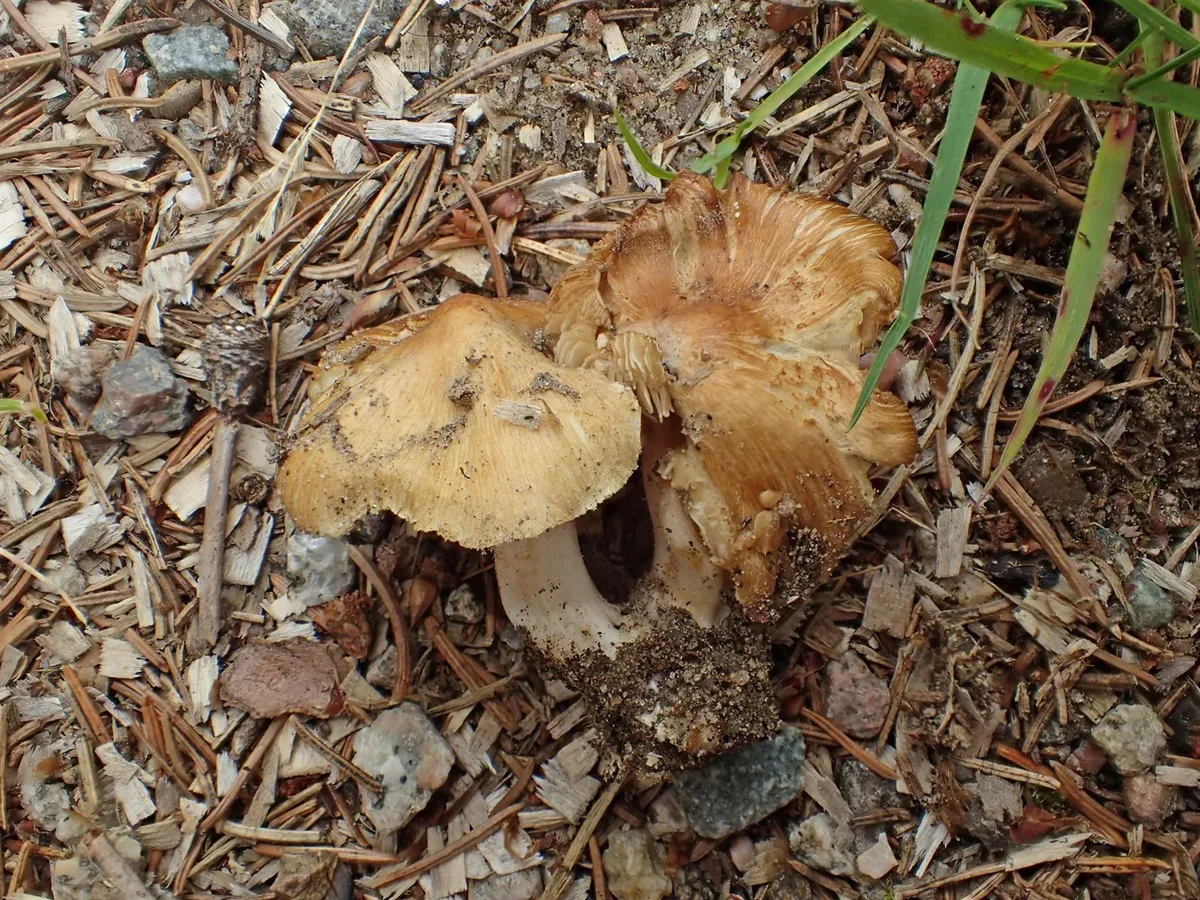
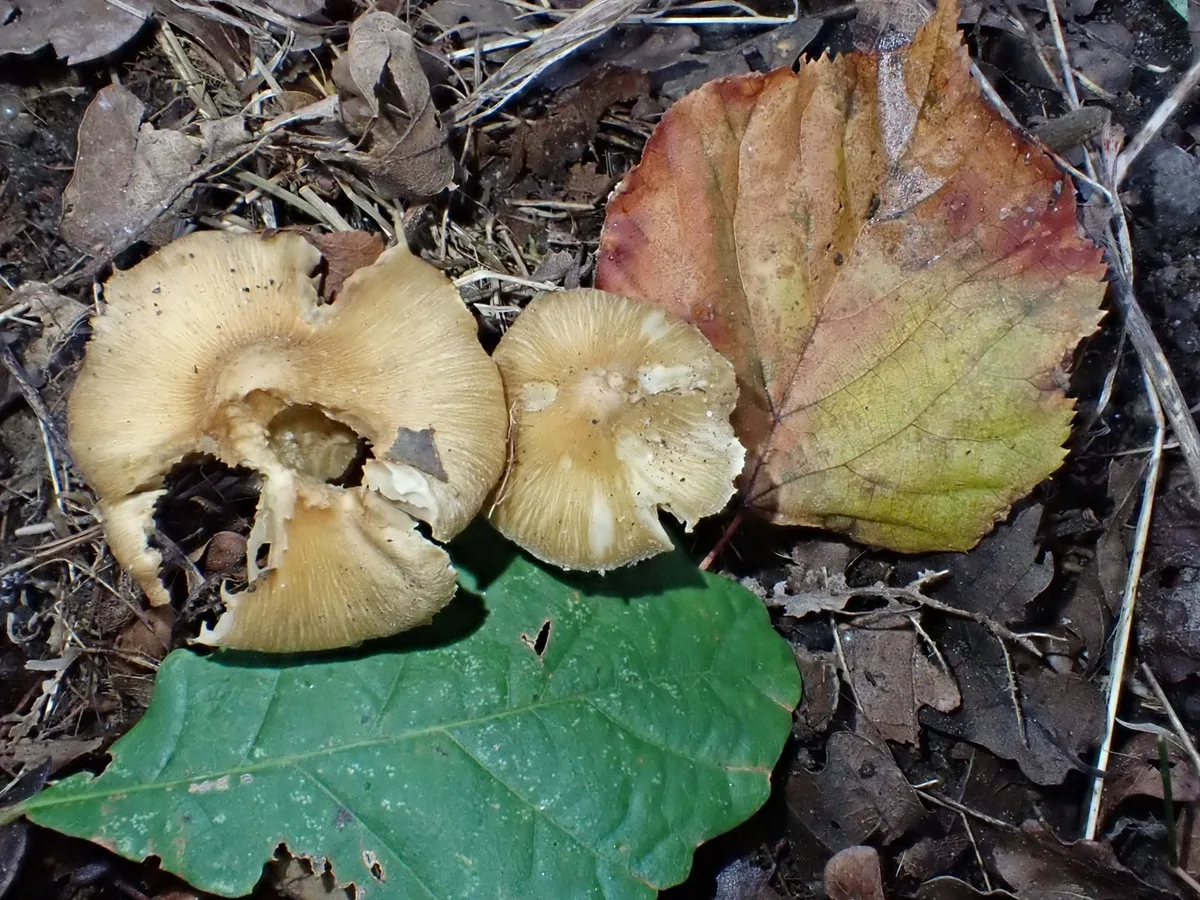
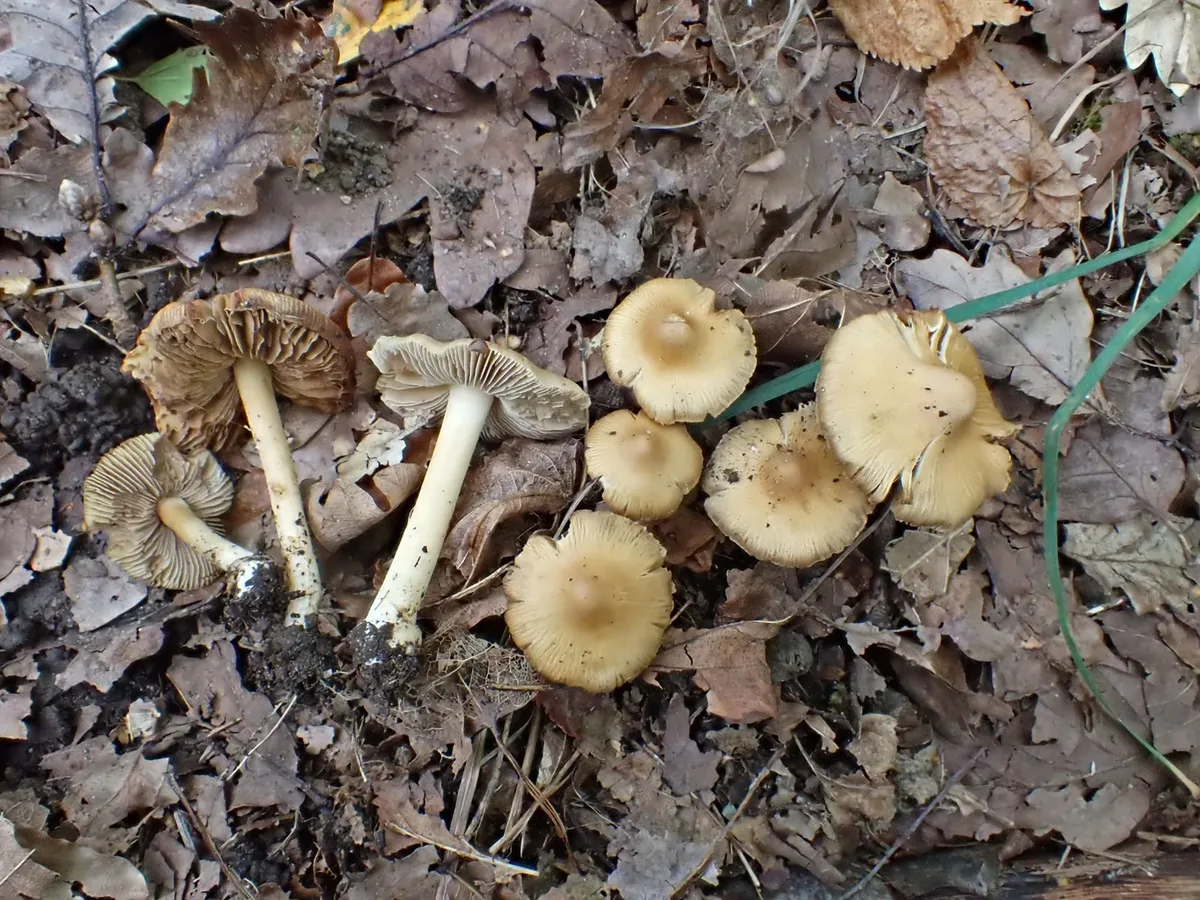
Inocybe cookei is a small to medium straw-yellow to honey-buff woodland mushroom.
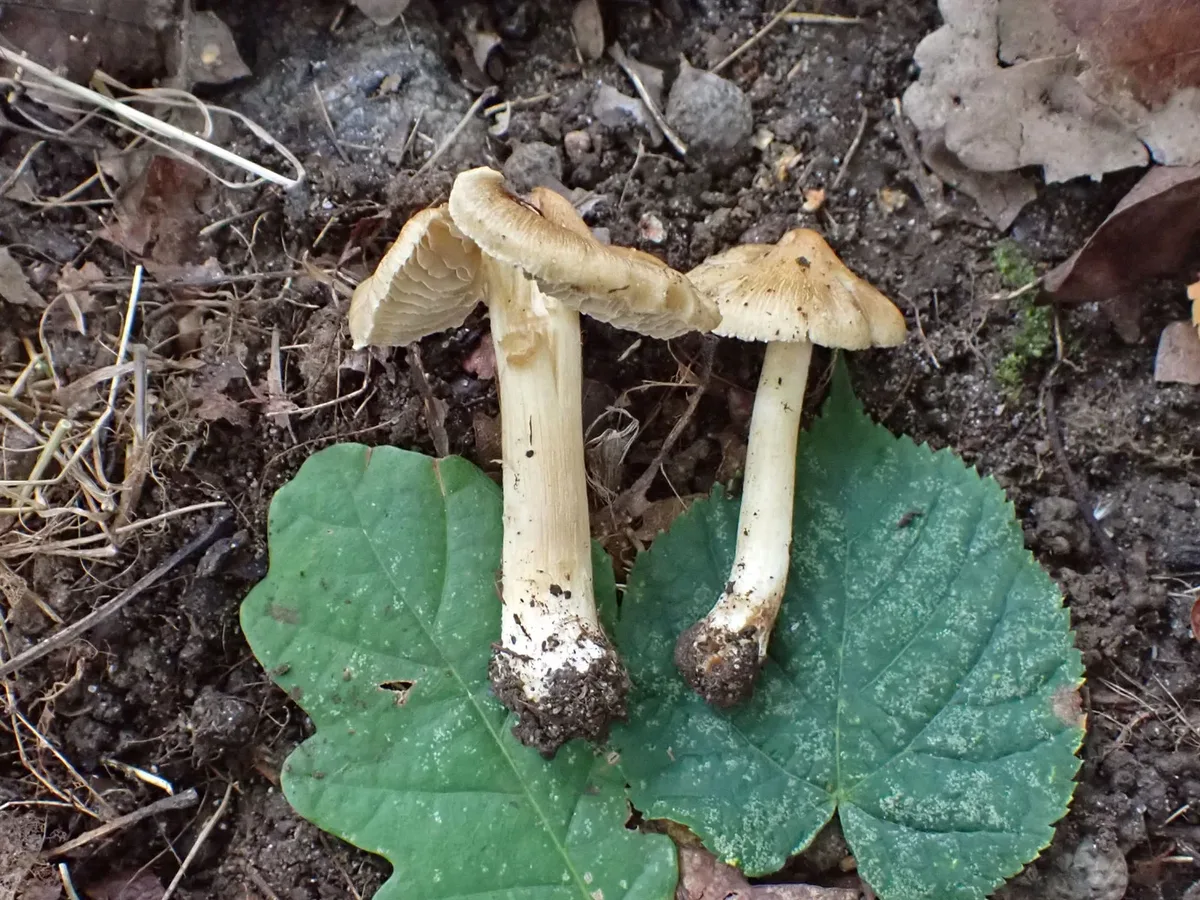
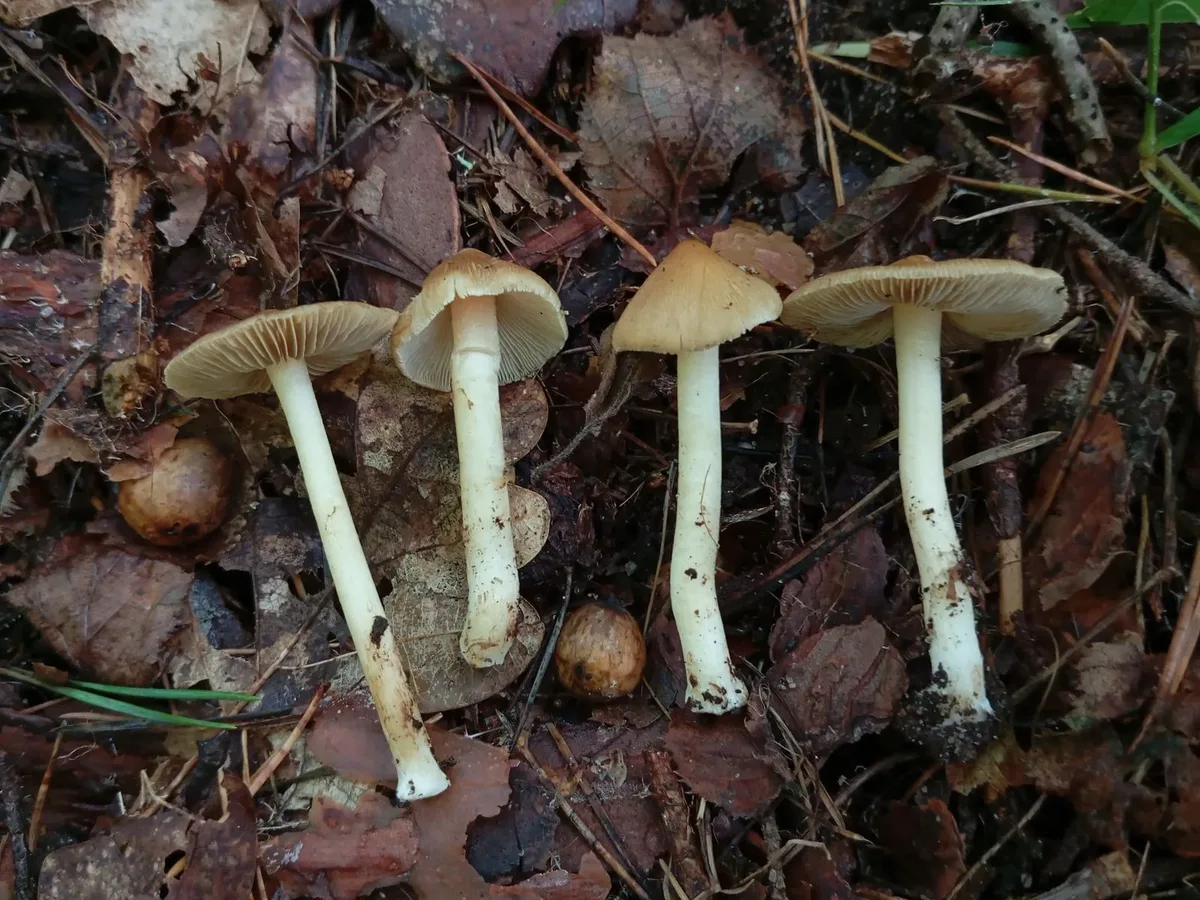
Its most reliable identifying feature - and the one to look for first - is the abrupt, marginate (rimmed) bulb at the base of the stem.
The bulb is rounded with a distinct projecting collar at its widest point: not a gradual taper or a club-shape, but a cleanly edged rim, almost like a small disc fitted around the base. Recognising this feature is the quickest way to identify I. cookei and to separate it from other pale fibrecaps.
Cap
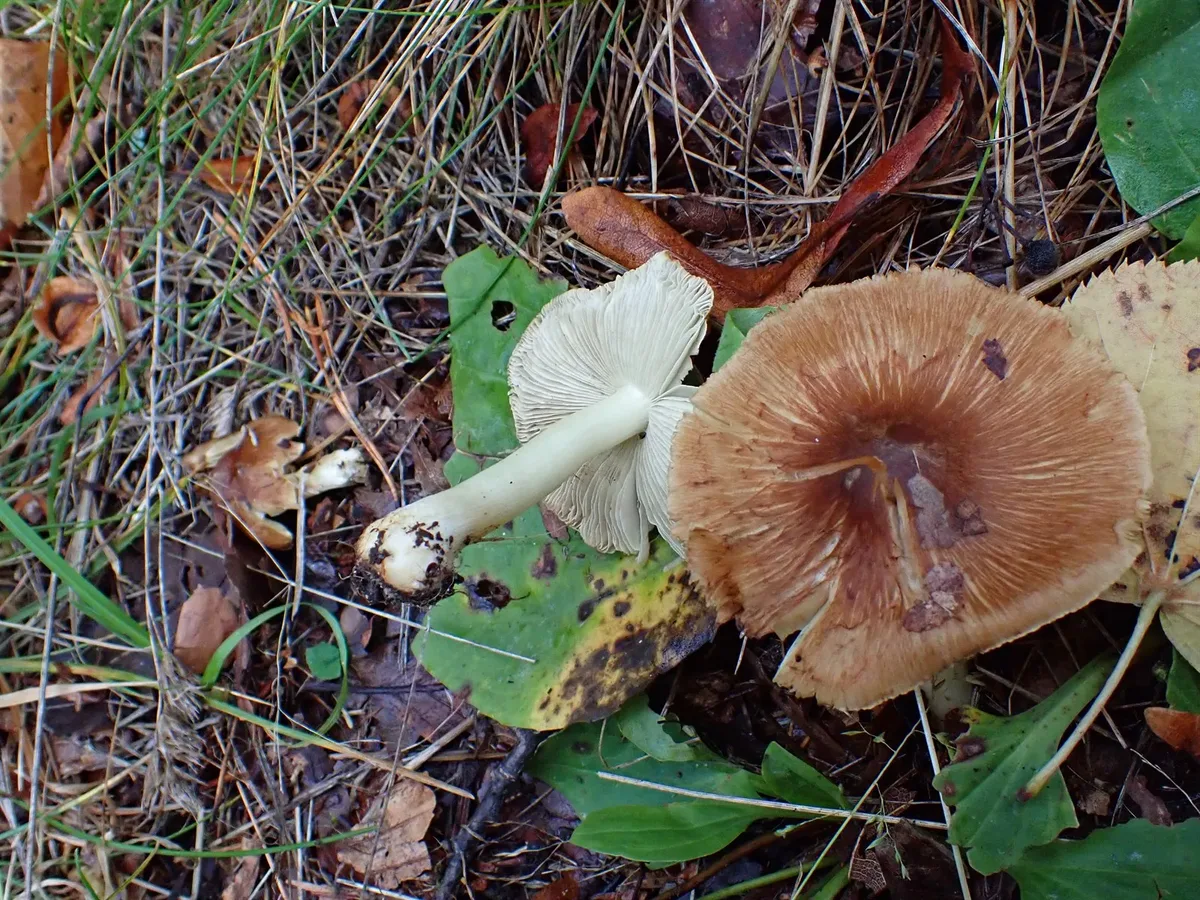
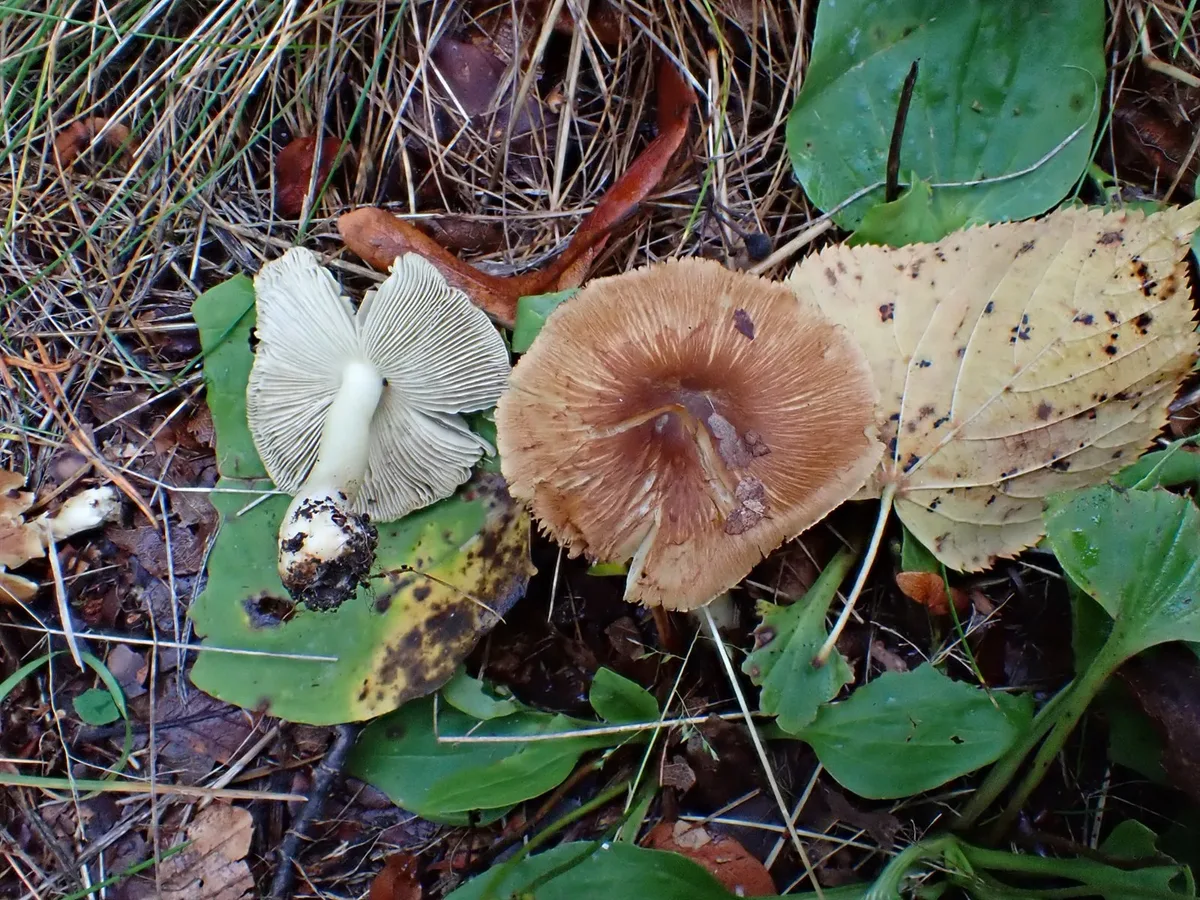
The cap (2-5 cm) is conical to broadly umbonate when young, expanding with age but nearly always keeping a low central boss.
The surface carries the tightly appressed silky radiating fibres that are the hallmark of all Inocybe species - run a finger across it and you feel the texture as well as see it.
Colour is straw-yellow to ochre, slightly deeper at the centre, sometimes fading to near-buff in old or dry specimens.
Gills
Gills are crowded and adnate, starting pale cream and gradually turning clay-brown as the spores ripen.
Spore print is dull snuff-brown. Under a microscope, the spores are smooth-nodulose (covered in low rounded bumps), which separates the species from smooth-spored relatives.
Stem
The stem is whitish to pale straw, finely fibrous, and noticeably mealy-powdery (pruinose) at the apex - hold it to the light to see this. No ring.
Smell & taste
The smell is spermatic-fruity, a little sweeter than the purely earthy note of I. geophylla; some liken it to pear drops or overripe fruit.
Why it's dangerous
Muscarine poisoning from Inocybe cookei constitutes a medical emergency, especially in vulnerable groups.
Atropine sulfate (a specific competitive muscarinic antagonist) is the antidote and dramatically reverses all symptoms when given promptly in adequate dose.
If ingestion is suspected:
- Call emergency services immediately; self-management at home is inappropriate.
- Bring a sample of the mushroom or a clear photograph to the hospital.
Because I. cookei grows commonly in the same woodland habitats and season as choice edible species, and because its straw-yellow colour can attract the eye of foragers expecting chanterelles or similar, it poses a genuine, recurring poisoning hazard in temperate European woodland.
Never eat any small, pale-coloured, fibrous-capped woodland mushroom without confident expert identification.
Toxin
Muscarine is a quaternary ammonium alkaloid that acts as a potent direct agonist at muscarinic acetylcholine receptors throughout the parasympathetic nervous system and at peripheral cholinergic synapses.
The toxin is thermally stable - it survives boiling, drying, and normal cooking processes unchanged.
Inocybe species as a genus contain muscarine at concentrations substantially higher than Amanita muscaria (the mushroom after which the toxin was originally named), and represent the primary clinical source of muscarine poisoning in European emergency toxicology.
In I. cookei, muscarine levels are pharmacologically significant across the normal range of fruitbody sizes; even a small number of caps constitute a toxic dose.
Symptoms
Muscarine poisoning produces a characteristic cholinomimetic (parasympathomimetic) syndrome, often summarized as SLUDGE:
- Salivation
- Lacrimation (tearing)
- Urination
- Defecation
- GI upset (nausea, vomiting, cramps)
- Emesis
Additionally:
- Diaphoresis (profuse sweating)
- Miosis (pinpoint pupils)
- Bradycardia (slow heart rate)
- Hypotension (low blood pressure)
- Bronchospasm (airway constriction)
The onset is rapid - usually within 15 minutes to 2 hours of ingestion - which is diagnostically important and distinguishes muscarine poisoning from the delayed onset (6-24 hours) of amatoxin poisoning.
The clinical course without treatment lasts 6-24 hours; with atropine it resolves quickly.
The cardinal triad recognized in field scenarios is profuse sweating, excessive salivation, and a slow pulse.
In severe cases, especially in children, the elderly, or those with cardiac disease, the bronchospasm and bradycardia can be life-threatening.
Staying safe
Inocybe cookei is a muscarinic-poisonous mushroom and must never be eaten. Like most Inocybe species, it contains muscarine - a cholinergic toxin that directly stimulates the parasympathetic nervous system.
Muscarine is heat-stable and not deactivated by cooking; boiling and discarding the water does not render the mushroom safe.
The Inocybe genus as a whole is responsible for the majority of muscarine-poisoning cases in Europe, and I. cookei is a frequent contributor due to its common occurrence in the same woodland habitats used by foragers.
The straw-yellow coloration can attract the attention of foragers searching for chanterelles or other golden-coloured species; the similarity in gross appearance (though not on close examination) adds to the risk.
Any suspicion of ingestion should be treated as a medical emergency.
Where & when it grows
Habitat
Inocybe cookei is a mycorrhizal species, entirely dependent on the living roots of deciduous trees - especially beech, oak, hazel, hornbeam, and lime.
The mycelium threads through the soil year-round, exchanging minerals and water with its host tree in a partnership that can persist for decades.
It is a woodland interior species, at home in mature forest with well-developed humus rather than young plantations or disturbed ground.
Good search spots include old beech-oak forest, hazel coppice, and parkland with veteran trees. Look for it:
- In leaf litter at the base of established trees
- Along compacted woodland paths where mineral soil is close to the surface
- In damp hollows under the canopy
It favours slightly calcareous or neutral soils and is more consistently found in lowland and lower hill zones than at altitude.
The typical pattern is a few fruitbodies scattered over a small area. Once established, the mycelium returns to the same spot year after year.
When
The main fruiting season runs from late July through October, with the strongest flushes in August and September as summer rainfall arrives and soil temperatures begin to ease back from their midsummer high.
Fruitbodies typically push up 5-10 days after significant rain (15 mm or more) when soil temperatures sit in the 12-20 °C range. In warm, wet years fruitings can begin in July; in mild autumns the season stretches into November.
The peak falls squarely in the main edible-mushroom season for central and western European woodland - chanterelles, penny buns, and hedgehogs are all fruiting in the same woods at the same time - which is precisely why I. cookei is a genuine hazard to foragers.
How it grows
Strictly mycorrhizal and entirely dependent on living host trees. I. cookei will never appear on decaying wood, open grassland, or any ground without a suitable root partner - if you find it, there is a tree nearby.
The mycelium lives unseen in the soil for years, and the fruitbodies are simply the brief, visible tip of a much longer story.
Fruitbodies emerge singly or in small scattered groups, pushing through humus, leaf litter, and compacted soil. The same patch tends to fruit in the same spot year after year.
Spores are wind-dispersed from the gills; under a microscope they are smooth-nodulose (covered in low rounded bumps) rather than angular-warty, a useful feature for laboratory confirmation.
Fruiting conditions
Flushes 5-10 days after rainfall of 15 mm or more when soil temperatures fall within the 10-20 °C window in late summer and early autumn. The mycorrhizal association with established broadleaf trees means reliable annual return to known patches once the site is colonised. Peak activity August-October in central Europe.
Look-alikes
Inocybe cookei is most likely to be confused with other small pale mushrooms in woodland, including several other Inocybe species and some edible species.
- 1Inocybe geophylla (White fibrecap): The commonest source of confusion - also pale, also silky-fibrous, also muscarinic. I. geophylla is usually whiter (not straw-yellow), lacks the marginate bulb (its stem base is merely slightly swollen or equal), and has smooth (not nodulose) spores. Both species are equally poisonous and neither should be eaten.
- 2Inocybe rimosa (Split fibrecap, I. fastigiata): Larger and more robust, with a strongly striate to deeply split cap margin in age, and a conical cap that persists longer. No marginate bulb. Also muscarinic poisonous.
- 3Cortinarius species: Some young, small, pale-capped Cortinarius species in similar woodland habitats can be superficially similar, but Cortinarius has a cortina (fibrous cobweb-like partial veil), typically a more rusty-brown spore print, and never a marginate bulb. Young Cortinarius species with orellanin (C. orellanus, C. rubellus) are deadly; any small brown woodland mushroom not positively identified to a safe species should be left alone.
- 4Honey-coloured Clitocybe species (e.g. C. fragrans): Pale honey-buff funnel caps with decurrent gills growing in woodland; distinguished by the funnel shape, decurrent (running down the stem) gills, lack of fibrous cap surface and lack of a marginate bulb. Some Clitocybe species are muscarinic-poisonous.
- 5Young Tricholoma species with pale caps: Generally larger, with sinuate (notched-at-stem) gills, no marginate bulb, and a distinctive flour-like or radish-like smell.
One of the most poisonous Inocybe species, with especially high muscarine content. Distinguished from I. cookei by the flesh and gills flushing distinctly pinkish-red when bruised or cut (hence 'erubescens' = blushing), and by the lack of a marginate bulb. The stem base of I. erubescens is more tapered or clavate, not abruptly rimmed. Both are muscarinic poisonous; neither should be eaten.
A pale honey to buff funnel-shaped Clitocybe growing in similar woodland habitats. Distinguished by the funnel-shaped (not umbonate) cap, gills that run down the stem (decurrent rather than adnate), a distinctive aniseed or sweet fragrant smell, and lack of the fibrous silky cap texture. No marginate bulb. Clitocybe fragrans is muscarinic-toxic and also not safe to eat.
A Cortinarius of similar broadleaf woodland, with reddish-orange scales on a pale background. Distinguished by the cobweb cortina (partial veil) visible on young specimens, a rusty-brown spore print, and the typical Cortinarius features. No marginate bulb and no mealy-spermatic smell. Some Cortinarius species in the same genus are deadly (orellanin), so any unidentified Cortinarius must be treated with extreme caution.
Larger and more conical, with a cap margin that becomes deeply radially split (rimose) in age - hence the name. The cap is straw to pale ochre but more sharply conical and does not retain a neat low umbo. Stem lacks the marginate bulb, being merely slightly thickened or equal at the base. Also muscarinic poisonous.
Also a common small poisonous Inocybe, but typically whiter (pure white to ivory rather than straw-yellow) and lacking the marginate rimmed bulb at the stem base. I. geophylla has smooth (not nodulose) spores microscopically. The smell of I. geophylla is more purely earthy-spermatic (raw flour) without the faintly fruity or honey note of I. cookei. Both species are equally poisonous; the confusion does not change the outcome.
A reference guide - never an edibility guarantee. When in doubt, leave it out.