Bay Bolete
Imleria badiasyn. Boletus badius, Xerocomus badius, Boletus castaneus var. badius
 © ikelman (CC BY 4.0)
 © Wolfgang Wollschweber (CC BY 2.0)
 Jean-Max Van Pul (CC0)
 © malanfcm (CC BY)
 © malanfcm (CC BY)
 AdventureLisa (CC0)
 AdventureLisa (CC0)
 AdventureLisa (CC0)
 AdventureLisa (CC0)© ikelman (CC BY 4.0)© Wolfgang Wollschweber (CC BY 2.0)
One of the best mushrooms you can bring home - once you are certain of the identification.
How to recognise it
Cap
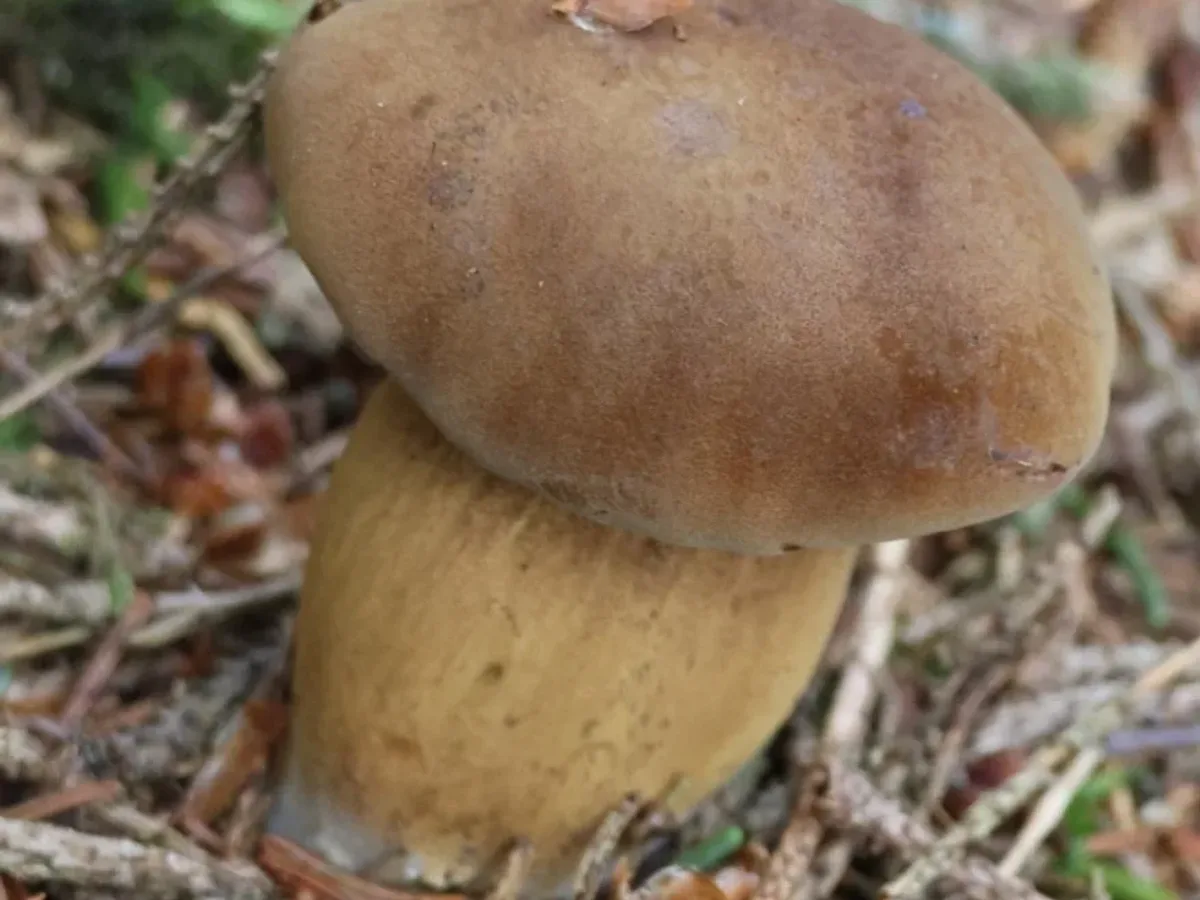
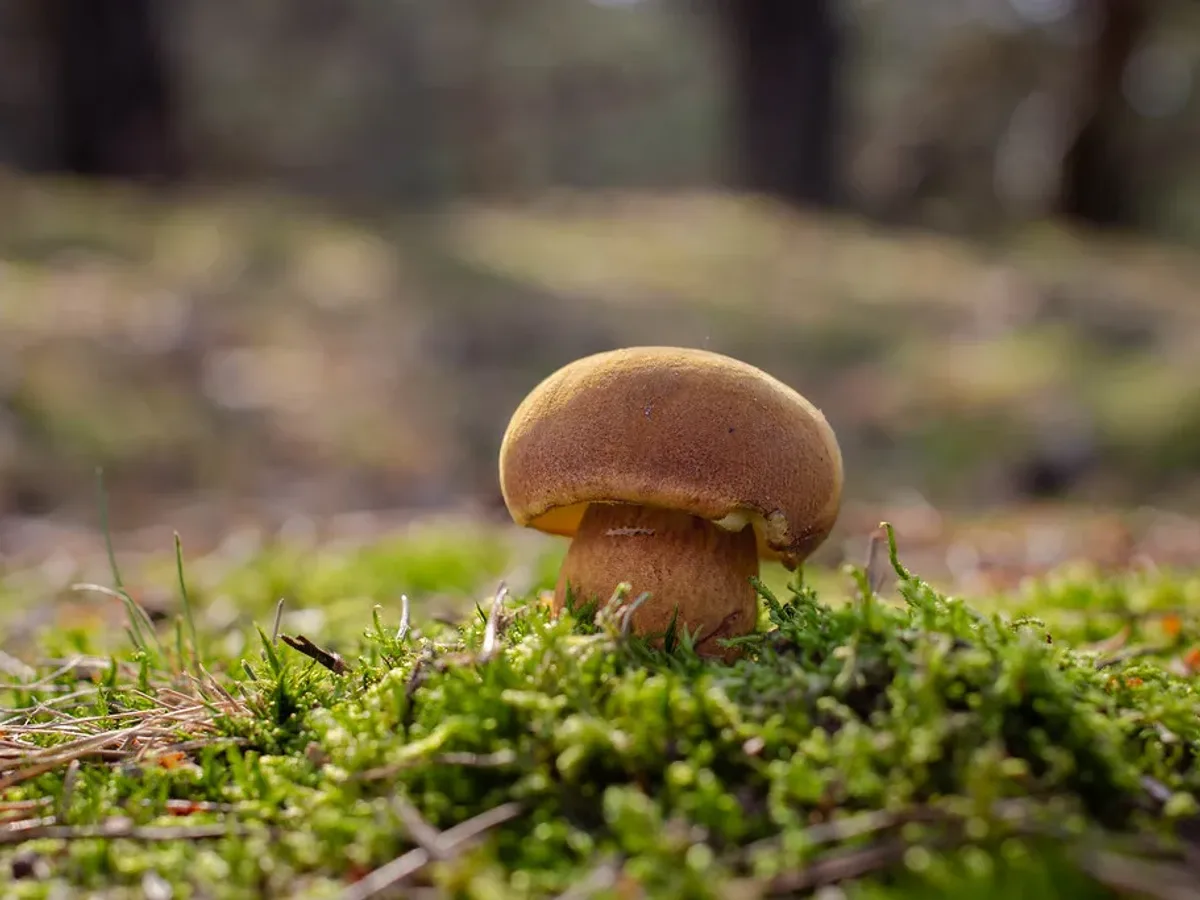
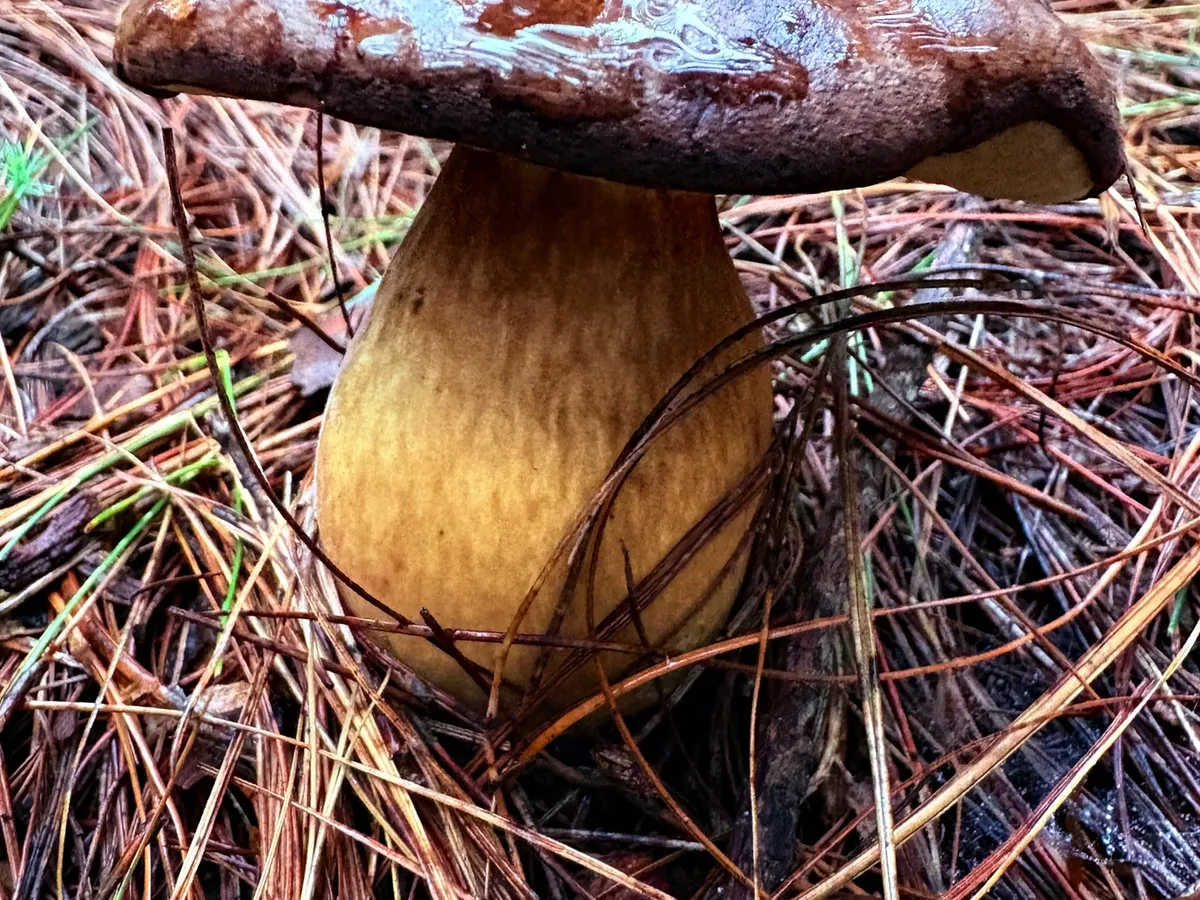
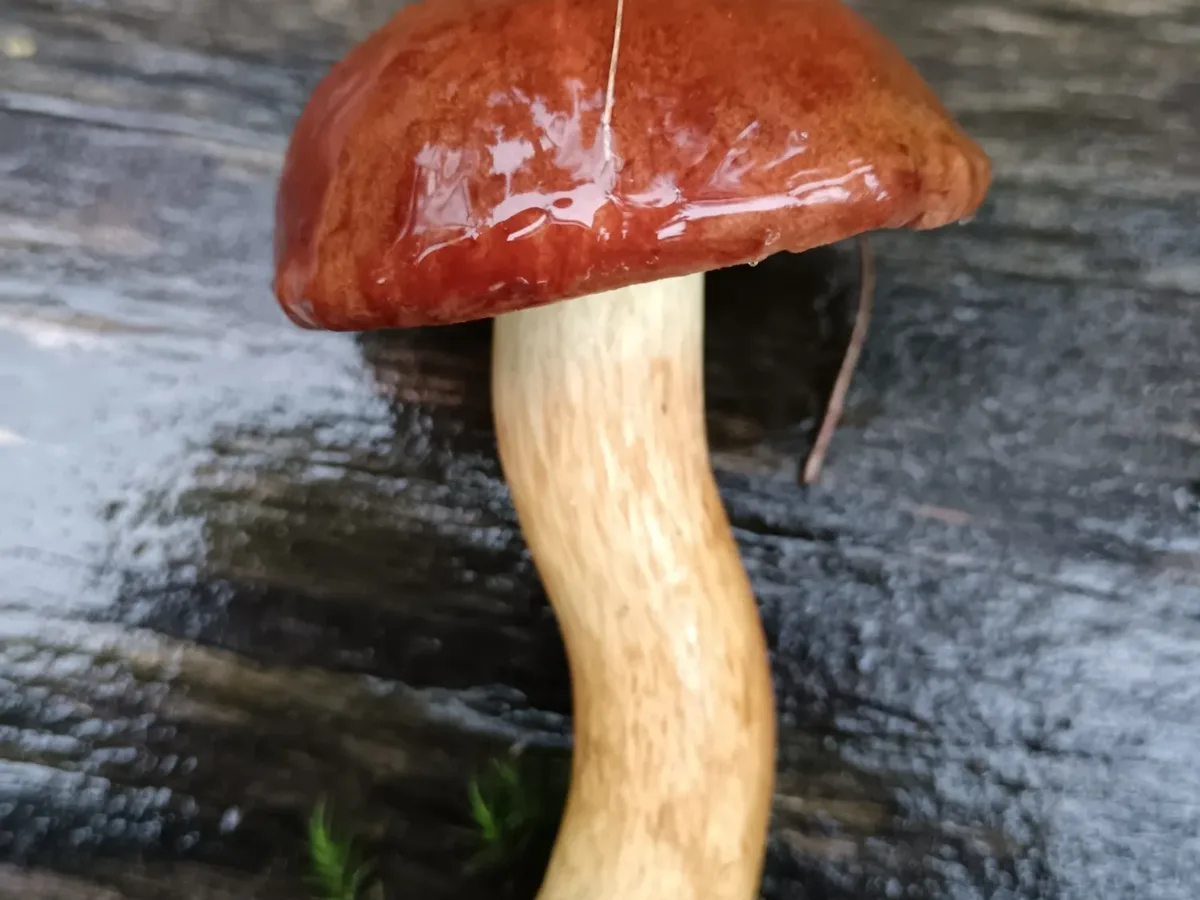
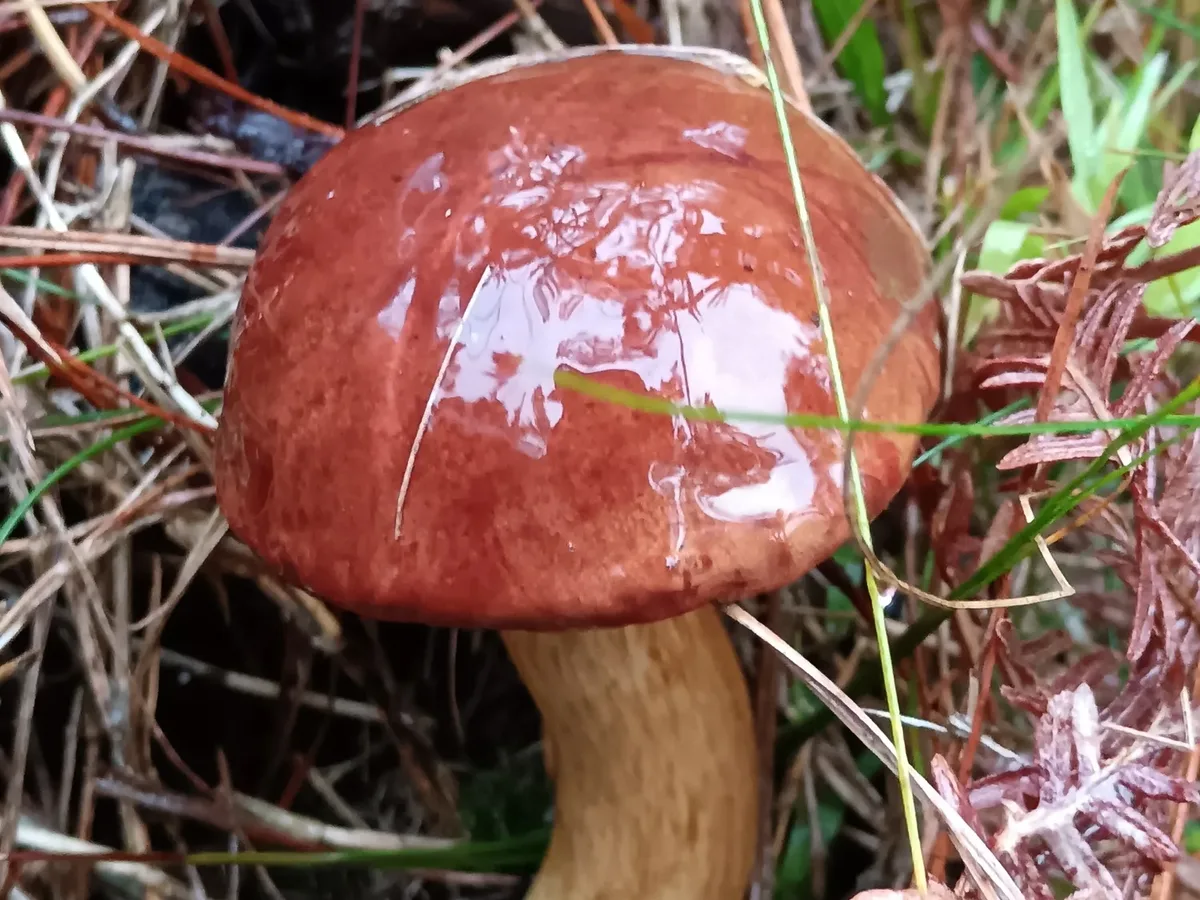
The Bay Bolete is named for the rich bay-brown to dark chestnut colour of its cap, one of the most reliable first impressions in the field. The cap measures 4-15 cm across, starting hemispherical and firm before opening to a broad cushion shape.
When young and dry the surface is finely velvety and matt, but in wet weather it becomes smooth, faintly polished and noticeably tacky to the touch.
Pores
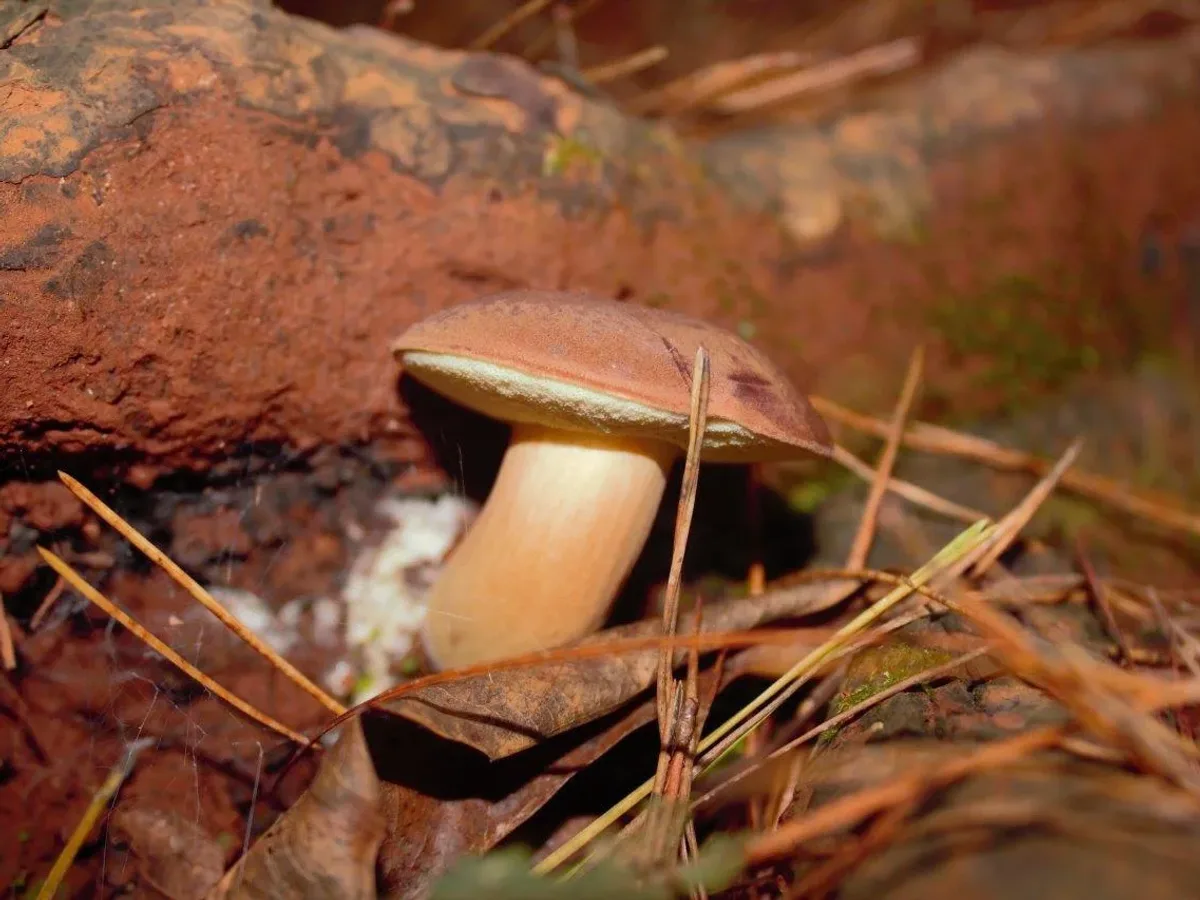
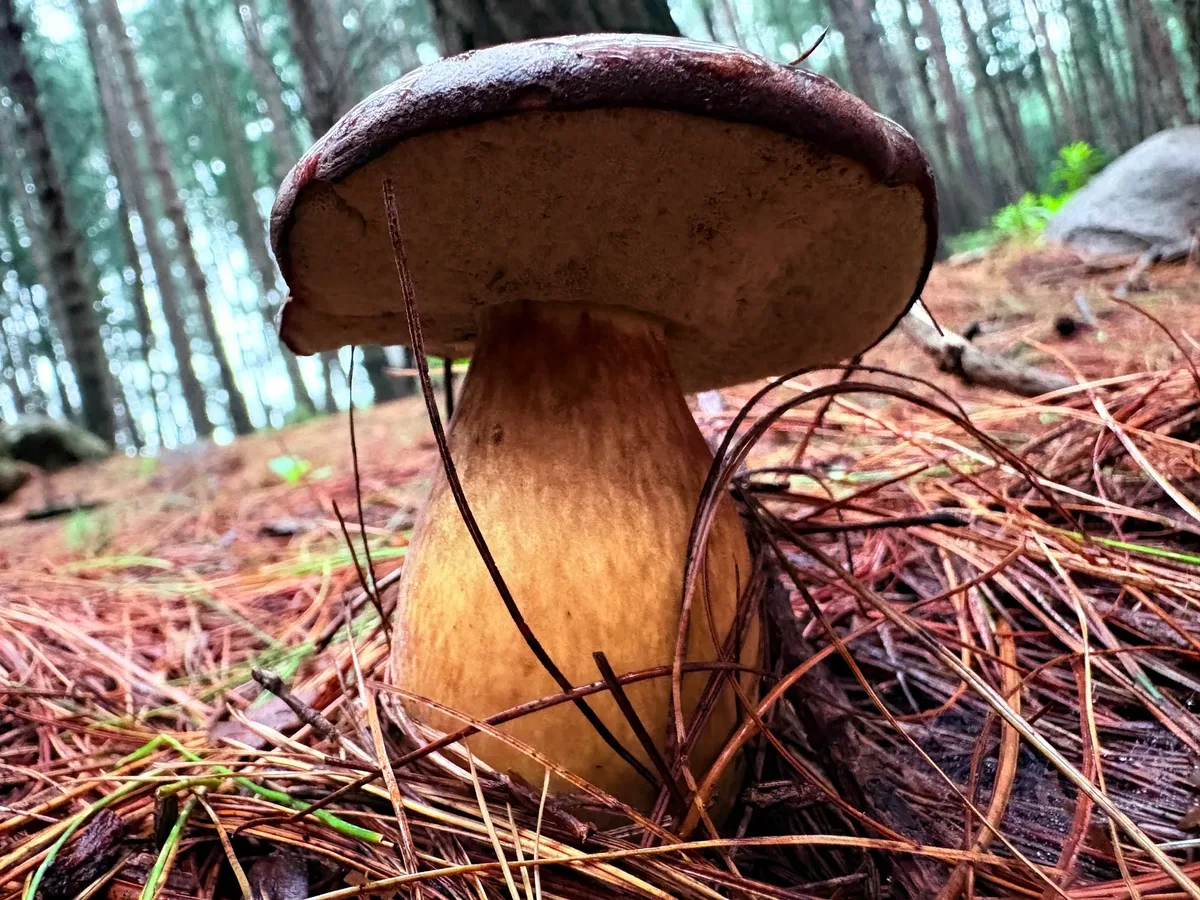
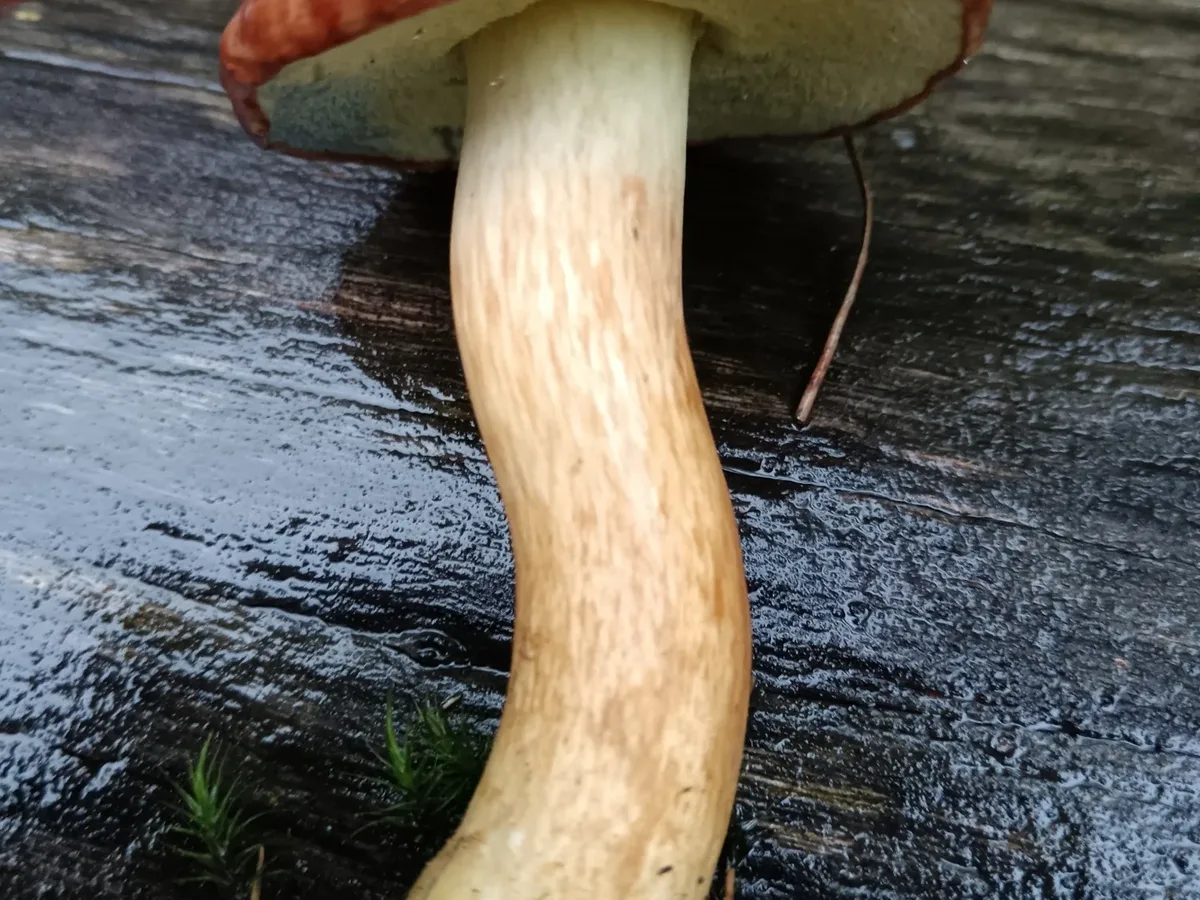
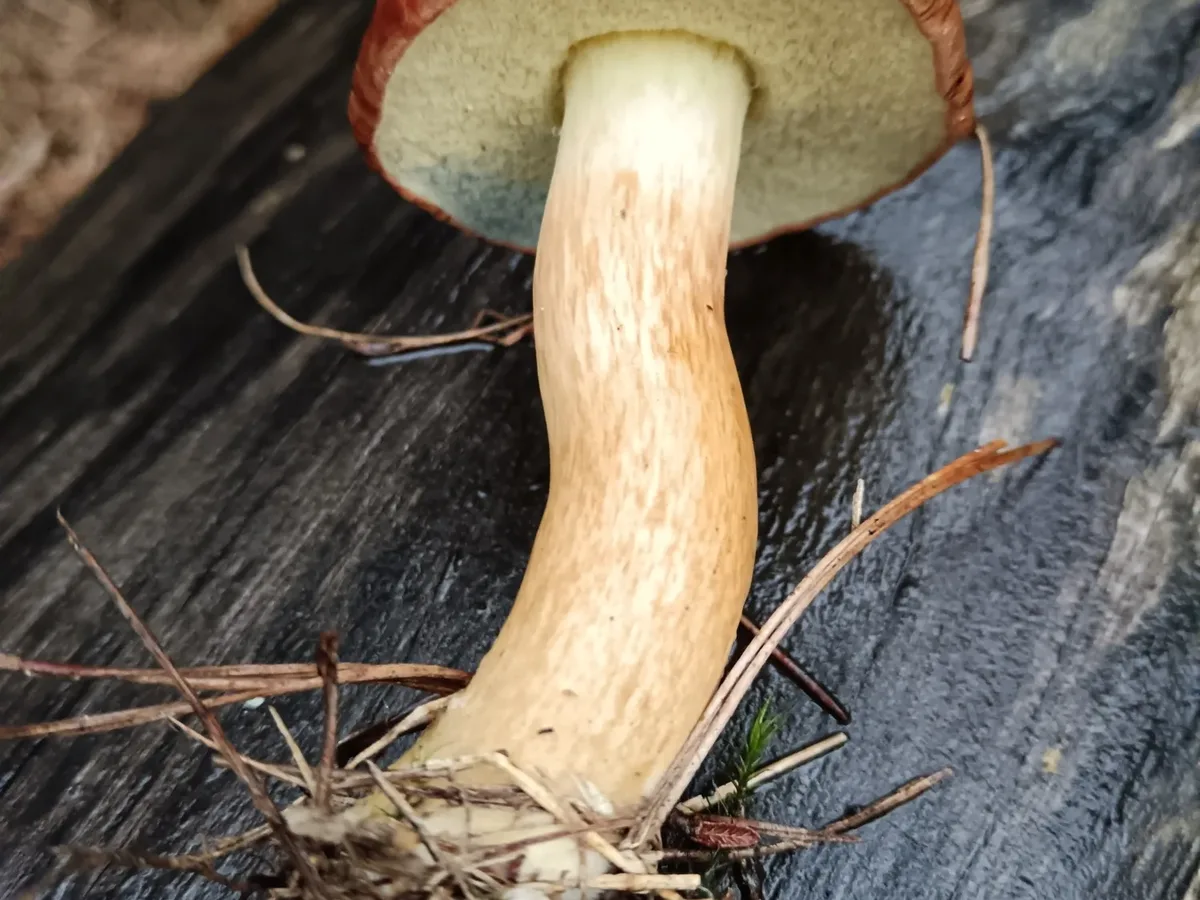
Beneath the cap is a layer of tubes ending in small angular pores; in young specimens these are pale cream, ageing to a soft greenish-yellow.
The single most useful diagnostic is the bruising reaction: press or scratch the pores and they slowly stain a dull blue to blue-green.
Stem
The stem is 5-12 cm tall and 1-2.5 cm thick, more or less cylindrical, coloured pale ochre to streaky brown, frequently paler than the cap and marked with fine vertical fibrils, but crucially it never carries the raised net (reticulation) seen on a true cep.
Flesh
Cut the flesh and it is whitish to pale yellow, turning a gentle, often weak blue where exposed, most obviously in the tube layer and just under the cap skin.
Where & when it grows
Habitat
Look for Bay Boletes on poor, acidic, free-draining ground, the kind of mossy, sandy or peaty soil that suits conifers.
They are at home in spruce and pine plantations and natural coniferous forest, but also appear under beech and oak in mixed woodland.
Unusually for a bolete, the species will occasionally fruit directly on rotting conifer stumps or buried, well-decayed wood as well as on bare soil among the moss.
Because it tolerates the impoverished, leached soils where ceps are scarce, it is often the most abundant edible bolete in commercial conifer forestry and on heathy woodland margins.
When
The Bay Bolete is a creature of late summer and autumn. First flushes appear in July and August after summer rains, but the species comes into its own from September through October, often forming the bulk of an autumn bolete harvest in northern and central Europe.
It is markedly more cold-hardy than most of its relatives: where Boletus edulis and the chanterelles have given up, the Bay Bolete keeps producing, frequently fruiting after the first ground frosts and lingering into November in maritime and milder regions.
How it grows
Fruit bodies arise singly, scattered or in small loose groups, emerging from the leaf litter and moss layer over the mycorrhizal network the fungus forms with its host trees.
After a soaking rain followed by mild, humid weather, a flush can develop within a week to ten days. The caps expand quickly and the firm young flesh is at its best.
Older specimens grow soft, the tubes lengthen and discolour, and they become attractive to fly larvae, so the freshest small-to-medium caps are the prize.
Fruiting conditions
Fruits after sustained autumn rainfall once soils are reliably moist; tolerant of cooler soils than most boletes, so flushes continue into late autumn after the first frosts when warmer-loving species have stopped.
Look-alikes
The Bay Bolete sits among the brown-capped boletes. Once you know its key marks it is fairly easy to place: a bay-brown cap, cream-to-yellow pores that slowly bruise blue, and a smooth (non-netted) stem with PALE pores (never red or orange).
- The true Cep (Boletus edulis), which it can be confused with, has a fine raised white net on the upper stem and pores that do not bruise blue.
- The Bitter Bolete (Tylopilus felleus) shares the brown cap but has a coarse dark net on the stem, pinkish pores in age, and a taste so intensely bitter that a single specimen can ruin a whole pan; harmless but inedible.
- Suede Bolete (Xerocomus subtomentosus) and the cracked-capped Xerocomellus species are smaller, duller and softer; edible but inferior.
The lookalikes that genuinely matter for safety are the RED-PORED boletes (for example Rubroboletus satanas / Satan's Bolete, Suillellus luridus and Neoboletus species): these have orange-to-red pores and often a netted or reddish stem, and several cause violent vomiting and gastrointestinal poisoning if eaten raw or undercooked.
A bay bolete never has red or orange pores, so the simplest rule is: if the pores are anything other than cream-to-yellow, do not eat it.
Harmless but inedibly bitter, one specimen spoils a whole dish. Has a coarse dark net on the stem, pores that turn pink with age, and an intensely bitter taste; the Bay Bolete has a smooth stem, yellow-green blueing pores and a mild taste.
Also choice and edible. Has a fine raised white-to-brown net (reticulation) on the upper stem and pores that do NOT bruise blue; cap is usually paler tan-brown and the flesh stays white when cut.
Toxic - cause severe vomiting and gastrointestinal poisoning (R. satanas especially), not deadly but genuinely dangerous, especially if raw or undercooked. These have ORANGE-TO-RED pores and often a reddish and/or netted stem, with rapid intense blueing. The Bay Bolete NEVER has red or orange pores: its pores are cream-to-yellow and its stem is smooth. If the pores are red or orange, do not eat it.
Edible but inferior. Smaller, with cracked caps showing reddish flesh in the fissures and softer texture; the Bay Bolete is larger, firmer, with a smooth uncracked bay-brown cap.
Edible but inferior. Cap a duller yellow-brown to olive-brown and persistently velvety, with bright yellow pores that bruise blue only weakly or not at all; the Bay Bolete has a darker bay cap that becomes tacky when wet.
In the kitchen
Picking & cleaning
Choose young to middle-aged specimens with firm flesh, pale-to-greenish pores and a domed or only slightly flattened cap.
Cut or gently twist the whole fruit body free at the base so you can inspect the stem - confirm there is no raised net, and check the cut base for maggot tunnels. Bay Boletes attract fly larvae as they age and a handsome cap can hide a riddled interior.
A clean, firm bay-brown cap with cream-to-yellow pores that slowly bruise blue is a textbook find.
Slice larger caps in the field to confirm the flesh is sound and to let any inhabitants escape, and carry them in an open basket so they keep their shape and can breathe.
Cooking
An excellent edible and a firm favourite across northern and central Europe, prized for a mild, nutty, distinctly mushroomy flavour.
The firm young flesh fries beautifully, sliced and sauteed in butter or oil until golden, and it holds up well in stews, risottos, sauces and omelettes. Always cook thoroughly; boletes should never be eaten raw.
One quirk to note: the pale tube layer can turn slightly slimy or darken to an unappealing greyish colour on cooking, so many foragers scrape away the tubes of older caps before use, keeping the firmer flesh.
The Bay Bolete also dries very well, concentrating its flavour into a fragrant store that reconstitutes into soups and sauces, and it freezes acceptably if first lightly cooked. A handful of dried Bay Boletes added to a stock delivers a deep, savoury woodland note.
Given its tendency to take up radioactive caesium in fallout-affected regions, keep weekly portions of wild mushrooms moderate.
Good to know
The Bay Bolete is a well-regarded edible, but treat the 'boletes are all safe' idea with care. It is an over-simplification that gets beginners into trouble.
While there is no documented DEADLY lookalike for a correctly identified bay bolete in its range, the red-pored boletes (Satan's Bolete and relatives) can cause serious gastrointestinal poisoning and must be avoided.
Confirm every box before eating:
- pores (not gills) under the cap
- a bay-brown cap
- cream-to-yellow pores that slowly bruise blue-green
- a smooth stem with NO raised net
The blue-bruising reaction in this species is normal and is NOT a sign of toxicity. Reject anything with red or orange pores, any netted stem, or any pinkish pore surface.
Never eat boletes raw; always cook thoroughly.
Two further cautions specific to this species:
- 1It bioaccumulates radioactive caesium (137Cs) more strongly than most edibles, and in parts of central Europe affected by the 1986 Chernobyl fallout (notably Bavaria, Austria and adjacent regions) specimens can exceed the EU food limit of 600 Bq/kg, so check regional advisories and keep portions moderate.
- 2As with any new wild mushroom, eat only a small portion the first time to check personal tolerance.
Discard soft, waterlogged or maggot-riddled specimens, which spoil quickly.
A reference guide - never an edibility guarantee. When in doubt, leave it out.