Brown beech mushroom (shimeji)
Hypsizygus marmoreussyn. Lyophyllum marmoreum, Tricholoma marmoreum, Hypsizygus tessellatus
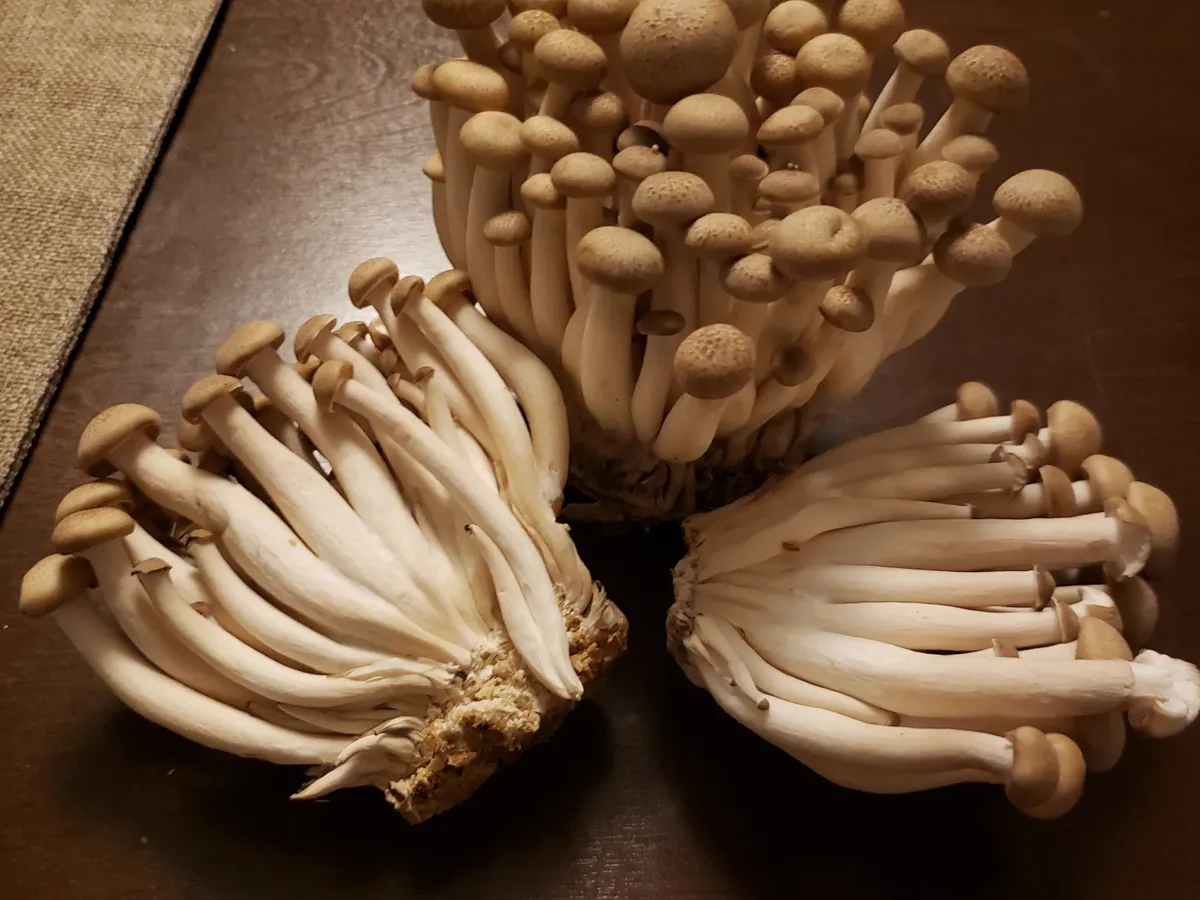 © Sarah Culliton (CC BY 4.0)
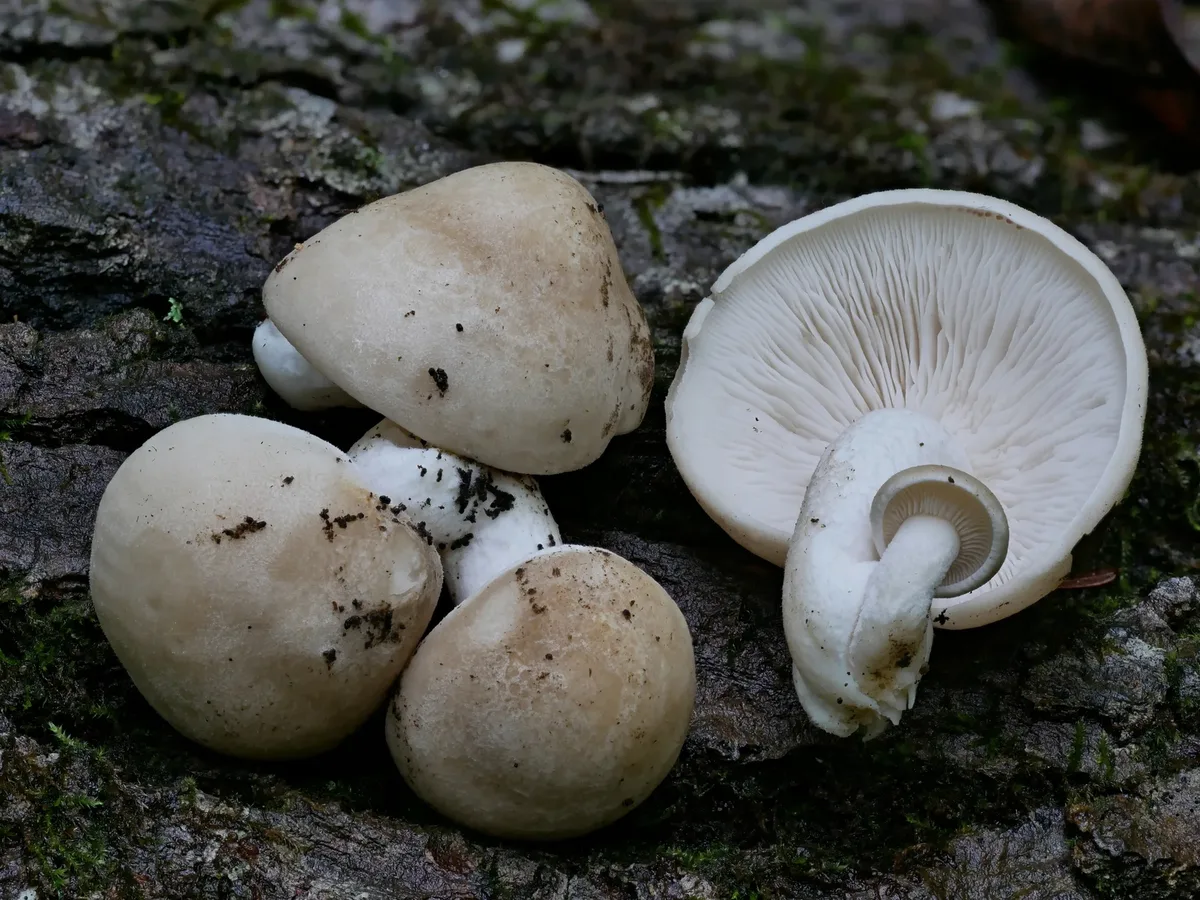 Garrett Taylor (CC0)
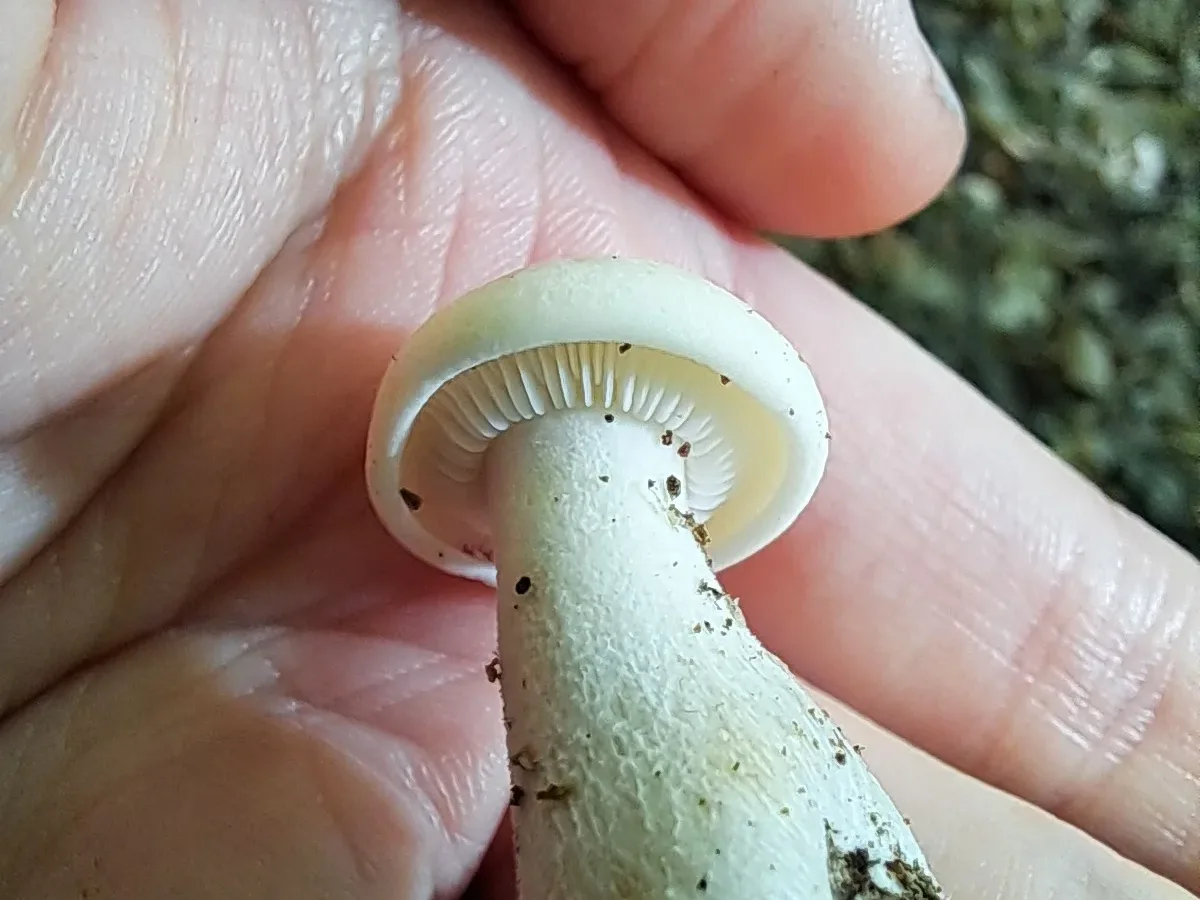 © Alex Reitan (CC BY)
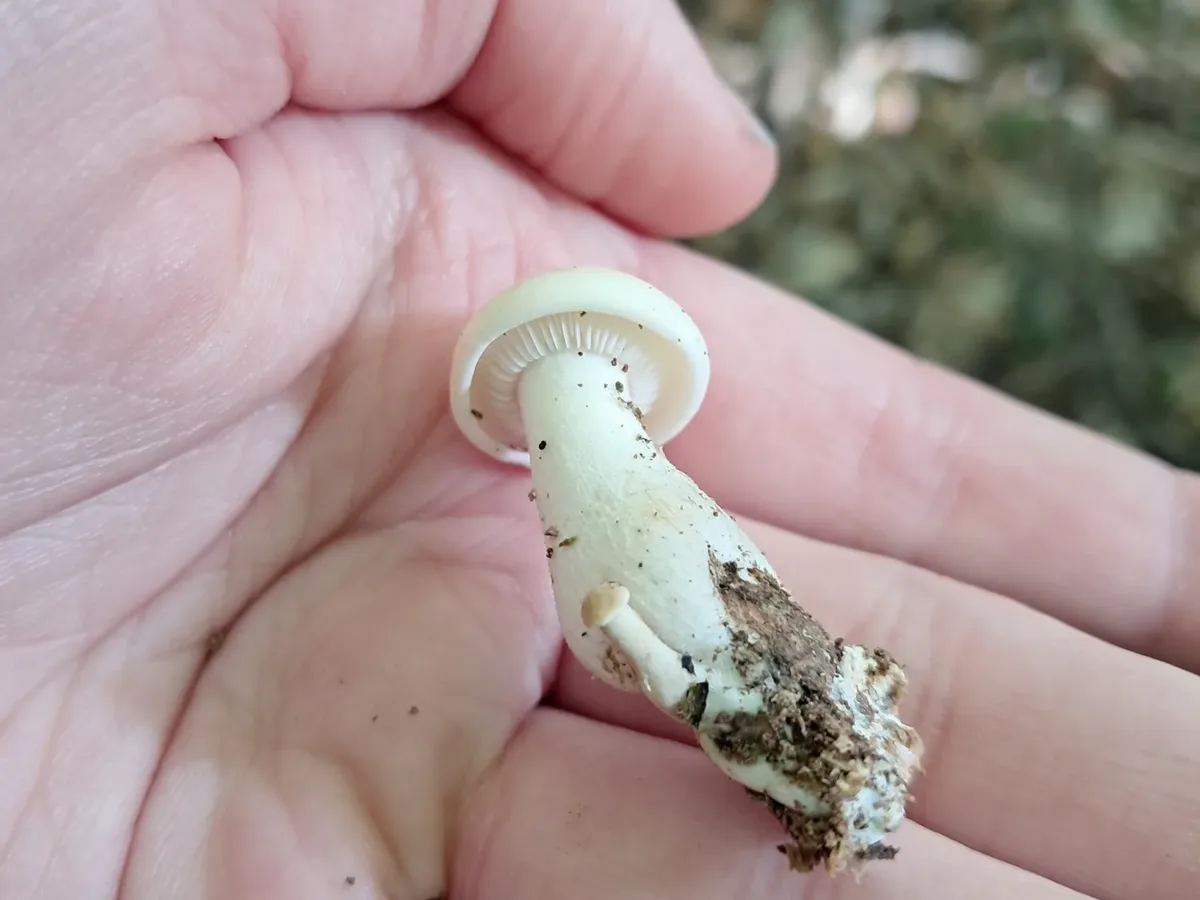 © Alex Reitan (CC BY)
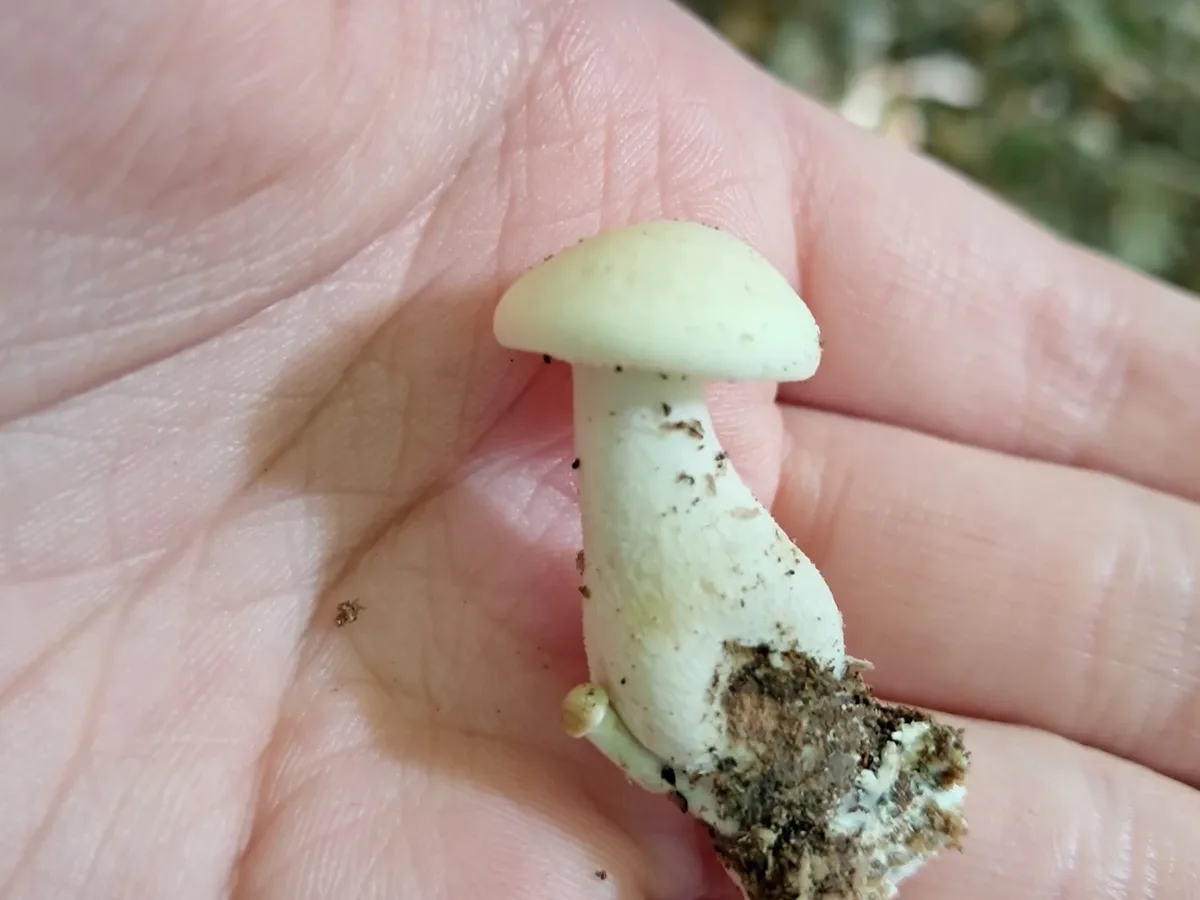 © Alex Reitan (CC BY)© Sarah Culliton (CC BY 4.0)Garrett Taylor (CC0)
Good to eat, once you have identified it with certainty and cooked it through.
Never eat a mushroom you are not 100% sure of - check the look-alikes below, and always cook wild mushrooms.
How to recognise it
Hypsizygus marmoreus is most immediately recognised by the subtle marble patterning on its cap - darker brown streaks and blotches across a pale ivory-grey background, as if the cap had been watercoloured by hand.
Cap
The cap starts egg-shaped and convex, then expands to broadly umbonate or nearly flat, reaching 3-8 cm across in wild specimens (cultivated strains often stay smaller and paler). The surface is smooth and lightly sticky in wet weather.
Cultivated forms come in two colour variants: brown strains with the classic dark mottling, and white strains ('shiro-bunashimeji') where the marbling is much more subtle.
Flesh
The flesh is firm, dense, and white right through - it stays white when cut or bruised, which is a useful point in identification.
Gills / Pores
Gills are white to cream, crowded, adnate to sinuate, not discolouring.
Spore print white; spores smooth, ellipsoidal, 5-7 × 3-4 µm.
Stem
The stem is solid, fibrous, and pale whitish, typically 5-12 cm long and 1-2 cm thick; in a cluster the stems splay out and often intertwine at the base.
Smell & taste
Smell is mild - very faintly earthy, with a hint of something seafood-like that becomes more noticeable on cooking.
Where & when it grows
Habitat
In the wild, Hypsizygus marmoreus breaks down dead and dying hardwood as a saprotroph, occasionally also attacking living tissue as a weak parasite. It clusters at the base of trunks or erupts from buried roots, working a slow white rot through the heartwood.
Beech (Fagus spp.) is its preferred host across Japan, China, and Korea - the origin of the trade name 'beech mushroom' - though it will also colonise elm, alder, poplar, and willow.
Wild populations grow in mixed deciduous forest at low to mid elevations; in Japan the species is a familiar sight in Fagus crenata montane zones. In Europe truly wild specimens on beech are uncommon and easily confused with other cluster-forming species.
Most foragers today encounter it only in cultivated form, as it is one of the most commercially successful mushrooms in the world, grown on sawdust substrate from Japan to the Netherlands.
When
In the wild, fruiting runs September through December across East Asia, with the main flush in October and November.
The trigger is the cooling of autumn: once daytime highs drop reliably below about 18 °C and the first rains come, clusters begin to push out of beech roots and stumps. Hard frost ends the season sharply.
In Central and Western Europe the timing mirrors this, though wild finds are infrequent.
In the supermarket, bunashimeji is available year-round - commercial cultivation under controlled temperature and CO₂ has made it one of the most reliably available mushrooms on the planet.
How it grows
Hypsizygus marmoreus grows strictly caespitose - always in dense clusters rising from a shared base, never as single fruitbodies.
Individual caps expand over about 10-20 days. In cultivation the whole substrate block flushes at once, producing dozens of uniformly sized stems and caps in a tight bouquet.
In the wild, clusters can be large - dozens to hundreds of caps from a single base. The same stump or root system will produce new flushes year after year for as long as the wood holds out, the mycelium quietly working away beneath the bark between seasons.
Unlike many forest fungi, it forms no mycorrhizal partnerships; it feeds entirely by decomposing wood.
Fruiting conditions
Fruiting triggered by autumn temperature drop; optimal air temperature 10-15 °C for initiation, 12-18 °C for development. Prolonged cool wet weather in October-November is the key cue. Hard frost ends season abruptly.
Look-alikes
The marbled cap and pure white flesh distinguish Hypsizygus marmoreus from most dangerous cluster-forming species. The most important confusion risk is with Galerina marginata (deadly).
- Galerina marginata (deadly) is much smaller, has brown gill and spore colour (rusty-brown spore print), a fragile membranous ring, and lacks any mottled cap.
- Kuehneromyces mutabilis (edible) also clusters on wood but has a distinctly hygrophanous cap (two-toned when drying), cinnamon-brown gills, a ring, and rusty-brown spores.
- Hypholoma fasciculare (toxic) clusters on stumps and has yellow-green flesh tints, sulphur-yellow gills becoming olive-green, and purple-grey spores.
- Hypholoma sublateritium is brick-red capped with pale gills and grey-lilac spores.
- Lyophyllum decastes clusters on the ground rather than wood and has a grey-brown unmarked cap with a smooth (not mottled) surface.
None of these share the combination of marbled ivory-brown cap, white crowded gills, and white spore print growing in massive clusters directly on beech.
G. marginata is far smaller (cap 1-4 cm), has a rusty-brown spore print (not white), and a fragile membranous ring on the stem. Spore print colour is the decisive field check: take a print - rusty-brown confirms Galerina, white confirms H. marmoreus. Never clusters as massively as H. marmoreus on beech. Contains amatoxins - lethal if eaten.
Brick-red cap, pale cream gills turning grey-lilac, purple-grey spore print, grows on deciduous wood. Mildly toxic; easily separated by cap colour and spore print.
Grows on the ground or from buried debris - not directly on wood - and has a smooth grey-brown to honey-brown cap without marbling; white spore print. Edible but ground-dwelling habit separates it clearly.
Closely related; cap lacks or has minimal marbling, often larger and more off-white; grows higher on living elm or maple trees rather than at the base of beech. Also edible; confusion has no safety consequences.
Cap hygrophanous with a two-toned drying pattern; gills cinnamon-brown; ring present; spore print rusty-brown. Edible but confusion risk with Galerina makes harvesting risky for beginners.
Clusters on wood but cap is sulphur-yellow to orange-brown, flesh yellow-green, gills yellow becoming olive-green, spore print purple-grey. Bitter taste. Toxic - causes gastrointestinal illness.
In the kitchen
Picking & cleaning
In the wild, harvest entire clusters by cutting at the base with a knife; shake gently to dislodge debris but avoid washing at the site. Remove any attached substrate fragments.
The firm flesh travels well and keeps up to 10 days refrigerated.
Commercial bunashimeji sold in plastic trays should be kept sealed until use and rinsed briefly before cooking.
Always cook before eating - raw fruitbodies contain a mild lectin that can cause gastric discomfort.
Cooking
Bunashimeji is prized in Japanese, Chinese, and Korean cuisine for its firm, crunchy texture that holds up to high heat without becoming mushy, and its mild but distinctive umami-rich flavour with a faint nuttiness or seafood note.
It is ideal for:
- Soups (miso soup, hot pot, shabu-shabu)
- Stir-fries
- Tempura
- Risotto
- Pasta
- Sautéed as a side dish
Separate the individual caps from the cluster before cooking. Do not over-rinse - a dry sauté in butter or sesame oil until the moisture evaporates and edges caramelise gives the best flavour.
The stems are fully edible but slightly tougher than the caps. Pairs well with soy sauce, dashi, garlic, ginger, miso, and cream.
Drying concentrates flavour and the dried product reconstitutes well.
Good to know
Hypsizygus marmoreus is safe when cooked. Raw consumption is inadvisable: a thermolabile lectin (haemolysin-type protein) can cause nausea and abdominal discomfort in sensitive individuals.
Thorough cooking (at least 5 minutes at 80 °C) denatures these compounds completely and renders the mushroom fully safe. No serious poisonings are on record from properly cooked specimens.
The greatest practical safety risk is misidentification of wild cluster-formers: Galerina marginata is a deadly lookalike that contains amatoxins and can be fatal.
Always confirm the white spore print and absence of a ring or rusty-brown coloration before harvesting wild cluster-forming wood mushrooms.
A reference guide - never an edibility guarantee. When in doubt, leave it out.