Greenish tuft
Hypholoma subviridesyn. Naematoloma subviride, Psilocybe subviridis
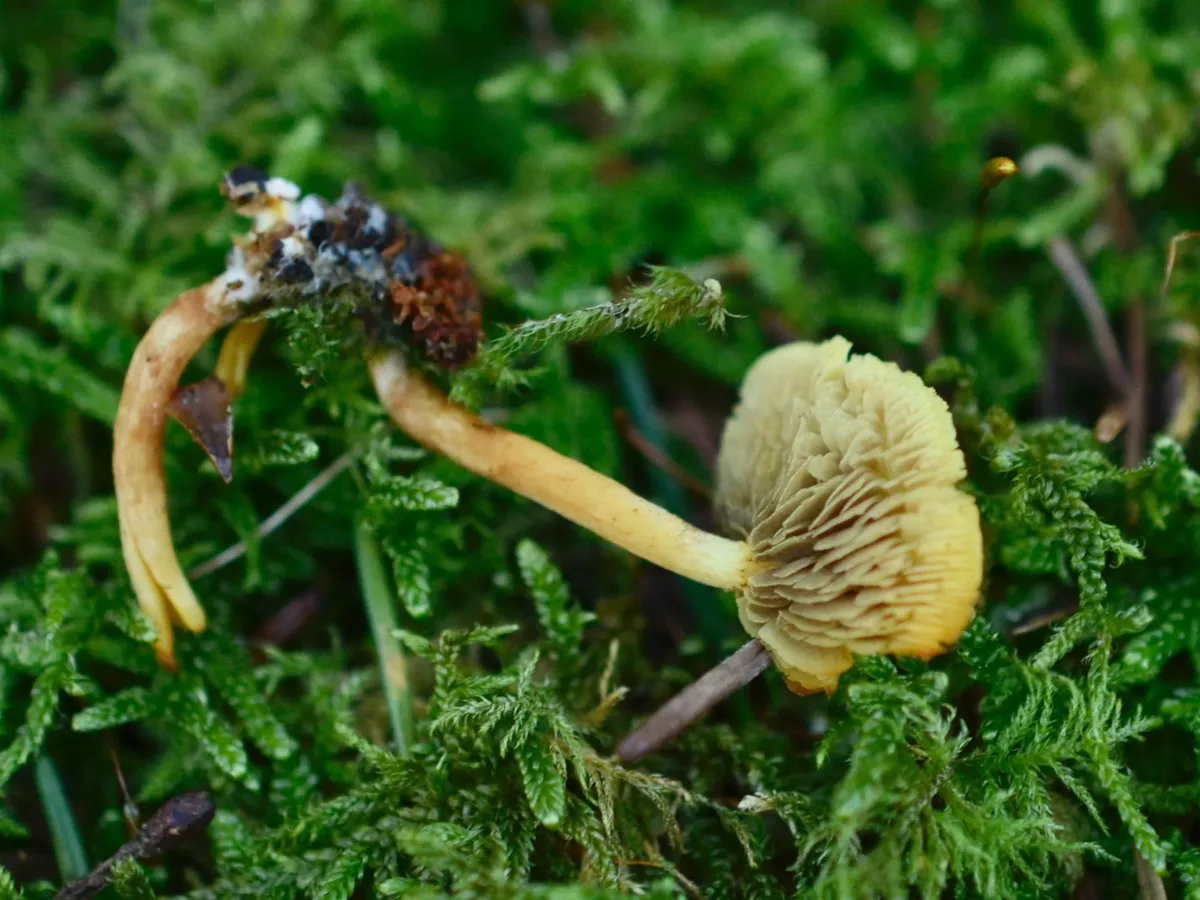 © Cara Ennis (CC BY)
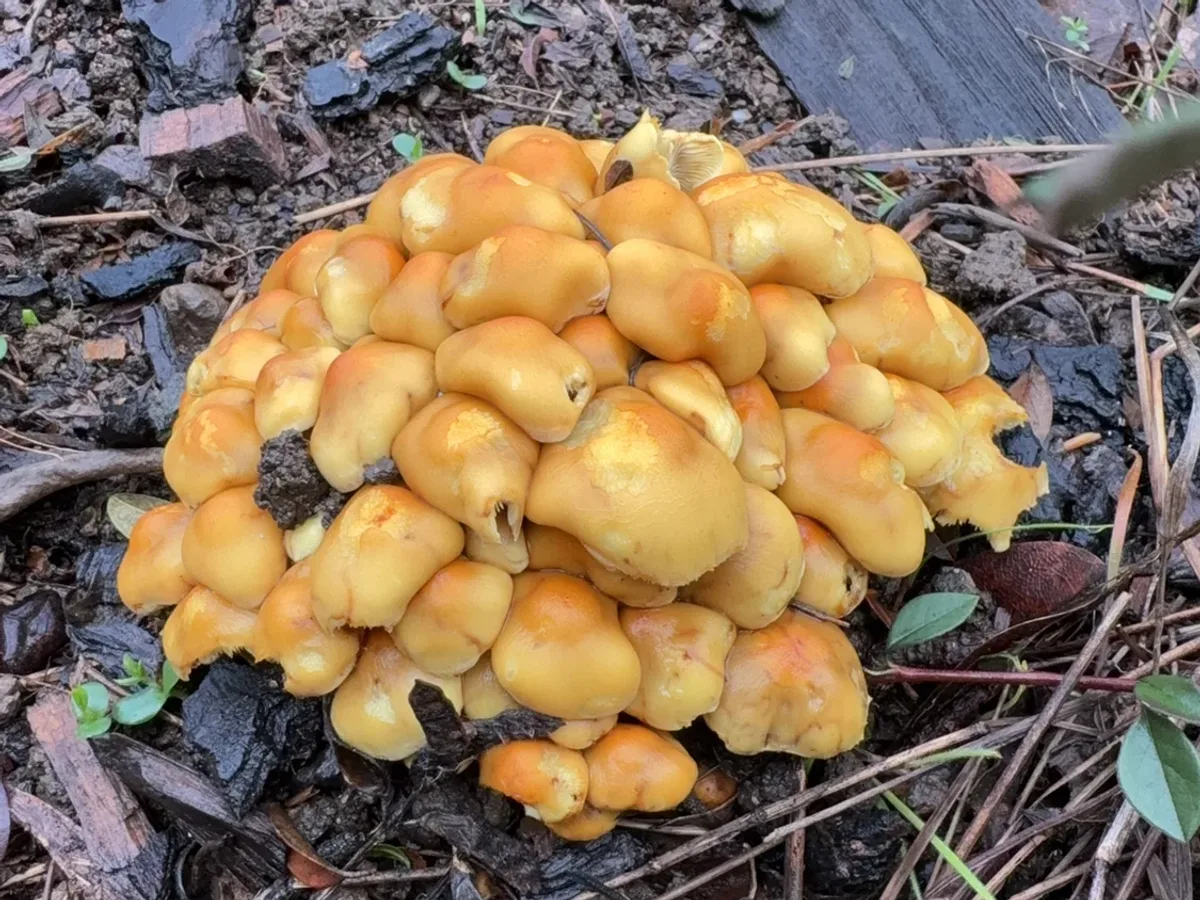 © kdcs (CC BY)
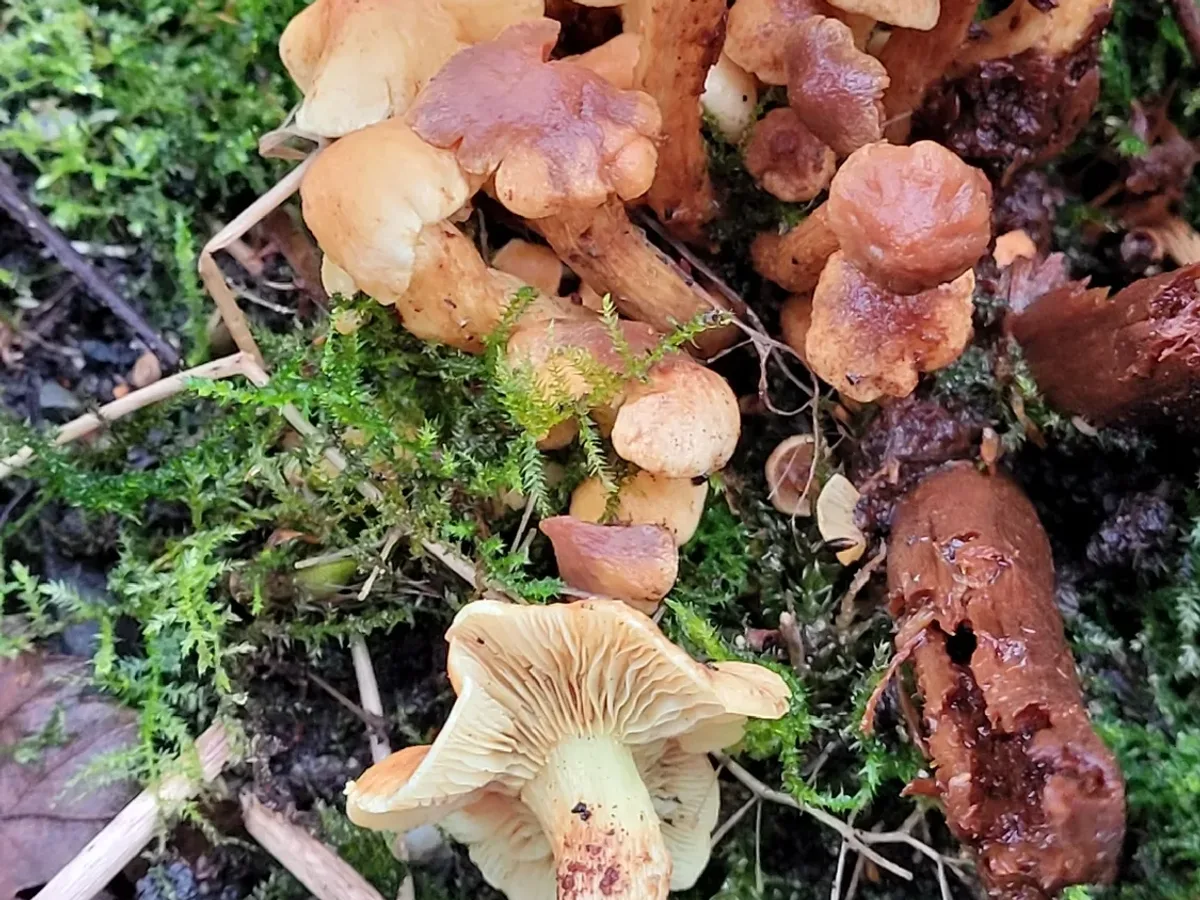 © Kevin Krebs (CC BY)
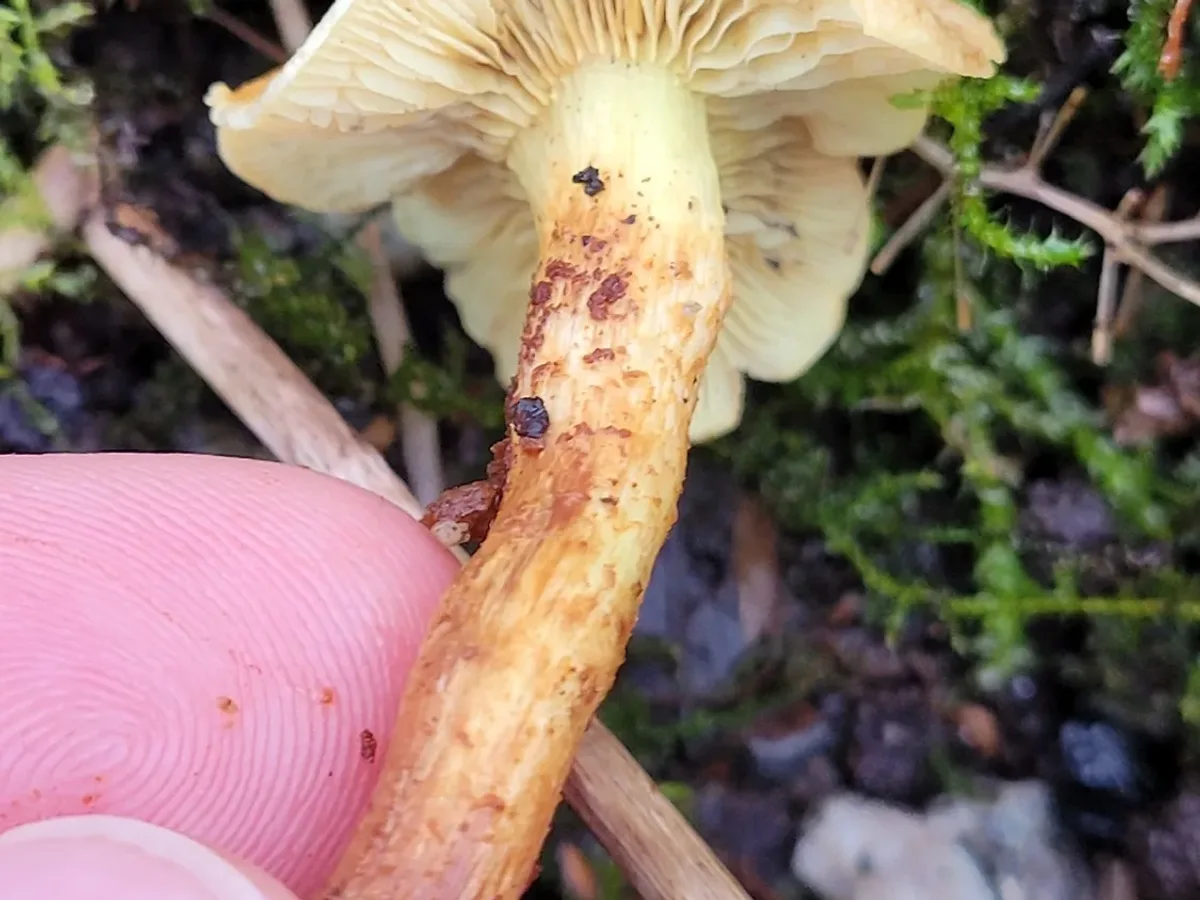 © Kevin Krebs (CC BY)
 © Kevin Krebs (CC BY)
 © Cara Ennis (CC BY)
 © Cara Ennis (CC BY)© Cara Ennis (CC BY)© kdcs (CC BY)
Edible only with the right preparation - or safe for some people but not others. Learn the caveats first.
Never eat a mushroom you are not 100% sure of - check the look-alikes below, and always cook wild mushrooms.
How to recognise it
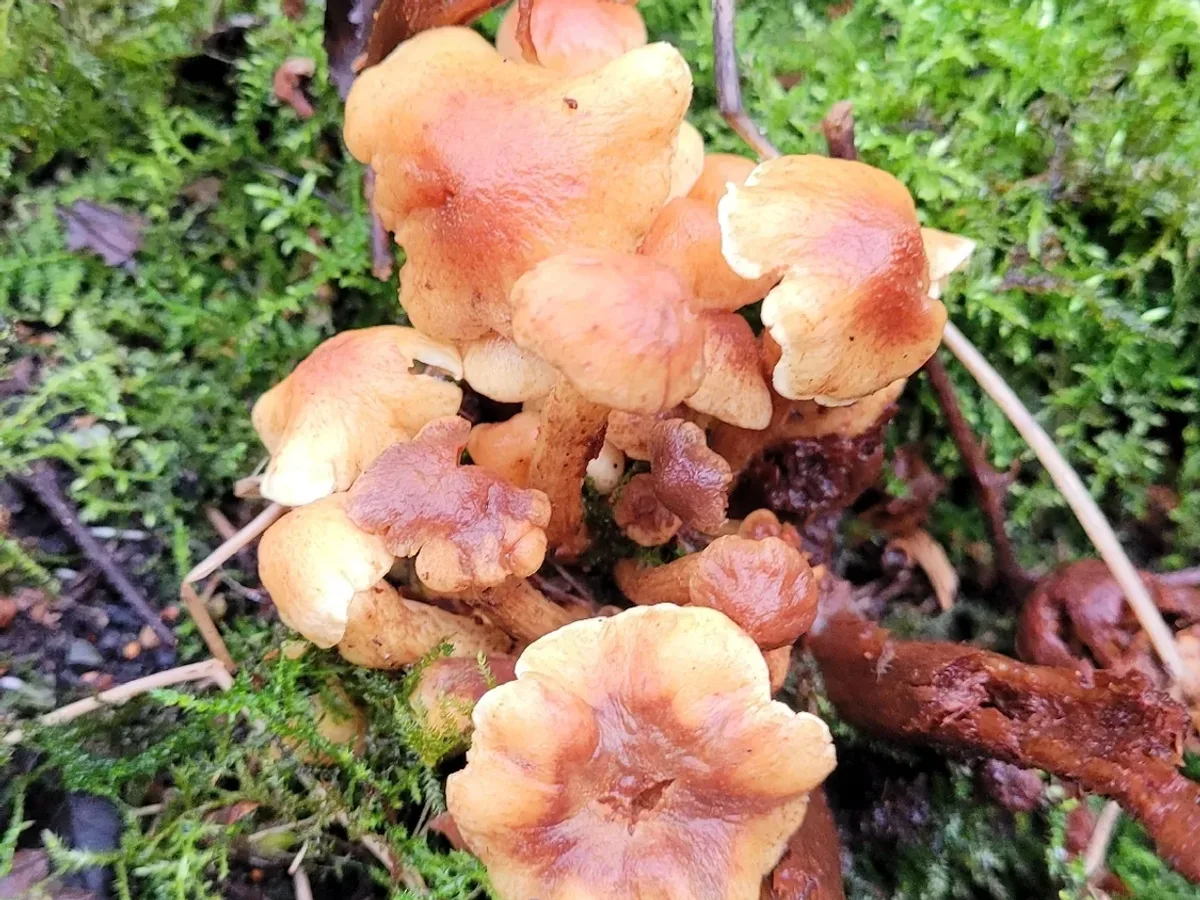
Hypholoma subviride is a mid-sized wood-rotting mushroom of the sulphur tuft alliance - recognisably related to the Northern Hemisphere H. fasciculare but distinguished by its tendency toward more greenish or olive-yellow cap tones rather than the vivid sulphur-yellow of its better-known relative.
Cap
The cap begins hemispherical and tightly closed, opening over several days to broadly convex or nearly flat. Its smooth, moist surface is coloured in shades of greenish-yellow to olive-yellow, most intensely pigmented at the centre and fading to pale ochre or buff at the margin, especially as the specimen dries out.
Gills
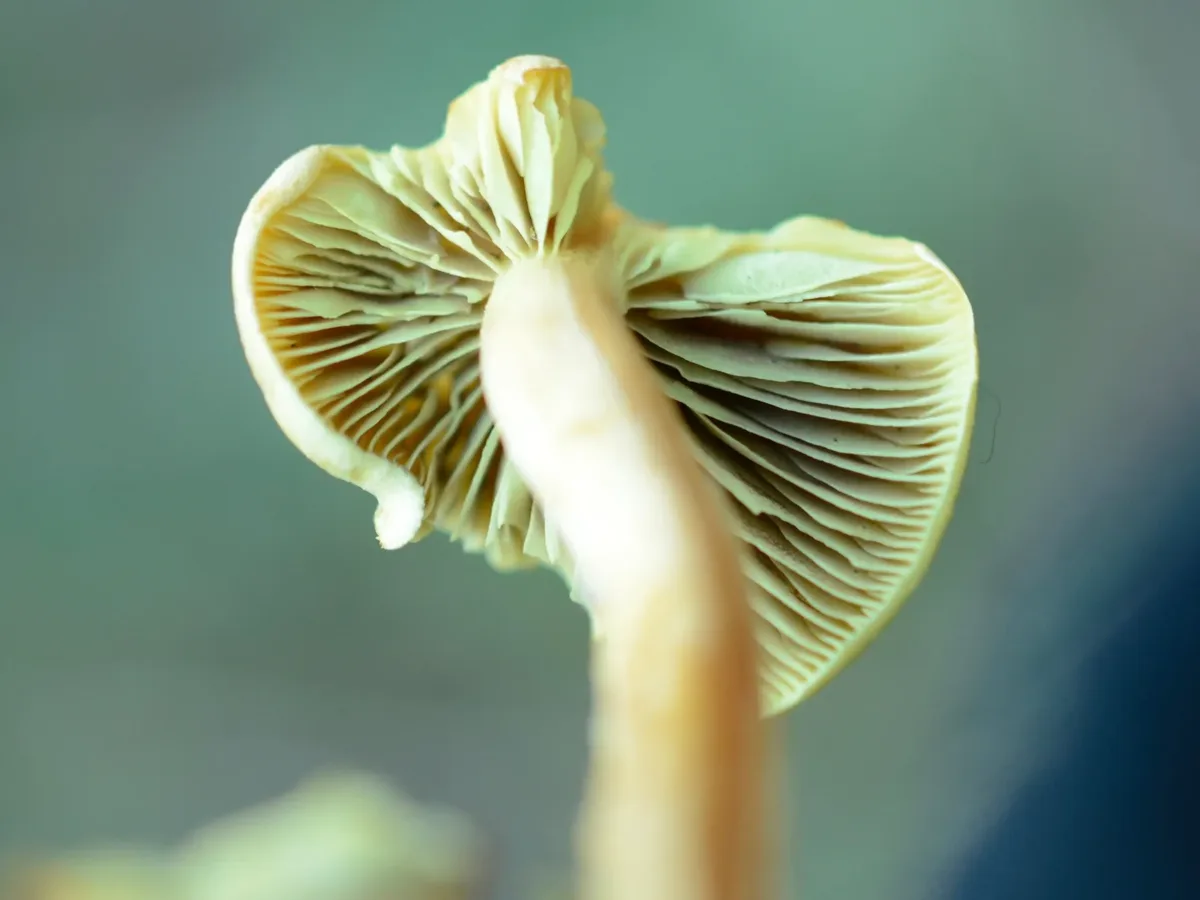
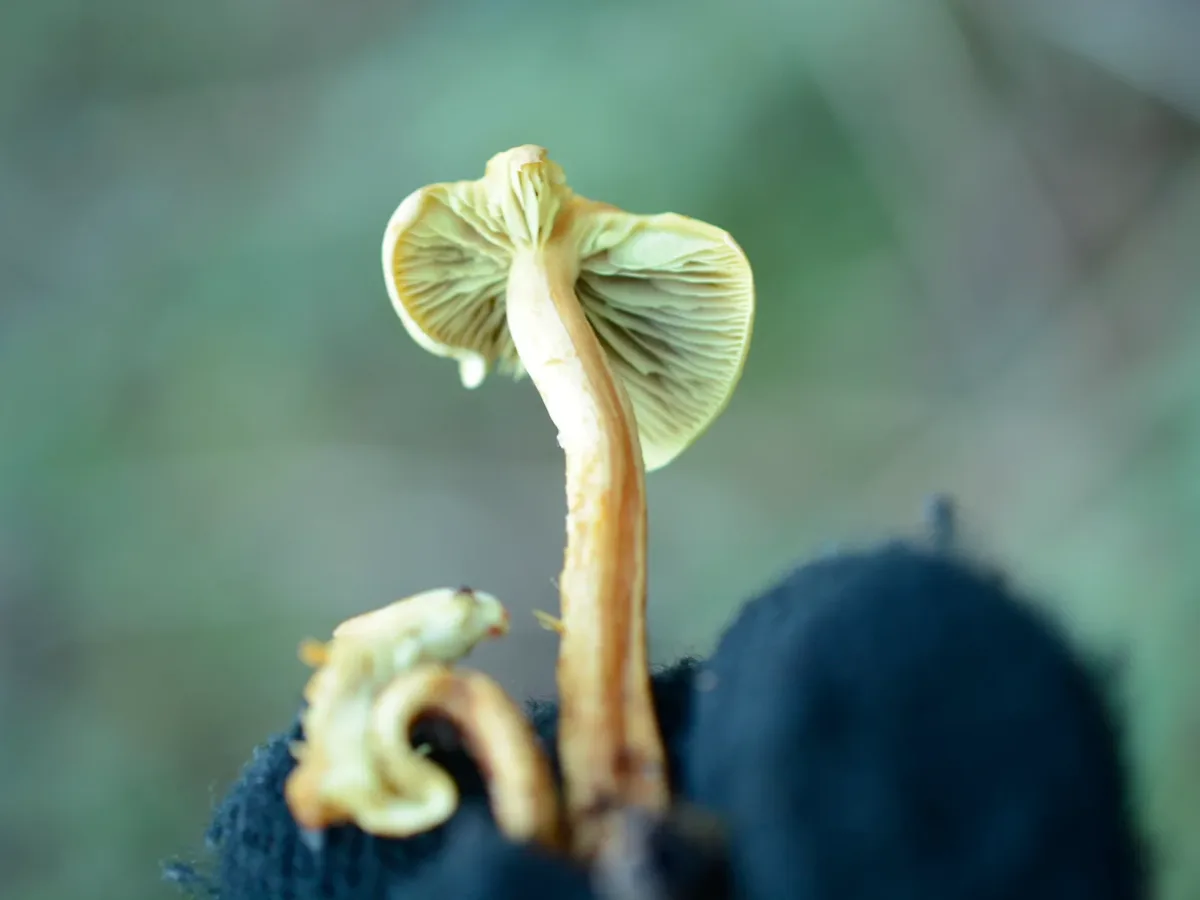
The gills are one of the species' most diagnostic features when viewed over time. They start pale sulphur-yellow or greenish-yellow and progressively darken through grey-violet to dark purplish-brown as the spores ripen, often showing a faint greenish tinge at the edges that persists longer than in the typical fasciculare.
Stem
The stem is slender and fibrous - pale yellowish above, becoming rusty-brown to orange-brown in the lower portion - and carries only a faint ring zone where the thin veil once stretched across, not a true membranous ring.
Spore print is dark purplish-brown to near-chocolate-brown, which distinguishes it immediately from the rusty-brown print of the deadly Galerina.
Flesh
Flesh is pale yellowish, thin, firm, and unmistakably bitter to taste - a bitterness that pervades both cap and stem and does not diminish on chewing.
The combination of dense clustering on decaying wood, greenish-yellow cap, gill colour change to purplish-brown, bitter flesh, and dark spore print defines the species.
Why it's dangerous
H. subviride itself causes at most a self-limiting gastrointestinal illness. The far greater danger is misidentification of or co-collection with Galerina marginata, which contains lethal amatoxins that cause delayed-onset liver and kidney failure.
Galerina poisoning can be fatal even after a single small meal.
Never eat any clustered wood-growing tuft in Australia or New Zealand without an individual spore print from each cap:
- Dark purplish-brown = Hypholoma (do not eat, but survivable if accidentally ingested in small amounts).
- Rusty-brown = possible Galerina; treat as a medical emergency and contact a Poisons Information Centre immediately.
Toxin
The toxic compounds in H. subviride have not been individually characterised in published studies. Based on its close relationship to H. fasciculare, the species is presumed to contain fasciculol-type sesquiterpenoids (fasciculols E and F, and related compounds) responsible for the gastrointestinal irritant syndrome documented in that species.
These compounds are partially heat-labile but not fully inactivated by standard cooking.
The intensely bitter taste of the raw flesh is a marker for these compounds and is itself a useful safety cue.
Symptoms
Gastrointestinal irritation syndrome: nausea, vomiting, abdominal cramps, and diarrhea typically beginning within 30 minutes to 3 hours of ingestion.
Symptoms are generally self-limiting and resolve within 12-24 hours. They may be more severe in children, the elderly, or individuals with pre-existing gastrointestinal conditions.
Any onset of symptoms beyond 6 hours after eating a wood-growing clustered mushroom should immediately raise suspicion of Galerina marginata amatoxin poisoning, which requires urgent emergency hospital evaluation. Do not wait for further symptom progression.
Staying safe
Hypholoma subviride should be treated as a poisonous species. Its bitter taste is in itself a sufficient deterrent to accidental ingestion in most cases.
But gastrointestinal-irritant compounds - likely fasciculol-type sesquiterpenoids related to those documented in H. fasciculare - are present in the flesh and are only partially reduced by cooking.
The primary safety concern, however, is not the species' own toxicity but the possibility of co-collection with Galerina marginata. Galerina produces amatoxins at lethal concentrations and grows in the same tufted-on-wood habitat, at the same season, at exactly the same size range as Hypholoma subviride.
A spore print is the decisive safety test: dark purplish-brown to chocolate-brown (Hypholoma) vs. rusty-brown (Galerina).
Do not eat any wood-growing tufted mushroom cluster from this region without taking a spore print from multiple individual caps.
Where & when it grows
Habitat
A wood saprotroph that decomposes dead hardwood and softwood alike, producing a brown cubical rot in the substrate - the same decay type as its Northern Hemisphere congeners.
In Australia it grows principally on eucalypt and Nothofagus stumps and fallen logs in native forest, but is equally at home on imported hardwood and softwood in urban and plantation settings.
The species is broadly adaptable to whatever dead wood is available, which makes it one of the more commonly encountered Hypholoma species in the Australian-New Zealand region.
It grows in dense tufted clusters arising from a shared base embedded in the wood; groups of ten to forty caps from a single stump are not unusual.
The same mycelium returns to the same stump year after year, making known fruiting sites reliably productive across successive autumns.
When
Fruiting is concentrated in the Southern Hemisphere autumn - March through June across most of the range - with the bulk of fruiting activity in April and May.
The biological trigger is the arrival of significant autumn rainfall combined with the cooling of air and surface temperatures after the summer maximum. The wood substrate need not be very wet, as the established mycelium within the wood retains moisture effectively.
A meaningful rain event of 20 mm or more over ten to fourteen days, combined with daytime air temperatures falling below about 18-20 °C, typically produces a flush within one to two weeks.
In coastal and lower-altitude sites fruiting may extend into July. At higher altitudes in the Australian Alps or in New Zealand hill country the season can begin somewhat earlier, in March.
How it grows
Grows exclusively in dense tufted clusters, many individual fruit bodies arising from a shared mycelial base anchored within dead wood.
Clusters can contain a dozen to forty or more caps, and individual caps within a cluster mature at slightly different rates, so a single cluster typically contains young closed buttons alongside expanded older specimens.
The saprotrophic mycelium remains perennial within the decaying wood, producing fruiting flushes each autumn as long as suitable wood substrate remains. It does not grow from soil unless buried wood or roots are present directly beneath the site.
Fruiting conditions
Wood-decay saprotroph; fruiting triggered by autumn cooling (air temperatures falling below 18-20 °C) and sufficient moisture reaching the decaying wood substrate. Because the mycelium colonises within the wood mass, moderate rainfall is sufficient - the wood acts as a moisture reservoir. Flush lag from a meaningful rain event is 7-16 days. Returns to the same stump or log year after year. Southern Hemisphere fruiting window: March-July, peak April-May.
Look-alikes
The most dangerous confusion is with Galerina marginata (deadly; amatoxin-bearing), which also grows in clusters on decaying wood and can be intermixed with Hypholoma in the same cluster or on the same stump.
Galerina is generally smaller (cap 1-4 cm), more uniformly honey-brown to tawny without greenish tones, bears a true membranous ring on the stem (rather than just a ring zone), and critically produces a rusty-brown (not dark purplish-brown) spore print. Its flesh is not bitter.
Galerina's amatoxin content is comparable to Amanita phalloides and has caused fatal poisonings in foragers who misidentified it as Hypholoma or Kuehneromyces.
Other look-alikes:
- Hypholoma fasciculare (sulphur tuft, globally distributed including Australia as an introduced or cosmopolitan species) is extremely closely related: it tends toward brighter, purer sulphur-yellow without the greenish tone, has intensely bitter flesh, and greenish-yellow (not yet purple-grey) gills that develop grey-purple tones with maturity. Microscopy or molecular analysis is often needed to reliably separate H. subviride from H. fasciculare in Australian material; both are toxic.
- Pholiota species (scalycaps) grow on wood and have roughly similar colouring, but have sticky to scaly cap surfaces, often with shaggy scales on the stipe, and a rusty-brown (not dark purple-brown) spore print.
- Stropharia species may grow near wood debris and have similar silhouettes, but are typically more brightly coloured (purple-brown, greenish-grey) and have a more persistent skirt-like ring.
- Cyclocybe parasitica (formerly Agrocybe) grows on wood but has a warmer brown cap, pale gills that age brown, and a brown spore print.
Smaller (cap 1-4 cm), uniformly honey-brown to tawny without any greenish tone; bears a true membranous ring on the stem (not merely a ring zone); flesh not bitter; and critically produces a rusty-brown spore print rather than the dark purplish-brown of H. subviride. Can grow on the same rotting log or intermixed in the same cluster. Contains lethal amatoxins. A spore print taken from each cap is the safest distinguishing test; never assume a cluster is pure Hypholoma without checking.
Pholiota species growing on wood have sticky to viscid cap surfaces with gelatinous scales or patches (becoming dry and less sticky in age), often with shaggy to recurved scales on the stipe, and produce a rusty-brown (not dark purplish-brown) spore print. The sticky cap surface, scaly stipe, and rusty-brown spore print separate Pholiota from Hypholoma immediately.
This edible clustered wood species has a distinctly hygrophanous cap - date-brown to ochre-brown when moist, drying out from the centre in a two-toned bull's-eye pattern - and a scaly lower stem below a persistent ring. Its gills are brown, not greenish-yellow progressing to purplish-brown. Spore print cinnamon-brown. The two-toned hygrophanous cap is diagnostic. K. mutabilis is not confirmed from Australia but relevant as a pattern-match for foragers familiar with Northern Hemisphere species.
Extremely closely related and similarly poisonous. H. fasciculare typically has a purer, brighter sulphur-yellow cap without the greenish or olive tones that characterise H. subviride; gills start green-yellow and progress to grey-purple; spore print is similarly dark purplish-brown. Reliable separation often requires microscopy or molecular analysis. Both species are GI-toxic and should not be eaten; in practice treating them as the same risk is appropriate.
A reference guide - never an edibility guarantee. When in doubt, leave it out.