Brick cap
Hypholoma lateritiumsyn. Hypholoma sublateritium, Naematoloma sublateritium, Pholiota sublateritia
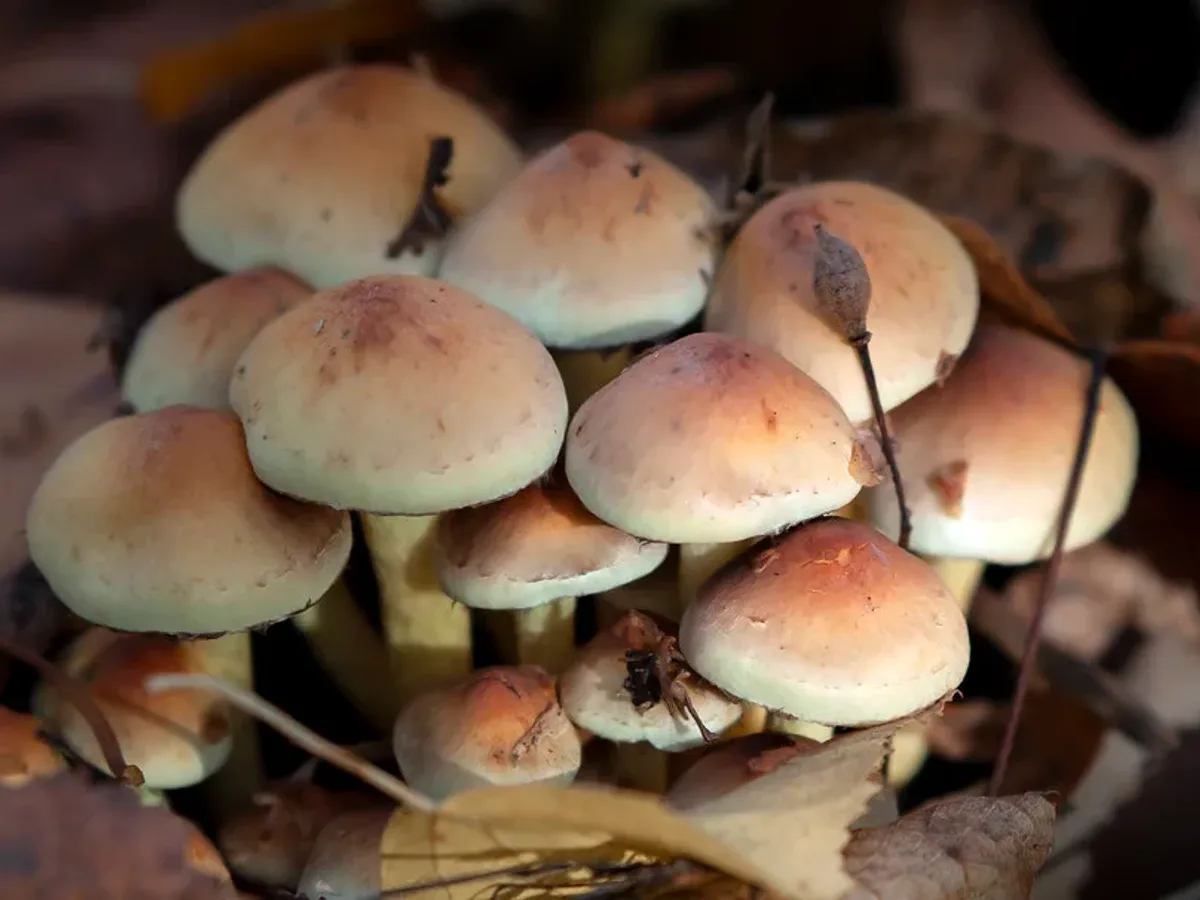 m.bazovskiy (CC0)
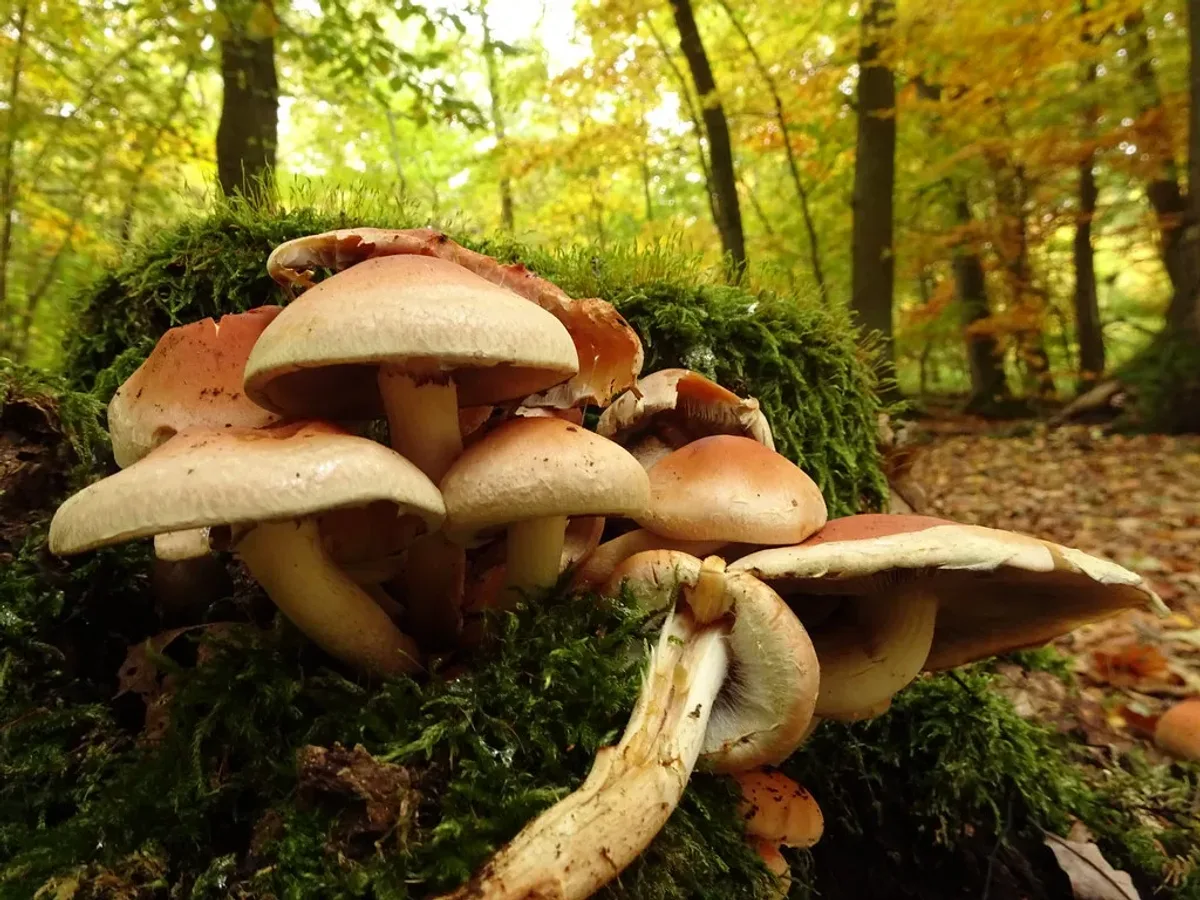 © Ephemeral Impressions (CC BY-SA 2.0)
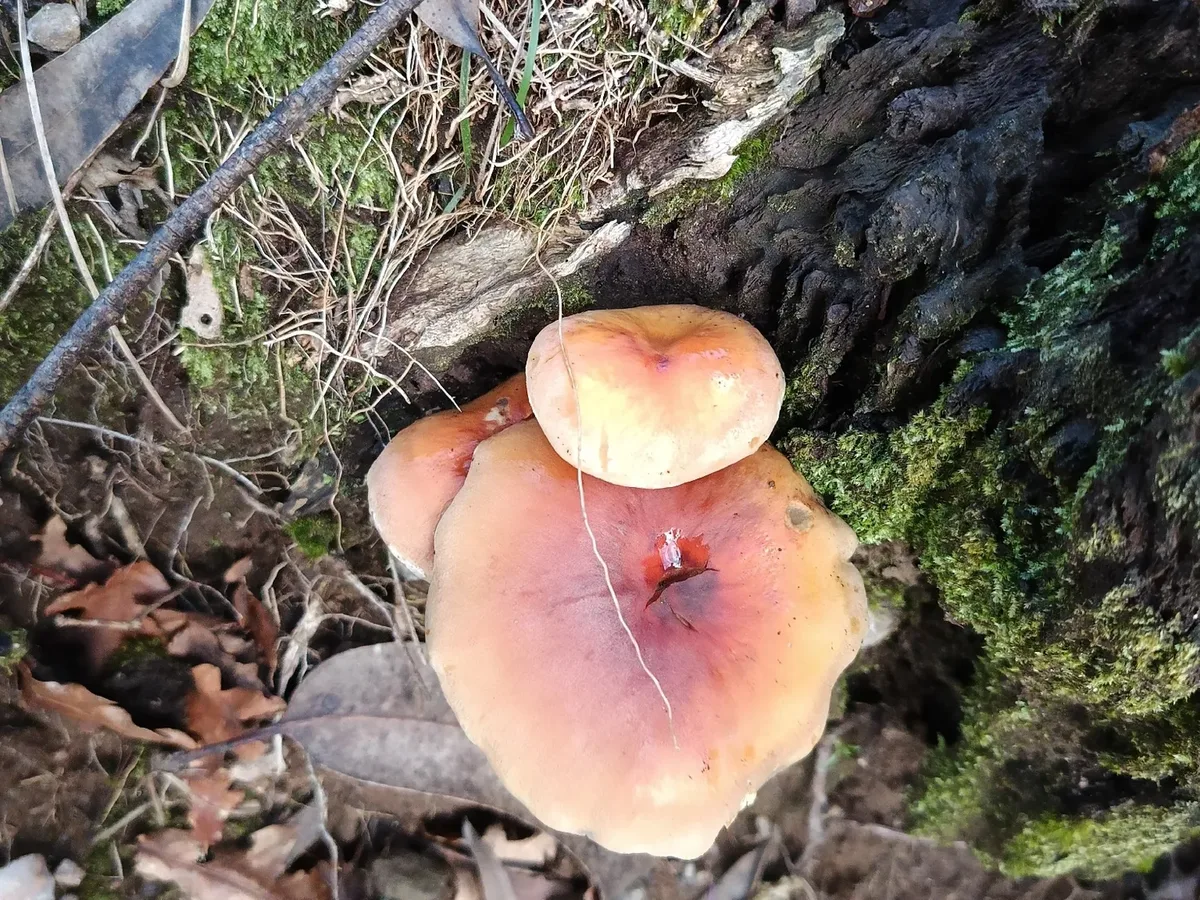 © Carl Ramirez (CC BY)
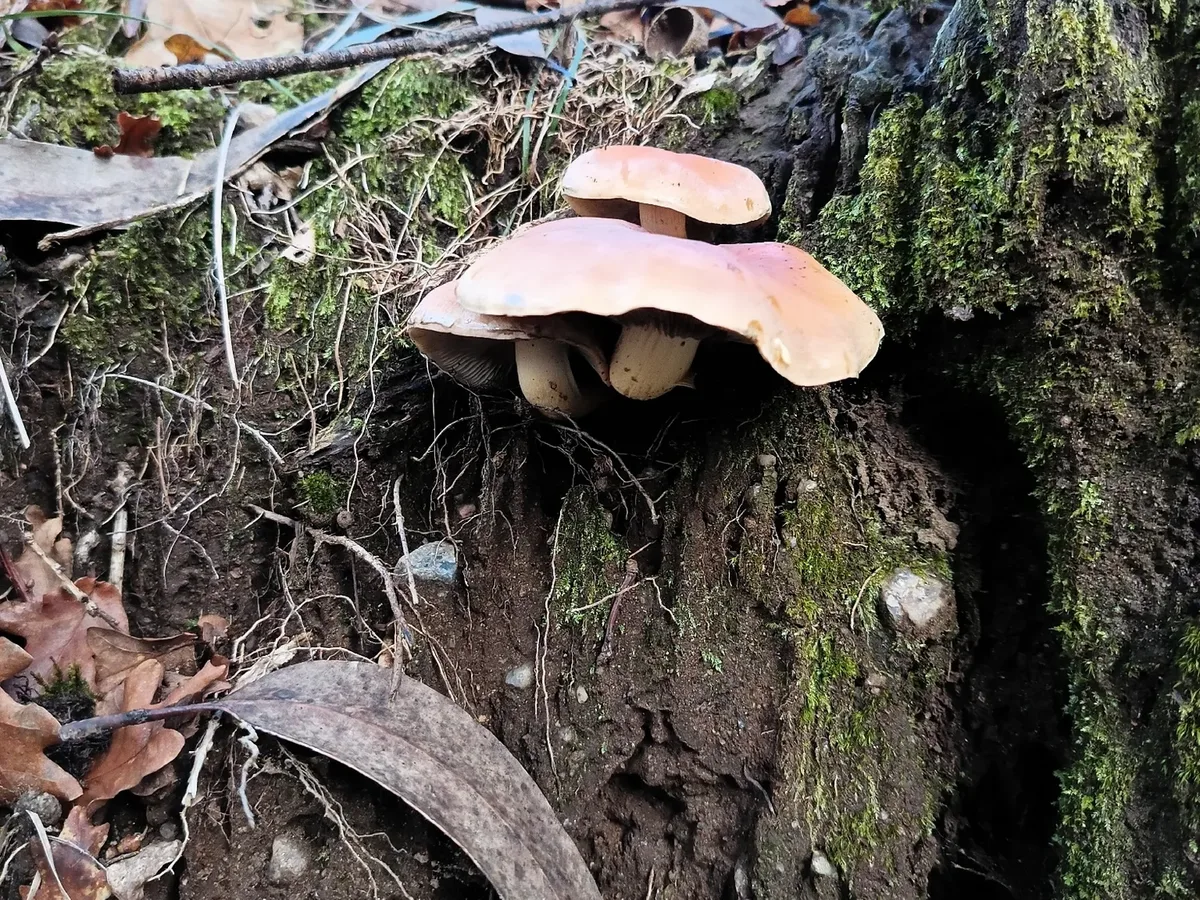 © Carl Ramirez (CC BY)
 © Carl Ramirez (CC BY)
 © Carl Ramirez (CC BY)
 © Carl Ramirez (CC BY)
 © Carl Ramirez (CC BY)
 © Carl Ramirez (CC BY)
 © Ephemeral Impressions (CC BY-SA 2.0)m.bazovskiy (CC0)© Ephemeral Impressions (CC BY-SA 2.0)
Edible only with the right preparation - or safe for some people but not others. Learn the caveats first.
Never eat a mushroom you are not 100% sure of - check the look-alikes below, and always cook wild mushrooms.
How to recognise it
Cap
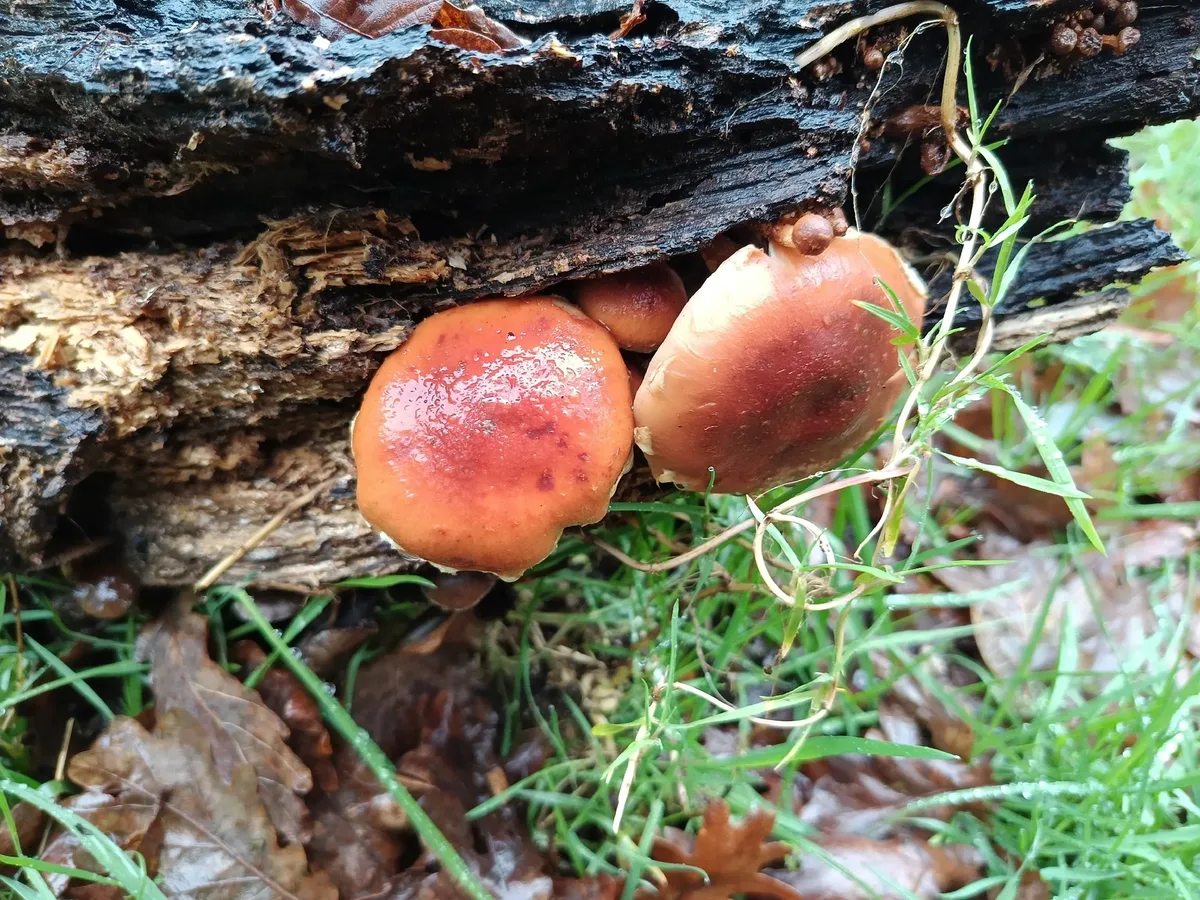
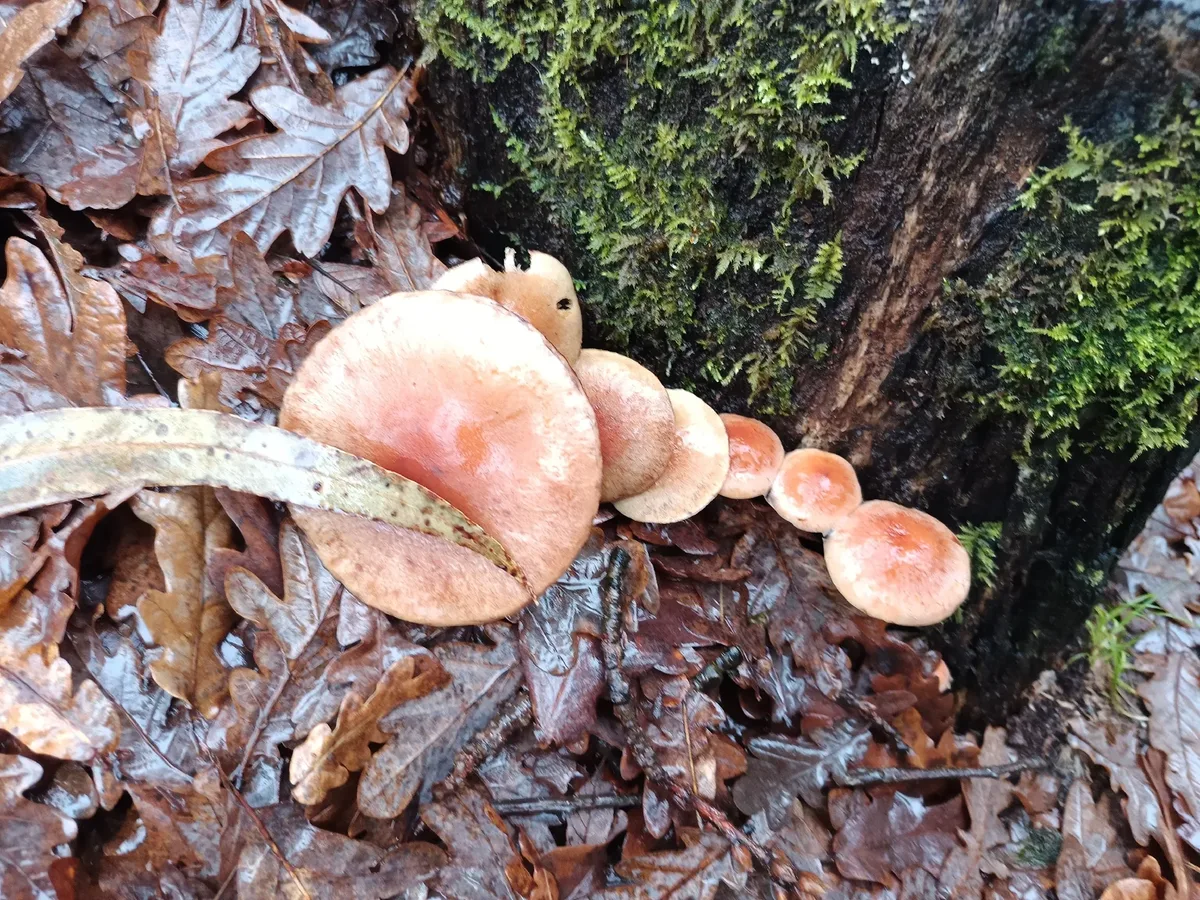
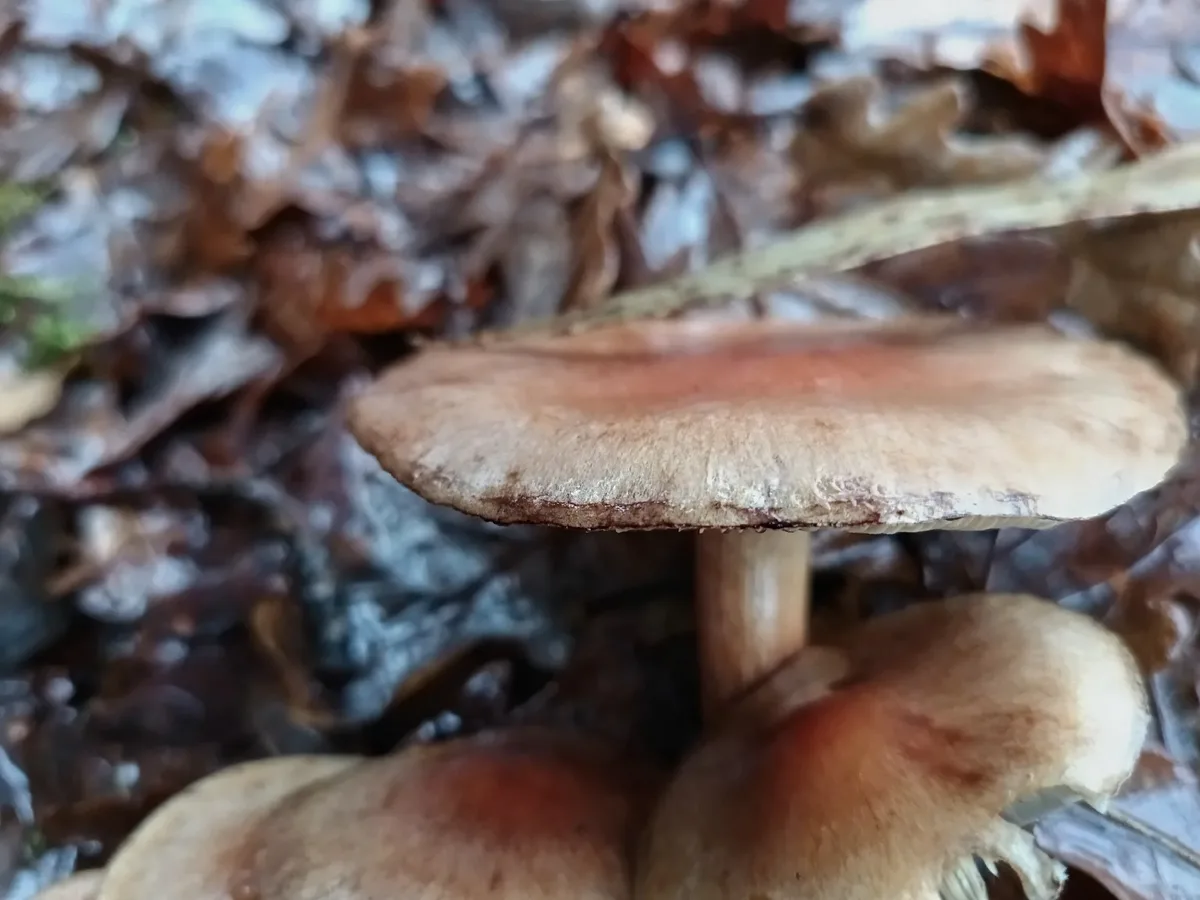
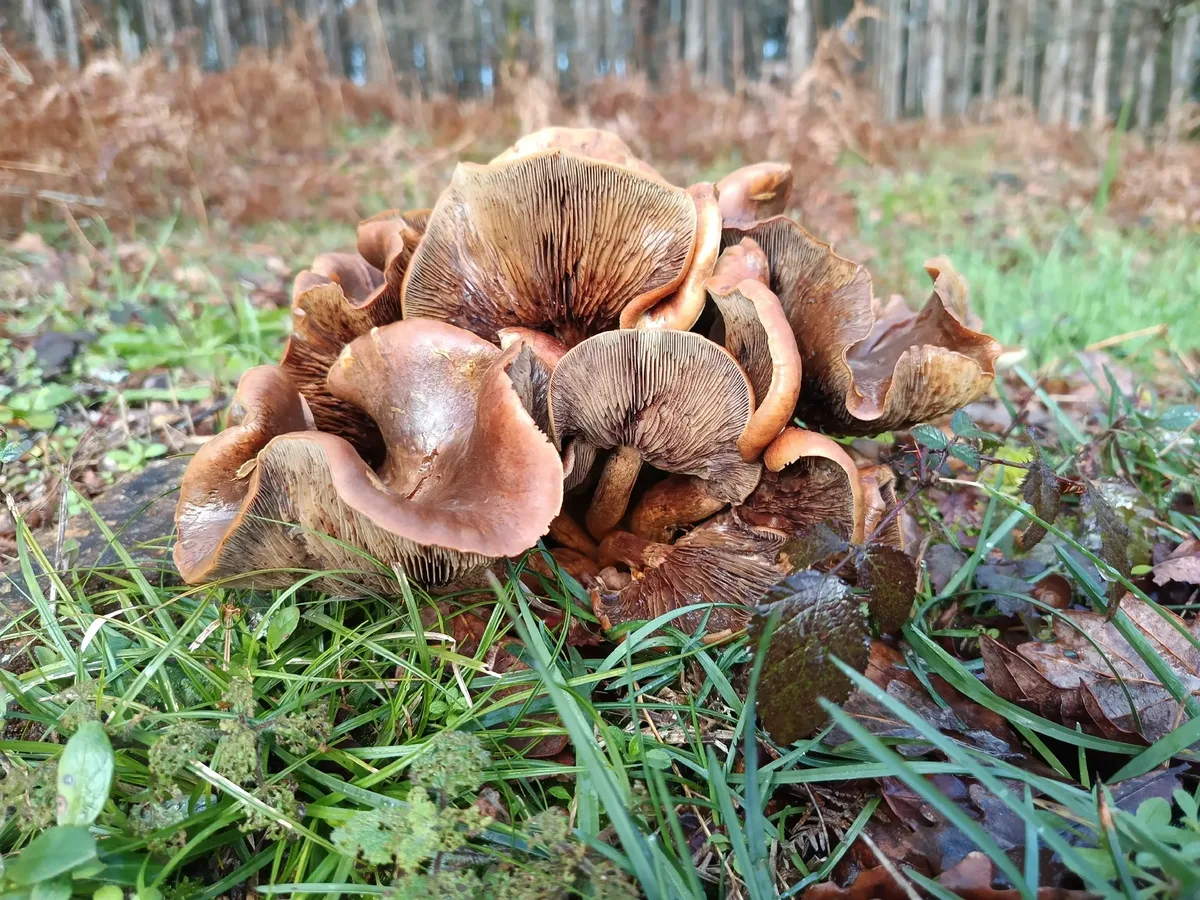
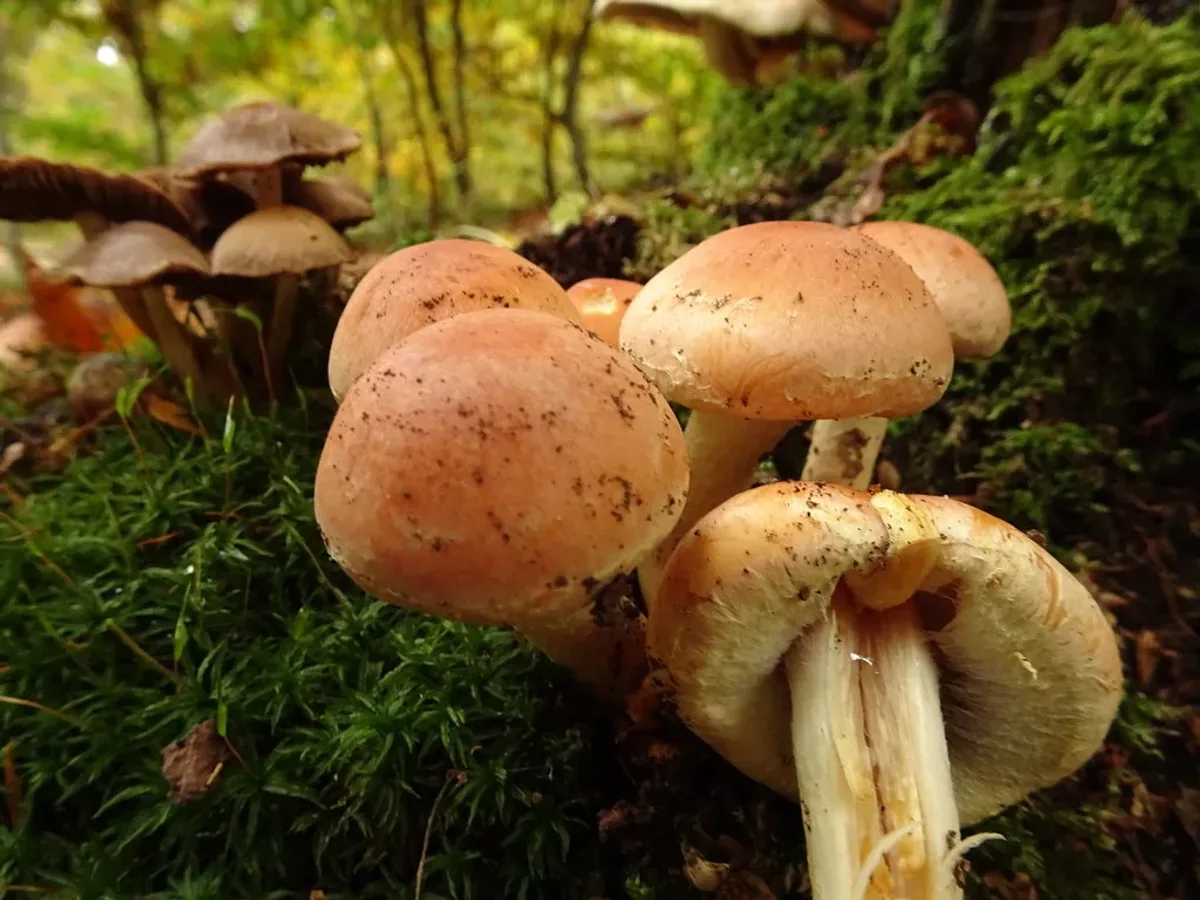
4-10 cm broad, convex at first and becoming broadly umbonate. Dry and smooth, distinctly brick-red to rusty-orange at the center, grading to pale buff near the margin.
Gills
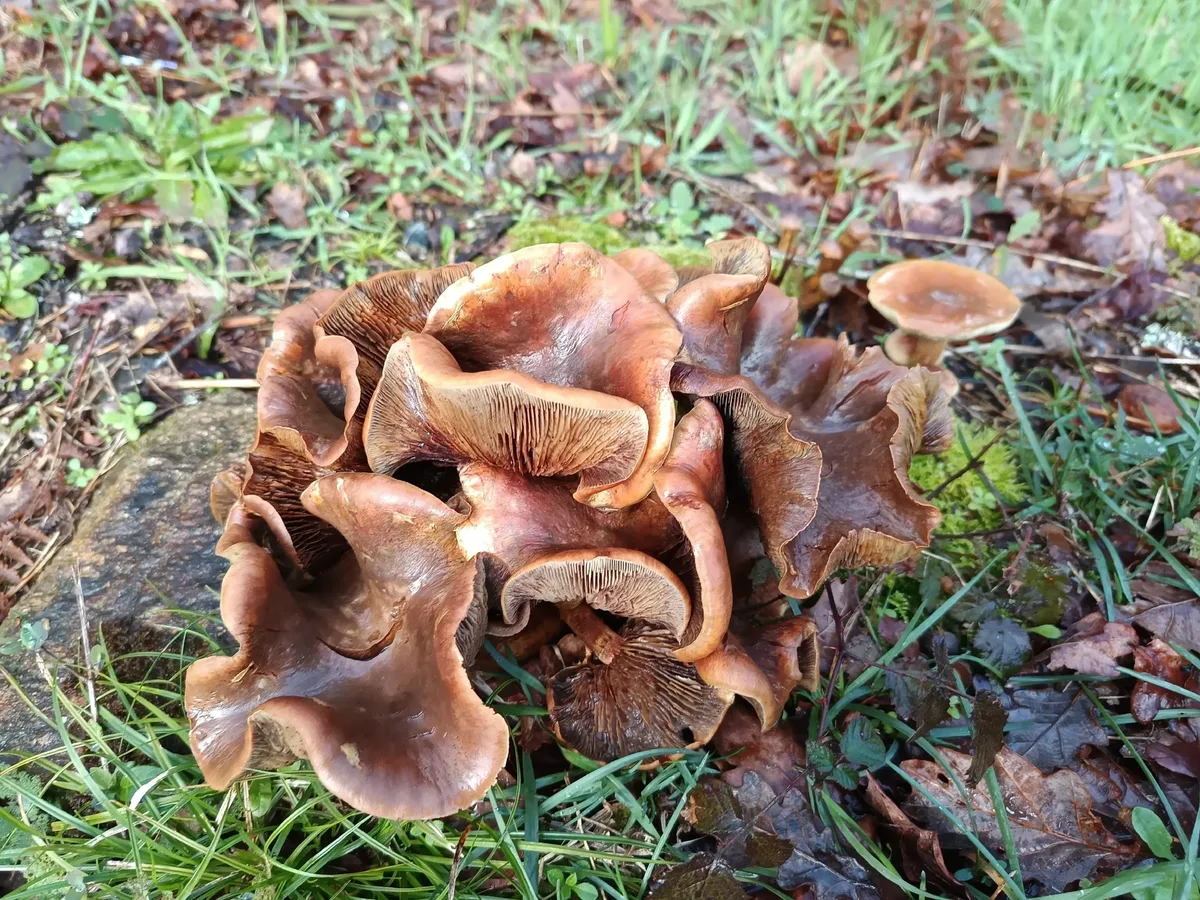
Adnate, crowded, and going through a characteristic color change: pallid to yellowish when young, then grey-purple, and finally dark purplish-brown at spore maturity.
This gill progression is critical: freshly opened caps have light gills that darken dramatically with age, and the final purplish-brown is what puts the spore print color (dark purplish-brown to chocolate-brown) on paper.
Stem
5-12 cm tall and fibrous, pale yellowish above and rust-brown below, often with a subtle ring zone - not a full membranous ring - where the veil once attached.
Flesh
Firm, whitish to yellowish, and noticeably bitter in most specimens, though the bitterness varies.
The combination of brick-red cap, purplish-brown mature gills, dark spore print, and dense cluster habit on hardwood stumps identifies this species.
Why it's dangerous
H. lateritium itself is at most a mild gastrointestinal irritant when cooked. The far greater danger is misidentification of Galerina marginata in the harvest.
G. marginata amatoxin poisoning causes delayed (6-24 h) onset of severe liver and kidney failure that can be fatal.
Never assume a collected cluster is pure; verify every cap individually.
Toxin
The toxic principles responsible for reported gastrointestinal illness have not been fully characterized.
Fasciculol-type compounds (related to those in H. fasciculare) and unidentified gastrointestinal irritants are suspected.
The bitterness is partly attributable to these compounds and decreases substantially with cooking and discarding of cooking water.
Symptoms
Gastrointestinal irritation - nausea, vomiting, cramps, diarrhea - typically beginning 0.5-3 hours after ingestion.
Symptoms are generally self-limiting and resolve within 24 hours, but can be severe in sensitive individuals or after raw/undercooked consumption.
Any case with delayed onset (>6 hours) should immediately raise suspicion of Galerina marginata amatoxin poisoning, which requires emergency medical evaluation.
Staying safe
Edibility is genuinely disputed and varies by region:
- in Japan Hypholoma lateritium (sold as kuritake) is widely eaten after boiling, draining, and cooking
- in parts of Germany it is considered edible when well-cooked
- in North America mycologists and poison centers classify it as suspect or mildly toxic due to gastrointestinal irritants that are variably reported
The cautious position - and the one applied here - is to treat this species as requiring caution. If you choose to eat it:
- cook it thoroughly and discard the cooking water
- try a small portion first
- never eat it raw
More critically, the very real danger with this species is Galerina marginata contamination. G. marginata grows on the same substrates, can be intermixed in the same cluster, and contains amatoxins.
Every single cap harvested must be individually verified; if any doubt exists, discard the entire cluster.
Where & when it grows
Habitat
Strictly a wood saprotroph growing in dense tufted clusters on hardwood stumps, buried roots, and rotting logs.
In eastern North America the favored substrates are oak and beech stumps, but the species readily colonizes maple, elm, and birch.
The mycelium causes a brown cubical rot, breaking the host wood into chocolate-brown cubes characteristic of this group. Often returns to the same stump for several consecutive seasons until the wood is exhausted.
When
Late summer through late autumn; in eastern North America the main flush runs from early September through mid-November.
The species tolerates cool conditions well and frequently persists into the first frosts, making it a late-season find when other wood-decayers have finished.
In milder climates or warm-autumn years a smaller early flush can appear as early as August.
How it grows
Grows as a cluster of many individual stems arising from a common base attached to the wood substrate.
Individual caps within a cluster mature at slightly different rates, so a cluster commonly holds young closed caps alongside fully expanded older ones.
The same mycelial mass often produces multiple flushes from the same stump across a season and across years.
Fruiting conditions
Wood-decay saprotroph; fruiting is triggered by autumn cooling and adequate moisture penetrating the dead wood substrate. Because the mycelium is within wood rather than soil, soil temperature is less critical than air temperature and humidity; flushes typically follow autumn rain with moderate cooling. Returns to the same stump across multiple seasons.
Look-alikes
The most important confusion is with Galerina marginata (deadly), which also grows in clusters on rotting wood. Galerina is smaller (cap 2-5 cm), brown to tawny without the brick-red center, has a true membranous ring on the stem (not just a ring zone), and produces a rusty-brown, not purplish-brown, spore print.
G. marginata contains lethal amatoxins at concentrations similar to Amanita phalloides and has caused multiple fatalities when confused with Hypholoma or Kuehneromyces species.
Hypholoma fasciculare (sulphur tuft, poisonous) is a close relative distinguished by its bright sulfur-yellow cap and stem, its intensely bitter taste, and its greenish-yellow gills (vs. pallid-to-purplish in H. lateritium).
Kuehneromyces mutabilis (sheathed woodtuft, edible) shares the stump habit but has a strongly two-toned hygrophanous cap (date-brown when moist, drying from the center outward to ochre-yellow), a scaly lower stem, and an earthy, mild smell.
Armillaria mellea (honey mushroom, edible) grows in similar situations but has honey-yellow or tawny caps, a well-developed white ring, and white spore print.
Smaller (cap 2-5 cm), brown to tawny without a brick-red center, has a true membranous ring on the stem (not merely a ring zone), and produces a rusty-brown (not purplish-brown) spore print. Contains lethal amatoxins. Can grow on the same stump or intermixed in the same cluster as Hypholoma lateritium. Every cap must be individually verified.
Edible species with honey-yellow to tawny caps bearing small dark scales, a well-developed white to yellowish membranous ring, white spore print, and mild taste. No brick-red coloration.
Edible species with a strongly hygrophanous cap (date-brown when wet, drying outward to ochre-yellow creating a two-toned ring effect), a distinctly scaly lower stem below the ring, and a mild earthy smell without bitterness. Spore print cinnamon-brown.
Bright sulfur-yellow cap and stem without a brick-red center, intensely bitter taste, and greenish-yellow gills (vs. pallid-to-purplish gills of H. lateritium). Poisonous causing gastrointestinal illness.
A reference guide - never an edibility guarantee. When in doubt, leave it out.