Sulphur tuft
Hypholoma fasciculare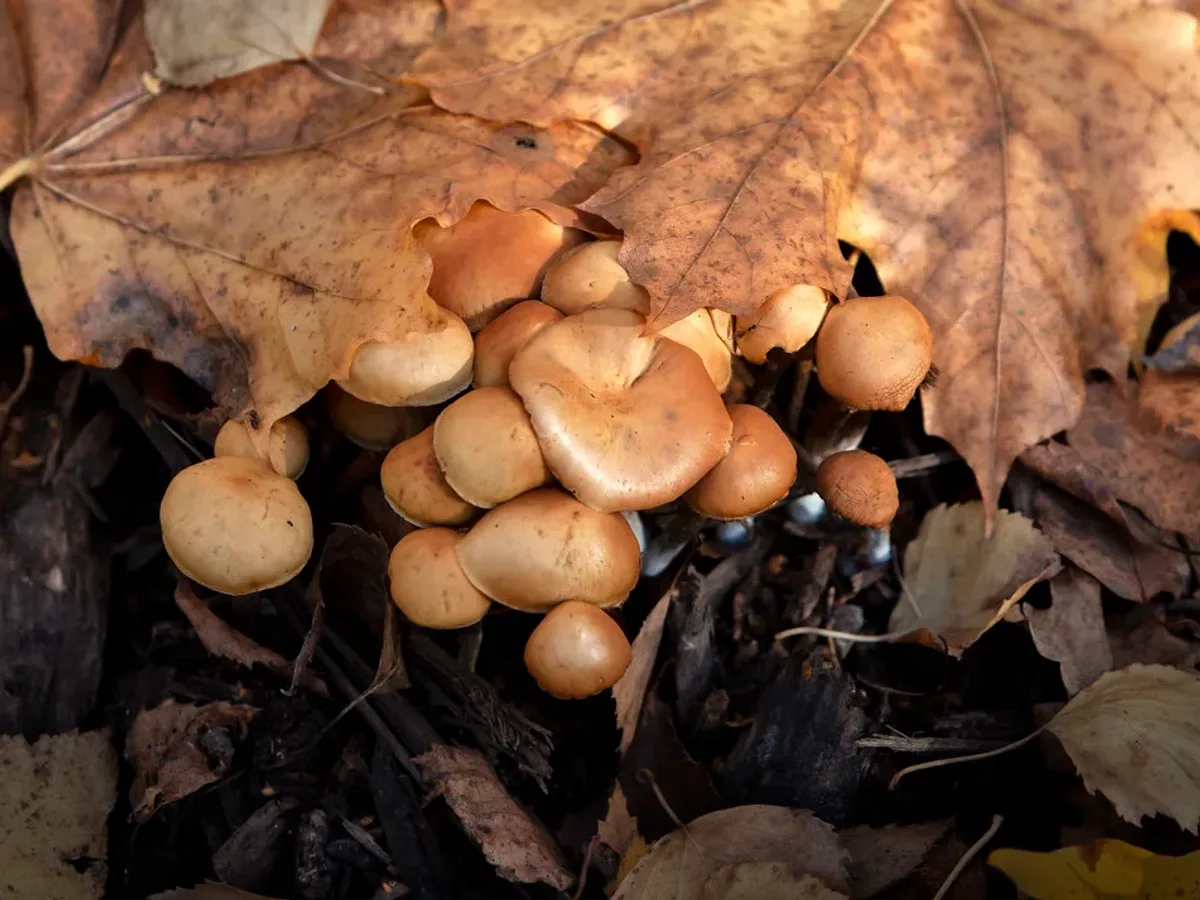 m.bazovskiy (CC0)
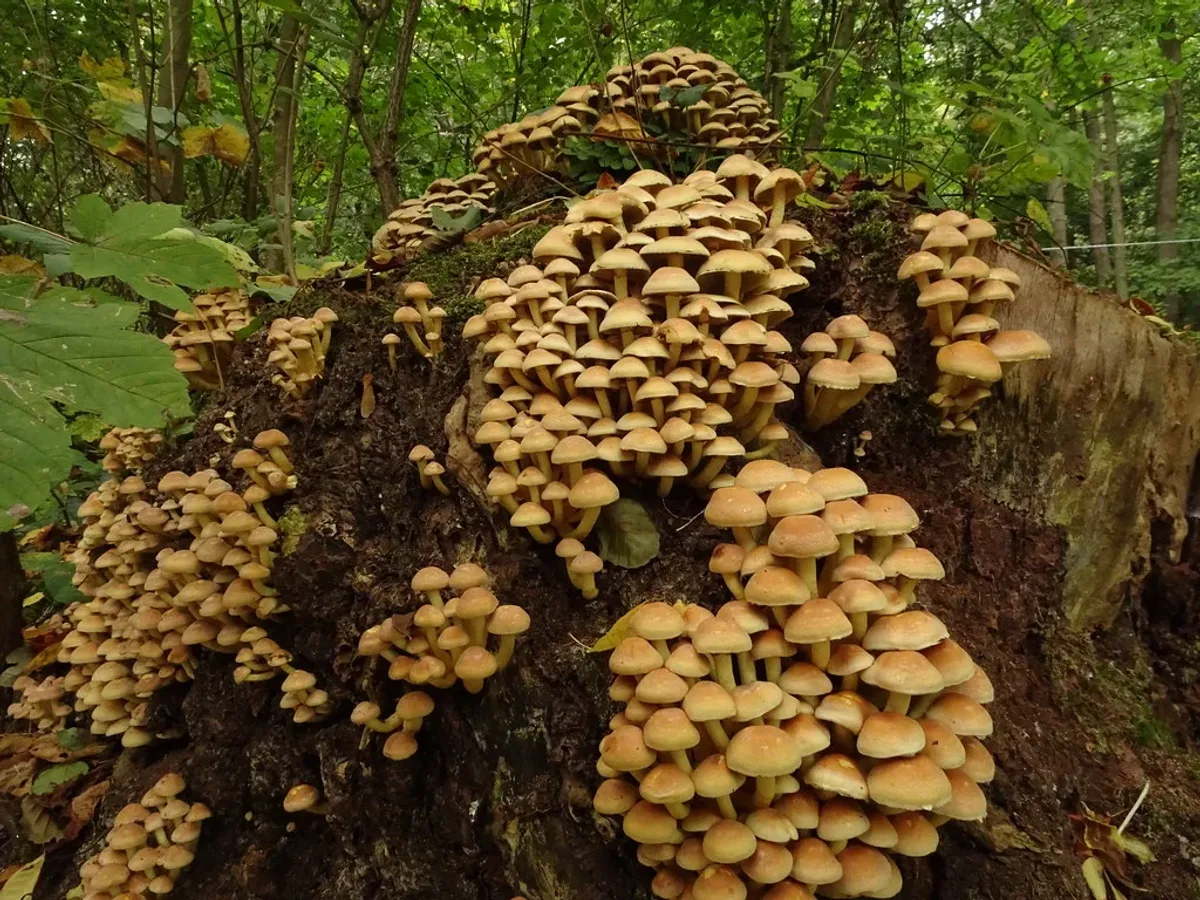 © Ephemeral Impressions (CC BY-SA 2.0)
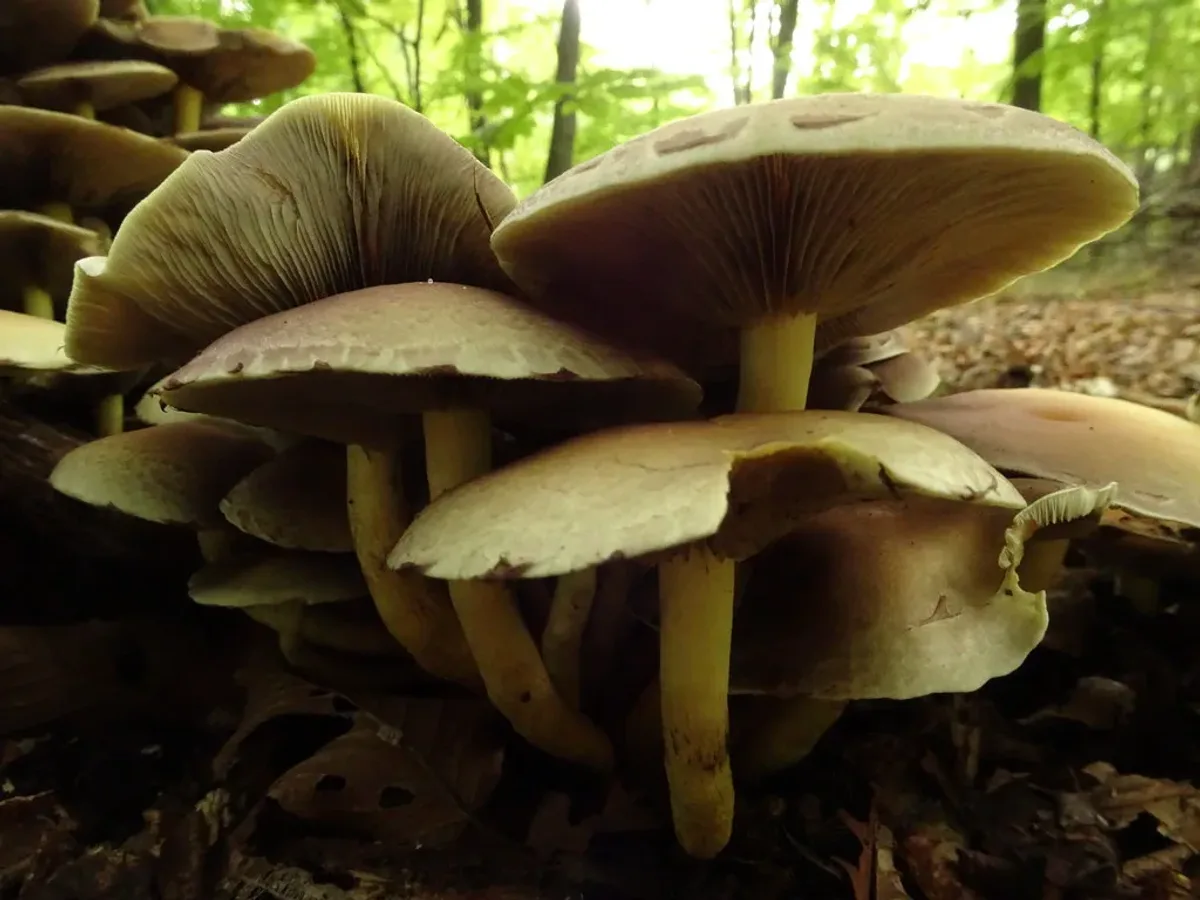 © Ephemeral Impressions (CC BY-SA 2.0)
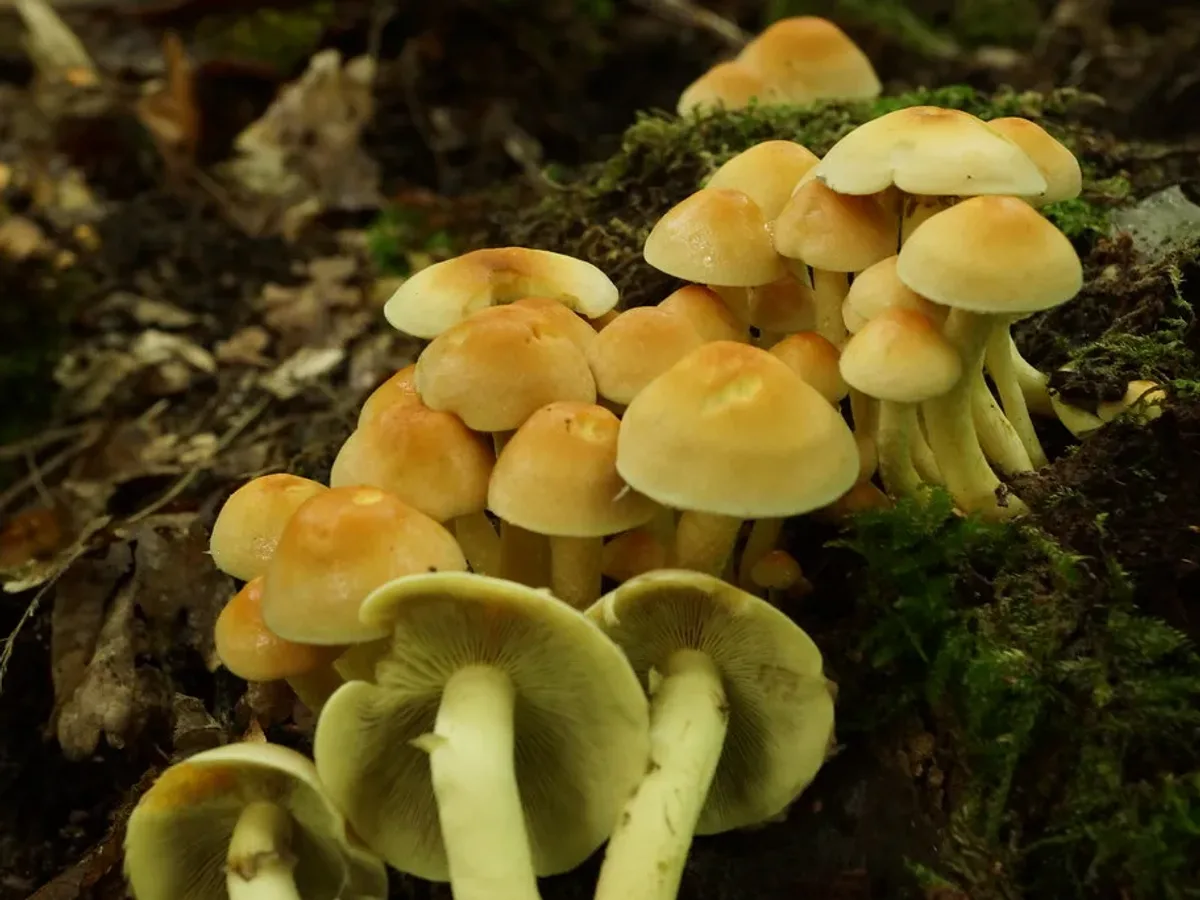 © Ephemeral Impressions (CC BY-SA 2.0)
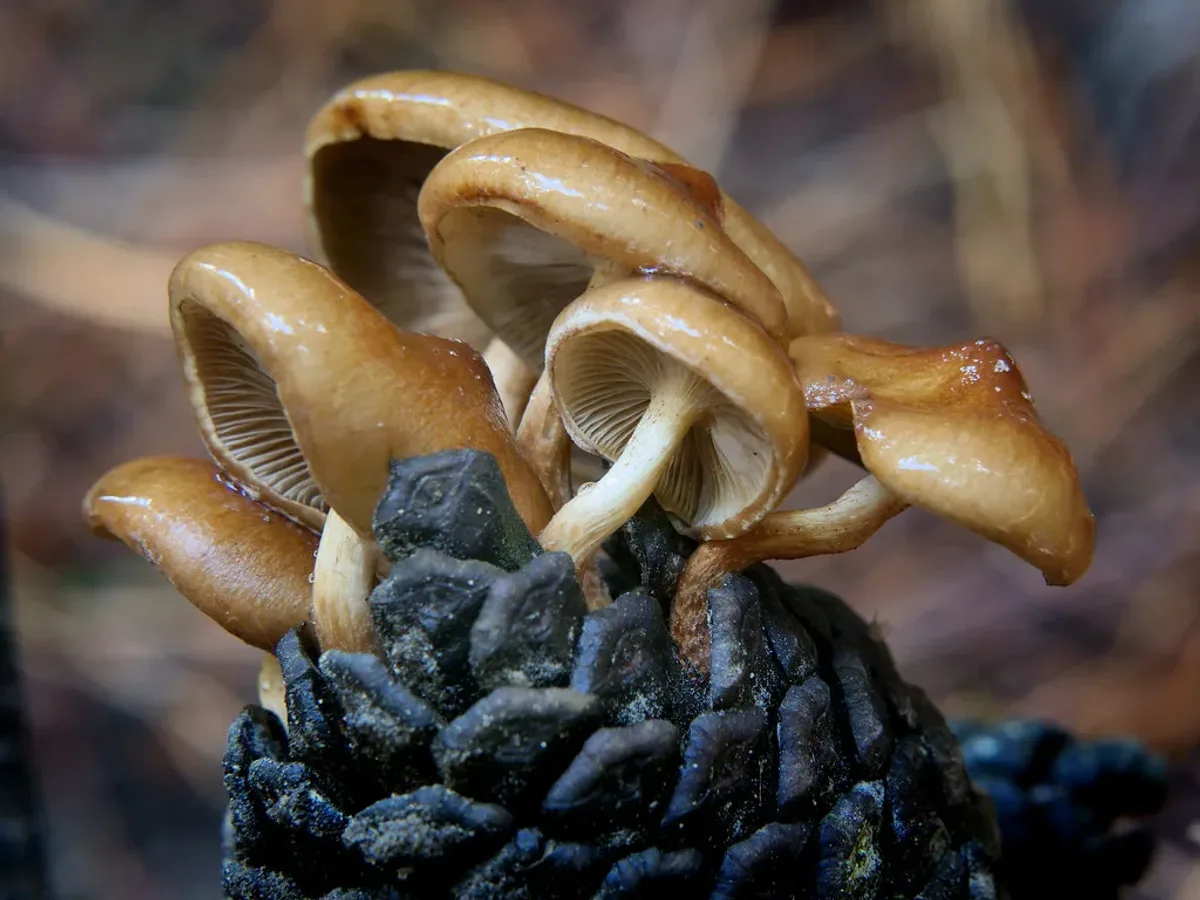 Bernard Spragg (Public domain)
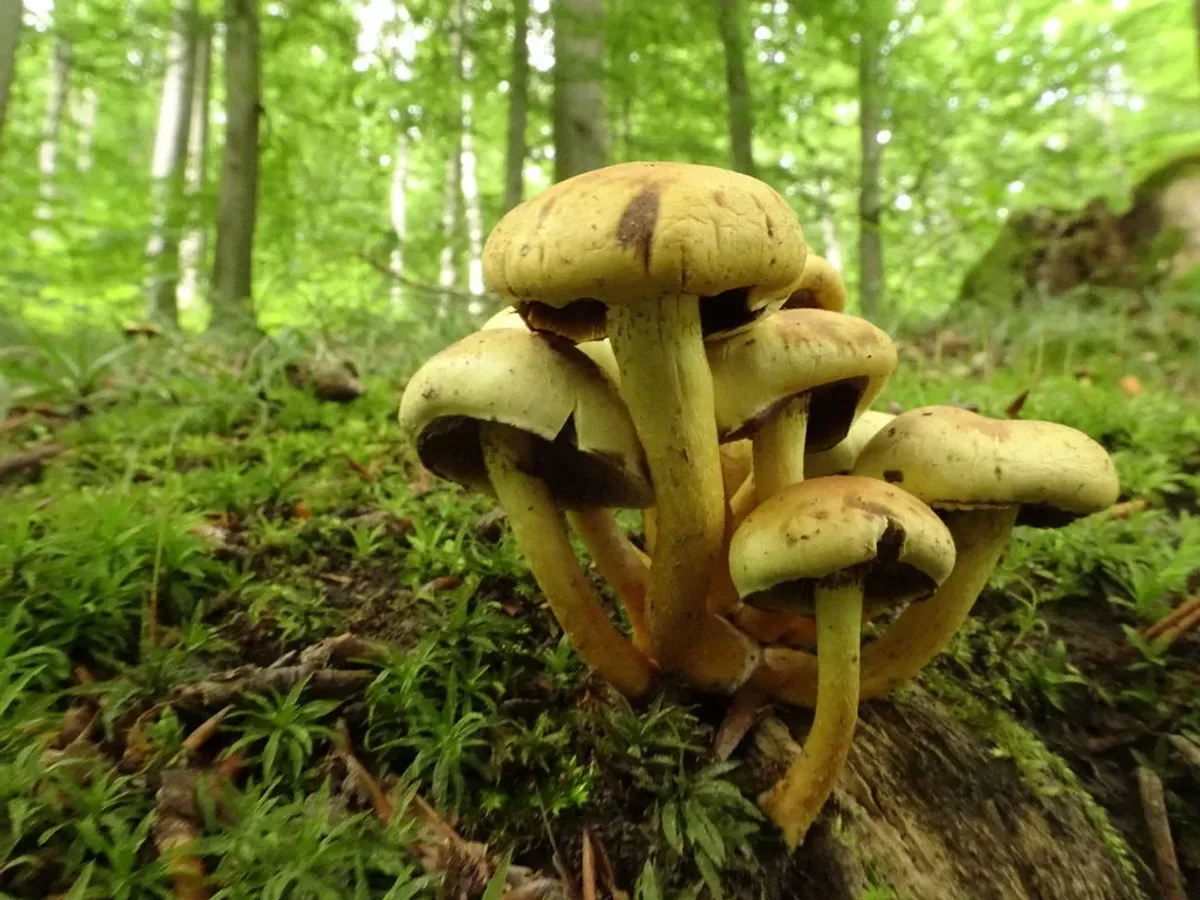 © Ephemeral Impressions (CC BY-SA 2.0)
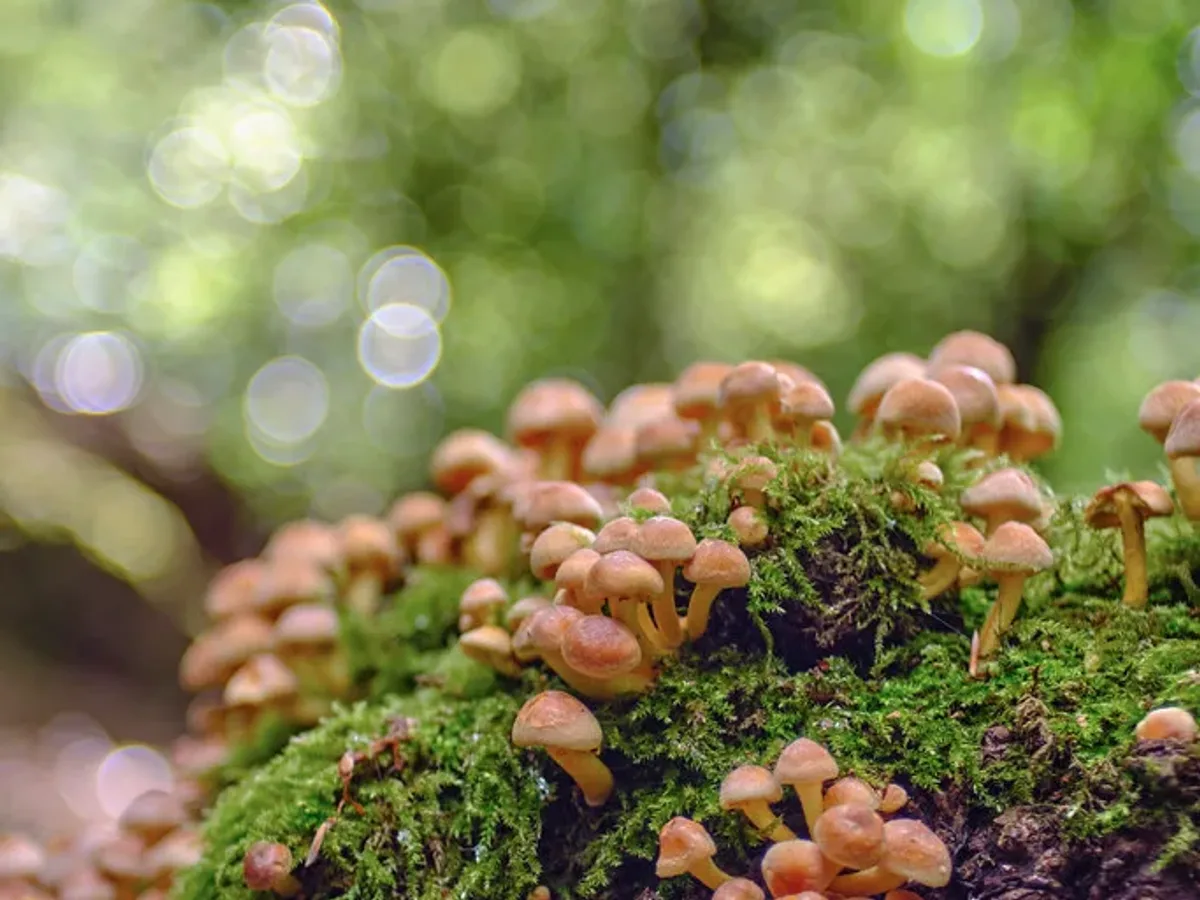 © Lukas Large (CC BY-SA 2.0)m.bazovskiy (CC0)© Ephemeral Impressions (CC BY-SA 2.0)
Edible only with the right preparation - or safe for some people but not others. Learn the caveats first.
How to recognise it
Hypholoma fasciculare is one of those mushrooms whose colour alone tells a story.
Cap
The cap begins as a tight dome - 2 to 7 centimetres across - and opens to broadly convex or nearly flat with age. The skin is smooth and dry, a vivid sulphur-yellow to yellow-green across most of the surface, shading abruptly to a rusty red-brown disc at the centre.
That two-tone pattern is biologically straightforward: the darker pigments at the cap's centre reflect the oldest tissue; the paler margin grew last and is still yellow.
Gills
The gills are crowded and adnate - attached squarely to the stem - and follow their own colour journey: greenish-yellow when the cap first breaks open, cycling through olive-green, grey-green, and finally a deep grey-black as the spores ripen and drop.
The spore print itself is olive-brown to purple-brown, a detail that can clinch an identification when colour in poor light becomes ambiguous.
Stem
The stem is slender and fibrous, typically 4 to 10 centimetres tall and only 4 to 10 millimetres thick, flushed the same sulphur-yellow near the top and developing rusty-brown tones toward the base. There is no ring, no volva, and no basal cup - the stem emerges cleanly from the wood.
Flesh
Raw flesh is pale yellow, firm, and smells faintly mushroomy or like wood, but the moment a fragment touches the tongue the bitterness arrives - immediate, intense, lasting, and impossible to mistake for anything pleasant.
Why it's dangerous
Hypholoma fasciculare is poisonous and causes significant gastrointestinal illness. It is rarely fatal in healthy adults, but the 5-10 hour delay before symptoms appear is a genuine hazard: it breaks the mental link between the meal and the illness, which can delay appropriate medical response.
The primary danger in practice is not the species in isolation but the mixture scenario - sulphur tufts collected by mistake alongside honey mushrooms and cooked together, with the bitter toxins leaching into the dish and affecting everyone who ate from it, including people who consumed no visible sulphur tuft.
Children, elderly individuals, and people with compromised health are at higher risk of serious dehydration from the prolonged vomiting and diarrhoea.
If H. fasciculare poisoning is suspected, do not wait for symptoms to develop:
- contact Poison Control or emergency services immediately
- preserve a sample of the mushroom or photograph it in situ
- report the approximate quantity consumed and the time of the meal
Symptomatic treatment - rehydration, anti-emetics - is generally effective, but clinicians need an accurate history to rule out amatoxin poisoning, which has a similar early presentation but a very different and far more dangerous trajectory.
Toxin
The primary toxic compounds in Hypholoma fasciculare are fasciculols - sesquiterpene-based molecules that cause gastrointestinal inflammation and may have additional effects on the nervous system at higher doses. Fasciculol E and fasciculol F are the most studied forms.
They are not destroyed at normal cooking temperatures, which means boiling, frying, or other heat treatment does not render the mushroom safe.
The bitter taste of the raw mushroom is caused partly by related compounds, but bitterness intensity does not correlate reliably with fasciculol content, so a less bitter specimen is not necessarily safer.
The toxins are distributed throughout the fruiting body - cap, gills, flesh, and stem - and are also present in cooking liquid if the mushroom is boiled with other food.
Fasciculols are distinct from the amatoxins found in deadly Amanita species: they do not cause delayed liver failure, and the clinical course of sulphur tuft poisoning, while painful, is rarely fatal in otherwise healthy adults.
However, the absence of a lethal outcome does not mean the poisoning is trivial. Severe vomiting and diarrhoea over many hours carries real risks of dehydration and electrolyte imbalance, particularly in children, the elderly, and anyone with a pre-existing medical condition.
Symptoms
Poisoning by Hypholoma fasciculare follows a gastrointestinal pattern with a characteristic delay: symptoms typically begin 5 to 10 hours after ingestion, long after the meal is finished and any obvious connection to the mushroom may have been forgotten.
The initial symptoms are nausea and abdominal cramping, which progress to vomiting and profuse watery diarrhoea. The episode usually lasts between 6 and 24 hours but can extend longer depending on the amount consumed.
In some documented cases, particularly when larger quantities were eaten - most often because sulphur tufts were mixed unnoticed into a larger preparation of honey mushrooms - visual disturbances, muscle weakness, and circulatory effects have been reported, suggesting that at high doses fasciculols may affect systems beyond the gastrointestinal tract.
Recovery in healthy adults is typically complete without lasting organ damage, which distinguishes this poisoning from the far more dangerous amatoxin syndrome caused by Amanita phalloides.
However, the 5-10 hour onset delay is itself diagnostically important: if someone becomes seriously ill overnight after a mushroom meal eaten in the evening, sulphur tuft mixed into an opyata dish is a credible explanation and should be communicated immediately to treating clinicians.
Staying safe
Hypholoma fasciculare is poisonous and must never be eaten.
The key distinguishing features from honey mushrooms are unambiguous. Honey mushrooms have:
- a honey-brown to pale ochre cap (not yellow-green)
- a clearly visible ring on the stem (absent in sulphur tuft)
- white spore powder (never olive or greenish)
- a mild taste
Sulphur tufts, by contrast, are:
- sulphur-yellow to yellow-green with a rusty-red-brown centre
- ringless
- carrying greenish-yellow to black gills
- depositing an olive-brown spore print
- ferociously bitter on raw contact with the tongue
These characters must each be checked individually.
Even if most specimens in a cluster are confirmed honey mushrooms, a single sulphur tuft mixed in - cooked in the same pot - can contaminate the entire dish because the bitter compounds leach into the cooking liquid.
The safest rule is: if any specimen in the cluster is not definitively identified as a honey mushroom, discard all of them.
Anyone who suspects they have consumed sulphur tuft should contact Poison Control or emergency services immediately and bring a specimen or photograph, without waiting for symptoms to appear, because the onset delay of 5-10 hours means the window between exposure and first symptoms is a poor diagnostic guide.
Where & when it grows
Habitat
Sulphur tuft is a wood-decay saprotroph - it digests dead and dying wood rather than partnering with living roots the way mycorrhizal fungi do.
Its mycelium colonises the heartwood of dead stumps, buried root systems, and fallen logs, threading through the timber with specialist enzymes that break cellulose and lignin into simpler compounds the fungus can metabolise.
In eastern Europe and Russia the species appears on the stumps of birch, alder, aspen, oak, and occasionally conifers; it is broadly unspecific about host species so long as the wood is sufficiently decayed.
The fruiting bodies emerge from a common base buried inside or flush against the wood - which is why the clusters always seem to boil up out of a single point rather than spreading loosely across the forest floor.
Because the mycelium occupies a fixed food source, the same stump will flush season after season until the wood is entirely consumed, sometimes over many years.
Look for sulphur tufts on the shaded, moisture-retaining sides of stumps rather than the exposed top; moisture is the limiting factor that triggers fruiting, and the sheltered base of a stump holds humidity longer after rain than the weathered crown.
When
Hypholoma fasciculare is one of the most seasonally persistent of all wood-decay fungi, flushing from late spring through to the first hard frosts of late autumn - a window that spans roughly May to November in the continental climate of eastern Europe and Russia.
That persistence comes from the mycelium's ability to flush multiple times through a single season whenever rain and temperature cooperate.
The heaviest and most conspicuous flushes coincide with the traditional opyata (honey mushroom) harvest in late August through October, which is precisely when the confusion risk is greatest: foragers are out in numbers, baskets fill quickly, and the light under forest canopy after leaf-fall can be dim enough to make colour distinctions difficult.
A warm wet autumn may produce a final small flush as late as November; a cold dry one may curtail fruiting by September.
The species can also appear earlier than honey mushrooms, fruiting on warm wet spells in May and June when no edible look-alike is present - but even in spring it should be recognised and left alone.
How it grows
The growth habit of Hypholoma fasciculare is one of the most visually striking in the temperate woodland mycota: it nearly always fruits in dense clusters, with individual stems growing fused at the base and caps jostling each other for space.
A productive stump may carry several such clusters simultaneously, and each cluster may contain anywhere from a handful to several dozen fruiting bodies at different stages - tight buttons at the centre, fully open caps at the edges, and some already blackening and collapsing.
This is because the mycelium does not hold all its fruiting back for a synchronised flush; instead it fruits opportunistically from multiple points as local moisture levels and temperature cross the threshold.
The mycelium itself is perennial within the wood: it does not die between seasons but persists in a metabolically quiet state through winter and dry periods, reactivating when conditions allow.
The pace of fruitbody development is fast - clusters can go from pinhead to fully open in three to five days under warm, humid conditions - which means a stump that appeared bare on Tuesday may carry a full crop by Friday after overnight rain.
Fruiting conditions
Wood-decay saprotroph fruiting on stumps and rotting wood after autumn rains; conservative standard-mycology estimate.
Look-alikes
The single most dangerous confusion for this species is the honey mushroom, Armillaria mellea and closely related Armillaria species, collectively called opyata in Russian and opieńki in Polish.
These edible species fruit on exactly the same substrates - stumps and buried roots of deciduous trees - at the same time of year, and a single log or stump can carry both species simultaneously.
The distinctions are reliable and must all be checked together. Honey mushrooms have:
- a pale honey to yellow-ochre cap (never the sulphur-yellow or yellow-green of H. fasciculare)
- a persistent membranous ring on the stem
- white spore powder that dusts neighbouring caps visibly cream-white
- a mild, pleasant taste
Sulphur tufts, by contrast, are:
- distinctly sulphur-yellow to yellow-green with a contrasting rusty-red-brown centre
- entirely ringless
- bearing greenish-yellow to black gills depending on age
- leaving an olive-brown spore print
- intensely bitter the moment a raw fragment touches the tongue
Colour is the first filter but not sufficient on its own: light conditions, wet weather, and individual variation can all shift apparent colour. Spore print colour and the presence or absence of a ring are the two most reliable characters. The bitter taste provides a fast field confirmation.
No other commonly encountered mushroom closely resembles H. fasciculare in this region.
The honey mushroom has a honey-colored cap, a ring on the stem, white spore powder, and a mild taste; the sulphur tuft is yellow-green, ringless, with greenish-yellow gills and a bitter taste.
A reference guide - never an edibility guarantee. When in doubt, leave it out.