Conifer tuft
Hypholoma capnoidessyn. Agaricus capnoides Fr., Naematoloma capnoides (Fr.) P.Karst., Pholiota capnoides (Fr.) Quél.
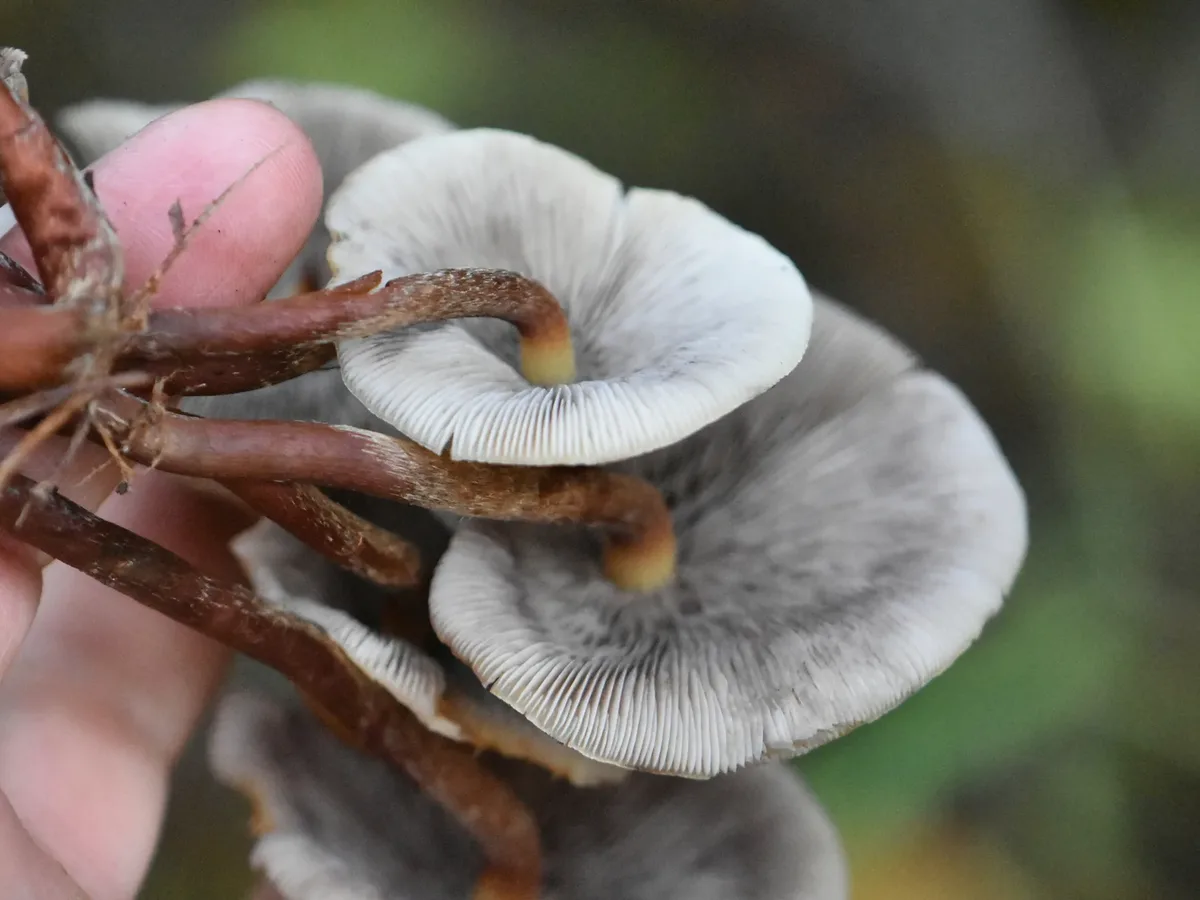 © Марина Садыкова (CC BY 4.0)
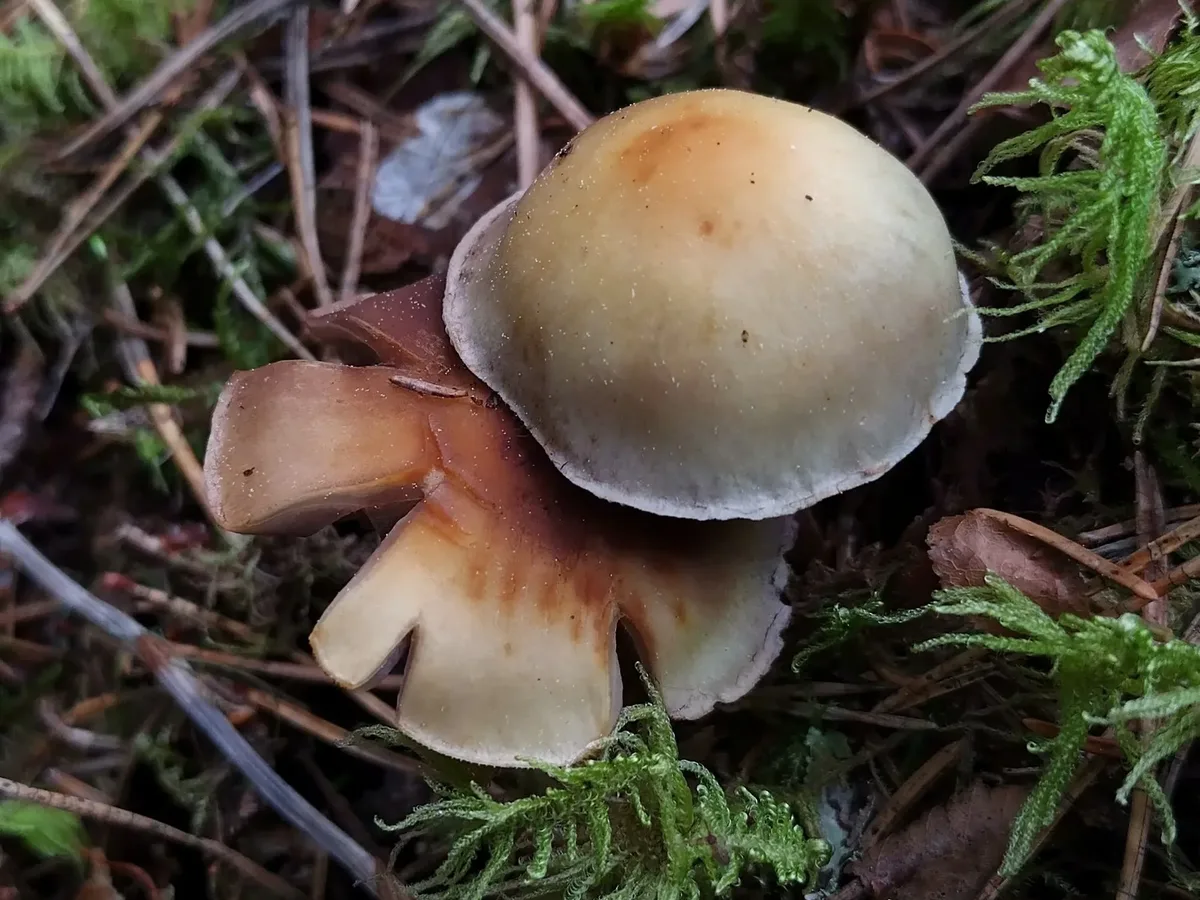 © Sebastian Källman (CC BY-SA)
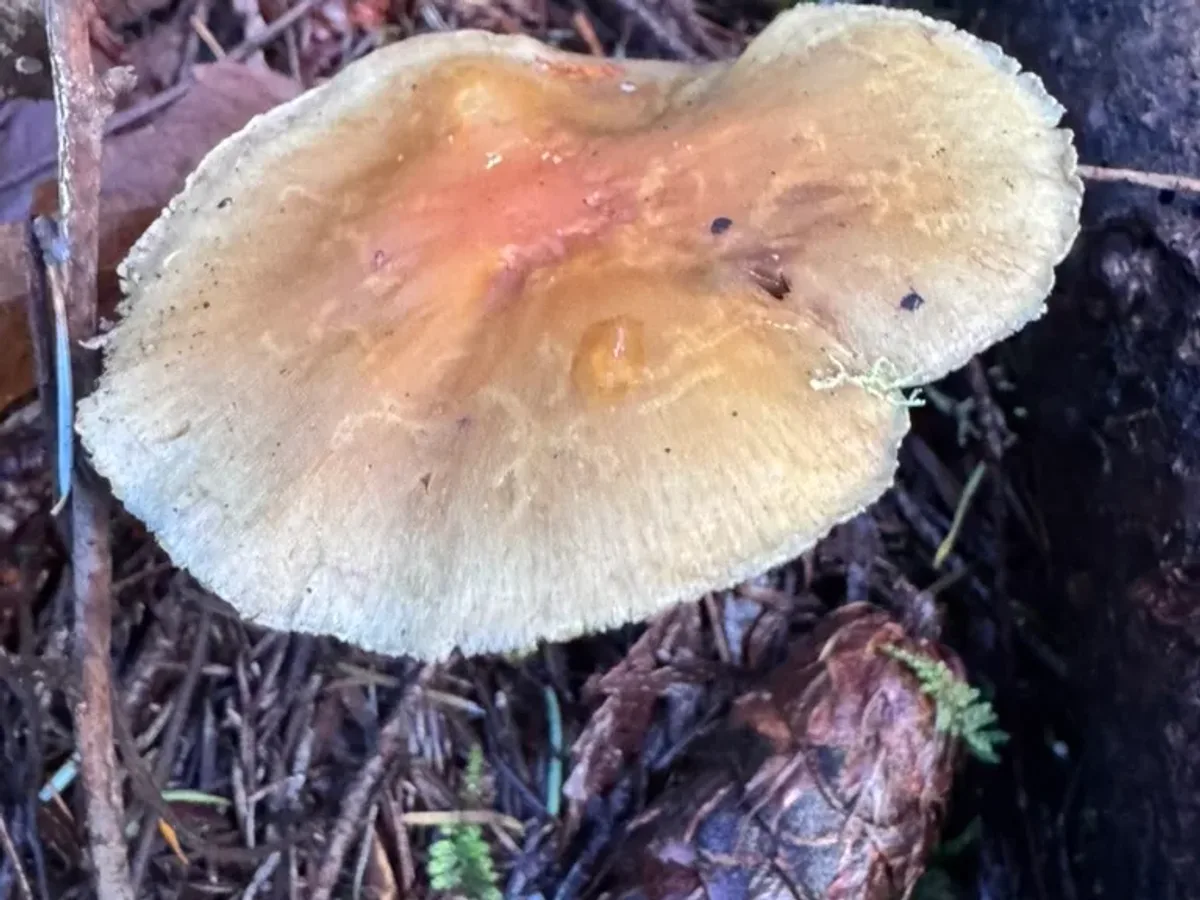 © dpcmiller (CC BY)
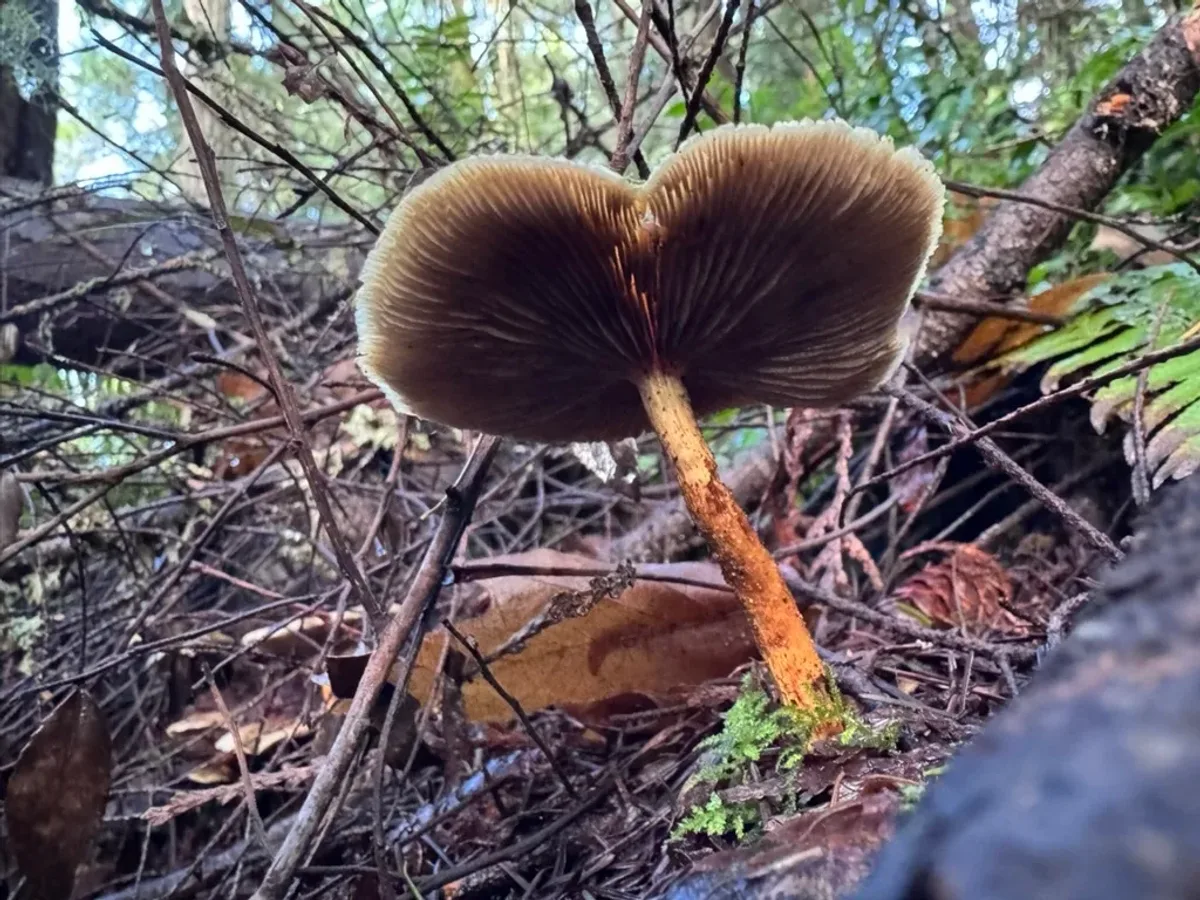 © dpcmiller (CC BY)
 © Morten Pettersen (CC BY)
 © Sebastian Källman (CC BY-SA)
 © Bjørn Eidhammer (CC BY)
 © Matthew Rozanoff (CC BY)
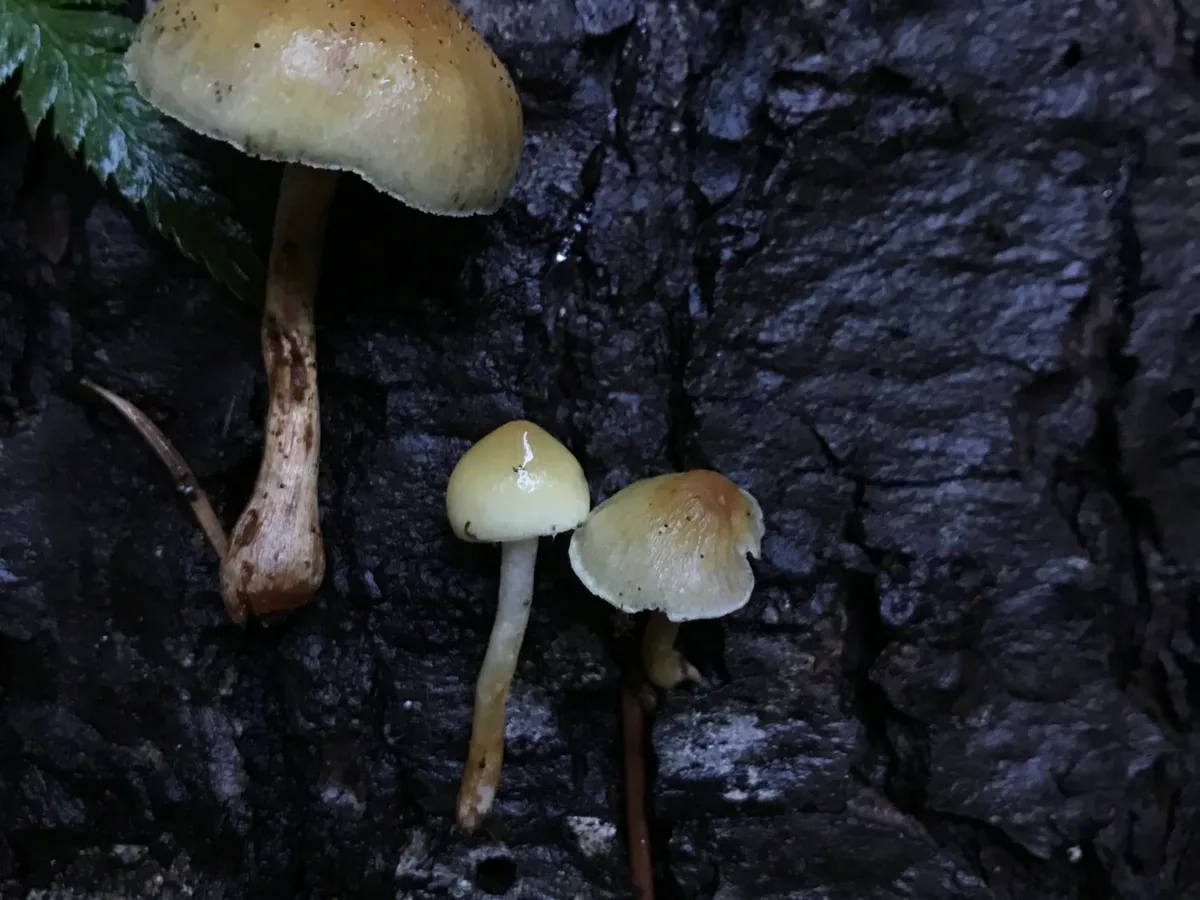 © Matthew Rozanoff (CC BY)
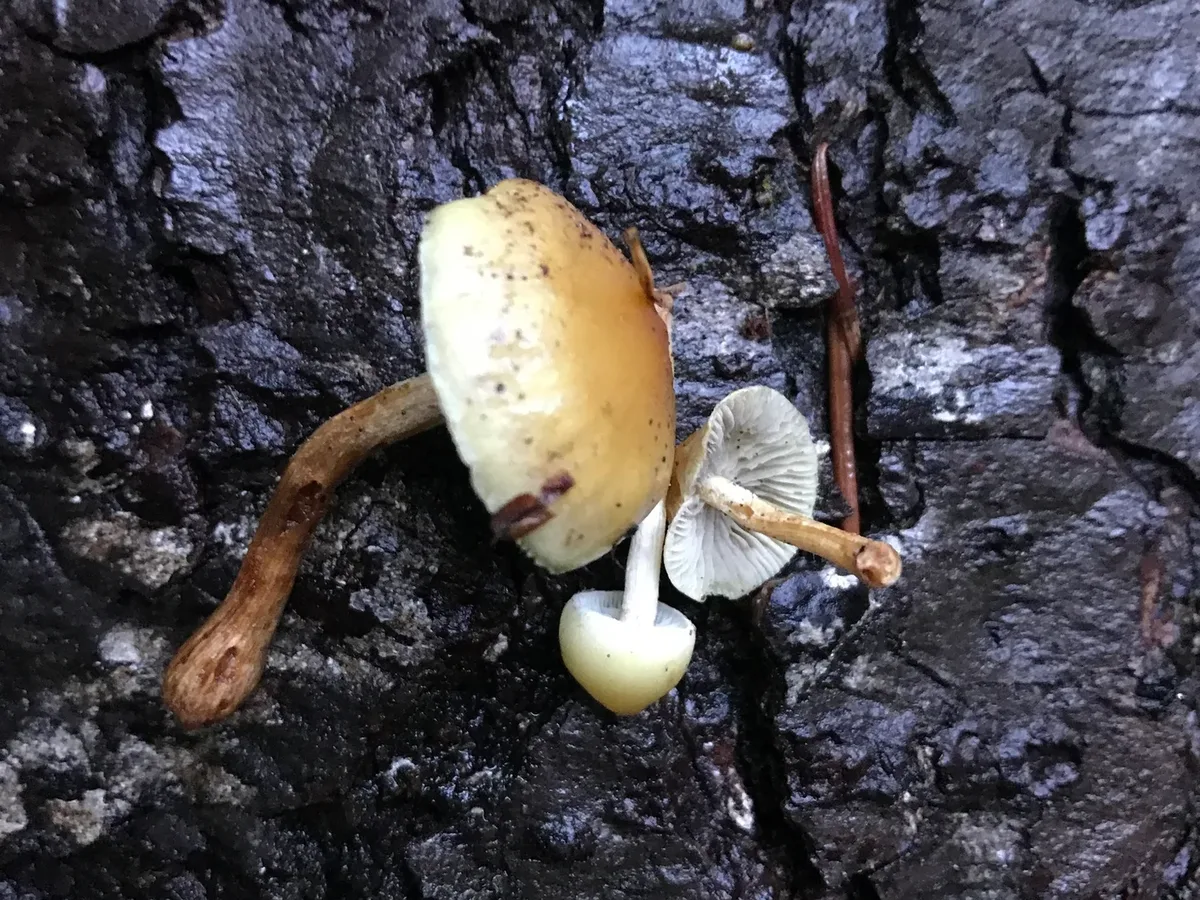 © Matthew Rozanoff (CC BY)
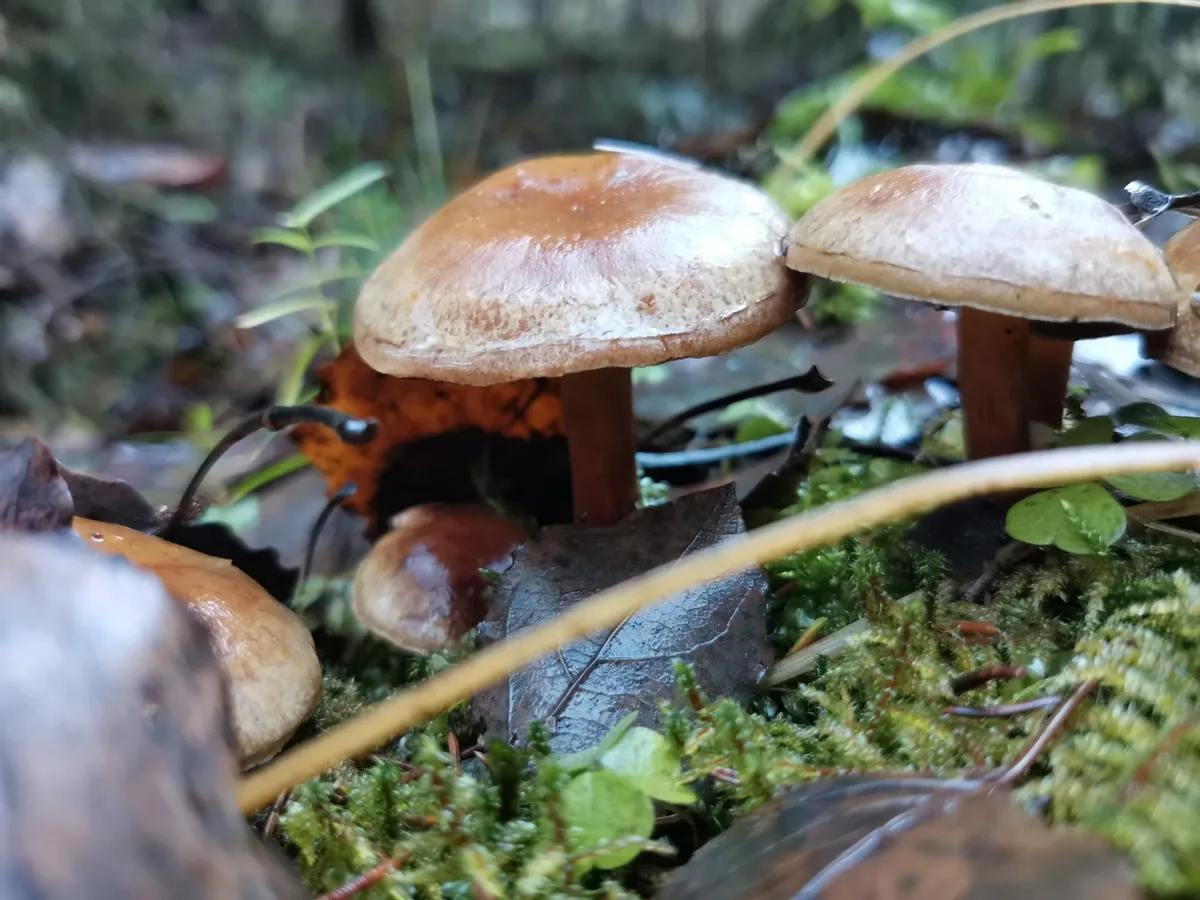 © Elena_Sherehora (CC BY 4.0)© Марина Садыкова (CC BY 4.0)© Sebastian Källman (CC BY-SA)
Good to eat, once you have identified it with certainty and cooked it through.
Never eat a mushroom you are not 100% sure of - check the look-alikes below, and always cook wild mushrooms.
How to recognise it
Conifer tuft is a medium-sized mushroom that grows in dense, crowded clusters - rarely as a lone specimen.
Cap
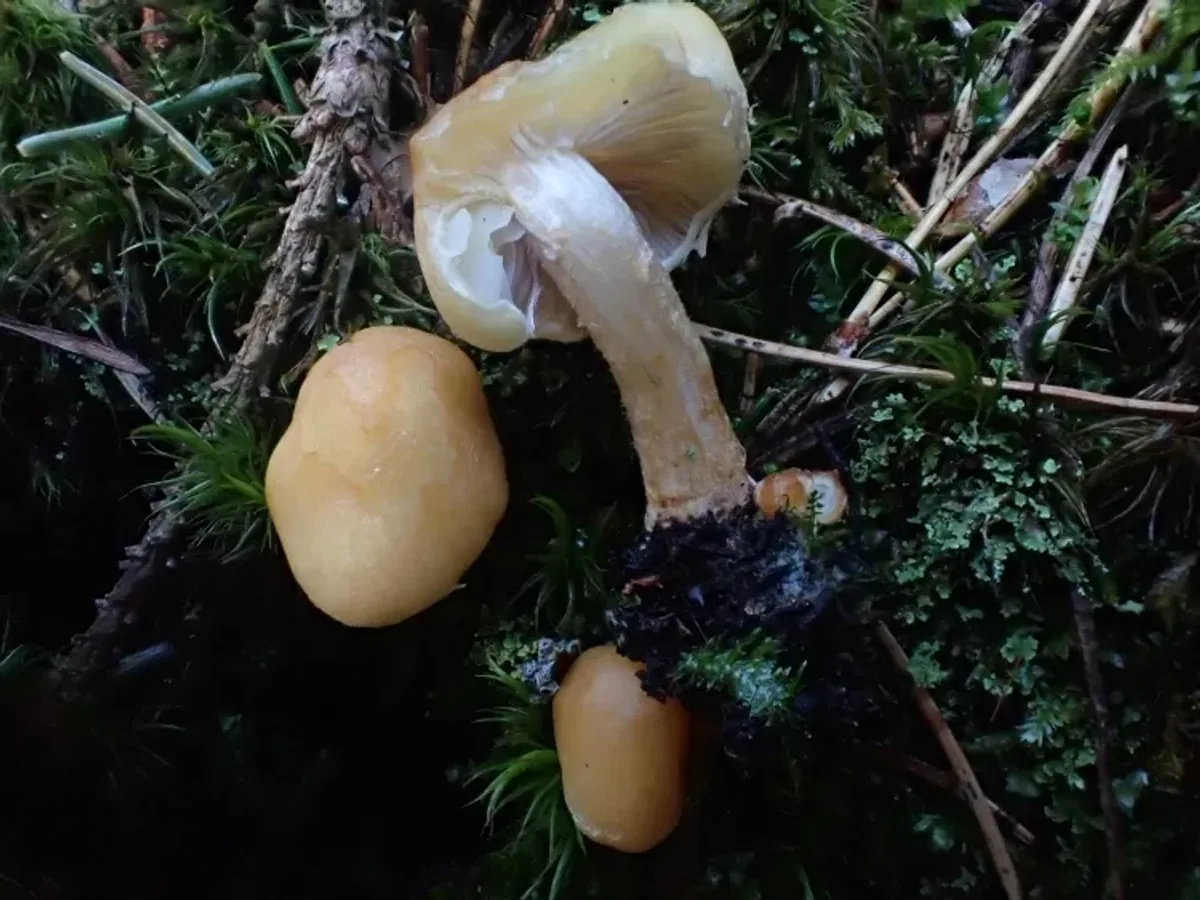
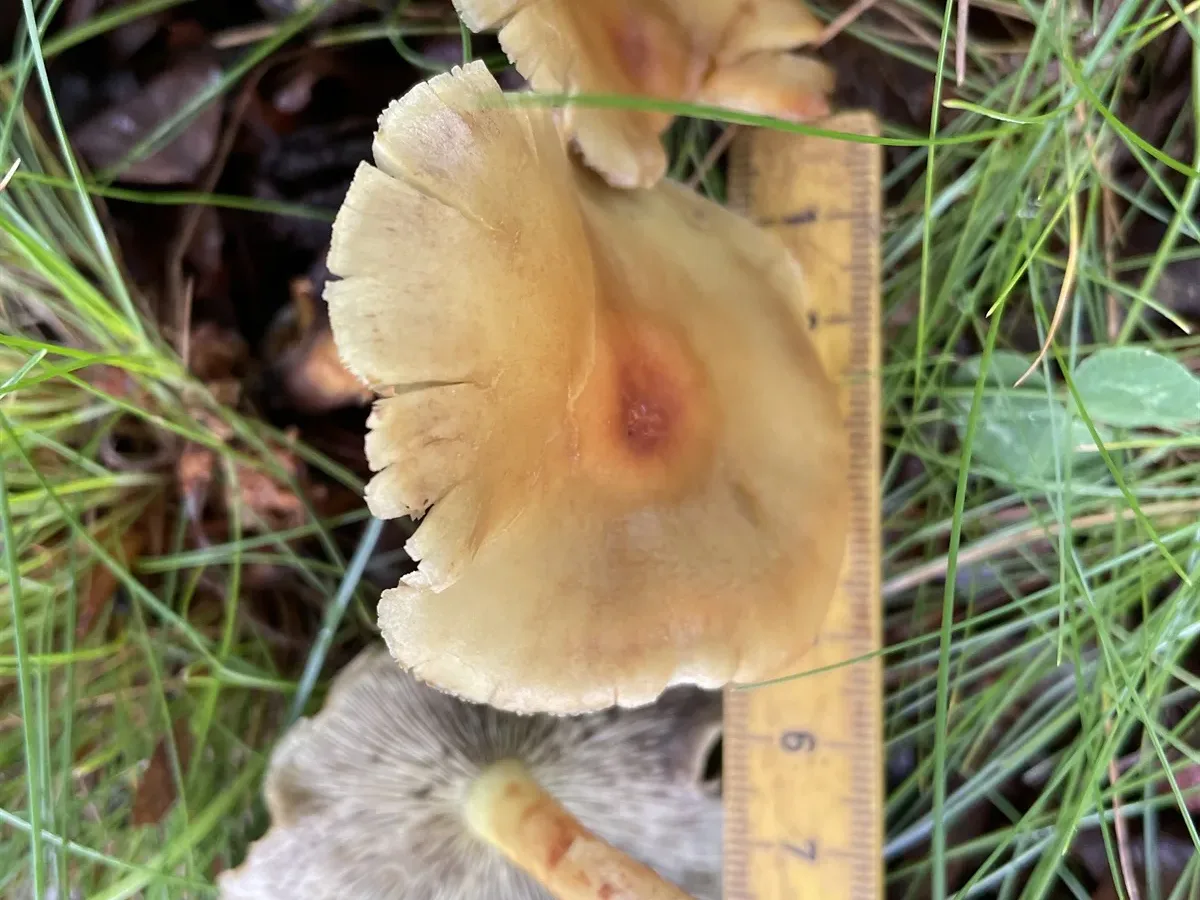
Each cap starts broadly convex to bell-shaped, flattening with age to nearly plane with a shallow central hump; 2-7 cm across. The surface is smooth and slightly moist in wet weather, but never slimy or viscid.
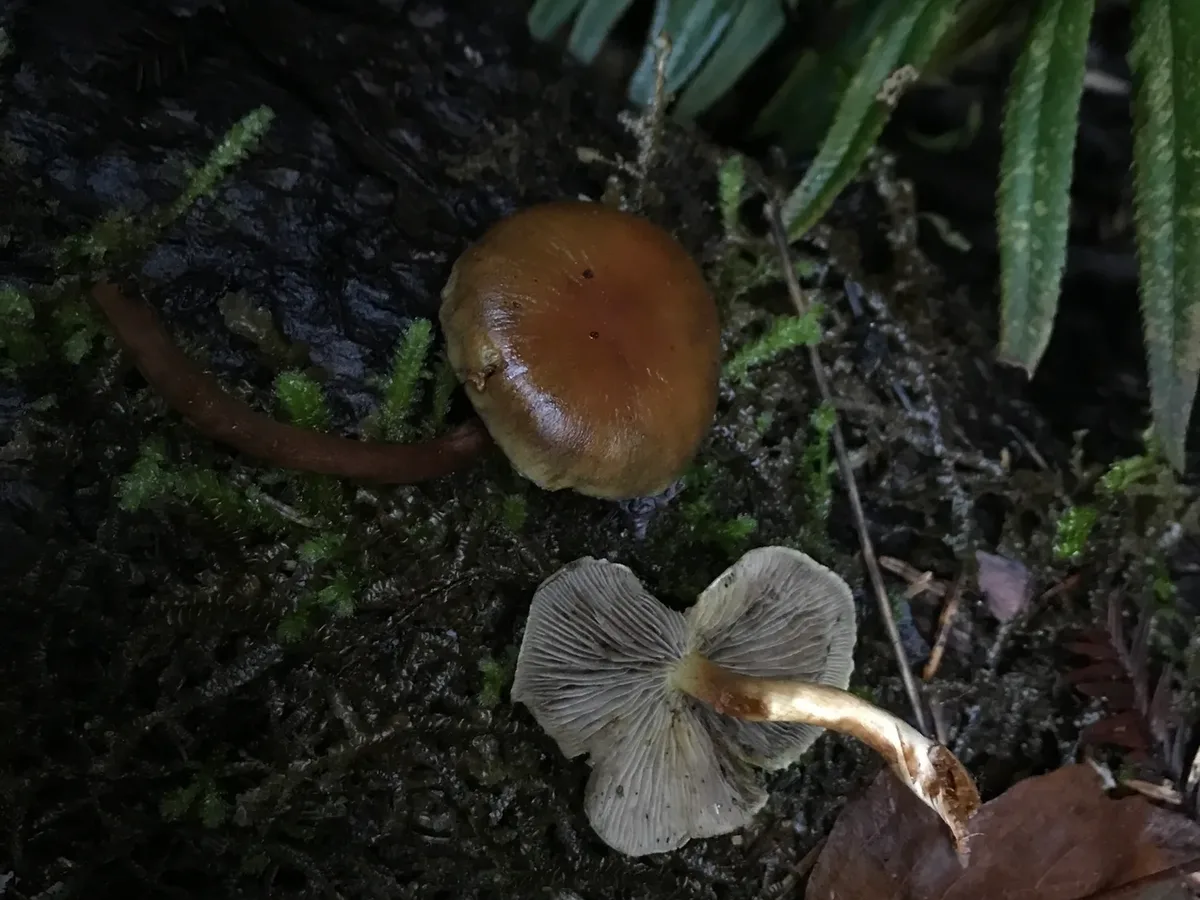
Colour runs from warm tawny honey-yellow to golden-ochre at the centre, fading gradually to pale cream or almost whitish near the margin.
On young specimens, look for fine whitish fibres or cottony wisps fringing the cap edge - remnants of the partial veil that once covered the gills.
Gills
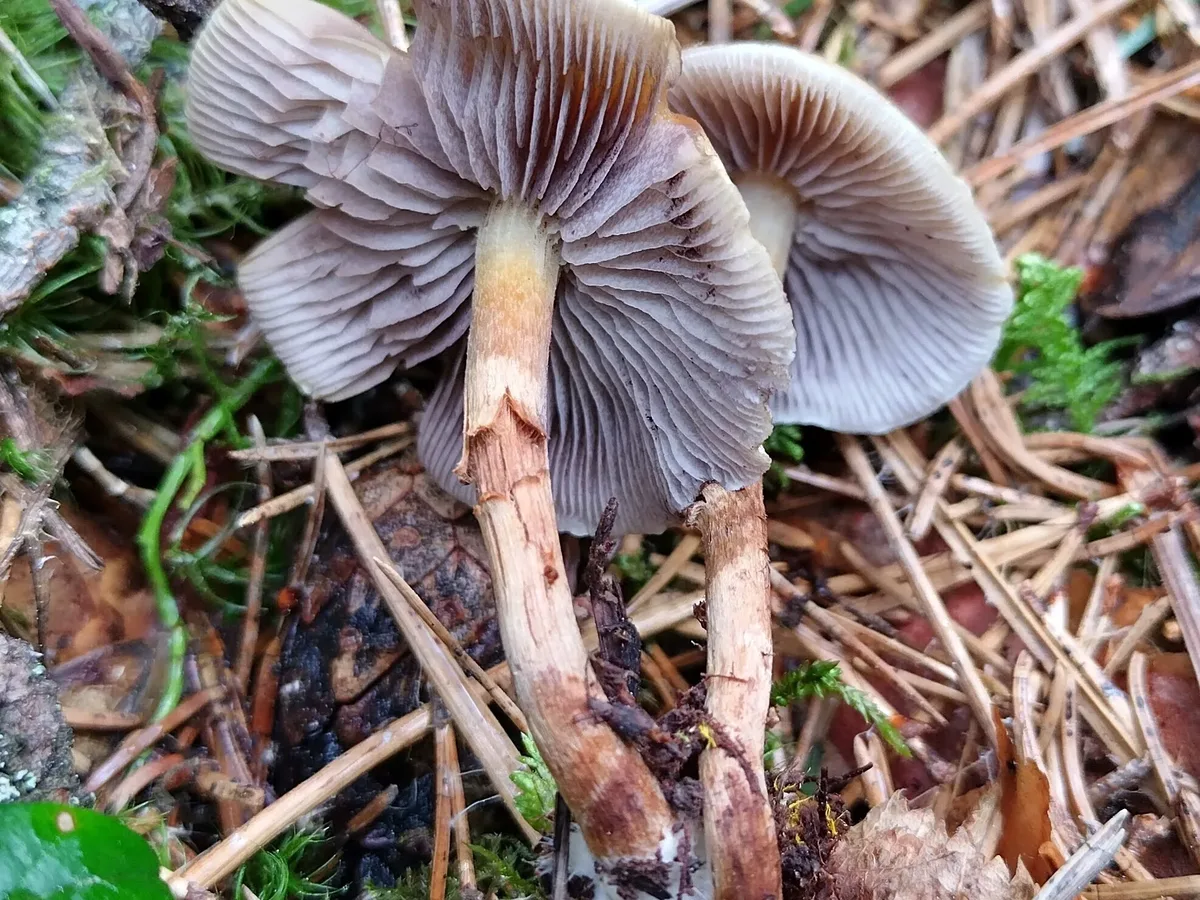
The gills are the single most important feature for identification. They start pale whitish, then shift through grey to smoky grey-lilac, settling at maturity into an even smoky grey-brown.
They are never sulphur-yellow (that colour belongs to the toxic H. fasciculare), never green-tinged, never dark purple-black.
Stem
The stem runs 4-10 cm tall and 4-10 mm thick, cylindrical and hollow; the upper section is pale whitish to yellowish, the lower section darkens noticeably to brown toward the base. A faint fibrous veil zone is sometimes visible mid-stem, but a proper ring is usually absent.
Flesh
Cap flesh is firm, whitish to pale yellowish; stem flesh is fibrous and browner. Nothing changes colour on cutting.
Smell & taste
The smell is mild and pleasantly earthy; the taste is mild and agreeable with no bitterness whatsoever - in contrast to the markedly bitter H. fasciculare.
Spore print: dark purplish-brown to tobacco-brown.
Where & when it grows
Habitat
Conifer tuft lives entirely on dead coniferous wood - it is essentially never found on broadleaf substrates.
Look for tufts erupting from stumps, fallen trunks, large buried roots, and slash debris; occasionally it colonises heavily decayed sawdust or composted conifer wood.
Because the mycelium threads deeply into buried root networks, tufts sometimes appear to push straight out of the forest floor - but dig carefully and you will always find rotten wood beneath.
- In Scandinavia it is a familiar sight on Norway spruce and Scots pine stumps.
- Across the Alps and Carpathians it follows the same spruce and fir forests.
- In the Pacific Northwest it fruits prolifically on Douglas-fir, Sitka spruce, and hemlock debris.
Logging clearings and slash piles, with their abundance of fresh stump material, are some of the most productive spots of all. In pure deciduous woodland without any conifer stumps present, you will not find this species.
When
This is an autumn mushroom through and through.
- In Scandinavia the main flush runs September through November, peaking in October and early November.
- In the British Isles and Atlantic Europe it can show up as early as August in wet years and linger into December - or even January during a mild autumn.
- Higher up in the Alps and Carpathians the window tightens to October-November.
- In the Pacific Northwest it tracks the autumn rains, typically October through December.
One of the pleasant habits of conifer tuft is that a large stump can produce several successive flushes through the season, so a stump worth finding is worth revisiting. Do not expect it in spring or summer under normal conditions.
How it grows
Grows exclusively in dense caespitose (clustered) tufts of 5-30 or more fruitbodies arising from a shared base attached to conifer wood. The clustered growth habit is one of the most reliable field characters: it is extremely rare to find a solitary specimen.
The mycelium colonises dead conifer wood causing a brown (cubical) rot, and individual mycelial networks can persist for many years in large stumps, producing annual autumnal crops.
The fruitbodies develop quickly - a full flush can emerge within 48-72 hours following autumn rain - and individual fruitbodies last 1-2 weeks before decaying.
Fruiting conditions
Fruiting triggered by cool, moist autumn conditions. Soil temperatures between 4 °C and 15 °C with adequate recent rainfall (at least 20 mm in the preceding two weeks) are the most consistent predictors of fruitbody emergence. Flushes typically appear 3-8 days after significant rain events. Multiple flushes can occur on the same stump through the autumn season. Frost does not immediately arrest fruiting - tufts can emerge through light frosts and persist at near-freezing temperatures.
Look-alikes
The most dangerous confusion is with Hypholoma fasciculare (sulphur tuft), which is toxic and extremely common. H. fasciculare has brilliantly sulphur-yellow gills (never grey), a distinctly bitter taste even in tiny quantities, and yellow-tinged flesh. It frequently grows on the same or nearby conifer stumps.
A quick taste test - even touching the flesh to the tongue - is sufficient to detect bitterness; spit immediately and do not swallow.
Galerina marginata (funeral bell) is deadly - it contains lethal amatoxins - and can grow in similar clusters on wood. It is typically smaller (cap 1-4 cm), honey-brown, with a persistent brown ring on the stem and brown (not smoky grey-lilac) gills; spore print rust-brown, not dark purplish-brown.
Never harvest small brown tufted mushrooms from conifer wood without excluding Galerina by confirming a dark purplish-brown (not rust-brown) spore print.
Other, less dangerous lookalikes:
- Pholiota species (e.g. Pholiota squarrosa, P. flammans) grow in tufts on wood, are inedible to mildly toxic, and have orange-brown to rusty-brown scaly caps and rust-brown spore prints - different from the smooth, honey-coloured cap and dark purple-brown print of H. capnoides.
- Kuehneromyces mutabilis (sheathed woodtuft) is edible and similar in habit but has a prominent ring on the stem and grows predominantly on deciduous wood; its gills are rusty-brown, not grey.
- Hypholoma lateritium (brick tuft) is bitter and mildly toxic; it has a brick-red cap centre and yellowish (not grey) gills, growing primarily on deciduous wood.
Galerina marginata is deadly (contains alpha-amanitin amatoxins). Typically smaller (cap 1-4 cm), uniformly honey-brown cap, a distinct brown fibrous ring on the stem, rust-brown (not purplish-brown) spore print, and brown (not grey) gills. Do not eat any brown tufted mushroom from conifer wood without confirming a dark purplish-brown (not rust-brown) spore print to exclude Galerina.
Has a brick-red to orange-red cap centre (paler margin), yellowish gills that age to olive-grey, and distinctly bitter flesh. Grows mainly on deciduous hardwood stumps (especially oak, beech). Mildly toxic, causing gastrointestinal distress.
Brilliant sulphur-yellow overall with dense yellow fibrous scales on cap and stem; rust-brown spore print; on conifer wood. Inedible. The vivid yellow colouration and scaly texture prevent confusion with H. capnoides.
Scaly cap and stem covered in coarse recurved scales, ginger-ochre overall, strong garlicky-unpleasant smell, rust-brown spore print, inedible and mildly toxic. Distinguished by prominent dry recurved scales and garlicky odour.
Also edible, also grows in tufts on wood, but has a prominent, persistent ring on the stem, rusty-cinnamon (not grey) gills, and typically prefers deciduous wood (beech, birch). Spore print is rust-brown.
H. fasciculare has bright sulphur-yellow gills (never grey), markedly bitter flesh even in tiny quantities, and sulphur-yellow tinges in cap flesh. It grows on the same stumps. The bitter taste alone is definitive - a tiny piece touched to the tongue immediately reveals bitterness; H. capnoides is completely mild.
In the kitchen
Picking & cleaning
Select young to medium-aged specimens with intact, closed to just-opening caps for best eating quality. Older caps with fully spread margins and dark-spored gills are still edible but develop a stronger, sometimes slightly sour flavour.
Avoid specimens that appear waterlogged or have begun to decay from the stem base upward.
Before collecting, always verify the gill colour (grey to smoky grey-lilac, never yellow), taste a tiny piece of flesh and spit it out - it must be completely mild with no trace of bitterness.
Cut clusters near the base and discard the tough, fibrous lower stem portions in the field. Wash thoroughly as clusters trap debris, needles and invertebrates.
Because of the critical importance of excluding H. fasciculare (sulphur tuft) and the deadly Galerina marginata, never harvest any Hypholoma cluster without a full identification check including gill colour, taste, and a spore print if any doubt remains.
Cooking
The flavour is mild, pleasant and slightly earthy, suitable for a range of culinary applications. Cook thoroughly before eating - as with all wild mushrooms, raw consumption is inadvisable.
- Sauté in butter with garlic and herbs as a standalone side dish or on toast.
- The clusters blend well into risottos, pasta sauces, omelettes and cream-based soups.
Their texture holds well during cooking - they do not dissolve into softness as quickly as some species.
Blanching briefly in salted water and discarding the water is an optional precautionary step recommended by some Scandinavian foragers, particularly for first-time eaters, though no harmful compounds requiring this step are documented.
Excess moisture should be evaporated before browning. Can be dried for storage and reconstituted in water; rehydrated specimens are well-suited to soups and stews.
Not generally considered a premium edible in the way of chanterelles or porcini, but widely appreciated for autumn abundance and accessibility.
Good to know
Hypholoma capnoides is considered edible and is eaten across Scandinavia, central Europe and North America. It carries no known toxins when properly identified.
However, the species grows in exactly the same habitats and often the same substrate as several genuinely dangerous lookalikes: the toxic H. fasciculare and the deadly Galerina marginata (which contains lethal amatoxins).
A strict identification protocol is mandatory before eating any cluster from conifer wood. The three absolute confirmation steps are:
- 1Gill colour - must be grey to smoky grey-lilac, never sulphur-yellow.
- 2Taste of a small piece of flesh - must be completely mild with zero bitterness.
- 3When any doubt remains, obtain a spore print - it must be dark purplish-brown, not rust-brown (which would indicate Galerina).
Confirm the substrate is conifer wood. Never eat on the basis of habit or substrate alone. When in doubt, discard the entire collection.
A reference guide - never an edibility guarantee. When in doubt, leave it out.