Pinkmottle woodwax
Hygrophorus russulasyn. Tricholoma russula, Hygrophorus russula var. russula
 © Brian Hunt (CC BY 4.0)
 © Chloe and Trevor Van Loon (CC BY 4.0)
 jonnas___ (CC0)
 © Atsushi Nakajima (CC BY)
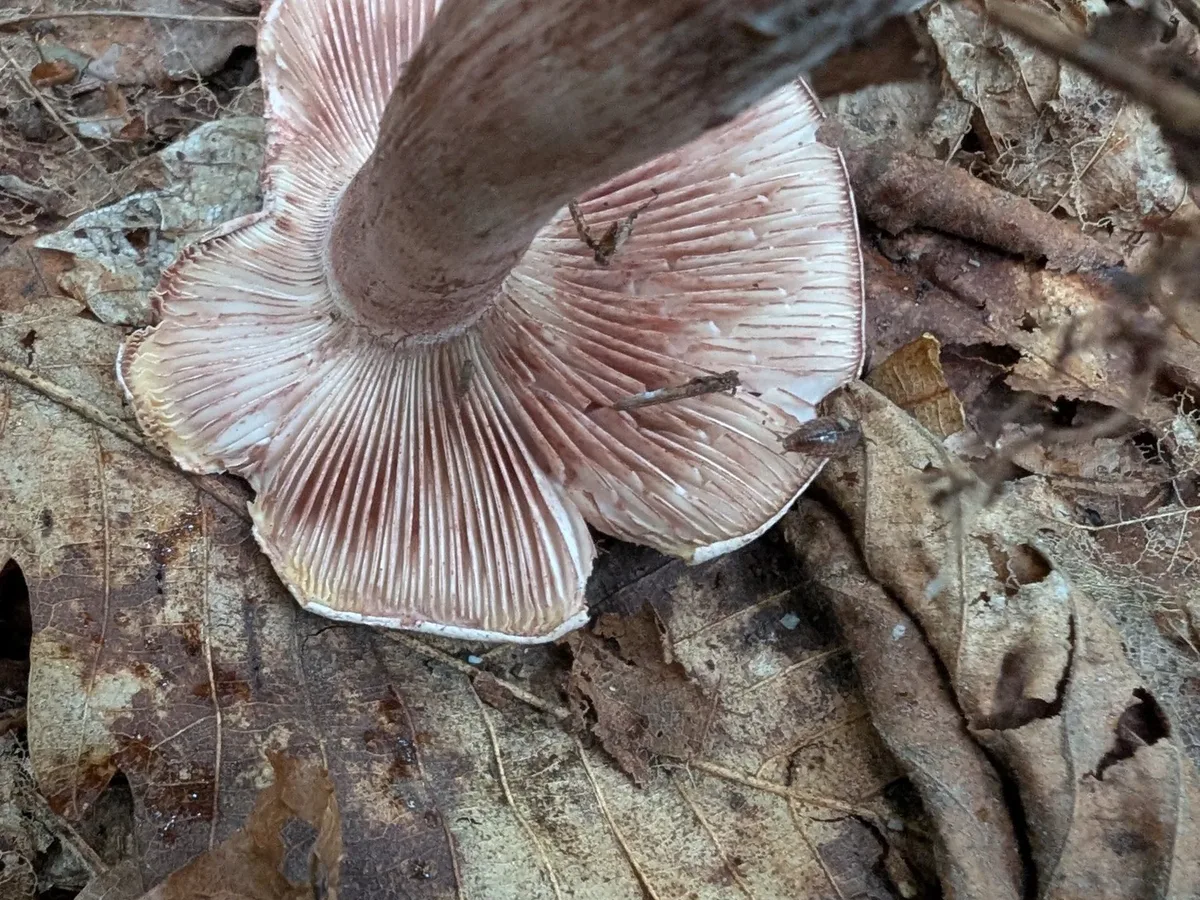 © Atsushi Nakajima (CC BY)
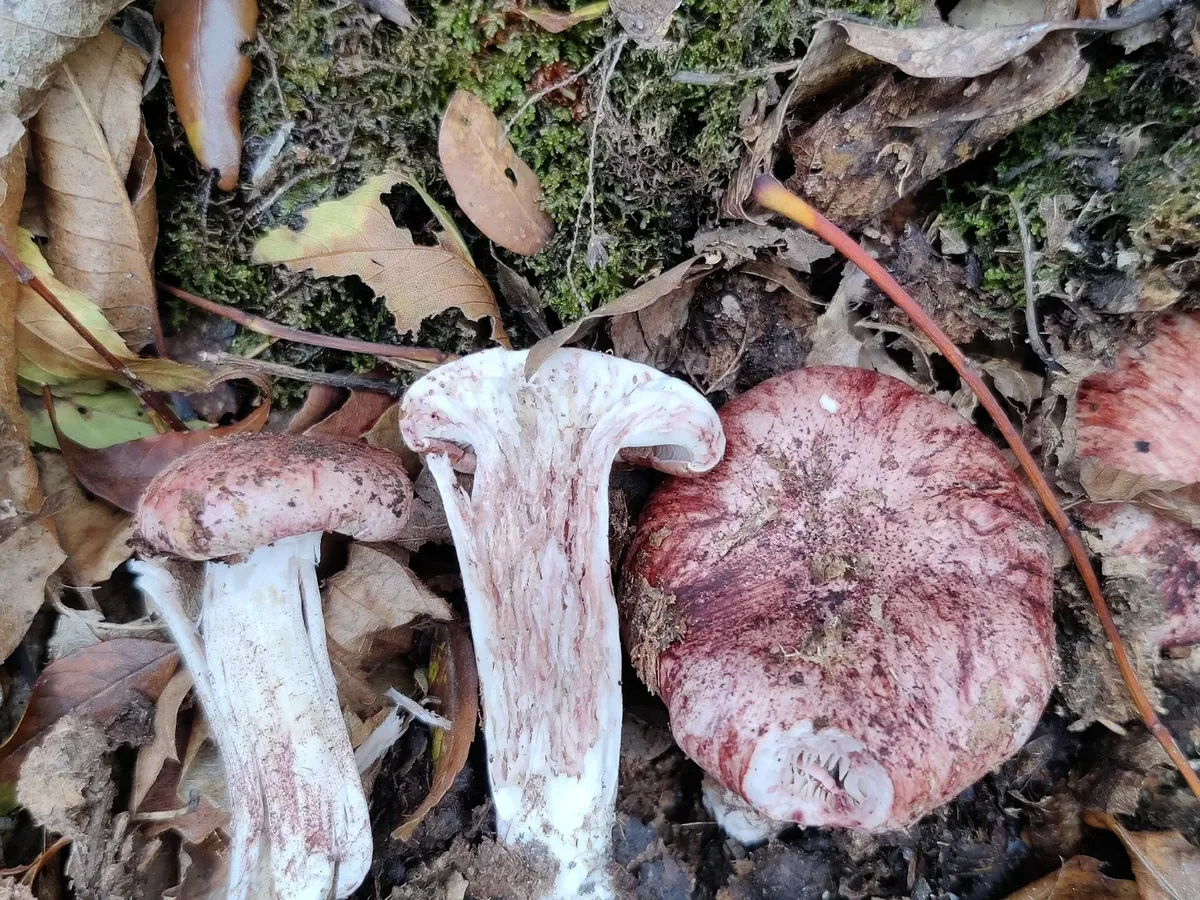 © Snap (CC BY)
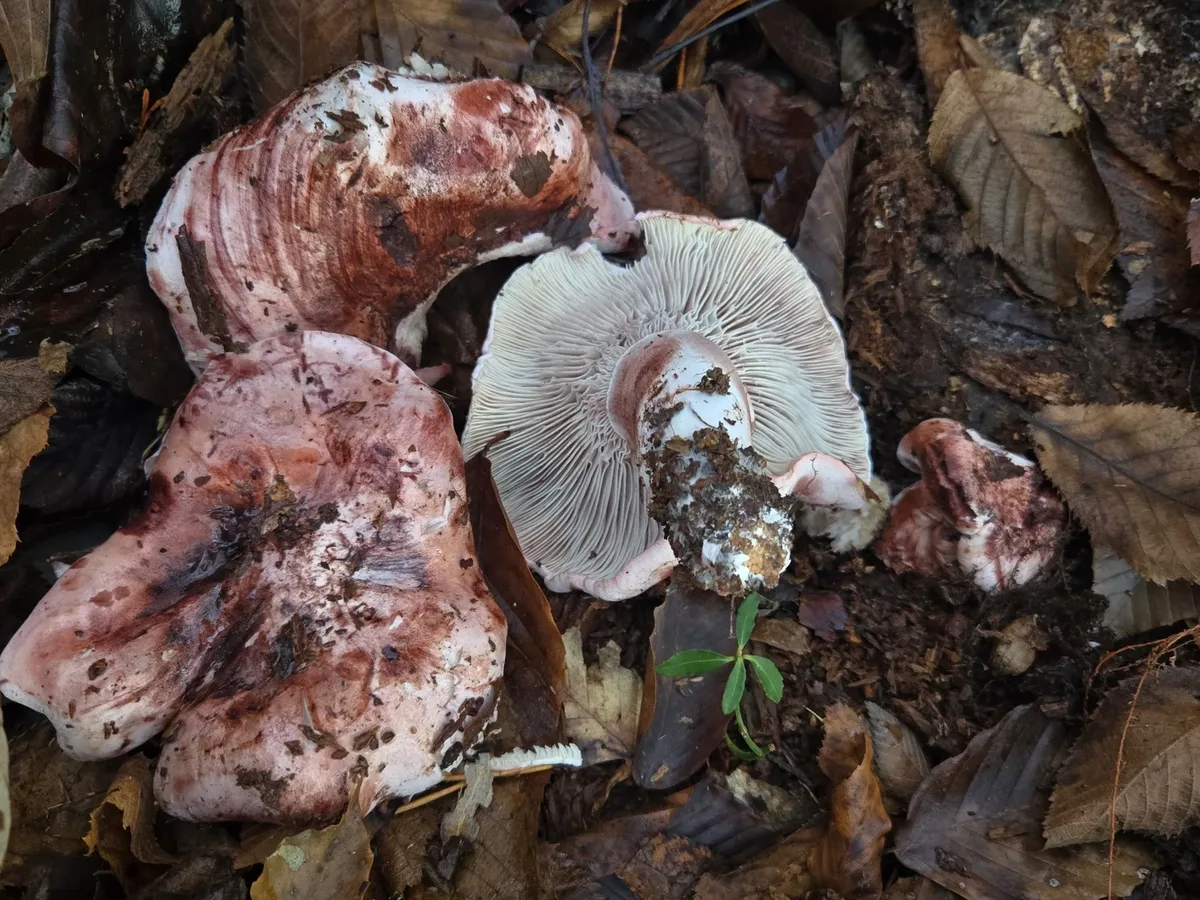 © Ben Gruhot (CC BY)© Brian Hunt (CC BY 4.0)© Chloe and Trevor Van Loon (CC BY 4.0)
Edible only with the right preparation - or safe for some people but not others. Learn the caveats first.
How to recognise it
Cap
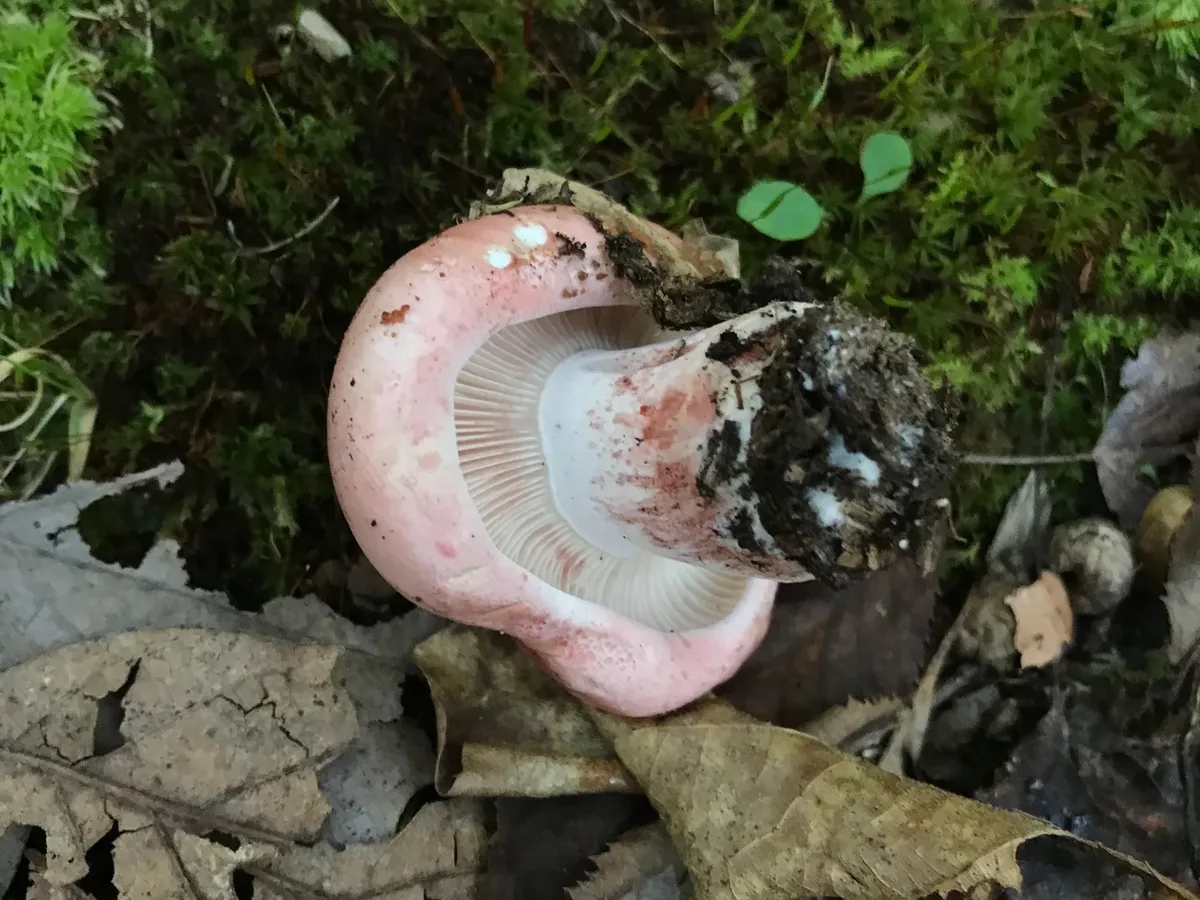
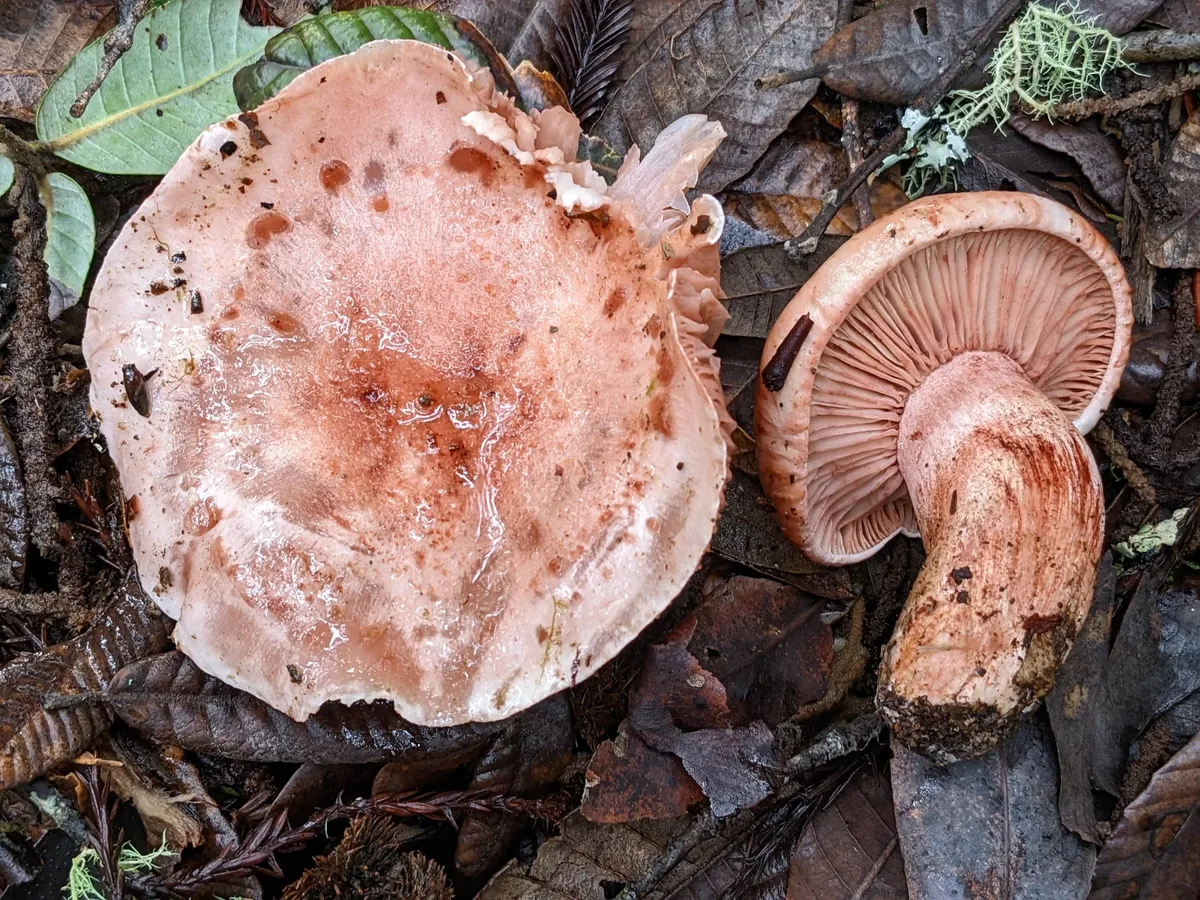
The first thing to notice: 6-15 cm across, convex when young then broadly flattened or faintly depressed, distinctly dry and fibrillose-streaky - not slimy or greasy as in Hygrophorus latitabundus or H. hypothejus.
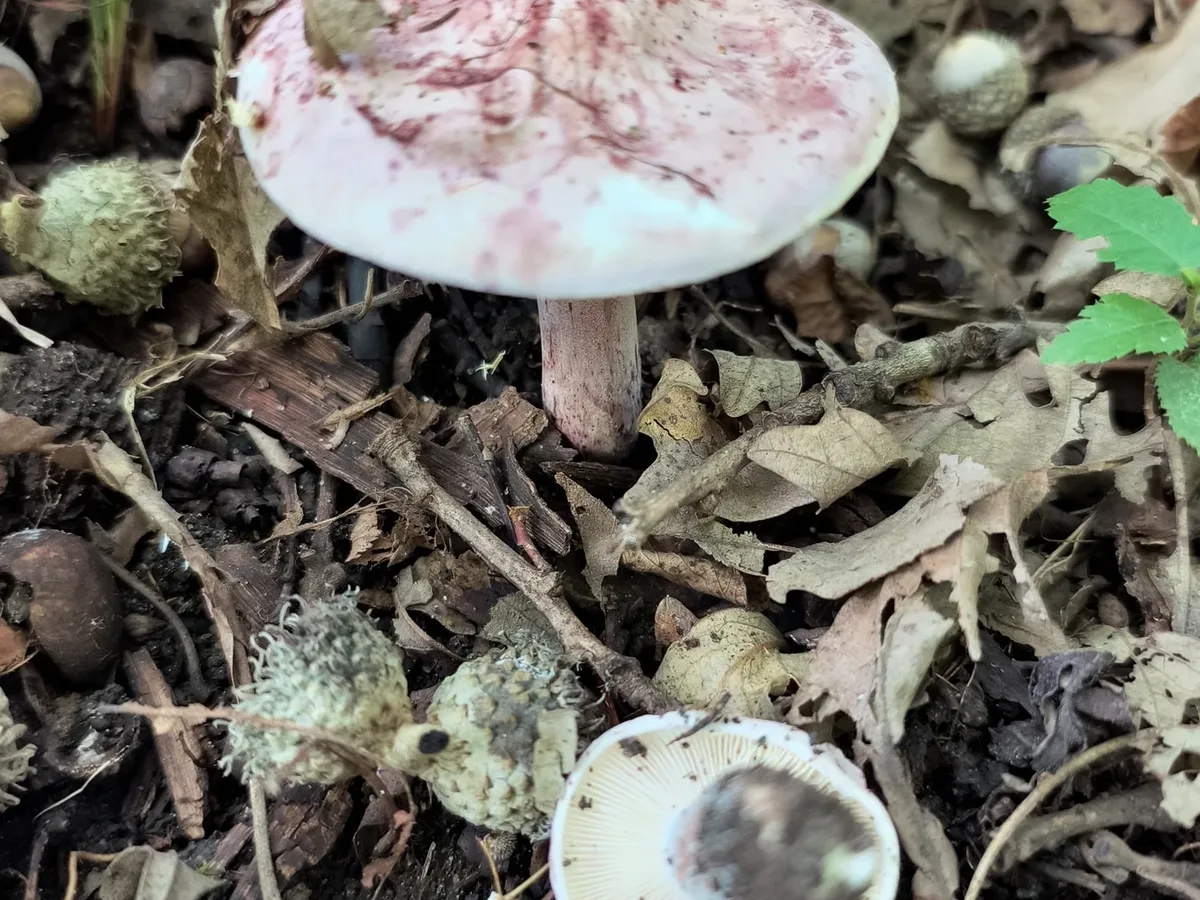
The colour is a rich vinaceous-pink to rose-red, deepest at the centre, paler and more whitish toward the margin, often with a mottled or water-stained look caused by whitish fibres beneath the cuticle.
Gills
Adnate to slightly running down the stem, crowded, and with the characteristic waxy, soft texture typical of the genus.
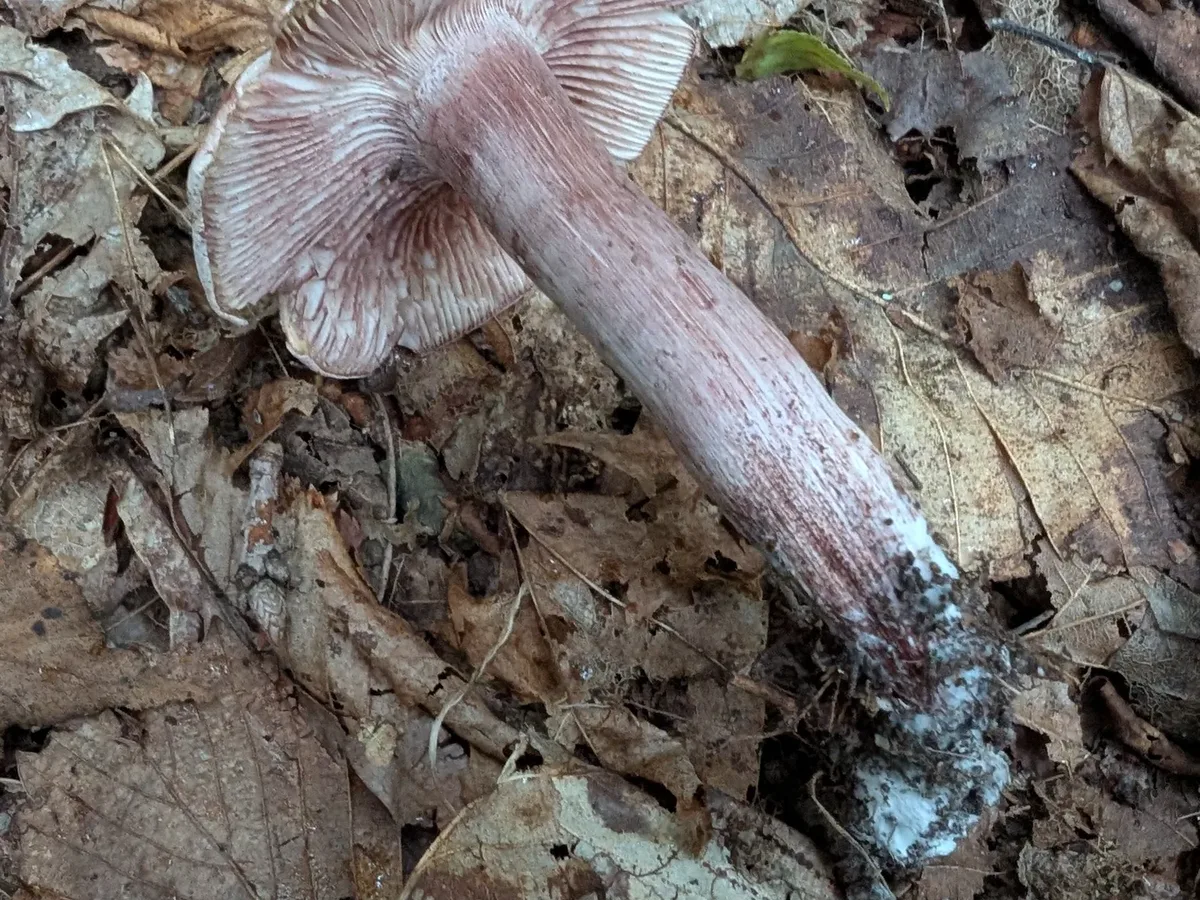
Whitish when young but gradually develop pink to wine-red blotches or spots - this progressive staining of the gills is a reliable and distinctive feature.
Stem
Robust and solid, white above and pinkish-streaked below, never hollow, and lacks a ring.
Flesh
White, firm, unchanging, mildly pleasant-smelling.
Spore print white.
Why it's dangerous
Low. No fatalities or severe systemic illness are on record for this species.
Risk is limited to mild, transient GI upset, and can be largely eliminated by thorough cooking (minimum 10-15 minutes at frying/sauteeing temperature).
Vulnerable groups should avoid it or exercise extra caution with portion size:
- young children
- elderly
- immunocompromised
- those with IBS or sensitive digestion
Toxin
The exact compounds responsible have not been isolated.
Suspected heat-labile irritants - substances that break down with thorough cooking - are the most plausible explanation for the GI symptoms reported in some consumers.
The species does not contain known major mycotoxins (amatoxins, gyromitrin, muscarine, ibotenic acid, orellanine).
Symptoms
When insufficiently cooked or consumed in large quantities, some individuals experience mild gastrointestinal upset: nausea, loose stools, or stomach cramps appearing within 1-4 hours of the meal.
Symptoms are self-limiting and typically resolve within 12-24 hours. Severe reactions have not been documented.
Staying safe
Hygrophorus russula is generally regarded as edible but of modest quality.
Some individuals, particularly those eating large quantities or undercooking the mushroom, have reported mild gastrointestinal discomfort - nausea or loose stools - possibly related to unidentified heat-labile irritants or individual sensitivity.
As a precaution, always cook it thoroughly; do not eat it raw.
In general European mycological guides it appears as 'edible but not recommended' or 'edible with caution', and this conservative assessment is appropriate: it should not be treated as a prized edible.
The rule 'if in doubt, leave it out' applies, especially for those with sensitive digestion or who are new to the species.
Where & when it grows
Habitat
A mycorrhizal partner primarily of oaks in warm-temperate to Mediterranean climates.
Look for it in holm oak and pubescent oak forest on calcareous or neutral soils, often on sunny slopes or semi-open woodland edges.
It is less common in dense canopy shade and avoids highly acidic soils.
In cooler parts of its range it can move into mixed beech-oak or chestnut-oak forest.
In North America it occurs under oaks in the east and midwest.
When
Fruiting runs from September or October through December, peaking in October-November across the Mediterranean basin.
Like most mycorrhizal waxcaps it needs autumn rain to trigger flushes: typically 10-15 days after at least 15 mm of rain when soil temperatures remain above 10 °C.
A prolonged warm and dry autumn delays or suppresses fruiting entirely.
How it grows
Solitary or in small scattered groups under oak; rarely gregarious. Never clustered on wood.
The mushroom emerges directly from the soil, connected underground to the oak root system as an ectomycorrhizal partner.
Growth is unhurried - the fruit body takes several days to reach full size and remains firm and fresh for 4-7 days before softening.
Fruiting conditions
Fruiting triggered by autumn rainfall of at least 15 mm when soil temperature is between 10-18 °C; flush appears 10-15 days after significant rain event.
Look-alikes
The common name 'Russula-like woodwax' reflects its superficial resemblance to reddish Russula species.
The critical distinction is in gill and flesh texture:
- Russula species have rigid, brittle gills and crumbling flesh that breaks like chalk
- Hygrophorus russula has flexible, waxy gills and firm, non-crumbling flesh
Other species that can be confused:
- Russula xerampelina (Crab brittlegill): edible and similarly coloured but has brittle gills, a fishy smell when bruised, and a different habitat.
- Hygrophorus erubescens (the Blushwax): closely related, viscid when wet, more bitter, and can cause GI upset.
- Tricholoma species with pinkish or reddish caps (e.g. T. saponaceum with its soap smell): could be confused by a beginner but have a completely different cap texture and gills.
No deadly species is a realistic confusion, but some mildly toxic Russula (e.g. R. emetica) share the reddish colouration - always confirm the waxy, non-brittle gills before eating.
The Blushwax is closely related and also pinkish-red, but its cap is distinctly viscid (slimy) in wet conditions and typically smaller (4-9 cm). The flesh and gills are more bitter, and it can cause gastrointestinal upset. Hygrophorus russula has a dry, non-slimy cap and milder taste.
The sickener is a bright scarlet-red Russula with brittle gills, pure white stem, white brittle flesh with an acrid, very hot taste, and a slimy cap in wet weather. Hygrophorus russula has a dry, fibrillose cap, waxy flexible gills, and mild-tasting flesh.
Crab brittlegill is edible and similarly vinaceous-red to purple-red, but has rigid, brittle gills that snap cleanly like chalk, crumbling white flesh, and a characteristic fishy or shrimp-like smell when bruised. Hygrophorus russula has flexible, waxy gills and non-crumbling flesh with no fishy odour.
Soapy Tricholoma can have greyish to pinkish-tinged caps, but has a distinctive soapy-chemical smell that is unmistakable, sinuate gills (not adnate), and lacks the waxy gill texture of Hygrophorus. Mildly toxic (GI irritant).
A reference guide - never an edibility guarantee. When in doubt, leave it out.