Turpentine Waxy Cap
Hygrophorus pudorinussyn. Agaricus pudorinus, Hygrophorus pudorinus var. pudorinus, Hygrophorus pudorinus var. subcinereus, Limacium pudorinum
 Leanne Stacy Reitan (CC0)
 © Per Marstad (CC BY)
 Leanne Stacy Reitan (CC0)
 Leanne Stacy Reitan (CC0)
 Leanne Stacy Reitan (CC0)
 Leanne Stacy Reitan (CC0)Leanne Stacy Reitan (CC0)© Per Marstad (CC BY)
Edible only with the right preparation - or safe for some people but not others. Learn the caveats first.
How to recognise it
Hygrophorus pudorinus belongs to a genus defined by a few hallmark traits that hold across the whole group: thick, widely spaced, waxy gills that feel almost like soft candle wax when rubbed between your fingers; a viscid to glutinous cap surface when moist; and firm, clean flesh.
Within that framework, the Turpentine Waxy Cap is distinguished principally by colour and smell.
Cap
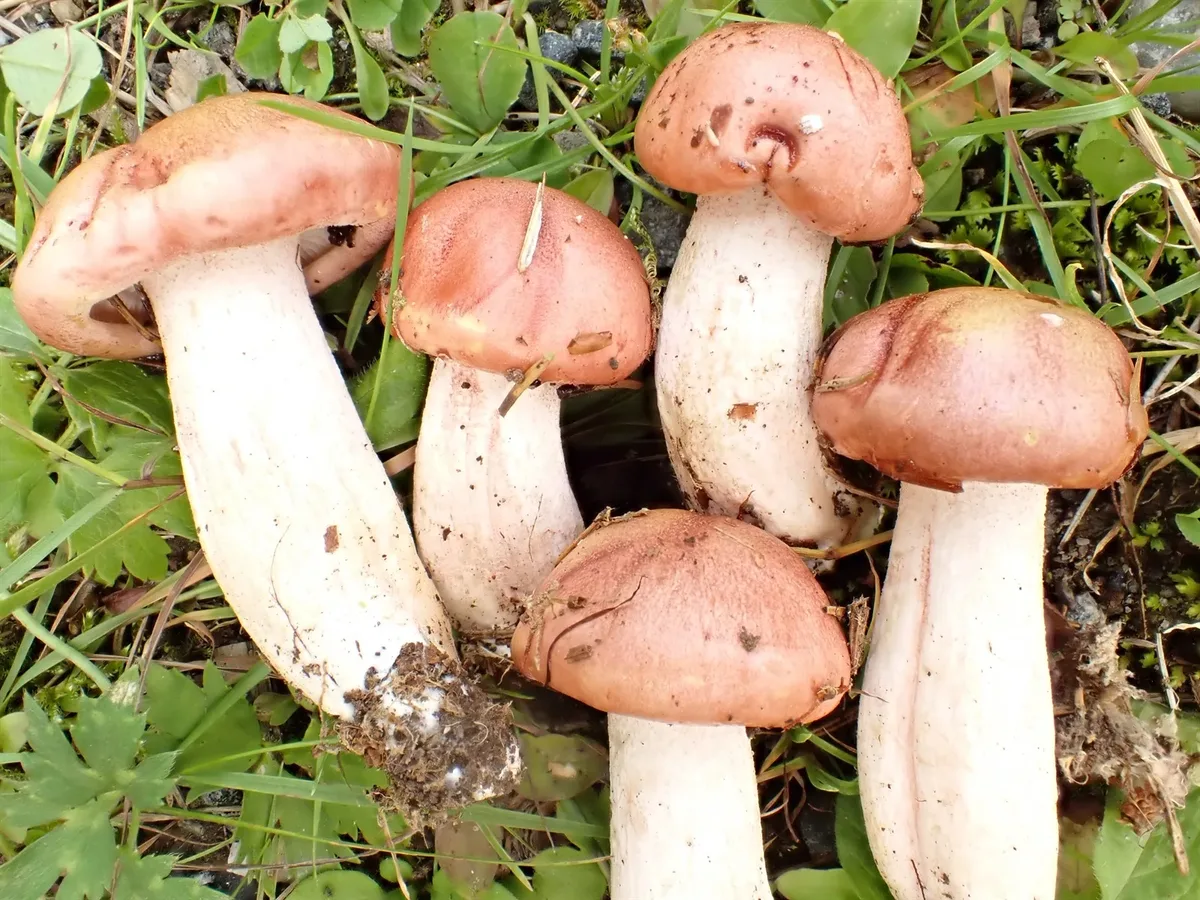
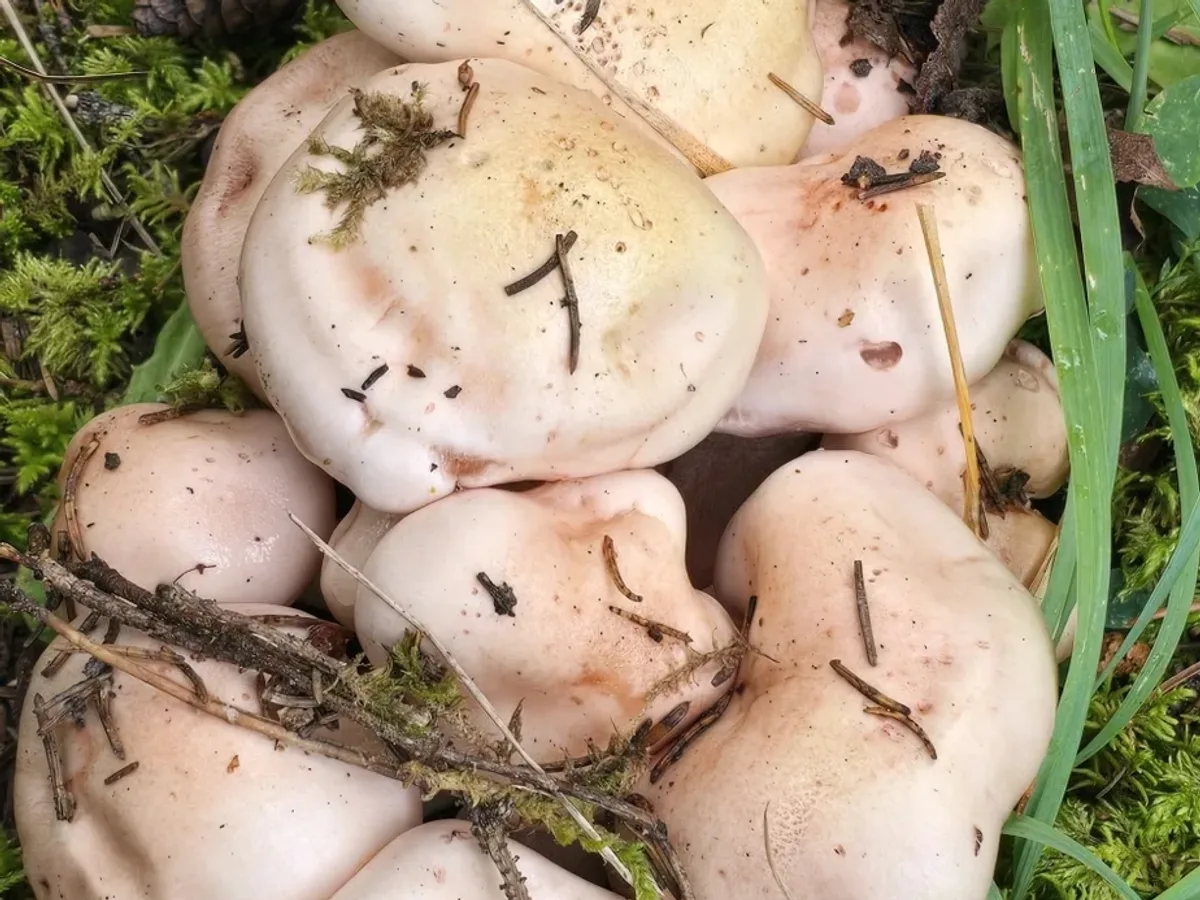
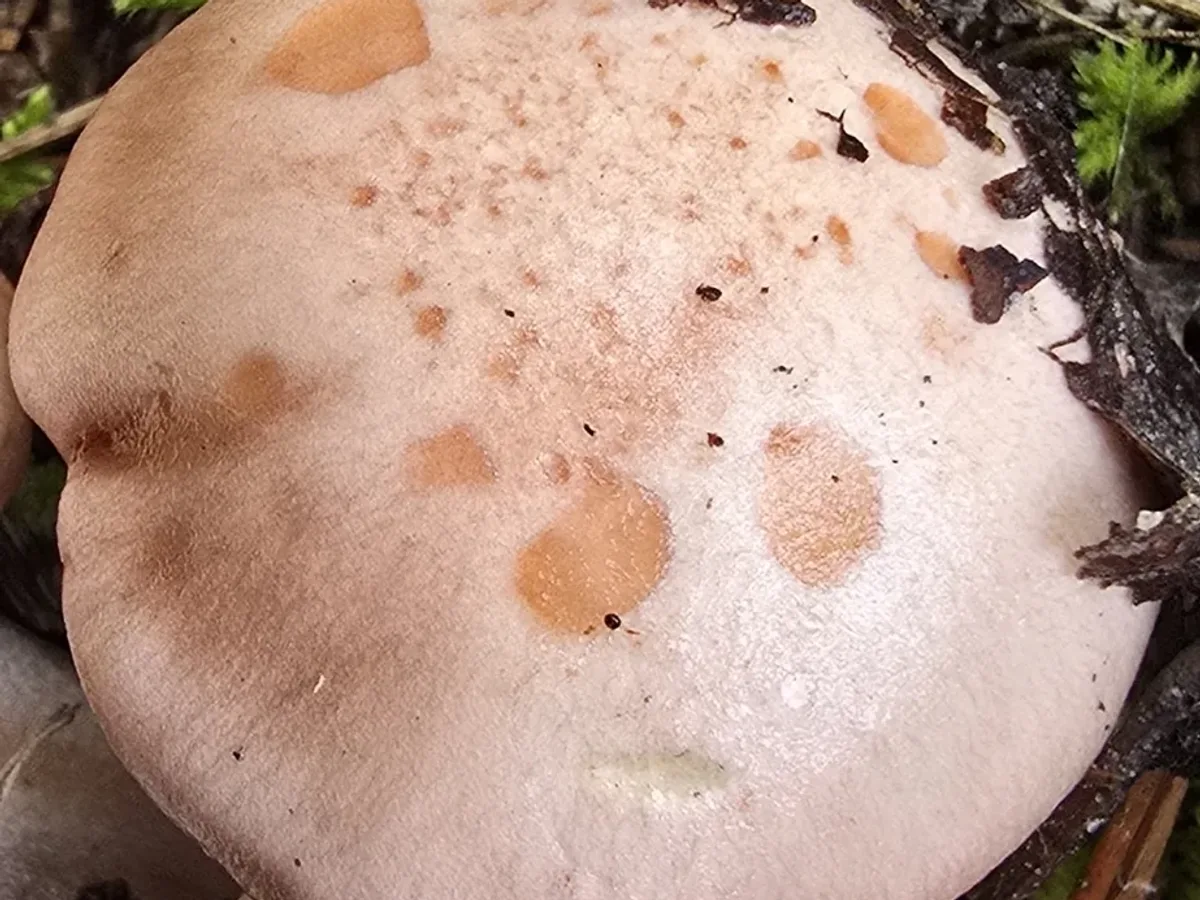
The cap is a pale, blushing affair - soft pinkish-buff to apricot-salmon, often deepening subtly toward the centre where it can carry a hint of pinkish-orange, and fading or whitening toward the margin.
In young specimens the cap is convex and domed; it opens gradually to broadly convex or nearly flat, sometimes developing a low broad central knob (umbo). Run your finger across it when it's wet and it will feel noticeably slimy; dried specimens are shiny and slightly tacky.
Gills
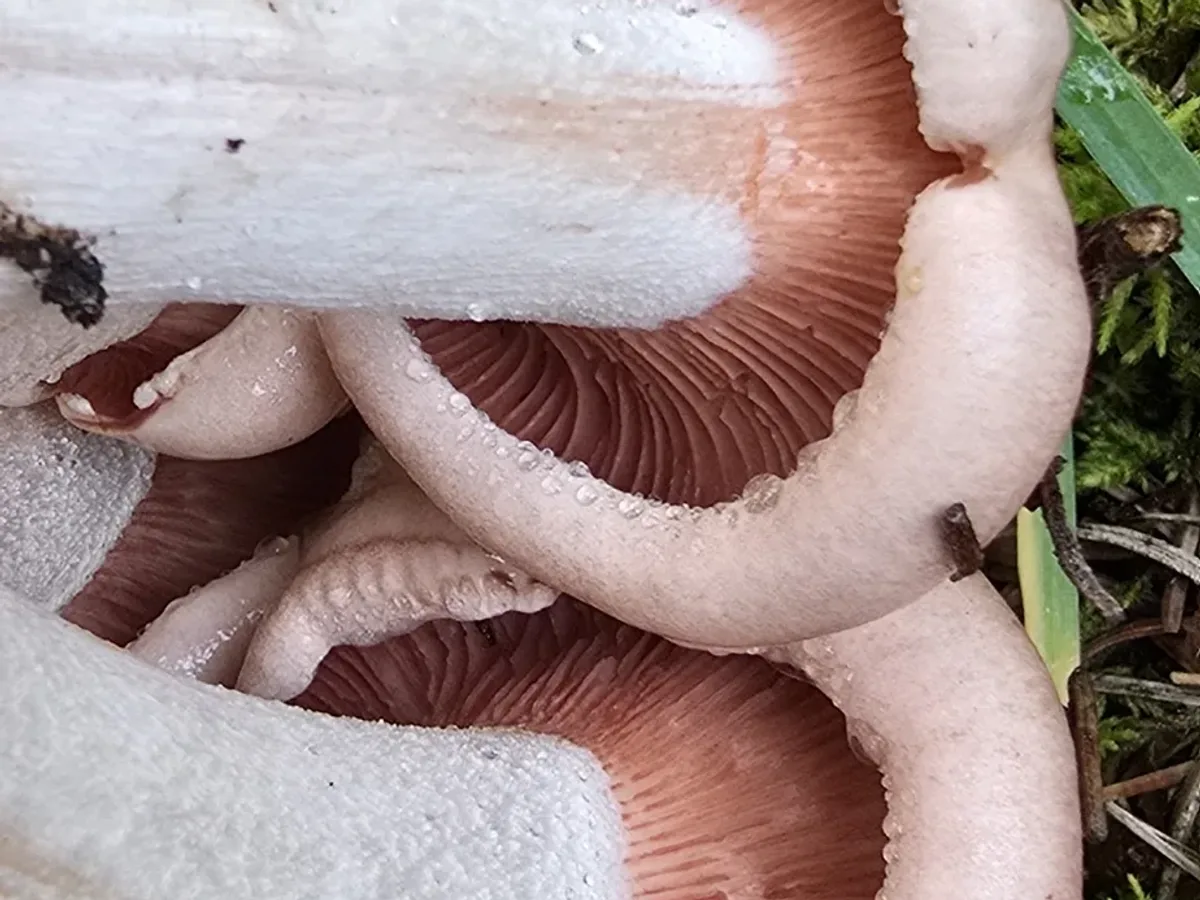
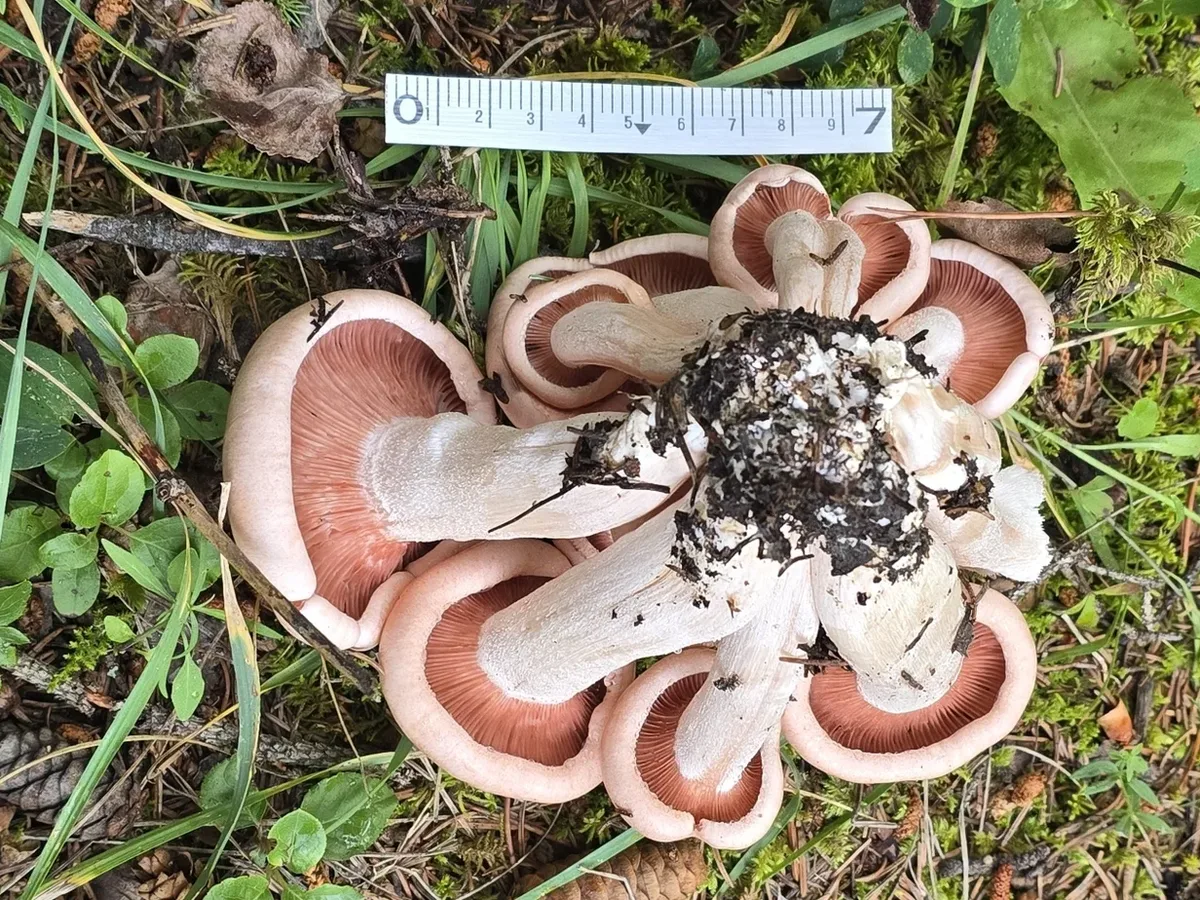
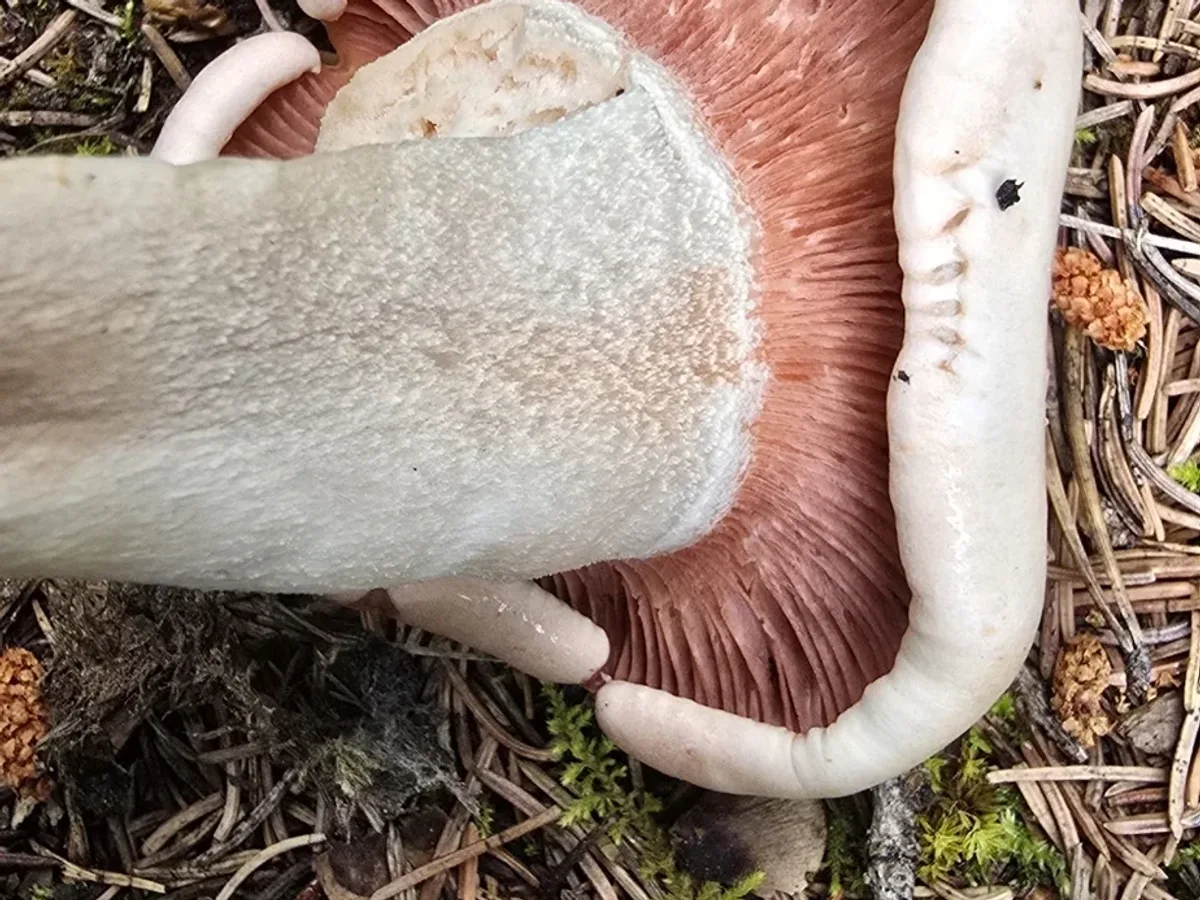
The gills are perhaps the most immediately striking structural feature: thick, widely spaced (you can count the individuals easily), running down the stem (decurrent) or broadly attached, and pale white to just barely pinkish-buff, with a characteristic waxy appearance.
Stem
The stem is stout, solid, and carries a diagnostic frosted or dotted texture on its upper portion - small whitish granular punctations over a pale pinkish-white ground - that distinguishes Hygrophorus from many other capped fungi.
Flesh
The flesh is firm and white throughout, not discolouring when cut.
Smell & taste
But the feature that truly identifies this mushroom, even in the dark of a bag, is its smell: a sharp, resinous, turpentine-like or camphor-like aroma that permeates the flesh and intensifies on heating. Once you encounter it you will not forget it.
Where & when it grows
Habitat
This is a mushroom of tall, cool, coniferous forest - not the lowland second-growth stands, but the higher-elevation fir and spruce forests where the air smells of resin and the soil is deep with years of accumulated duff.
In the Pacific Northwest its heartland is the silver fir (Abies amabilis) zone of the Cascades and the Olympic Peninsula, typically between about 600 and 1800 m elevation, where it fruits on the floor of forests dominated by Pacific silver fir and mountain hemlock.
It also turns up in subalpine fir (Abies lasiocarpa) stands near the upper treeline and in mixed conifer forests where any fir species is present alongside Sitka spruce or hemlock.
The association with Abies is the key: while it can occur with spruce, pine and hemlock, it reliably follows wherever true fir grows in damp, organically rich soils.
The forest floor habitat typically features a deep layer of decomposing needles and humus, moderate shade, and consistently moist conditions - the kind of site that holds moisture well into autumn. Compared with many lowland species, H. pudorinus benefits from the maritime influence that keeps Pacific Northwest montane forests reliably wet into October and November.
When
Autumn is the time for this species. In the Pacific Northwest the main flush runs through September, October and into November, with peak abundance typically in October at mid-elevations.
The trigger is the arrival of substantial autumn rainfall combined with cooling soils: once 14-day rainfall exceeds roughly 30 mm and soil temperatures drop below about 12 °C, the mycelium responds and fruit bodies push through the duff over the following one to two weeks.
At higher elevations - in the subalpine fir zone above 1400 m - the season begins earlier (late August or early September) but may also end abruptly when the first heavy snowfall arrives, which can happen in October.
At lower coastal sites in mild years the season extends well into November and occasionally touches December.
Like many Hygrophorus species it is a late-season fruiter compared with chanterelles and boletes, and continues to appear after the first light frosts have knocked back many other species.
How it grows
As a mycorrhizal fungus, Hygrophorus pudorinus is intimately bound to the living roots of its host trees - primarily true firs in this region - exchanging fungal mineral-gathering capacity for photosynthetically fixed carbohydrates from the tree.
It cannot be cultivated and will not appear outside its host's root zone. On the forest floor it typically grows solitarily or in small, loosely scattered groups of two to five fruit bodies, occasionally more numerous in productive years.
Individual mushrooms appear relatively slowly for a fleshy species - taking 5-10 days from pin formation to maturity - and persist in good condition for a week or more in cool, moist conditions.
Productive spots tend to return year after year as long as the host trees remain healthy, making a note in a spot journal worthwhile.
Fruiting conditions
Flushes follow the first substantial autumn rains (30+ mm over 14 days) once soil temperatures have cooled below 12 °C. Mycorrhizal with fir: only occurs in the root zone of mature host trees. At high elevations the season can be cut short by early snowfall; at coastal sites it extends later into November.
Handle with care
Toxin
No specific toxin has been isolated from Hygrophorus pudorinus. The suspected cause of GI irritation in sensitive individuals is the high concentration of terpenoid volatile compounds (resinous turpentine-like sesquiterpenes and diterpenes) that produce the species's characteristic strong aroma.
These compounds are heat-labile to some degree but not fully destroyed by cooking, and may irritate the gastrointestinal mucosa in quantity, especially when consumed raw.
The mechanism is likely direct mucosal irritation rather than enzymatic or receptor-mediated toxicity. This places H. pudorinus in the general GI-irritant category rather than alongside species with well-defined, potent toxins.
Symptoms
In cases of GI upset: nausea, vomiting, and abdominal cramping, typically beginning within 30 minutes to 3 hours of ingestion.
Symptoms are generally self-limiting and resolve within 12-24 hours without specific treatment. Dehydration from prolonged vomiting may require supportive care in severe cases.
No systemic organ damage (liver, kidney, nervous system) has been attributed to H. pudorinus.
If symptoms are severe, prolonged, or atypical, seek medical care and bring or photograph the mushroom consumed.
Look-alikes
Hygrophorus pudorinus is one of the more distinctive Hygrophorus in the Pacific Northwest once the turpentine odour is recognised, but several relatives warrant attention.
- Hygrophorus speciosus (larch waxy cap): broadly similar in size and stature but a brighter, richer orange to orange-red, lacks the strong turpentine odour, and is associated with larch (Larix) rather than fir. It is generally considered edible (though mild in flavour) and is not known to be toxic.
- Hygrophorus erubescens (blotched waxy cap / spotted waxy cap): H. pudorinus sensu lato may be confused with it. It has a similar pale pinkish cap that often develops reddish blotches or spots in age, but typically has a more distinctly spotted cap surface, a milder smell, and occurs primarily under spruce and pine. It is itself considered of uncertain edibility.
- Hygrophorus gliocyclus: a pale, glutinous species of pines with a more yellowish tinge and a slimy glutinous ring zone on the stem, and no turpentine odour.
- Hygrophorus hypothejus (herald of winter / late fall waxy cap): in the Cascades, a pale Hygrophorus with similar colouring; pale yellow to olive-brown with a distinctly slimy, grey to olive-tinged cap - quite different once seen side-by-side.
The most important caution is against pinkish-capped species in adjoining genera with different gill architecture or spore prints. Any pink-gilled mushroom from a similar habitat (which might indicate a pinkgill fungus, Entoloma) should be identified carefully; Entoloma species are identifiable by their angular, pink-maturing spores and salmon spore print, which is a completely different texture and feel from the thick, waxy, white-spored gills of Hygrophorus.
No deadly species is a realistic field confusion with H. pudorinus for a careful forager who checks the waxy gills, white spore print, and resinous smell.
Why it matters
The danger from Hygrophorus pudorinus itself is low and self-limiting: GI irritation in sensitive individuals, not systemic poisoning. It is not known to have caused fatalities or serious organ injury.
The primary safety concern for a forager is the risk of misidentifying a different species. However, no deadly species is a realistic field confusion for a careful identifier who confirms the waxy gills, glutinous pinkish cap, white spore print, and turpentine odour.
This guide rates it caution principally because:
- GI upset is credible
- the flavour is unappealing for most people
- the mycological literature has not established it as a consistently safe and rewarding edible
Similar pinkish cap but develops distinctive reddish-pink blotches or spots in age, especially toward the margin and in dry conditions; smell is milder, not strongly resinous. More closely associated with spruce and pine than fir. Also of uncertain edibility. The spotting pattern and milder odour help separate the two.
Cap distinctly olive-yellow to grey-olive with a greenish-grey or brownish tinge, not pinkish-buff; strongly slimy (even more glutinous than H. pudorinus); gills yellow-tinged; strongly associated with pine. Lacks the turpentine odour. Fruits very late - often after the first hard frosts. Edible.
A brighter, richer orange to vivid orange-red overall - much more saturated than the pale pinkish-buff of H. pudorinus. Associated strictly with larch (Larix), not fir. Lacks the turpentine/resinous odour: it smells mild or faintly pleasant. Generally considered edible. The colour and odour combination separates them immediately.
Some larger, pale Entoloma species with pinkish flesh tones occur in similar coniferous forest habitat and could be superficially confused in poor light. Key distinctions: Entoloma gills are not waxy in texture and turn pink to salmon as the spores mature; the spore print is distinctly salmon-pink to coral (never white); cap surface is not glutinous. Multiple Entoloma species cause serious GI poisoning. Always confirm white spore print and waxy gill texture before collecting any pale capped species in fir forest.
Pale yellowish-white to cream overall, with a distinctly slimy gelatinous ring zone (gliocycle) on the stem that sets it clearly apart. Associated with pine. No turpentine odour. The stem ring zone is diagnostic and absent in H. pudorinus.
In the kitchen
Picking & cleaning
If you do choose to collect H. pudorinus, pick young to medium-aged specimens with firm, intact caps before the viscid surface becomes heavily contaminated with debris. Twist gently or cut cleanly at the stem base.
The turpentine odour is immediately apparent in the field and intensifies as the mushroom warms in a bag, making collected specimens easy to identify later - and making it equally clear why most experienced foragers leave it. Carry in an open basket to prevent the strong aroma from permeating other species.
Before any culinary use, confirm the identification by all features:
- waxy decurrent gills
- granulate-frosted stem apex
- pale pinkish-buff glutinous cap
- the unambiguous turpentine smell
Do not eat raw. Note that the species is not a target for casual foraging; it is best left for study or photography.
Cooking
Not recommended as a food mushroom in this guide. Those who do try it report that thorough cooking reduces (but does not eliminate) the turpentine character, and that it works best in strongly flavoured dishes where the resinous note can blend with other aromatics rather than dominate.
It is a firm, meaty mushroom structurally, so it does not fall apart in the pan. However, given the risk of GI upset in sensitive individuals and the general unpleasantness of the flavour for most people, it is not a species this guide recommends pursuing for the table.
Leave it to complete its ecological work as a fir-forest mycorrhizal partner.
Good to know
Hygrophorus pudorinus has a contested and largely unenthusiastic culinary record. Some older European field guides list it as edible, and it has been eaten without harm by many people. However, the strong turpentine or resinous smell tends to persist through cooking and renders the flavour unpleasant to most palates.
More significantly, there are credible reports of gastrointestinal upset - nausea and vomiting - following consumption, particularly when eaten raw, in large quantities, or repeatedly. No specific toxin has been isolated and characterised, but the high content of terpenoid volatile compounds in the flesh is the probable culprit for GI irritation in susceptible individuals.
For these reasons this guide takes a cautious position: H. pudorinus should be regarded as an edibility-uncertain species that is best avoided as a food mushroom. It is classed here as caution rather than inedible because it is not consistently or severely toxic, but it is not recommended for the table.
Anyone who does consume it should:
- cook it thoroughly
- eat only a small quantity on a first occasion
- not eat it repeatedly in the same week
Given its strong and often off-putting smell, most foragers who encounter it in the field simply move on to the many better-eating species of the Pacific Northwest autumn.
A reference guide - never an edibility guarantee. When in doubt, leave it out.