Larch woodwax
Hygrophorus lucorumsyn. Hygrophorus lucorum Kalchbr., Limacium lucorum (Kalchbr.) P. Karst.
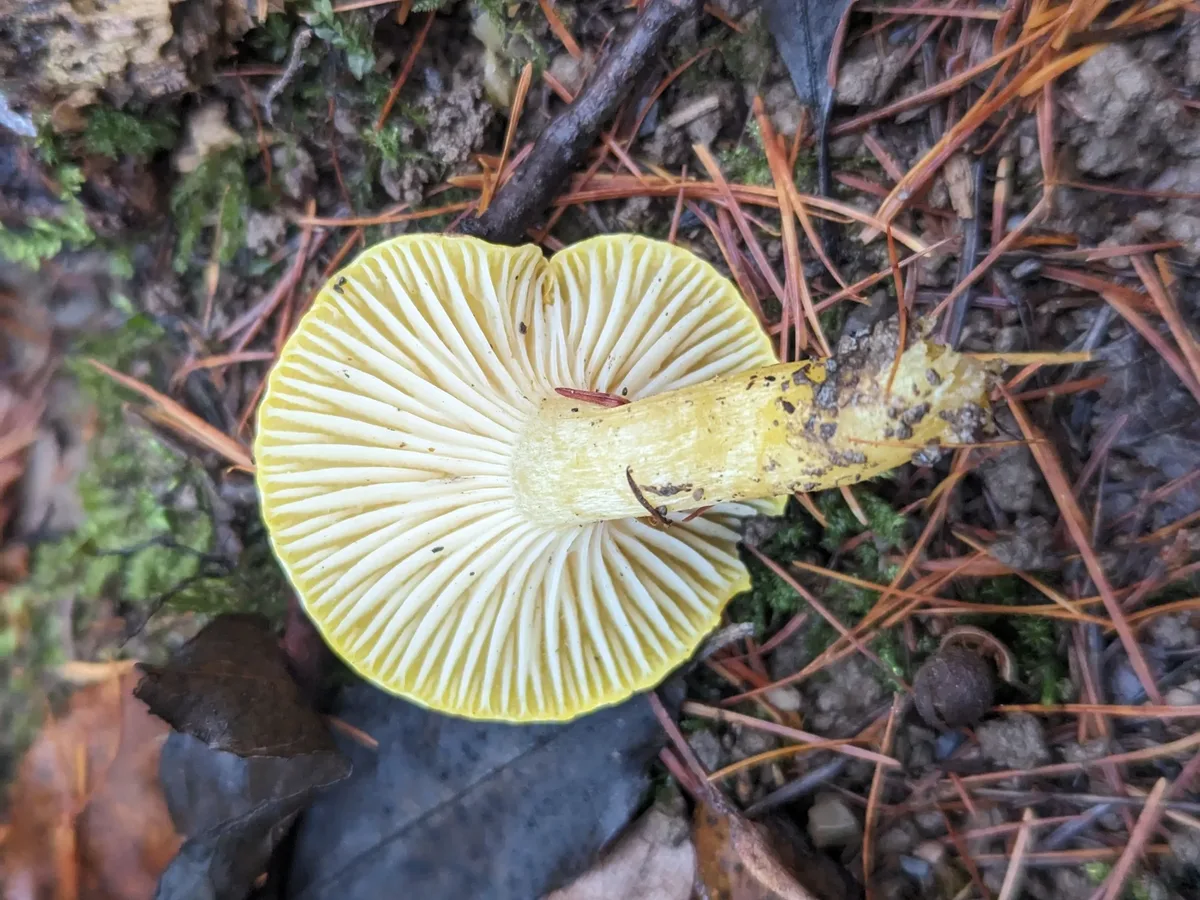 Tobias Schönberg (CC0)
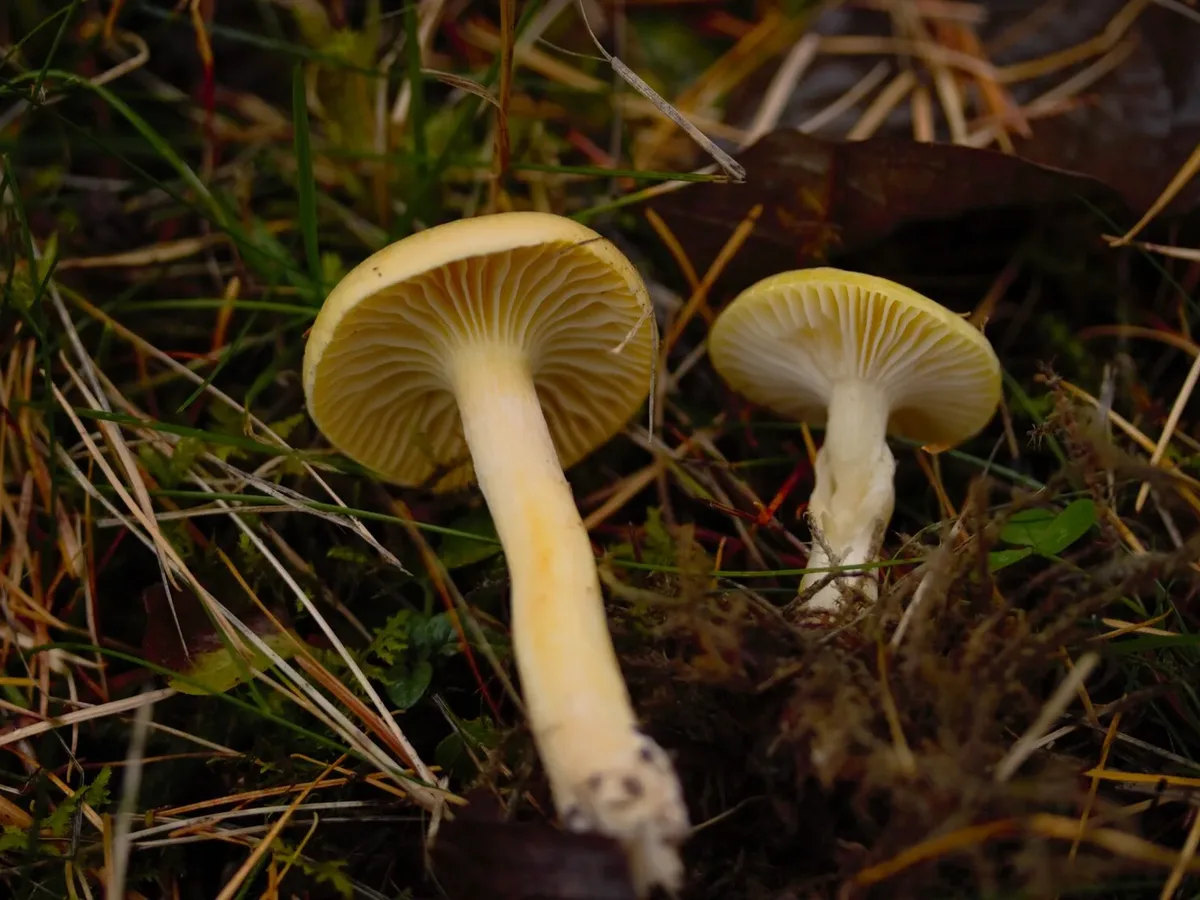 © Patrick Bayan (CC BY)
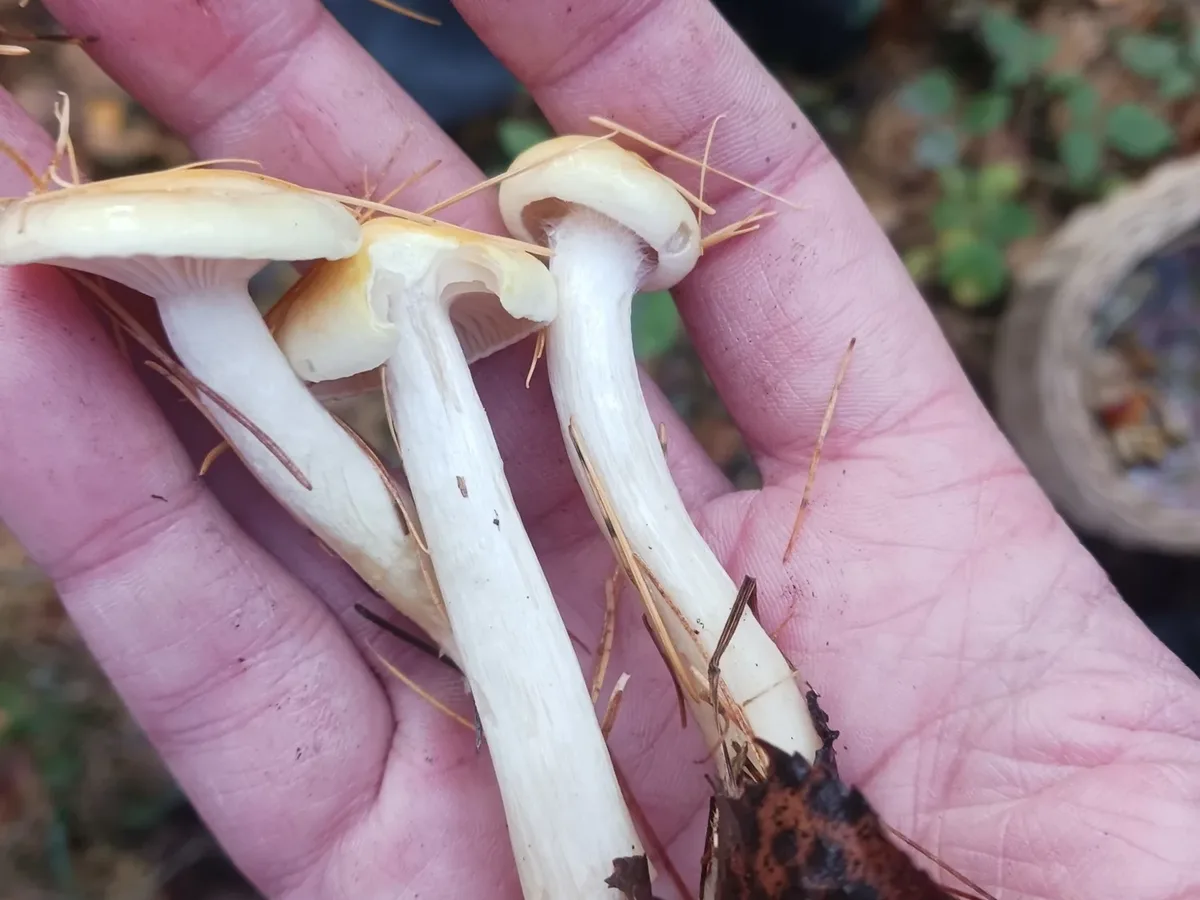 T. Pedro Hafermann (CC0)
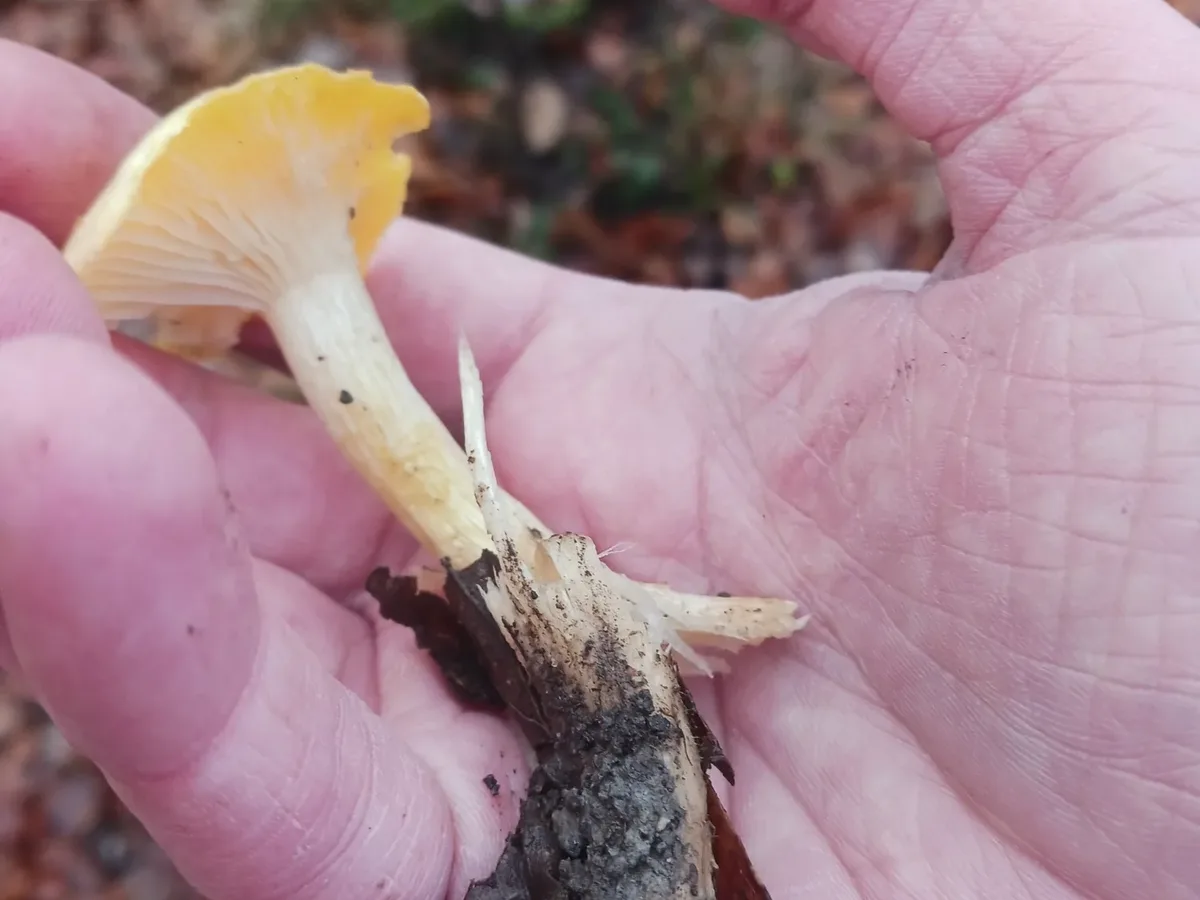 T. Pedro Hafermann (CC0)
 © Patrick Bayan (CC BY)
 © Patrick Bayan (CC BY)
 T. Pedro Hafermann (CC0)
 T. Pedro Hafermann (CC0)
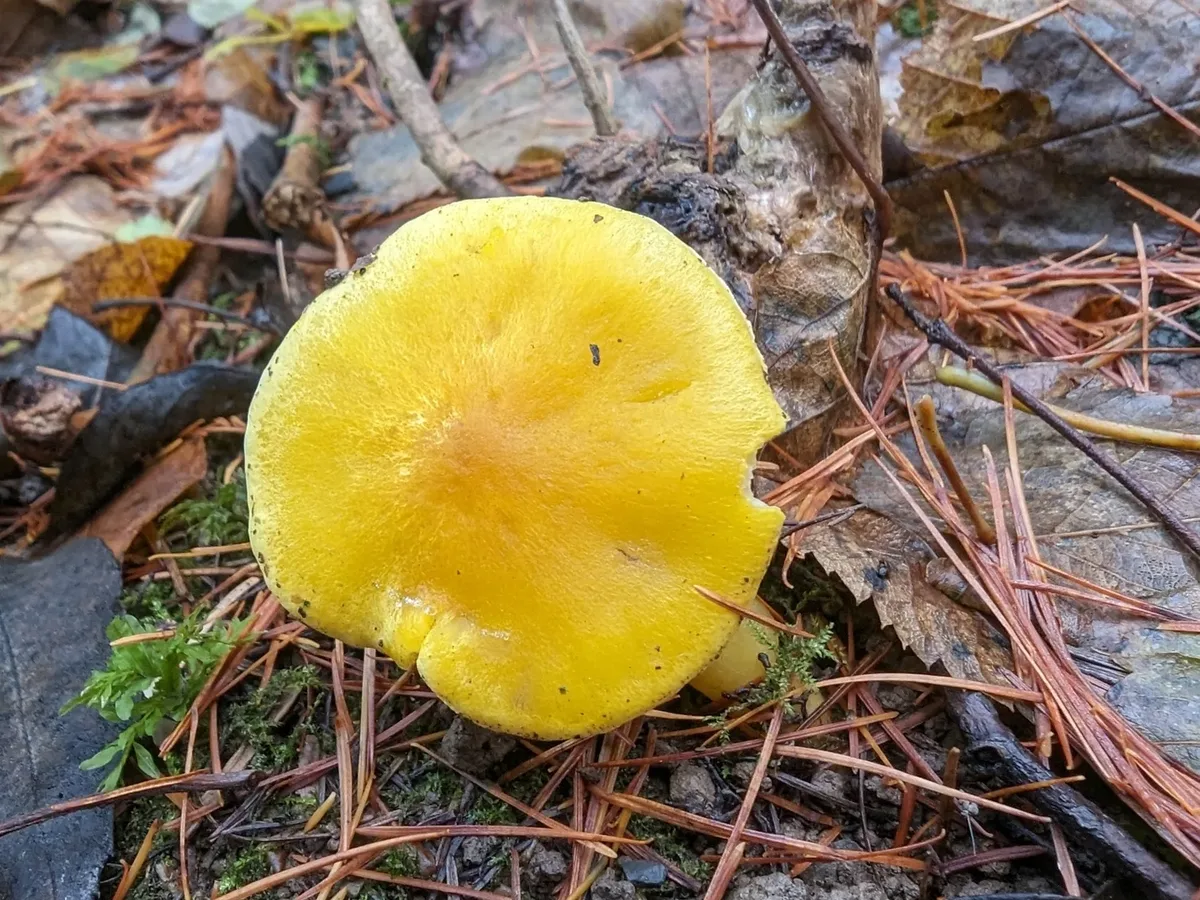 Tobias Schönberg (CC0)Tobias Schönberg (CC0)© Patrick Bayan (CC BY)
Good to eat, once you have identified it with certainty and cooked it through.
How to recognise it
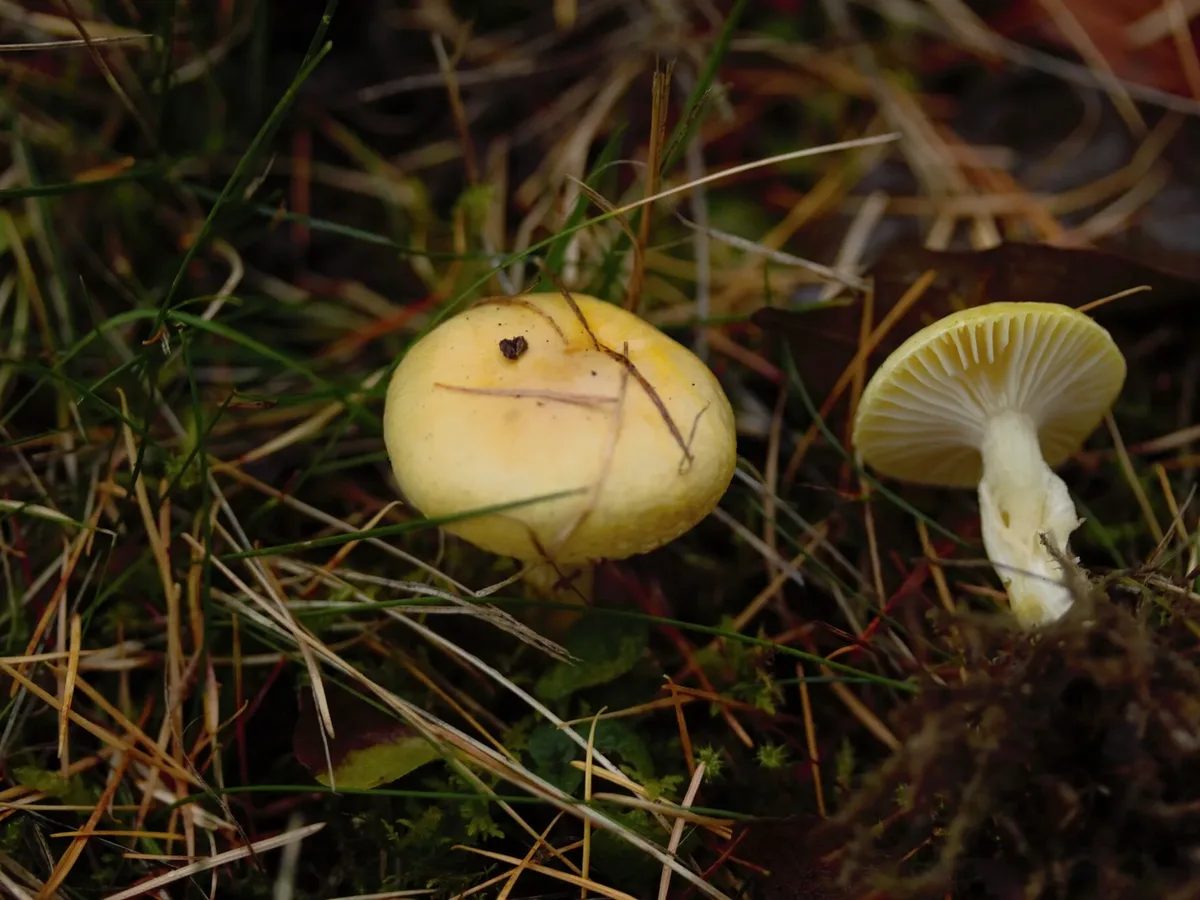
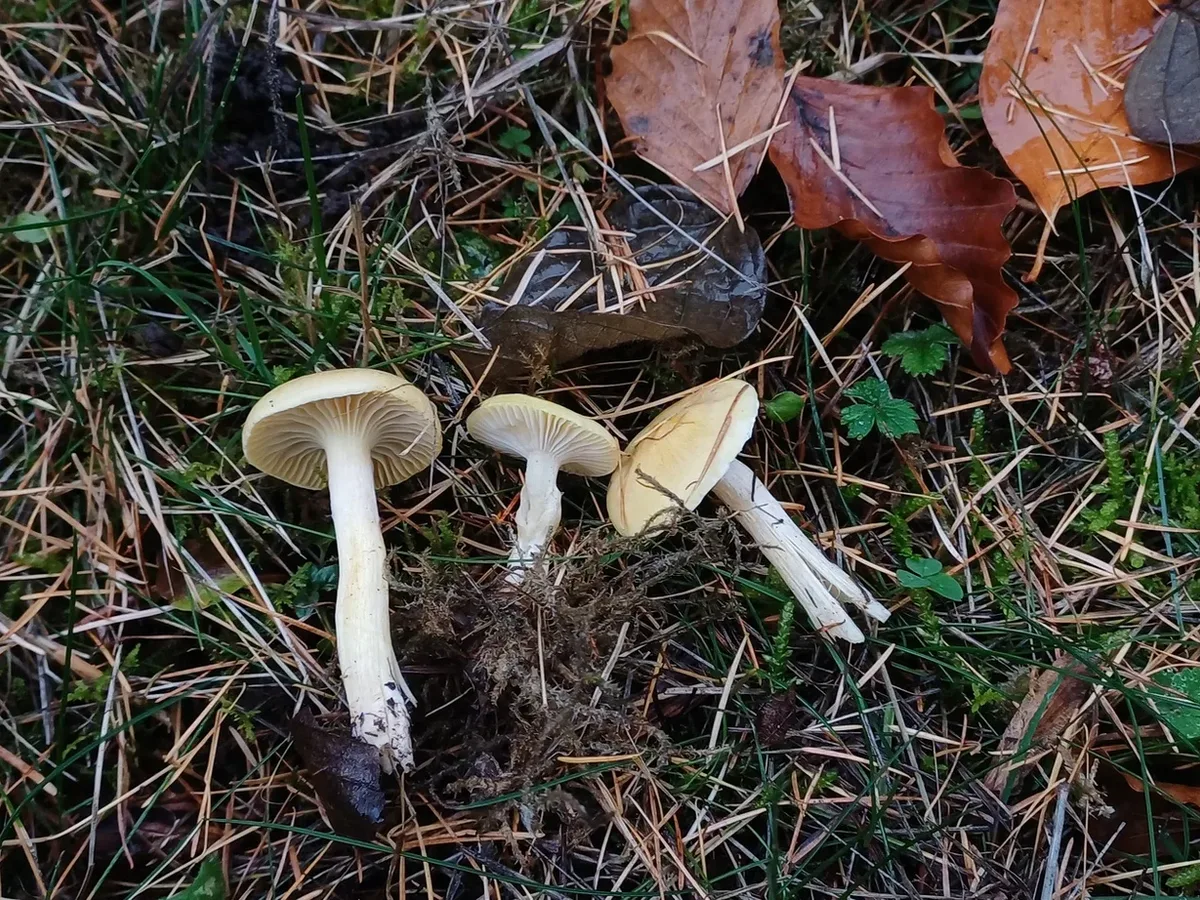
The larch woodwax is a medium-sized, entirely pale mushroom with two immediately noticeable traits: a thick, transparent slime, and thick, widely spaced, waxy gills.
Cap
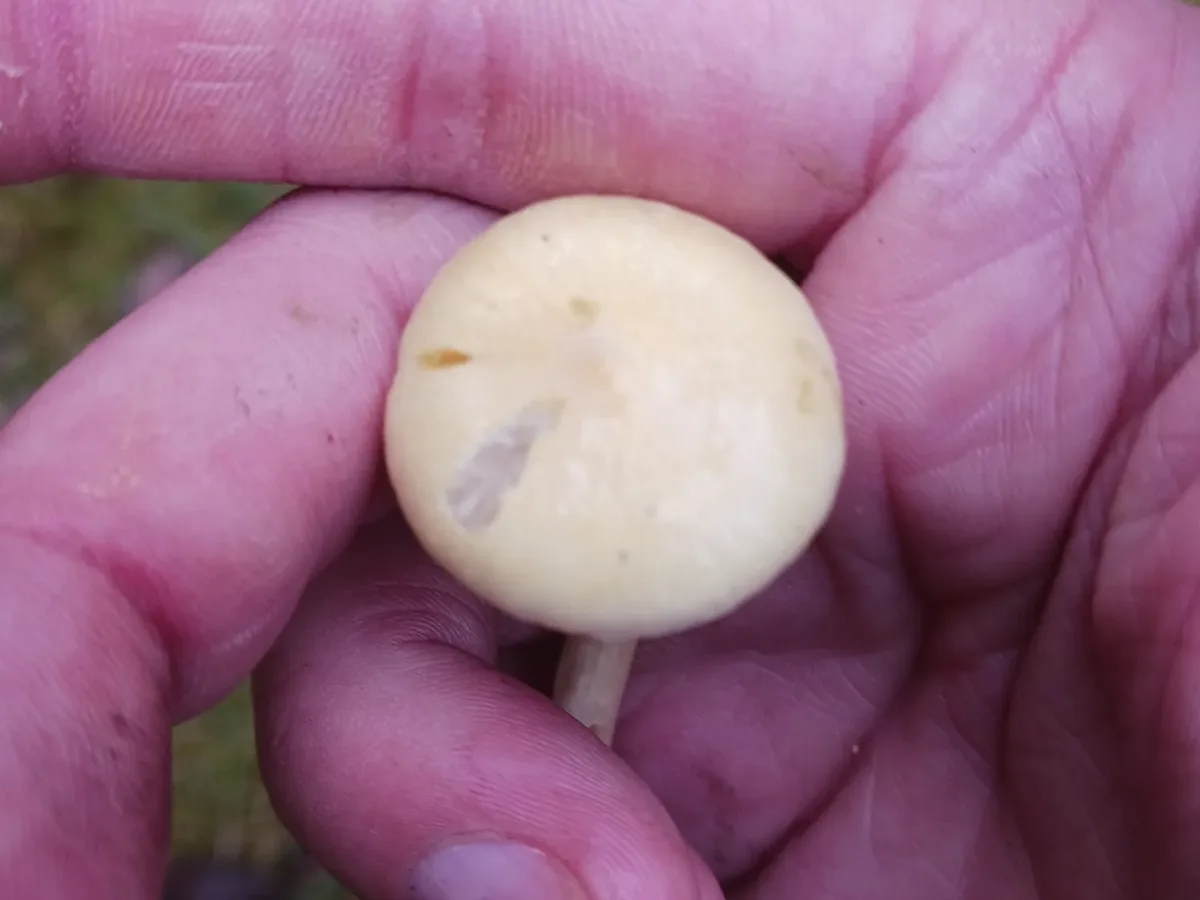
Ivory to pale cream with a yellowish-olive tint at the centre. The slime makes the cap glisten when wet and polished-looking when dry. The low umbo persists even as the cap expands and flattens. Older caps often look a bit grimy - the gluten catches falling larch needles and soil particles.
Gills
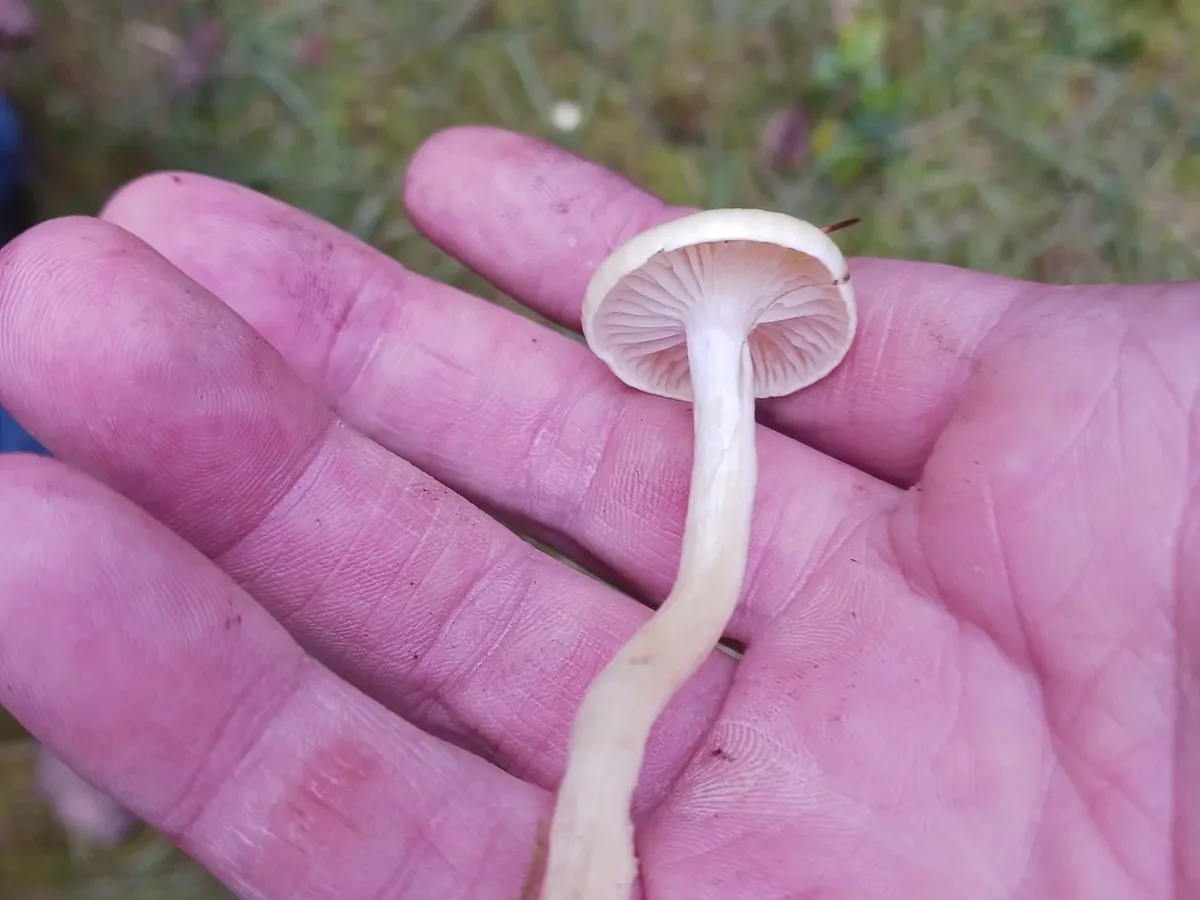
Thick, widely spaced, and waxy, yielding a characteristic rubbery resistance when pressed between fingers.
Flesh
Beneath the grime the flesh is clean, white, and firm, with no colour change when cut.
Stem
The stem carries the same sliminess as the cap over most of its length, with a drier, occasionally granular white apex. There is no ring and no volva.
This double sliminess - slimy cap and slimy stem together - is unusual among pale woodland mushrooms and worth remembering as a field shortcut.
Spore print white.
Where & when it grows
Habitat
The larch woodwax is bound to its host tree in a mycorrhizal partnership that may persist for decades in established stands. Look for it only where larch grows - if no larch is within approximately 20-30 metres, a pale slimy mushroom here is something else.
- In the Alps and Apennines it fruits in stands of European larch (Larix decidua) from about 700 m up to the treeline.
- Across Scandinavia and Eastern Europe it appears wherever larch has been planted.
- In East Asia - where it is most abundant - it is characteristic of the boreal larch forests dominated by Dahurian larch (Larix gmelinii) in northeast China (Heilongjiang, Jilin, Inner Mongolia), Siberia, and the subalpine larch forests of Hokkaido.
It favours the loose, slightly acidic cushion of accumulated larch needles, and fruitbodies typically rise close to the base of host trees in loosely gregarious groups of five to twenty.
When
In the East Asian boreal zone, the larch woodwax fruits primarily from late August through October. The season is compressed by the continental climate - summers are warm and relatively dry, and the brief, moist autumn is the productive window.
In Hokkaido, the main fruiting aligns with the golden leaf-colour change in the larch canopy each October. In the Alps and Scandinavia the season extends more gently from September through November at lower elevations.
The trigger is a familiar autumn combination: cooling air, soil temperatures falling through the 8-15 °C range, and enough rain. Roughly 10-20 mm over two weeks is typically sufficient to initiate a flush, with fruitbodies emerging 7-14 days after the rain event.
The season ends with the first sustained frosts that freeze the soil surface.
How it grows
Grows mycorrhizally and exclusively with Larix species. Fruitbodies appear singly or in scattered to gregarious groups, rarely densely clustered.
The mycelium is perennial, threading the larch needle duff year after year. Well-established stands will produce this species reliably each autumn provided moisture is adequate.
The glistening slime coating the cap and stem is produced by a gelatinised outer tissue layer that expands rapidly in moist conditions and collapses to a polished film in dry weather.
Growth from visible primordia to harvestable size takes 5-8 days under optimal autumn conditions.
Fruiting conditions
Flushes in autumn when soil temperatures drop into the 6-15 °C range and 10 mm or more of rain falls over a 14-day period. Peak fruiting 7-14 days after the triggering rain event. Fruiting ends with the first sustained frosts that freeze the soil surface.
Look-alikes
Several white or pale Hygrophorus species share the larch forest and require attention.
- Hygrophorus eburneus (ivory woodwax) is the most similar: also white, viscid, and waxy-gilled, but it grows strictly with beech (Fagus) and oak, not larch - a habitat difference that fully separates them.
- Hygrophorus cossus is a white, slimy species with a distinctive acrid, unpleasant smell; it grows under oak and is generally regarded as inedible due to taste, but is not toxic.
- Hygrophorus chrysodon has a white cap with distinctive golden-yellow granules at the cap margin and stem apex - it is edible and grows under beech.
The most important safety lookalike concern is with pure white Clitocybe species that can grow in grass or needle litter near forest edges. Clitocybe phyllophila and Clitocybe dealbata both have crowded, decurrent gills (not waxy or widely spaced) and lack the glutinous stem of H. lucorum; neither grows in dense larch needle duff.
In a larch forest, any white, viscid-stemmed, widely-spaced waxy-gilled mushroom without a ring or volva, growing directly from larch needle duff, is very likely H. lucorum. Always confirm the slimy stem and the waxy (rubbery-thick) gills before consuming.
White, slimy, and similar in stature but has a distinctively unpleasant, acrid, coal-tar-like smell that immediately distinguishes it; also grows under oak and beech, not larch. Regarded as inedible due to its offensive odour, but not toxic.
Very similar in colour and texture - white, viscid cap and stem, waxy gills - but grows exclusively under beech (Fagus) and oak on calcareous soils, never under larch. Habitat is the single most reliable separator. H. eburneus also tends to have a more uniformly white cap without the ochre-yellow disc tint of H. lucorum.
A toxic muscarine-containing white Clitocybe that grows in conifer needle litter. Distinguished from H. lucorum by its crowded, decurrent, non-waxy gills (versus widely spaced, thick, waxy gills), dry cap surface without gluten, and slender dry stem. The gills in Clitocybe run down the stem (strongly decurrent) while in H. lucorum they are merely adnate or shallowly decurrent. Does not have a slimy stem.
White cap and stem but adorned with yellow granular flecks at the cap margin and stem top that are absent in H. lucorum. Grows under beech and fir, not larch. Edible.
In the kitchen
Picking & cleaning
Harvest by cutting cleanly at the base with a knife to avoid uprooting the mycelium and disturbing the larch needle duff. Choose young to mid-age specimens; very old caps become soggy and acquire a bitter edge as the gluten decomposes.
- The sticky, slippery surface is messy to handle - some foragers use latex gloves.
- Wipe caps clean with a damp cloth or soft brush rather than washing.
- Best processed within one to two days of picking, as the gluten layer causes rapid deterioration in a plastic bag; a paper bag or open basket preserves quality better.
- Maggot infestation (Mycetophilid larvae) can be brisk in warm weather - slice the stem base to check.
Cooking
The larch woodwax has a mild, pleasant flavour with a faintly sweet, slightly earthy character. The texture is firm when young but becomes somewhat gelatinous if overcooked due to the sticky gluten layer - high heat in a dry pan drives off moisture quickly and prevents mushiness.
Sautéing in butter or oil over medium-high heat until the moisture evaporates and the edges begin to colour gives the best flavour. It works well in cream sauces, pasta dishes, and rice pilaf.
Drying is possible - slice thinly and dehydrate at 40-50 °C, which concentrates the flavour. The mushroom is popular in traditional cuisine in parts of northeast China and Russia, where it may be lightly salted and preserved in brine.
Pairs well with sour cream, dill, garlic, and mild cheeses. Remove any debris from the cap surface before cooking; peeling the thin gelatinous layer is optional but improves texture in delicate preparations.
Good to know
Hygrophorus lucorum has no record of toxicity in the mycological literature and is considered a safe, reliable edible in the regions where it fruits. There are no deadly species that present as a convincing lookalike in a larch duff habitat.
The key safety check is confirming the host tree is larch: the pea-to-marble-sized, papery-scaled larch cones on the ground are unmistakable.
If the larch association is confirmed, the identification is secure when the fruitbody shows the combination of:
- viscid (not dry) cap
- waxy, widely-spaced gills
- viscid stem
- white flesh that does not change colour
Avoid consuming raw - cooking eliminates minor digestive irritants present in many raw waxcaps. If uncertain about any specimen, do not eat it.
A reference guide - never an edibility guarantee. When in doubt, leave it out.