Herald of Winter
Hygrophorus hypothejussyn. Agaricus hypothejus Fr., Limacium hypothejum (Fr.) P. Kumm., Hygrophorus aureus auct. (misapplied)
 © Bente Rian (CC BY)
 © Umut Nuri Erdoğan (CC BY)
 © Umut Nuri Erdoğan (CC BY)
 © Umut Nuri Erdoğan (CC BY)
 © Umut Nuri Erdoğan (CC BY)
 © Umut Nuri Erdoğan (CC BY)
 © Umut Nuri Erdoğan (CC BY)
 © Noah Lars Gunnar Ehrnstrøm (CC BY-SA)
 © Kirsti Anne Mandal (CC BY)© Bente Rian (CC BY)© Umut Nuri Erdoğan (CC BY)
Edible only with the right preparation - or safe for some people but not others. Learn the caveats first.
Never eat a mushroom you are not 100% sure of - check the look-alikes below, and always cook wild mushrooms.
How to recognise it
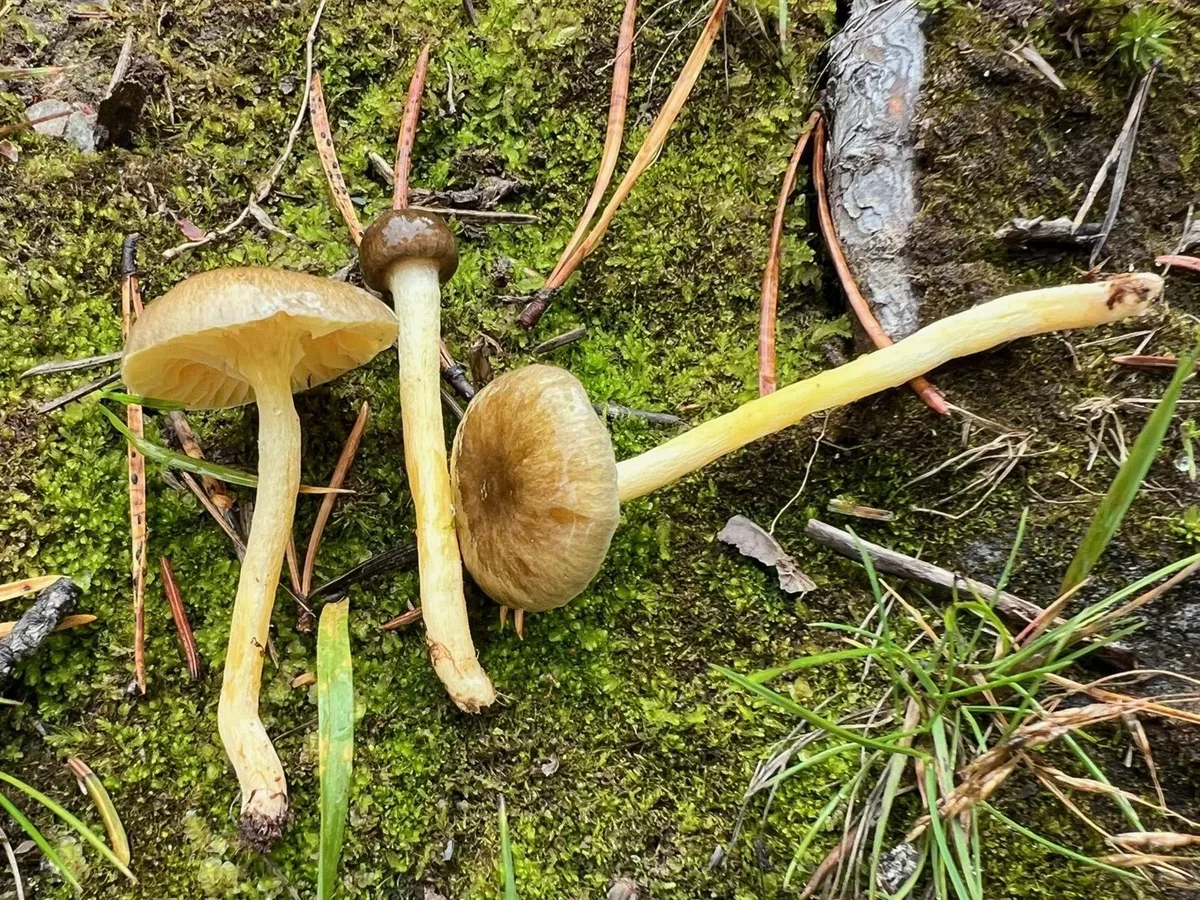
The herald of winter is a small to medium-sized waxcap of quiet but distinctive beauty - a mushroom perfectly suited to its late-season niche in the pine forest.
Cap
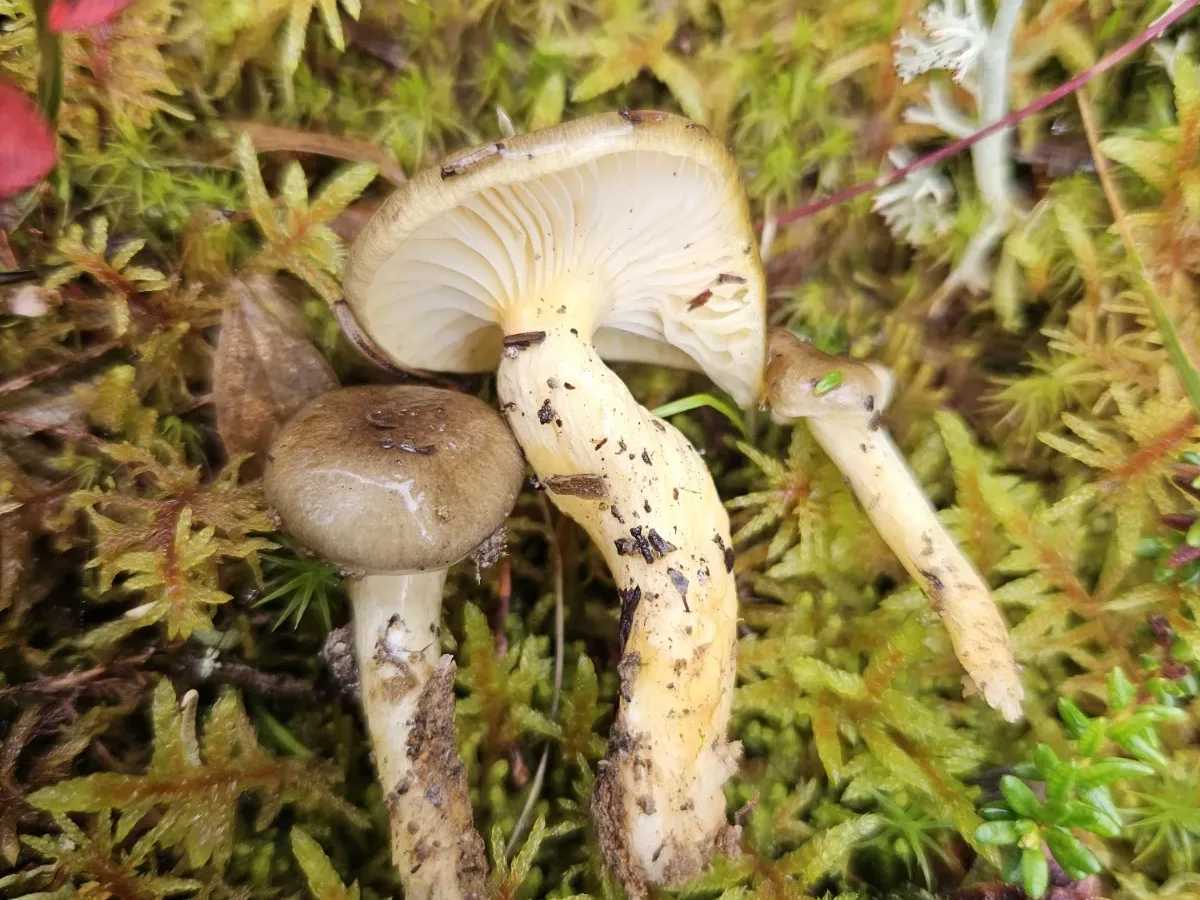
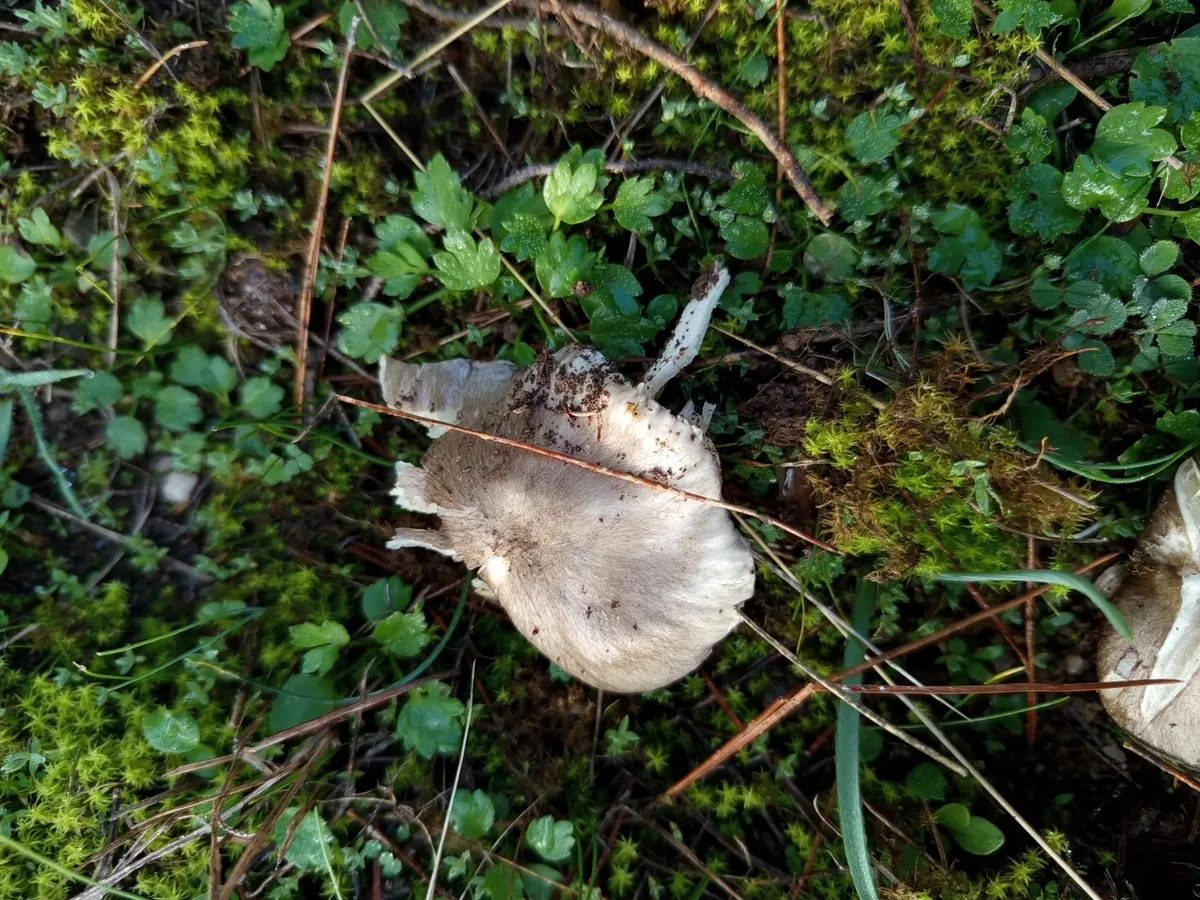
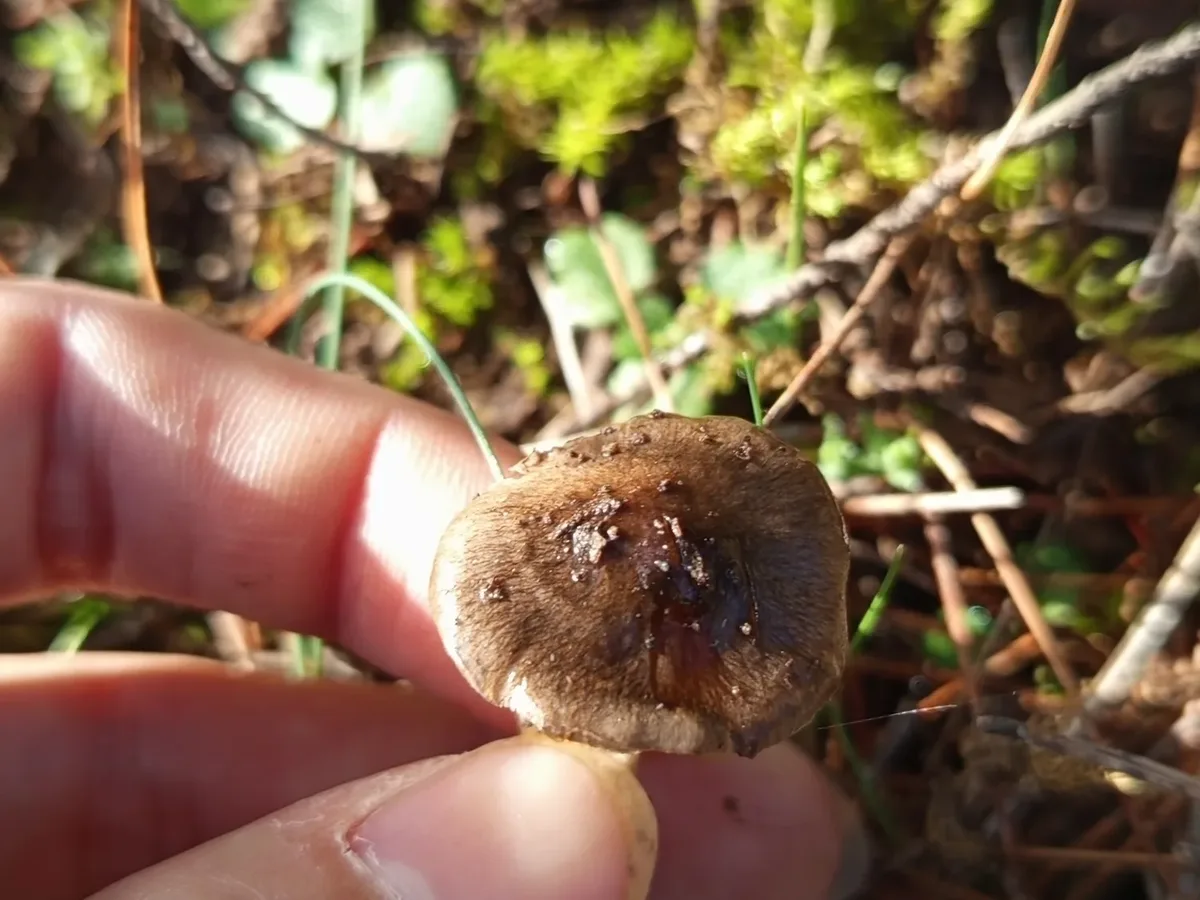
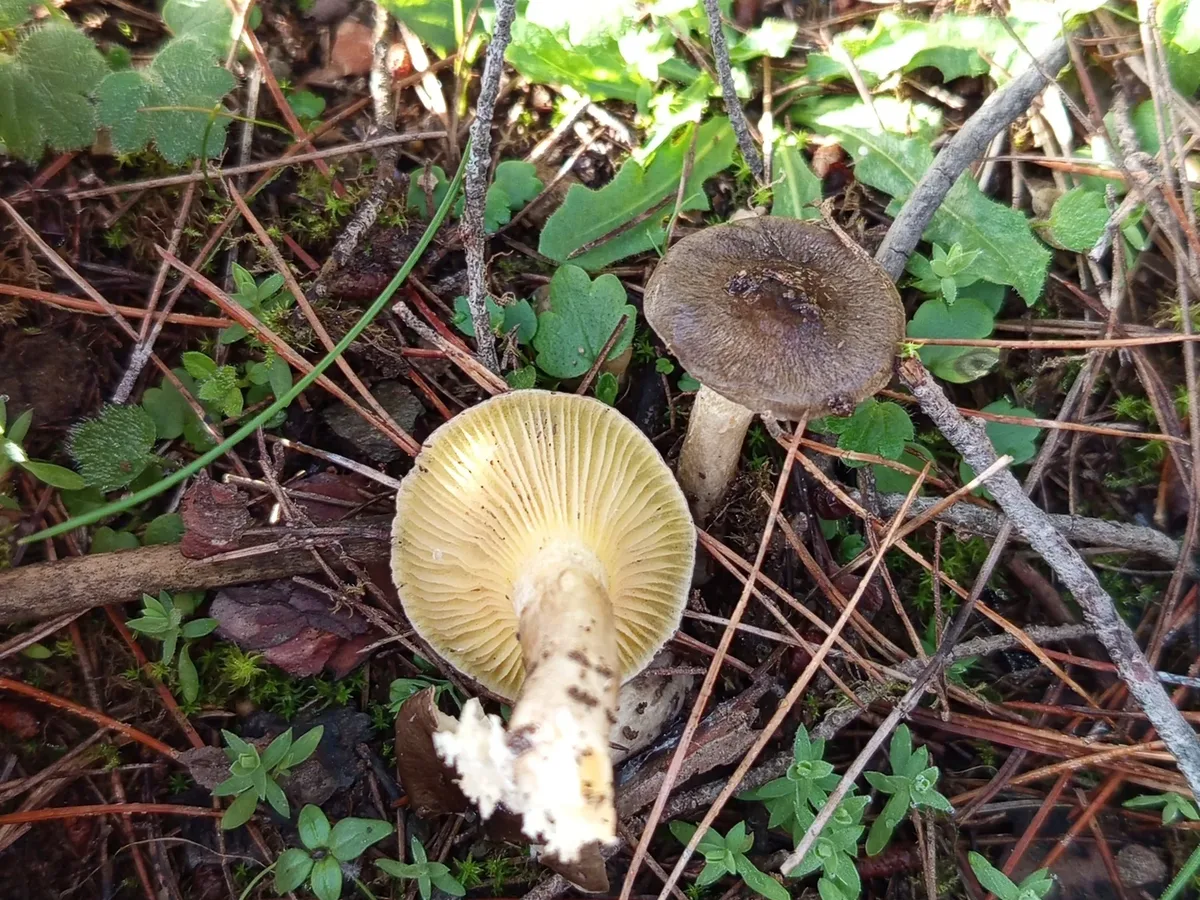
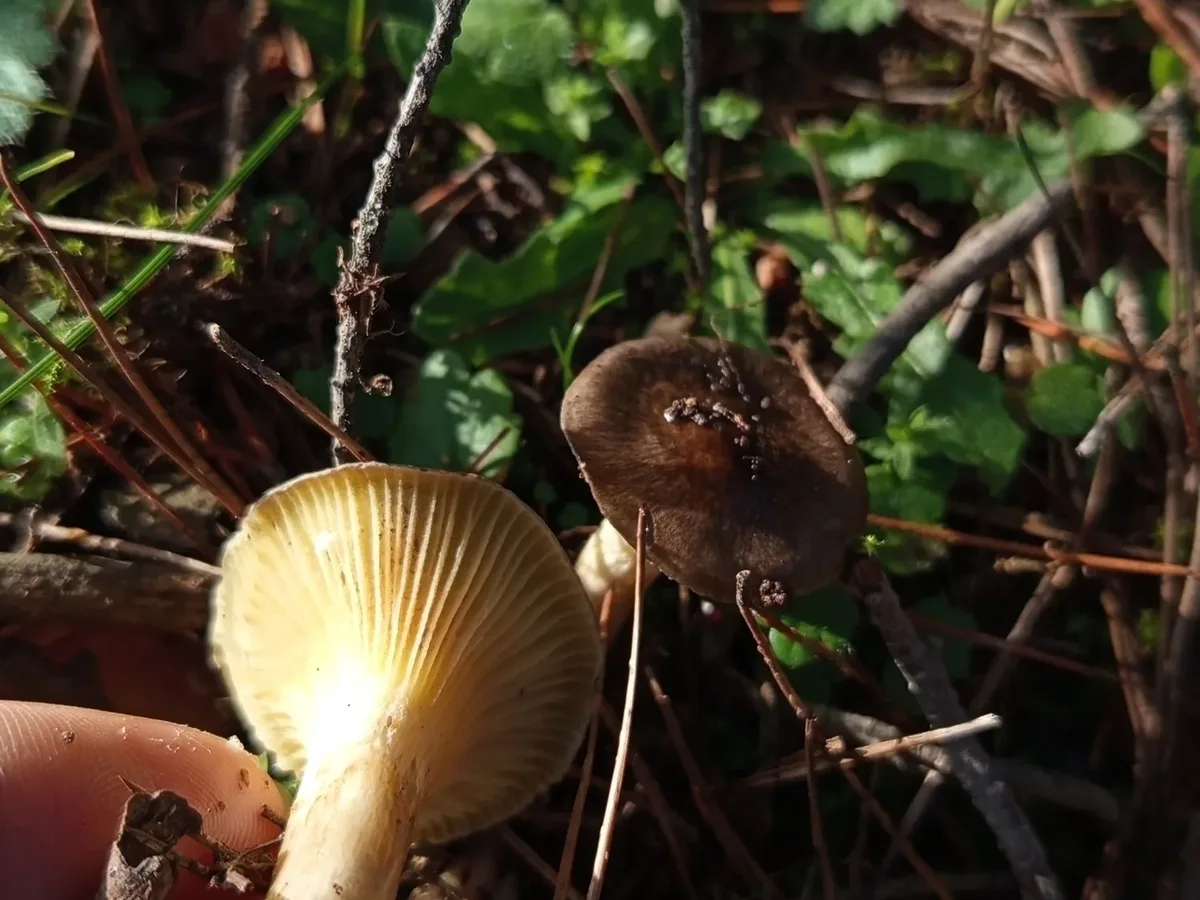
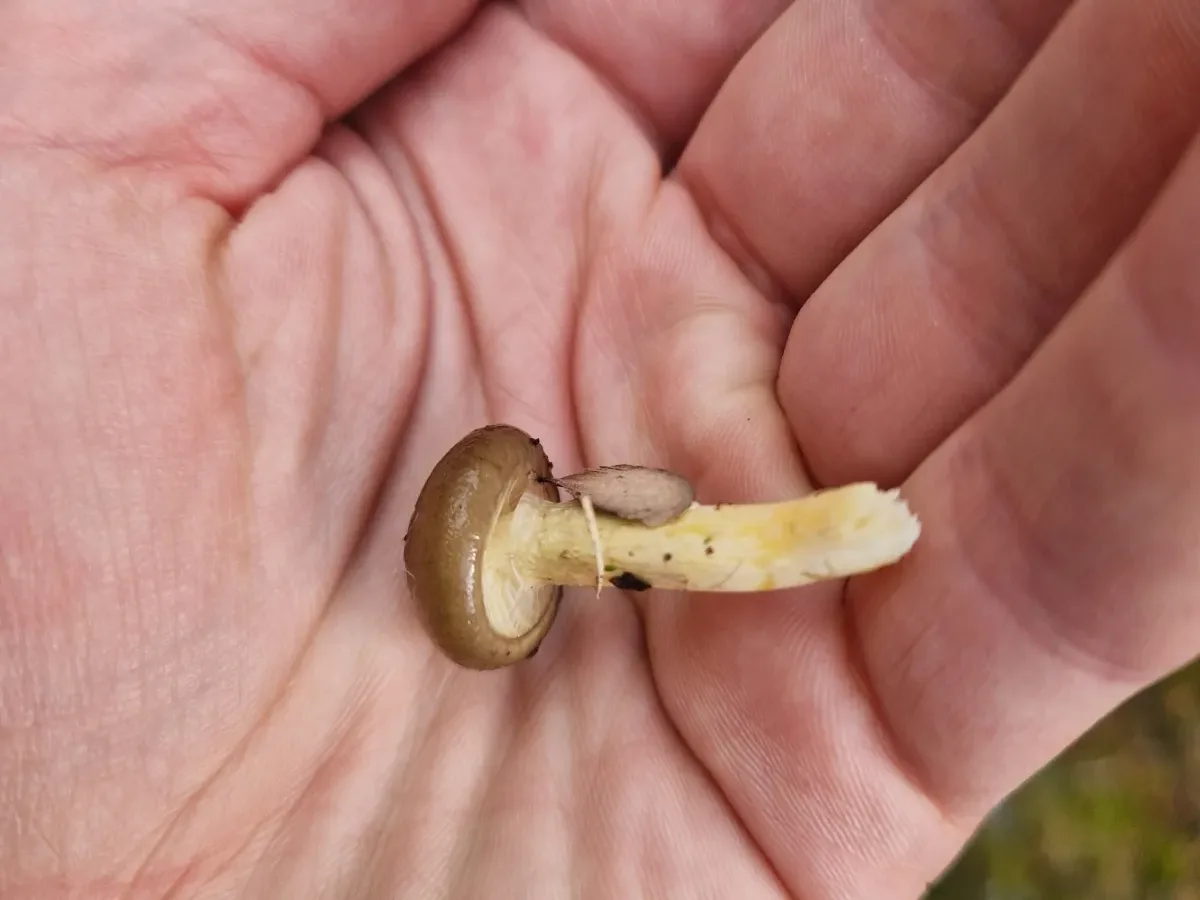
The cap is the first thing that catches the eye: broadly domed and then flattening with age, its surface is noticeably slimy and sticky in damp weather (it will gleam in autumn rain and collect pine needles readily), drying to a smooth, shiny finish.
The colour shifts in a subtle gradient from a deeper olive-brown or brownish-grey at the disc outward to olive-yellow, ochre, or dull yellow at the margin, giving the cap a somewhat two-toned appearance.
Young specimens can be quite dark and brownish-olive overall, while older or frost-exposed individuals often brighten toward yellower tones.
Gills
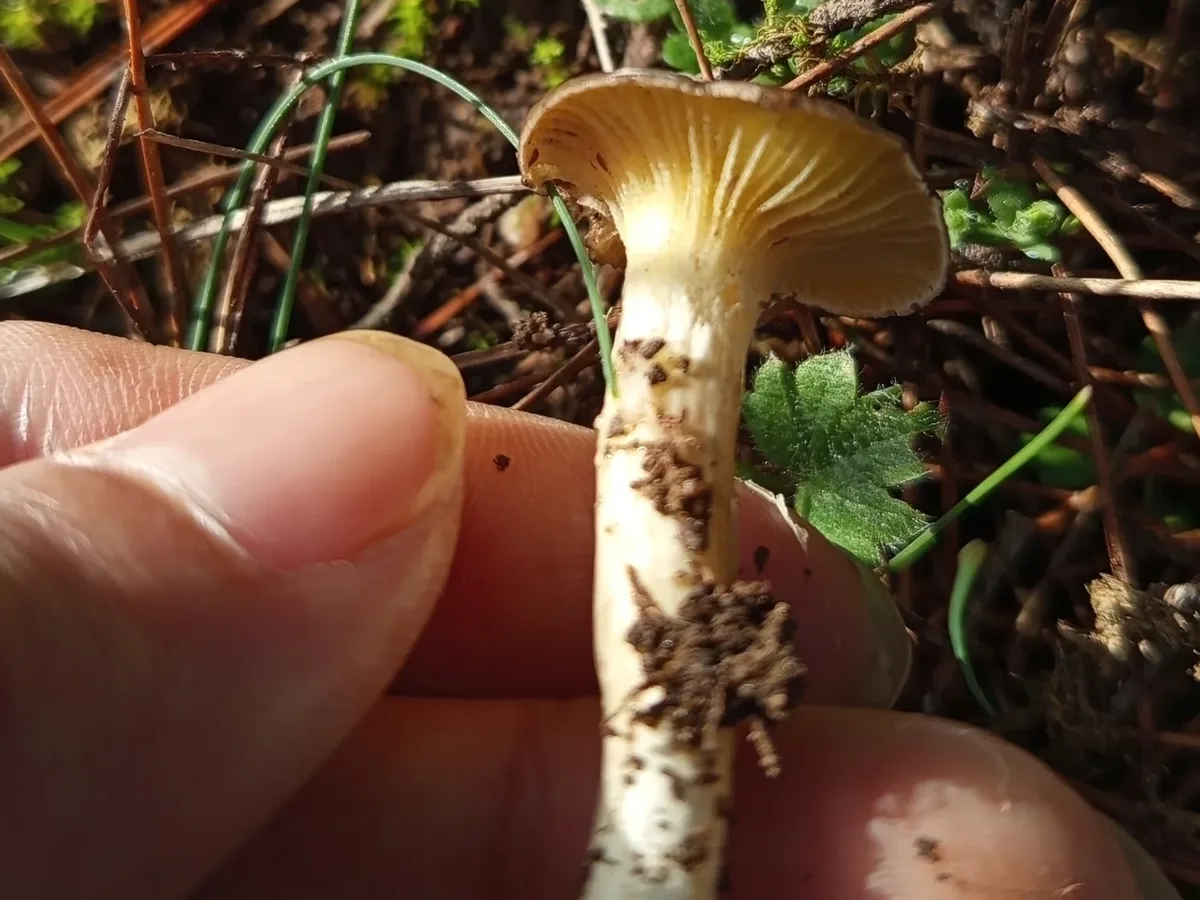
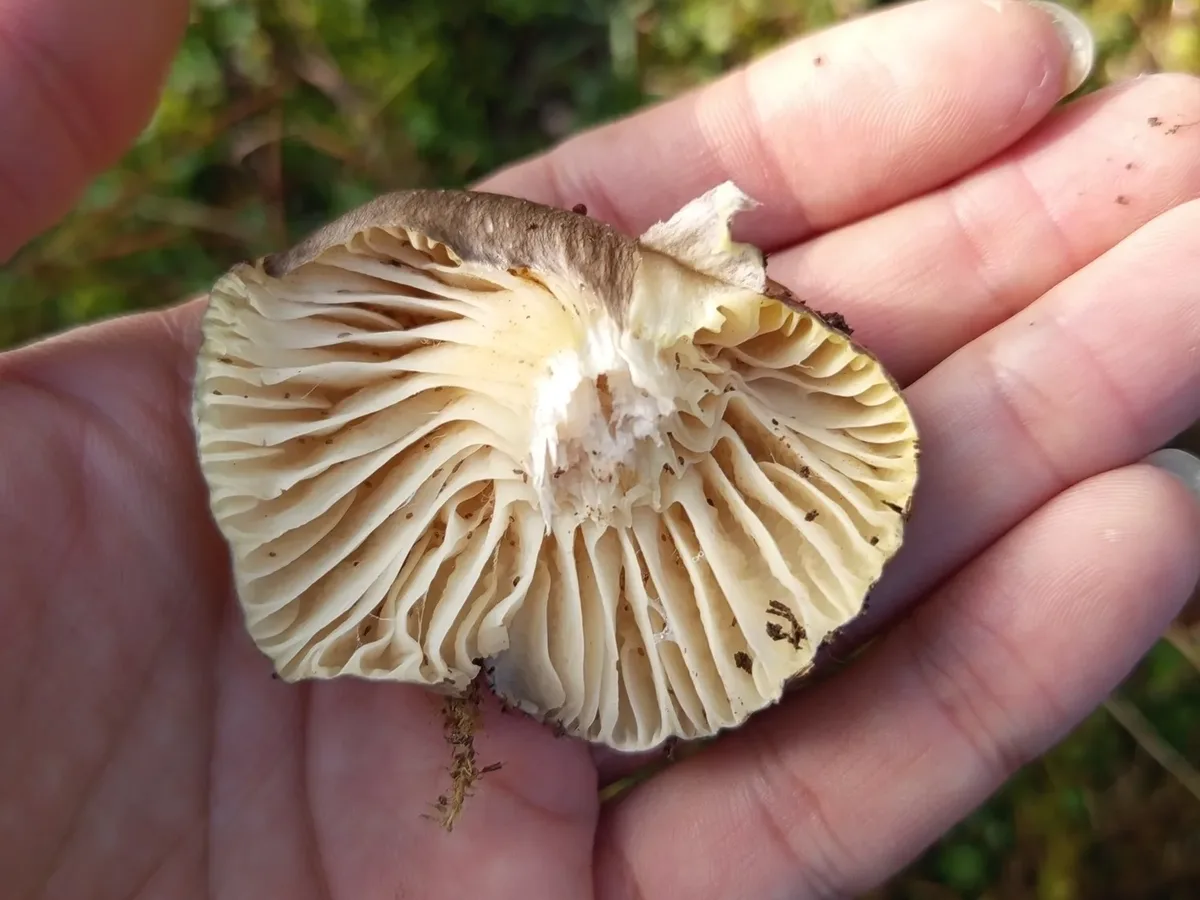
Flip the cap and you encounter the genus's signature character: the gills feel like softly yielding candle wax when pinched between finger and thumb - a distinctive rubbery resistance unlike any ordinary gill.
The gills start whitish, but rapidly develop a clear pale to egg-yolk yellow, sometimes deepening toward orange-yellow in age. This yellow gill coloration, combined with the olive-brown cap, is one of the most reliable identification pointers for the species.
Stem
The stem is where the identification locks in definitively. The upper portion is dry, pale, and whitish-yellow; the lower half to two-thirds is clothed in a slippery, glutinous, olive-brownish sheath - the sticky remnant of the universal veil that once enclosed the young fruit body.
In fresh specimens in wet weather this sheath is unmistakably slimy; in dry conditions it dries down to irregular patches. This slimy lower-stem sheathing, combined with the yellow gills and olive cap, forms a three-part identification suite that is essentially diagnostic.
Flesh
Flesh is firm, white, and unchanging when cut. Spore print white.
Smell & taste
There is no strongly distinctive smell - just a pleasant, mild mushroom scent.
Where & when it grows
Habitat
This is a species of pure discipline when it comes to habitat: look for it only under pines. It is mycorrhizal - its mycelium forms an intimate, mutually beneficial exchange network with the fine roots of pine trees - and it has little or no ability to fruit in association with other conifers or deciduous trees.
- In eastern North America: Eastern white pine, red pine, and jack pine stands
- In Scandinavia: Scots pine forest
- Across the Pacific Northwest: lodgepole and western white pine
The forest need not be old-growth, but the trees must be mature enough to have established mycorrhizal networks - young pine plantations in their first decade rarely produce fruiting bodies.
The best sites tend to be on the drier, slightly sandy, needle-carpeted floor of open or semi-open pine stands, often where the soil is mildly acidic and poor in nutrients - exactly the conditions where the ectomycorrhizal partnership with pine is most critical for the tree's mineral nutrition.
Look on gently sloping ground where drainage is good; deep, wet, waterlogged hollows are less productive. The mushrooms fruit singly or in loose, scattered troops, and the same sites tend to produce year after year.
When
The herald of winter earns its name honestly. While most autumn mushrooms have finished by late October or are fading fast, H. hypothejus is just getting going.
In eastern North America expect fruiting from late September or early October, building to a peak through October and November, and continuing - sometimes into December in mild coastal or southern sites - long after most competitors have rotted or frozen.
In Scandinavia it is archetypal November pine forest fungus, often the last mushroom of the year and reliably findable on mornings when the forest floor crunches with frost.
Fruiting is triggered by the combination of:
- Cooling soils (below about 8-10 °C)
- Sustained autumn moisture
- The first frost cycles
The fruit bodies are remarkably frost-tolerant: a hard overnight freeze does not immediately abort them, and they may resume expansion once temperatures lift above zero.
This cold-tolerance is likely an adaptation to its late-season niche, where mild competitors have vacated the forest floor and resources are briefly uncontested.
How it grows
Solitary or scattered in loose troops of three to fifteen individuals; dense clusters are unusual.
As an ectomycorrhizal species, H. hypothejus is embedded in a long-term partnership with its host pines. The mushrooms you find represent only the briefly visible reproductive output of a perennial mycelial network that can persist for many years or decades in the same soil.
Individual fruit bodies emerge slowly in cool conditions, typically taking 4-7 days from initial 'pinning' to full expansion.
Once expanded, they are surprisingly persistent in cold weather, often remaining in good condition for 10-14 days before deteriorating - far longer than many summer and autumn species whose active decay bacteria and invertebrates are slowed by the cold.
Fruiting conditions
Fruiting is triggered by the combination of cooling autumn soils and adequate moisture - soil temperatures below roughly 10 °C appear necessary to initiate fruiting, and the species is notably frost-tolerant. A relatively long flush lag (1-2+ weeks) reflects slow ectomycorrhizal growth in cold soils. Fruiting bodies persist through light frosts and may resume development after thaw.
Look-alikes
No deadly species closely resemble H. hypothejus in its pine-forest, late-season habitat. The combination of olive-brown slimy cap, yellow gills, slimy lower stem sheath, and waxy gill texture is quite distinctive within the genus. The principal identification challenges are within Hygrophorus itself and with a few other slimy-capped late-season species:
- Hygrophorus olivaceoalbus (olive-grey woodwax): The most frequent confusion species. Also slimy-capped and with a slimy-sheathed stem under pine and spruce. However, H. olivaceoalbus has gills that are white and stay white (never yellowing), the cap is olive-grey to brown without yellow tones, and it fruits earlier in autumn and under both spruce and pine. The yellow gills of H. hypothejus immediately separate the two.
- Hygrophorus latitabundus (= H. limacinus, pine woodwax): A large, very slimy brownish-grey species under pine; cap darker and more uniformly grey-brown; gills white, not yellowing; stem sheathed in a very thick slimy veil. No yellow tones. Edible.
- Hygrophorus agathosmus (almond woodwax): Grey-capped, grows under spruce, and has a strong almond/marzipan smell; gills remain white. No yellow tones. Entirely absent from pure pine stands in most areas.
- Cortinarius species (webcaps): Some late-season slimy Cortinarius species (particularly in section Phlegmacium) can superficially resemble small Hygrophorus at a glance, but have rusty-brown spore prints, a cobweb-like cortina connecting stem and cap margin in youth, and non-waxy gills. A spore print (rusty brown vs. white) instantly separates them. Some webcaps are deadly (orellanin toxin causes kidney failure); confirming waxy gill texture and white spore print is essential if in any doubt.
- Suillus species (slippery jacks): Also slimy-capped pine associates fruiting in autumn. Suillus species have sponge-like pores on the underside of the cap (not gills), yellowish to brown pores, and often a distinct ring. No gills means no confusion once you look underneath.
DEADLY risk. Some slimy-capped webcaps (e.g. Cortinarius orellanus, C. rubellus, C. variecolor) share the late-season pine-forest habitat and can resemble a small H. hypothejus at a glance. These species contain orellanin, a nephrotoxin that causes irreversible kidney failure with a dangerously delayed onset of 2-3 weeks, by which time permanent damage is done. Separate by: (1) cortina - a cobweb-like fibrous veil between cap edge and stem visible in young Cortinarius, absent in Hygrophorus; (2) spore print - rusty orange-brown in all Cortinarius vs. pure white in H. hypothejus; (3) gills - not waxy in Cortinarius (no candle-wax feel), often rustier or more brownish; (4) gill colour - yellowing gills are characteristic of H. hypothejus and essentially unknown in the relevant Cortinarius sections. Always take a spore print and check for waxy gills before eating any late slimy pine mushroom.
Also slimy-capped with a slimy-sheathed stem under conifers (pine and spruce), but gills remain pure white throughout - never yellowing. Cap colour olive-grey to brown without yellow tones. Fruits earlier in autumn and is equally common under spruce, where H. hypothejus is absent. The yellow gills of H. hypothejus distinguish the two instantly.
A large, dark brownish-grey slimy species under pine, with a thick glutinous veil sheathing the stem; gills white, remaining so with age. Much larger and more uniformly dark grey-brown with no yellow tones on cap or gills. Edible.
Also a slimy-capped pine associate fruiting in autumn, and superficially similar at a glance. Decisively distinguished by the underside: Suillus has a sponge-like pore surface (no gills at all), usually yellowish-brown, and a persistent ring on the stem. Once you look underneath the cap, there is no confusion.
In the kitchen
Picking & cleaning
Because the species fruits so late in the season, competition from insects and slugs is minimal - invertebrate activity has sharply declined by November - and specimens are often in better condition than many autumn mushrooms.
- Cut cleanly at ground level with a knife.
- The slimy cap and stem sheath can make transport messy; carry in a rigid-walled basket, gill side down, separated from other species.
- In the field, wipe off adhering pine needles with a soft cloth or brush.
- The slimy sheath on the lower stem can be peeled away before cooking if preferred; it is harmless but texturally unpleasant.
Collect from unpolluted pine forest only - like all ectomycorrhizal fungi, Hygrophorus species can concentrate cadmium and other heavy metals from contaminated soils, and pine plantations near industrial sites or roadsides should be avoided.
Cooking
The herald of winter is edible but of modest culinary quality - valued primarily for its late-season availability and the novelty of finding a fresh mushroom in November rather than for outstanding flavour.
The taste is mild and pleasantly mushroomy; the texture is firm. The slimy cap cuticle and stem sheath should be removed before cooking (they do not cause harm but are texturally unappealing and add unwanted slipperiness). Once cleaned, the firm flesh holds its shape well in the pan.
Simple preparations suit it best. Sauté sliced caps in butter with a little garlic and fresh thyme until the moisture evaporates and the flesh firms and colours lightly (about 5 minutes over medium heat).
Use in omelettes, pasta sauces, soups, or as a side dish. It can be dried - slicing thinly and air-drying in a warm place concentrates the mild flavour and extends the shelf life considerably.
The yellow gills make for attractive presentation in clear soups. Do not eat raw.
Good to know
H. hypothejus is accepted as edible in Europe and North America, eaten especially in Scandinavia where its late-season availability makes it a welcome addition to autumn foraging when other species have finished. No serious toxicity has been documented in the modern mycological literature.
The key safety issue is misidentification, and the one group that demands attention is the genus Cortinarius. Some slimy-capped late-season webcaps grow under the same pines and can be found at the same time of year. These should not be gathered alongside H. hypothejus unless you are confident in separating them.
The decisive checks:
- 1Examine the underside for gills versus pores.
- 2Look for a fibrous, cobweb-like cortina at the gill edge in young specimens (present in Cortinarius, absent in Hygrophorus).
- 3Take a spore print - white in H. hypothejus, rusty orange-brown in Cortinarius.
Do not rely on colour alone; do all three checks before eating any late slimy-capped pine mushroom.
Cook thoroughly before eating. Raw Hygrophorus species are not recommended; mild gastrointestinal discomfort has been reported in a small proportion of people from raw or undercooked specimens.
The slimy veil compounds, which may cause the discomfort, break down with heat. Eat in moderate quantities on a first encounter, as individual tolerances vary.
A reference guide - never an edibility guarantee. When in doubt, leave it out.