Ivory woodwax
Hygrophorus eburneussyn. Agaricus eburneus Bull., Limacium eburneum (Bull.) P. Kumm., Hygrophorus cossus var. eburneus (Bull.) Sacc.
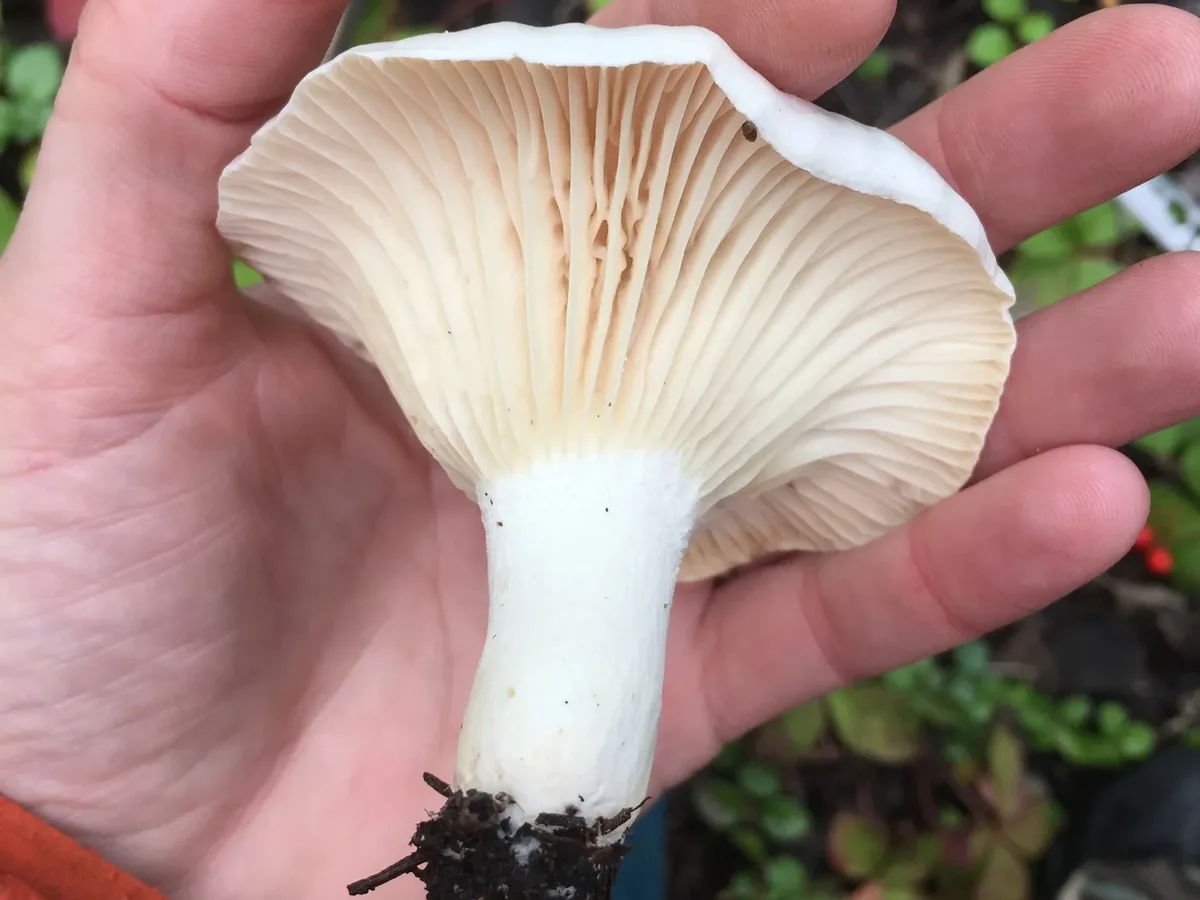 © LeeAnn Latremouille (CC BY 4.0)
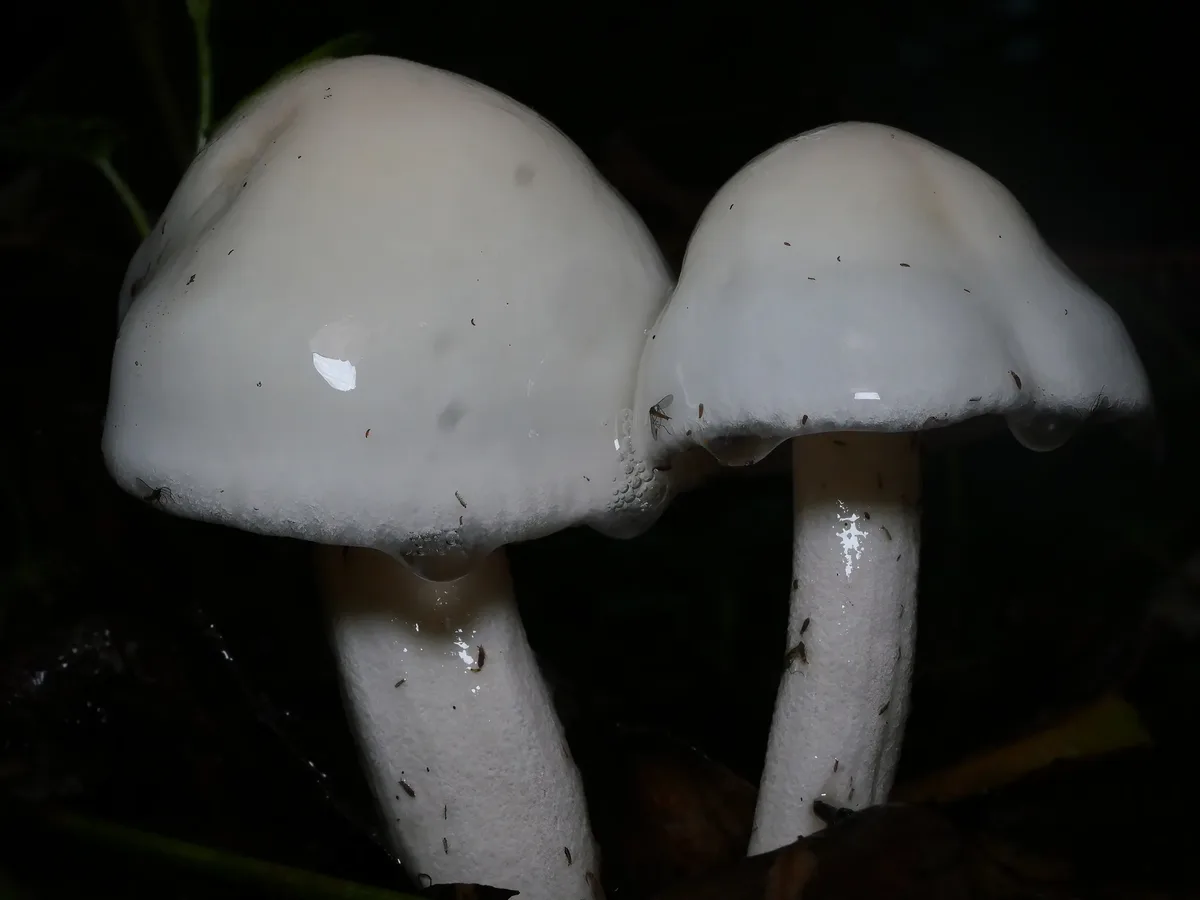 caseyhh (CC0)
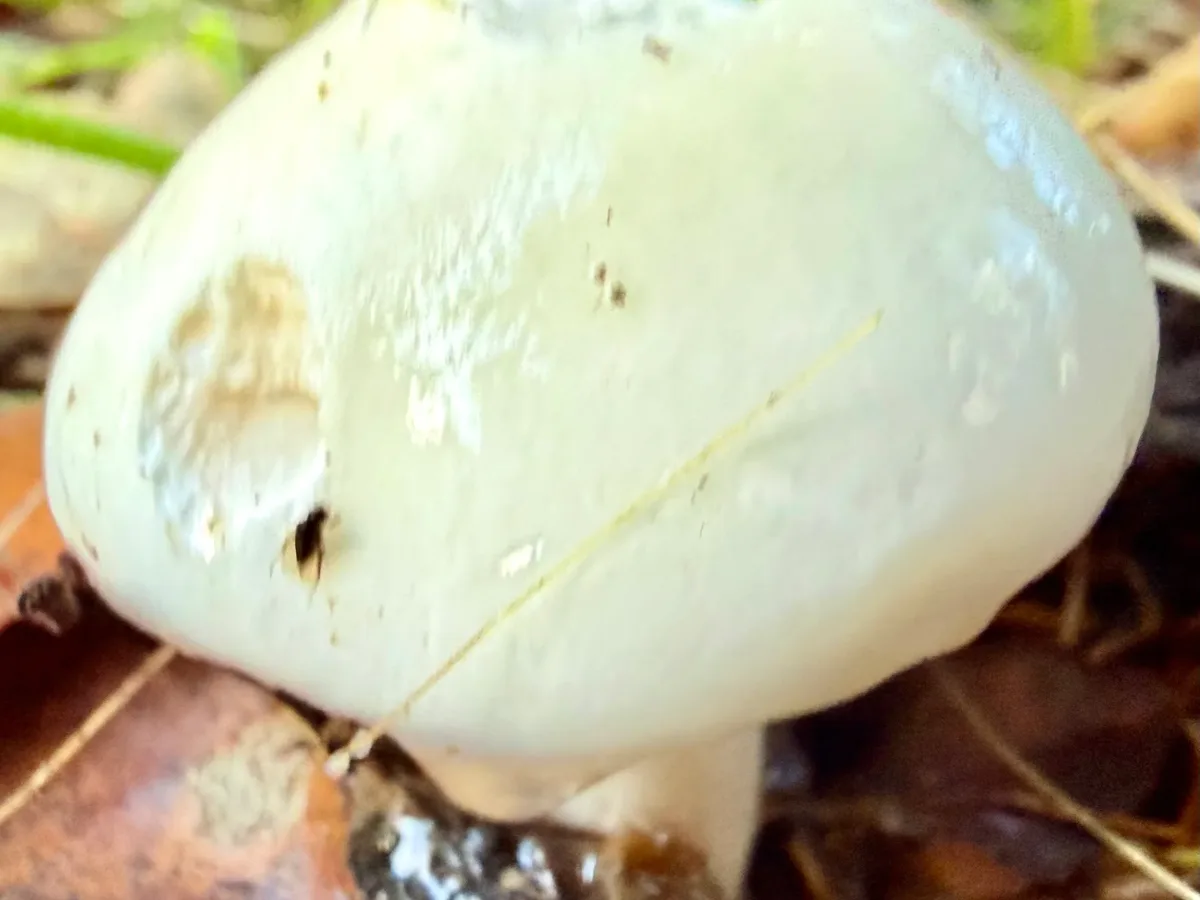 Chuck Wilson (CC0)
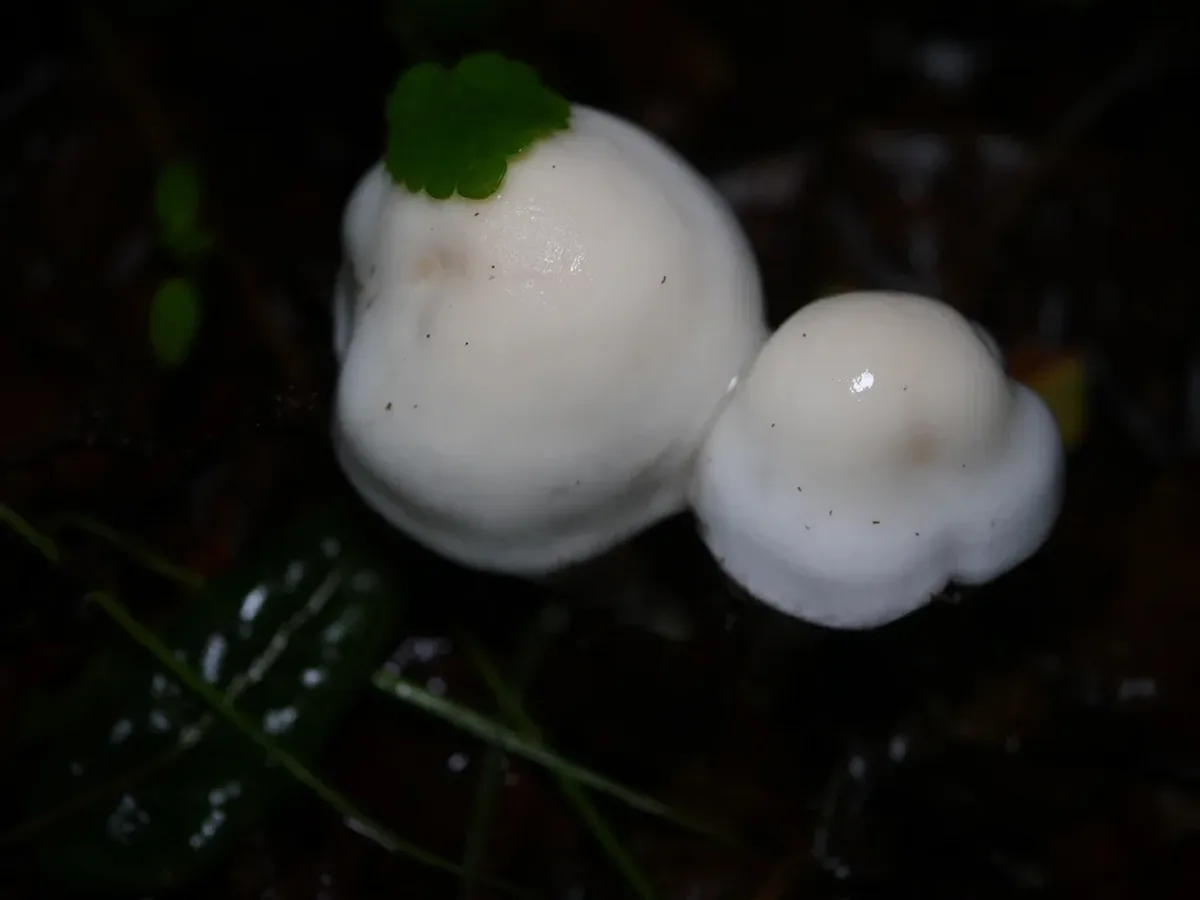 caseyhh (CC0)
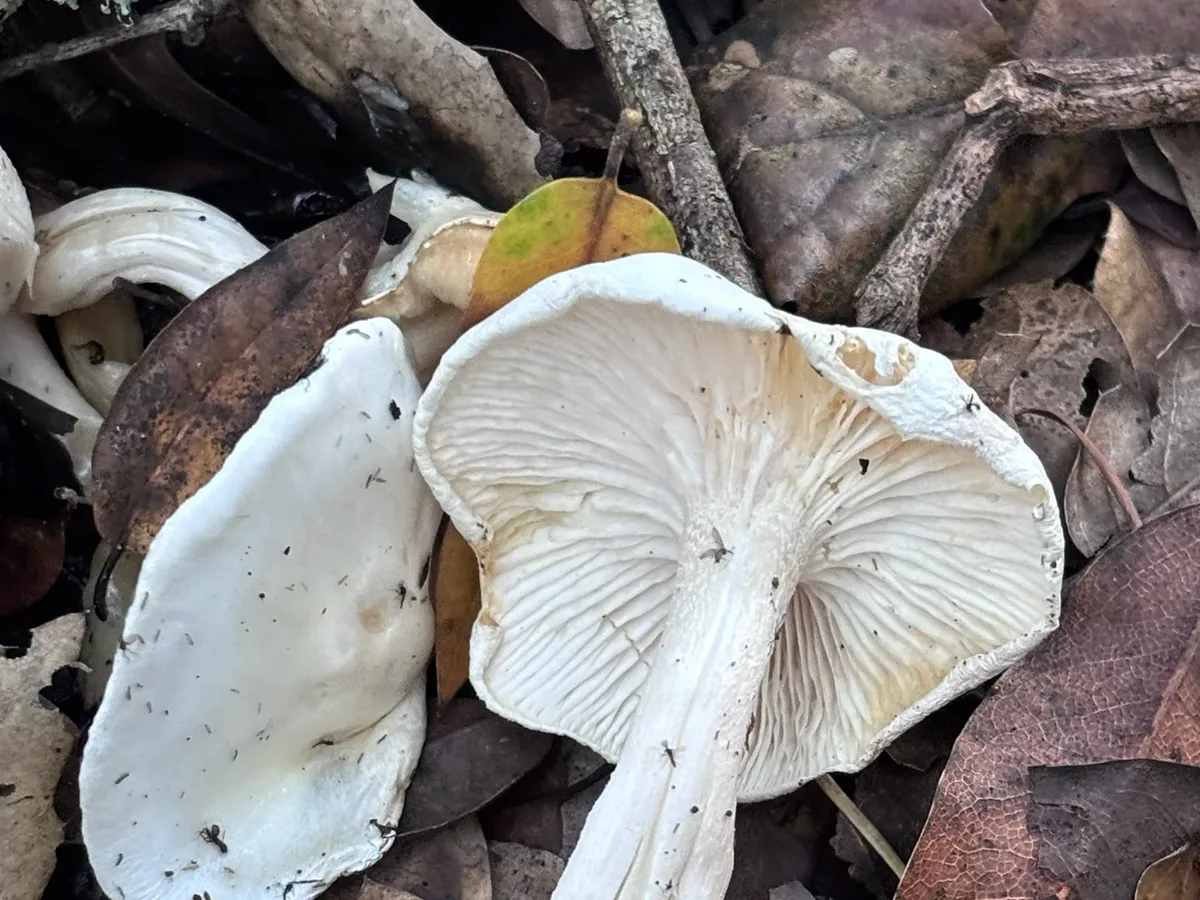 © reagan peschke (CC BY)
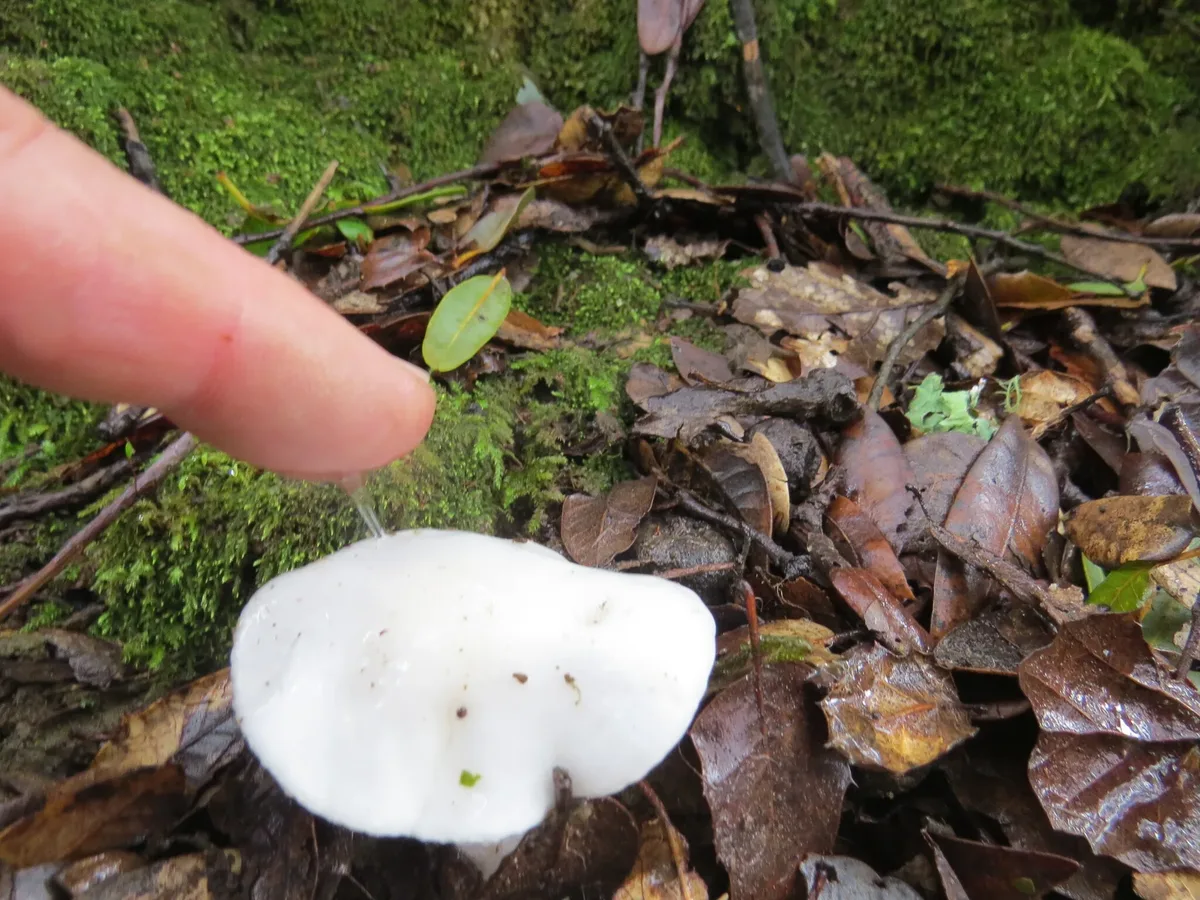 © Garth Harwood (CC BY)
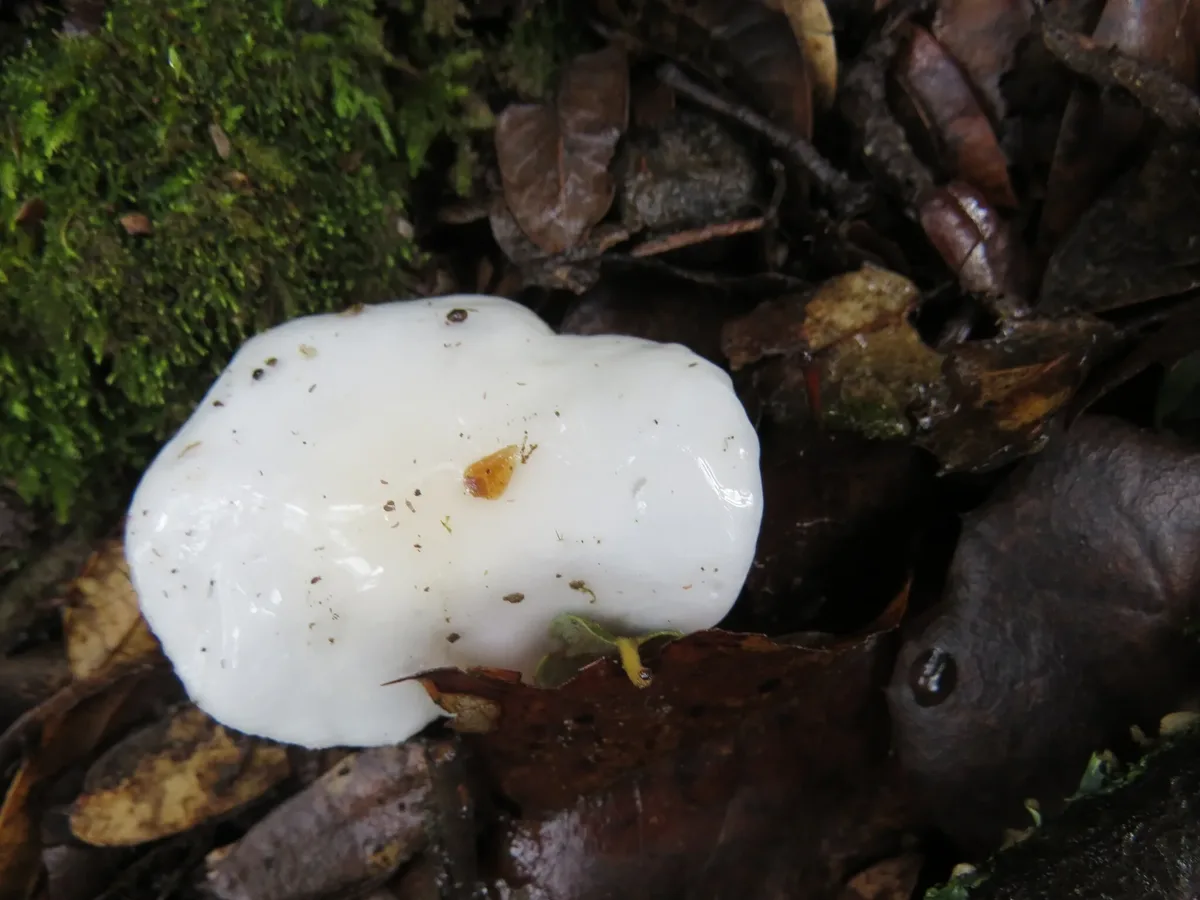 © Garth Harwood (CC BY)
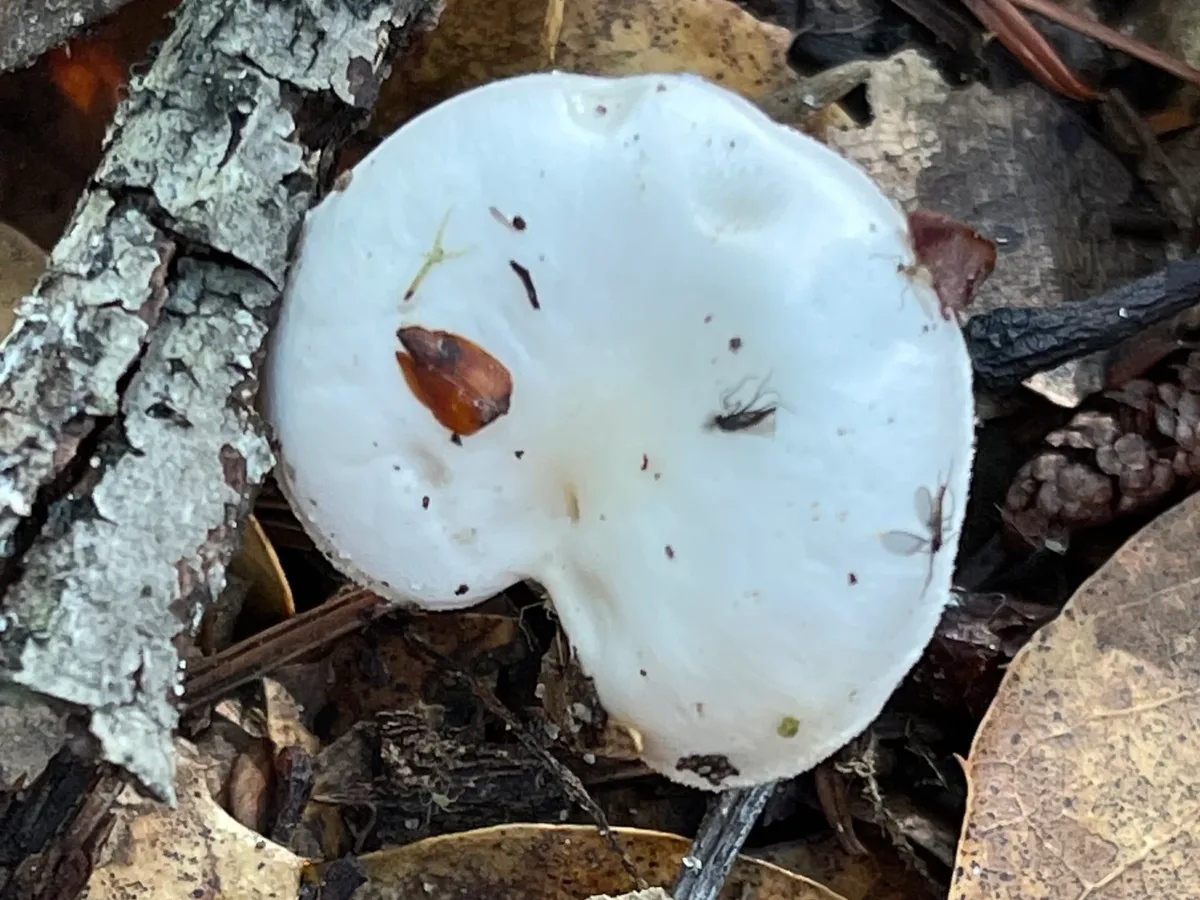 © Barbara Banfield (CC BY 4.0)
 © Kathleen Dobson (CC BY 4.0)© LeeAnn Latremouille (CC BY 4.0)caseyhh (CC0)
Good to eat, once you have identified it with certainty and cooked it through.
Never eat a mushroom you are not 100% sure of - check the look-alikes below, and always cook wild mushrooms.
How to recognise it
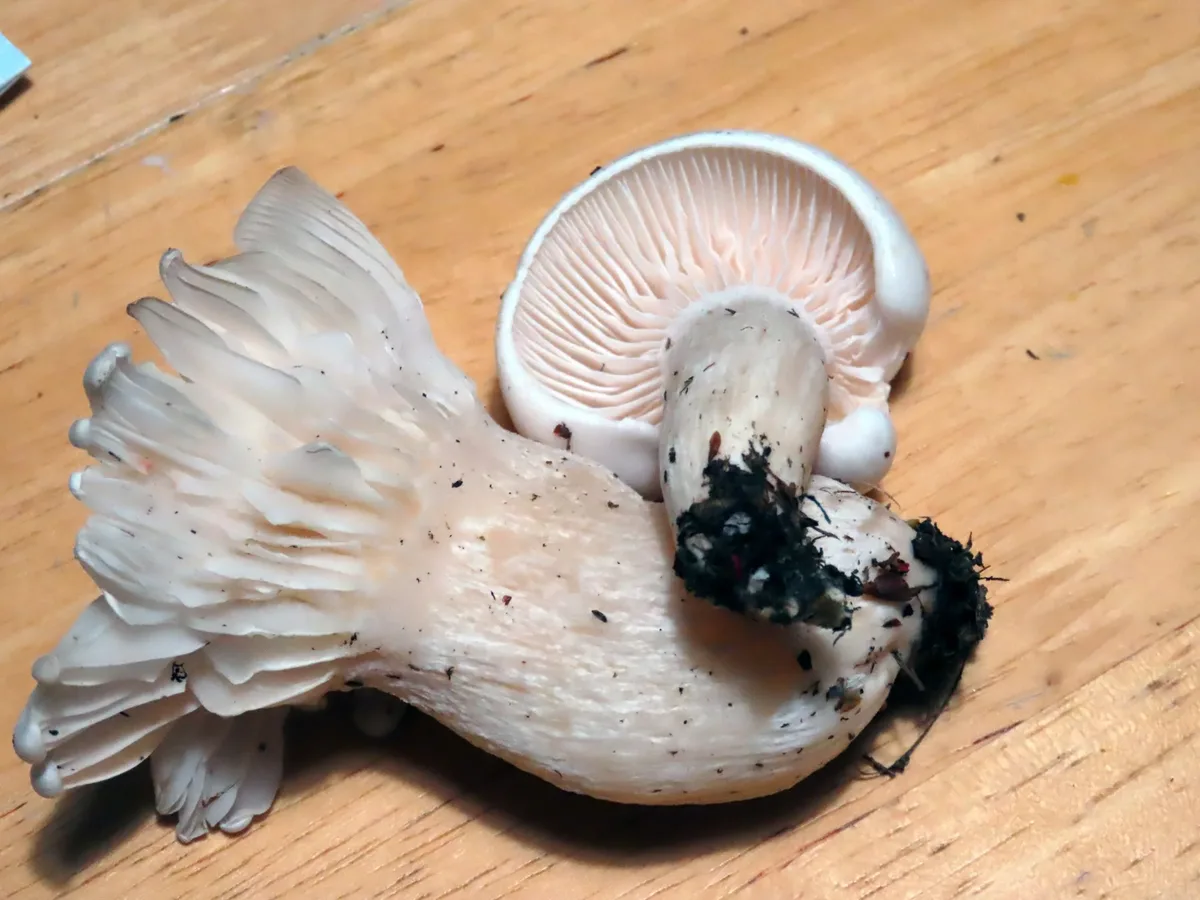
Hygrophorus eburneus is one of the most uniformly white mushrooms of European woodland, and its extreme sliminess in wet weather makes it hard to mistake for anything else.
Colour is consistently ivory-white to pure white across every part - cap, gills, and stem - with none of the grey tones of H. agathosmus, the olive cast of H. olivaceoalbus, or the yellow wash of H. hypothejus.
Cap
The cap starts as a convex dome, sometimes with a low central boss, and opens out to a broadly arched or nearly flat shape with maturity - occasionally developing a shallow central dip in older specimens.
After rain, the surface is coated in a thick, transparent slime that makes the whole mushroom feel almost soapy; H. eburneus is arguably the slimiest wild mushroom you are likely to pick up. Once conditions dry out, that slime disappears entirely, leaving a silky, softly gleaming surface.
Gills
The gills are the genus hallmark: widely spaced, thick, and waxy. Rub one between finger and thumb and you feel a slow, yielding resistance - like candle wax or slightly firmed butter - completely unlike the papery, crumbling, or snap-crisp texture of other white-gilled mushrooms.
The gills are adnate to slightly decurrent and remain ivory-white throughout, not staining or changing colour with age or handling.
Stem
The stem is also viscid-slimy for most of its length - not just at the cap junction - which is an important character separating it from some lookalikes. The base is often tapered or pointed rather than bulbous, and there is no ring.
Flesh
The flesh is firm and white, staying white when cut. Spore print white.
Smell & taste
The smell is faint and not particularly distinctive: sometimes honey-like or mildly sweet, occasionally with a faint goat-like or oily undertone. It lacks the strong almond scent of H. agathosmus or the anise quality of certain Clitocybe species.
The taste is mild and unremarkable.
Where & when it grows
Habitat
Hygrophorus eburneus is an ectomycorrhizal species with a deep affinity for beech (Fagus sylvatica) on calcareous or base-rich soils.
It is one of the characteristic autumn fungi of mature calcareous beech forest in western and central Europe - the kind of woodland that grows over chalk, limestone, or other calcium-rich rock, with its close canopy, cool shade, and deep carpet of damp, slowly decomposing leaves. Those conditions are what the ivory woodwax needs, and where beech and limestone come together it can be reliably abundant.
While beech is by far the most frequent partner, H. eburneus also forms mycorrhizas in mixed or calcicolous deciduous woodland with:
- oak (Quercus robur, Q. petraea, Q. pubescens),
- hornbeam (Carpinus betulus),
- lime (Tilia spp.).
It is conspicuously absent from acidic sandy soils, heath, and pure conifer plantation. On the continent it ranges from sea level in coastal beech forests up to roughly 1,500 m in the Alps and Pyrenees.
It grows singly or in loose troops, often returning to the same patches of leaf litter year after year - its perennial mycelium quietly threaded through the root systems of the same trees, sometimes for decades. The pale, slimy fruitbodies show up clearly against dark leaf litter even in the dim light of a closed-canopy forest.
When
Fruiting runs from late summer through late autumn, broadly August to November across most of the European range.
The main flush follows the first significant autumn rains once temperatures begin to cool, peaking in September and October when soil temperatures settle into the 7-12 °C range.
Individual fruitbodies develop over several days and hold up well for one to two weeks in cool, humid conditions. Late-season specimens in October and November can survive light ground frosts intact.
In upland areas the season starts a little earlier; in mild Atlantic climates near the coast it can stretch later, and around the Mediterranean fringe fruiting occasionally continues into December.
How it grows
H. eburneus is ectomycorrhizal - it lives in partnership with its host trees rather than breaking down dead matter, drawing carbohydrates from tree roots in exchange for minerals and water gathered by the fungal mycelium.
The same mycelium fruits year after year at the same spots, its underground network woven into the root systems of mature beeches and oaks that may have hosted it for decades.
Fruitbodies emerge singly or in loose troops of 3-15 scattered through the leaf litter, each one rising slowly over several days rather than appearing overnight.
Fruiting is thought to be triggered by autumn rainfall recharging the soil after the summer dry period, combined with cooling temperatures.
The density of a flush varies considerably from year to year with rainfall, but established colonies return to the same microsites reliably as long as their host trees remain healthy. The species does not cluster on wood or form tight bunches; each fruitbody stands on its own in the litter.
Fruiting conditions
Fruiting triggered by autumn rainfall recharging soil moisture following the summer dry period, combined with cooling soil temperatures. Optimal soil temperature range appears to be roughly 7-12 °C; fruiting arrests at warm temperatures above 14-15 °C. Flush lag of 1-2 weeks is typical for ectomycorrhizal Hygrophorus species. Established colonies fruit reliably each year at the same microsites provided host beech trees remain healthy and autumn rainfall is adequate.
Look-alikes
Because H. eburneus is entirely white and grows in beech forest, confusion focuses on other white species in the same habitat.
- Hygrophorus cossus (goat woodwax): the most frequent confusion species. Very similar in appearance - white, slimy, beech forest - but H. cossus has a distinctly unpleasant smell strongly reminiscent of coal-tar or goat, and typically grows with oak rather than beech. Some authorities treat H. cossus and H. eburneus as varieties of the same species; both are edible. The smell is the decisive character: H. eburneus has at most a faint, somewhat pleasant or neutral honey-like scent.
- Hygrophorus penarius (mealy woodwax): similar white colouration and beech habitat, but the cap surface is distinctly dry and mealy rather than slimy, the stem is only slightly sticky rather than fully viscid, and it has a stronger mealy odour. Edible.
- Hygrophorus piceae (spruce woodwax): essentially odourless and white, but grows strictly under spruce (Picea), not beech; distinguished by habitat.
- Clitocybe dealbata (ivory funnel): white, grows in grass, lawns, meadows, and woodland edges - not in deep closed-canopy beech forest. Has thin, crowded, non-waxy gills, and a mealy smell. POISONOUS: contains muscarine and causes cholinergic poisoning (salivation, sweating, tear production, constriction, bradycardia). The habitat separation is almost absolute - H. eburneus is a beech forest species, C. dealbata is a grassland/edge species - and the waxy gill texture of H. eburneus is immediately distinguishable from the thin, crowded gills of C. dealbata. However, foragers exploring ecotone areas between beech forest and lawns should be aware of the risk.
- Amanita virosa / Amanita bisporigera (destroying angel): white Amanita species in similar woodland; distinguished from H. eburneus by the presence of a volva (cup-like base structure), a ring on the stem, free gills, and non-slimy cap. The differences are stark and fundamental. H. eburneus has no volva, no ring, and decurrent-adnate waxy gills.
- Leucoagaricus leucothites (white dapperling): white-capped but has a ring on the stem, free gills, dry or merely silky cap, grows in grassland or disturbed ground - not in shaded beech forest.
Also pure white and found in similar beech/deciduous woodland. Distinguished by: a bag-like volva at the stem base (often partially buried), a pendant ring on the upper stem, free (non-decurrent) gills that are not waxy, a dry (non-slimy) cap surface, and a sweet sickly smell. H. eburneus has no volva, no ring, decurrent-adnate waxy gills, and a fully slimy cap and stem. These differences are fundamental and immediately apparent on close inspection.
Extremely similar in appearance - white, slimy cap and stem, waxy gills, beech or oak woodland - but H. cossus has a distinctly unpleasant smell strongly resembling coal-tar, goat, or a public toilet. H. eburneus has at most a faint neutral or honey-like smell. Some taxonomists treat them as varieties of a single species; both edible.
White and superficially similar in colour but grows in grassland, lawns, and open woodland edges - not in closed-canopy beech forest. Has thin, crowded, non-waxy gills (completely unlike the widely spaced waxy gills of H. eburneus), a mealy smell, and no sliminess. POISONOUS: contains muscarine; causes sweating, salivation, and other cholinergic effects. Habitat and gill texture together eliminate any genuine confusion.
Also white and found in beech forest, but the cap surface is dry and mealy (not slimy), the stem is only slightly sticky rather than fully viscid, and it has a more pronounced mealy odour. Edible.
White-capped with white gills, but has a clear ring on the stem, free gills, a dry or merely silky cap surface, and typically grows in grassland or disturbed ground rather than shaded beech forest. Not slimy. Edibility disputed; some reports of adverse reactions.
In the kitchen
Picking & cleaning
Cut the stem cleanly at the base with a knife rather than pulling, to minimise mycelium disturbance and leave the sticky, soil-accumulating base behind.
The extreme sliminess of the cap and stem requires particular care during collection: loose transport in a plastic bag results in a matted, litter-encrusted mass that is unpleasant to clean. Use a rigid-walled basket, and arrange specimens with caps facing up or supported on their sides to prevent adhesion.
In the field, a dry cloth or stiff brush can remove most leaf litter; the slime makes thorough cleaning easier at home, as debris floats off in cold water.
Inspect the cut stem base - it should be white, firm, and solid; any discolouration or softness suggests an older specimen not worth collecting. The white slime itself is harmless and washes off readily.
Cooking
The flesh of H. eburneus is firm and fairly mild, with a slightly gelatinous quality derived from the slime of the cap and stem.
Rinse in cold water to remove the surface slime before cooking - it largely dissolves away and does not affect the texture of the cooked mushroom. Slice or leave whole depending on size.
The best preparation is a simple sauté in butter over medium-high heat, allowing the water to drive off before the flesh begins to colour slightly.
The mild flavour works well in cream sauces, risotto, or as a supporting element in mixed mushroom dishes where more assertive species (chanterelles, porcini) carry the flavour. It absorbs seasonings well.
The mild, neutral character makes it suitable for pickling in vinegar with herbs - a traditional Central European preparation. Drying is possible but the result is relatively bland compared to aromatic species.
Not recommended for eating raw.
Good to know
Hygrophorus eburneus is a genuine edible species with no documented toxicity in the mycological literature. It has been eaten across western and central Europe for generations.
However, it is not a prize culinary mushroom - the flavour is mild and the texture somewhat gelatinous due to the slime - and most foragers collect it only when other mushrooms are scarce.
The primary safety consideration is correct identification. The most important potentially dangerous confusion is with Clitocybe dealbata (ivory funnel), which contains muscarine and causes cholinergic poisoning.
This confusion is unlikely in practice: H. eburneus grows in closed-canopy beech forest on calcareous soils, while C. dealbata grows in grassland, fairy rings, and open woodland edges. Additionally, the waxy gill texture of H. eburneus is completely different from the thin, crowded non-waxy gills of C. dealbata.
Confirming all three of the following eliminates all hazardous lookalikes:
- 1the beech forest habitat on calcareous soil,
- 2widely spaced waxy gills with the characteristic candle-wax resistance,
- 3the full viscidity of both cap and stem.
The destroying angels (Amanita virosa, A. bisporigera) are deadly and white, but they are distinguished from H. eburneus by their volva, ring, free gills, and non-slimy dry cap - fundamental morphological differences that a forager with any experience should recognise immediately.
As with all edible fungi:
- eat only specimens you are completely certain of;
- cook thoroughly;
- do not eat raw;
- collect from unpolluted woodland away from roads and industrial areas.
A reference guide - never an edibility guarantee. When in doubt, leave it out.