Gold-flecked woodwax
Hygrophorus chrysodonsyn. Agaricus chrysodon Batsch, Limacium chrysodon (Batsch) P. Kumm., Hygrophorus chrysodon var. leucodon Alb. & Schwein.
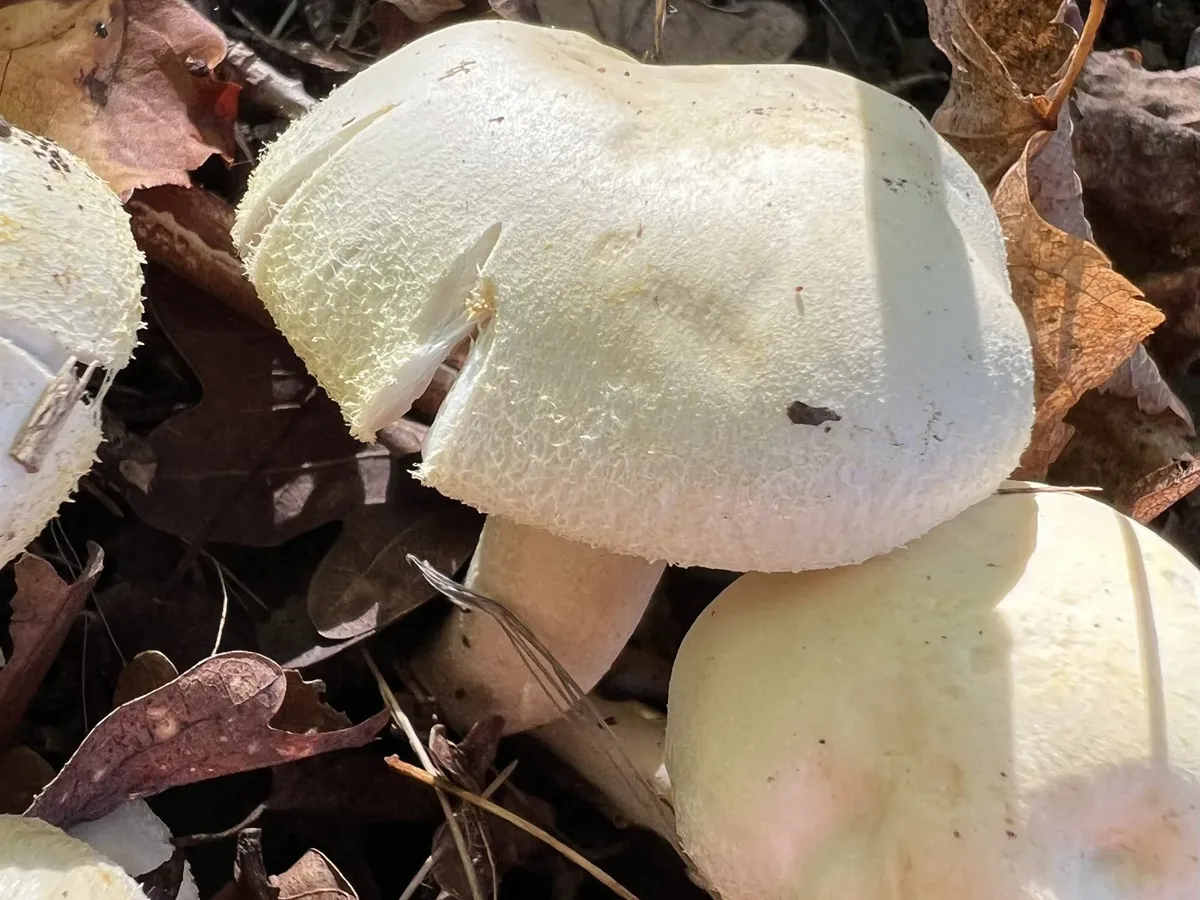 © Rune Zakariassen (CC BY)
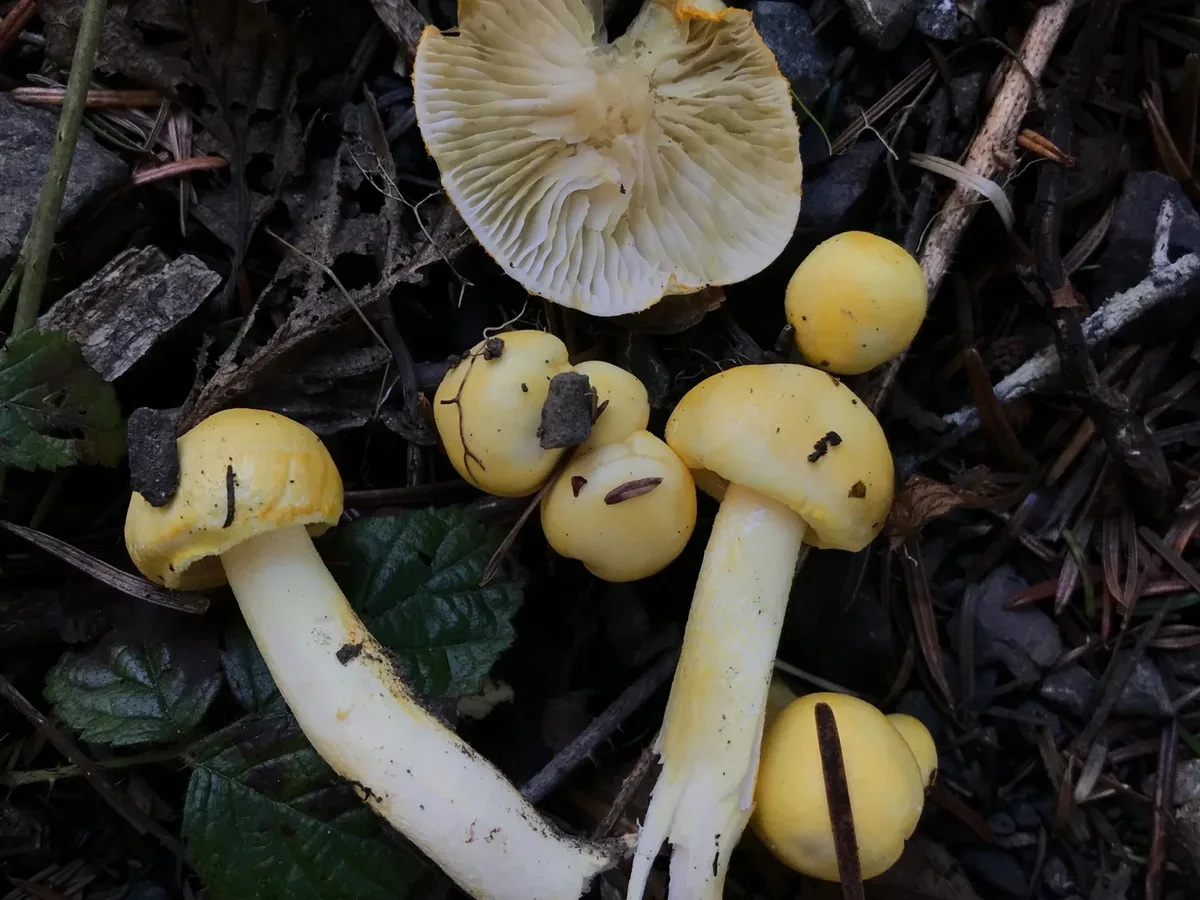 © Matthew Rozanoff (CC BY)
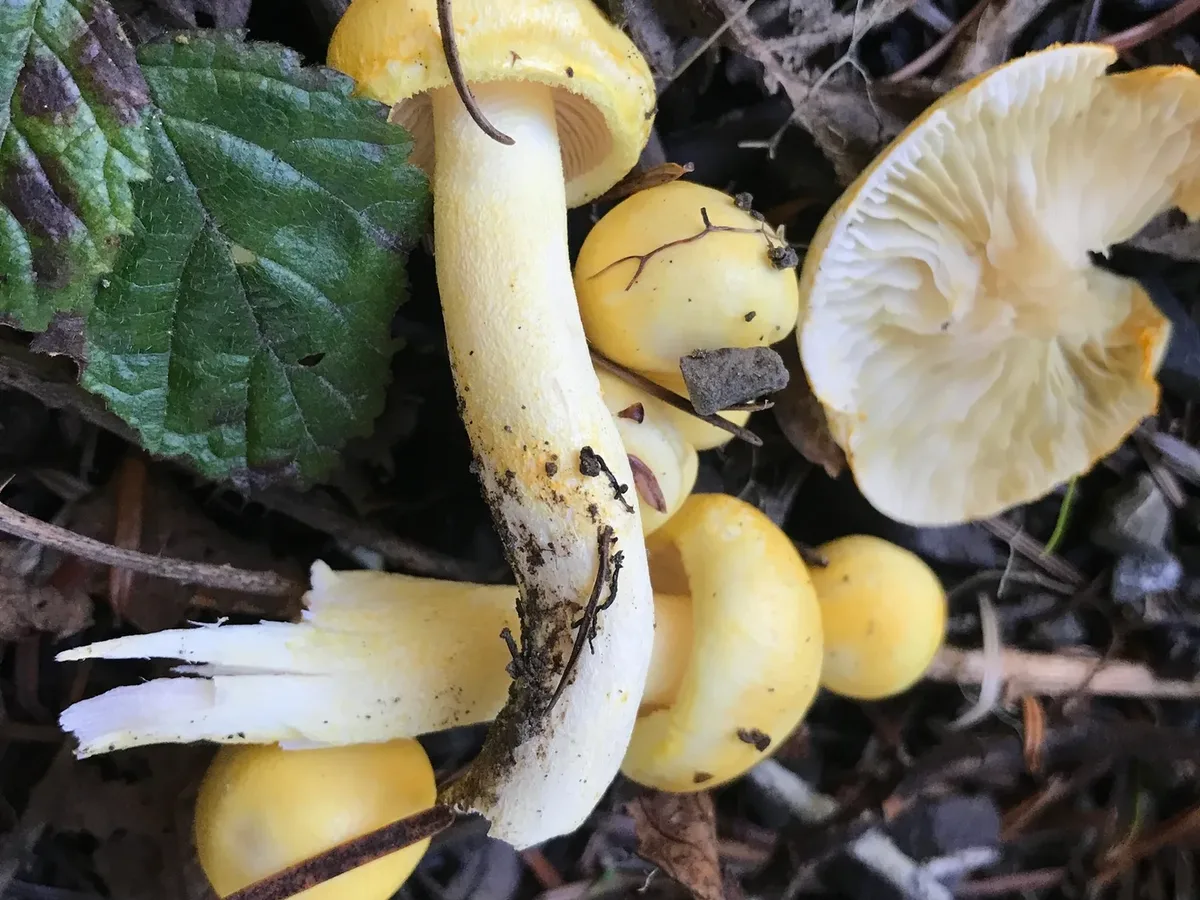 © Matthew Rozanoff (CC BY)
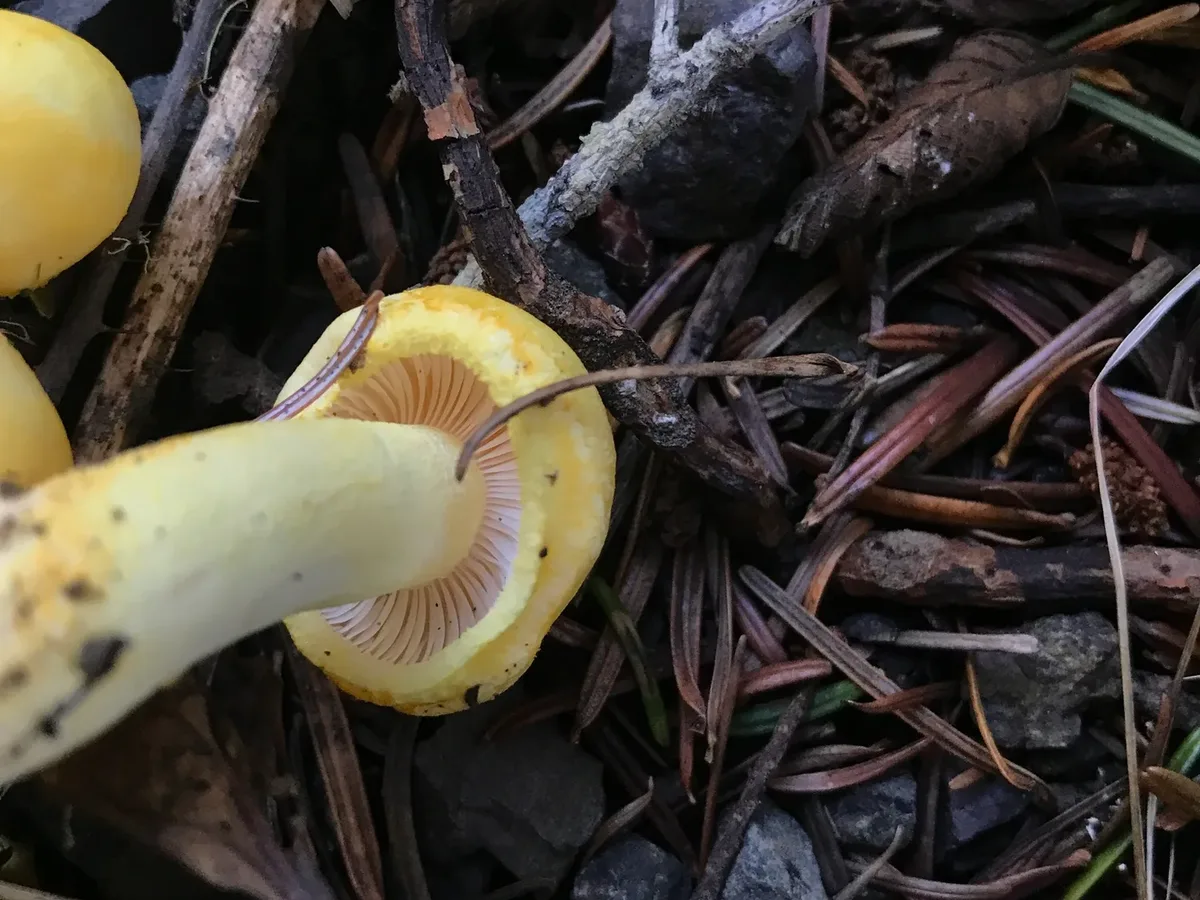 © Matthew Rozanoff (CC BY)
 © relew (CC BY)
 © Rune Zakariassen (CC BY)© Rune Zakariassen (CC BY)© Matthew Rozanoff (CC BY)
Good to eat, once you have identified it with certainty and cooked it through.
How to recognise it
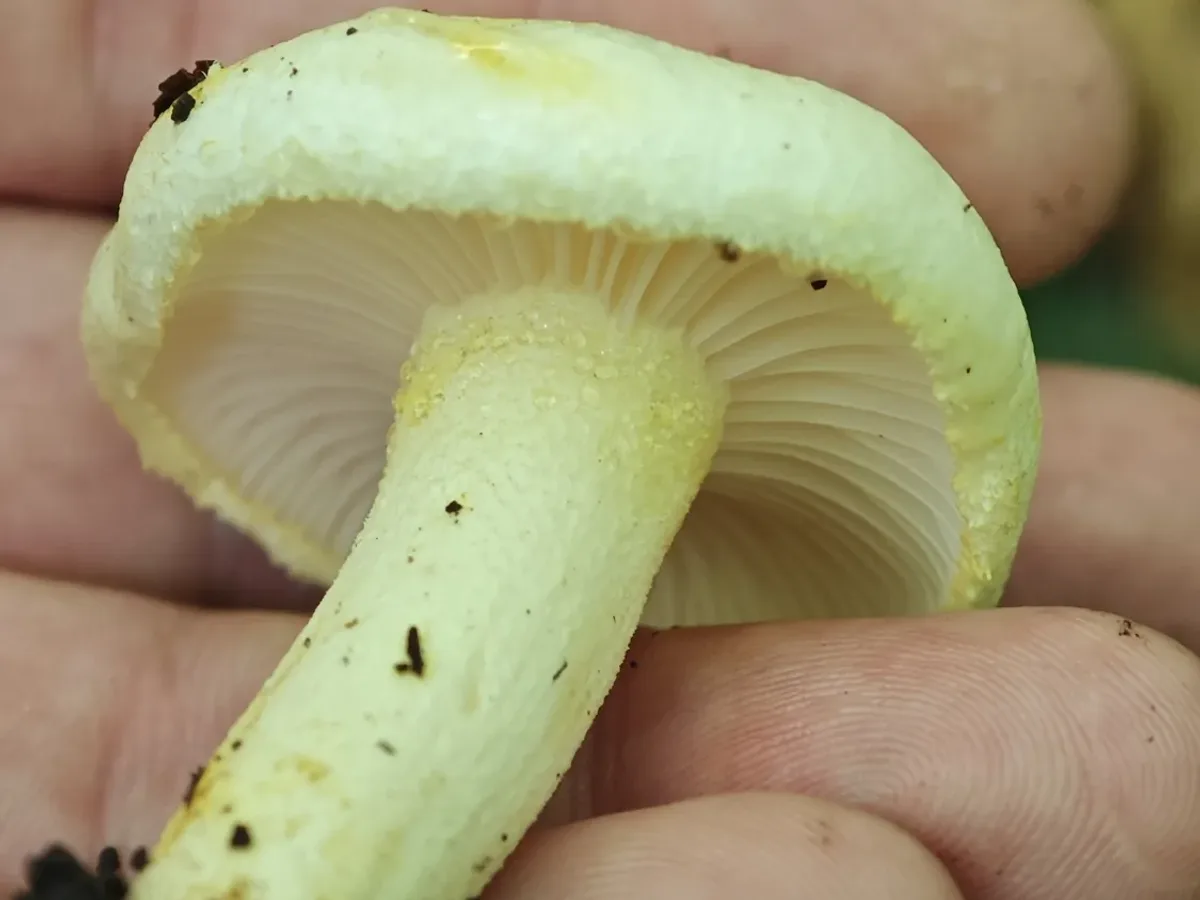
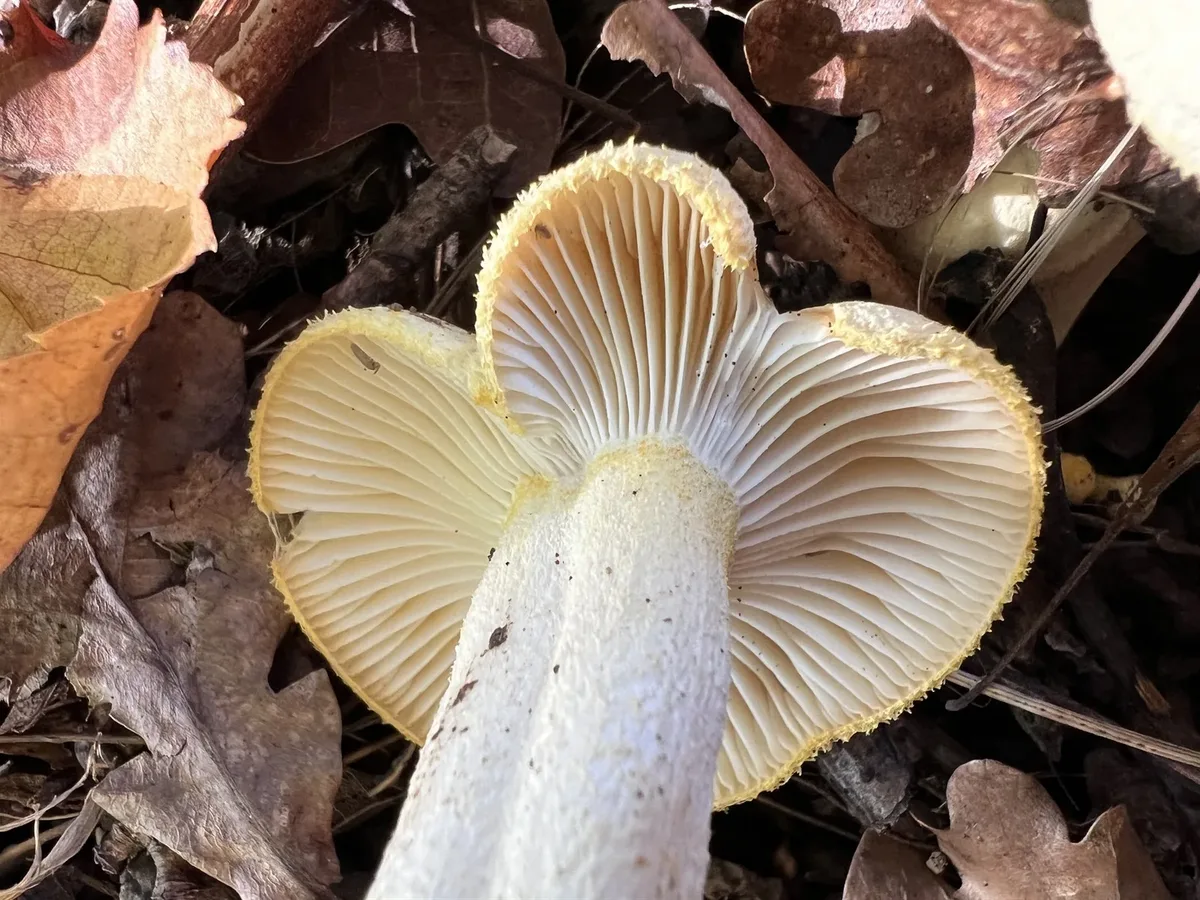
Hygrophorus chrysodon is unmistakably anchored by a single defining trait: a fringe of tiny but vivid golden-yellow granules that line the cap margin in young specimens and densely coat the stem apex throughout life.
Without those yellow flecks, this mushroom would be entirely white and potentially confusing; with them, it is one of the most characterful members of its genus.
Cap
The cap is white to ivory, convex when young, expanding broadly with age, and thoroughly coated in a thick viscid slime that makes it gleam when fresh and sticky to the touch.
The yellow granules at the cap rim are most vivid in fresh, young caps - they look almost like a ring of saffron dust - and may erode or wash away on rain-soaked older specimens.
Stem
The stem apex, however, holds its yellow granules reliably: look there first.
Gills
The gills are broadly attached, widely spaced, thick, and have that characteristic waxy, rubbery resistance when pressed - a genus-level trait of Hygrophorus that takes a moment to feel for but once learned is unmistakable.
Flesh
Flesh is pure white throughout and does not change colour when cut. Spore print white.
Where & when it grows
Habitat
In the Pacific Northwest, look for gold-flecked woodwax in mature and old-growth conifer forests, particularly where true firs (Abies spp.) grow - grand fir, noble fir, and Pacific silver fir are the most important hosts in this region.
It also appears occasionally under western hemlock or Sitka spruce in moist coastal stands.
The mushroom is not a forest generalist: it seeks out established, long-lived mycorrhizal partnerships with mature trees, and tends to be absent from young second-growth or recently disturbed sites.
Look for fruitbodies half-buried in deep needle duff or mossy litter beneath the host canopy, often growing in small loose clusters of three to eight around the base of a large fir.
The same mycorrhizal mat can produce fruitbodies year after year if the host tree and soil moisture remain stable, so a spot found one year is worth revisiting.
When
In the Pacific Northwest the gold-flecked woodwax fruits from late August through November, with the main flush in September and October.
The trigger is the classic Pacific Northwest autumn: the first sustained rains ending the summer dry season, typically falling with cooling temperatures in September.
Fruitbodies emerge 7-14 days after a soaking rain event that follows a warm, dry period.
A soil temperature window of roughly 6-14 °C and adequate residual moisture appear to be the key drivers; once ground frost arrives in earnest the season is finished.
Coastal sites and lower-elevation stands may extend the season into early November in mild years.
How it grows
Solitary or loosely gregarious, never tightly clustered. Fruitbodies emerge from the duff as white pins with a characteristic golden-fringed cap margin and develop to full size over 5-10 days.
The viscid gluten layer expands rapidly in wet weather and can make individual mushrooms appear overnight after a good rain.
Established mycelial patches in old-growth fir forest can produce reliably year after year, though flush size varies considerably with autumn rainfall patterns.
Fruiting conditions
Flushes in autumn when the first significant rains break the summer dry period and soil temperatures fall to 5-14 °C. A rainfall of 15 mm or more over 14 days is typically sufficient to trigger fruiting, with fruitbodies emerging 7-14 days after the moisture event. In the Pacific Northwest the trigger is closely tied to the onset of autumn rains in September. Fruiting ends with the first sustained ground frosts.
Look-alikes
Hygrophorus chrysodon's combination of white viscid cap with golden granules at the cap margin and stem apex is distinctive, and no dangerous species shares this precise combination.
The most important comparison is with other white Hygrophorus species in the same forests.
- Hygrophorus eburneus (ivory woodwax) is uniformly pure white, smooth without any yellow granulation, and somewhat more slender and elegant in stature; it grows with beech and occasionally oak, not firs.
- Hygrophorus piceae is another white, glutinous waxcap found in spruce and fir forests; it lacks any yellow granulation, is often smaller, and has a more uniformly white, clean appearance.
- Hygrophorus lucorum is a larch specialist - white with a faint yellowish disc, slimy both on cap and stem, but without the golden granules that characterize H. chrysodon.
Among white Clitocybe-type mushrooms that could theoretically grow in the same forest, the critical differences are: Clitocybe species have crowded, narrow, decurrent gills (never widely spaced and thick-waxy), usually a dry cap surface, and a dry stem.
Clitocybe phyllophila and Clitocybe dealbata are white and grow in litter but their gill texture and cap surface differ sharply from Hygrophorus.
There are no deadly lookalikes known to be routinely confused with H. chrysodon when the golden granules at cap margin and stem apex are confirmed.
Pale grey to greyish-white, larger, with crowded narrow gills that run down the stem (decurrent), a dry cap surface, and a strong mealy or soapy odour. Toxic to some individuals. None of the waxy, widely spaced gill texture or viscid cap surface of H. chrysodon; immediately distinct in texture and smell.
Uniformly pure white on cap, gills, and stem with no yellow granulation anywhere. More slender and elegant in overall stature. Grows with beech and oak on calcareous soils. The absence of any golden-yellow granules at the cap margin or stem apex immediately distinguishes it from H. chrysodon.
White to pale ivory cap with a faint ochre-yellow tint at the disc centre; no golden granular flecks at the cap margin or stem apex. A strict larch (Larix) specialist - not found under fir. Slimy on both cap and stem similarly to H. chrysodon, but the golden granule characters are entirely absent.
A white to ivory waxcap of spruce and fir forests that closely resembles H. chrysodon in stature and habitat but lacks any yellow or golden granules on cap margin or stem apex. Cap surface uniformly white and glutinous. Edible. The absence of the golden granular fringe is the key separator.
Small, chalky-white, dry-capped, with crowded narrow decurrent gills, a dry stem, and no viscid gluten layer. Contains muscarine and is mildly to moderately toxic. Grows in grassland and lawns, not forest duff. The dry surface, crowded gills, and lack of any waxy gill texture make confusion with H. chrysodon unlikely, but caution is warranted with any small white mushroom.
In the kitchen
Picking & cleaning
- Harvest by cutting cleanly at the base with a knife; the viscid cap can carry considerable debris (needles, grit, soil particles) trapped in the gluten, and a field wipe with a damp cloth or soft brush reduces cleanup time later.
- Choose young to mid-age fruitbodies: older caps become soggy as the gluten layer breaks down, and very old specimens can develop an off-taste.
- Carry in an open basket or paper bag - a sealed plastic bag accelerates deterioration.
- Examine the stem apex for the golden granules before picking any specimen: if the yellow granules are absent from both cap margin and stem apex, verify identification by other means before consuming.
- Maggot larvae can infest the stem; slice through to check before bagging.
- Best used within 1-2 days of harvest.
Cooking
Gold-flecked woodwax is edible but modestly flavoured - pleasant, mild, and faintly earthy, without the depth of premium edibles like chanterelles or porcini.
The texture is firm in young specimens, becoming softer and more gelatinous with age due to the glutinous flesh layer.
The sticky slime on cap and stem dissipates with heat, so no special preparation is required beyond a wipe-down of field debris.
Sauté in butter over medium-high heat until the moisture evaporates and edges begin to colour lightly - this gives the best texture and concentrates the mild flavour.
It works acceptably in mixed mushroom dishes, cream sauces, and pasta, where it contributes texture alongside more flavourful species. Avoid long braises or stewing as the flesh becomes mushy.
Not generally considered a top edible on its own, but a pleasant addition to a foraged mushroom mix. Drying is possible but the delicate flavour is mostly lost; fresh use is preferred.
Good to know
Hygrophorus chrysodon has no known toxicity in the mycological literature and is considered a safe edible species where positively identified.
The golden granules at the cap margin and stem apex are the crucial identification feature - their presence in at least some part of the fruitbody (especially the stem apex) should be confirmed before consuming any specimen.
If both the cap margin and stem apex are entirely free of yellow granulation due to weathering in an older specimen, do not eat on the basis of identification alone.
There are no deadly species that form a convincing lookalike to H. chrysodon when those yellow granules are present.
As a precaution standard for all waxy caps, cook thoroughly before eating - all Hygrophorus species should be consumed cooked, not raw, as minor digestive irritants may be present in the raw state.
Do not collect from roadsides, polluted areas, or sites with potential chemical contamination.
A reference guide - never an edibility guarantee. When in doubt, leave it out.