Almond woodwax
Hygrophorus agathosmussyn. Agaricus agathosmus Fr., Hygrocybe agathosma (Fr.) P.D. Orton & Watling, Limacium agathosmus (Fr.) Wünsche
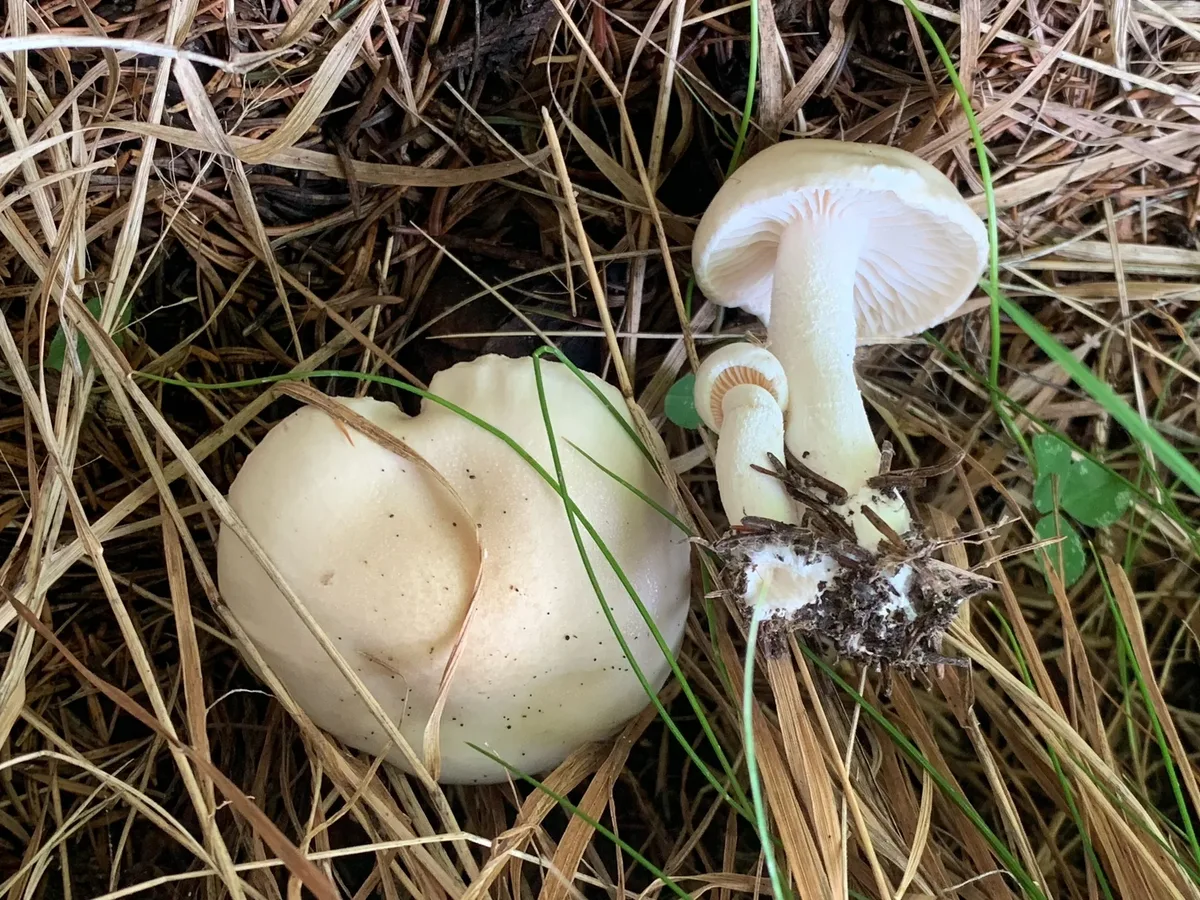 © Manuela Fiorini (CC BY)
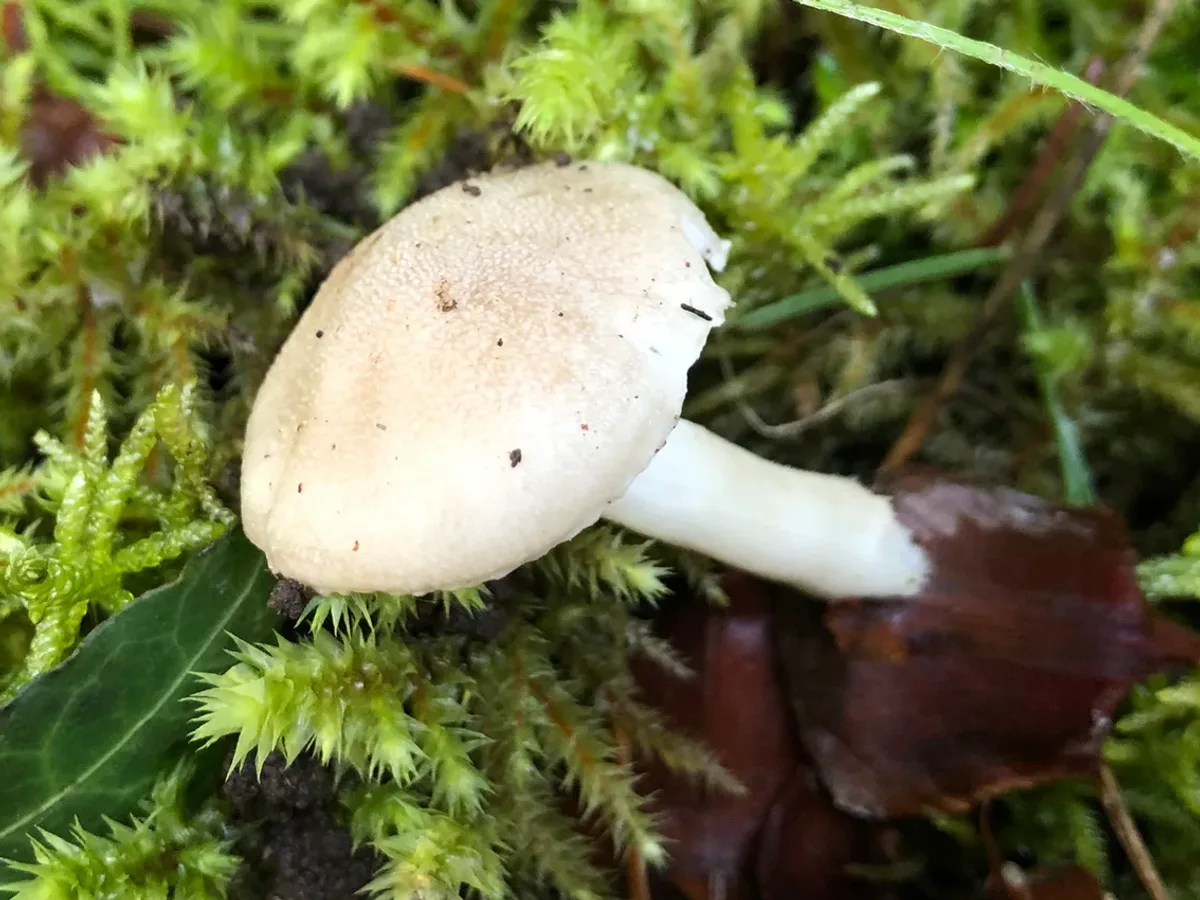 © Jason Grant (CC BY 4.0)
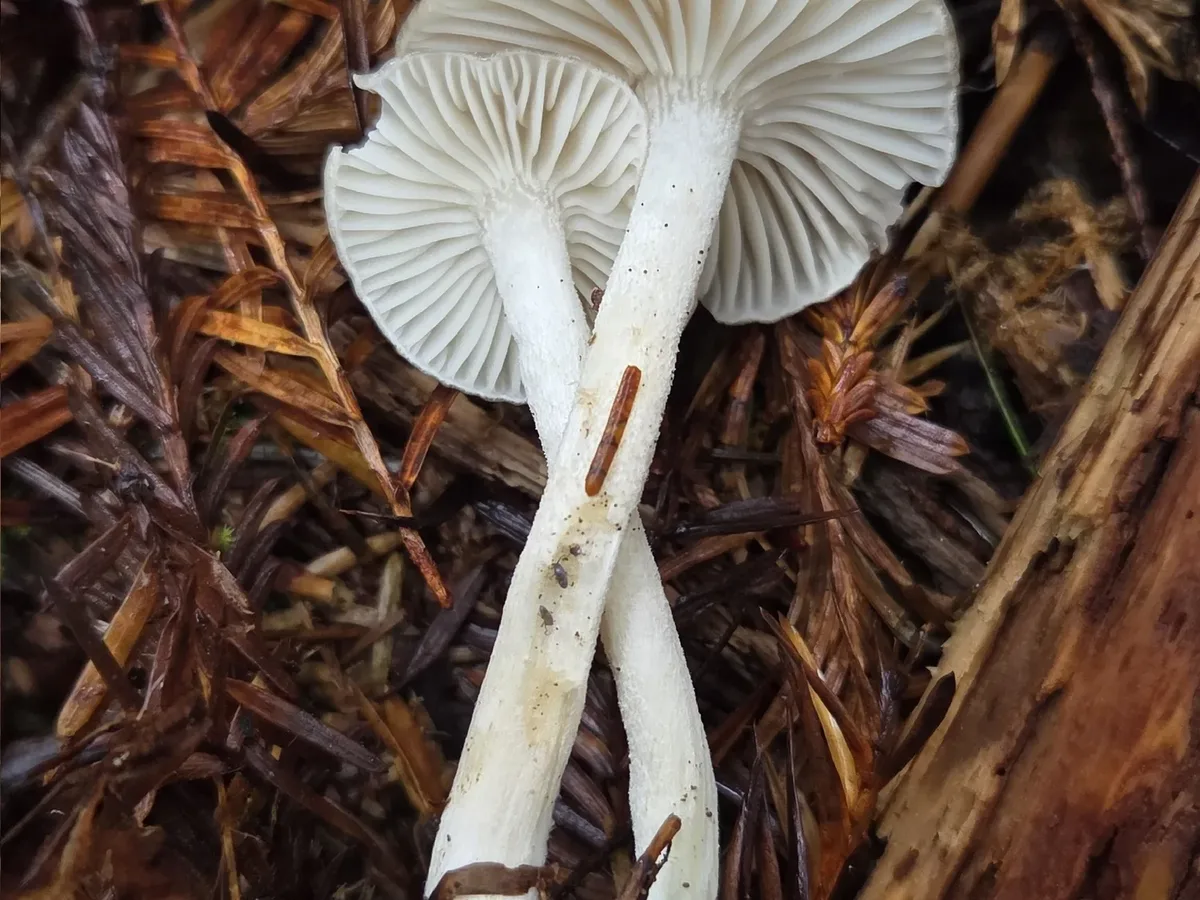 © Mandy Hackney (CC BY)
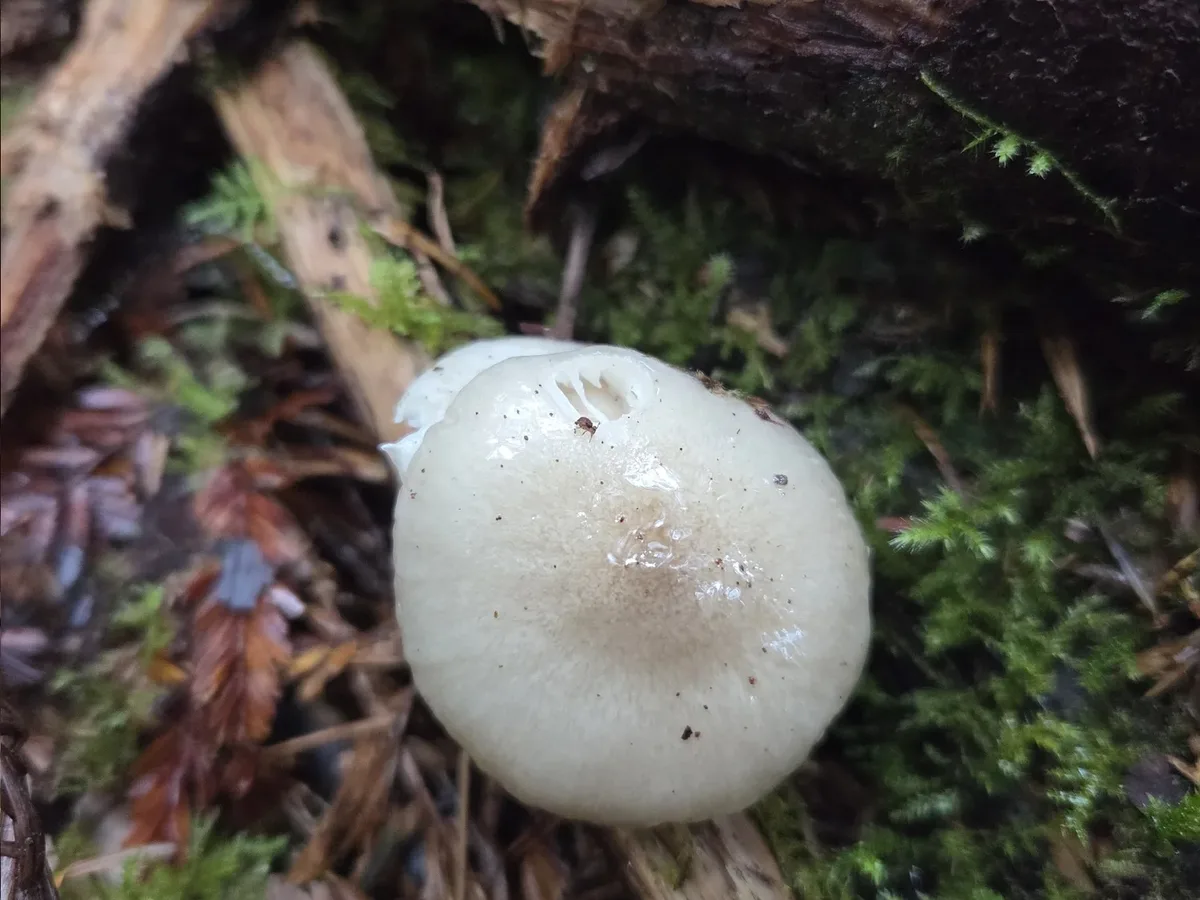 © Mandy Hackney (CC BY)
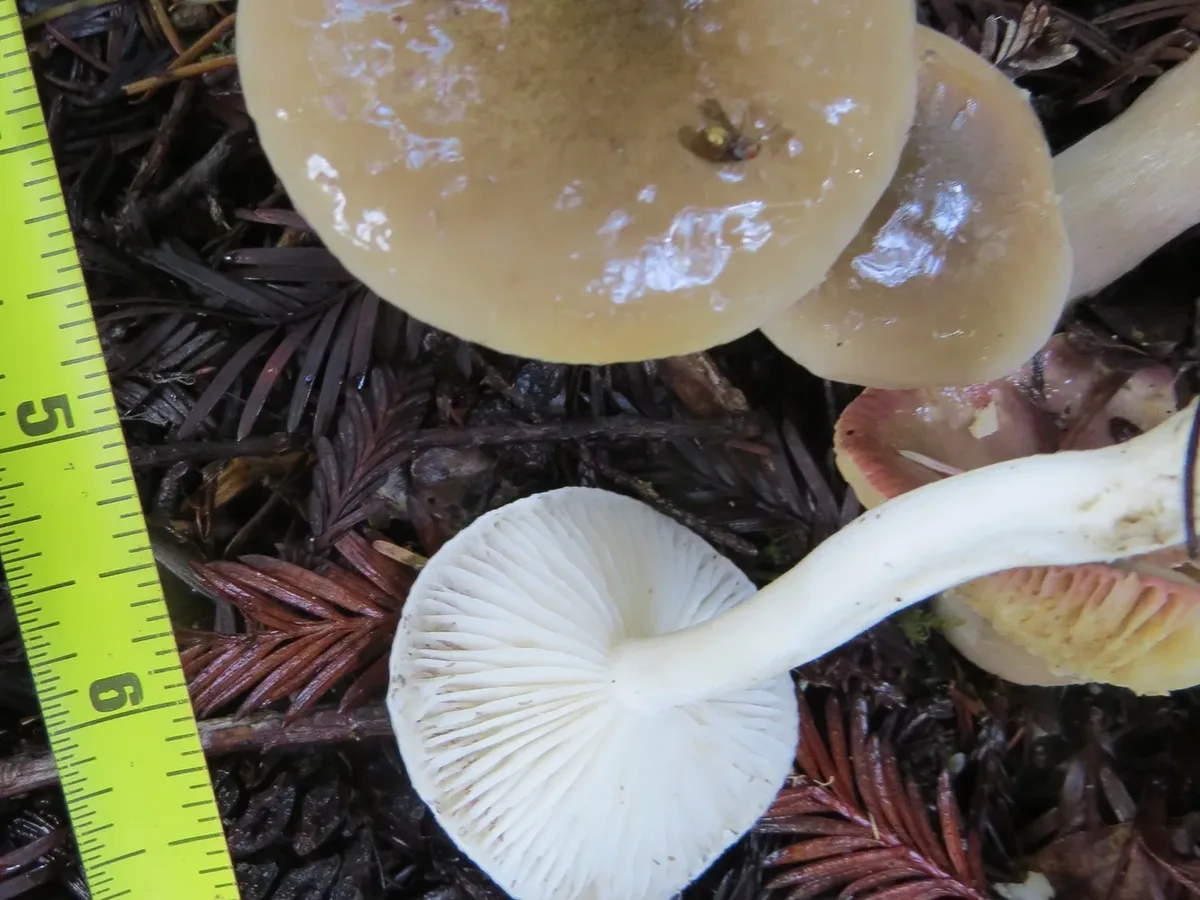 © Garth Harwood (CC BY)
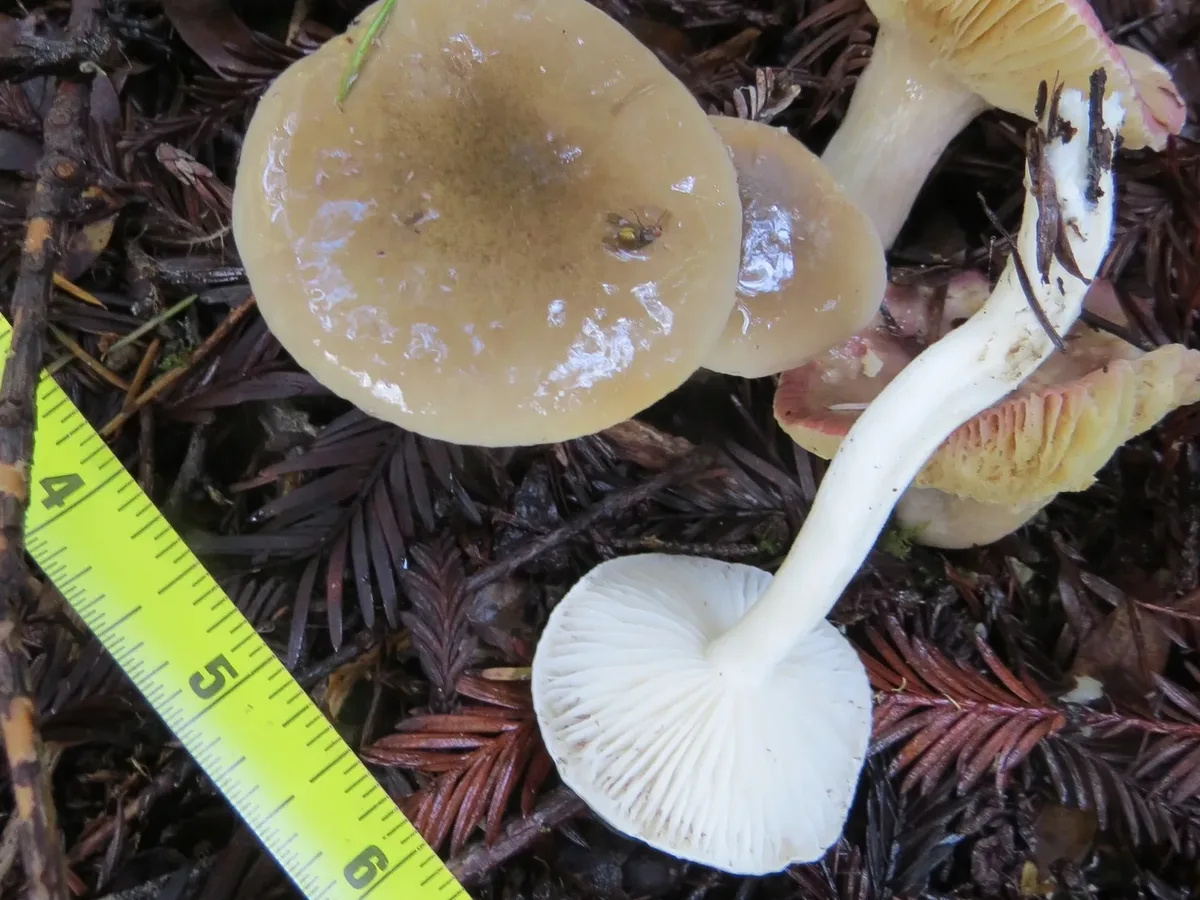 © Garth Harwood (CC BY)
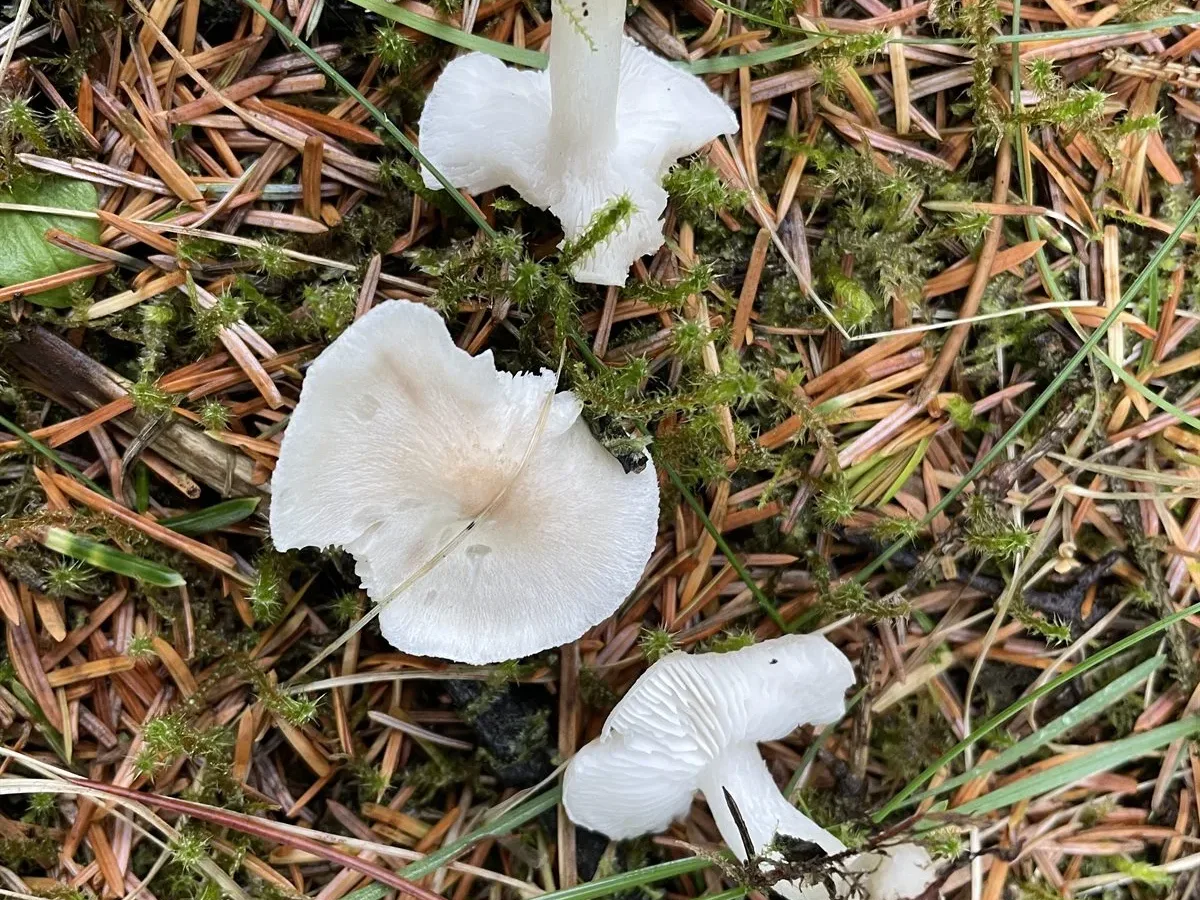 © Bjørn Eidhammer (CC BY)
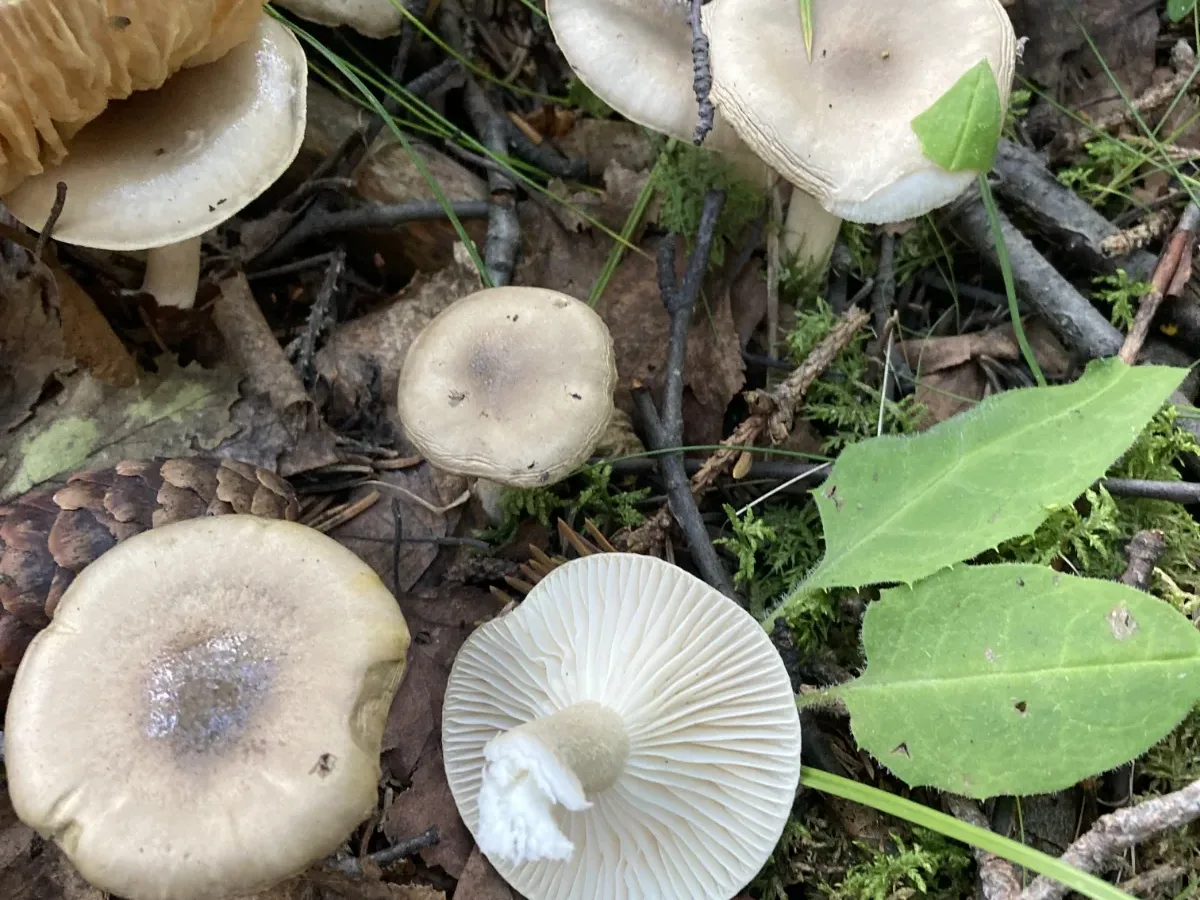 © Cecilie Ness (CC BY)
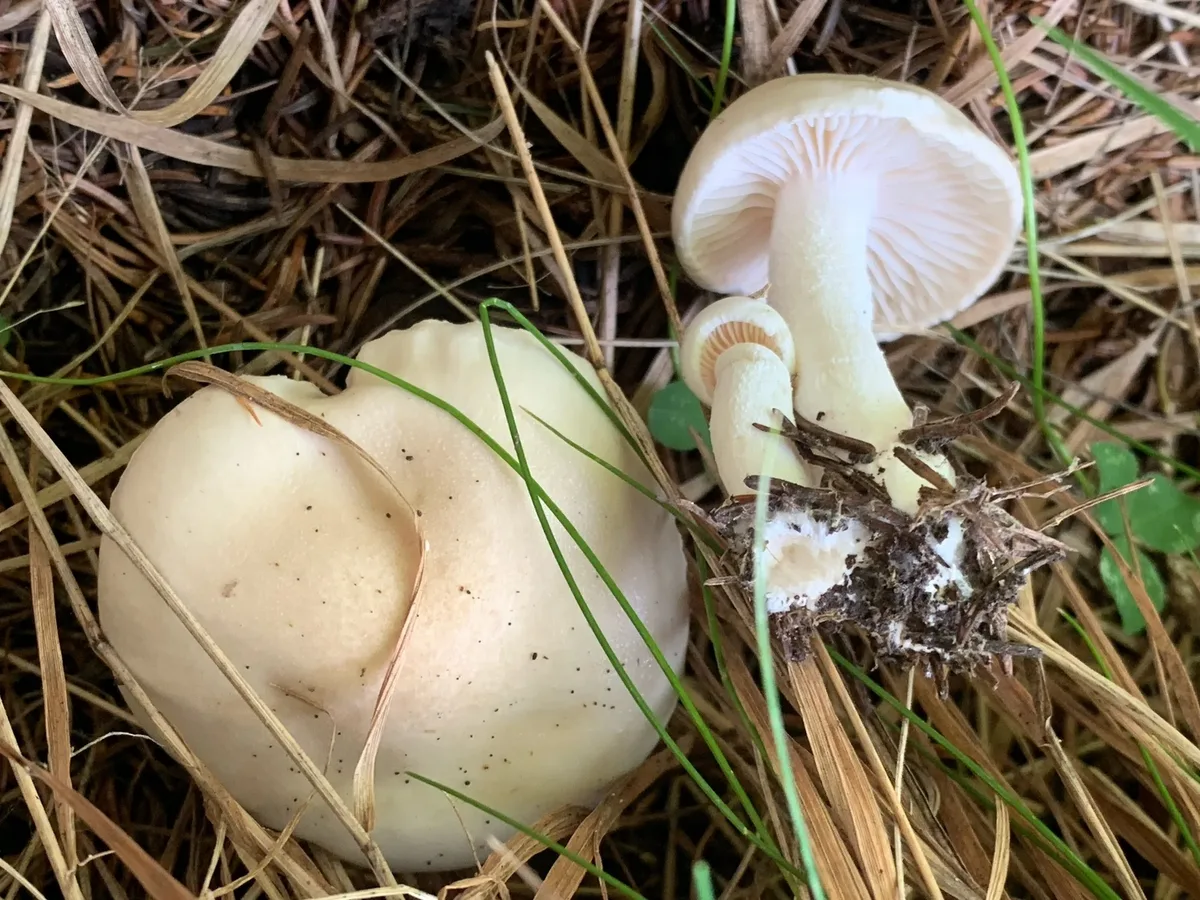 © Manuela Fiorini (CC BY)
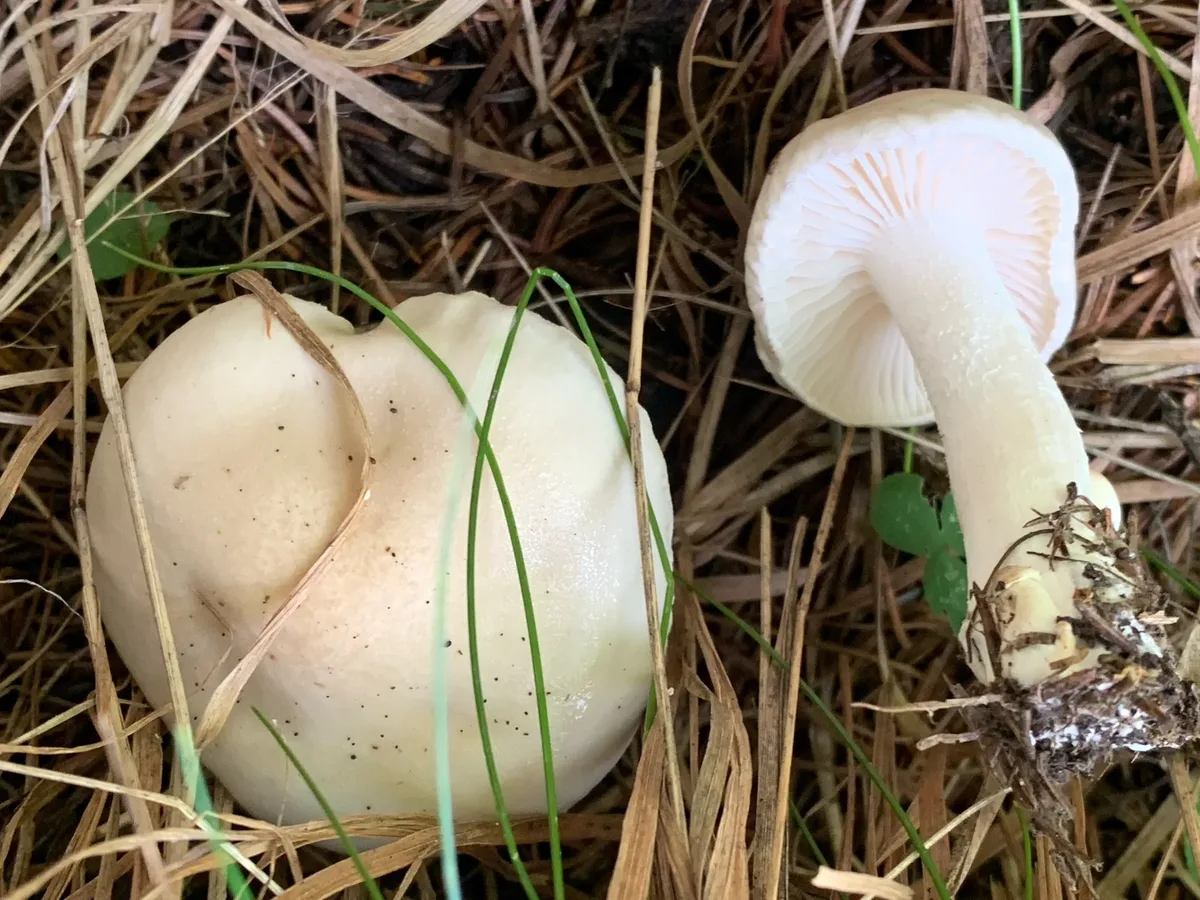 © Manuela Fiorini (CC BY)© Manuela Fiorini (CC BY)© Jason Grant (CC BY 4.0)
Good to eat, once you have identified it with certainty and cooked it through.
How to recognise it
Hygrophorus agathosmus is a medium-sized waxcap of classic proportions.
Cap
The cap begins convex with an incurved margin, expanding to broadly umbonate and eventually plane or shallowly depressed in old specimens. The surface is notably viscid or slimy in damp weather - it will glisten and feel slippery underhand - but dries to a silky, smooth, slightly shiny finish when conditions are dry.
Colour is predominantly pale grey to greyish-buff, sometimes with a subtle lilac or smoky cast toward the disc, fading to almost whitish at the margin. Old or dried caps can look nearly pure white.
Gills
The gills are the hallmark of the genus and worth a moment's attention: pinch one between finger and thumb and it feels like slowly softening candle wax - a distinctive, slightly rubbery give that no ordinary gill mushroom has.
They are widely spaced, adnate to slightly decurrent, and pure white, remaining so with age and without staining on injury.
Stem
The stem is stout and solid, white to pale grey, fibrillose-silky on the upper portion; a faint viscid zone (a vestigial veil remnant) may be visible in young specimens, but there is no persistent ring. The base can turn slightly yellowish-ivory with age or on drying.
Flesh
Flesh is firm and white throughout, unchanging when cut or bruised. Spore print white. Spores broadly ellipsoid, smooth, and inamyloid, 7-11 × 4-5.5 µm.
Smell & taste
The single most reliable field mark is the smell: unmistakably bitter almonds or marzipan, a clean almond-benzaldehyde scent that carries well in still air and intensifies as the mushroom dries. No other common grey-capped conifer woodwax shares this combination.
Where & when it grows
Habitat
Hygrophorus agathosmus is an ectomycorrhizal species tightly associated with conifers. In Scandinavia it is most frequently found under Norway spruce (Picea abies), often in the deep moss and needle litter of mature or old-growth spruce forest.
In the Alps and central European mountains it also occurs with silver fir (Abies alba) and, less often, Scots pine. It favours cool, moist conditions - stream valleys, north-facing slopes, and upland plateaux - typically on mildly to moderately acidic soils with a well-developed humus horizon.
In North America it is associated primarily with spruces (Picea glauca, P. sitchensis, P. rubens) and firs (Abies balsamea, A. lasiocarpa) and is widespread in the boreal forest and subalpine spruce-fir zones of the Pacific Northwest and northeastern states and provinces.
The species is not particularly rare but can be cryptic: it grows singly or in loose troops and blends easily into the grey-brown needle litter when the cap has dried. Look for the slimy cap and check the smell - the almond odour is detectable even from a standing position in still air.
When
Expect the almond woodwax from late summer through late autumn - broadly August to November across most of its range, with the peak in Scandinavia falling in September and October.
It waits for the soil to cool: once temperatures drop below around 12 °C and autumn rains have recharged the ground after the summer dry period, fruiting gets underway.
In the Alps and other mountain ranges, that cooling can arrive as early as mid-August at higher elevations.
Unusually for an edible autumn mushroom, the fruiting bodies handle light frosts well and often linger into early November when the surrounding forest floor is otherwise bare.
How it grows
Solitary to scattered, occasionally in loose troops of 3-10 individuals; dense clusters are rare.
Like all woodwaxes, H. agathosmus is ectomycorrhizal: its mycelium threads through the soil and wraps around the fine roots of its host conifers in a partnership that can persist for decades. The mushrooms you find are just the brief, visible tip of a long-running relationship between fungus and tree.
Individual fruiting bodies emerge slowly over 3-5 days, expanding from a tightly convex button. In cool, moist conditions they are moderately robust and persist for 7-14 days before deteriorating.
After a good autumn rain an entire small colony can flush within 48 hours; a dry spell will stall development just as quickly.
Fruiting conditions
Fruiting triggered by cool autumn temperatures combined with soil moisture recharge from autumn rains. Soil temperatures below 12 °C appear necessary to initiate fruiting; optimal range approximately 5-10 °C. Flush lag is relatively long (1-2 weeks) reflecting the slow growth typical of ectomycorrhizal Hygrophorus species. Hard frosts do not immediately abort fruiting bodies already emerged.
Look-alikes
Several white or grey Hygrophorus species share the habitat and general appearance and must be distinguished carefully:
- Hygrophorus pustulatus (scaly woodwax): Similar grey cap and conifer habitat, but the cap has small dark grey scales or fibres scattered over the centre and it lacks the almond scent entirely. Gills similarly waxy and white. Edibility disputed; best avoided.
- Hygrophorus olivaceoalbus (olive-grey woodwax): Grey to olive-grey slimy cap and stem, with distinct sooty-fibrillose streaks on the stem; grows with spruce and pine. No almond smell; has a more pronounced brown-grey-olive colouration. Edible but less desirable.
- Hygrophorus latitabundus (= H. limacinus): Very slimy, dark brownish-grey cap, slimy stem sheathed in a fibrillose veil; grows under pine. No almond smell. Edible.
- Hygrophorus piceae: Very pale, almost white, small-capped spruce associate, essentially odourless; easily overlooked as a pale morph. No distinctive smell.
- Clitocybe nebularis (clouded funnel): Superficially similar grey colouration and roughly similar habitat, but C. nebularis has non-waxy gills, a mealy-unpleasant smell (not almond), runs strongly decurrent gills, and grows in mixed or deciduous as well as coniferous woodland. Contains toxins (clitocybin/nebularine); causes gastrointestinal illness in a significant proportion of people even when cooked. Distinguish by: waxy versus non-waxy gills, almond smell absent, cream (not white) spore print in C. nebularis, habitat may differ.
- Hygrophorus hypothejus (herald of winter): Small, slimy, olive-yellow to brownish cap with yellow to orange-tinged gills; grows very late in season under pine; lacks almond smell.
Gills are NOT waxy (they are thin, crowded and non-waxy), smell is mealy-unpleasant not almond, gills strongly decurrent, spore print cream rather than white. Causes gastrointestinal illness in a significant proportion of people even when cooked; best avoided. The waxy gill texture and almond odour of H. agathosmus distinguish it instantly.
Smaller, with an olive-brown to ochre cap and gills that flush yellow to orange; grows exclusively under pine very late in the season (October-November); no almond odour.
Distinctly olive-grey to brownish-grey cap and a slimy stem clothed in sooty fibrillose streaks; no almond smell. Grows with spruce. Edible but odour check is decisive.
Dark brownish-grey slimy cap; stem distinctly sheathed in a sooty fibrillose veil up to an obscure ring zone; grows under pine; no almond odour. Edible.
H. pustulatus has small dark grey scales or fibrillose dots concentrated over the cap centre and entirely lacks the almond/marzipan odour; the cap is usually darker grey-brown. Edibility uncertain; best avoided as a precaution.
In the kitchen
Picking & cleaning
Cut the stem cleanly at ground level with a knife to minimise disturbance to the mycelium and to avoid pulling up attached moss.
Because the cap is slimy, specimens transported loose in a bag quickly become matted and difficult to clean; use a rigid-walled basket or container and arrange caps gill-side down in a single layer.
In the field, wipe off pine needles and debris with a soft brush - the slime makes thorough cleaning easier later.
Check the hollow or solid stem (solid is expected in this species; if hollow, re-examine the identification). The almond scent becomes more pronounced as you handle the mushrooms and is a reliable in-basket check.
Discard any specimens that are maggot-infested (larvae attack the firm flesh from the stem base upward).
Cooking
The almond aroma is the defining culinary character of H. agathosmus - it infuses butter and cream sauces beautifully. The waxy flesh has a slightly gelatinous texture when raw that firms up pleasantly on cooking; it does not release excessive water and holds its shape in the pan.
Sauté gently in butter over medium heat until the water evaporates (2-3 minutes) and the flesh begins to colour lightly. The cooked mushroom pairs excellently with cream, thyme, and game meats.
- Good in risotto or pasta, where the aromatic quality can shine.
- Drying intensifies the almond scent dramatically; dried slices can be crumbled as a flavouring agent into soups and stews.
- The slimy cuticle can be peeled before cooking if the texture is undesirable, though this also removes some aroma.
Do not eat raw.
Good to know
Hygrophorus agathosmus is considered edible and is eaten in Scandinavia and central Europe. However, it is not a top-tier culinary mushroom and is typically eaten only when encountered in quantity. No serious toxicity has been reliably documented in the modern literature.
The main safety concern is misidentification. The most plausible hazardous error is confusion with Clitocybe nebularis, which causes gastrointestinal upset in a notable proportion of people even when cooked.
C. nebularis has non-waxy gills and a mealy rather than almond odour, and its spore print is cream rather than pure white. Confirming the waxy gill texture (the 'candle-wax' feel when pinching a gill) and the almond smell together eliminates virtually all hazardous lookalikes.
Do not eat raw; cooking is standard. Some sources note that raw specimens of several Hygrophorus species can cause mild gastrointestinal discomfort. The almond scent (from benzaldehyde compounds) largely dissipates with heat.
Pick only from unpolluted forest areas; like all ectomycorrhizal fungi, Hygrophorus species may accumulate heavy metals (cadmium, caesium) in contaminated soils.
A reference guide - never an edibility guarantee. When in doubt, leave it out.