Crimson waxcap
Hygrocybe puniceasyn. Hygrophorus puniceus (Fr.) Fr., Hygrocybe punicea var. punicea
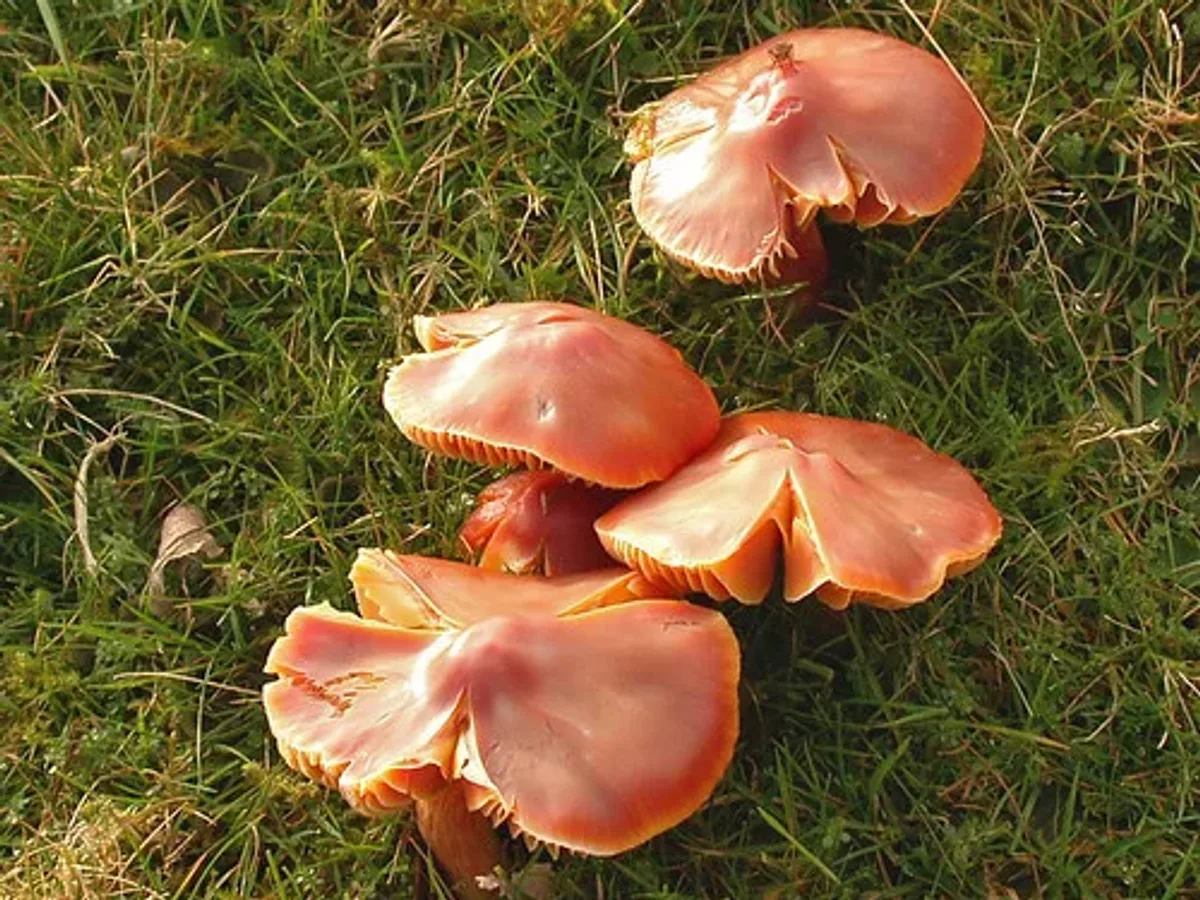 janetgraham84new (CC0)
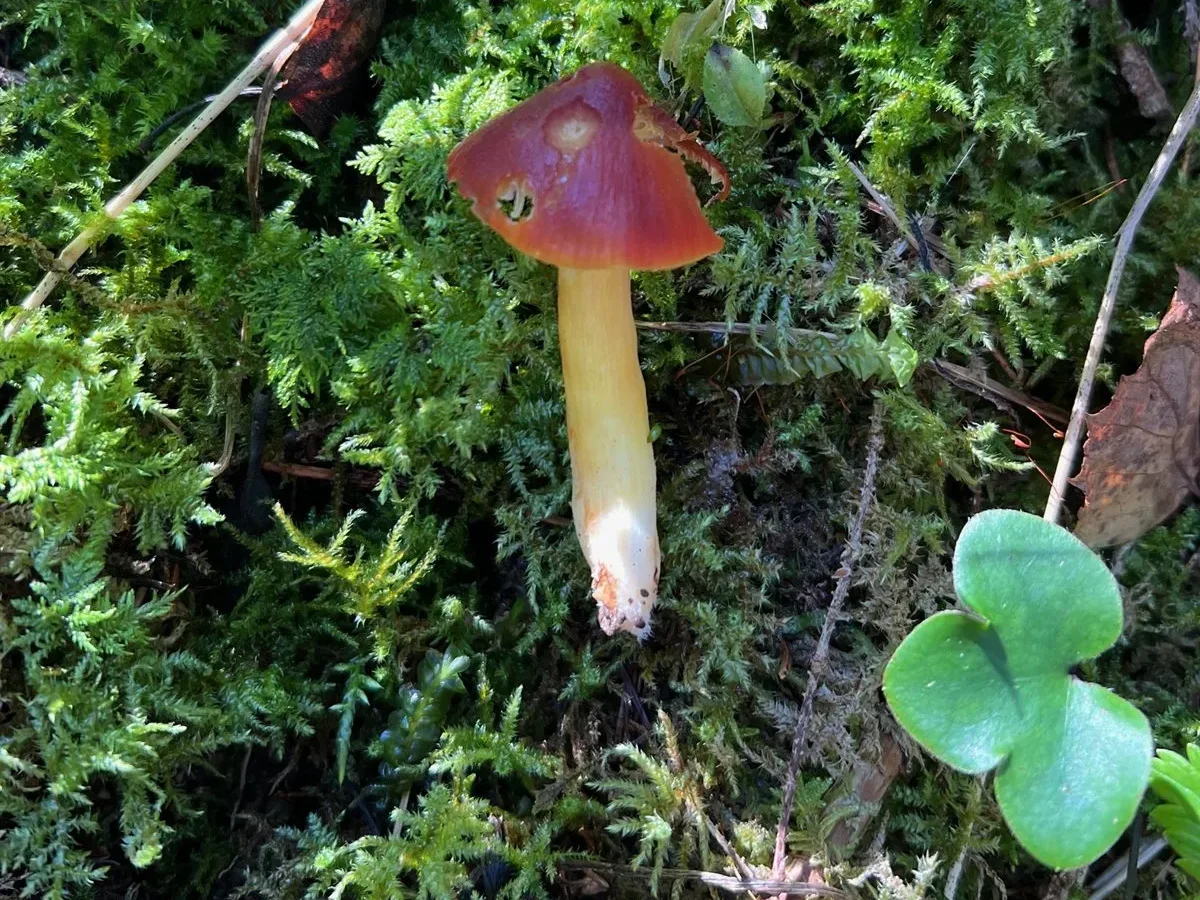 © Kirsti Anne Mandal (CC BY)
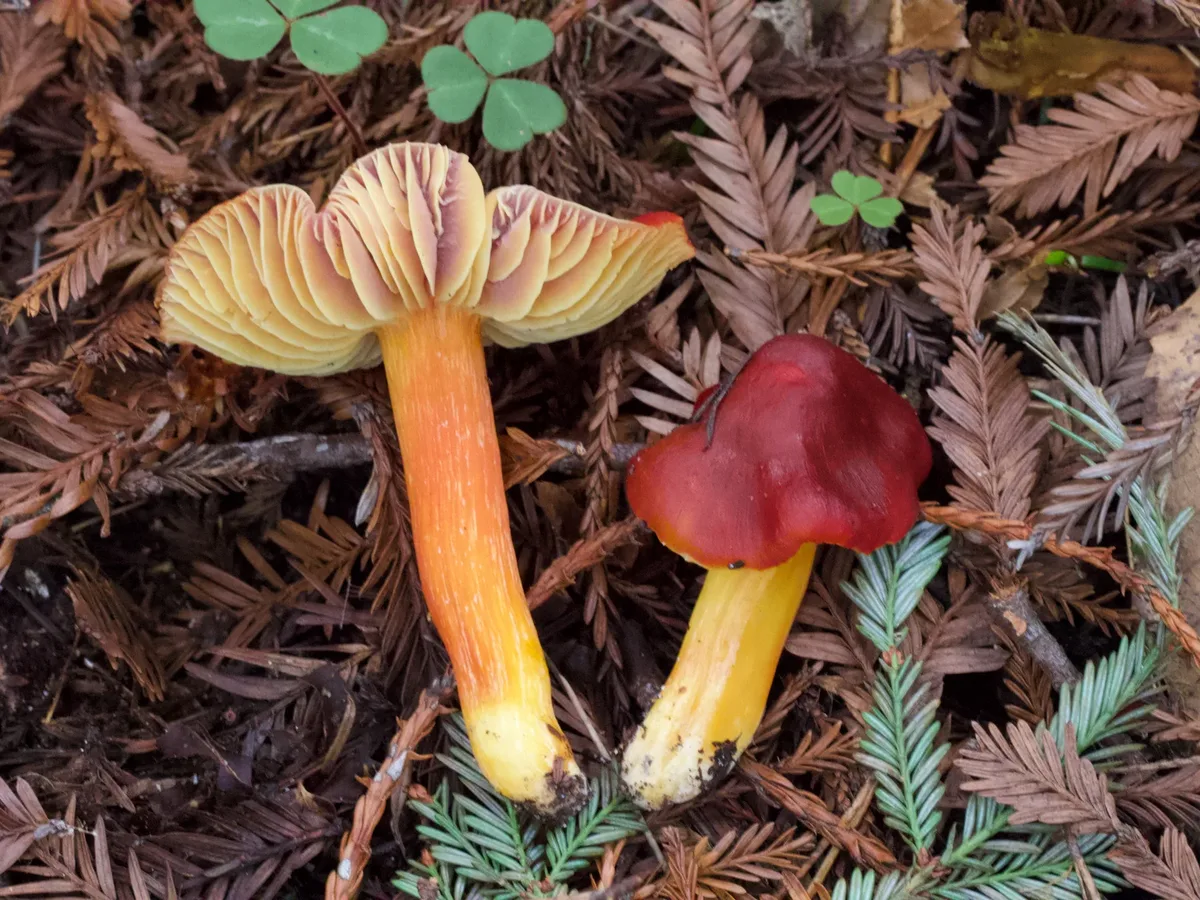 © Arvel Hernandez (CC BY)
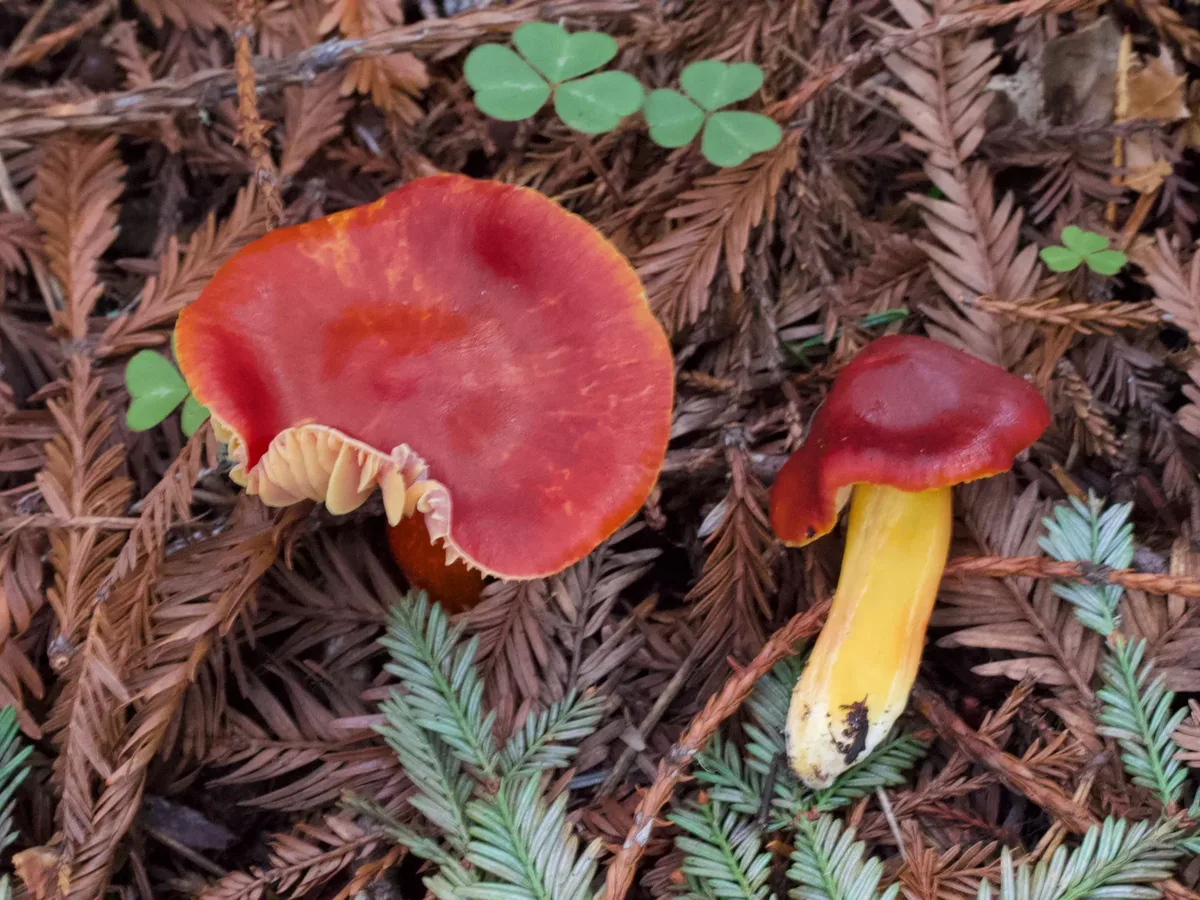 © Arvel Hernandez (CC BY)
 © Arvel Hernandez (CC BY)
 © Jonathan Curley (CC BY)
 © Kirsti Anne Mandal (CC BY)
 © Johan Sirnes (CC BY)
 © Johan Sirnes (CC BY)
 © Ephemeral Impressions (CC BY-SA 2.0)
 © gailhampshire (CC BY 2.0)janetgraham84new (CC0)© Kirsti Anne Mandal (CC BY)
Good to eat, once you have identified it with certainty and cooked it through.
How to recognise it
The crimson waxcap is one of the largest members of its genus and hard to mistake once you have seen one.
Cap
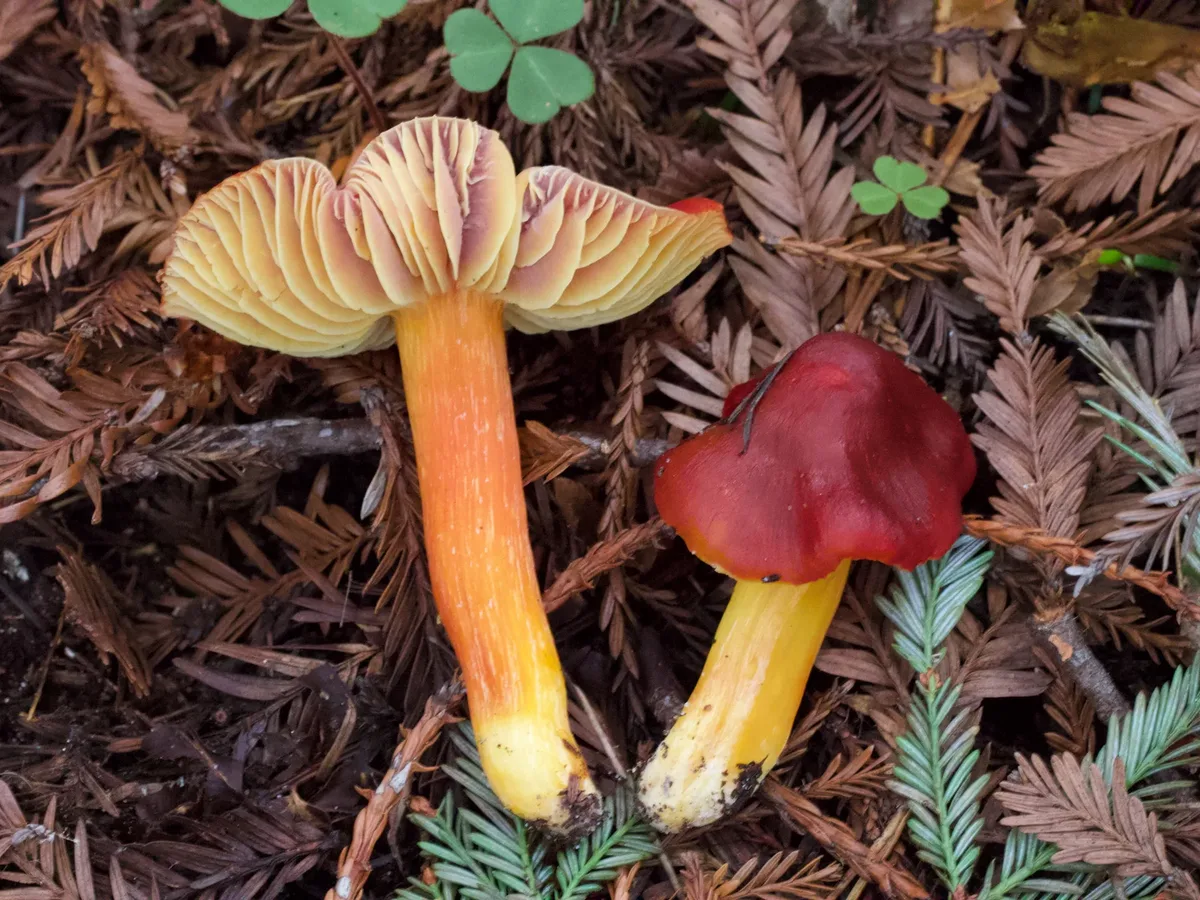
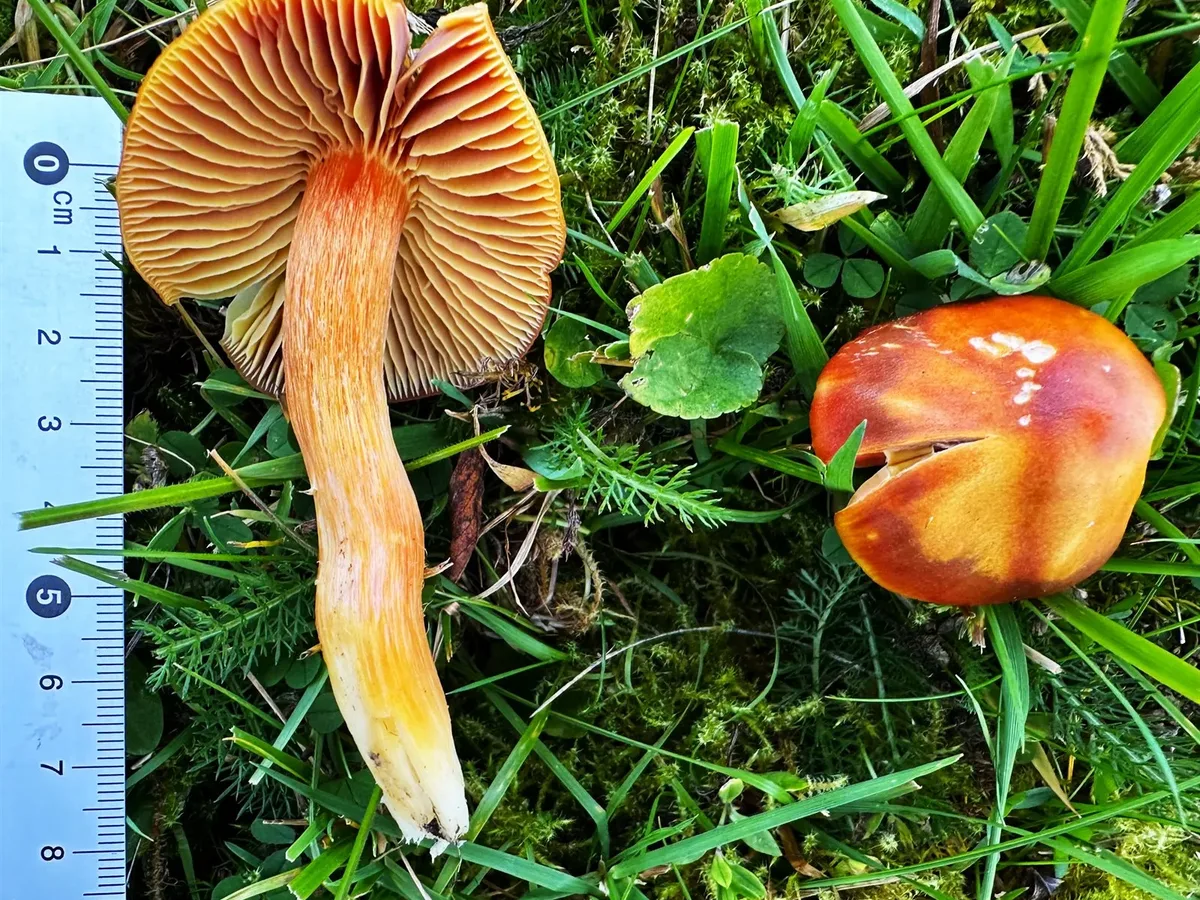
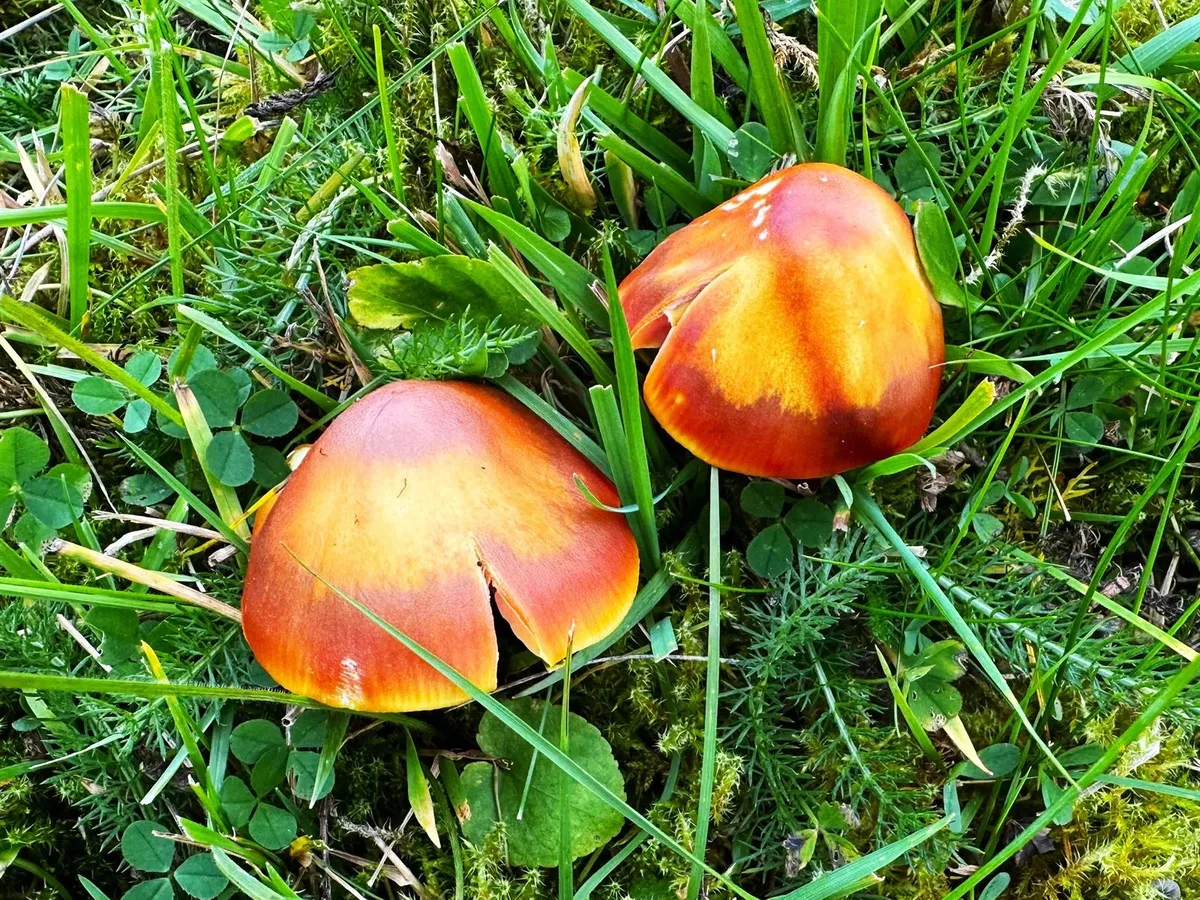
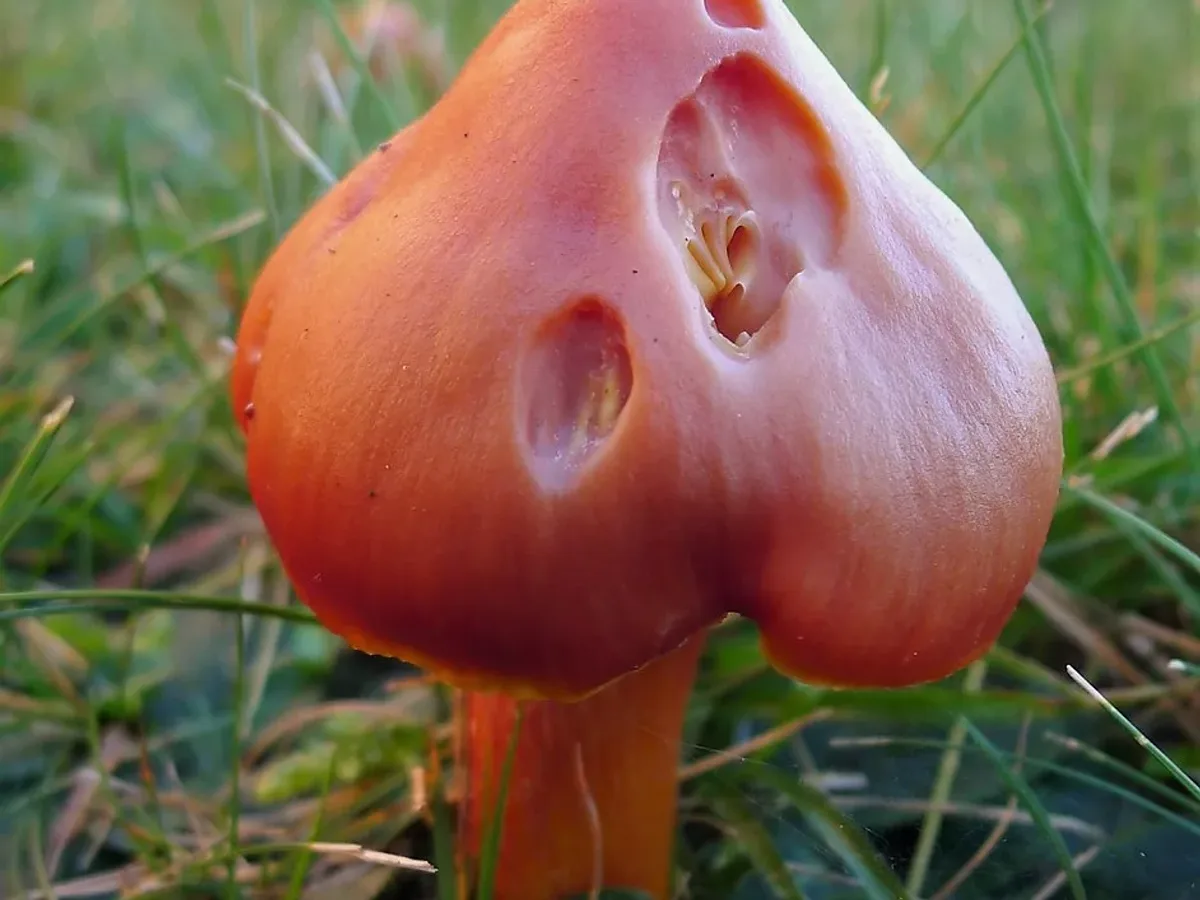
The cap starts bell-shaped to broadly umbonate, then opens out to 4-12 cm across, eventually becoming nearly flat or very shallowly depressed in the centre with an irregular wavy margin.
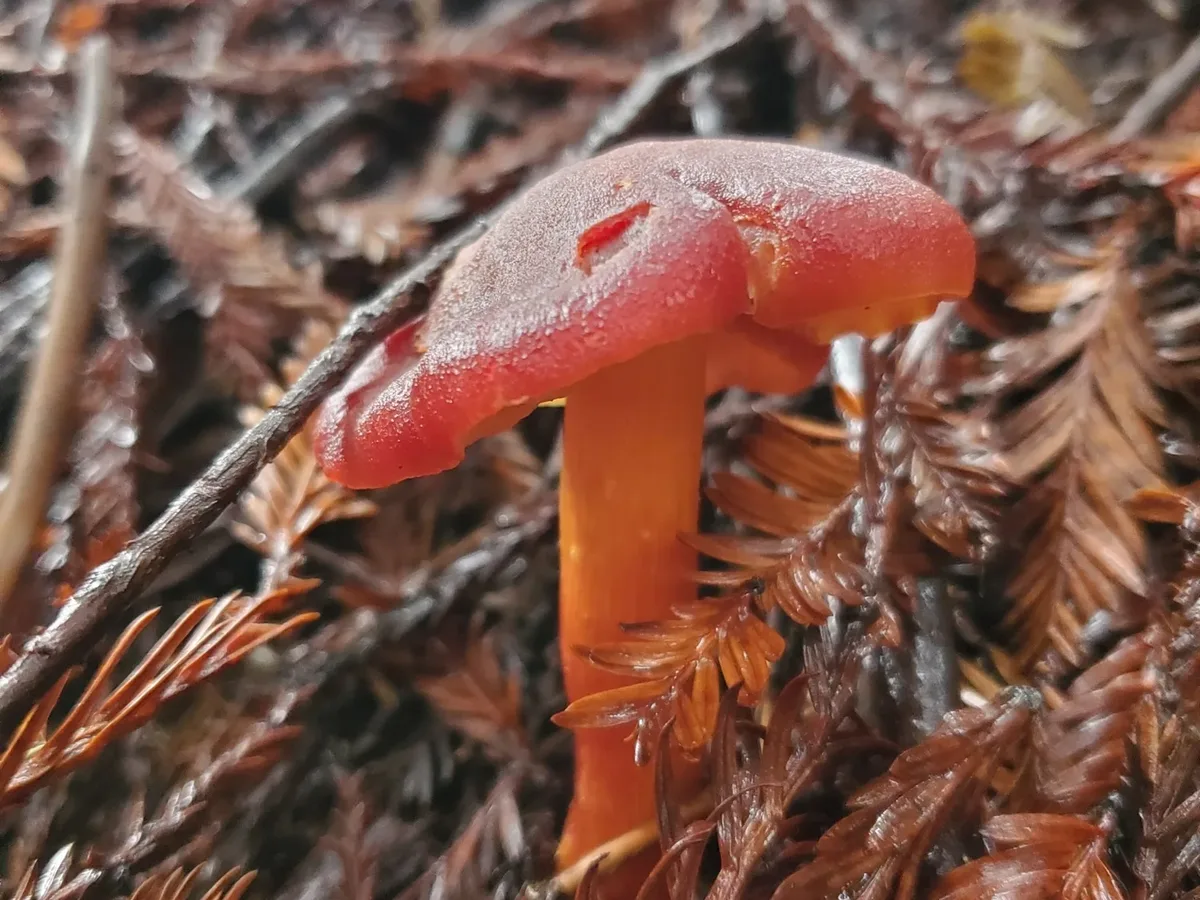
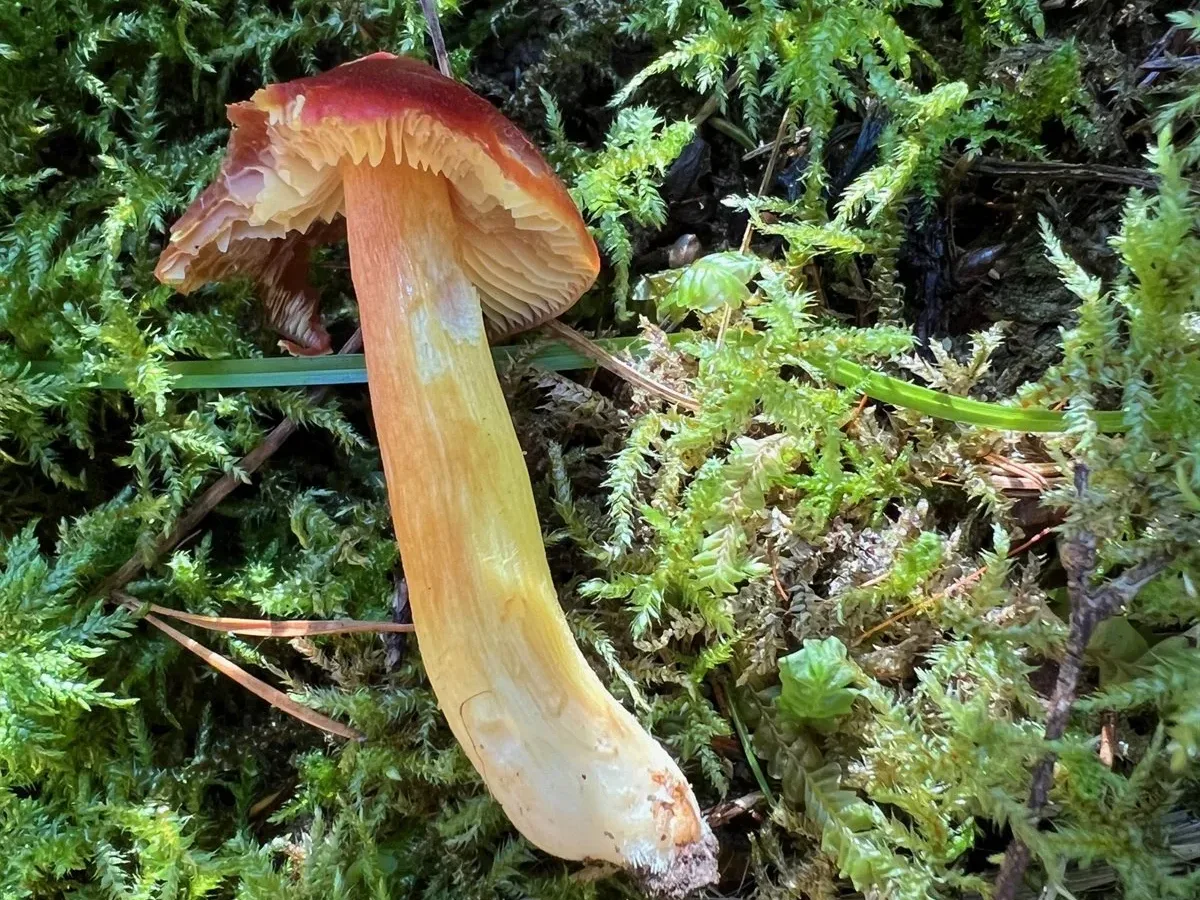
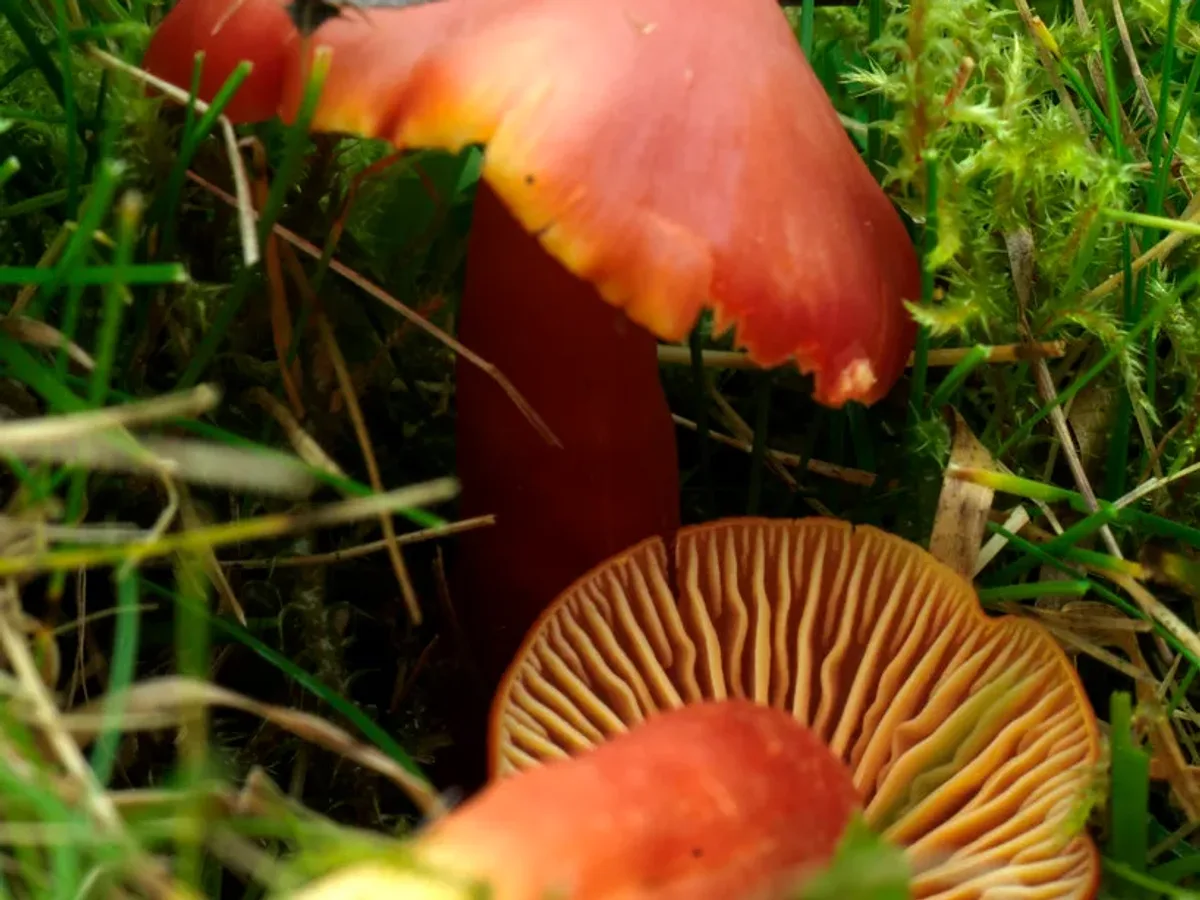
The colour is a genuine, saturated blood-red to scarlet or deep crimson - vivid enough to stand out across a meadow on a grey autumn day.
One detail sets it apart from many waxcap relatives: the surface is dry and silky-fibrillose, never slimy or viscid. In dry or sunny conditions the red bleaches noticeably toward orange or yellowish-orange at the margin, but fresh specimens in damp weather hold their colour for several days.
Gills / Pores
The gills are broadly adnate to slightly decurrent, well-spaced, and pale to bright yellow with orange-red tinges - the warm-yellow gills against the scarlet cap is one of the most useful field marks.
Stem
The stem is 5-12 cm tall and 1-2.5 cm thick, stout for a waxcap, dry, and strongly fibrous-striate (longitudinally streaked), coloured red to orange-red like the cap and fading to whitish or yellowish at the base.
Flesh
Flesh is firm, yellow-orange in the outer cortex and paler within; it does not change colour when cut or bruised.
Smell & taste
Smell is faint, taste mild and sometimes slightly bitter raw.
Spore print white. Microscopically, spores are broadly ellipsoid, 7-9 × 4-5.5 µm, smooth; clamp connections are absent throughout - a useful confirmatory character under the microscope.
Where & when it grows
Habitat
This is a strictly grassland species; it has no woodland association at all.
H. punicea is a flagship indicator of what ecologists call 'waxcap grassland' or CHEG communities - named after the four groups that inhabit them:
- Clavarioid fungi
- Hygrocybe
- Entoloma
- Geoglossum
These communities are a near-exclusive speciality of north-western and western Europe and represent something genuinely rare: grasslands that have never been ploughed, re-seeded, or dosed with synthetic fertiliser or slurry, sometimes for centuries.
A traditional churchyard grazed by sheep for 400 years may harbour more fungal species than a nearby ancient woodland. H. punicea is essentially absent from agriculturally improved land, however old a field otherwise appears - even a single application of fertiliser generations ago can disqualify a site.
Prime locations include:
- old churchyards and graveyards
- upland hill pastures in Wales, Scotland, Norway, and the Faroe Islands
- old orchards grazed beneath the trees
- road verges with a long history of cutting
The fungus is not mycorrhizal; it appears to be saprotrophic or possibly involved in a poorly understood biotrophic relationship with the grass root microbiome. Soil is nutrient-poor and slightly acidic to neutral.
When
The crimson waxcap is an autumn species throughout its range. In the British Isles and southern Scandinavia fruiting begins in earnest in September and peaks through October into early November, coinciding with cooling soils and reliable autumn rainfall.
In upland Atlantic regions of Norway and Iceland the season may be compressed to October alone.
Fruit bodies persist longer than many gilled mushrooms - up to 10-14 days under cool, damp conditions - so a single visit to a known site can yield good sightings. The species is frost-tolerant, but extended hard frosts end the season abruptly.
How it grows
Fruit bodies push up from the soil as pointed scarlet buttons before slowly expanding to their full breadth over several days. They appear singly or in small scattered groups - never in dense clusters or fairy rings.
The fungus does not form visible mycelial mats or cords. Beneath the meadow surface its threads are part of a broader, poorly understood fungal community that depends entirely on the soil remaining undisturbed and unfertilised.
There is no cultivated form, and none is likely: waxcap grassland fungi have resisted every attempt at commercial cultivation. The meadow itself is what needs protecting.
Fruiting conditions
Flushes after substantial autumn rainfall (18+ mm over 14 days) once soil temperatures have dropped below about 14 °C. Because waxcap meadow soils are typically thin and drain quickly, repeated wet spells are more productive than a single heavy rain event. The lag between effective rainfall and emergence is variable (7-21 days) and depends strongly on antecedent soil moisture - prolonged summer drought can delay or suppress fruiting even when autumn rains arrive.
Look-alikes
The most important confusion species in practice are other large red or orange Hygrocybe species.
- Hygrocybe coccinea (scarlet waxcap) is similar but notably smaller (cap 2-6 cm), has a slightly viscid to moist (not truly dry) cap surface, and a shorter, striate stem; it is also edible.
- Hygrocybe splendidissima (splendid waxcap) is very close in appearance - cap orange-red to blood-red, large, and edible - but tends to have a more yellowish-orange cap that lacks the deep blood-red intensity of H. punicea; some authorities treat them as varieties of the same species.
- Hygrocybe miniata and Hygrocybe intermedia are smaller, more orange-red species.
Outside the genus, Omphalotus olearius (jack-o'-lantern) is orange rather than blood-red, grows in clusters at the base of trees or buried wood, has crowded decurrent gills, and smells strongly unpleasant; it is toxic and causes severe gastrointestinal illness. Crucially, it grows in woodland, not open grassland - habitat alone is the most reliable separator.
None of the common lookalikes found realistically in European open grassland settings are deadly, but always confirm the dry striate stem, pale yellow gills, white spore print, and strict open-grassland habitat before collecting.
Orange (not blood-red), grows in dense clusters at tree bases or on buried roots, never in open grassland, has crowded decurrent gills and a strong unpleasant smell. Toxic - causes severe gastrointestinal illness (illudin S). The habitat alone - open unimproved grassland vs woodland base - immediately separates it from H. punicea.
Smaller, more orange-red cap, distinctly conical to campanulate and remaining so; cap surface moist. Found in similar grassland but typically more orange than red.
H. coccinea is noticeably smaller (cap 2-6 cm vs 4-12 cm), has a moist to slightly viscid (not dry) cap, and a shorter, less strongly striate stem. Colour tends toward brighter scarlet rather than deep blood-red. Both are edible. Separating them requires attention to cap size and surface texture.
Very similar large red waxcap also found in unimproved grassland. Tends to be more orange-red to brick-red rather than deep blood-crimson; some authorities synonymise it with H. punicea. Also edible. The two are best separated by direct colour comparison and microscopy.
Much smaller (cap 1-3 cm), bright vermilion to orange-red, scaly cap surface in mature specimens. Edible. Size and scaly cap surface distinguish it.
In the kitchen
Picking & cleaning
Waxcap grasslands are nationally and internationally threatened habitats, and H. punicea is a priority indicator species used in site assessments across the UK, Scandinavia, and central Europe.
Foragers are urged to exercise considerable restraint: pick only where the fungus is genuinely abundant, and never collect from sites where it appears scarce or where grassland quality is in question.
Because the habitat depends on centuries of undisturbed management, any soil compaction or disturbance risks degrading the entire community. Cut cleanly at the stem base; do not pull or twist out the base, as this disturbs the mycelium.
The crimson colouration and watery flesh make these mushrooms fragile in the basket - transport in a rigid container. Although edible, the conservation value of the habitat far outweighs the culinary reward, and many field guides specifically advise against collecting this species.
Cooking
The culinary value of H. punicea is modest. The flesh is firm but watery and shrinks considerably during cooking.
It can be sautéed in butter and used as a colourful garnish or addition to autumn omelettes and risottos; the striking red colour unfortunately fades to orange-brown with heat. The flavour is mild and slightly sweet, without the complexity of prime edibles.
Given its conservation importance, collection for the table is actively discouraged by most European mycological societies, and the mushroom should be regarded primarily as a species to photograph and record rather than pick.
Good to know
Hygrocybe punicea has no significant toxins and is considered edible, though accounts of its flavour are unremarkable (mild, slightly watery) and the conservation imperative against picking is strong. There are no recorded cases of serious poisoning.
Some individuals may experience mild gastric irritation from raw consumption; always cook thoroughly. The principal safety concern in the field is habitat sensitivity rather than toxicology.
Always verify the dry, striate stem and pale yellow gills to rule out any red-capped species found in atypical settings.
If collecting in or near woodland margins, be aware that Cortinarius species (deadly - orellanin kidney toxin) can occur nearby. These are distinguished from H. punicea by:
- a brown spore print
- presence of cortina (cobweb-like veil remnants on the stem)
- preference for woodland rather than open grassland
A reference guide - never an edibility guarantee. When in doubt, leave it out.