Scarlet waxcap
Hygrocybe coccineasyn. Agaricus coccineus Schaeff., Hygrophorus coccineus (Schaeff.) Fr., Pseudohygrocybe coccinea (Schaeff.) Kovalenko
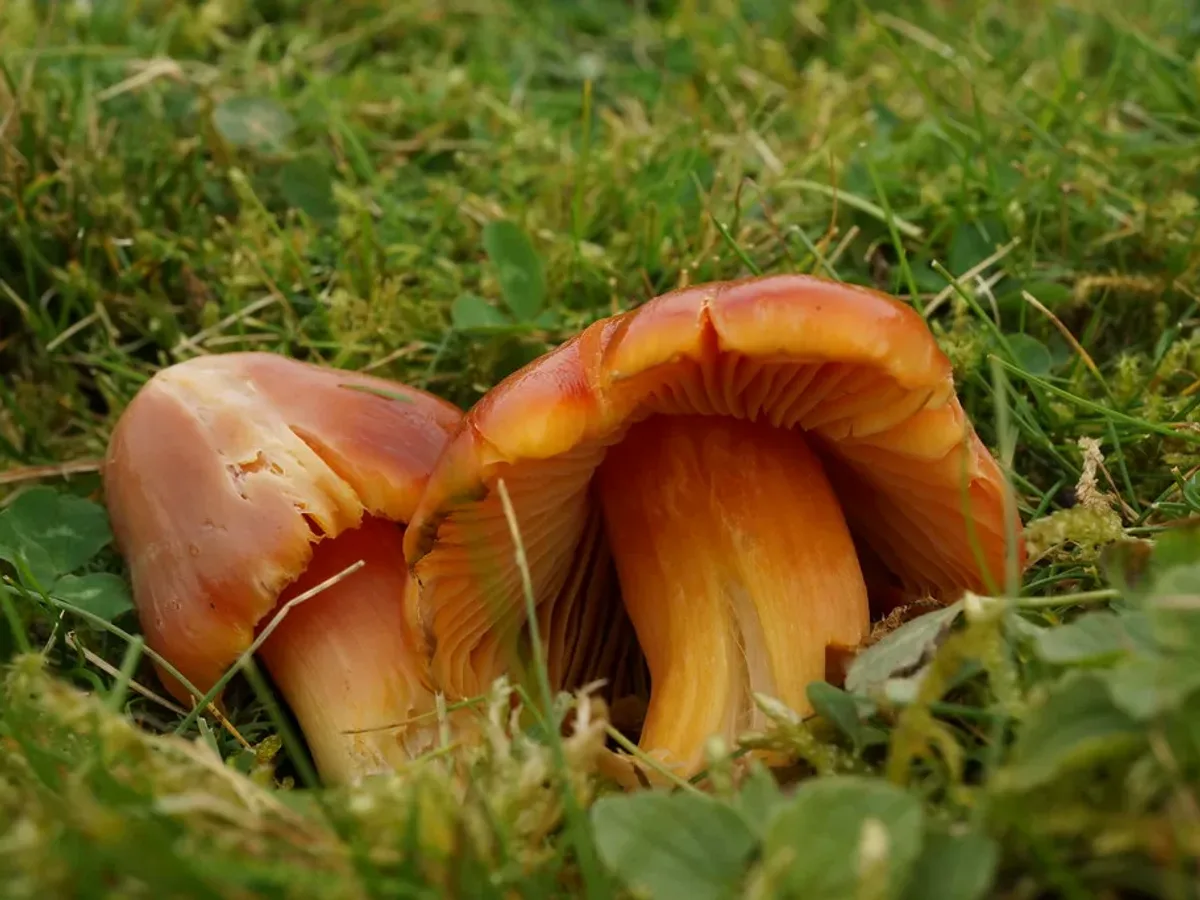 © Ephemeral Impressions (CC BY-SA 2.0)
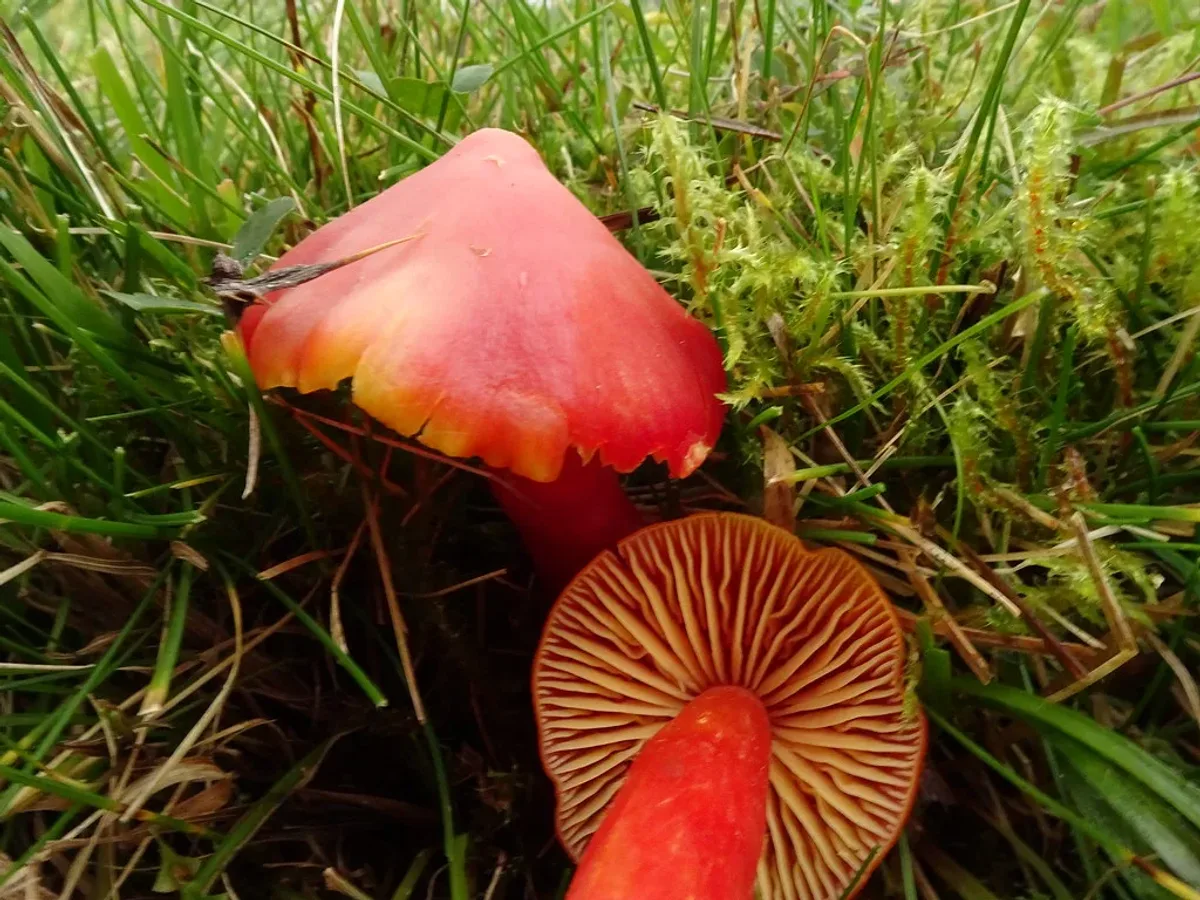 © Ephemeral Impressions (CC BY-SA 2.0)
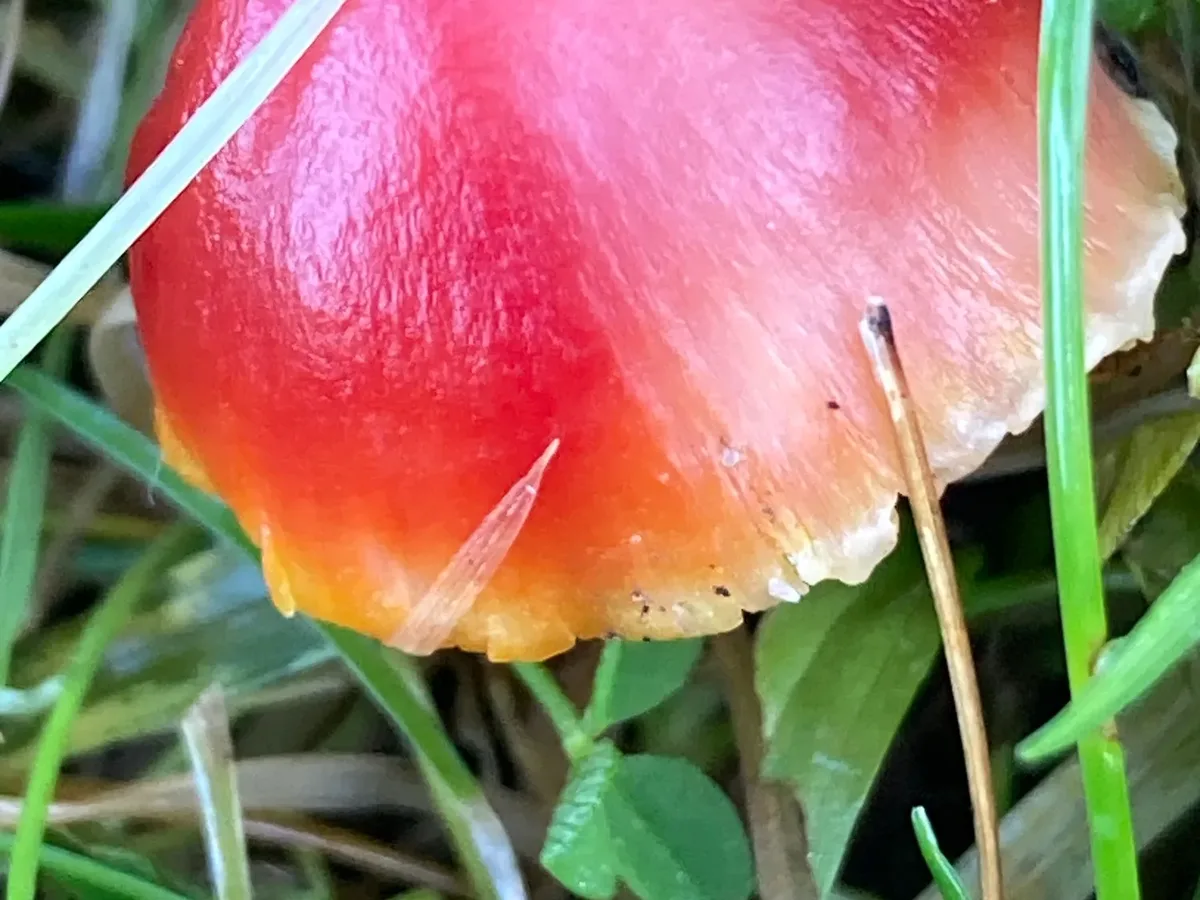 © Nick Butcher (CC BY)
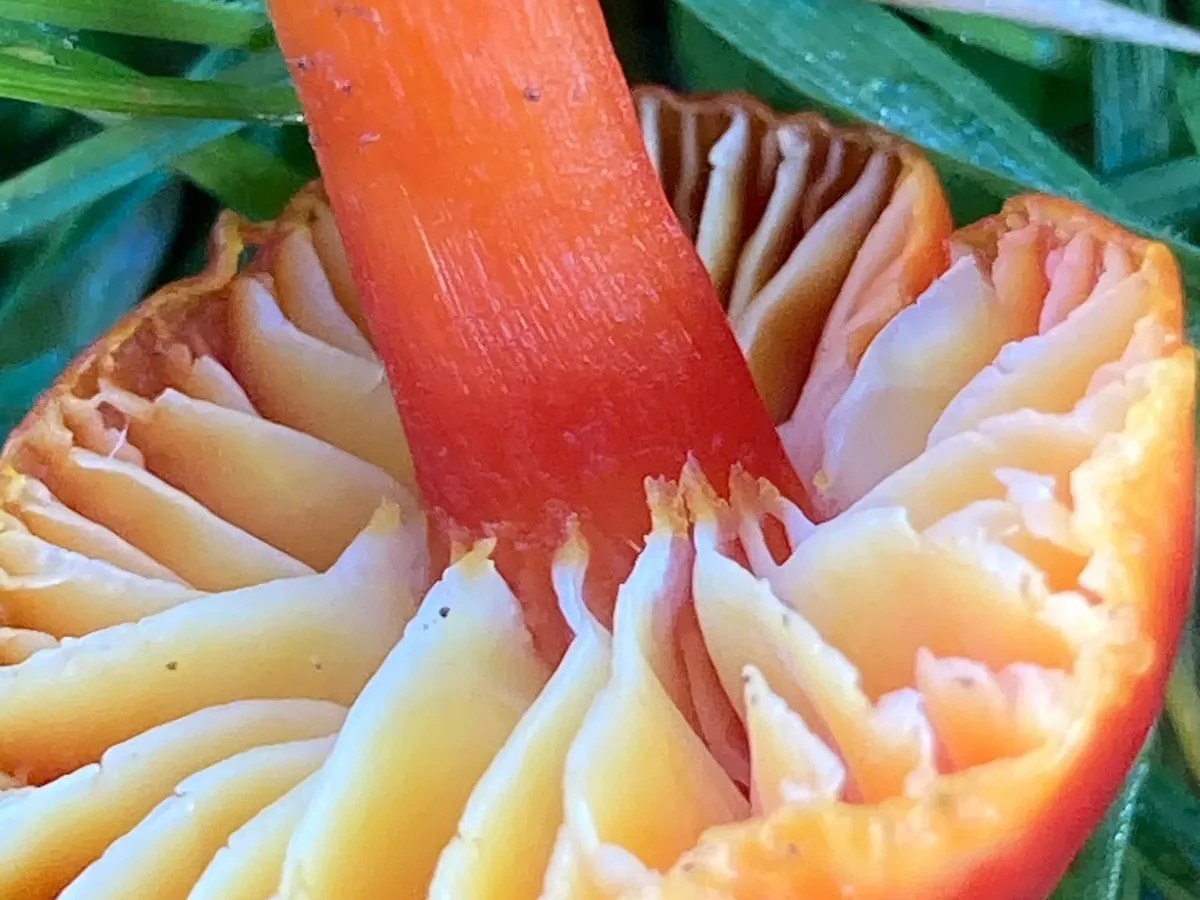 © Nick Butcher (CC BY)
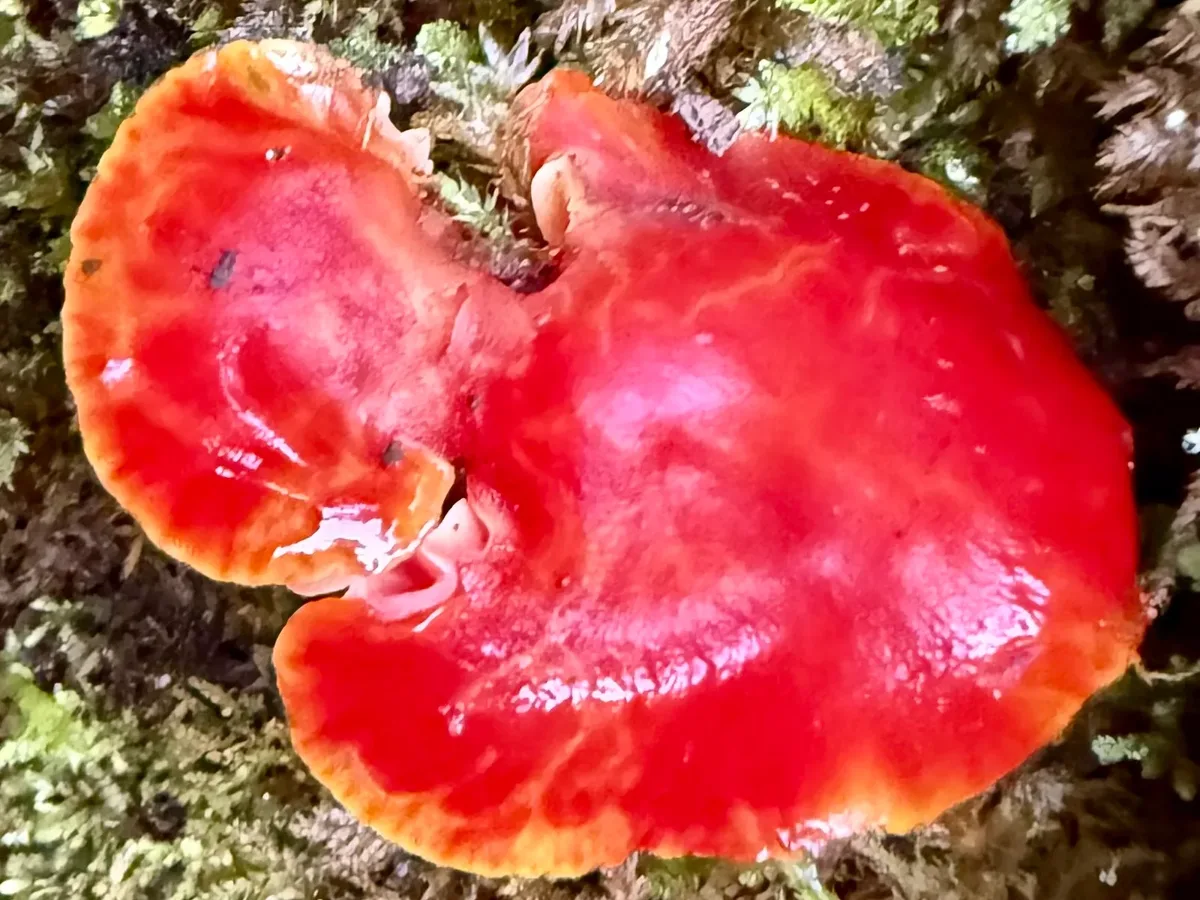 Chuck Wilson (CC0)
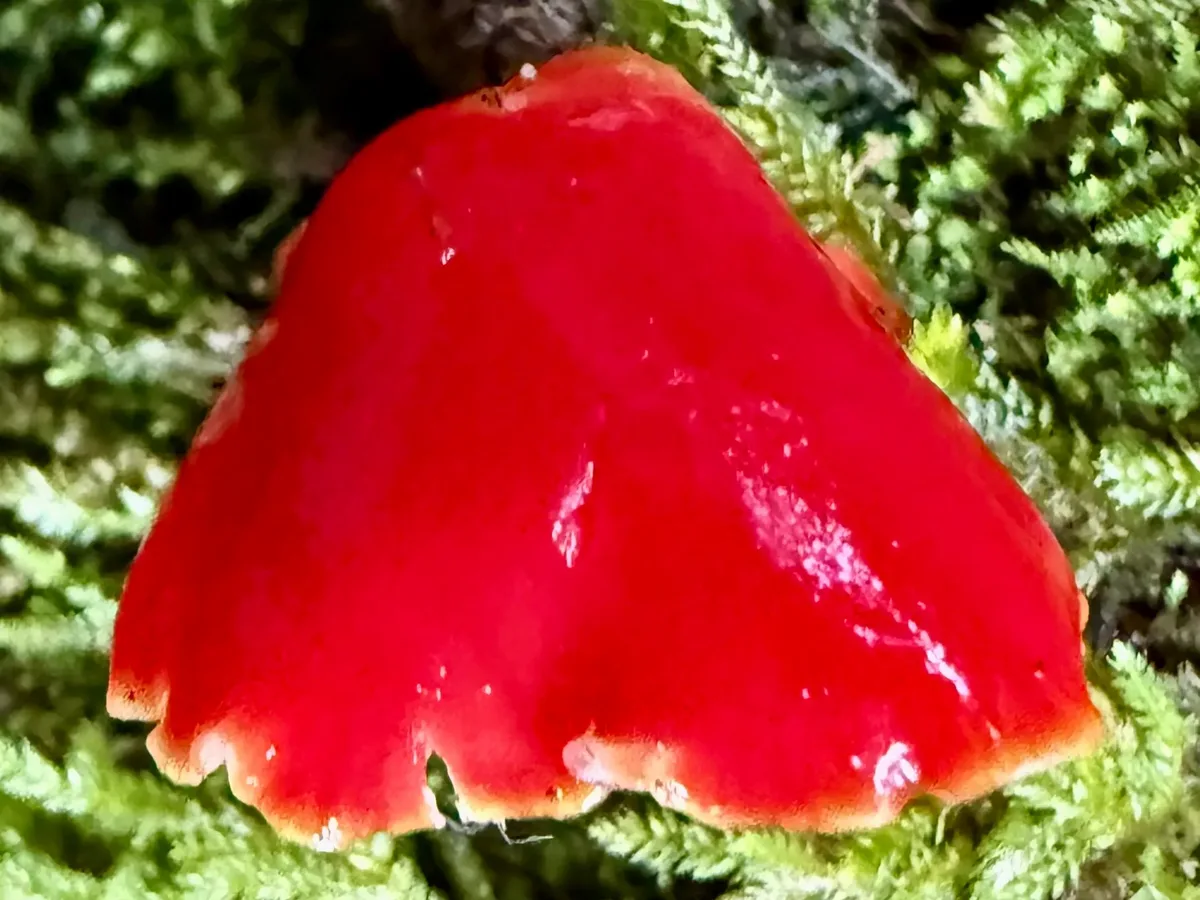 Chuck Wilson (CC0)
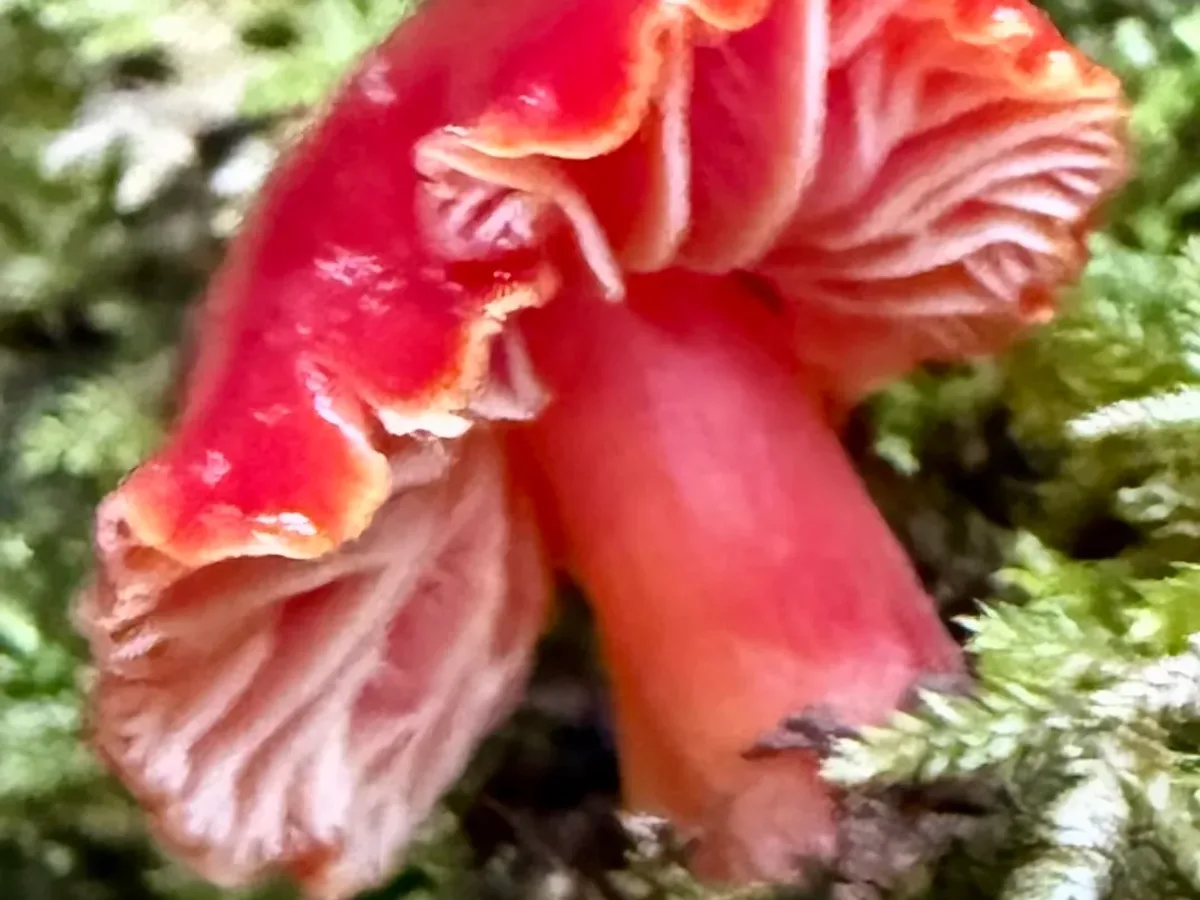 Chuck Wilson (CC0)
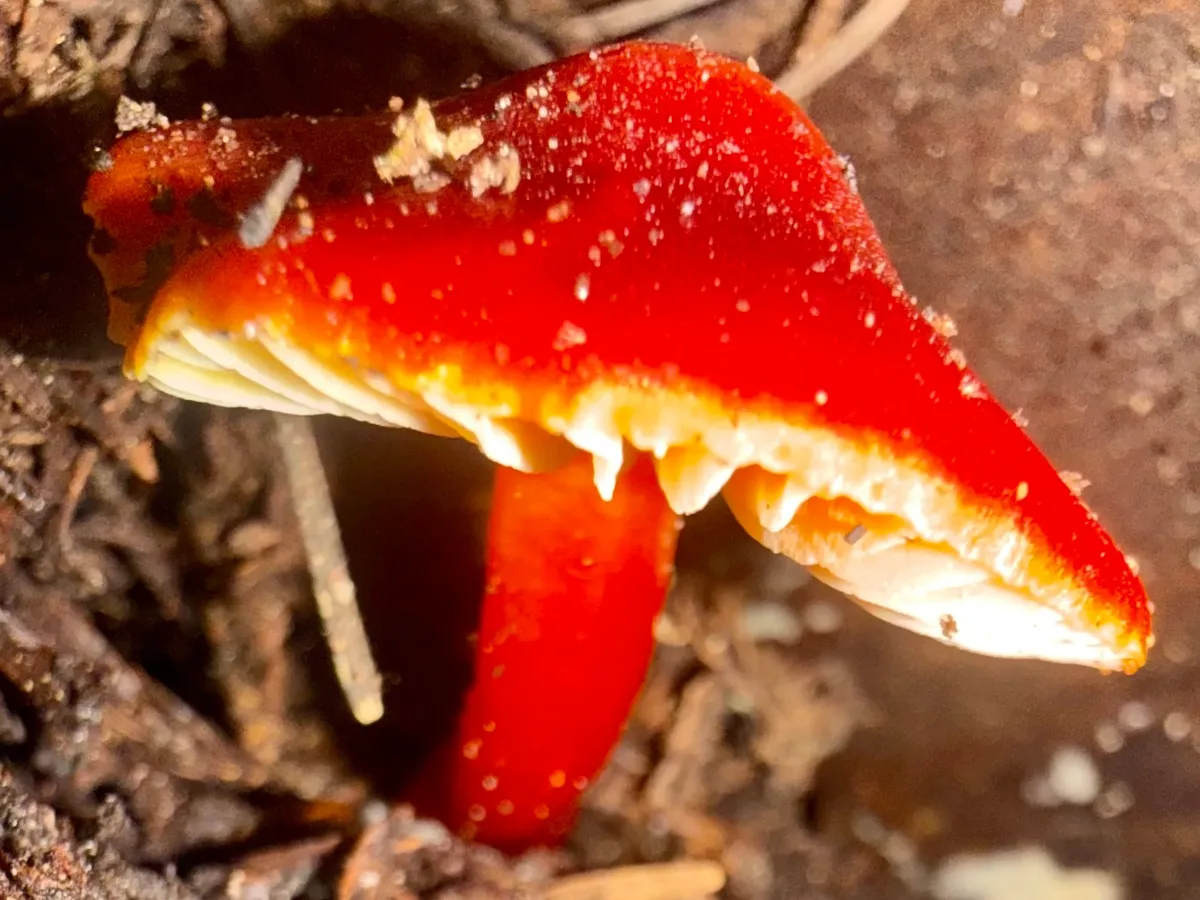 Chuck Wilson (CC0)
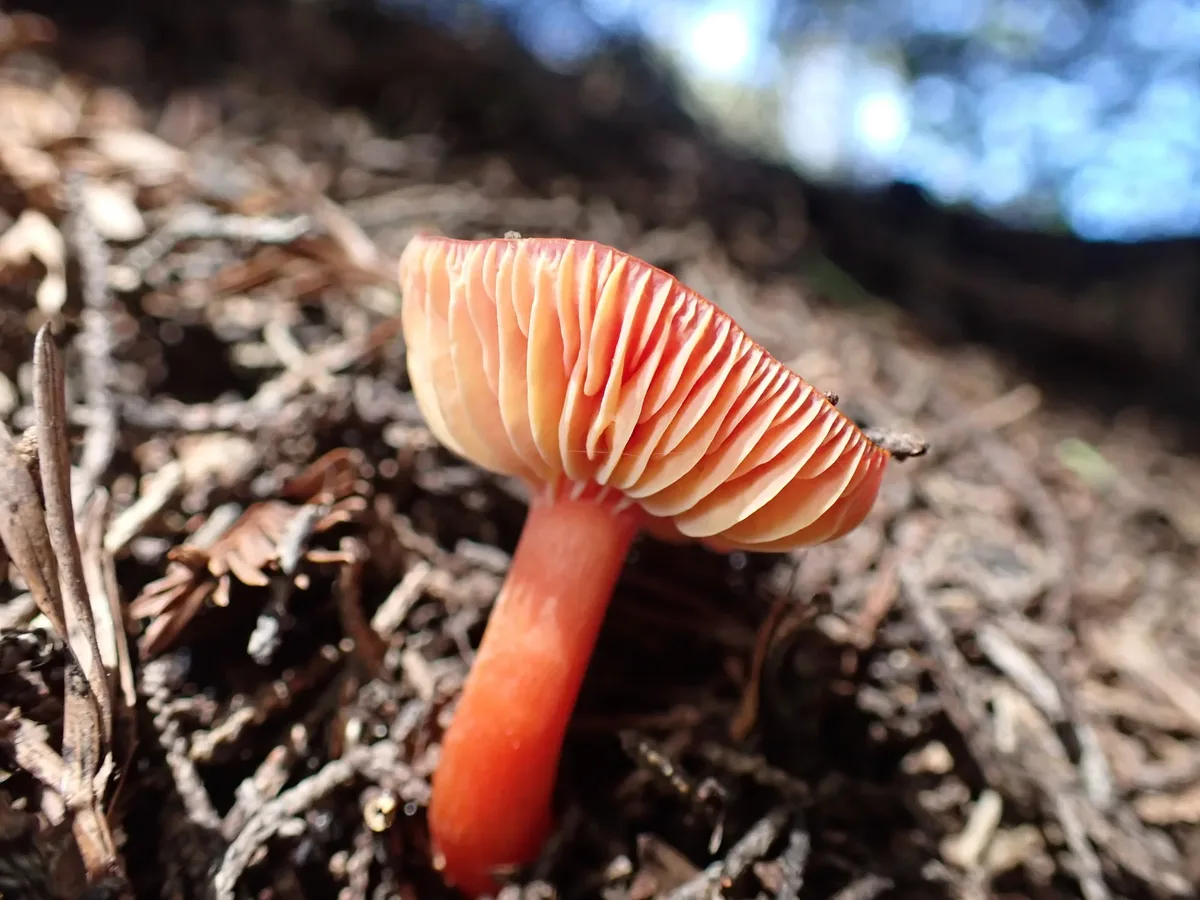 © Cricket Raspet (CC BY)
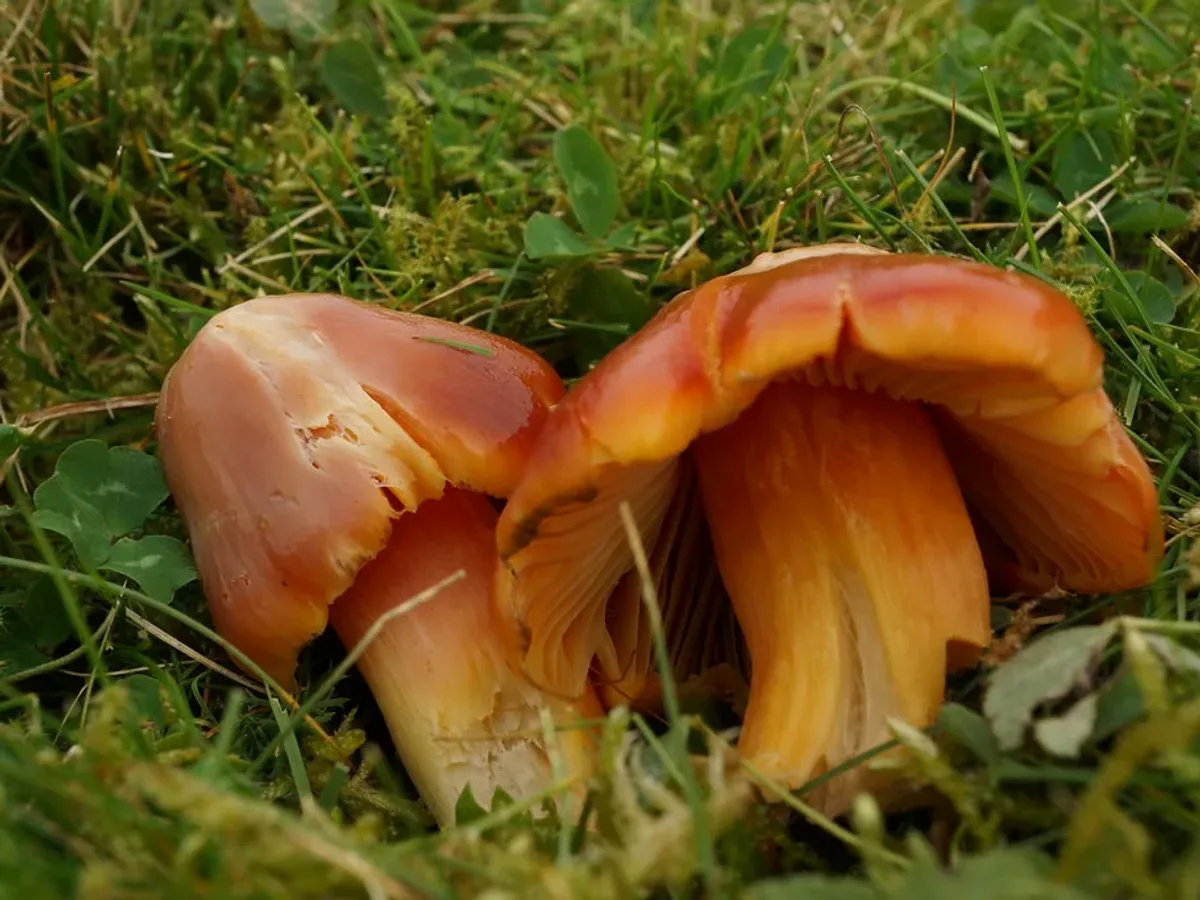 © Ephemeral Impressions (CC BY-SA 2.0)© Ephemeral Impressions (CC BY-SA 2.0)© Ephemeral Impressions (CC BY-SA 2.0)
Good to eat, once you have identified it with certainty and cooked it through.
How to recognise it
Few grassland fungi announce themselves as boldly as Hygrocybe coccinea.
Cap
The cap measures 2-6 cm across and opens from a neat convex button through broadly umbonate, sometimes settling into a shallow central depression in old age.
In wet weather the surface turns slightly greasy and viscid - never strongly glutinous like its larger cousin H. punicea - while in dry conditions it becomes more matt, though the colour stays vivid.
That colour is the defining feature: a uniform, saturated scarlet or blood-red that fades progressively to orange-red or orange as the cap ages.
The margin begins incurved and tidy, becoming wavy and often splitting radially in older fruitbodies.
Gills
The gills are adnate to very slightly decurrent, moderately broad (4-8 mm), and moderately spaced, with a few shorter lamellulae in between.
Rub one between finger and thumb and you feel the characteristic waxy resistance - not slippery, more like soft candle-wax - that earns this entire group the name 'waxcaps'.
Gill colour is orange-red to scarlet, a shade paler than the cap, and never yellow. Crucially, the gills do NOT blacken with age or on bruising - the most reliable separation from Hygrocybe conica.
Stem
The stem is 3-7 cm tall and 5-12 mm thick, cylindrical or slightly laterally compressed, often gently twisted, and hollow when mature.
The surface is dry to slightly moist and finely fibrillose-striate, scarlet to orange-red, typically yellowing at the very base. There is no ring, no volva, and no veil remnants of any kind.
Flesh
Flesh is thin (2-4 mm at the disc centre), waxy in consistency, red in the cap and upper stem, grading to pale orange or yellowish in the lower stem.
Spore print white. Spores ellipsoid to ovoid, smooth, thin-walled, hyaline, 7-10 × 4-6 µm, inamyloid.
Smell & taste
The taste is mild and pleasant; the smell indistinct or faintly earthy.
Where & when it grows
Habitat
The scarlet waxcap is a creature of old, undisturbed grassland - the kind that has never been ploughed, fertilised with inorganic inputs, or sprayed with herbicides for many decades, possibly centuries.
In Britain these places are called 'waxcap meadows', and they are recognised as a priority conservation habitat in northwest Europe precisely because they are so rare and so slowly formed.
Ancient churchyards are among the most reliable sites: enclosed from intensive agriculture for generations, mown but never fed, their short turf has quietly built up a community of fungi that no modern field can match. Traditional unimproved hay meadows, old parkland lawns, Celtic upland pastures, and carefully managed roadside verges share the same quality.
The species grows strictly on the ground among short to medium grass and moss - never on wood or woody debris. Soils tend to be slightly acidic to neutral, well-drained but moisture-retentive.
The ecological relationship of waxcaps in these grasslands is not fully resolved; they are not clearly mycorrhizal with grasses and are now thought by some researchers to form a long-term saprotrophic or biotrophic association with soil organic matter and possibly turf mosses - a partnership still being pieced together by science.
Where H. coccinea grows, you will often find other waxcaps nearby: H. punicea, H. conica, Cuphophyllus pratensis, and various Entoloma species forming the 'waxcap community' that marks the finest grassland in the landscape.
When
Fruiting runs from late summer through autumn - typically August to December in lowland western Europe and Britain, with the main flush arriving in October and peaking through mid-November.
In upland and northern areas - the Welsh mountains, Scottish Highlands, Scandinavia - the season can open as early as July or August.
The first hard frosts usually bring it to a close, though mild oceanic autumns sometimes stretch it to late December.
Long warm dry spells suppress fruiting; the best shows come after cool, persistent rain breaks a summer drought.
How it grows
Fruitbodies appear singly or in loose groups of two to eight, scattered among grass and moss rather than clustered together.
They grow relatively slowly and persist well - individual caps often stand for several days to more than a week before fading and collapsing, which gives you a reasonable window to find them at their best.
Below ground, the mycelium is perennial, quietly threaded through the same turf year after year.
A colony established in good waxcap grassland can fruit reliably at the same spot for many years, sometimes decades, provided the habitat is left undisturbed. No true fairy rings form.
Fruiting conditions
Flushes best after cool, persistent autumn rain following summer drought; warm dry conditions in September and October strongly suppress fruiting. Soil temperatures should have dropped below ~14 °C for sustained fruitbody production.
Look-alikes
Several other red or orange waxcaps can be confused with Hygrocybe coccinea:
- 1Hygrocybe punicea (Crimson waxcap) - significantly larger (cap 5-12 cm), more glutinous cap surface, stem more streaked fibrillose, flesh more substantial; also edible but rarer. H. coccinea is smaller and less viscid.
- 1Hygrocybe conica (Blackening waxcap) - similar brilliant red when young but the cap is acutely conical (versus convex-umbonate in H. coccinea), and the entire fruitbody blackens progressively with age, handling, or drying - this is the single most reliable distinguishing character. H. conica is considered mildly toxic (GI irritant) and should not be eaten. Always check for blackening before consuming any red waxcap.
- 1Hygrocybe miniata (Vermilion waxcap) - smaller (cap 1-3 cm), more orange-vermilion, dry cap surface with minute scales, gills decurrent; habitat similar. Generally regarded as inedible due to small size.
- 1Hygrocybe reidii (Honey-scented waxcap) - similar red to orange-red colouring but has a distinct, pleasant honey-like odour; gills often paler. Inedible.
- 1Omphalotus olearius (Jack-o'-lantern) - not red but can be confused in dim light; grows on or near wood/roots in olive-orange clusters and glows faintly in the dark. Poisonous (causes severe GI illness). H. coccinea grows in open grassland, not on wood.
None of the direct lookalikes are deadly, but H. conica is the most important to avoid as it blackens and is toxic.
Cap is acutely conical (not convex-umbonate) when young; entire fruitbody gradually and unmistakably turns black with age, drying, or handling - H. coccinea never blackens; H. conica is mildly toxic (GI irritant), do not eat
H. punicea is markedly larger (cap 5-12 cm vs 2-6 cm), more strongly viscid-glutinous on the cap surface, and has a more fibrous, streaked stem; also red but stem base often yellower; both edible
Very similar in stature and colour but has a distinctive, strong honey-like odour; gills usually paler; inedible
Orange rather than scarlet red, grows in dense tufts at the base of trees or on buried roots (never in open grassland), gills non-waxy and run strongly down the stem, bioluminescent; causes severe GI illness
Much smaller (cap 1-3 cm), cap surface dry and minutely scaly-granular rather than smooth and viscid, colour more orange-vermilion, gills decurrent; inedible
In the kitchen
Picking & cleaning
Choose young to mid-aged fruitbodies before the margin has split and the cap has faded to dull orange.
Cut cleanly at the base with a knife rather than pulling, to disturb the fragile turf and underlying mycelium as little as possible.
Waxcap grasslands are irreplaceable habitats - many are legally protected - so collecting should be minimal and always in line with local regulations.
In practice, many foragers photograph rather than pick waxcaps as a matter of conservation ethics, which is a reasonable approach.
For the table, young caps with intact gills are best; trim any soil from the stem base before use.
Cooking
Hygrocybe coccinea has a mild, pleasant, slightly fungoid flavour and a firm, waxy texture that holds well during brief cooking.
Its primary appeal is visual - the vivid scarlet colour, though it fades somewhat to orange on heating, makes it a striking garnish on warm salads or alongside pale-coloured fungi.
Best used fresh and quickly: sauté in butter or olive oil over moderate heat for 2-3 minutes, seasoned simply with salt, pepper, and thyme. Avoid long braising, which makes the thin flesh mushy.
Pairs well with scrambled eggs, risotto garnishes, or light pasta dishes.
Not suitable for drying (flavour and colour diminish); freezing also degrades texture.
Because fruitbodies are small, substantial quantities are needed for a meaningful dish - another reason to pick sparingly given conservation concerns.
Good to know
Hygrocybe coccinea is generally considered edible and is not known to contain significant toxins. However, it is a small and thin-fleshed species that offers little culinary reward.
The critical safety step is to confirm the fruitbody does NOT blacken. If any part of a red waxcap turns grey, black, or begins to darken with handling or age, discard it entirely - it is likely Hygrocybe conica, which causes gastrointestinal illness.
Additionally, confirm the grassland habitat (not wood or litter, where toxic look-alikes might occur).
As with all wild mushrooms, avoid consumption if identification is uncertain. Waxcap grasslands are ecologically sensitive; harvest only where permitted.
A reference guide - never an edibility guarantee. When in doubt, leave it out.